No Compromise When It’s Time to Die · Fred Riedel · Michael Anderson
Documentary Film · 2022
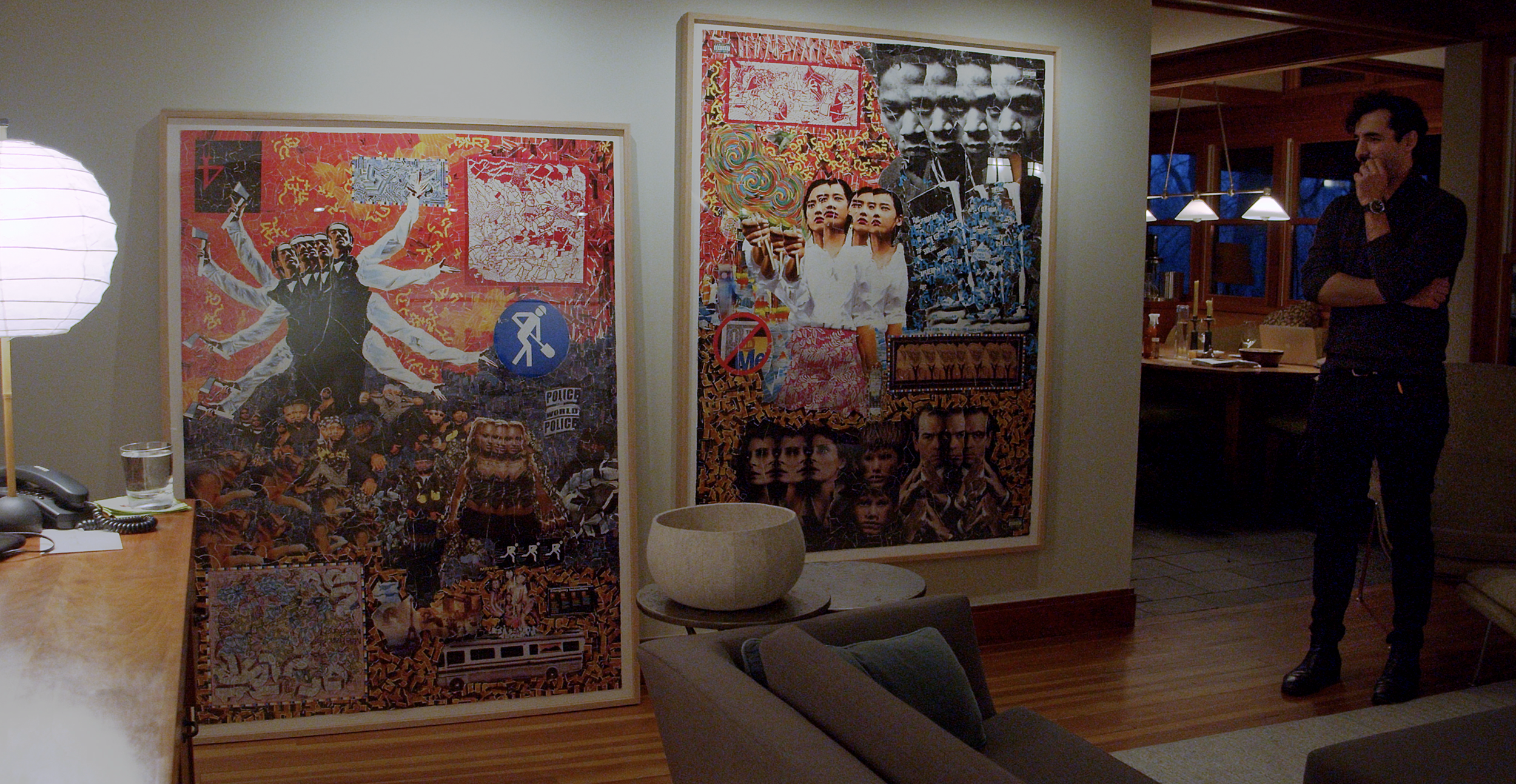
Harlem Frames on Film
Harlem Frames appears in Fred Riedel's documentary No Compromise When It’s Time to Die, an intimate portrait of New York collage artist Michael Anderson (1968–2020) filmed during the final year of the artist's life.
The documentary follows Anderson through the physical process behind his work—from collecting posters throughout New York City to cutting, layering, assembling, and ultimately installing his monumental collages. Rather than relying on a traditional biographical narrative, Riedel focuses on the act of making itself, constructing the film in a fragmented, nonlinear form that mirrors Anderson's own collage practice.
The Artist & the Film
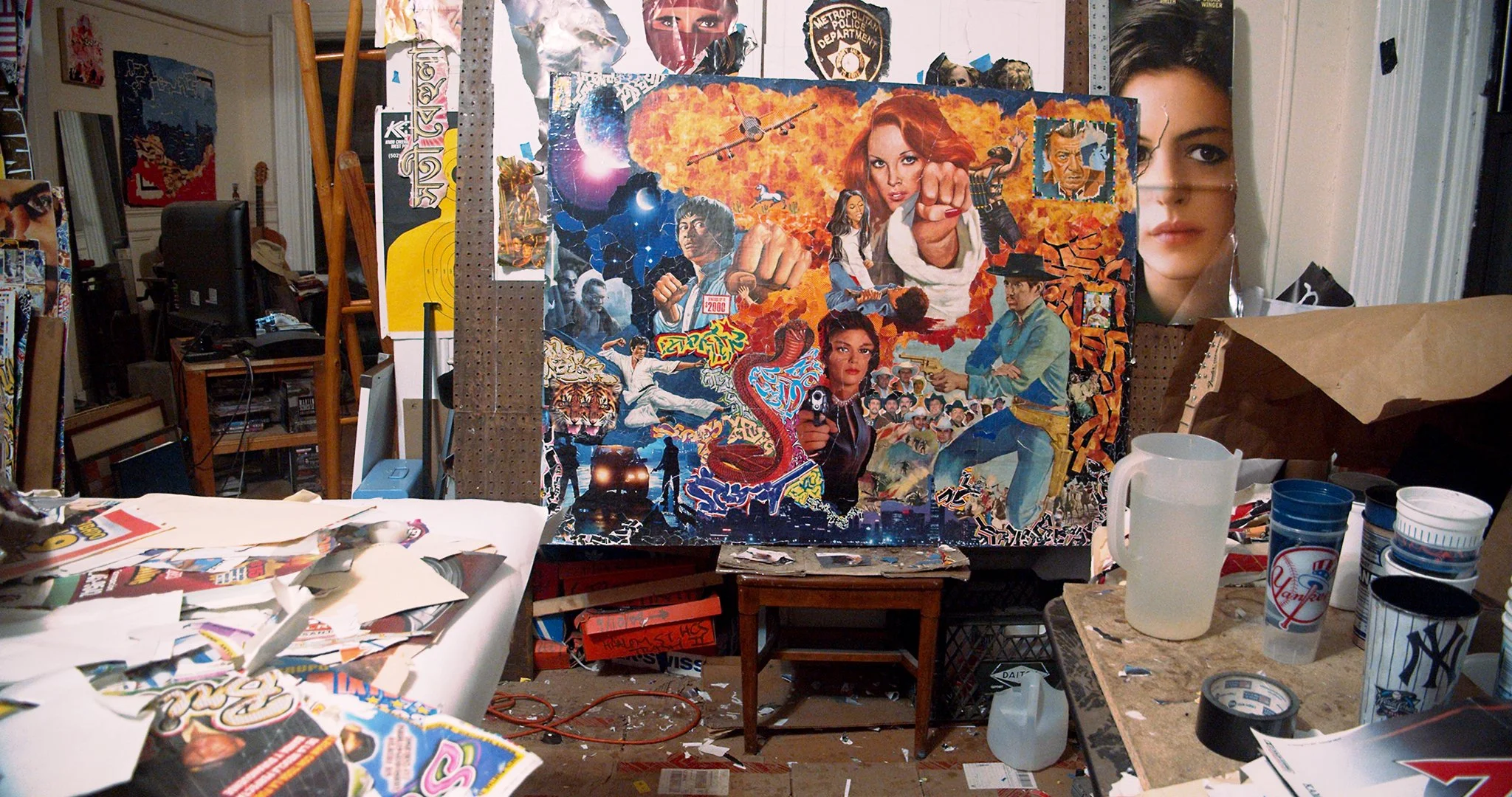
The Artist & the Film
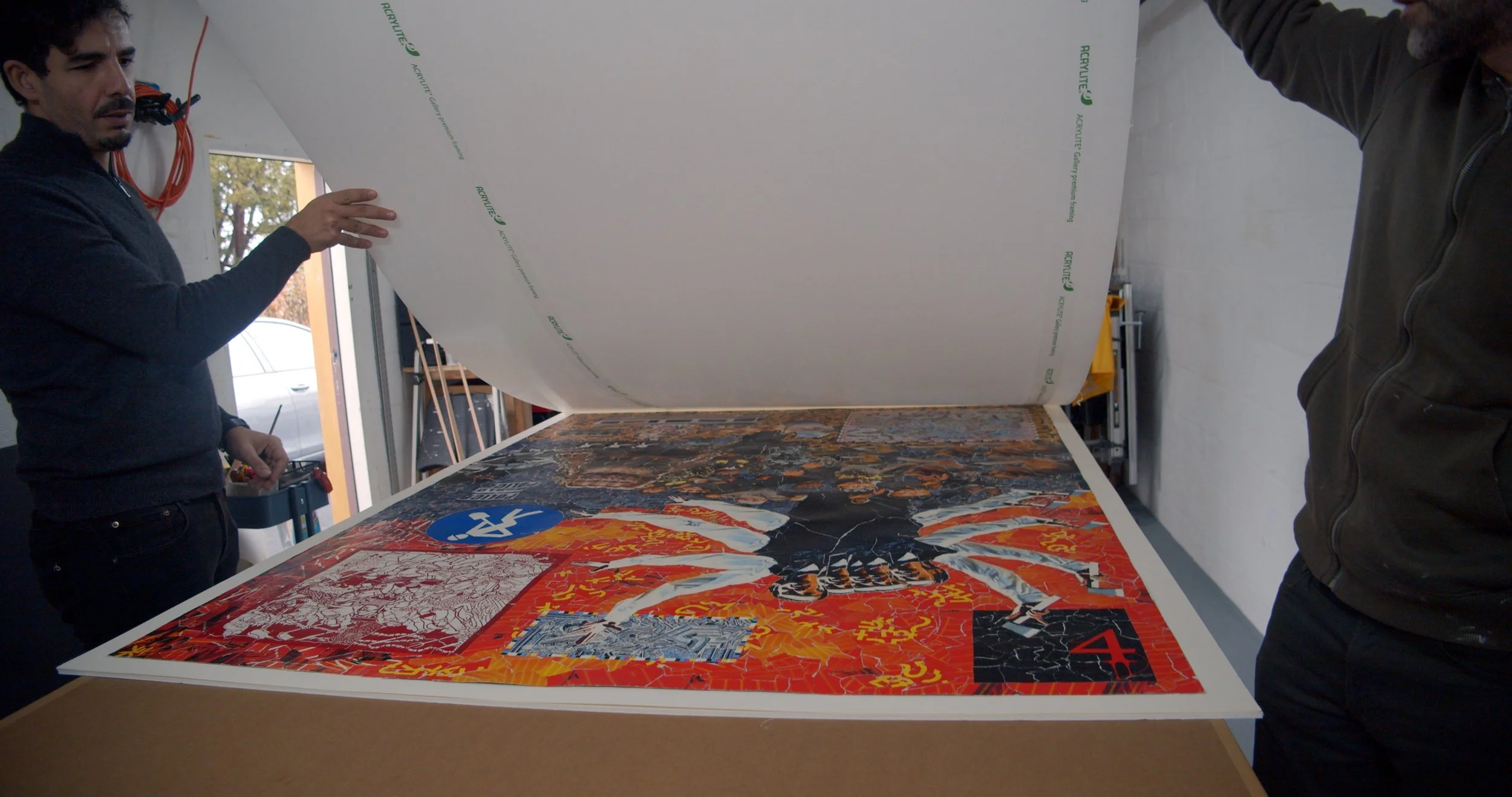
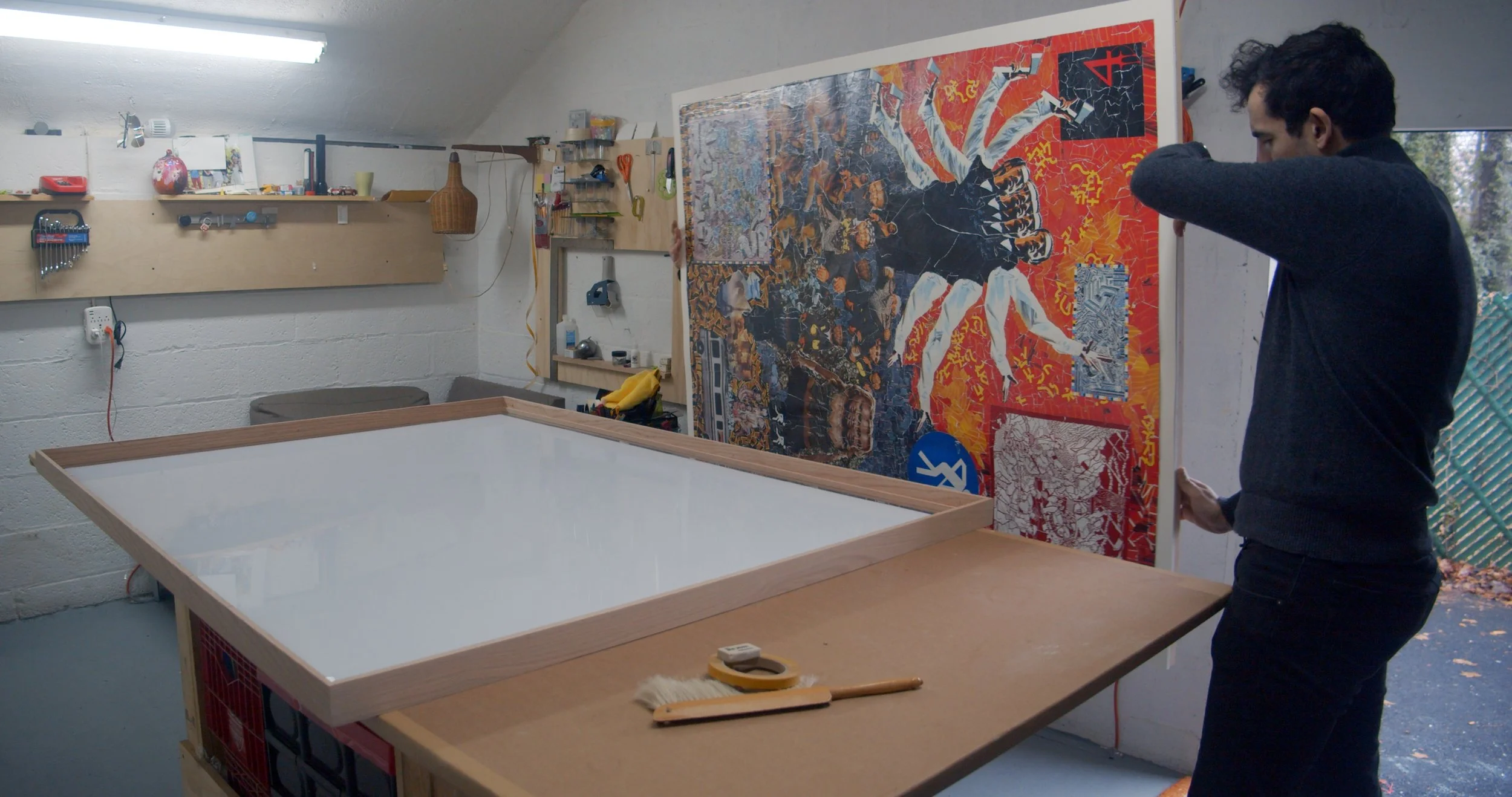
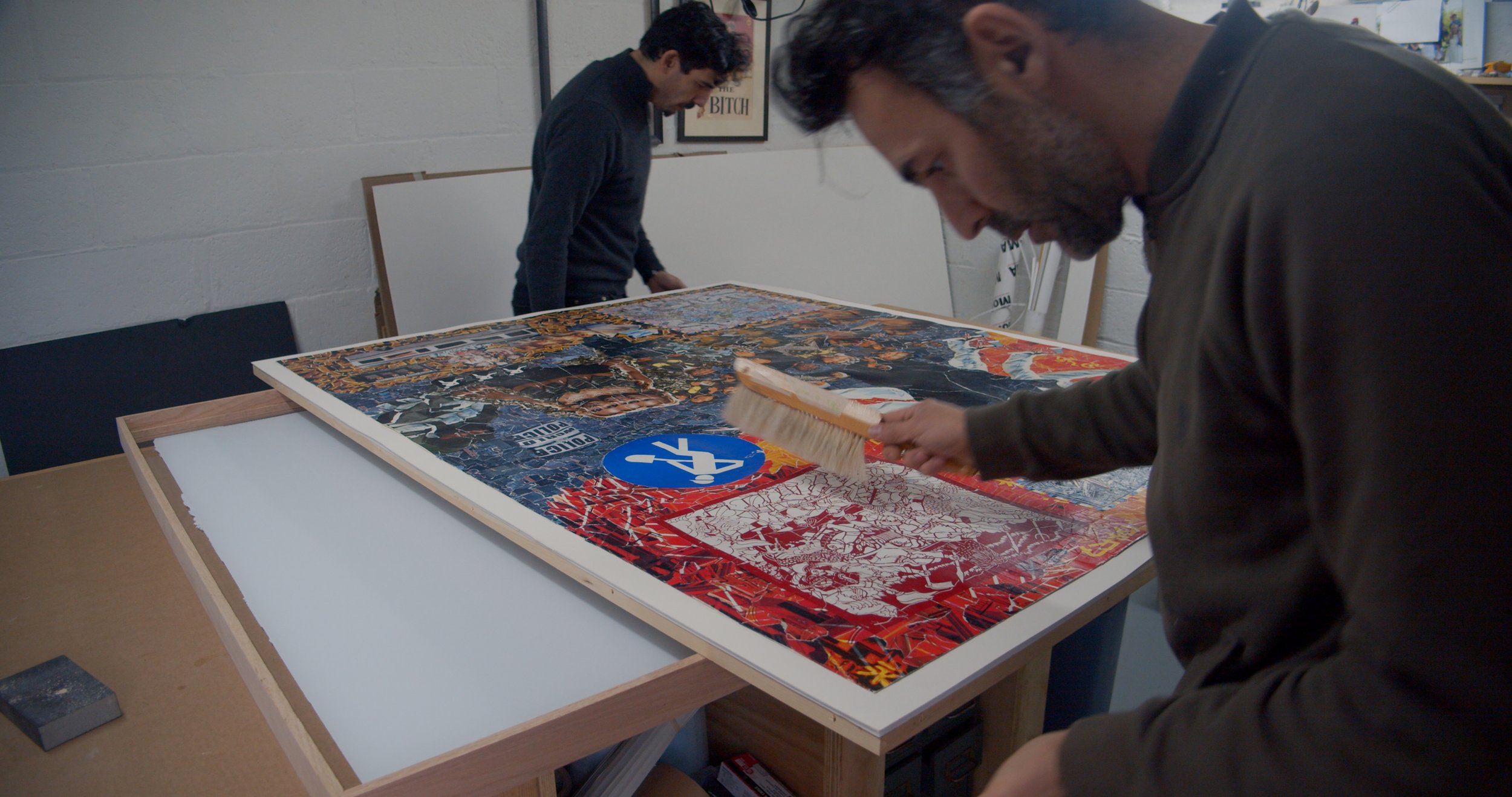
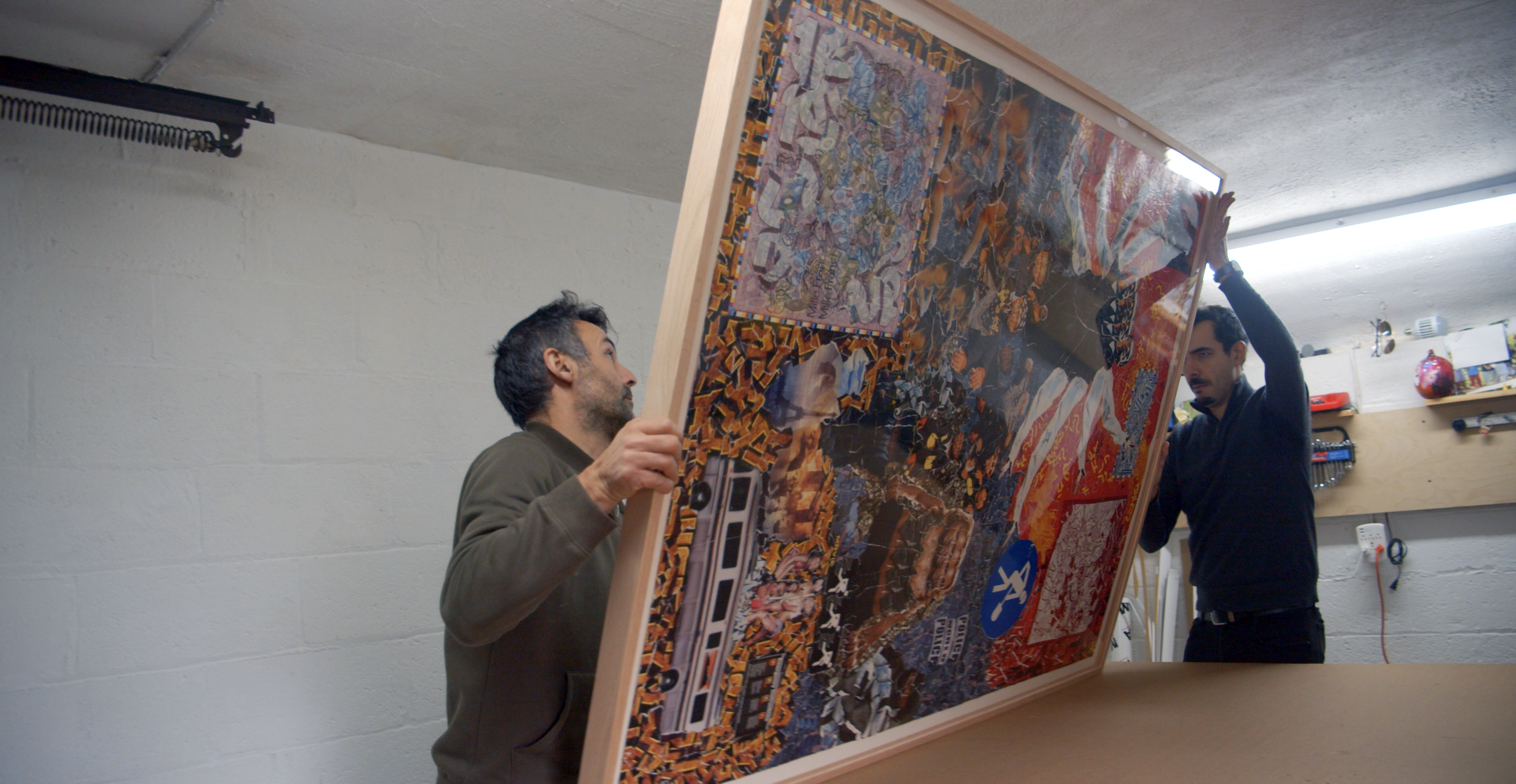
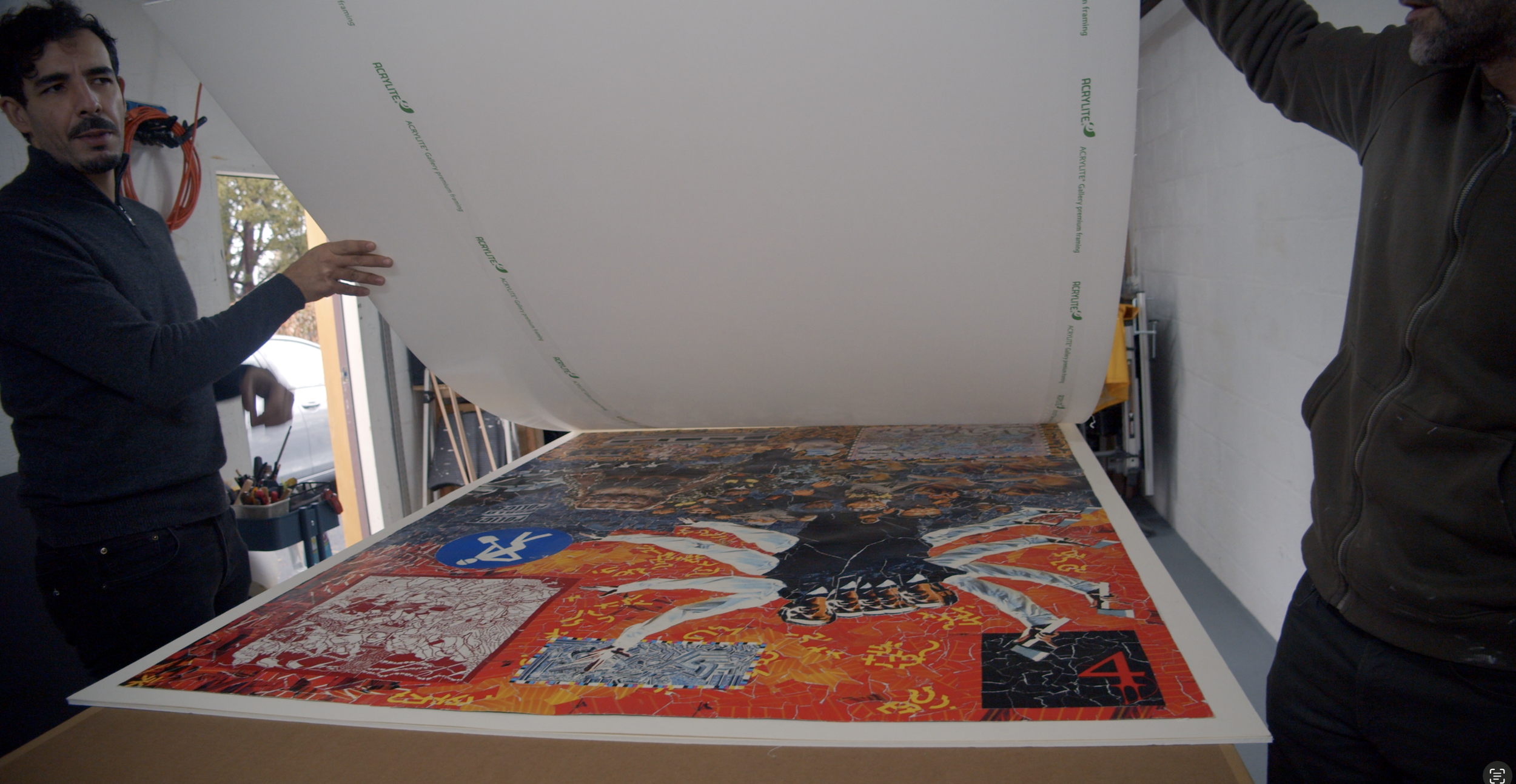
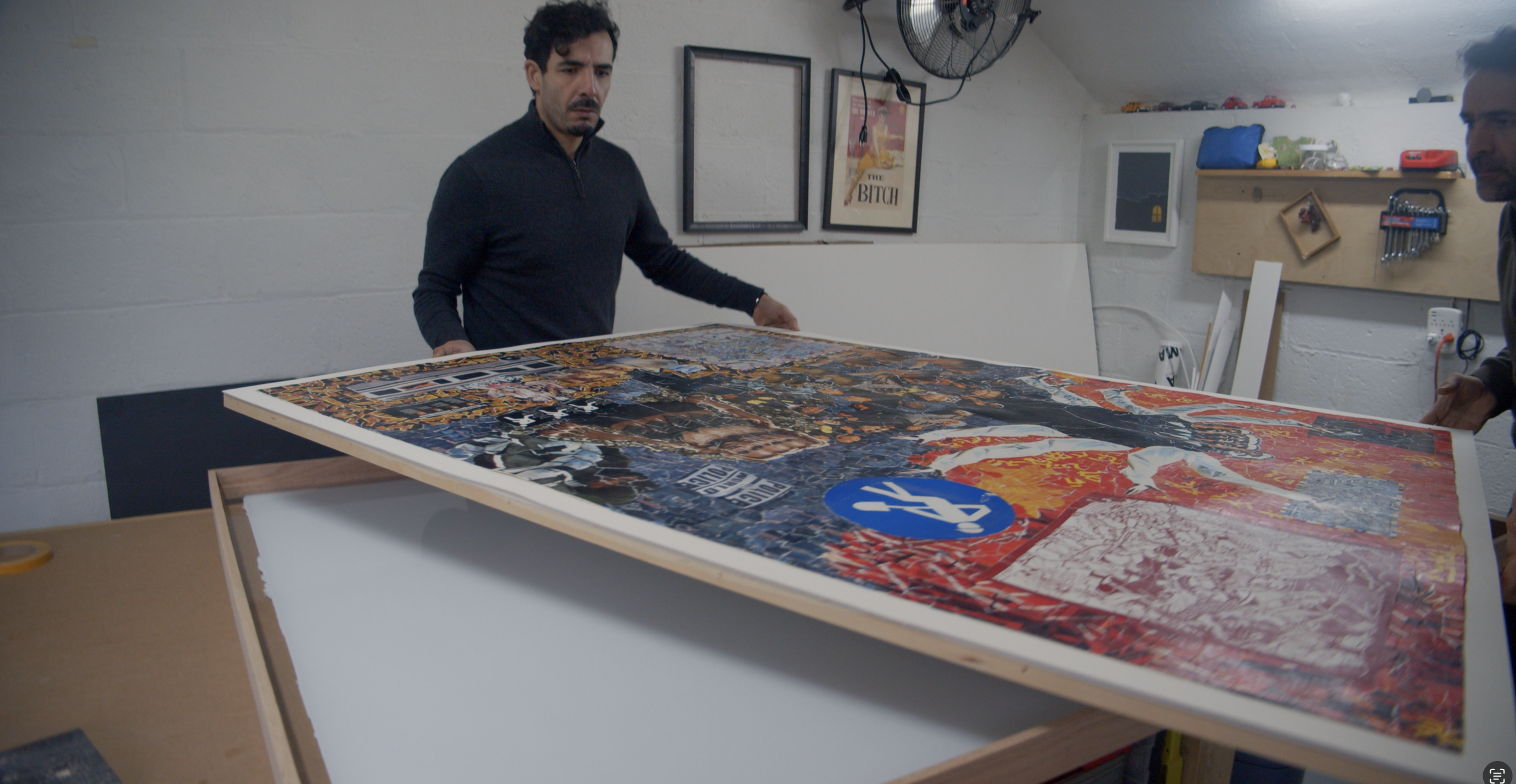
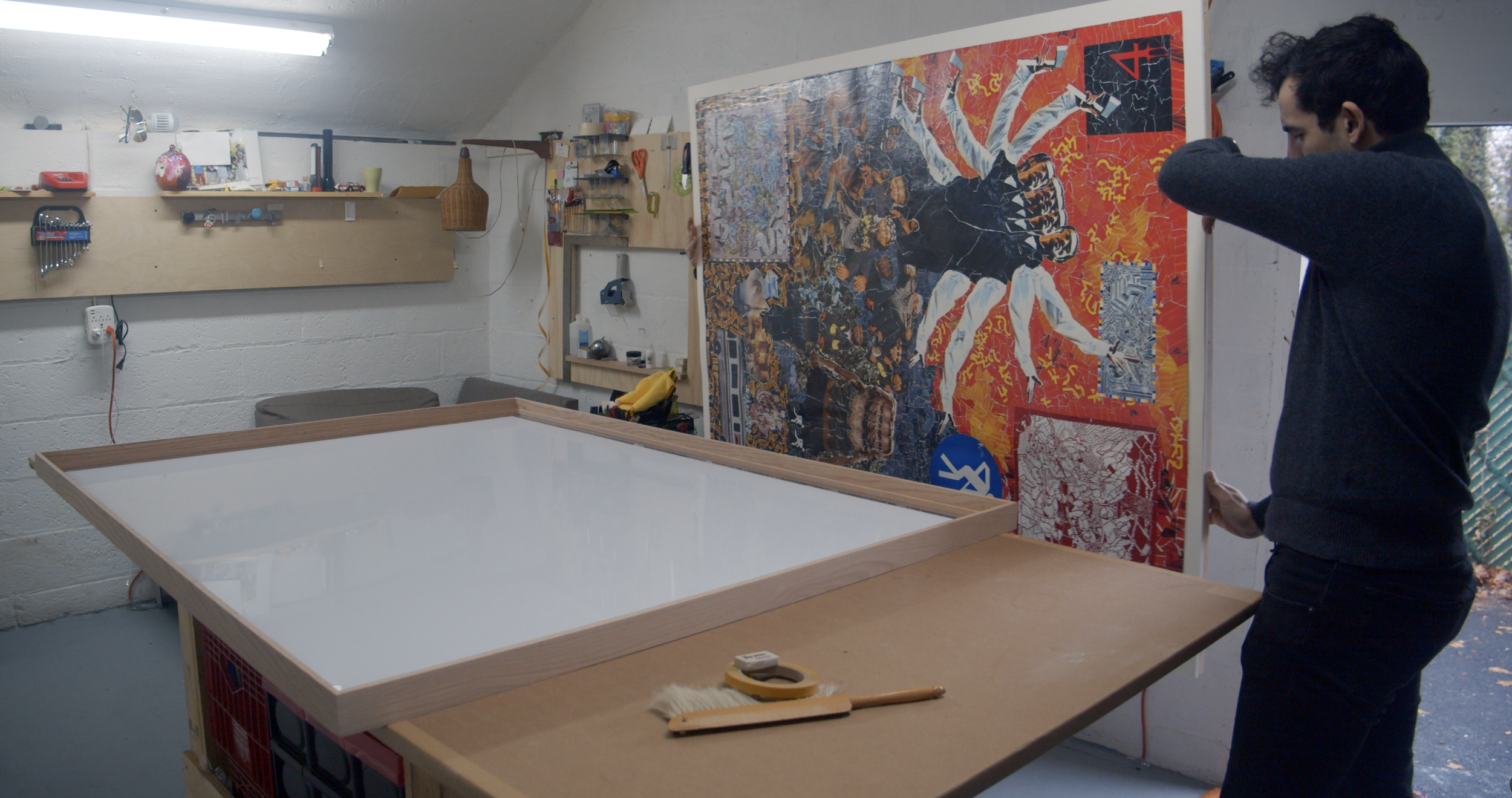
A scene from the film "No Compromise When It's Time To Die", directed by Fred Riedel.
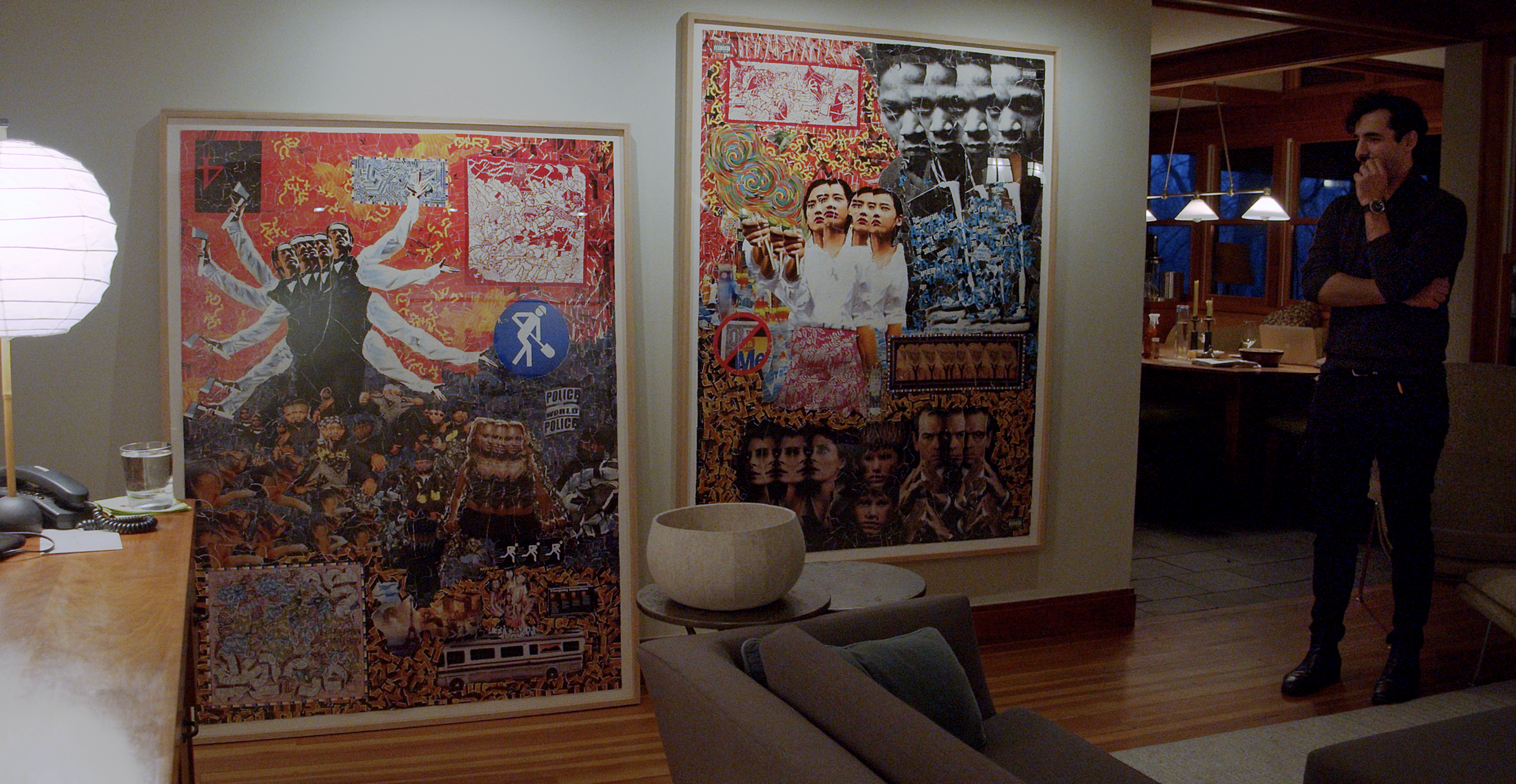
Anderson created dense, large-scale collages from fragments of posters collected from public spaces around the world. Images removed from their original contexts were cut apart and reconstructed into compositions filled with cultural references, abstraction, humor, violence, and the visual intensity of the city around him.
Riedel began the documentary while Anderson was still alive. Following the artist's death in July 2020, the film ultimately became both a portrait of his creative process and a tribute to the artist and friend he left behind. The finished 77-minute documentary was directed, produced, shot, and edited by Riedel, with a score by composer Joe Diebes.
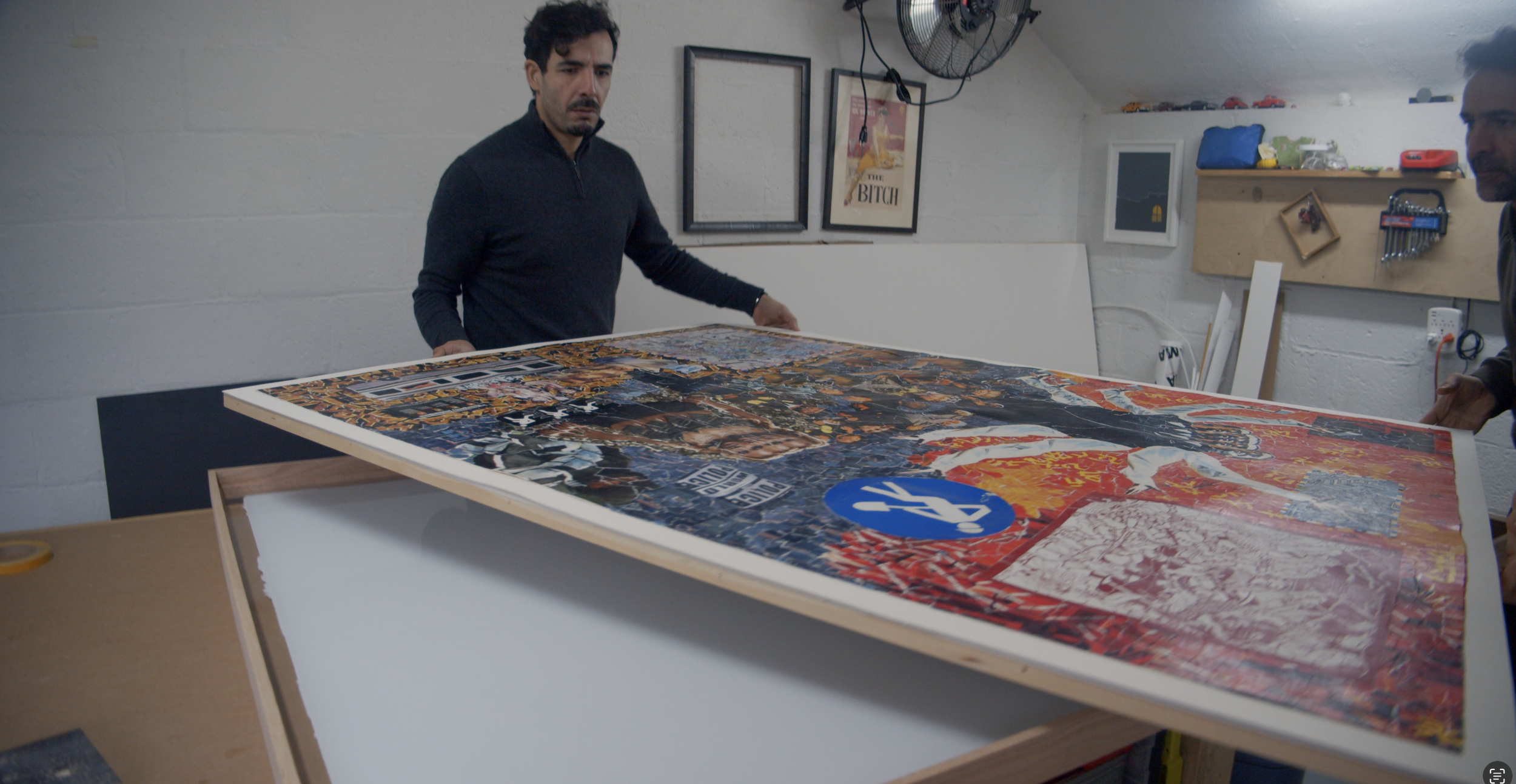
Framed by Harlem Frames
Harlem Frames becomes part of that story from the film's opening moments.
Harlem Frames becomes part of that story from the film's opening moments.
No Compromise When It’s Time to Die begins inside a workshop, where a monumental Anderson artwork is carefully prepared for its journey to a collector's home. The sequence magnifies the process of physically handling artwork, chronicling everything from its preparation, protection, wrapping, transportation, and eventual installation.
The film initially does little to explain who is performing the work or where the artwork is going. That ambiguity was intentional. Riedel later explained that the opening was designed to create a sense of anticipation around the artwork's arrival and to introduce viewers to Anderson's world before fully revealing the artist behind it.
For Harlem Frames, appearing in the film offers an unusual glimpse into a part of framing and art handling that often disappears once an artwork reaches the wall: the careful work required to prepare, protect, and present a large-scale piece before it enters a collection.
The finished installation provides the payoff. Anderson's visually explosive collage arrives in a quiet contemporary interior, demonstrating just how dramatically artwork—and its presentation—can transform a space.
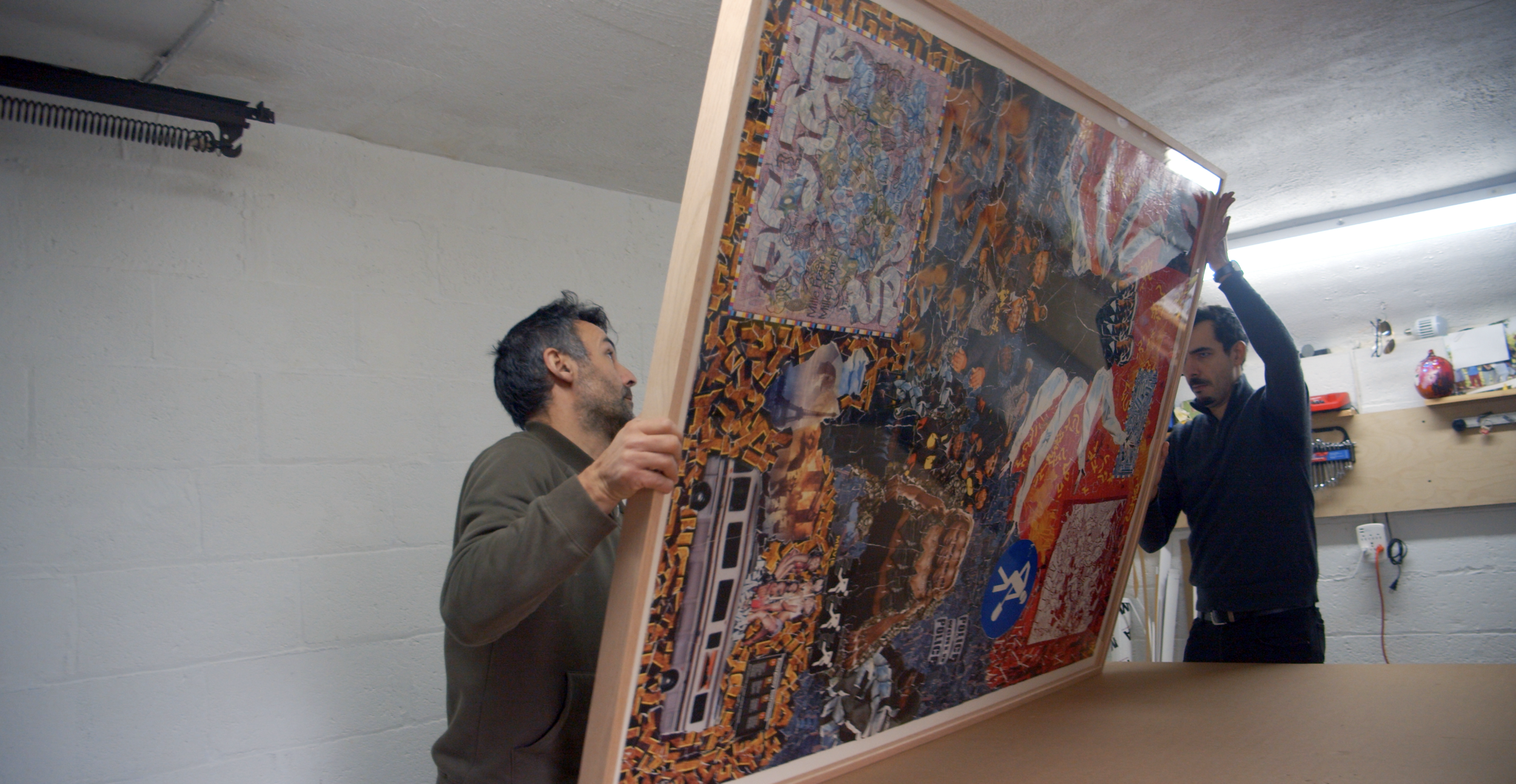
Art, Process & Presentation
Framing is only one stage in the larger life of an artwork.
The sequence reflects something central to Harlem Frames' work with artists and collectors: framing serves as but one stage in the greater life of an artwork. From an artist's studio to preparation and handling, transportation, installation, exhibition, and eventually a collector's wall, each stage demands consideration for both the physical object and the artist's intentions. It’s our duty to honor those intentions. In No Compromise When It’s Time to Die, that typically unseen process becomes part of the artwork's story, and part of the film itself.
Film: No Compromise When It’s Time to Die
Director: Fred Riedel
Artist: Michael Anderson (1968–2020)
Year: 2022
Runtime: 77 minutes
Harlem Frames: Artwork preparation, handling and presentation featured in the documentary
Explore the work: https://upmag.com/michael-anderson/
Image source: Stills from No Compromise When It’s Time to Die (2022), directed by Fred Riedel
& https://whitehotmagazine.com/articles/anderson-which-premiered-at-bafici/5427