Michael Anderson
Original Collage Painting · Private Collection · Custom Framing by Harlem Frames
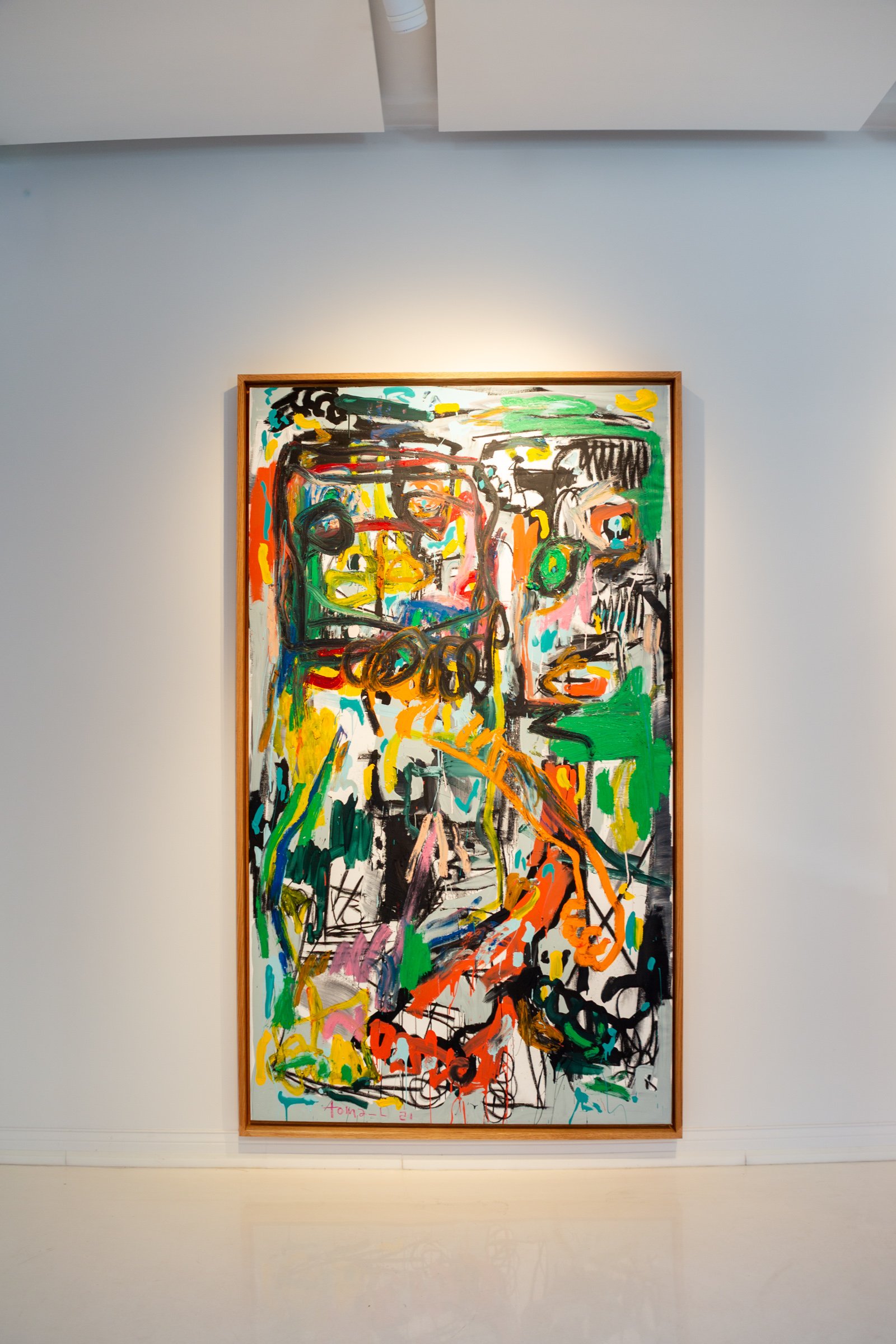
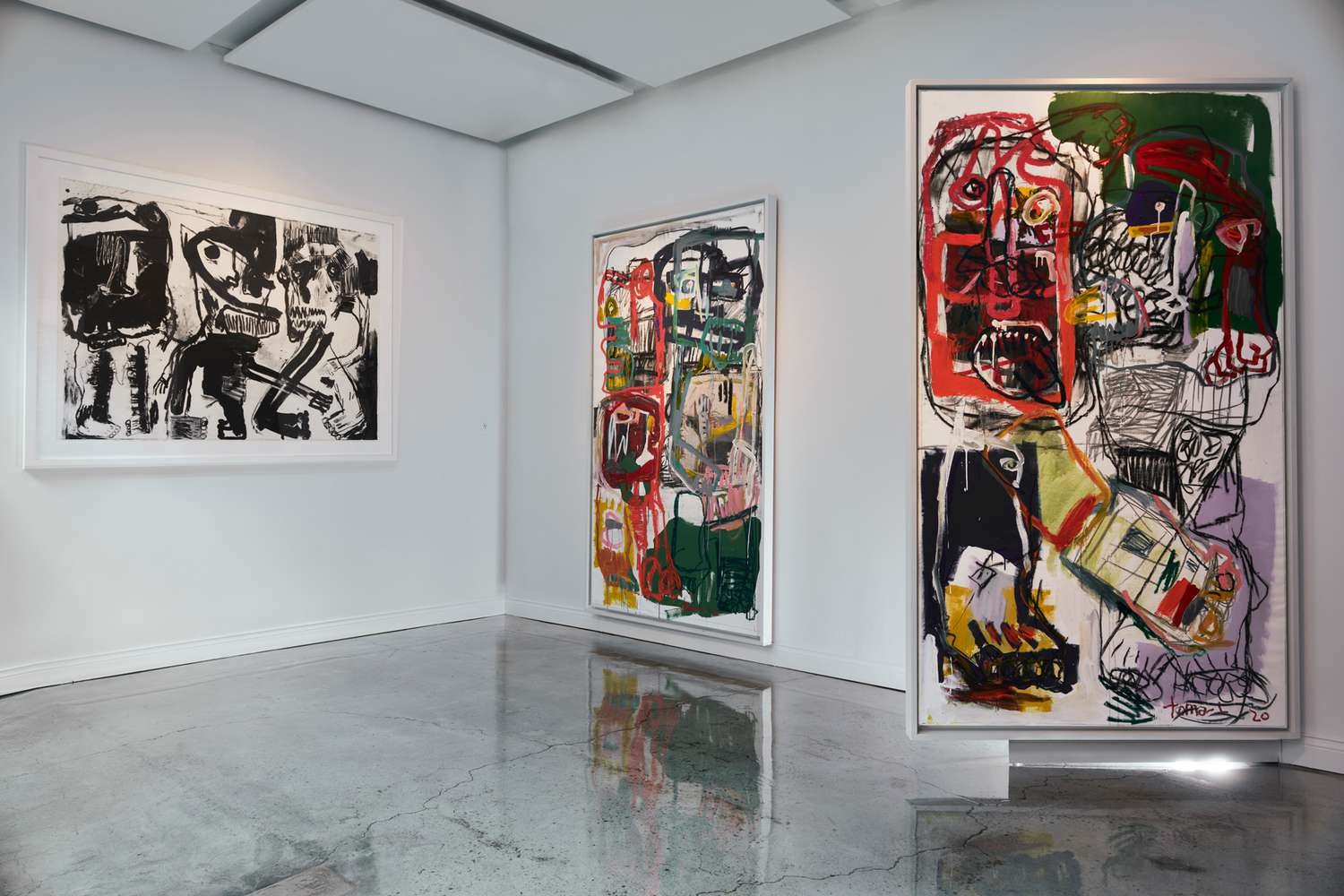
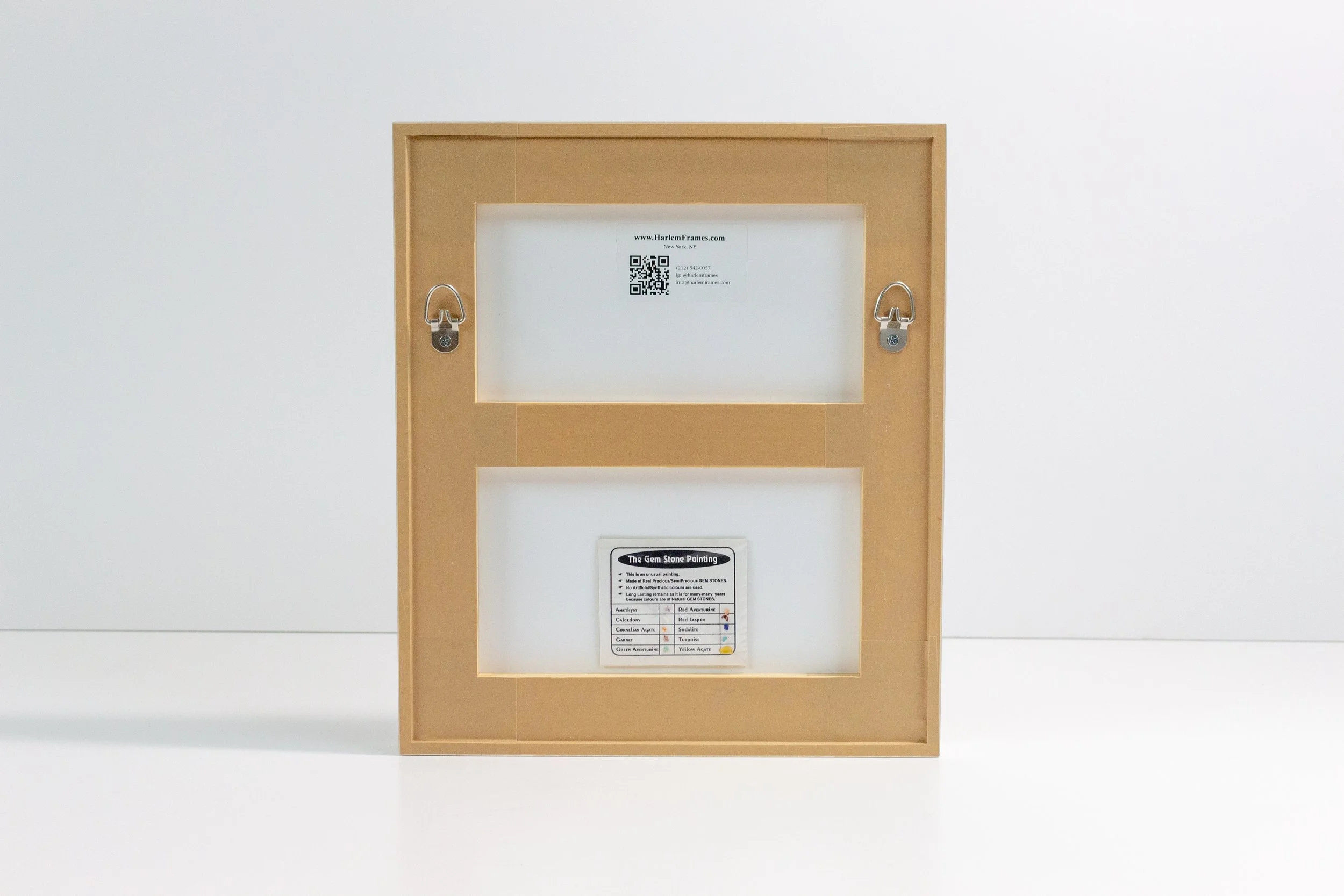
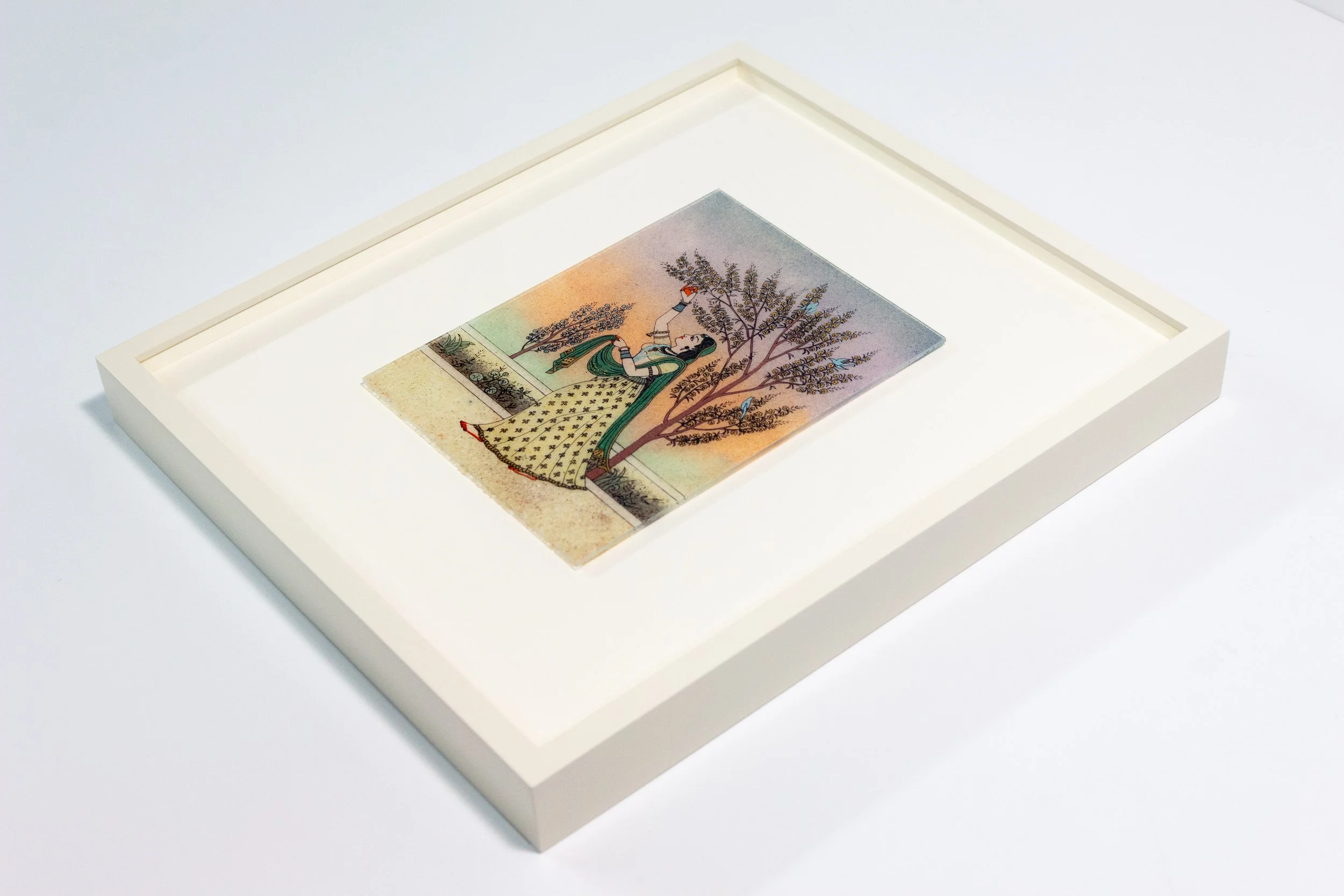
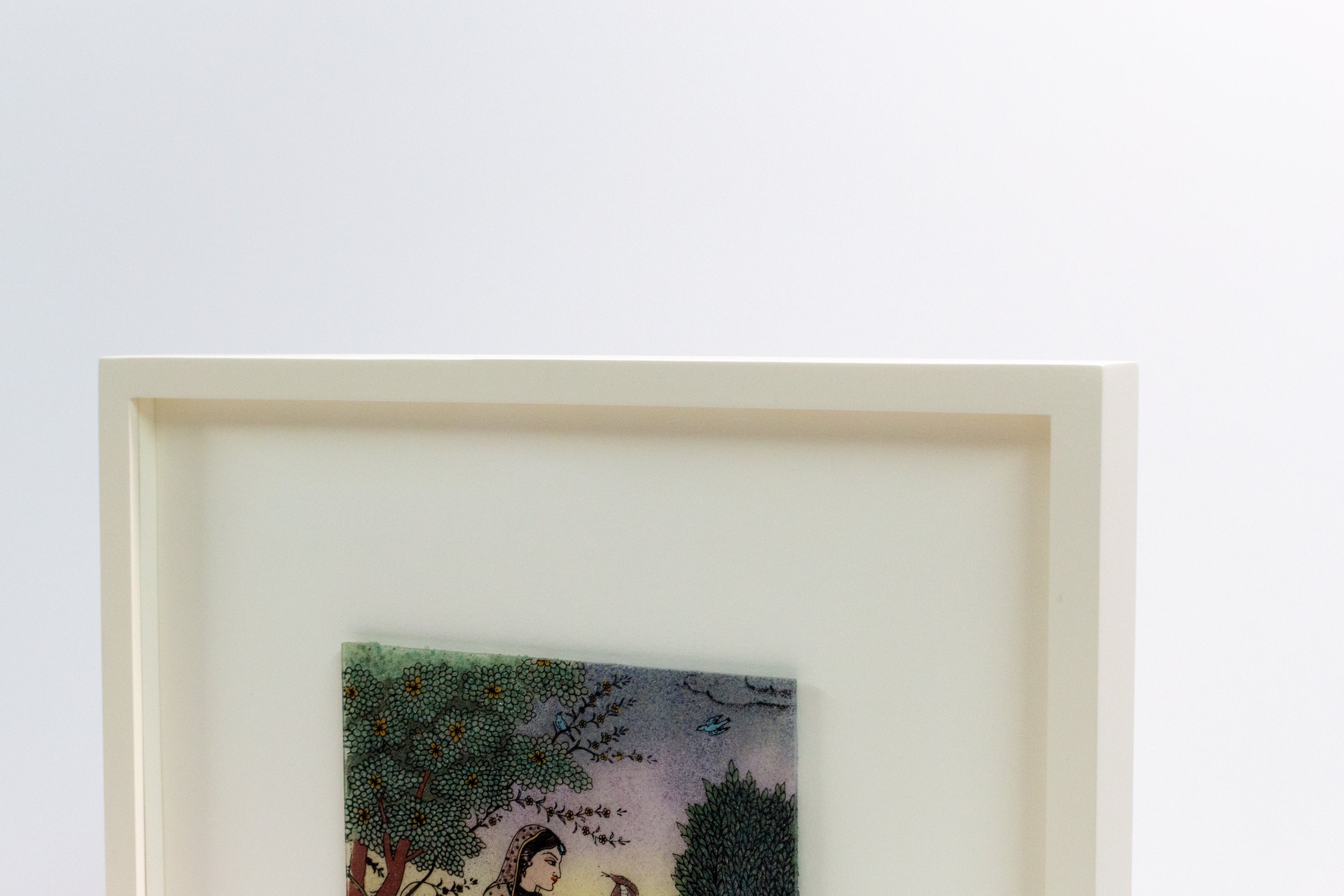
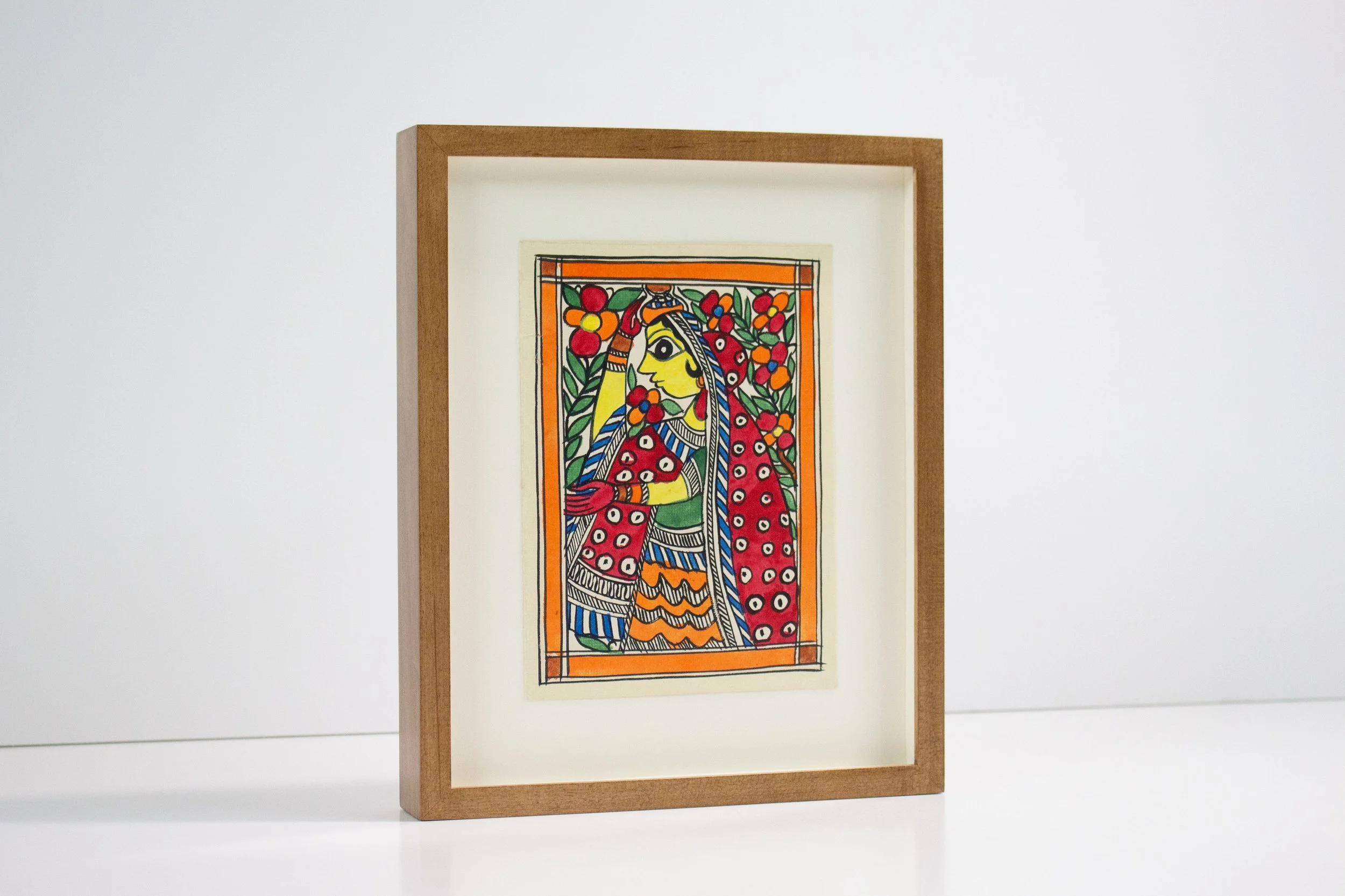
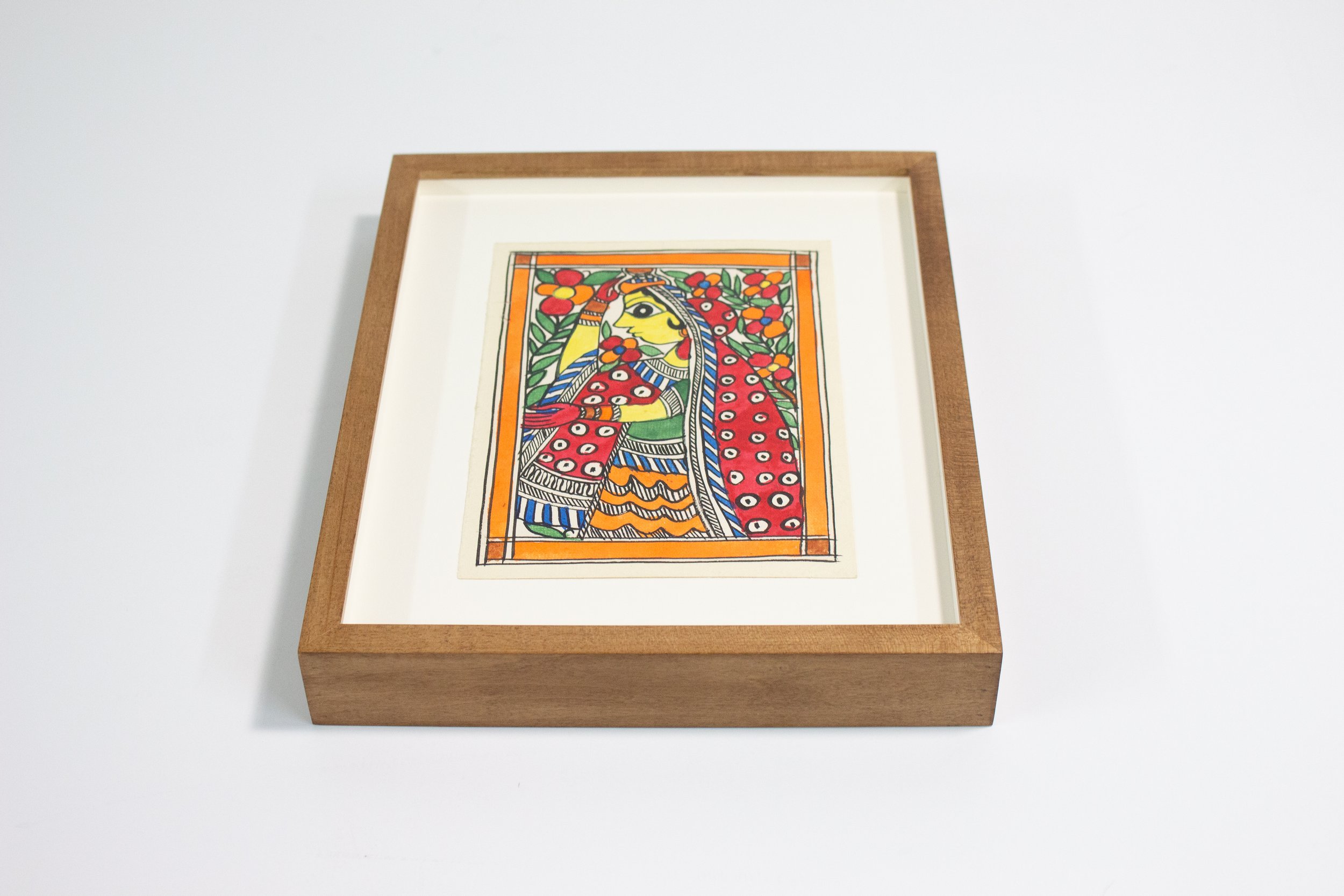
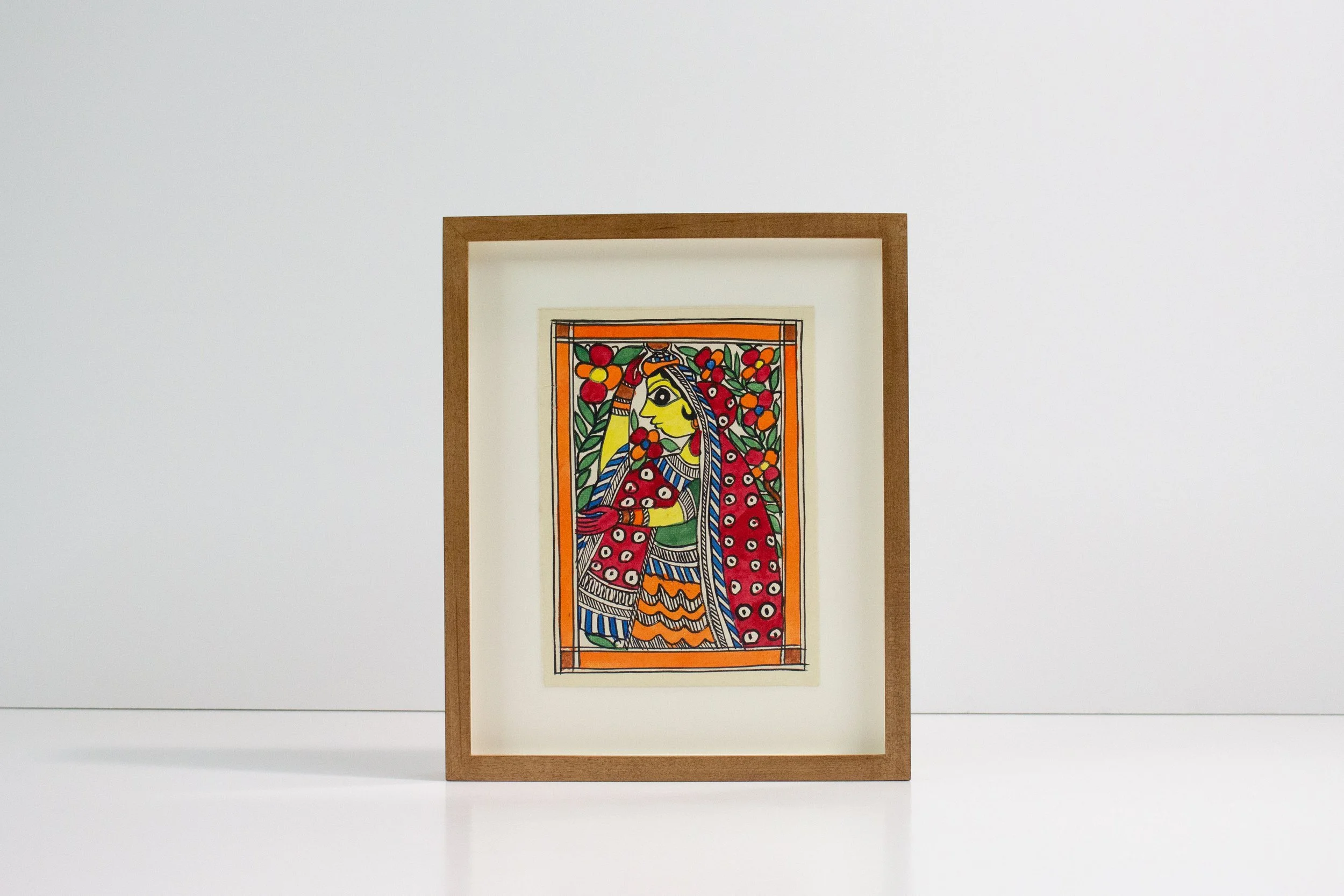
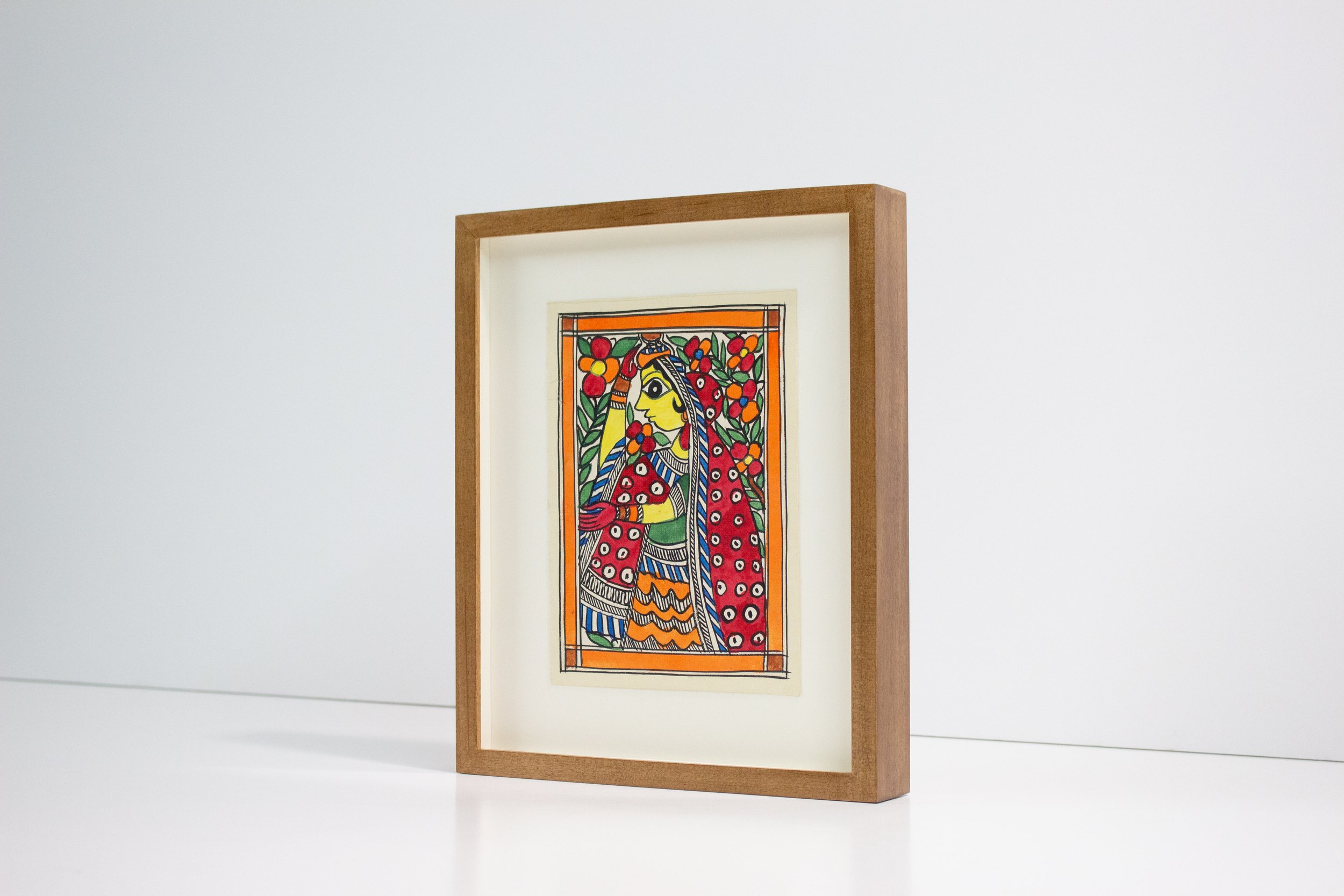
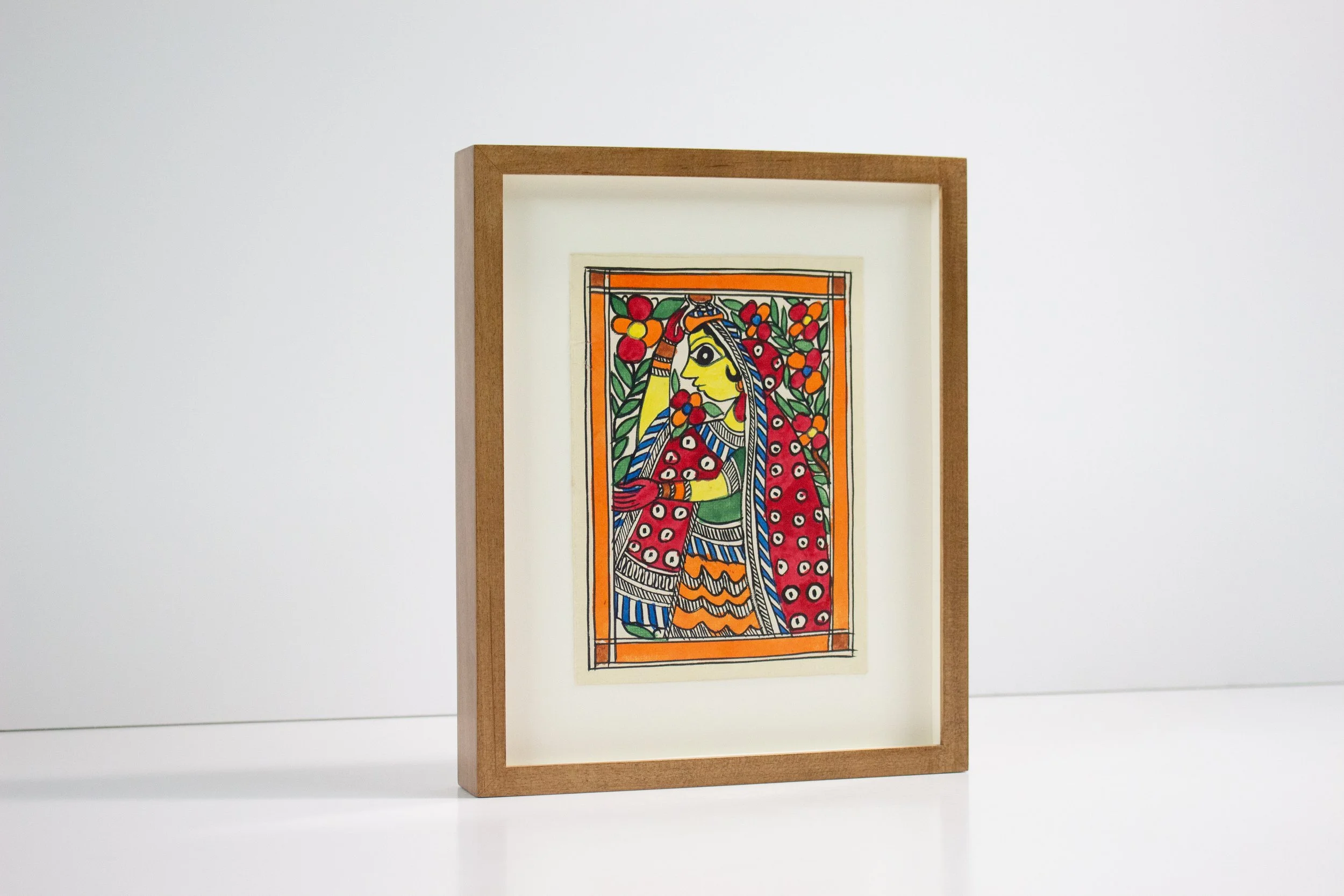
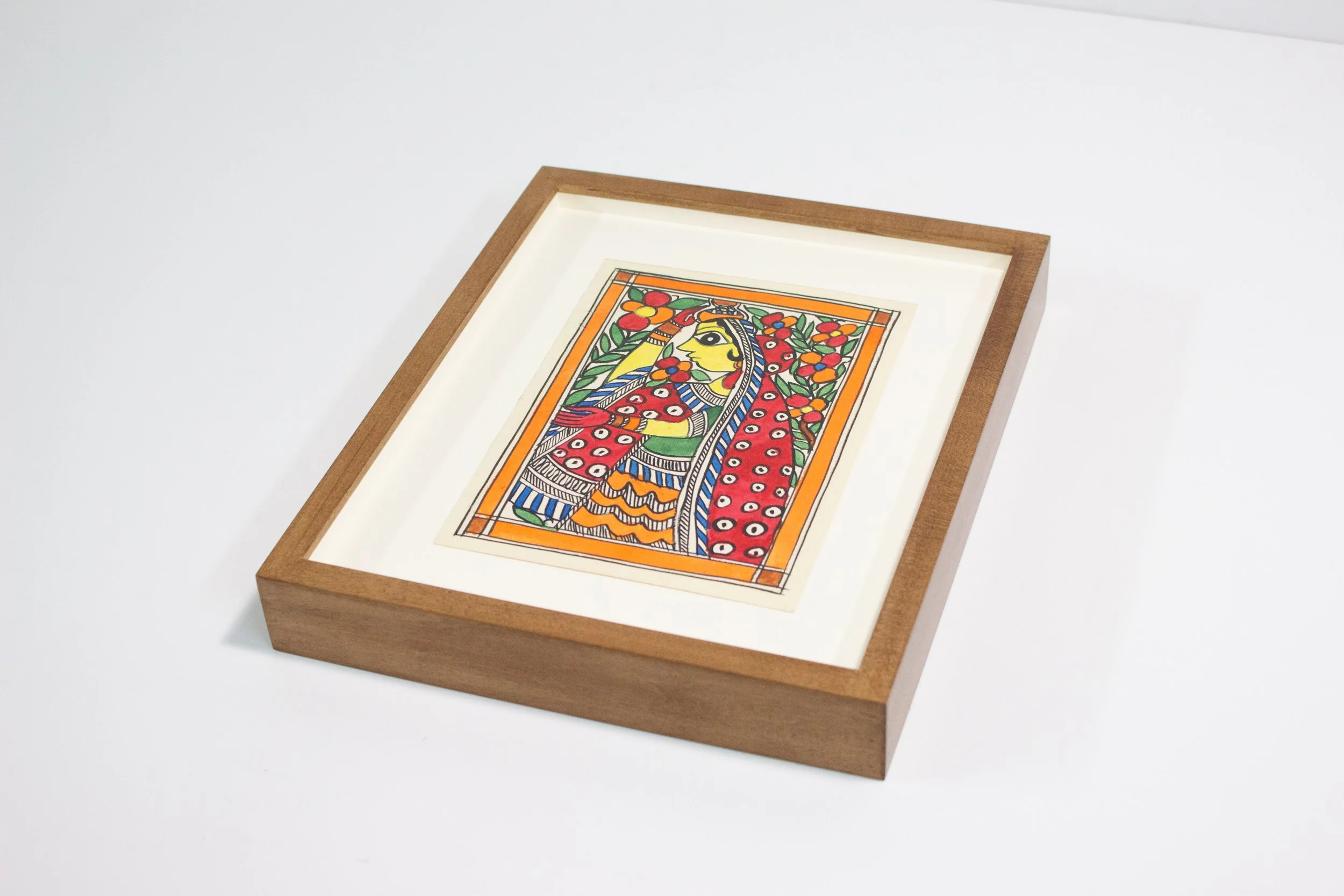
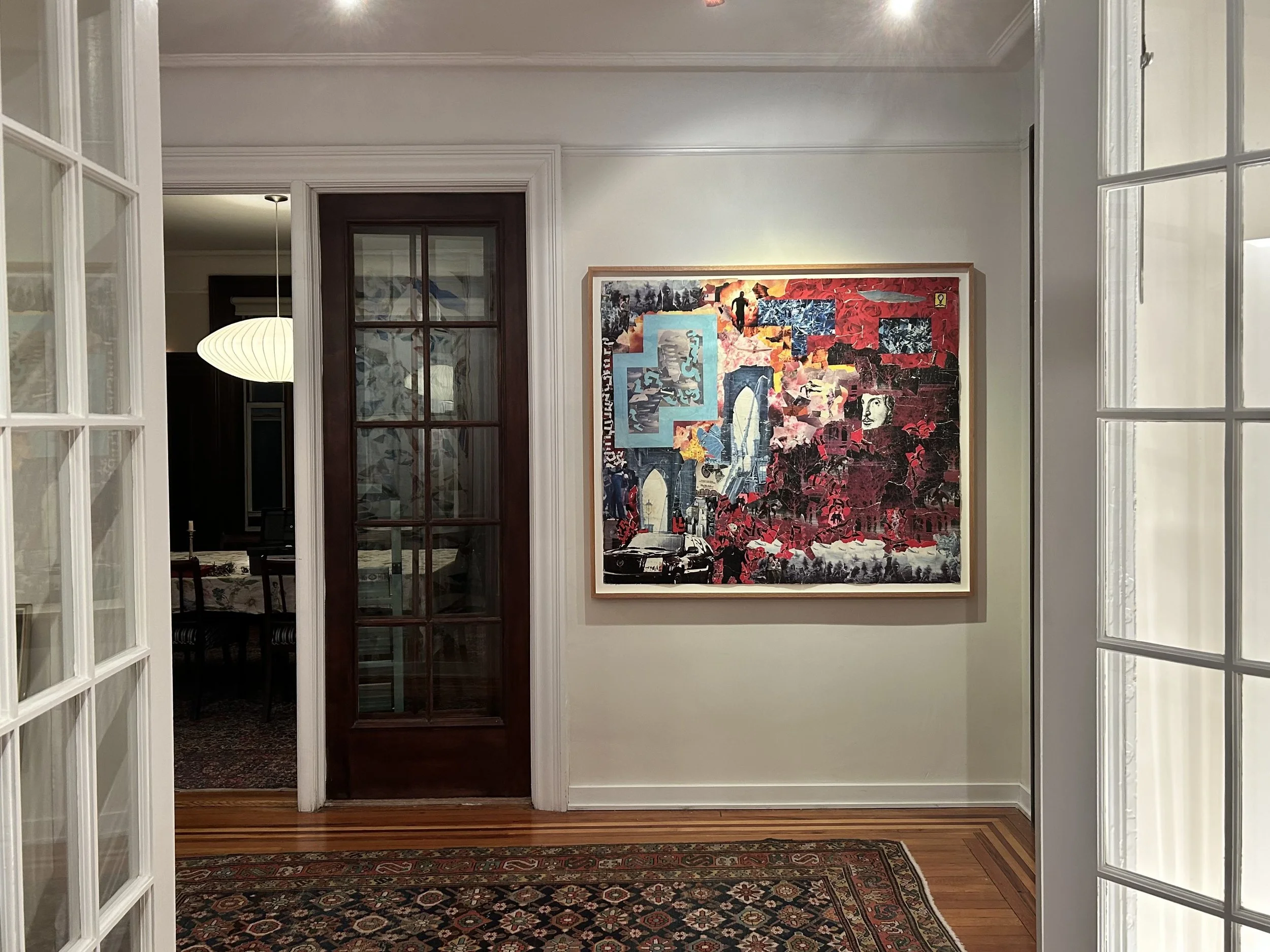
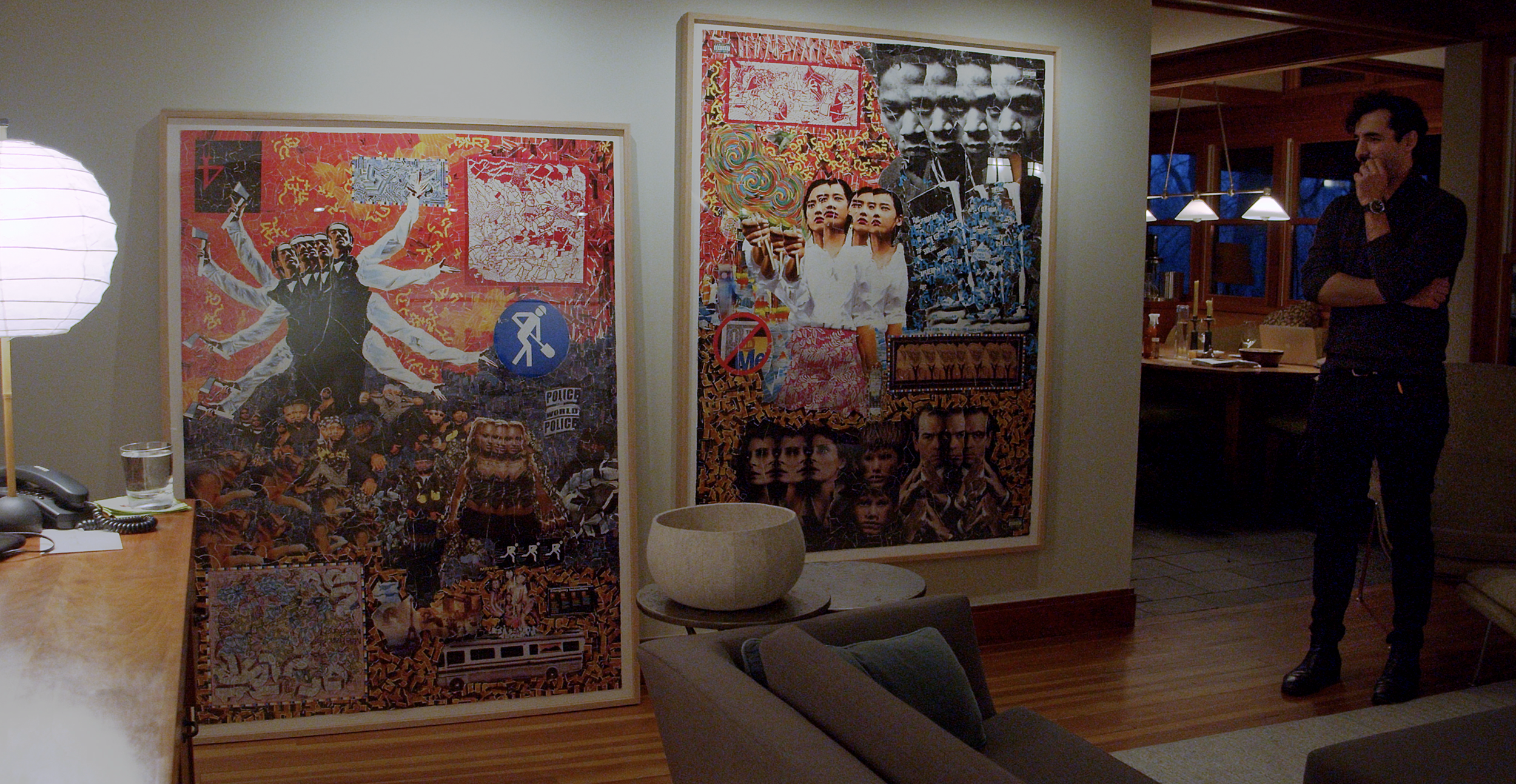
Harlem Frames was entrusted with the custom framing of an original work by New York collage artist Michael Anderson (1968–2020), now installed in a private collection.
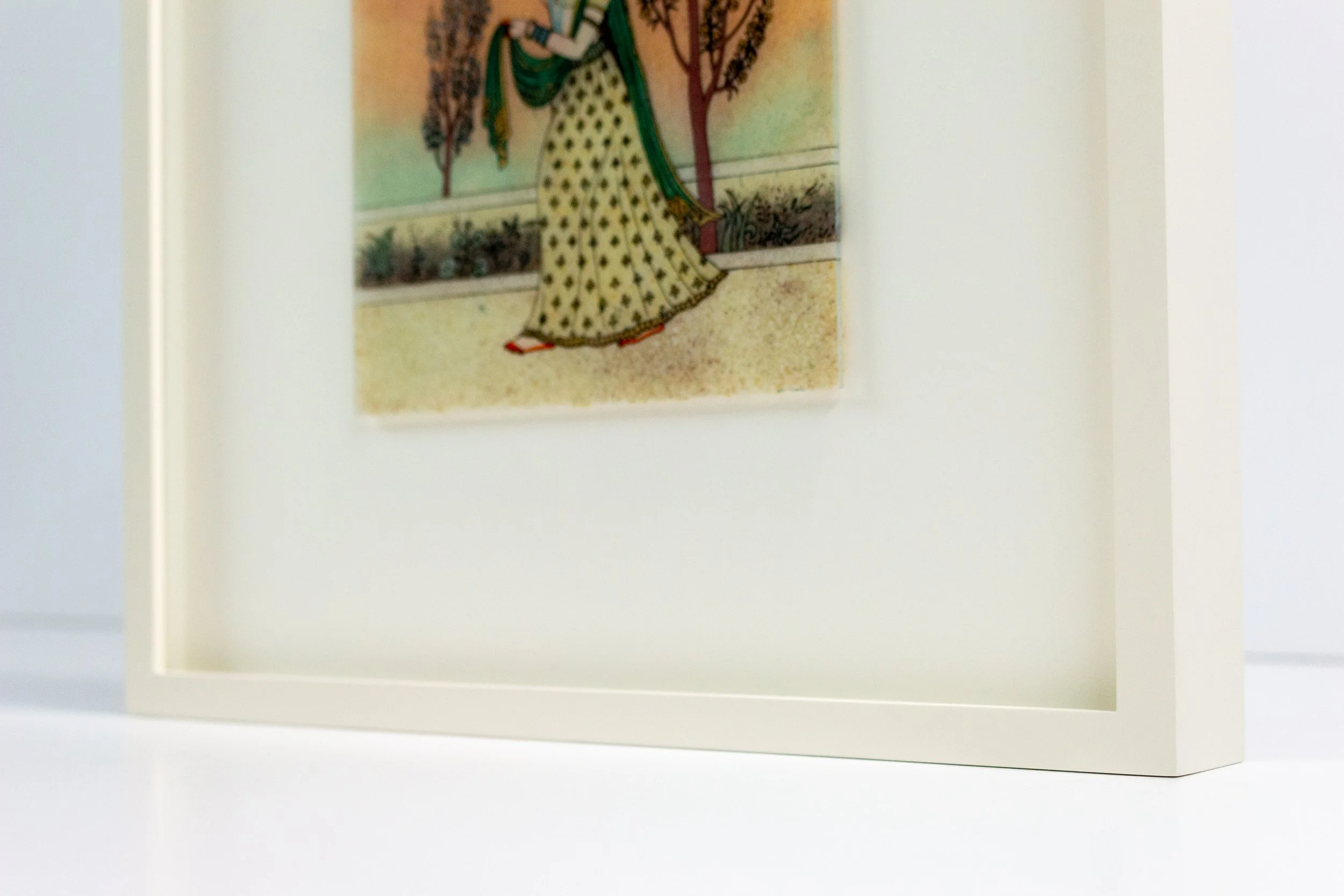
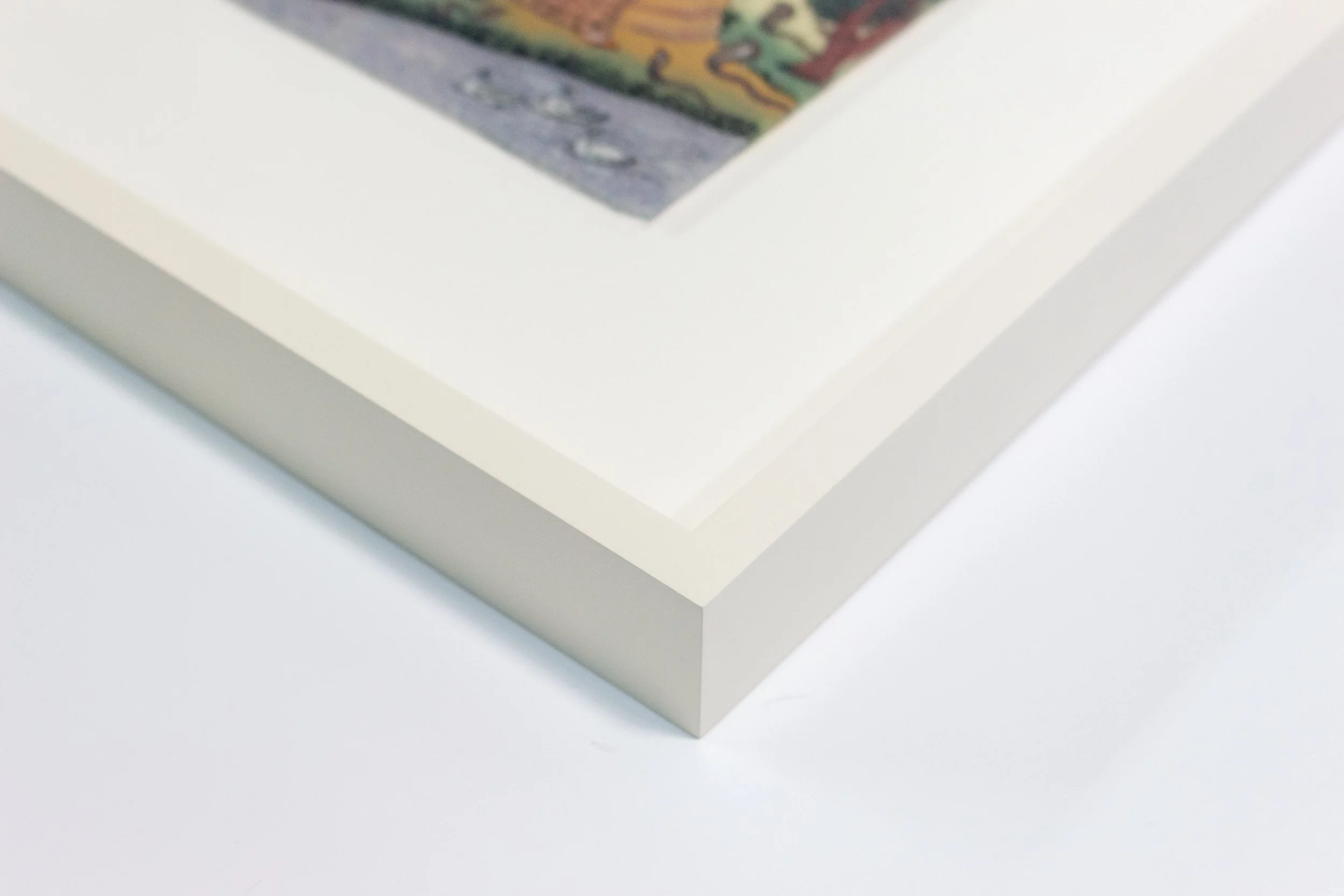
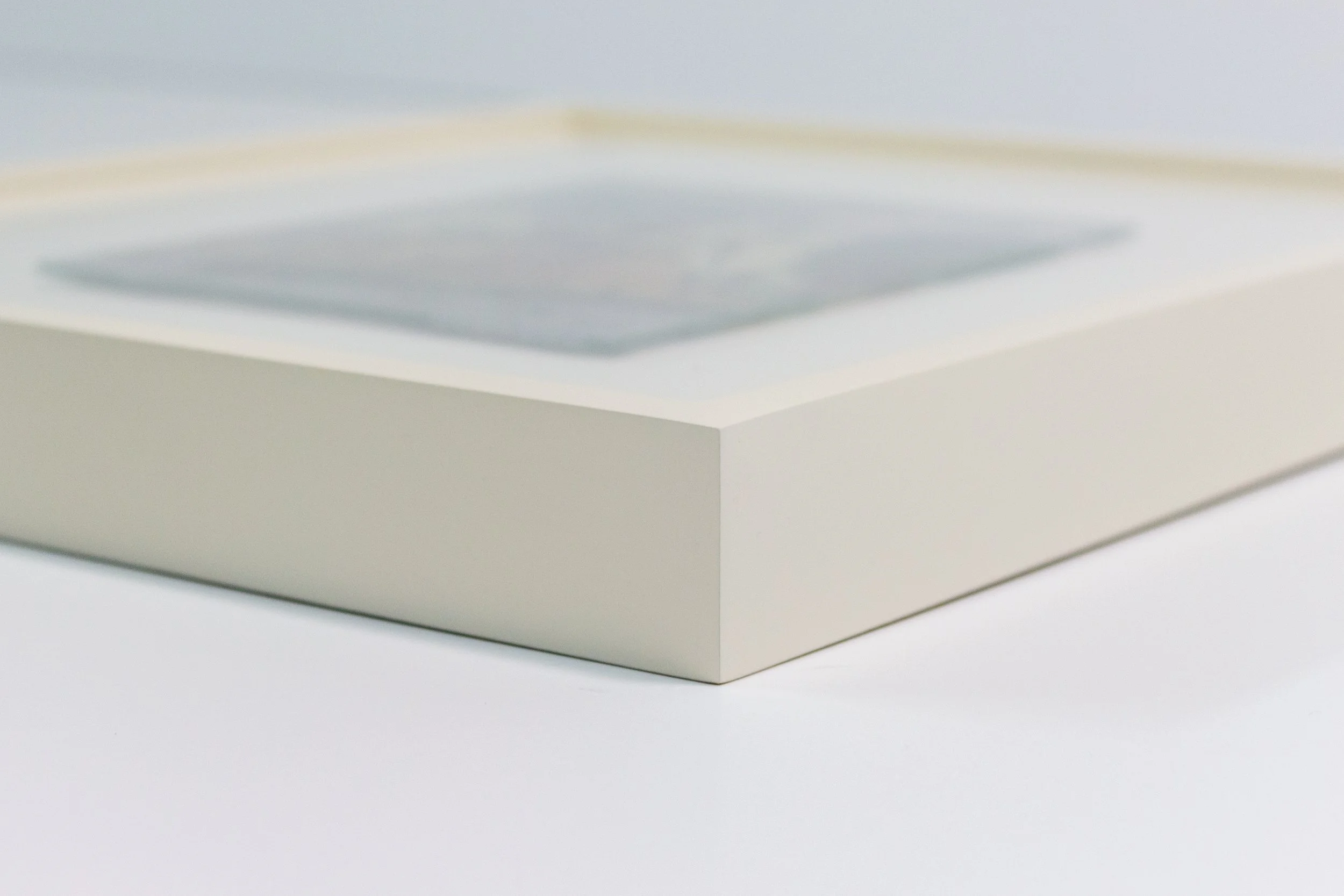
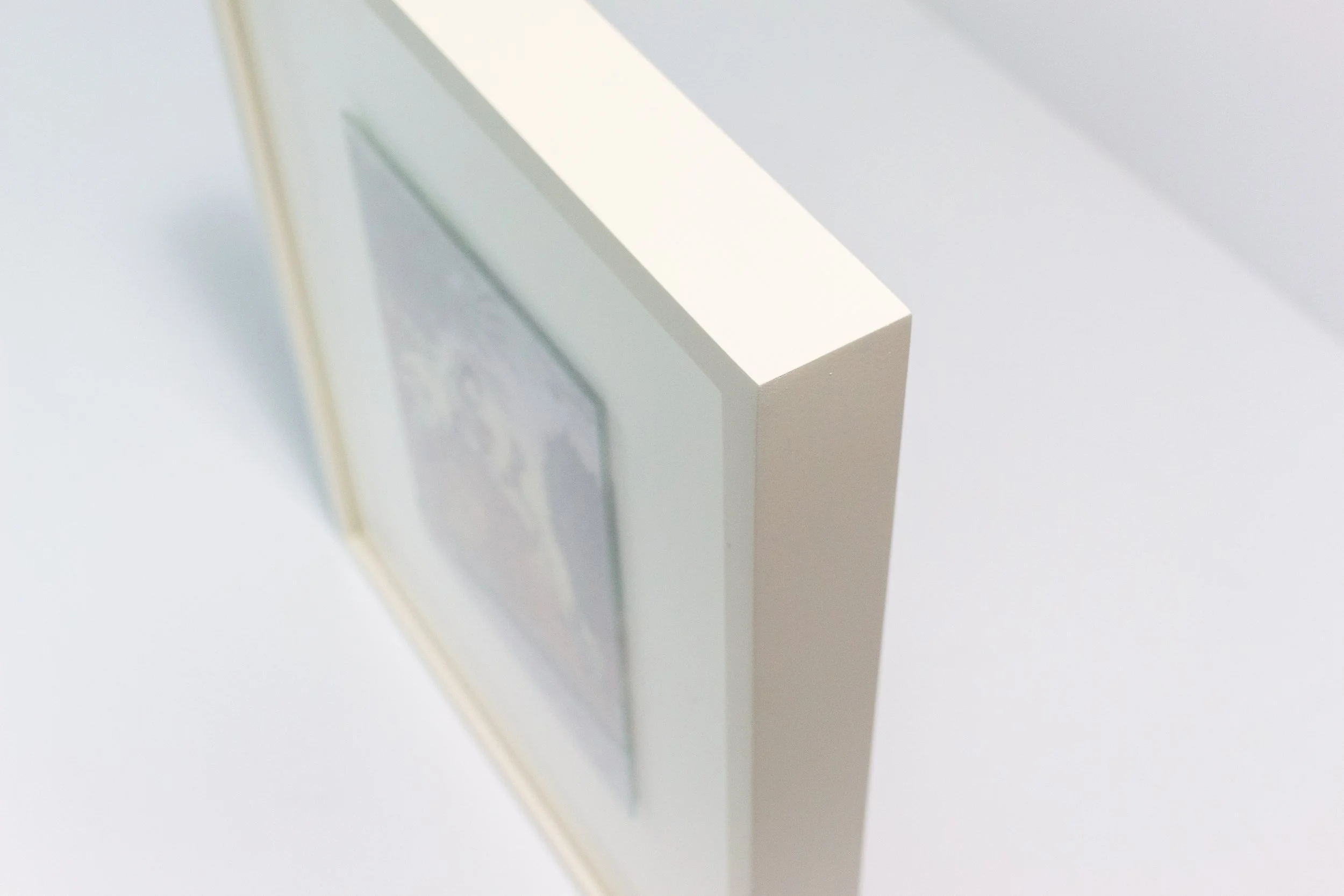
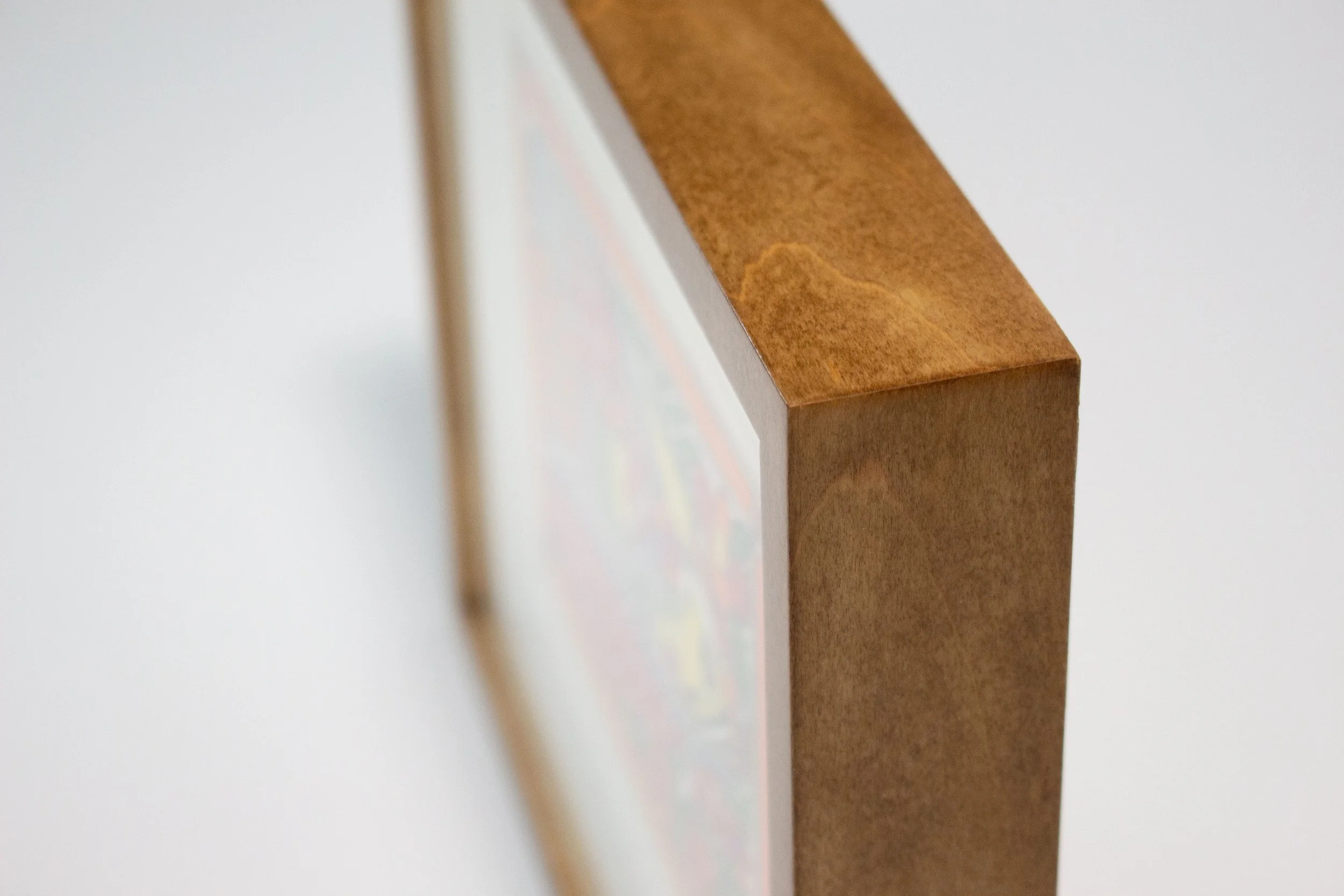
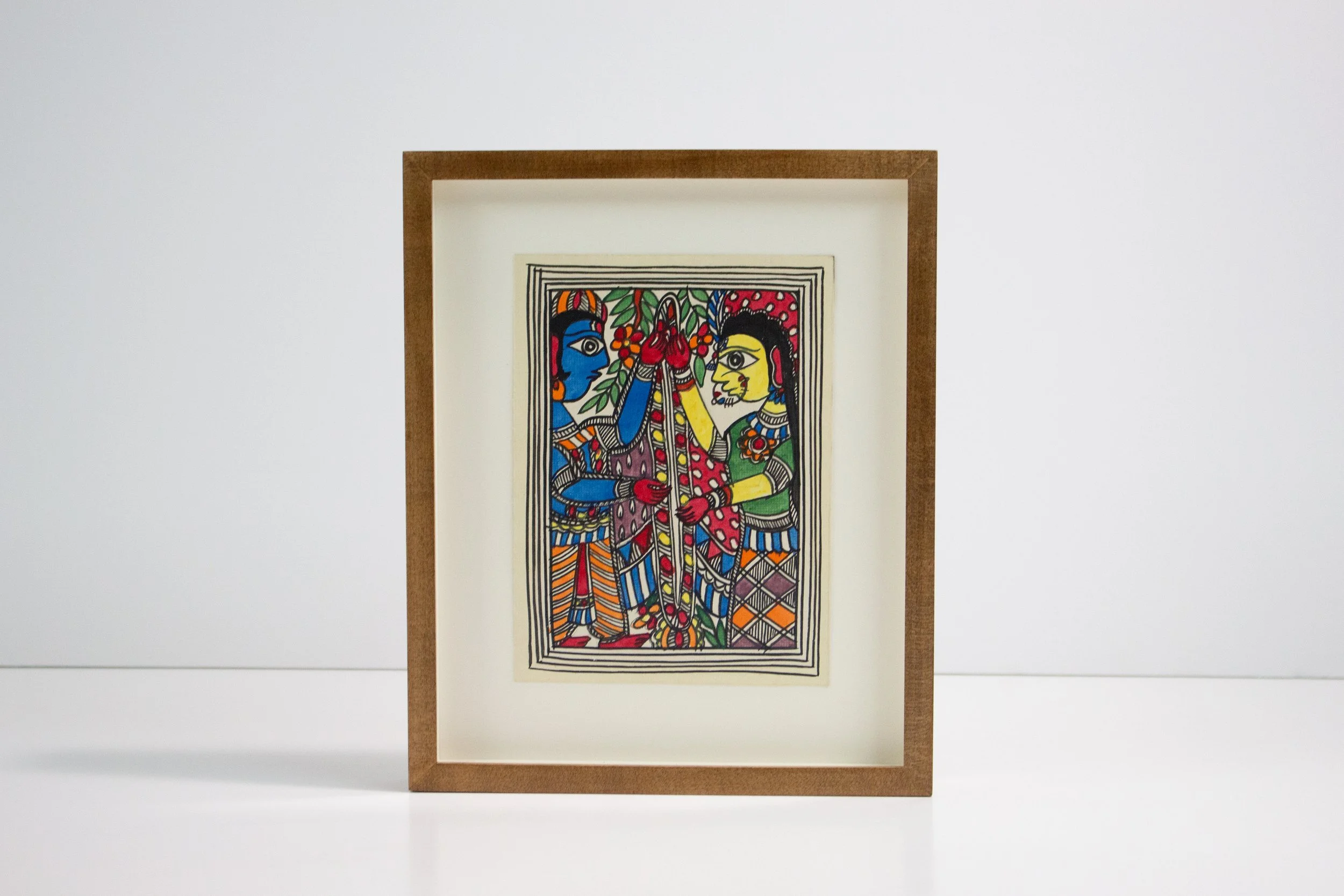
The natural wood presentation provides a quiet architectural boundary around Anderson’s densely layered composition, allowing its saturated color, fragmented imagery, and physical texture to remain the focus.
Michael Anderson
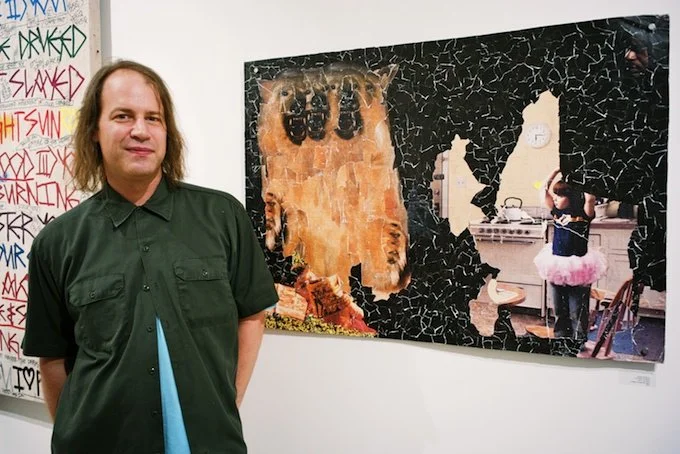
(photo courtesy of Artefuse)
A Bronx-born New York artist, Anderson developed a distinctive approach to collage using imagery sourced largely from posters gathered from city streets. He cut, layered, and reconstructed these fragments into complex compositions that move between abstraction and representation, often reflecting the visual intensity and contradictions of contemporary urban life.
His works combine advertising, popular culture, portraiture, pattern, and found imagery into compositions that feel simultaneously chaotic and carefully constructed.
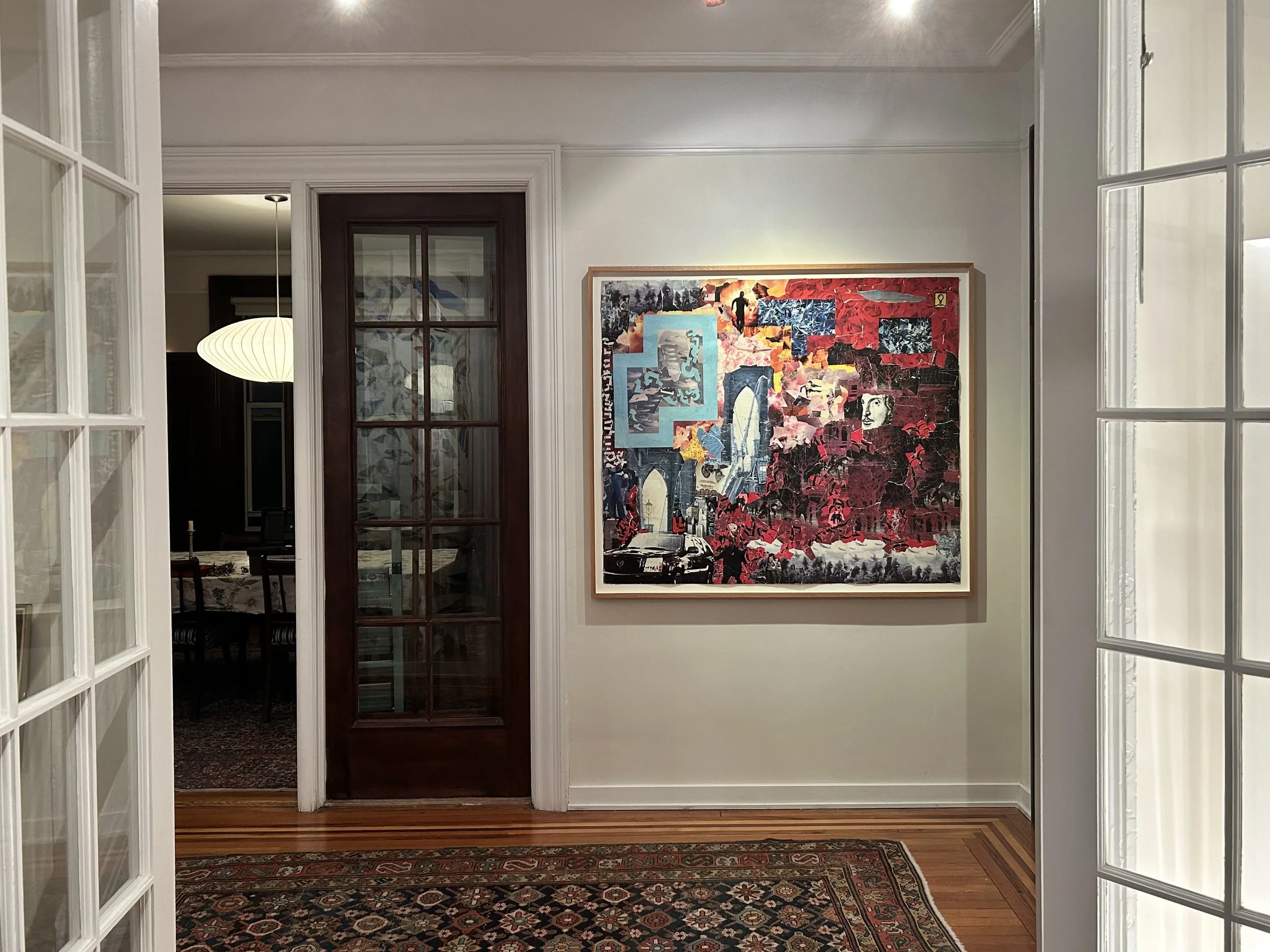
Framed by Harlem Frames
For this original Anderson work, Harlem Frames created a custom natural wood frame designed to complement the piece without competing with its exceptionally active surface.
Working with an original collage requires particular consideration for the artwork’s scale, construction, edges, and layered materials. Our approach centered on careful handling and a restrained presentation that preserves the visual impact and physical character of Anderson’s work.
Now installed within a private collection, the finished piece demonstrates what we value in custom framing: supporting the artwork while allowing the artist’s own language to command the space.
Artist: Michael Anderson (1968–2020)
Collection: Private Collection
Harlem Frames Services: Custom Framing
Presentation: Natural Wood Frame
Lana Turner: Person Place Thing
Maysles Documentary Center · Harlem · 2026
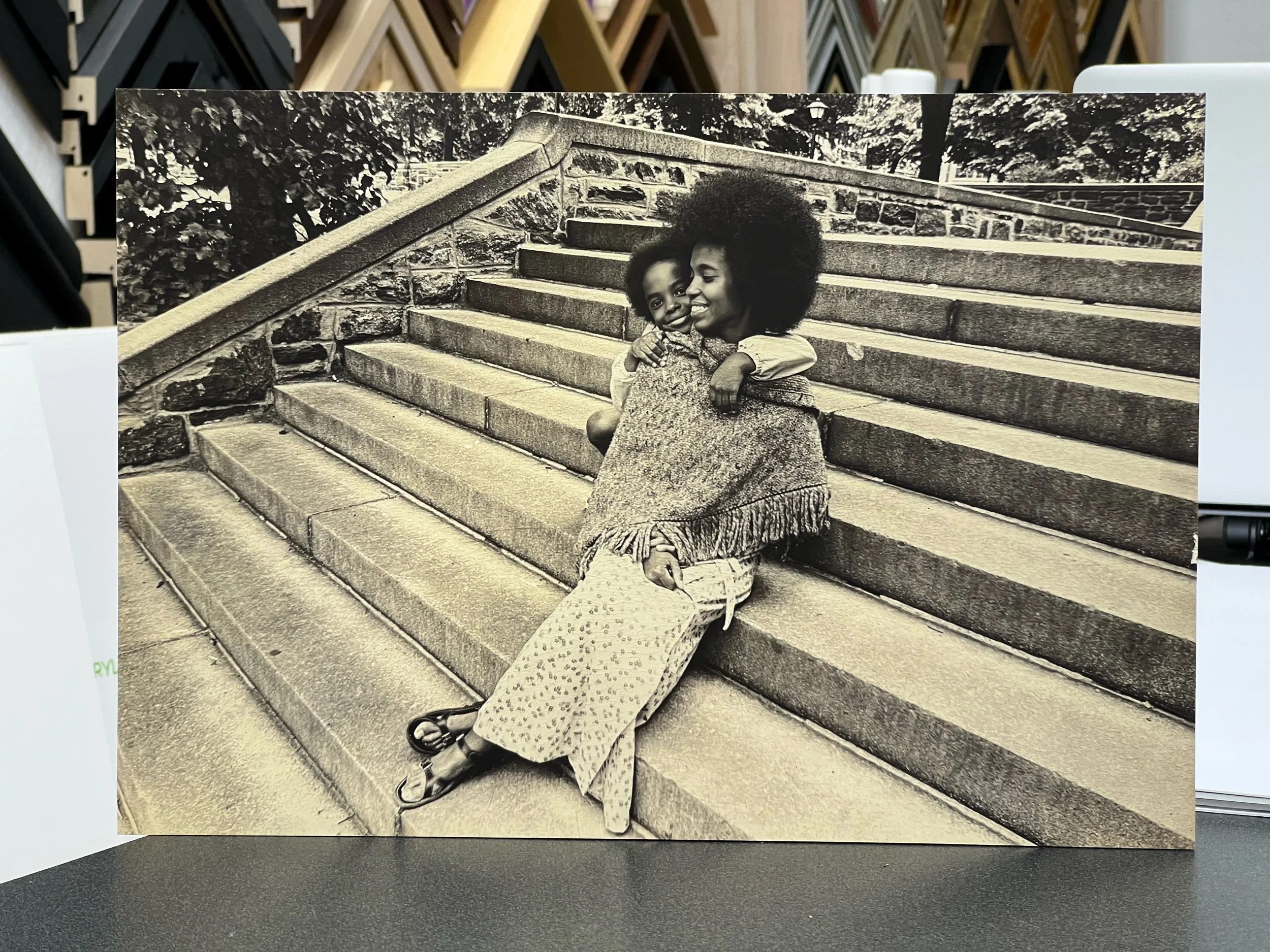
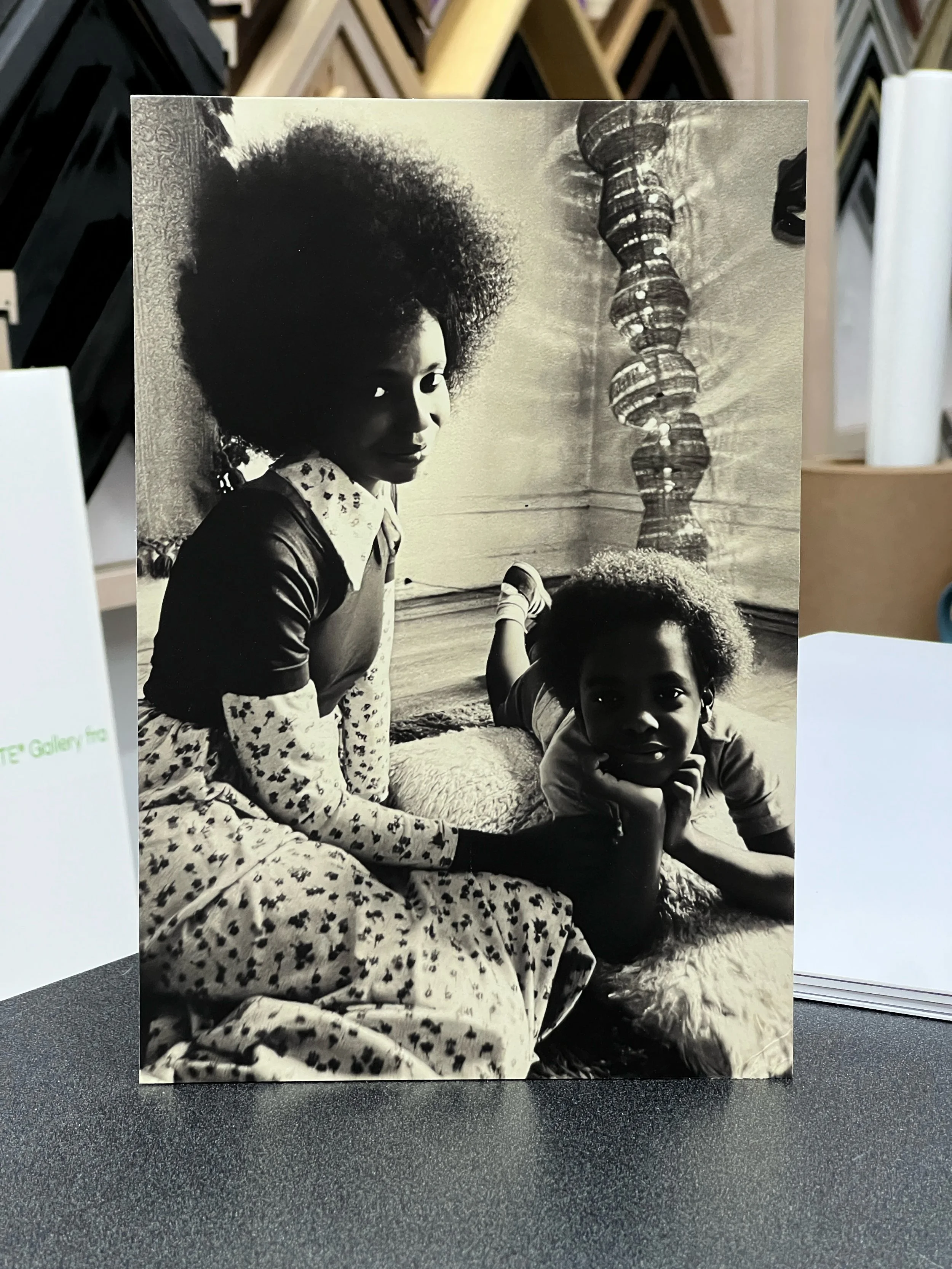
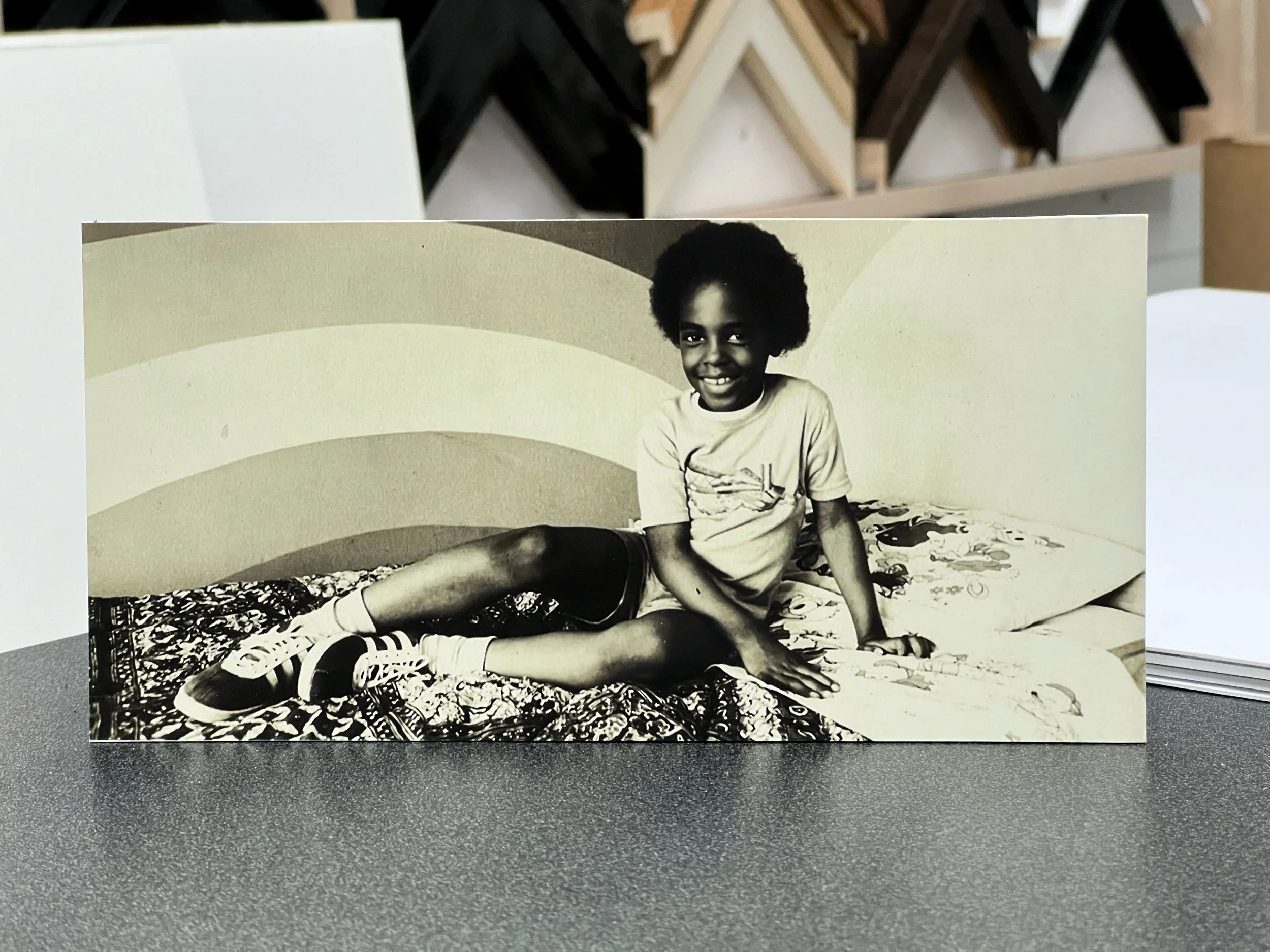
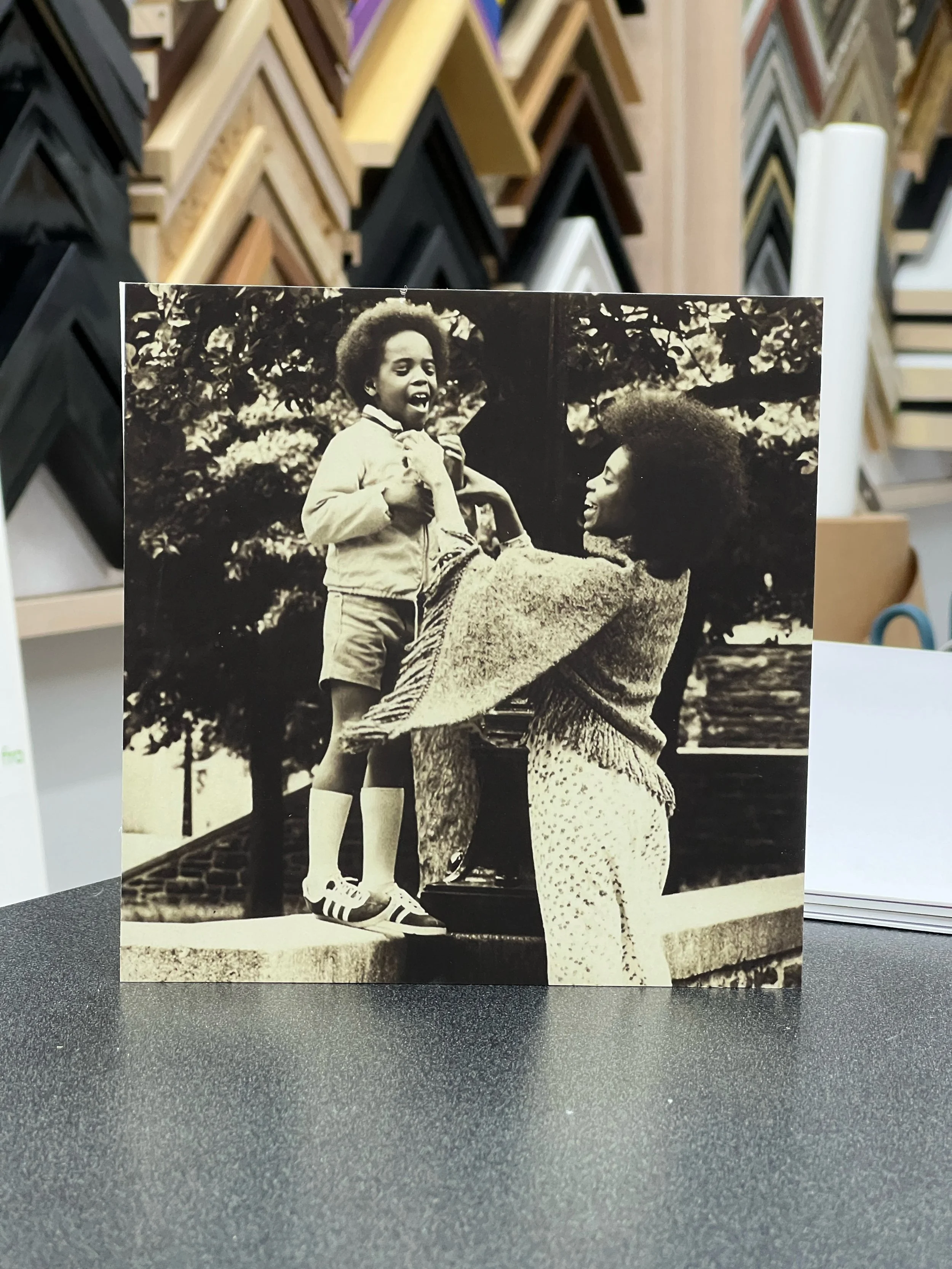
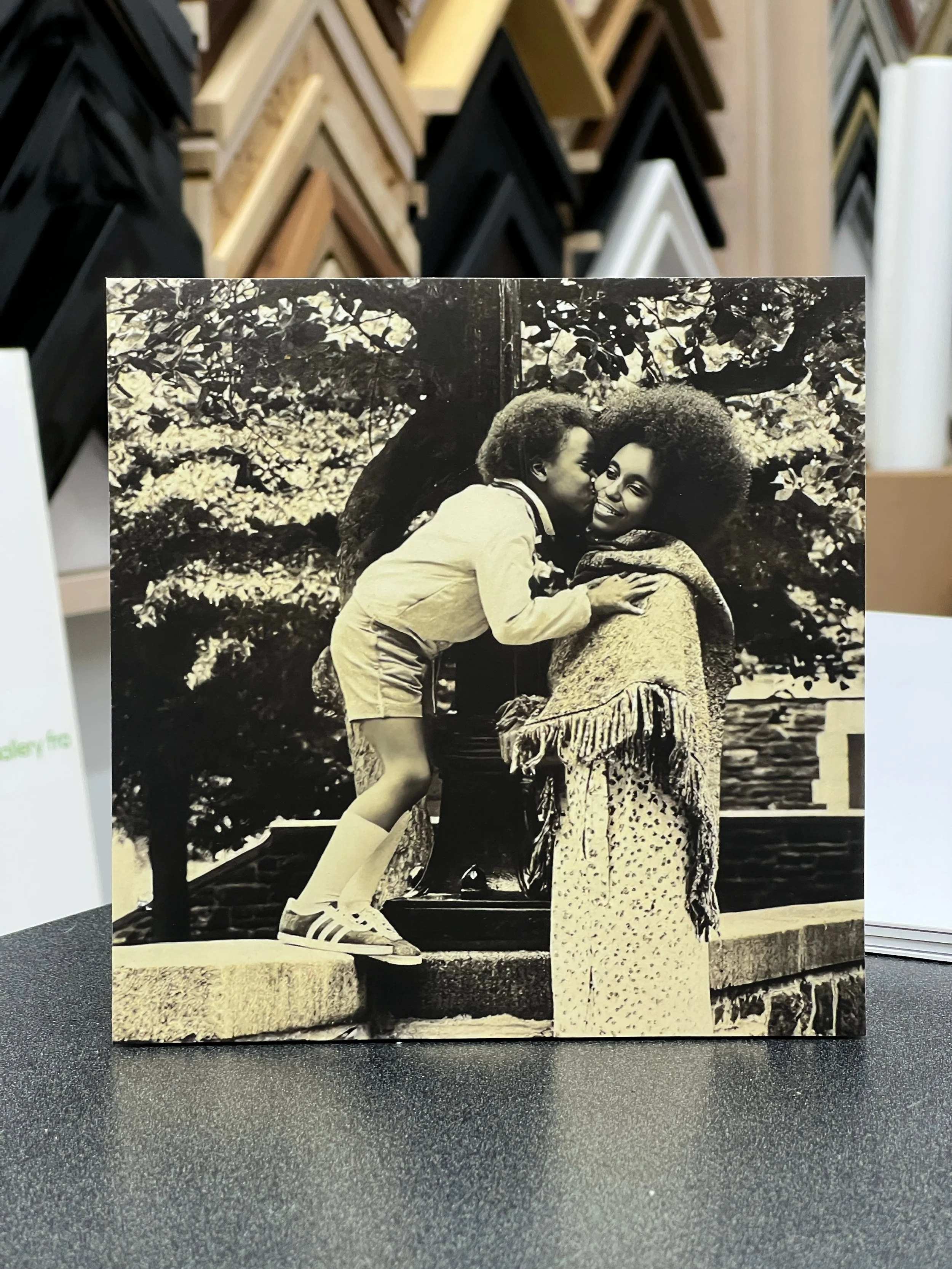
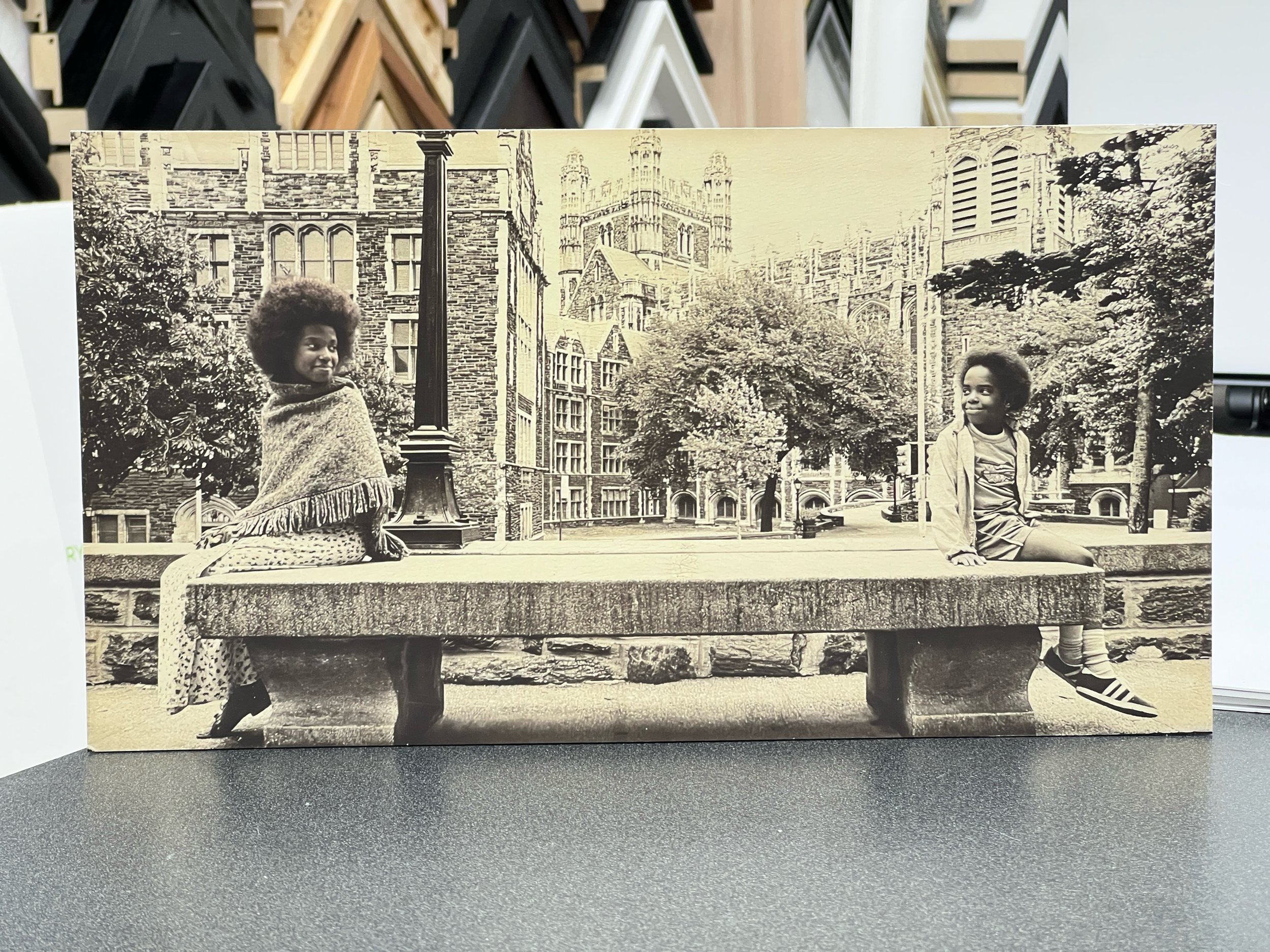
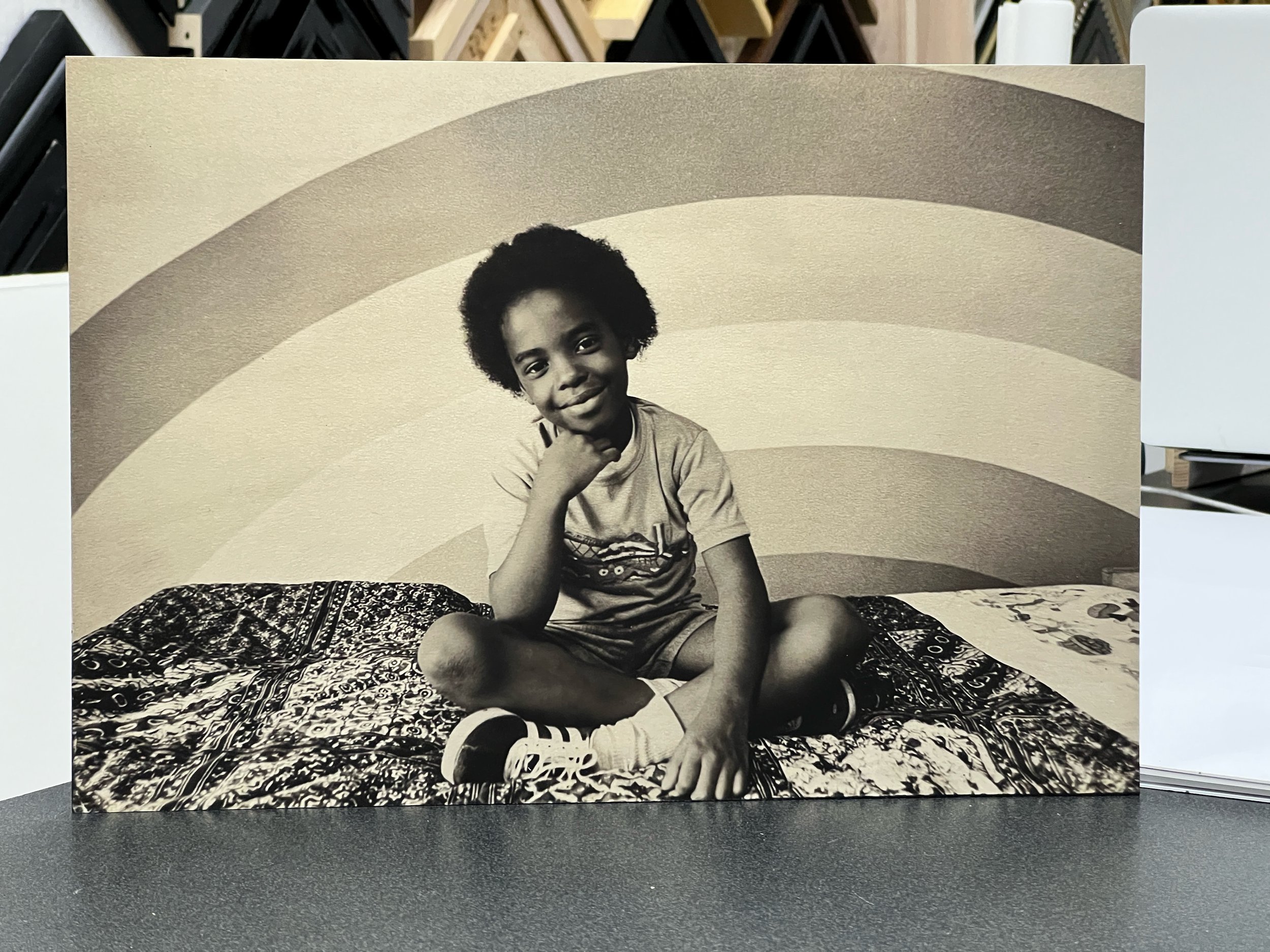
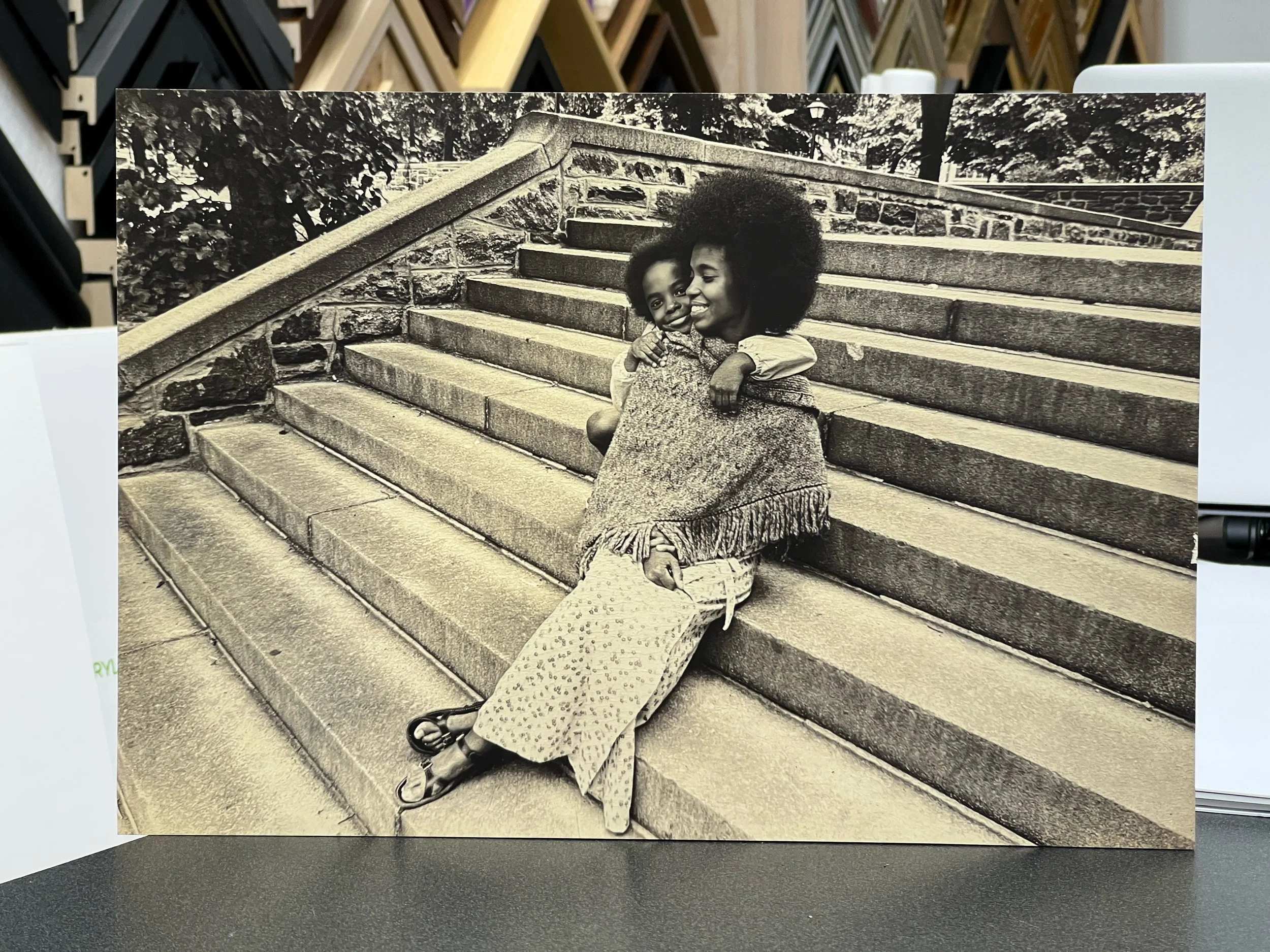
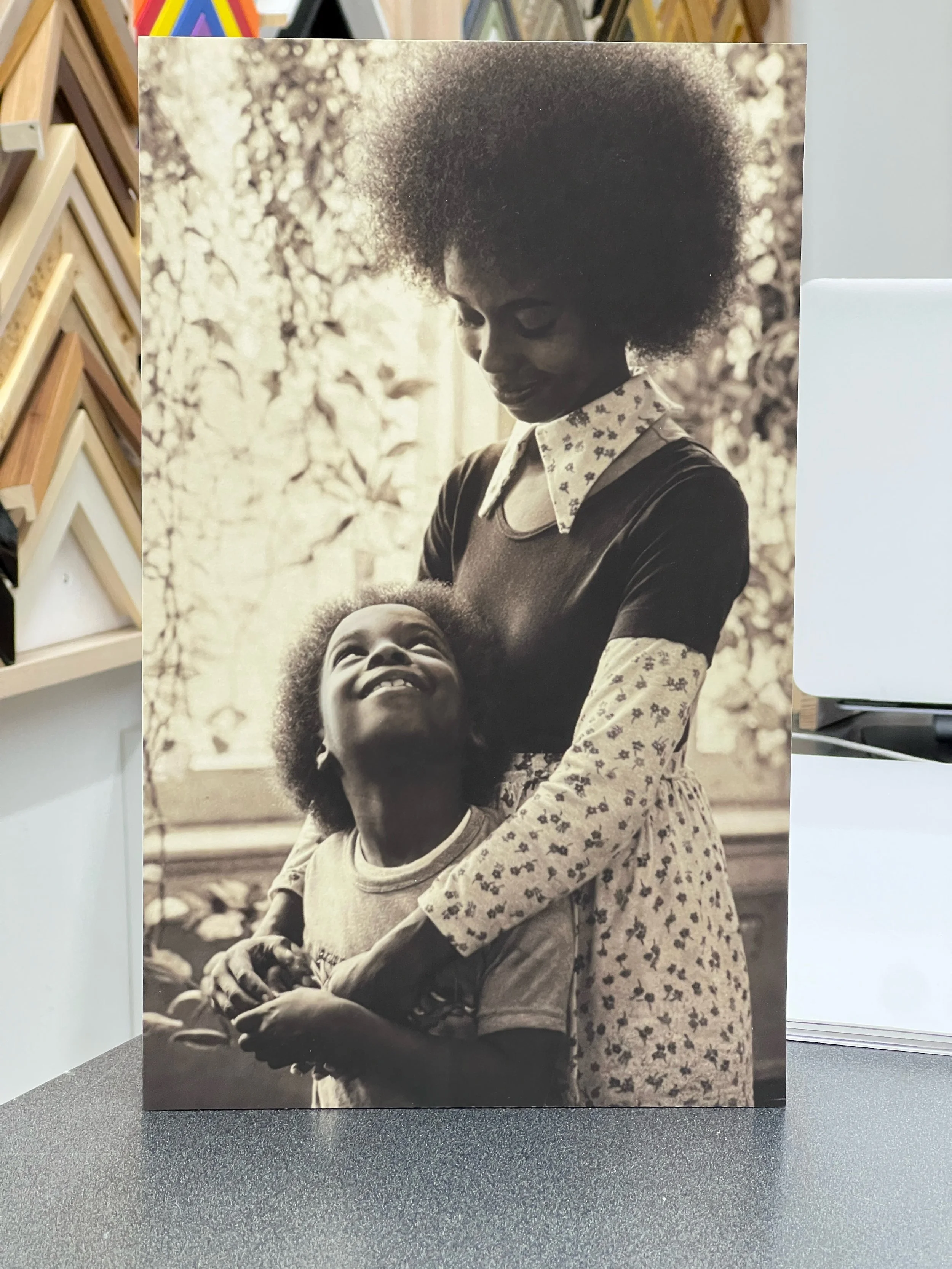
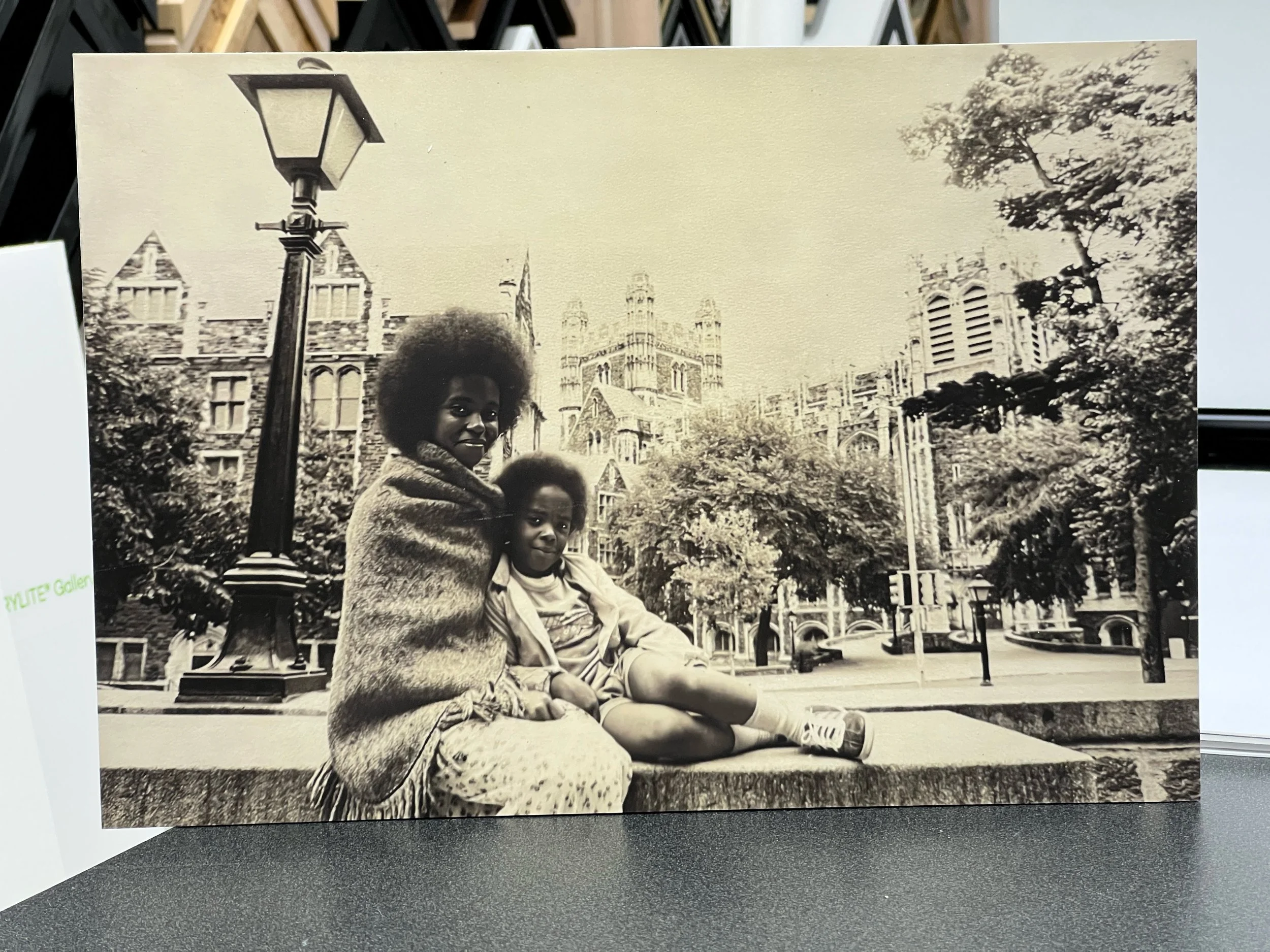
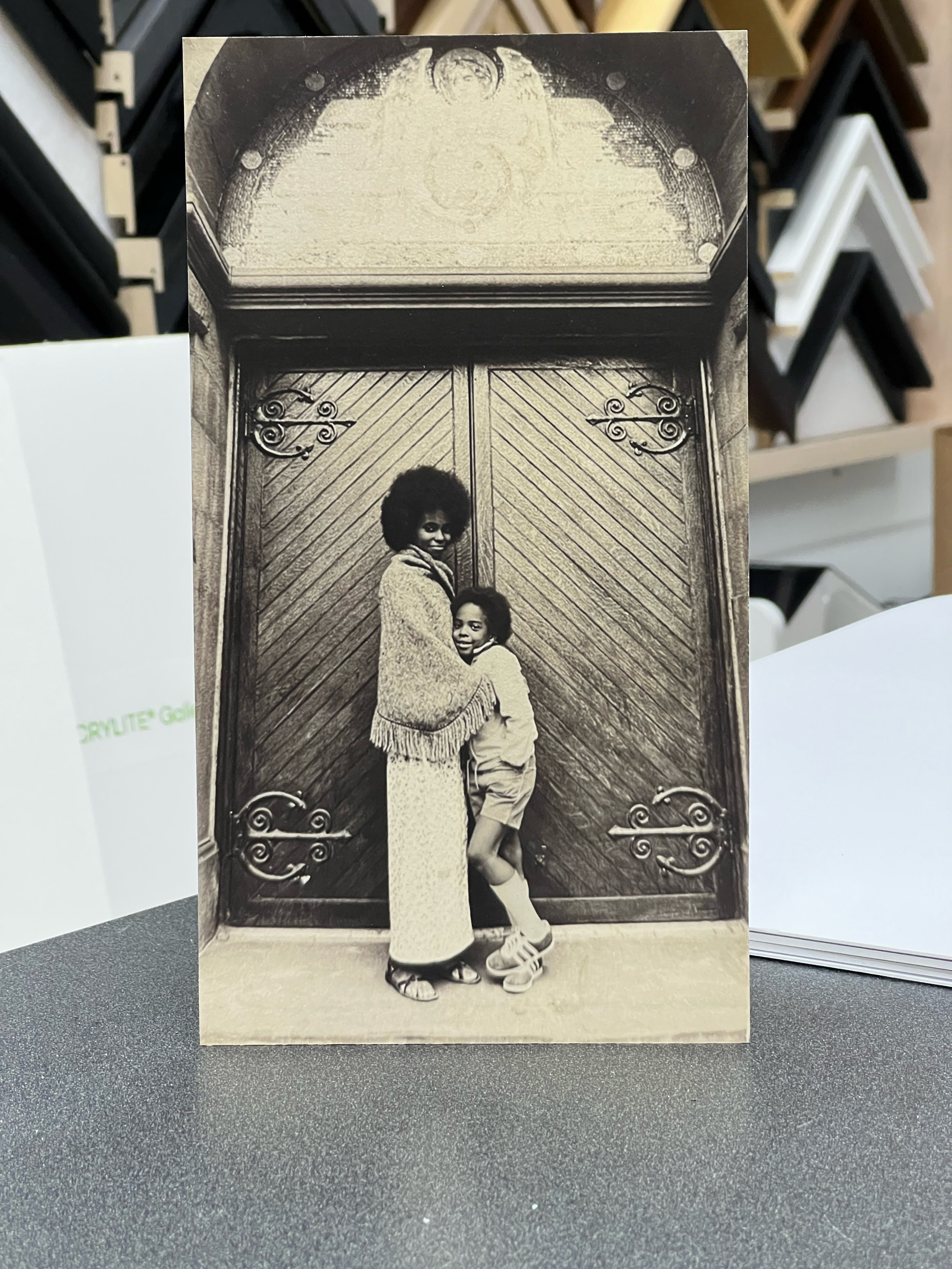
Harlem Frames worked with Lana Turner and the Maysles Documentary Center to prepare a series of personal photographs for display in connection with Person Place Thing: Lana Turner, presented as part of Maysles' 2026 Black History Month programming.
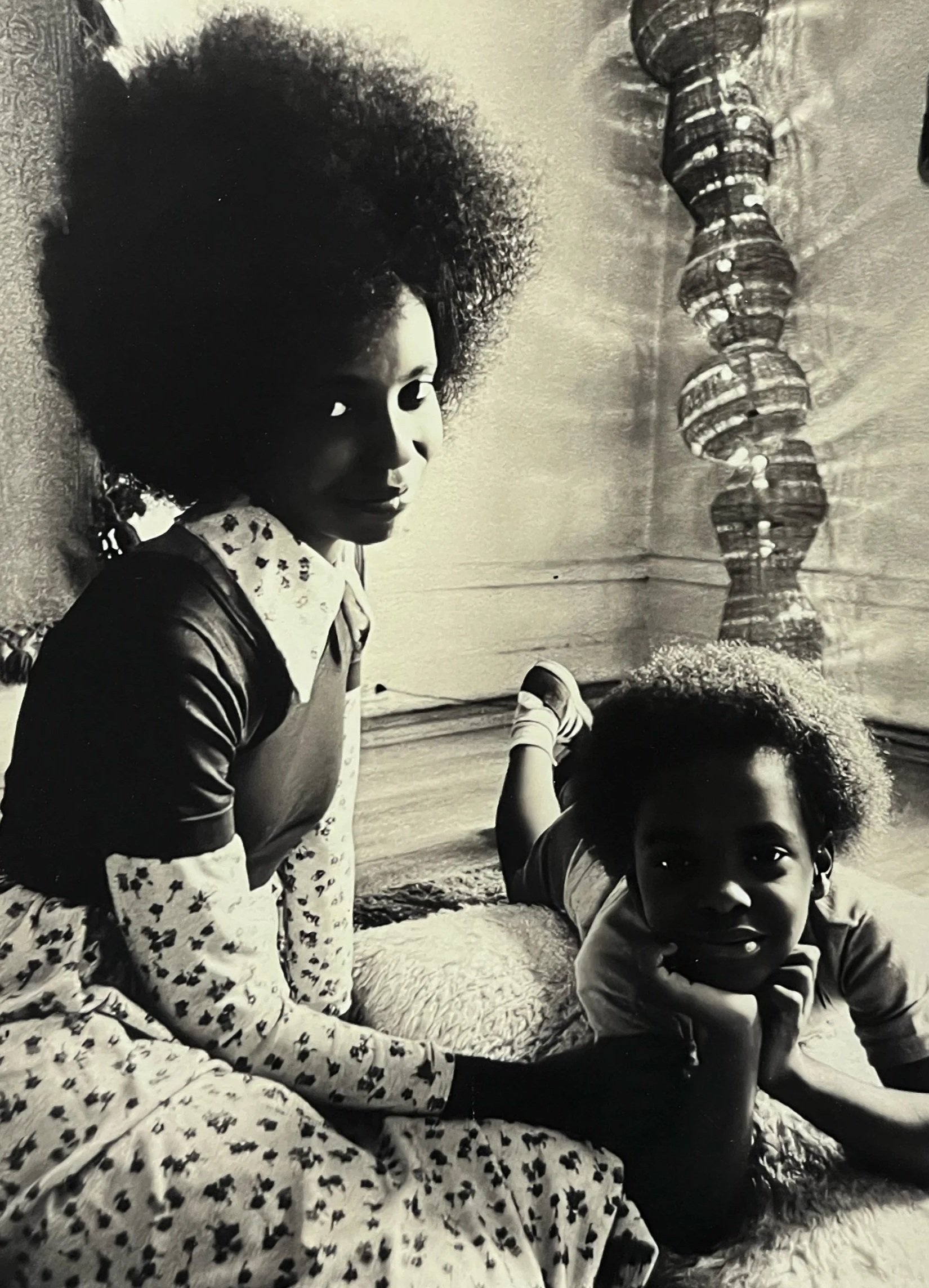
The photographs—portraits of Turner and her son from earlier years—offered an intimate complement to an evening centered on her life, memories, and deep relationship with Harlem.
Lana Turner
Portrait of Lana Turner pictured with her young son.
A longtime Harlem cultural figure, Lana Turner is an archivist, preservationist, producer, and collector known for her commitment to celebrating Black style, history, and culture.
Her extensive collection of vintage clothing has appeared in fashion, gallery, and museum exhibitions, while her broader work has included initiatives devoted to preserving and sharing Harlem's cultural history. For Person Place Thing, Turner joined host Randy Cohen for a live conversation exploring the people, places, and objects that have carried particular meaning throughout her life.
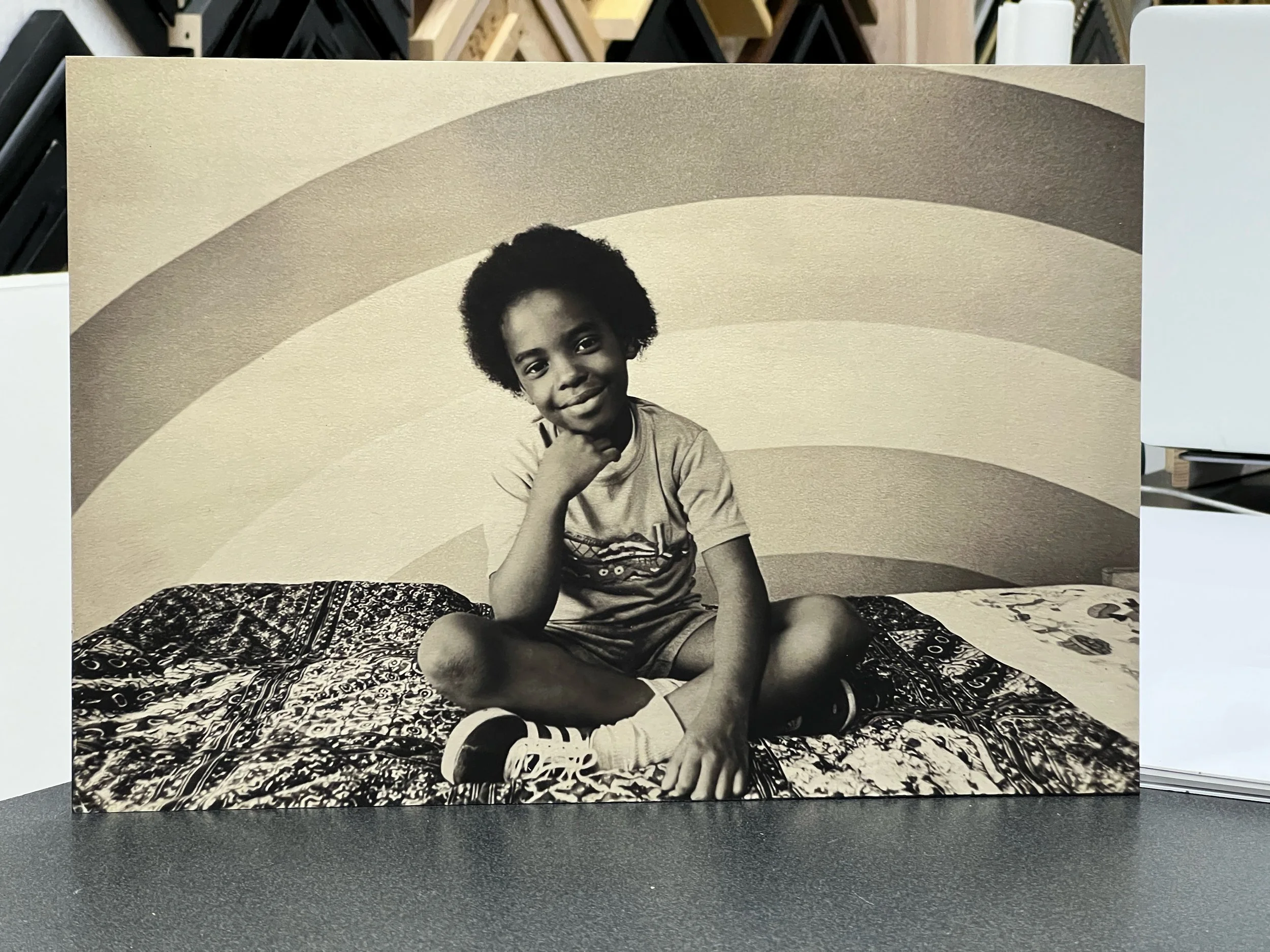
Printed & Mounted by Harlem Frames
For the presentation, Harlem Frames produced prints from Turner's personal photographs and mounted the finished images for display.
The treatment was intentionally simple, allowing the photographs—their subjects, memories, and personal history—to remain the focus.
Working with family photographs requires a different kind of sensitivity than working with conventional artwork. These images function not only as visual objects, but as records of a person's history. Our role was to reproduce and prepare them with care while creating a clean, professional presentation appropriate to the exhibition environment.
We're proud to have contributed to a project celebrating a figure so closely connected to Harlem's history, style, and cultural memory.
Featured: Lana Turner and her son
Program: Person Place Thing: Lana Turner
Location: Maysles Documentary Center · Harlem, New York
Date: February 12, 2026
Harlem Frames Services: Fine Art / Photographic Printing · Mat Board Mounting · Exhibition Preparation
Person Place Thing: Lana Turner at Maysles Documentary Center
Joan Mitchell
Private Collection · Custom Fitting & Installation by Harlem Frames
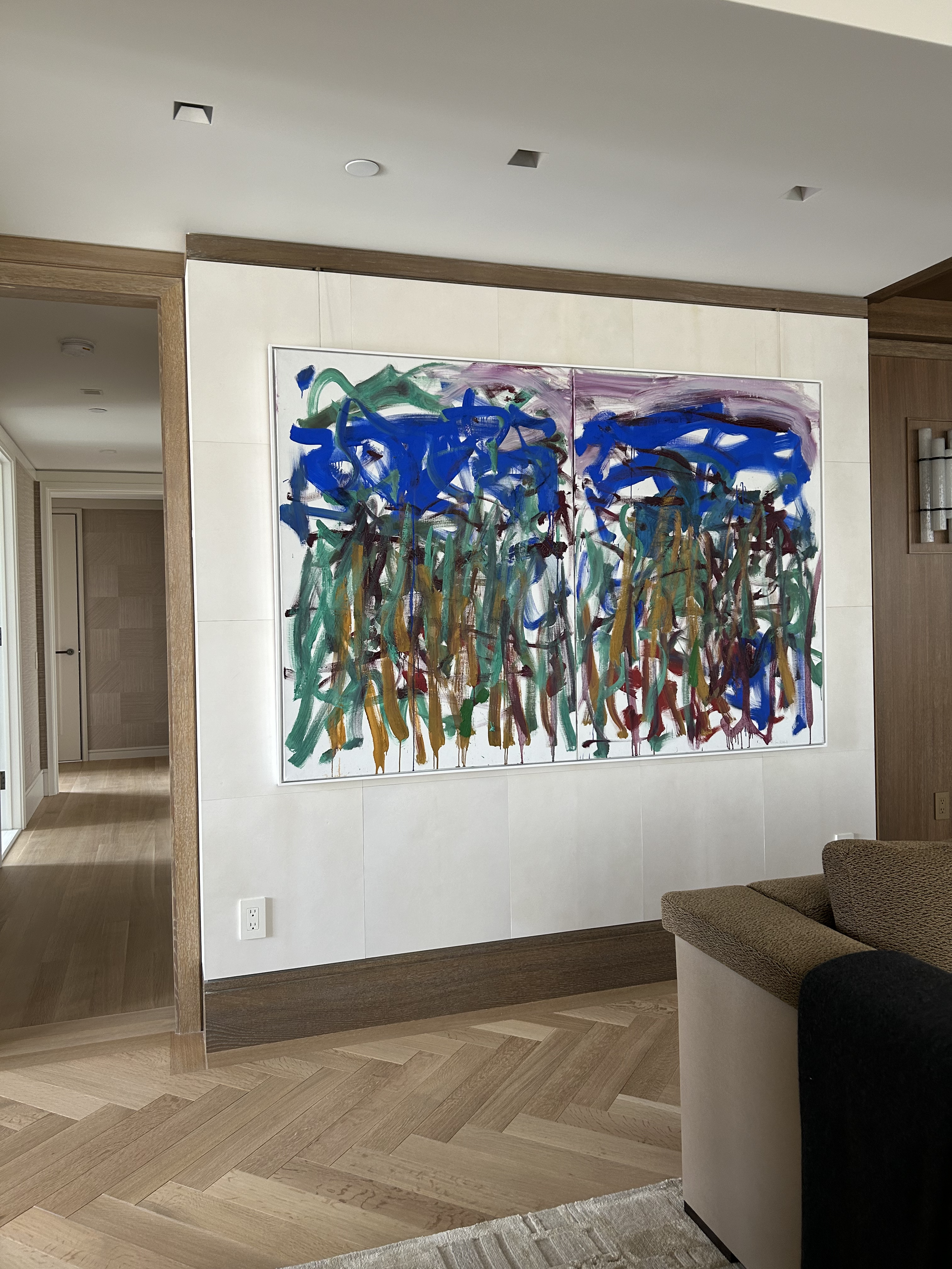
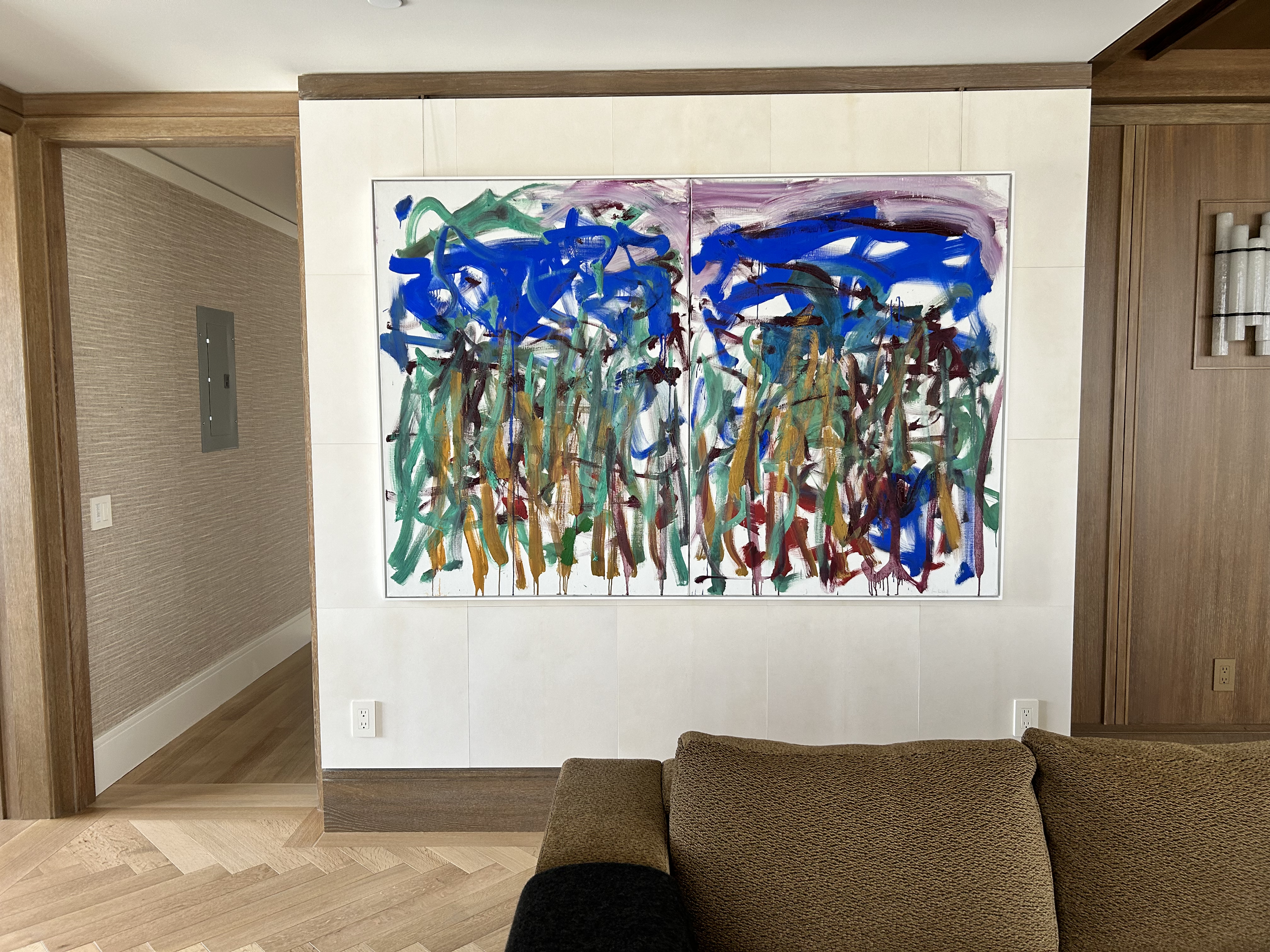
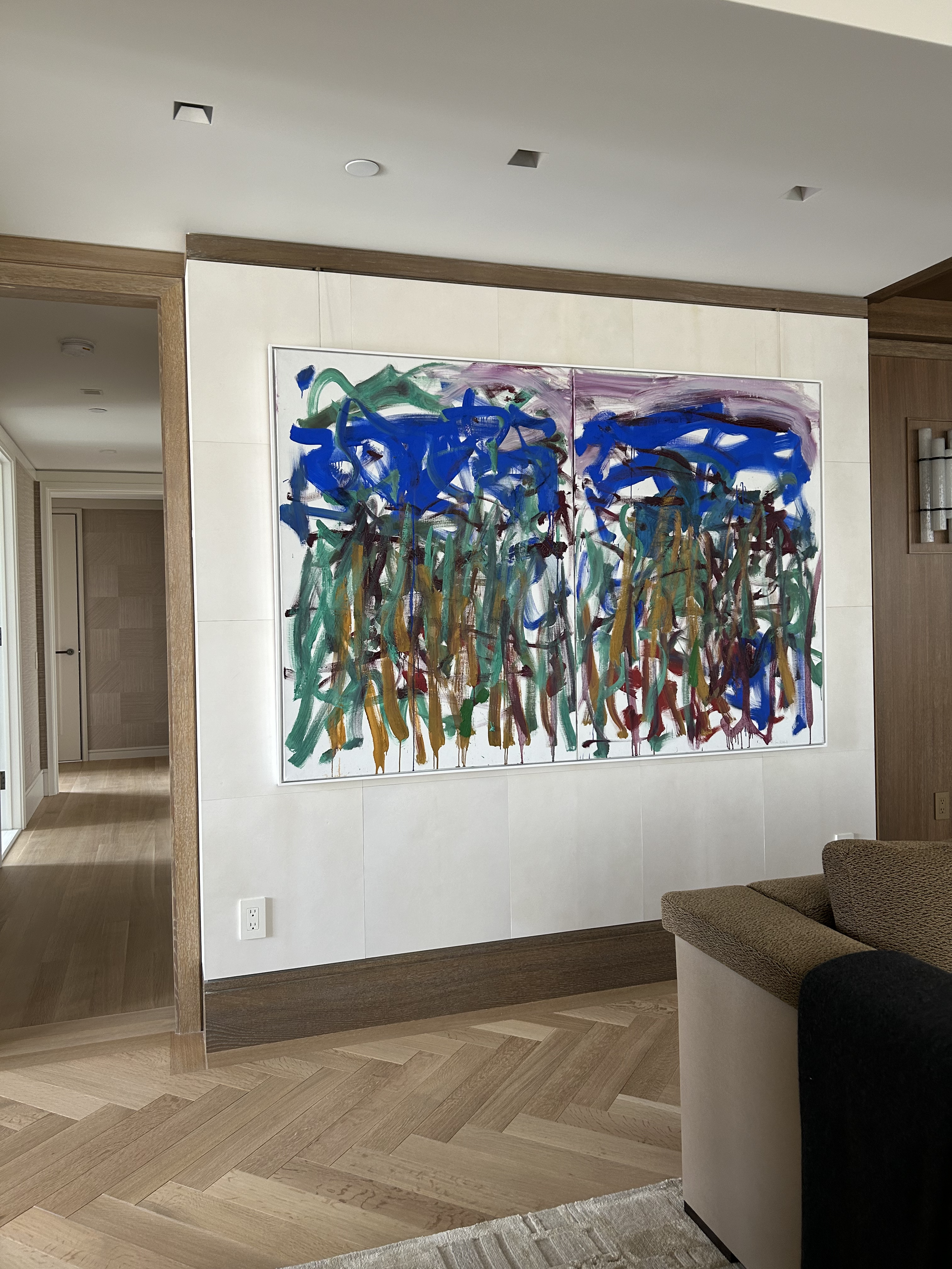
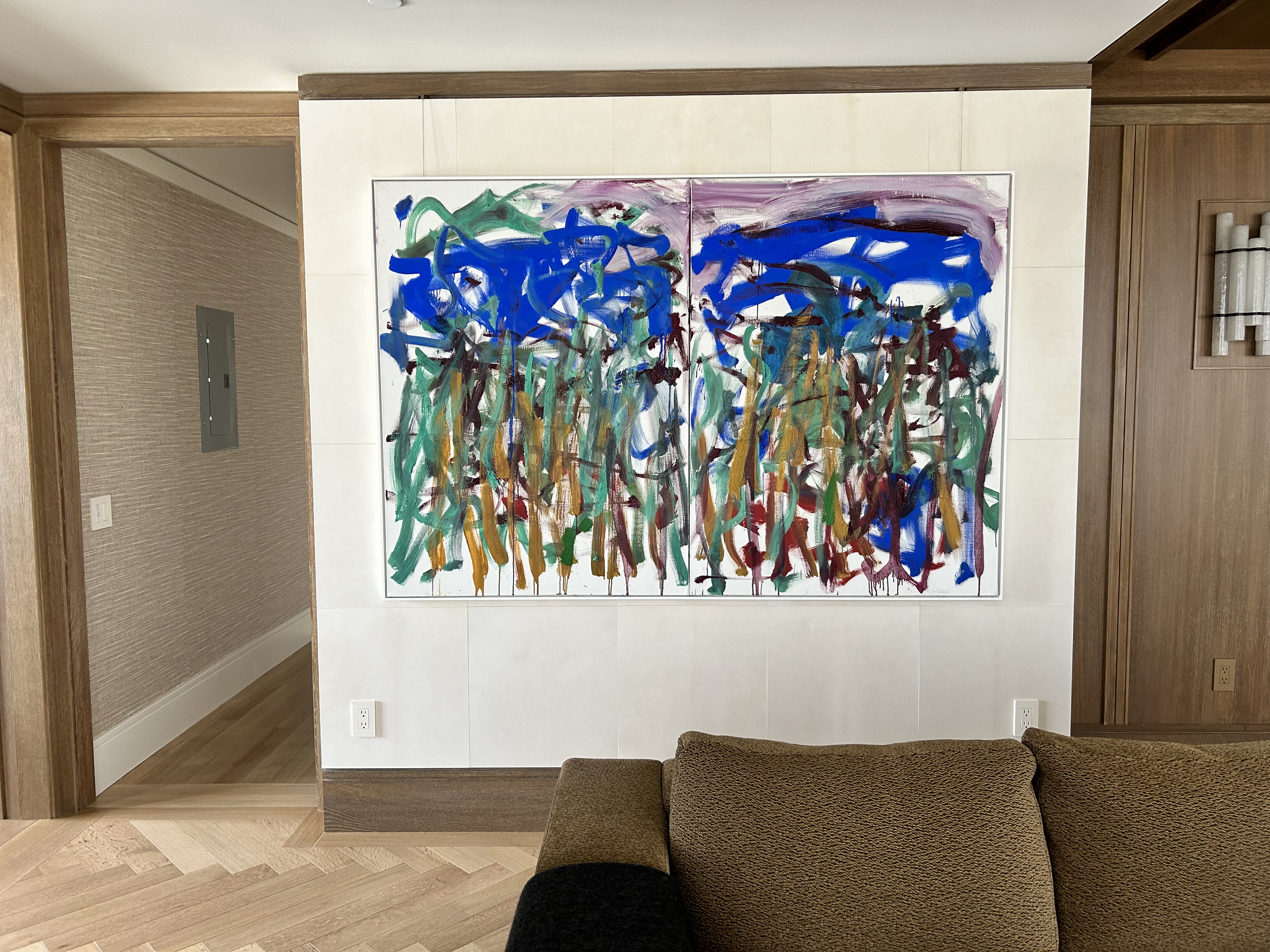
Harlem Frames was entrusted with the fitting and installation of Joan Mitchell’s Hours (1989) for a private collection. Presented without glazing, the large-scale work was carefully fitted into its frame and professionally installed within the collector’s home, allowing the surface and physical presence of the painting to remain unobstructed.

Joan Mitchell
(1925–1992)
(Image courtesy of https://www.joanmitchellfoundation.org/joan-mitchell/biography)
Joan Mitchell was one of the leading painters associated with Abstract Expressionism. Known for her vigorous brushwork and extraordinary command of color, Mitchell developed a highly individual approach to abstraction informed by memory, landscape, nature, and lived experience.
Created late in her career, Hours embodies the energy and materiality that distinguish Mitchell’s work—layering expansive passages of blue, green, violet, ochre, and deep red across a monumental two-panel composition.
Fitted & Installed by Harlem Frames
For a work of this scale and significance, both framing and installation require precision, restraint, and careful handling.
Harlem Frames professionally fitted Hours into its frame, preserving an unobstructed relationship between the viewer and Mitchell’s painted surface. Our team then installed the completed work within the private collection, considering its substantial scale, weight, positioning, and relationship to the surrounding architecture.
Working with original artwork of this caliber is a responsibility we approach with the utmost care. The objective is always to provide the support and presentation the artwork requires while allowing the artist’s work to remain entirely at the center of the experience.
Artist: Joan Mitchell (1925–1992)
Work: Hours, 1989
Collection: Private Collection
Harlem Frames Services: Custom Fitting · Professional Art Installation
Presentation: Framed without glazing

Lee Krasner · Past Continuous · Metropolitan Museum of Art
Original Works · Custom Framing by Harlem Frames · 2026
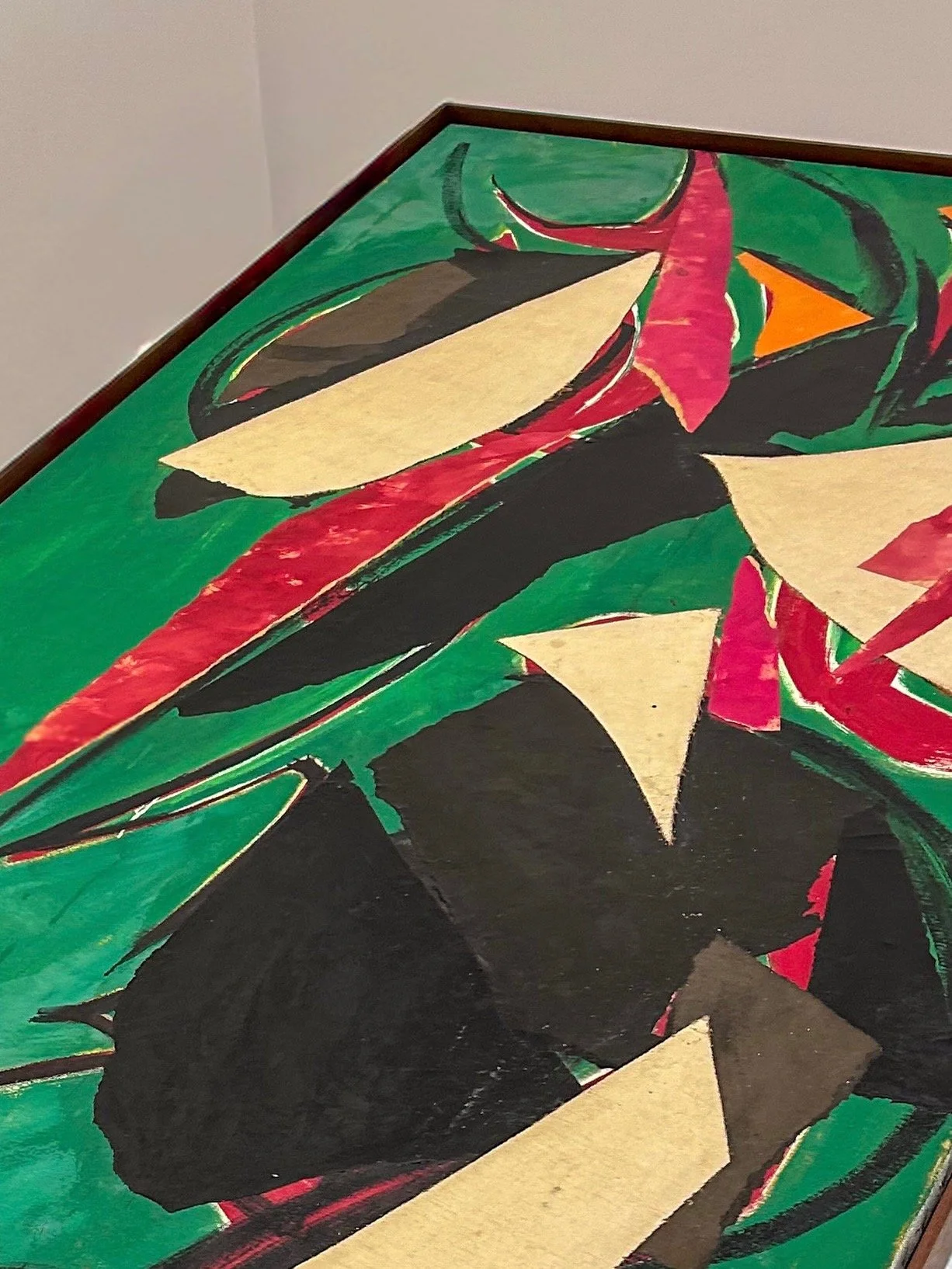
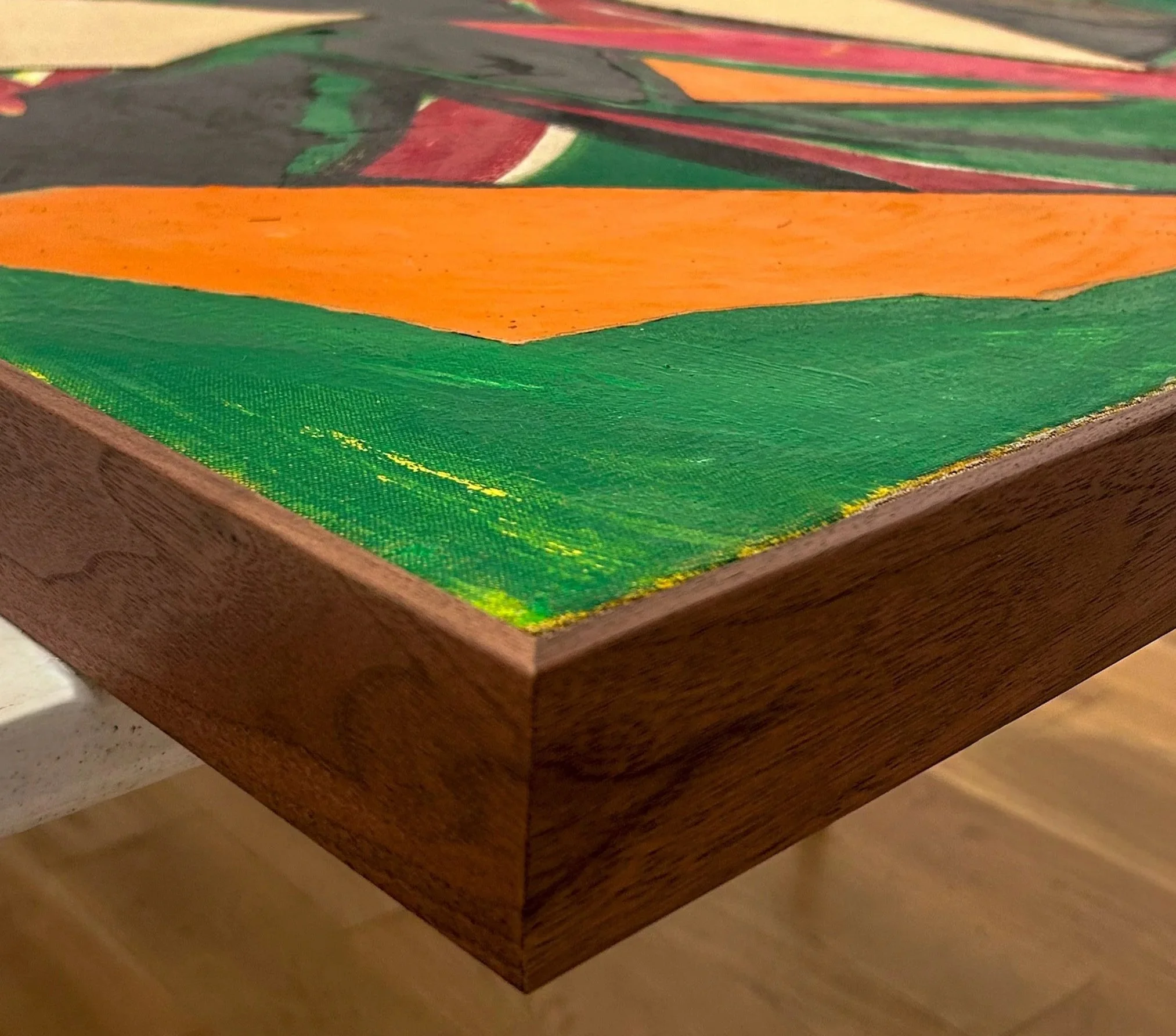
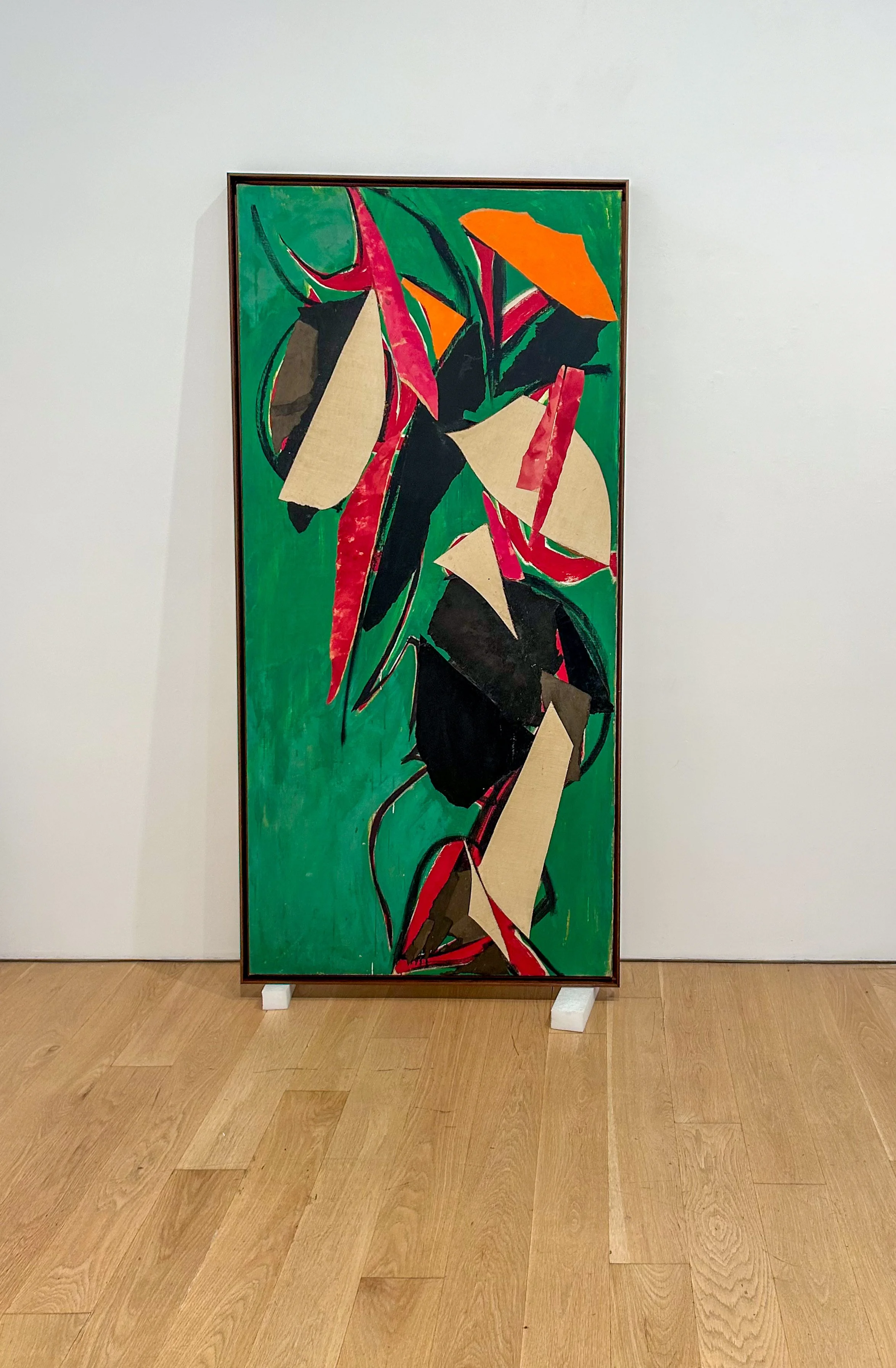
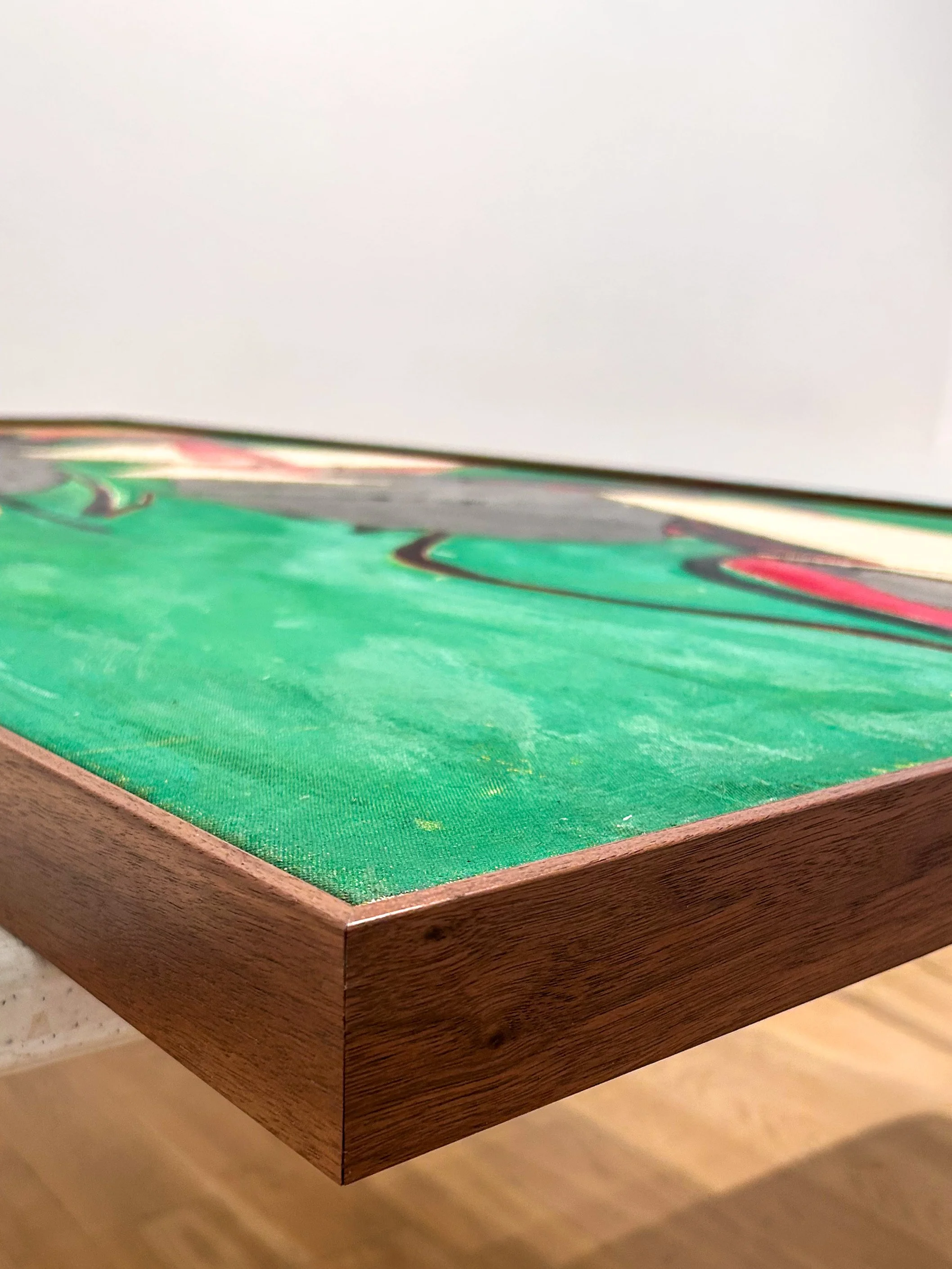
Harlem Frames was entrusted with the framing of two original works by Lee Krasner for Krasner and Pollock: Past Continuous, presented at The Metropolitan Museum of Art in New York.
Preparing works of this significance for exhibition requires precision, restraint, and an understanding that the frame should ultimately serve the artwork. Each piece was handled and presented with careful attention to its materials, condition, scale, and individual character.

Lee Krasner
Lee Krasner (1908–1984) was a defining figure of Abstract Expressionism whose work was marked by constant experimentation and reinvention.
(Image courtesy of https://www.thecollector.com/who-was-lee-krasner/)
Across painting, drawing, collage, and works on paper, Krasner explored gesture, rhythm, color, fragmentation, and the natural world. Rather than developing a single signature style, she continually revisited and transformed her visual language throughout her career.
Past Continuous
October 4, 2026–January 31, 2027
Metropolitan Museum of Art, NYC.
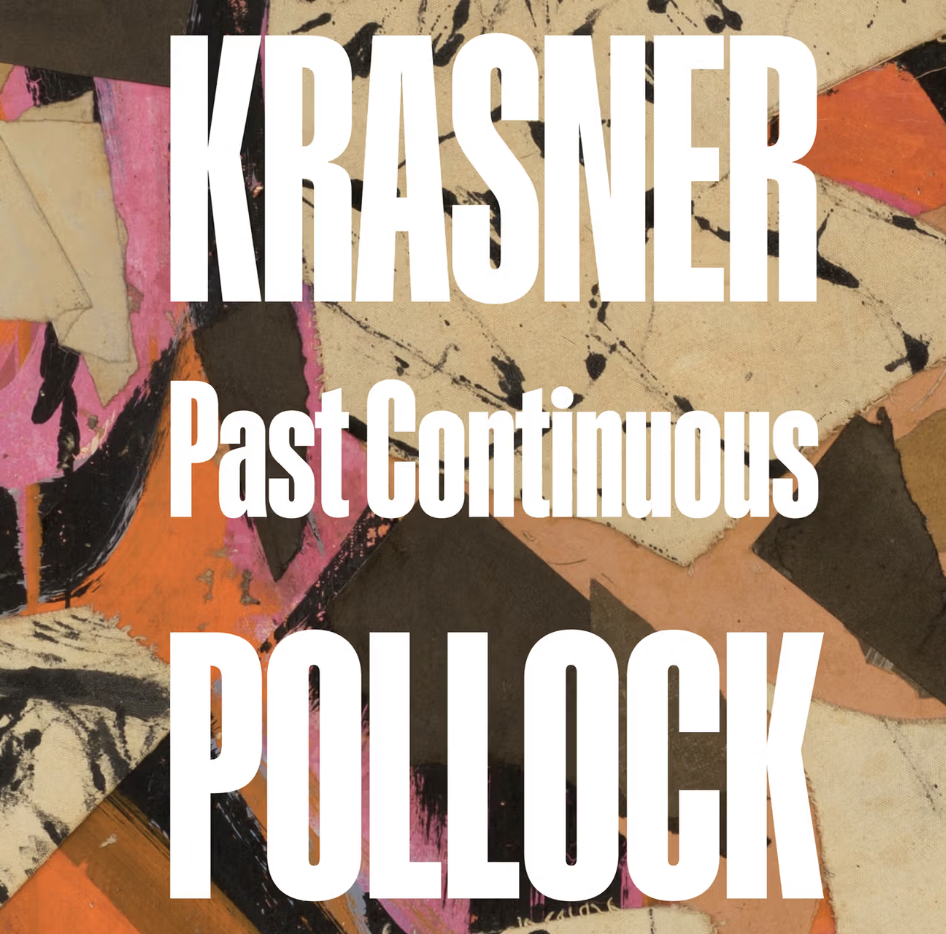
Krasner and Pollock: Past Continuous brings together more than 120 works to examine the development of Krasner and Jackson Pollock as two distinct artists whose practices evolved alongside—and in conversation with—one another.
The exhibition takes its title from Krasner's 1976 painting Past Continuous, reflecting an artistic practice deeply engaged with transformation, memory, and the reworking of what came before.
Framed by Harlem Frames
Harlem Frames custom framed two original Krasner works for the exhibition.
Harlem Frames custom framed two original Krasner works for the exhibition.
With historically significant artwork, our approach begins with the object itself. Every stage—from handling and fitting to final presentation—was carried out with care, precision, and respect for the original work.
The framing was designed to provide the structure necessary for exhibition while remaining visually restrained, allowing Krasner's surfaces, gestures, and materials to remain the focus.
For Harlem Frames, being entrusted with original works of this caliber is both a privilege and a responsibility. The frame supports the presentation; the artwork remains at the center of the experience.
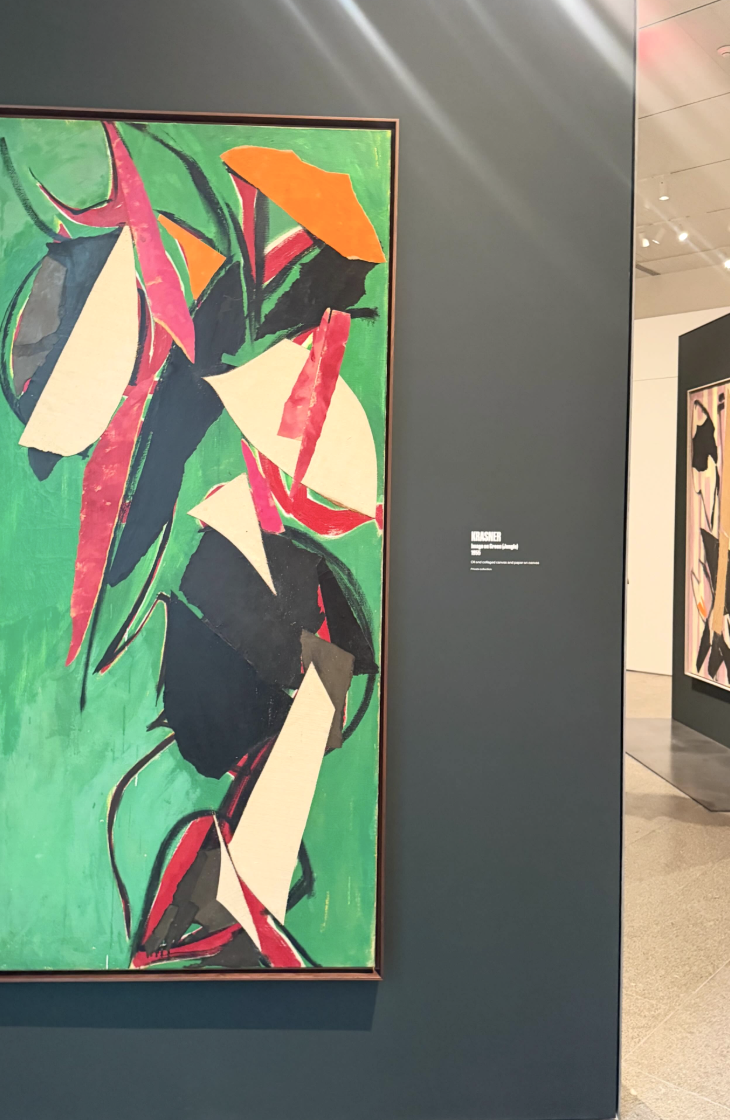
From Harlem Frames to The Met
The completed works will join Krasner and Pollock: Past Continuous at The Met Fifth Avenue from October 4, 2026 through January 31, 2027.
We're honored to have contributed to the preparation of these two original Lee Krasner works and to play a small role in bringing them to their next public presentation.
Artist: Lee Krasner (1908–1984)
Exhibition: Krasner and Pollock: Past Continuous
Dates: October 4, 2026–January 31, 2027
Works Framed: Two original works by Lee Krasner
Framing: Harlem Frames
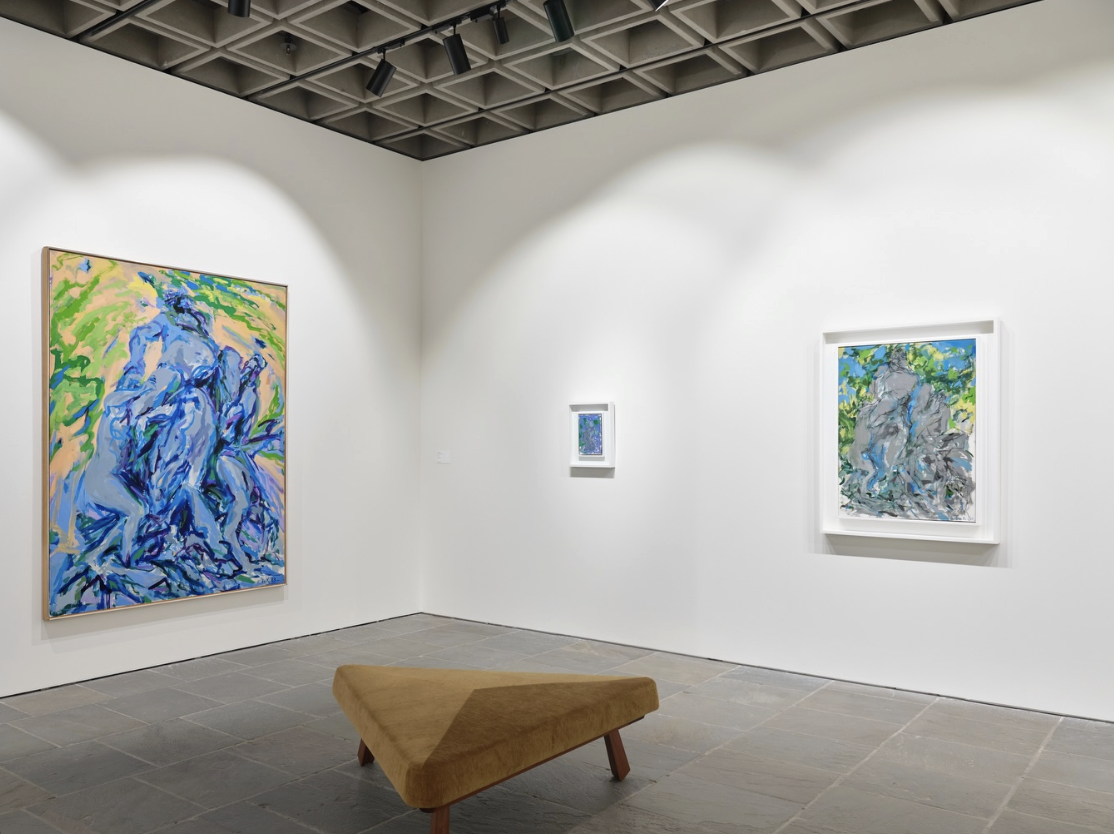
Elaine de Kooning · Bacchus Series
Original Paintings · Custom Framing by Harlem Frames · 2026
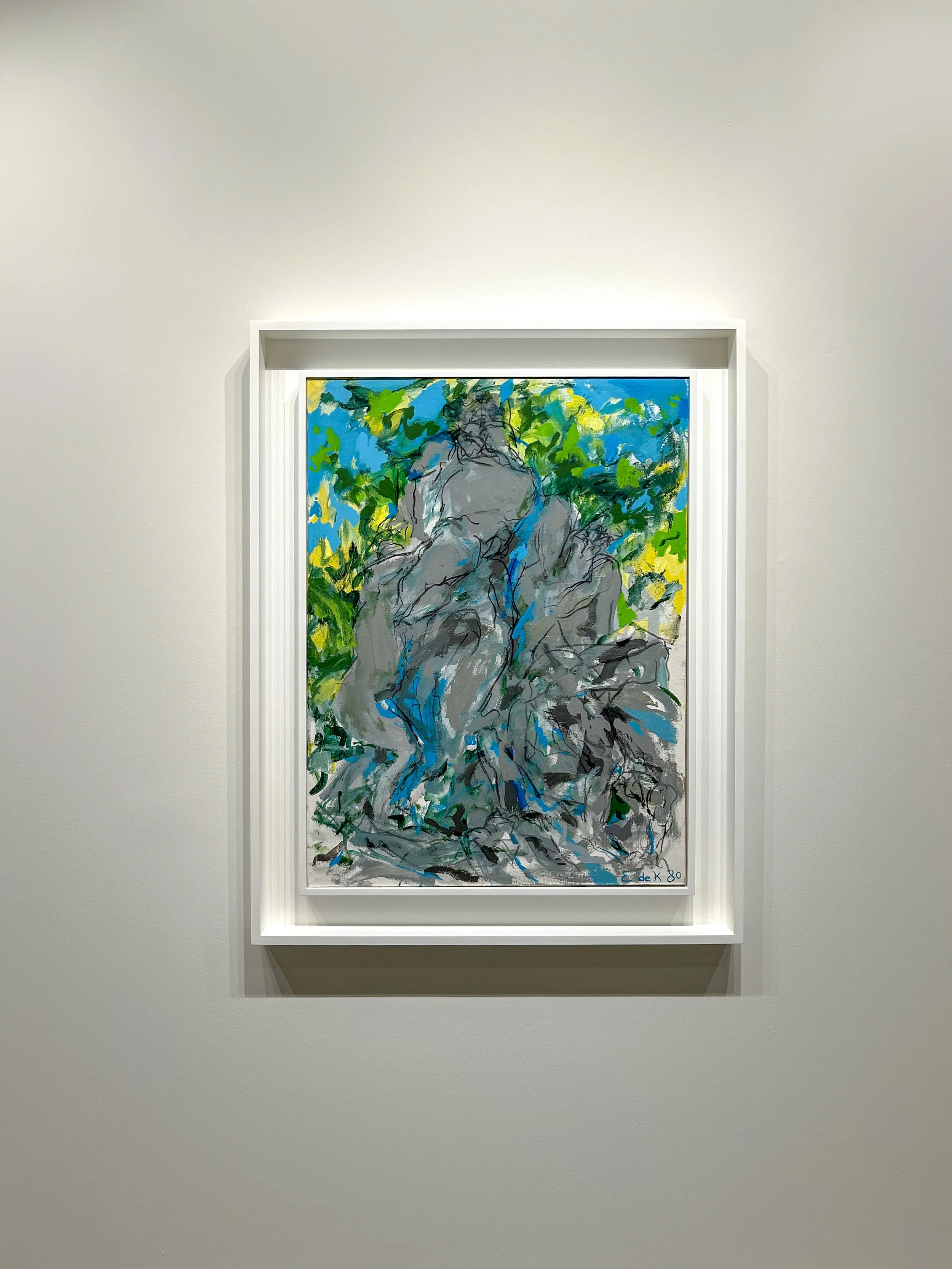
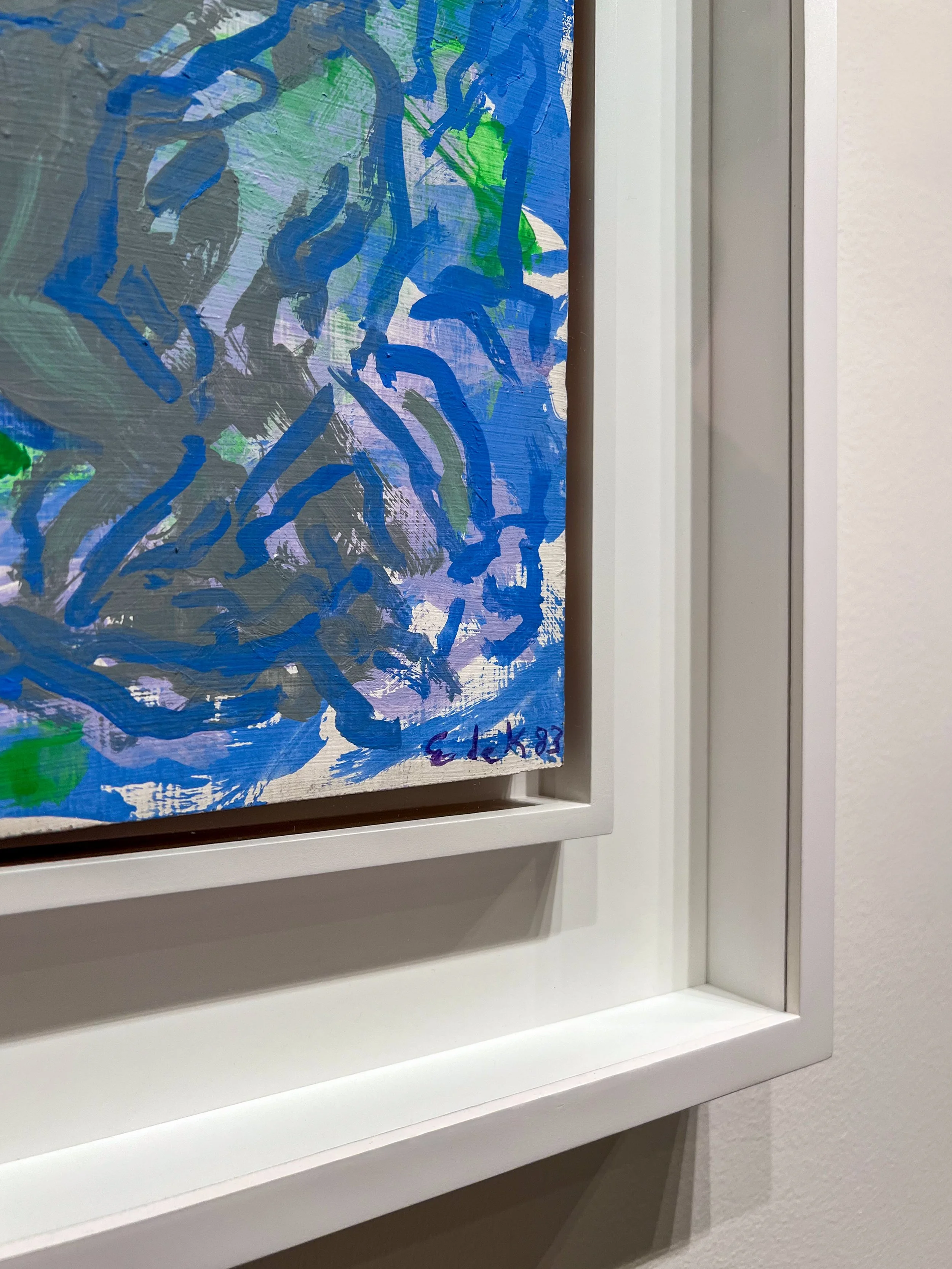
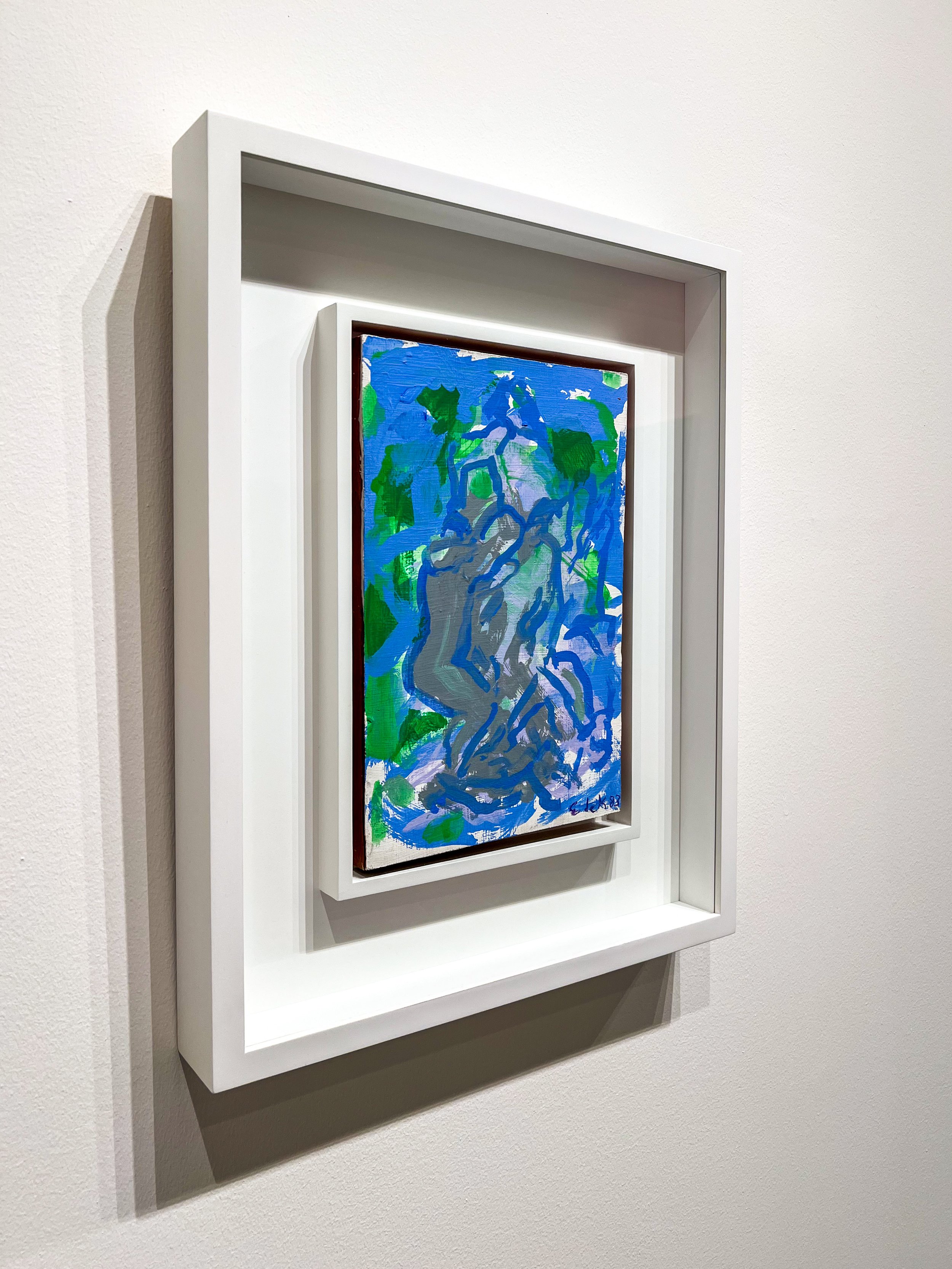
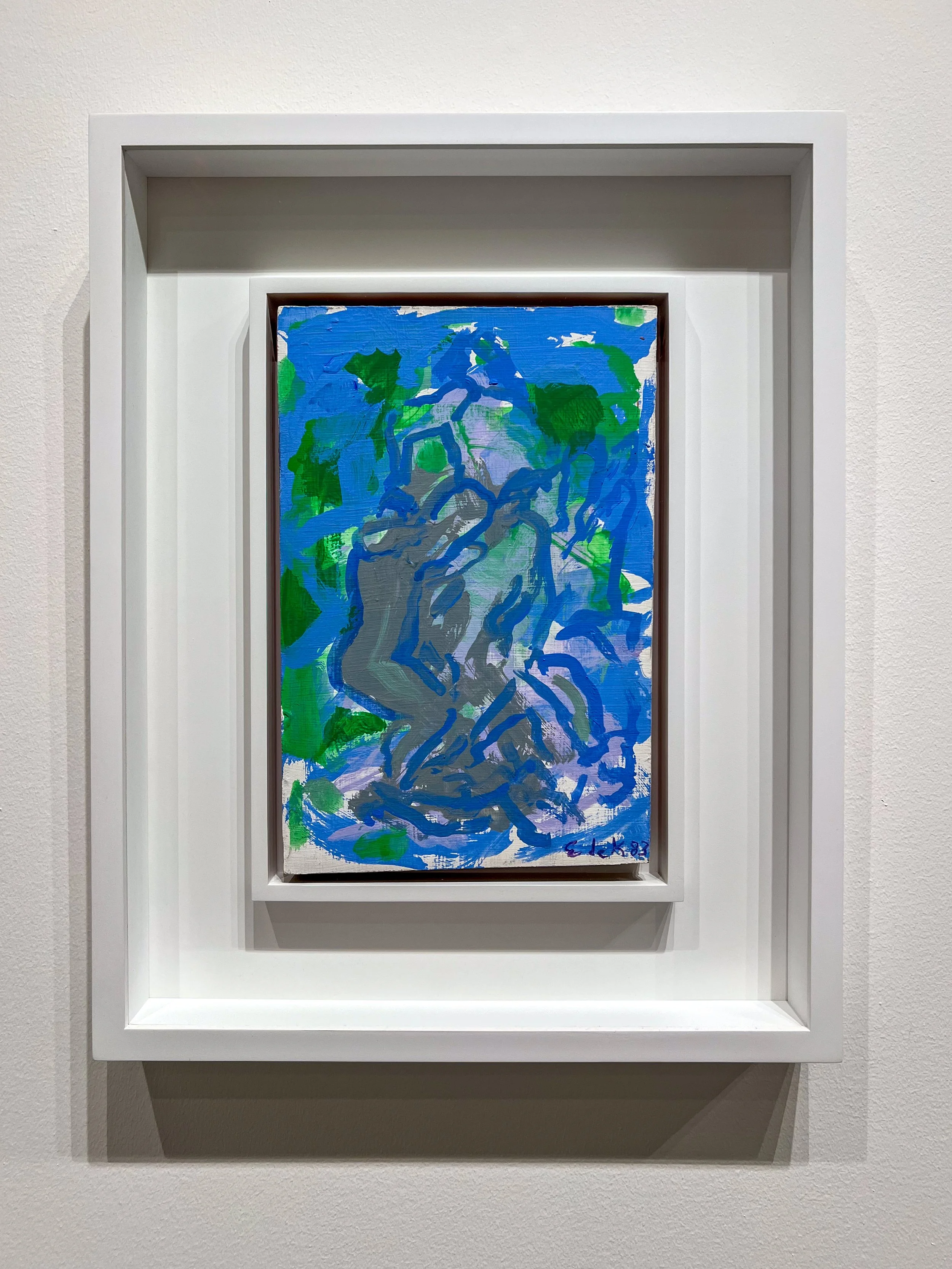
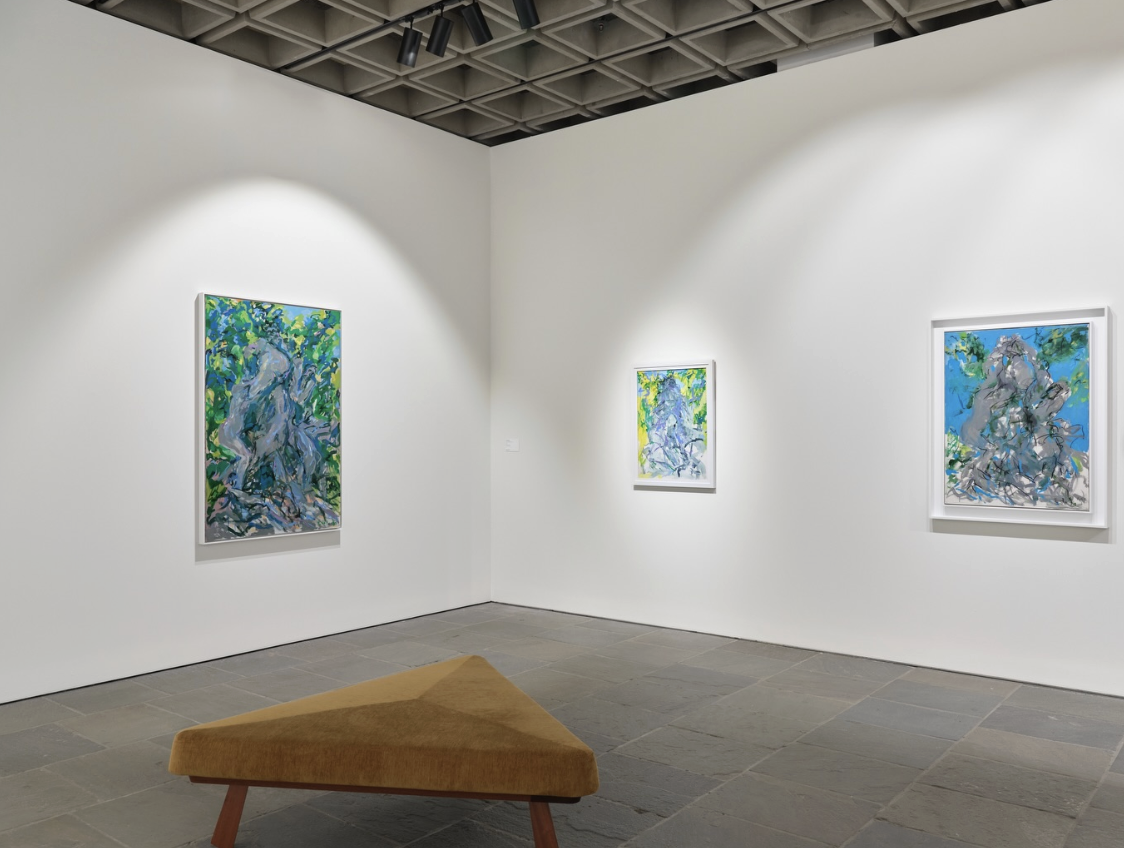
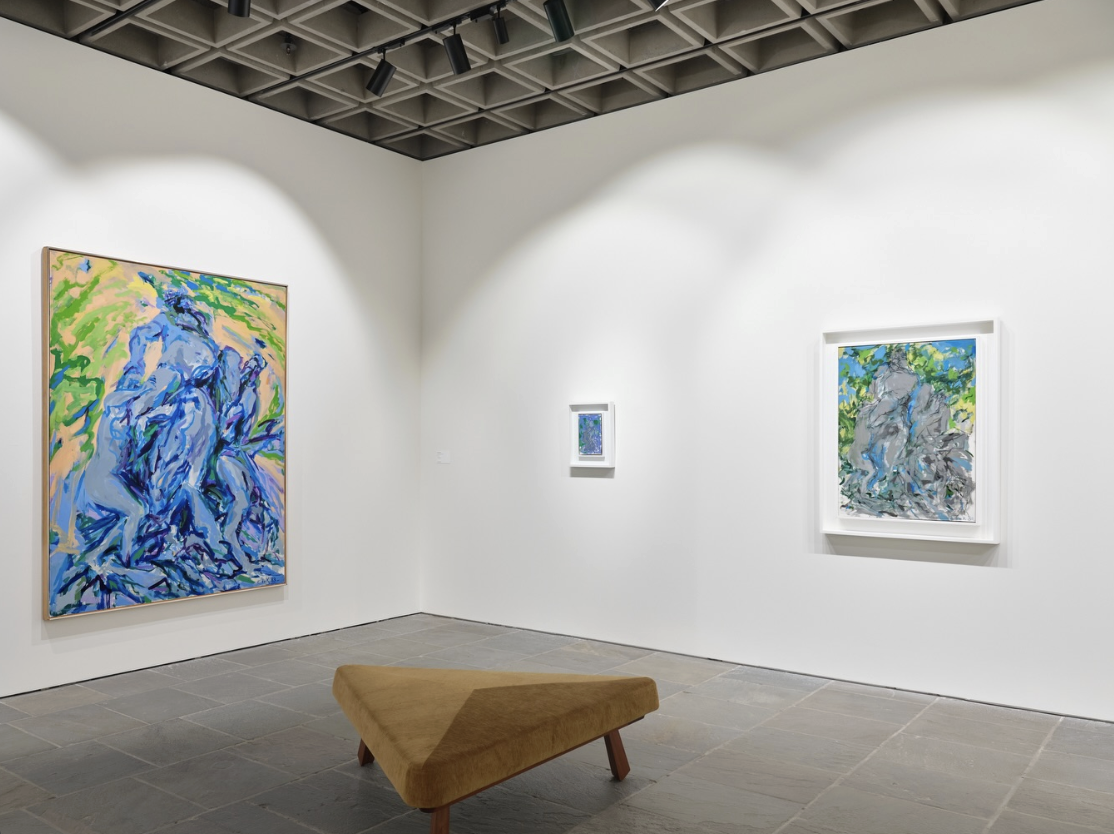
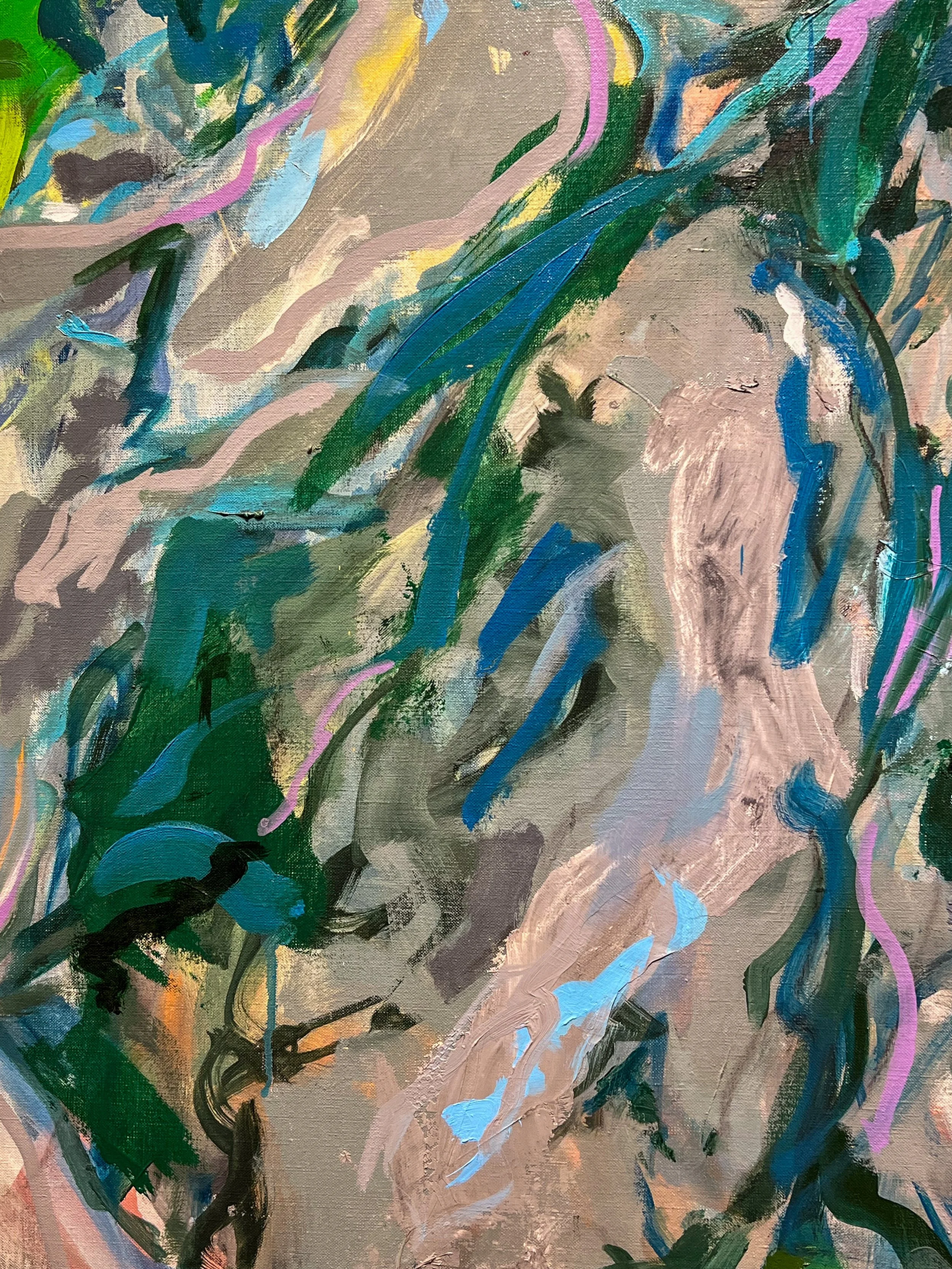
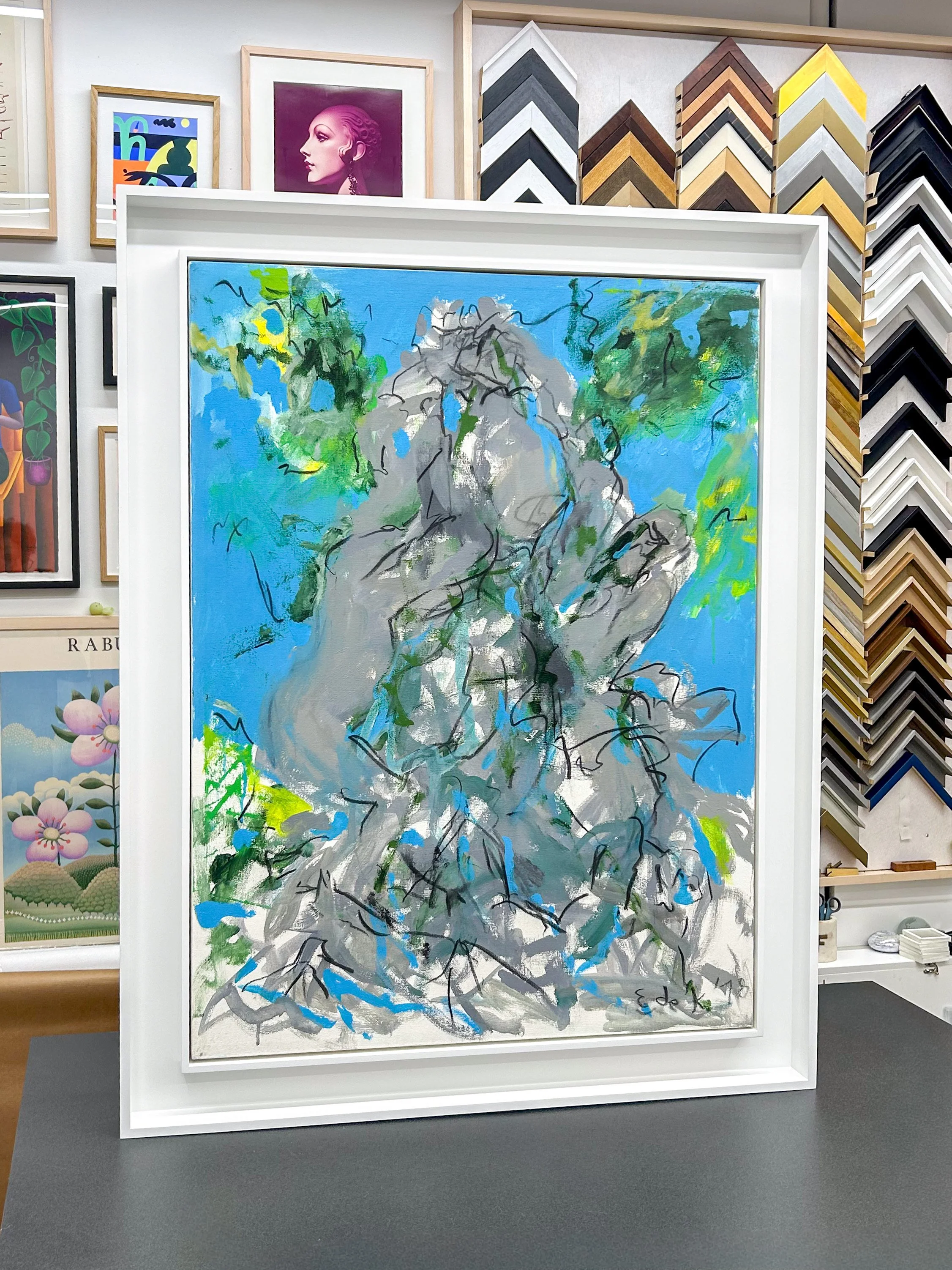
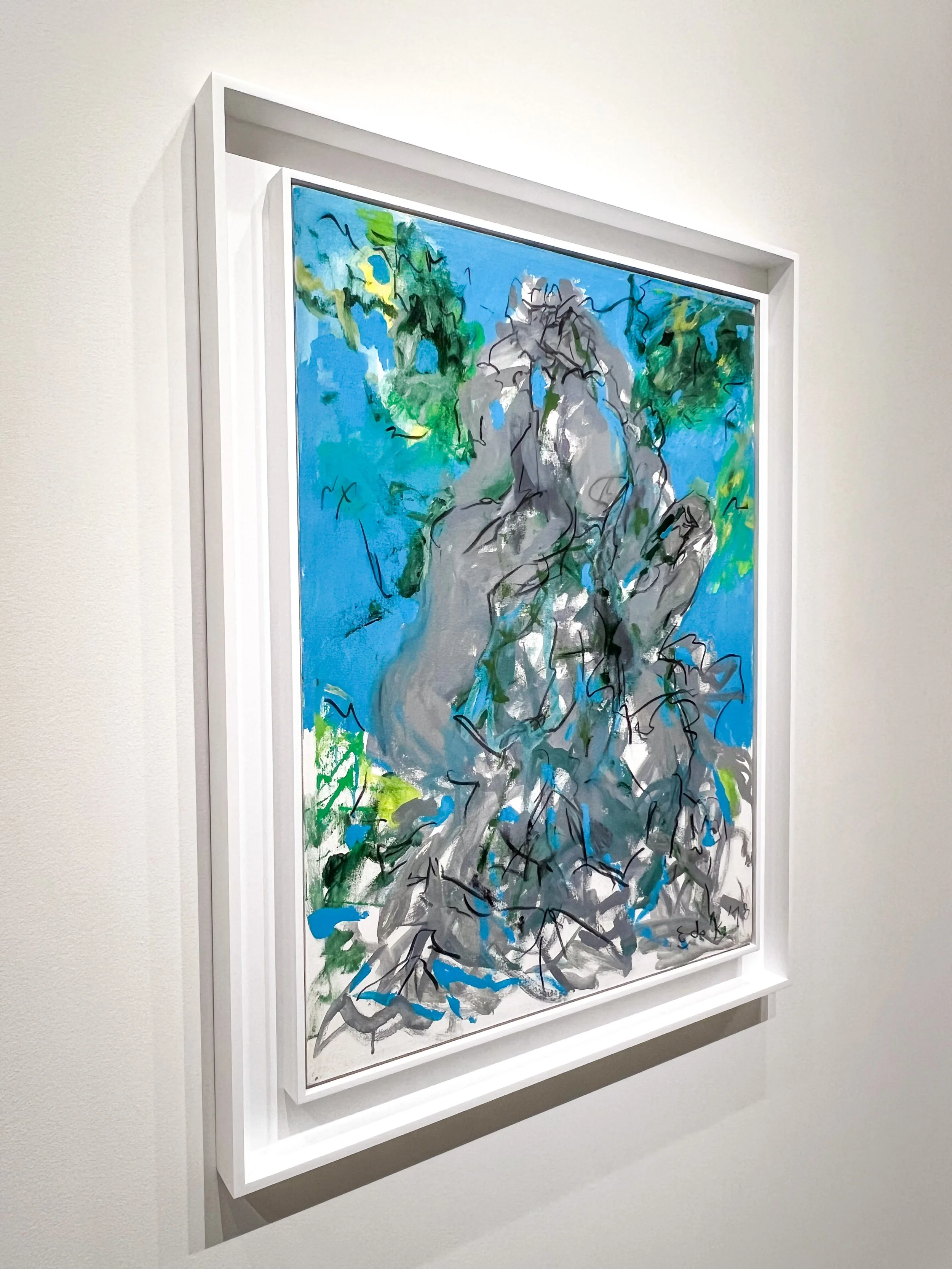
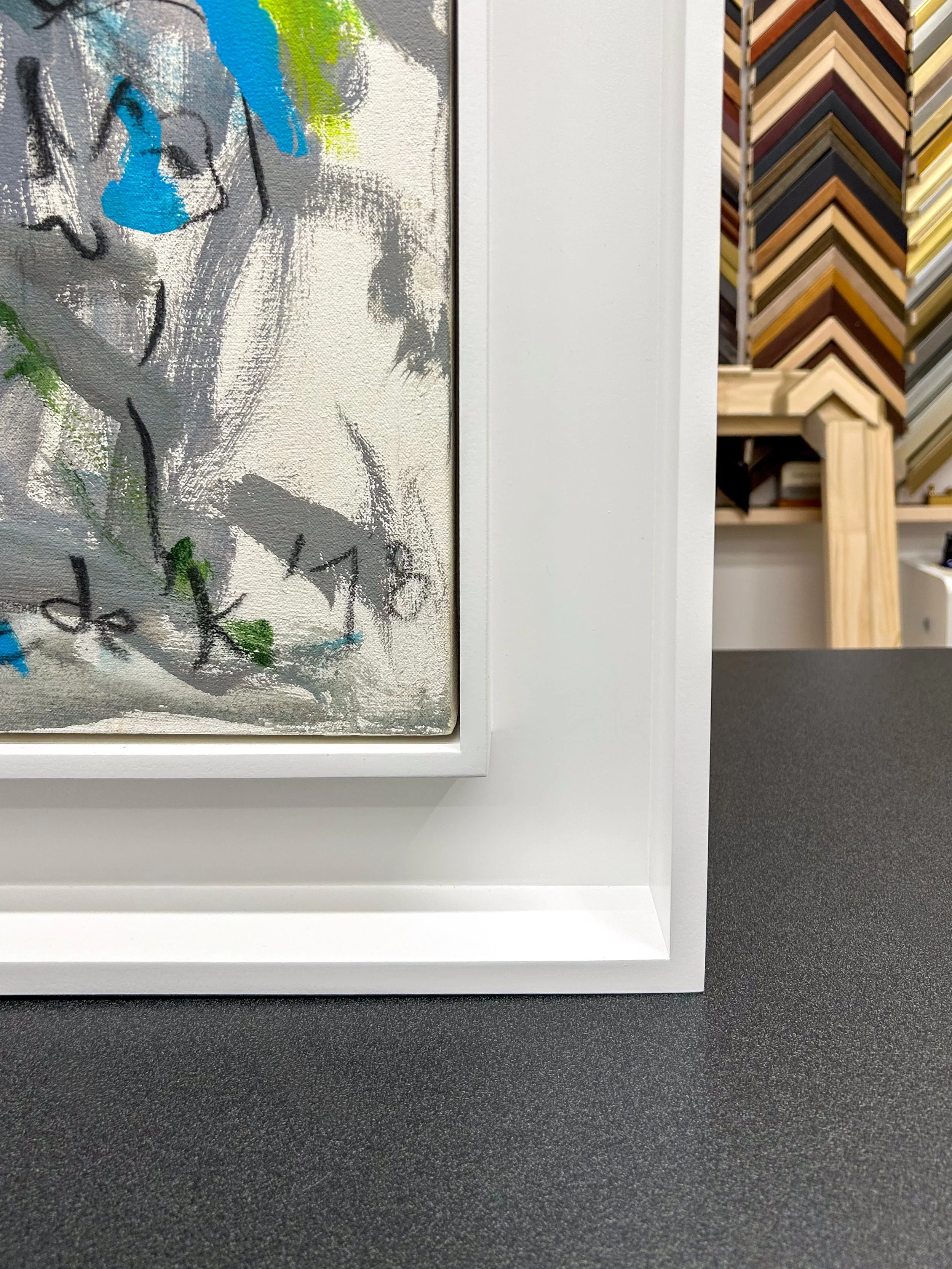
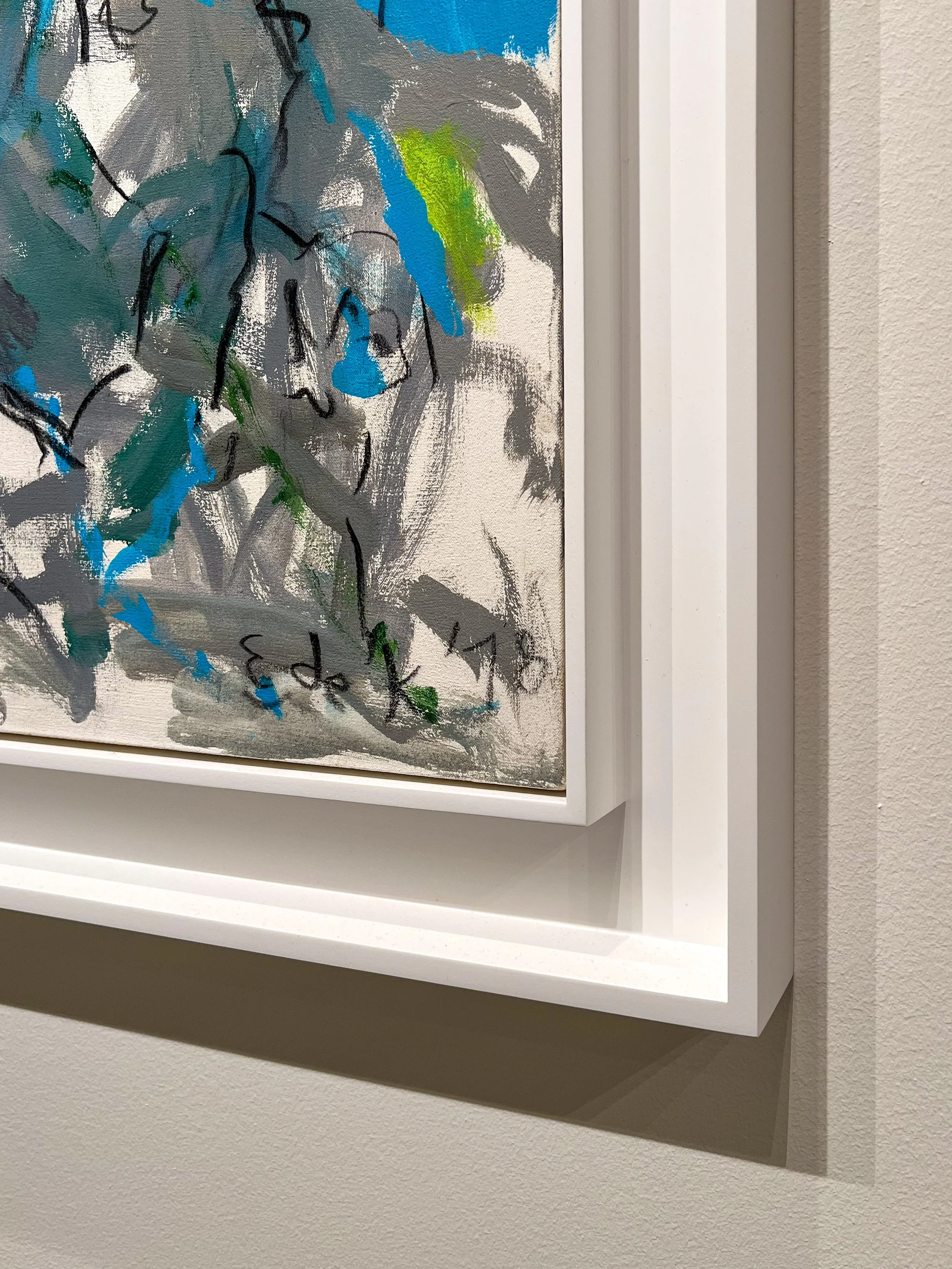
Harlem Frames was entrusted with the framing of original paintings from Elaine de Kooning's celebrated Bacchus series, preparing the works for their presentation by Olney Gleason at Independent 20th Century in New York.
Working directly with these significant original paintings called for a careful and restrained approach—one that respected the physical character of each work while allowing de Kooning's extraordinary color, gesture, and movement to remain at the center of the presentation.
The Bacchus Series
Created between 1976 and 1983, Bacchus became one of de Kooning's most sustained bodies of work.
(Image courtesy of Olney Gleason)
The series originated with her studies of a 19th-century bronze sculpture of Bacchus in Paris's Jardin du Luxembourg. Fascinated by how the twisting figure appeared to change as she moved around it, de Kooning repeatedly sketched the sculpture from different perspectives. Those observations eventually developed into a series of paintings in which the figure emerges and dissolves through energetic fields of color and sweeping gesture.
The resulting works capture what makes de Kooning's painting so distinctive: movement, immediacy, and a constant tension between figuration and abstraction.
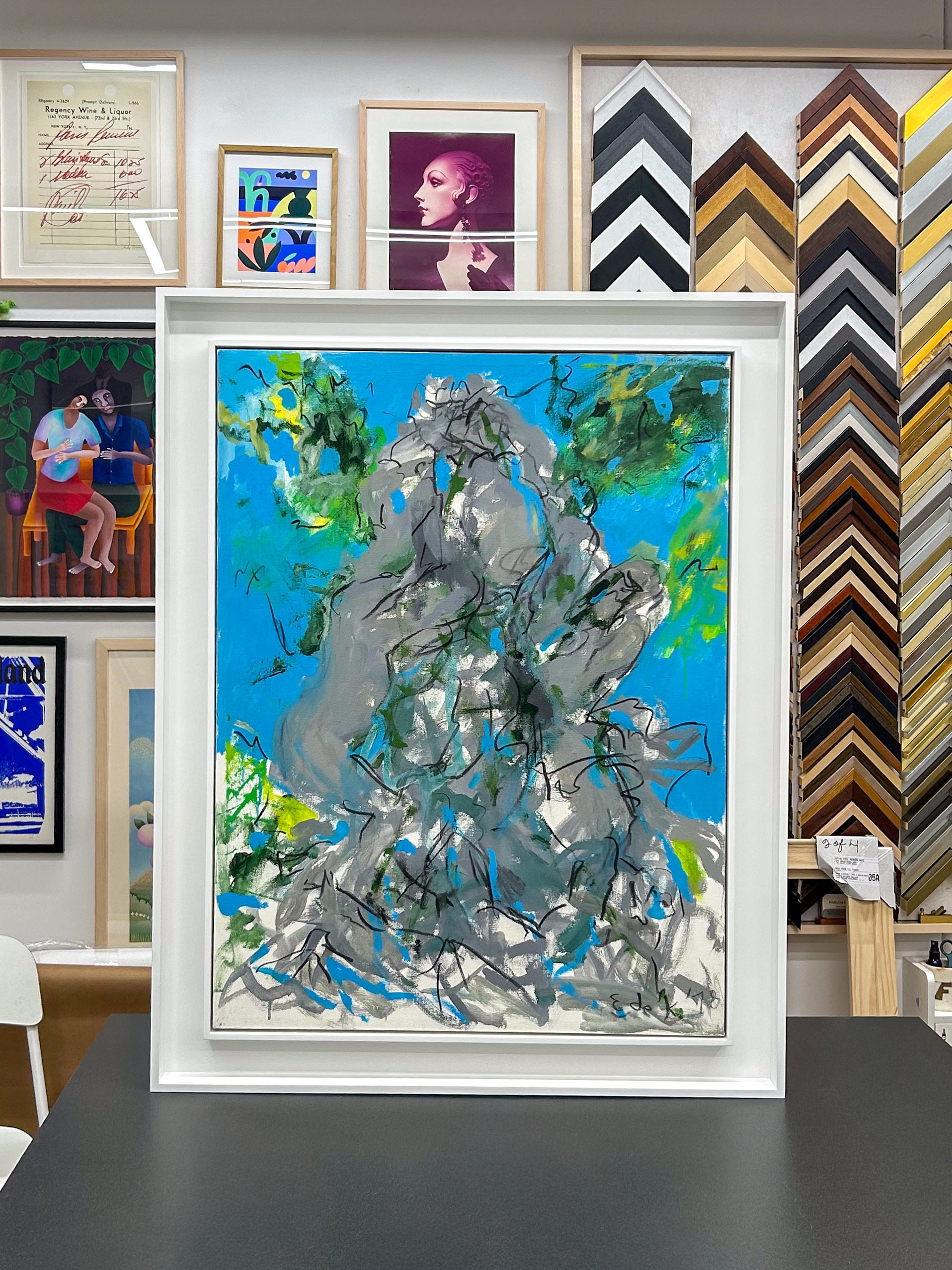
Framed in Harlem
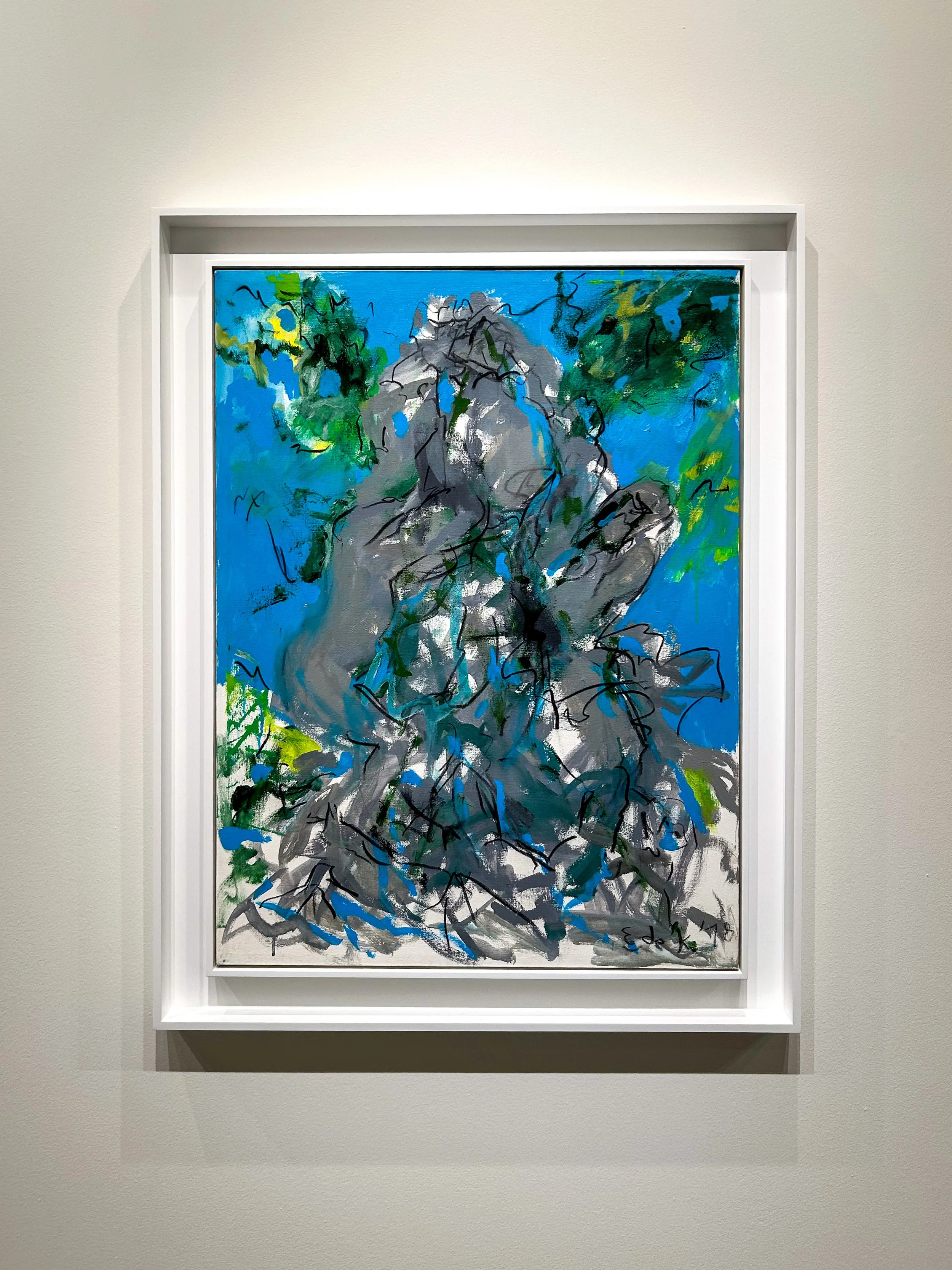
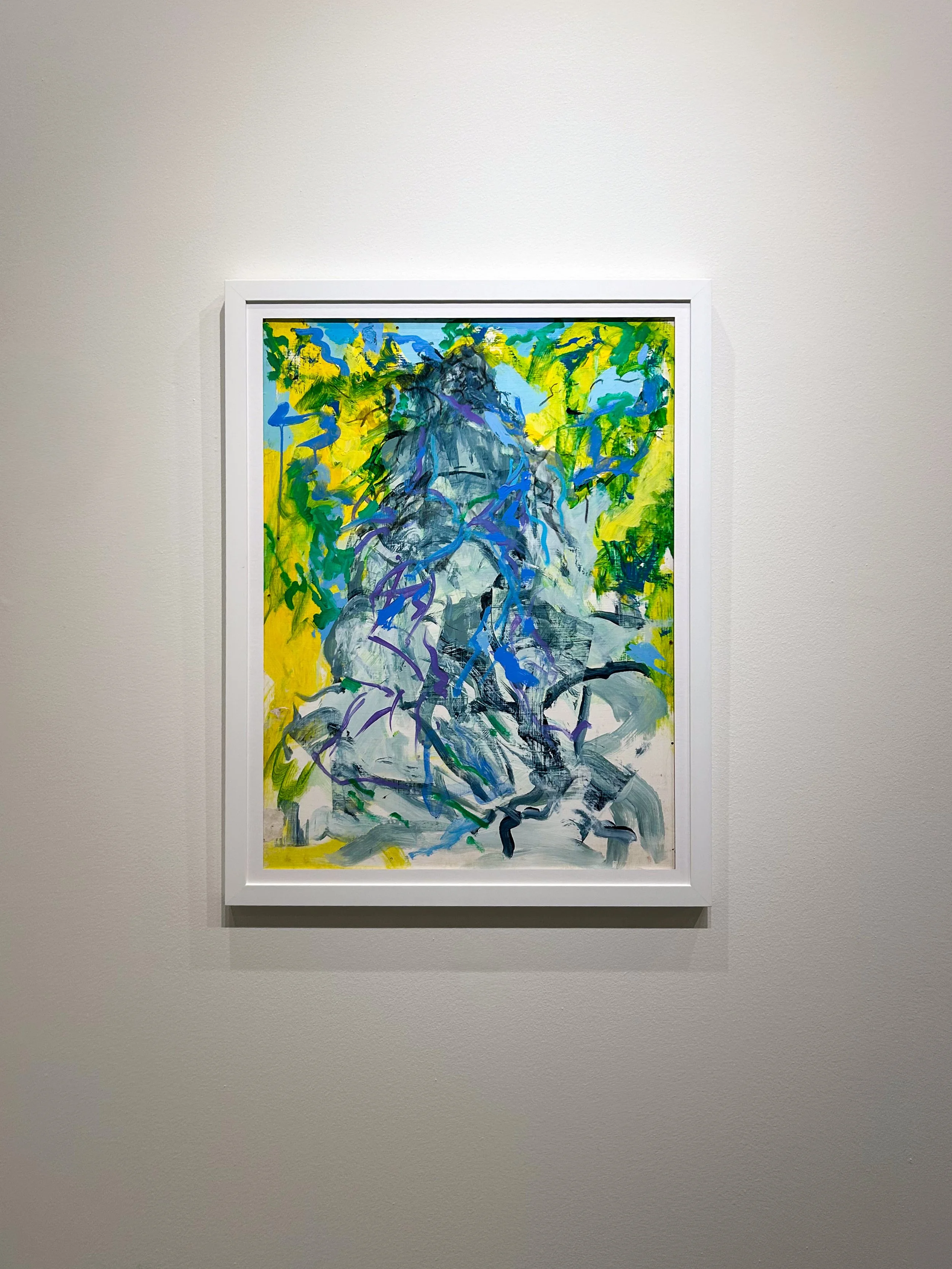
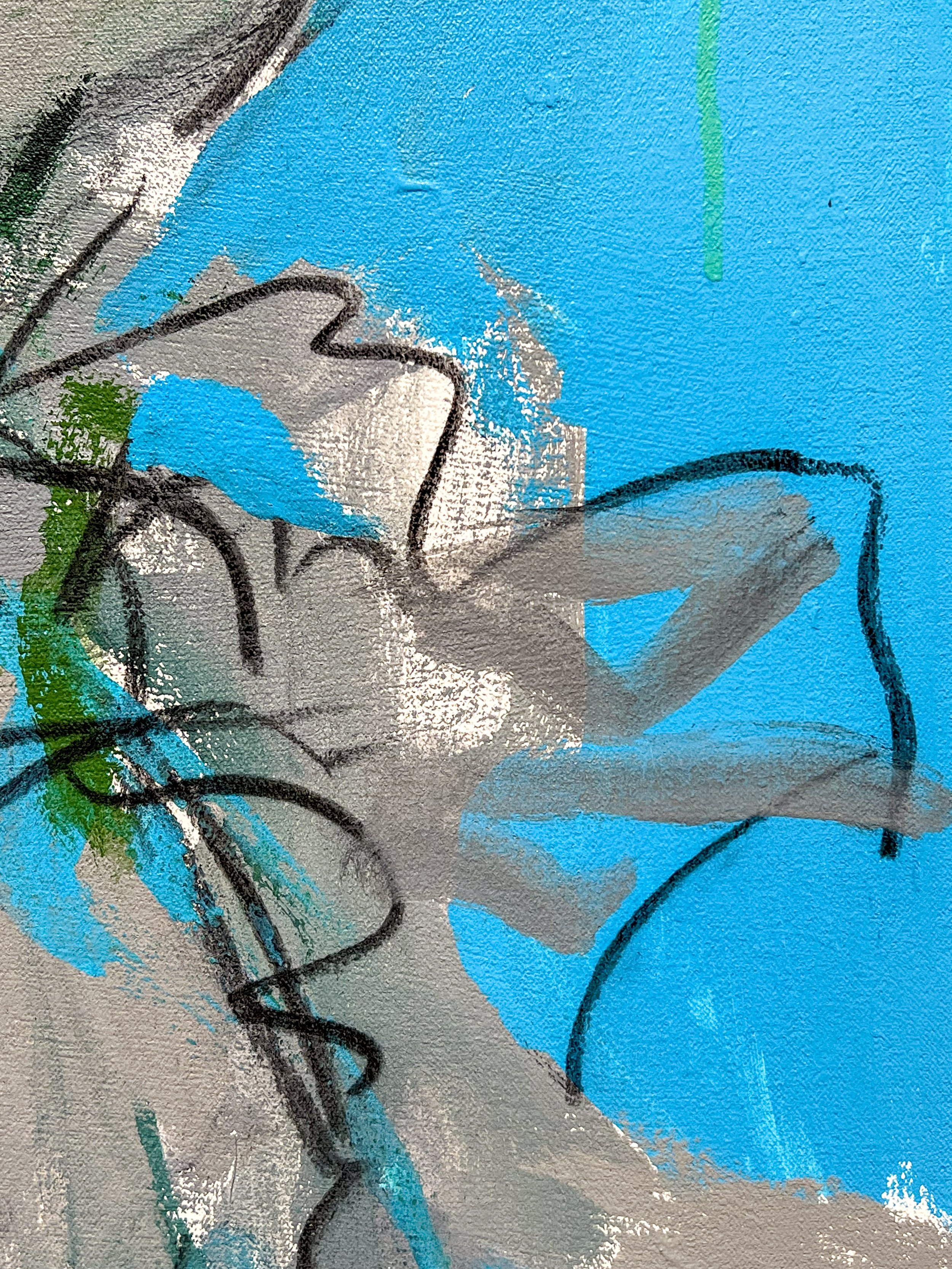
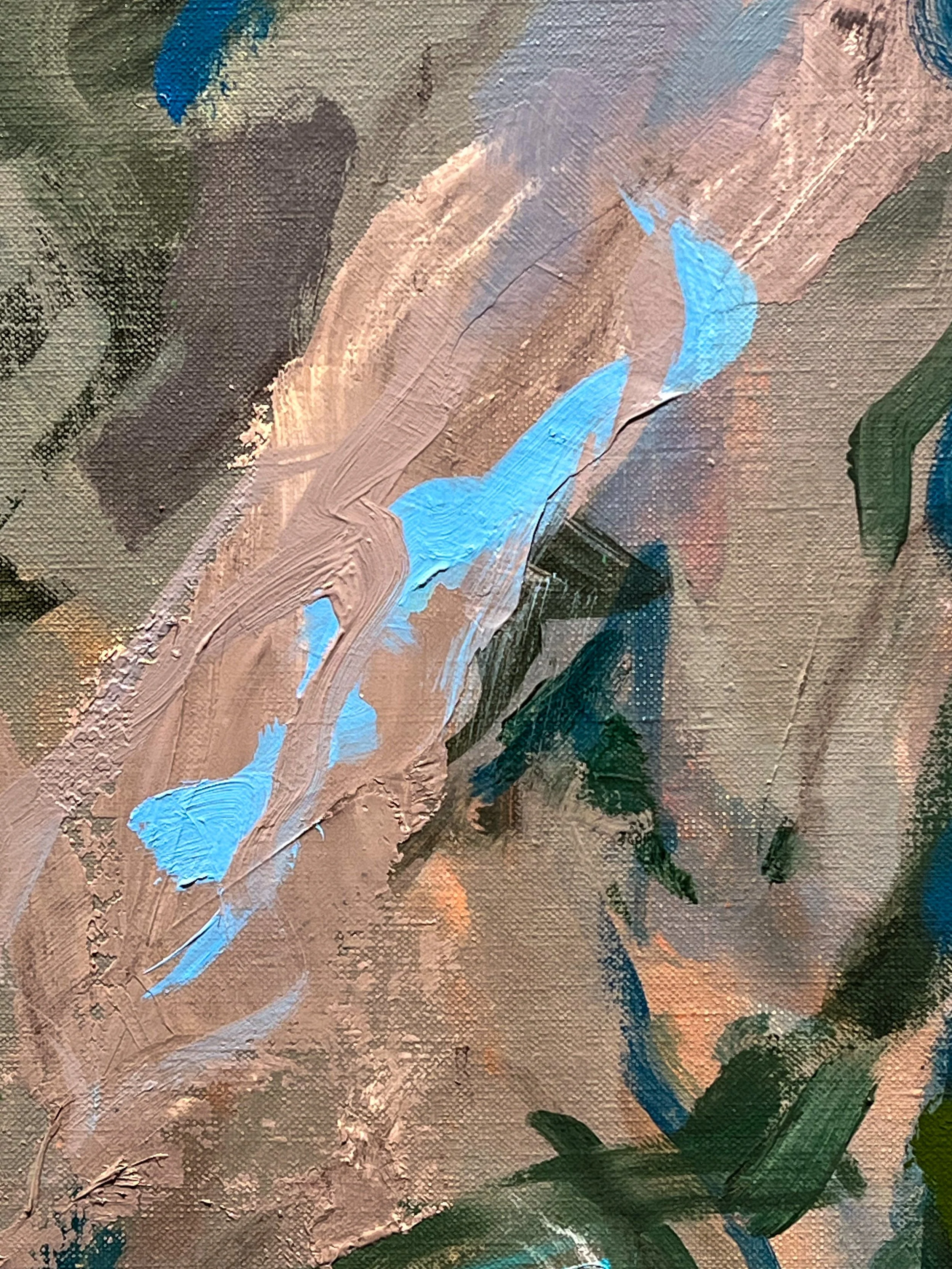
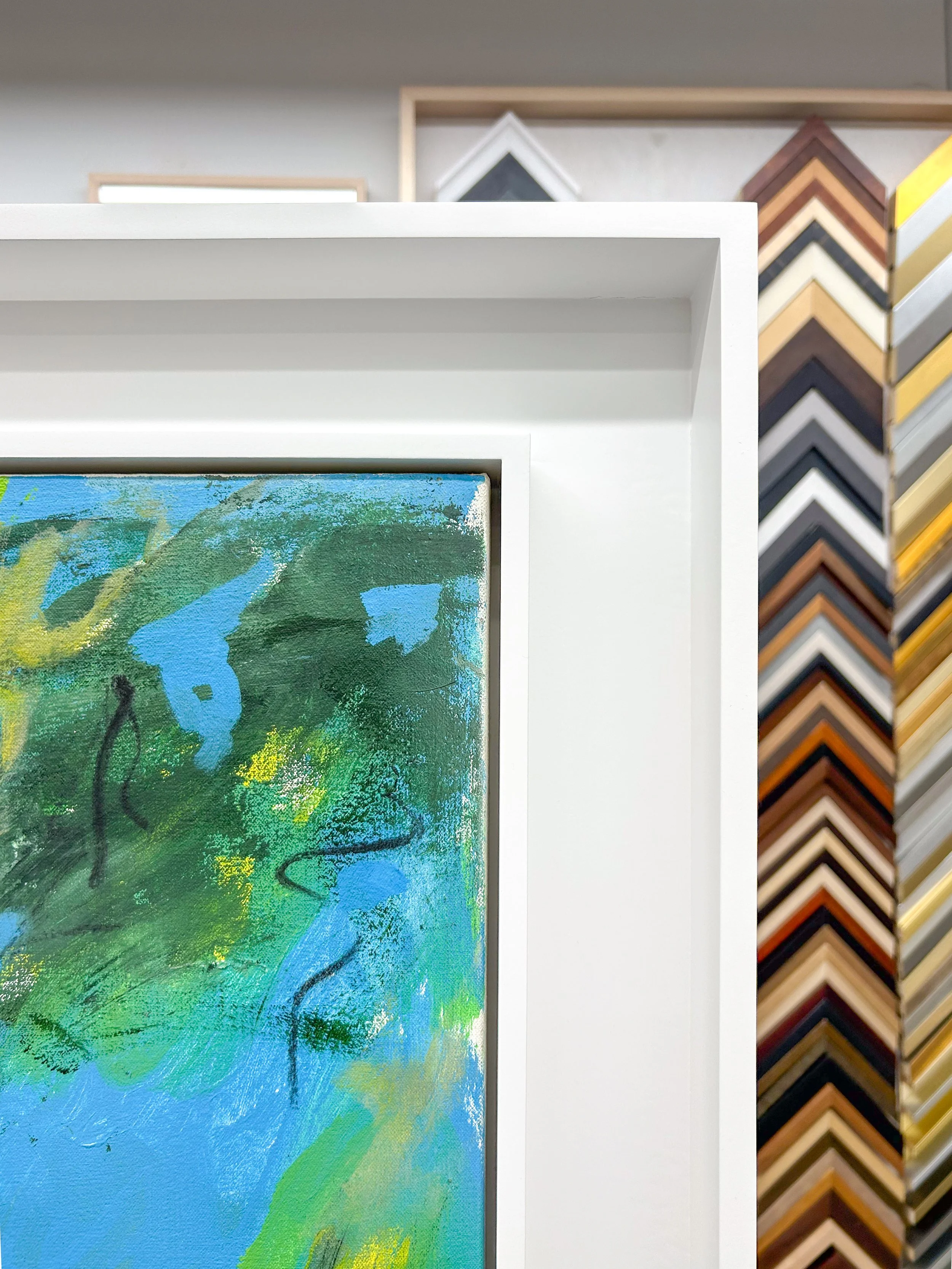
Harlem Frames custom framed the original Bacchus works with close attention to their scale, surfaces, edges, condition, and individual presentation requirements.
With historically significant artwork, the framing process is as much about restraint as design. Each work was handled and fitted with precision, with the goal of creating a professional exhibition presentation without competing with the paintings themselves.
Being entrusted with original works of this caliber is a responsibility we take seriously. From their arrival in our studio through final fitting, every stage was approached with the care and professionalism these paintings require.
The frame provides the structure. De Kooning's paintings provide the energy.
From Harlem Frames to Independent 20th Century
The completed works were presented by Olney Gleason at Independent 20th Century, held September 24–27, 2026 at The Breuer in New York.
For Harlem Frames, seeing the paintings move from our worktables to their finished exhibition setting completed the process—and offered the privilege of contributing, through framing, to the presentation of an extraordinary body of work.
Artist: Elaine de Kooning (1918–1989)
Series: Bacchus, 1976–1983
Presentation: Olney Gleason · Independent 20th Century
Framing: Harlem Frames
Artwork: © Elaine de Kooning Trust
Framing Mickalene Thomas Prints
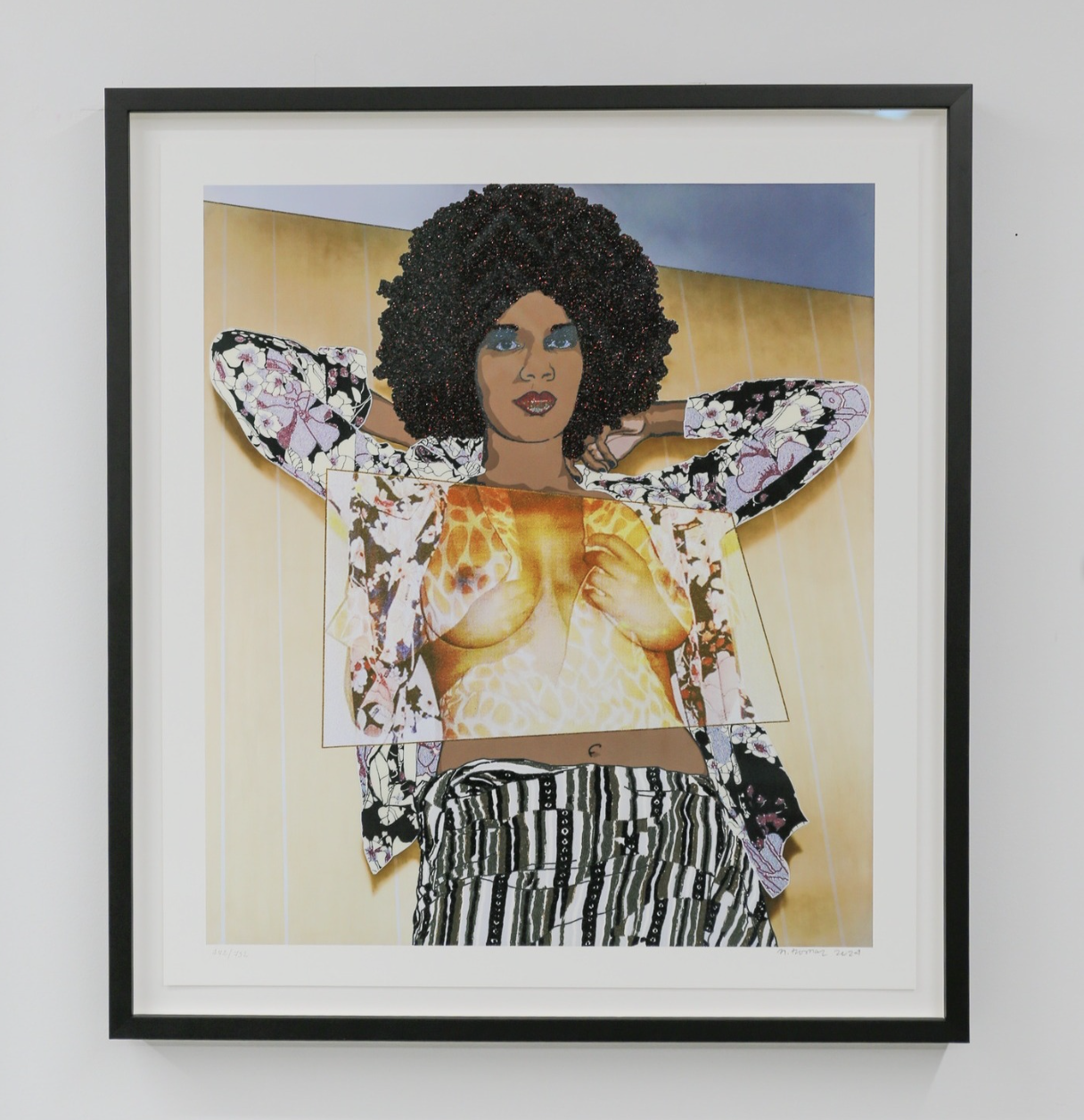
Collector-Owned Editions, Individually Framed
Mickalene Thomas’s unmistakable visual language—bold color, layered patterns, commanding portraiture, and richly constructed interiors—makes her prints especially rewarding to frame.
At Harlem Frames, collector-owned editions by Thomas arrive in our studio with remarkable regularity, including works released through Avant Arte and other fine-art publishers. Although we have not worked directly with Mickalene Thomas or her studio, our team has developed considerable experience framing prints of her work for private collectors.
Each project begins with the individual edition: its scale, materials, colors, condition, and the environment in which it will ultimately be displayed.
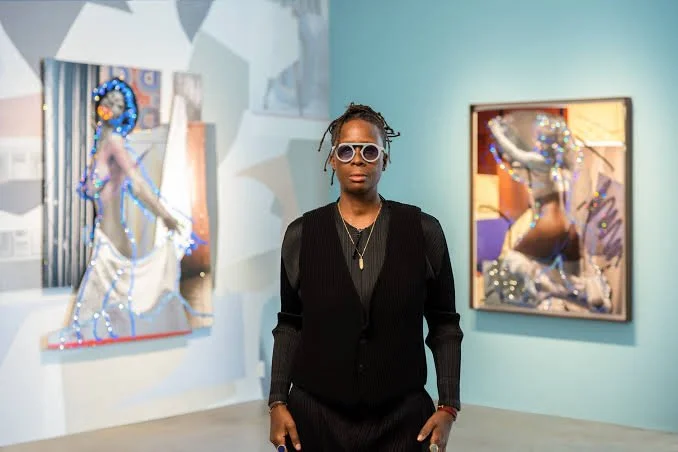
About Mickalene Thomas
Image Courtesy of: https://queensmuseum.org/mickalene-thomas/
Mickalene Thomas is a New York–based multidisciplinary artist working across painting, photography, collage, printmaking, video, sculpture, and installation.
Her work frequently centers Black women as powerful, self-possessed subjects while exploring beauty, identity, intimacy, desire, and representation. Drawing from personal relationships, popular culture, decorative traditions, and the history of Western art, Thomas creates images that are both immediately recognizable and visually complex. That complexity extends into her editions, where saturated color, photographic detail, collage-like construction, and assertive pattern can all exist within a single composition.
We frame a Mickalene Thomas print nearly every month.
These works are brought to us independently by collectors who have acquired them through publishers, galleries, online art platforms, and the secondary market. While the editions may share aspects of Thomas’s visual language, every framing project presents a different set of decisions.
Some collectors prefer a restrained presentation that allows the print’s color and composition to dominate. Others choose a frame or mat that responds more visibly to a particular pattern, interior detail, or tonal element within the work. The goal is never to compete with the artwork. It is to create a presentation that supports its presence.
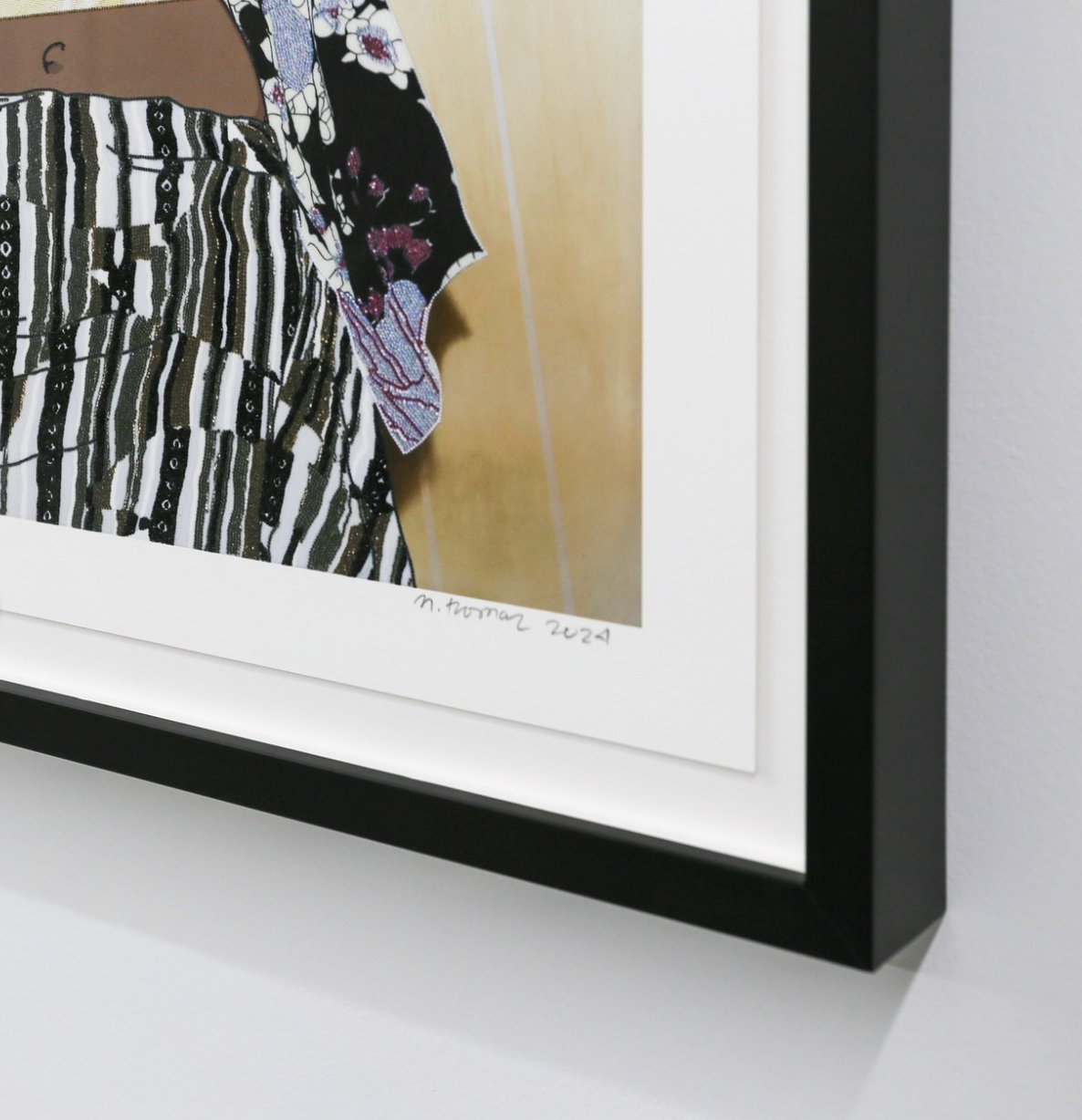
Designing Around Color, Pattern, and Scale
Thomas’s work can hold its own against strong design choices, but strength does not always require ornamentation. A clean natural-wood, painted, or dark-toned frame can provide definition without distracting from the image. Matting may introduce breathing room and help establish proportion, while a more closely cropped presentation can create greater immediacy.
When selecting materials, we consider:
The scale and proportions of the edition
Dominant and secondary colors within the image
The density of its patterns and visual details
Whether the print should feel intimate or monumental
The relationship between the artwork and its intended room
The collector’s preferences and existing interior
The final frame should feel connected to the work without simply imitating it.
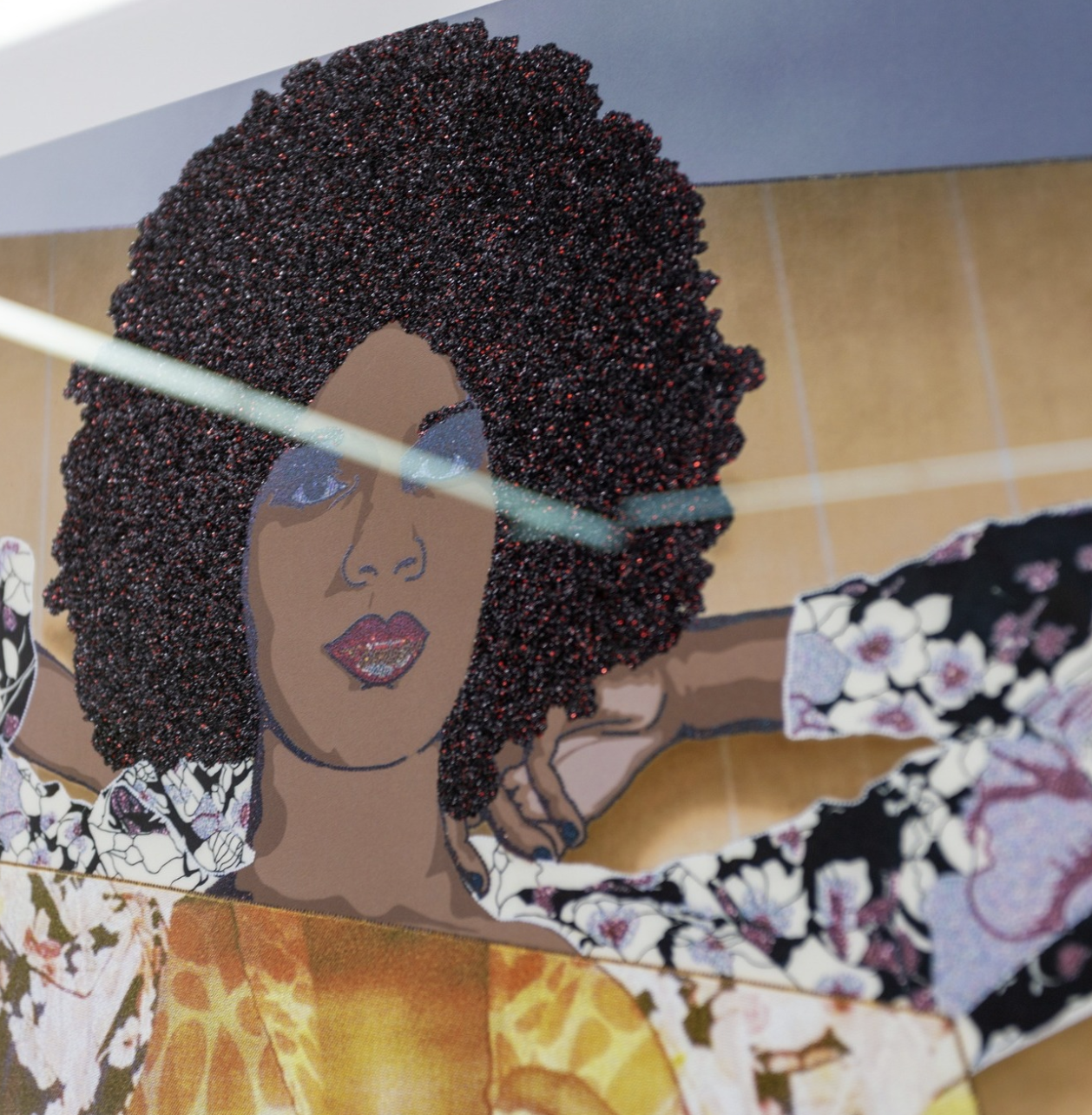
Presentation and Preservation
Fine-art editions deserve framing materials selected with their long-term care in mind.
Depending on the particular print, a framing package may incorporate conservation-quality mat board, appropriate mounting methods, protective glazing, spacers, archival backing materials, and sufficient separation between the artwork and the glazing.
We also consider the display environment. Direct sunlight, fluctuating humidity, concentrated heat, and other environmental conditions can affect works on paper over time—even when protective framing materials are used.
Because editions can vary in paper, printing process, surface, scale, and condition, the framing system should be designed around the specific work rather than applied as a universal formula.
Every Print Calls for Its Own Solution
There is no single “Mickalene Thomas frame.”
The right presentation depends on the edition, the collector, and the space in which the work will live. Our experience framing these prints has reinforced the value of looking closely: at the colors, the paper, the composition, the proportions, and the details that give each image its particular energy.
A successful frame does more than surround the artwork. It gives the print the physical and visual support it needs to hold space.
Frame Your Mickalene Thomas Print
Have a Mickalene Thomas edition you are considering framing or reframing?
Bring your print to Harlem Frames for a consultation. Our team can help you compare mouldings, matting, glazing, mounting, and preservation-minded options to develop a presentation suited to your particular piece.
Harlem Frames is not affiliated with Mickalene Thomas, her studio, or Avant Arte. The projects discussed here were commissioned independently by collectors who brought their own artwork to our studio.
Ryan Bock · Bockhaus: Young Americans
Satellite Art Show Gallery · New York City · 2026
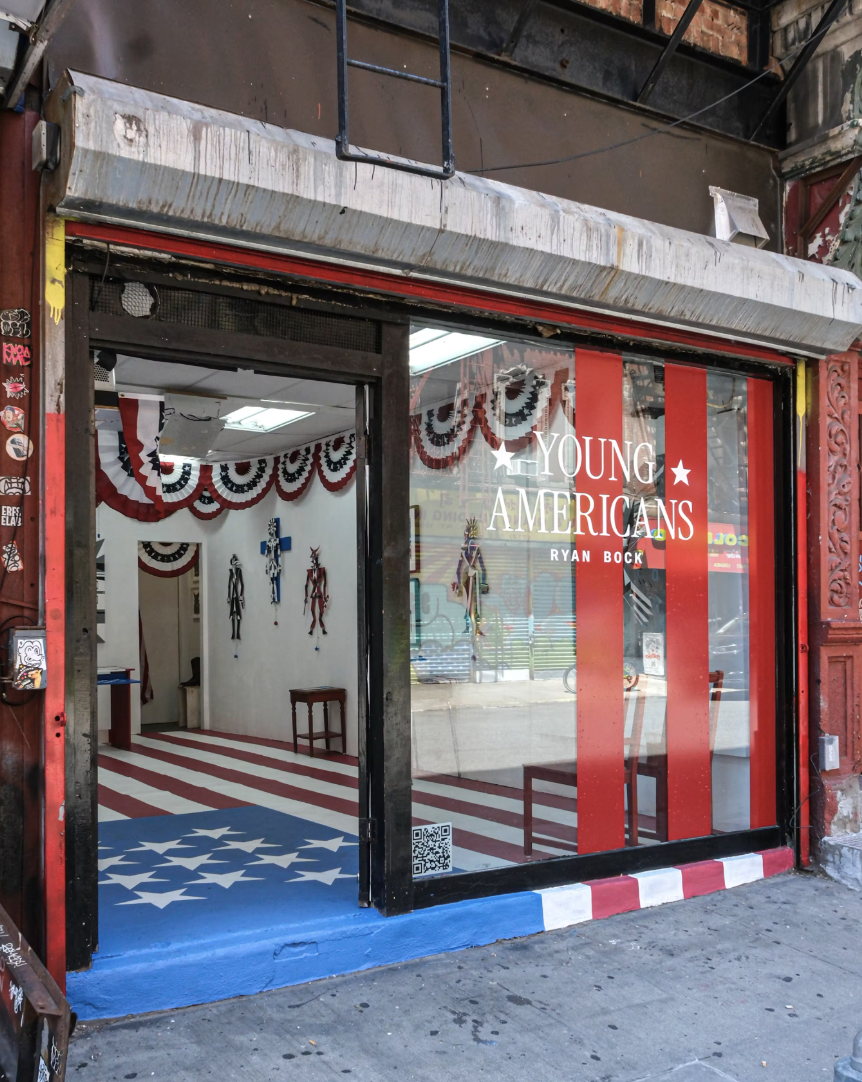
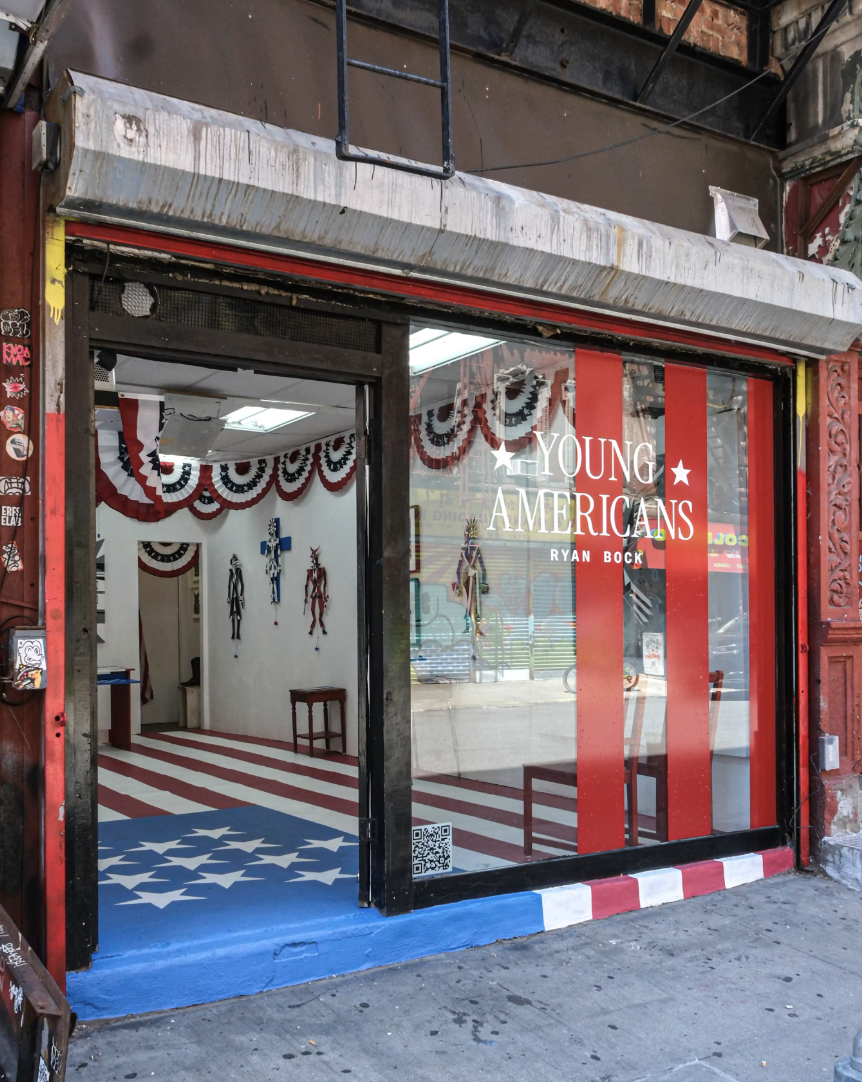
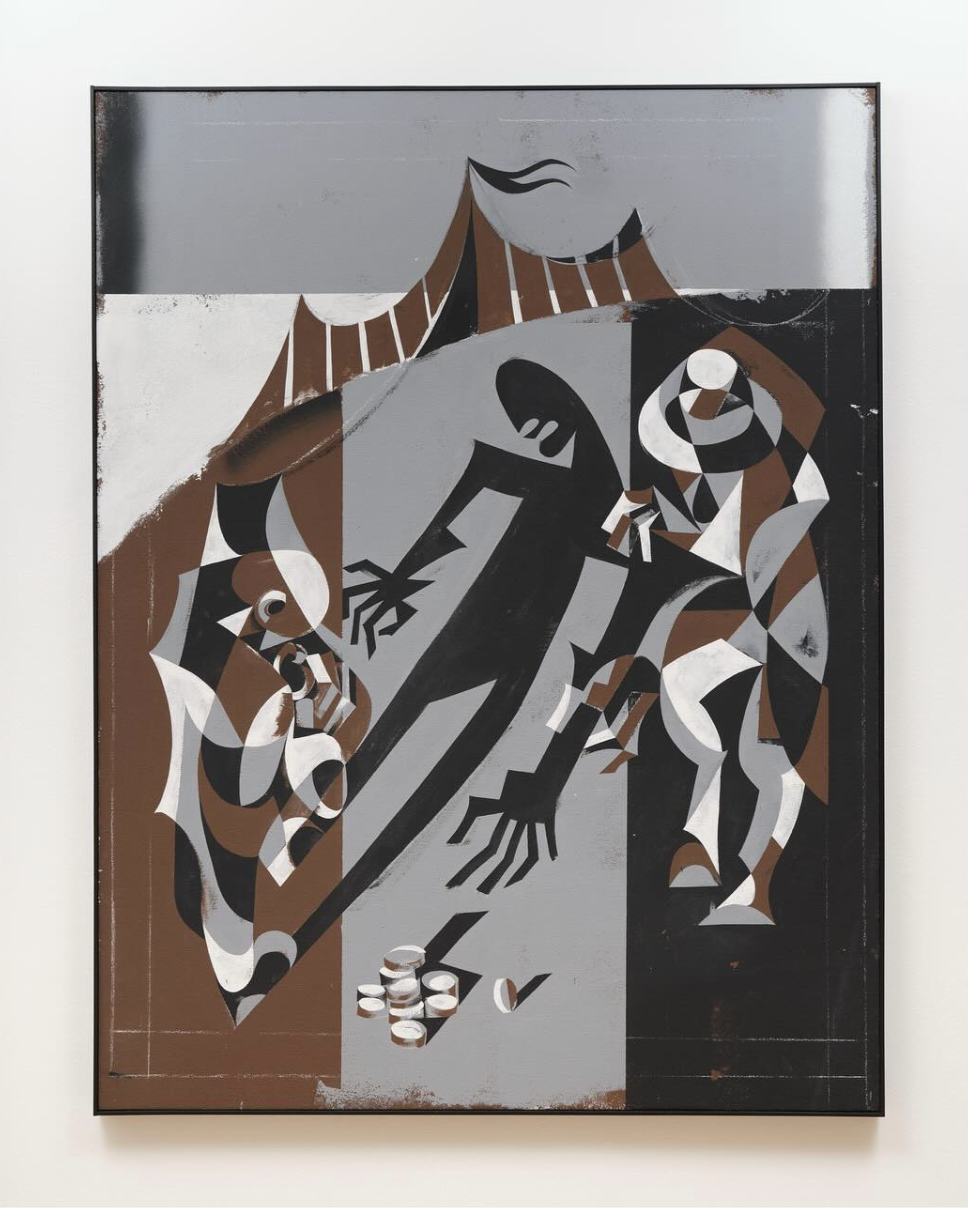
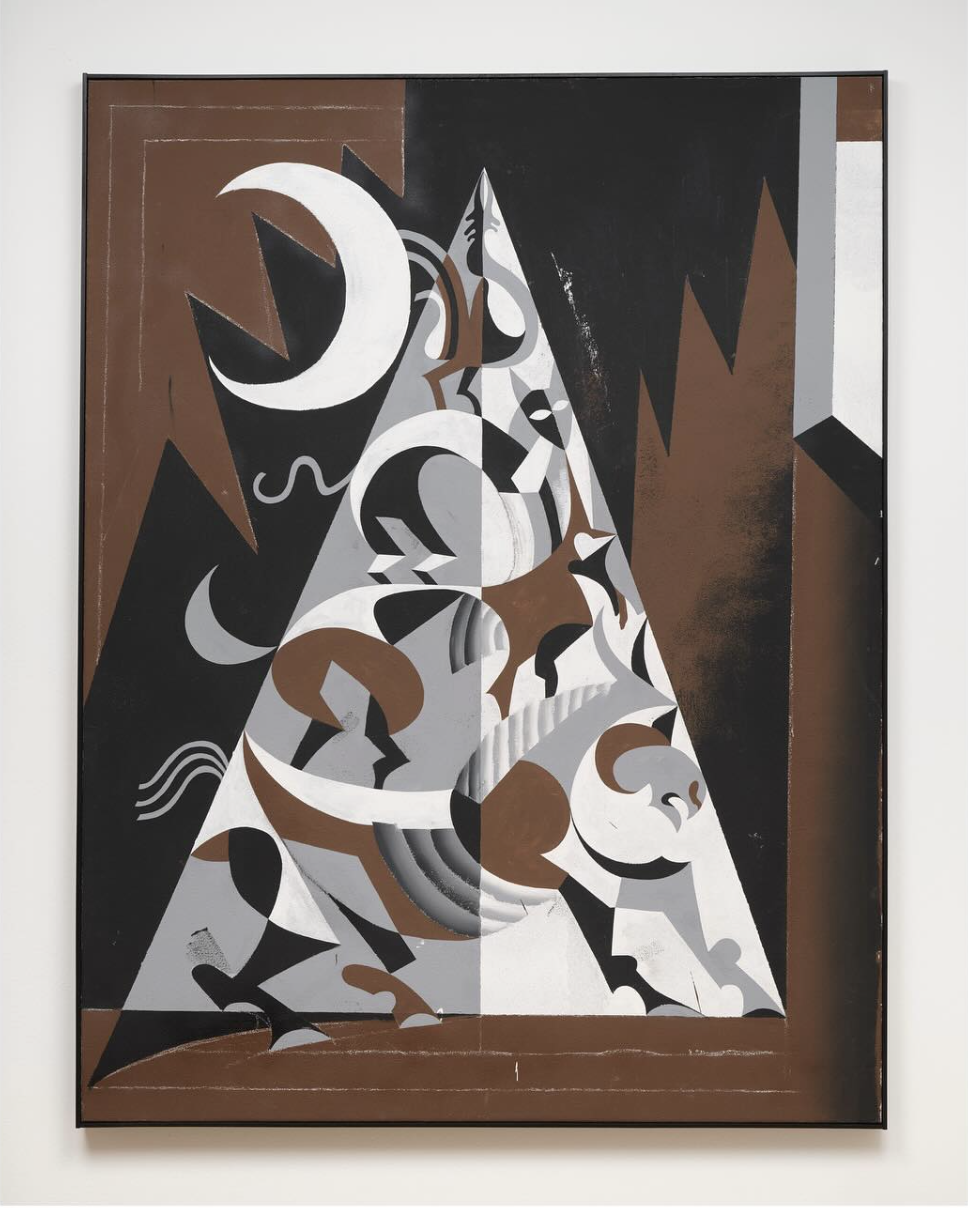
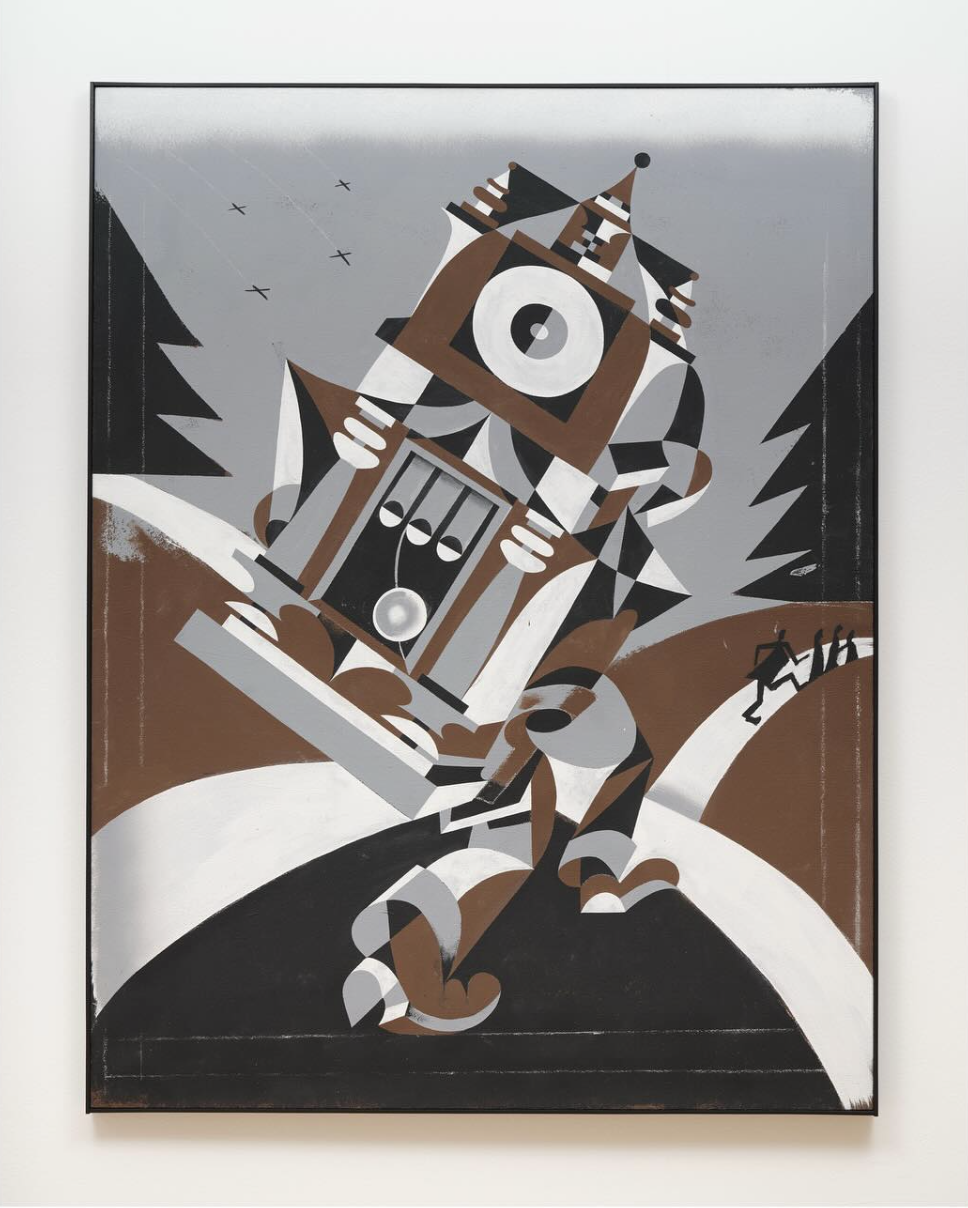
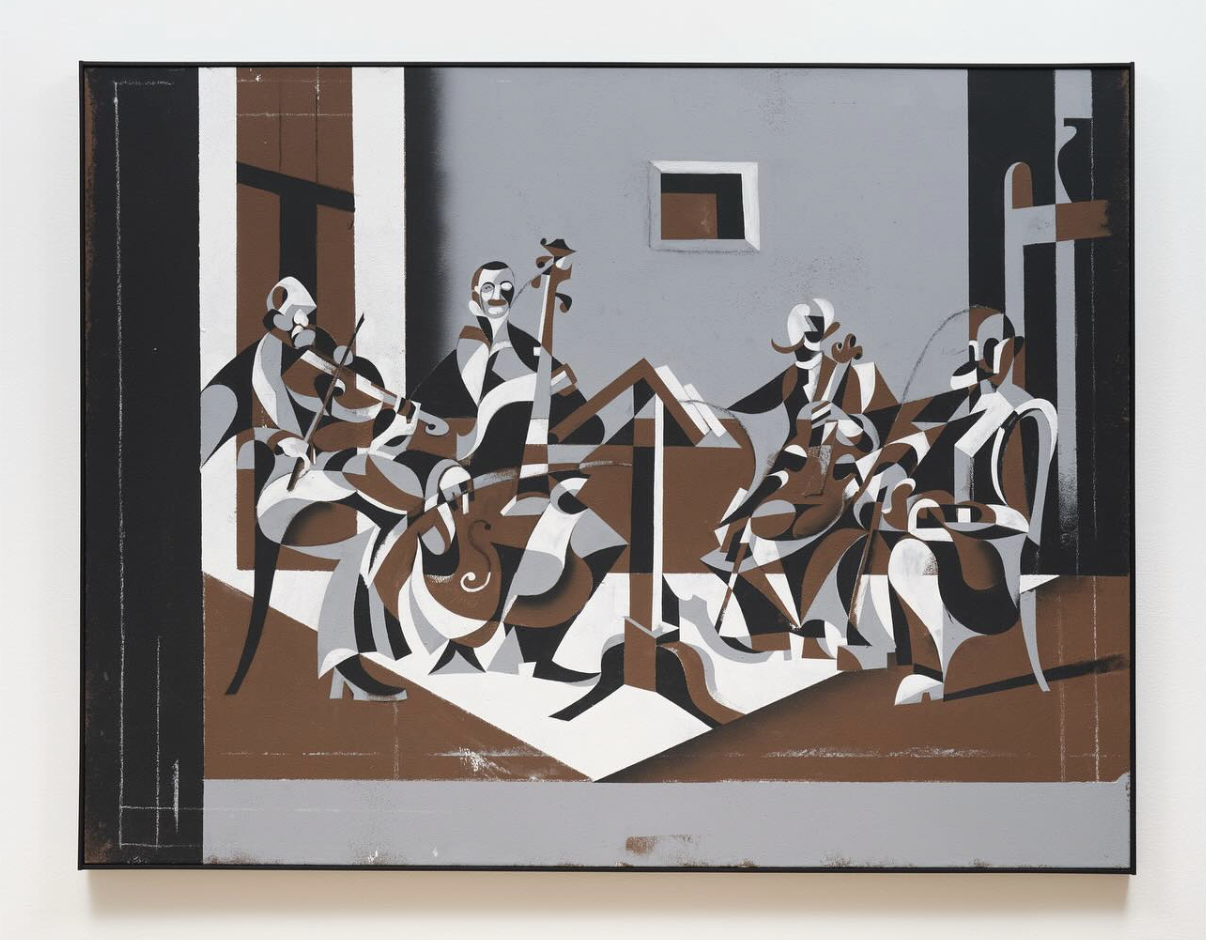
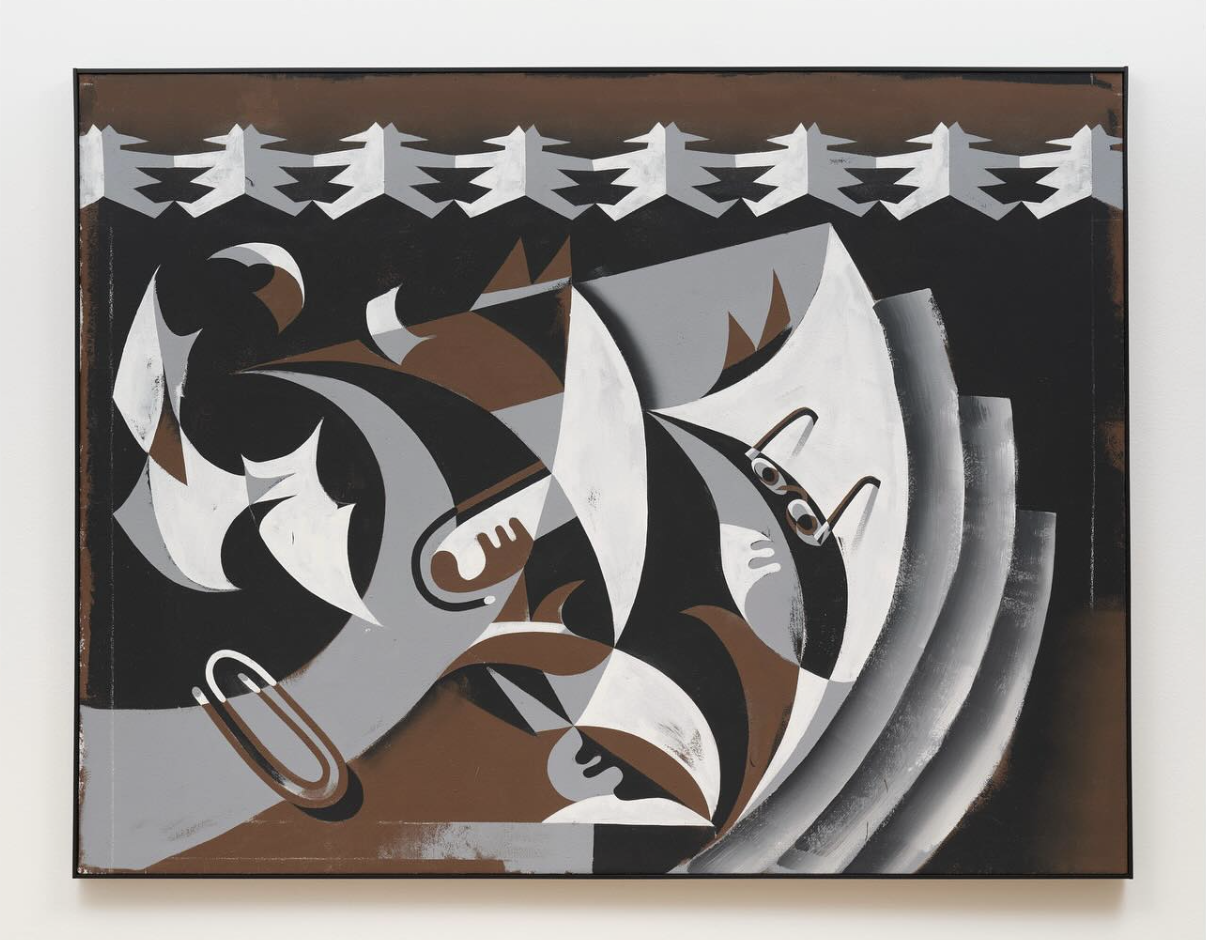
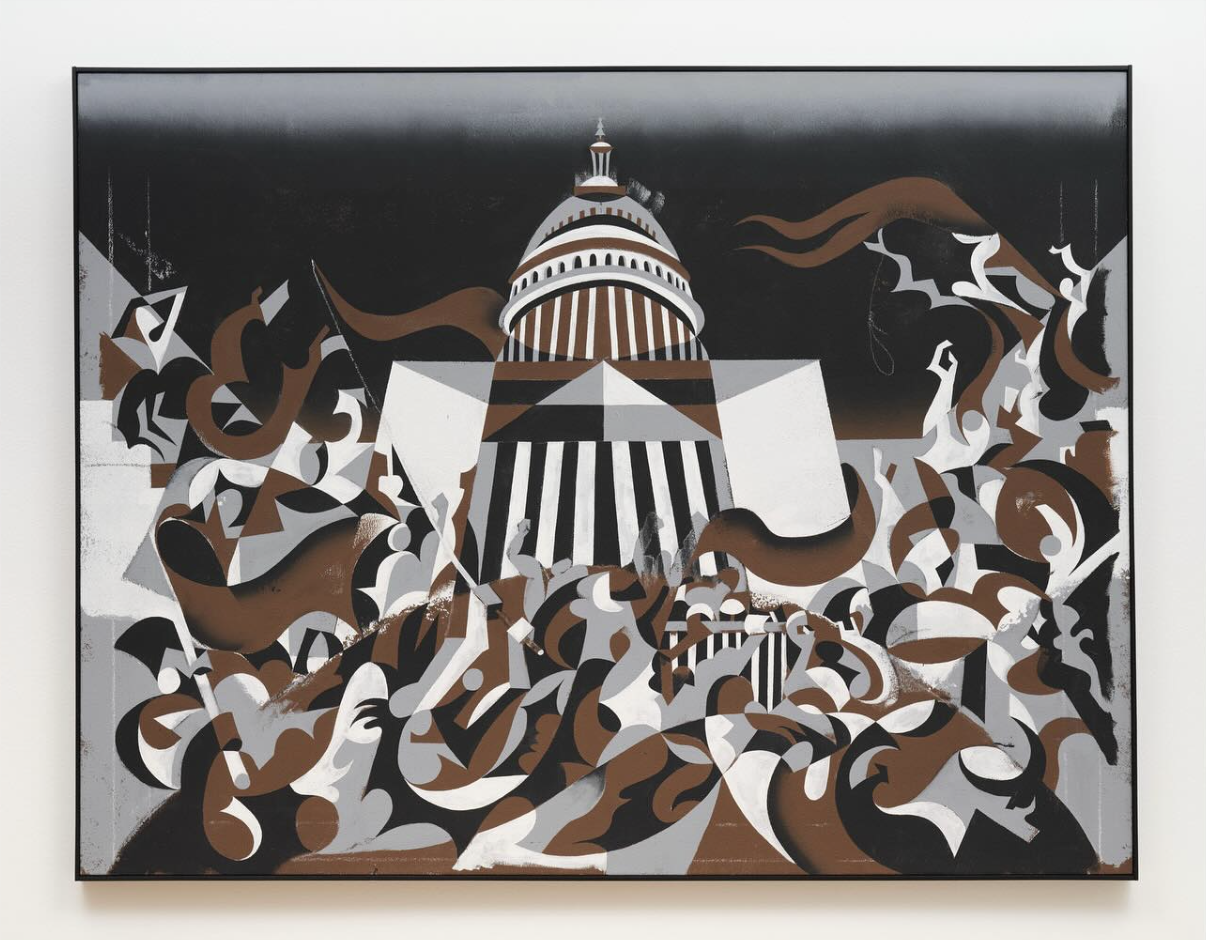
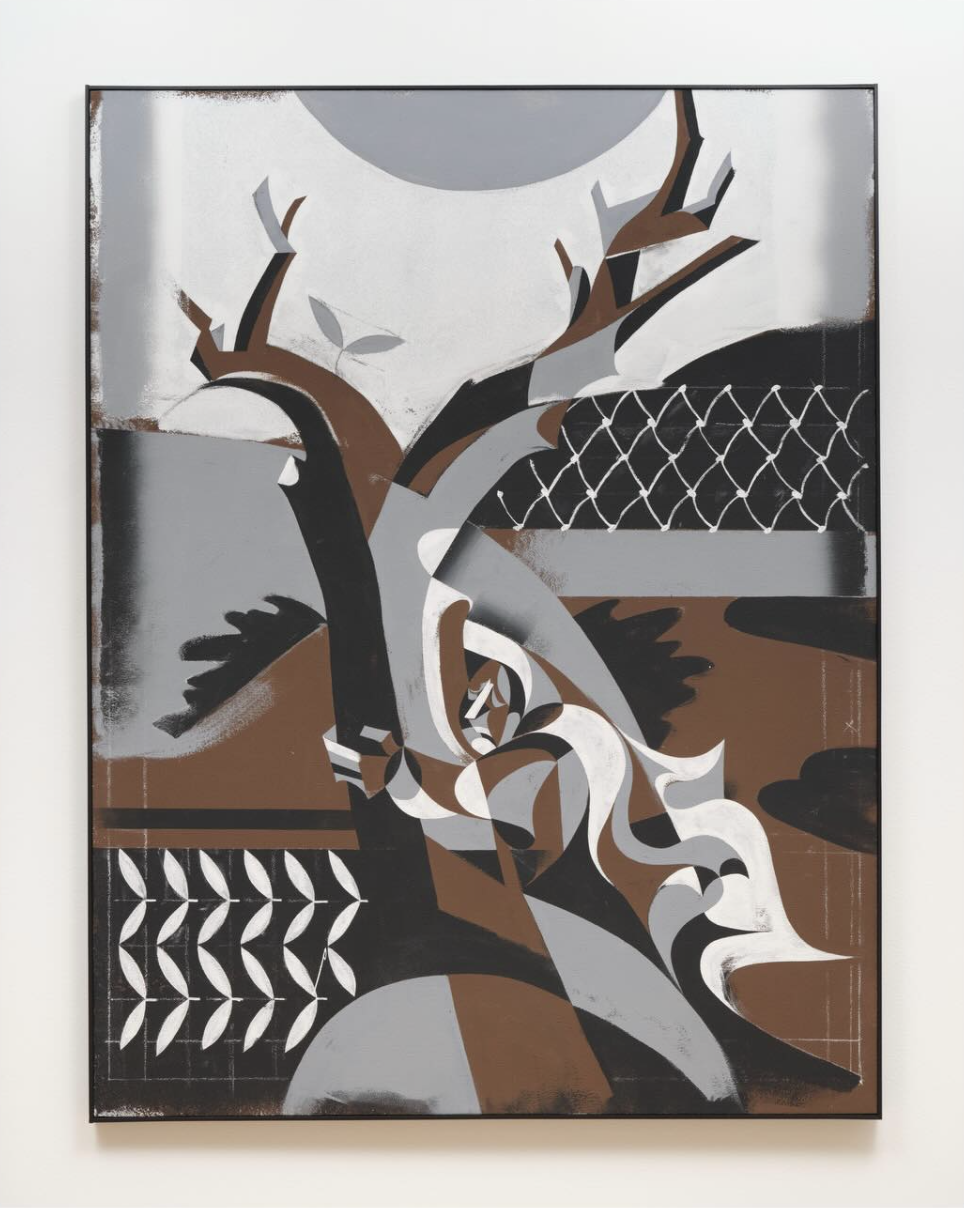
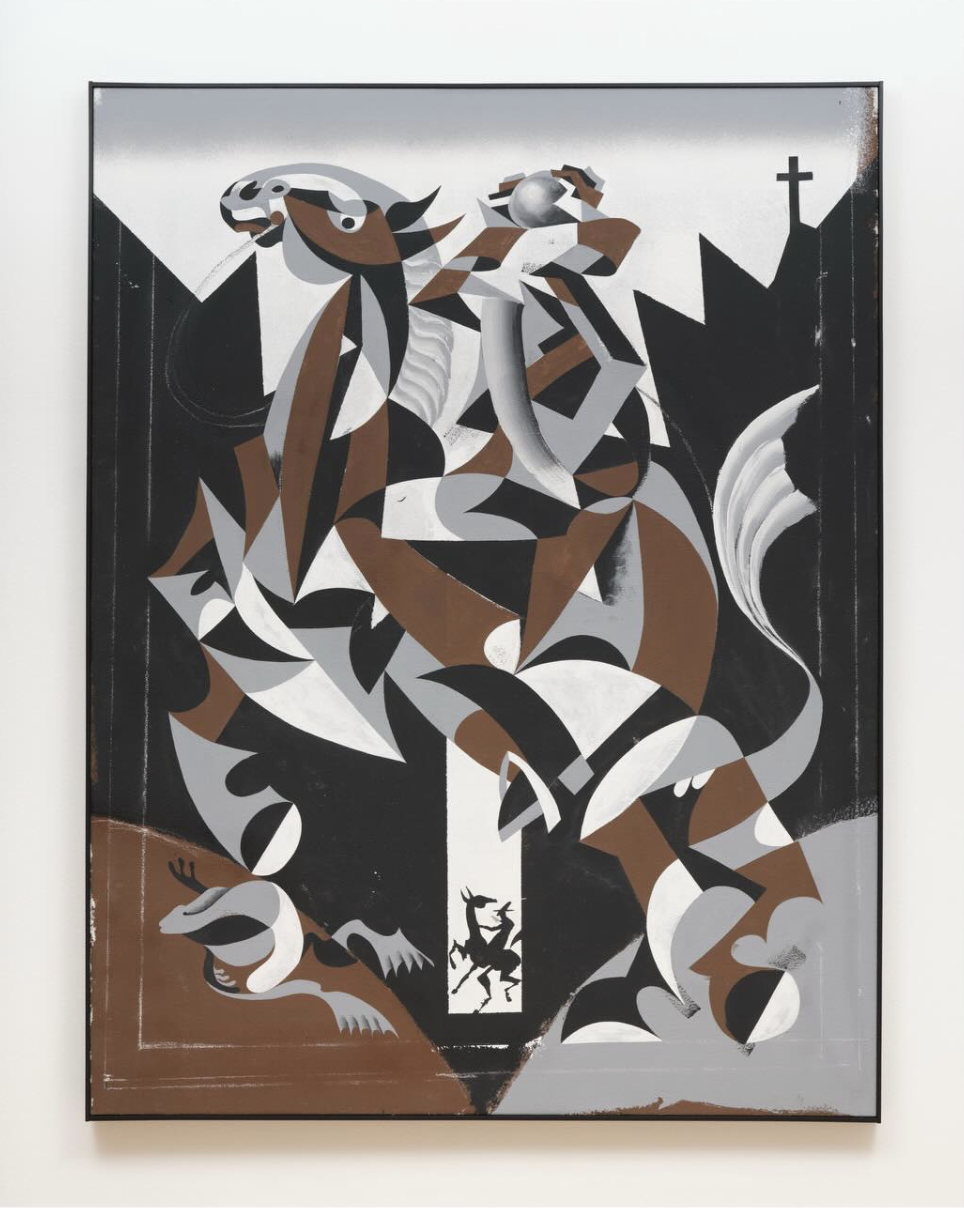
Harlem Frames continued with its second collaboration with New York artist Ryan Bock, also known as Bockhaus, by stretching canvases for his 2026 multimedia exhibition Young Americans, in New York City.
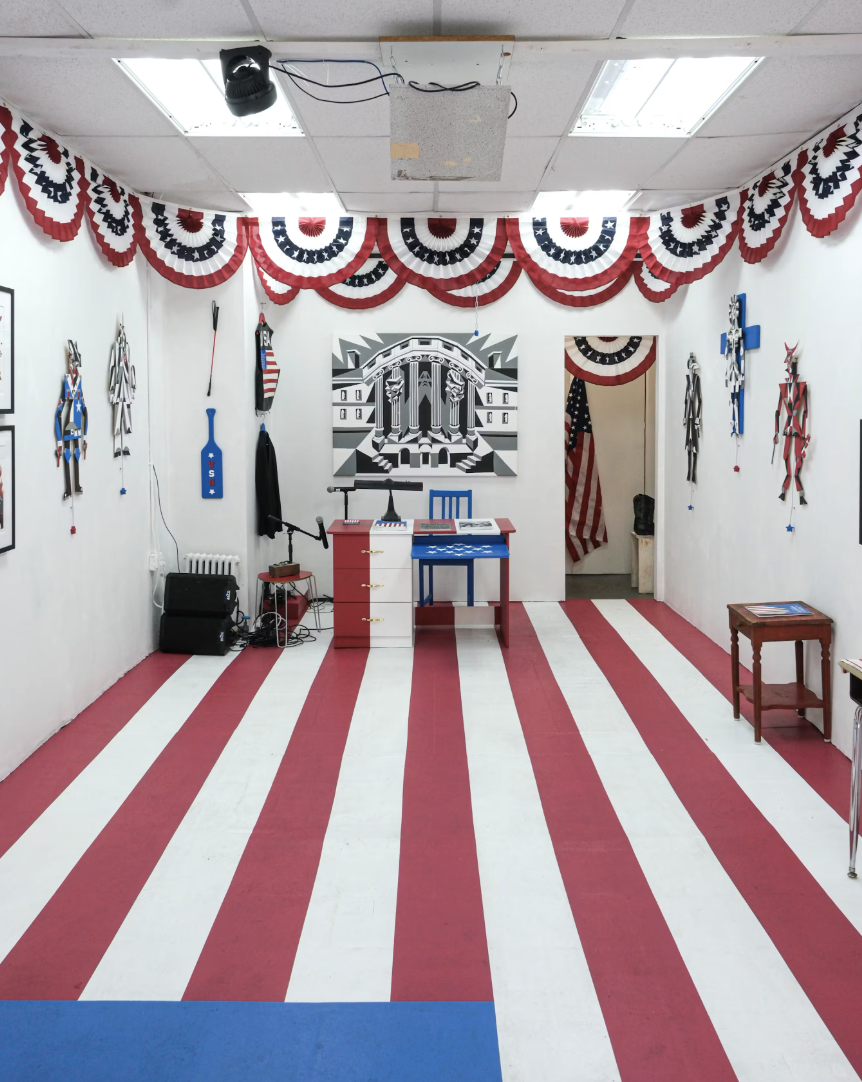
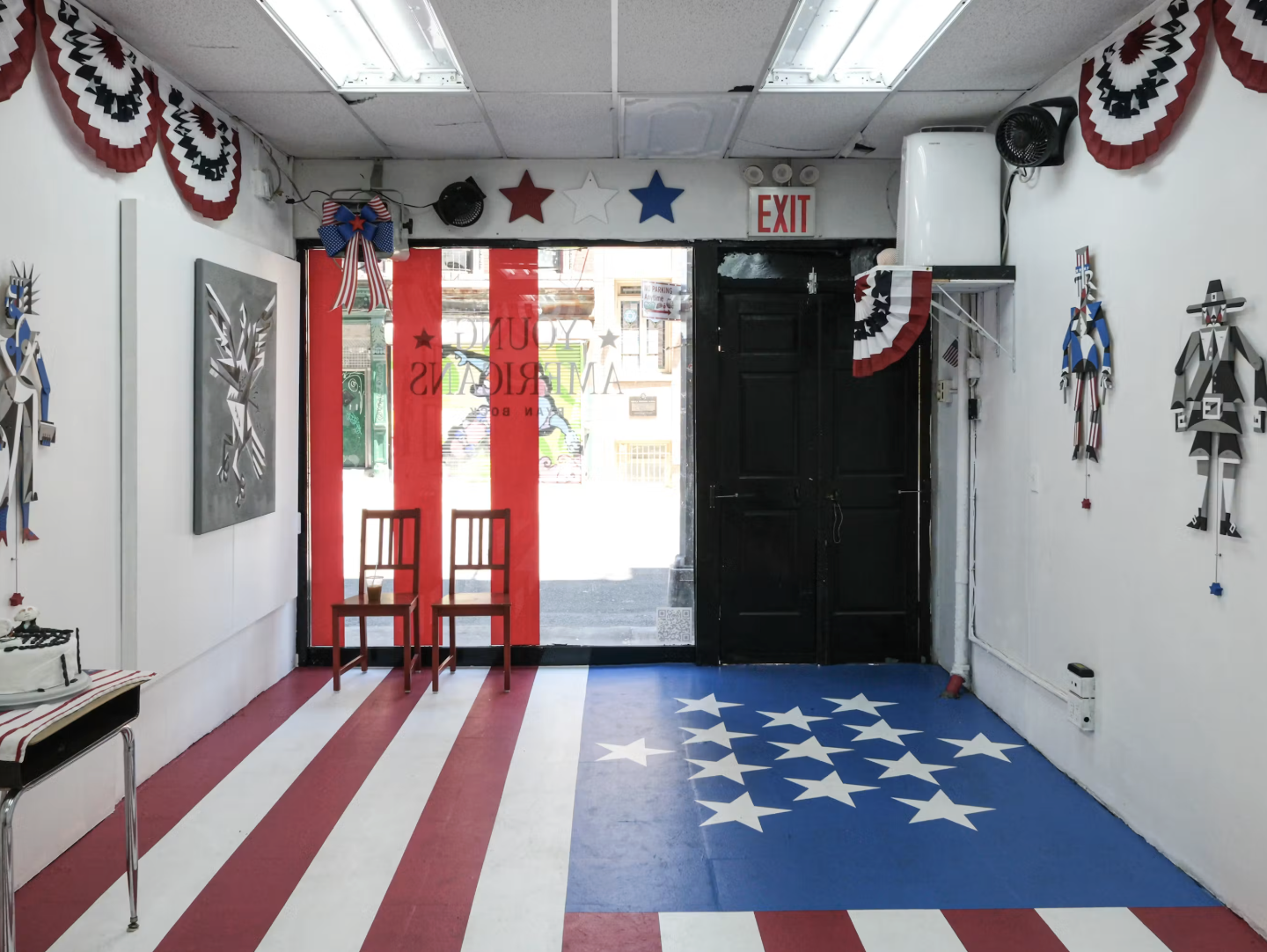
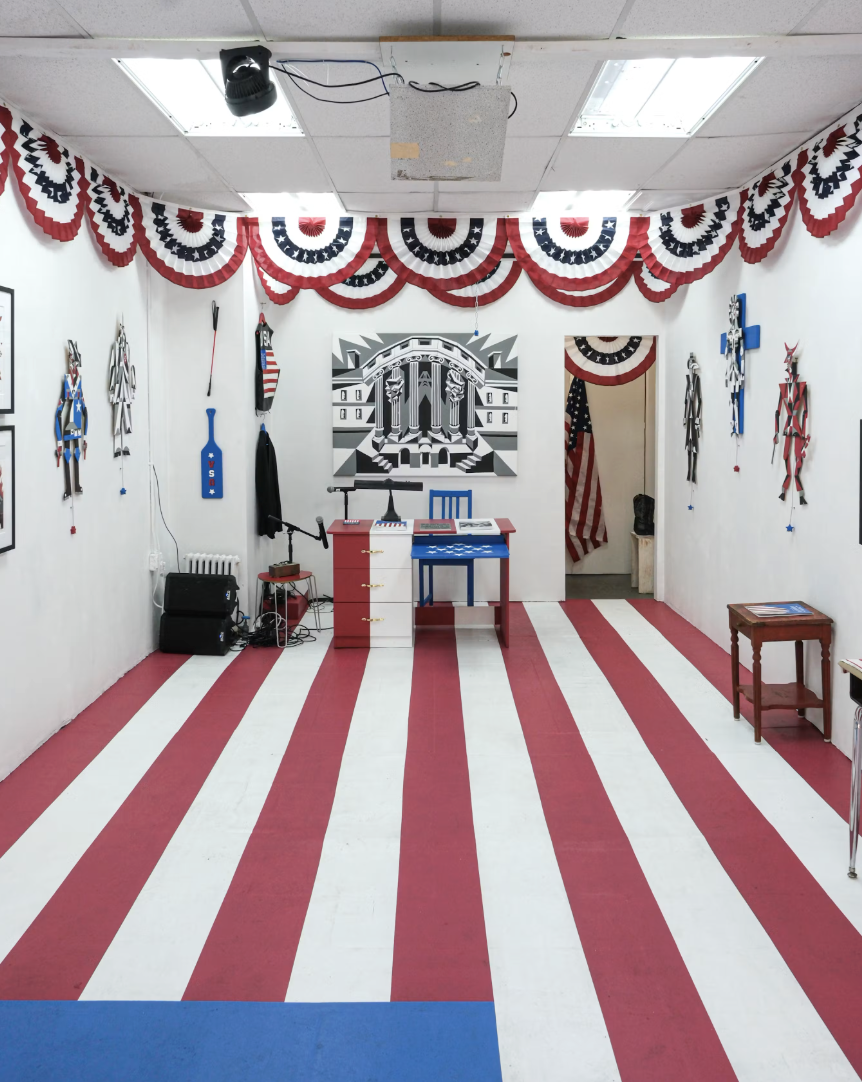
Opening on July 4 during the United States' 250th anniversary year, Young Americans transformed the Satellite Art Show Gallery space into an intentionally exaggerated display of American iconography. Red, white, and blue filled the space as Bock used paintings, works on paper, interactive marionettes, installations, and public programming to examine patriotism, national identity, political power, and the stories Americans tell about their own history.
The Exhibition
Satellite Art Show
Lower East Side, NYC.
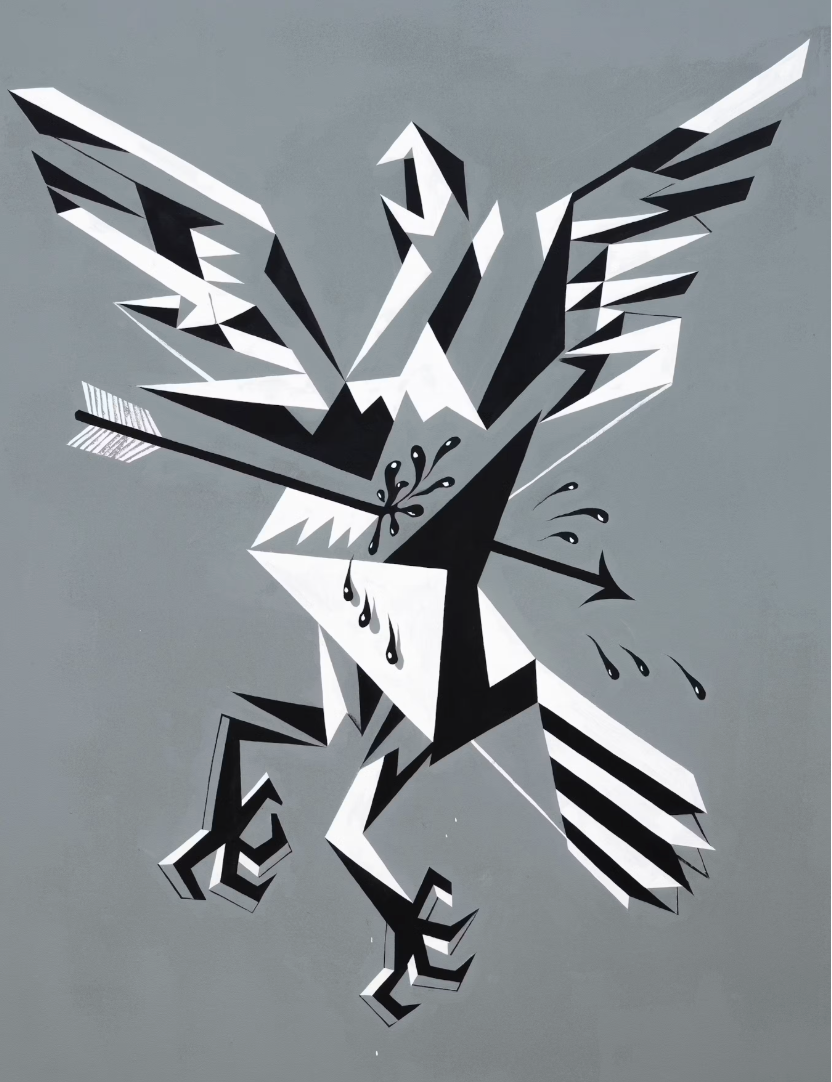
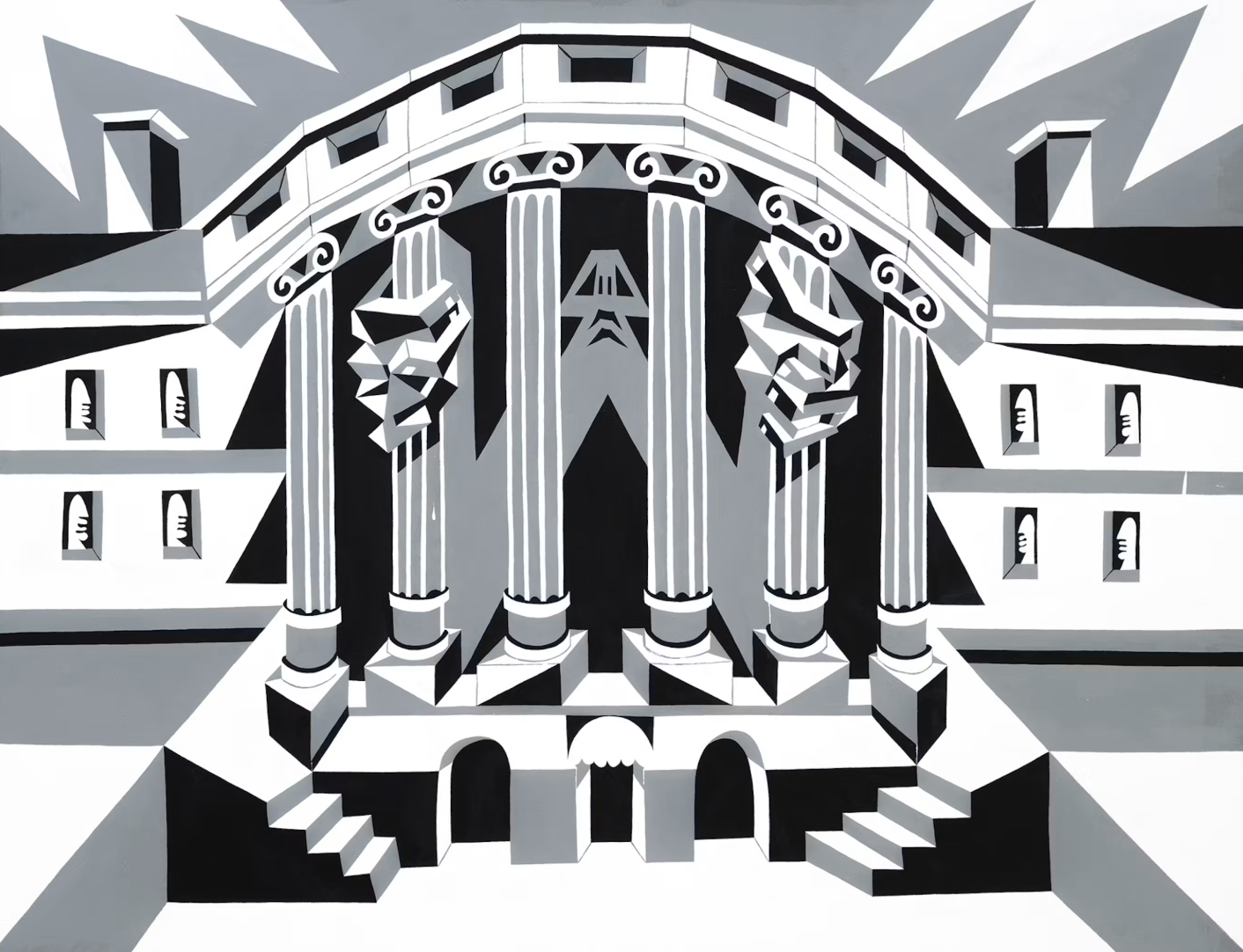
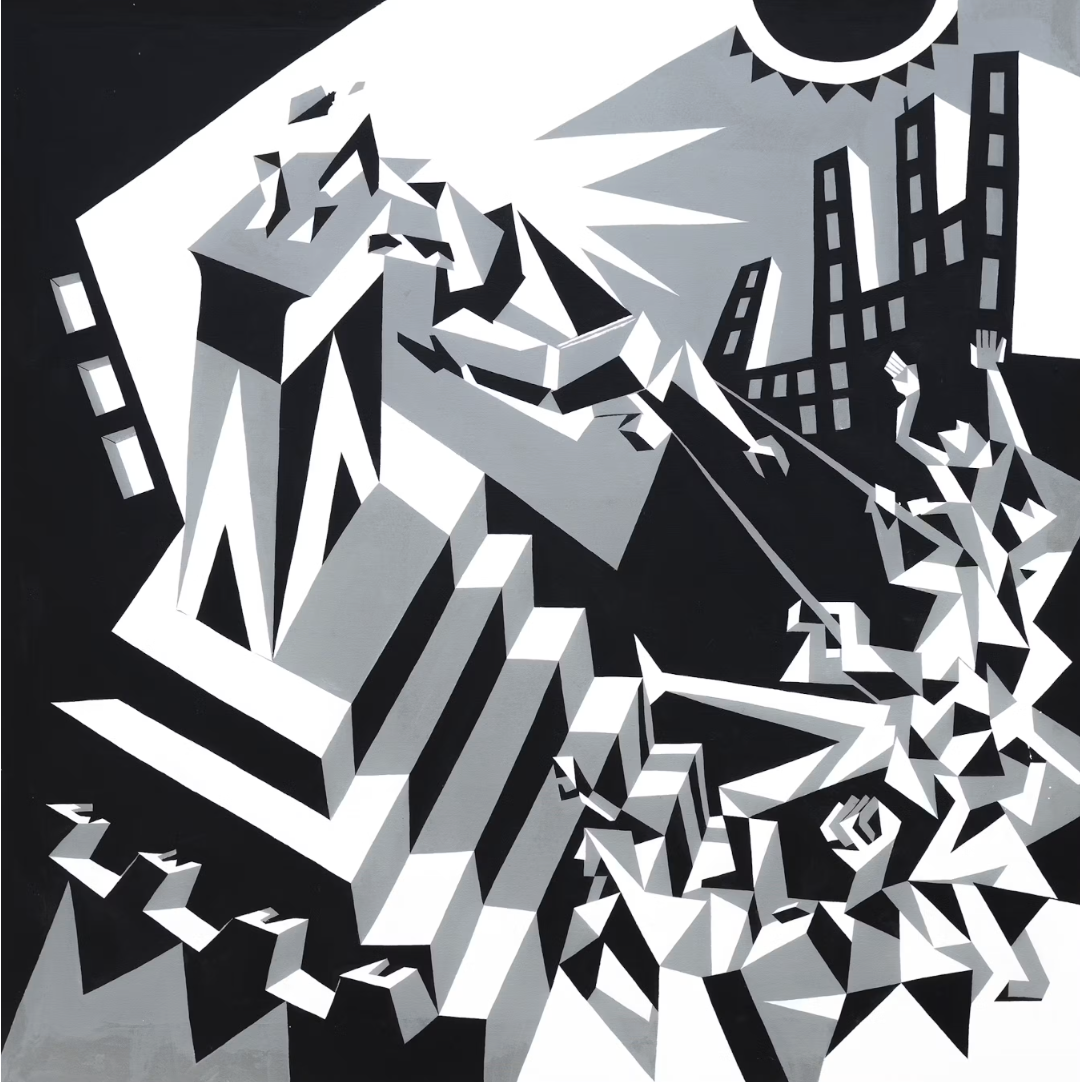
Young Americans brought together a body of work that Bock had developed in varied forms over time, presented here for the first time as a unified project. Familiar American symbols—from Lady Liberty and pilgrims to eagles and political imagery—were reworked through Bock's characteristic mixture of satire, dark humor, historical reference, and social critique.
The exhibition also extended beyond objects on the wall. Visitors could physically operate Bock's marionettes, while conversations, screenings, lectures, and other programs turned the gallery into a space for participation and exchange throughout the show's run.
Stretched by
Harlem Frames
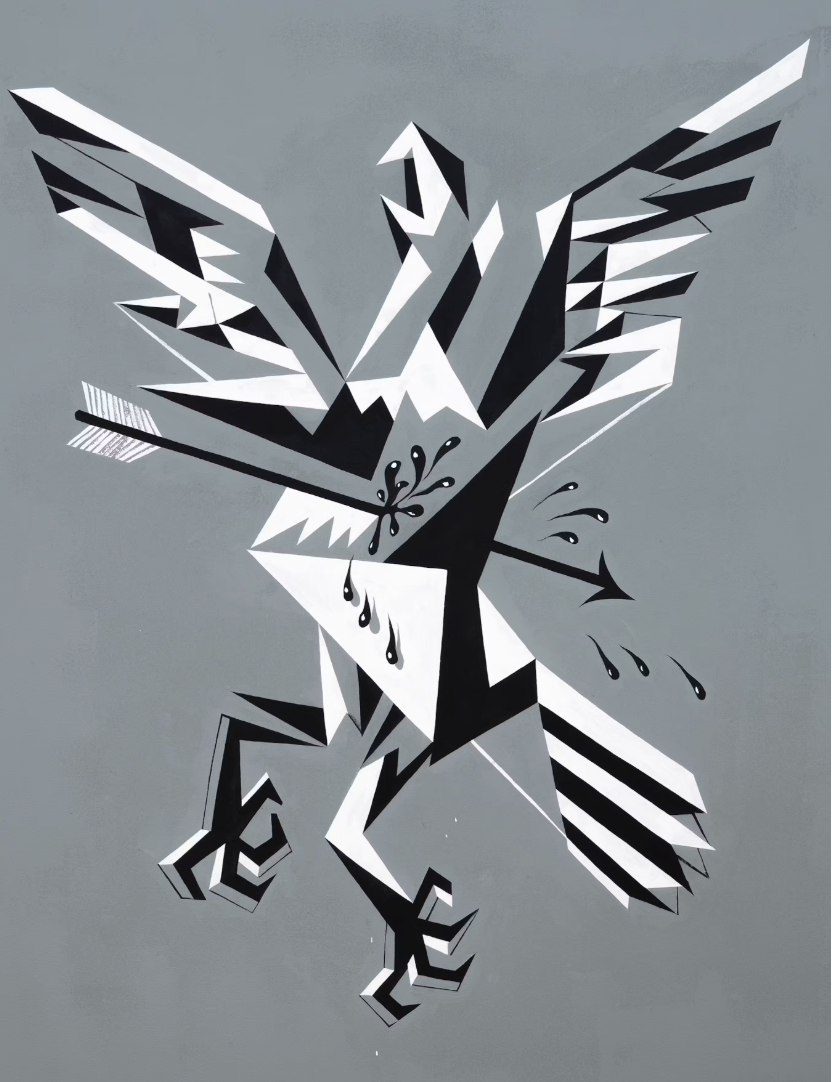
For Young Americans, Harlem Frames provided professional canvas stretching for Bock's paintings, continuing an ongoing working relationship with the artist across multiple bodies of work and exhibitions.
Preparing an artist's canvases for exhibition is a part of the process that largely disappears once the finished paintings reach the gallery wall. Proper stretching establishes the structure and tension of the canvas while preparing each work for presentation as a finished object.
With Bock's paintings, that preparation supports compositions characterized by strong geometry, symbolism, architectural forms, and densely constructed imagery—allowing the physical canvas to provide a precise foundation for the work itself.
From LICH to Young Americans, Harlem Frames is proud to continue supporting Bock's practice as new work moves from the studio to exhibition.
Artist: Ryan Bock / Bockhaus
Exhibition: Young Americans
Venue: Satellite Art Show Gallery, New York City
Year: 2026
Harlem Frames Services: Professional Canvas Stretching
Explore the artist: https://bock.haus/?utm_source=chatgpt.com
Explore Young Americans: https://upmag.com/press-release-as-america-turns-250-artist-ryan-bock-examines-the-warning-signs-of-a-nation-in-decline-with-young-americans/
Related Projects: Ryan Bock · Bockhaus · LICH
Ryan Bock · Bockhaus · LICH
Ki Smith Gallery · New York City · 2025
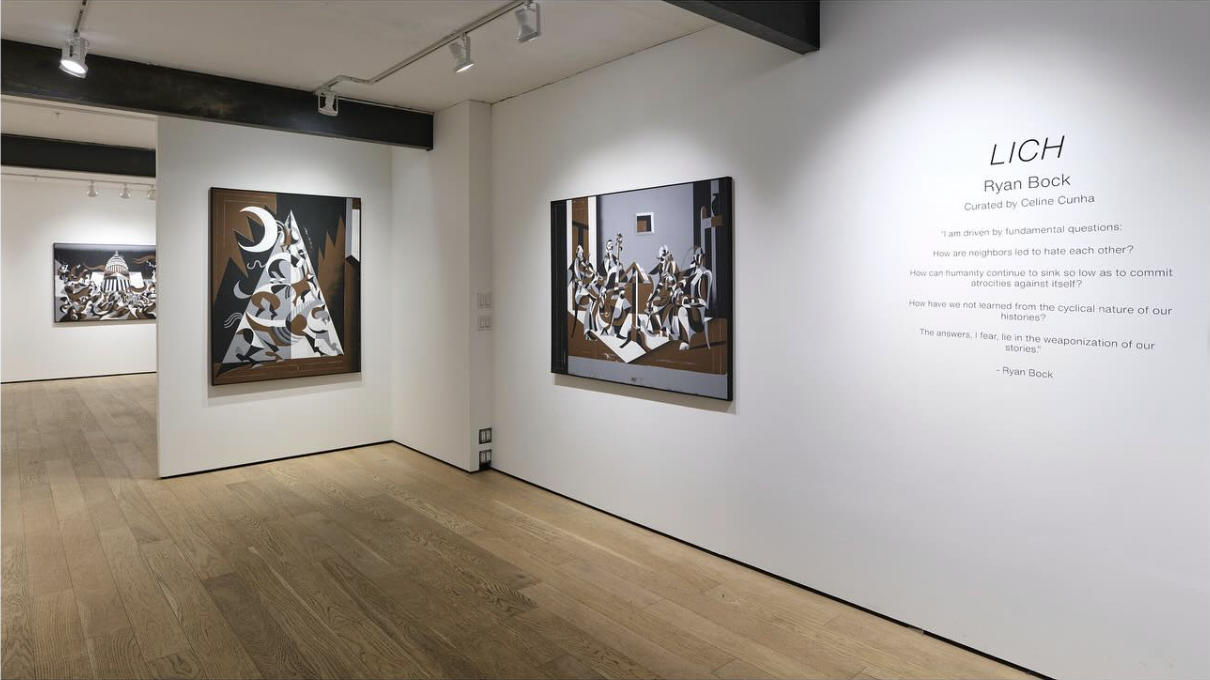
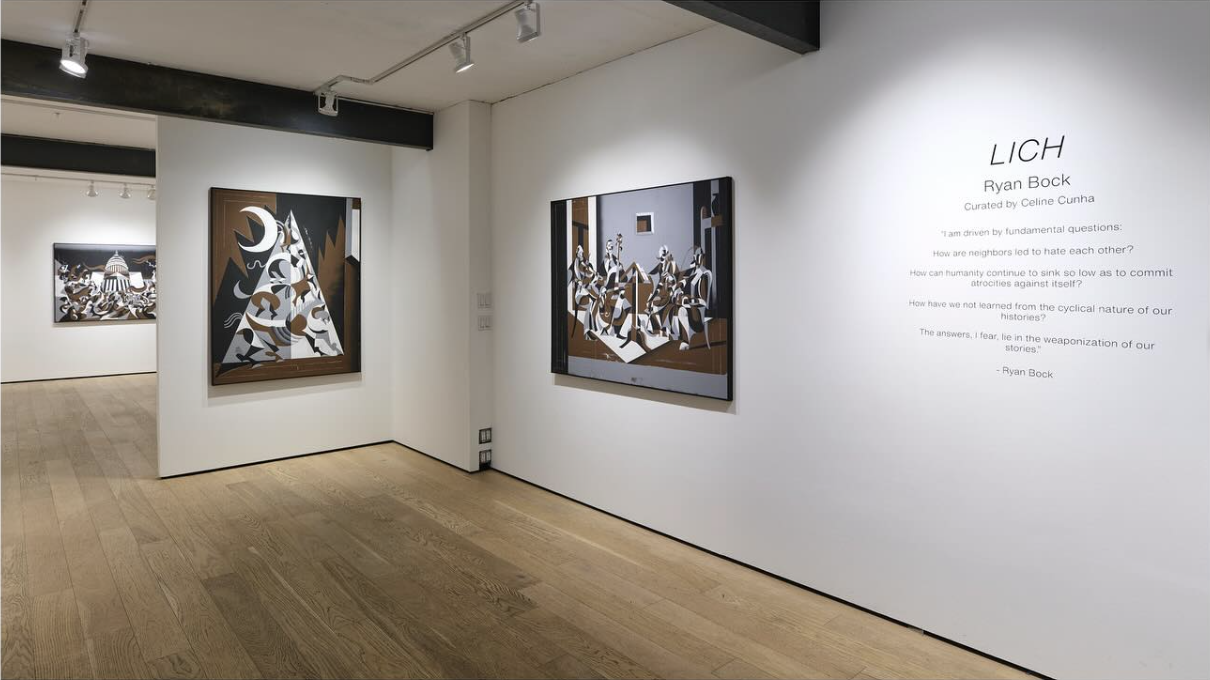
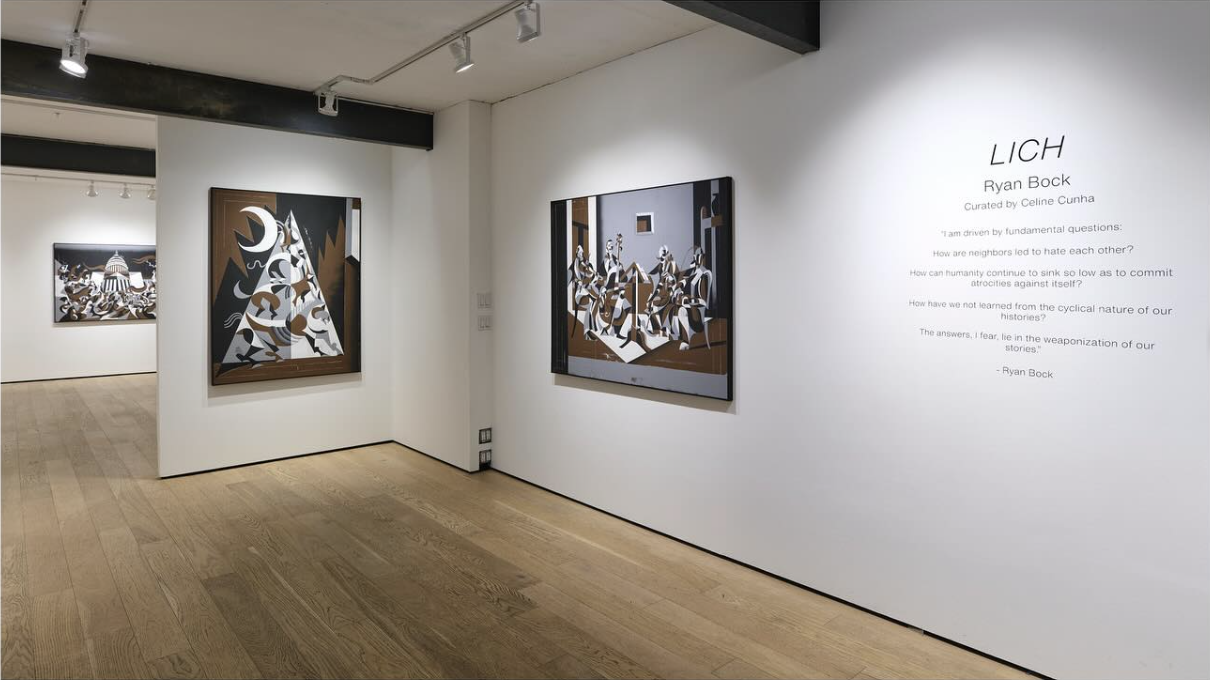
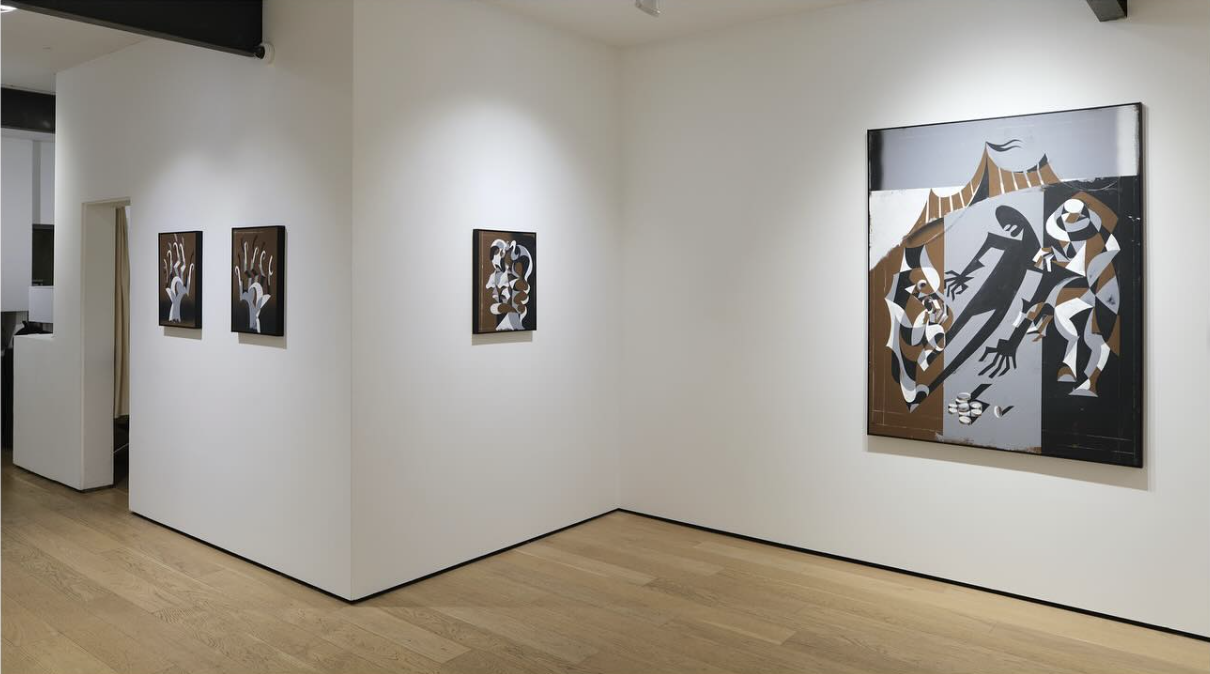
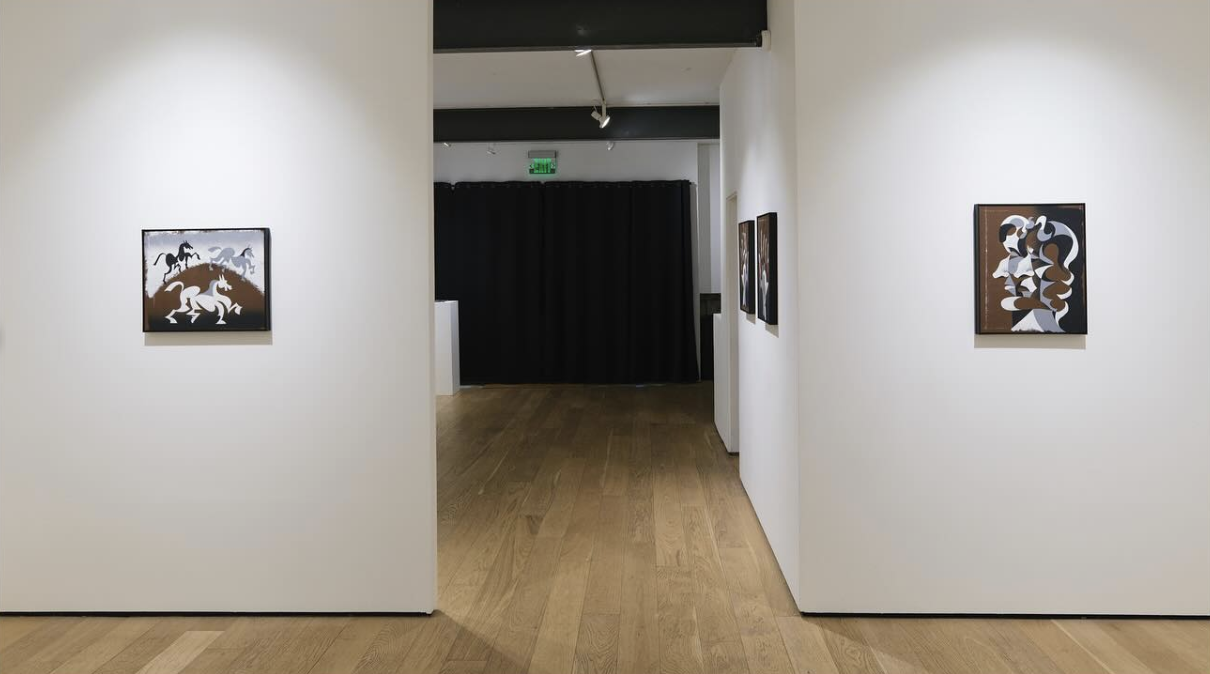
Harlem Frames has had the pleasure of working with artist Ryan Bock, also known as Bockhaus, twice. The first occasion was the presentation of paintings for his exhibit LICH, a 2025 solo exhibition at Ki Smith Gallery on the Lower East Side.
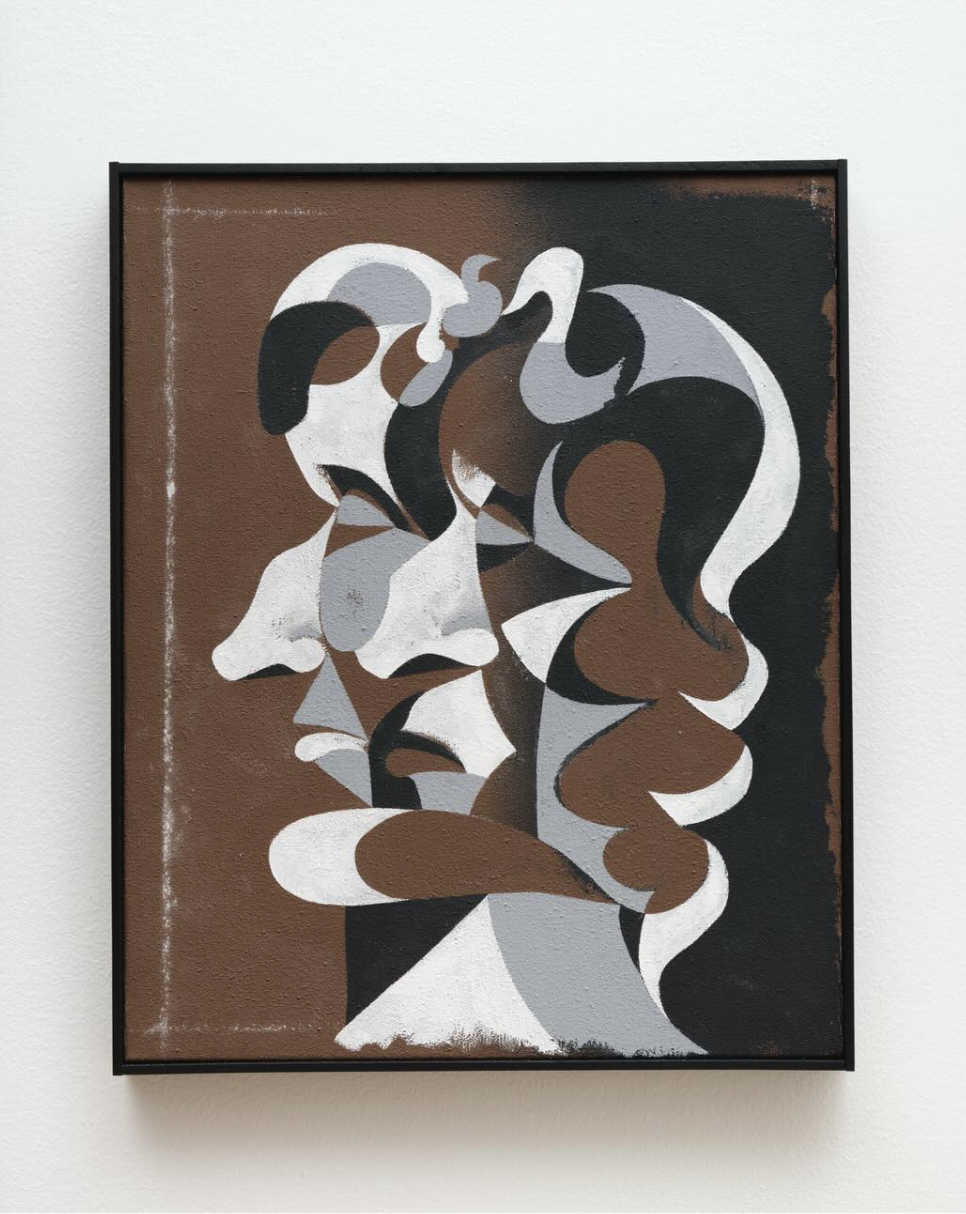
Developed over three months spent residing and painting in Lich, Germany—the town from which the exhibition takes its name—LICH draws from Bock’s German-Jewish ancestry, family history, folklore, and contemporary politics. Through fractured geometries, shadowed figures, and references ranging from the Brothers Grimm to historical and contemporary events, the paintings examine multifarious ways stories and collective memory can both shape and distort our comprehension as well as recollection of history.
The Exhibition
The Exhibition
Ki Smith Gallery
Lower East side, NYC.
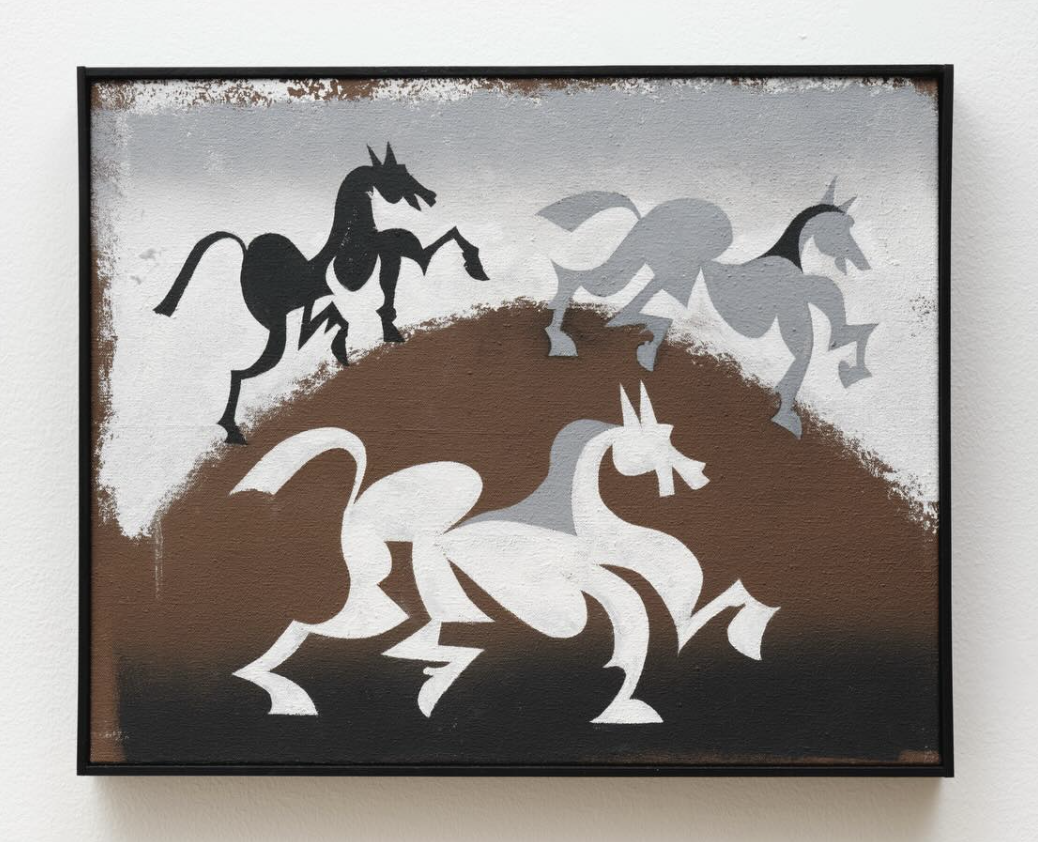
Bock’s practice is deeply rooted in narrative, symbolism, and a distinctive visual language influenced by German Expressionism and Czech Cubism. In LICH, that language takes on a rougher, heavily worked quality as figures, animals, myths, and historical references move through dark, angular compositions.
The exhibition considers how folklore and inherited narratives move between generations and cultures, connecting Bock’s own ancestry with larger questions surrounding memory, propaganda, censorship, and the cyclical nature of history.
Stretched & Framed by Harlem Frames
For LICH, Harlem Frames provided professional canvas stretching and custom framing, continuing our collaboration with Bock across his painting practice.
The presentation was intentionally responsive to the physical character of the paintings. Bock’s canvases contain strong contrasts, fractured forms, textured surfaces, and an almost architectural use of shape and shadow. The framing provides structure around that visual intensity without competing with the imagery itself.
Our ongoing work with Bock reflects the relationship that can develop between artist and framer over multiple projects. From stretching newly completed canvases to preparing finished works for exhibition, Harlem Frames helps carry the work through the important transition from the artist’s studio to the gallery wall.
We’re proud to have contributed to the presentation of LICH and to continue working with Bockhaus as his practice and exhibitions evolve.
We’re proud to have contributed to the presentation of LICH and to continue working with Bockhaus as his practice and exhibitions evolve.
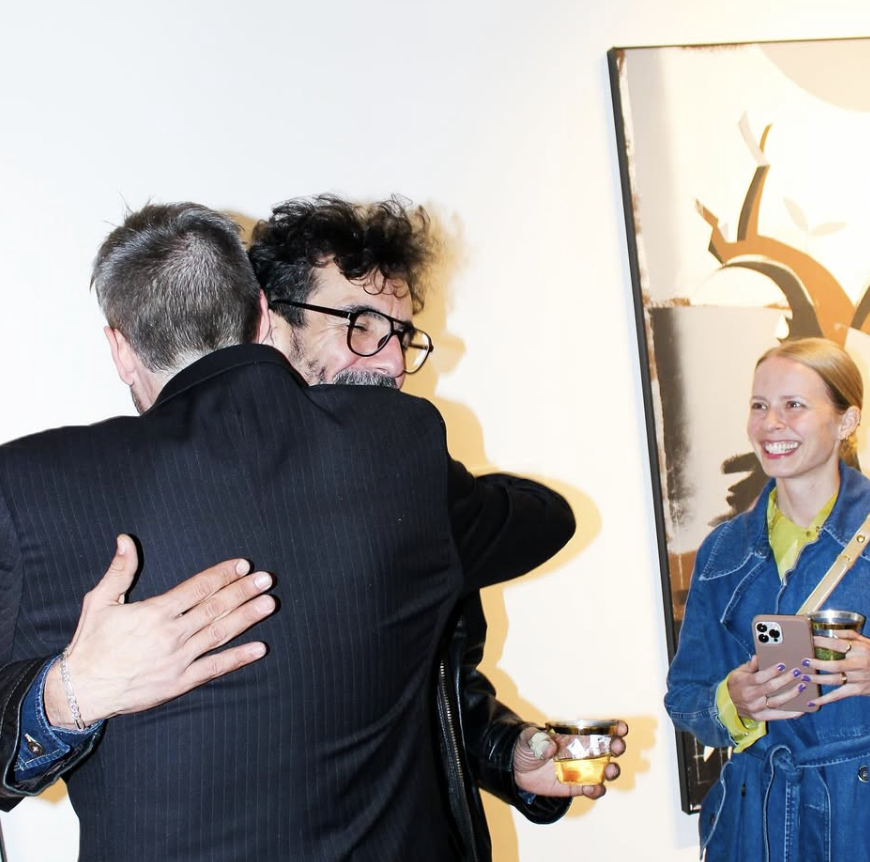
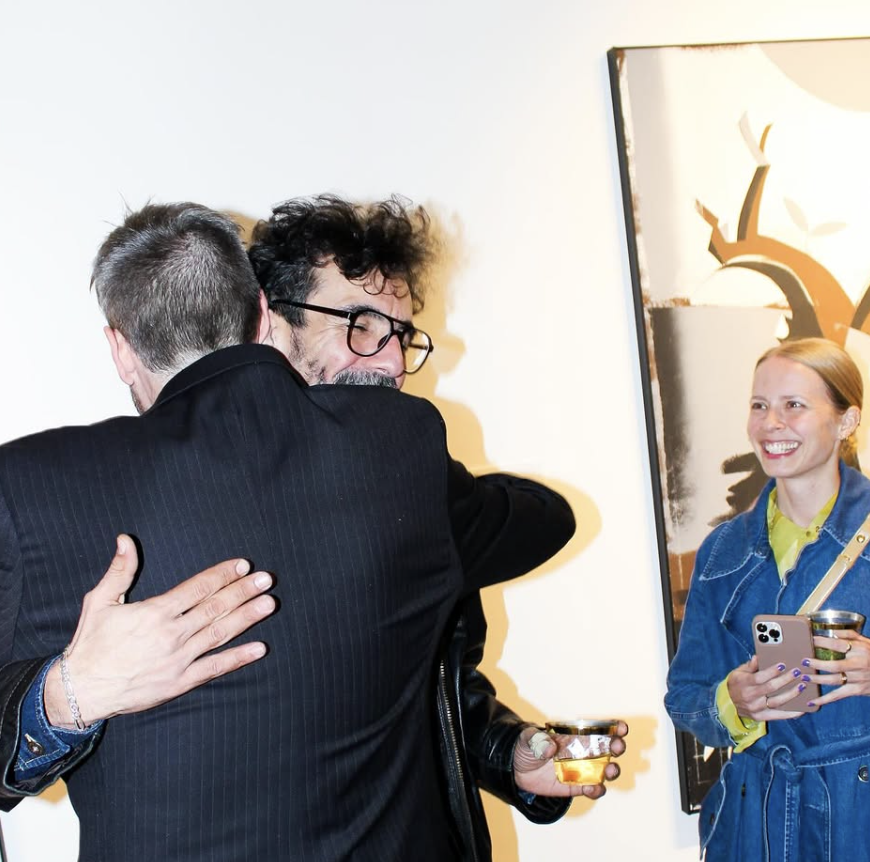
Harlem Frame’s Arezki greeting artist Ryan Bock at opening of LICH.
Artist: Ryan Bock / Bockhaus
Exhibition: LICH
Venue: Ki Smith Gallery, New York
Curator: Celine Cunha
Dates: October 18–November 23, 2025
Harlem Frames Services: Canvas Stretching · Custom Framing
Explore Bockhaus
Image Source: https://www.instagram.com/p/DQ7ZGgokYYx/?hl=en&img_index=14
Related Projects: Ryan Bock · Bockhaus: Young Americans
Morgan McMahon · Glassware Lounge
Morgan McMahon · Glassware Lounge
Artist Collaboration · Canvas Stretching & Custom Framing · New York
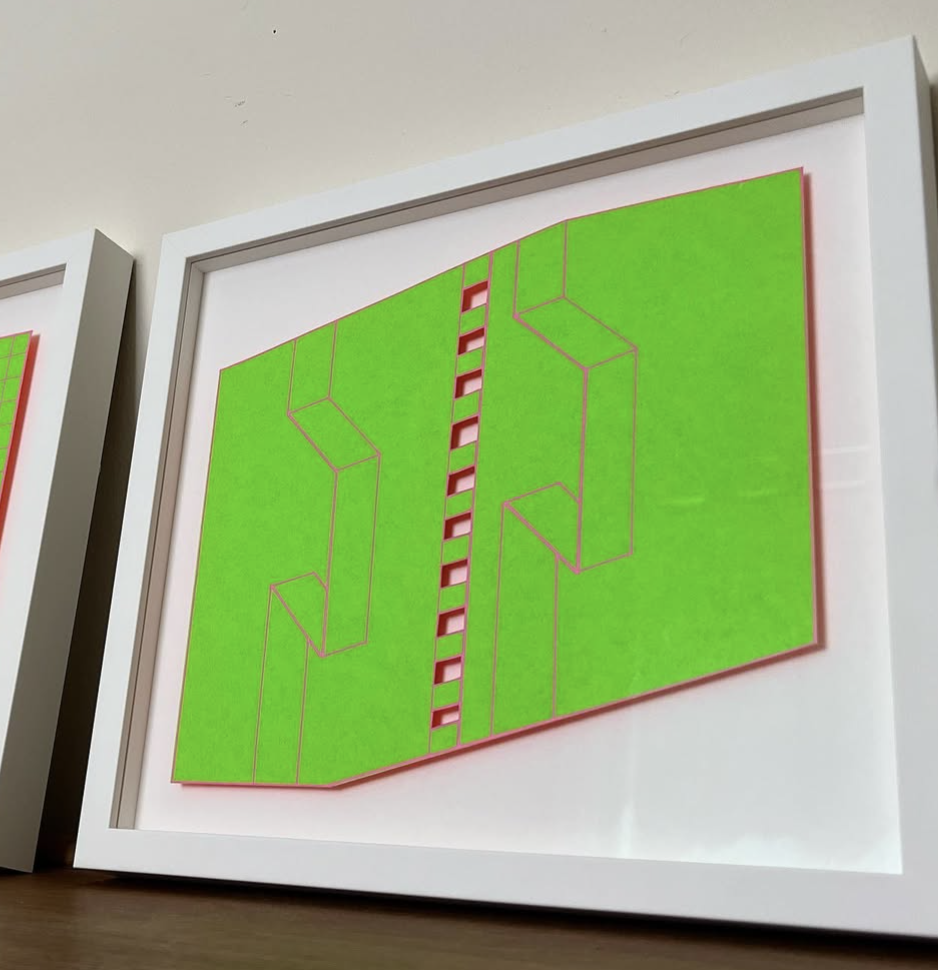
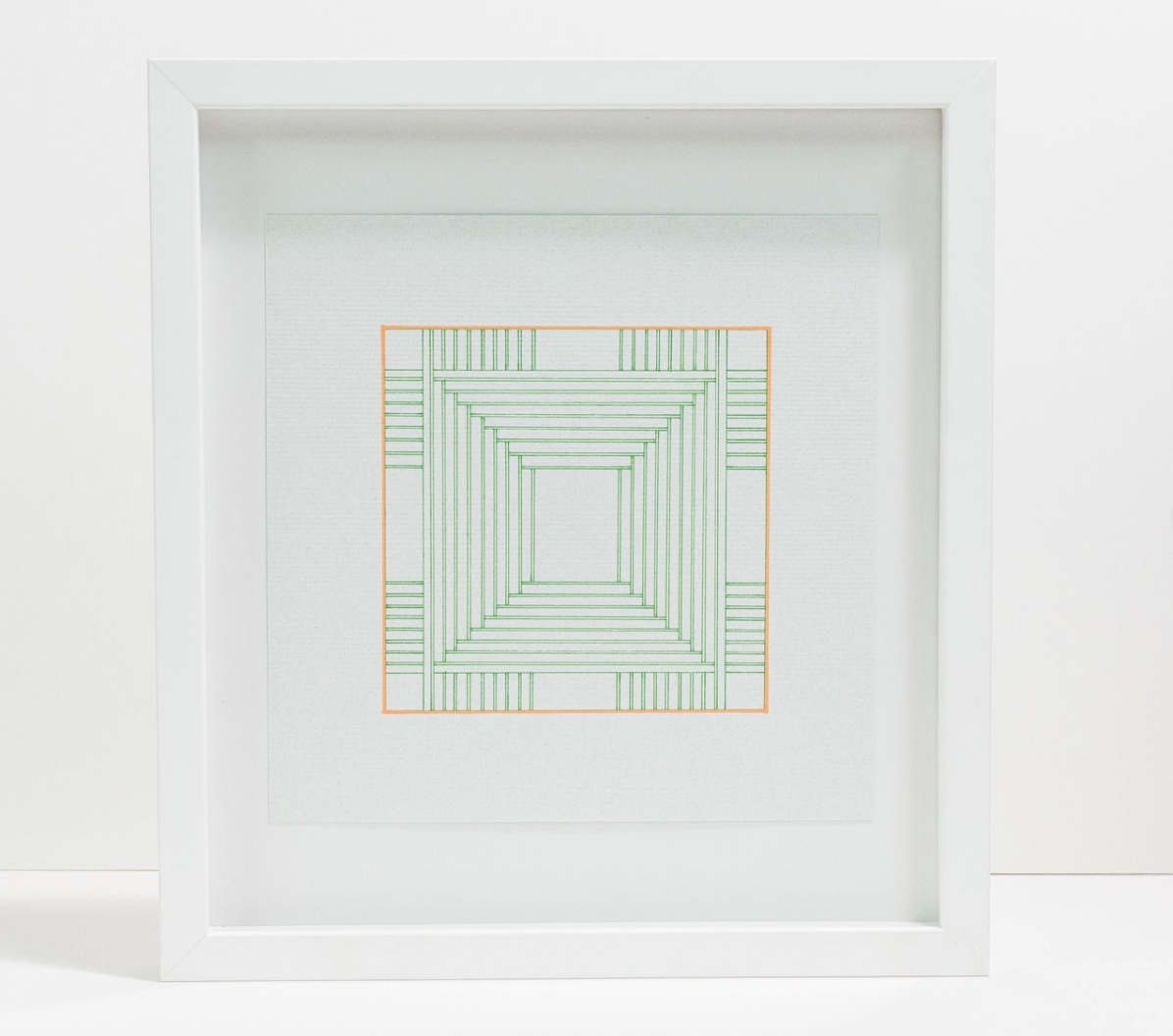
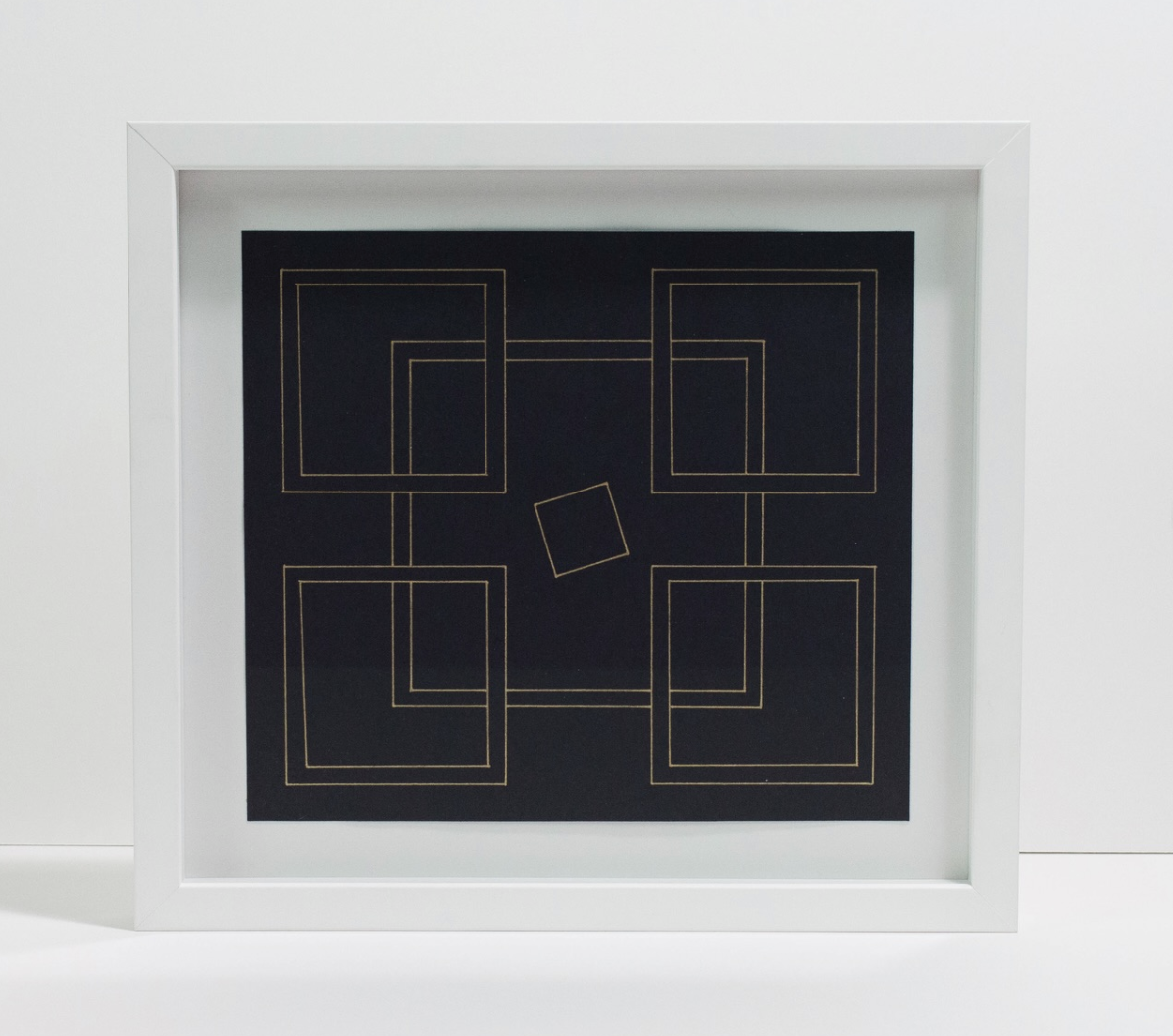
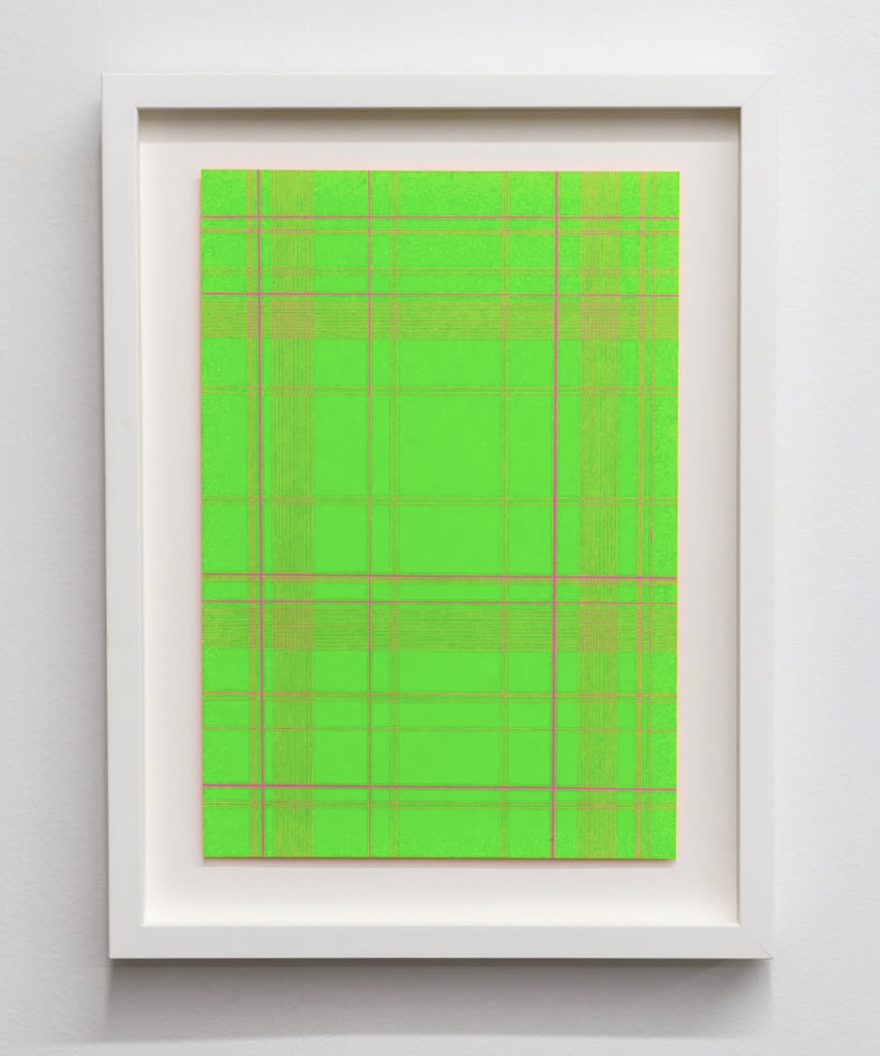
Harlem Frames has an ongoing collaboration with Manhattan-based visual artist Morgan McMahon, who works under the professional moniker Glassware Lounge.
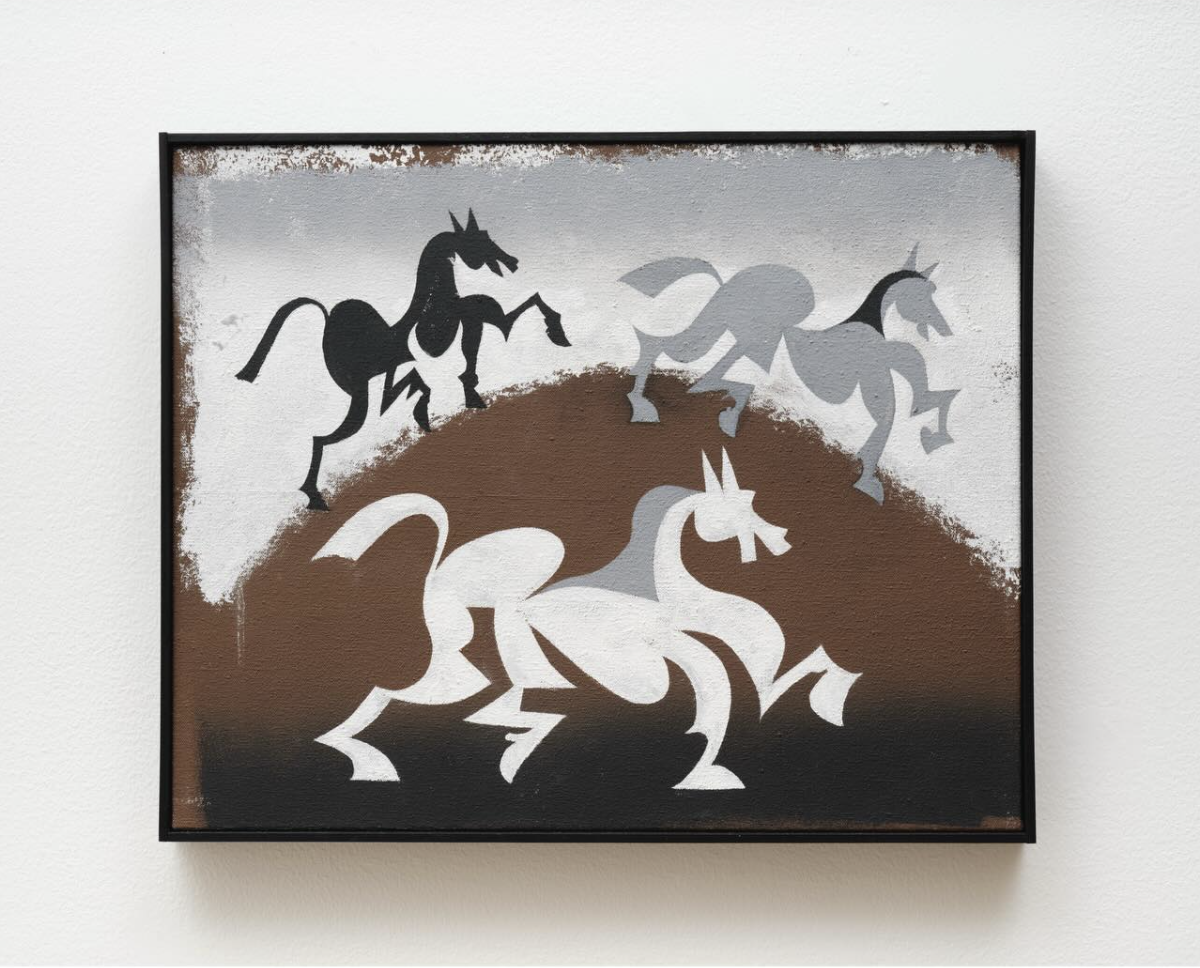
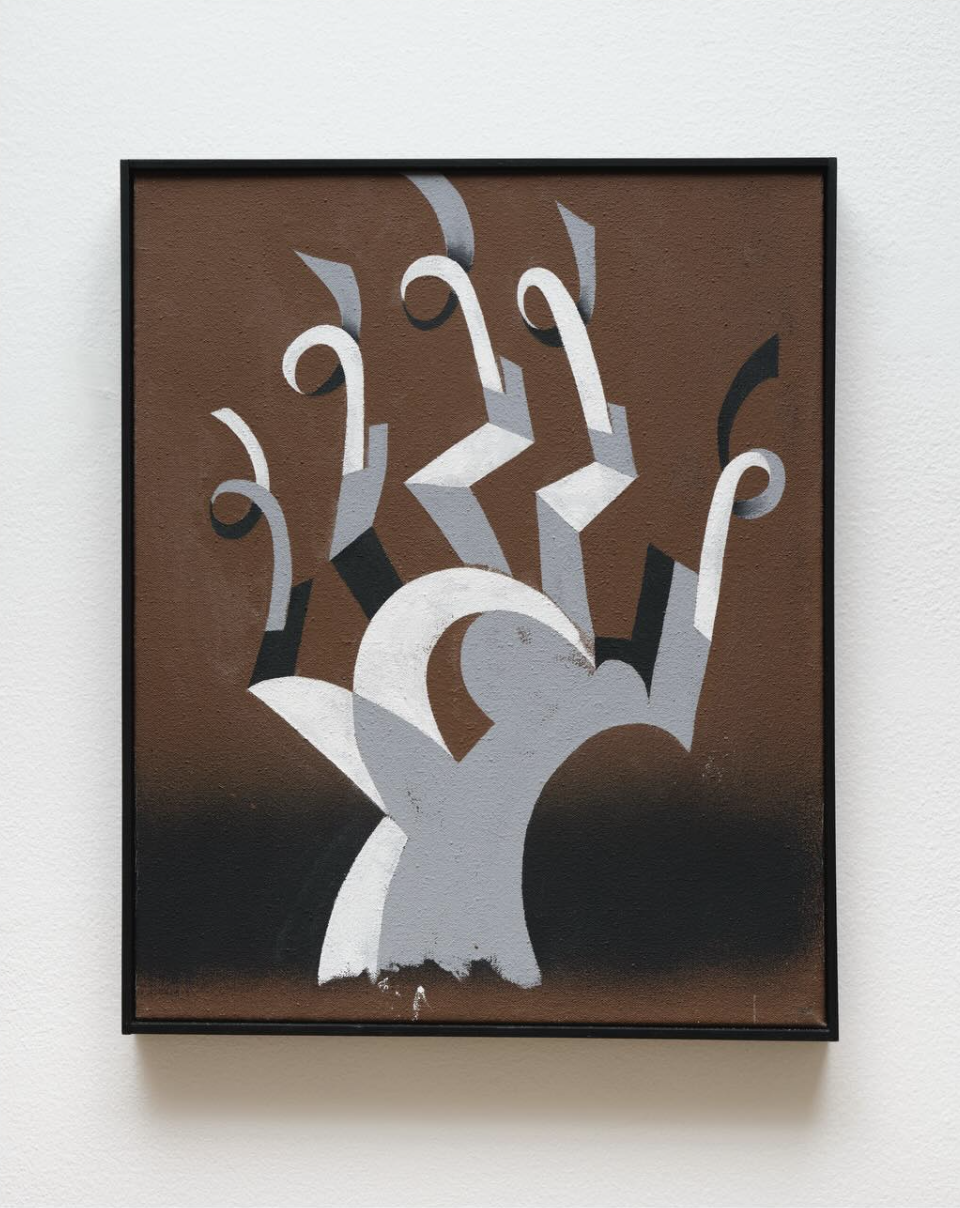
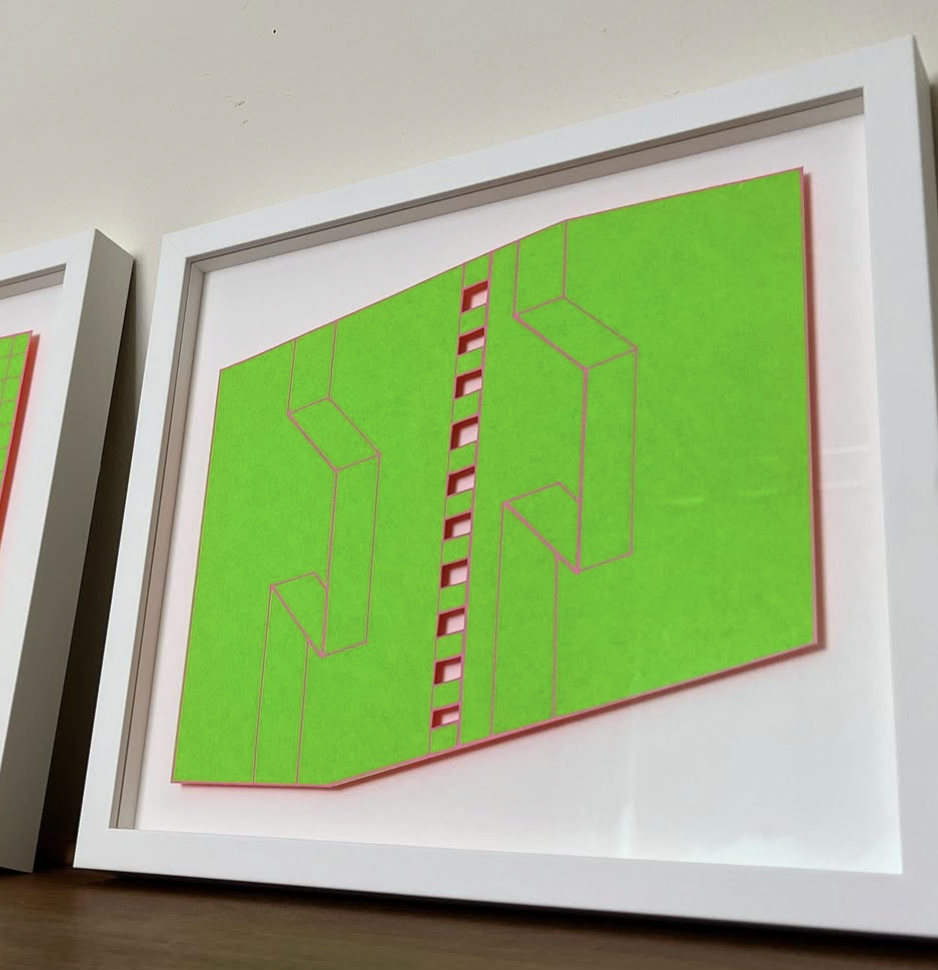
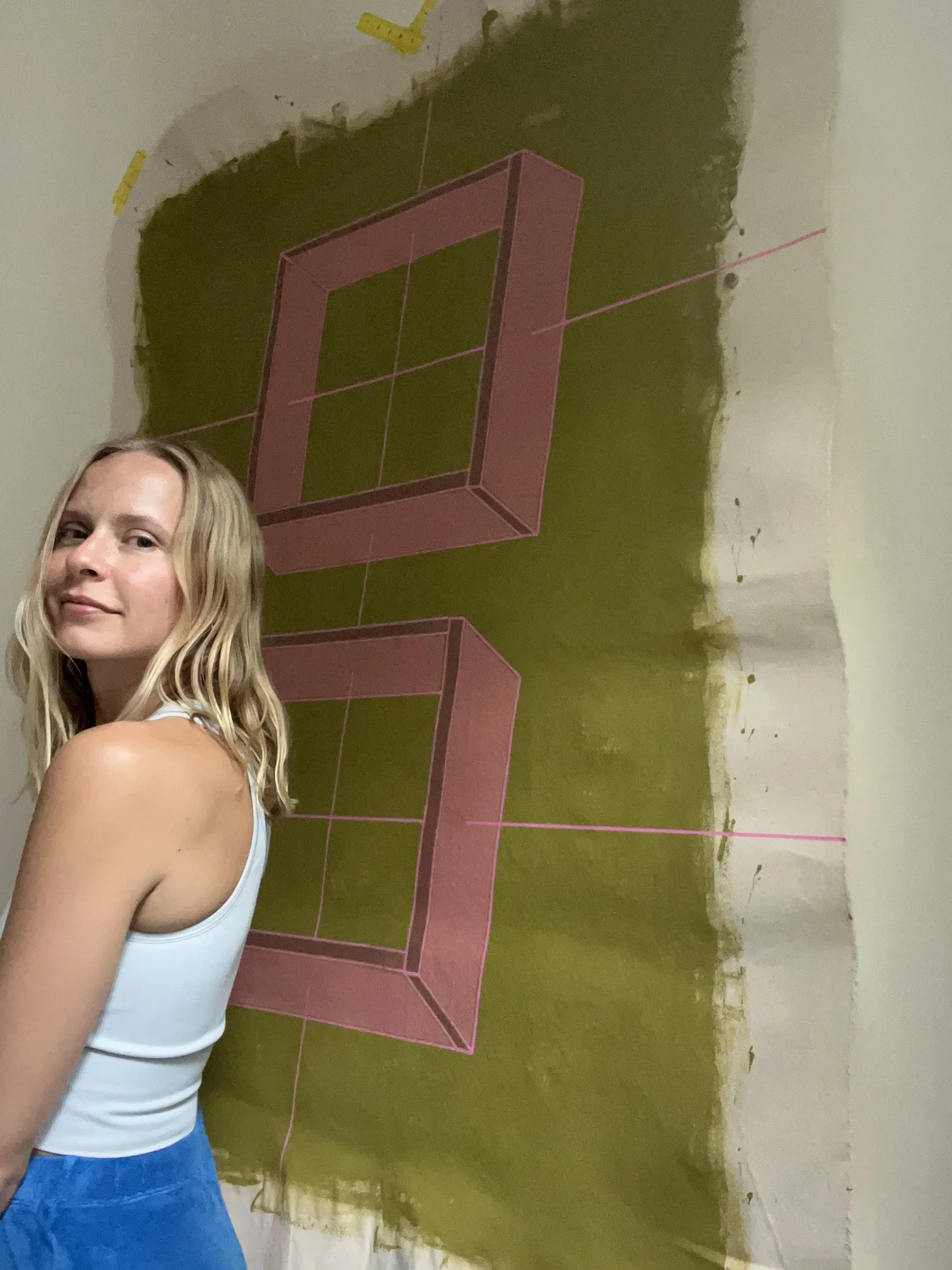
McMahon's practice explores mixed media, including works on paper, paintings on canvas, and experimentation with cotton fabrics. Her compositions are defined by their intricate line work, colorful grids, repetitive geometric patterns, and angular forms, creating illusions of both depth and space. Architecture, squares, and spatial relationships are recurring patterns of inspiration apparent in her body of work.
The Artist
McMahon approaches her paintings from an unusual physical perspective, often preferring to work on the floor to view the composition from above and move liberally around all sides of the surface. This process complements the highly structured visual language of her work, where repetition, geometry, color, and spatial illusion are manifested across the composition.
Stretched & Framed by Harlem Frames
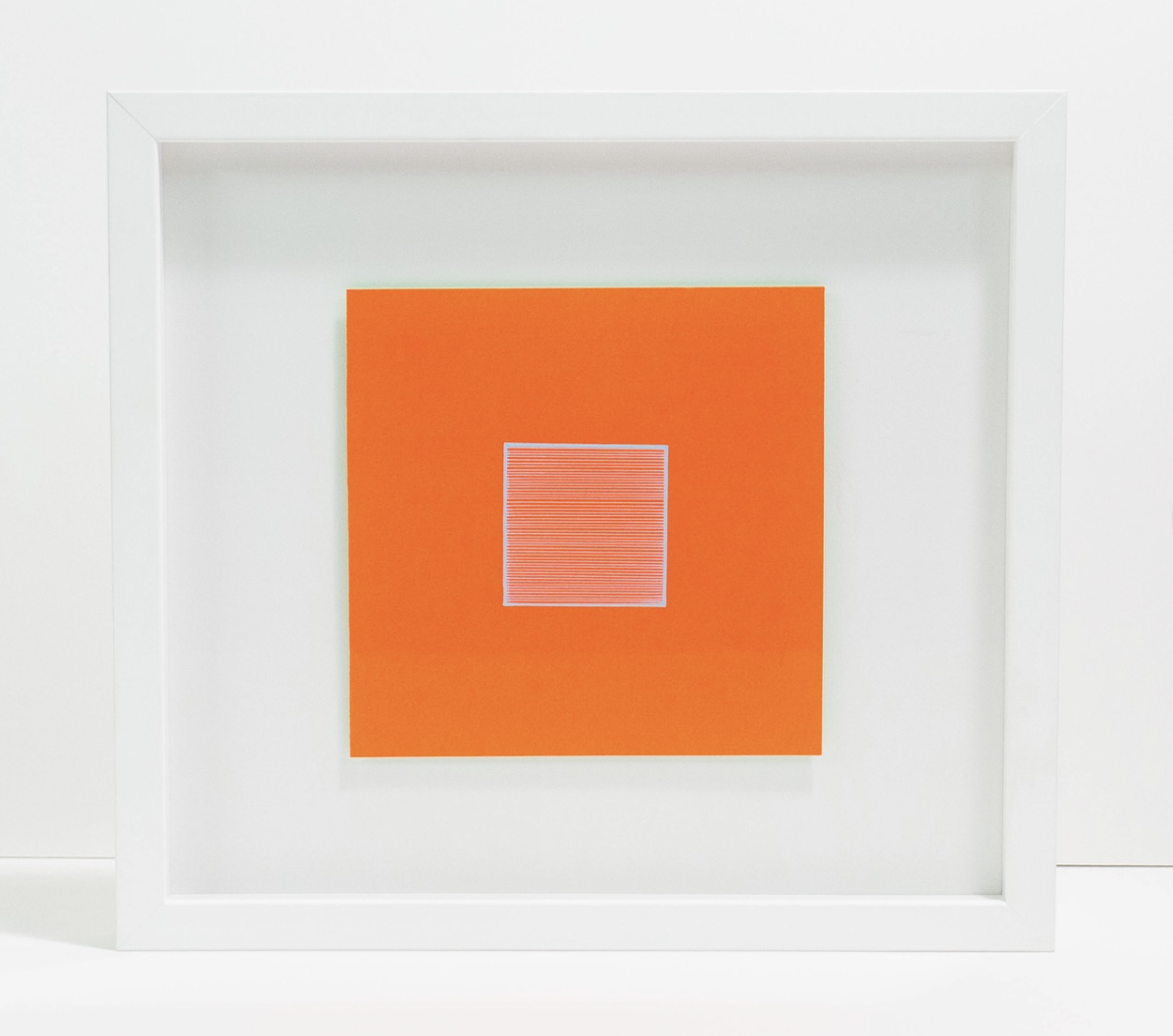
Harlem Frames has worked with McMahon on multiple occasions, providing professional canvas stretching and custom framing for her paintings. For these works, the presentation remains intentionally restrained. Simple wood frames provide a clean architectural boundary around McMahon's detailed compositions while allowing the paintings' color, pattern, and geometry to remain at the forefront.
Our work with Glassware Lounge reflects the value of an ongoing relationship between artist and framer. As new works move from the studio toward exhibition, collection, or display, Harlem Frames provides consistent stretching and framing tailored to the physical requirements and visual character of each canvas. The result is a presentation that supports the work without overpowering it—allowing McMahon's intricate surfaces and distinctive geometric language to speak for themselves.
Artist: Morgan McMahon / Glassware Lounge
Practice: Painting · Works on Paper
Harlem Frames Services: Canvas Stretching · Custom Framing
Framing: Simple wood frames
Location: New York City
No Compromise When It’s Time to Die · Fred Riedel · Michael Anderson
Documentary Film · 2022
Harlem Frames on Film
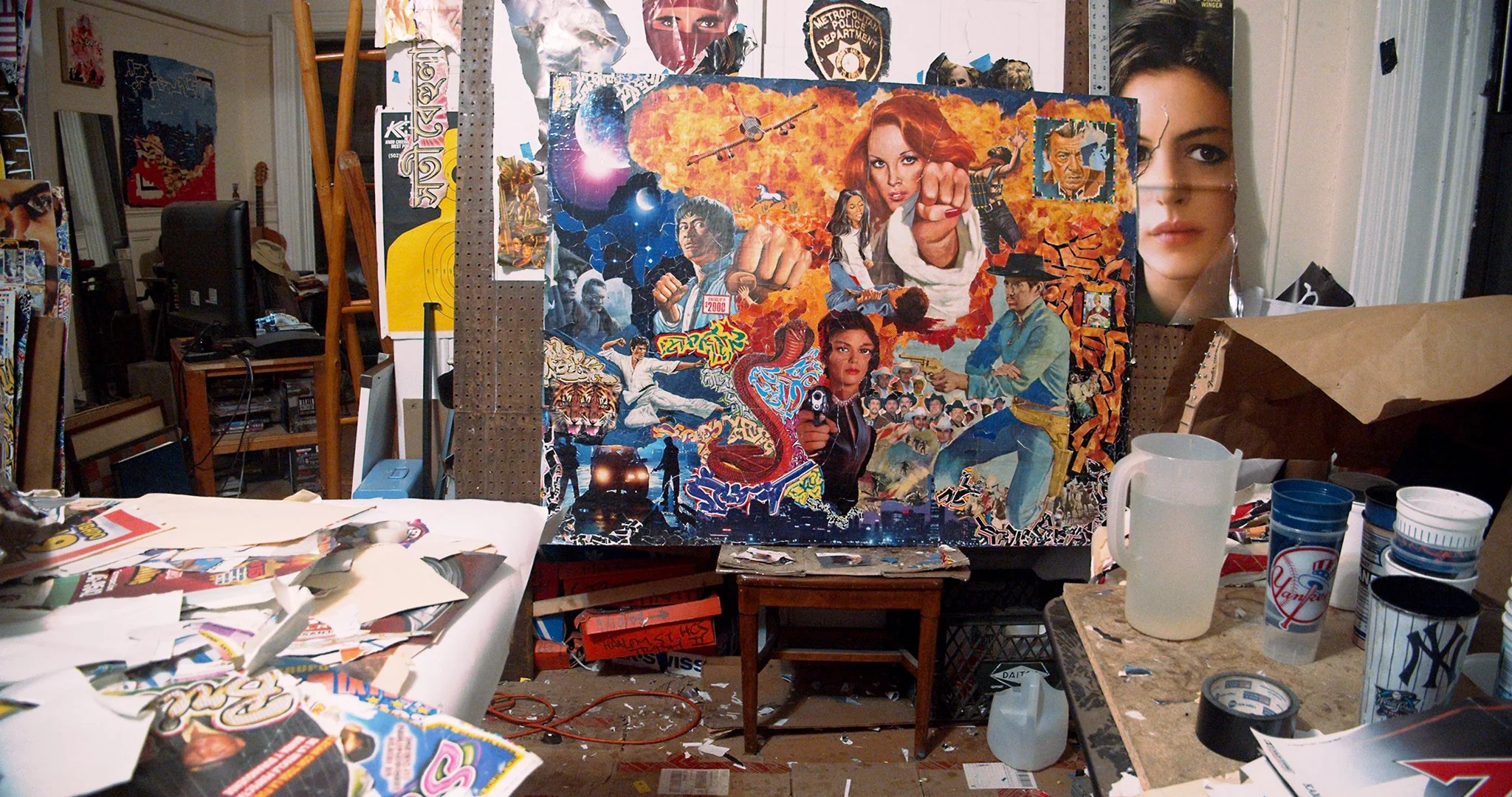
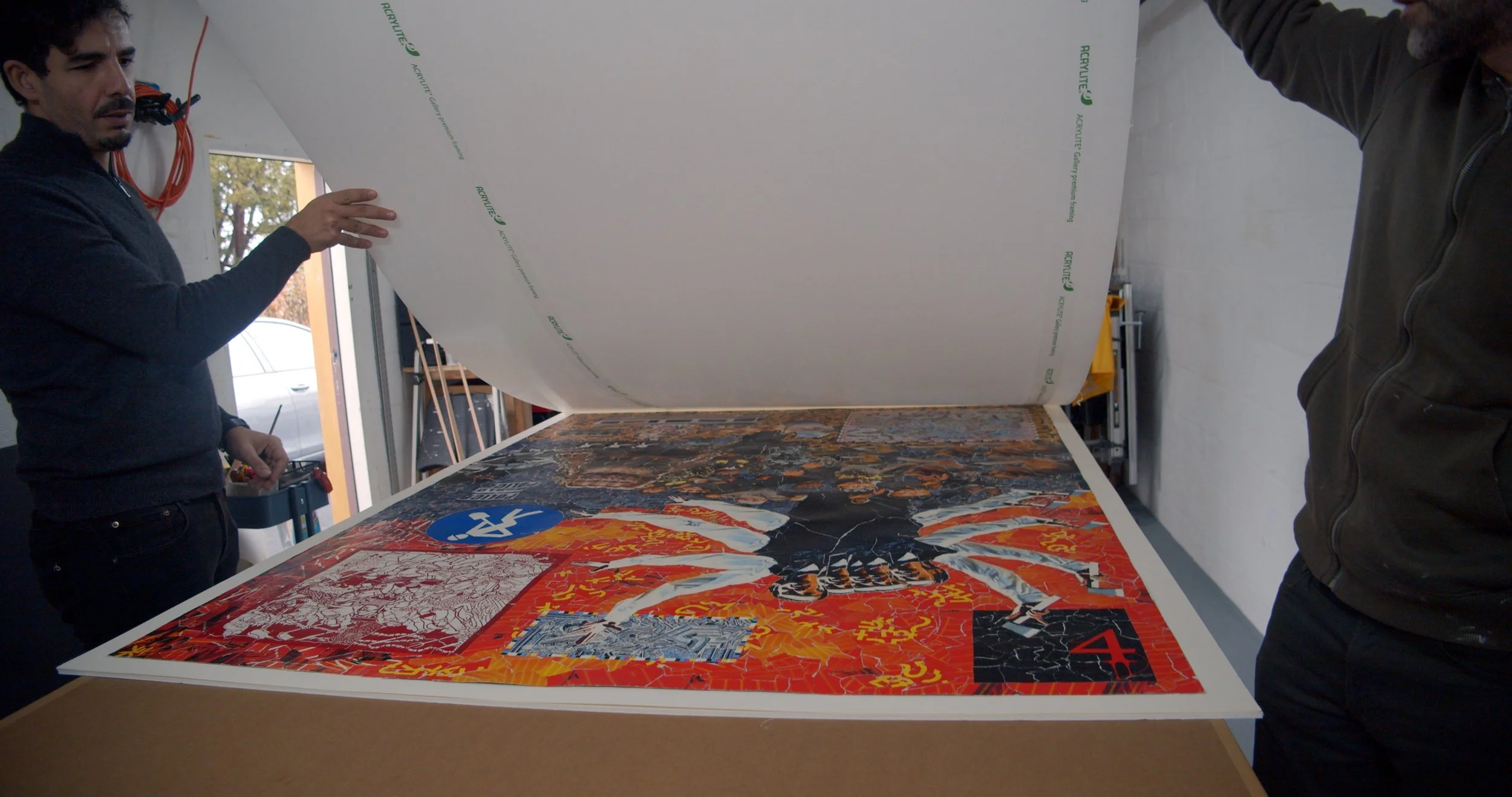
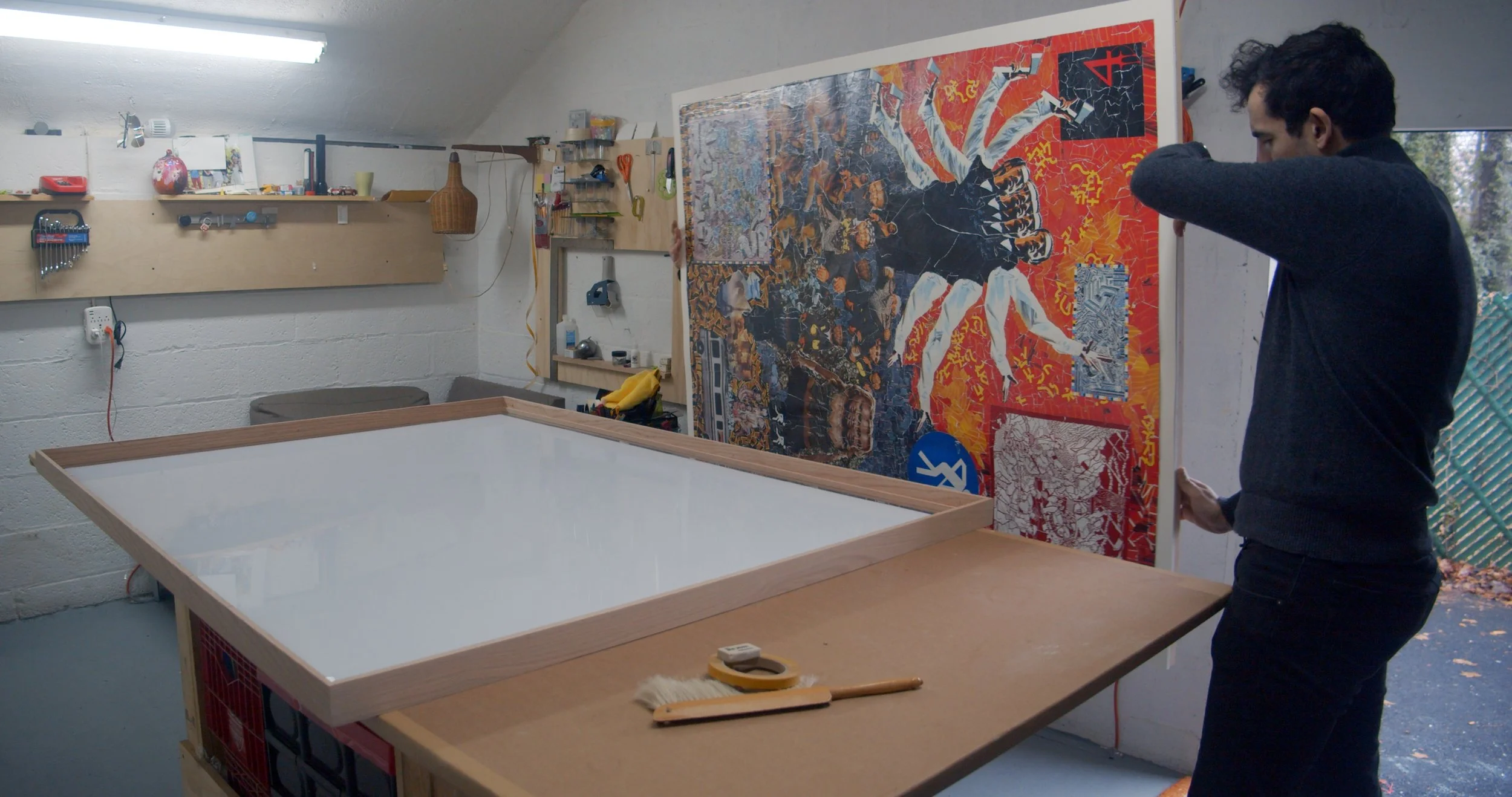
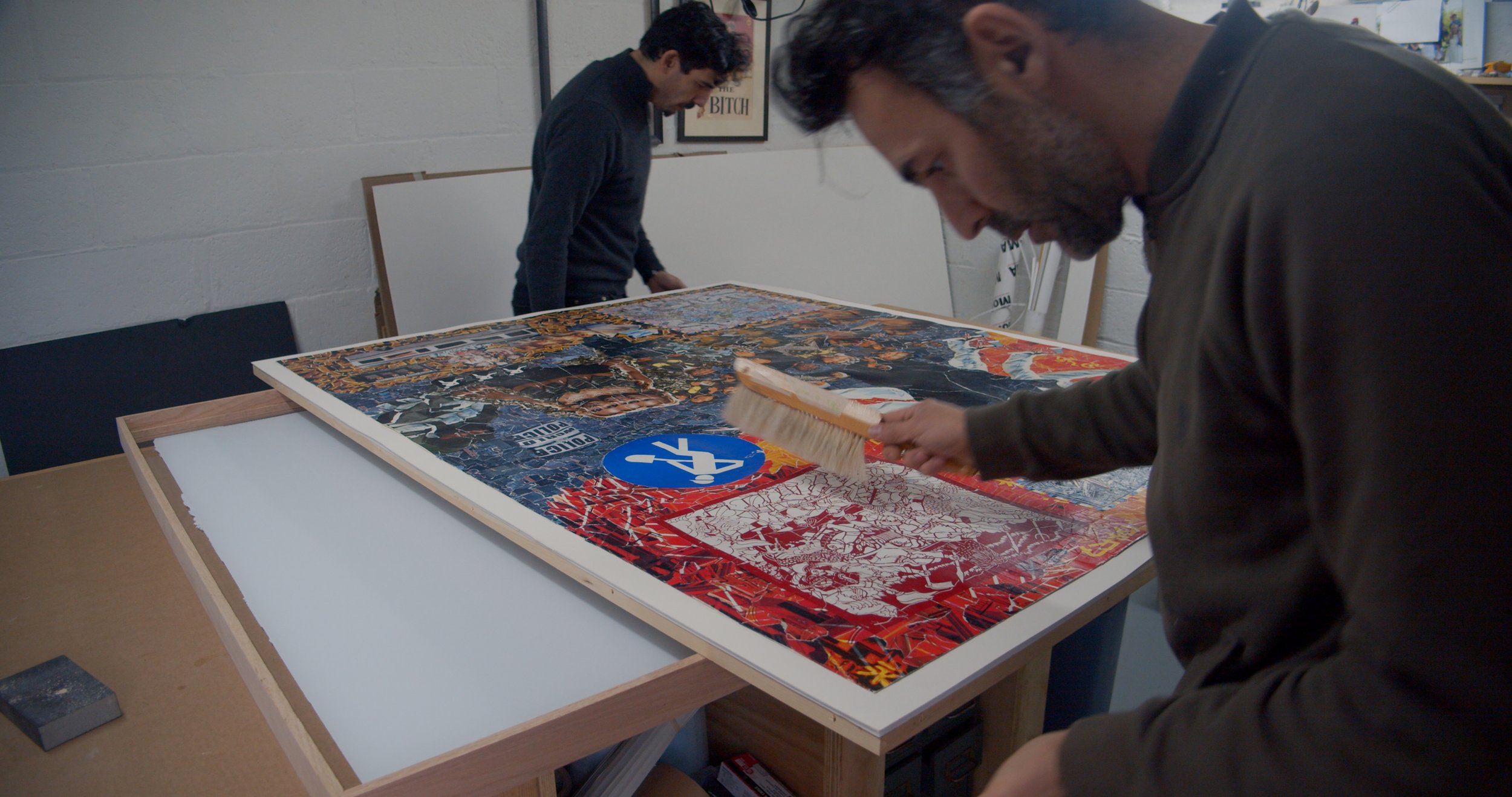
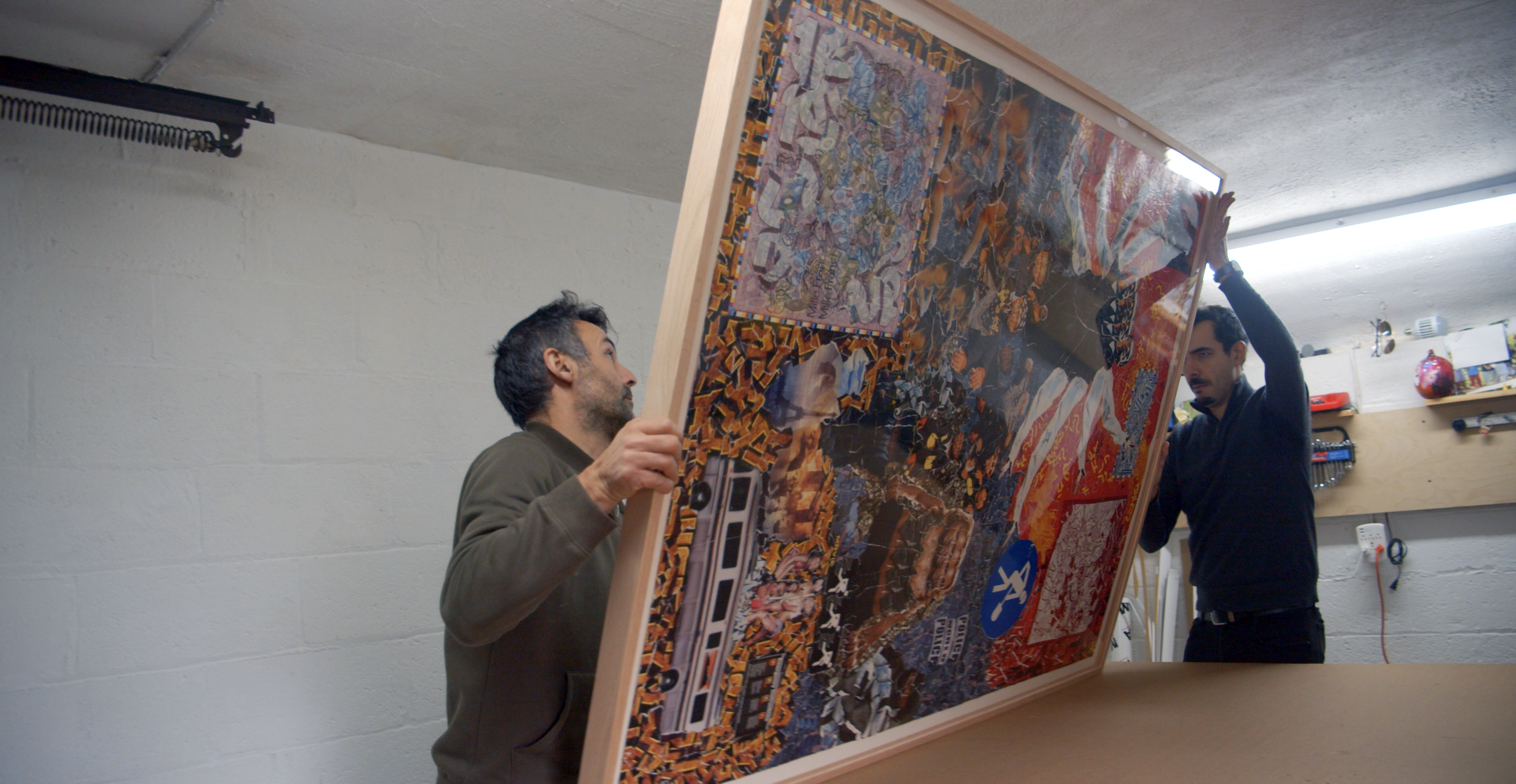
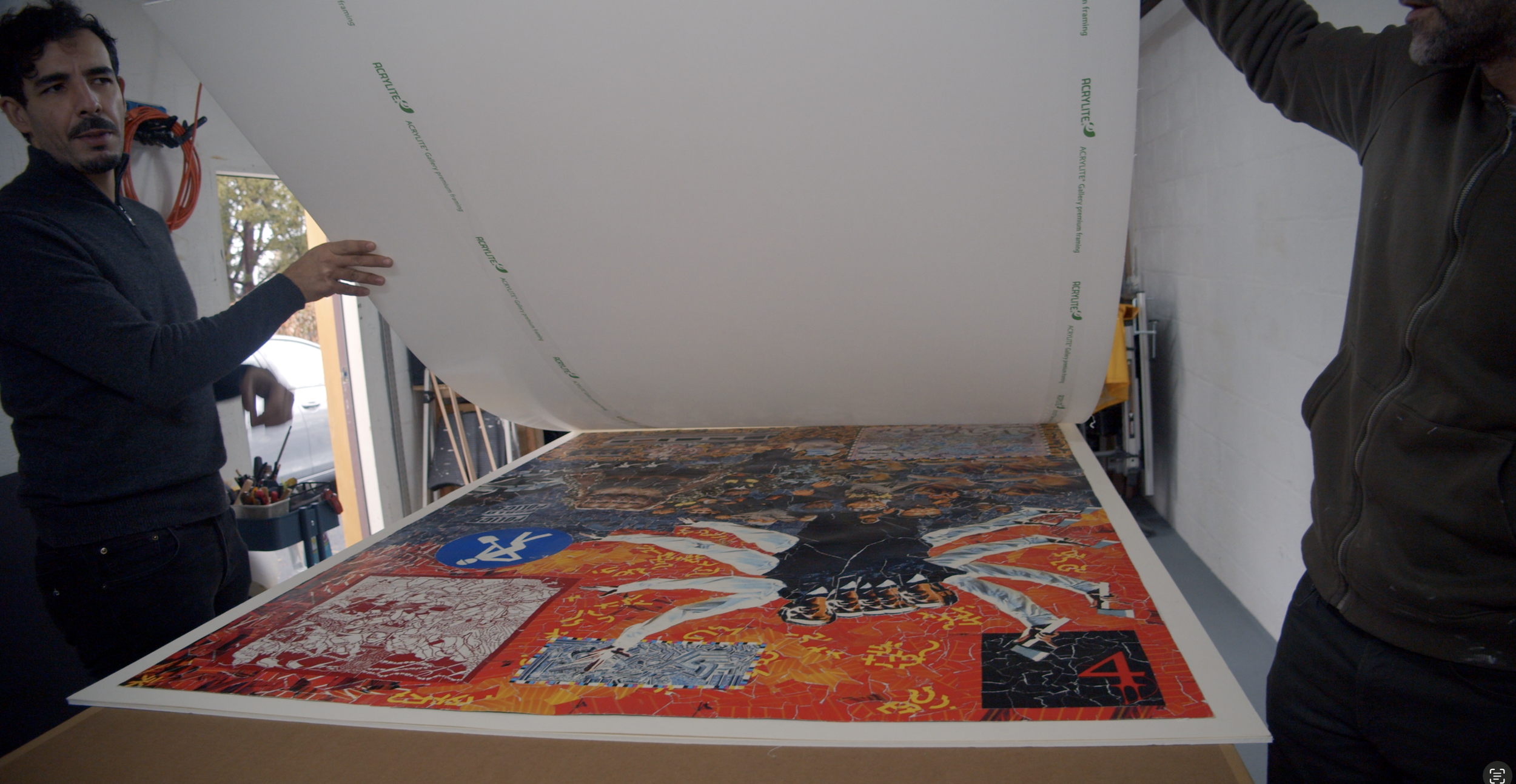
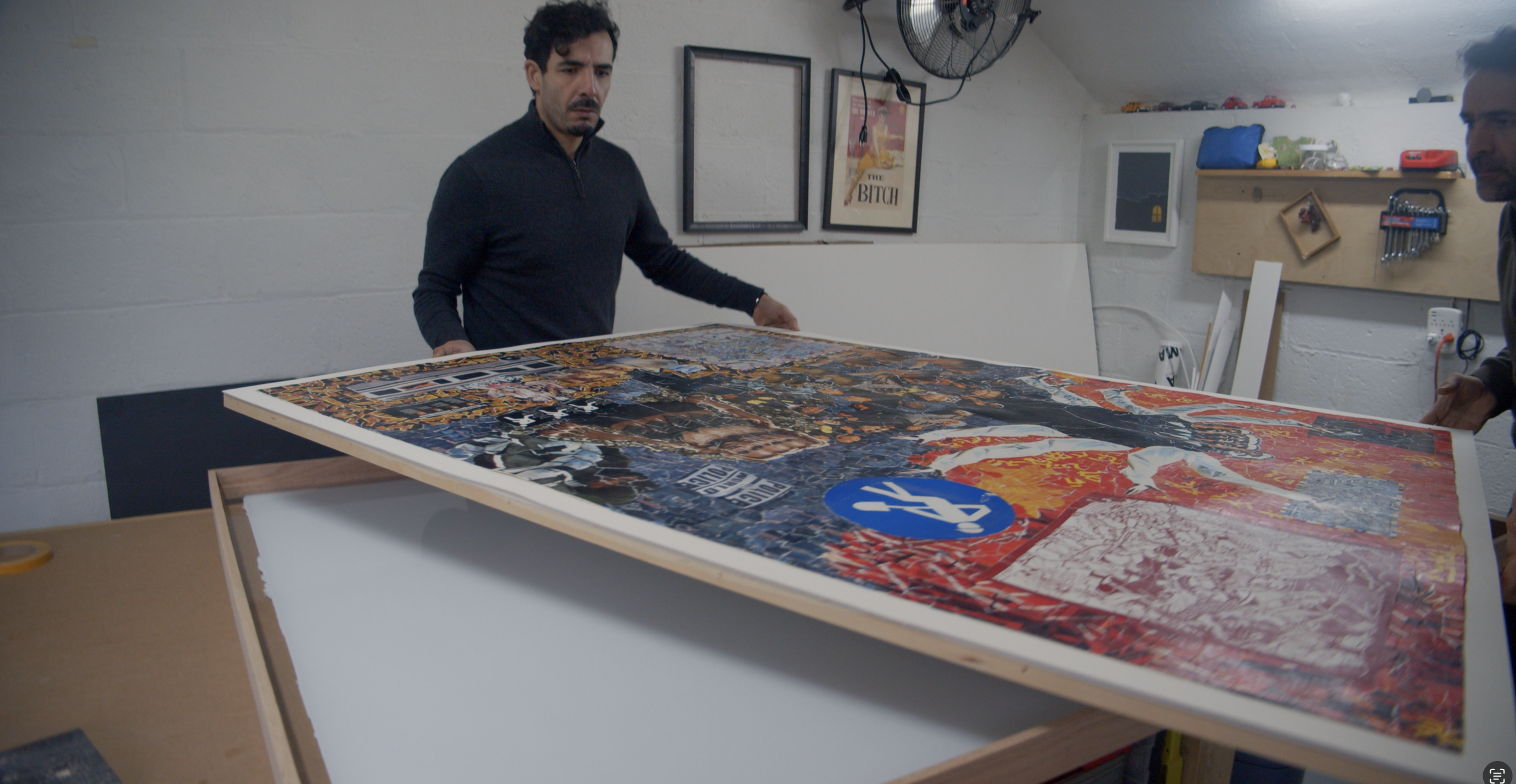
Harlem Frames appears in Fred Riedel's documentary No Compromise When It’s Time to Die, an intimate portrait of New York collage artist Michael Anderson (1968–2020) filmed during the final year of the artist's life.
The documentary follows Anderson through the physical process behind his work—from collecting posters throughout New York City to cutting, layering, assembling, and ultimately installing his monumental collages. Rather than relying on a traditional biographical narrative, Riedel focuses on the act of making itself, constructing the film in a fragmented, nonlinear form that mirrors Anderson's own collage practice.
The Artist & the Film
The Artist & the Film
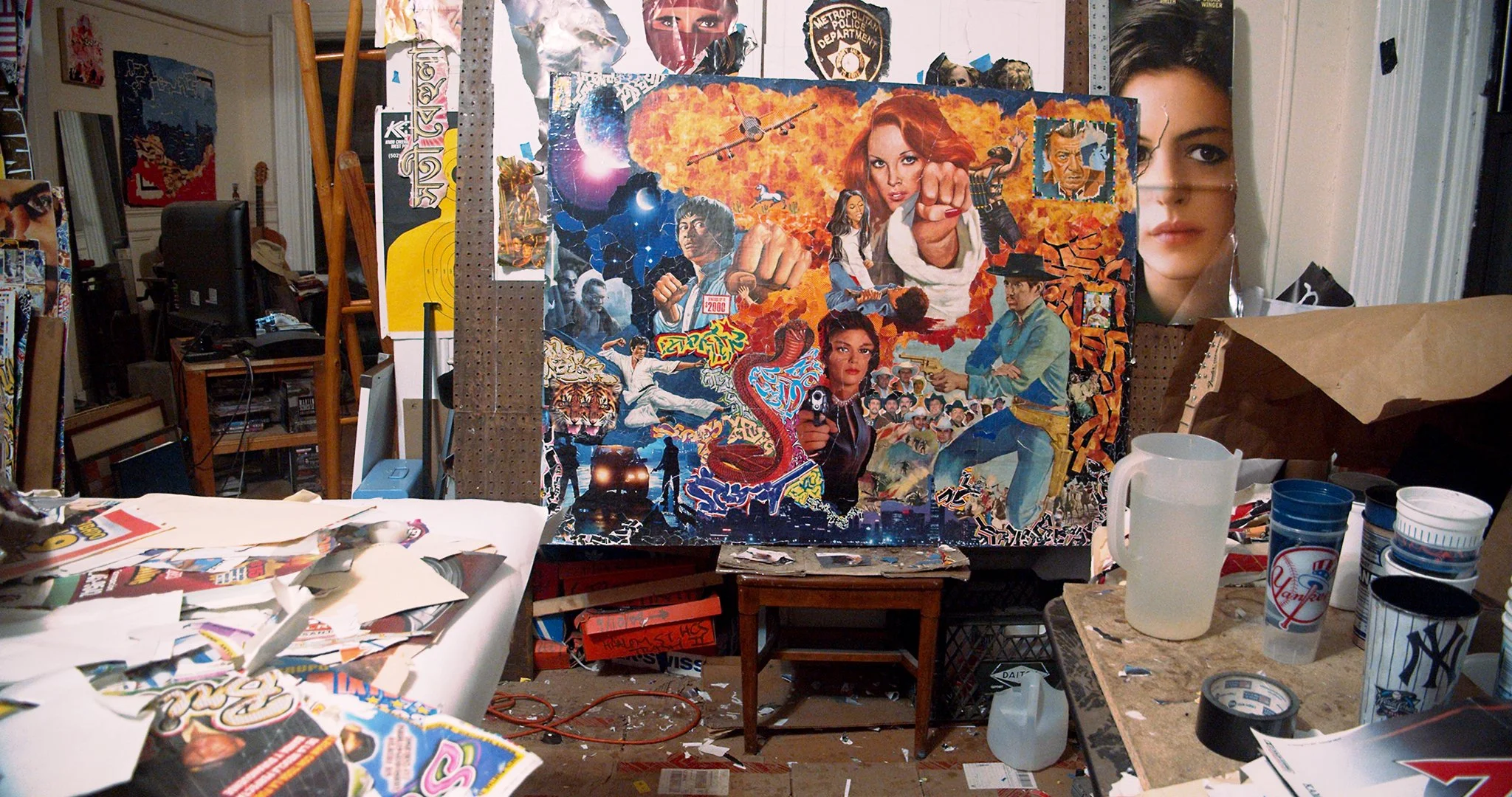
A scene from the film "No Compromise When It's Time To Die", directed by Fred Riedel.
Anderson created dense, large-scale collages from fragments of posters collected from public spaces around the world. Images removed from their original contexts were cut apart and reconstructed into compositions filled with cultural references, abstraction, humor, violence, and the visual intensity of the city around him.
Riedel began the documentary while Anderson was still alive. Following the artist's death in July 2020, the film ultimately became both a portrait of his creative process and a tribute to the artist and friend he left behind. The finished 77-minute documentary was directed, produced, shot, and edited by Riedel, with a score by composer Joe Diebes.
Framed by Harlem Frames
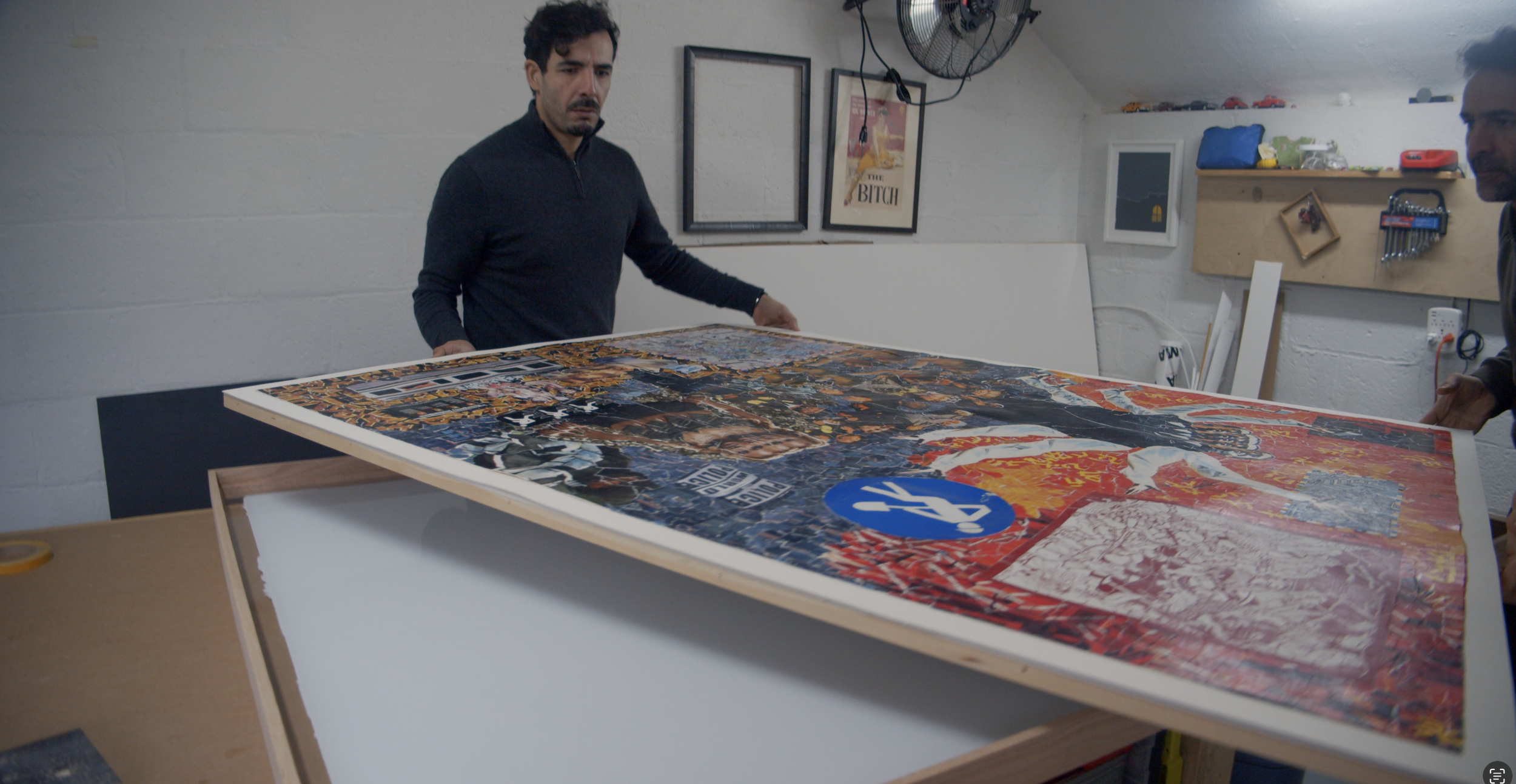
Harlem Frames becomes part of that story from the film's opening moments.
Harlem Frames becomes part of that story from the film's opening moments.
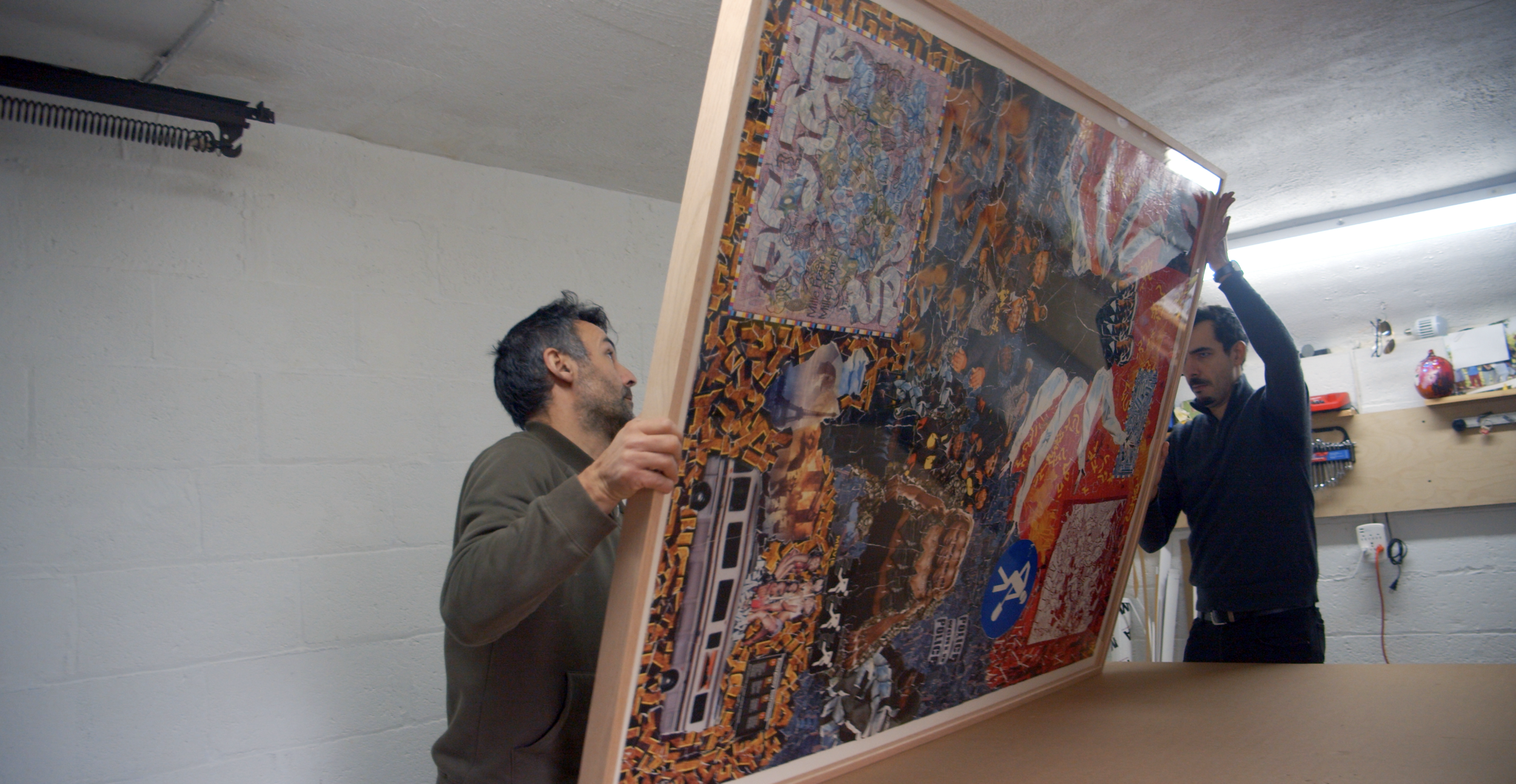
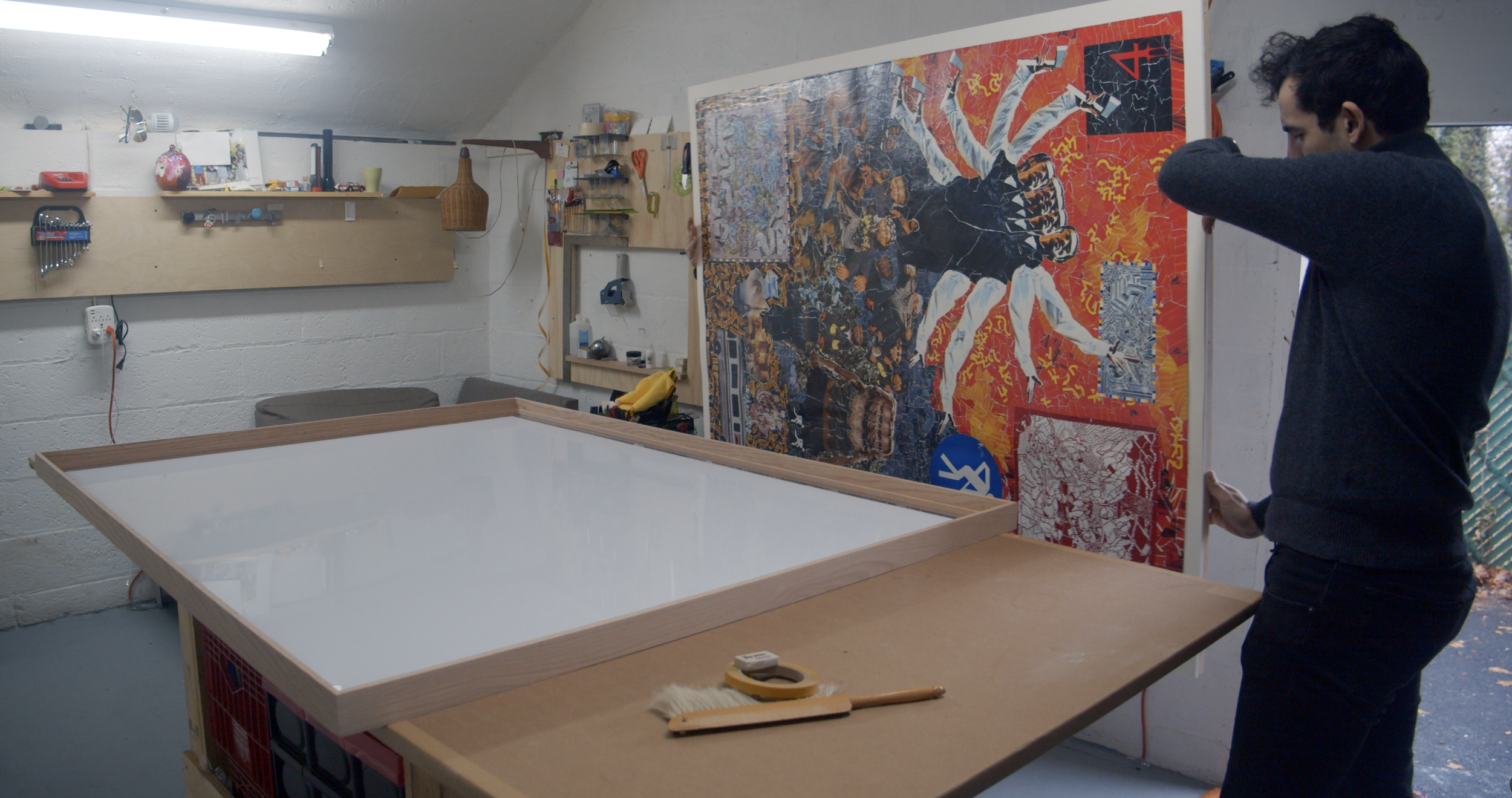
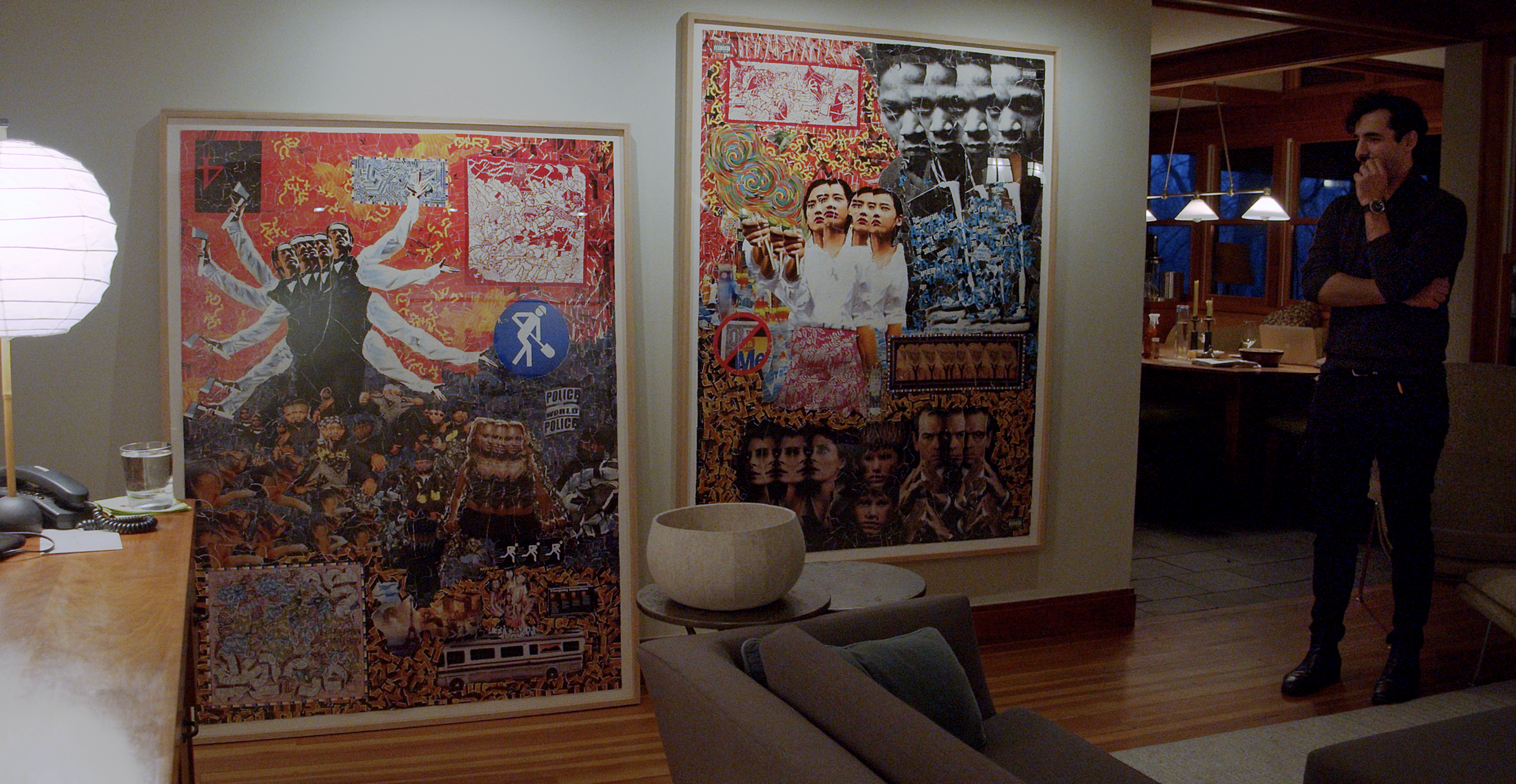
No Compromise When It’s Time to Die begins inside a workshop, where a monumental Anderson artwork is carefully prepared for its journey to a collector's home. The sequence magnifies the process of physically handling artwork, chronicling everything from its preparation, protection, wrapping, transportation, and eventual installation.
The film initially does little to explain who is performing the work or where the artwork is going. That ambiguity was intentional. Riedel later explained that the opening was designed to create a sense of anticipation around the artwork's arrival and to introduce viewers to Anderson's world before fully revealing the artist behind it.
For Harlem Frames, appearing in the film offers an unusual glimpse into a part of framing and art handling that often disappears once an artwork reaches the wall: the careful work required to prepare, protect, and present a large-scale piece before it enters a collection.
The finished installation provides the payoff. Anderson's visually explosive collage arrives in a quiet contemporary interior, demonstrating just how dramatically artwork—and its presentation—can transform a space.
Art, Process & Presentation
Framing is only one stage in the larger life of an artwork.
The sequence reflects something central to Harlem Frames' work with artists and collectors: framing serves as but one stage in the greater life of an artwork. From an artist's studio to preparation and handling, transportation, installation, exhibition, and eventually a collector's wall, each stage demands consideration for both the physical object and the artist's intentions. It’s our duty to honor those intentions. In No Compromise When It’s Time to Die, that typically unseen process becomes part of the artwork's story, and part of the film itself.
Film: No Compromise When It’s Time to Die
Director: Fred Riedel
Artist: Michael Anderson (1968–2020)
Year: 2022
Runtime: 77 minutes
Harlem Frames: Artwork preparation, handling and presentation featured in the documentary
Explore the work: https://upmag.com/michael-anderson/
Image source: Stills from No Compromise When It’s Time to Die (2022), directed by Fred Riedel
& https://whitehotmagazine.com/articles/anderson-which-premiered-at-bafici/5427
Richard Corman: I Shot The Messenger! — A Portrait of Keith Haring
Frevo · New York City · 2022
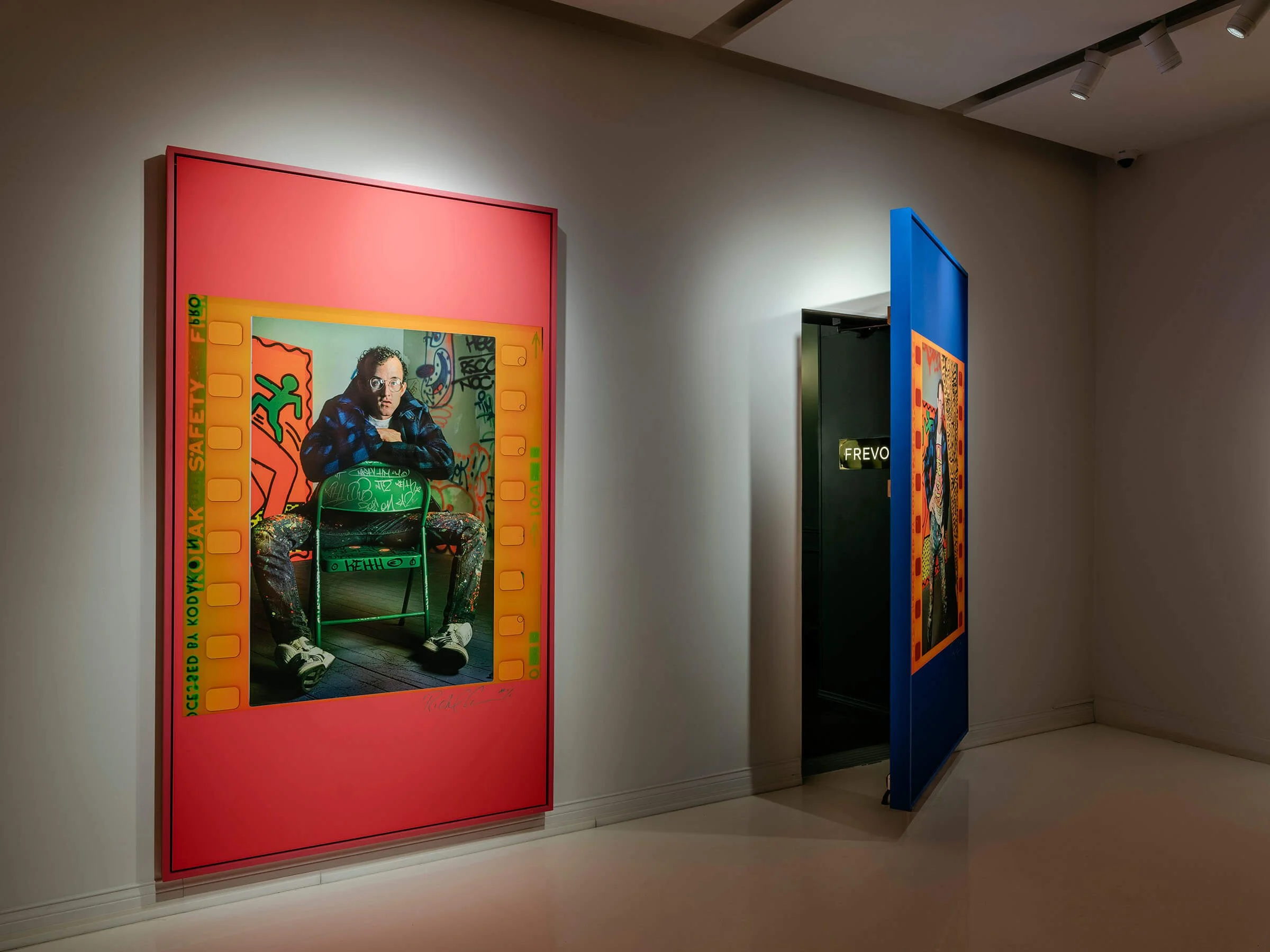
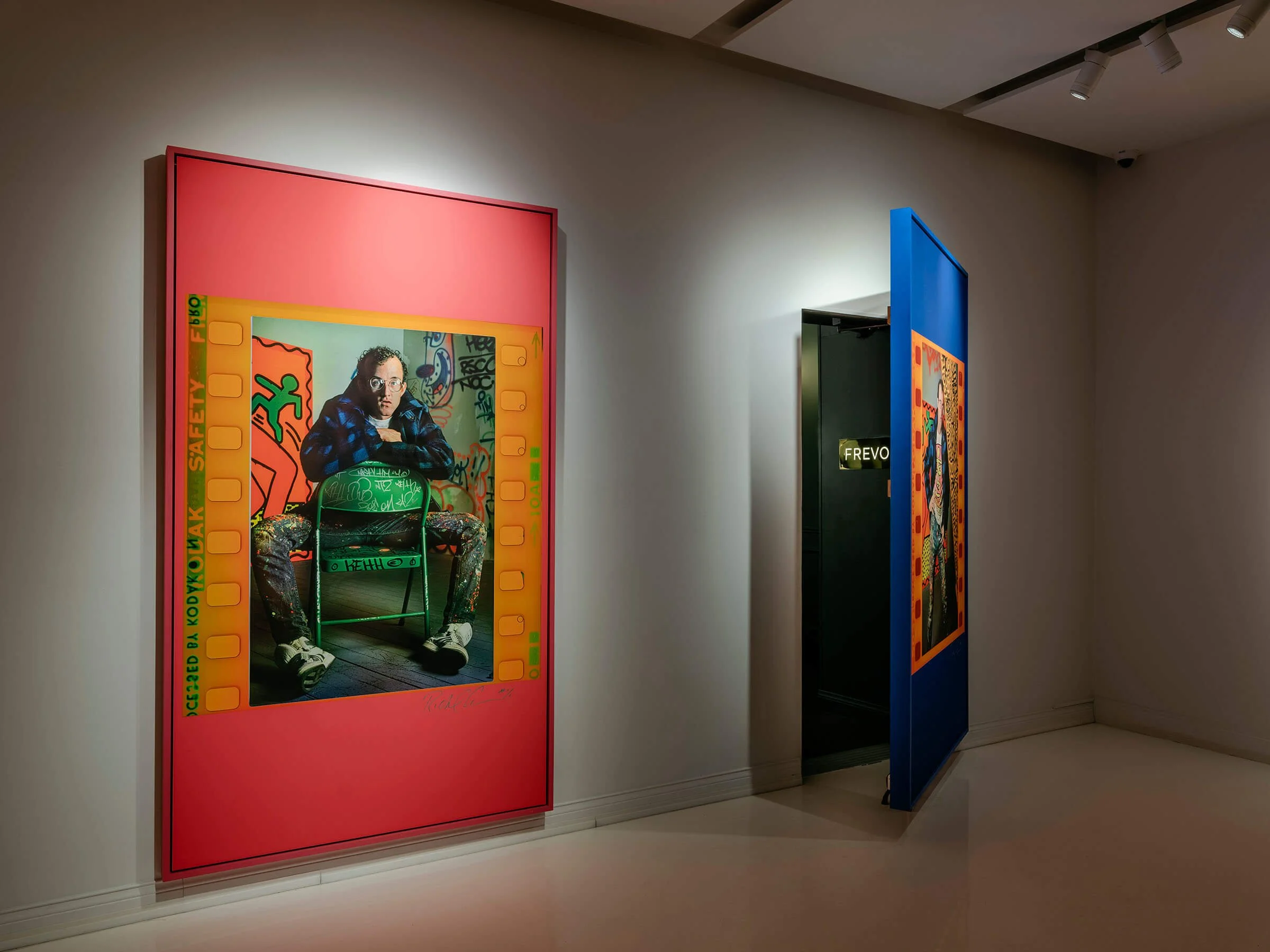
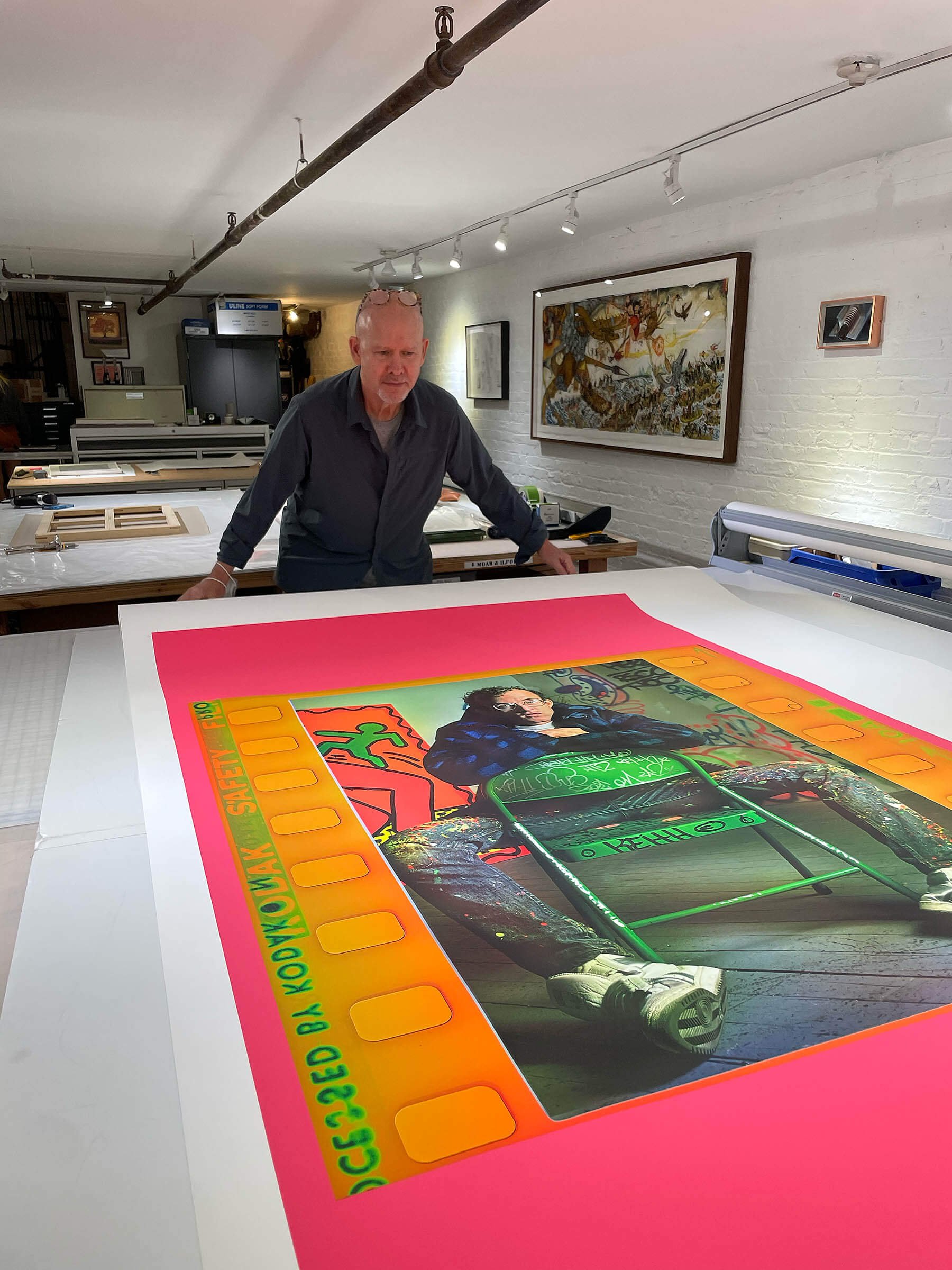
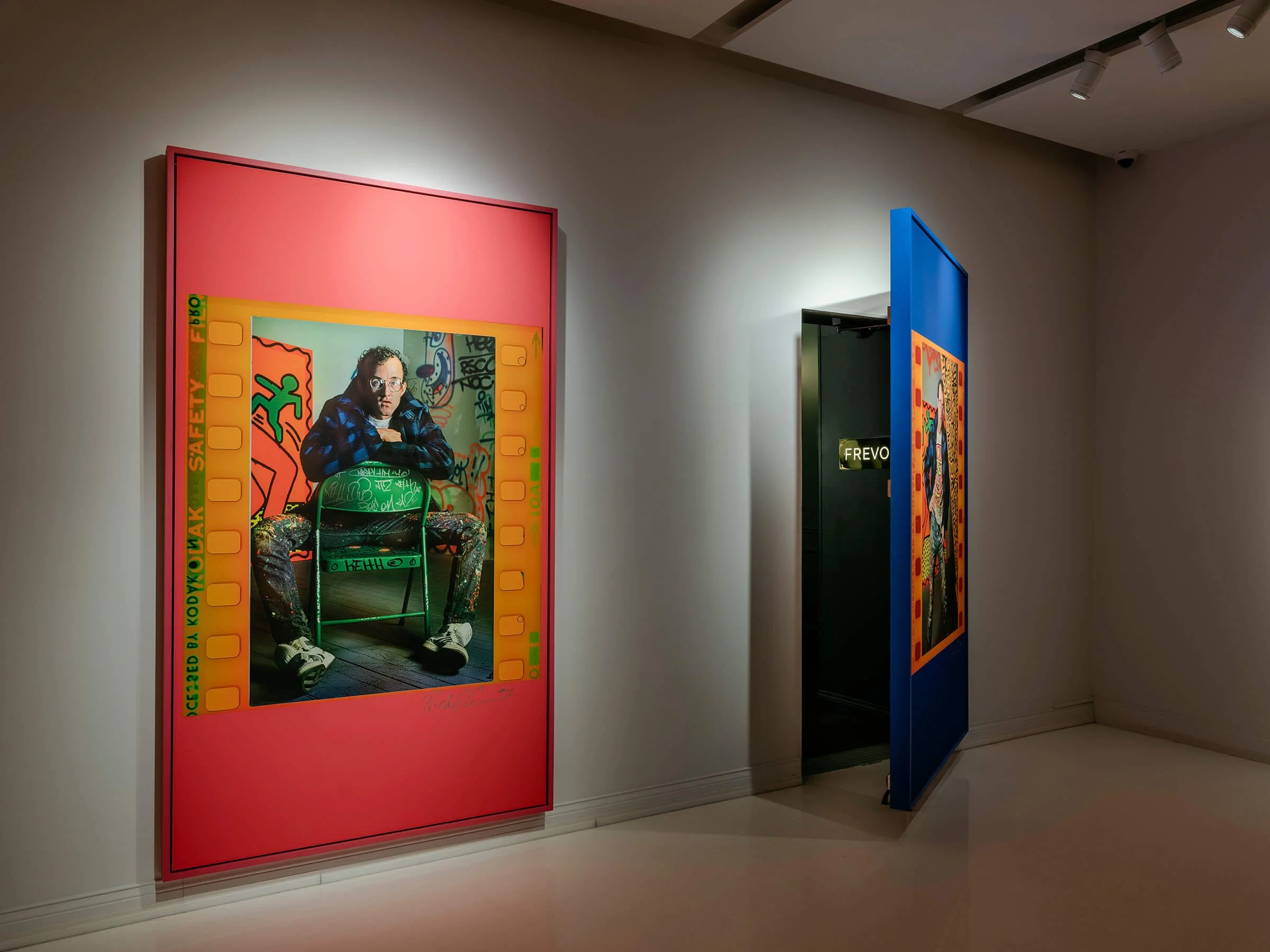
Harlem Frames worked with Frevo on the presentation of photographer Richard Corman's portraits of Keith Haring for I Shot The Messenger!, a solo exhibition presented at the restaurant's intimate gallery space in Greenwich Village.
The Exhibition
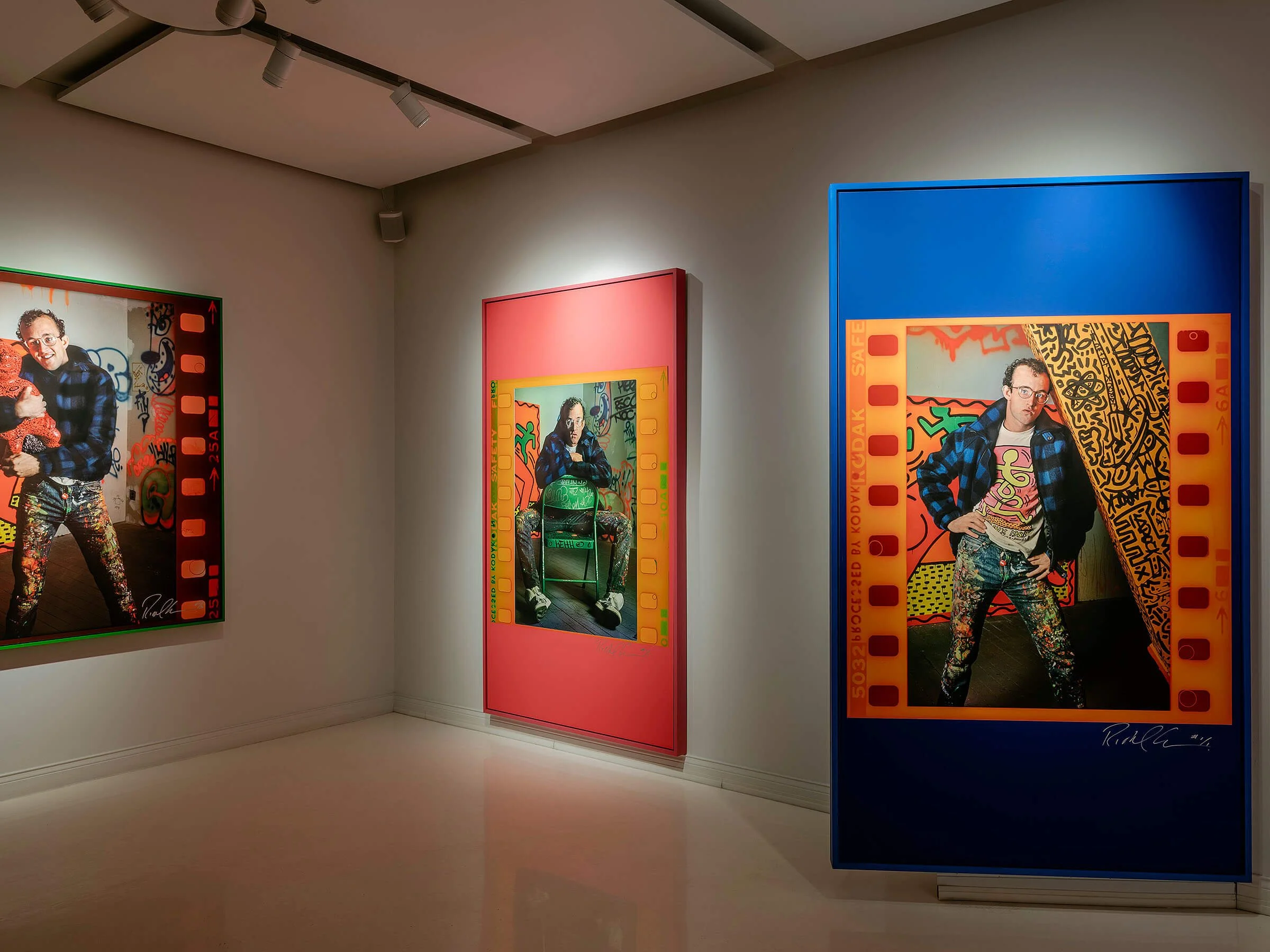
The exhibition was composed of five previously unearthed portraits from Corman's 1985 session with Haring at the artist's legendary 676 Broadway studio.
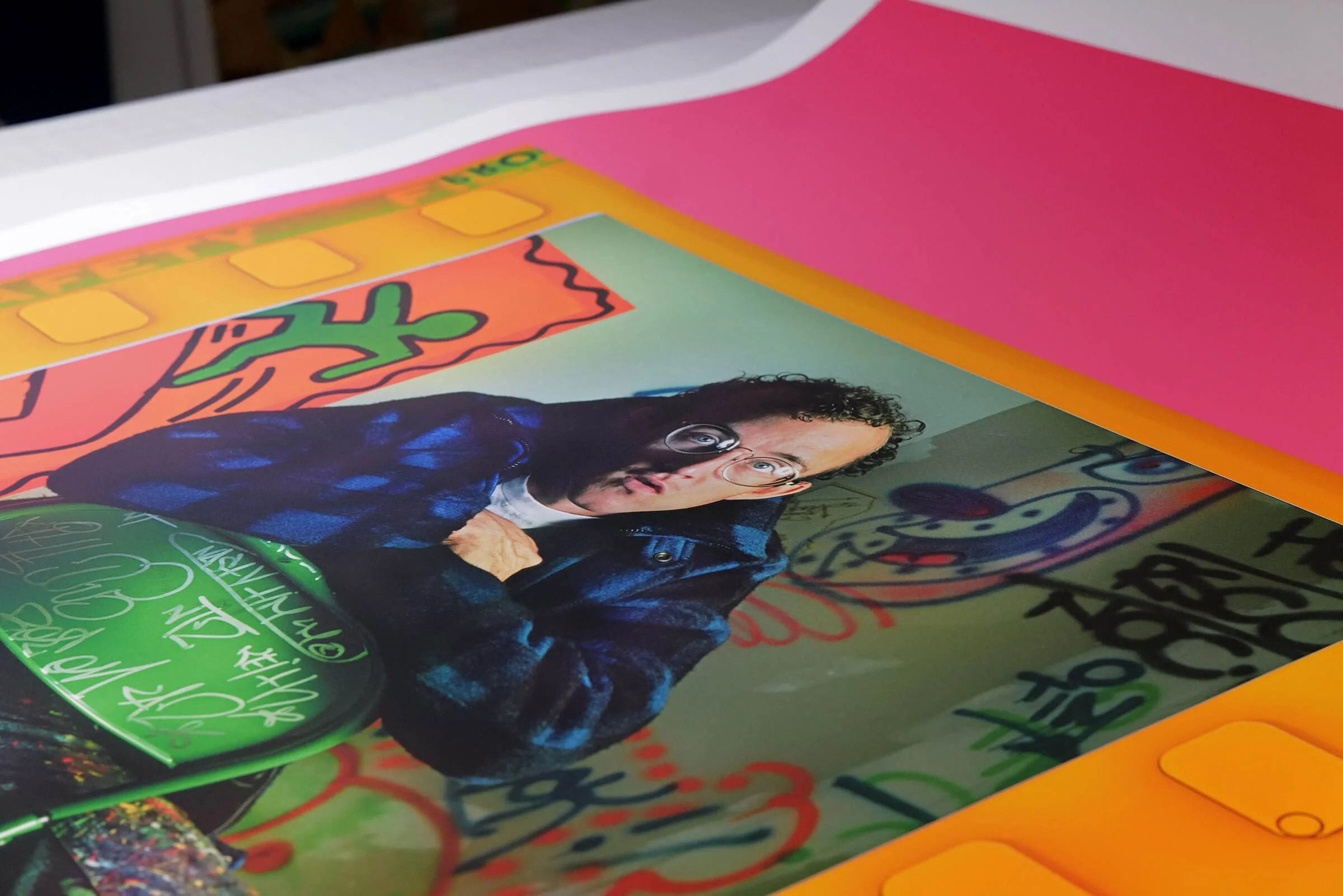
Originally photographed while Corman was on assignment for L'Uomo Vogue, the portraits capture Haring at a defining moment in his career, as he’s photographed immersed in the energy and visual language of his New York studio.
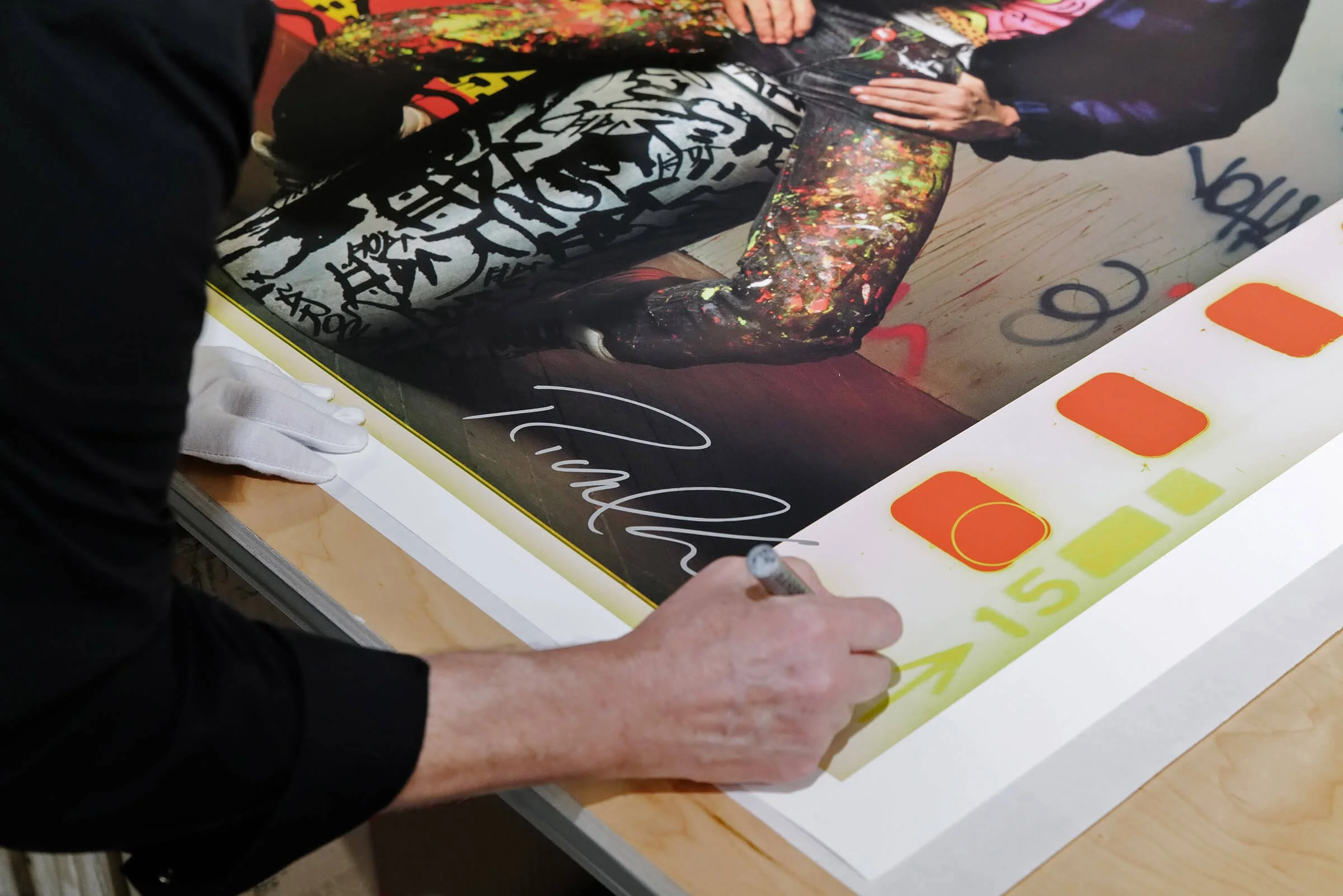
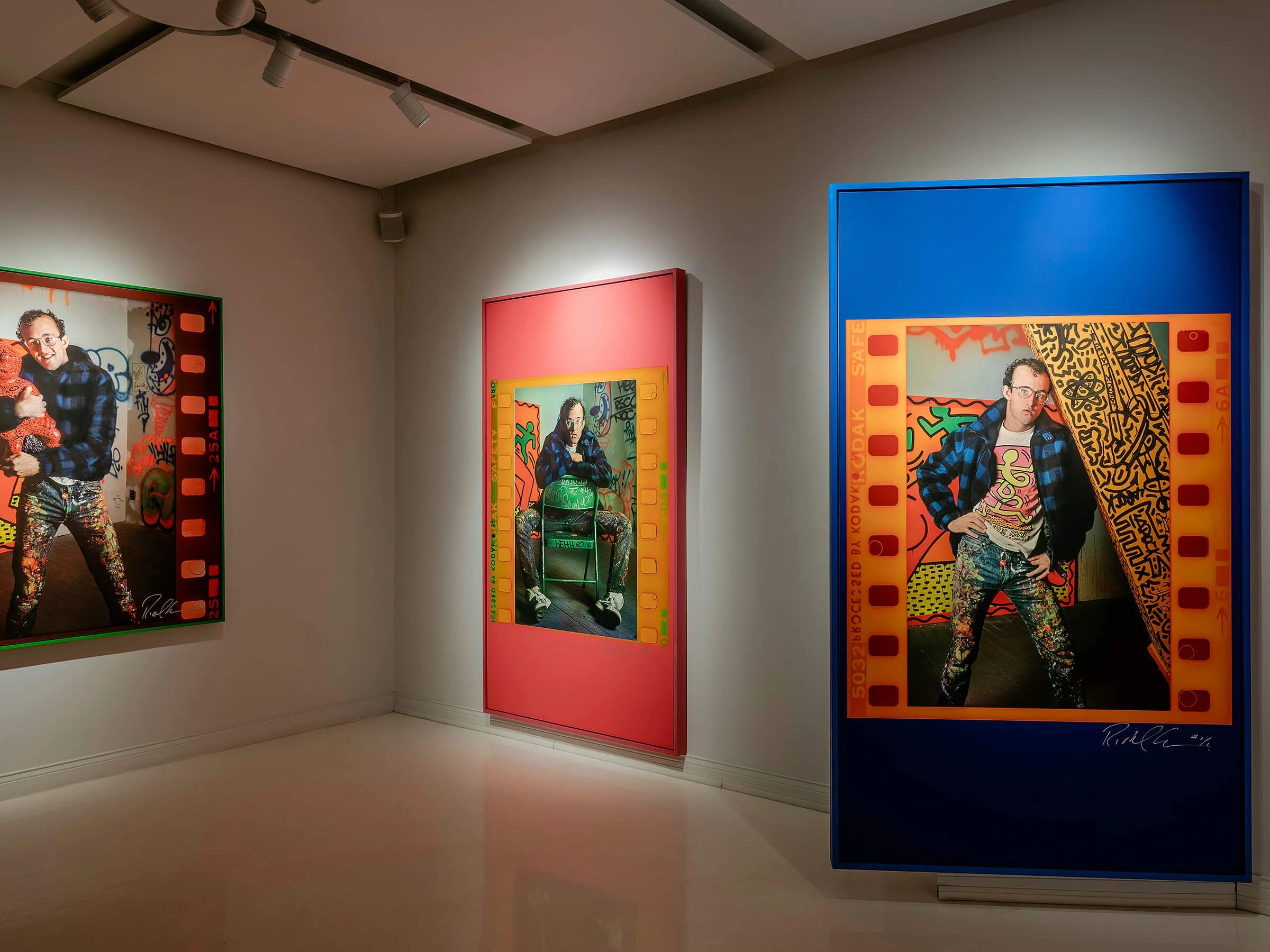
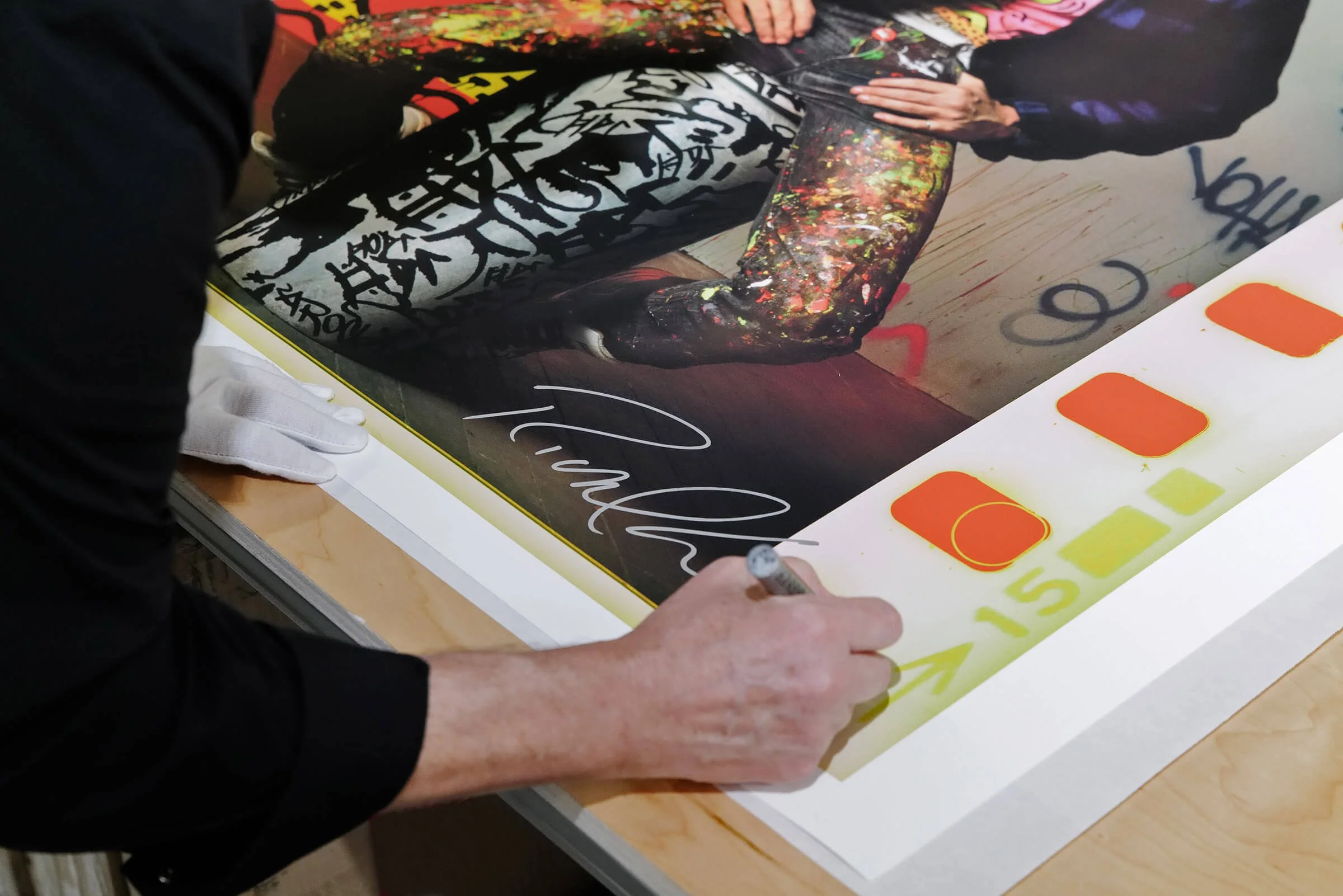
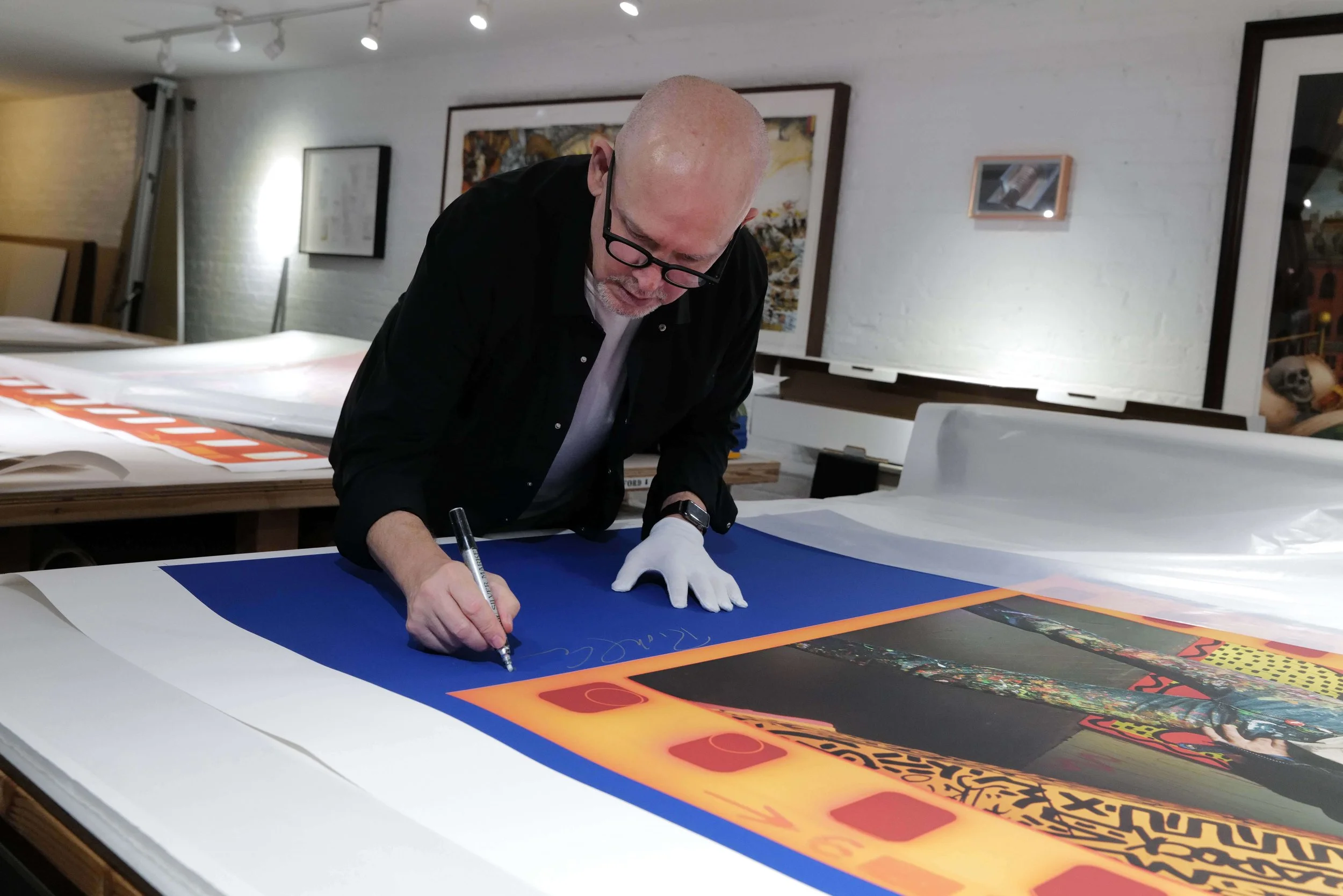
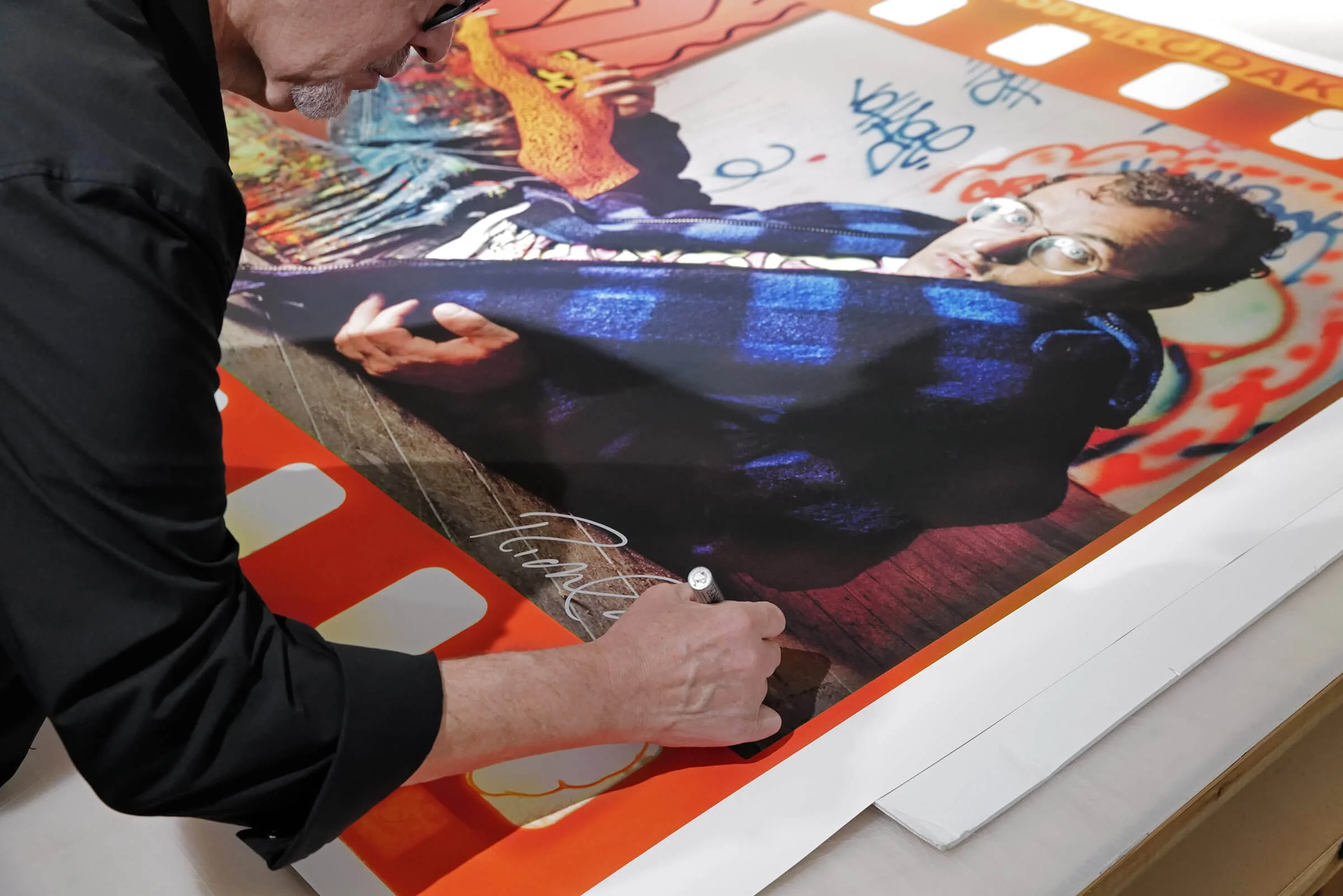
For I Shot The Messenger!, Corman's photographs were transformed into large-scale, generously, vibrant works. The portraits were positioned against carefully selected Pantone colors and printed on Hahnemühle Photo Rag Ultrasmooth, creating a presentation intended to echo the bold color Corman remembered encountering throughout Haring's studio.
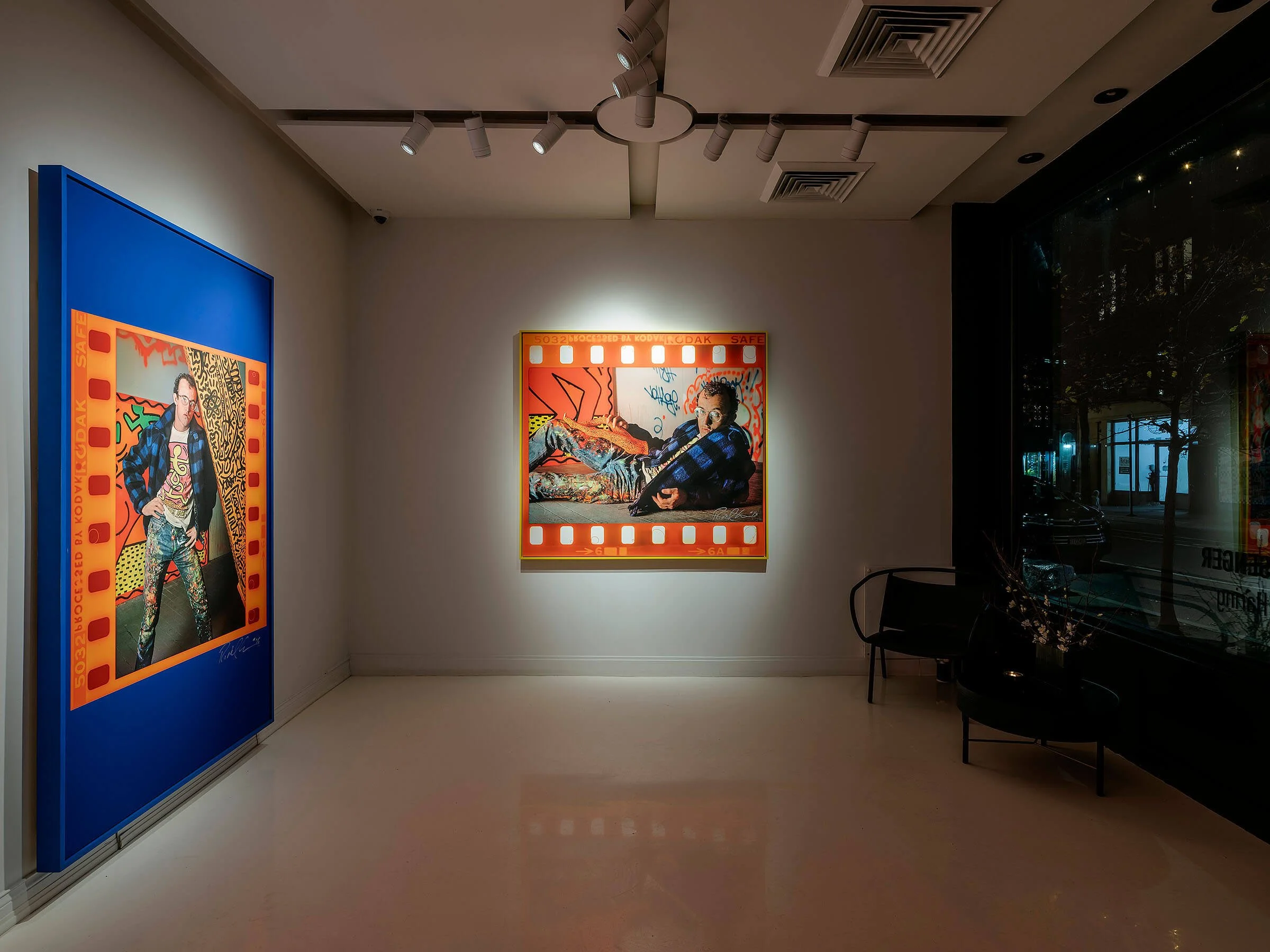
Installed throughout Frevo, the series ultimately invited audiences to engage in a dialogue between photography, color, portraiture, and Haring's unmistakable creative legacy.
Framed by Harlem Frames
Harlem Frames created custom float frames for Richard Corman's Keith Haring portraits presented at Frevo.
Color was especially integral to the framing process. To retain continuity between Corman's vivid photographic works and their presentation, the artist provided Harlem Frames with the specific paints he desired for each frame. Each float frame was then custom-painted in our studio using those artist-selected colors, enabling the framing to become a deliberate extension of the work rather than a neutral boundary encompassing it.
The float construction creates a subtle separation between each work and its surrounding frame, giving the imagery room to breathe while emphasizing the scale and physical presence of the pieces. Combined with Corman's chosen colors, the frames reinforce the bold visual character of the series and its connection to the energy and color associated with Keith Haring's work.
For Harlem Frames, the project demonstrates how custom framing can become a genuinely collaborative process. Rather than selecting from predetermined finishes, the artist's own color palette became part of the fabrication itself, resulting in frames customized specifically to accomodate and bolster Corman's vision for the exhibition.
Installed throughout Frevo's gallery environment, the finished works bring together Corman's photography, Haring's unmistakable presence, and a framing treatment developed specifically for the series.
Artist: Richard Corman
Subject: Keith Haring
Exhibition: I Shot The Messenger! — A Portrait of Keith Haring
Venue: Frevo, New York City
Exhibition: September–November 2022
Framing: Custom framing by Harlem Frames
Richard Corman's Portrait of Keith Haring at Frevo
Images Source: Frevo NYC & Brooklyn Editon
Wayne Alexander: Color, Geometry & Custom Framing
Artist Collaboration · Harlem Frames · New York
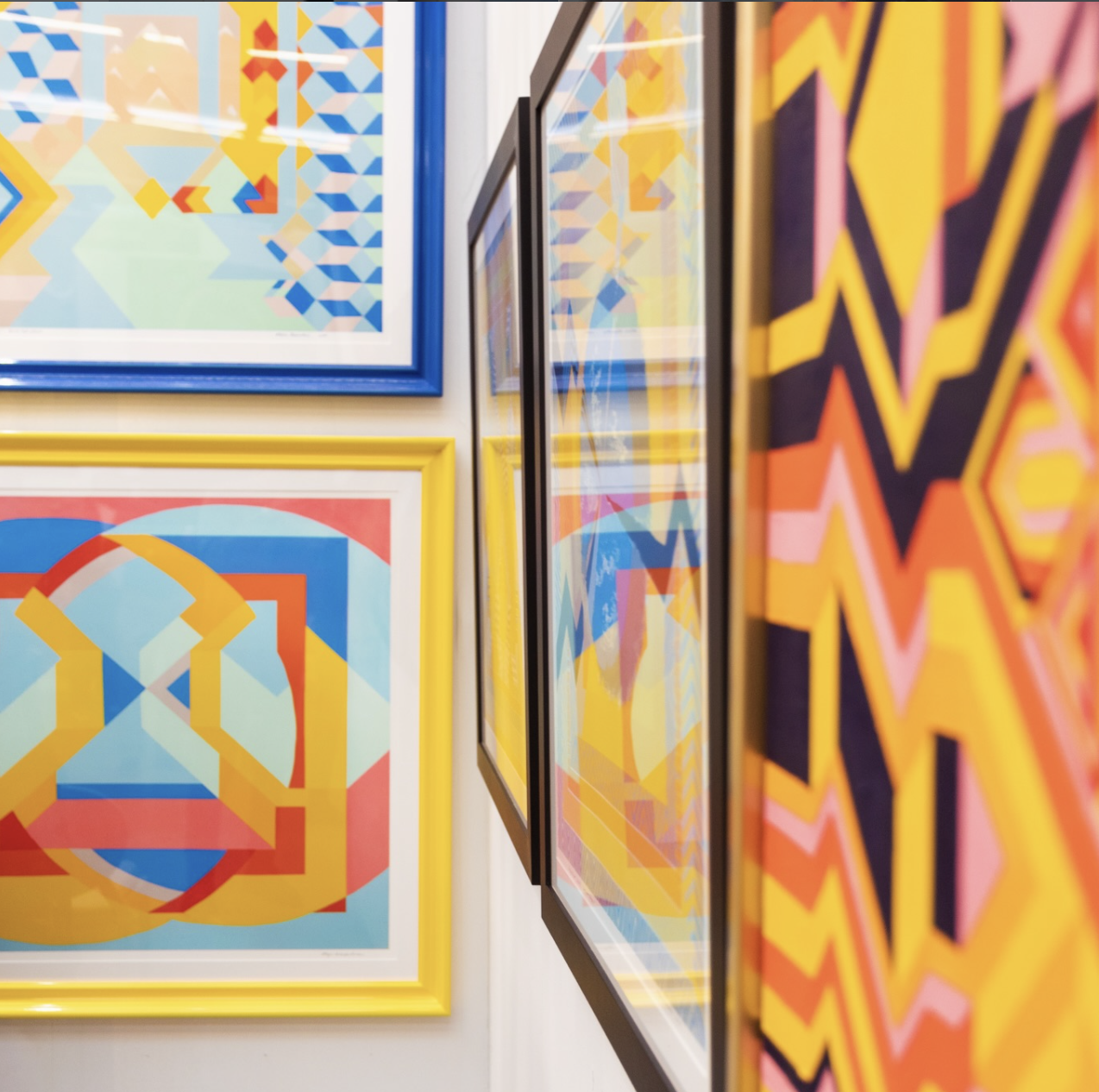
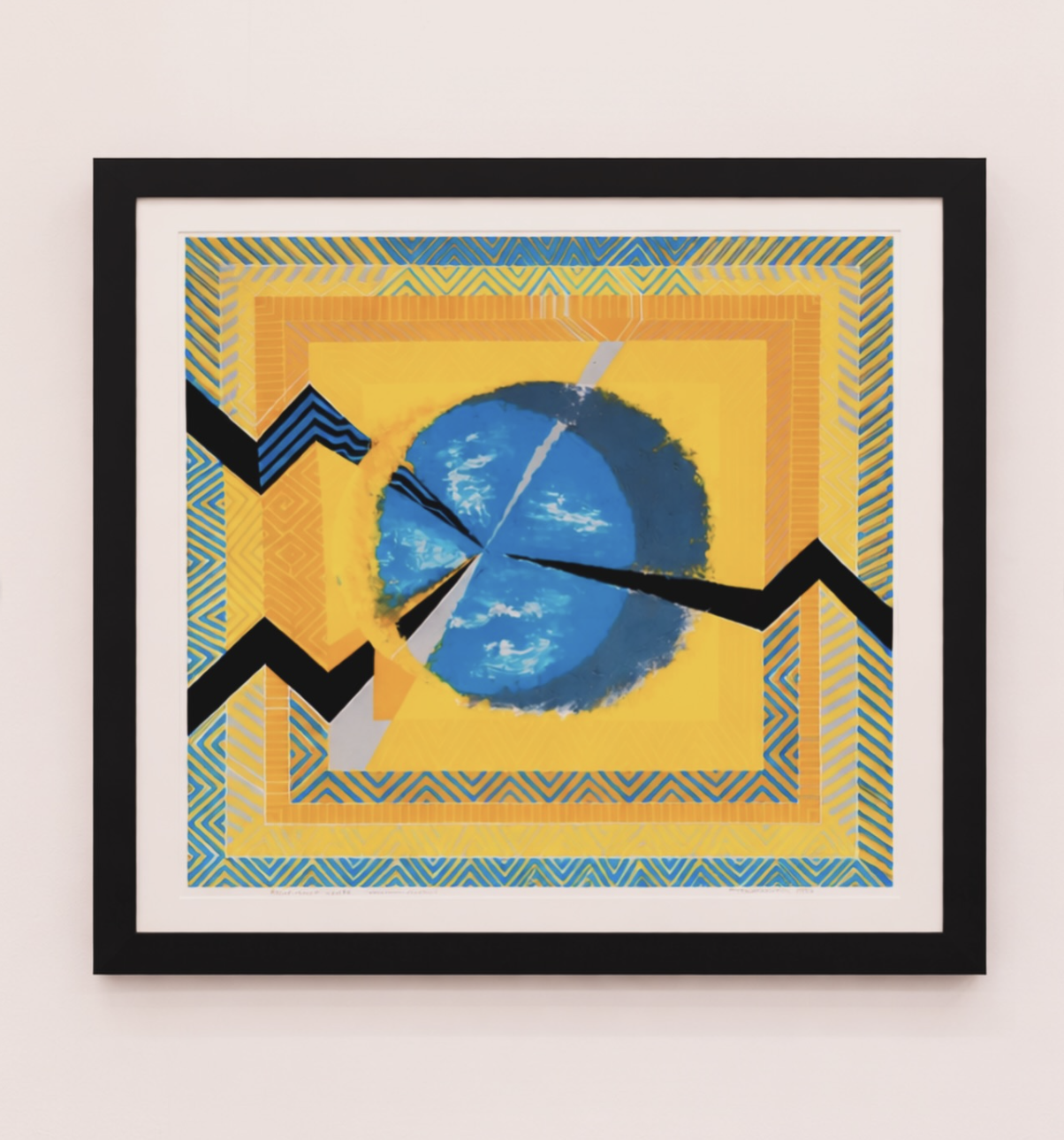
Some artists leave more of a lasting impact on the way we interact and forge connections in the art world; Wayne Alexander is one of those indelible artists. Harlem Frames has maintained the distinct pleasure of having framed Alexander's work, with works chronicling a continually evolving series of paintings and graphic prints. His works present custom presentations designed around extraordinary color and geometry, while introducing an unforgettable visual energy that has come to define his intricate work.
Alexander’s compositions are immediately recognizable for their saturated palettes and intricate arrangements of geometric forms. You’ll observe recurrent shapes of arcs, squares, intersecting lines, repeating patterns, and fields of complementary color, all cultivating a sense of movement and depth across his canvases. Alexander himself describes these forms as symbolic expressions of the artist’s poignancy, inner strength, and internal transformation, with his Buddhist practice informing much of his spiritual approach to the work ethos.
For Harlem Frames, framing for Alexander has presented an especially interesting challenge: how do you frame artwork that already possesses such a strong visual language?
Our answer has rarely been to retreat from the color, but to play.
The Artist
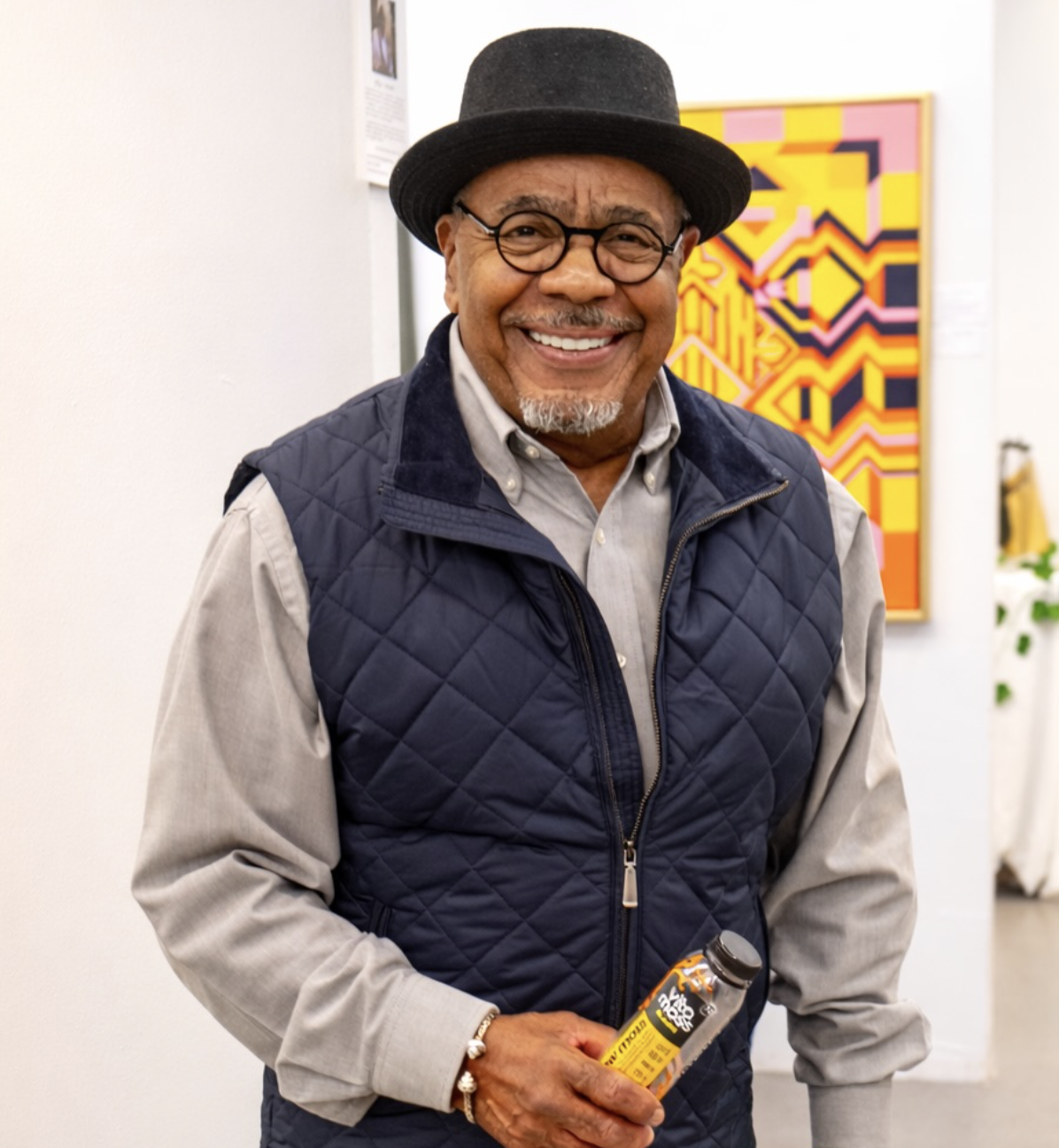
Wayne Alexander;
Photographed at Harlem Fine Arts Show 2026.
Wayne Alexander is deeply reverent; his practice is equally personal as it is a generational tradition. As the son of a professional painter who worked when circumstances permitted, Alexander recalls drawing from an early age. The artist later studied art in Philadelphia and achieved his BA in Education at the University of Massachusetts just before pursuing careers in communications and technology. Some of his primary artistic influences include Gordon Parks, Charles White, Henry Ossawa Tanner, Elizabeth Catlett, and Romare Bearden.
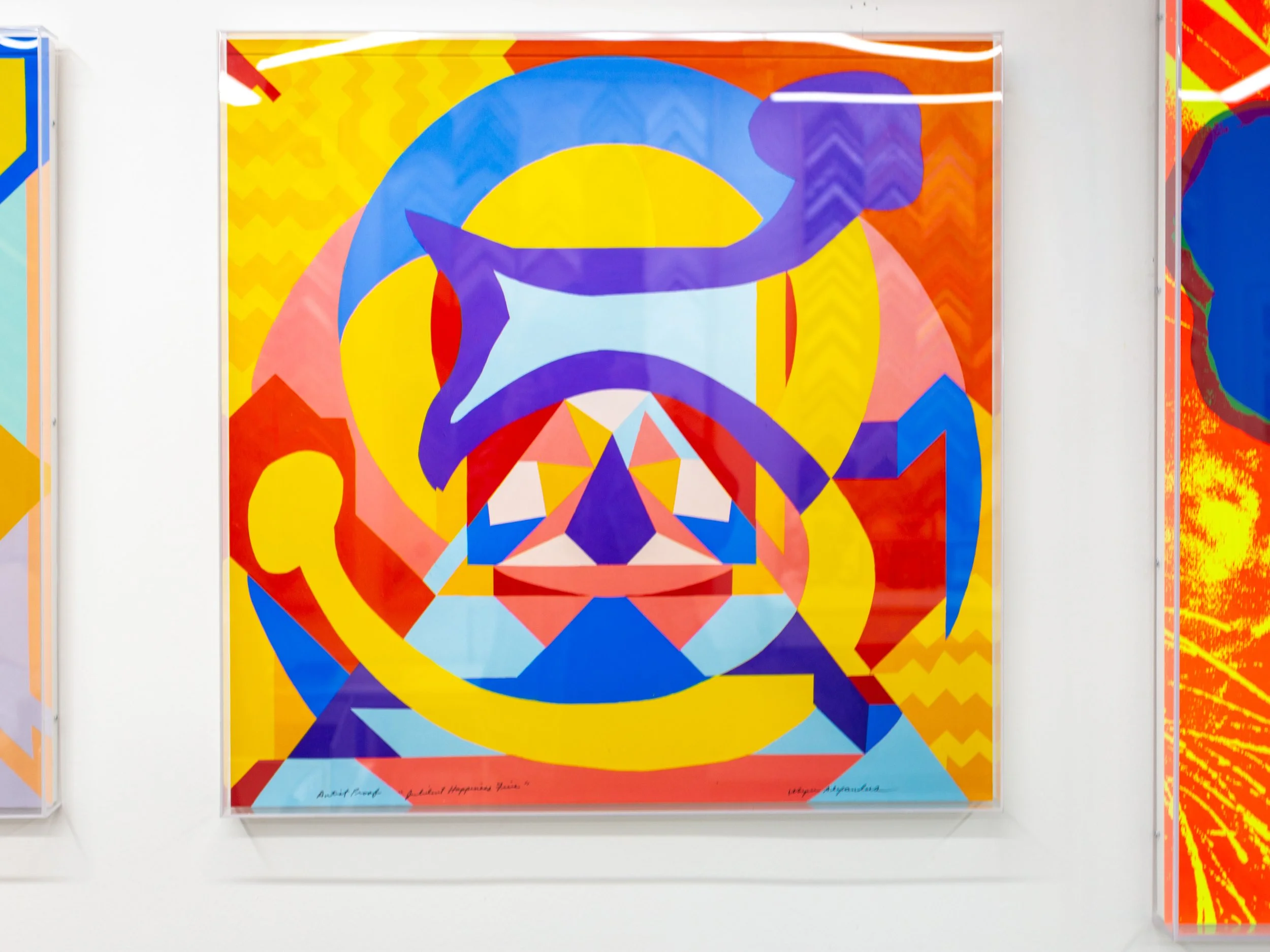
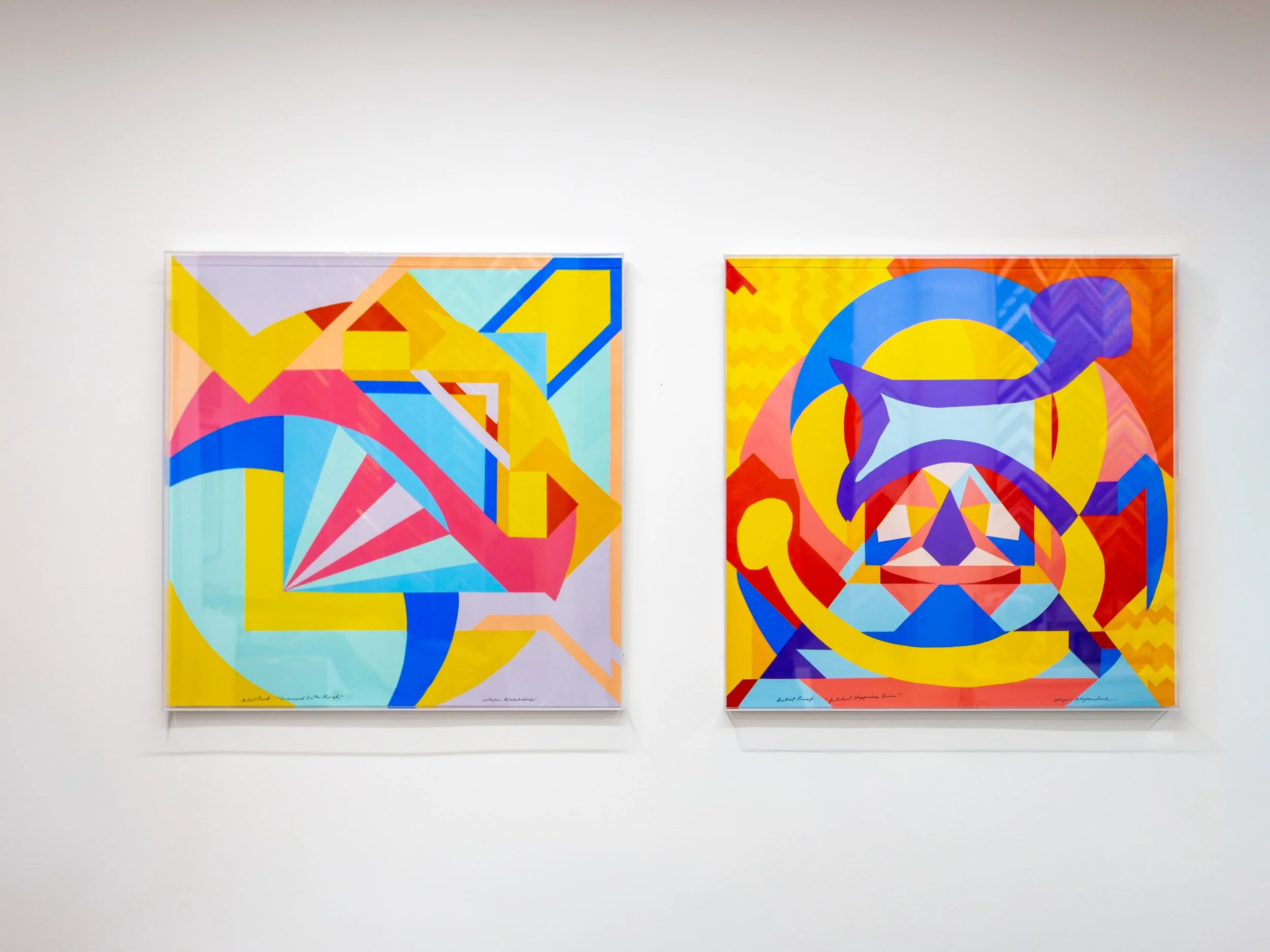
After a sustained period focused almost exclusively on photography, Alexander returned seriously to painting during the pandemic in 2020. The resulting body of work became closely connected to his experiences of love, loss, health, resilience, and spiritual transformation. Works including To the Victory Victorious, Will You Marry Me, Robotic Surgery, Diamond in the Rough, and Jubilant Happiness Five emerged from this turbulent period of emotional confluence.
While Alexander’s wider practice primarily includes photography, Harlem Frames’ collaboration with the artist has remained centered specifically on his royally vibrant paintings and graphic works.
Framed with Care,
In Harlem.
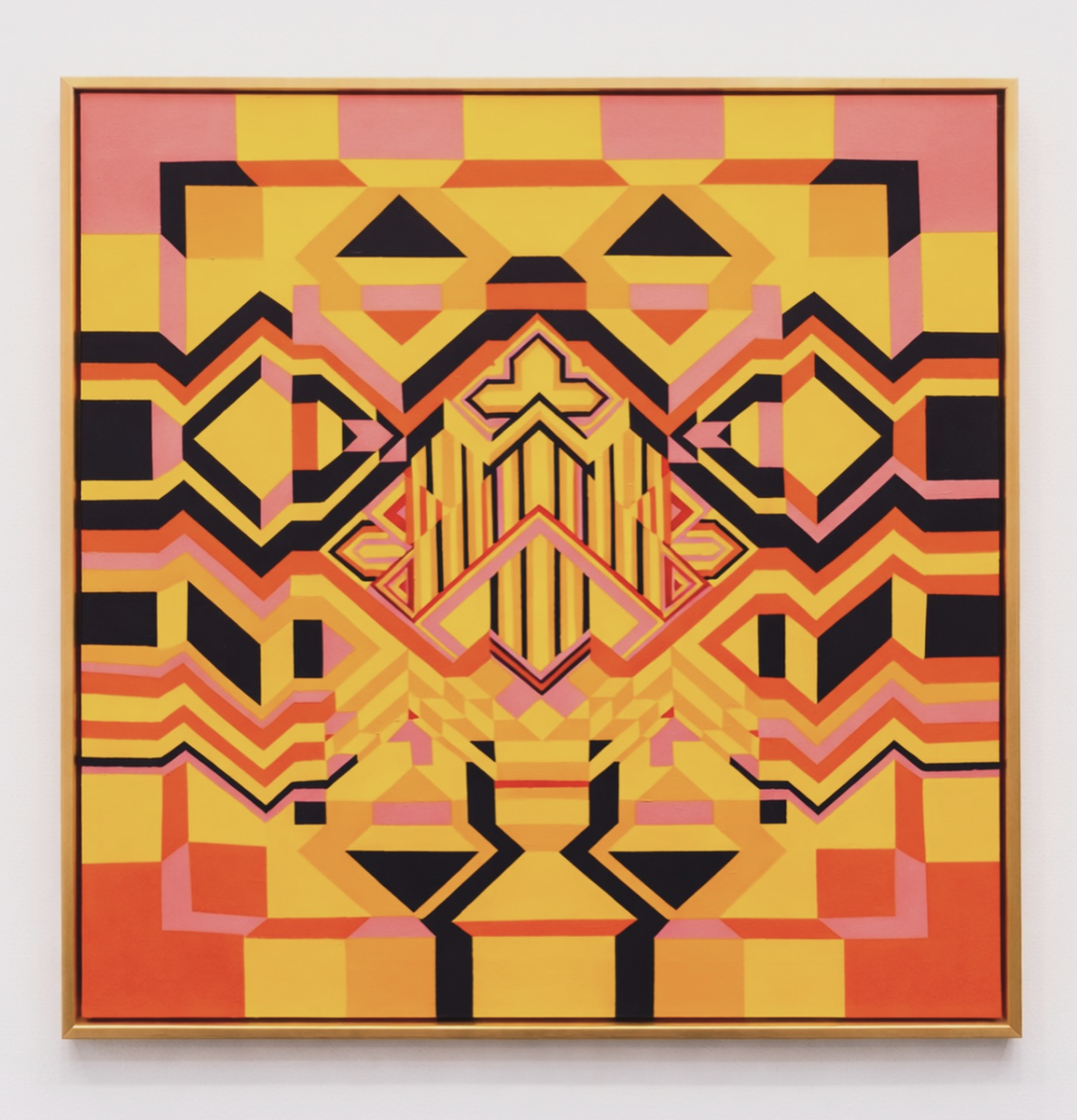
Alexander’s work incentivizes Harlem Frames to approach framing as an active and equally fun part of the presentation. Rather than surrounding every piece with a conventional neutral frame, we collectively have developed presentations that respond directly to the rhythm and palette of individual works.
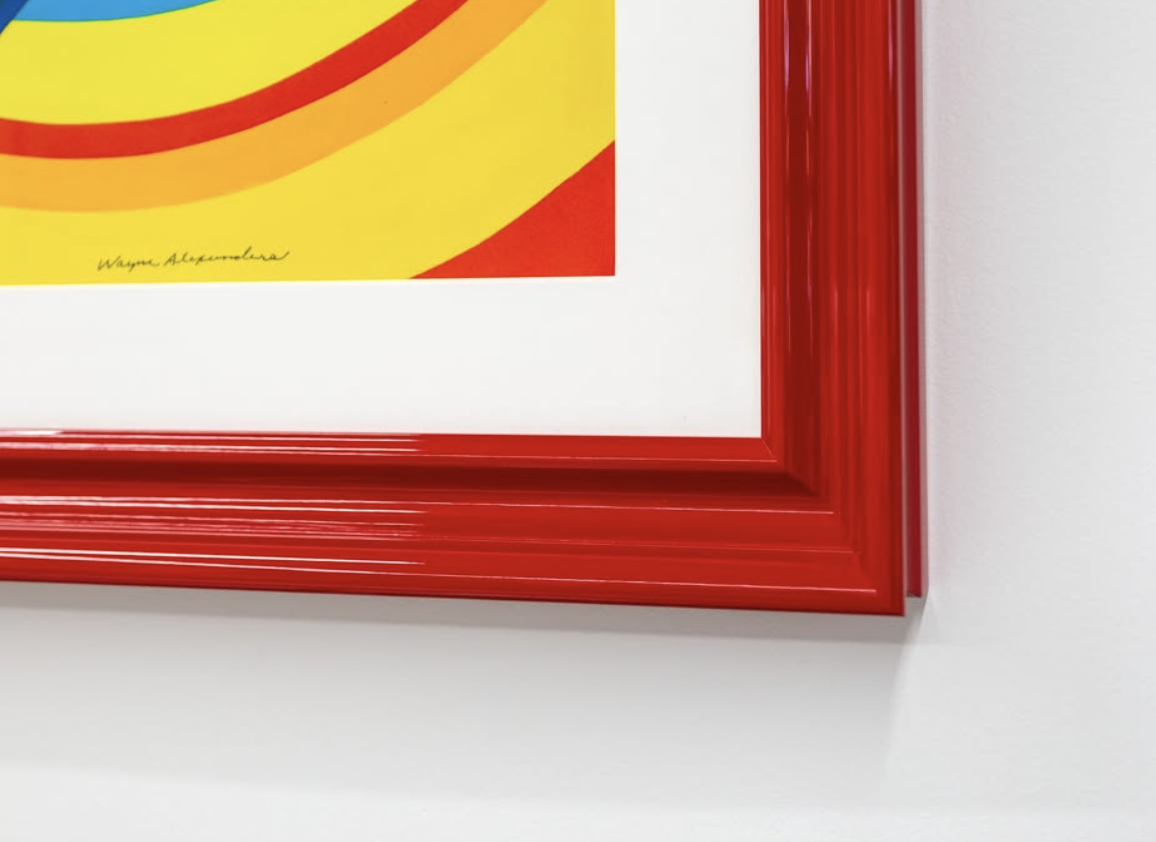
For several pieces, that has meant vibrantly finished wood mouldings in colors such as red, yellow, and blue. Though these are visually astounding colors, the frames do little to compete with Alexander’s compositions. Instead, these saturated frames pick up colors already present within the artwork and extend their visual energy beyond the edge of the image.
A brilliant yellow moulding can become an appendage of a yellow geometric passage within the work. A saturated red frame can reinforce the intensity of reds and oranges within another composition. Blue can establish a contrasting boundary around warmer colors.
The frame becomes part of the conversation, not the conversation.
Plexi Box Presentations
Other works have called for a dramatic departure from wood frames.
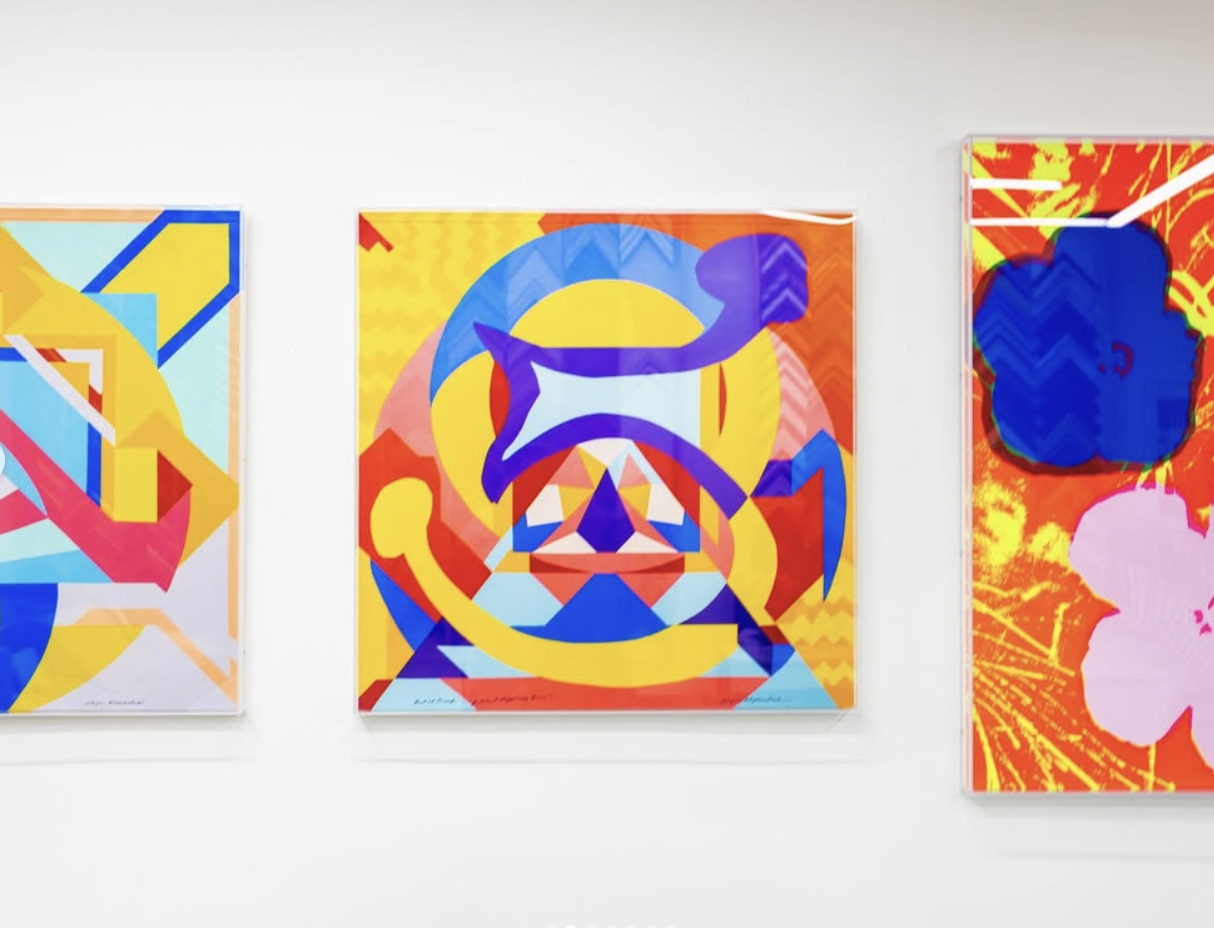
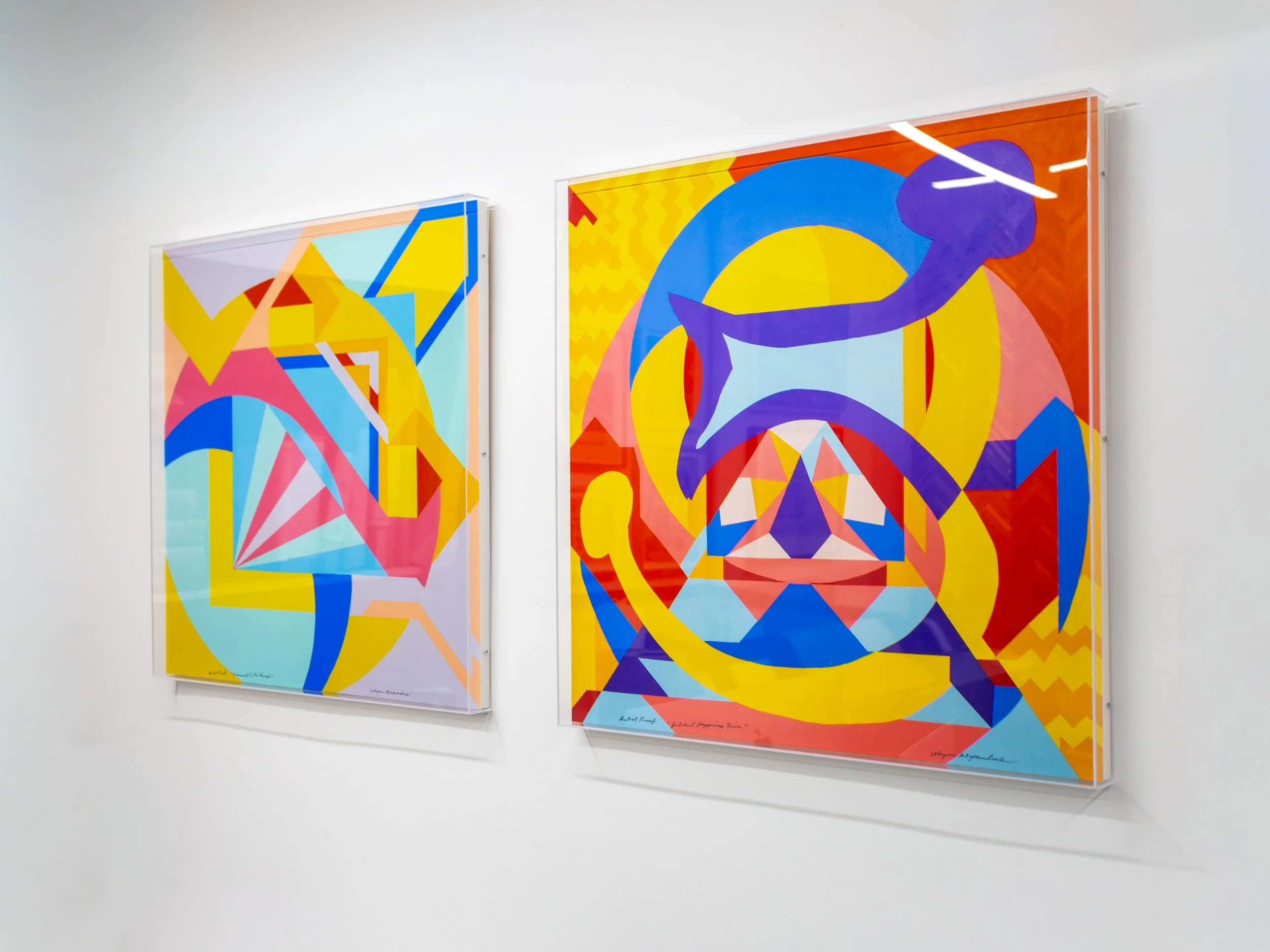
Harlem Frames has fitted clear plexi box presentations for more than several of Alexander’s paintings and graphic works, enabling the color and geometry to remain visually dominant while eliciting the piece a clean, contemporary architectural edge. The transparency of the plexi is particularly effective with Alexander’s work. Averse to introducing another opaque visual boundary, the transparent enclosure enables the artwork to be audaciously present, almost suspended against the wall.
Viewed from the front, attention remains on the composition. From an angle, the depth and polished edges of the plexi become visible, introducing another dimensional element to a work that already plays with the perception of depth, layering, and geometric space. This relationship feels especially appropriate given Alexander’s own description of his compositions as sometimes moving beyond a two-dimensional visual experience.
Framing Color With Color
One of the recurring ideas throughout our work with Alexander has been the willingness to embrace color rather than neutralize it. Colorful artwork does not automatically require a black, white, or natural-wood frame.
In Alexander’s work, color serves as a structural basis. Bright yellows, reds, blues, pinks, oranges, and purples establish movement and hierarchy just as much as the geometric forms themselves. Our framing choices respond accordingly.
Across the works Harlem Frames has presented, clear plexi boxes, vivid wood moulding, contrasting mats, and more restrained dark frames have each offered different ways of defining the boundary around the artwork. The result is not a single standardized “Wayne Alexander frame,” but an ongoing framing vocabulary developed in response to individual pieces.
Selected Works
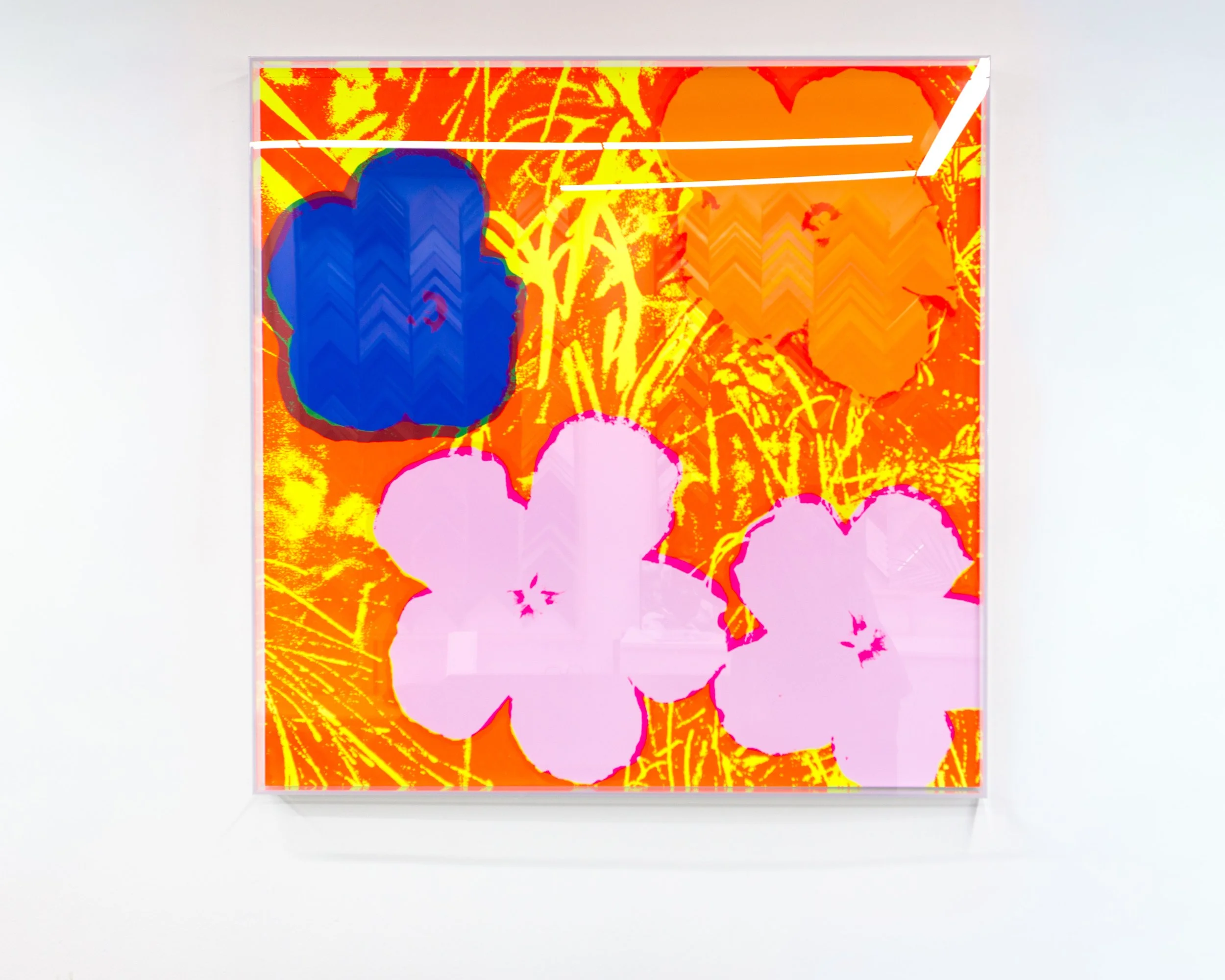
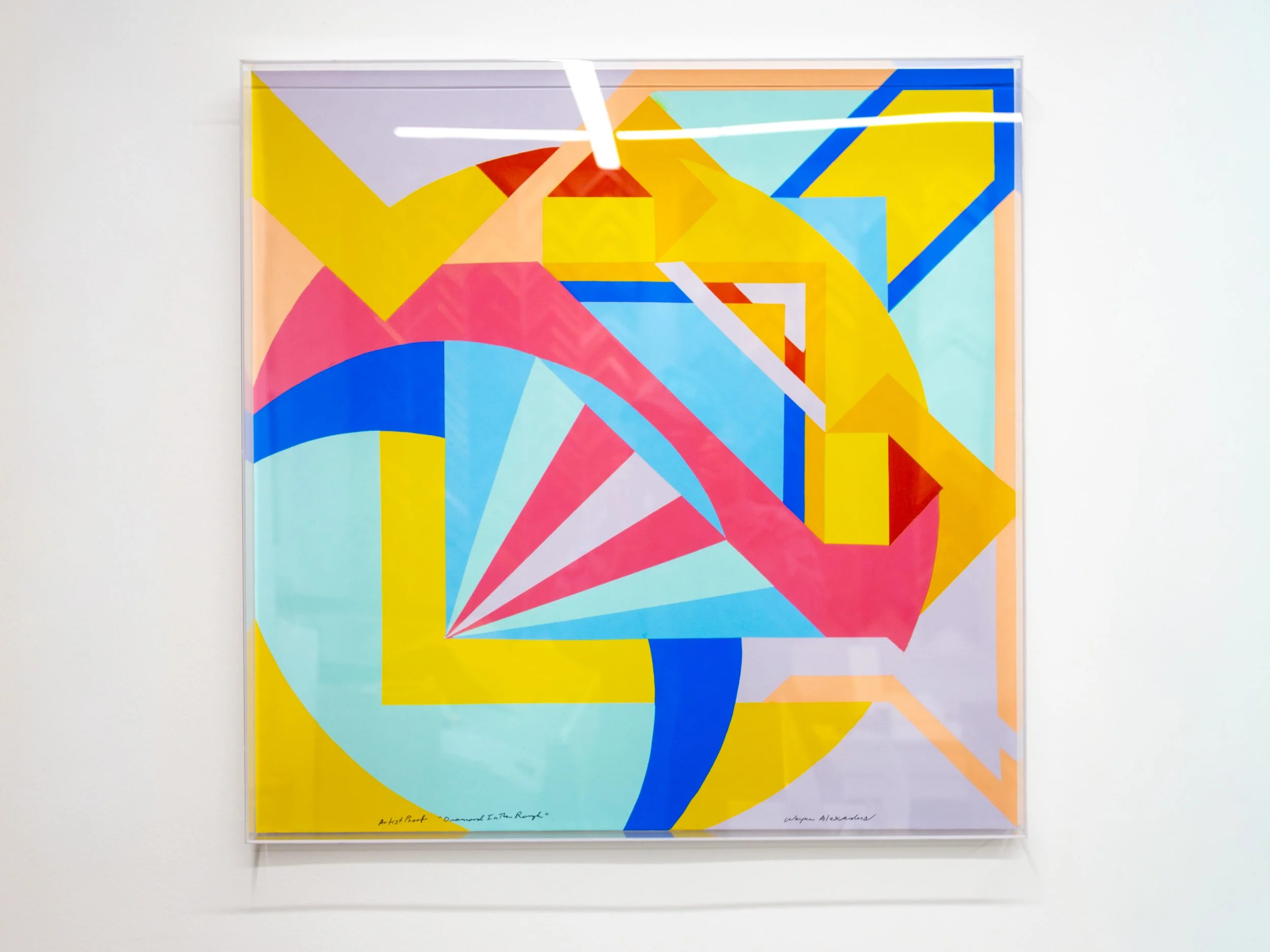
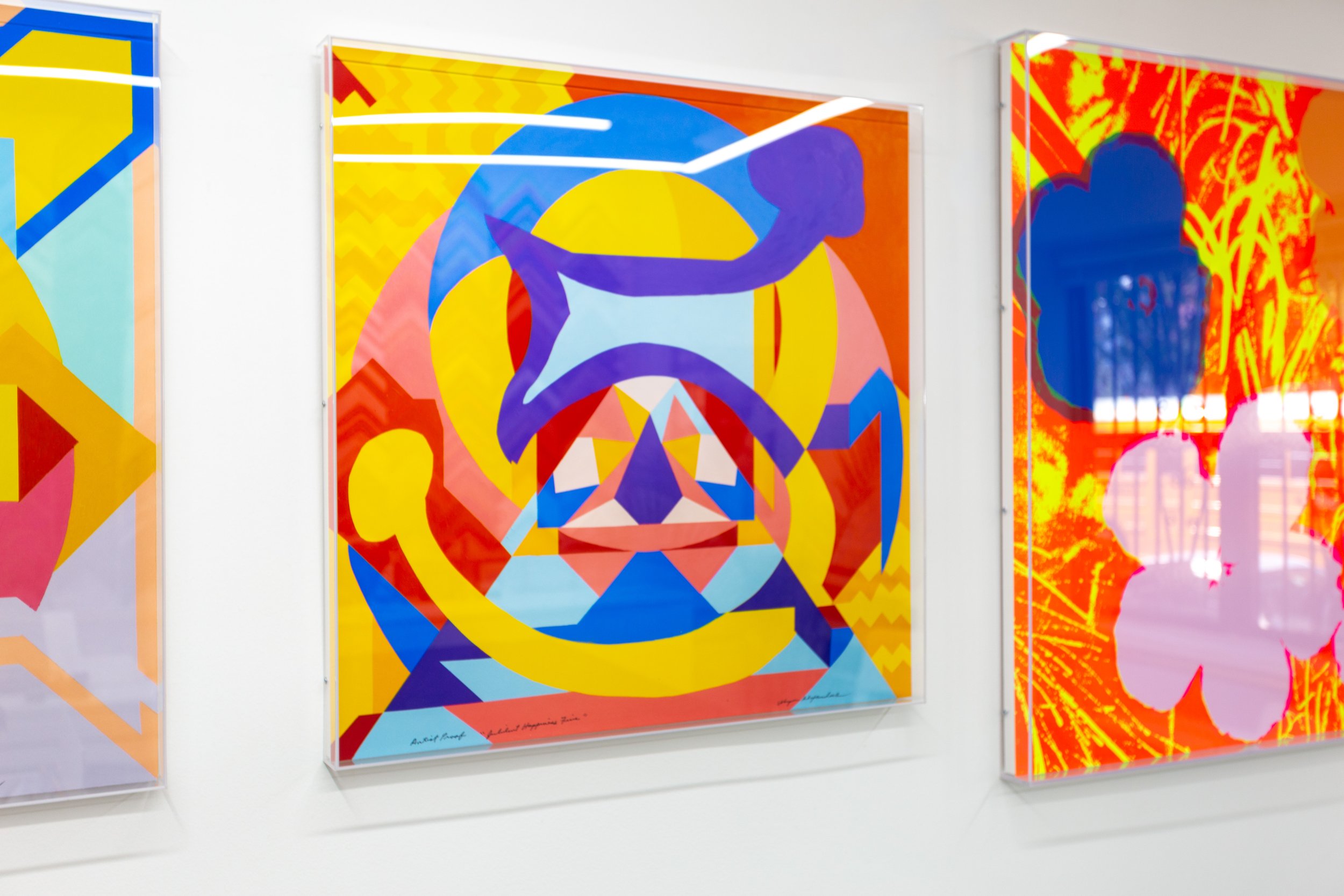
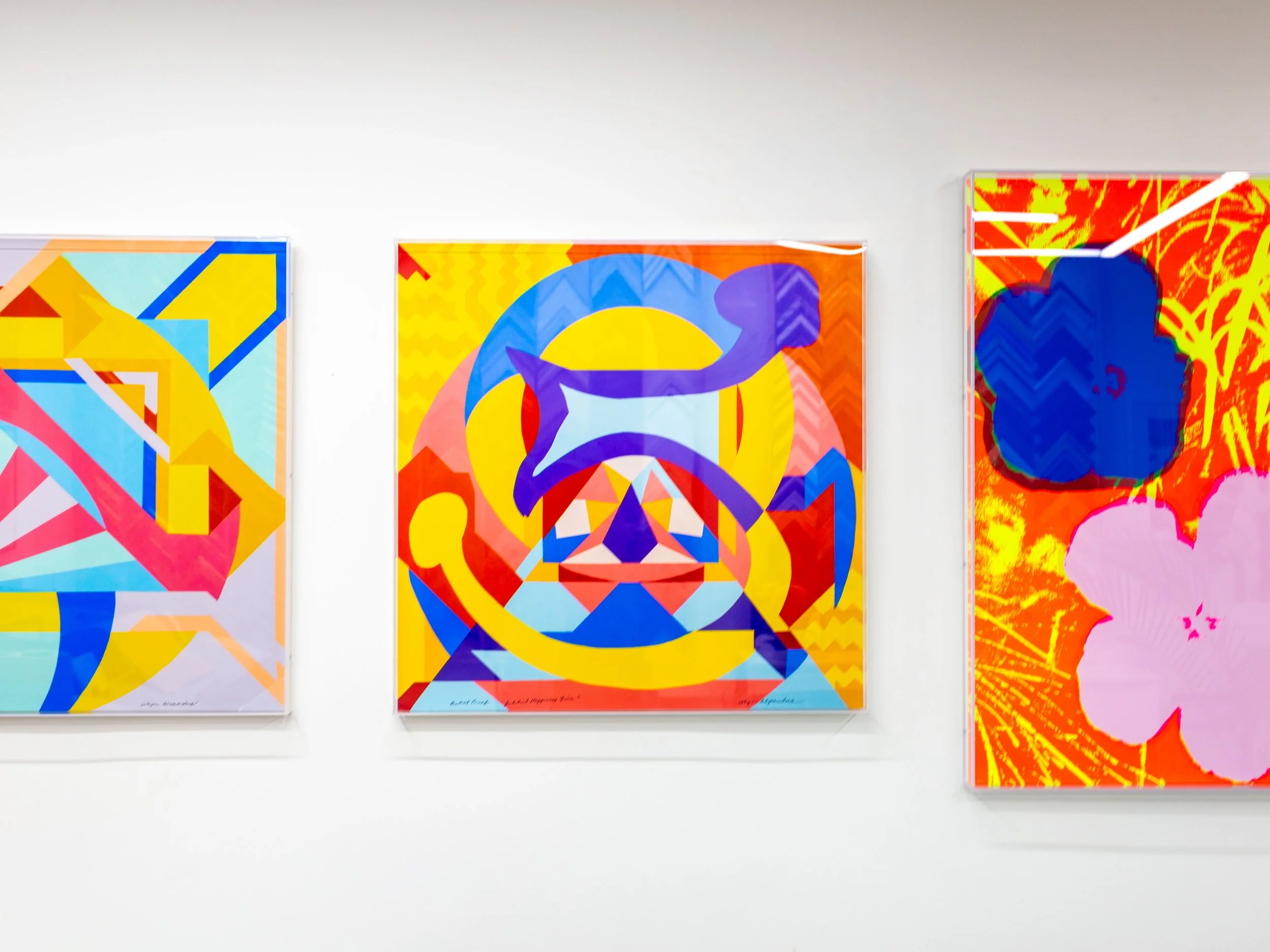
Among the Alexander works presented and framed through Harlem Frames are pieces from the artist’s colorful geometric painting and print practice, including Diamond in the Rough and related works characterized by his distinctive combinations of abstraction, geometry, symbolism, and saturated color. Diamond in the Rough, for example, belongs to a body of paintings Alexander created after returning to his studio practice. The artist describes the work through the metaphor of people as diamonds continually polishing their lives and pushing through adversity.
Alexander also translates this visual language into graphic editions. His website offers limited-edition graphic prints alongside painted works, extending the same geometric vocabulary across different formats. For Harlem Frames, moving between these formats means considering each object individually—its scale, surface, color relationships, and the way the artist intends the finished piece to occupy a wall.
From the Studio to the Harlem Fine Arts Show
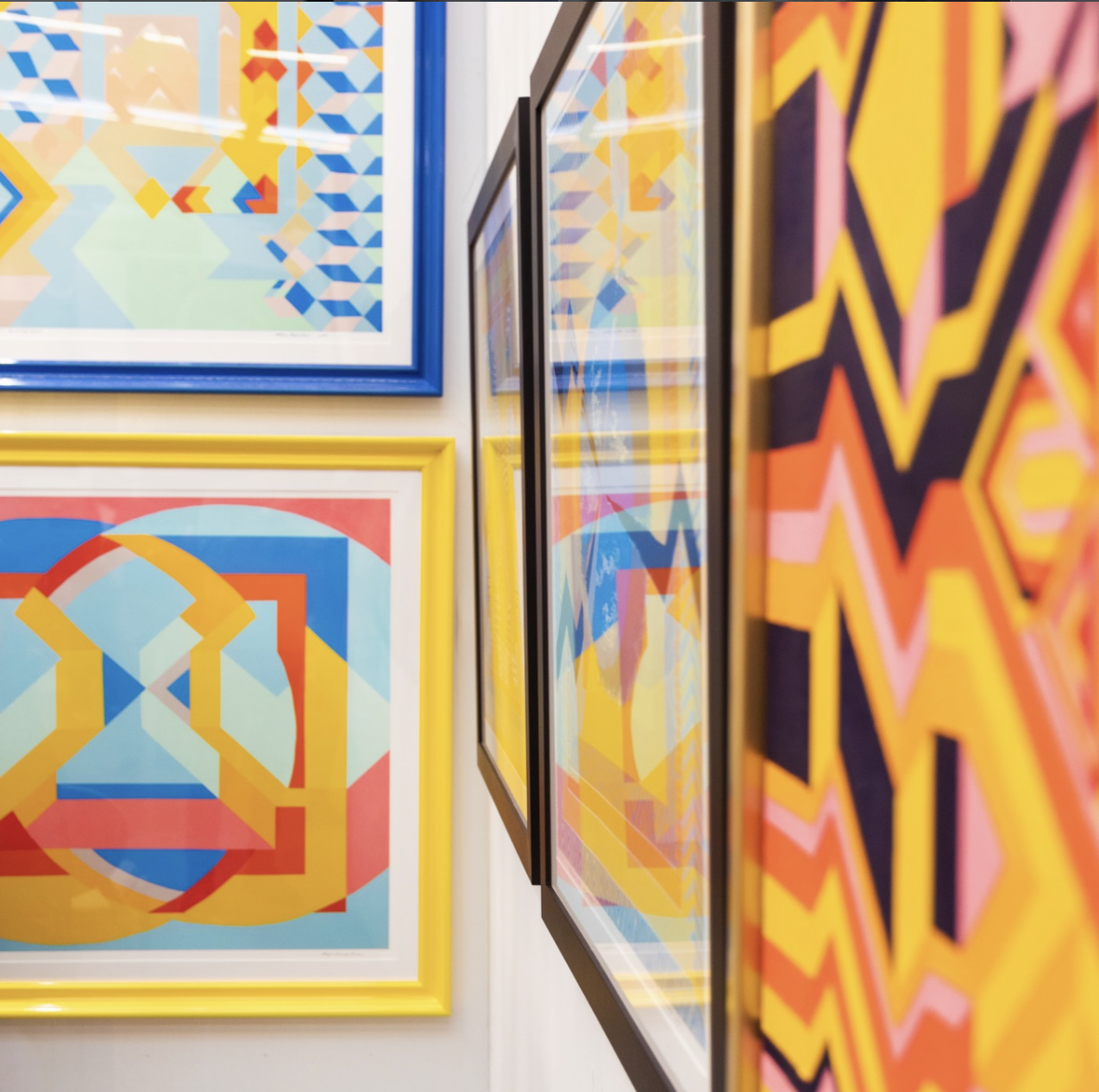
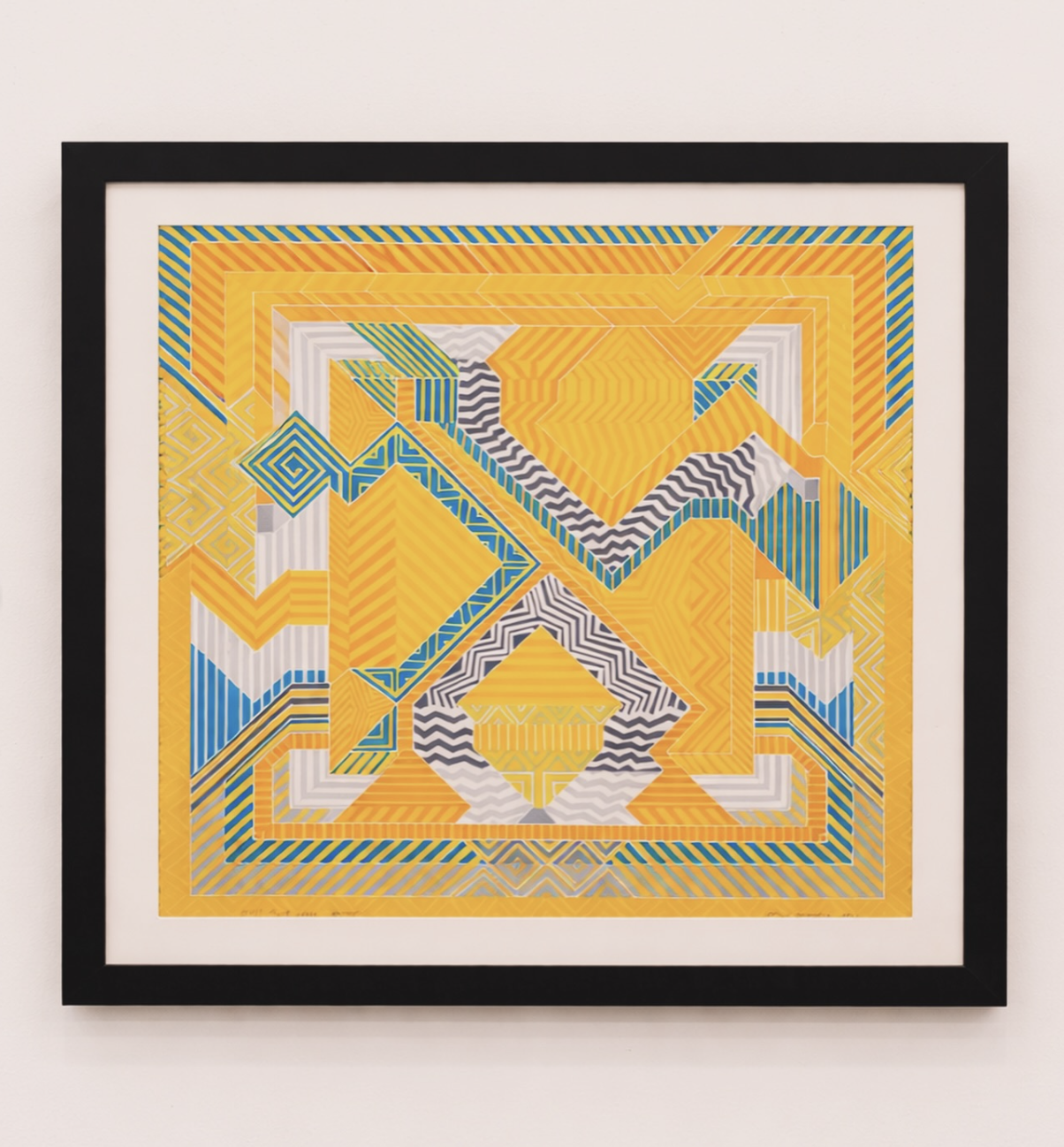
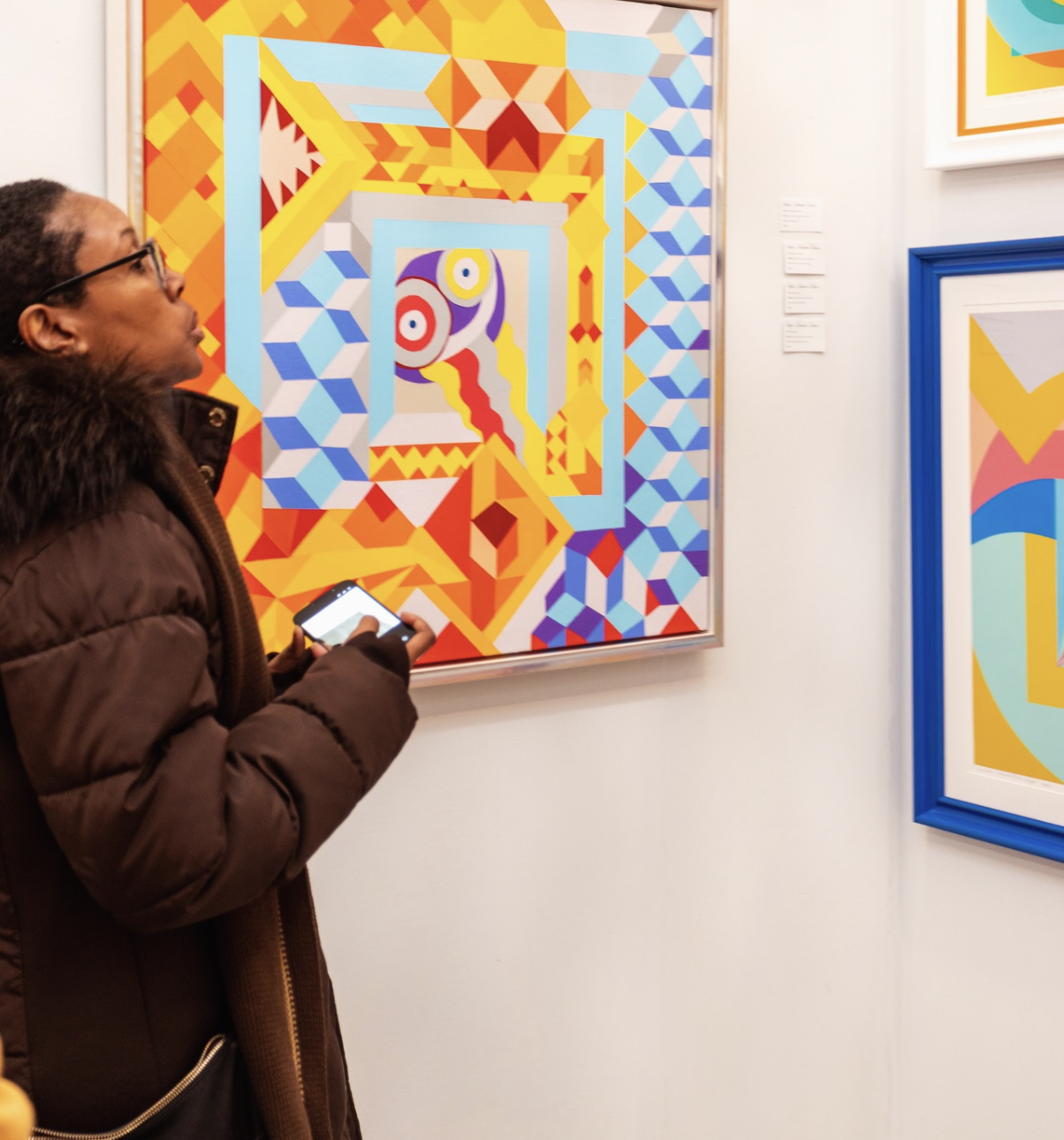
The collaboration between Wayne Alexander and Harlem Frames has also extended into the exhibition environment.
In February 2026, Alexander’s work appeared at the 18th Harlem Fine Arts Show at The Glasshouse in New York City, where Harlem Frames was also present. The setting brought the artist’s vividly colored compositions together with the wider community of artists, collectors, and cultural organizations surrounding HFAS. For Harlem Frames, seeing works we've handled and framed move from the studio into an exhibition setting completes an important part of the process.
A frame isn't designed only for the worktable. It ultimately has to support the artwork once it enters a gallery, exhibition, collection, or home.
An Ongoing Collaboration
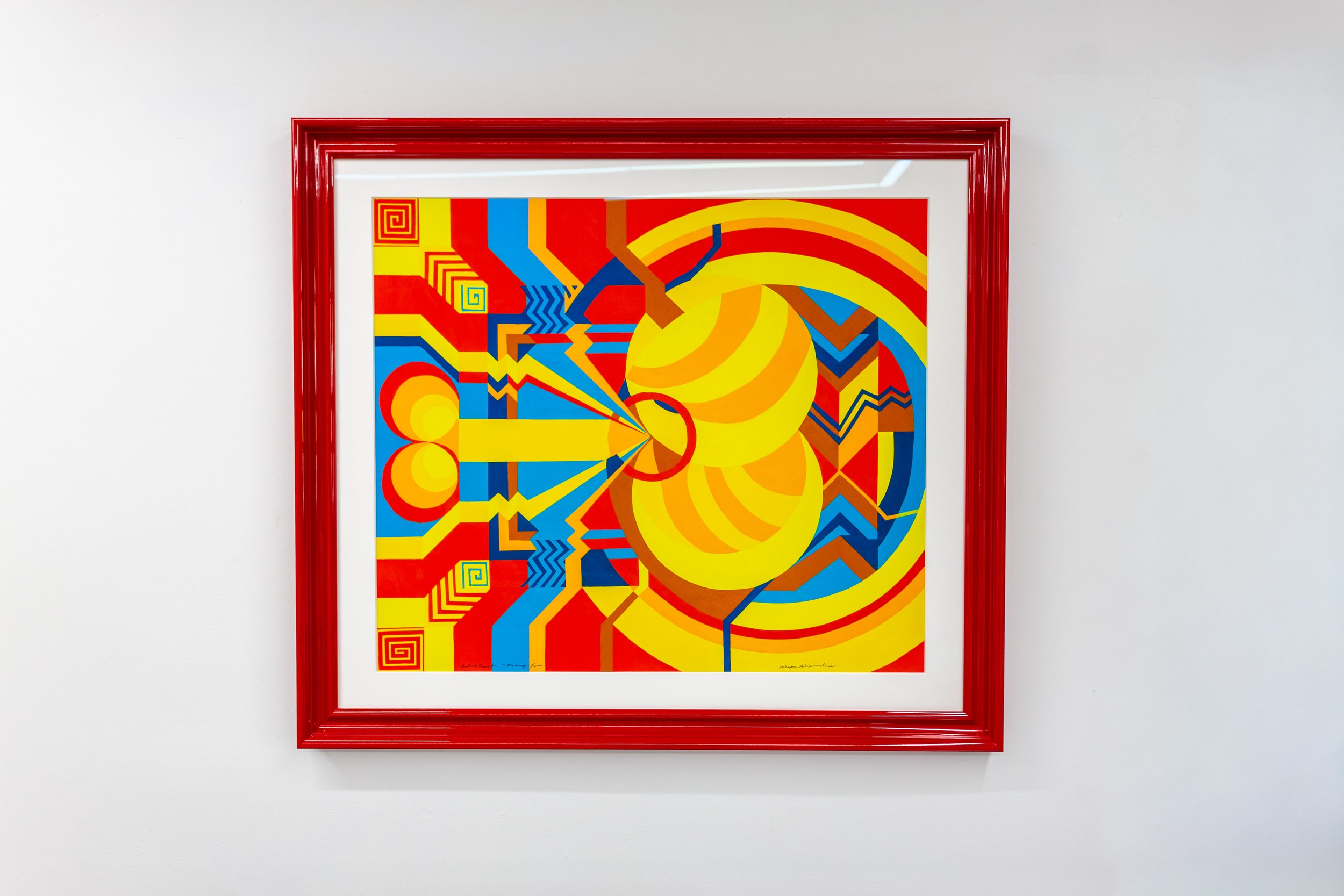
Our work with Wayne Alexander demonstrates something we value deeply at Harlem Frames: the relationship that can develop when an artist and framer work together repeatedly.
With time comes a better understanding of the artist’s materials, palette, preferences, scale, and visual language. Each new piece doesn't require repeating the same solution. Instead, that familiarity creates room to experiment. Sometimes the answer is a transparent plexi box that almost disappears. Sometimes it's a vivid red, yellow, or blue moulding that becomes impossible to ignore.
And sometimes the strongest choice is a restrained frame that simply gives the composition space to speak for itself. Across each approach, the objective remains the same: to create a presentation that feels inseparable from the character of the artwork it surrounds.
Artist: Wayne Alexander
Practice: Painting & Graphic Print Work
Framing: Custom framing by Harlem Frames
Selected Presentations: Clear plexi boxes · Vibrant finished wood mouldings · Custom matting · Contemporary frame presentations
Featured: Harlem Fine Arts Show 2026 · The Glasshouse · New York City
Explore Wayne Alexander's work
Images by Harlem Frames.
Related Events: Harlem Frames at the Harlem Fine Arts Show 2026
Anoushka Mirchandani: My Body Was A River Once
Anoushka Mirchandani: My Body Was A River Once
Institute of Contemporary Art San José · San José, CA · January 16–August 23, 2026
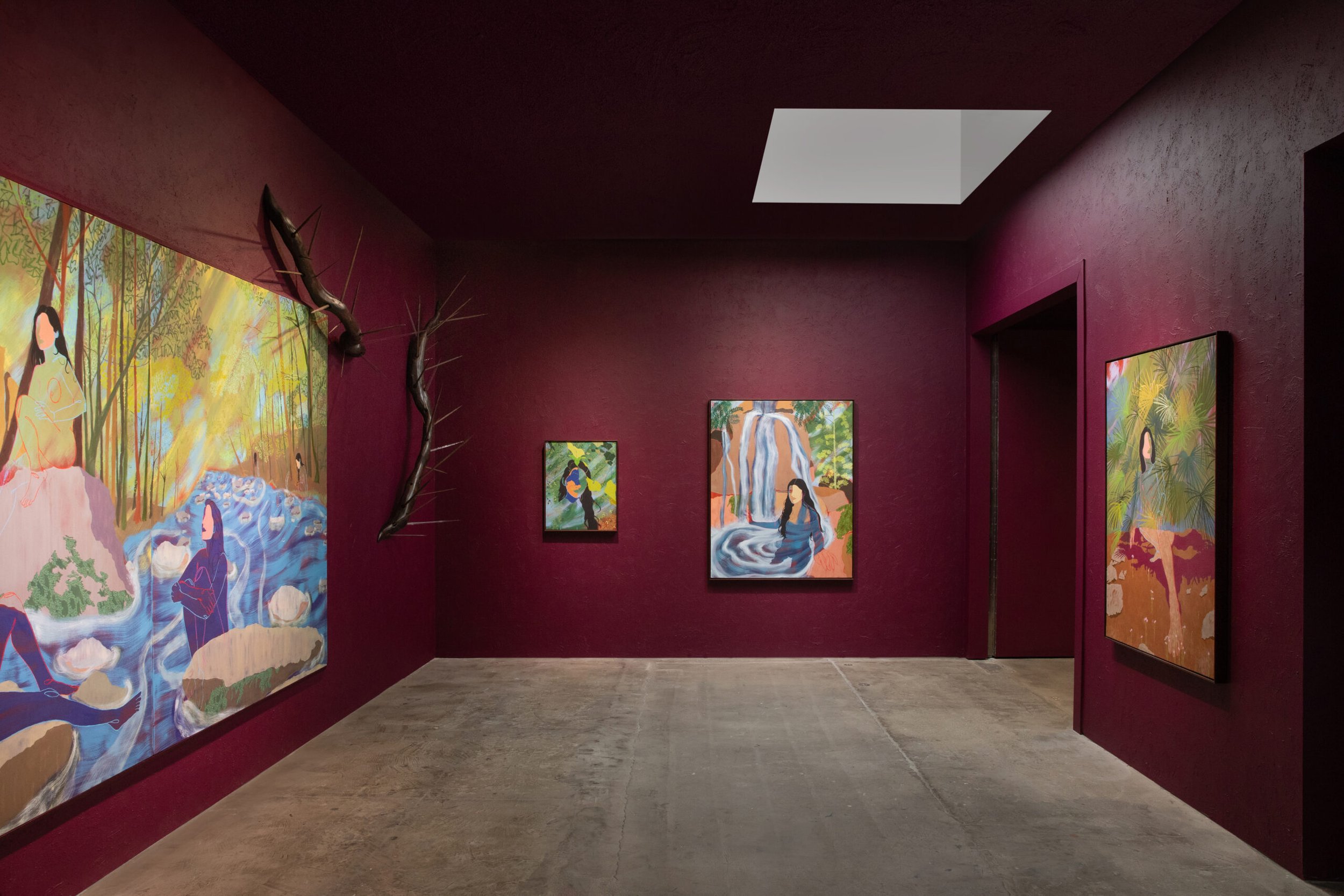
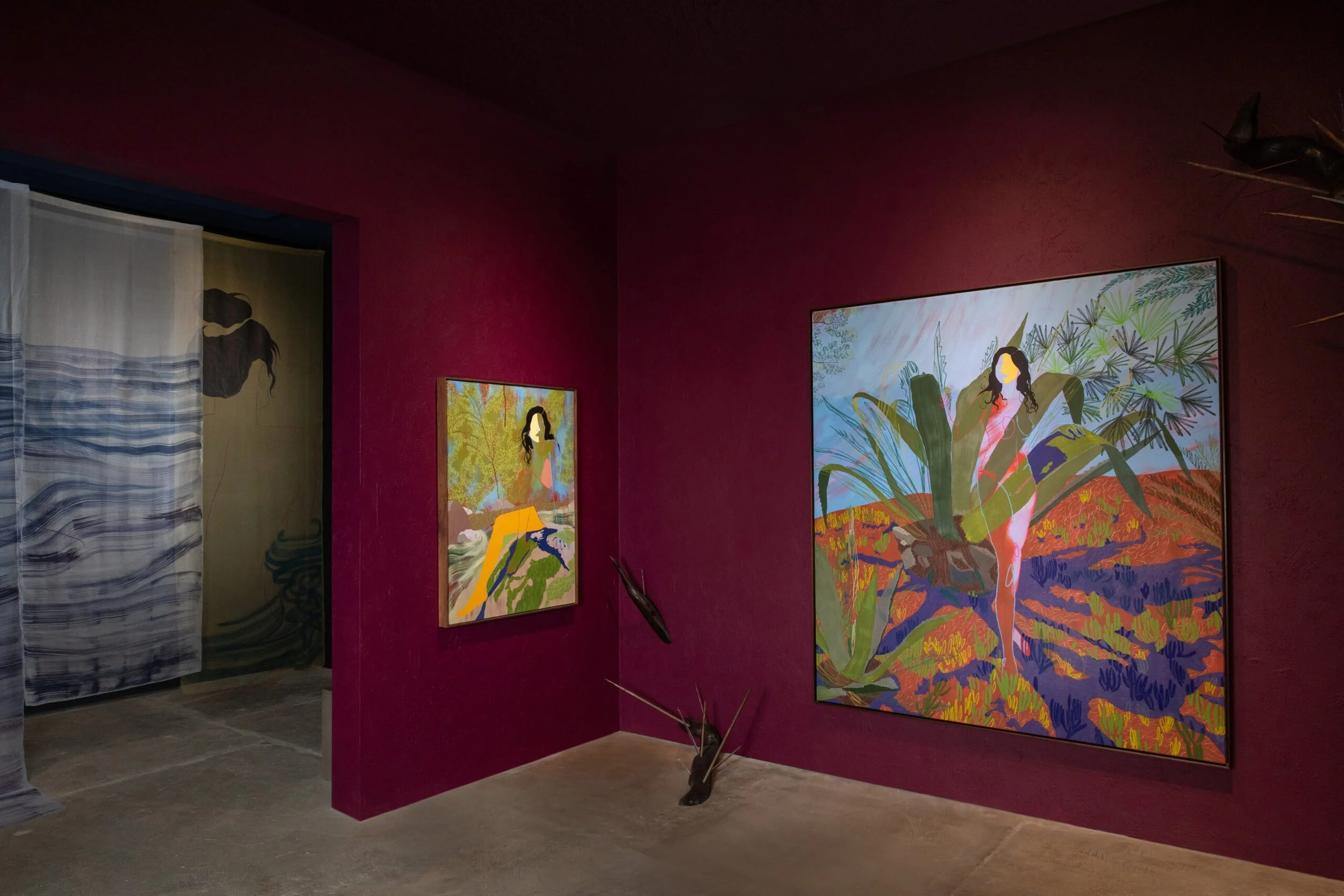
As a frequent collaborator of prolific artist Anoushka Mirchandani, Harlem Frames was presented with the distinct opportunity to custom-frame My Body Was A River Once, Mirchandani’s debut institutional exhibition at the Institute of Contemporary Art San José.
Curated by Zoë Latzer and comprising entirely Mirchandani’s new work, the exhibition continued to reconcile Mirchandani's tense examination of memory, migration, matrilineage, and the arbitrary and dwindling sense of belonging. Clear across this multimedia exhibit, composed of paintings, silks, sculptures, sounds, and scents, the artist challenges and reconciles the relationship between the body and the environments that encumber it. She aspires to understand how place, ancestry, and displacement contribute to the evolution and questionable fortitude of our identity.
The Exhibition
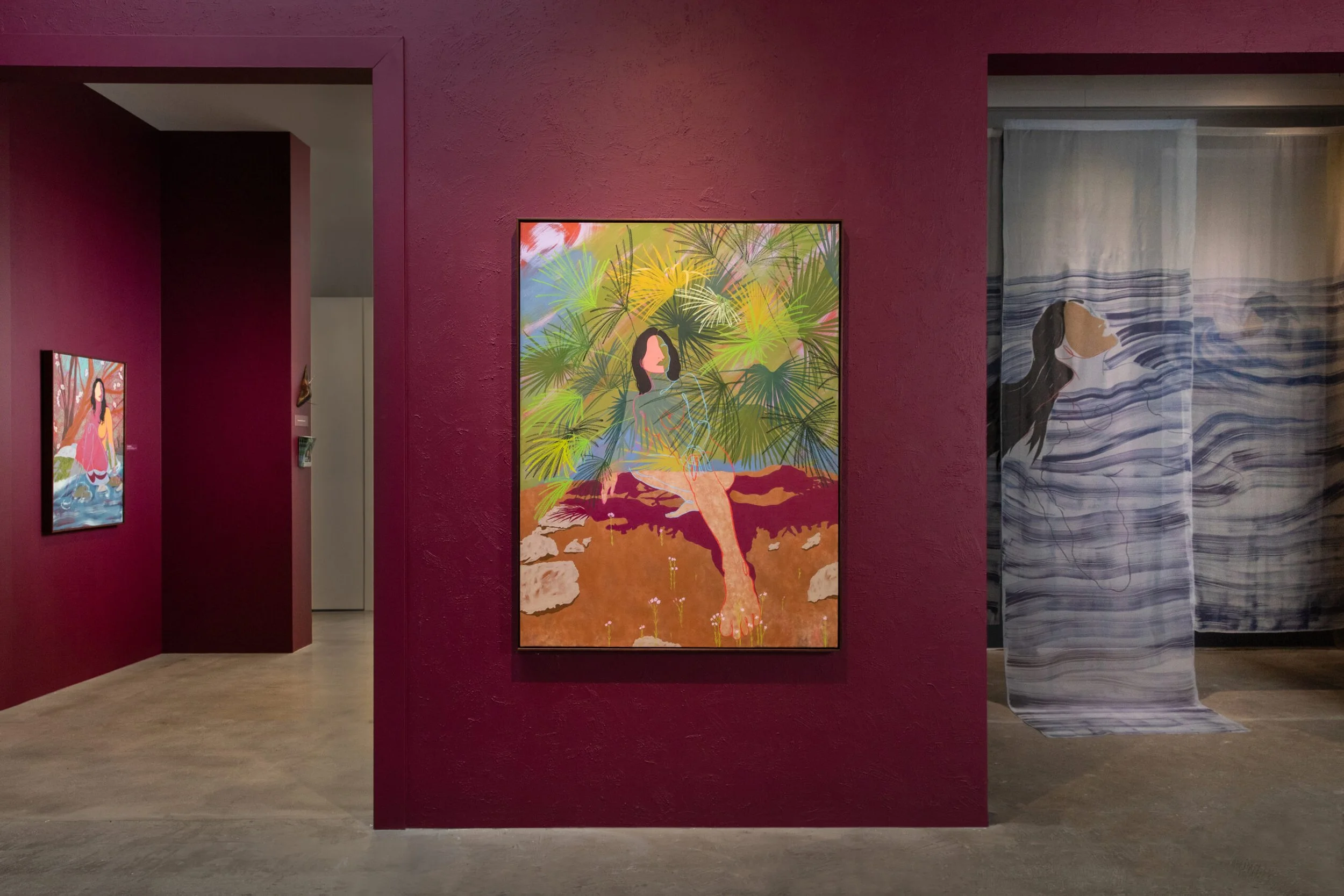
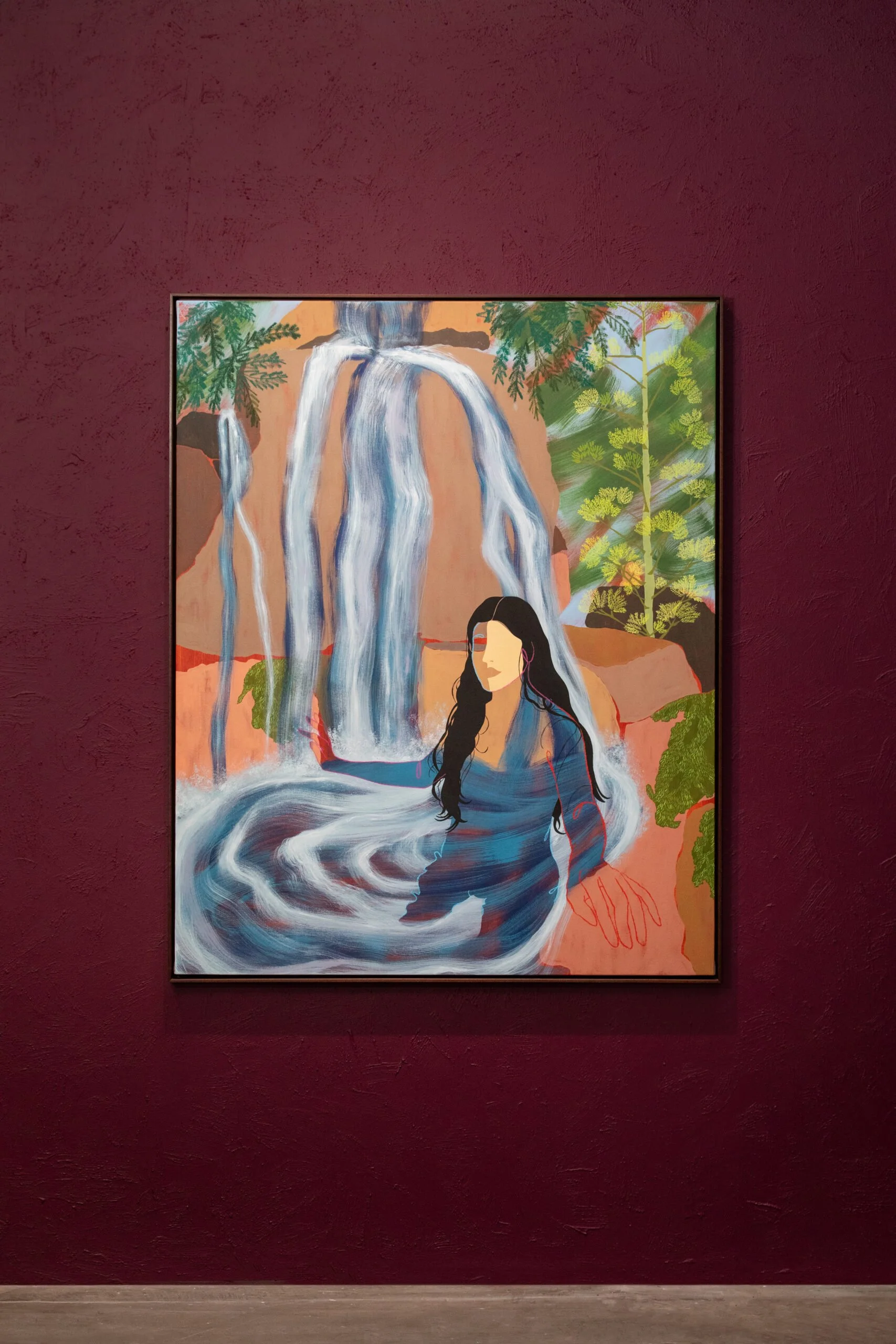
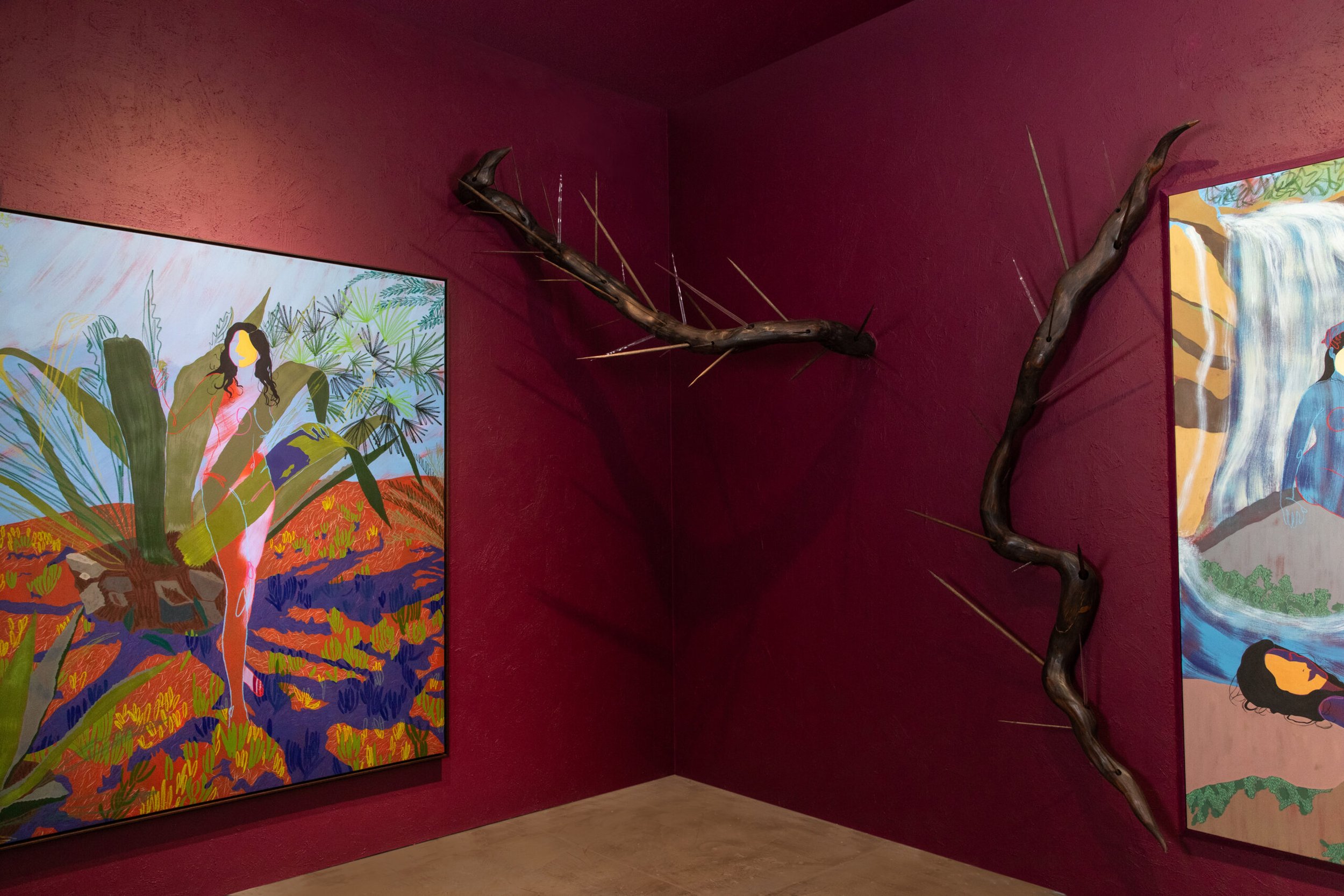
In My Body Was A River Once, Mirchandani mobilizes her recurring, elegantly phantasmic female figures beyond the domestic environments of previous works and instead transplants them into landscapes of waterfalls, flora, stone, and tree bark. Bodies amalgamate with their chosen surroundings, cultivating fluid spaces in which the boundaries between figure and landscape begin to dissolve into a confluence of rebirth.
Deriving inspiration from the Apsaras, the celestial divinities of water and movement articulated in Hindu and Buddhist tradition, Mirchandani employs these figures to investigate the concept and inheritance of intergenerational memory and the migration of ancestral stories across places and generations in the diaspora.
The exhibition serves as a demarcation of Mirchandani evolving material practice. Works on canvas sit adjacent to diaphanous silks, sculptural wooden forms, and sensory elements, nurturing an environment informed by transformation, lineage, nature, and the perennial search for belonging.
Framed by Harlem Frames
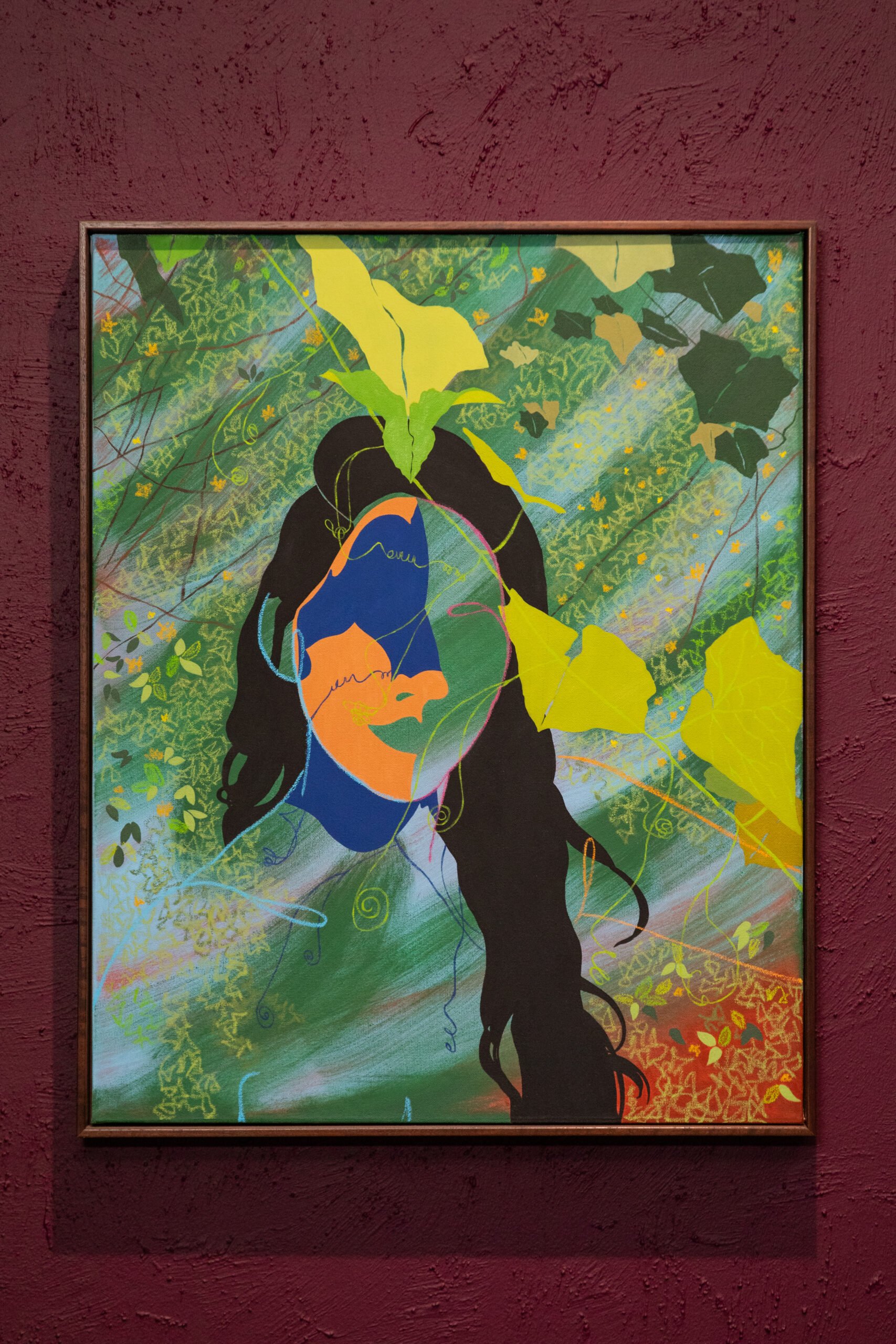
For My Body Was A River Once, Harlem Frames created Mirchandani’s signature custom natural walnut float frames, continuing a framing and fitting collaboration that cemented our friendship.
The float construction creates a considered space between the edge of the canvas and the surrounding walnut, allowing the full painted surface—and the physical presence of each canvas—to remain visible. The natural walnut texture is nothing short of exquisite and smooth. The wood adds a natural warmth and subtlety, ensuring the frame retains a restrained profile as it elegantly embraces Mirchandani's compositions.
That relationship between artwork and frame material was particularly suited to this exhibition. As Mirchandani's paintings bridge the connections between body, land, memory, and the organic natural world, the innate character of the walnut supplies us with a peaceful material that complements the elemental thematics of the artist’s work without interrupting her visual language.
The resulting frames are intended to accentuate the pre-existing definition of Mirchandani’s paintings within the exhibition space. Again, the goal is to never outcompete the work, but to elevate the presentation while allowing the excellence of the work enough room to breathe.
For Harlem Frames, the project reflects the importance of a timeless frame, and perhaps more importantly, finding what fits the client and their needs first. You’d be surprised how loyal you become to a frame when it transforms the reception of the work itself for the better. When working closely with any artist, framing becomes integral to an artist's evolving visual vernacular. This deliberate framing process is developed by understanding the artist’s intention, as much as it about familiarizing oneself with the aesthetics of the work, materials, scale, and the environments in which the work will ultimately be experienced.
Harlem Frames is proud to continue its collaboration with Anoushka Mirchandani and to have had a humble hand in presenting the works in My Body Was A River Once at the Institute of Contemporary Art San José.
Framed with Care, In Harlem.
Artist: Anoushka Mirchandani
Exhibition:My Body Was A River Once
Institution: Institute of Contemporary Art San José
Curator: Zoë Latzer
Exhibition Dates: January 16–August 23, 2026
Framing: Natural walnut float frames by Harlem Frames
Explore the exhibit:
https://www.icasanjose.org/uncategorized/anoushkamirchandanipressrelease/
https://www.icasanjose.org/archive/mybodywasariveronce/
Related Projects: Anoushka Mirchandani: Everyone You Love Lives Here The FLAG Art Foundation · New York, NY · 2026
Anoushka Mirchandani: Everyone You Love Lives Here The FLAG Art Foundation · New York, NY · 2026
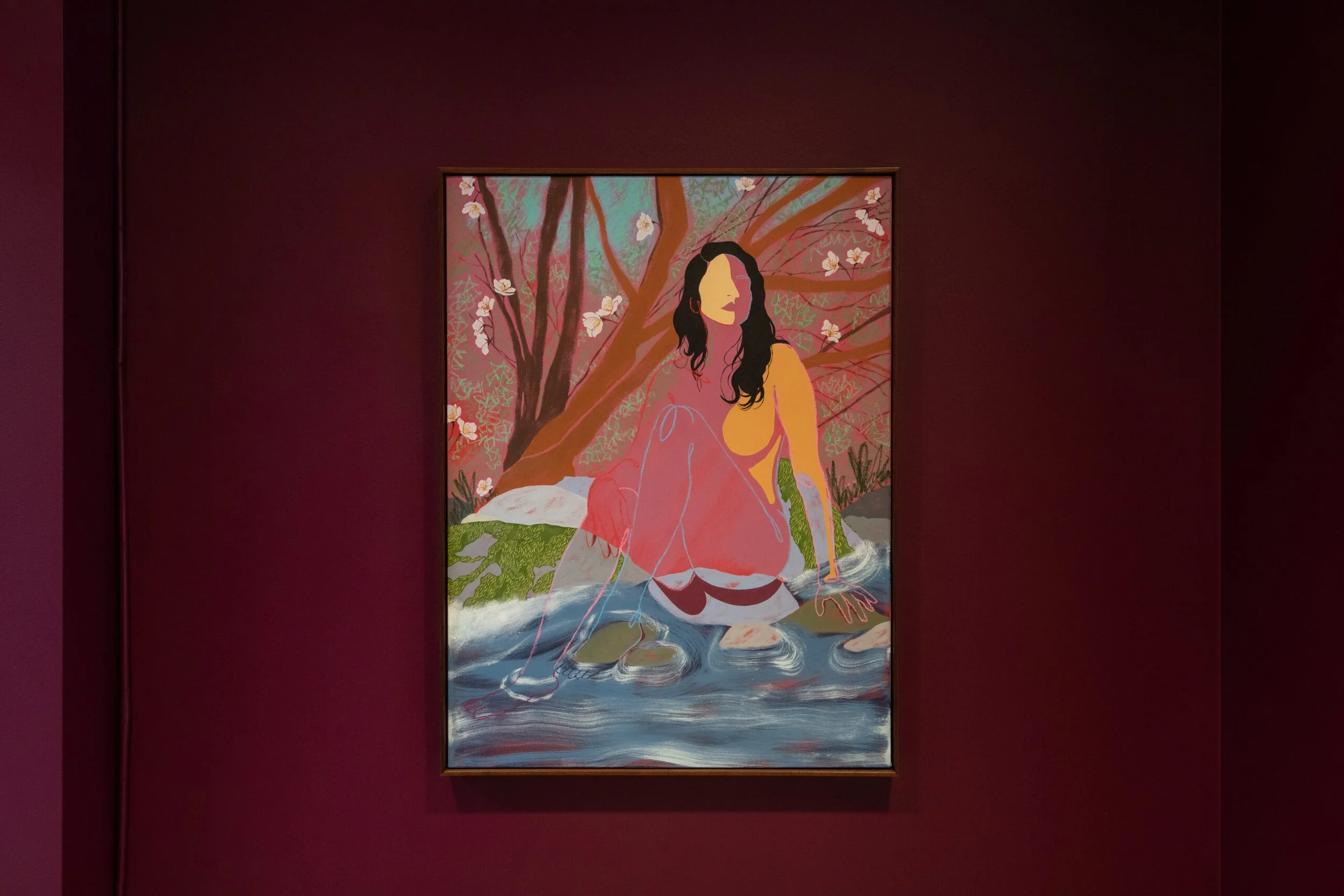
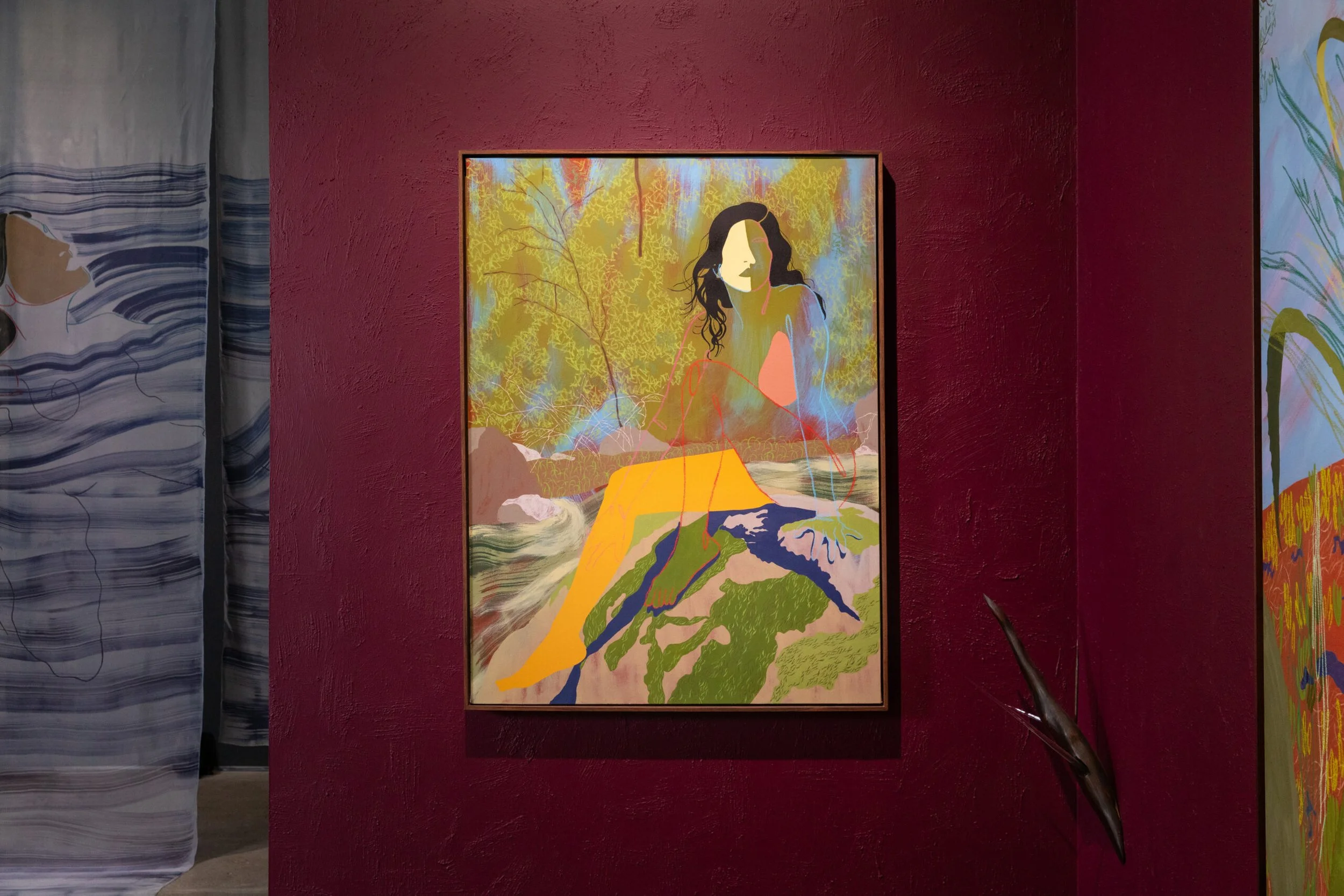
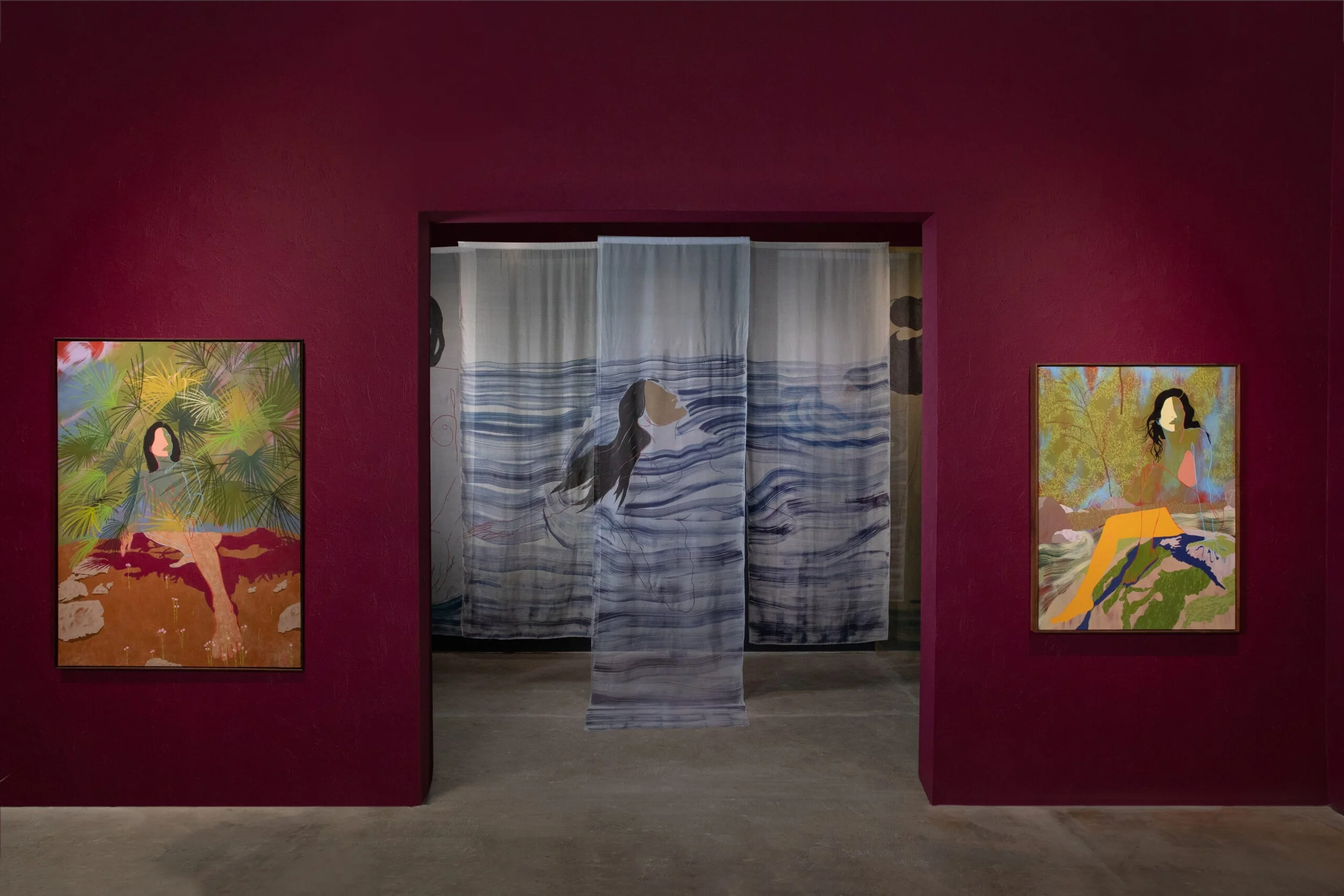
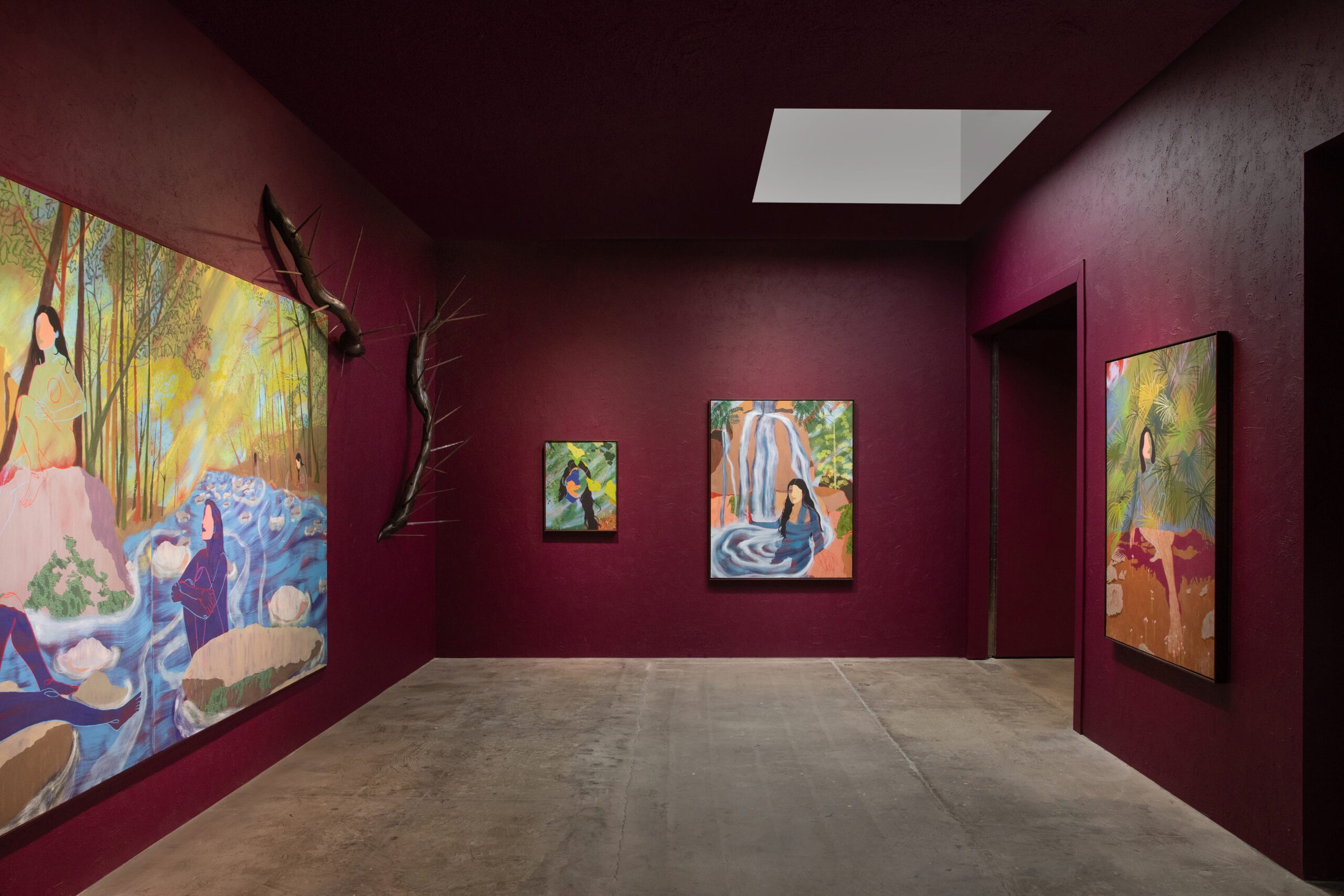
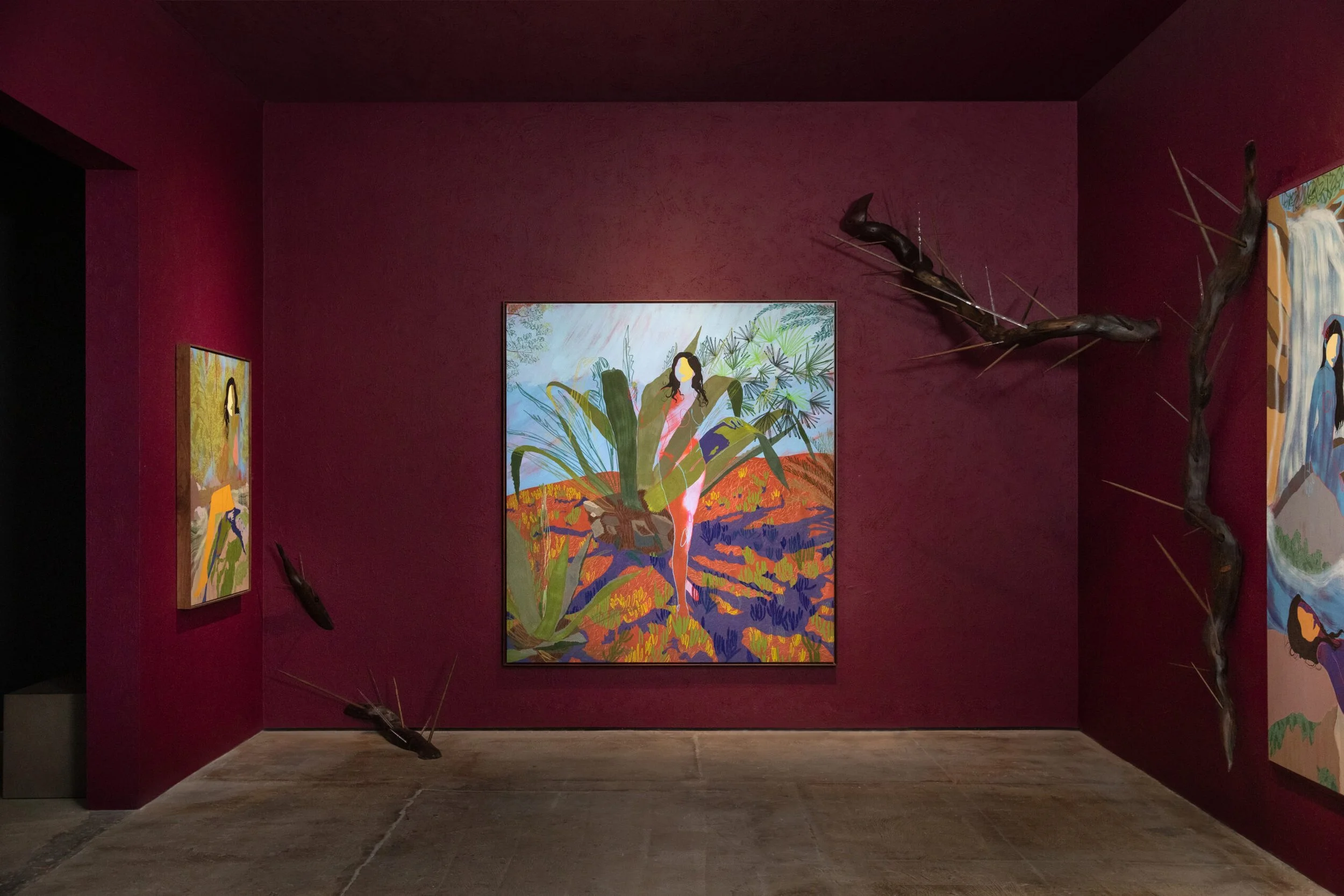
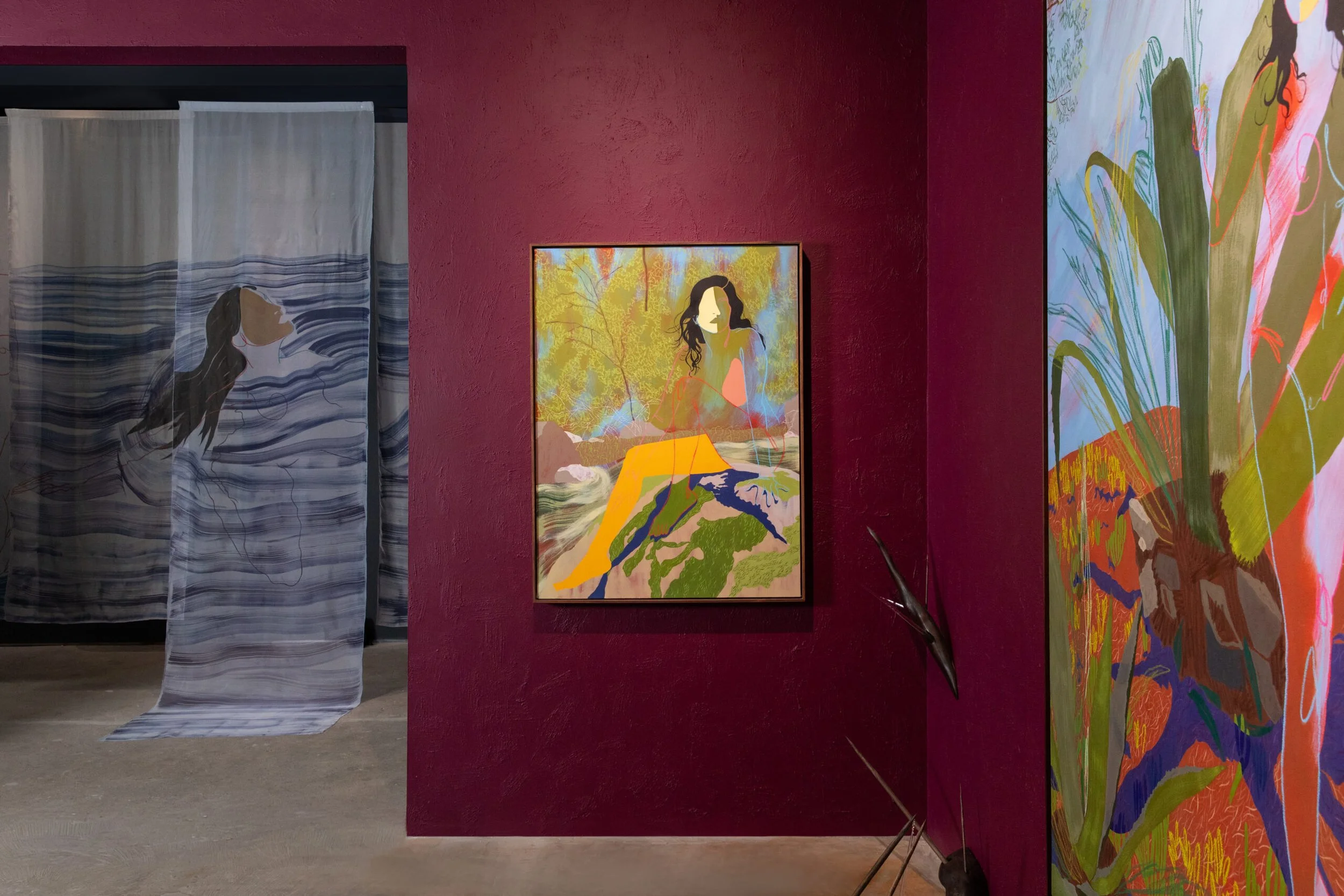
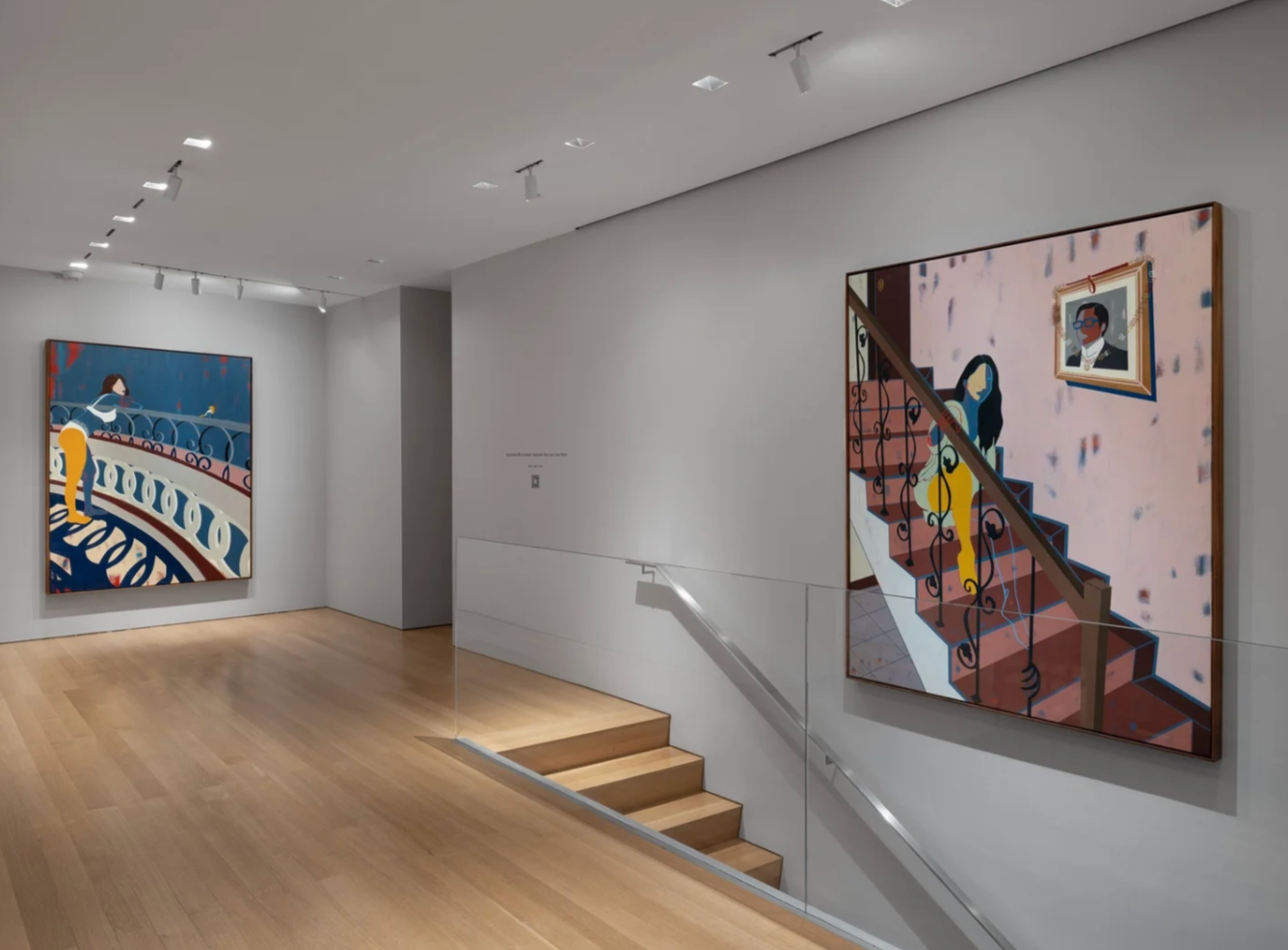
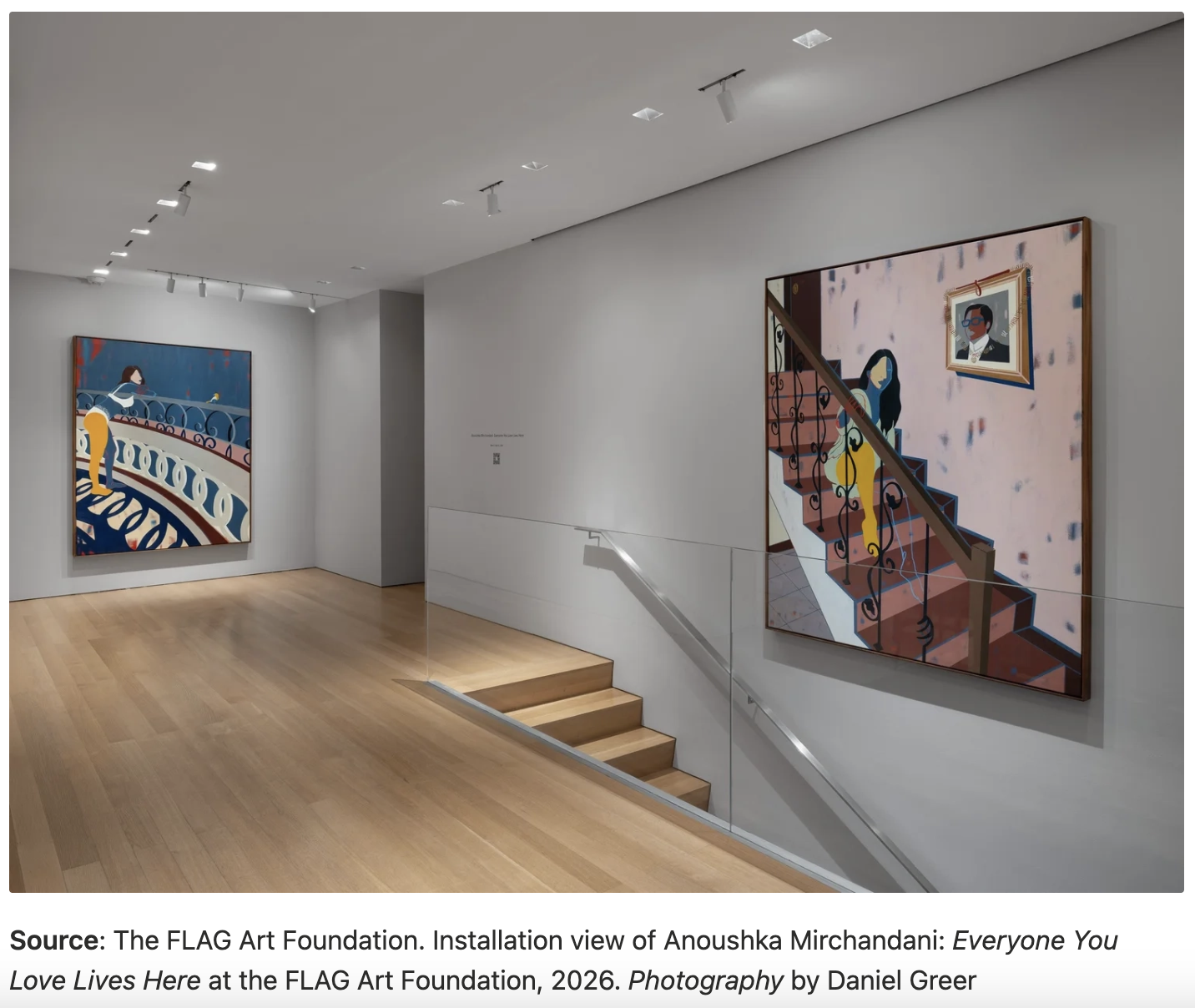
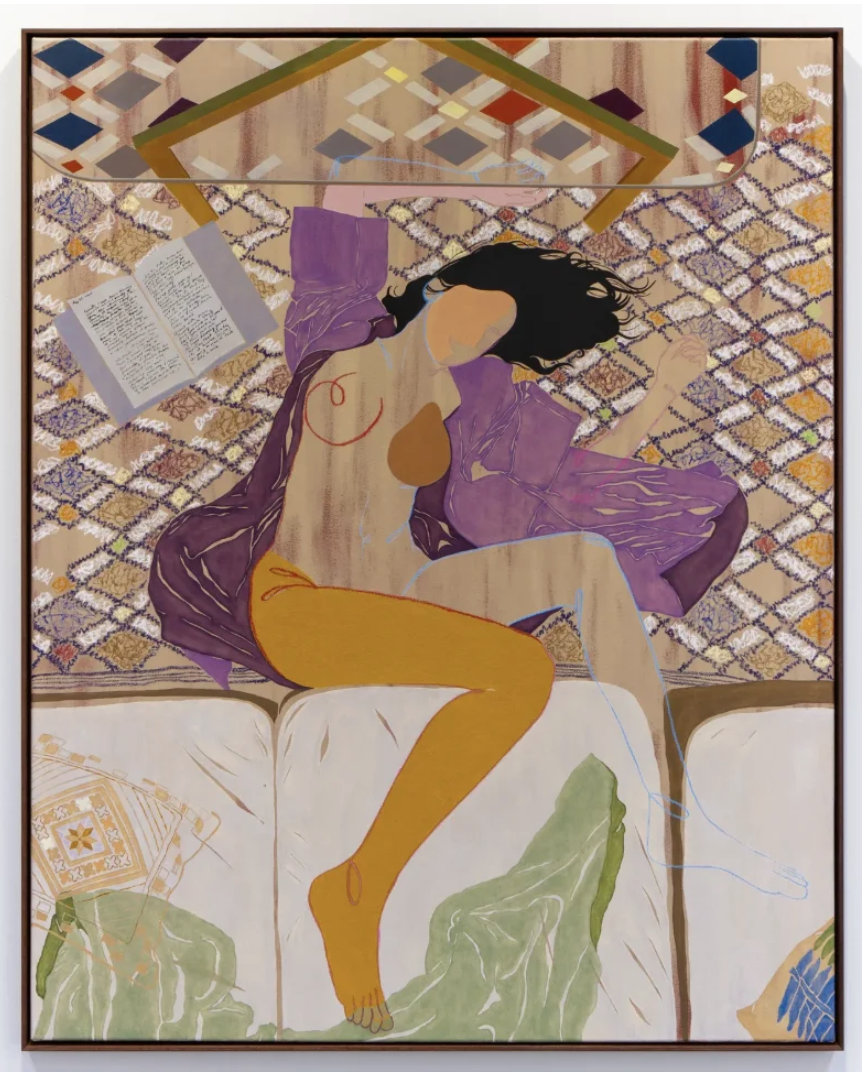
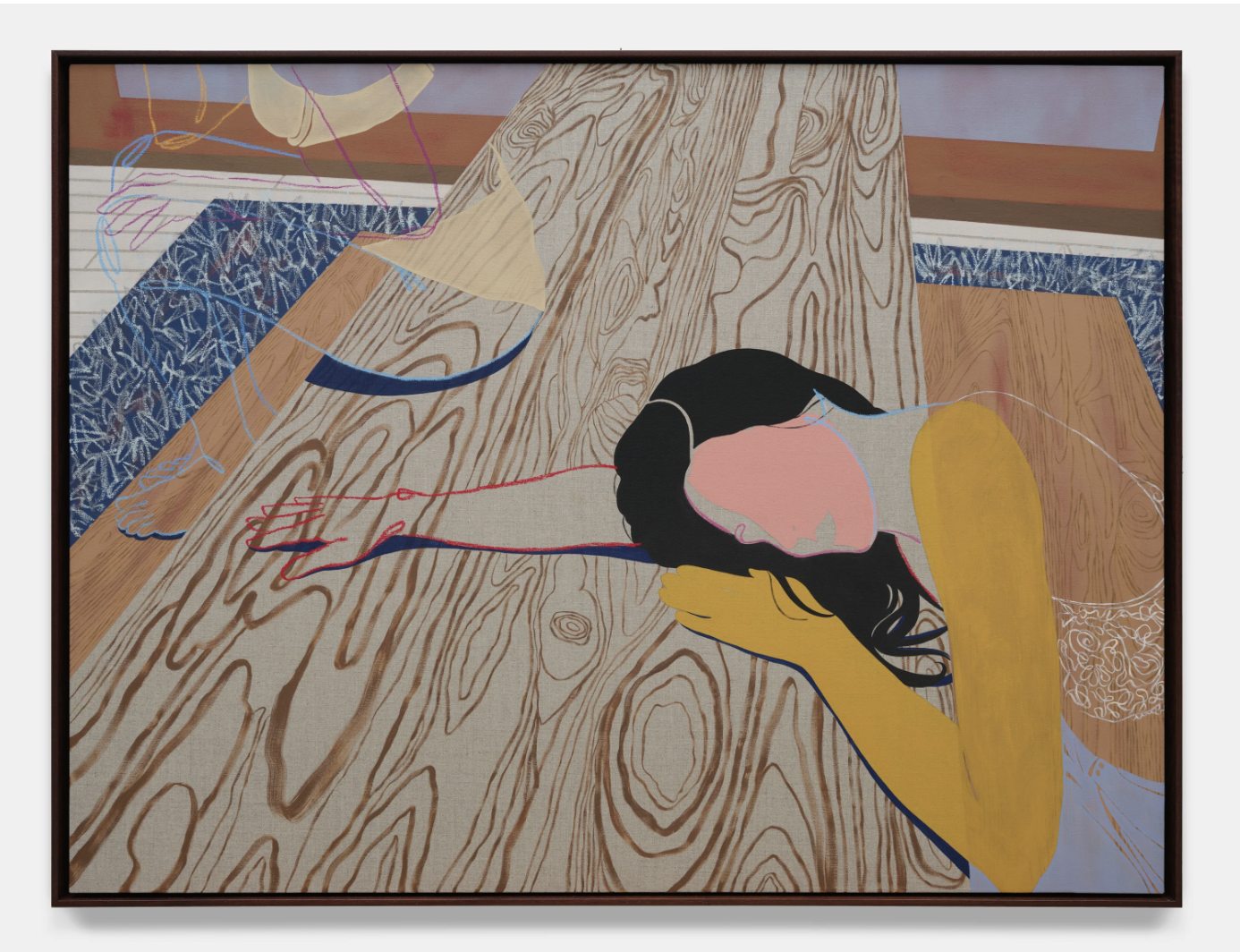
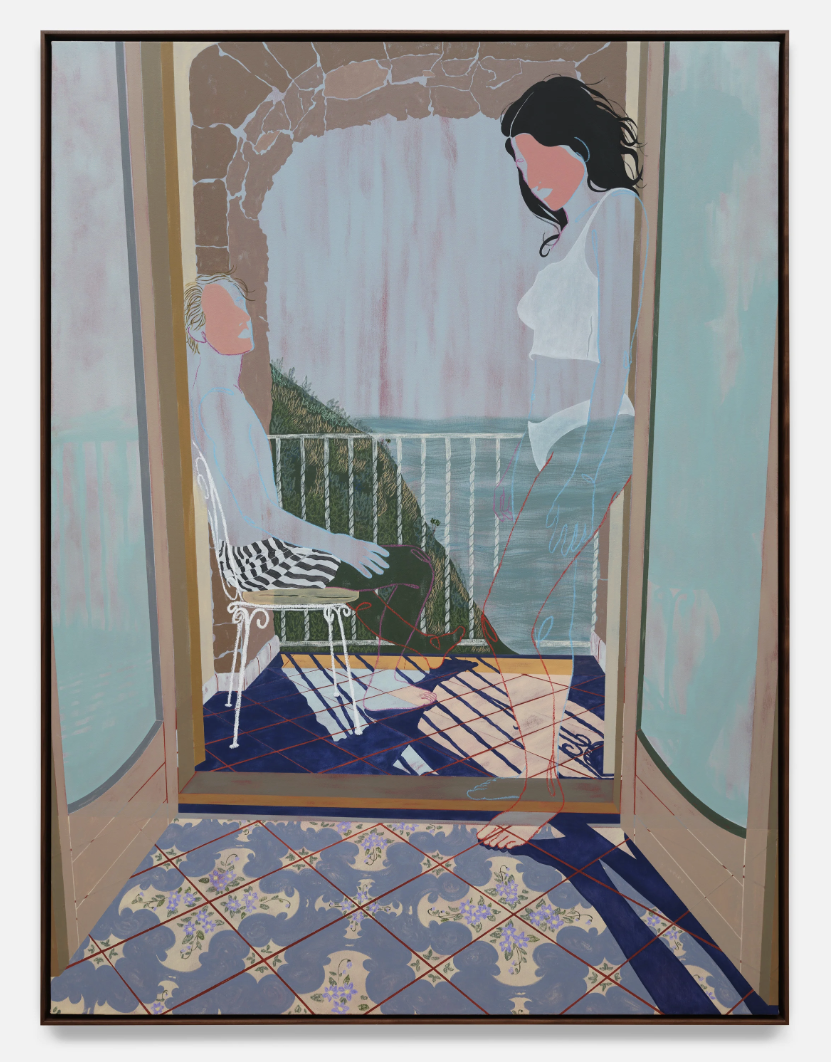
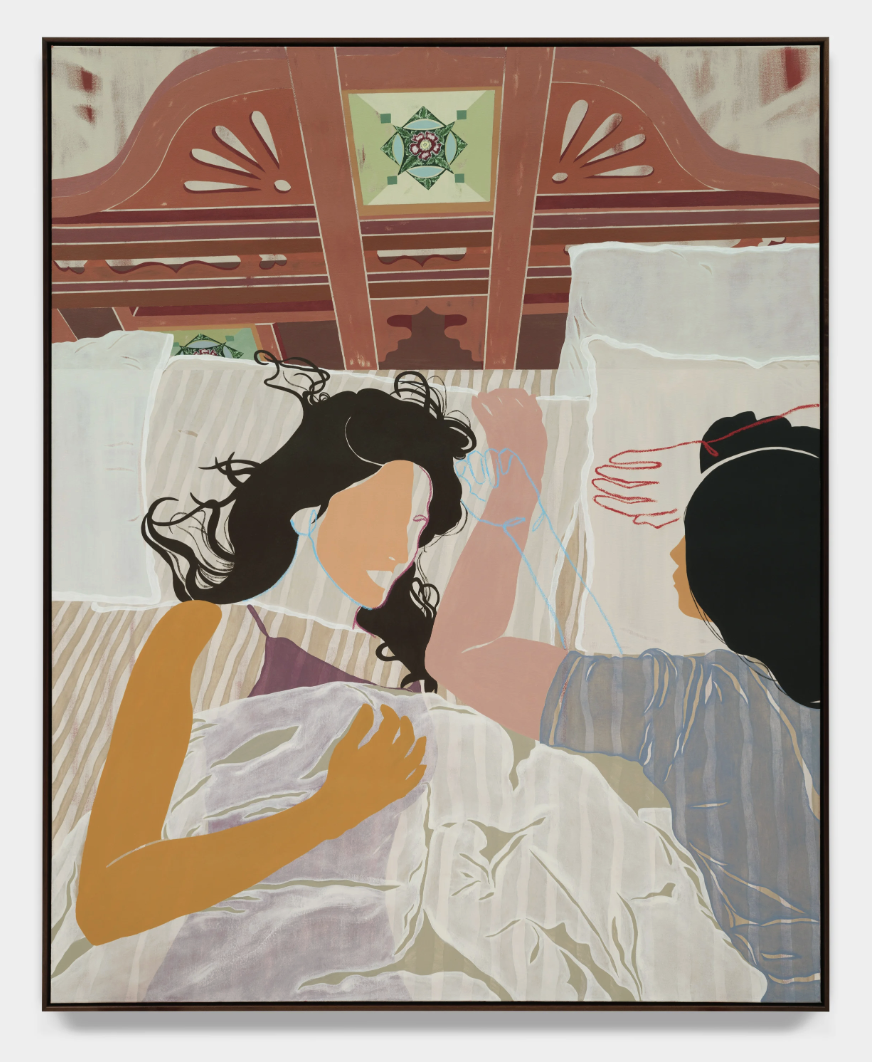
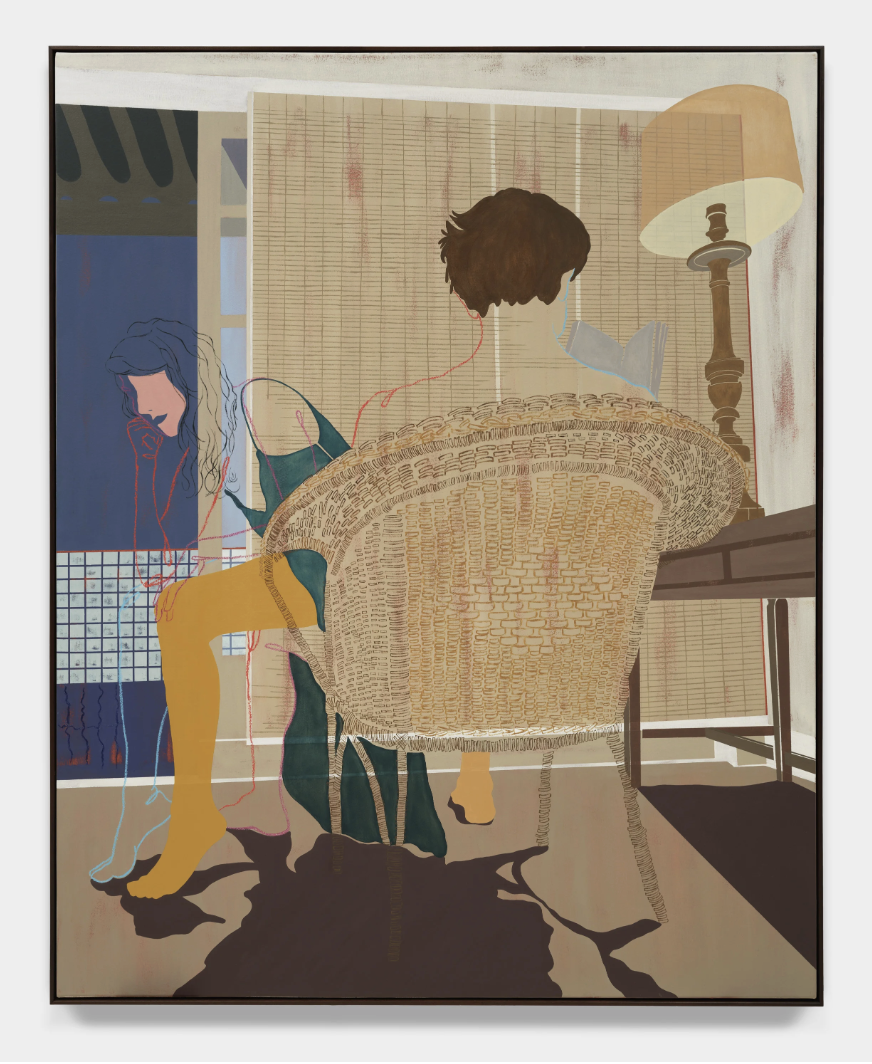
As part of the FLAG Art Foundation in New York, Harlem Frames has had the pleasure of framing and installing the works of artist Anoushka Mirchandani in her 2026 exhibit, Everyone You Love Lives Here.
In a curation of both new and recent paintings, Mirchandani’s exhibit investigated identity as an embodied experience—a malleable thing that’s continually shaped and reformed via memory, place, intimacy, ancestry, and the distinct lived experiences of the artist. Echoed across each portrait, domestic interior, and picturesque yet lush natural landscape, reside Mirchandani's ghostly figures traversing between states of contemplation and metamorphosis, a deeper imprint of the artist's own experience of navigating belonging and dissonance that exists between India and the United States.
The Exhibition
Presented at The FLAG Art Foundation from May 27 through July 31, 2026, Everyone You Love Lives Here espoused three essential, interconnected bodies of Anoushka Mirchandani's work. Her paintings invited a dialogue with works by Louise Bourgeois, Cindy Sherman, and Lisa Yuskavage, examining her personal instances of womanhood, memory, nature, and identity, situated prolifically within a broader intergenerational conversation of the female condition.
Mirchandani’s work excavates intimate scenes and richly constructed environments, undulating between the personal and the universal. Family history, domestic realms, South Asian mythology, and the natural environment are designated as sites of intrigue and inquiry, in which Mirchandani ruminates on the ways identity is inherited, crafted, and transmuted through the beguiling but educative experiences of womanhood.
Framed by Harlem Frames
For Everyone You Love Lives Here, Harlem Frames had the privilege of crafting and fitting natural walnut float frames for each of Mirchandani's paintings.
The float-frame construction introduces a subtle but impactful separation between each painting and its surrounding frame, permitting the edges of her works to remain emphatic in color and embrace, while giving each piece a defined architectural dynamism. Natural walnut was carefully selected for its warmth, depth, and understated grain-like charm, complementing the rich colors and intimate character of Mirchandani's paintings without ever competing with them, because after all, a framer’s duty is to never compete, but to accentuate the brilliance of the artwork itself.
The resulting presentation enables the paintings to feel both contained and open to audiences. The slightly narrow visual space created by the float allows each respective work the room it needs to breathe, while simultaneously allowing the walnut to provide a warm material transition between the painted surface and the surrounding gallery’s white space.
For Harlem Frames, the project reflects an approach to custom framing in which material, proportion, construction, and artwork are considered as a single presentation. It’s essential to recall that the frame isn’t fully intended to serve as an enclosure, but rather an extension of how the work is experienced in the exhibition space.
Harlem Frames is proud to have contributed to the presentation of Anoushka Mirchandani's work for Everyone You Love Lives Here at The FLAG Art Foundation.
Framed with Care, in Harlem.
Artist: Anoushka Mirchandani
Exhibition: Everyone You Love Lives Here
Institution: The FLAG Art Foundation, New York
Exhibition Dates: May 27–July 31, 2026
Framing: Natural walnut float frames by Harlem Frames
Explore the Exhibit:
https://www.flagartfoundation.org/exhibitions/anoushkamirchandani
Related Projects: Anoushka Mirchandani: My Body Was A River Once
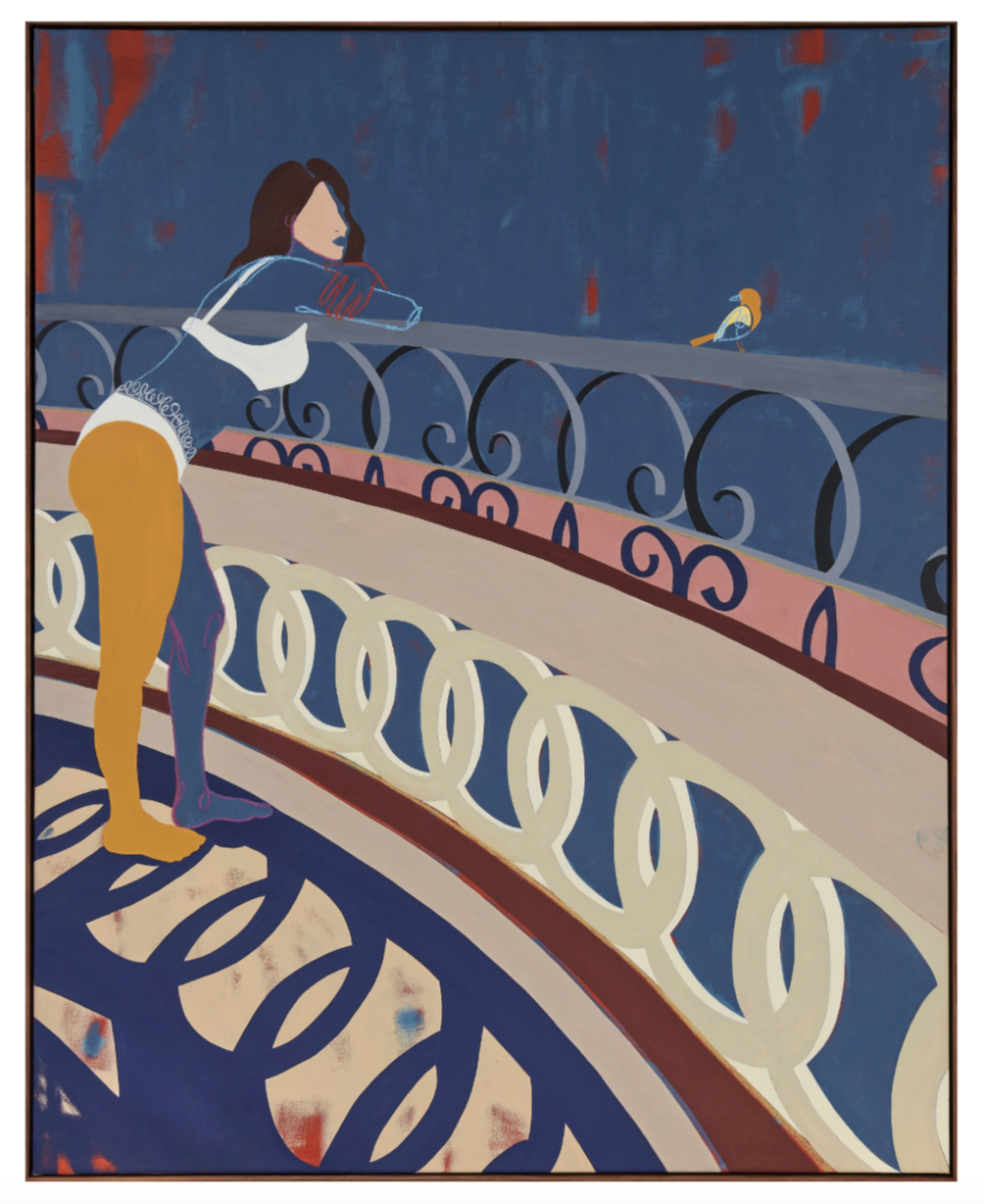
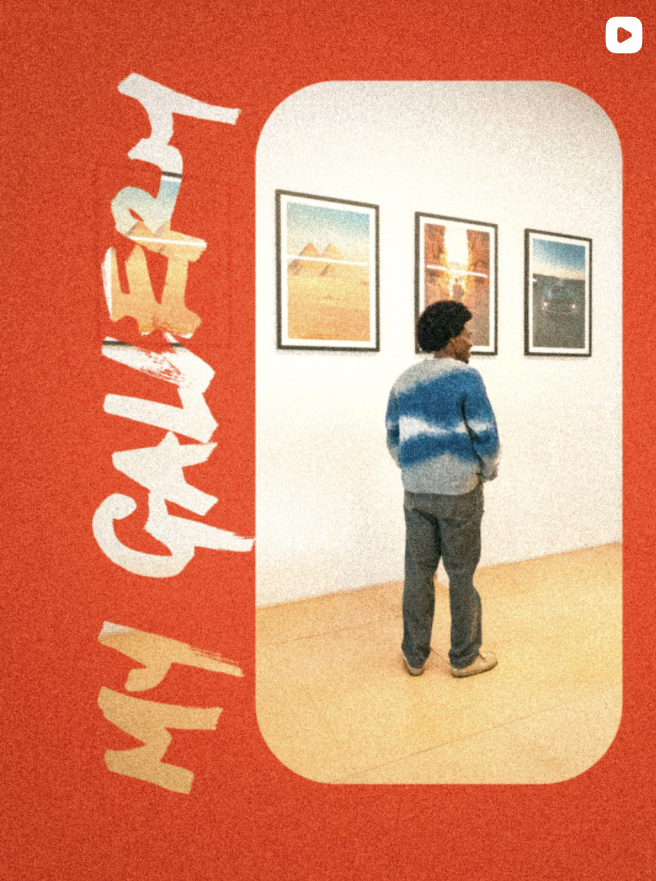
Framing Karl Shakur's Photographs
Harlem Frames is pleased to work with photographer Karl Shakur on the presentation of his second solo exhibition in New York City.
Harlem Frames is pleased to work with photographer Karl Shakur on the presentation of his second solo exhibition in New York City.
Organized independently by Karl as a one day exhibition, the show brings together a selection of photographs from his ongoing practice exploring travel, landscape, culture, and human experience.
We are proud to contribute to the presentation of this body of work and to support an independent artist in bringing his vision from photograph to exhibition.
Karl Shakur
Sunday, December 8, 2024 · 5:30–9:30 PM
132 Bowery, 2nd Floor · New York City
Framing Beyond the Flat Surface
Not everything intended for a frame begins as a flat work of art.
For dimensional work, the frame becomes more than a border. Depth, mounting, backing, glazing clearance, and structural support are considered together to create an enclosure appropriate to both the object and its intended display.
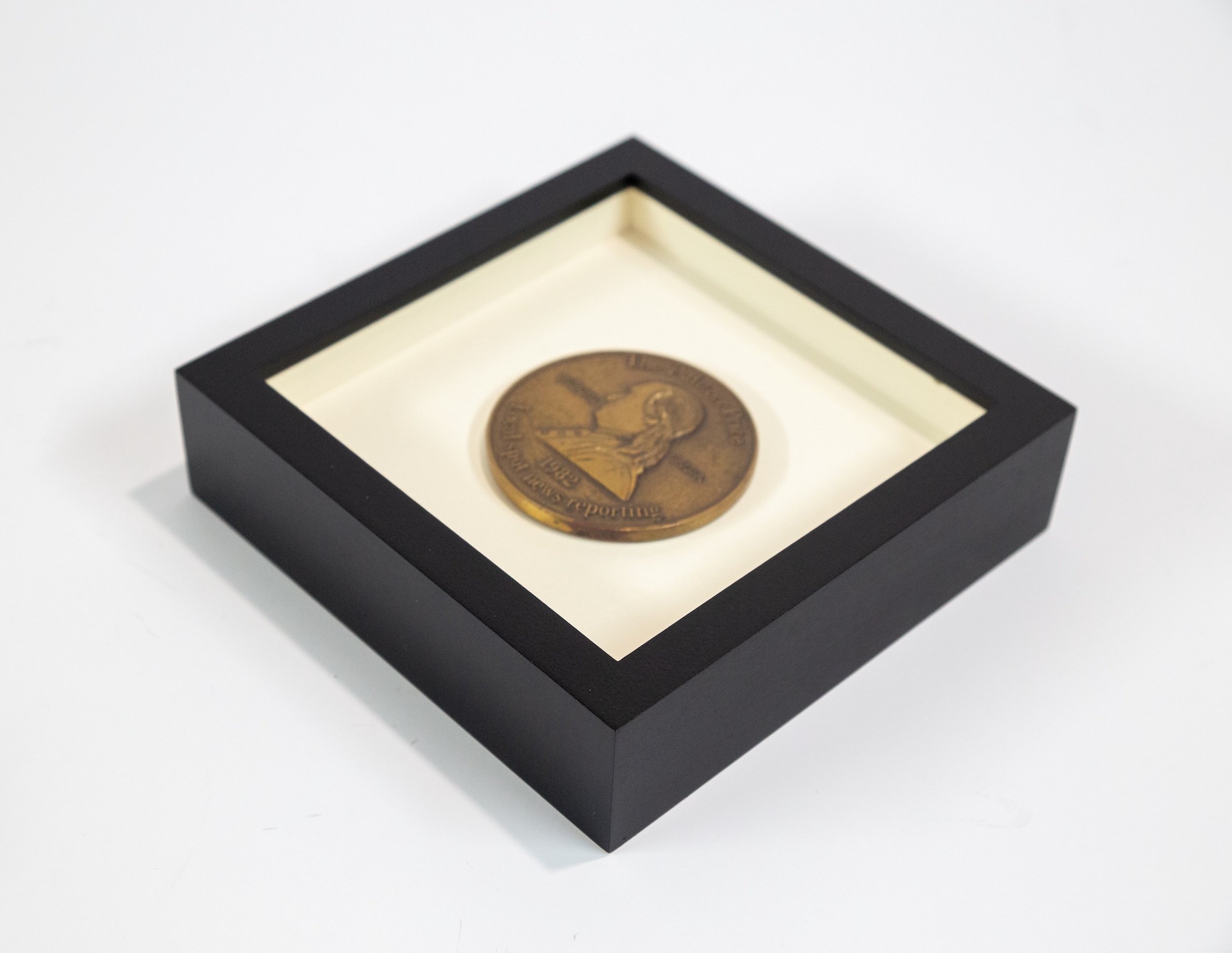
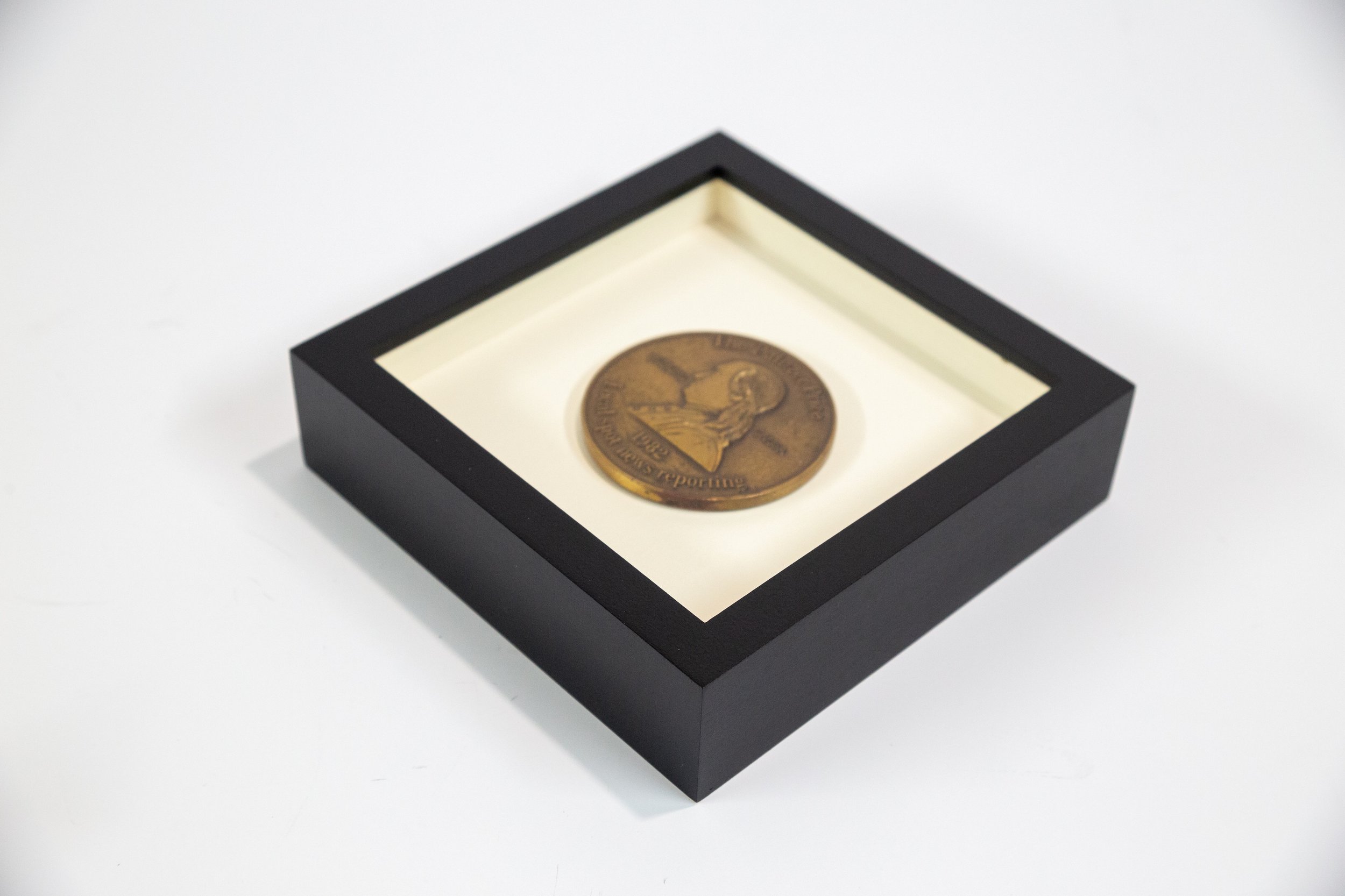
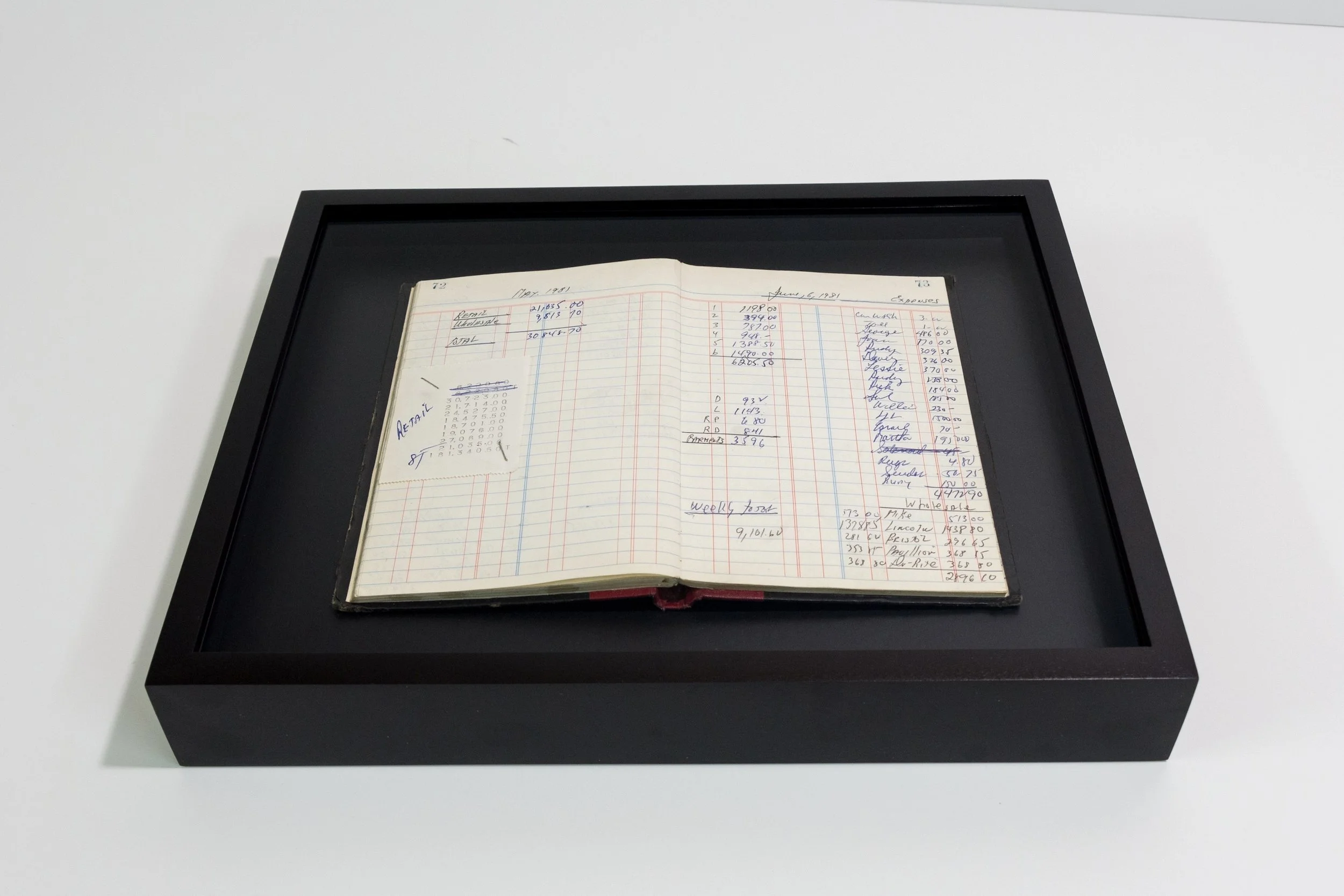
Coins, hand fans, open notebooks, ledgers, textiles, medals, keepsakes, and other dimensional objects each present different considerations for mounting, depth, support, and presentation.
The object itself determines the approach. A coin may require a discreet mount that allows both its form and surface to remain visible. An open ledger needs adequate depth and support while preserving the natural position of its pages. A hand fan presents an entirely different challenge, where its shape, weight, and relationship to the surrounding space become part of the composition.
For dimensional work, the frame becomes more than a border. Depth, mounting, backing, glazing clearance, and structural support are considered together to create an enclosure appropriate to both the object and its intended display.
At Harlem Frames, we approach these projects individually, developing the presentation around the particular characteristics of what is being framed.
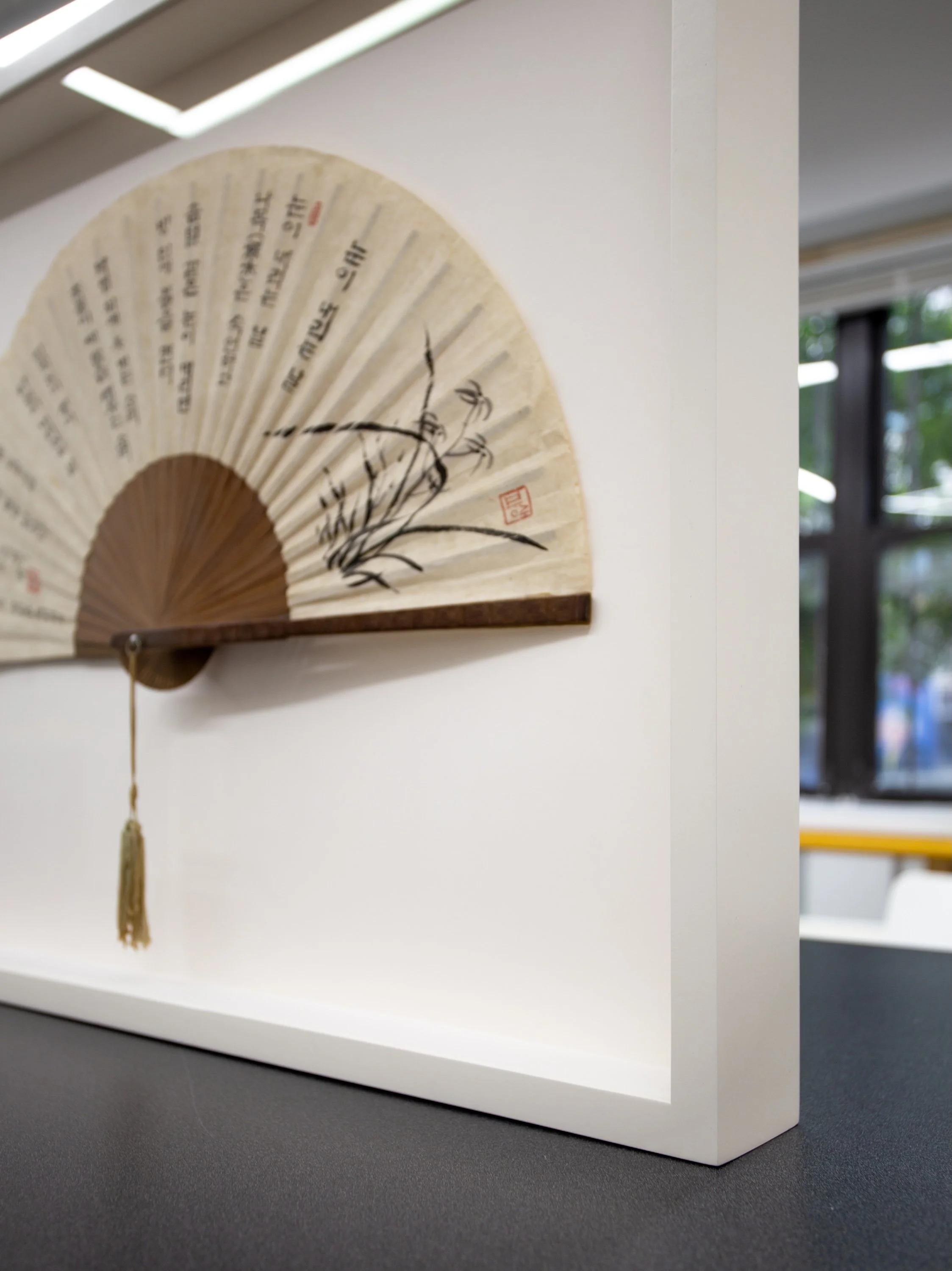

Framed Hand Fan — An open folding fan is mounted within a deep, white shadow-box frame, allowing the complete form of the object—including its hanging tassel—to remain visible. The generous space surrounding the fan emphasizes its shape while providing the depth required to accommodate the object without placing it against the glazing.

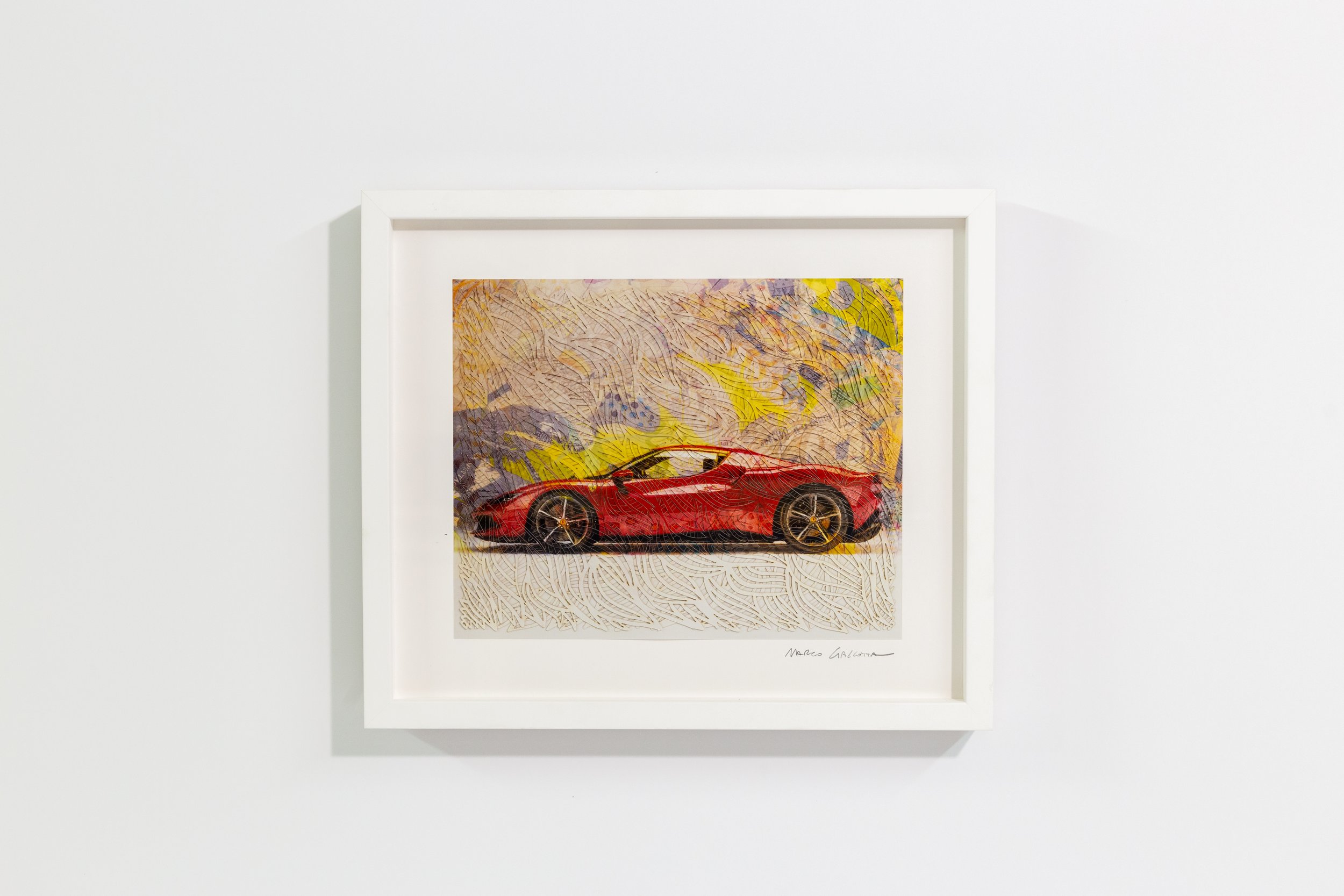
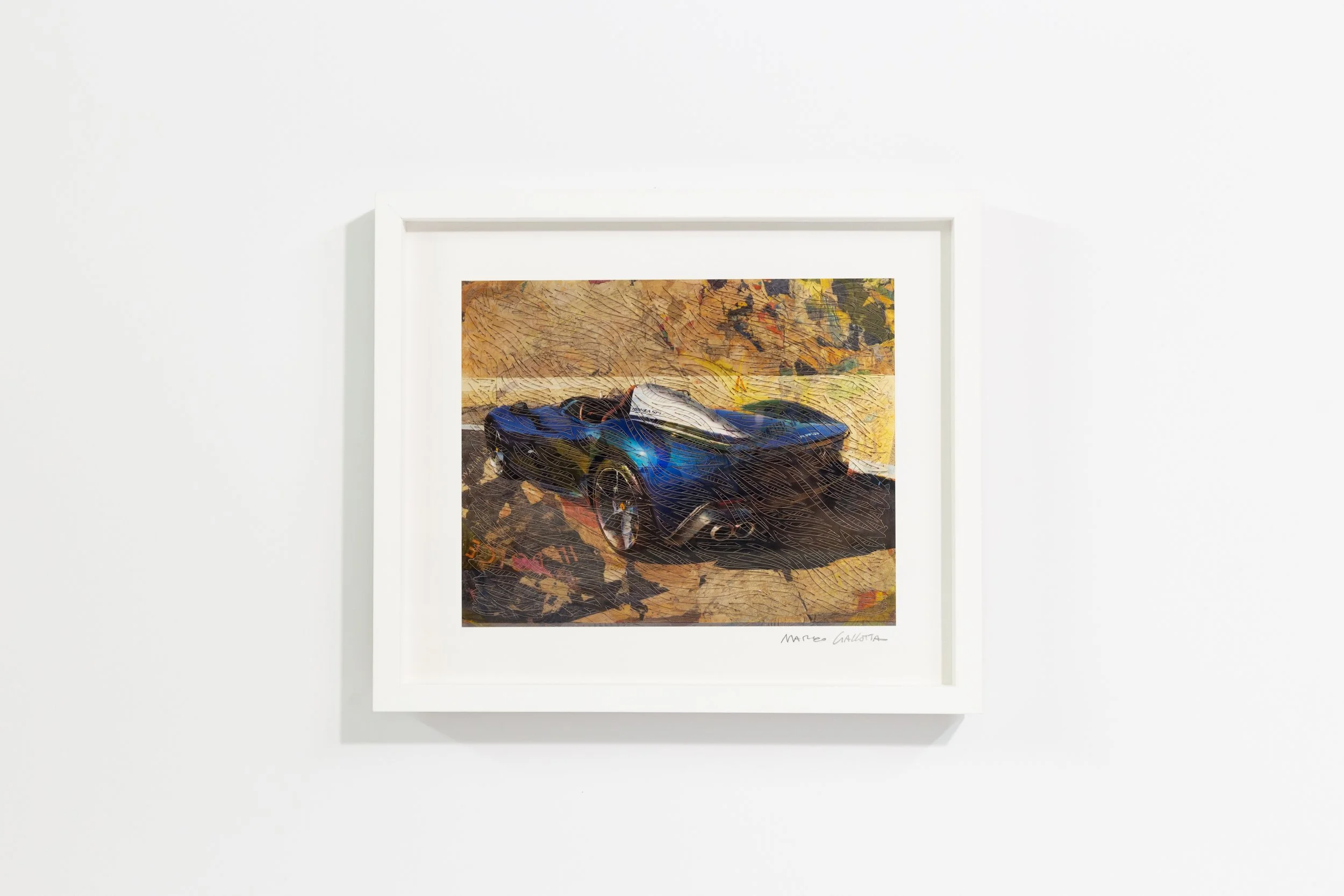
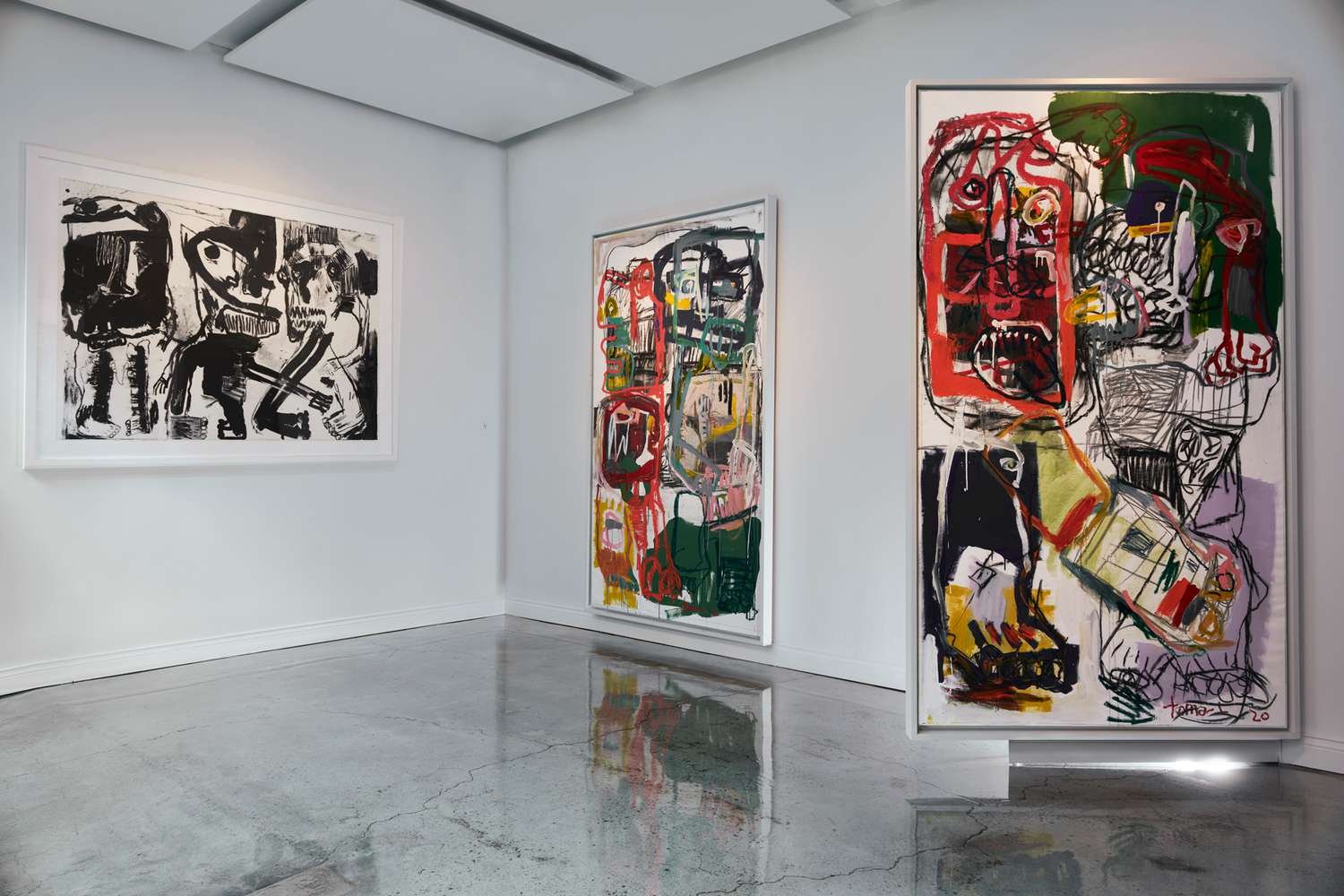
When a Canvas Float Frame Becomes a Door
A custom canvas float frame designed and fabricated to function as a door for a New York City restaurant, combining artwork, framing and architectural function.
A frame doesn't always end at the wall.
For this New York City restaurant, a canvas float frame was designed to serve two purposes: presenting the artwork while functioning as a working door within the interior.
The challenge was to preserve the visual language of a traditional float frame while accounting for movement, structure, clearance, and the demands of daily use. The result integrates artwork, framing, and architecture into a single functional element.