Wayne Alexander: Color, Geometry & Custom Framing
Artist Collaboration · Harlem Frames · New York
Some artists leave more of a lasting impact on the way we interact and forge connections in the art world; Wayne Alexander is one of those indelible artists. Harlem Frames has maintained the distinct pleasure of having framed Alexander's work, with works chronicling a continually evolving series of paintings and graphic prints. His works present custom presentations designed around extraordinary color and geometry, while introducing an unforgettable visual energy that has come to define his intricate work.
Alexander’s compositions are immediately recognizable for their saturated palettes and intricate arrangements of geometric forms. You’ll observe recurrent shapes of arcs, squares, intersecting lines, repeating patterns, and fields of complementary color, all cultivating a sense of movement and depth across his canvases. Alexander himself describes these forms as symbolic expressions of the artist’s poignancy, inner strength, and internal transformation, with his Buddhist practice informing much of his spiritual approach to the work ethos.
For Harlem Frames, framing for Alexander has presented an especially interesting challenge: how do you frame artwork that already possesses such a strong visual language?
Our answer has rarely been to retreat from the color, but to play.
The Artist
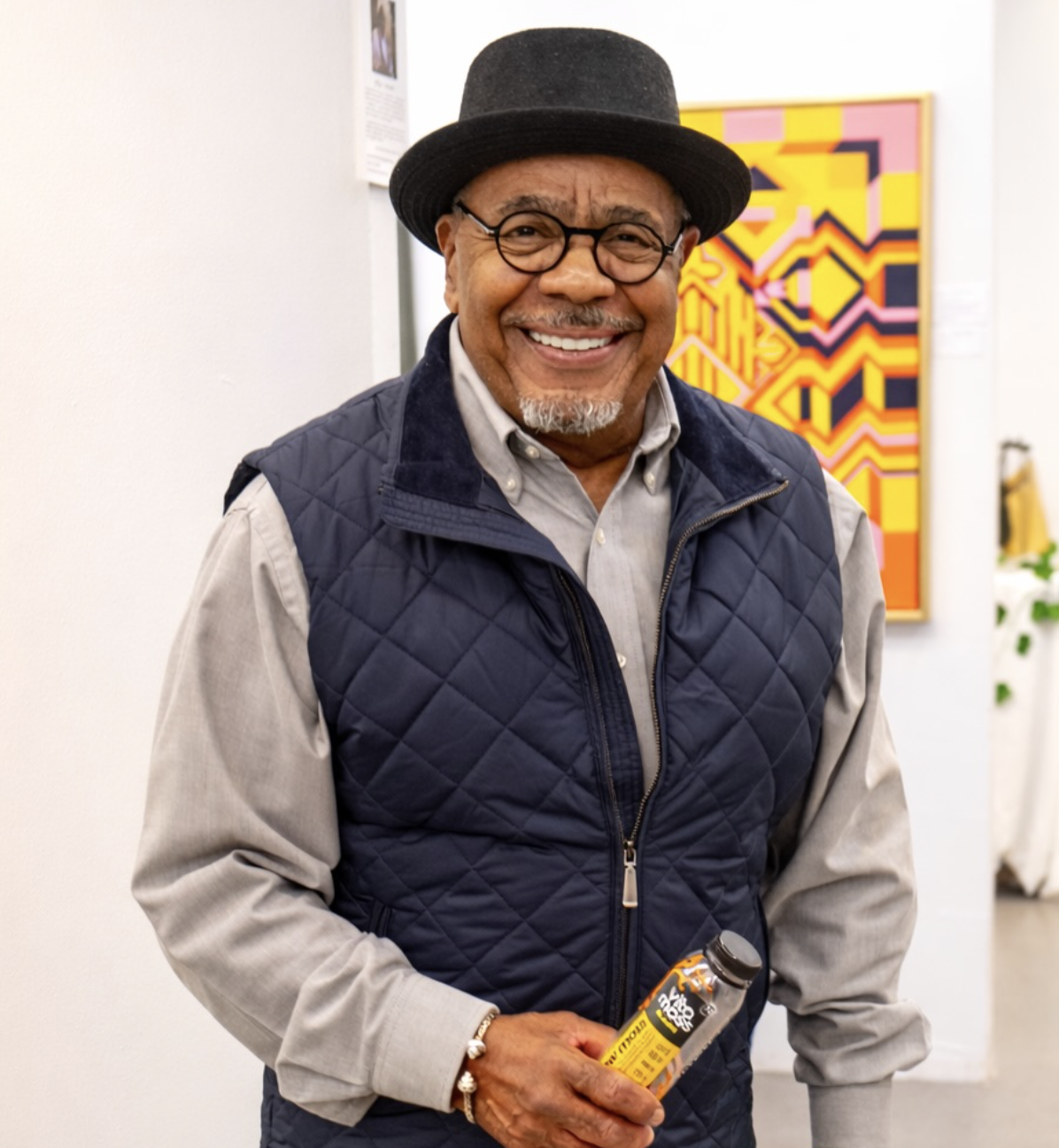
Wayne Alexander;
Photographed at Harlem Fine Arts Show 2026.
Wayne Alexander is deeply reverent; his practice is equally personal as it is a generational tradition. As the son of a professional painter who worked when circumstances permitted, Alexander recalls drawing from an early age. The artist later studied art in Philadelphia and achieved his BA in Education at the University of Massachusetts just before pursuing careers in communications and technology. Some of his primary artistic influences include Gordon Parks, Charles White, Henry Ossawa Tanner, Elizabeth Catlett, and Romare Bearden.
After a sustained period focused almost exclusively on photography, Alexander returned seriously to painting during the pandemic in 2020. The resulting body of work became closely connected to his experiences of love, loss, health, resilience, and spiritual transformation. Works including To the Victory Victorious, Will You Marry Me, Robotic Surgery, Diamond in the Rough, and Jubilant Happiness Five emerged from this turbulent period of emotional confluence.
While Alexander’s wider practice primarily includes photography, Harlem Frames’ collaboration with the artist has remained centered specifically on his royally vibrant paintings and graphic works.
Framed with Care,
In Harlem.
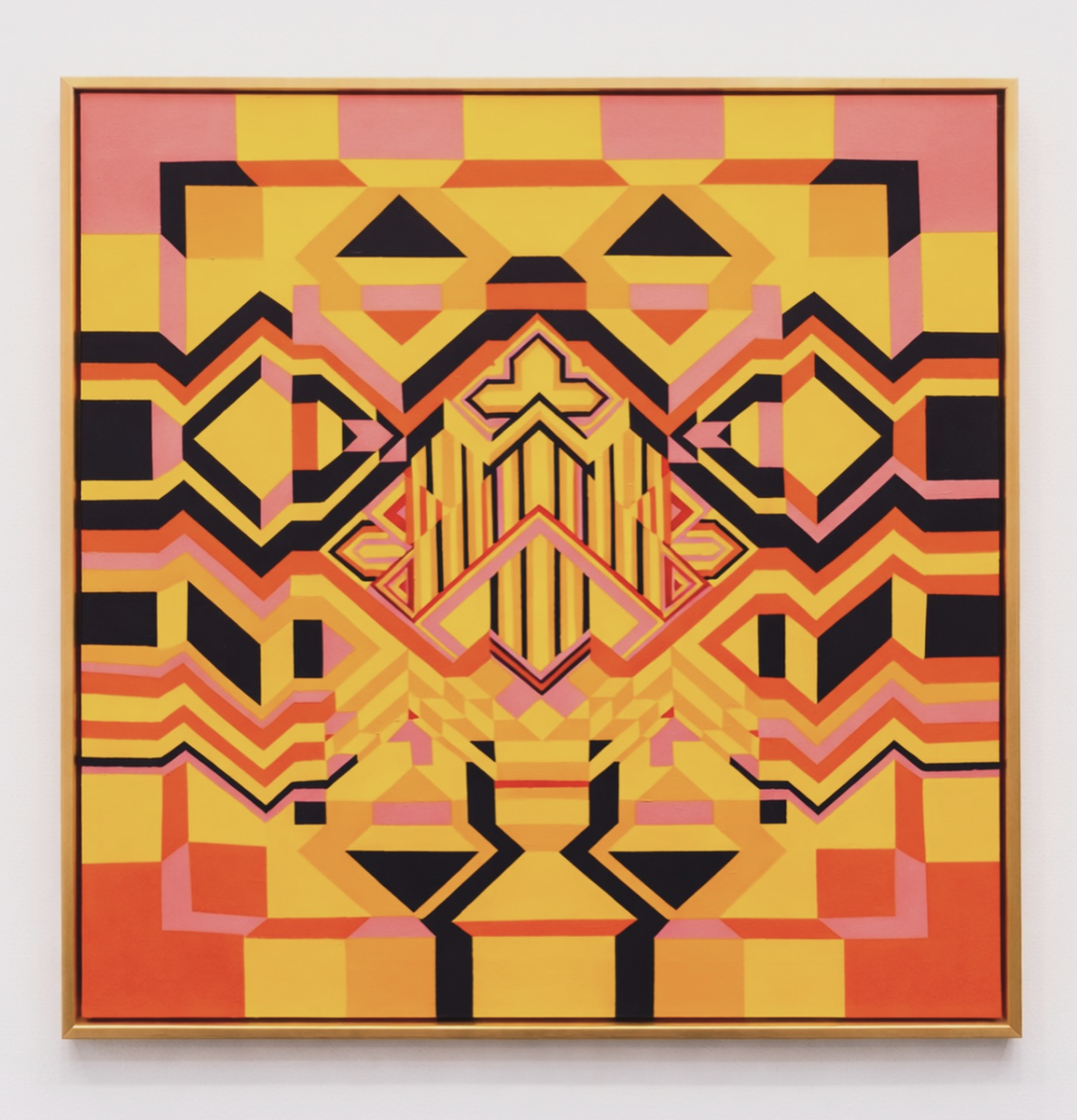
Alexander’s work incentivizes Harlem Frames to approach framing as an active and equally fun part of the presentation. Rather than surrounding every piece with a conventional neutral frame, we collectively have developed presentations that respond directly to the rhythm and palette of individual works.
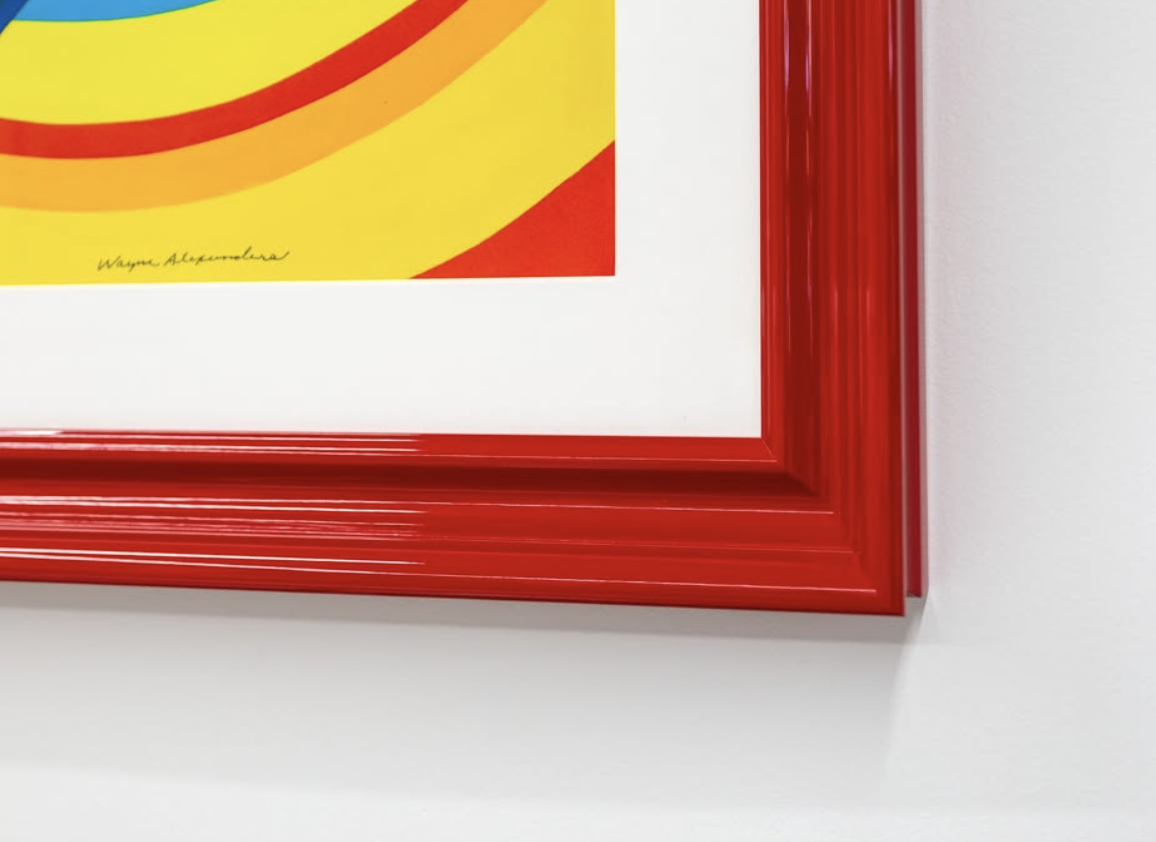
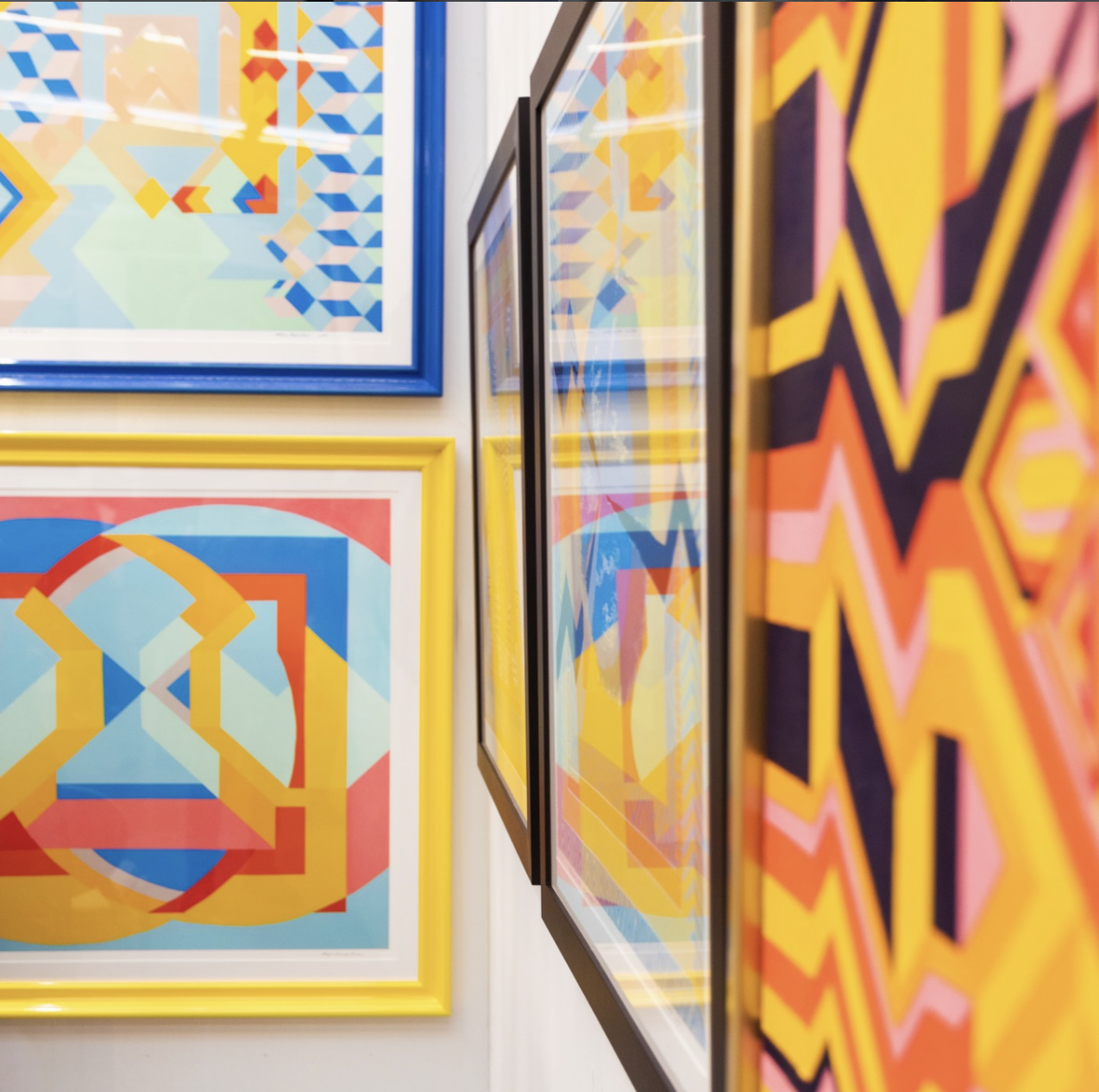
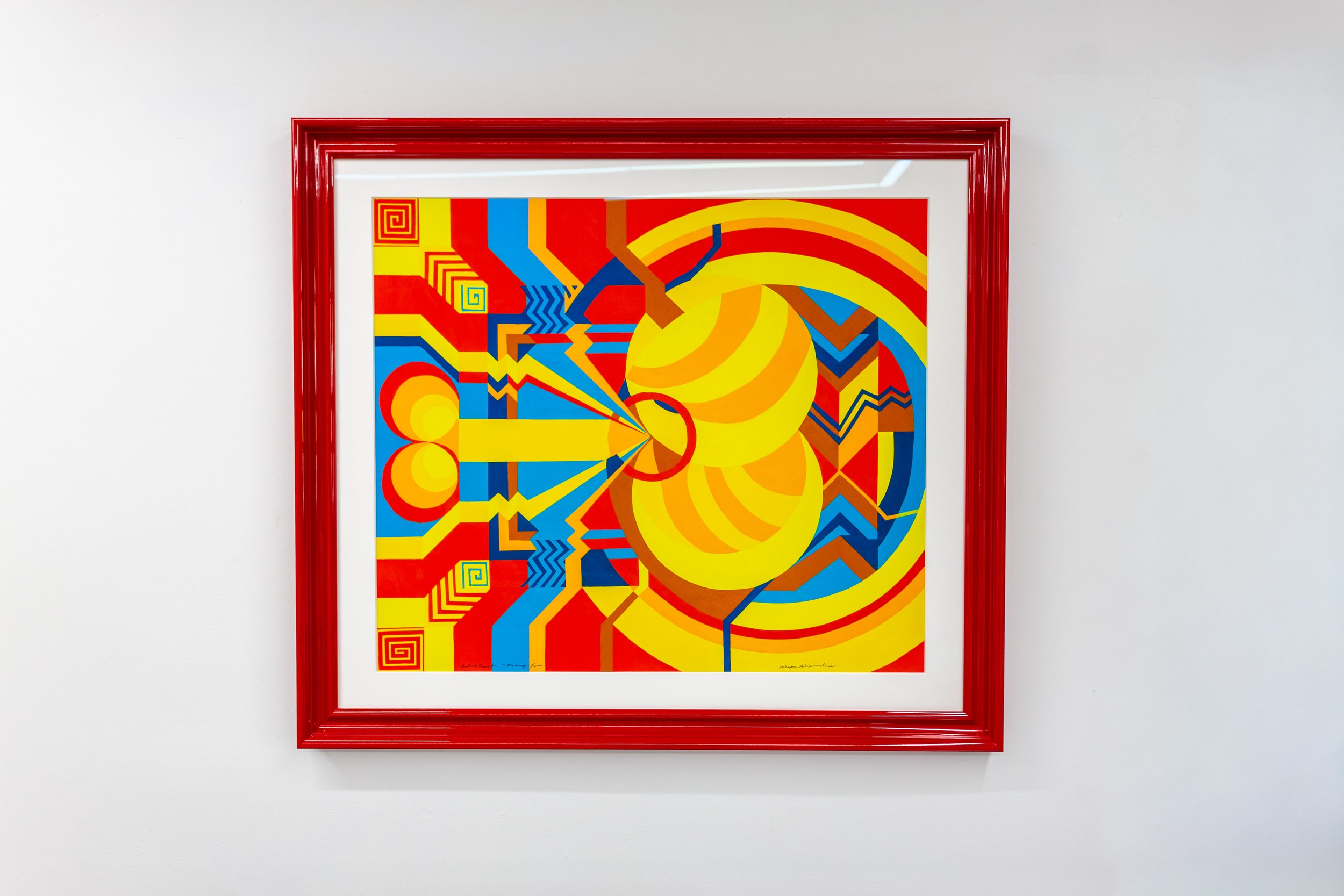
For several pieces, that has meant vibrantly finished wood mouldings in colors such as red, yellow, and blue. Though these are visually astounding colors, the frames do little to compete with Alexander’s compositions. Instead, these saturated frames pick up colors already present within the artwork and extend their visual energy beyond the edge of the image.
A brilliant yellow moulding can become an appendage of a yellow geometric passage within the work. A saturated red frame can reinforce the intensity of reds and oranges within another composition. Blue can establish a contrasting boundary around warmer colors.
The frame becomes part of the conversation, not the conversation.
Plexi Box Presentations
Other works have called for a dramatic departure from wood frames.
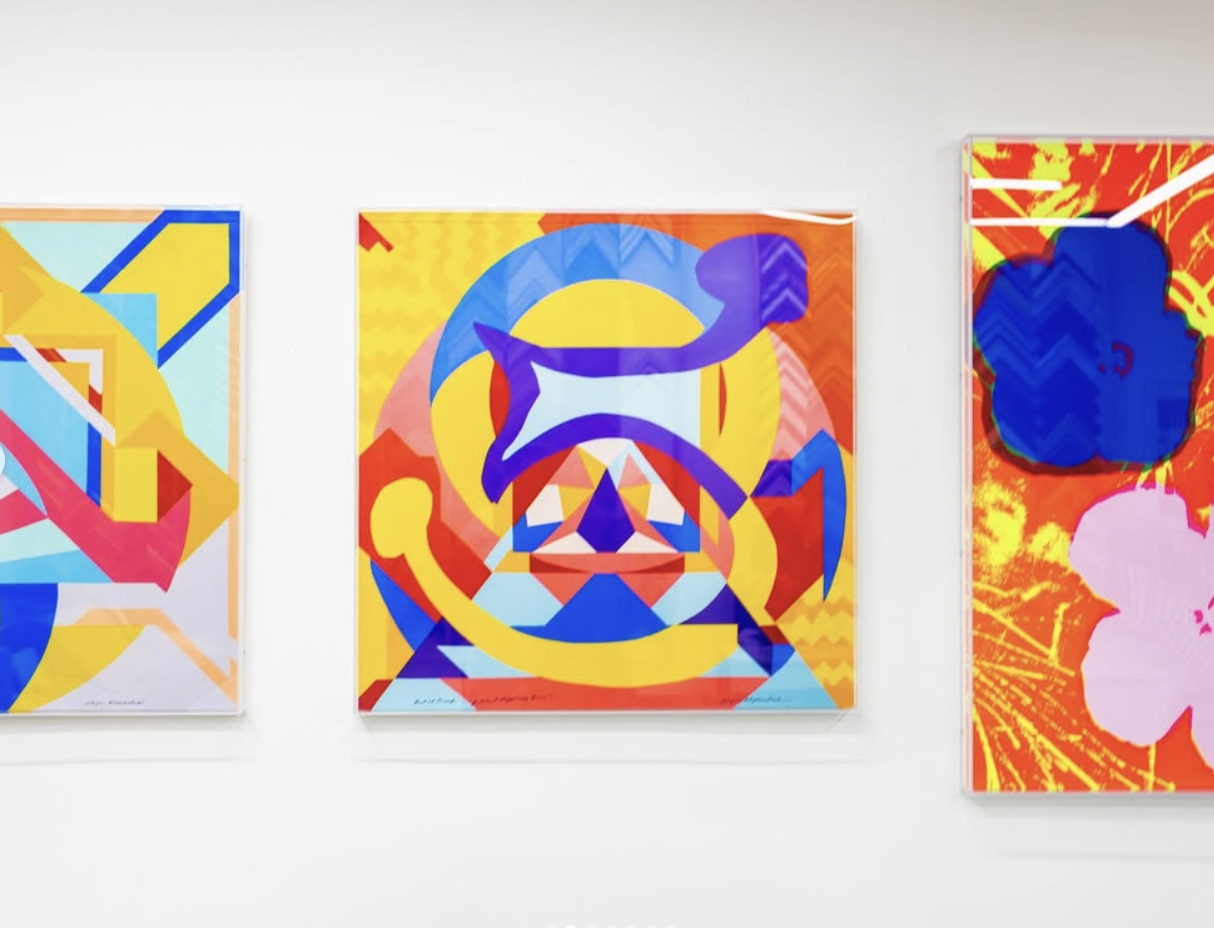
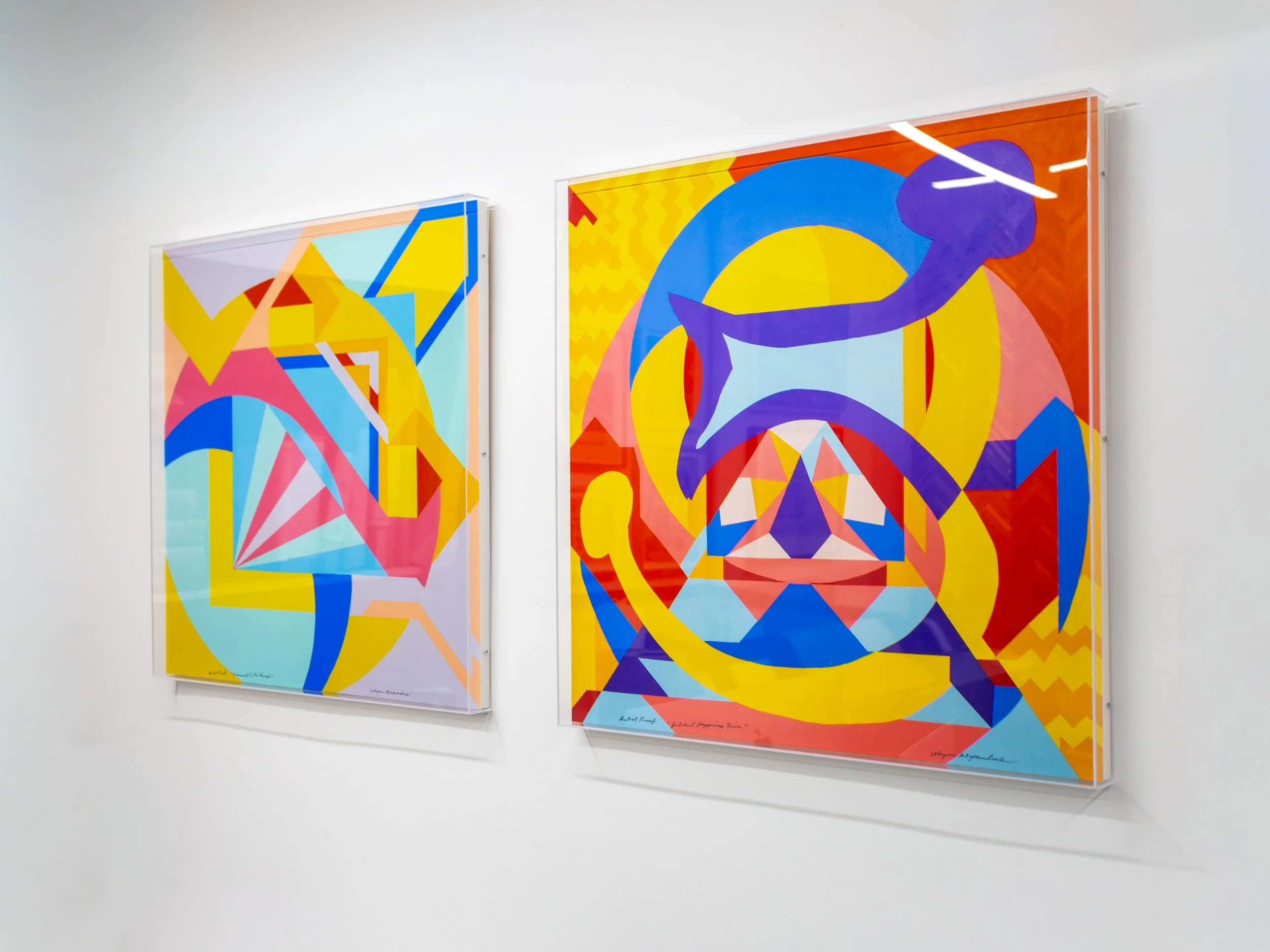
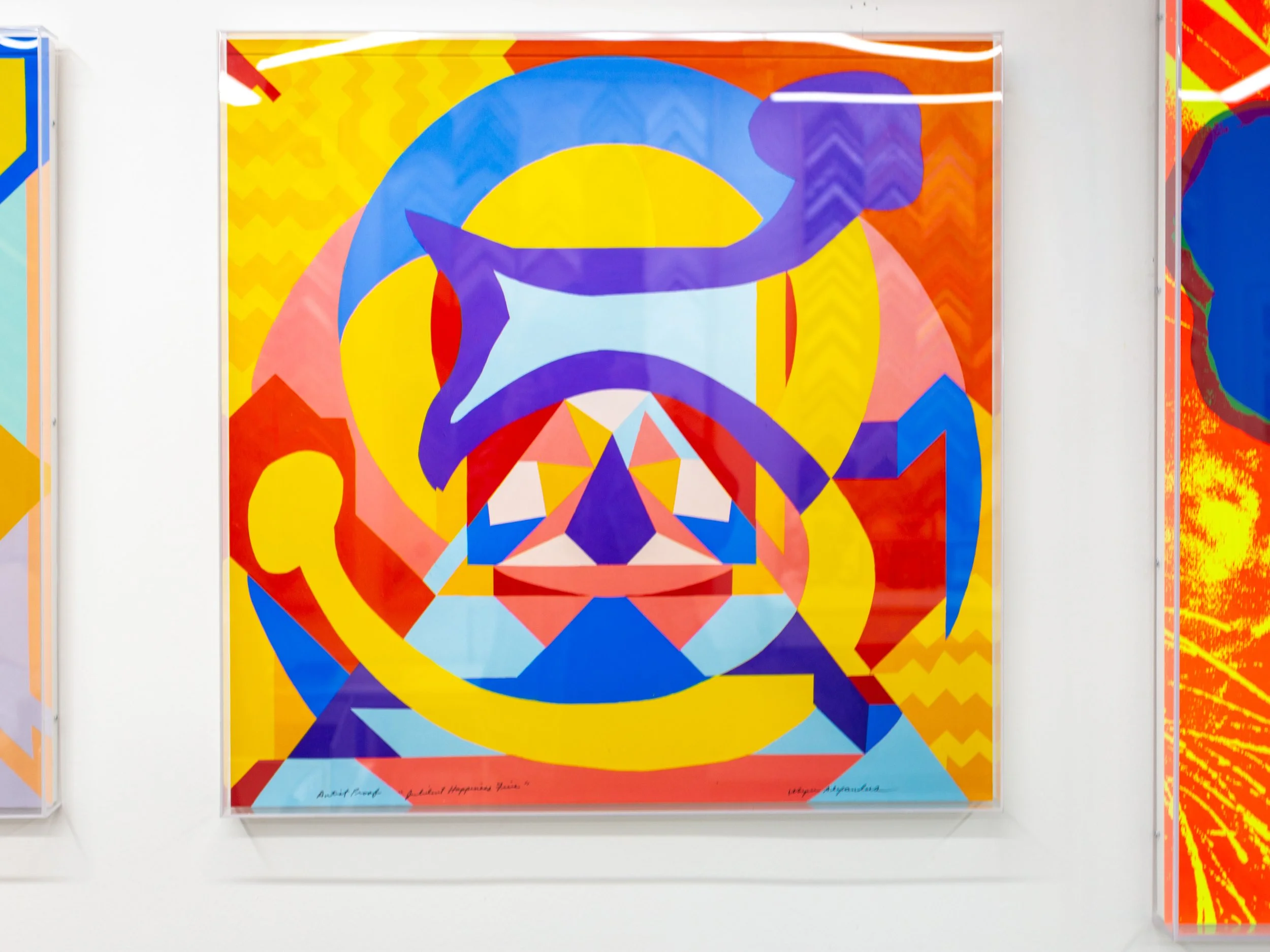
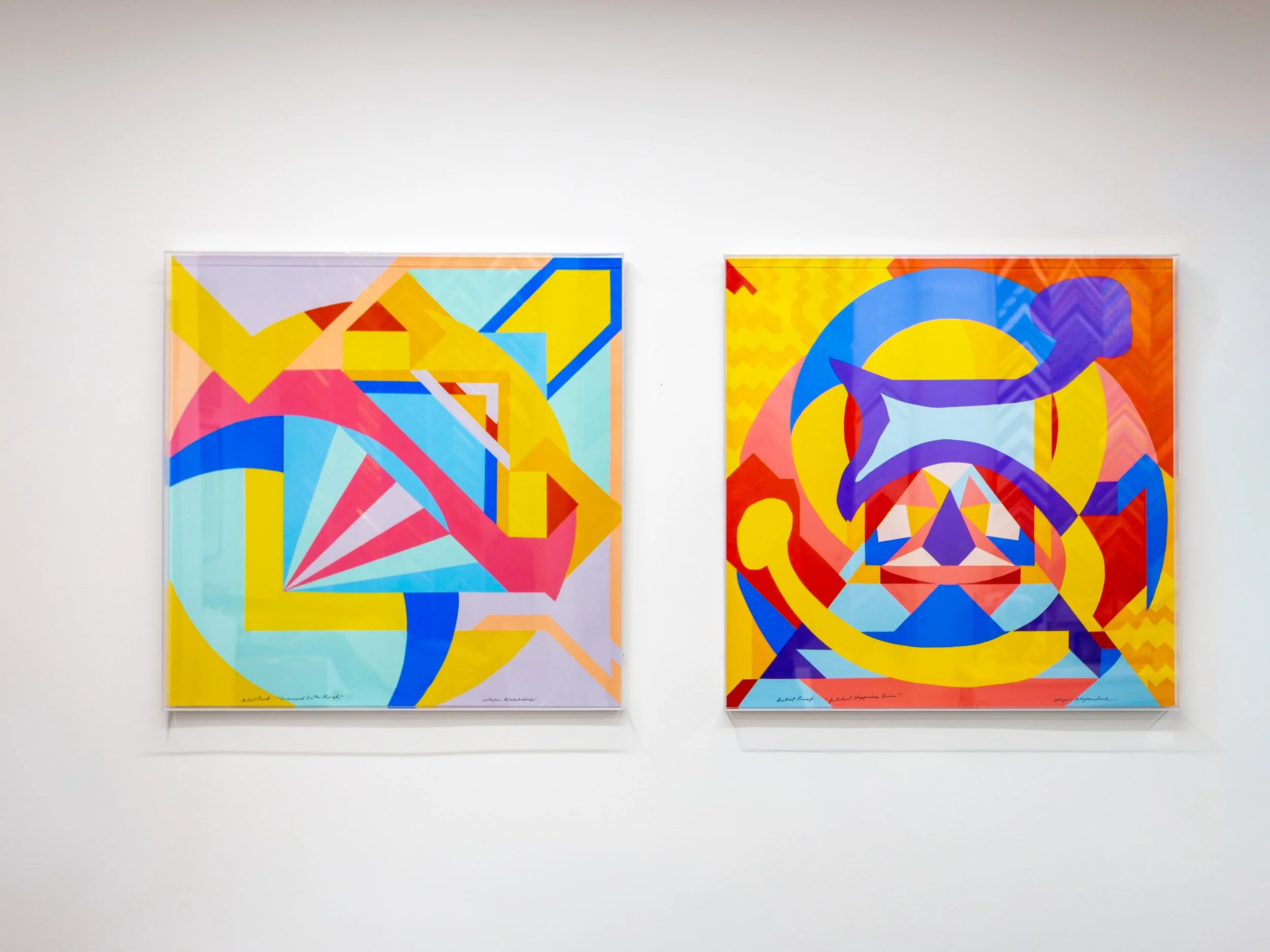
Harlem Frames has fitted clear plexi box presentations for more than several of Alexander’s paintings and graphic works, enabling the color and geometry to remain visually dominant while eliciting the piece a clean, contemporary architectural edge. The transparency of the plexi is particularly effective with Alexander’s work. Averse to introducing another opaque visual boundary, the transparent enclosure enables the artwork to be audaciously present, almost suspended against the wall.
Viewed from the front, attention remains on the composition. From an angle, the depth and polished edges of the plexi become visible, introducing another dimensional element to a work that already plays with the perception of depth, layering, and geometric space. This relationship feels especially appropriate given Alexander’s own description of his compositions as sometimes moving beyond a two-dimensional visual experience.
Framing Color With Color
One of the recurring ideas throughout our work with Alexander has been the willingness to embrace color rather than neutralize it. Colorful artwork does not automatically require a black, white, or natural-wood frame.
In Alexander’s work, color serves as a structural basis. Bright yellows, reds, blues, pinks, oranges, and purples establish movement and hierarchy just as much as the geometric forms themselves. Our framing choices respond accordingly.
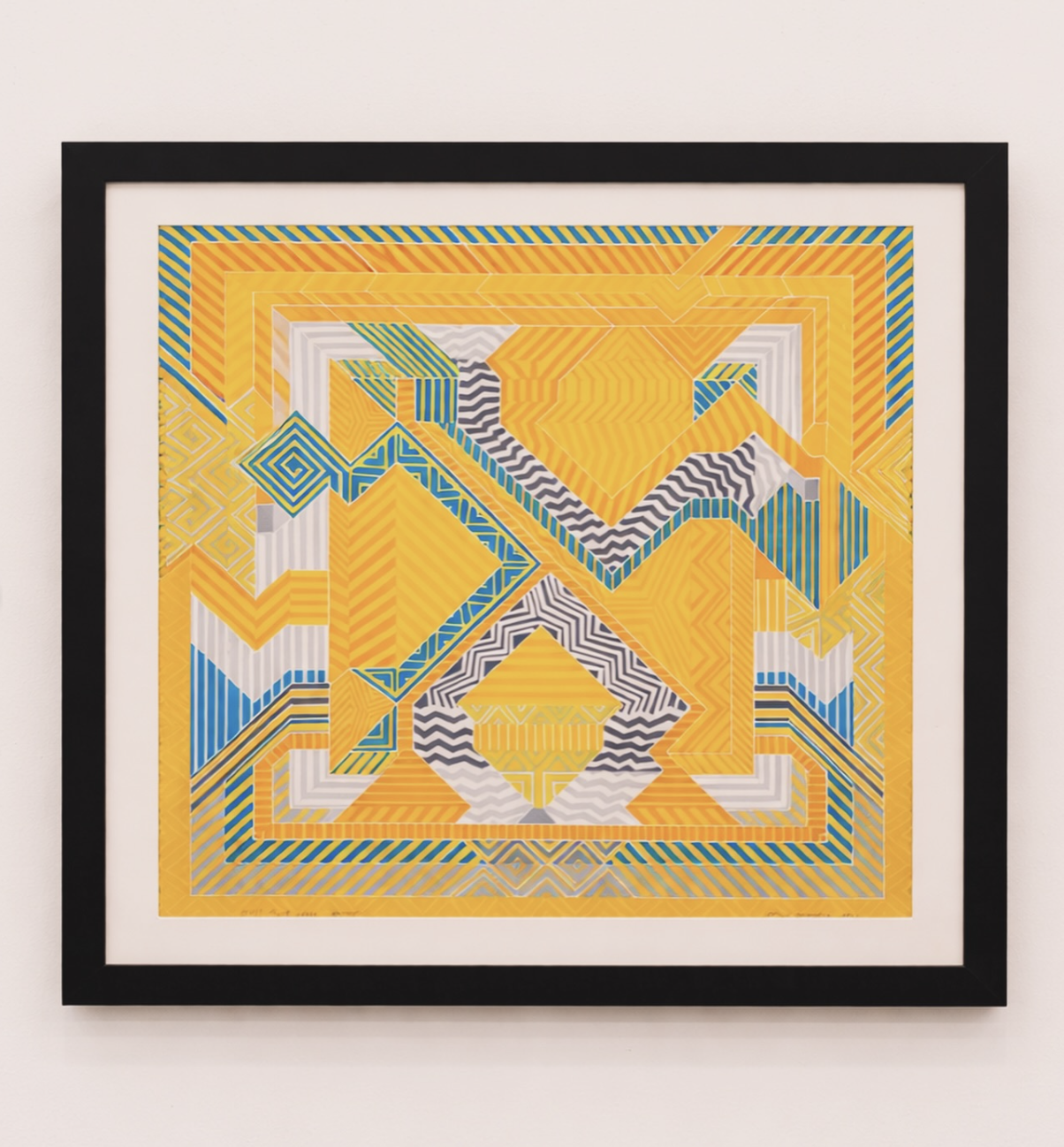
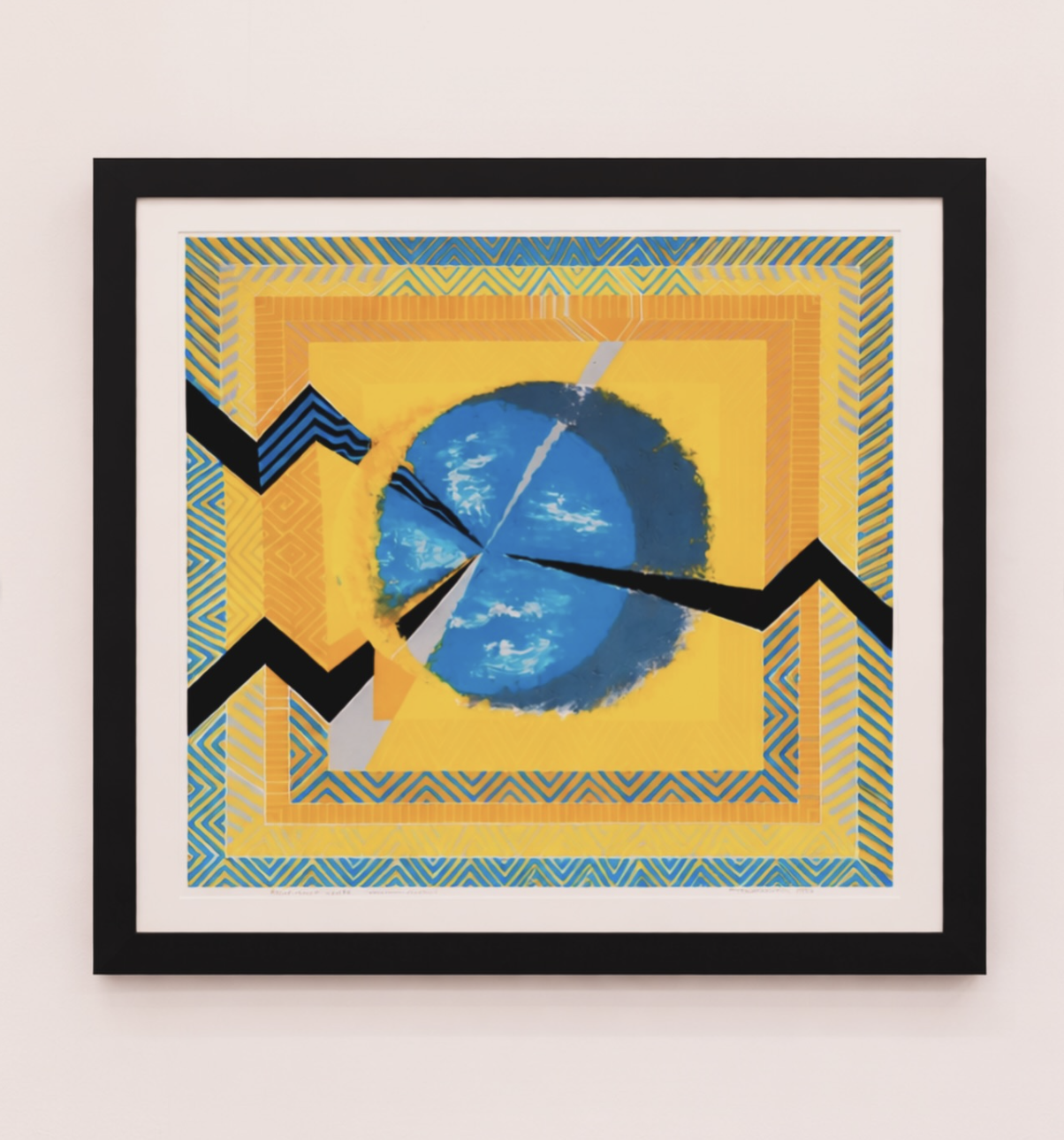
Across the works Harlem Frames has presented, clear plexi boxes, vivid wood moulding, contrasting mats, and more restrained dark frames have each offered different ways of defining the boundary around the artwork. The result is not a single standardized “Wayne Alexander frame,” but an ongoing framing vocabulary developed in response to individual pieces.
Selected Works
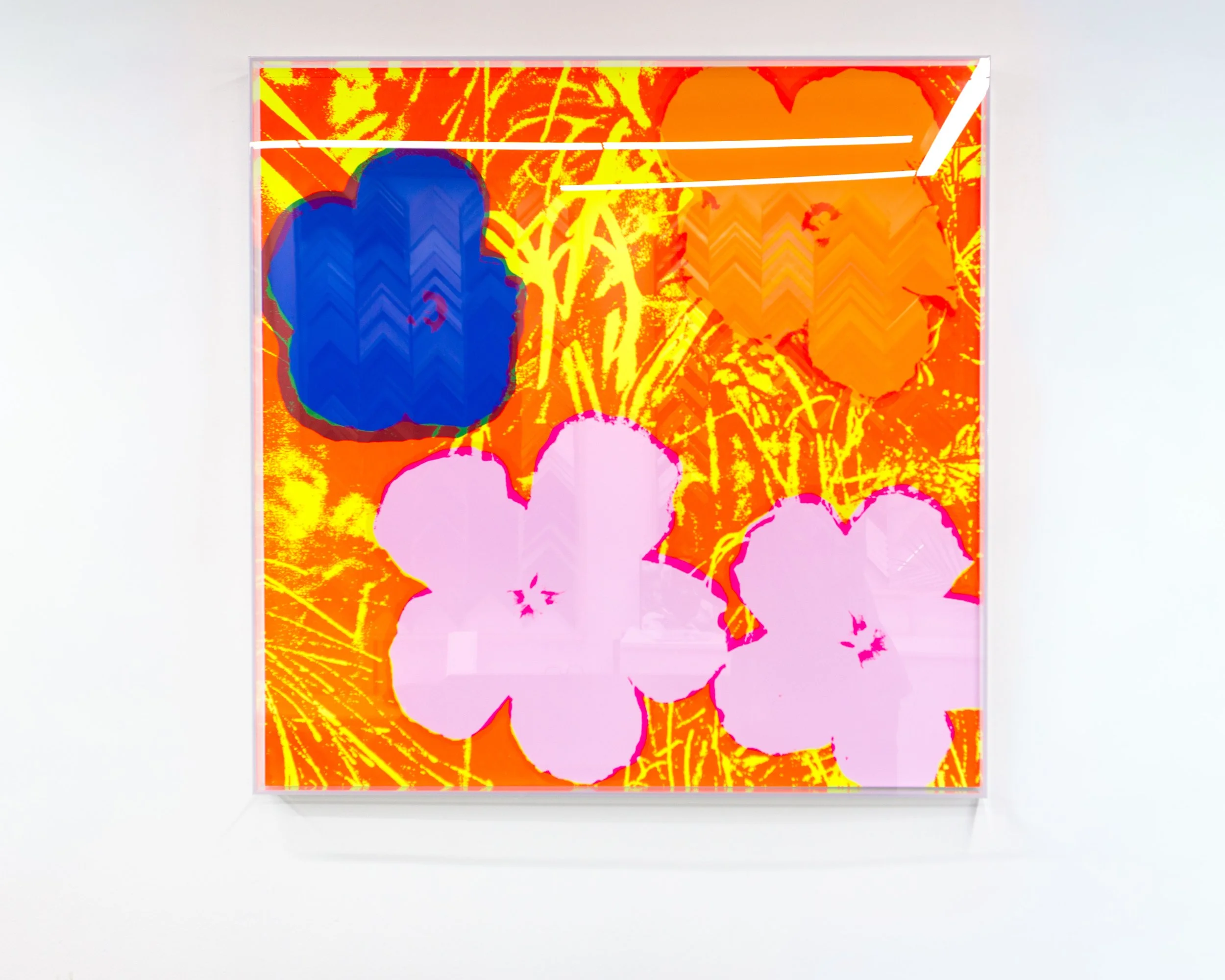
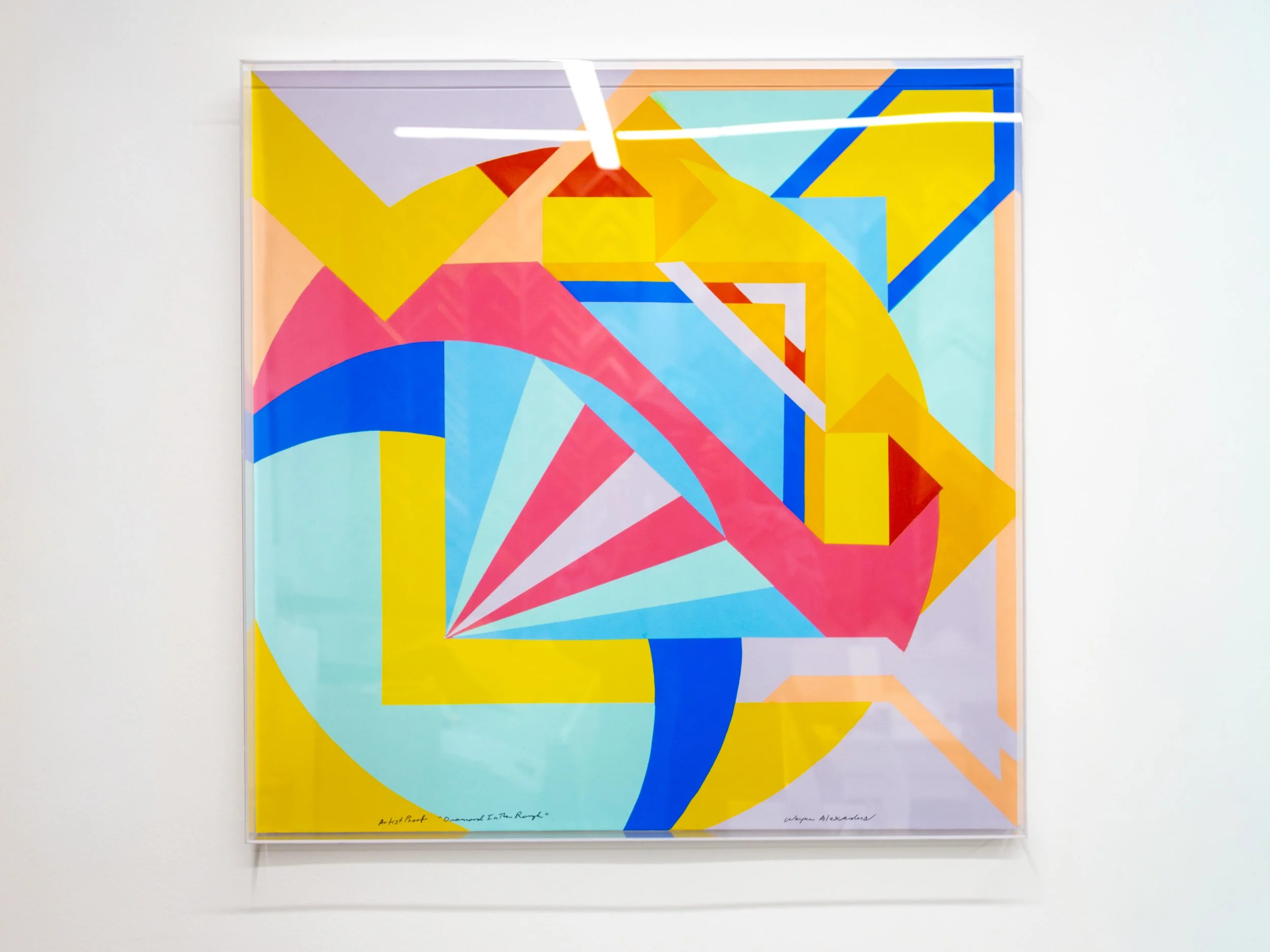
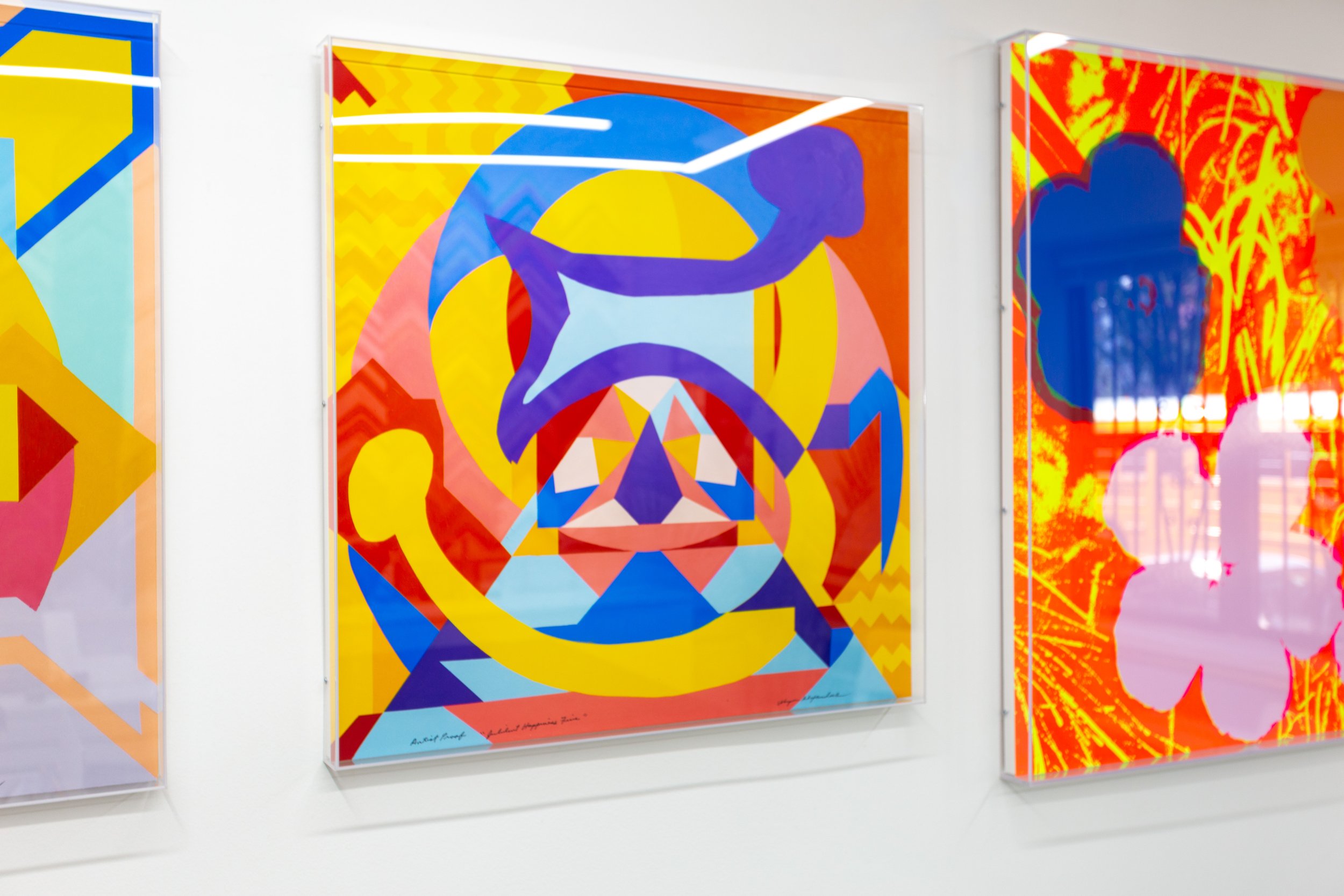
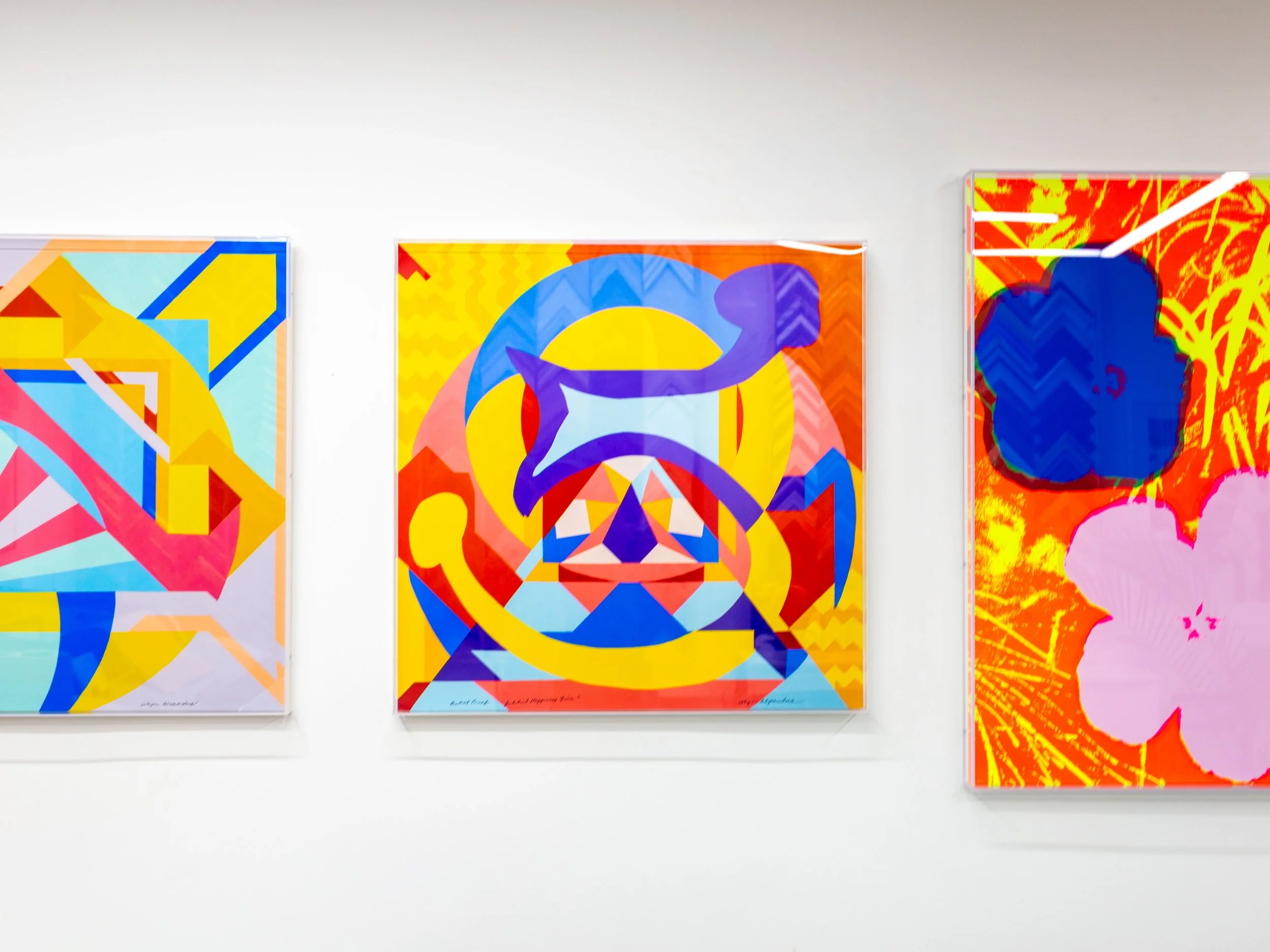
Among the Alexander works presented and framed through Harlem Frames are pieces from the artist’s colorful geometric painting and print practice, including Diamond in the Rough and related works characterized by his distinctive combinations of abstraction, geometry, symbolism, and saturated color. Diamond in the Rough, for example, belongs to a body of paintings Alexander created after returning to his studio practice. The artist describes the work through the metaphor of people as diamonds continually polishing their lives and pushing through adversity.
Alexander also translates this visual language into graphic editions. His website offers limited-edition graphic prints alongside painted works, extending the same geometric vocabulary across different formats. For Harlem Frames, moving between these formats means considering each object individually—its scale, surface, color relationships, and the way the artist intends the finished piece to occupy a wall.
From the Studio to the Harlem Fine Arts Show

The collaboration between Wayne Alexander and Harlem Frames has also extended into the exhibition environment.
In February 2026, Alexander’s work appeared at the 18th Harlem Fine Arts Show at The Glasshouse in New York City, where Harlem Frames was also present. The setting brought the artist’s vividly colored compositions together with the wider community of artists, collectors, and cultural organizations surrounding HFAS. For Harlem Frames, seeing works we've handled and framed move from the studio into an exhibition setting completes an important part of the process.
A frame isn't designed only for the worktable. It ultimately has to support the artwork once it enters a gallery, exhibition, collection, or home.
An Ongoing Collaboration
Our work with Wayne Alexander demonstrates something we value deeply at Harlem Frames: the relationship that can develop when an artist and framer work together repeatedly.
With time comes a better understanding of the artist’s materials, palette, preferences, scale, and visual language. Each new piece doesn't require repeating the same solution. Instead, that familiarity creates room to experiment. Sometimes the answer is a transparent plexi box that almost disappears. Sometimes it's a vivid red, yellow, or blue moulding that becomes impossible to ignore.
And sometimes the strongest choice is a restrained frame that simply gives the composition space to speak for itself. Across each approach, the objective remains the same: to create a presentation that feels inseparable from the character of the artwork it surrounds.
Artist: Wayne Alexander
Practice: Painting & Graphic Print Work
Framing: Custom framing by Harlem Frames
Selected Presentations: Clear plexi boxes · Vibrant finished wood mouldings · Custom matting · Contemporary frame presentations
Featured: Harlem Fine Arts Show 2026 · The Glasshouse · New York City
Explore Wayne Alexander's work
Images by Harlem Frames.