Michael Anderson
Original Collage Painting · Private Collection · Custom Framing by Harlem Frames
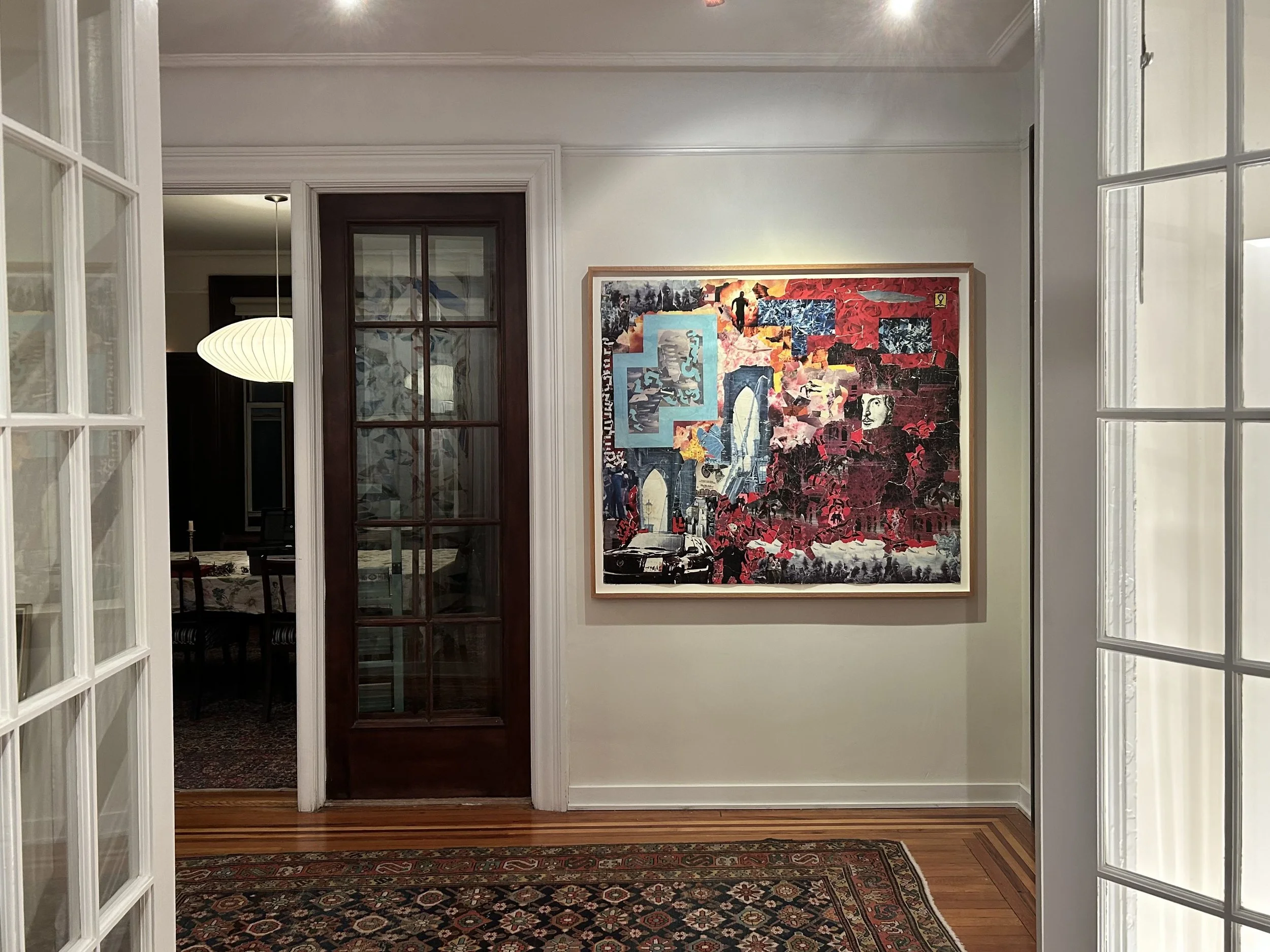
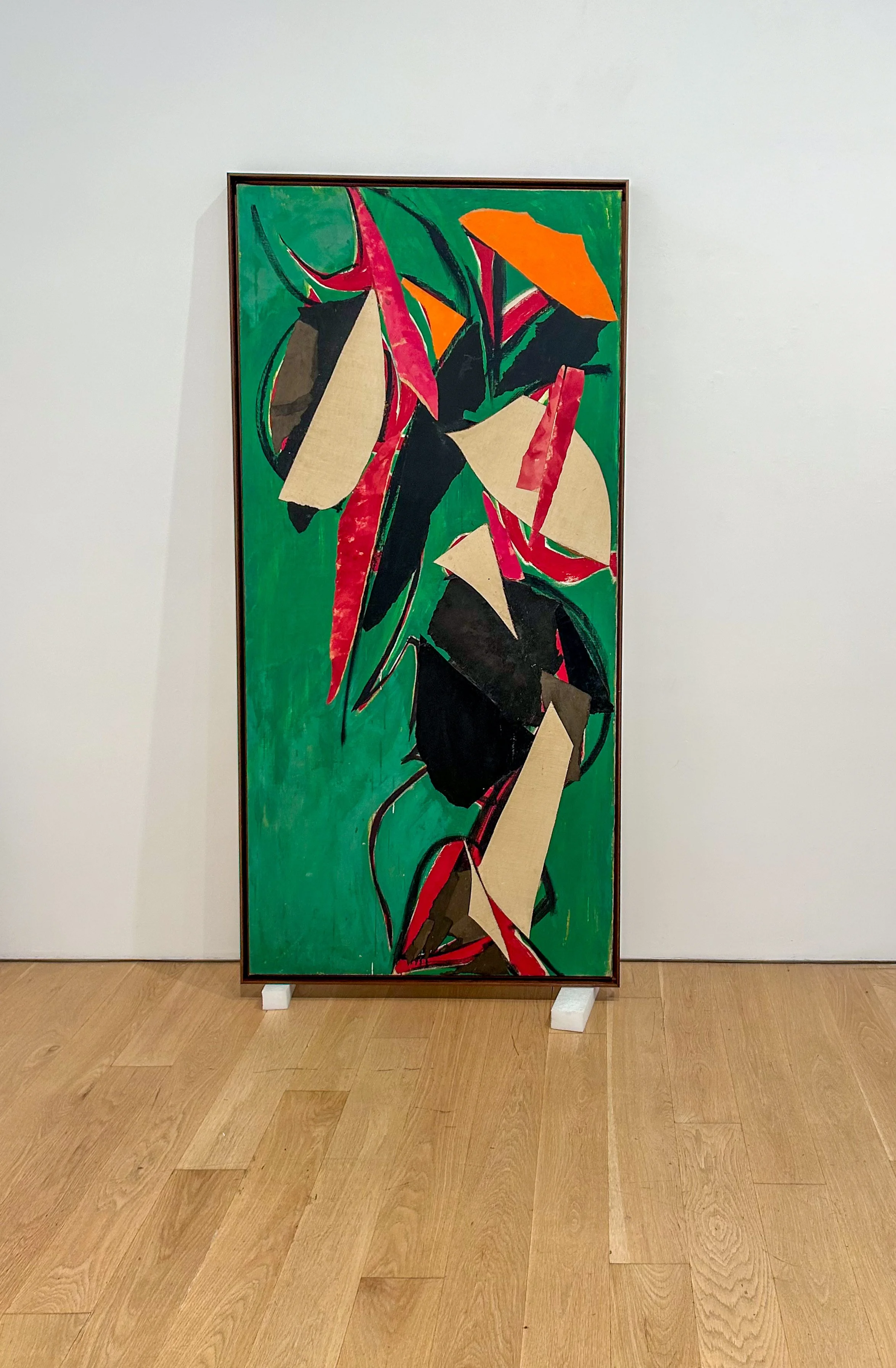
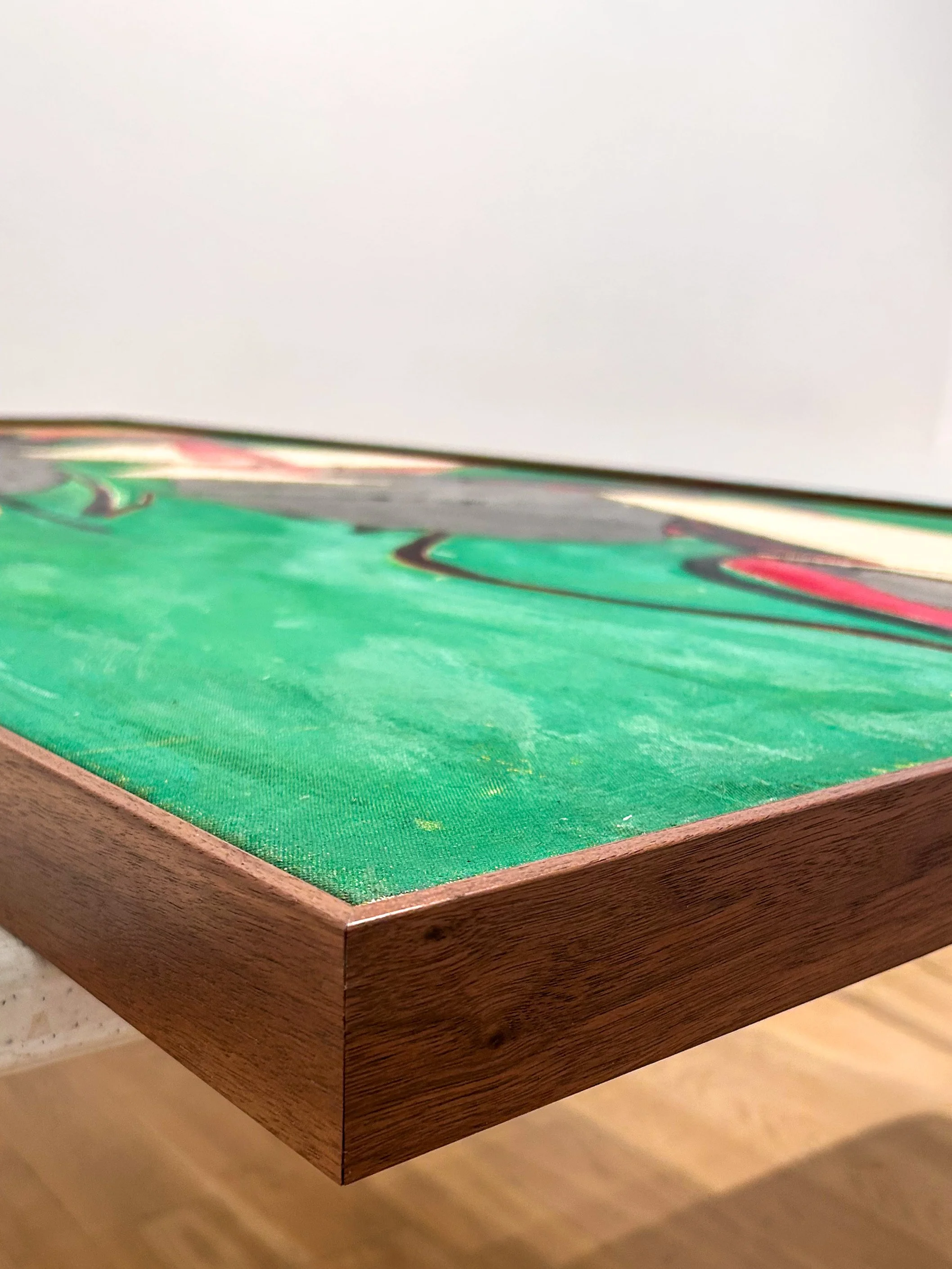
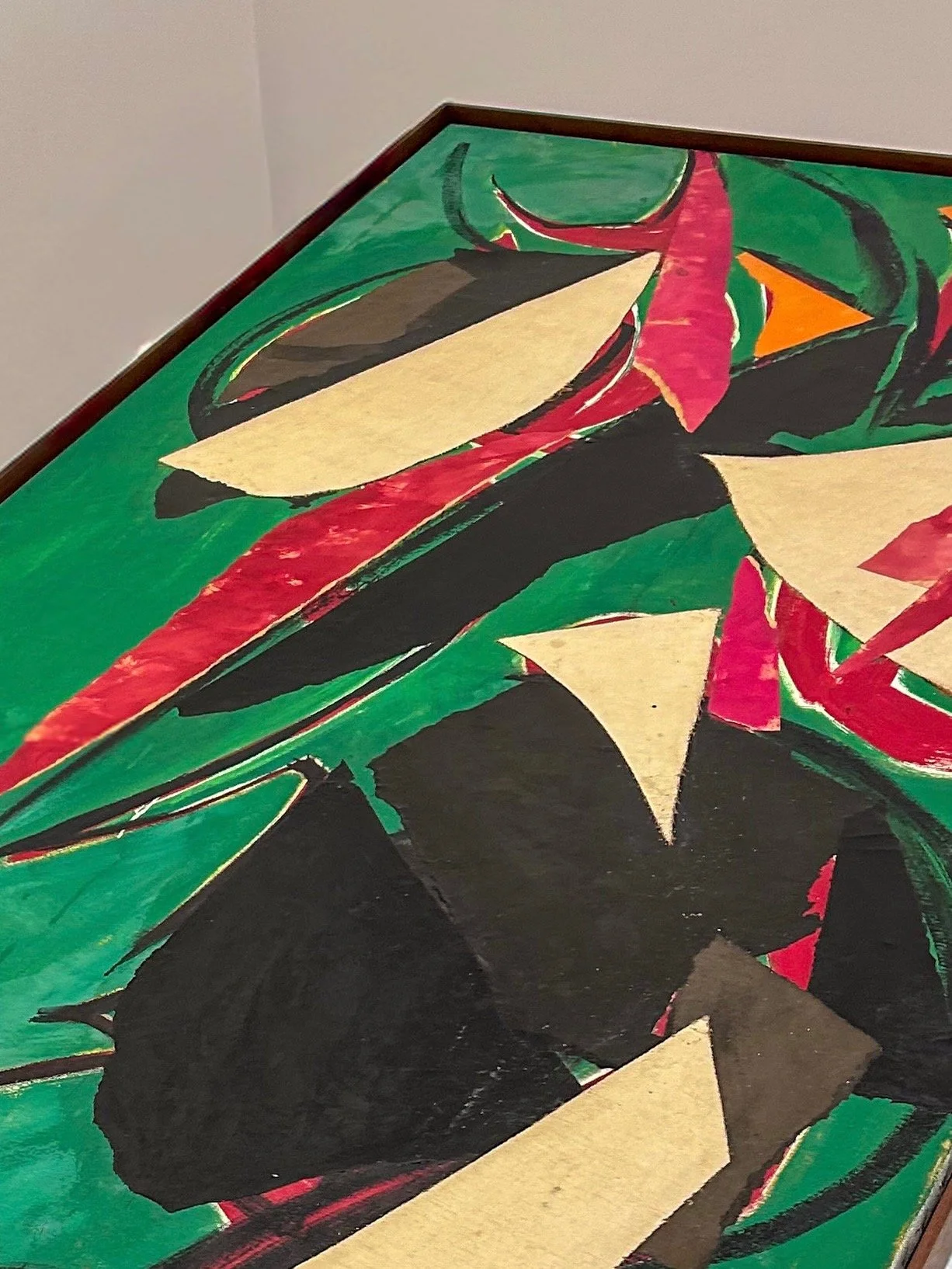
Harlem Frames was entrusted with the custom framing of an original work by New York collage artist Michael Anderson (1968–2020), now installed in a private collection.
The natural wood presentation provides a quiet architectural boundary around Anderson’s densely layered composition, allowing its saturated color, fragmented imagery, and physical texture to remain the focus.
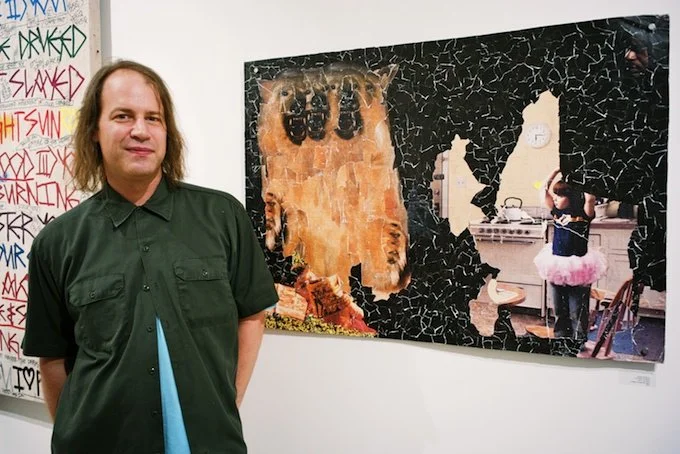
Michael Anderson
(photo courtesy of Artefuse)
A Bronx-born New York artist, Anderson developed a distinctive approach to collage using imagery sourced largely from posters gathered from city streets. He cut, layered, and reconstructed these fragments into complex compositions that move between abstraction and representation, often reflecting the visual intensity and contradictions of contemporary urban life.
His works combine advertising, popular culture, portraiture, pattern, and found imagery into compositions that feel simultaneously chaotic and carefully constructed.
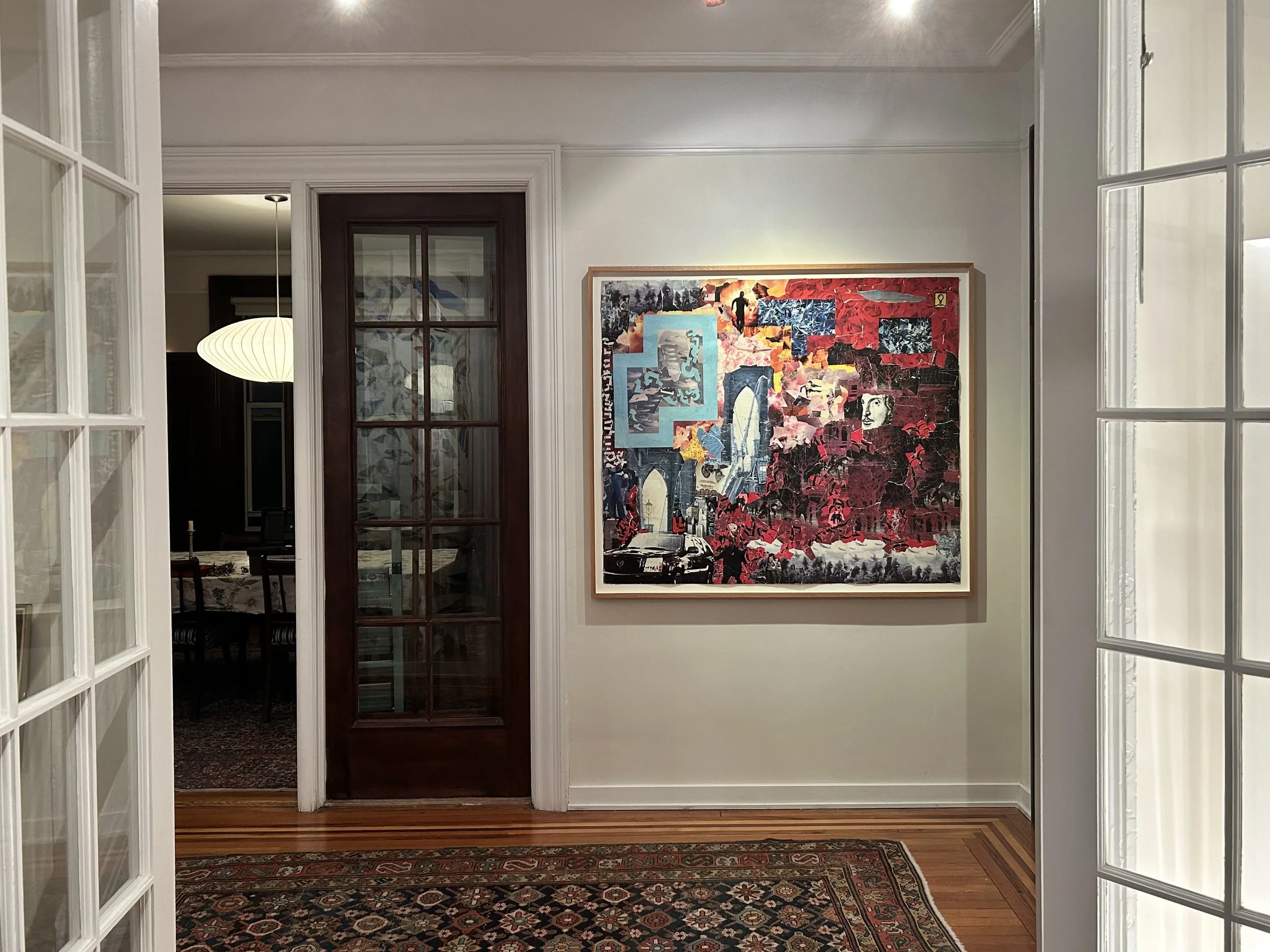
Framed by Harlem Frames
For this original Anderson work, Harlem Frames created a custom natural wood frame designed to complement the piece without competing with its exceptionally active surface.
Working with an original collage requires particular consideration for the artwork’s scale, construction, edges, and layered materials. Our approach centered on careful handling and a restrained presentation that preserves the visual impact and physical character of Anderson’s work.
Now installed within a private collection, the finished piece demonstrates what we value in custom framing: supporting the artwork while allowing the artist’s own language to command the space.
Artist: Michael Anderson (1968–2020)
Collection: Private Collection
Harlem Frames Services: Custom Framing
Presentation: Natural Wood Frame
Lana Turner: Person Place Thing
Maysles Documentary Center · Harlem · 2026
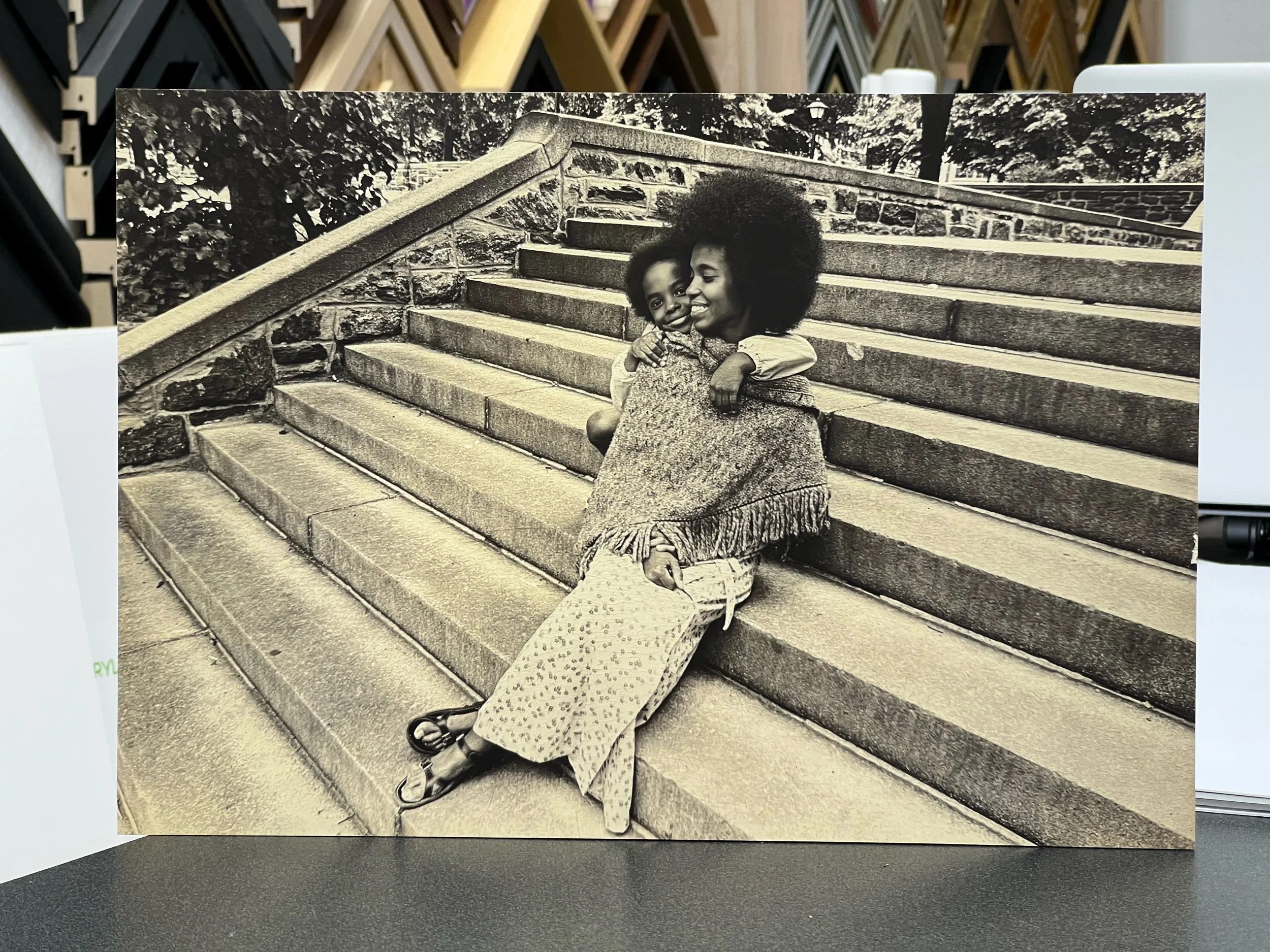
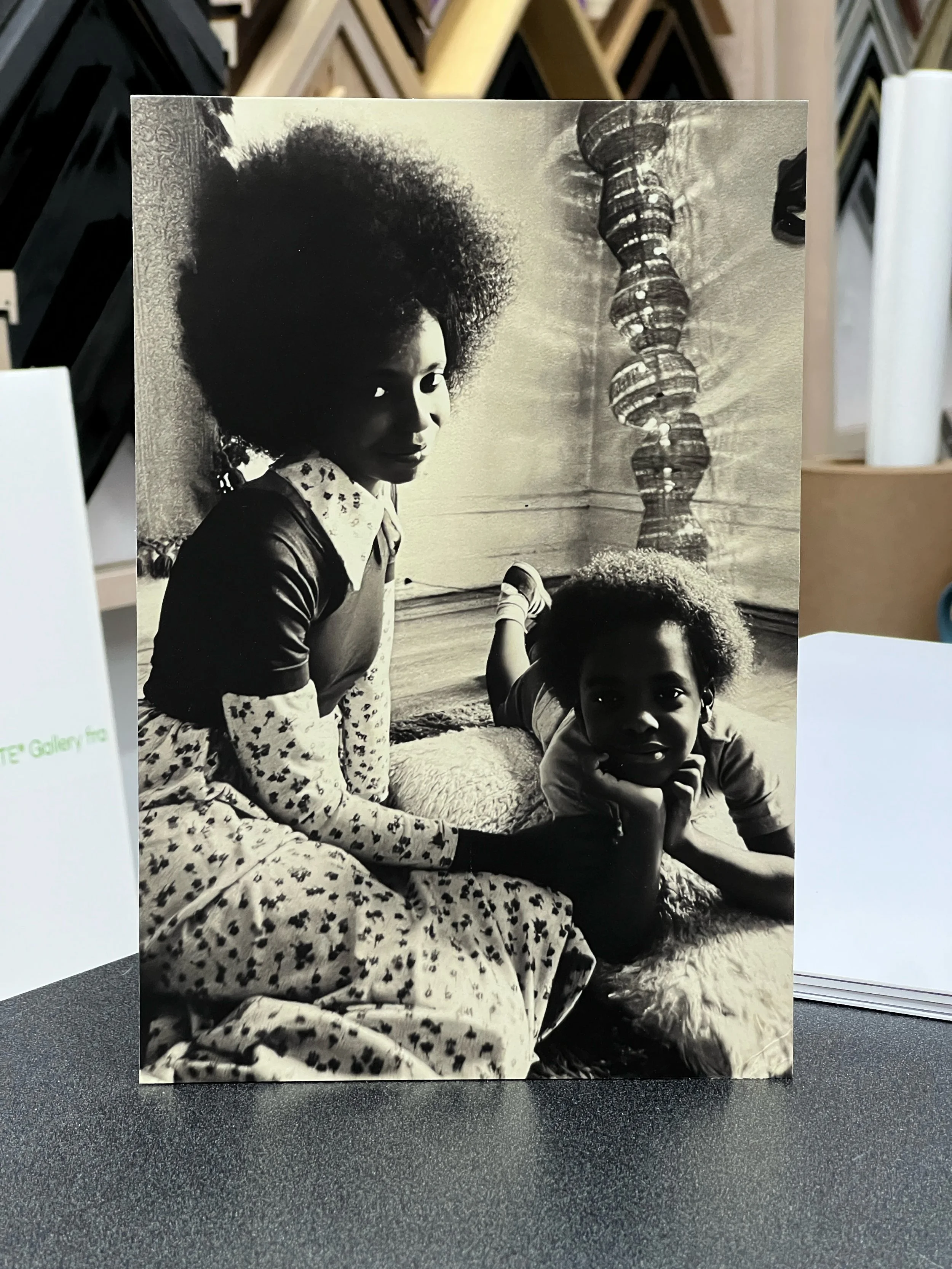
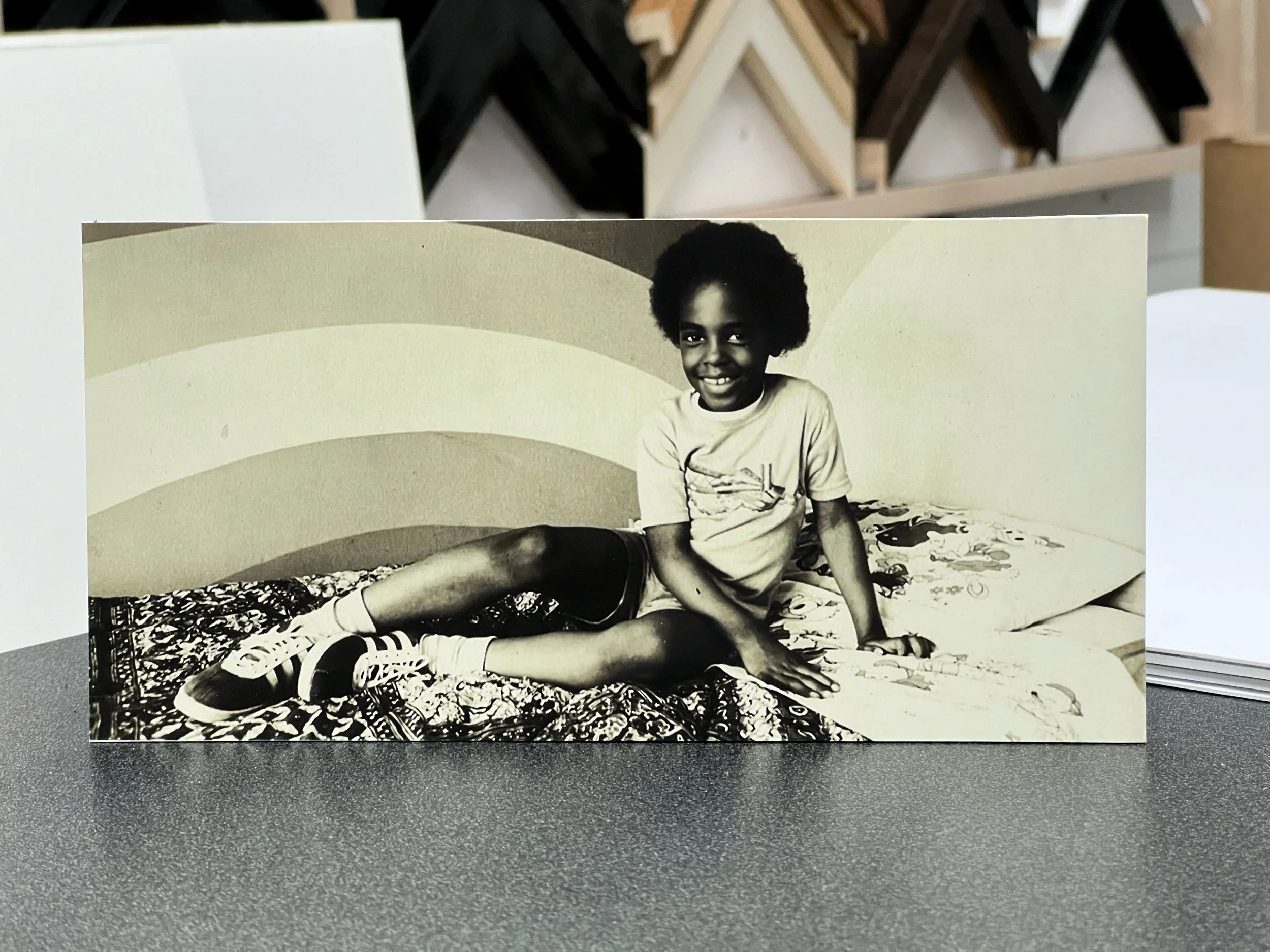
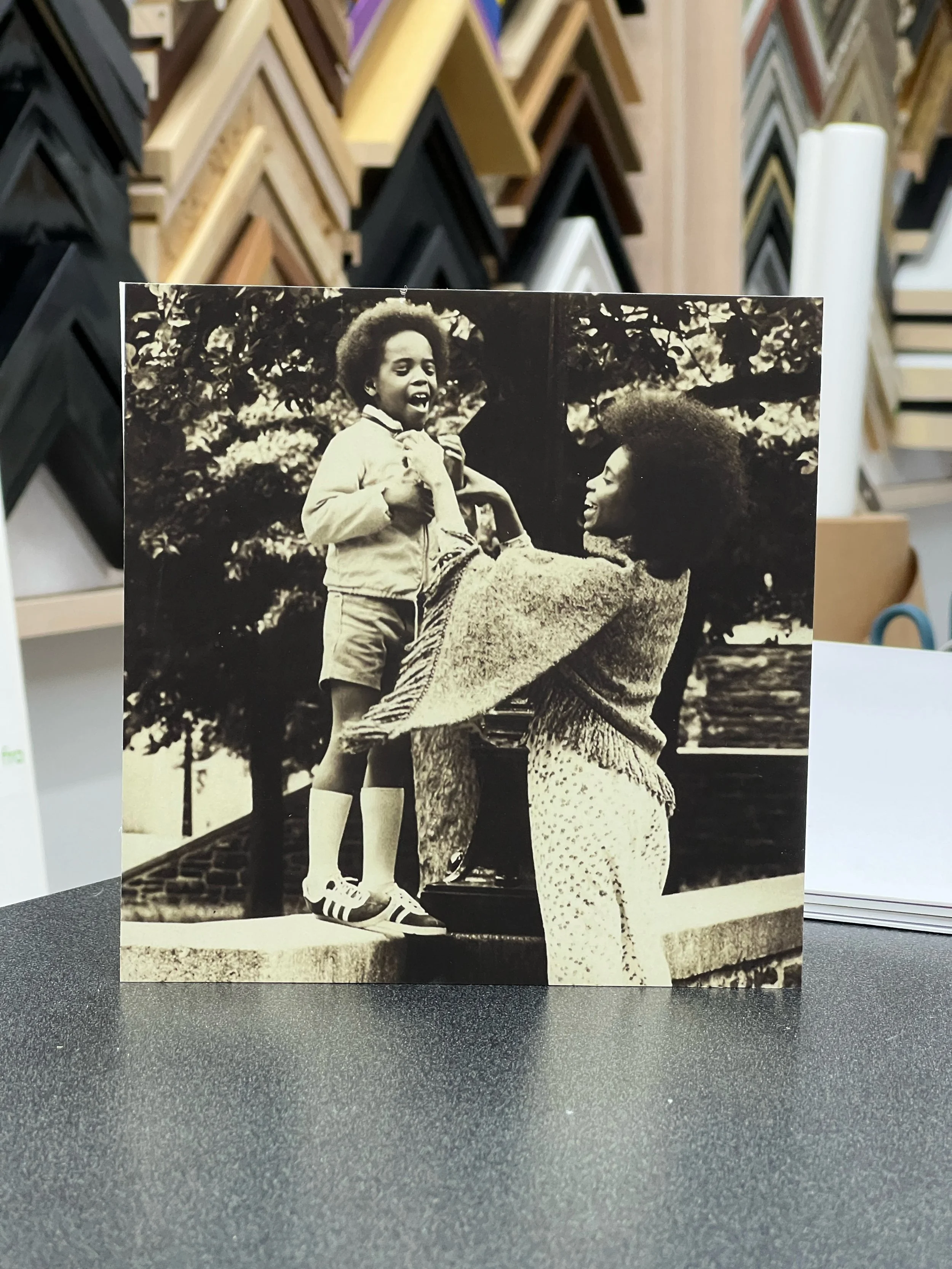
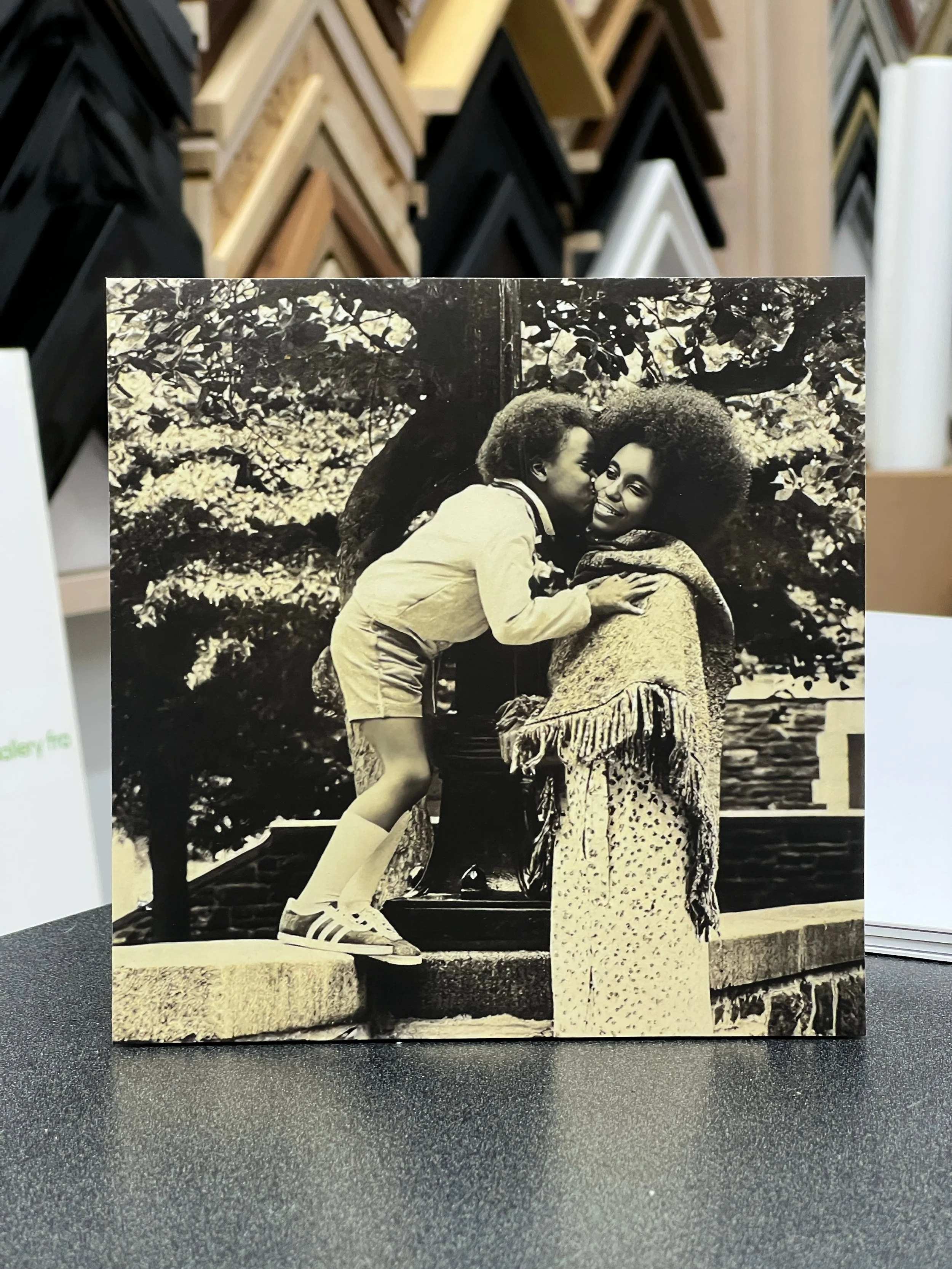
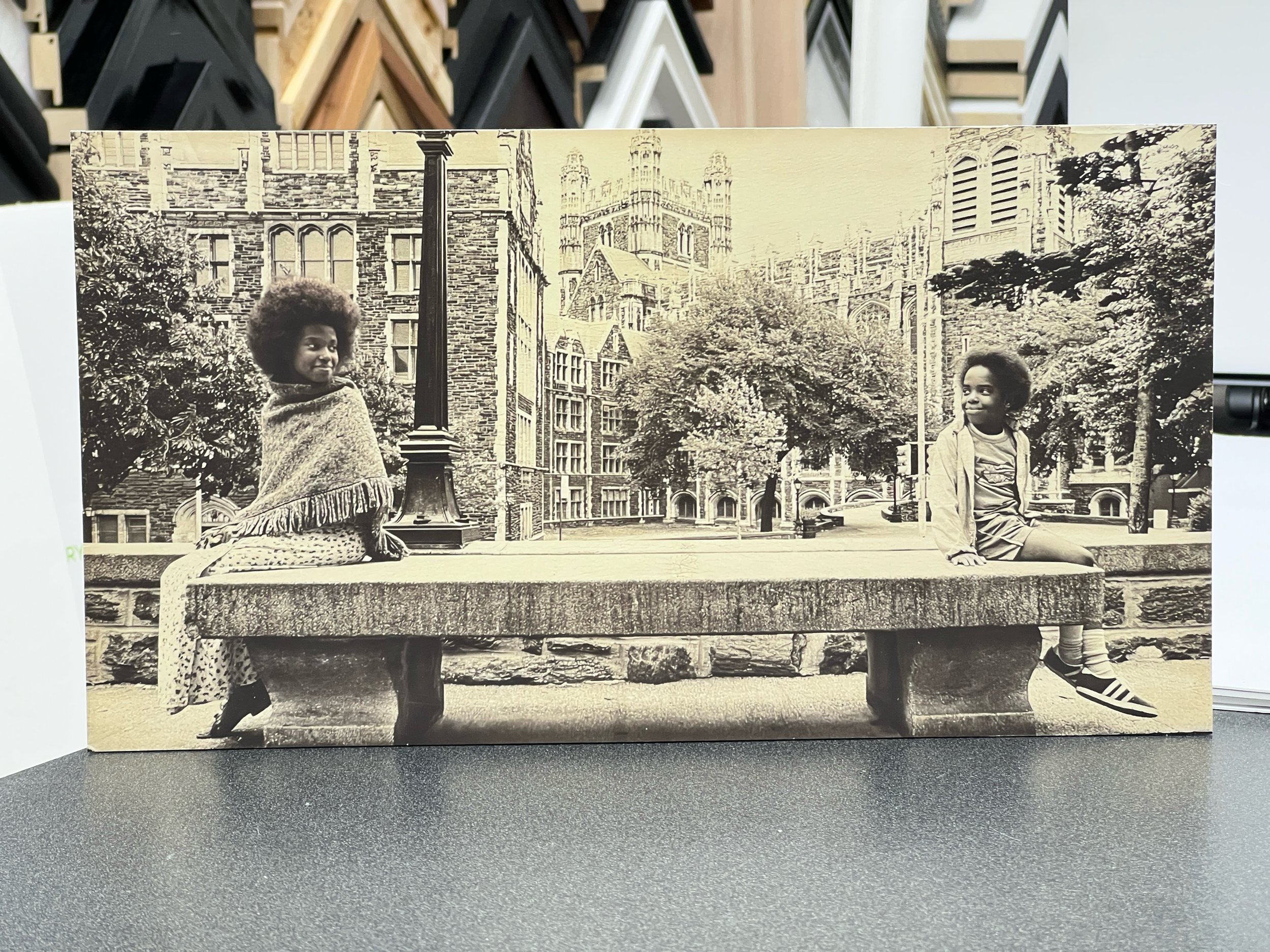
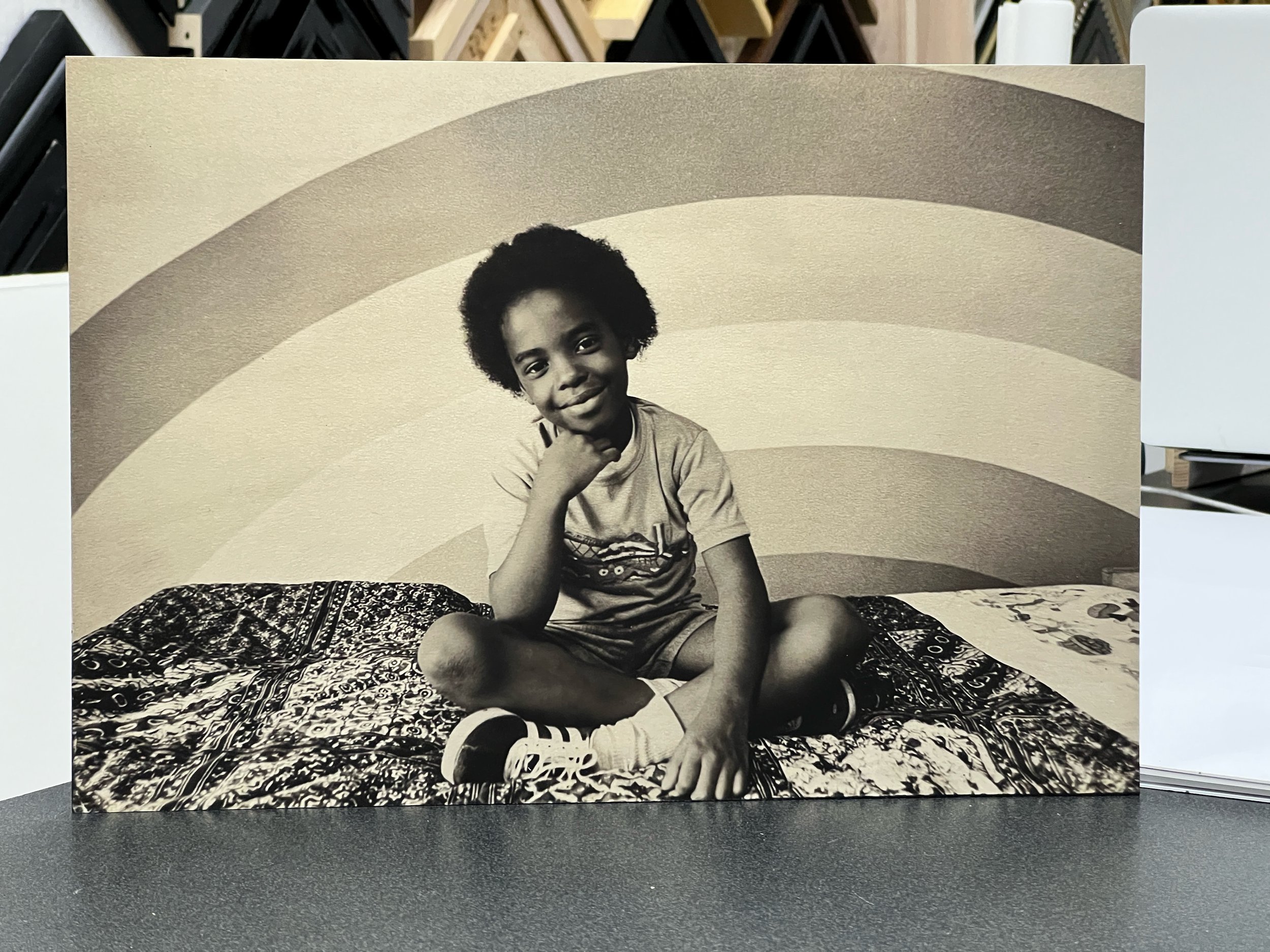
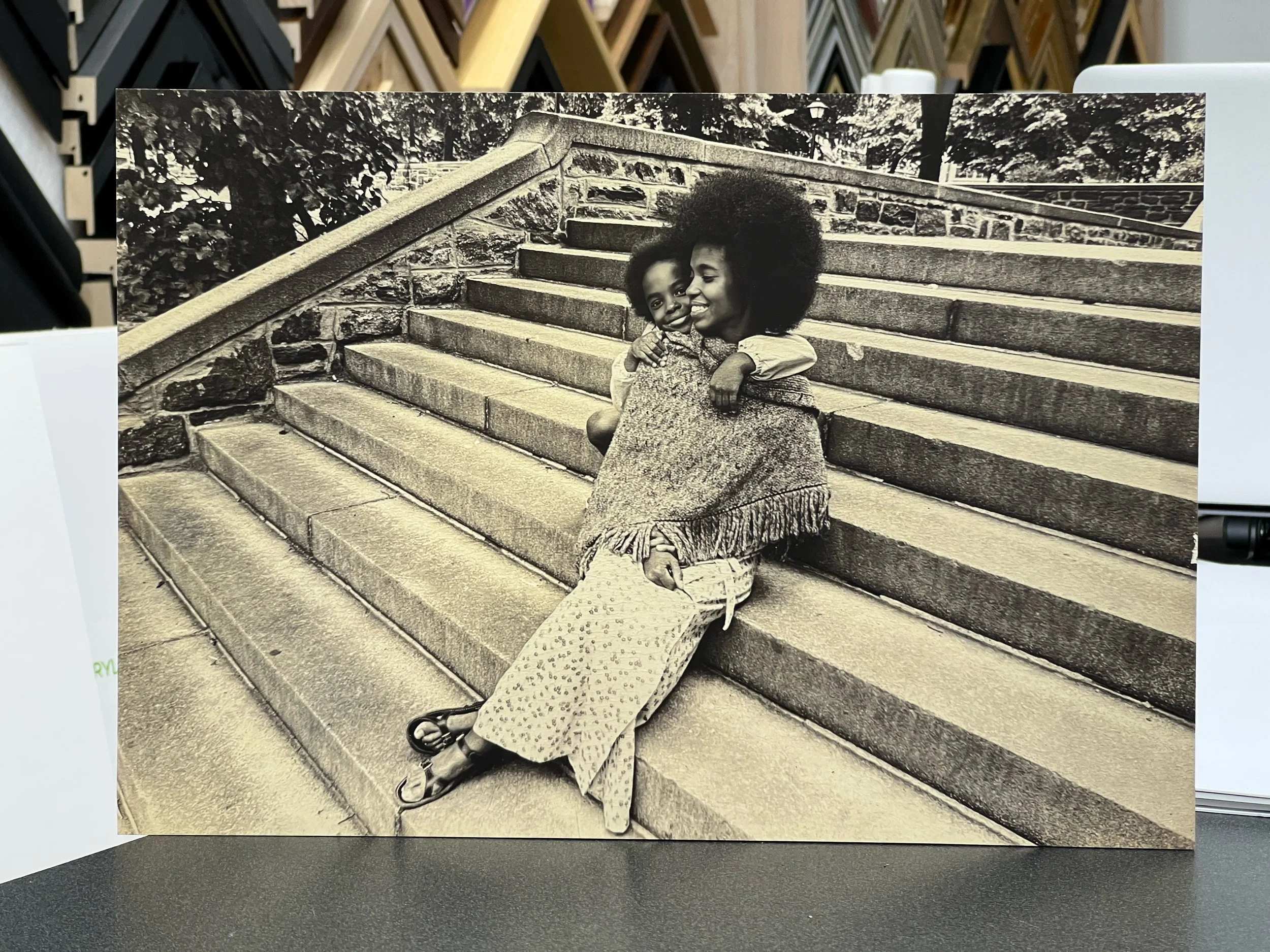
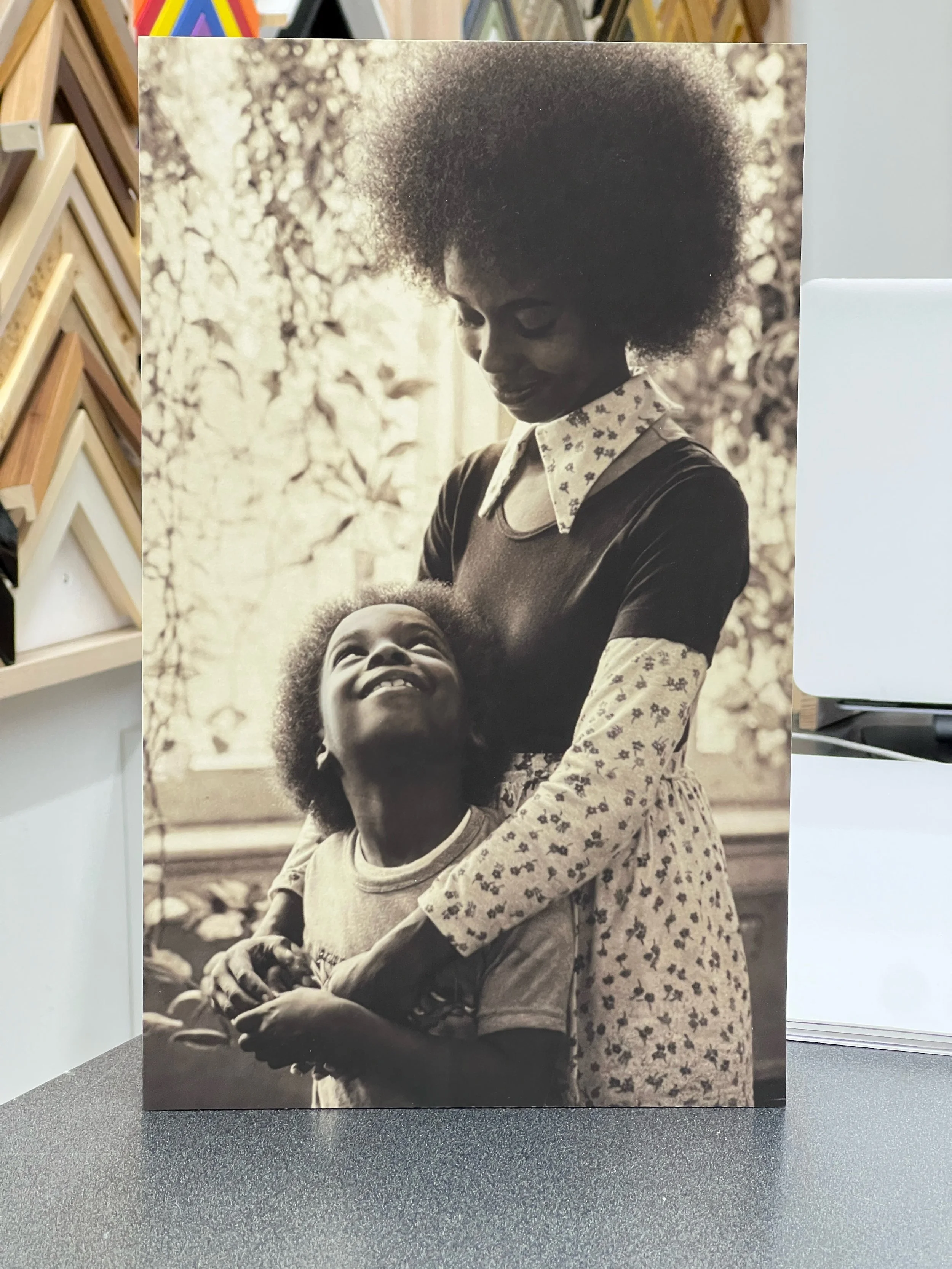
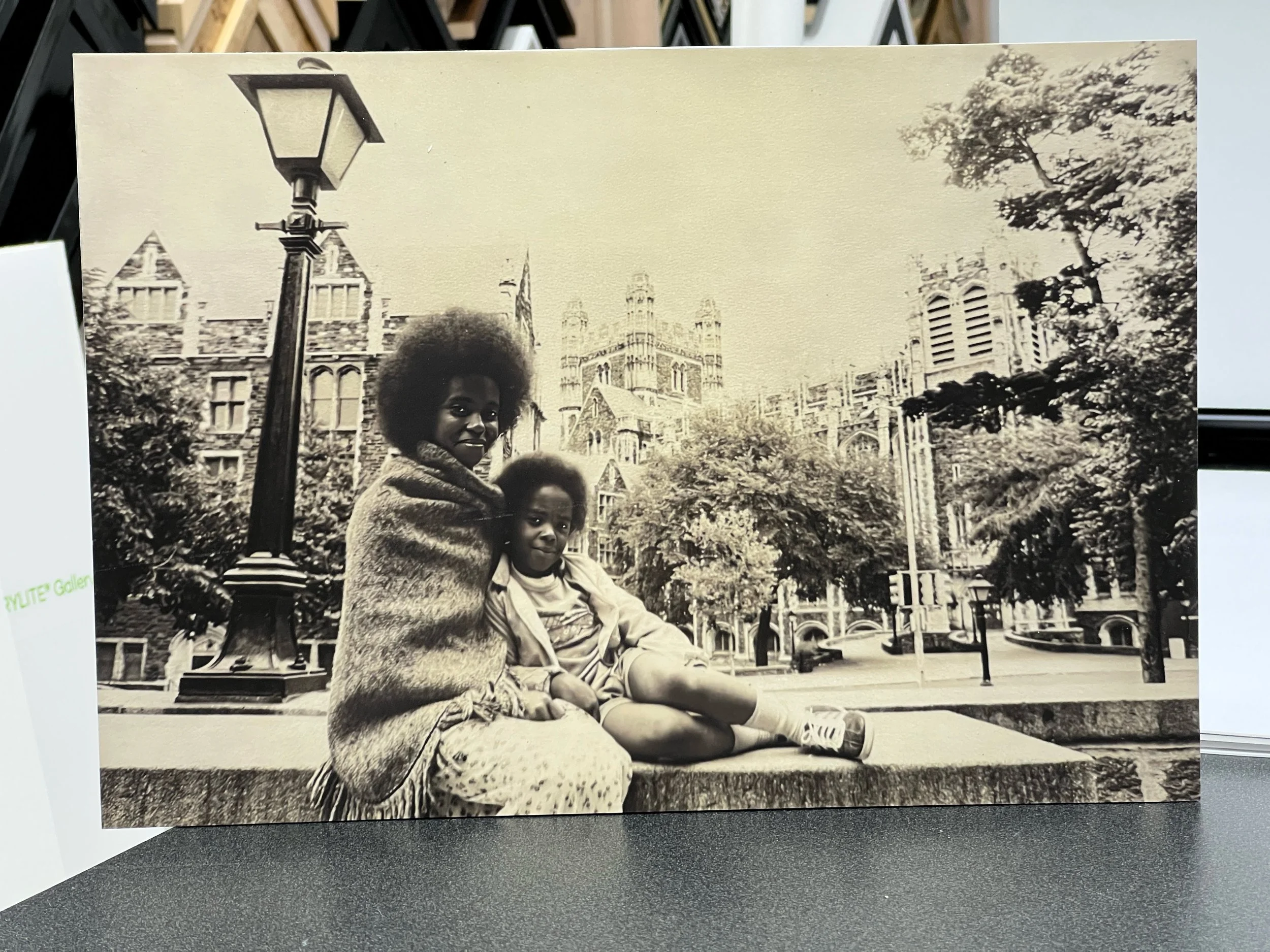
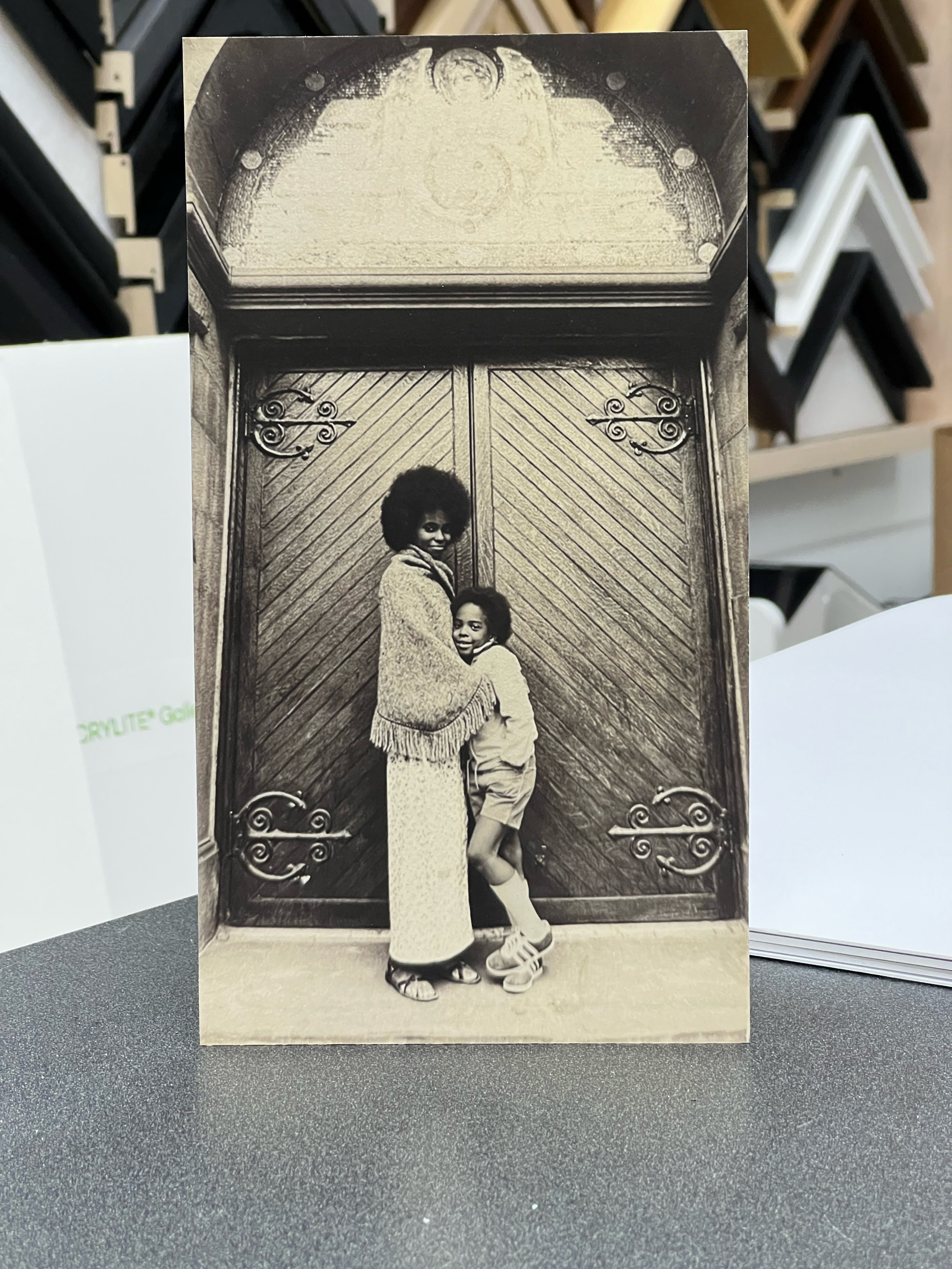
Harlem Frames worked with Lana Turner and the Maysles Documentary Center to prepare a series of personal photographs for display in connection with Person Place Thing: Lana Turner, presented as part of Maysles' 2026 Black History Month programming.
The photographs—portraits of Turner and her son from earlier years—offered an intimate complement to an evening centered on her life, memories, and deep relationship with Harlem.
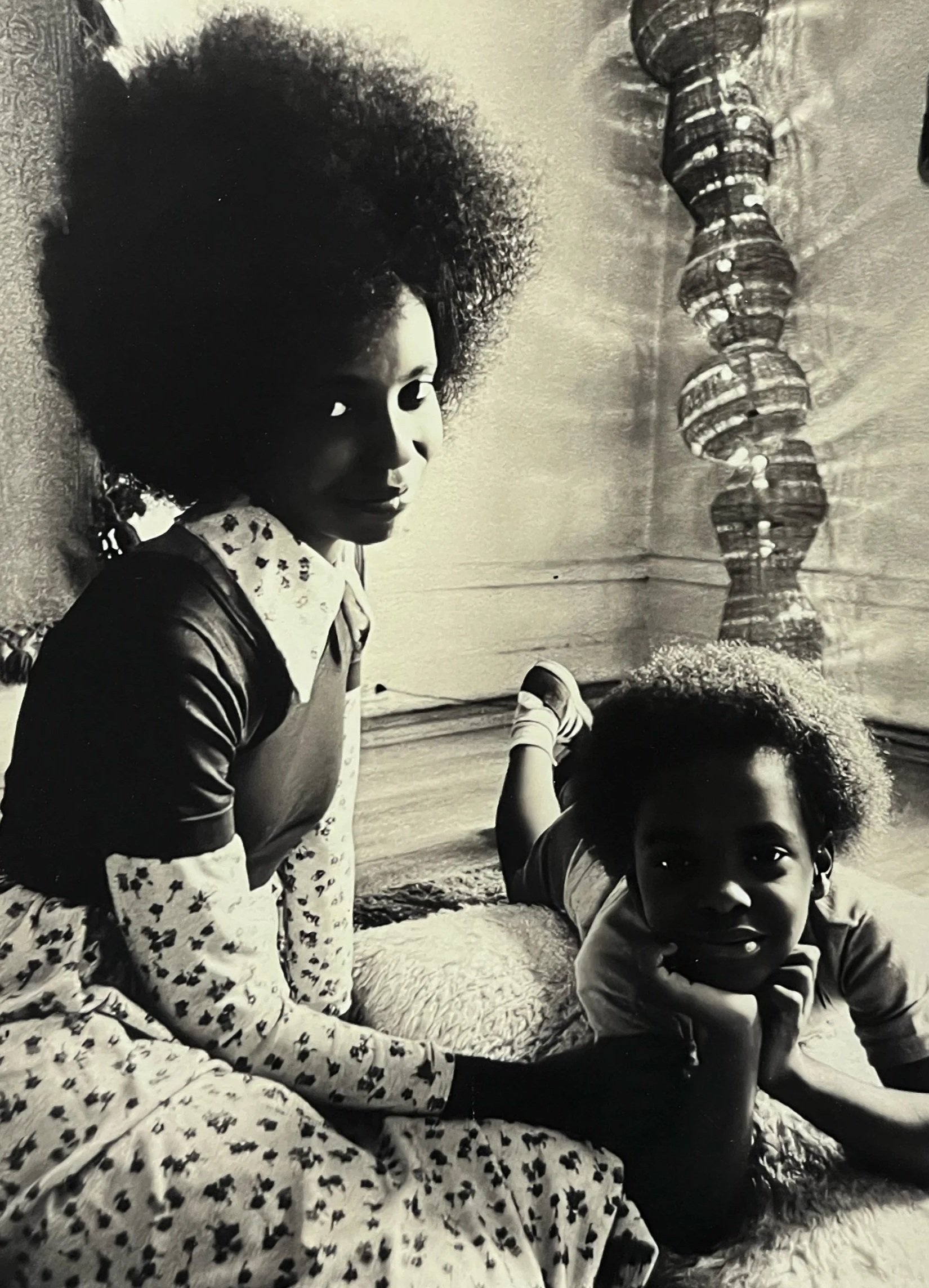
Lana Turner
Portrait of Lana Turner pictured with her young son.
A longtime Harlem cultural figure, Lana Turner is an archivist, preservationist, producer, and collector known for her commitment to celebrating Black style, history, and culture.
Her extensive collection of vintage clothing has appeared in fashion, gallery, and museum exhibitions, while her broader work has included initiatives devoted to preserving and sharing Harlem's cultural history. For Person Place Thing, Turner joined host Randy Cohen for a live conversation exploring the people, places, and objects that have carried particular meaning throughout her life.
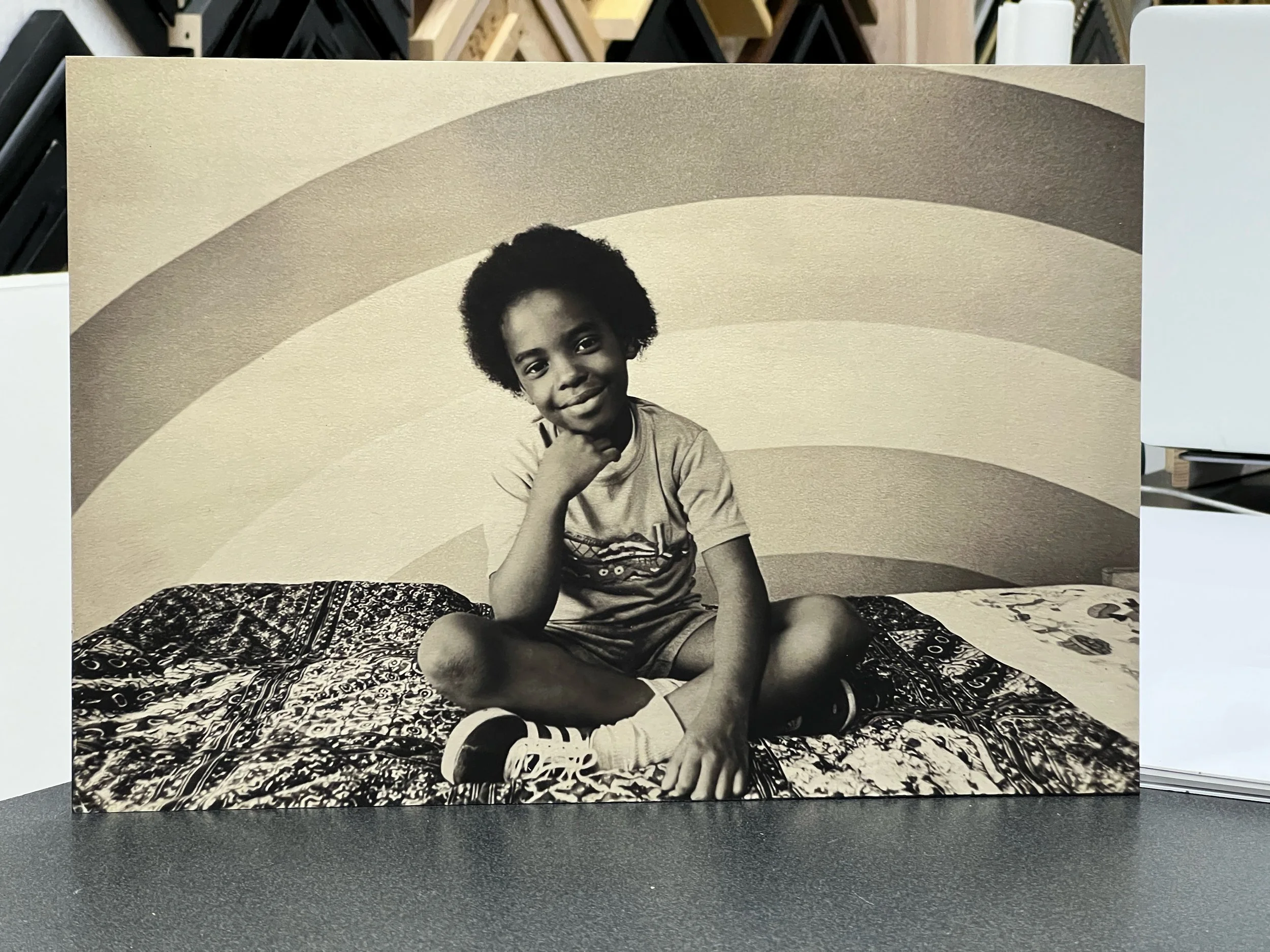
Printed & Mounted by Harlem Frames
For the presentation, Harlem Frames produced prints from Turner's personal photographs and mounted the finished images for display.
The treatment was intentionally simple, allowing the photographs—their subjects, memories, and personal history—to remain the focus.
Working with family photographs requires a different kind of sensitivity than working with conventional artwork. These images function not only as visual objects, but as records of a person's history. Our role was to reproduce and prepare them with care while creating a clean, professional presentation appropriate to the exhibition environment.
We're proud to have contributed to a project celebrating a figure so closely connected to Harlem's history, style, and cultural memory.
Featured: Lana Turner and her son
Program: Person Place Thing: Lana Turner
Location: Maysles Documentary Center · Harlem, New York
Date: February 12, 2026
Harlem Frames Services: Fine Art / Photographic Printing · Mat Board Mounting · Exhibition Preparation
Person Place Thing: Lana Turner at Maysles Documentary Center
Joan Mitchell
Private Collection · Custom Fitting & Installation by Harlem Frames
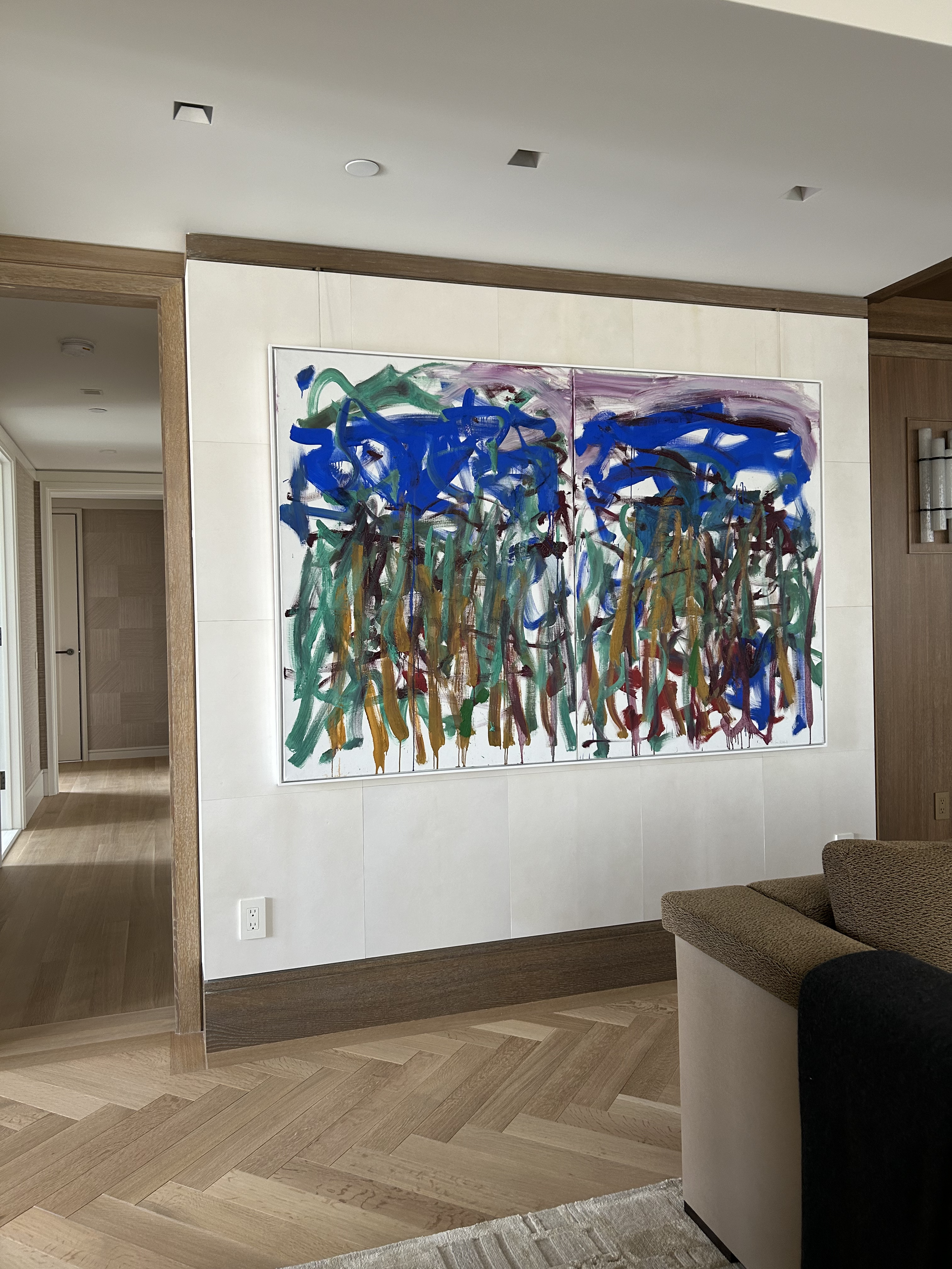
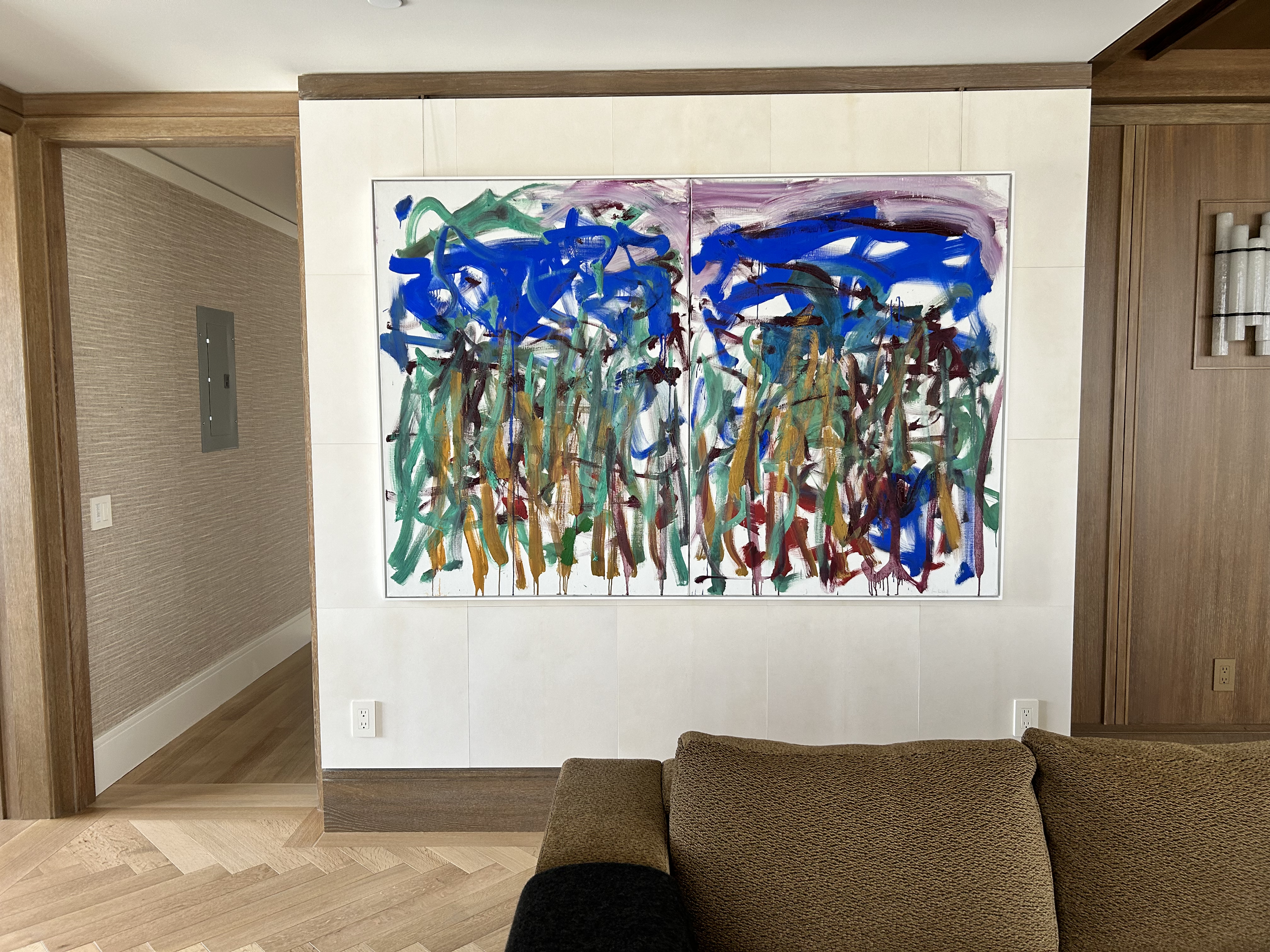
Harlem Frames was entrusted with the fitting and installation of Joan Mitchell’s Hours (1989) for a private collection. Presented without glazing, the large-scale work was carefully fitted into its frame and professionally installed within the collector’s home, allowing the surface and physical presence of the painting to remain unobstructed.

Joan Mitchell
(1925–1992)
(Image courtesy of https://www.joanmitchellfoundation.org/joan-mitchell/biography)
Joan Mitchell was one of the leading painters associated with Abstract Expressionism. Known for her vigorous brushwork and extraordinary command of color, Mitchell developed a highly individual approach to abstraction informed by memory, landscape, nature, and lived experience.
Created late in her career, Hours embodies the energy and materiality that distinguish Mitchell’s work—layering expansive passages of blue, green, violet, ochre, and deep red across a monumental two-panel composition.
Fitted & Installed by Harlem Frames
For a work of this scale and significance, both framing and installation require precision, restraint, and careful handling.
Harlem Frames professionally fitted Hours into its frame, preserving an unobstructed relationship between the viewer and Mitchell’s painted surface. Our team then installed the completed work within the private collection, considering its substantial scale, weight, positioning, and relationship to the surrounding architecture.
Working with original artwork of this caliber is a responsibility we approach with the utmost care. The objective is always to provide the support and presentation the artwork requires while allowing the artist’s work to remain entirely at the center of the experience.
Artist: Joan Mitchell (1925–1992)
Work: Hours, 1989
Collection: Private Collection
Harlem Frames Services: Custom Fitting · Professional Art Installation
Presentation: Framed without glazing

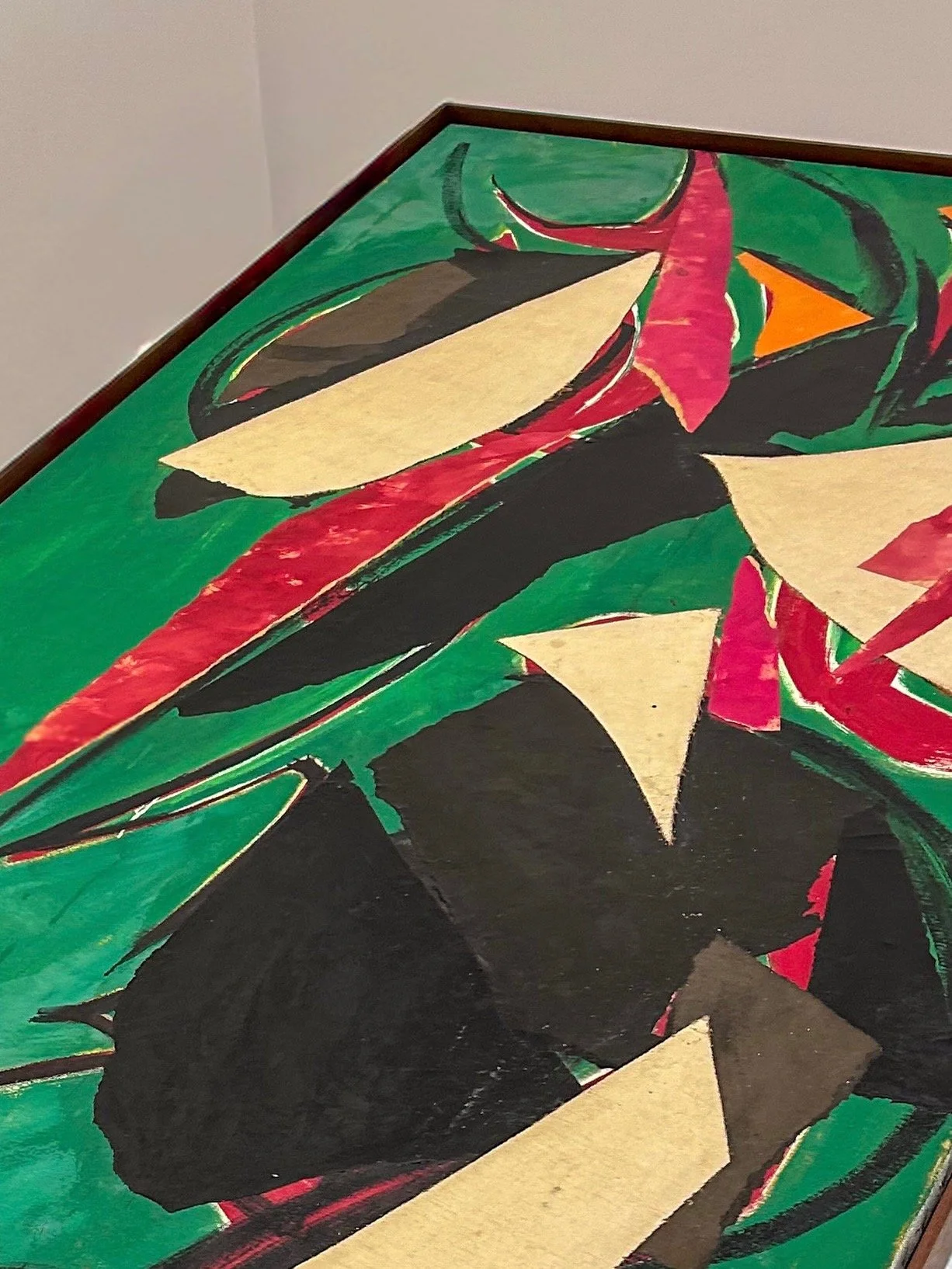
Lee Krasner · Past Continuous · Metropolitan Museum of Art
Original Works · Custom Framing by Harlem Frames · 2026
Harlem Frames was entrusted with the framing of two original works by Lee Krasner for Krasner and Pollock: Past Continuous, presented at The Metropolitan Museum of Art in New York.
Preparing works of this significance for exhibition requires precision, restraint, and an understanding that the frame should ultimately serve the artwork. Each piece was handled and presented with careful attention to its materials, condition, scale, and individual character.

Lee Krasner
Lee Krasner (1908–1984) was a defining figure of Abstract Expressionism whose work was marked by constant experimentation and reinvention.
(Image courtesy of https://www.thecollector.com/who-was-lee-krasner/)
Across painting, drawing, collage, and works on paper, Krasner explored gesture, rhythm, color, fragmentation, and the natural world. Rather than developing a single signature style, she continually revisited and transformed her visual language throughout her career.
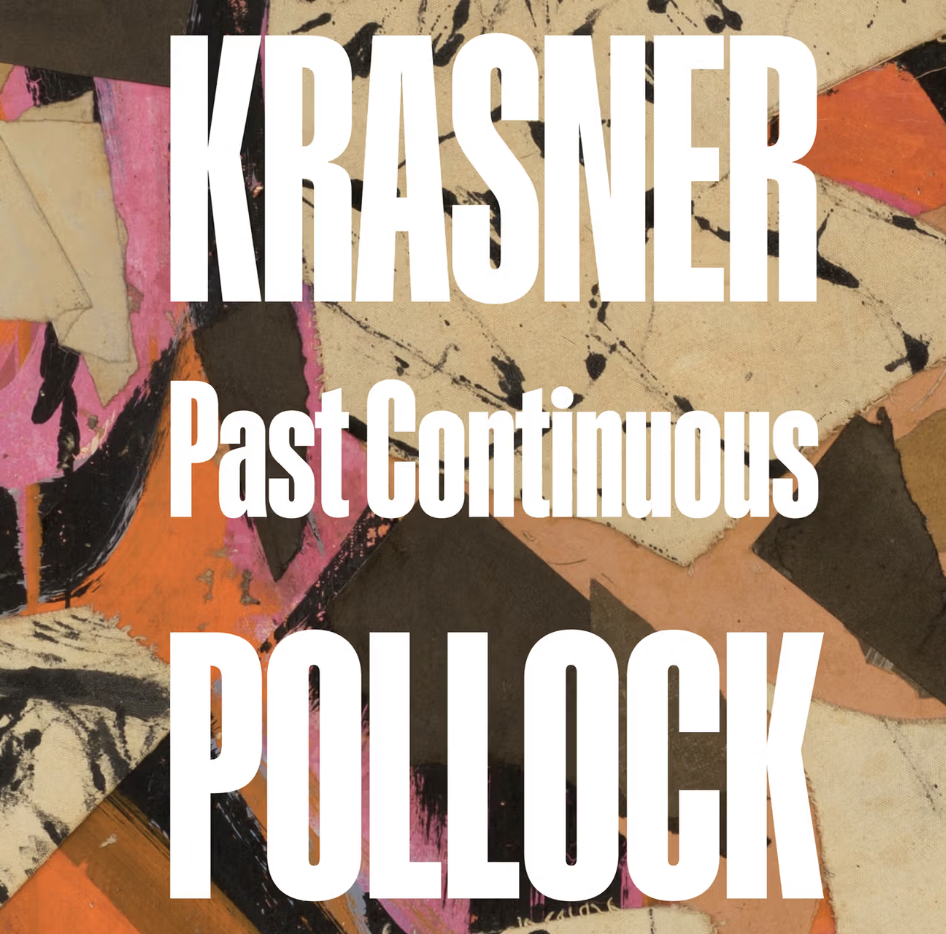
Past Continuous
October 4, 2026–January 31, 2027
Metropolitan Museum of Art, NYC.
Krasner and Pollock: Past Continuous brings together more than 120 works to examine the development of Krasner and Jackson Pollock as two distinct artists whose practices evolved alongside—and in conversation with—one another.
The exhibition takes its title from Krasner's 1976 painting Past Continuous, reflecting an artistic practice deeply engaged with transformation, memory, and the reworking of what came before.
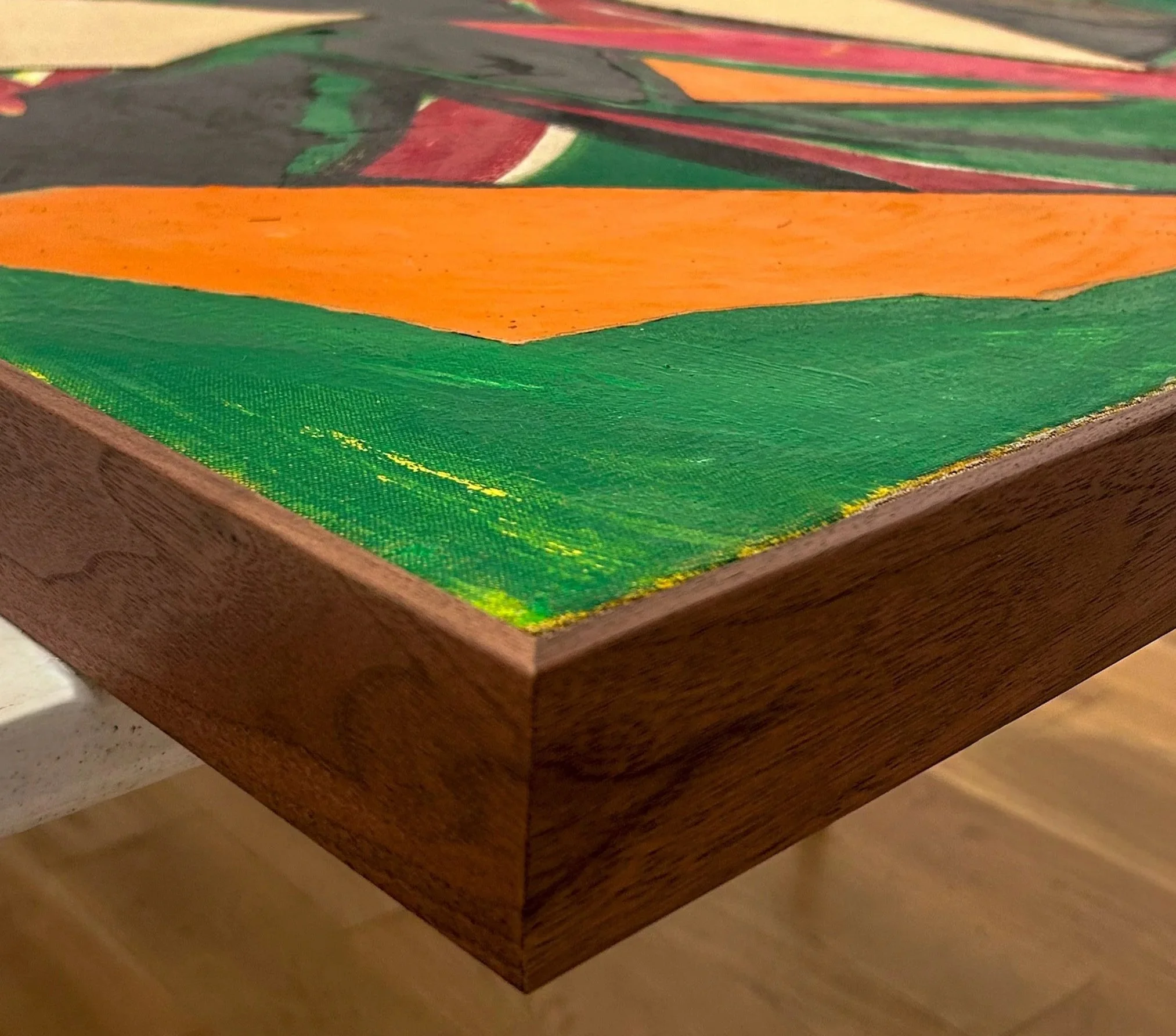
Framed by Harlem Frames
Harlem Frames custom framed two original Krasner works for the exhibition.
Harlem Frames custom framed two original Krasner works for the exhibition.
With historically significant artwork, our approach begins with the object itself. Every stage—from handling and fitting to final presentation—was carried out with care, precision, and respect for the original work.
The framing was designed to provide the structure necessary for exhibition while remaining visually restrained, allowing Krasner's surfaces, gestures, and materials to remain the focus.
For Harlem Frames, being entrusted with original works of this caliber is both a privilege and a responsibility. The frame supports the presentation; the artwork remains at the center of the experience.
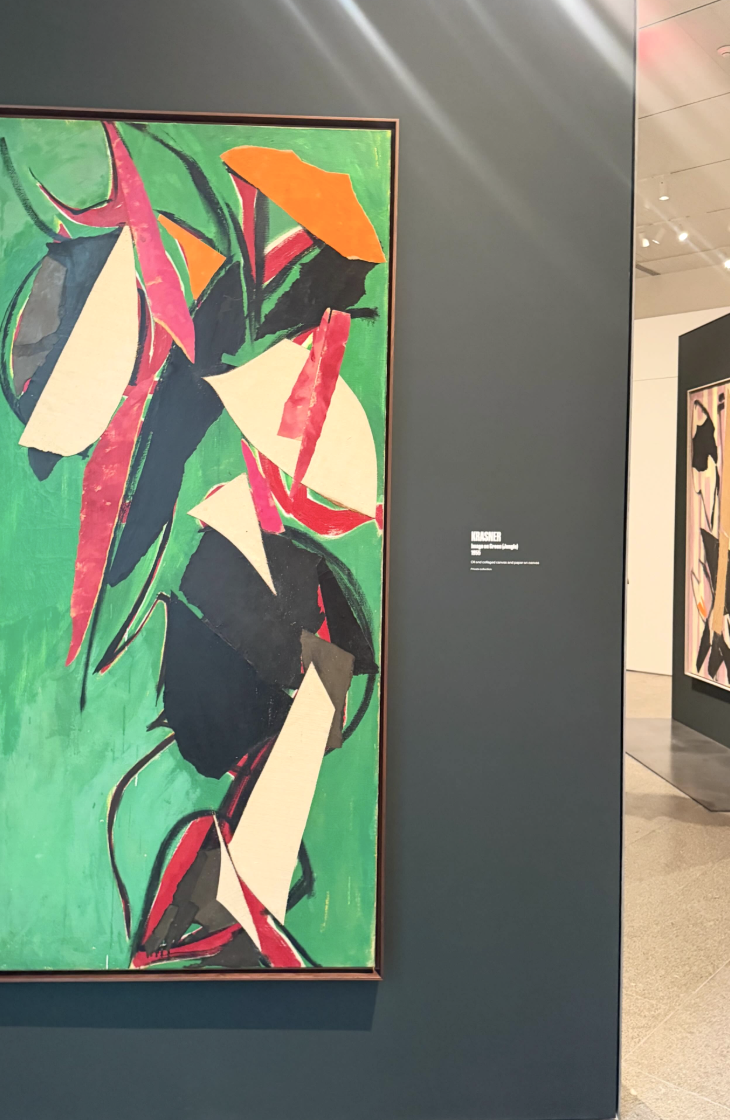
From Harlem Frames to The Met
The completed works will join Krasner and Pollock: Past Continuous at The Met Fifth Avenue from October 4, 2026 through January 31, 2027.
We're honored to have contributed to the preparation of these two original Lee Krasner works and to play a small role in bringing them to their next public presentation.
Artist: Lee Krasner (1908–1984)
Exhibition: Krasner and Pollock: Past Continuous
Dates: October 4, 2026–January 31, 2027
Works Framed: Two original works by Lee Krasner
Framing: Harlem Frames

Coming to The Met: Krasner and Pollock: Past Continuous
Opening October 4, 2026, Krasner and Pollock: Past Continuous brings together more than 120 works by Lee Krasner and Jackson Pollock, tracing the development of two distinct artistic practices before, during, and after their shared life together. The exhibition takes its title from Krasner’s 1976 painting Past Continuous and highlights the experimentation, exchange, and continual evolution that shaped both artists’ work.
Harlem Frames is honored to have played a small part in preparing for the exhibition, custom framing two original works by Lee Krasner for their presentation at The Met. It was a privilege to handle and frame these works with the care, precision, and respect their exhibition presentation requires.
October 4, 2026–January 31, 2027
The Metropolitan Museum of Art · New York
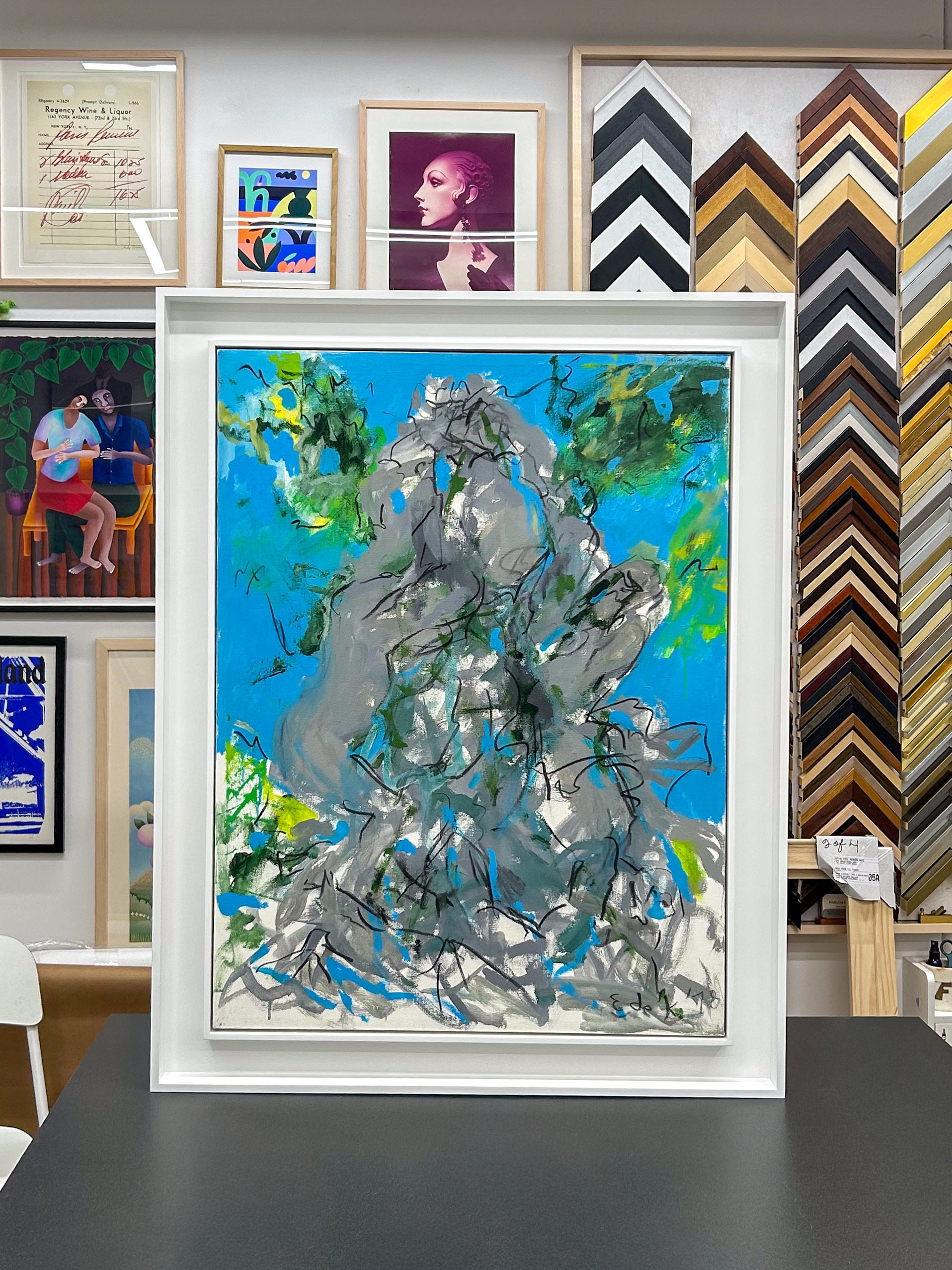
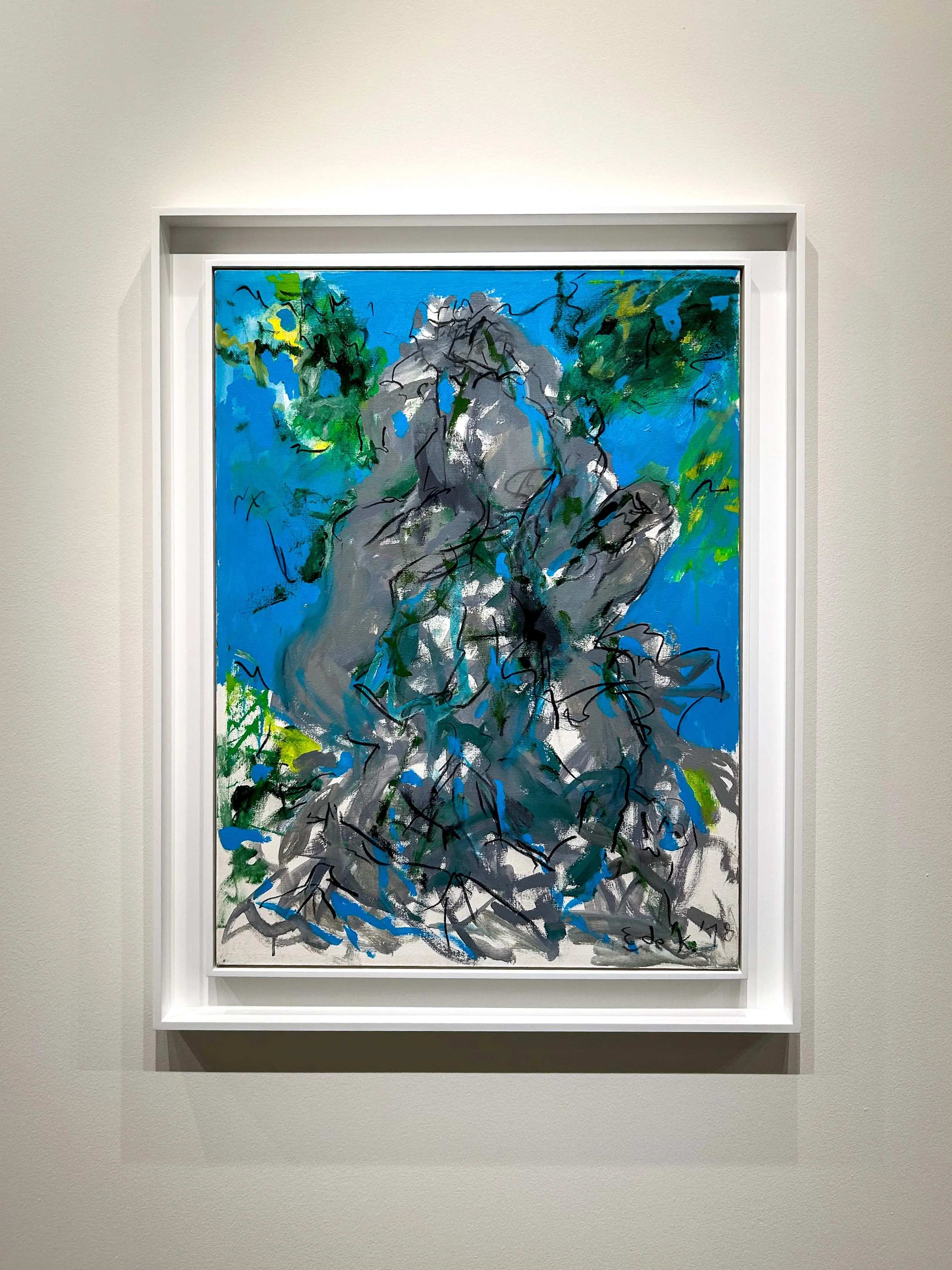
Elaine de Kooning · Bacchus Series
Original Paintings · Custom Framing by Harlem Frames · 2026
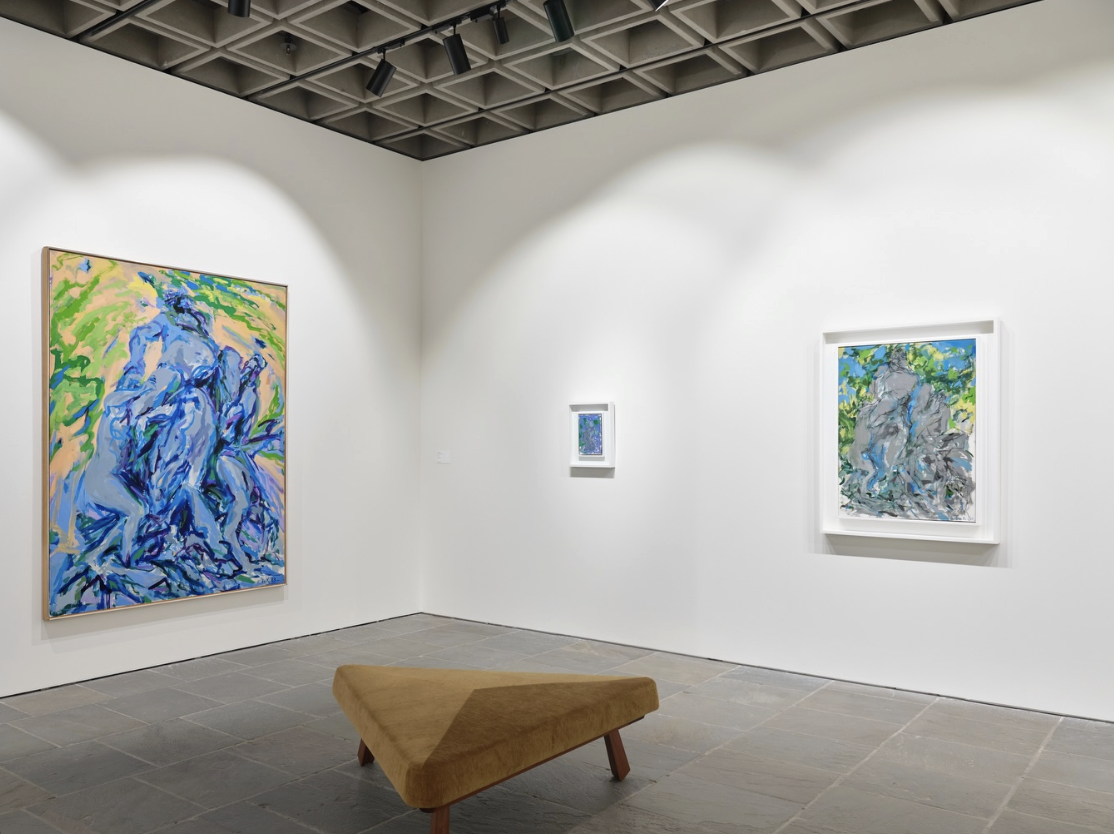
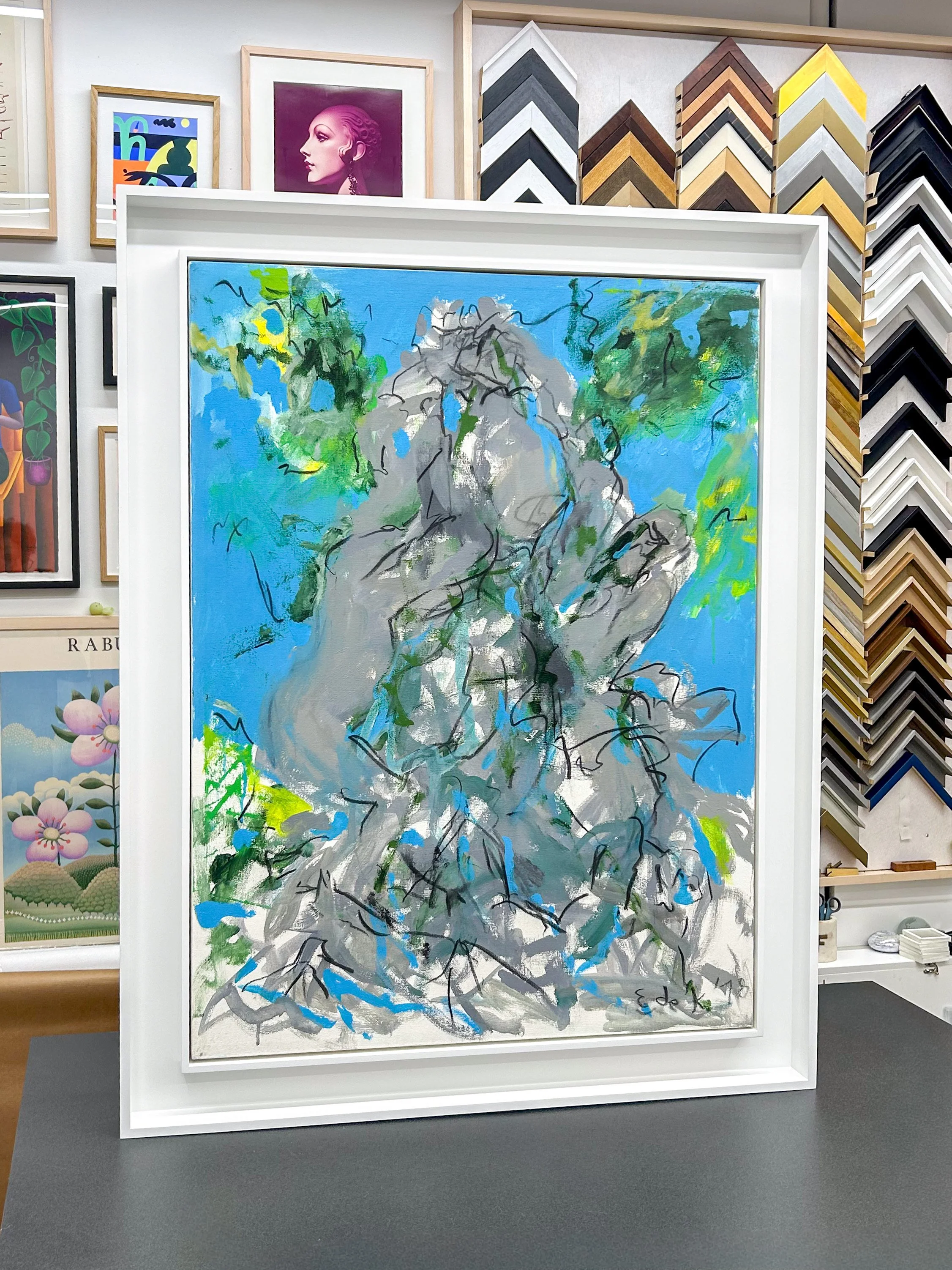
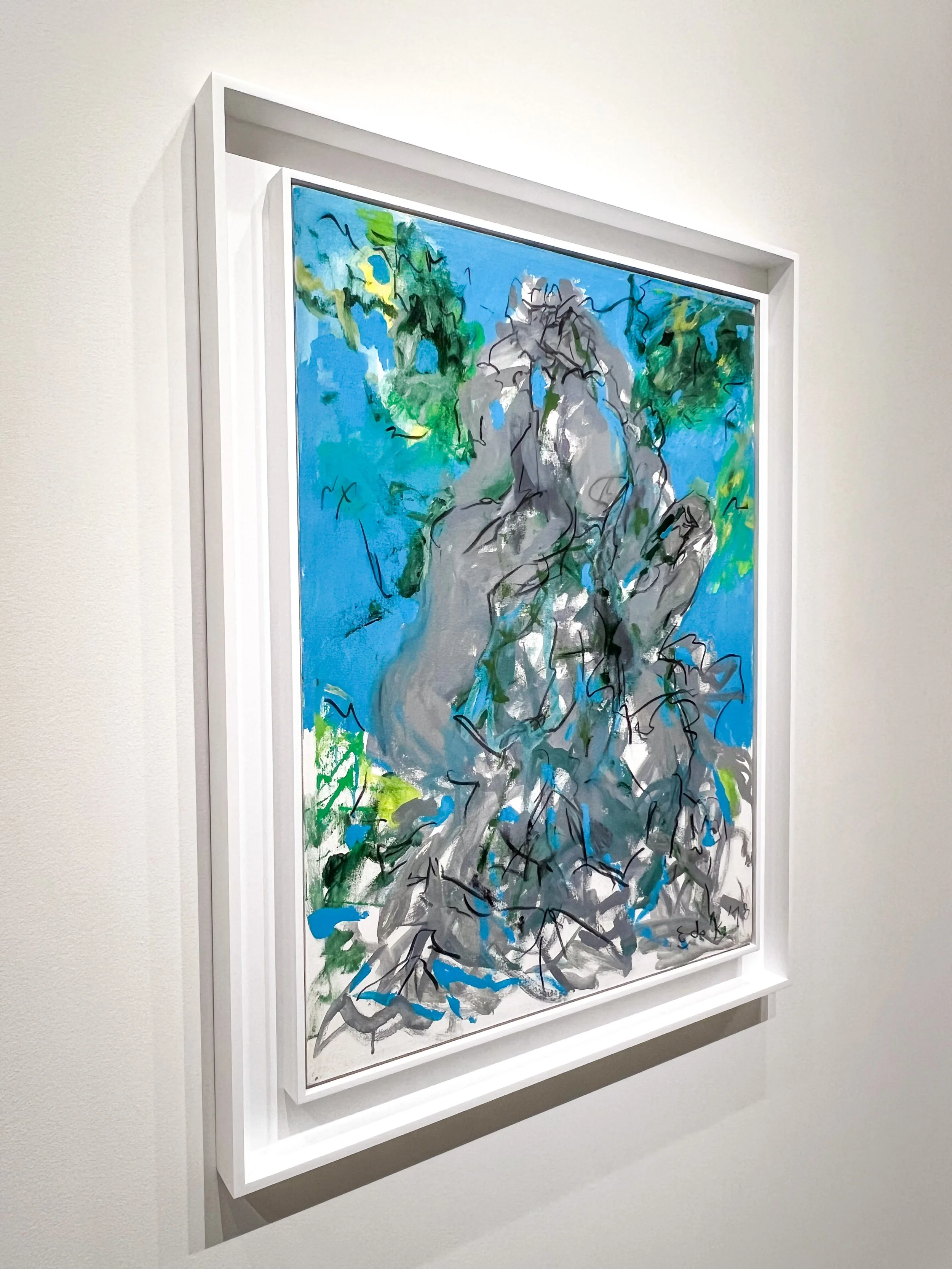
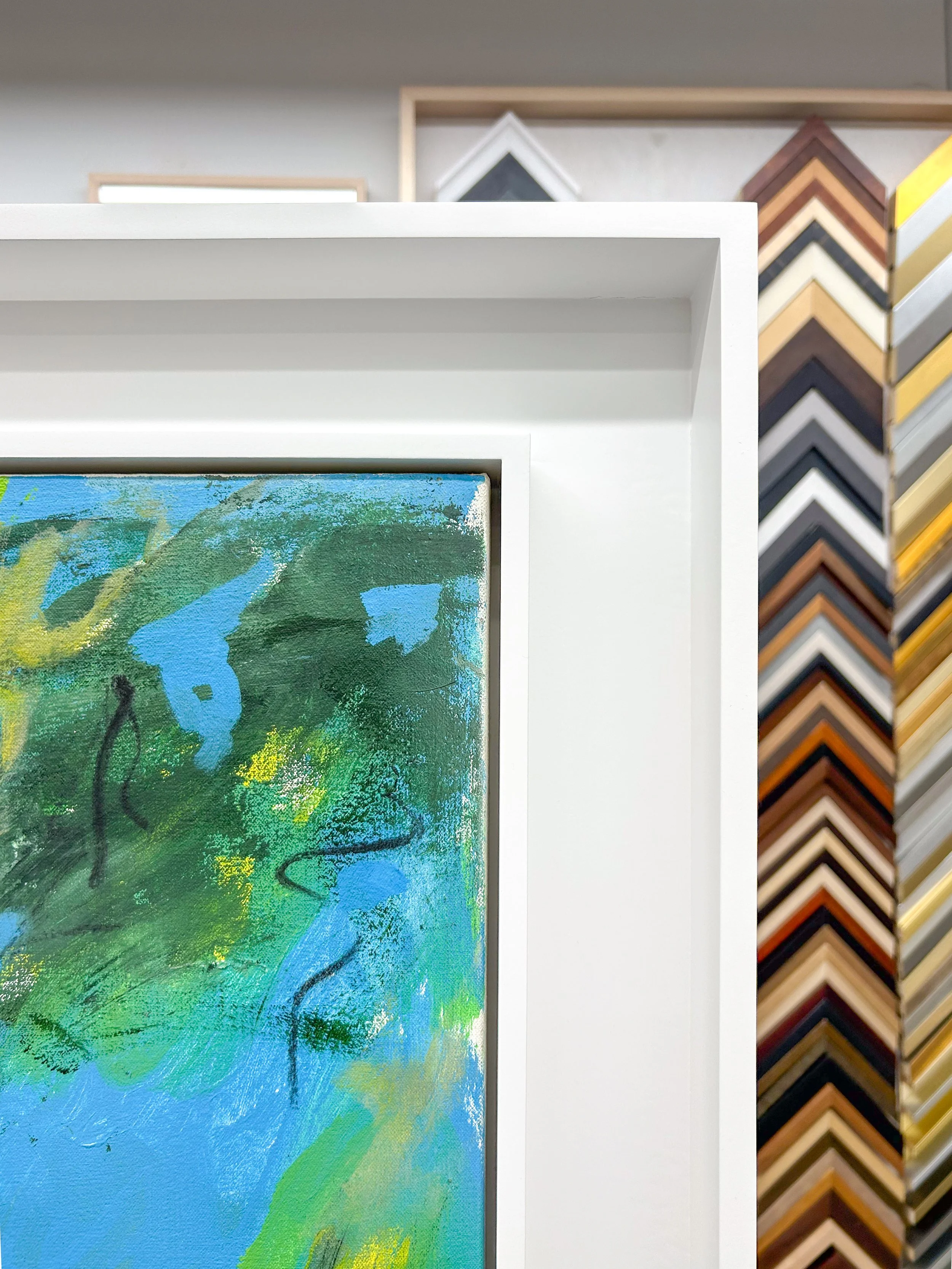
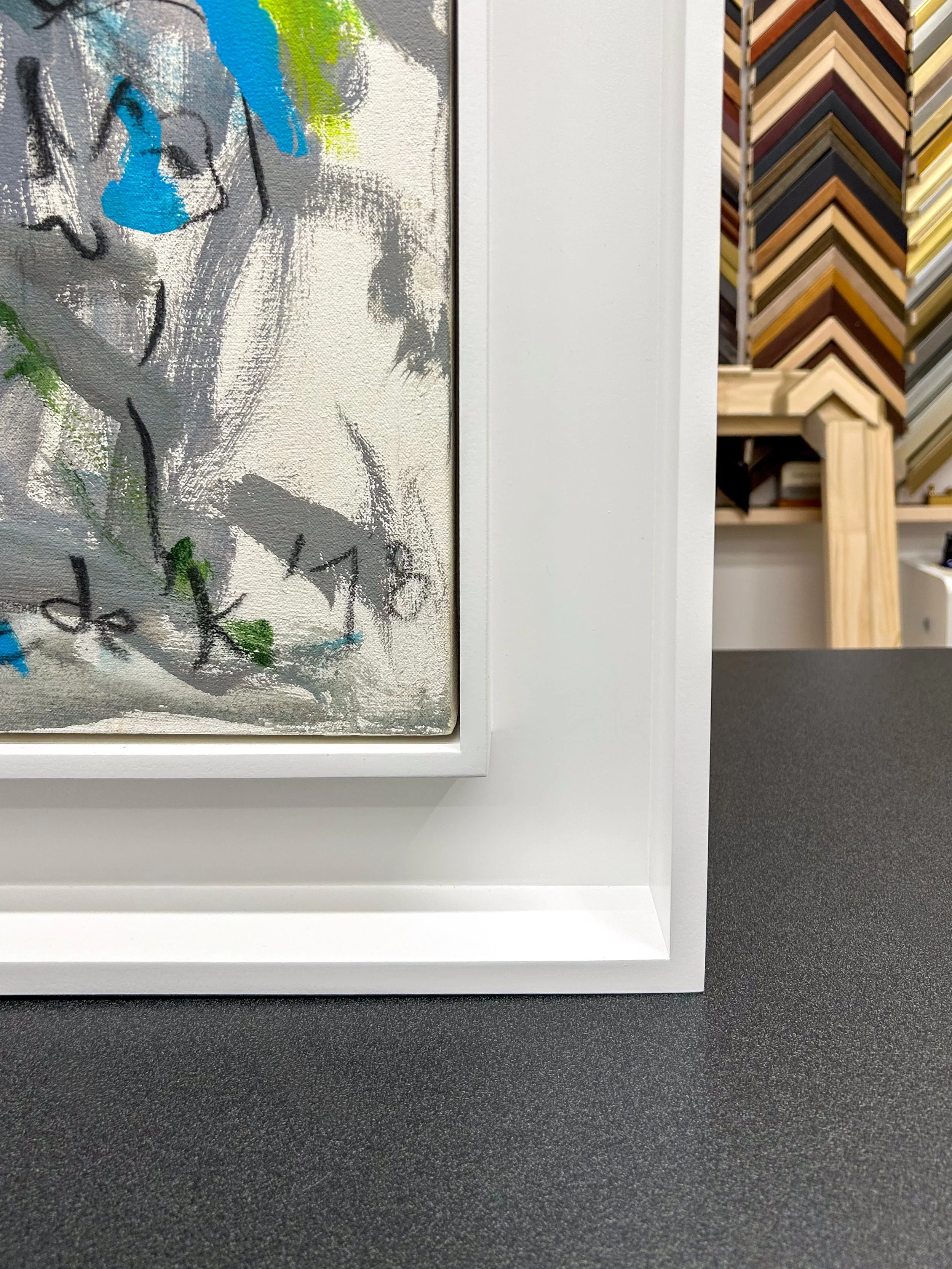
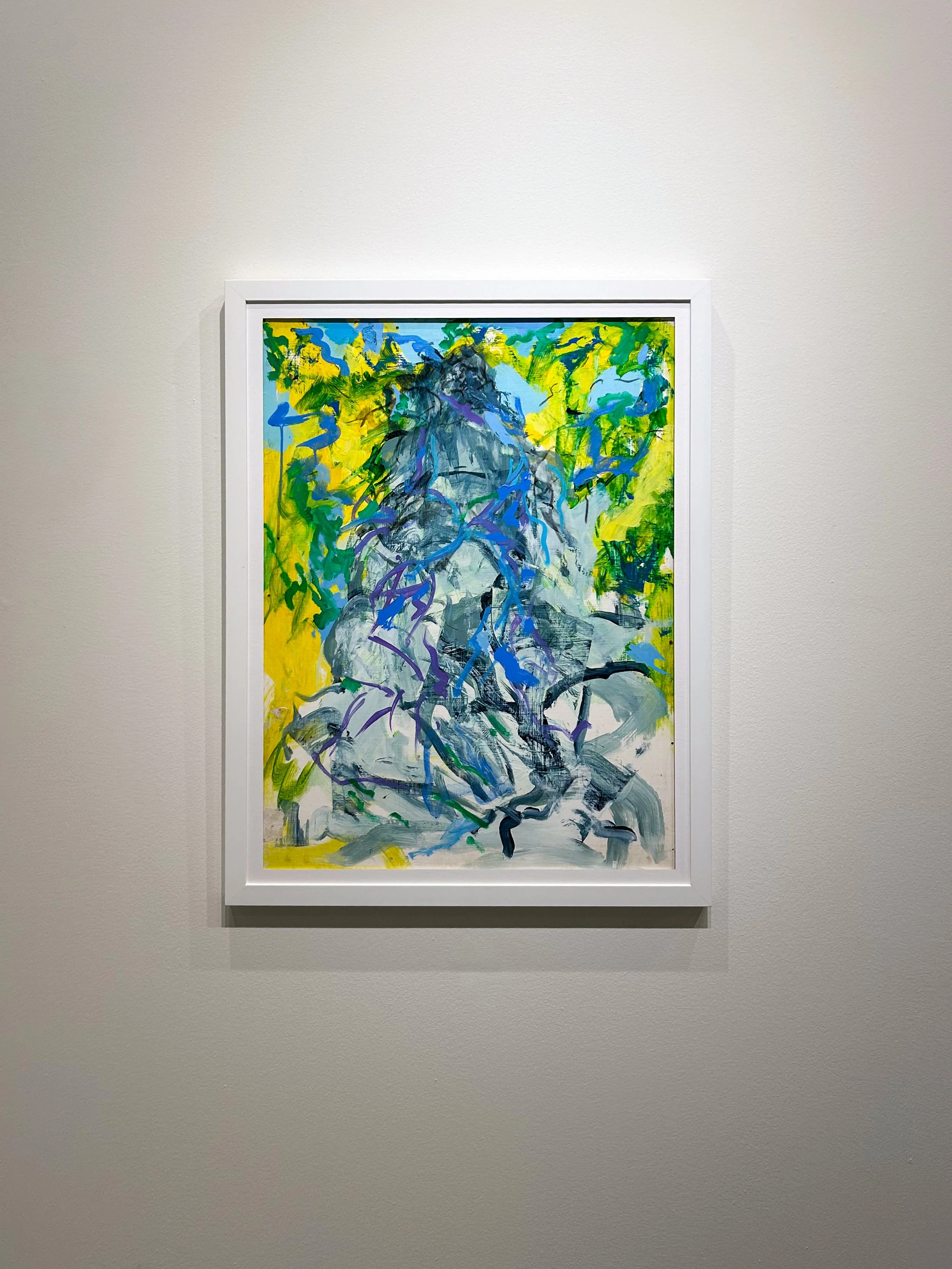
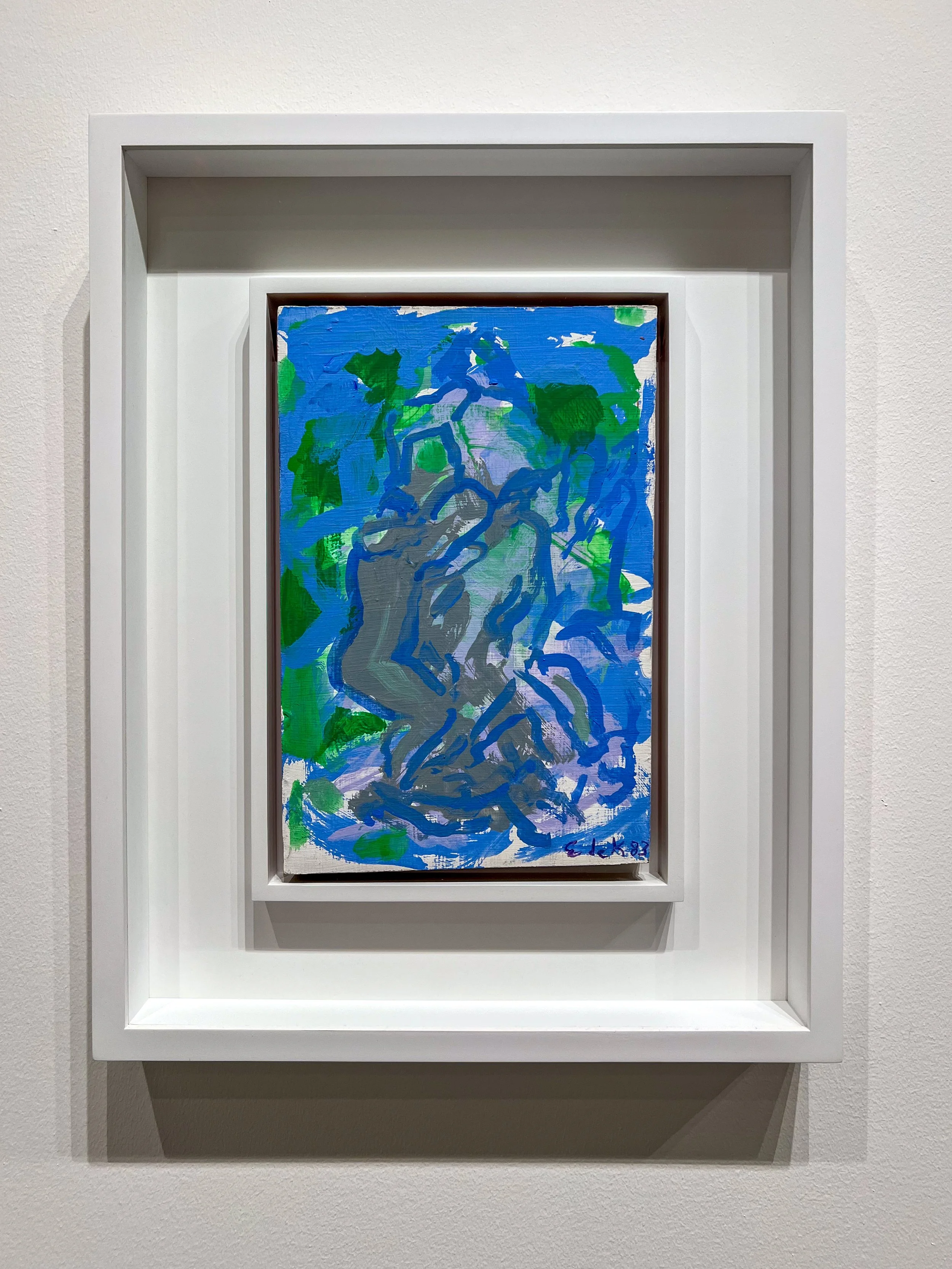
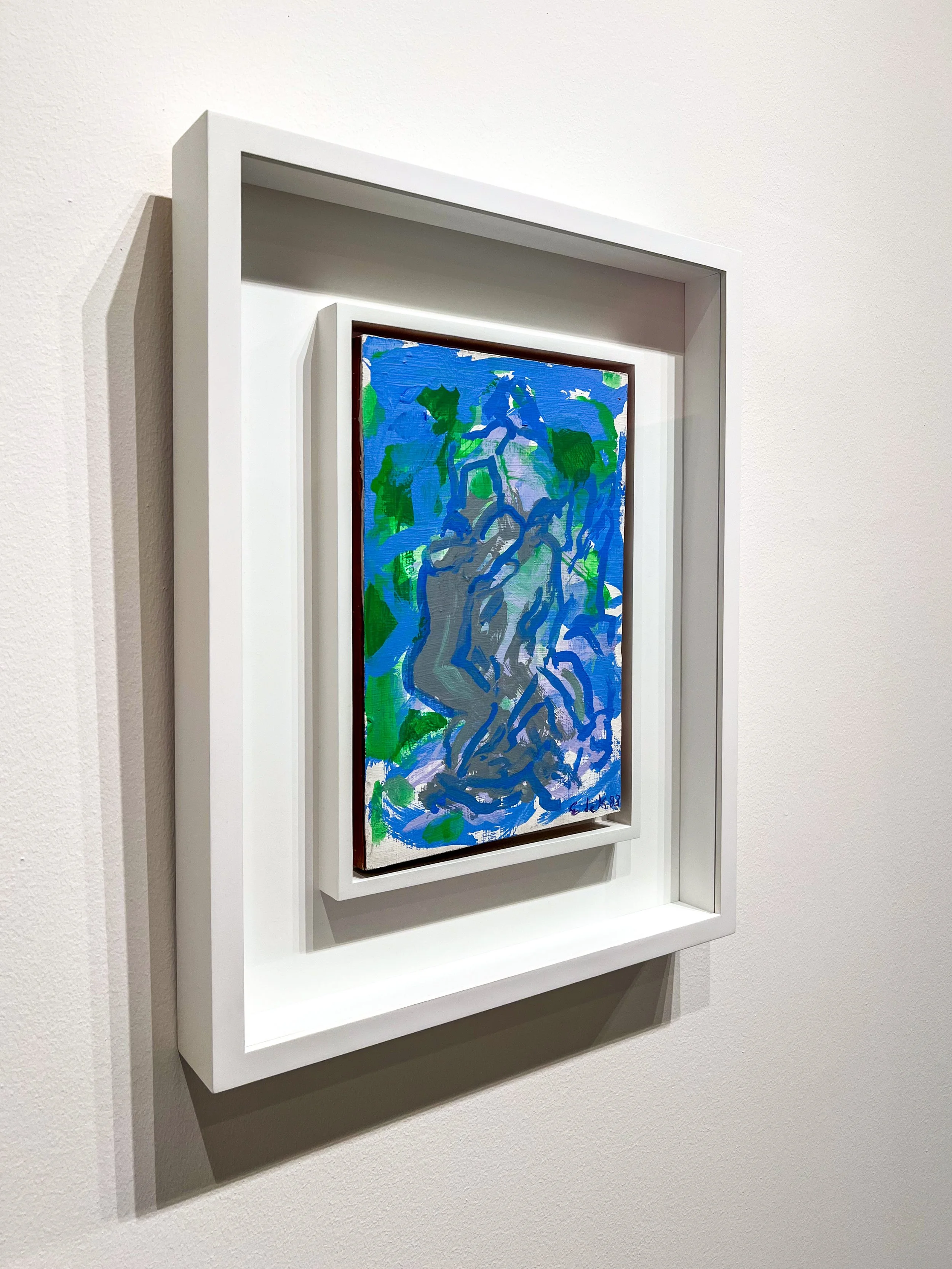
Harlem Frames was entrusted with the framing of original paintings from Elaine de Kooning's celebrated Bacchus series, preparing the works for their presentation by Olney Gleason at Independent 20th Century in New York.
Working directly with these significant original paintings called for a careful and restrained approach—one that respected the physical character of each work while allowing de Kooning's extraordinary color, gesture, and movement to remain at the center of the presentation.
The Bacchus Series
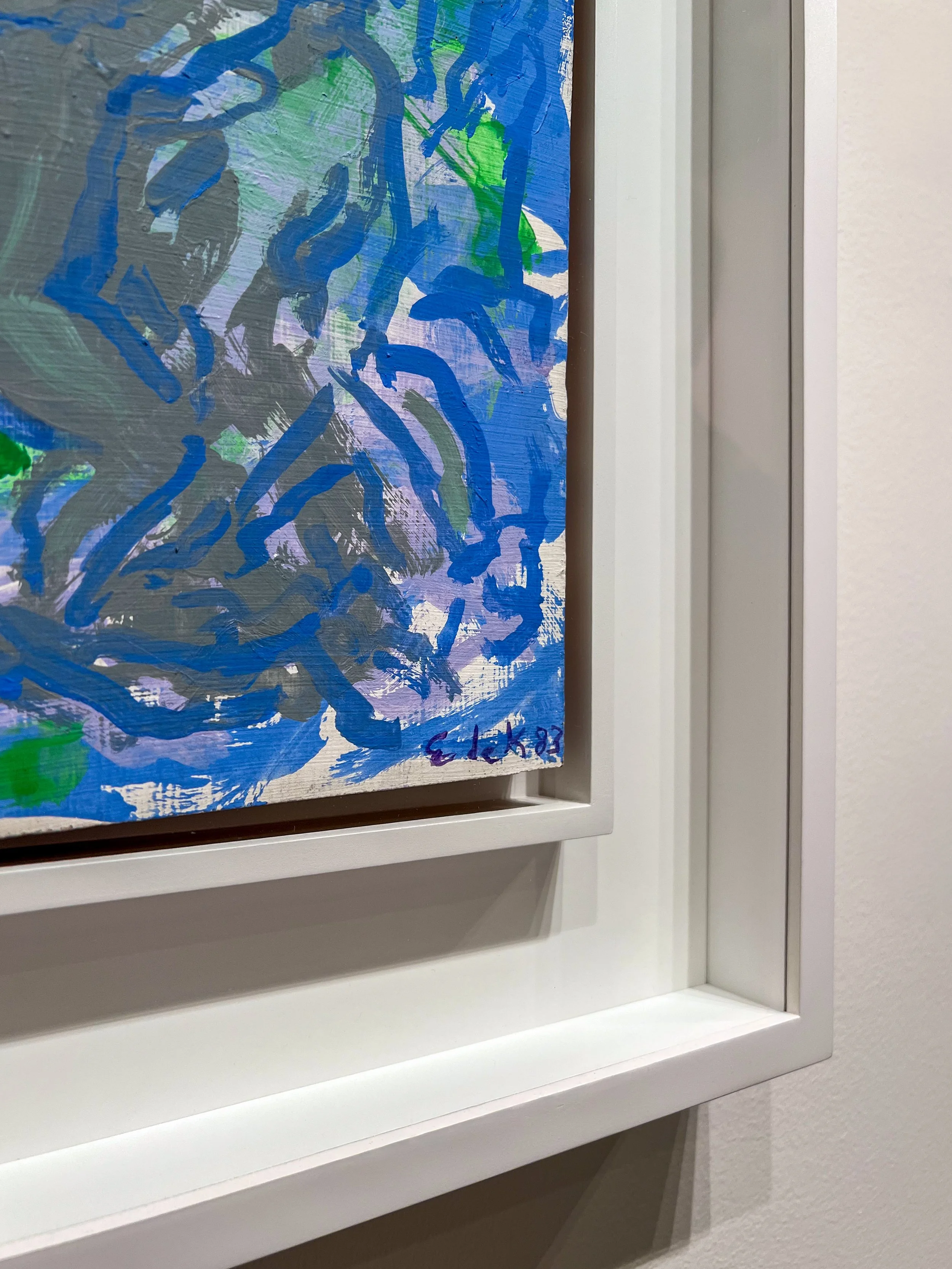
Created between 1976 and 1983, Bacchus became one of de Kooning's most sustained bodies of work.
(Image courtesy of Olney Gleason)
The series originated with her studies of a 19th-century bronze sculpture of Bacchus in Paris's Jardin du Luxembourg. Fascinated by how the twisting figure appeared to change as she moved around it, de Kooning repeatedly sketched the sculpture from different perspectives. Those observations eventually developed into a series of paintings in which the figure emerges and dissolves through energetic fields of color and sweeping gesture.
The resulting works capture what makes de Kooning's painting so distinctive: movement, immediacy, and a constant tension between figuration and abstraction.
Framed in Harlem
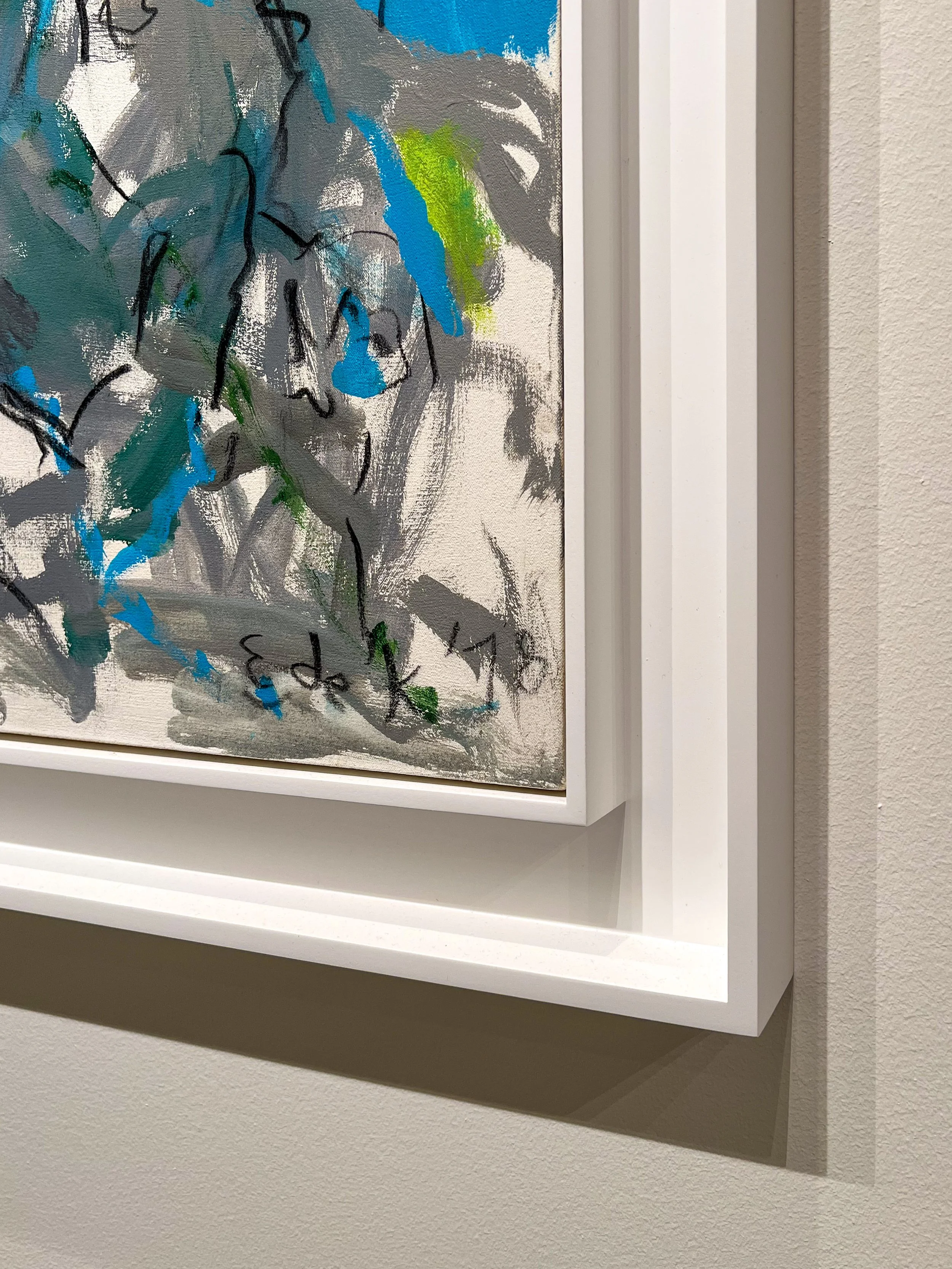
Harlem Frames custom framed the original Bacchus works with close attention to their scale, surfaces, edges, condition, and individual presentation requirements.
With historically significant artwork, the framing process is as much about restraint as design. Each work was handled and fitted with precision, with the goal of creating a professional exhibition presentation without competing with the paintings themselves.
Being entrusted with original works of this caliber is a responsibility we take seriously. From their arrival in our studio through final fitting, every stage was approached with the care and professionalism these paintings require.
The frame provides the structure. De Kooning's paintings provide the energy.
From Harlem Frames to Independent 20th Century
The completed works were presented by Olney Gleason at Independent 20th Century, held September 24–27, 2026 at The Breuer in New York.
For Harlem Frames, seeing the paintings move from our worktables to their finished exhibition setting completed the process—and offered the privilege of contributing, through framing, to the presentation of an extraordinary body of work.
Artist: Elaine de Kooning (1918–1989)
Series: Bacchus, 1976–1983
Presentation: Olney Gleason · Independent 20th Century
Framing: Harlem Frames
Artwork: © Elaine de Kooning Trust
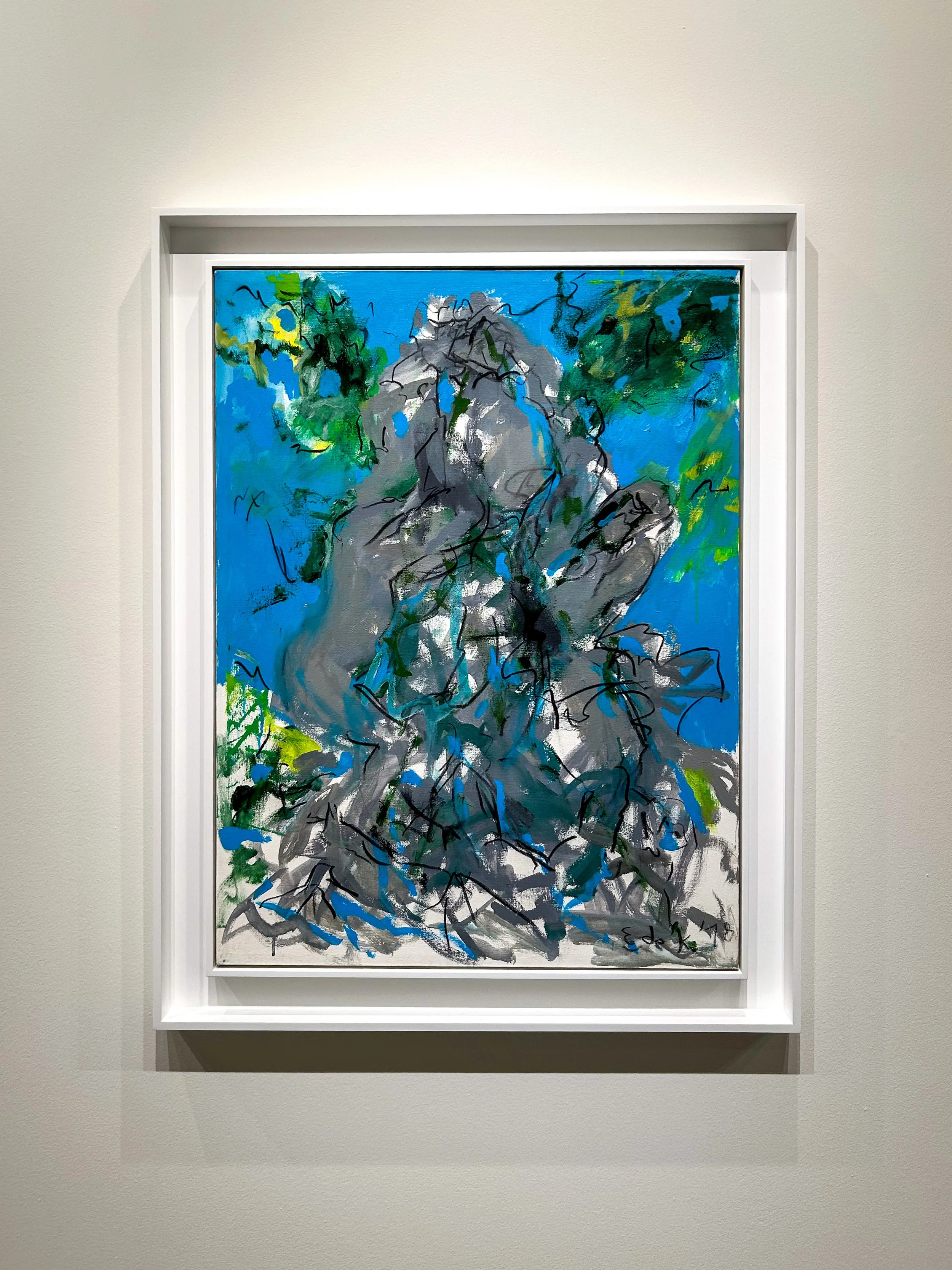
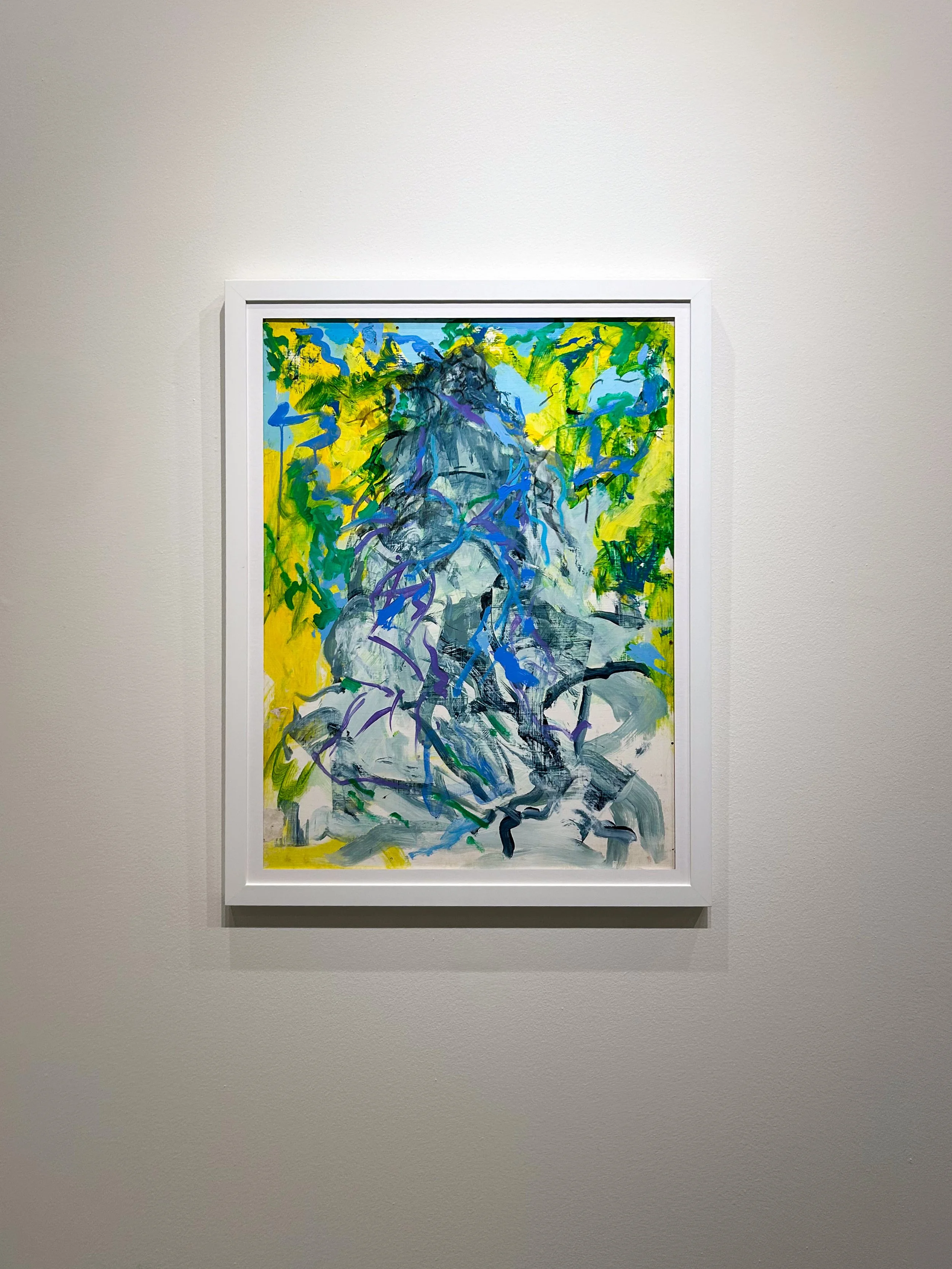
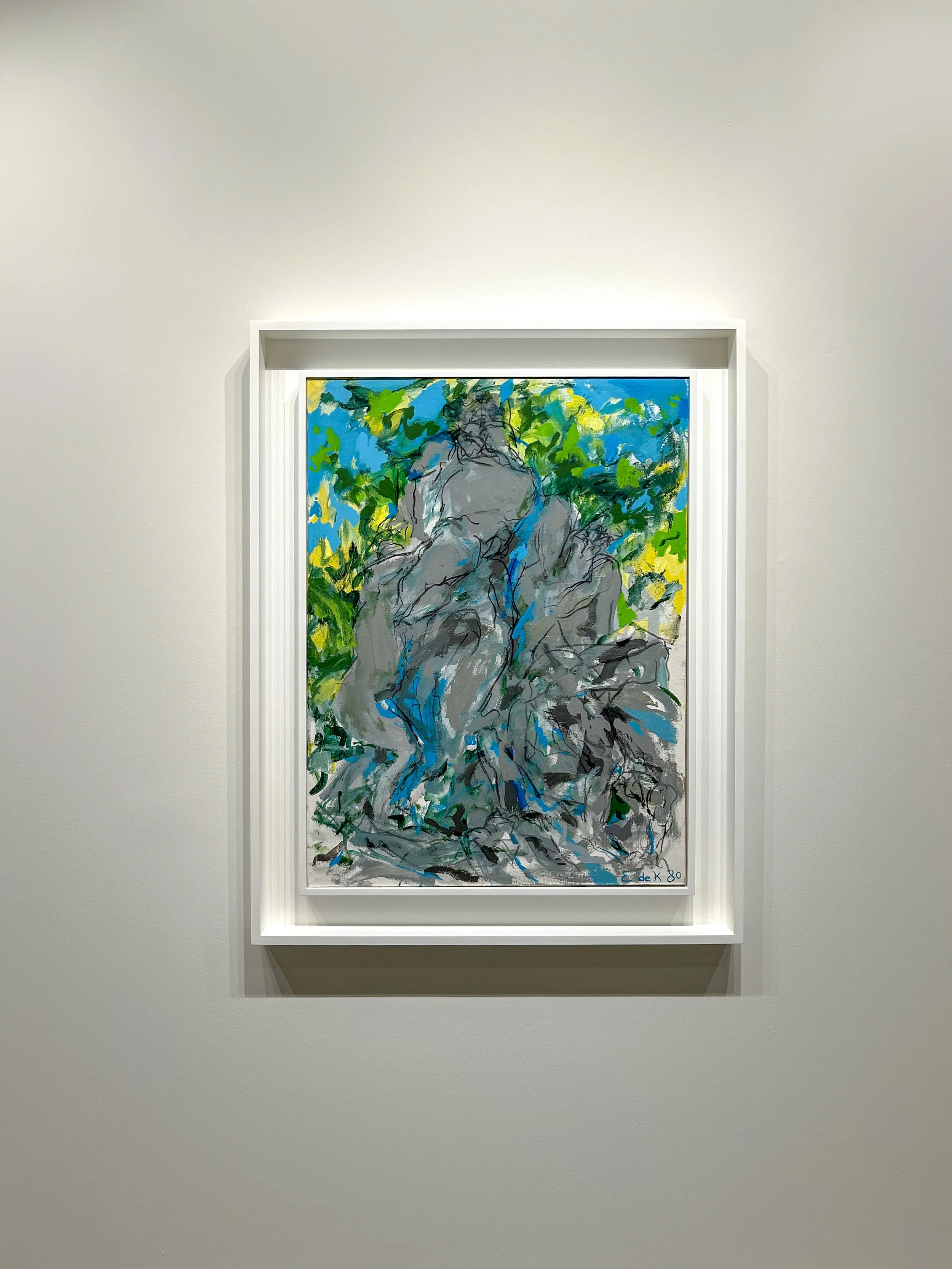
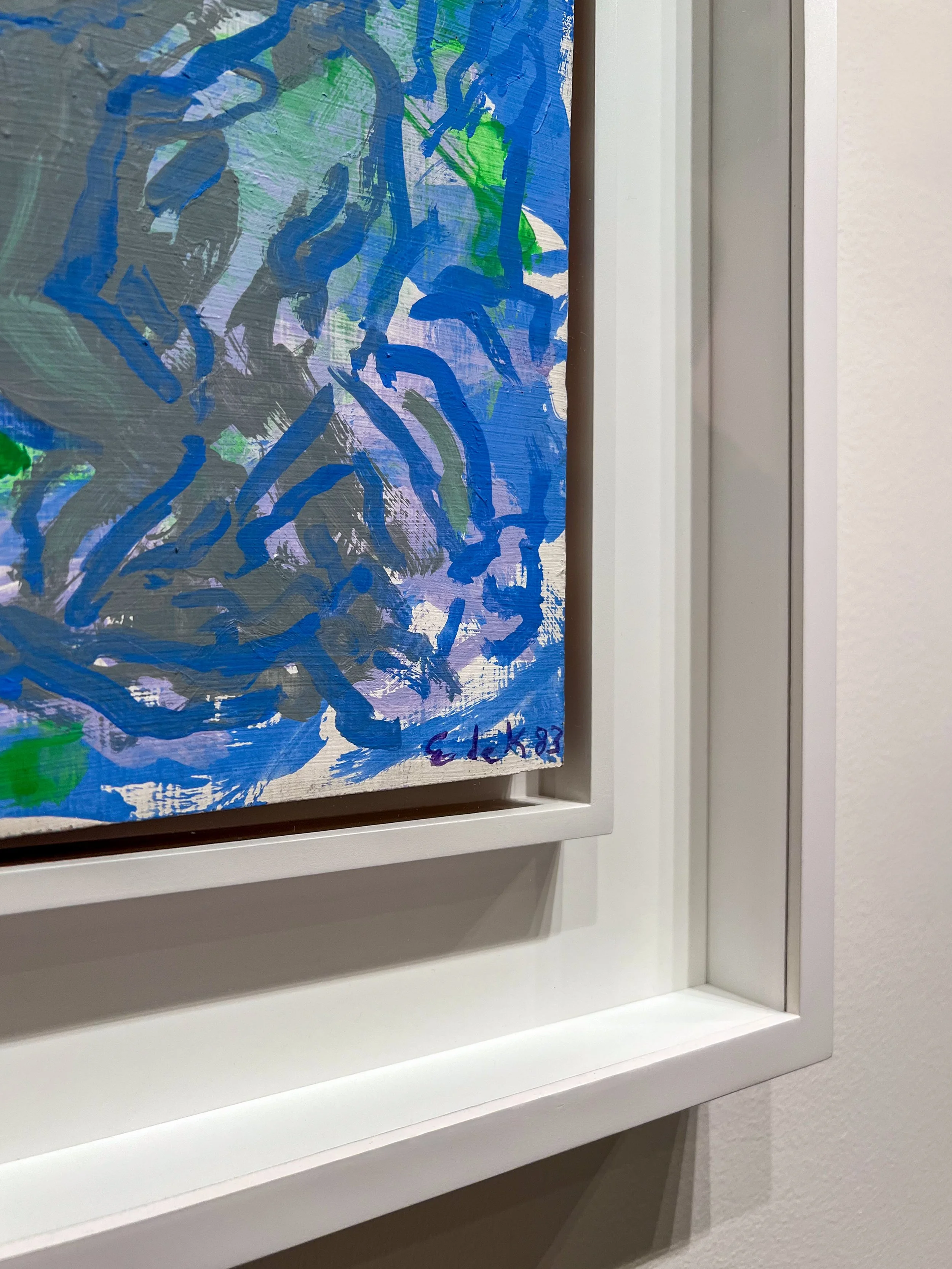
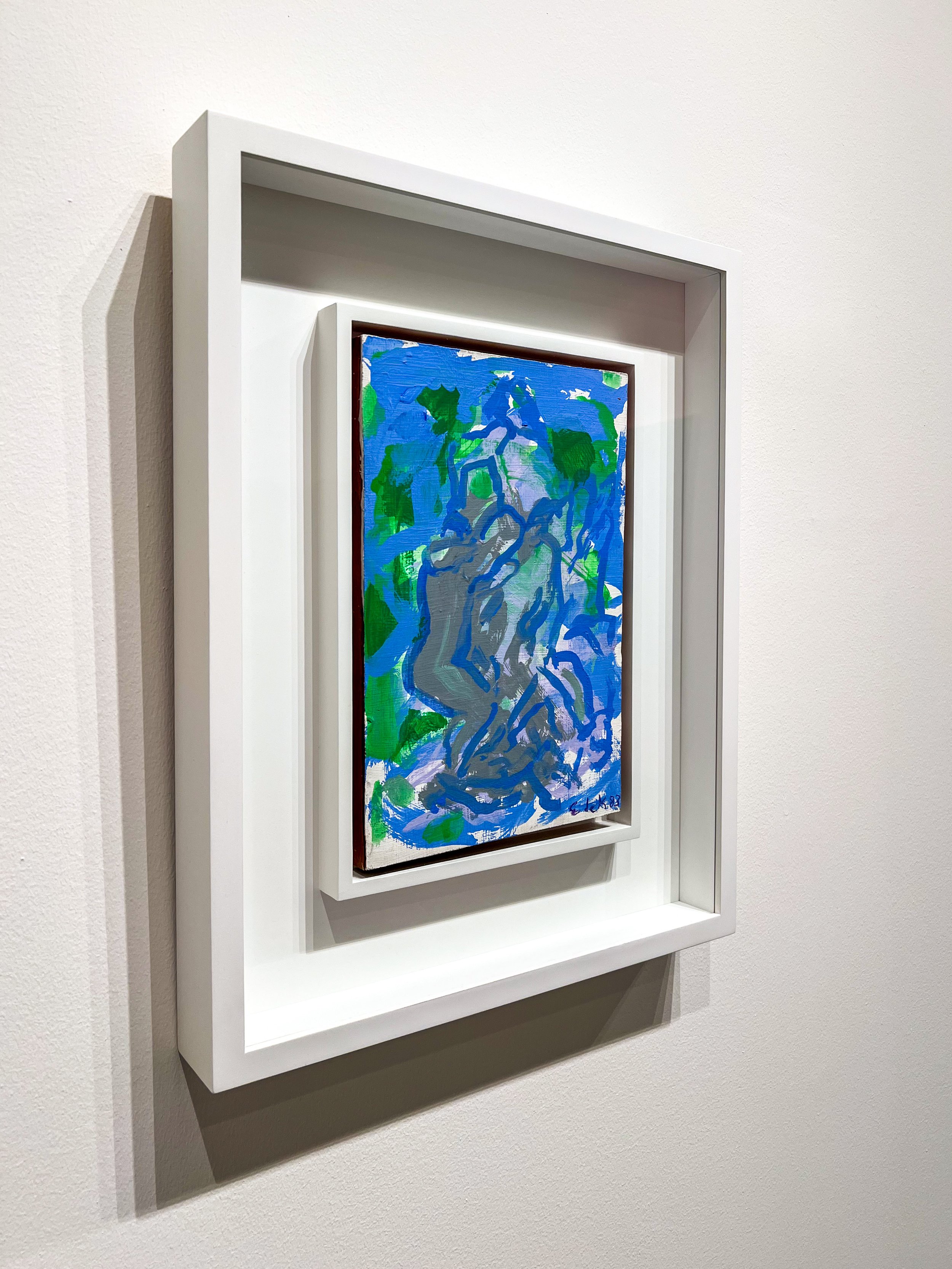
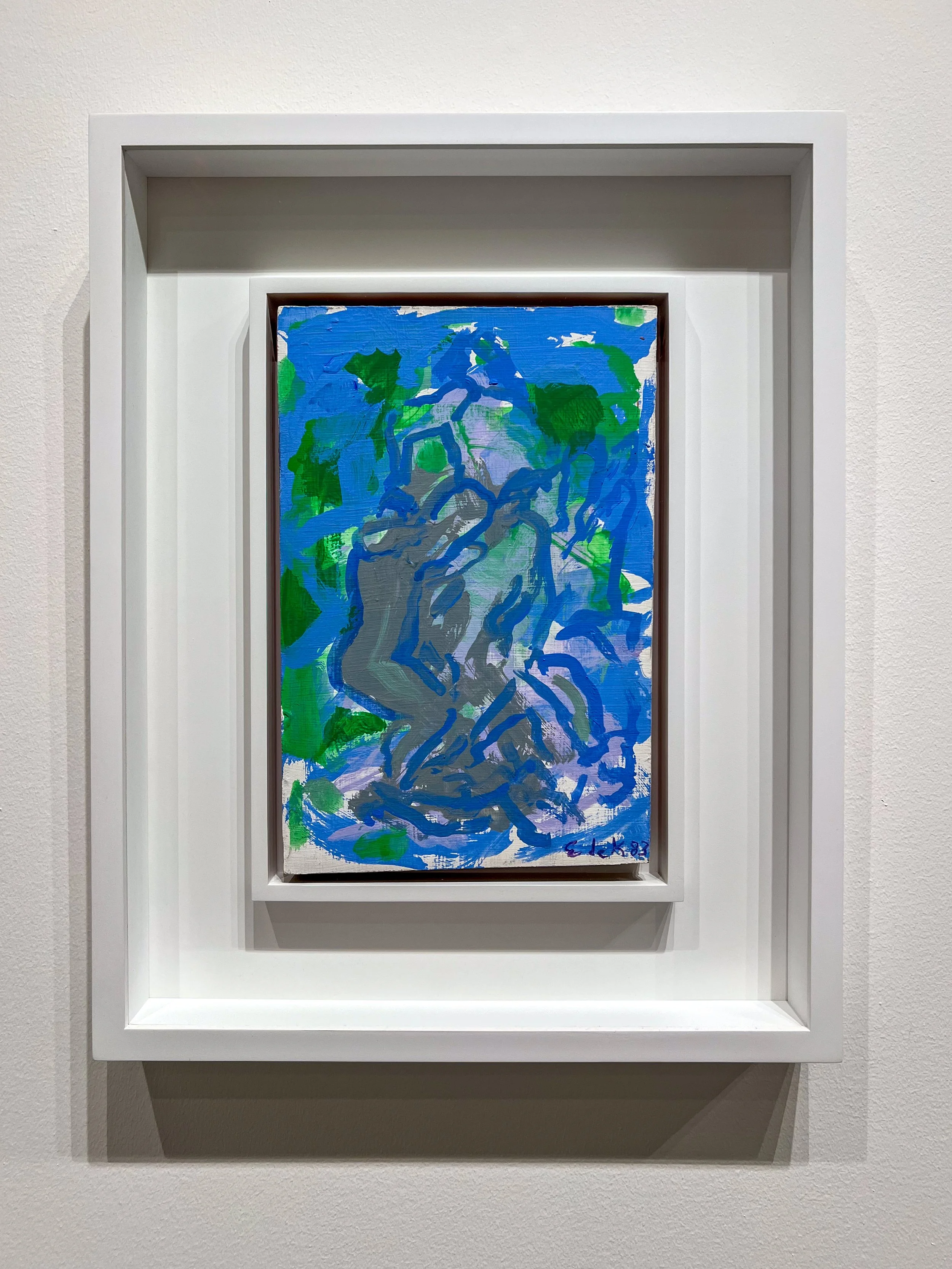
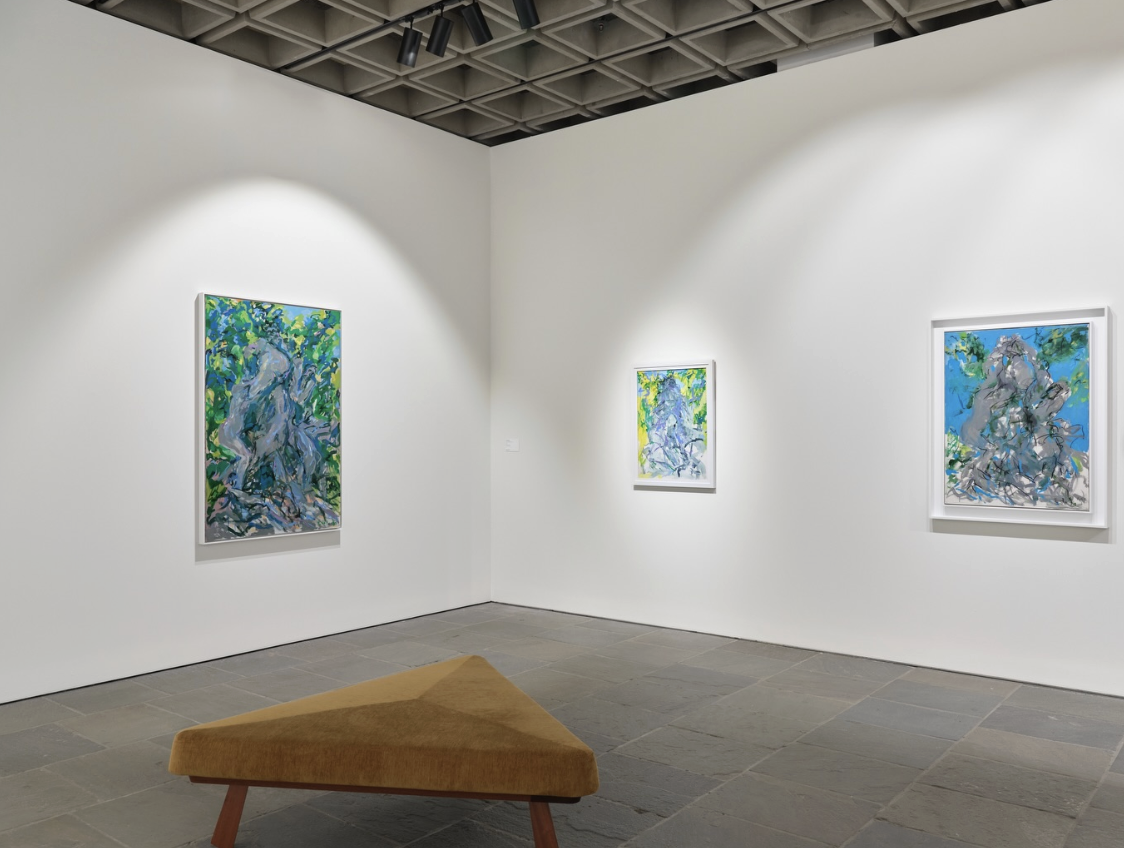
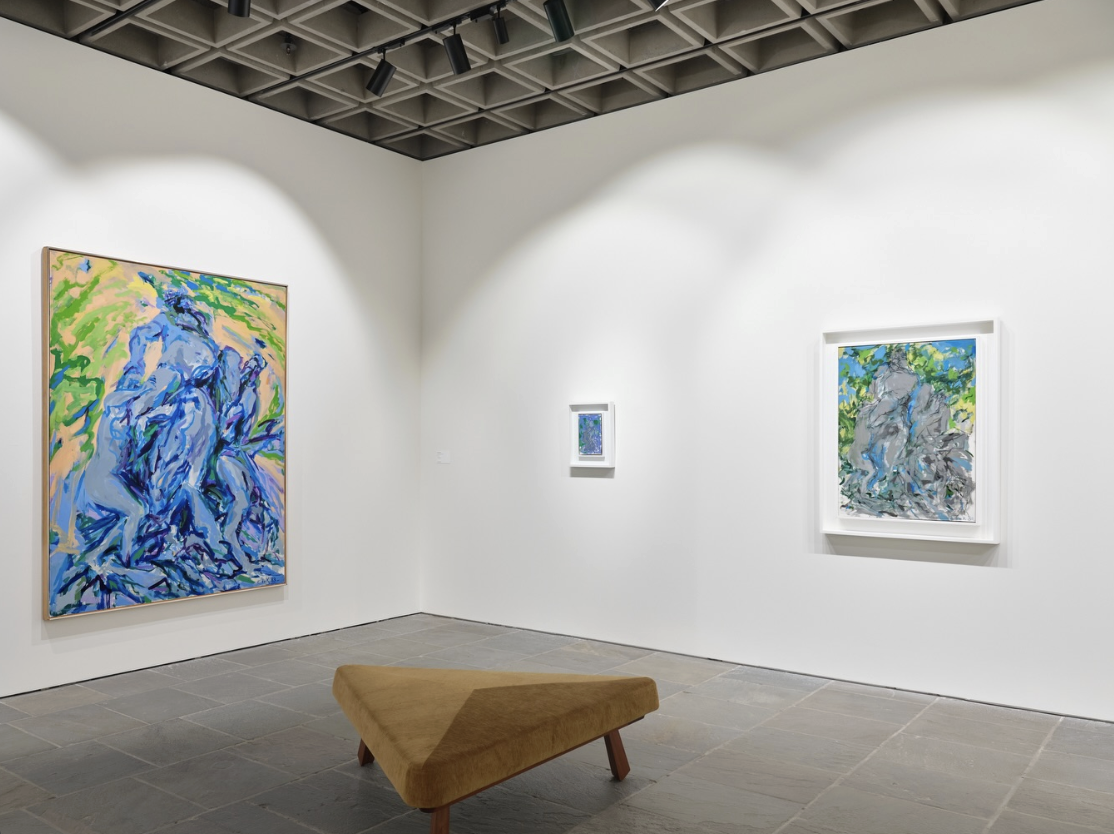
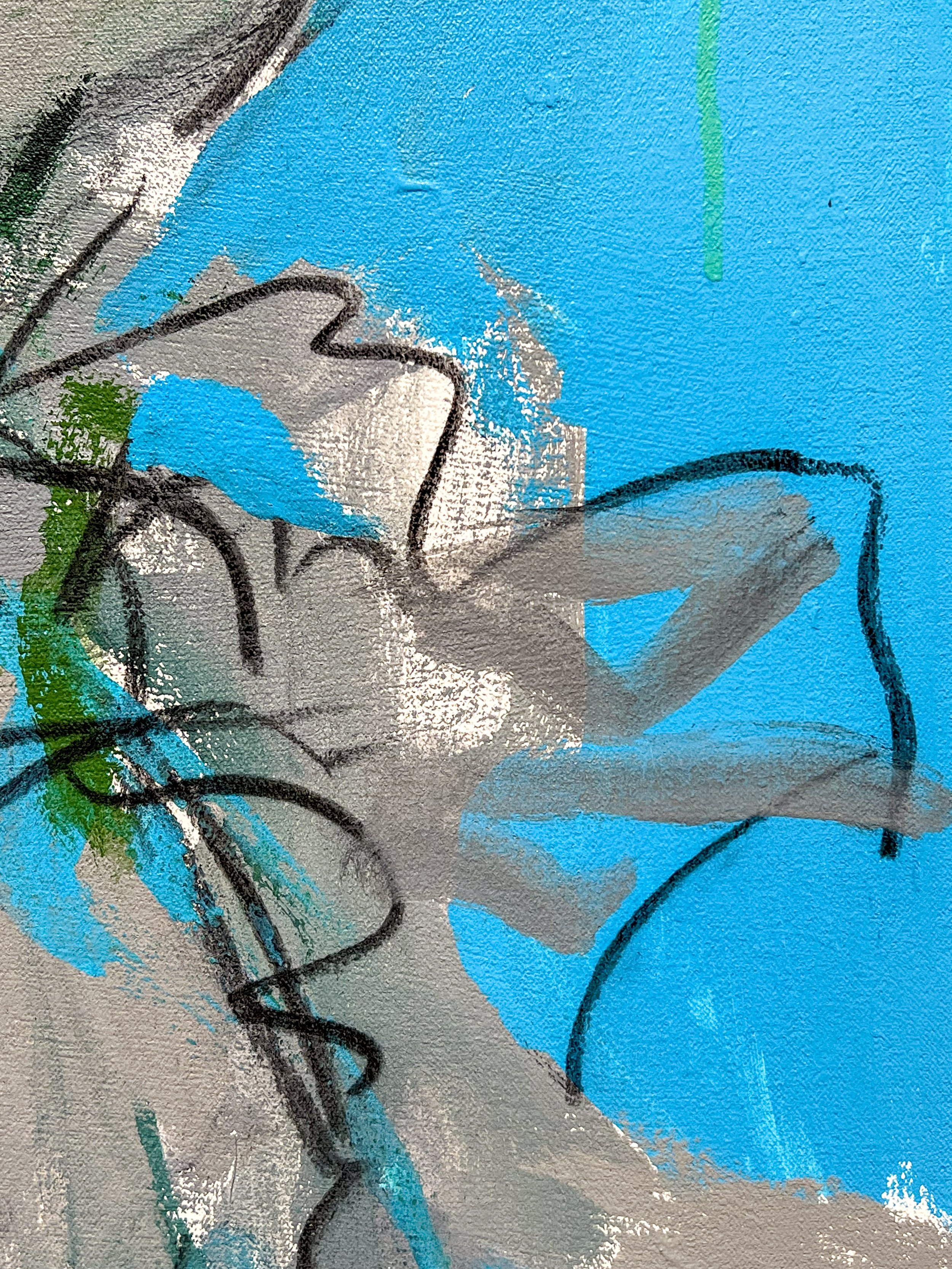
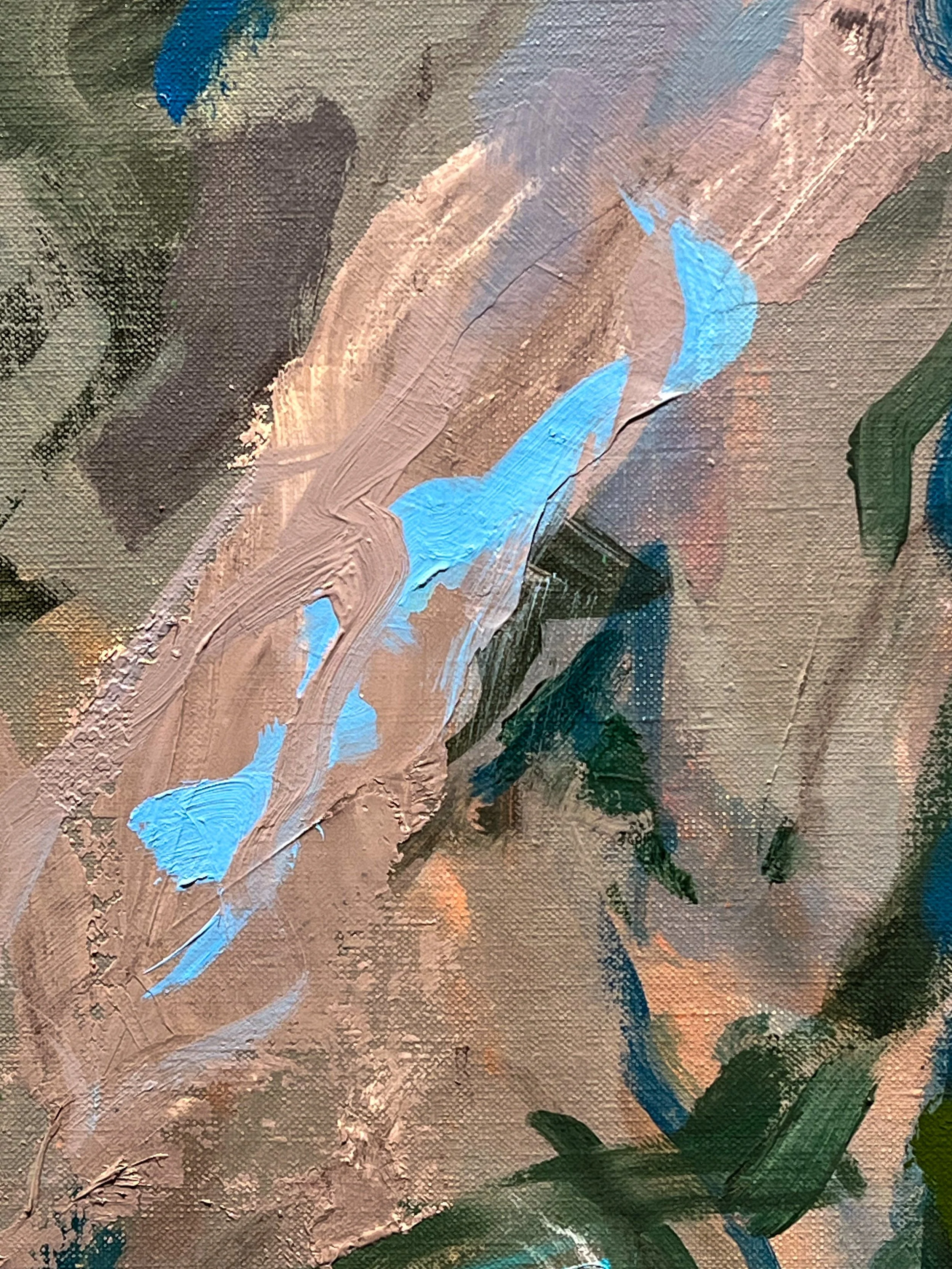
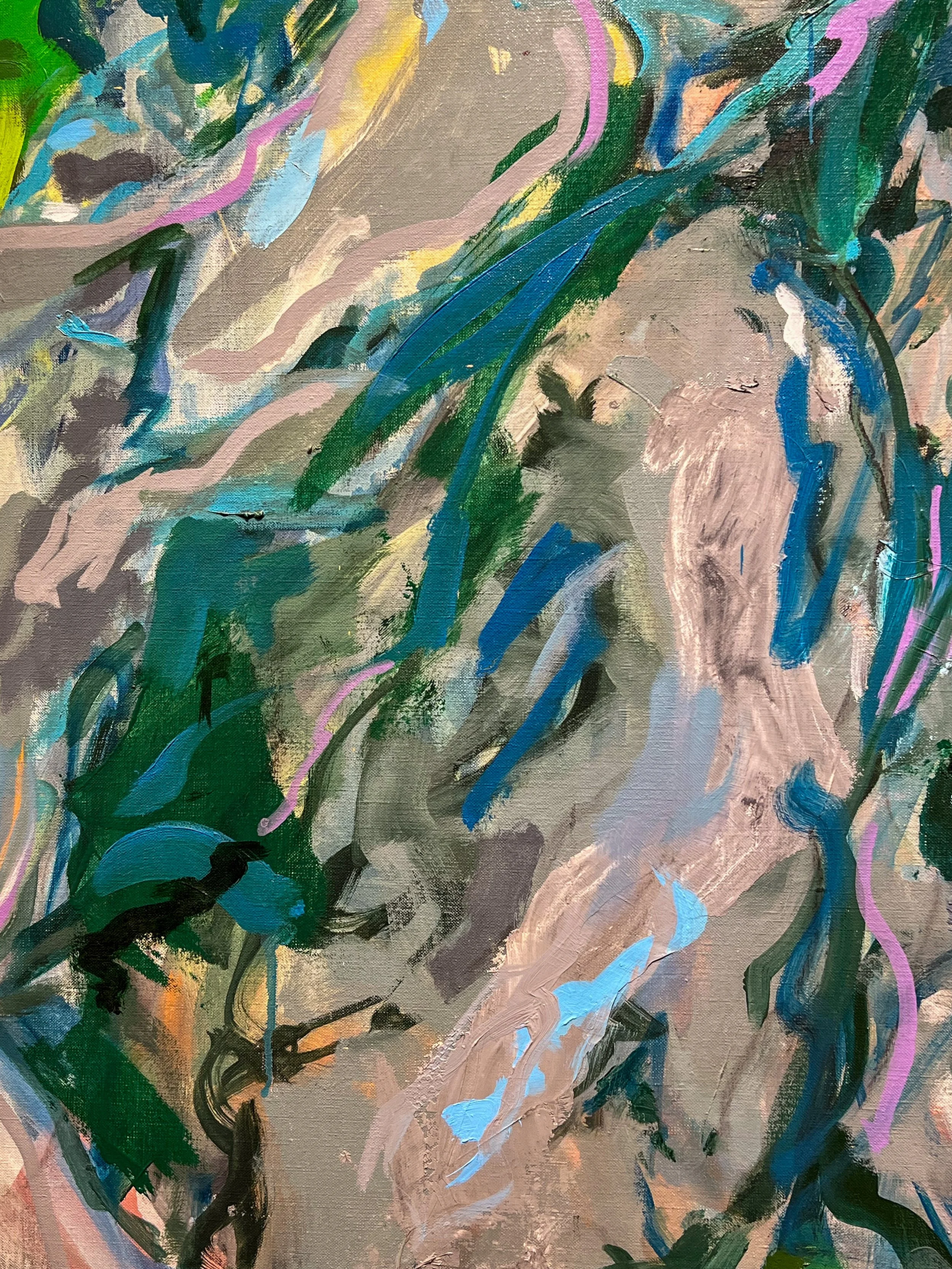
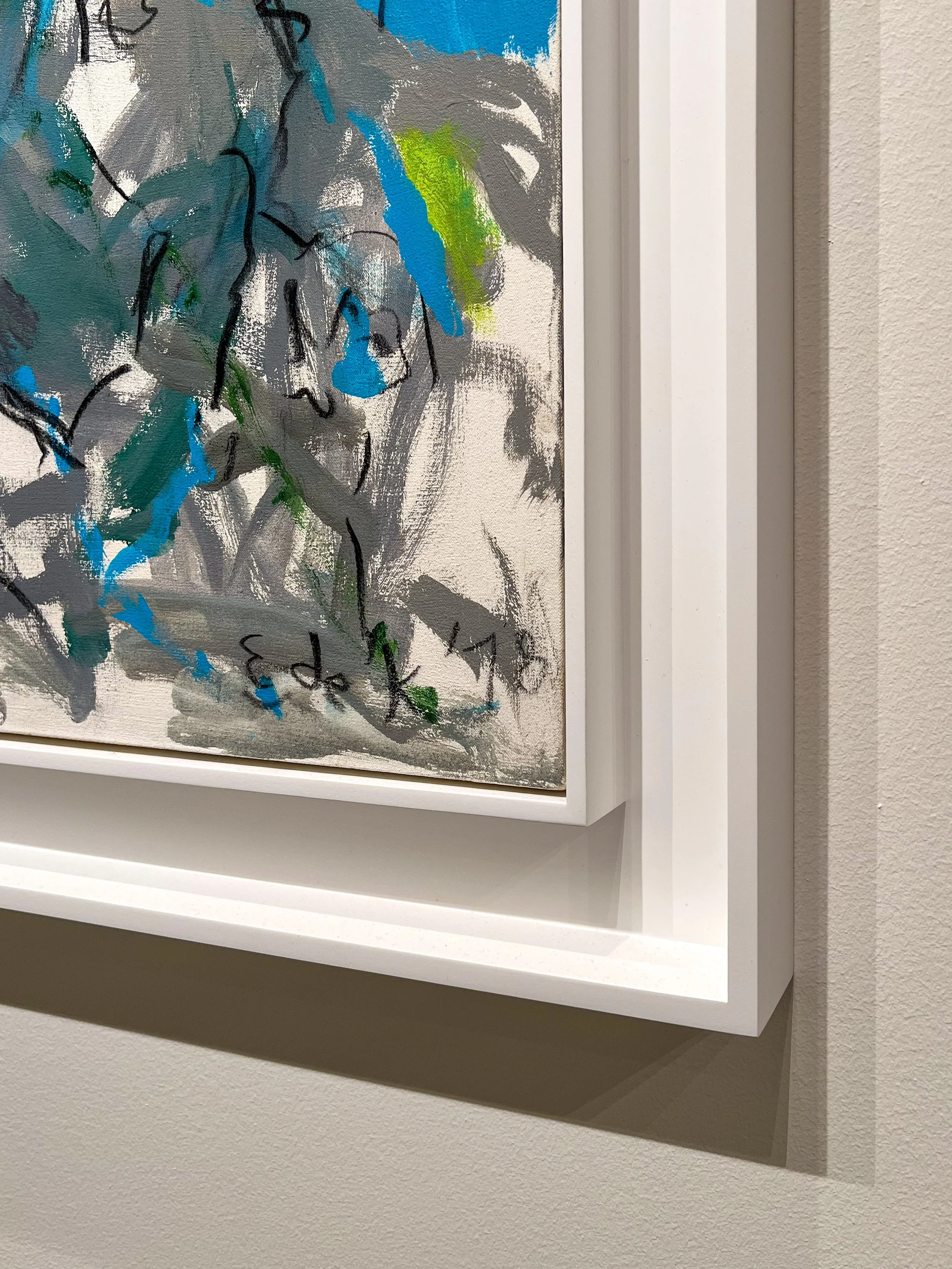
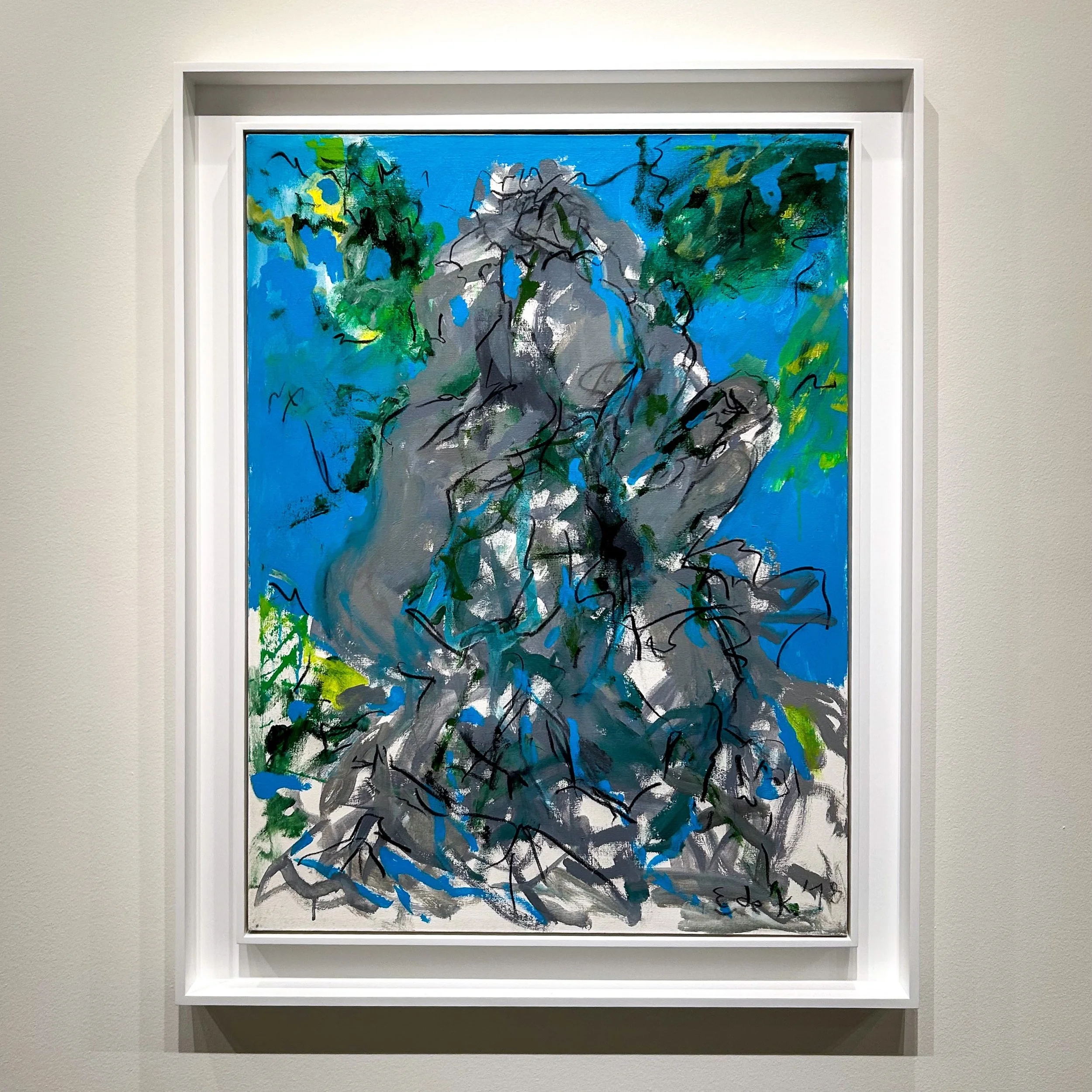
Elaine de Kooning: Bacchus at Independent 20th Century
Harlem Frames was honored to contribute to the presentation of Elaine de Kooning’s Bacchus series at Independent 20th Century 2026, custom framing original paintings from the series for Olney Gleason’s focused presentation at The Breuer in New York.
Created between 1976 and 1983, the Bacchus paintings grew from de Kooning’s repeated studies of a 19th-century bronze sculpture of Bacchus in Paris’s Jardin du Luxembourg. Across the series, the twisting figure becomes increasingly animated through sweeping gesture, vivid color, and the energetic abstraction that characterized de Kooning’s practice.
Presented September 24–27, the exhibition brought these works together as part of Independent 20th Century’s broader exploration of 20th-century art. For Harlem Frames, it was a privilege to prepare and frame these original works with the care and precision required for their exhibition presentation.
Independent 20th Century 2026
The Breuer · New York City
September 24–27, 2026
Framing by Harlem Frames
Artwork © Elaine de Kooning Trust
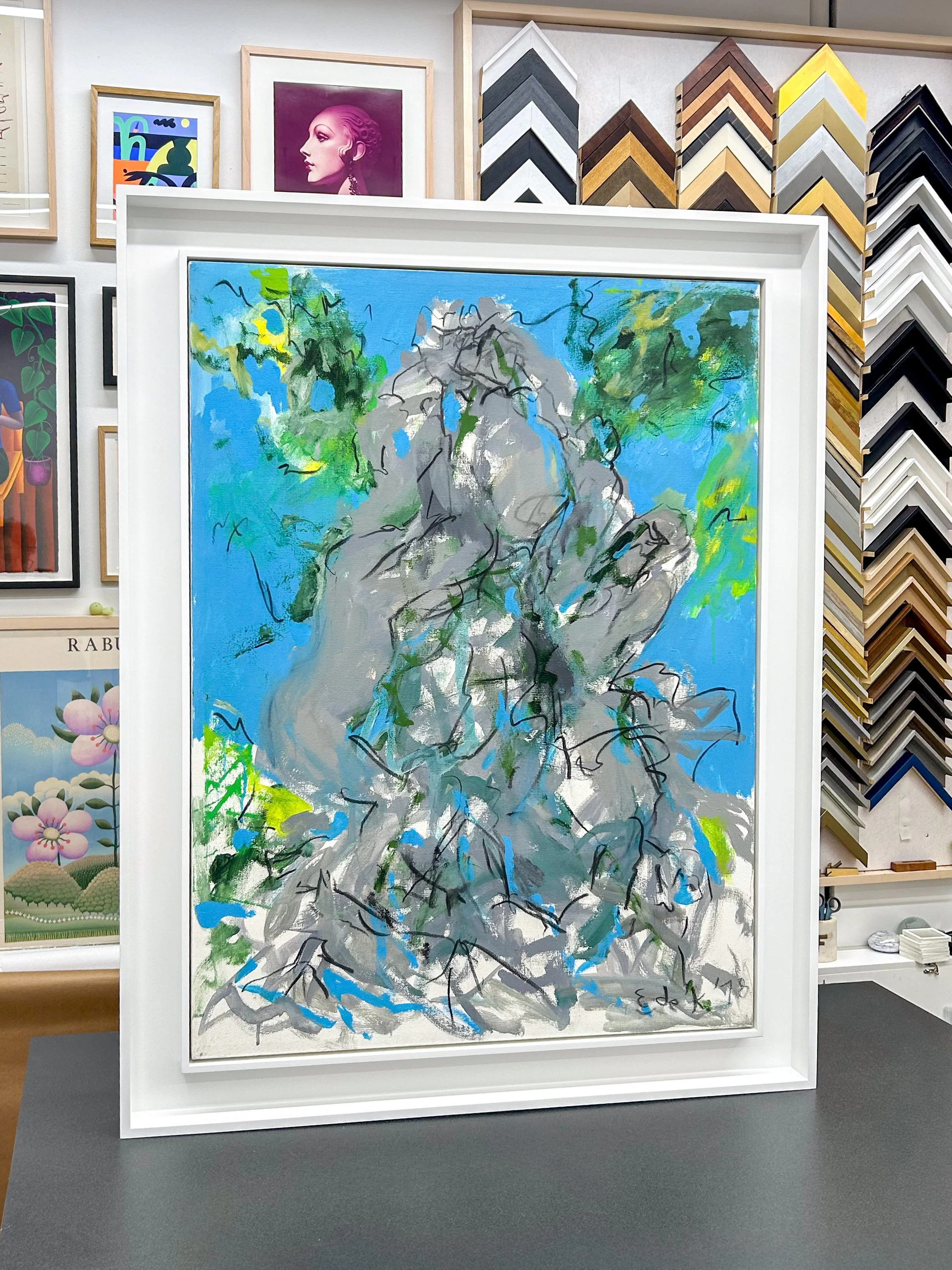
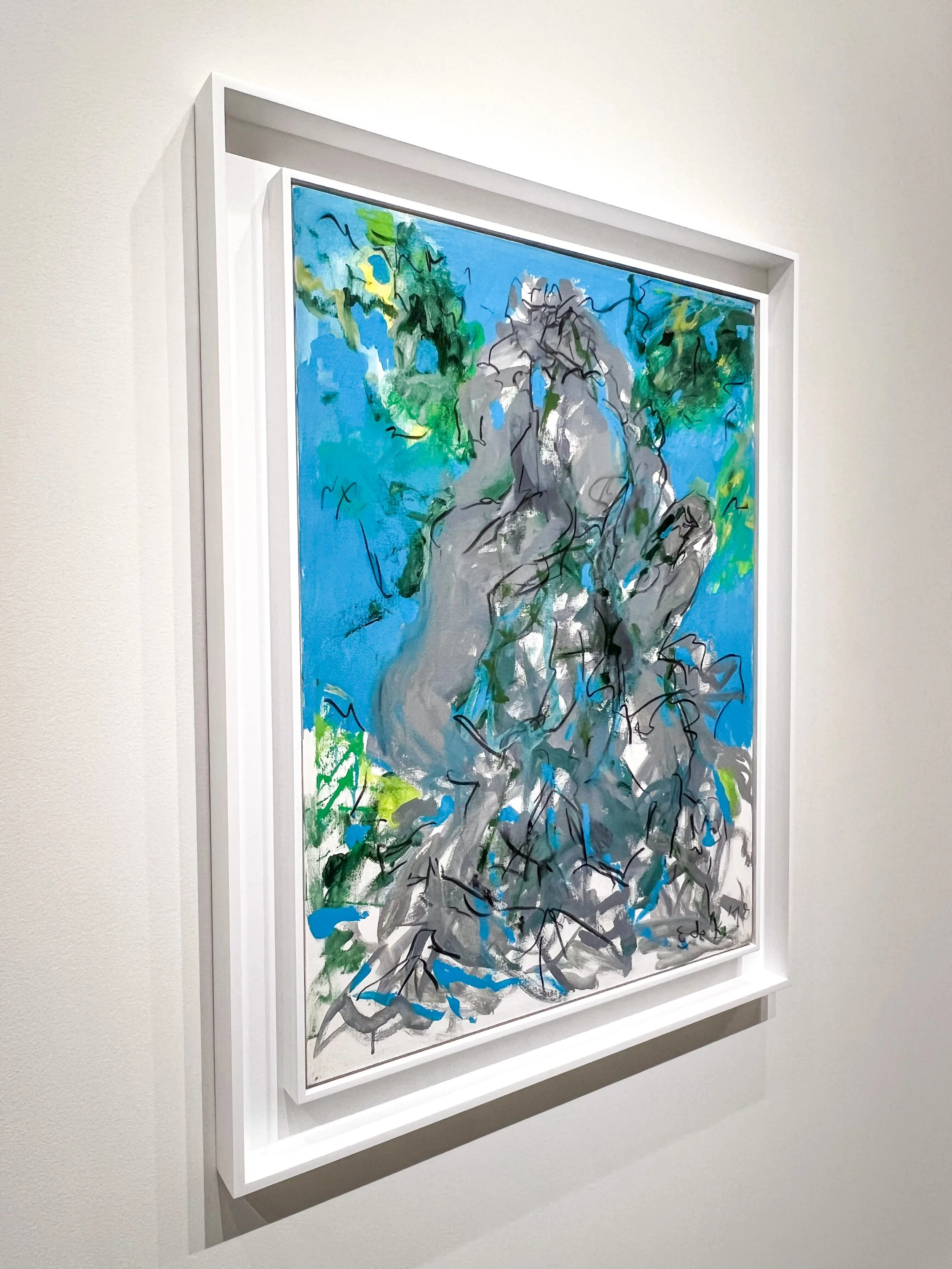
Framing Mickalene Thomas Prints
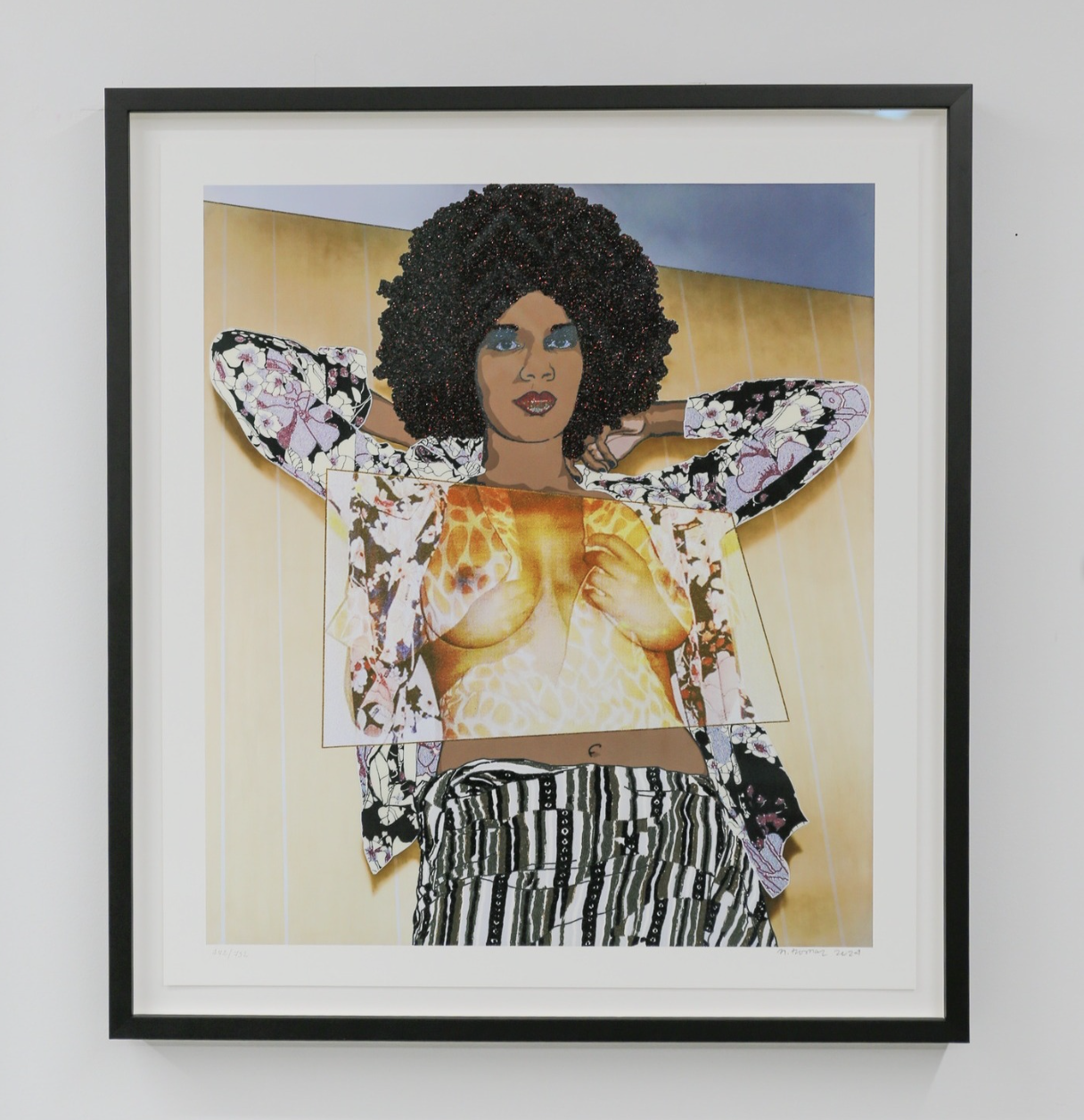
Collector-Owned Editions, Individually Framed
Mickalene Thomas’s unmistakable visual language—bold color, layered patterns, commanding portraiture, and richly constructed interiors—makes her prints especially rewarding to frame.
At Harlem Frames, collector-owned editions by Thomas arrive in our studio with remarkable regularity, including works released through Avant Arte and other fine-art publishers. Although we have not worked directly with Mickalene Thomas or her studio, our team has developed considerable experience framing prints of her work for private collectors.
Each project begins with the individual edition: its scale, materials, colors, condition, and the environment in which it will ultimately be displayed.
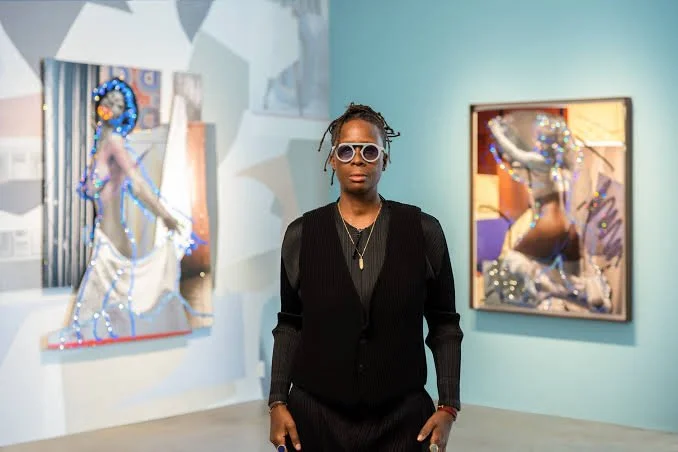
About Mickalene Thomas
Image Courtesy of: https://queensmuseum.org/mickalene-thomas/
Mickalene Thomas is a New York–based multidisciplinary artist working across painting, photography, collage, printmaking, video, sculpture, and installation.
Her work frequently centers Black women as powerful, self-possessed subjects while exploring beauty, identity, intimacy, desire, and representation. Drawing from personal relationships, popular culture, decorative traditions, and the history of Western art, Thomas creates images that are both immediately recognizable and visually complex. That complexity extends into her editions, where saturated color, photographic detail, collage-like construction, and assertive pattern can all exist within a single composition.
We frame a Mickalene Thomas print nearly every month.
These works are brought to us independently by collectors who have acquired them through publishers, galleries, online art platforms, and the secondary market. While the editions may share aspects of Thomas’s visual language, every framing project presents a different set of decisions.
Some collectors prefer a restrained presentation that allows the print’s color and composition to dominate. Others choose a frame or mat that responds more visibly to a particular pattern, interior detail, or tonal element within the work. The goal is never to compete with the artwork. It is to create a presentation that supports its presence.
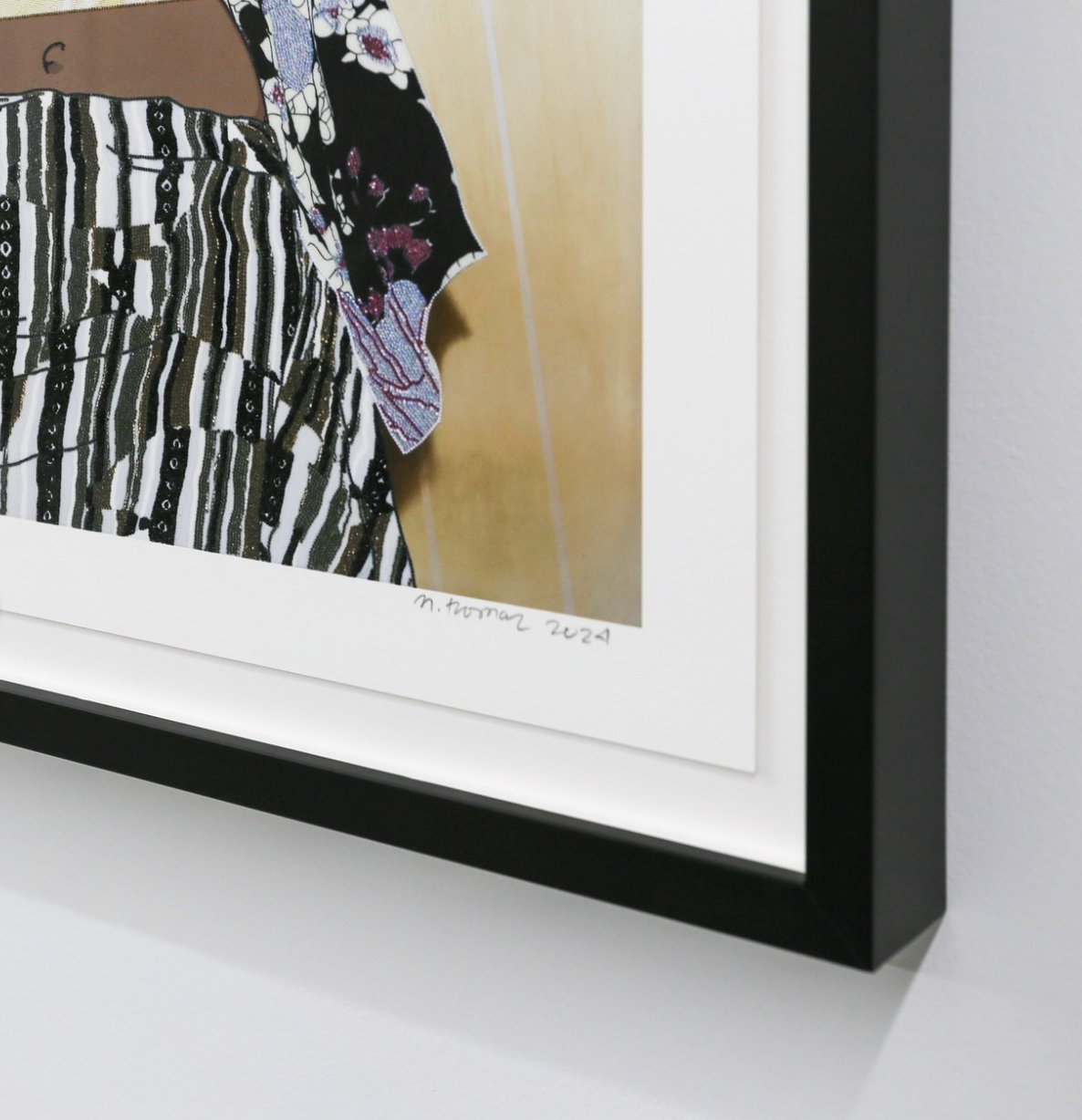
Designing Around Color, Pattern, and Scale
Thomas’s work can hold its own against strong design choices, but strength does not always require ornamentation. A clean natural-wood, painted, or dark-toned frame can provide definition without distracting from the image. Matting may introduce breathing room and help establish proportion, while a more closely cropped presentation can create greater immediacy.
When selecting materials, we consider:
The scale and proportions of the edition
Dominant and secondary colors within the image
The density of its patterns and visual details
Whether the print should feel intimate or monumental
The relationship between the artwork and its intended room
The collector’s preferences and existing interior
The final frame should feel connected to the work without simply imitating it.
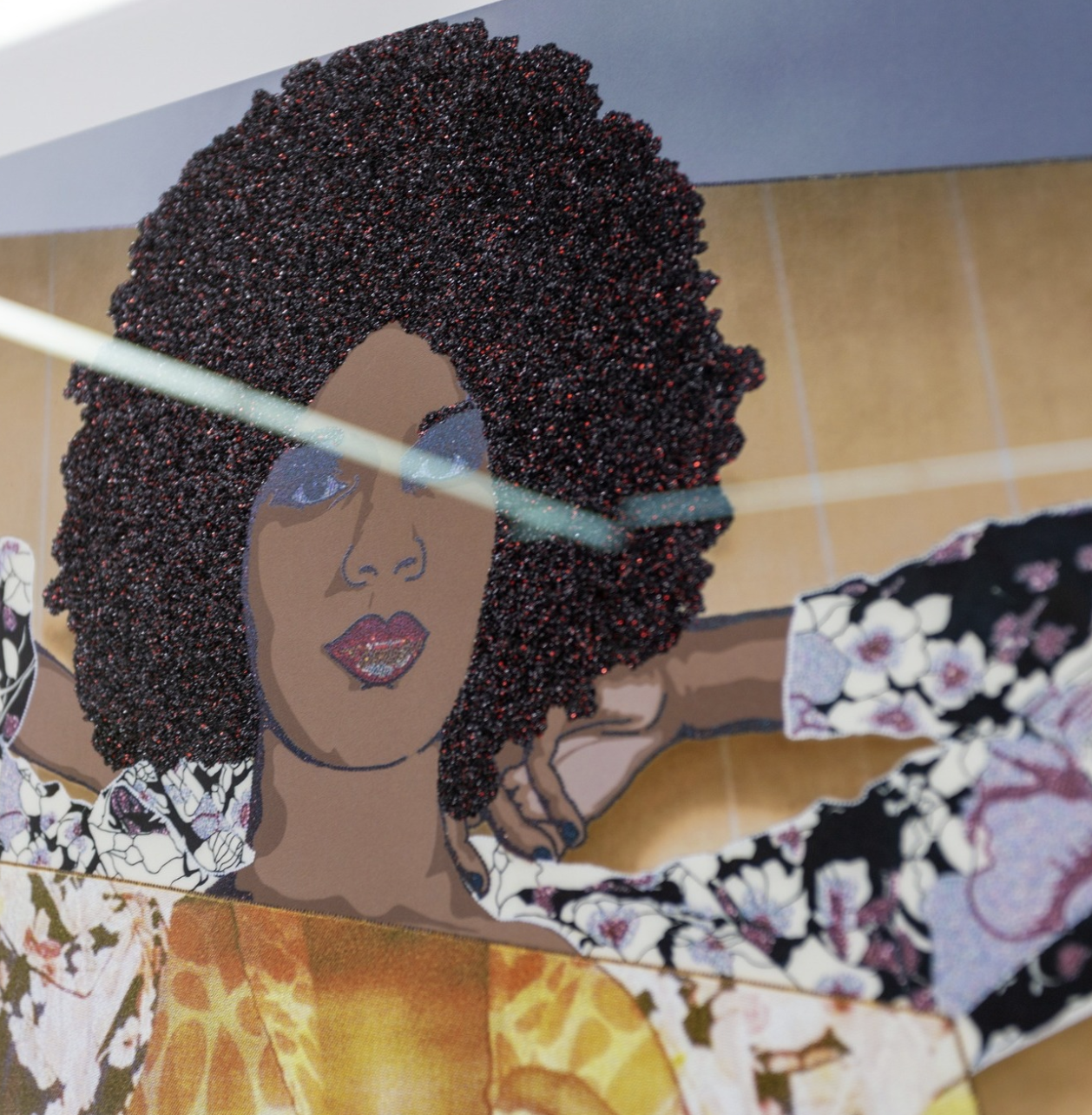
Presentation and Preservation
Fine-art editions deserve framing materials selected with their long-term care in mind.
Depending on the particular print, a framing package may incorporate conservation-quality mat board, appropriate mounting methods, protective glazing, spacers, archival backing materials, and sufficient separation between the artwork and the glazing.
We also consider the display environment. Direct sunlight, fluctuating humidity, concentrated heat, and other environmental conditions can affect works on paper over time—even when protective framing materials are used.
Because editions can vary in paper, printing process, surface, scale, and condition, the framing system should be designed around the specific work rather than applied as a universal formula.
Every Print Calls for Its Own Solution
There is no single “Mickalene Thomas frame.”
The right presentation depends on the edition, the collector, and the space in which the work will live. Our experience framing these prints has reinforced the value of looking closely: at the colors, the paper, the composition, the proportions, and the details that give each image its particular energy.
A successful frame does more than surround the artwork. It gives the print the physical and visual support it needs to hold space.
Frame Your Mickalene Thomas Print
Have a Mickalene Thomas edition you are considering framing or reframing?
Bring your print to Harlem Frames for a consultation. Our team can help you compare mouldings, matting, glazing, mounting, and preservation-minded options to develop a presentation suited to your particular piece.
Harlem Frames is not affiliated with Mickalene Thomas, her studio, or Avant Arte. The projects discussed here were commissioned independently by collectors who brought their own artwork to our studio.
Why Your Artwork Shouldn’t Touch the Glass
When looking at a beautifully framed artwork, the small amount of space between the artwork and the glazing may seem insignificant. In reality, that space can be an important part of a thoughtfully designed framing system.
For many photographs, prints, drawings, watercolors, documents, and other works on paper, placing the surface directly against glass or acrylic can introduce unnecessary risks over time. Moisture, condensation, changes in humidity, and the characteristics of the artwork itself can all become concerns when there is no separation.
This is one reason professional framing often uses matting, spacers, float mounting, or deeper framing methods to create a controlled distance between the artwork and the glazing.
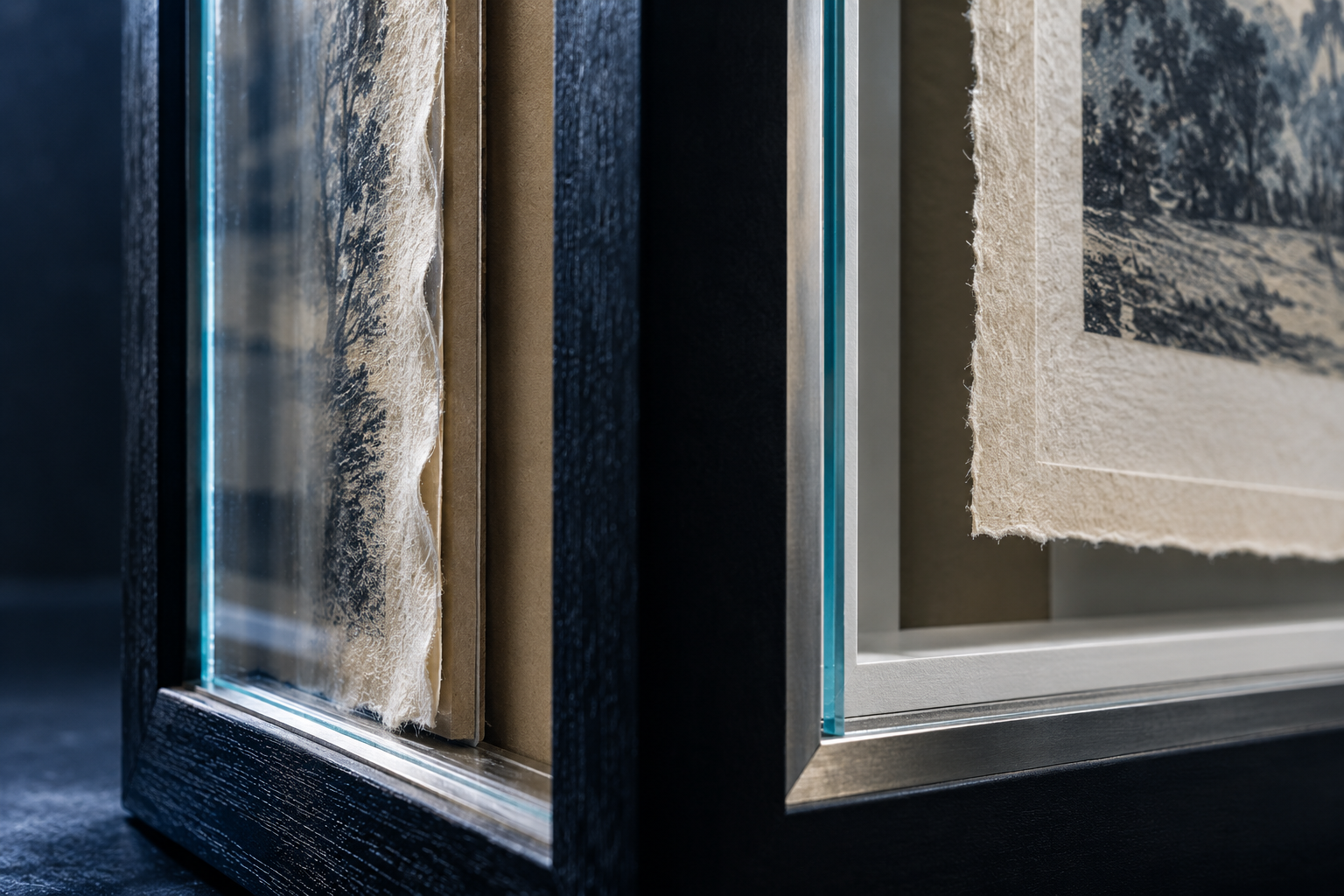
What Happens When Artwork Touches the Glass?
Glass and acrylic provide an important physical barrier between artwork and the surrounding environment, helping protect it from dust, handling, and accidental contact.
But the glazing generally isn't intended to function as the surface against which sensitive artwork rests. When artwork is pressed directly against glazing, changes within the environment can become more consequential.
Paper and other materials naturally respond to temperature and humidity. They may expand, contract, ripple, or otherwise change as environmental conditions fluctuate. Providing appropriate space within the frame gives the artwork a more considered environment in which to exist.
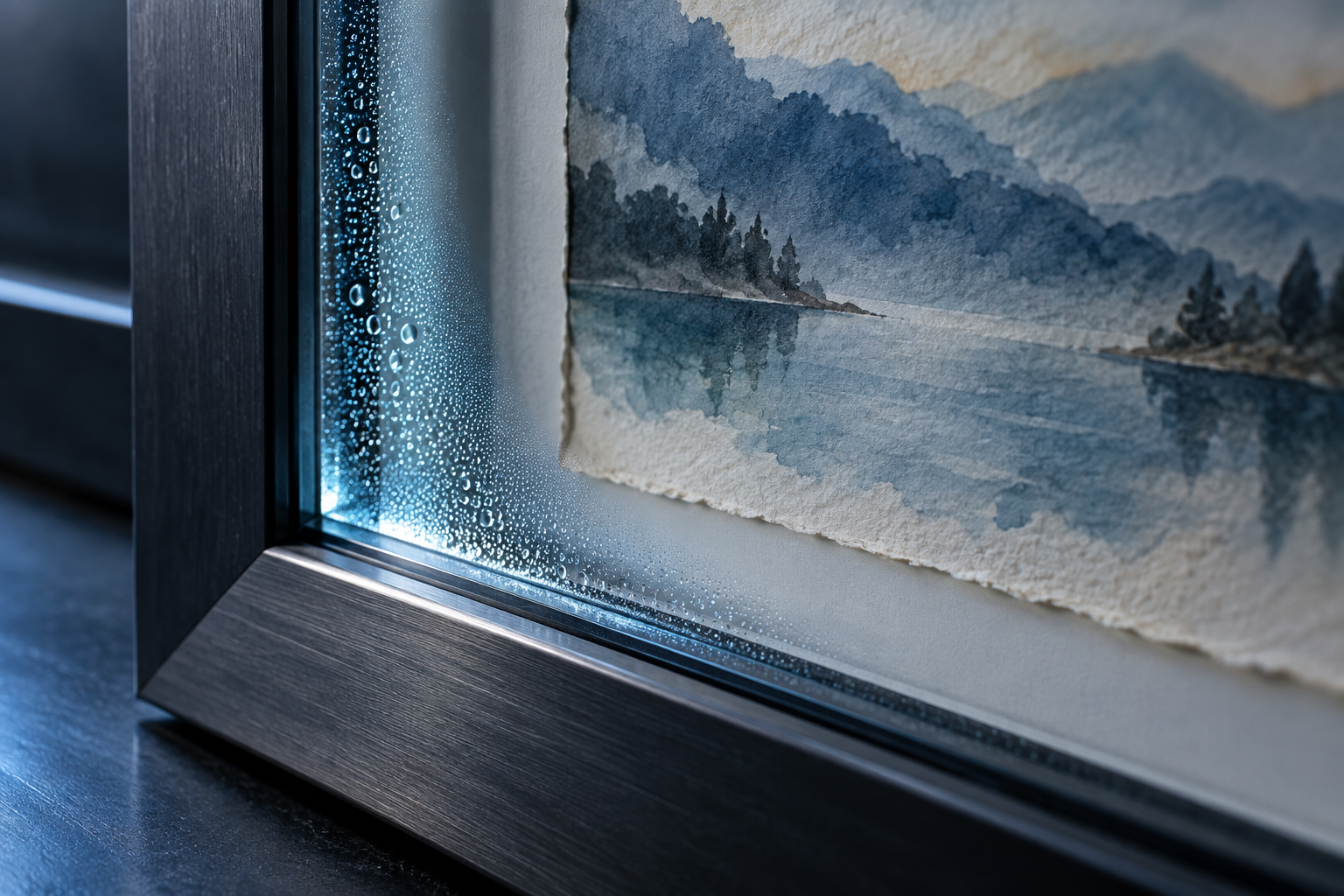
Moisture Is One of the Biggest Concerns
Temperature and humidity can vary throughout a home, gallery, or other interior.
Under certain conditions, moisture can develop inside a framing package. If an artwork is directly against the glazing, there is little or no separation between the artwork and that moisture. This can be particularly concerning for paper, photographs, watercolors, prints, and other moisture-sensitive materials.
Persistent moisture can contribute to staining, distortion, mold growth, and other forms of deterioration. The goal isn't to make a frame completely airtight. Instead, good framing considers how the materials inside the frame interact with one another and with the environment around them.
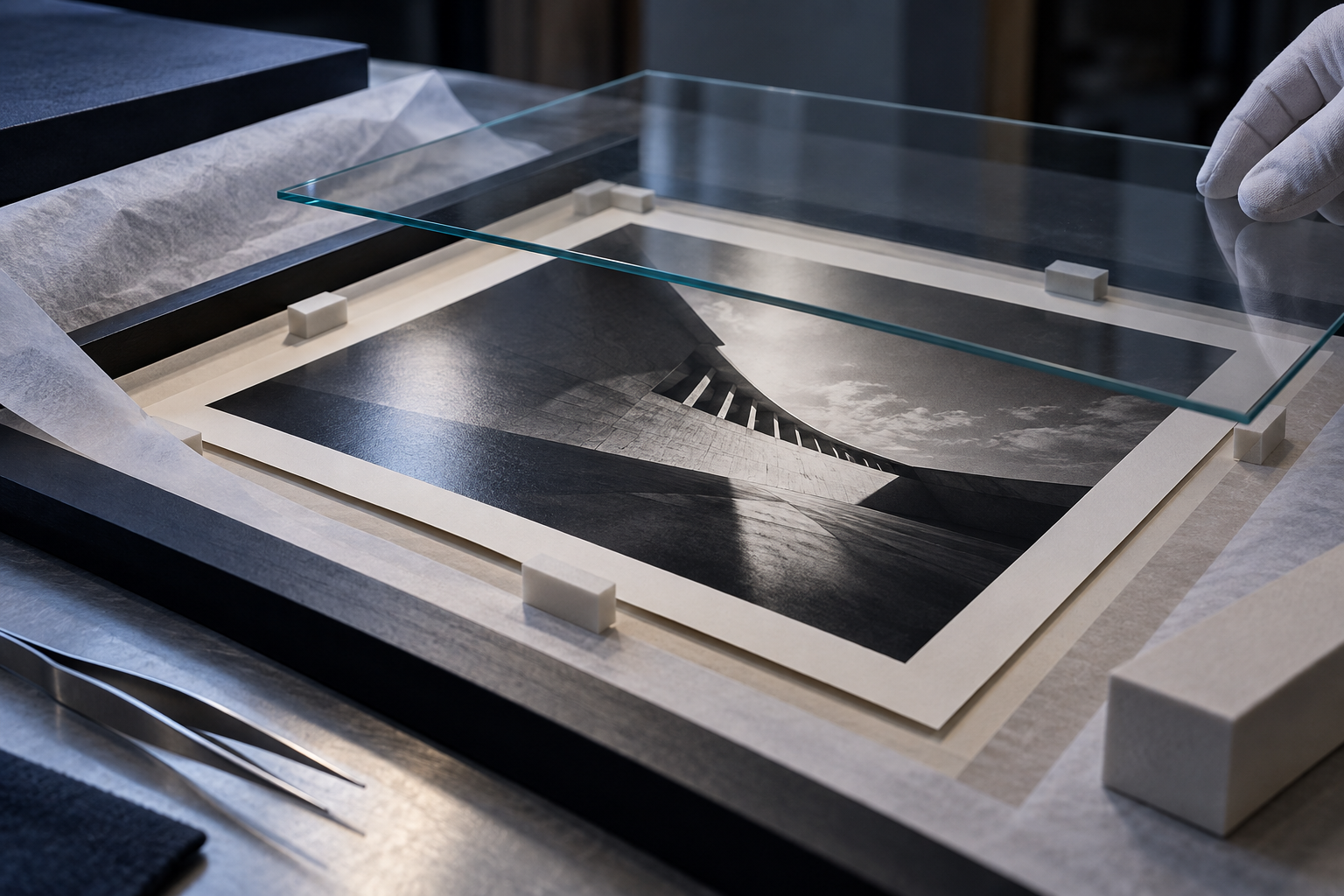
Photographs Require Particular Care
Photographic surfaces can be especially sensitive to direct contact.
If a photograph remains pressed against glazing under unfavorable environmental conditions, its surface can potentially adhere to the glass or acrylic. Once that happens, attempting to separate the two can risk damaging the image.
This is why simply placing an important photograph inside a frame and pressing the backing firmly against it isn't always an appropriate long-term framing method. For valuable, historical, or irreplaceable photographs, the complete framing system—including mounting, spacing, glazing, and environmental conditions—deserves consideration.
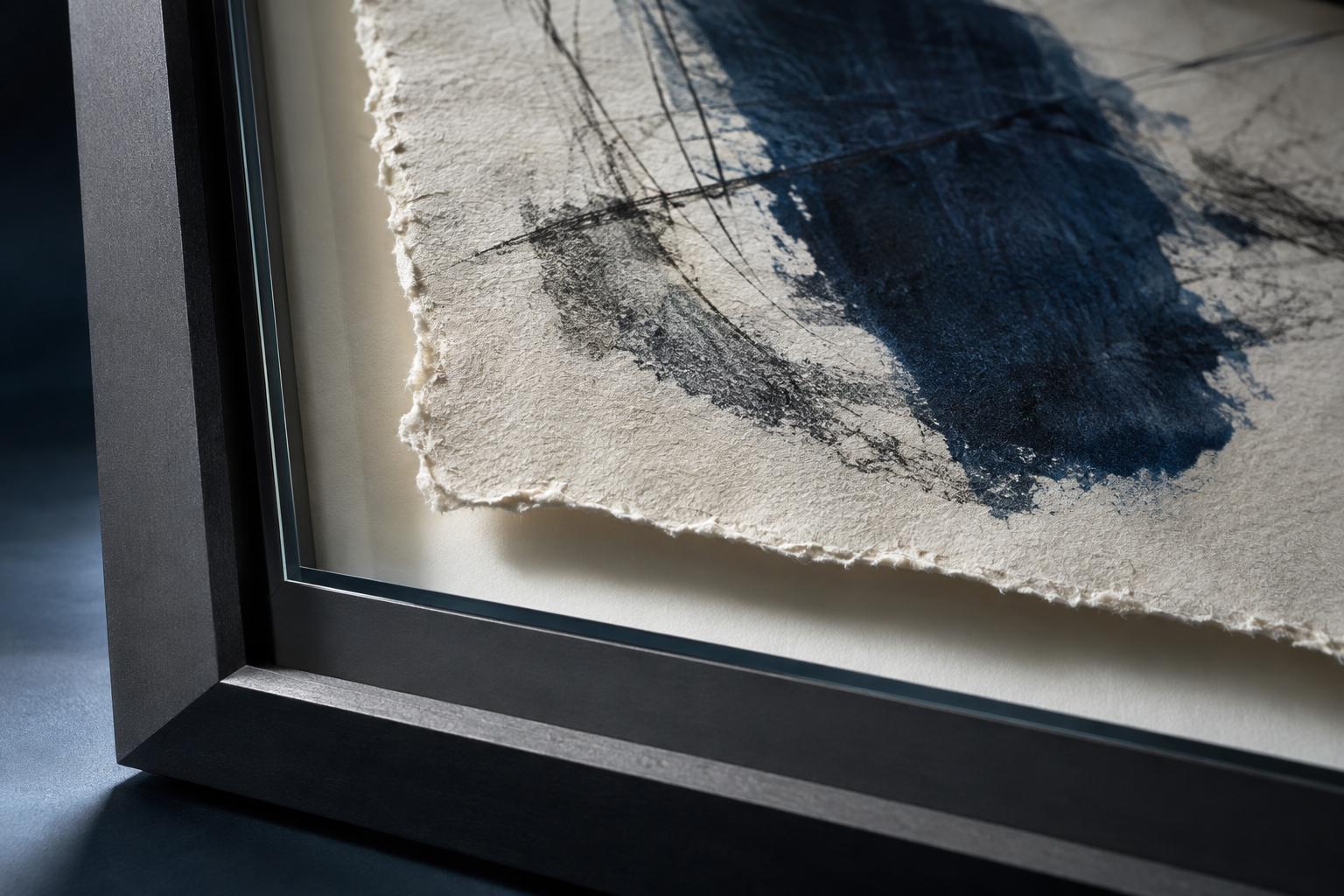
Works on Paper Need Room Too
Drawings, prints, watercolors, documents, and other works on paper can respond visibly to environmental changes.
Paper naturally absorbs and releases moisture as humidity changes. Restricting it tightly against glazing may make resulting distortions more noticeable and can create an undesirable relationship between the artwork and the glazing.
Appropriate mounting and spacing allow the work to be presented without unnecessarily pressing its surface against another material. This becomes especially important for handmade papers, deckled edges, textured works, and pieces whose physical qualities are part of the artwork itself.
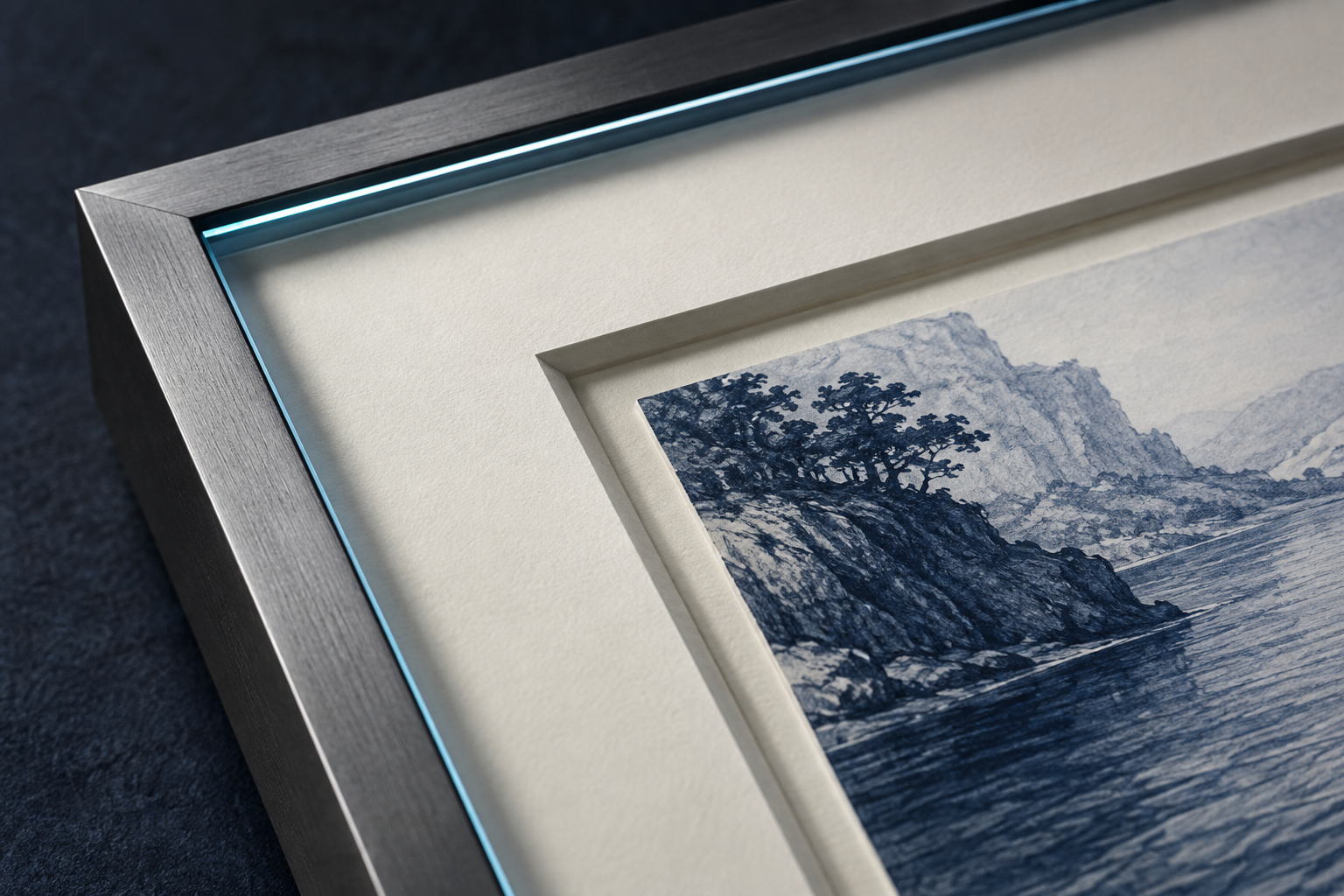
Matting Creates More Than a Decorative Border
One of the most familiar ways to create separation is with a window mat.
The mat surrounds the artwork while its thickness helps maintain distance between the surface of the piece and the glazing.
Visually, matting also creates negative space around an image and can help establish proportion between the artwork and its frame. When preservation is important, the mat board itself should also be considered. Conservation and museum-quality boards can be selected according to the needs of the artwork. So while a mat may appear decorative, it can also serve an important structural role within the frame.
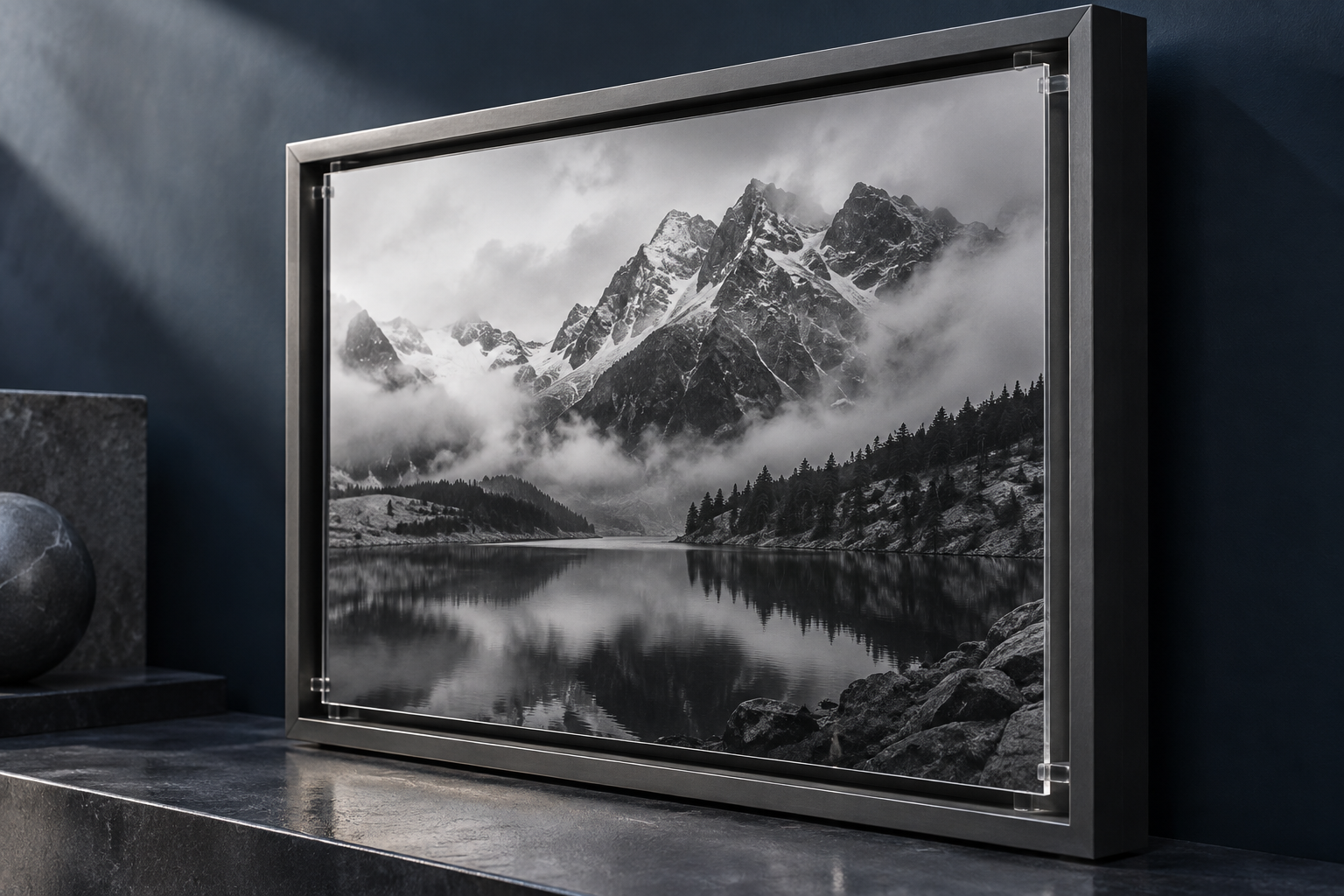
What If You Don't Want a Mat?
Not every artwork looks best surrounded by a traditional mat. Fortunately, a visible mat isn't the only way to create separation.
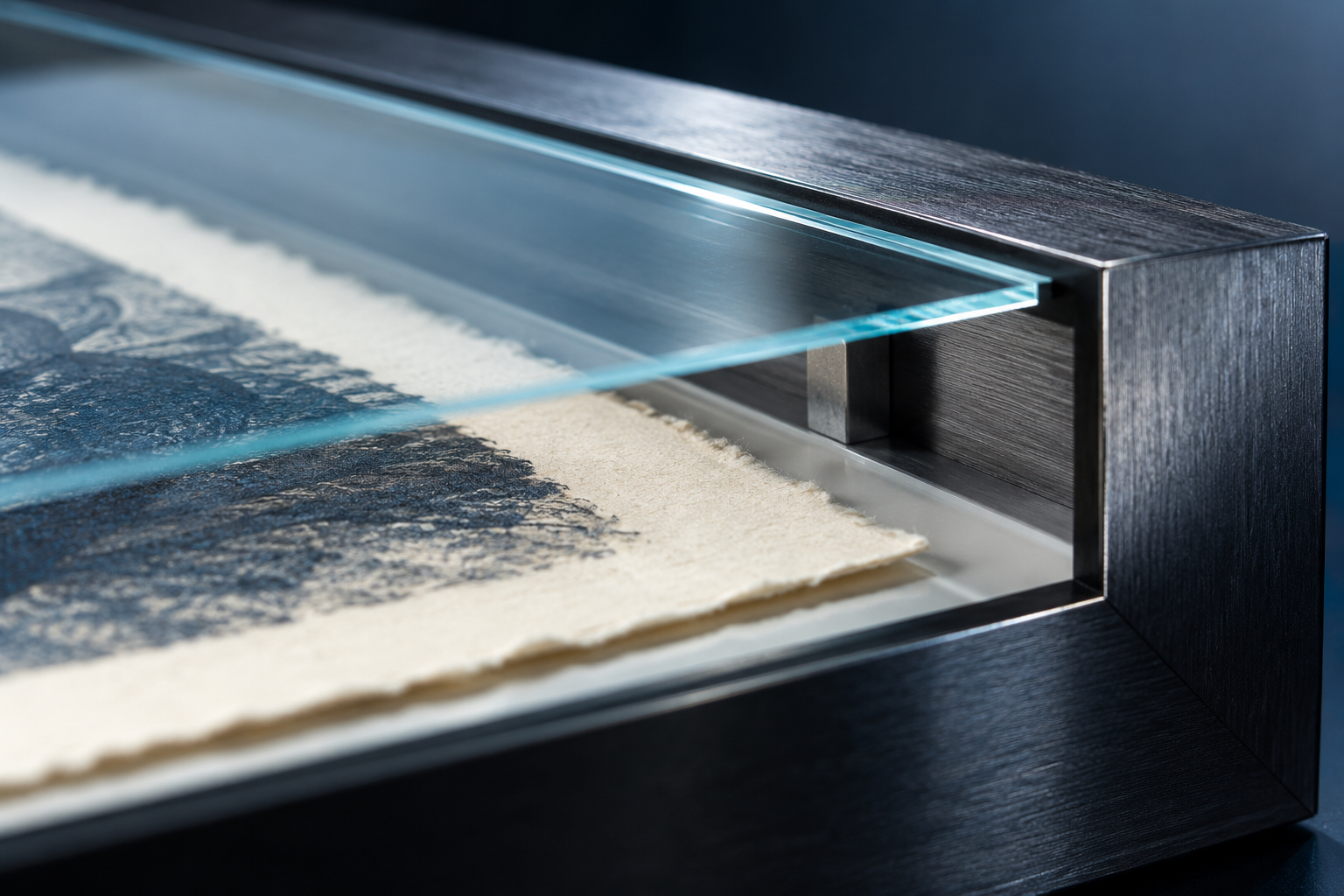
Spacers
Small spacers can be positioned within the frame to maintain distance between the artwork and glazing while remaining largely hidden from view. This can create a clean, contemporary presentation without the visual border of a mat.
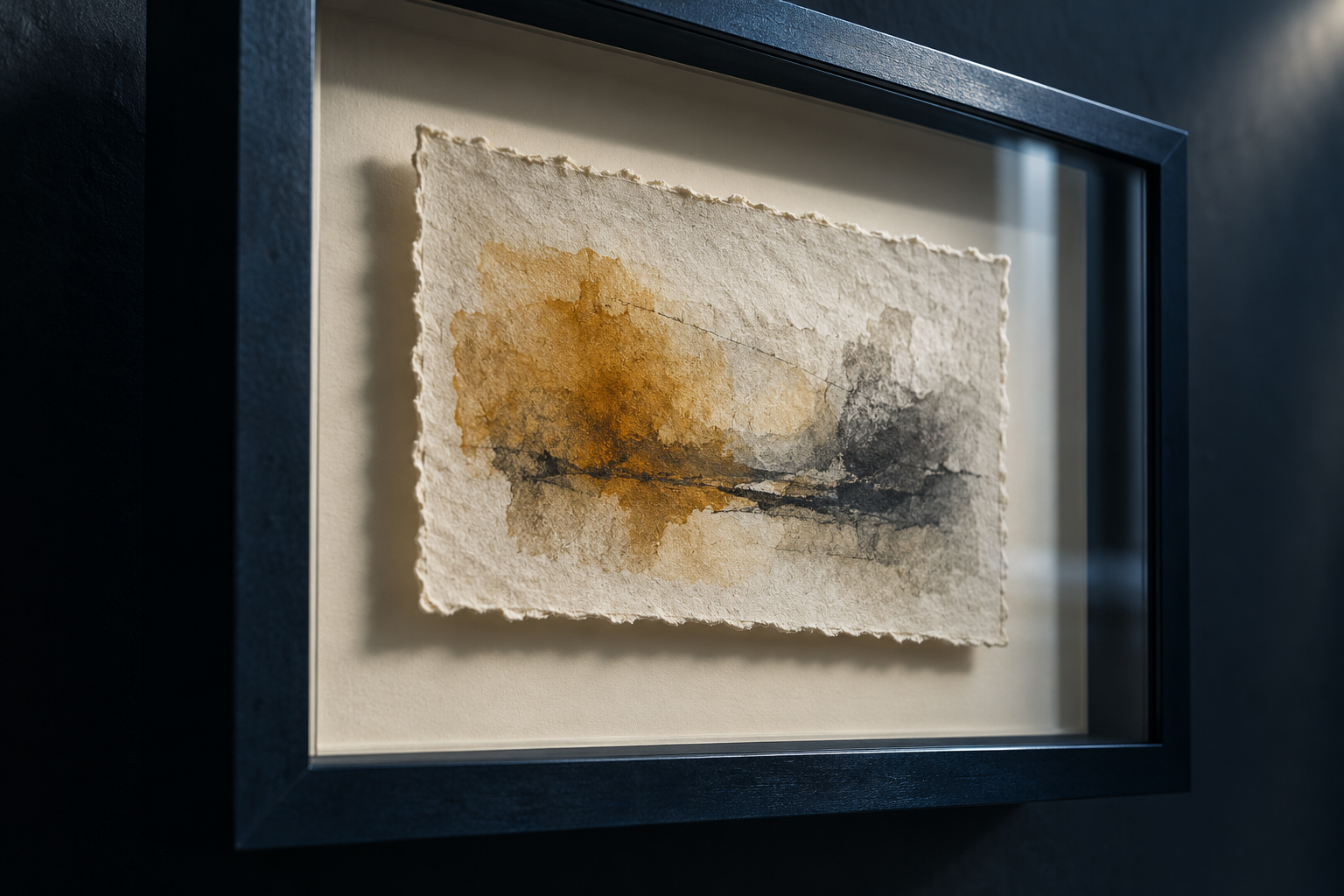
Float Mounting
With a float-mounted presentation, the artwork is mounted so its edges remain visible, often against a larger backing or mat board.
This can be particularly effective for handmade paper, deckled edges, drawings, prints, and other works where the physical edges are part of the piece.
Appropriate depth can then be created between the floated artwork and the glazing.
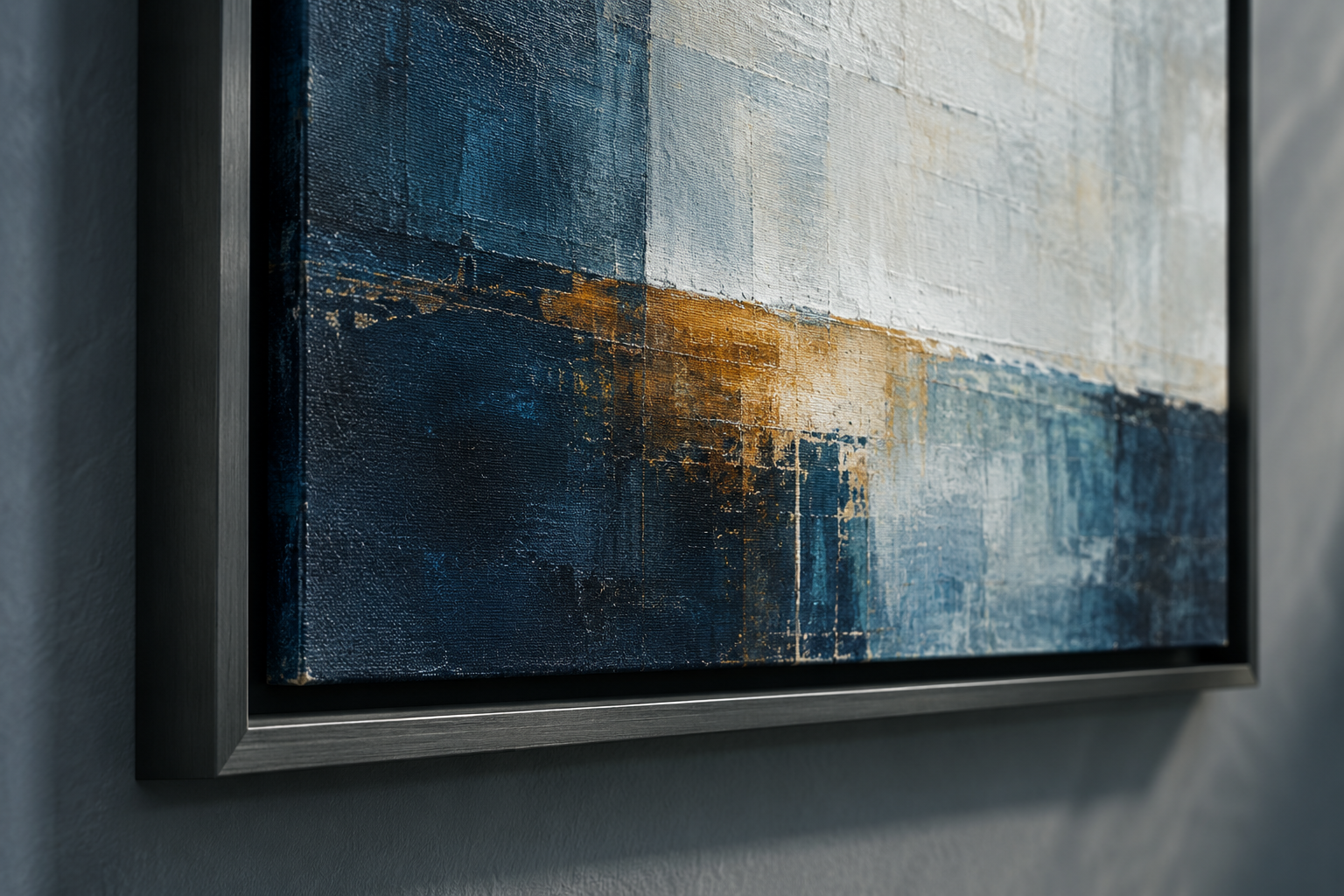
Shadowboxes and Deep Frames
Dimensional works, textiles, objects, and certain specialty presentations may require substantially more space.
A shadowbox or deeper custom frame can create enough depth to accommodate the object while maintaining appropriate separation from the glazing.
The amount of space required depends entirely on what is being framed.
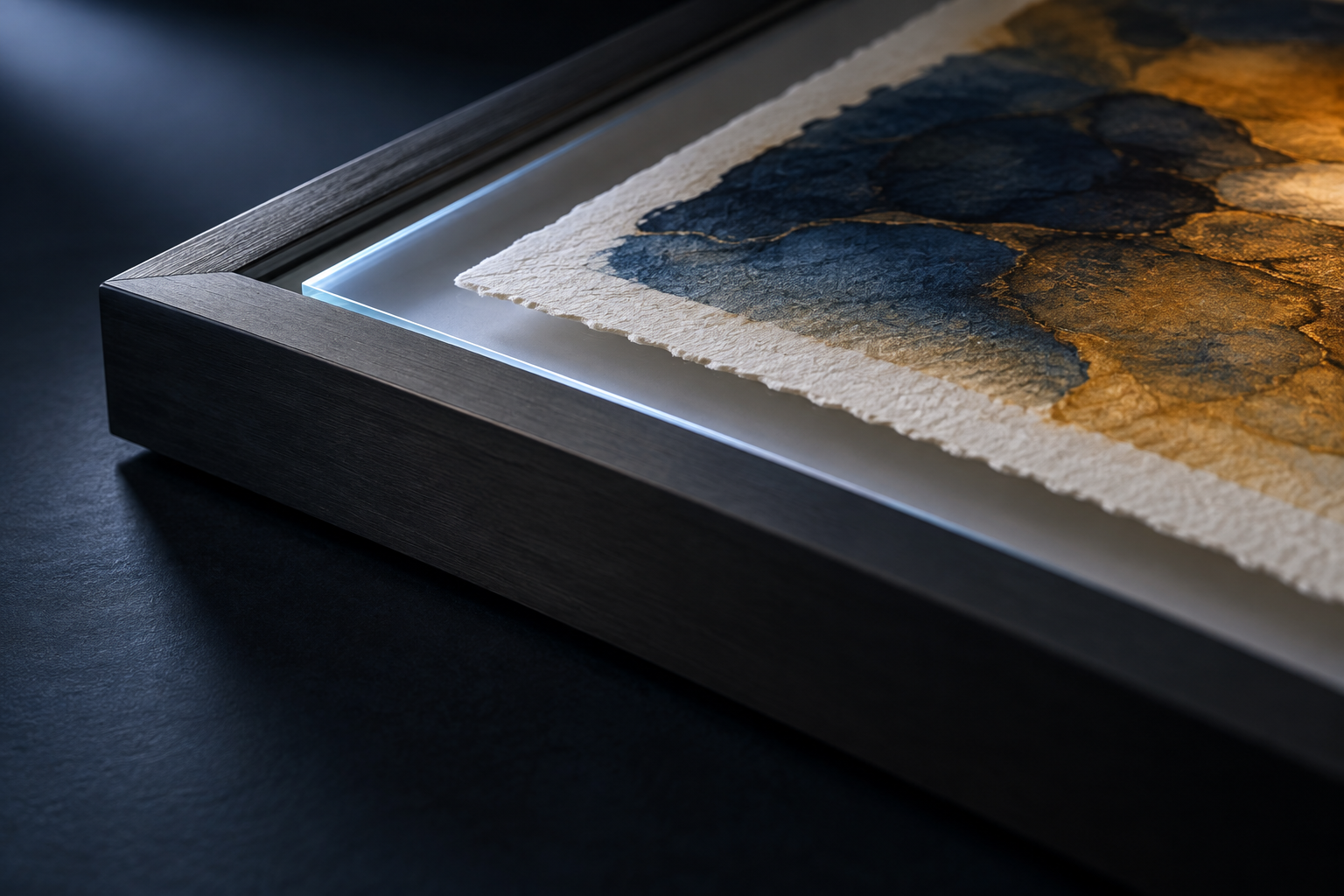
What About Float Frames?
A float frame is different from float mounting.
Float frames are commonly used for paintings on canvas or panels. Instead of placing glazing in front of the artwork, the painting sits within an outer frame with a visible gap around its edges.
That gap creates the impression that the artwork is floating inside the frame. Because many canvas paintings are displayed without glazing, the issue of artwork touching glass may not apply at all.
This is a good example of why framing terminology—and the artwork's medium—matters when deciding on a presentation.
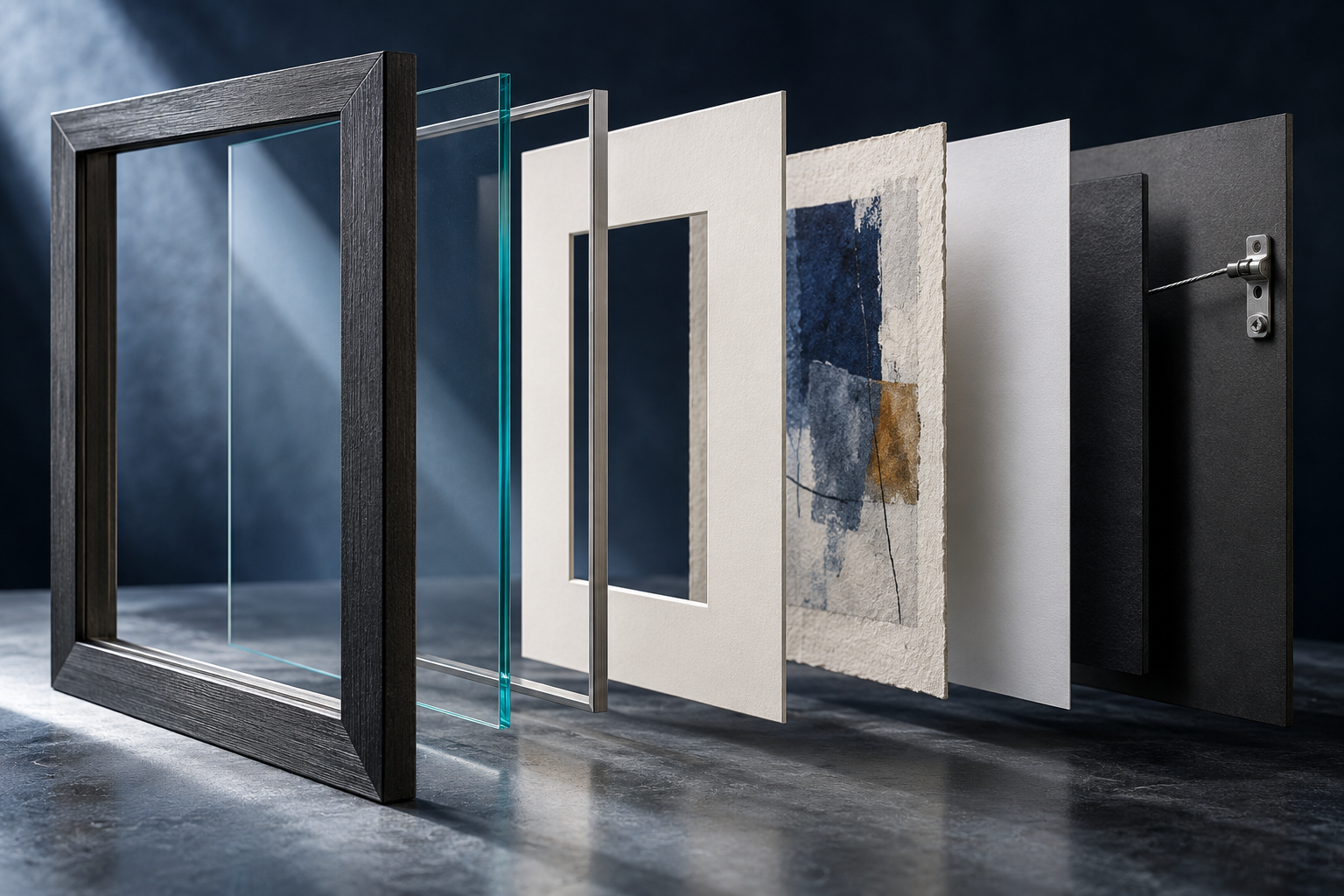
Does Every Framed Piece Need Separation?
Not every object follows exactly the same rules.
Framing methods vary according to the medium, surface, condition, dimensions, value, and intended display environment of the piece.
Certain replaceable or decorative materials may have different requirements from an original watercolor, historic photograph, or limited-edition print. The important point isn't that every artwork must be framed identically.
It's that direct contact with glazing should be a deliberate decision—not simply the result of squeezing an artwork into a frame.
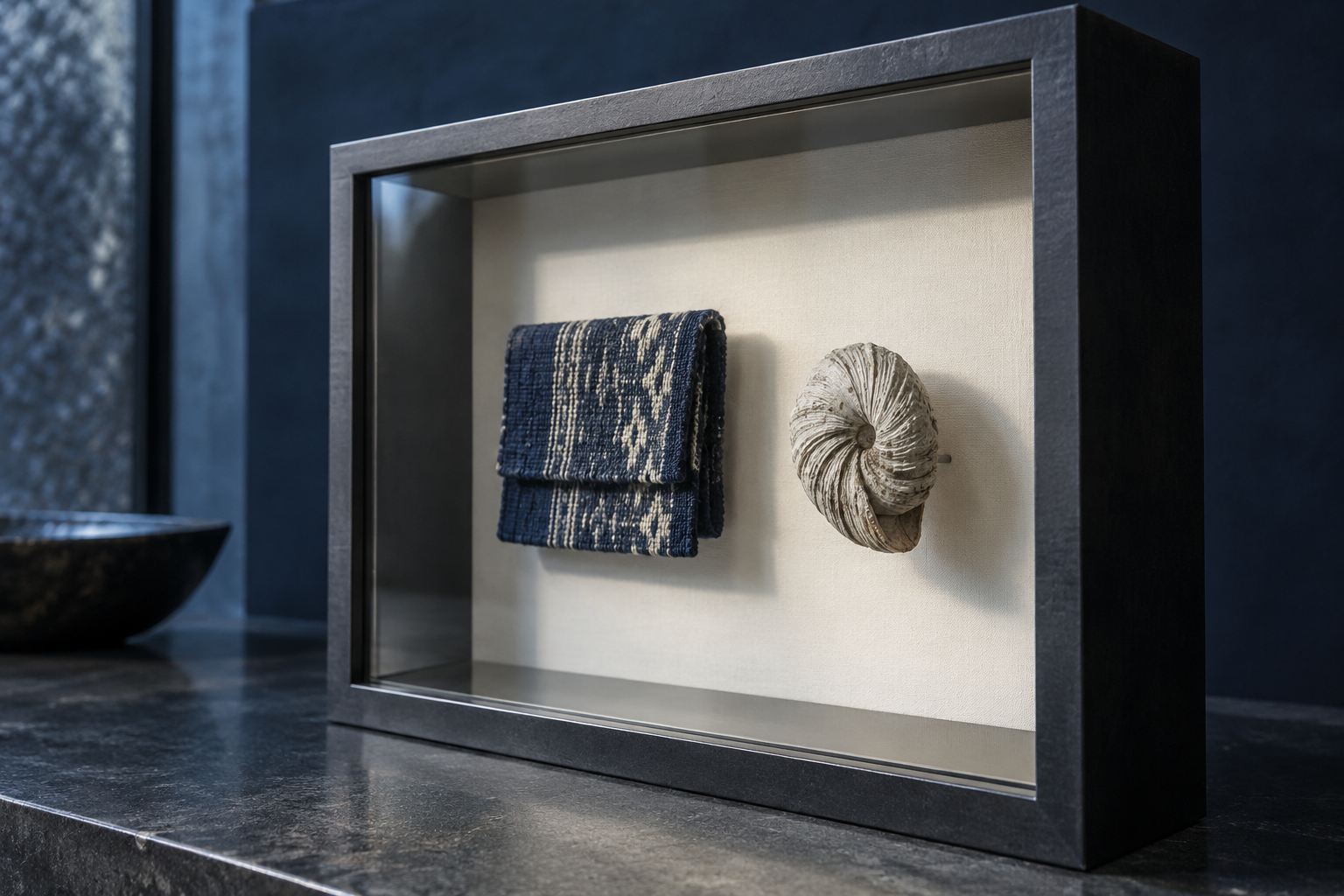
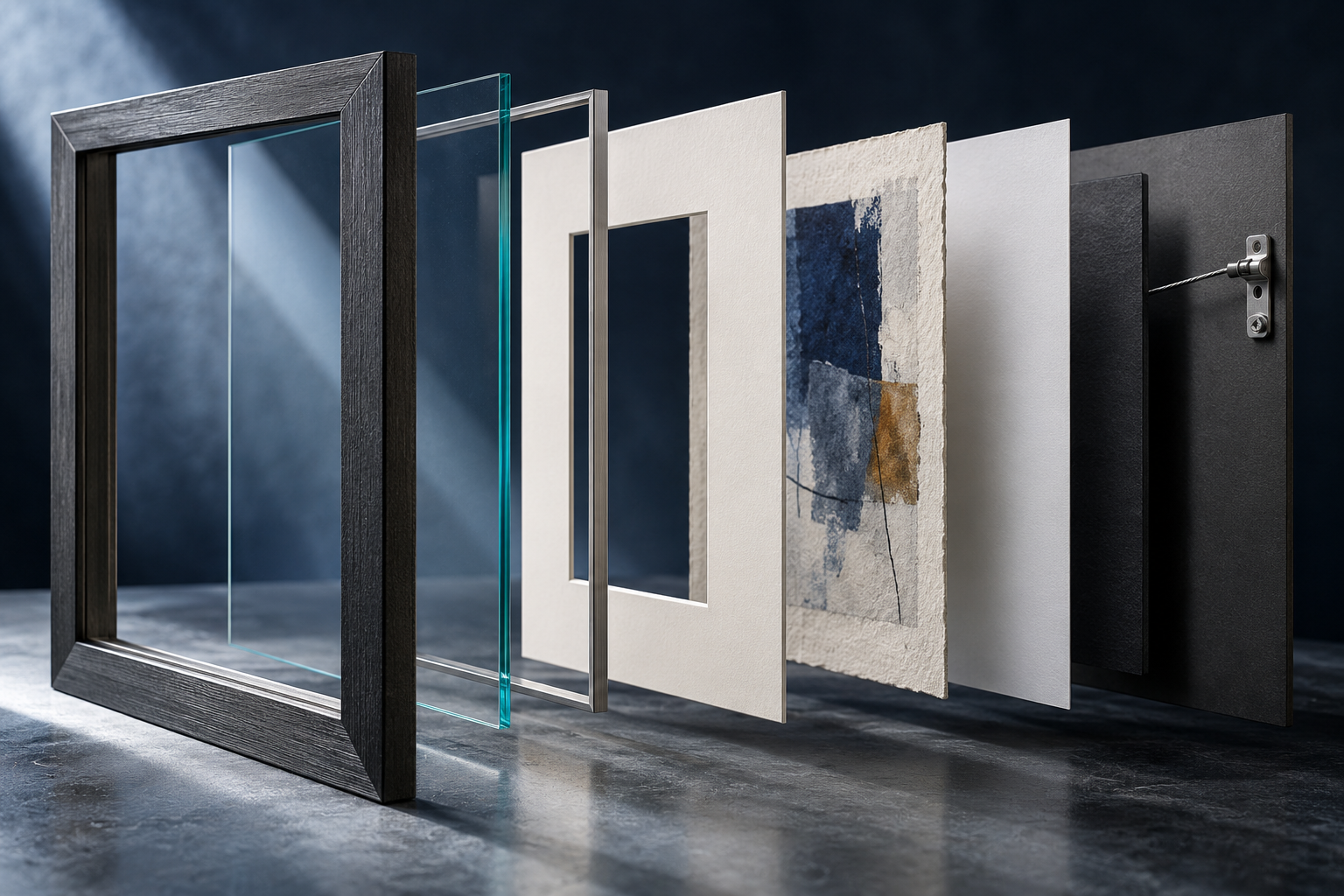
The Frame Is a System
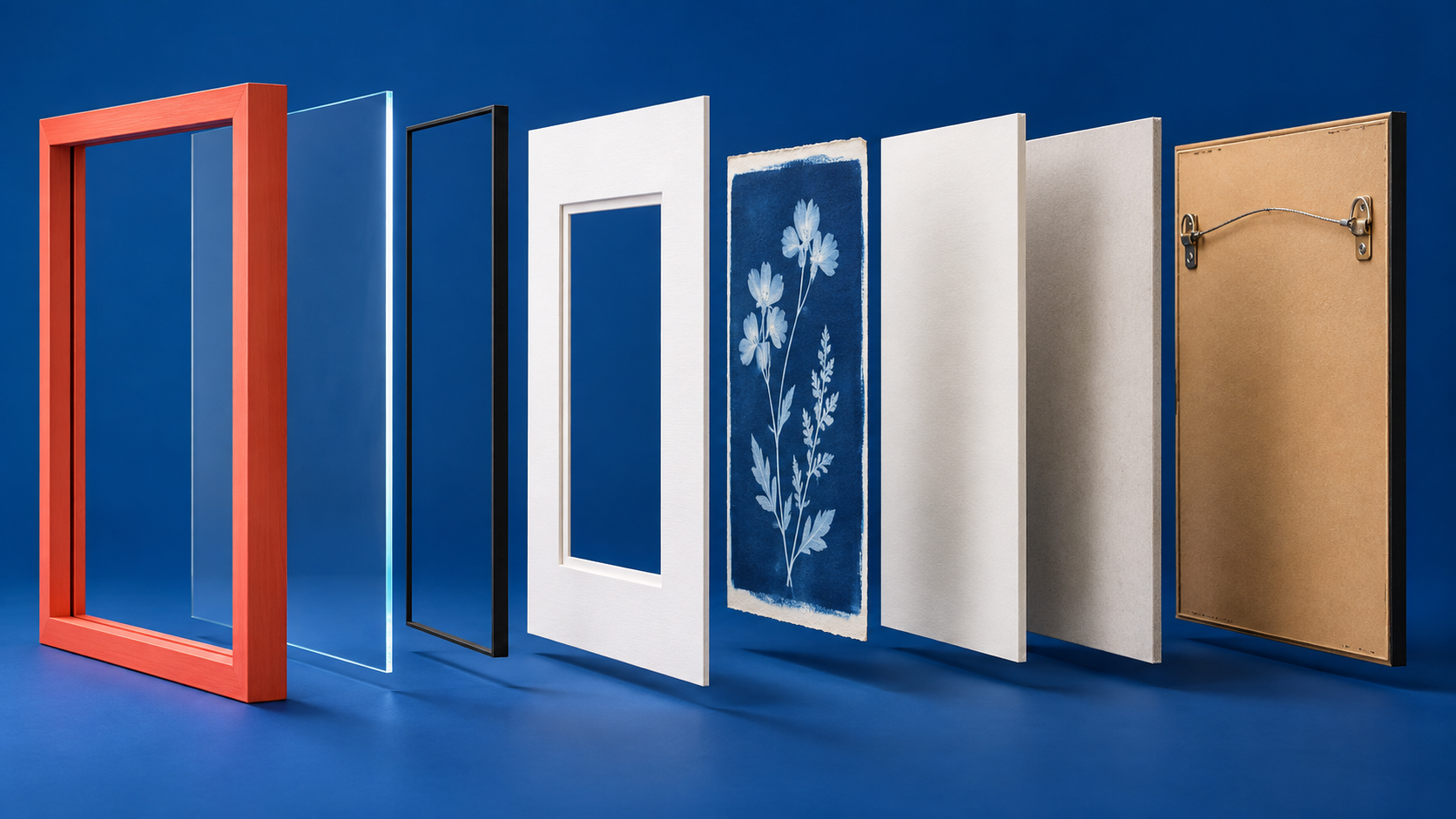
A finished frame is more than four pieces of moulding and a sheet of glass.
Depending on the artwork, it may include:
The frame or moulding
Glass or acrylic glazing
Mat board
Spacers
Mounting materials
Backing
Hanging hardware
Each component affects how the artwork is presented and, in conservation-minded framing, how it is protected. This is why decisions about matting, glazing, mounting, and frame depth should be made together rather than independently.
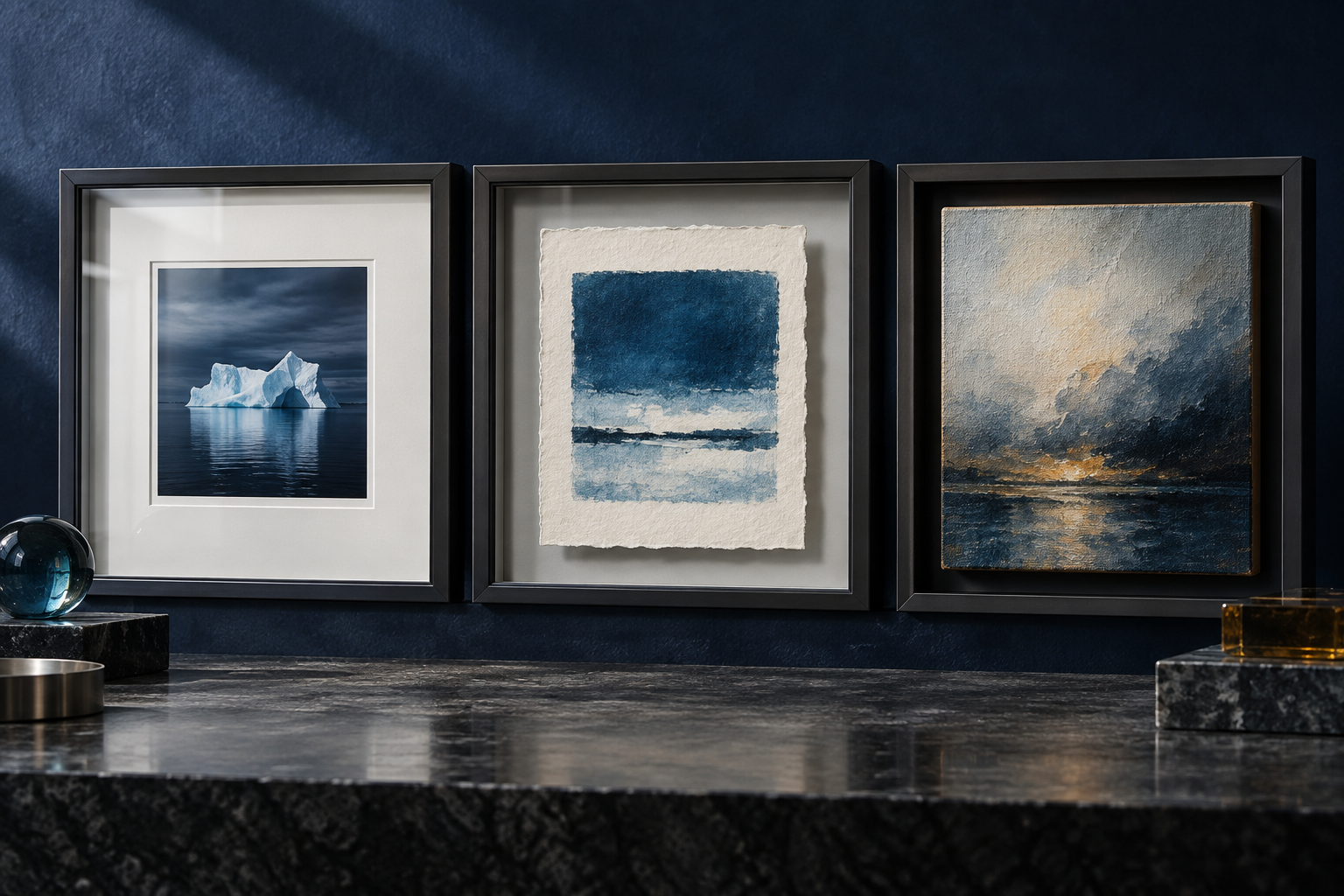
Give Your Artwork a Little Space
Sometimes a few millimeters can make an important difference.
Creating appropriate separation between sensitive artwork and glazing can help avoid direct surface contact while allowing the piece to be presented in a way that respects its material and construction.
At Harlem Frames, we consider the entire framing package when developing a presentation—from matting and mounting to glazing, spacers, frame depth, and conservation requirements.
Have a photograph, print, drawing, or work on paper you're considering framing? Bring it to Harlem Frames and our team can help determine a presentation appropriate for the piece.
Related Insights
To Mat or Not to Mat? Choosing the Right Mat for Your Artwork →
Museum Glass, Acrylic & Conservation Glazing: What's the Difference? →
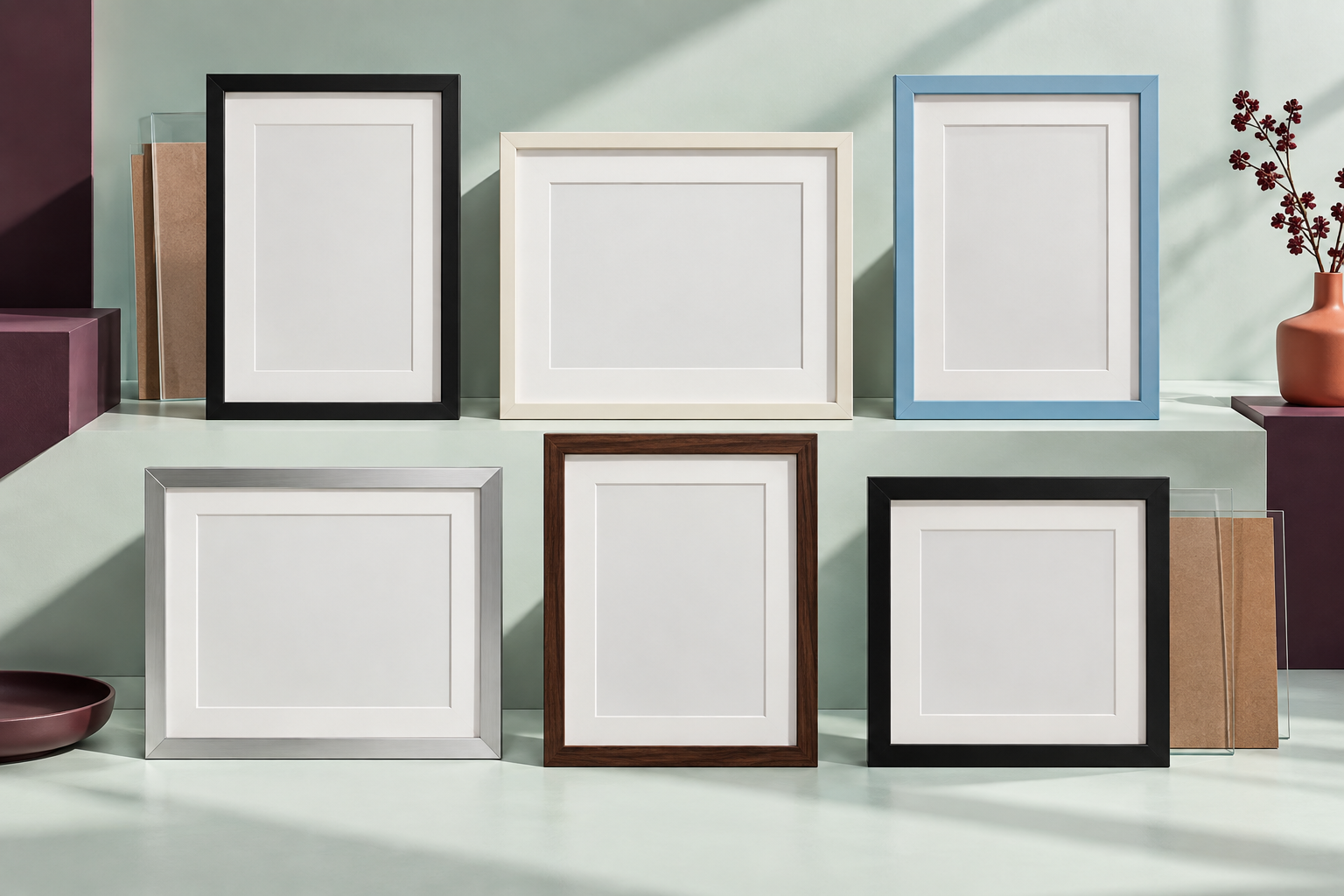
Custom Framing vs. Ready-Made Frames
Not every piece of artwork needs a custom frame.
Sometimes a standard, ready-made frame is exactly what a project calls for: it's accessible, convenient, and can be a perfectly practical choice for artwork that already fits a common size.
Other pieces require more consideration. Unusual dimensions, delicate materials, original artwork, valuable photographs, canvases, textiles, or objects may benefit from a framing solution designed specifically around them.
So how do you decide between a ready-made frame and custom framing? The answer begins with the artwork.
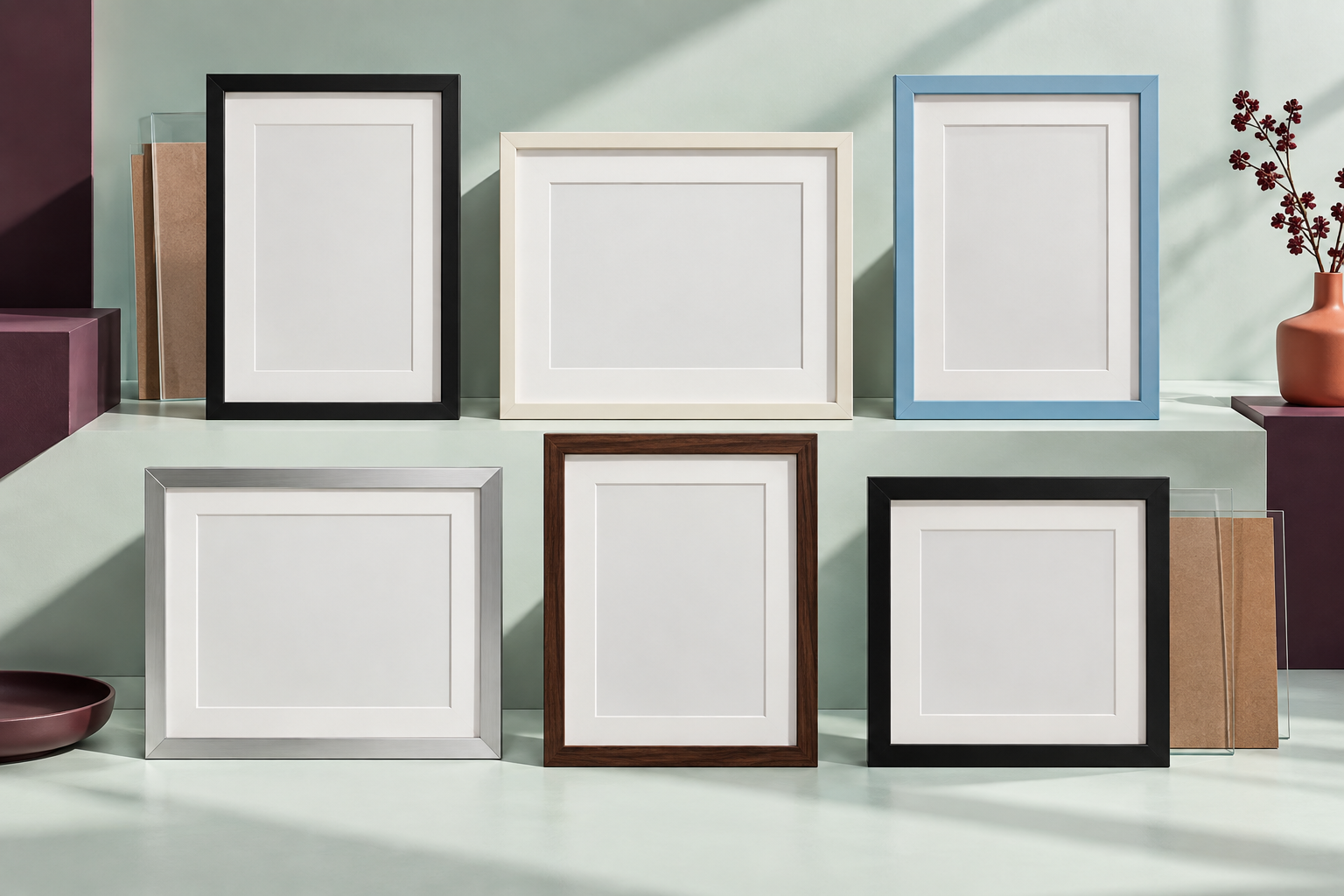
What Is a Ready-Made Frame?
Ready-made frames are manufactured in predetermined, standard sizes and sold already assembled.
Common dimensions make them particularly convenient for photographs, posters, prints, certificates, and other works produced at standard sizes. Because the moulding, glazing, backing, and dimensions have already been determined, they're generally less expensive and faster to use than a completely custom solution.
For the right piece, that simplicity can be an advantage. If you're framing an easily replaceable poster, family snapshot, temporary display, or standard-size print, a ready-made frame may provide everything you need.
The limitation is that the artwork has to adapt to the frame rather than the frame being designed around the artwork.
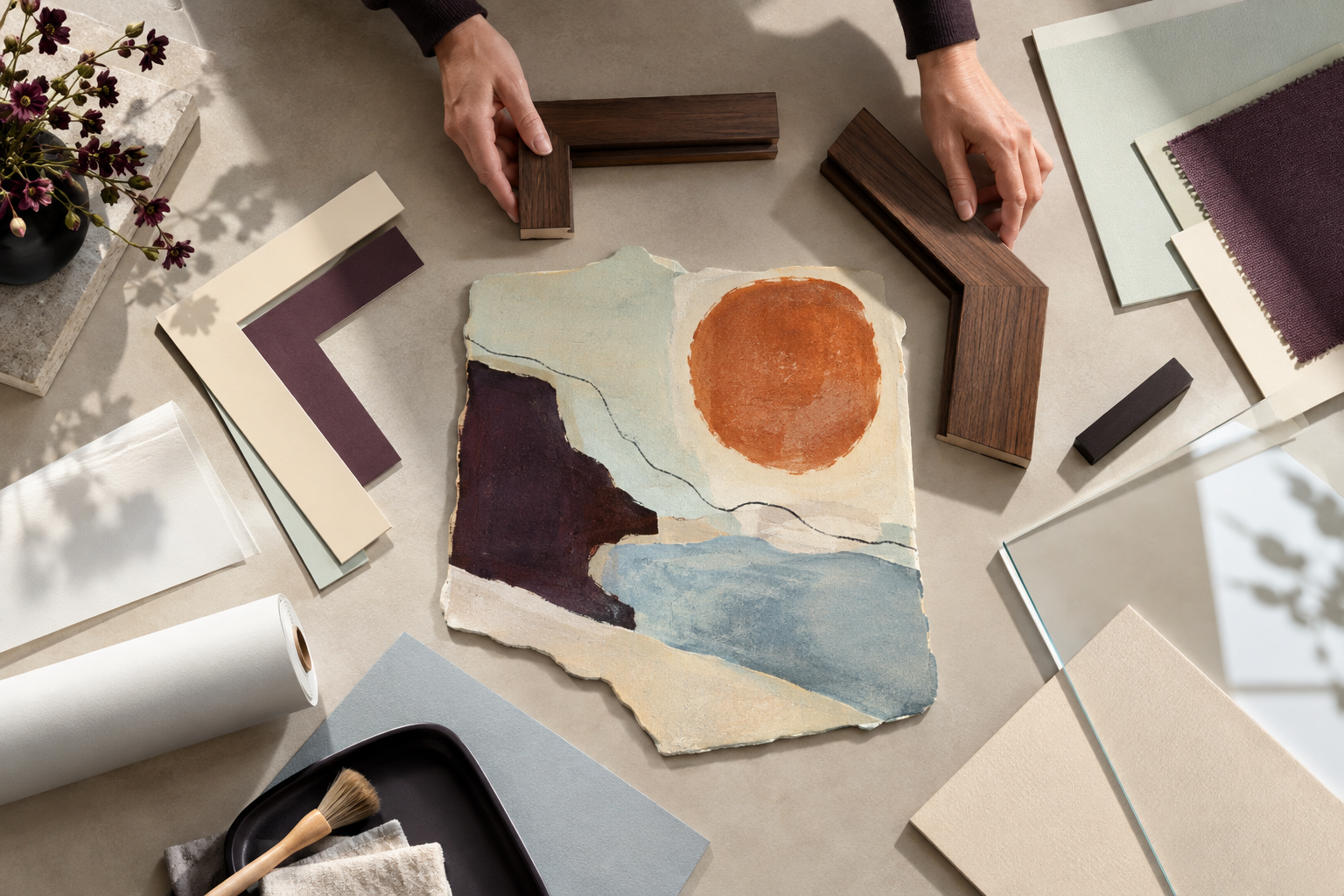
What Makes Custom Framing Different?
With custom framing, the process begins with the artwork.
The dimensions aren't predetermined. Neither are the frame profile, material, mat, mounting method, glazing, depth, or overall presentation. Instead, these elements can be selected according to the individual piece.
At Harlem Frames, that might mean designing a natural wood float frame around a painting, selecting conservation matting for a work on paper, creating a plexi box for a dimensional presentation, matching a particular moulding finish to an artist's work, or developing a completely different solution for an unusually sized object.
The question changes from:
“Which available frame will this fit into?”
to:
“What presentation is right for this artwork?”
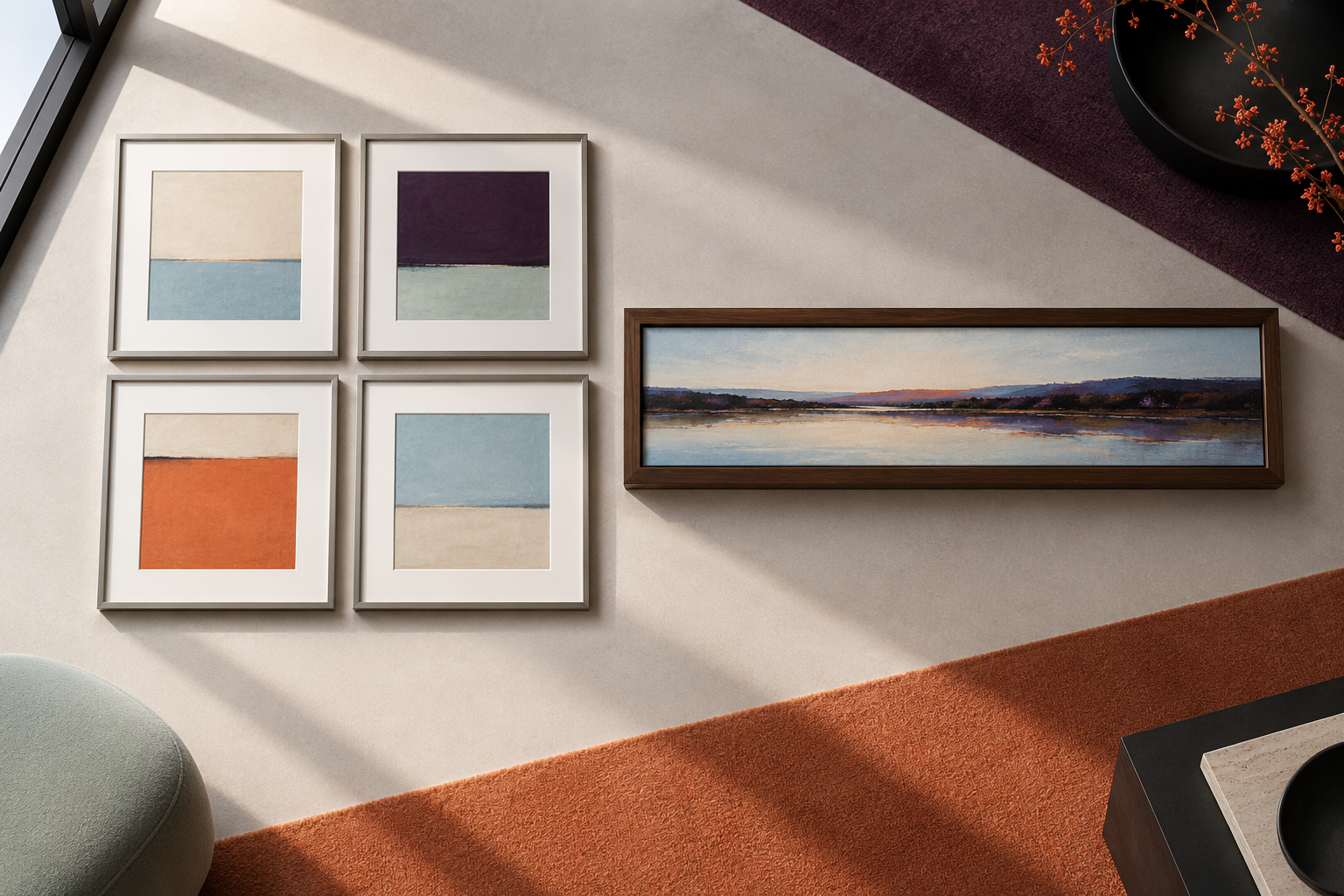
Size Makes a Difference
Standard artwork sizes are where ready-made frames are most convenient. But artists don't always work in standard dimensions.
Original paintings, handmade paper, vintage posters, textiles, photographs, unusual prints, and dimensional objects can fall outside conventional frame sizes. Trying to force an unusual piece into a standard frame may require awkward cropping, oversized matting, or other compromises.
Custom framing allows the frame to be built around the artwork's actual dimensions rather than requiring the artwork to conform to an existing product.
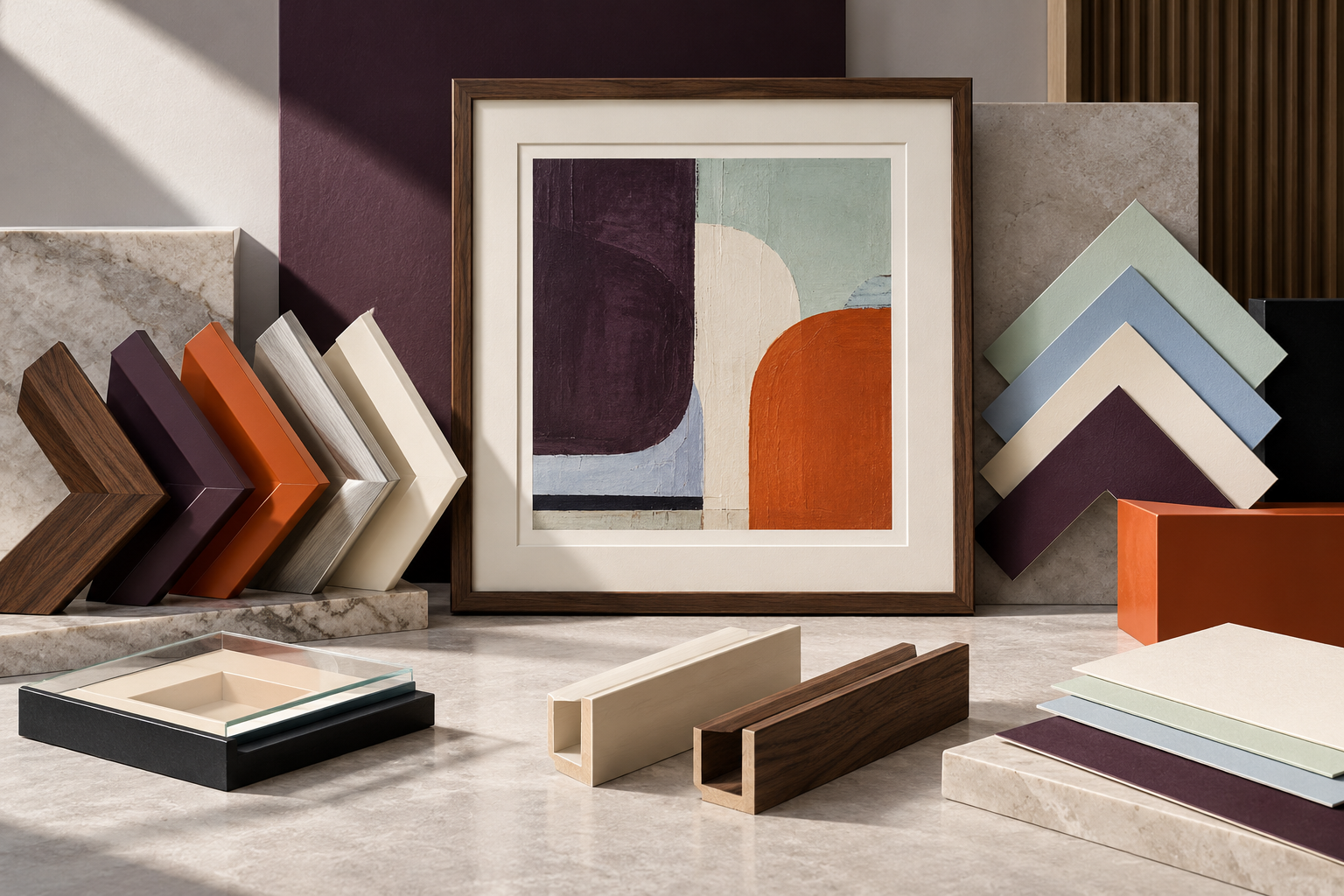
Custom Framing Offers More Design Control
A frame can dramatically change how an artwork is perceived.
With custom framing, you can consider:
Wood species and moulding material
Frame width and depth
Natural, stained, painted, or specialty finishes
Mat color and texture
Mat proportions
Float mounting
Float frames
Shadowboxes
Plexi boxes
Glazing
Spacers
Frame depth
Overall finished dimensions
These choices allow the framing to respond to the artwork's color, scale, texture, period, medium, and visual character. Sometimes that leads to a frame that almost disappears. Other times, the frame becomes an intentional part of the artwork's presentation.
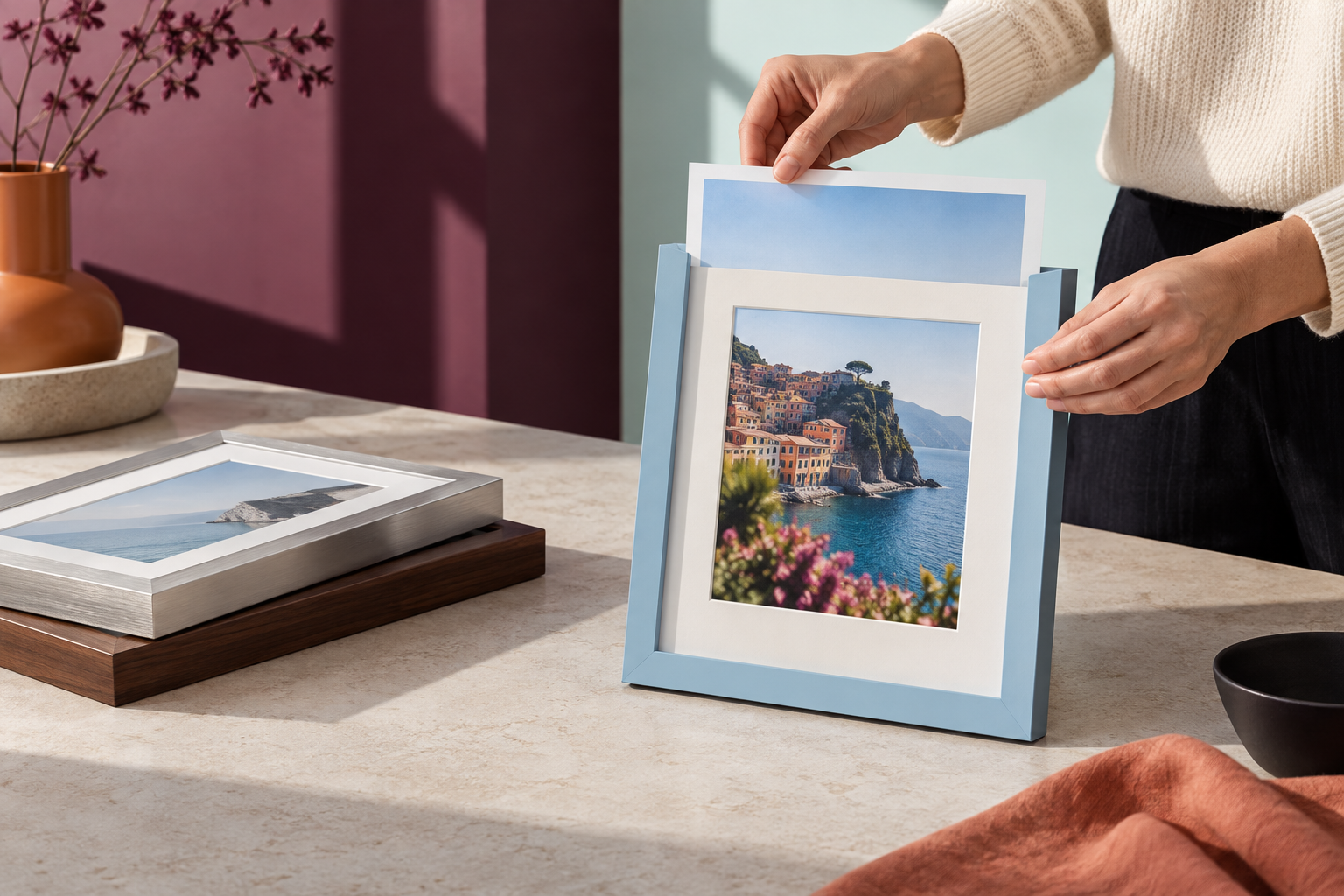
What About Preservation?
This is one of the most important differences to consider.
A ready-made frame may provide adequate physical protection for many everyday pieces, but its internal materials and construction aren't necessarily selected around the conservation requirements of a particular artwork.
When framing something original, valuable, sentimental, or irreplaceable, you may want greater control over the materials surrounding it. Custom framing can incorporate conservation-quality mat boards, appropriate mounting techniques, protective glazing, spacers, backing materials, and other preservation-minded choices according to the needs of the artwork.
That doesn't mean every custom frame automatically qualifies as conservation framing. It means custom framing gives you the opportunity to specify a framing system appropriate for the piece.
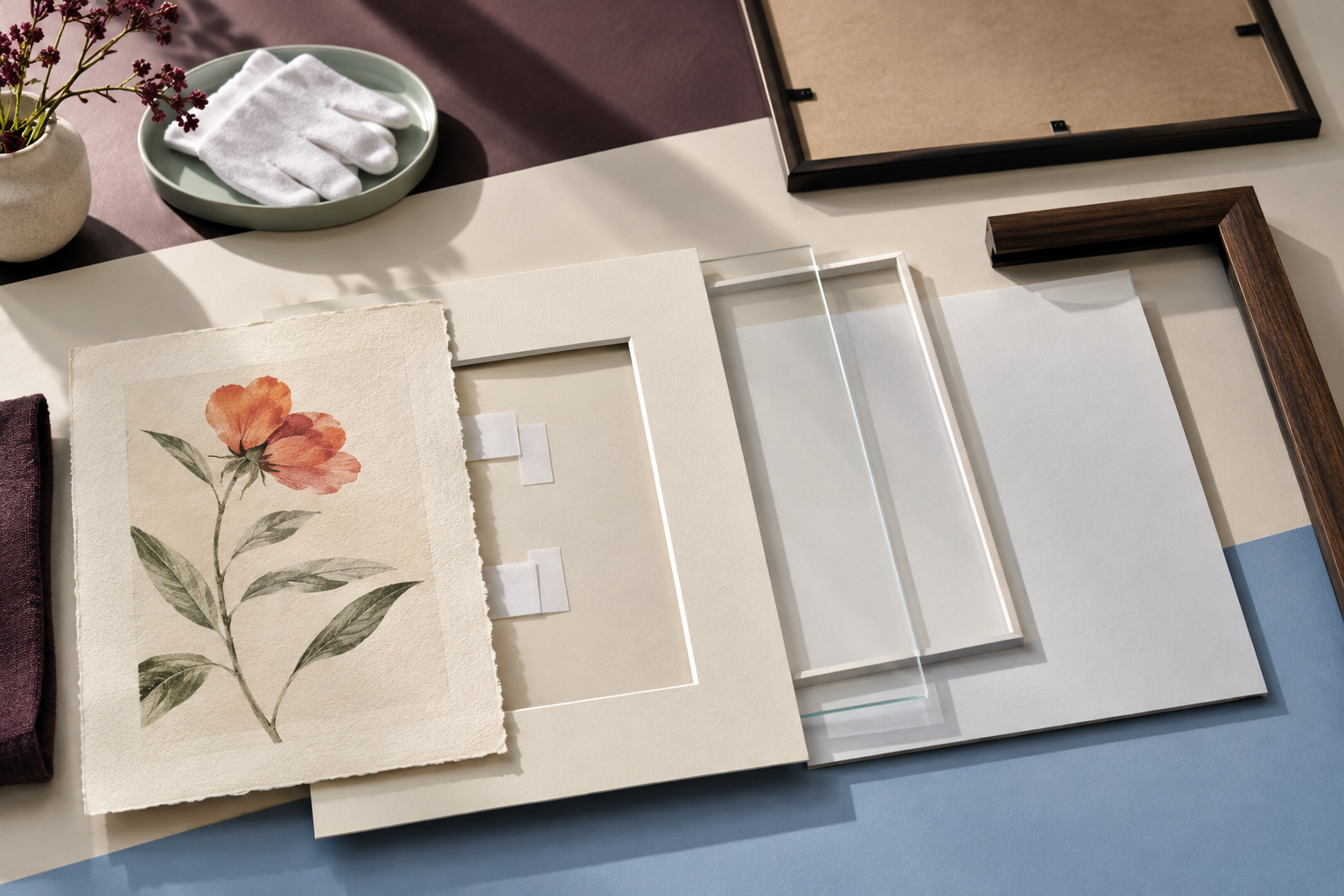
Original Artwork Often Requires a Different Approach
An original watercolor and a mass-produced poster may both be pieces of paper, but they don't necessarily have the same framing requirements.
The watercolor might require consideration of mounting, matting, glazing, light exposure, and long-term preservation. The poster may simply need an attractive frame at the correct dimensions. Similarly, an original canvas may benefit from stretching and a custom float frame, while a standard-size photographic print may fit beautifully into a ready-made option.
The value, material, construction, and importance of the artwork should help determine how much customization is appropriate.
Custom Doesn't Have to Mean Complicated
The number of options available in custom framing can initially seem overwhelming.
There are hundreds of mouldings, mat colors, glazing options, proportions, finishes, and presentation styles to consider. But you don't need to arrive knowing exactly what you want.
A framing consultation is partly a process of editing. By looking at the artwork itself, different possibilities can be compared until the presentation begins to feel resolved. Often, the final solution is surprisingly simple.
When Does a Ready-Made Frame Make Sense?
A ready-made frame may be a good choice when:
The artwork is a standard size
The piece is easily replaceable
You're framing an everyday photograph or poster
Preservation isn't a major concern
The display is temporary
Budget is the primary consideration
You need a simple presentation quickly
There's nothing inherently wrong with choosing a ready-made frame when it's appropriate for the project. Good framing isn't about choosing the most expensive option. It's about choosing the appropriate option for the artwork and your priorities.
When Is Custom Framing Worth Considering?
Custom framing becomes particularly useful for:
Original artwork
Valuable or sentimental pieces
Works with unusual dimensions
Paintings on canvas
Works on paper
Limited-edition prints
Fine-art photography
Textiles
Dimensional objects and memorabilia
Oversized artwork
Exhibition work
Artwork requiring conservation materials
Pieces where the framing itself is an important part of the presentation
Custom framing can also be particularly valuable when several works need to be presented as a cohesive series, such as an exhibition, gallery installation, or collection.
Think About How Long You'll Live With the Piece
Cost matters, but so does context.
A ready-made frame for an inexpensive print you may replace in a few years is a very different decision from framing an original artwork you expect to keep for decades.
Before choosing, consider:
What is the piece?
Is it replaceable?
Does it have sentimental or monetary value?
Does it require preservation?
Are its dimensions unusual?
How important is the finished presentation?
How long do you expect to live with it?
Those questions can tell you much more than the price of the artwork alone.

The Right Frame Is the One That Makes Sense for the Artwork
Custom framing and ready-made framing serve different purposes. One isn't automatically the correct choice for every situation.
A ready-made frame offers simplicity, speed, and affordability.
Custom framing offers greater control over dimensions, materials, design, presentation, and preservation. At Harlem Frames, we believe the decision should begin with the piece itself. Sometimes the solution can be straightforward. Other artworks call for something designed specifically around them.
Not sure which approach makes sense for your piece? Bring your artwork to Harlem Frames and our team can help you explore the options.
Related Insights
How to Choose the Right Frame for Your Artwork →
What Is Conservation Framing? →
To Mat or Not to Mat? Choosing the Right Mat for Your Artwork →
Museum Glass, Acrylic & Conservation Glazing: What's the Difference? →

How to Care for Your Artwork After Custom Framing
Professional framing helps protect and present an artwork, but proper care shouldn't end once the finished piece leaves the frame shop. Where you hang an artwork, how you clean it, the environmental conditions around it, and even how you handle the frame can influence its condition over time.
Whether you've framed an original painting, photograph, limited-edition print, family heirloom, textile, or something simply meaningful to you, a few thoughtful habits can help preserve both the artwork and its presentation for years to come.
Here are some of the most important things to consider after bringing a newly framed piece home.
Keep Artwork Away From Direct Sunlight
Light is one of the most important environmental factors to consider when displaying artwork.
Prolonged exposure to direct sunlight can contribute to fading and changes in many materials, particularly works on paper, photographs, textiles, inks, and certain pigments. Even when a piece has been framed using UV-protective glazing, thoughtful placement still matters. Protective glazing can significantly reduce exposure to ultraviolet radiation, but it doesn't make artwork completely immune to the effects of light.
Whenever possible, avoid placing sensitive artwork directly opposite a bright window or in a location that receives strong sunlight for extended periods throughout the day. For particularly valuable or light-sensitive works, consider the lighting conditions of the room as part of the framing and installation process.
Be Mindful of Heat
That empty wall above a radiator may seem like the perfect place for a framed artwork—but it isn't always the safest environment.
Avoid hanging artwork directly above or beside:
Radiators
Heating vents
Fireplaces
Wood-burning stoves
Other concentrated heat sources
Repeated heating and cooling can create environmental fluctuations around an artwork and its frame. Wood frames, paper, canvas, mounting materials, and other components can respond differently to changes in temperature and moisture. A more stable environment is generally preferable for long-term display.
Humidity Matters
Bathrooms can look beautiful with framed artwork. So can kitchens and basements.
But humidity requires consideration. Excess moisture and repeated fluctuations in humidity can affect paper, canvas, wood, adhesives, backing materials, and other components within a framed piece. Bathrooms with frequent steam, damp basements, and areas close to sinks or cooking surfaces may therefore be unsuitable for certain artworks.
This doesn't mean artwork can never be displayed in these spaces. The appropriate location depends on the piece, its materials, its value, the framing system, and the conditions of the room. For something irreplaceable, however, a more environmentally stable location is generally the safer choice.
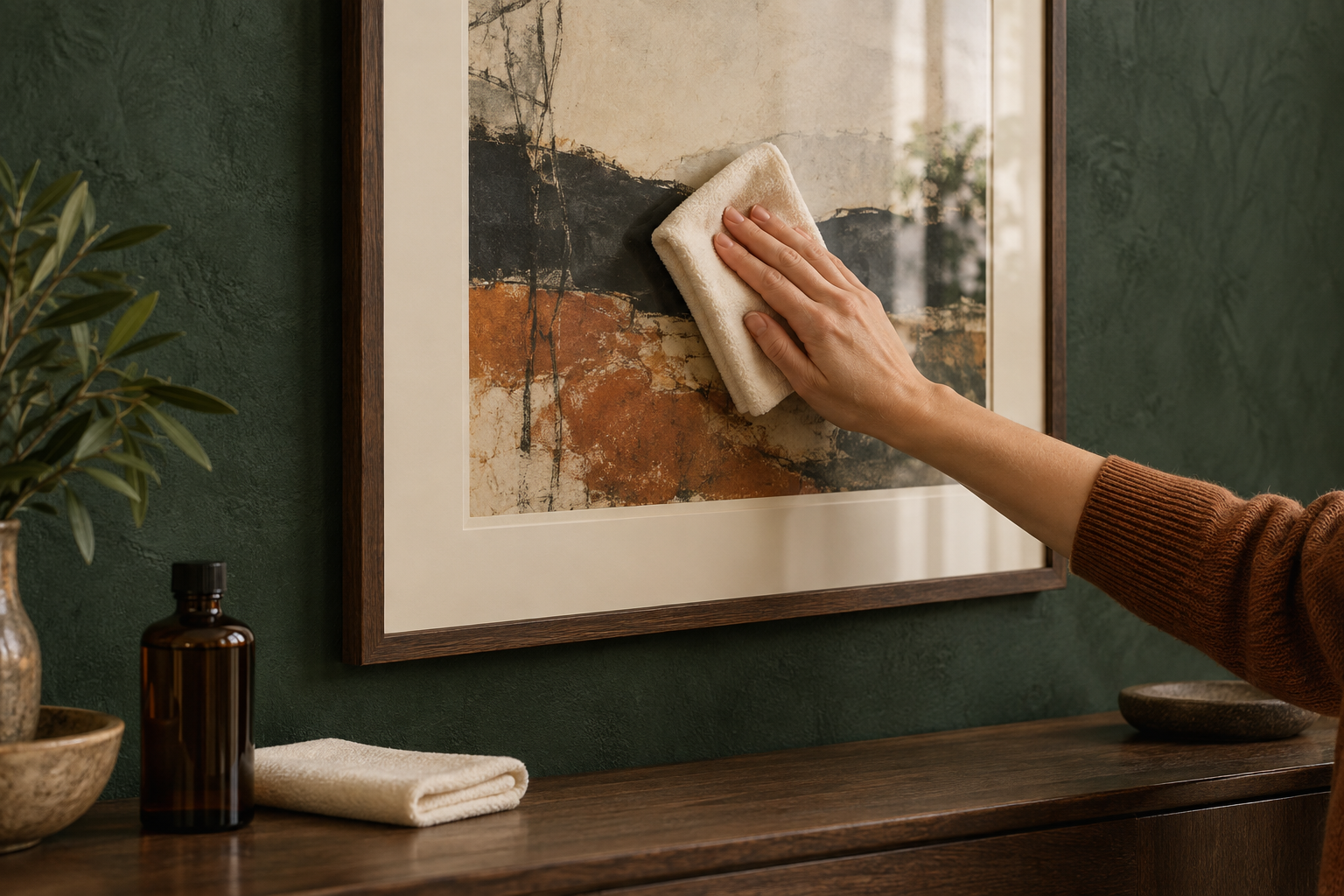
Clean the Glazing Carefully
Dust inevitably accumulates on framed artwork.
For routine cleaning, start gently. A clean, soft microfiber cloth can often be sufficient for removing surface dust from glazing. Before using any cleaning product, it's important to know what type of glazing is actually in the frame.
Glass and acrylic are different materials and shouldn't automatically be cleaned in the same way. Certain household cleaners can damage specialized coatings or acrylic surfaces. Avoid spraying cleaner directly onto a framed artwork. Liquid can travel toward the edges of the frame and potentially enter the framing package.
When you're unsure, ask your framer what cleaning method is appropriate for the glazing used on your particular piece.
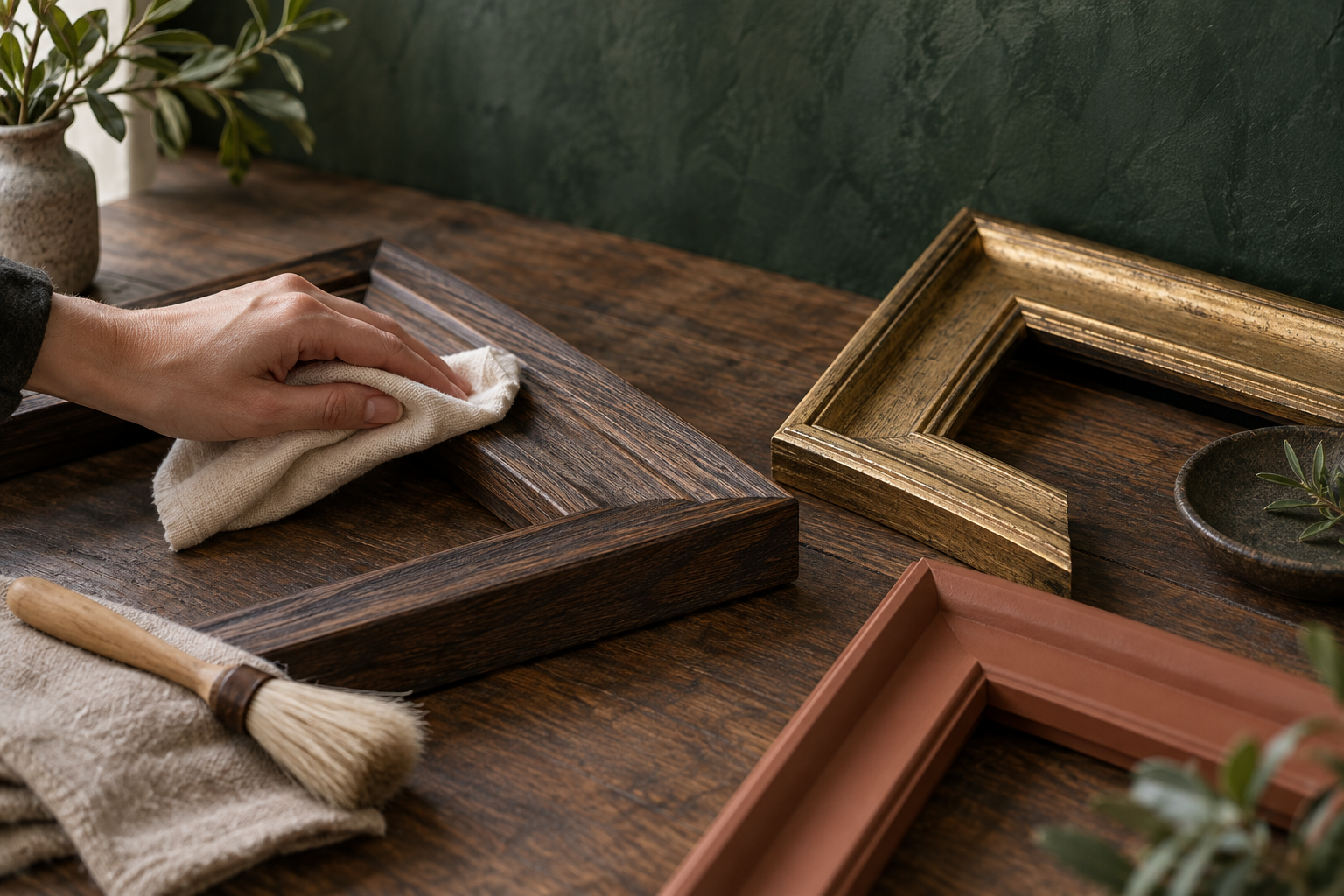
Don't Forget the Frame
Frames need care too.
Dust wood and finished mouldings gently with a clean, soft cloth. Avoid aggressive household cleaners, abrasive materials, excessive moisture, or products that haven't been recommended for the particular finish. Painted, gilded, stained, natural-wood, and specialty finishes can all respond differently to cleaning.
Older or highly decorative frames may require especially careful handling. If you notice cracking, flaking, loose ornamentation, or another change in the frame's surface, professional assessment may be preferable to attempting a repair yourself.
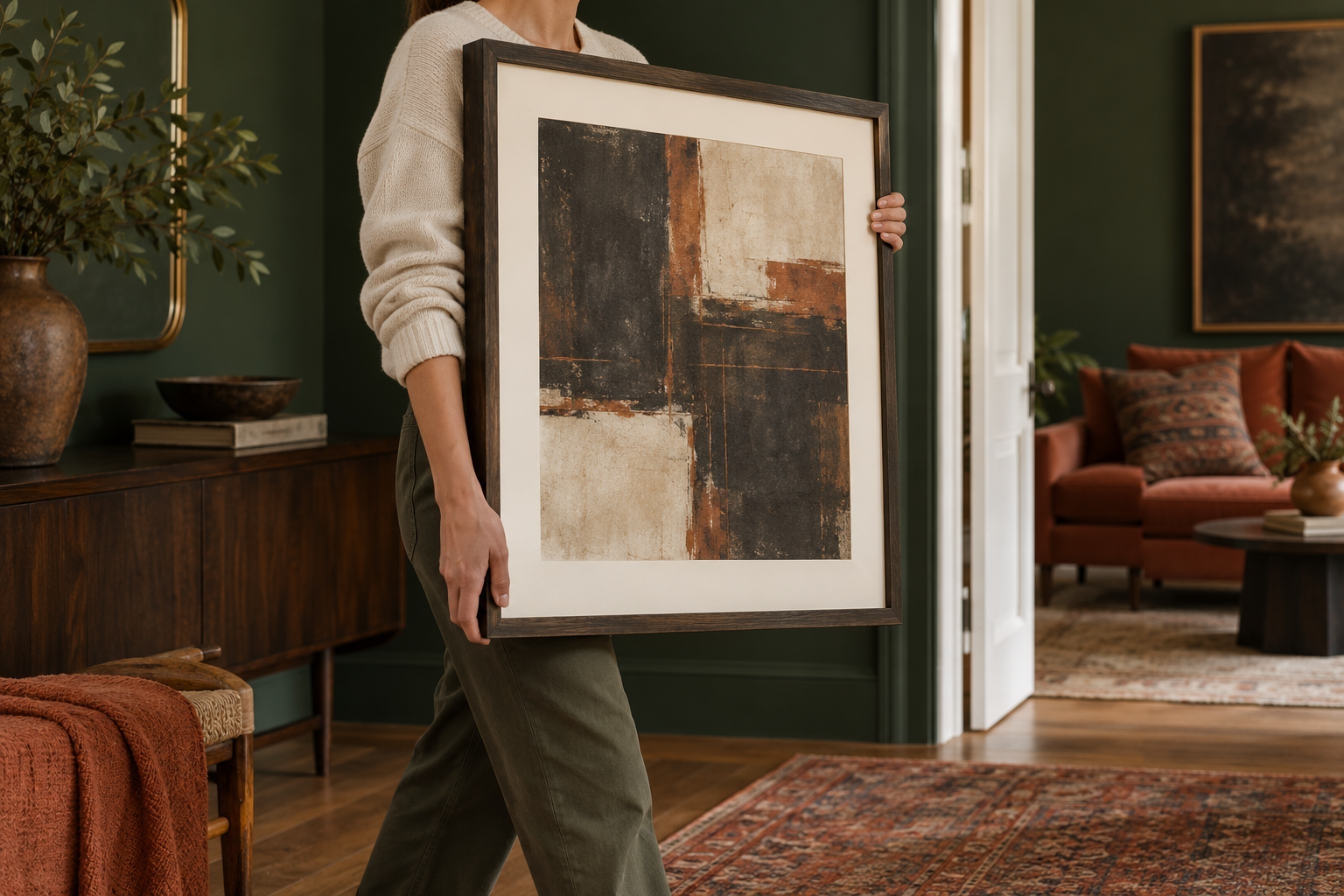
Handle Framed Artwork With Both Hands
When moving framed artwork, support it securely from both sides or from underneath rather than carrying it by the hanging wire.
The wire and hanging hardware are designed primarily to support the piece once installed—not necessarily to function as handles.
For larger or heavier works, use two people whenever necessary. Before moving a substantial piece, it's also worth planning where it's going before lifting it. This reduces unnecessary handling and the risk of accidentally striking walls, furniture, or doorways.
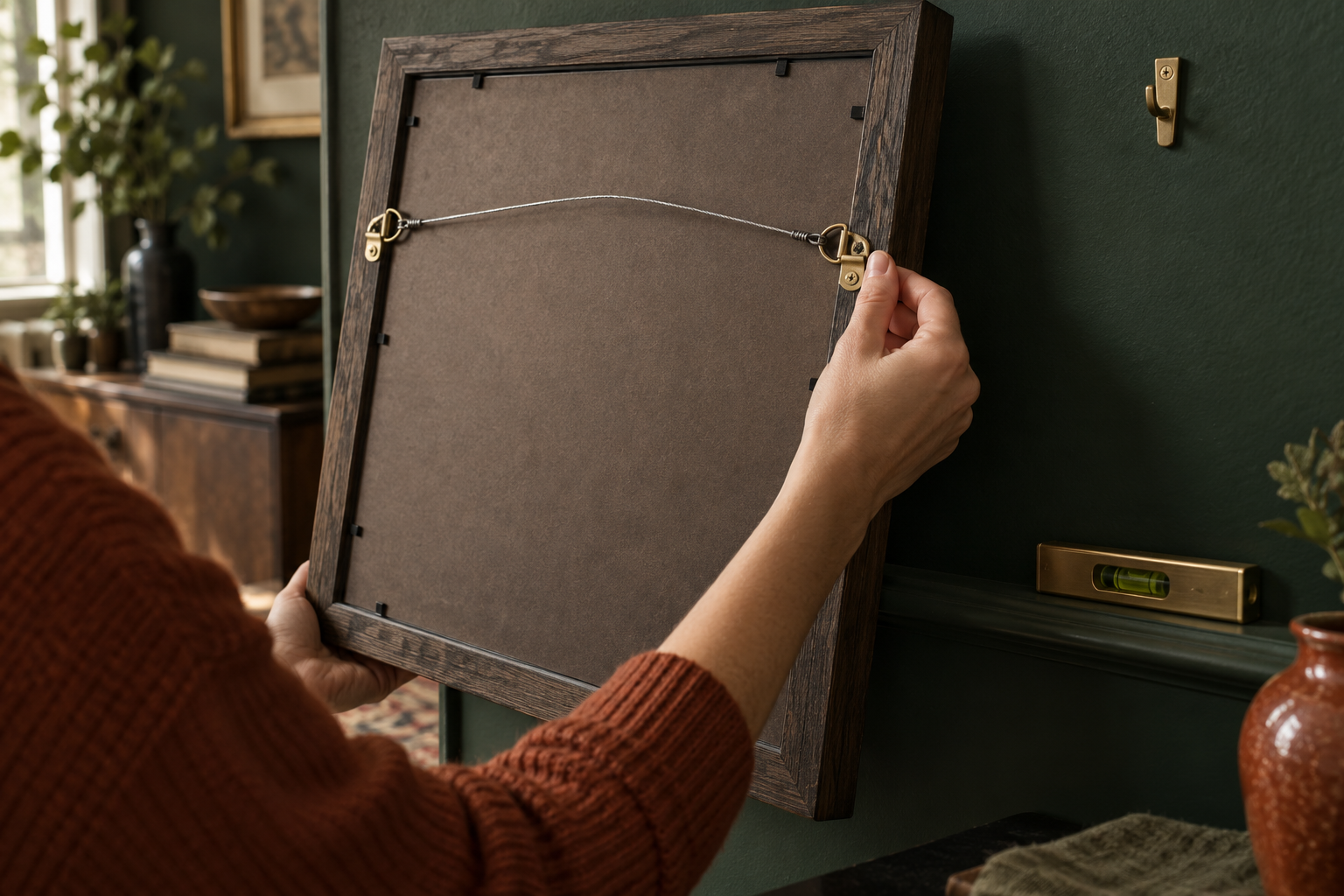
Check Your Hanging Hardware
Artwork should be installed using hardware appropriate for both the weight of the finished piece and the wall on which it will hang.
A small framed photograph and a large glazed artwork have very different installation requirements. Periodically check that the artwork remains secure and level, particularly after moving furniture, construction, or other activity around the wall.
If a frame begins leaning away from the wall, hardware becomes loose, or the piece seems unstable, address the issue rather than simply repositioning it. Large, heavy, valuable, or unusually shaped works may benefit from professional installation.
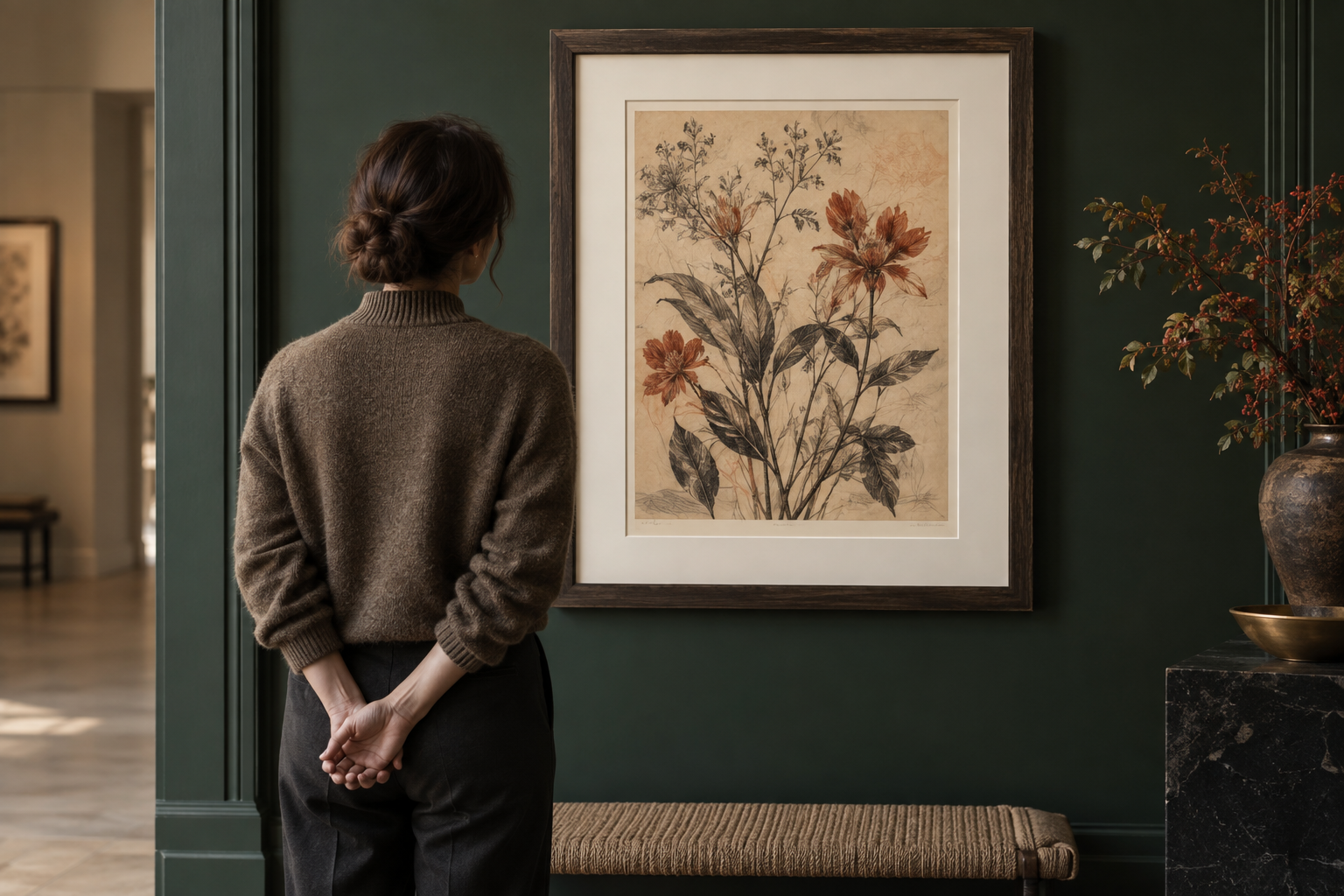
Avoid Touching the Artwork Itself
Once an artwork has been professionally framed, resist the temptation to open the frame unnecessarily.
Fingerprints, oils, dust, accidental creasing, and improper handling can introduce risks—particularly with photographs and works on paper. If something appears to have shifted inside the frame, the artwork has slipped, or debris has entered the framing package, bring the piece back to a professional framer rather than dismantling it yourself.
Watch for Changes Over Time
Take a closer look at your framed artwork every so often.
Potential warning signs include:
Condensation beneath the glazing
Artwork shifting or slipping
Rippling or buckling
Yellowing or discoloration
Insects or debris inside the frame
Mold or unusual spotting
Loose frame corners
Damaged backing
Cracked or chipped glazing
Changes in the mat board
Not every change indicates a serious problem, but noticing something early can make it easier to determine what is happening and whether the piece needs attention.
Store Framed Artwork Carefully
If a framed piece isn't currently being displayed, don't simply place it uncovered in an attic, basement, garage, or storage unit without considering the environment.
Whenever possible, choose a clean, dry, environmentally stable location. Protect the frame and glazing from scratches and impact, and avoid placing heavy objects against the artwork.
Framed works are generally better stored securely upright rather than lying beneath a stack of other objects. For valuable collections or long-term storage, more specialized art-storage solutions may be appropriate.
Remember: Conservation Framing Isn't Permanent Protection
High-quality framing can do a great deal to support the preservation of an artwork.
Conservation mat boards, appropriate mounting techniques, UV-protective glazing, backing materials, and thoughtful construction can all help create a safer environment for a piece.
But no frame can completely protect an artwork from poor environmental conditions, accidents, extreme light exposure, excessive moisture, or improper handling. The best approach combines appropriate framing with thoughtful care after the artwork leaves the studio.
When Should You Bring a Piece Back to Your Framer?
You don't need to wait until something is visibly damaged.
Consider having a framed artwork assessed if:
It has been framed for many years
You don't know what materials were originally used
The mat has begun discoloring
The artwork appears to have shifted
The glazing has been damaged
The backing has opened or deteriorated
The frame itself requires repair
You're moving the artwork into a significantly different environment
The piece has become more valuable or important to you
Older framing can sometimes contain materials or mounting methods that would no longer be recommended for sensitive artwork. An assessment can help determine whether anything should be changed.

Care Is Part of the Framing Process
A thoughtfully framed artwork is meant to be lived with.
The goal isn't to make you afraid to display or handle your collection. It's simply to recognize that where an artwork lives and how it's cared for become part of its preservation.
At Harlem Frames, we consider framing, presentation, and long-term care together. From conservation materials and protective glazing to custom framing, installation, and frame repair, the appropriate solution begins with understanding the individual artwork.
Have questions about an existing framed piece? Bring it to Harlem Frames and our team can help assess its framing, presentation, and condition.
Related Insights
Museum Glass, Acrylic & Conservation Glazing: What's the Difference? →
To Mat or Not to Mat? Choosing the Right Mat for Your Artwork →
Where NOT to Hang Your Artwork
Finding the perfect place for an artwork isn't only a design decision. Light, heat, humidity, moisture, and environmental changes can all affect a framed piece over time. A wall may look ideal aesthetically while exposing an artwork to conditions that aren't ideal for its long-term care.
This is particularly important for original works on paper, photographs, prints, textiles, paintings, and sentimental or irreplaceable pieces. While thoughtful framing can provide meaningful protection, where the artwork lives after it leaves the frame shop matters too.
Here are some locations to think twice about before hanging your artwork.
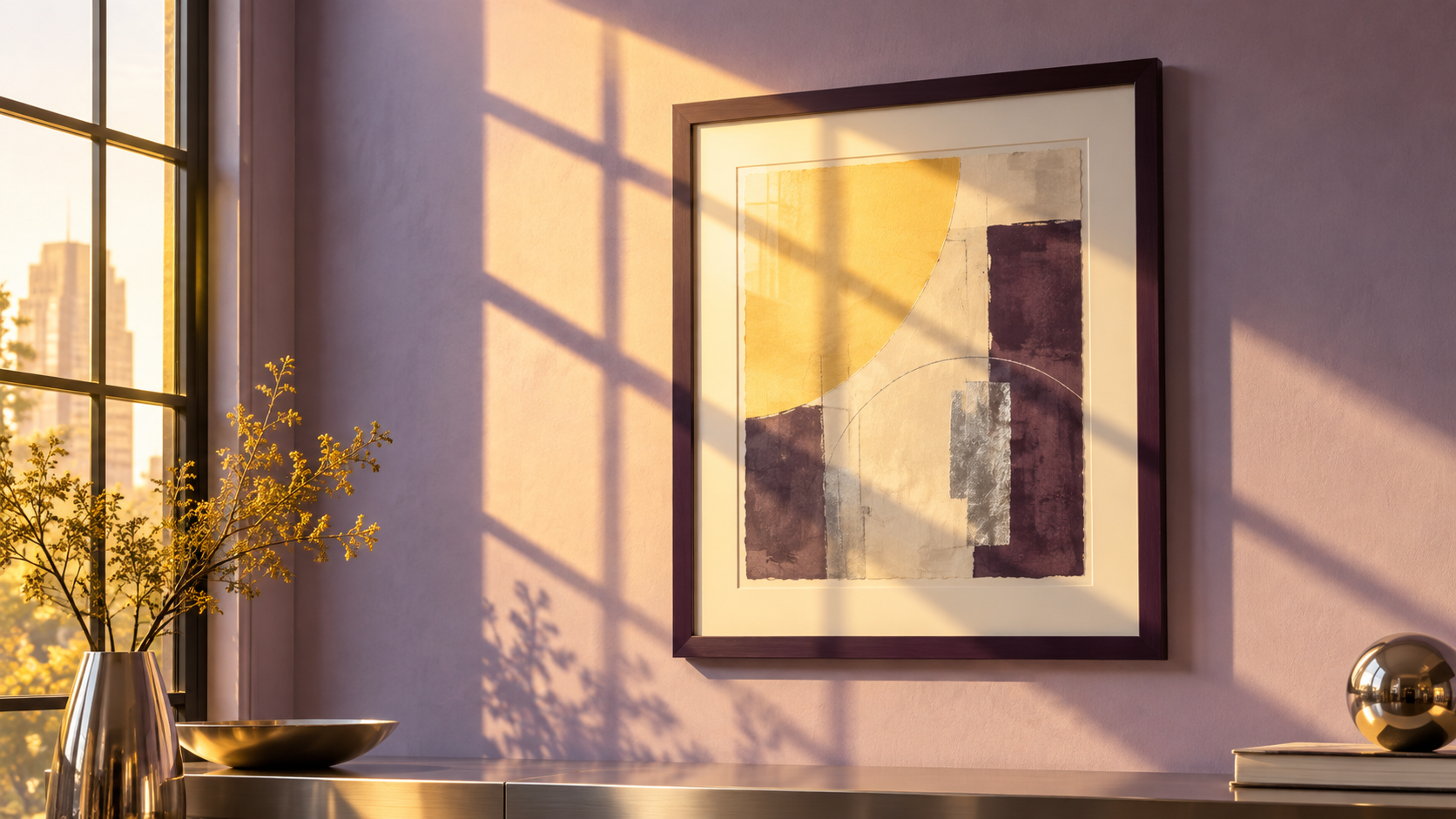
1. In Direct Sunlight
A bright, sun-filled wall may make artwork look beautiful during the day, but prolonged direct sunlight can be particularly challenging for light-sensitive materials.
UV exposure can contribute to fading and deterioration in photographs, works on paper, textiles, inks, and certain pigments. Visible light can contribute to change as well.
UV-protective glazing can significantly reduce ultraviolet exposure, but no glazing makes an artwork completely immune to the effects of light. Before hanging a sensitive piece, watch how sunlight moves through the room throughout the day. A wall that appears shaded in the morning may receive several hours of strong afternoon sun.
Better choice: A wall with indirect or controlled natural light.
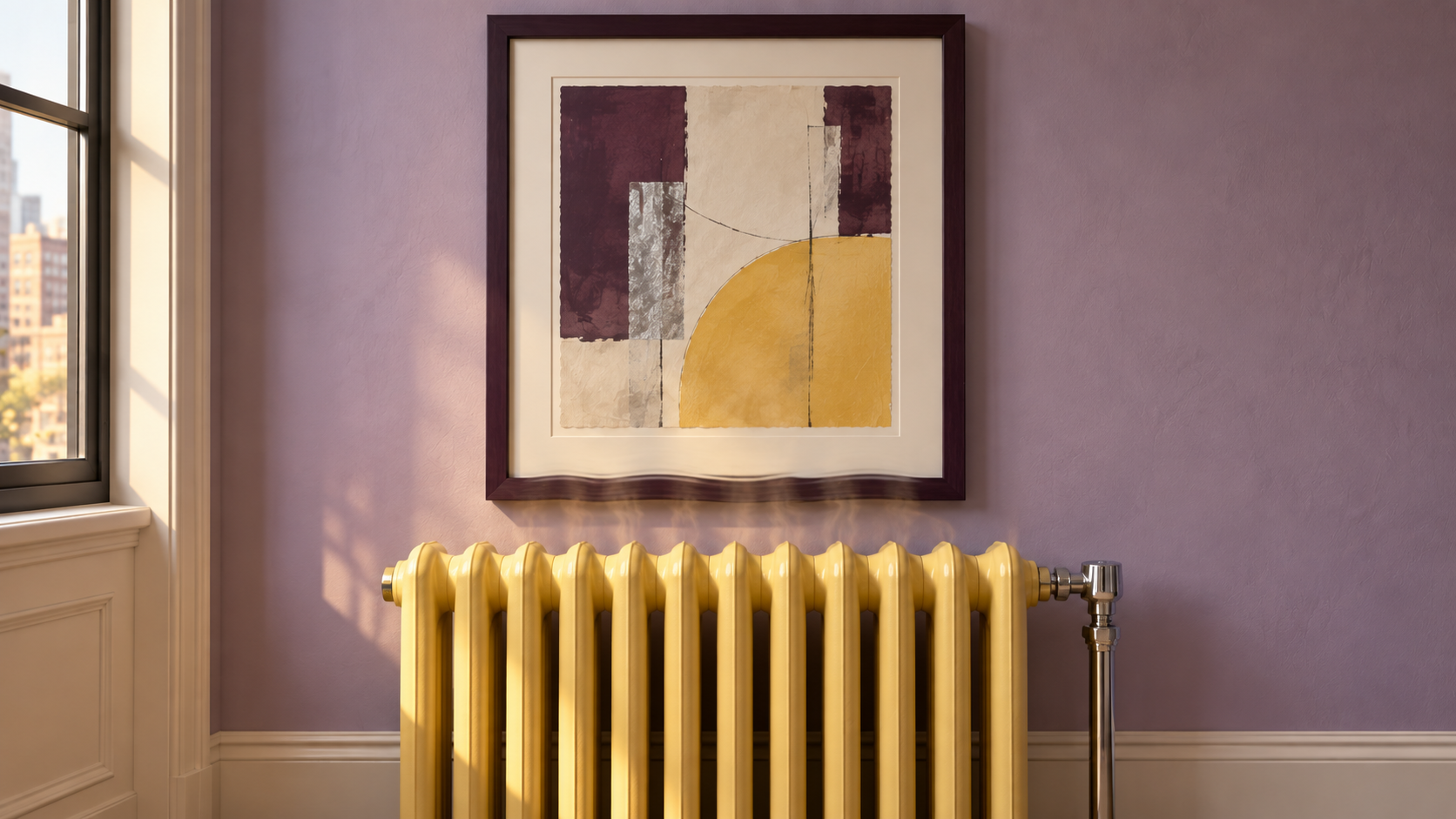
2. Directly Above a Radiator
The space above a radiator is tempting—especially in New York apartments where available wall space can be limited.
But concentrated heat and repeated temperature changes aren't ideal conditions for artwork. Paper, wood, canvas, adhesives, mounting materials, and frames can respond differently as environmental conditions fluctuate. Over time, repeated exposure to heat can place unnecessary stress on the artwork and its framing materials.
Better choice: Allow meaningful distance between framed artwork and concentrated heating sources.
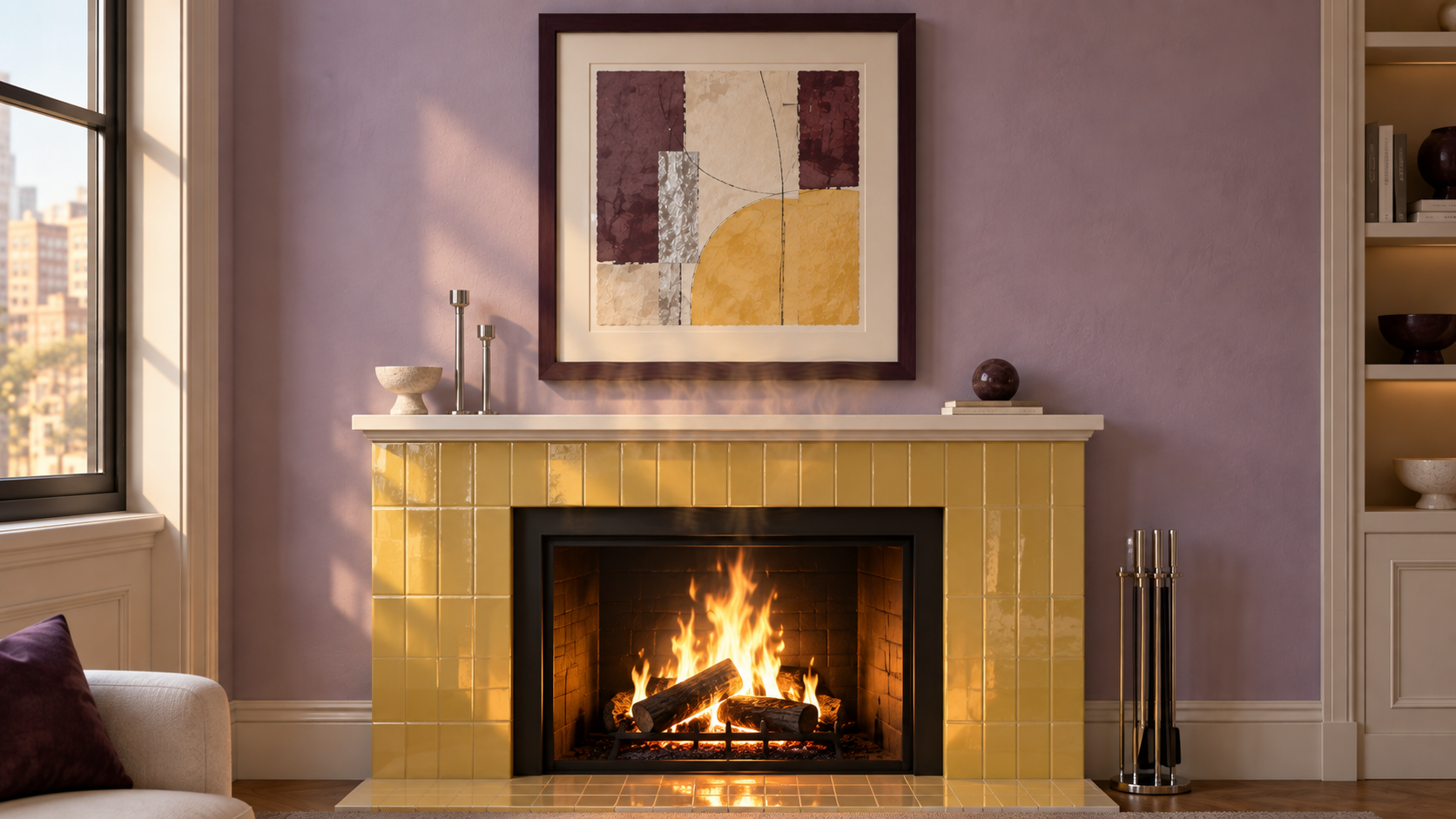
3. Above a Working Fireplace
A dramatic artwork above a fireplace can look wonderful, but the environment deserves careful consideration.
A functioning fireplace can introduce heat, temperature fluctuations, smoke, soot, and airborne particles around the artwork. Even if the piece doesn't appear visibly affected, repeated exposure can create conditions that aren't appropriate for valuable or sensitive works. If the fireplace is frequently used, consider placing important artwork elsewhere.
Better choice: Reserve the mantel area for pieces that are less sensitive or consult a professional about the particular artwork and environment.
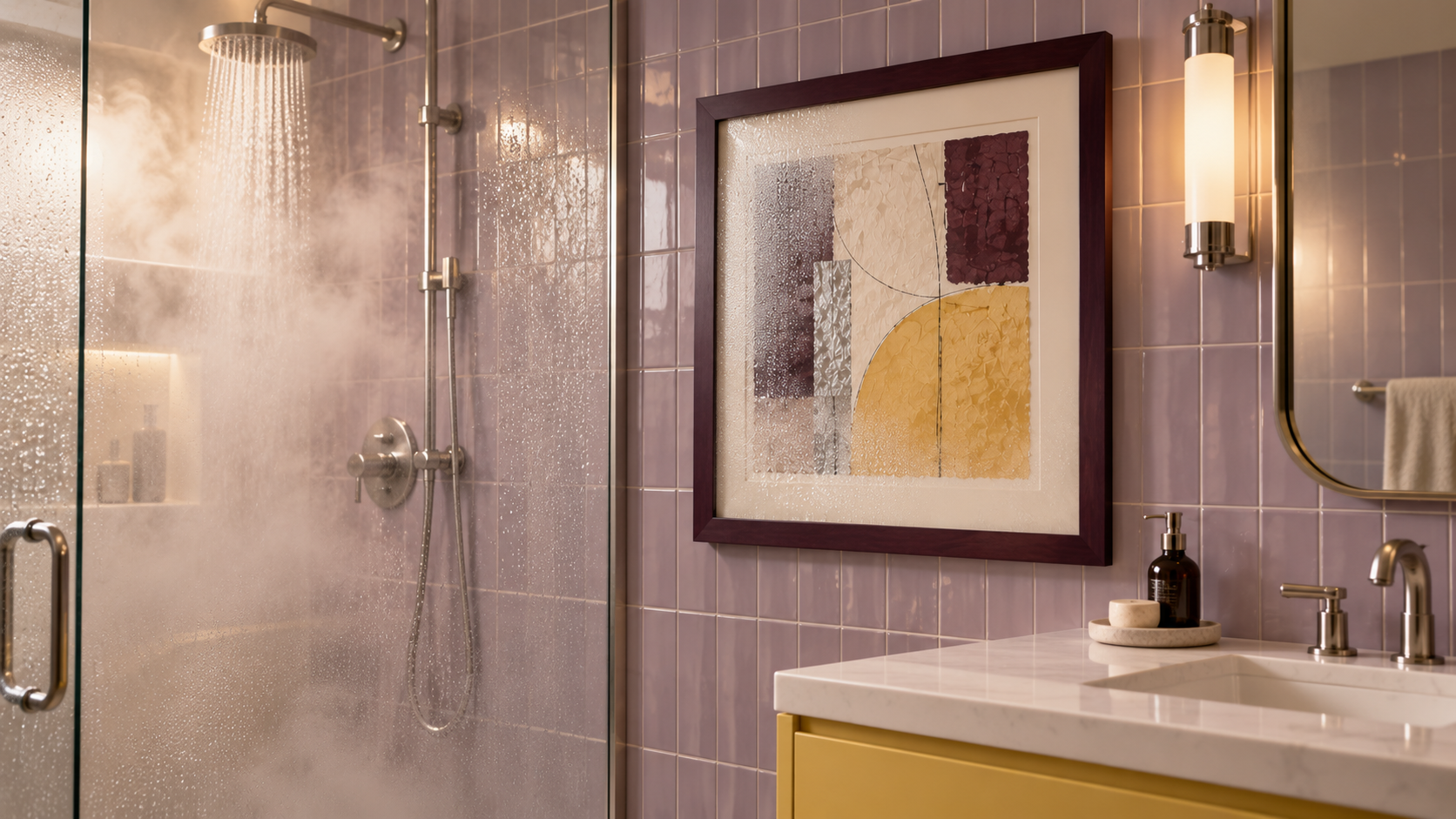
4. In a Steamy Bathroom
Whatever it is, the way you tell your story online can make all the difference.Artwork can add warmth and personality to a bathroom, but bathrooms frequently experience significant fluctuations in humidity.
Hot showers create moisture and condensation, followed by periods when the room dries again. These repeated environmental changes can affect paper, canvas, wood frames, backing materials, and other components. Moisture can also create conditions favorable to mold.
A well-ventilated powder room is very different from a small bathroom where several hot showers are taken every day, so the actual environment matters.
Better choice: Use less sensitive or replaceable artwork in high-humidity bathrooms and keep valuable or irreplaceable pieces in more stable rooms.
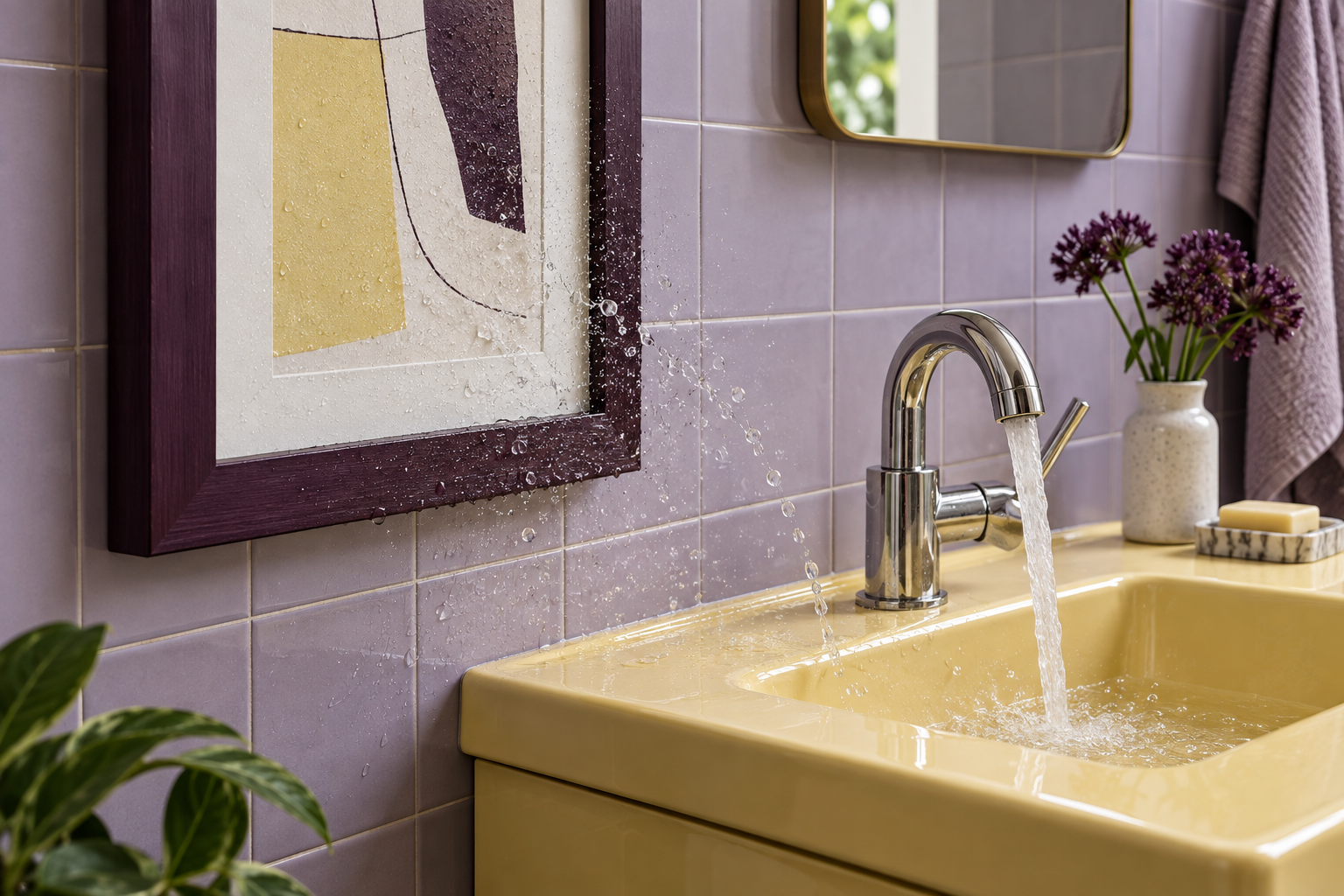
5. Immediately Beside a Shower, Sink, or Bathtub
Humidity isn't the only concern in bathrooms.
If an artwork is close enough to a water source to be splashed, it probably belongs somewhere else. Frames aren't waterproof enclosures. Moisture can potentially enter around the edges or through the back of a frame, where it may affect the artwork or framing materials.
Better choice: Keep framed artwork safely separated from direct sources of water.

6. Directly Over the Stove
The kitchen can be one of the harshest environments in a home for certain artworks.
Heat, steam, grease, smoke, food particles, and frequent changes in humidity can all accumulate around cooking areas. A framed print across the room from the stove may be perfectly reasonable. An original work directly above the cooktop is another matter.
Better choice: Hang artwork away from cooking surfaces, sinks, and areas where steam and grease regularly accumulate.
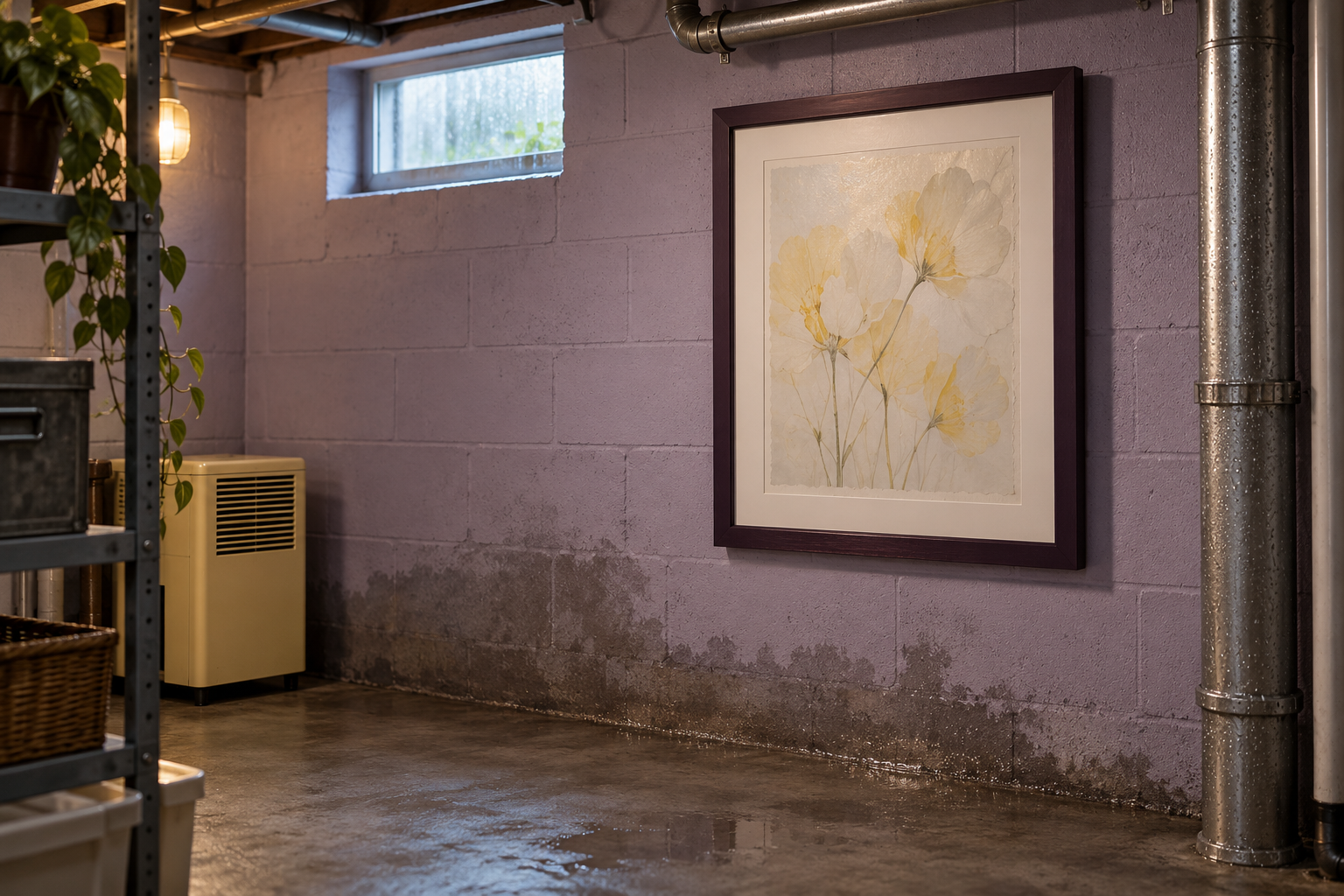
7. In a Damp Basement
Basements can provide plenty of wall and storage space, but environmental conditions vary enormously.
Some are climate-controlled and relatively stable. Others experience elevated humidity, temperature changes, condensation, or occasional water intrusion. Before displaying or storing valuable artwork in a basement, understand the conditions of the space throughout the year—not just on the day you hang it.
Better choice: A dry, climate-controlled area with stable environmental conditions.
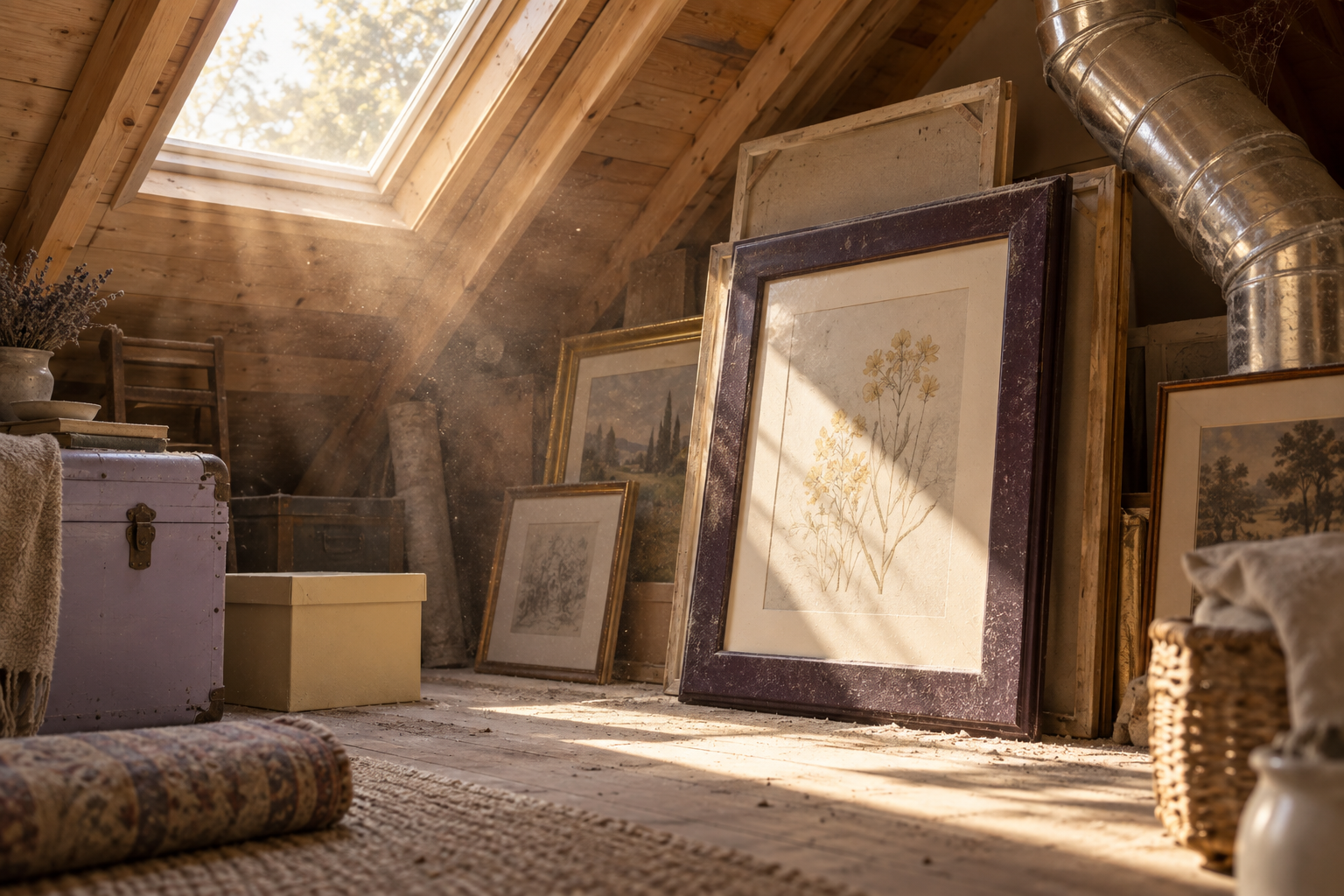
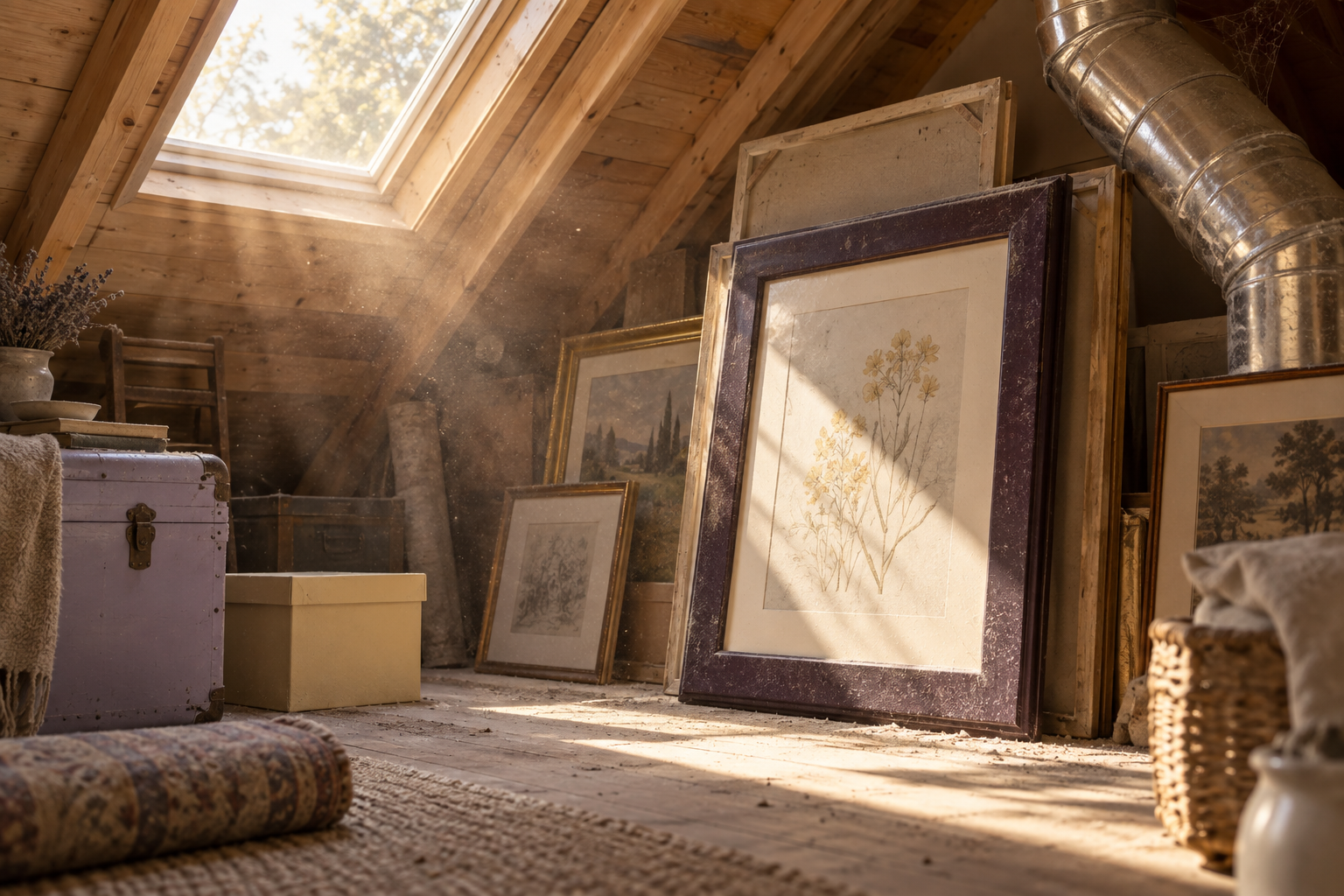
8. In an Unconditioned Attic or Garage
Attics and garages can experience dramatic seasonal changes in temperature and humidity.
They may also expose artwork to dust, insects, moisture, and other environmental risks. These spaces are generally poor choices for displaying or storing valuable framed artwork unless they have been specifically converted into controlled environments.
Better choice: Store artwork inside the conditioned living environment or use appropriate professional art storage for important collections.
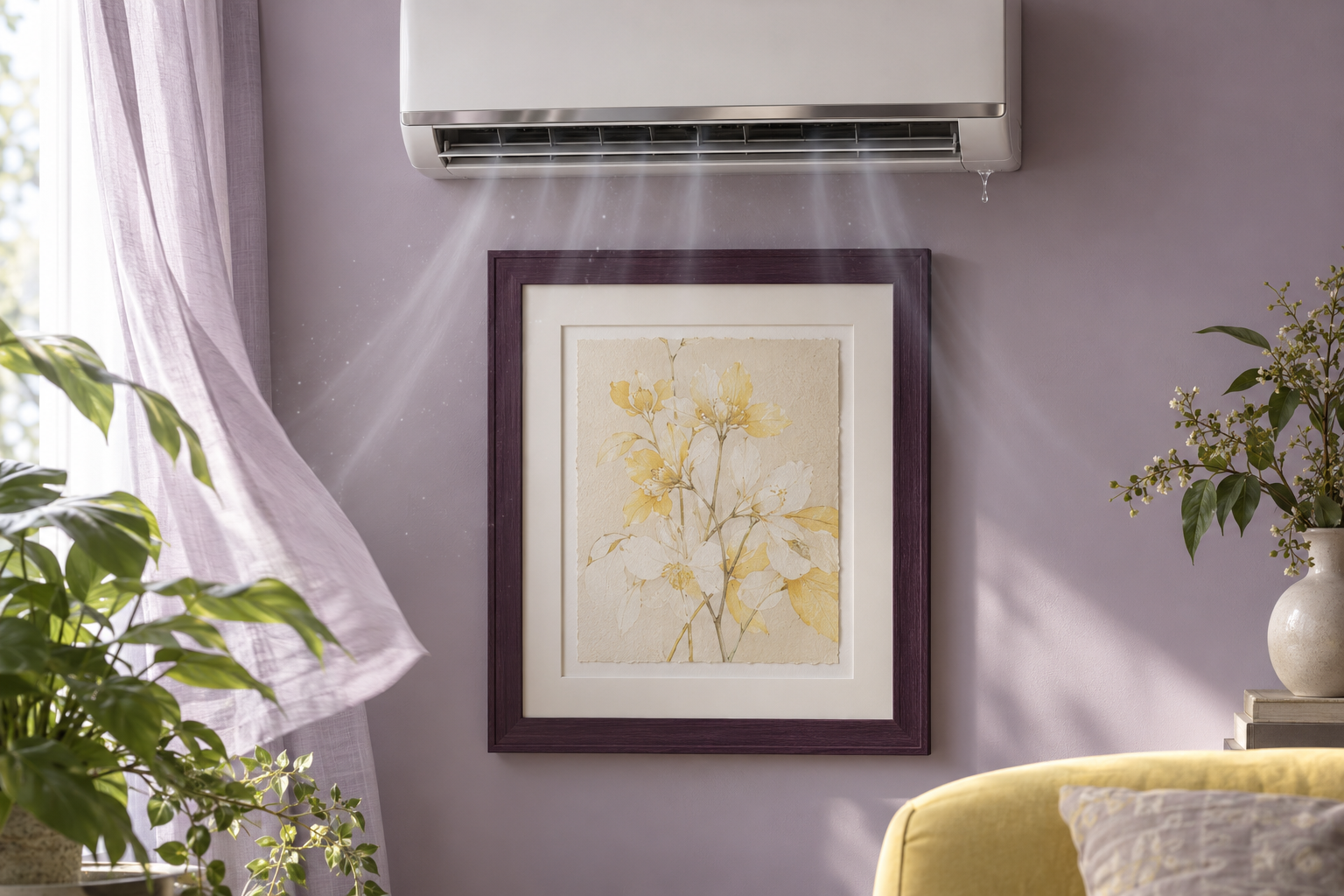
9. Directly Beneath an Air Conditioner or Vent
Heating and cooling vents are easy to overlook.
Placing artwork directly in the path of forced hot or cold air can expose it to repeated environmental fluctuations. Window air conditioners can also present concerns if condensation or leaks develop.
Better choice: Position important artwork away from direct airflow and equipment that could potentially produce moisture.
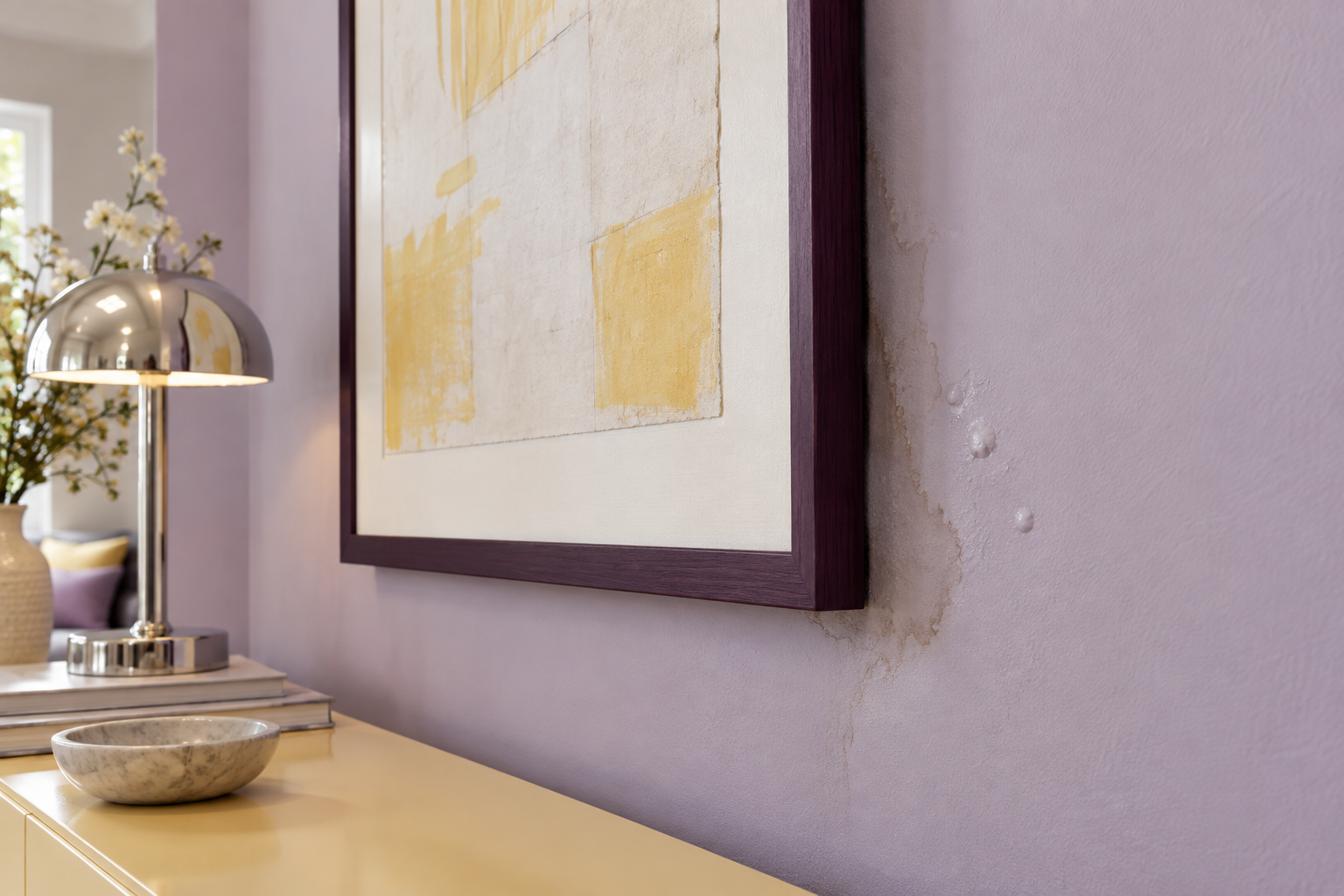
10. On a Wall With a History of Moisture Problems
A freshly painted wall may conceal an old leak.
If a wall has experienced plumbing problems, roof leaks, condensation, or recurring dampness, address the source before installing valuable artwork. Water damage can affect far more than the frame itself. Moisture entering a framing package can potentially affect mats, backing, mounting materials, paper, canvas, and the artwork.
Better choice: Confirm that the wall is completely dry and the underlying problem has been resolved before installing the piece.
What About Valuable Artwork?
The more valuable, delicate, sentimental, or irreplaceable a piece is, the more carefully its environment should be considered.
An inexpensive, replaceable poster and an original watercolor don't necessarily need to be treated the same way.
For particularly important works, think about:
Natural and artificial light
Temperature stability
Humidity
Proximity to water
Heating and cooling sources
Installation hardware
Wall condition
The type of glazing and framing materials being used
Sometimes the best framing solution begins with understanding where the finished artwork will ultimately hang.
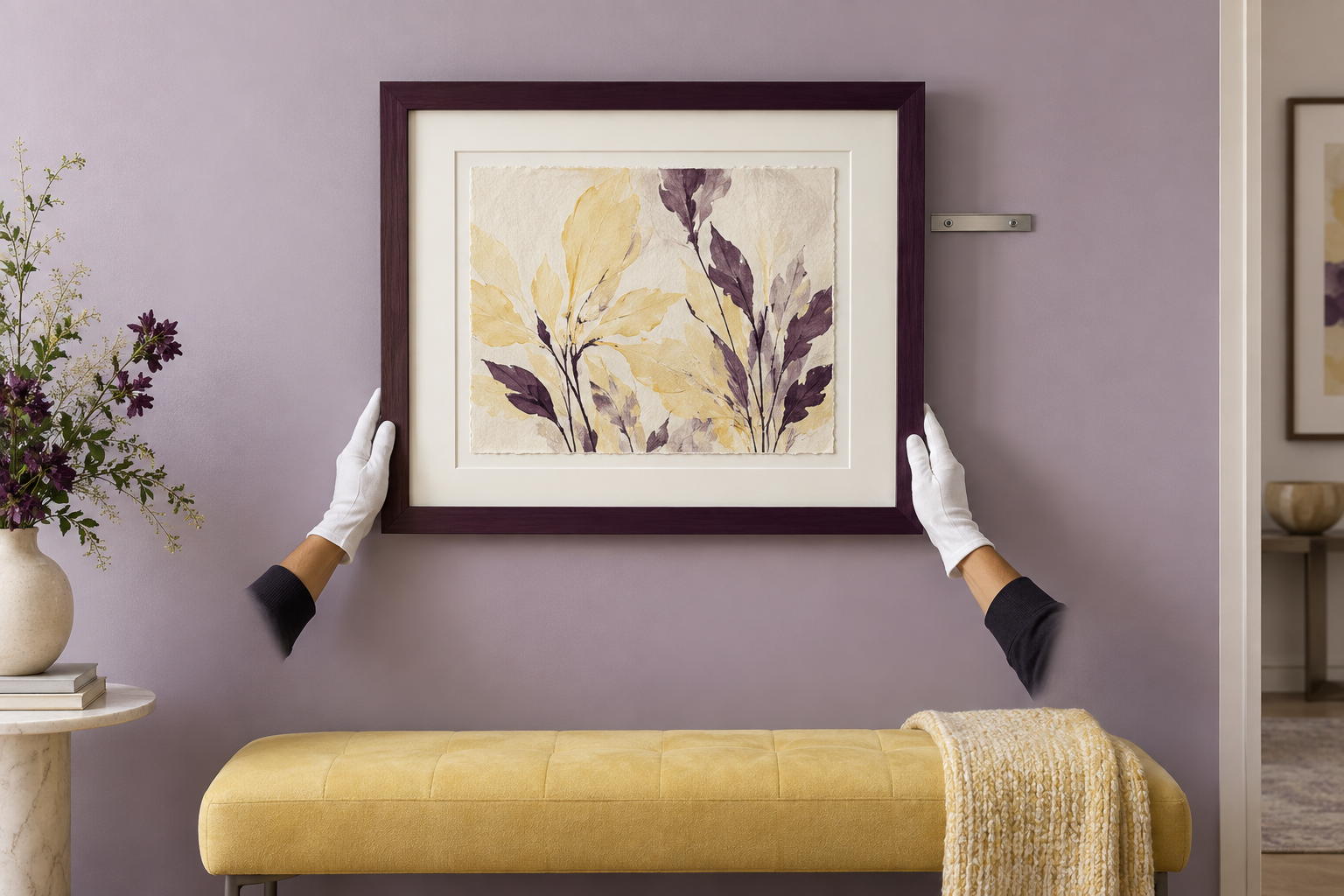
Good Framing and Good Placement Work Together
Conservation matting, appropriate mounting, protective glazing, quality backing materials, and professional installation can all contribute to the long-term care of an artwork.
But framing can't compensate for every environmental condition. The safest approach combines thoughtful framing with thoughtful placement.
At Harlem Frames, we consider both presentation and preservation when developing a framing solution. If you're unsure where or how to display an important piece, bring it to the studio and talk with our team about the artwork, its framing, and the environment where you plan to hang it.
Related Insights
Museum Glass, Acrylic & Conservation Glazing: What's the Difference? →
To Mat or Not to Mat? Choosing the Right Mat for Your Artwork →
What Is Conservation Framing—and When Do You Need It?
A frame does more than determine how an artwork looks on the wall. For original, valuable, sentimental, or delicate pieces, the materials and techniques used inside the frame can also play an important role in how the artwork is cared for over time.
That's the idea behind conservation framing.
Conservation framing is an approach that considers both presentation and preservation. Rather than focusing solely on the moulding surrounding the artwork, it looks at the complete framing system—from mat boards and mounting methods to glazing, backing, spacing, and the environment where the finished piece will be displayed.
But does every artwork require conservation framing? Not necessarily. Understanding when it matters can help you make a more informed decision about your piece.
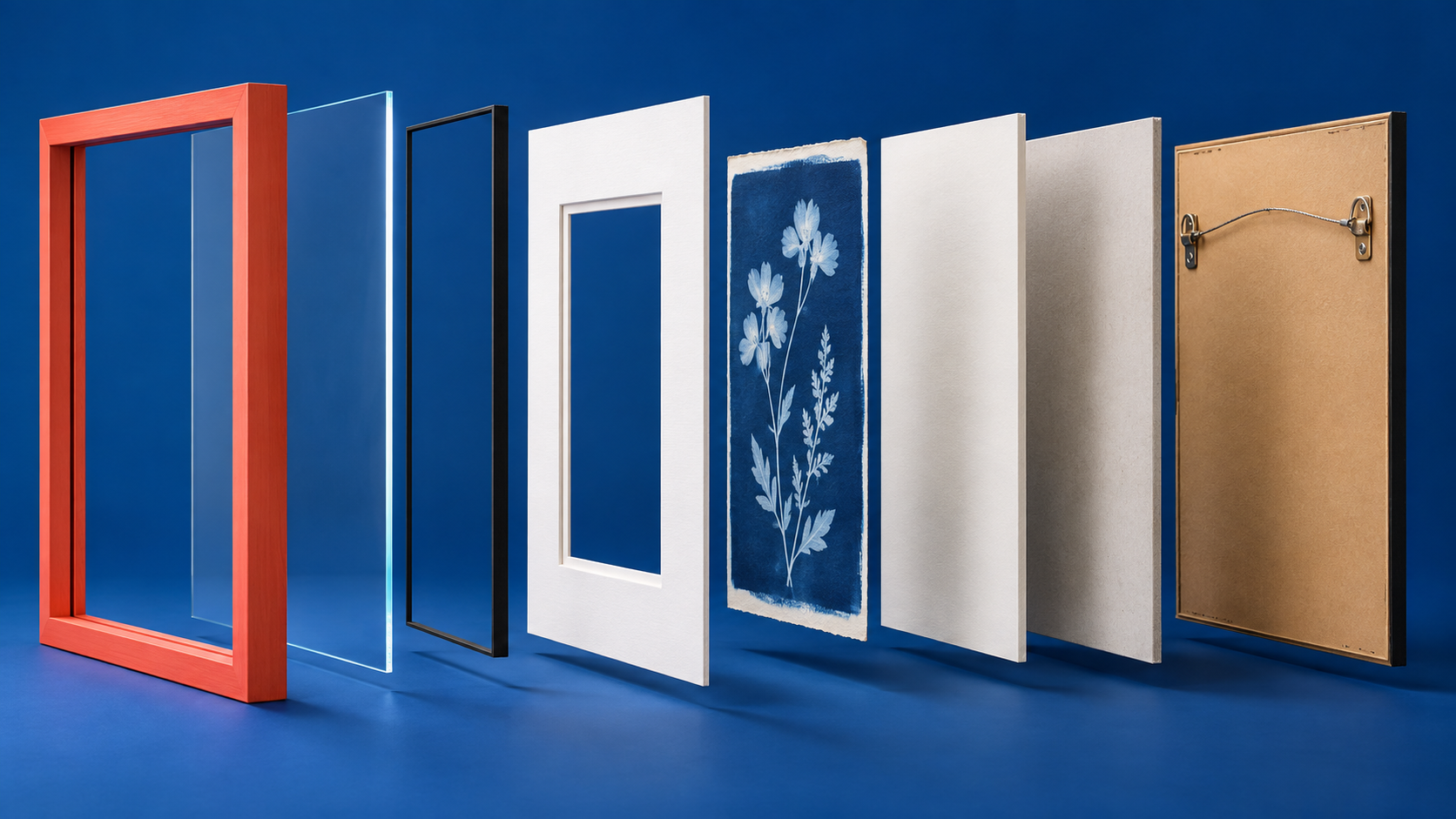
What Makes a Frame “Conservation” Quality?
Conservation framing isn't a particular aesthetic.
A conservation-framed artwork can be contemporary, traditional, colorful, minimal, floated, deeply matted, or surrounded by an ornate moulding. What matters is largely what you don't see once the frame is finished.
A conservation-minded approach considers:
Works on paper
Limited-edition or signed prints
Fine-art photography
Historical documents
Textiles
Collectible material
Family photographs and heirlooms
Valuable artwork
Irreplaceable objects
Pieces intended to remain framed for many years
The decision isn't determined by financial value alone. A handwritten letter from a grandparent may be worth very little on the market but impossible for its owner to replace. Sentimental value can be just as important as monetary value when deciding how carefully something should be framed.
When Should Older Artwork Be Reframed?
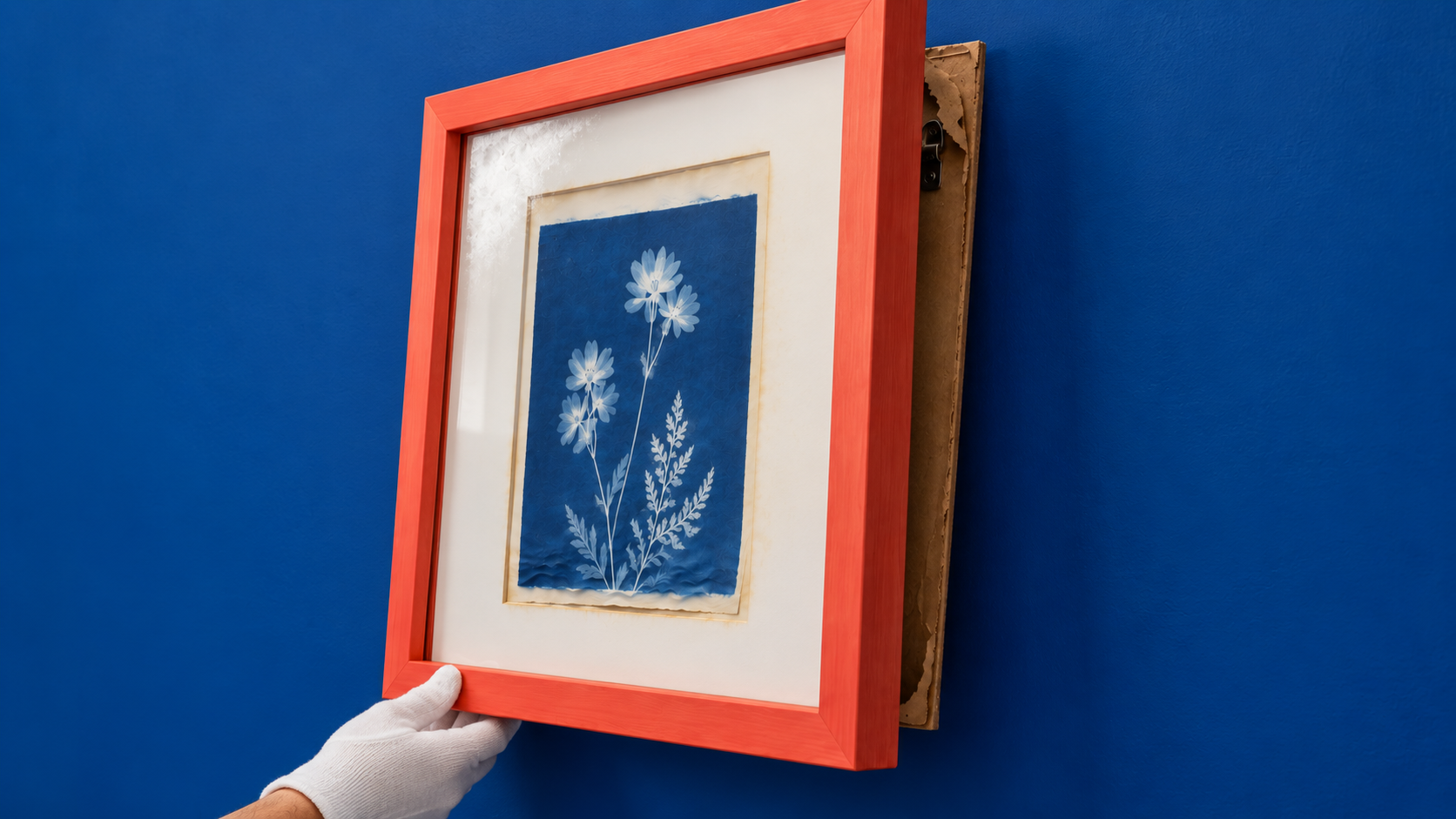
You may also consider conservation framing for artwork that's already hanging on your wall.
Older pieces may have been framed using materials or techniques that were common at the time but wouldn't necessarily be selected for sensitive artwork today.
Consider having an older frame assessed if you notice:
Yellowing or browning mats
Artwork touching the glazing
Staining or discoloration
Rippling or buckling
Artwork slipping inside the frame
Damaged or deteriorating backing
Moisture or condensation
Loose mounting
Cracked glazing
Mold or unusual spotting
You may also want an assessment simply because you don't know how the piece was originally framed. Reframing doesn't necessarily mean changing its appearance. In some cases, the goal may be to preserve the existing aesthetic while improving the materials surrounding the artwork.
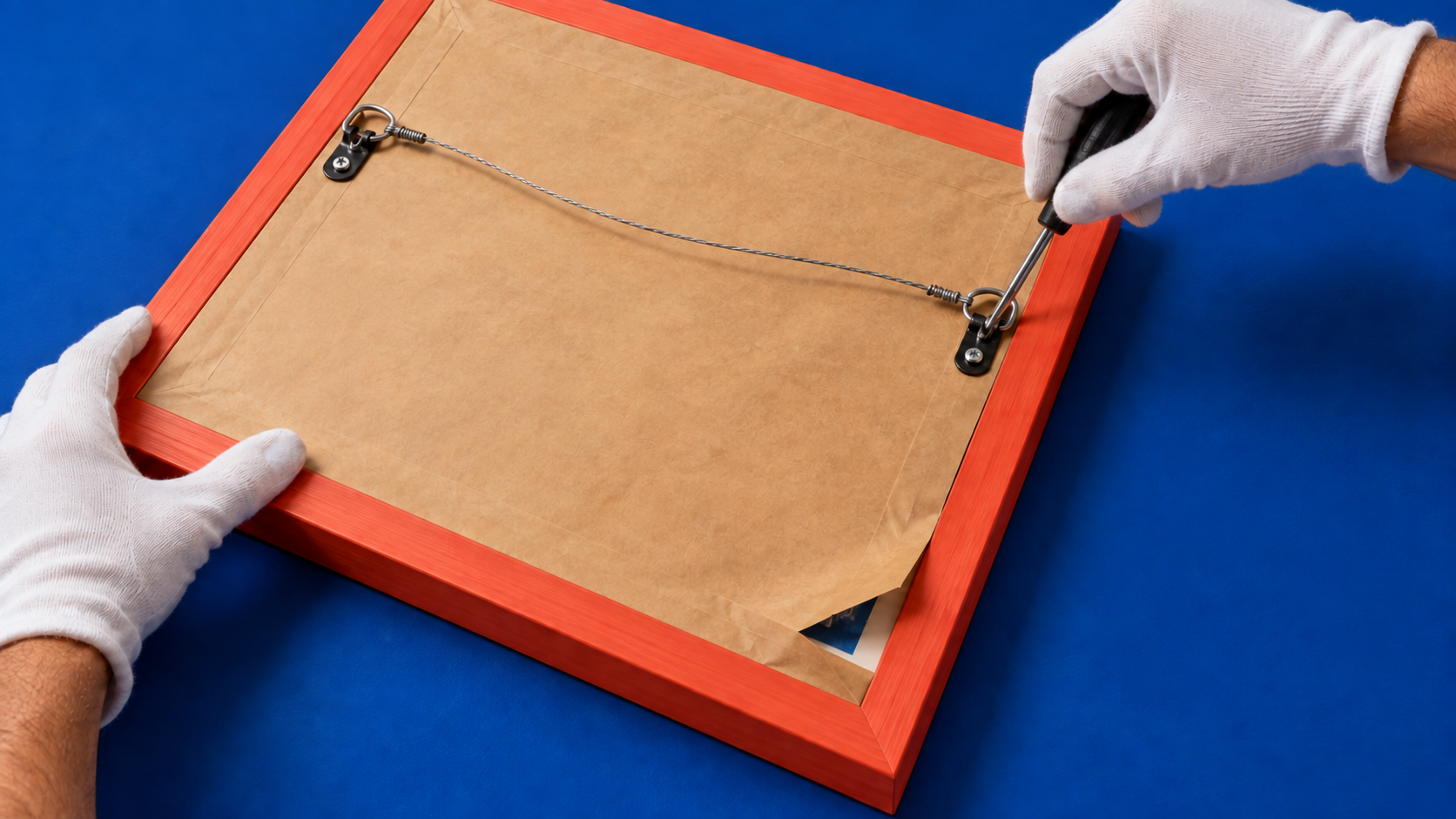
Does Conservation Framing Last Forever?
No framing system eliminates the effects of time or environment completely.
Even conservation-framed artwork should be protected from prolonged direct sunlight, excessive humidity, concentrated heat, water, and unstable environmental conditions.
Materials can age, hardware can loosen, and the needs of an artwork can change over decades. Conservation framing should therefore be understood as one part of responsible long-term artwork care, rather than permanent protection.
Preservation Doesn't Have to Compromise Design
Perhaps the most important thing to understand about conservation framing is that preservation and aesthetics don't have to compete.
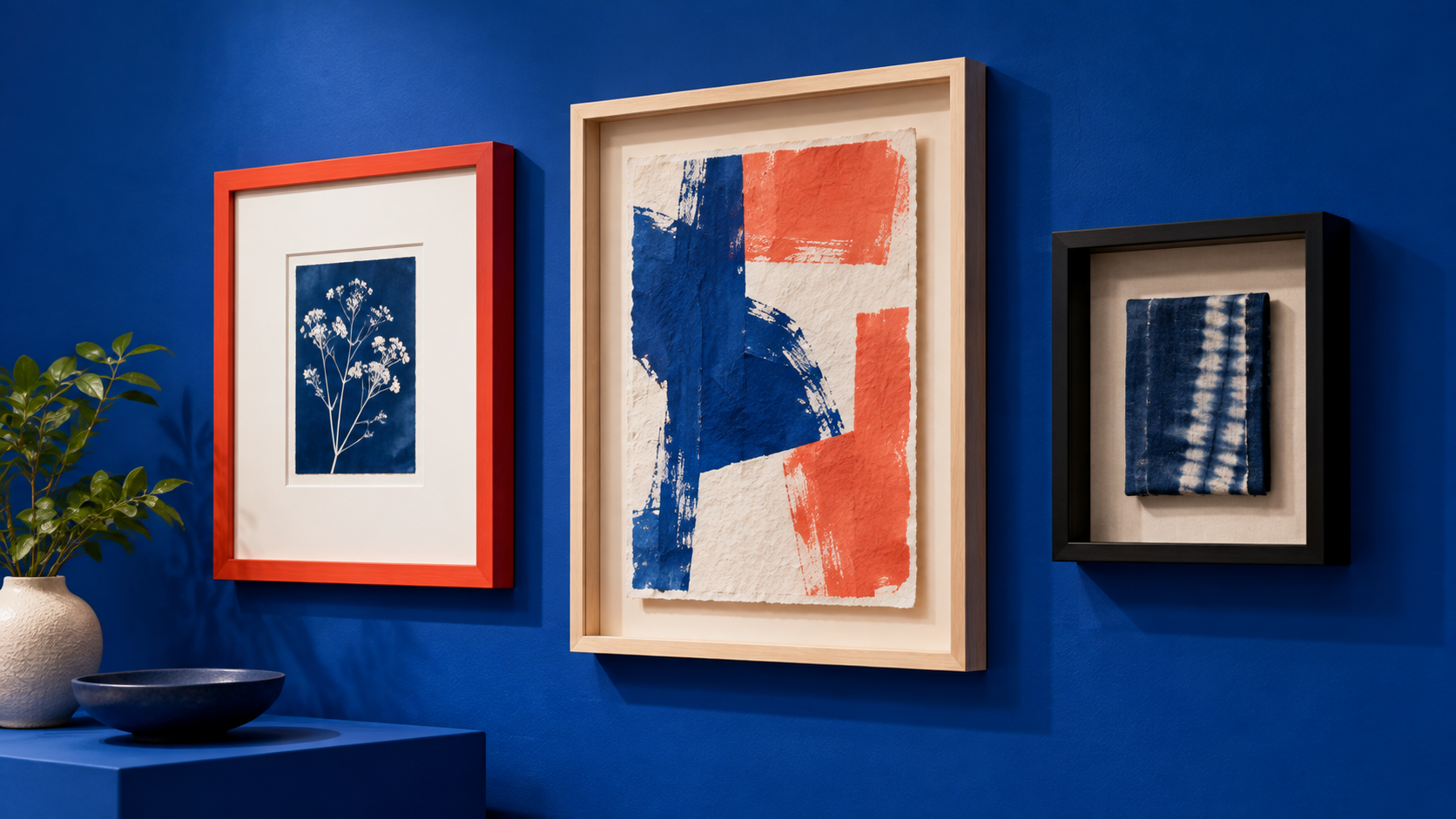
A conservation-minded presentation can still use beautiful natural woods, colorful mouldings, generous mats, float mounting, shadowboxes, specialty glazing, or a completely custom design.
The objective is to create a presentation that feels appropriate for the artwork while making thoughtful decisions about the materials closest to it. At Harlem Frames, we approach conservation framing piece by piece—considering the artwork's medium, condition, value, construction, presentation, and intended environment before determining the appropriate solution.
Have an original, valuable, historical, or sentimental piece you're considering framing or reframing? Bring it to Harlem Frames and our team can help you determine the level of protection and presentation appropriate for the work.
Related Insights
Museum Glass, Acrylic & Conservation Glazing: What's the Difference? →
To Mat or Not to Mat? Choosing the Right Mat for Your Artwork →
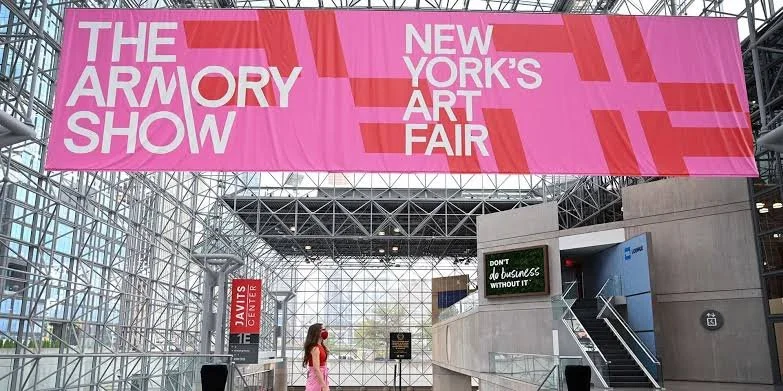
Harlem Frames for New York Art Week
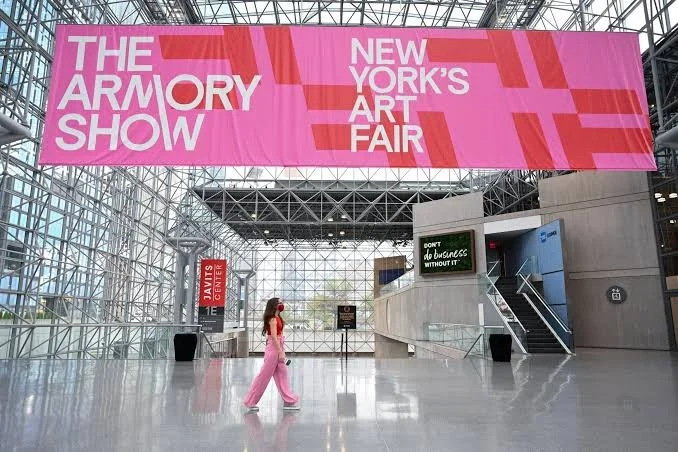
The Armory Show New York’s Art Fair 2026
September 24 to September 27, 2026,
the Javits Center in New York City
September is one of the busiest moments on New York City's art calendar—and behind every finished booth, exhibition, and installation is a great deal of preparation. As The Armory Show and the wider September art calendar bring artists, galleries, collectors, and institutions together across the city, Harlem Frames is working behind the scenes with artists and gallerists preparing work for upcoming fairs, exhibitions, and presentations.
From custom framing and canvas stretching to fine-art printing, scanning, specialty presentation, and artwork preparation, our studio is helping get work exhibition-ready before it reaches the gallery wall. For now, we're keeping the artists, galleries, and individual projects we're working with under wraps. As the fairs and exhibitions open, we'll be sharing more of the finished work and the framing behind it.
It's one of our favorite parts of what we do: seeing artwork arrive in the studio, helping prepare it for presentation, and then watching it move into galleries, fairs, exhibitions, and collections across New York.
Prepare your work for exhibition
For artists, galleries, curators, and exhibitors, our studio offers:
Custom framing
Canvas stretching
Fine-art printing
Artwork scanning
Float frames & specialty framing
Matting & glazing
Artwork preparation & presentation
Preparing for an exhibition?
Tell us about your artwork, presentation needs, and deadline. Contact the studio early to discuss project requirements and turnaround times.
Ryan Bock · Bockhaus: Young Americans
Satellite Art Show Gallery · New York City · 2026
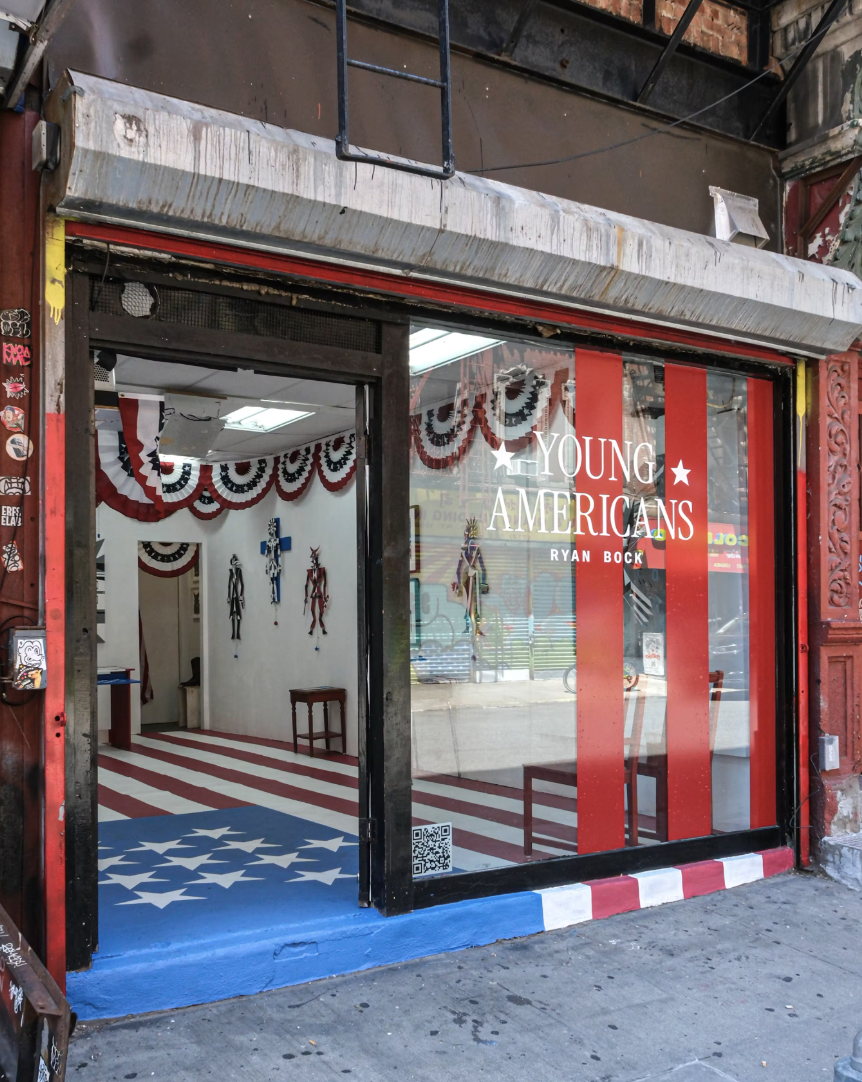
Harlem Frames continued with its second collaboration with New York artist Ryan Bock, also known as Bockhaus, by stretching canvases for his 2026 multimedia exhibition Young Americans, in New York City.
Opening on July 4 during the United States' 250th anniversary year, Young Americans transformed the Satellite Art Show Gallery space into an intentionally exaggerated display of American iconography. Red, white, and blue filled the space as Bock used paintings, works on paper, interactive marionettes, installations, and public programming to examine patriotism, national identity, political power, and the stories Americans tell about their own history.
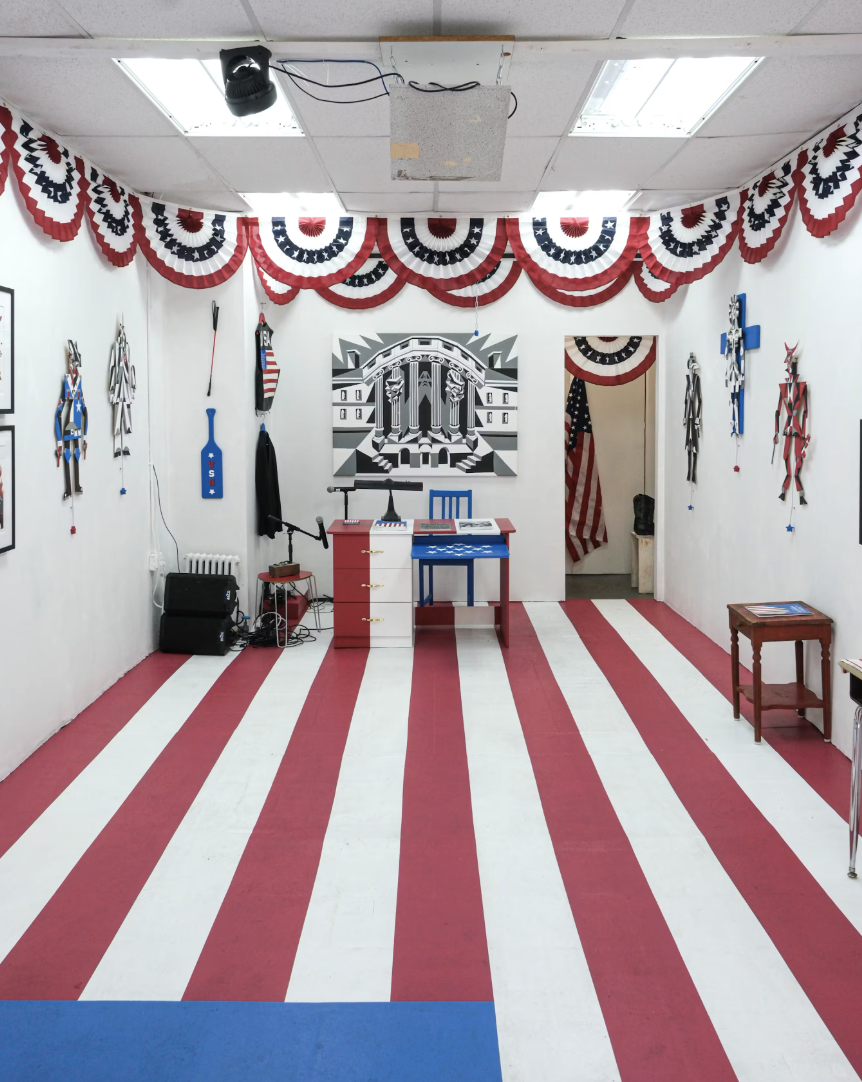
The Exhibition
Satellite Art Show
Lower East Side, NYC.
Young Americans brought together a body of work that Bock had developed in varied forms over time, presented here for the first time as a unified project. Familiar American symbols—from Lady Liberty and pilgrims to eagles and political imagery—were reworked through Bock's characteristic mixture of satire, dark humor, historical reference, and social critique.
The exhibition also extended beyond objects on the wall. Visitors could physically operate Bock's marionettes, while conversations, screenings, lectures, and other programs turned the gallery into a space for participation and exchange throughout the show's run.

Stretched by
Harlem Frames
For Young Americans, Harlem Frames provided professional canvas stretching for Bock's paintings, continuing an ongoing working relationship with the artist across multiple bodies of work and exhibitions.
Preparing an artist's canvases for exhibition is a part of the process that largely disappears once the finished paintings reach the gallery wall. Proper stretching establishes the structure and tension of the canvas while preparing each work for presentation as a finished object.
With Bock's paintings, that preparation supports compositions characterized by strong geometry, symbolism, architectural forms, and densely constructed imagery—allowing the physical canvas to provide a precise foundation for the work itself.
From LICH to Young Americans, Harlem Frames is proud to continue supporting Bock's practice as new work moves from the studio to exhibition.
Artist: Ryan Bock / Bockhaus
Exhibition: Young Americans
Venue: Satellite Art Show Gallery, New York City
Year: 2026
Harlem Frames Services: Professional Canvas Stretching
Explore the artist: https://bock.haus/?utm_source=chatgpt.com
Explore Young Americans: https://upmag.com/press-release-as-america-turns-250-artist-ryan-bock-examines-the-warning-signs-of-a-nation-in-decline-with-young-americans/
Related Projects: Ryan Bock · Bockhaus · LICH

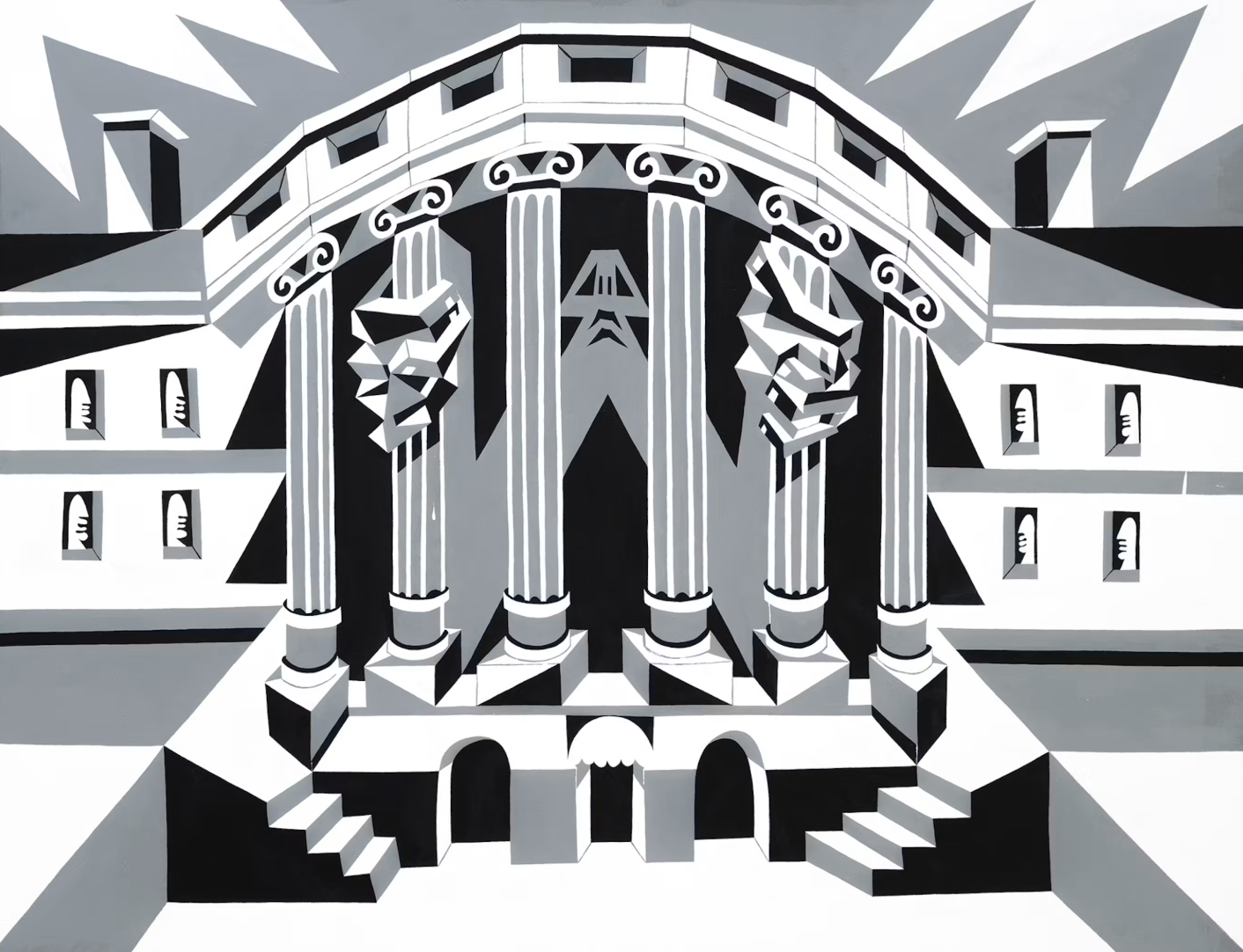
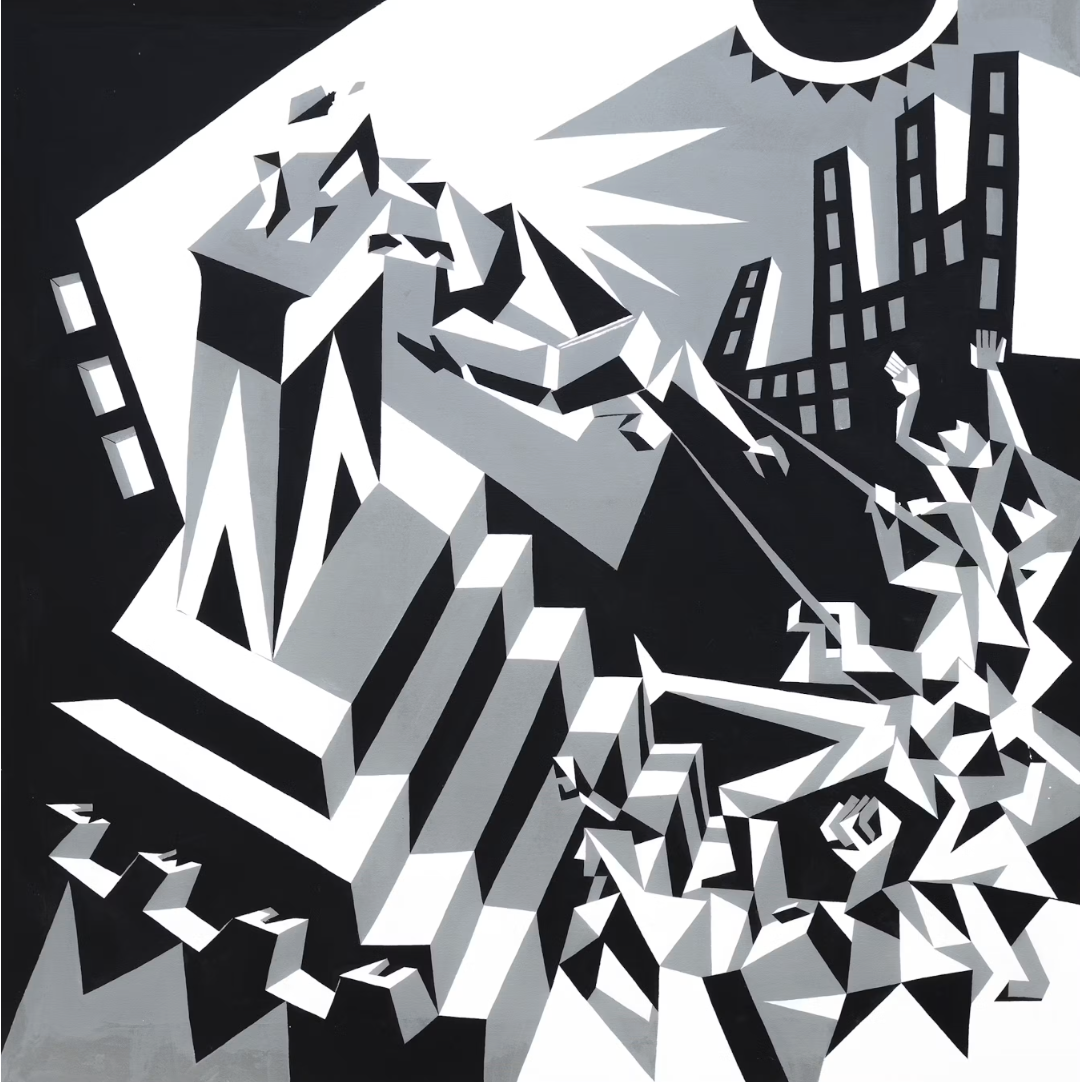
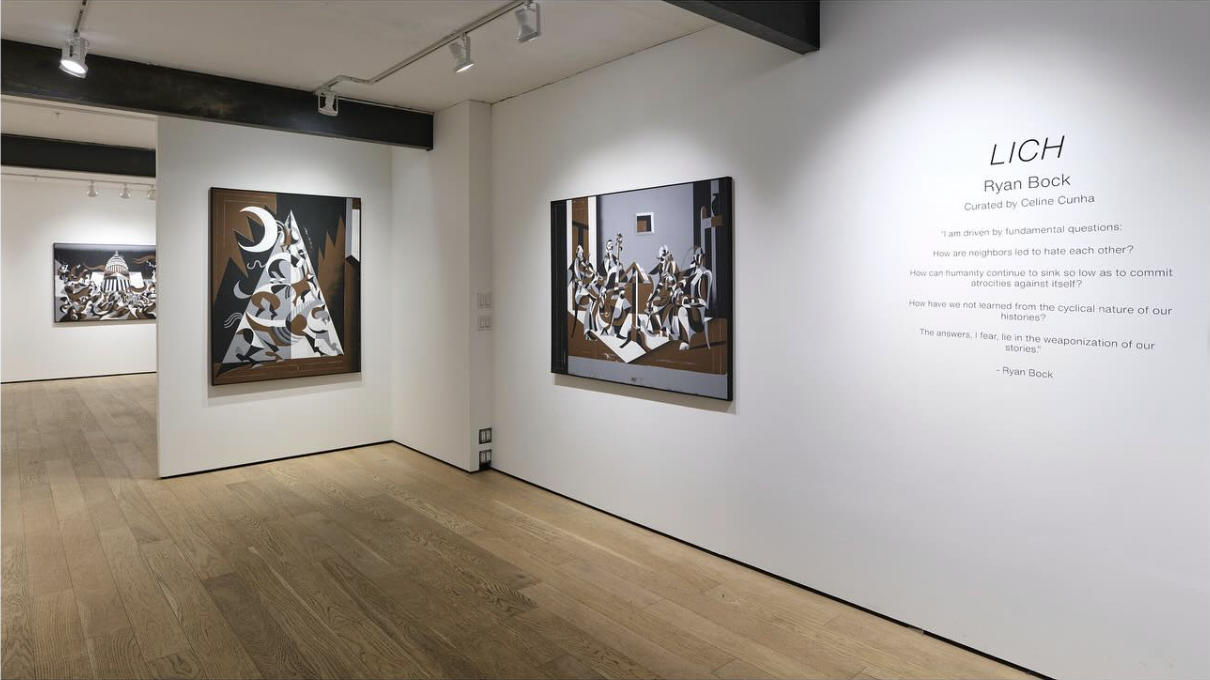
Ryan Bock · Bockhaus · LICH
Ki Smith Gallery · New York City · 2025
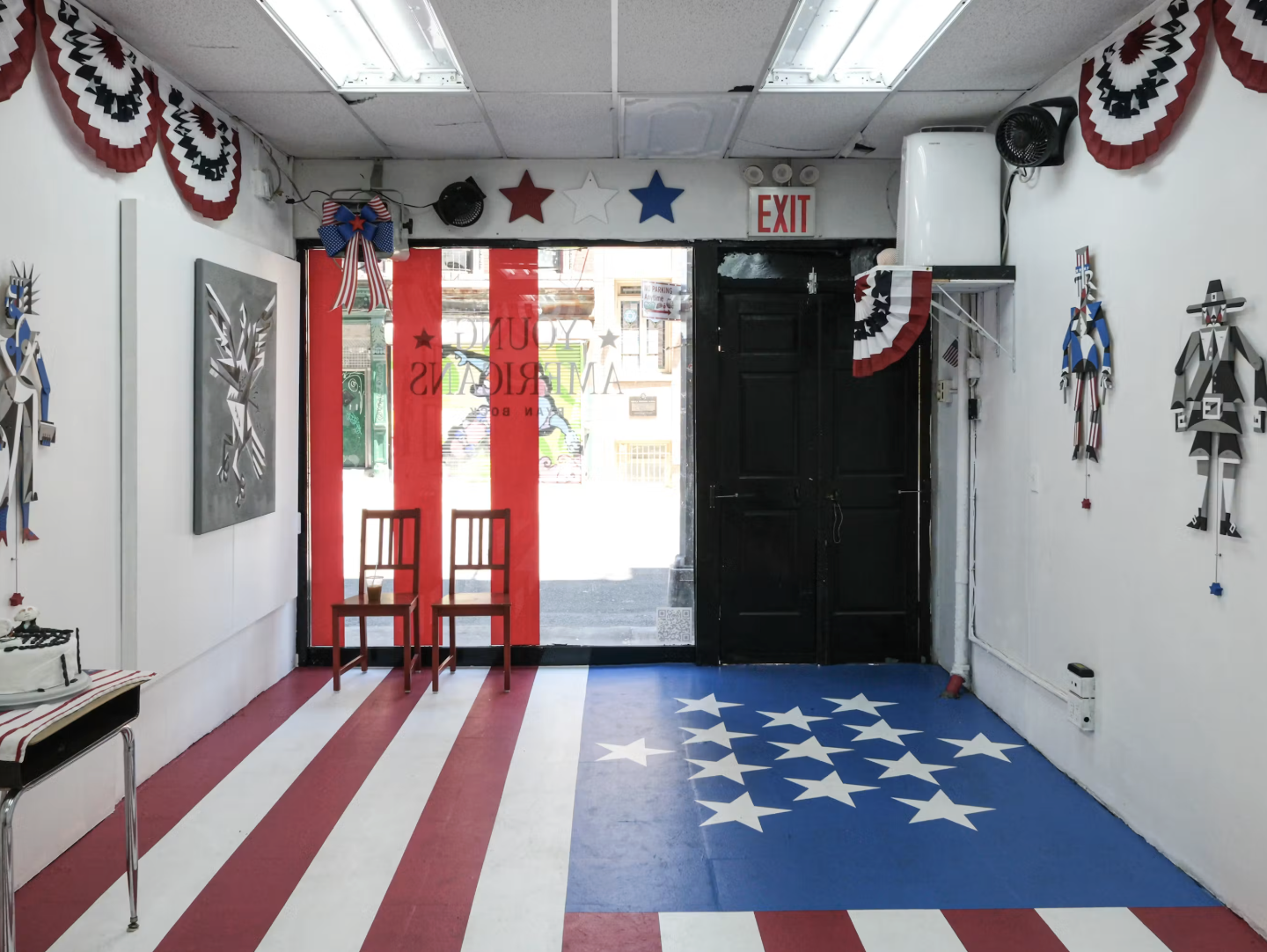
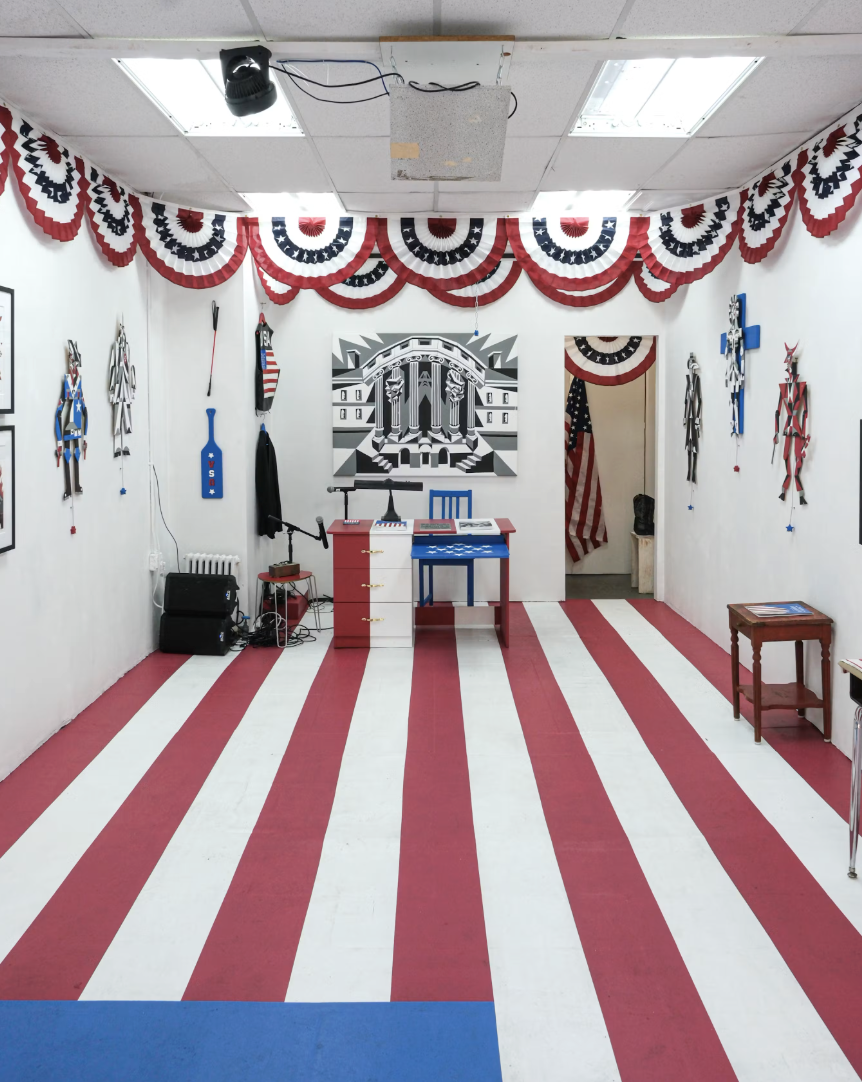
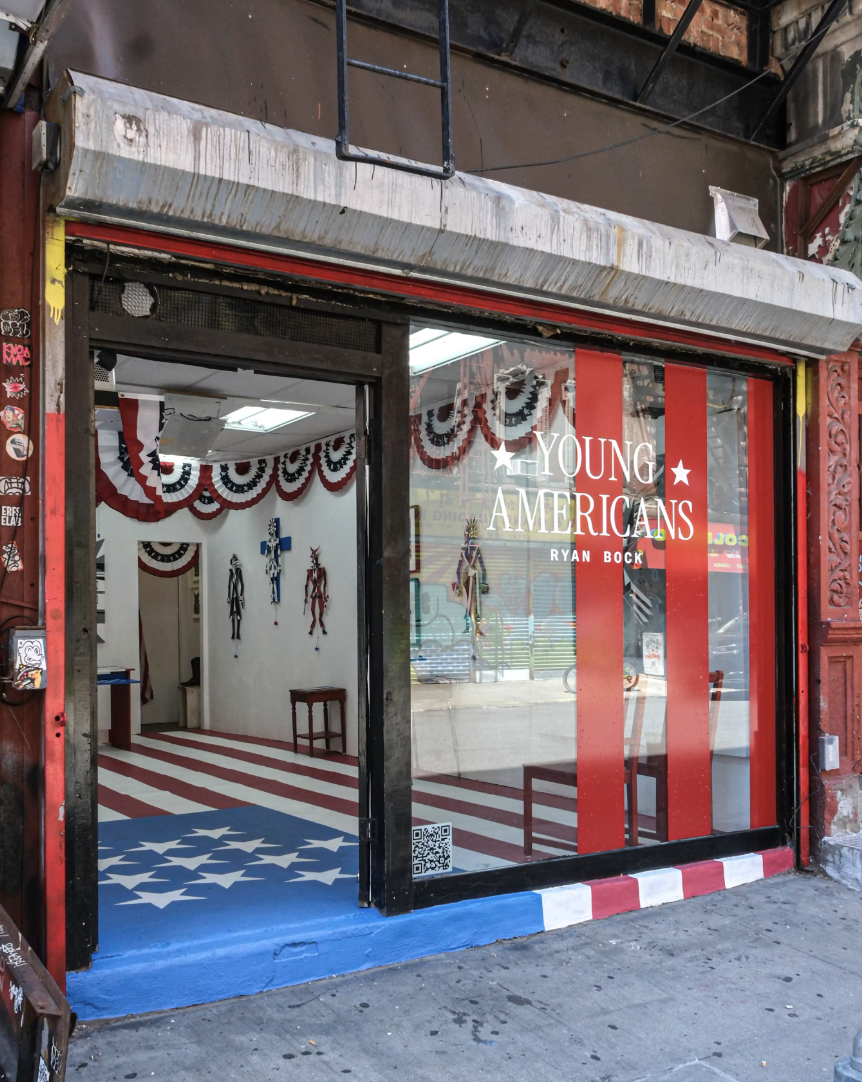
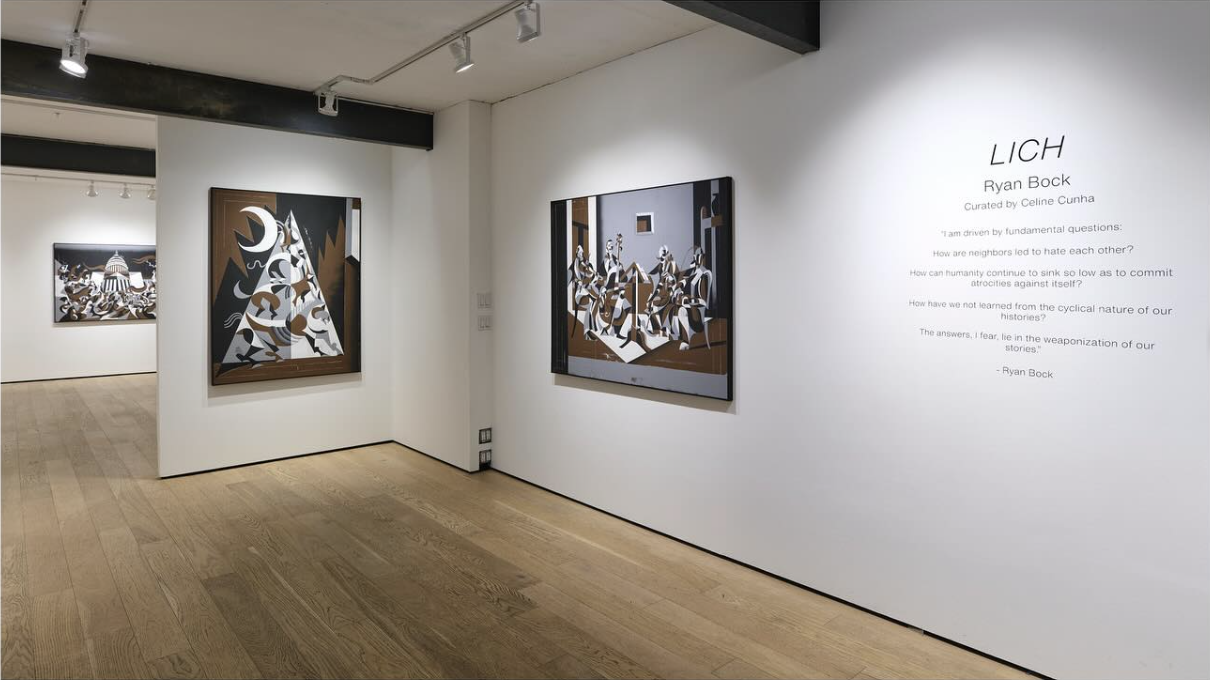
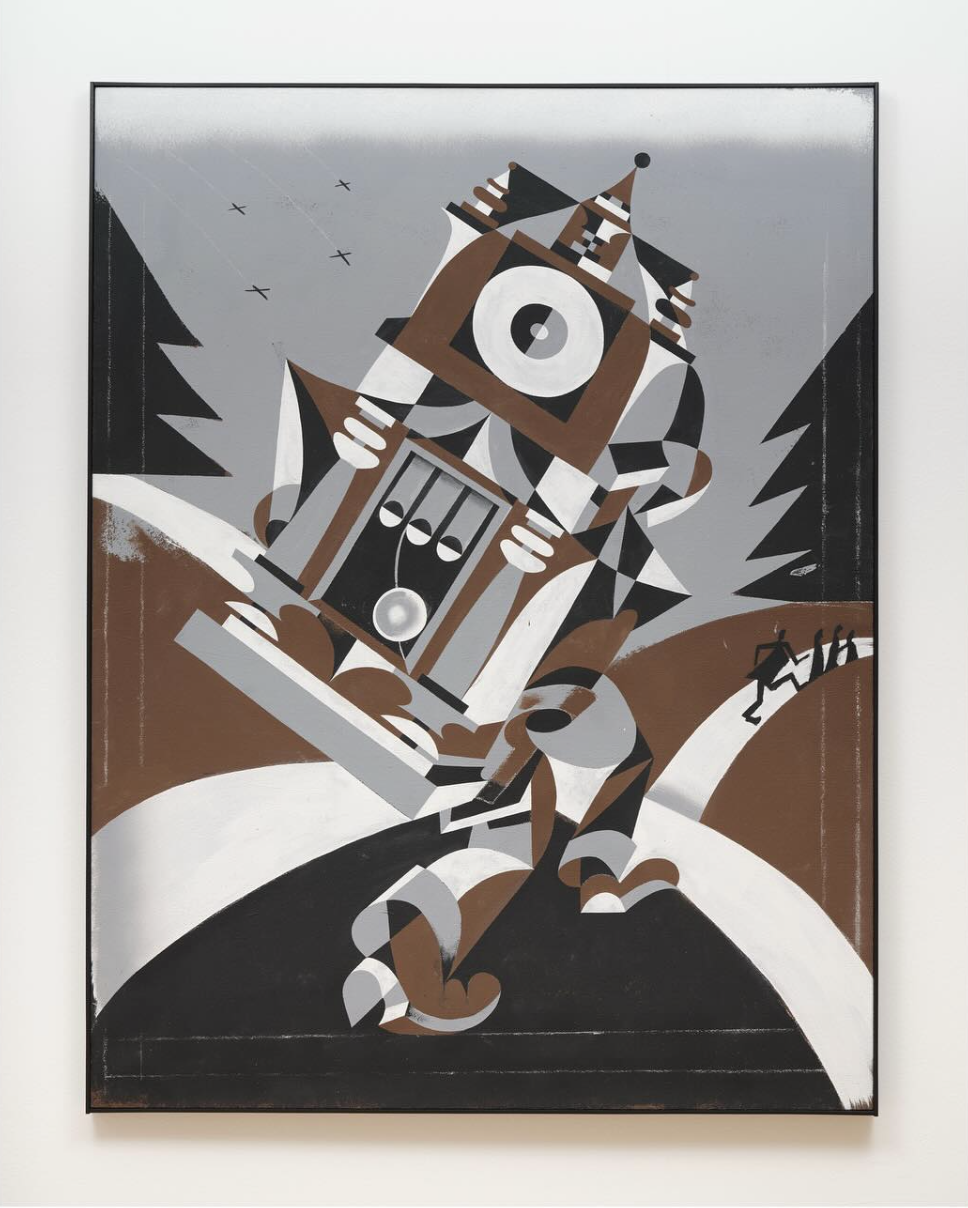
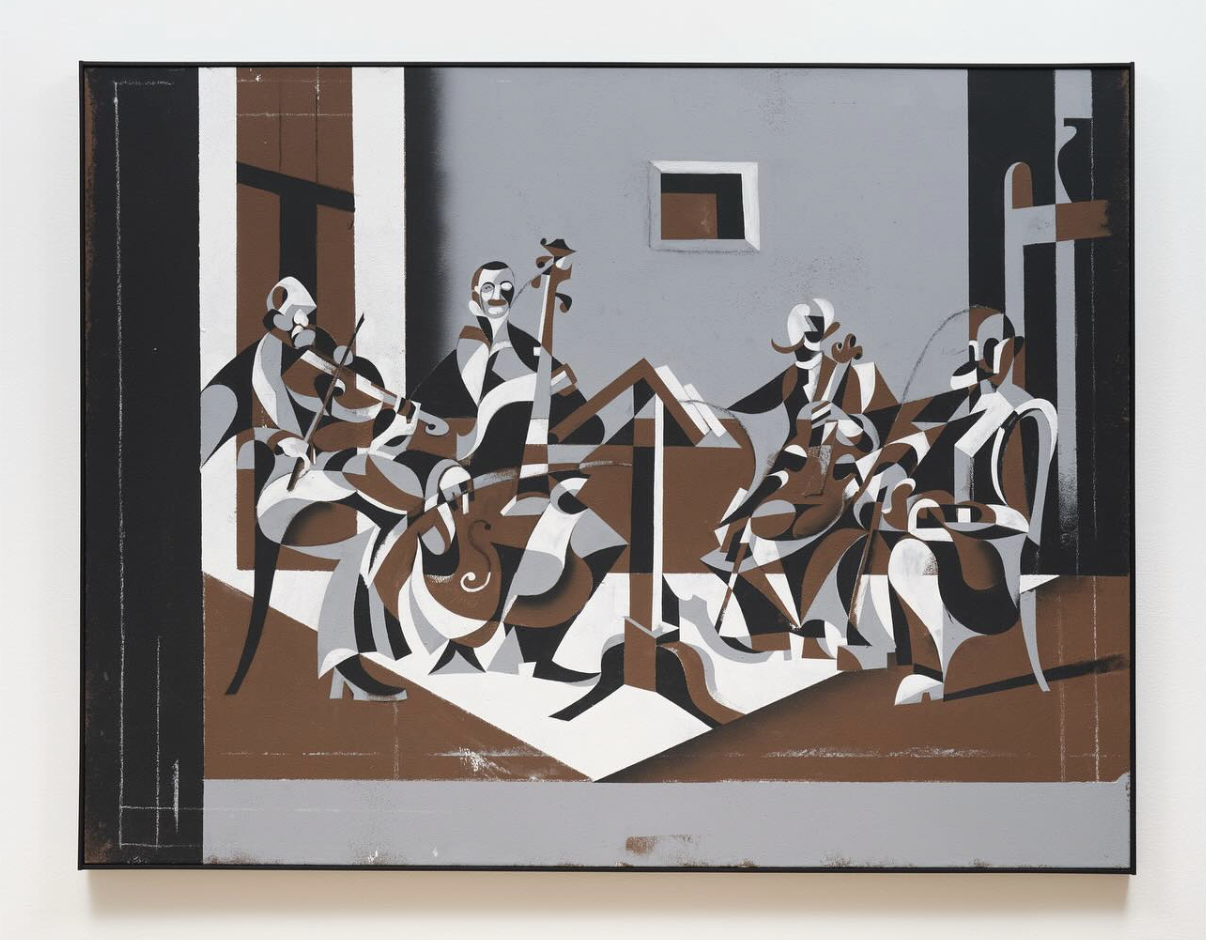
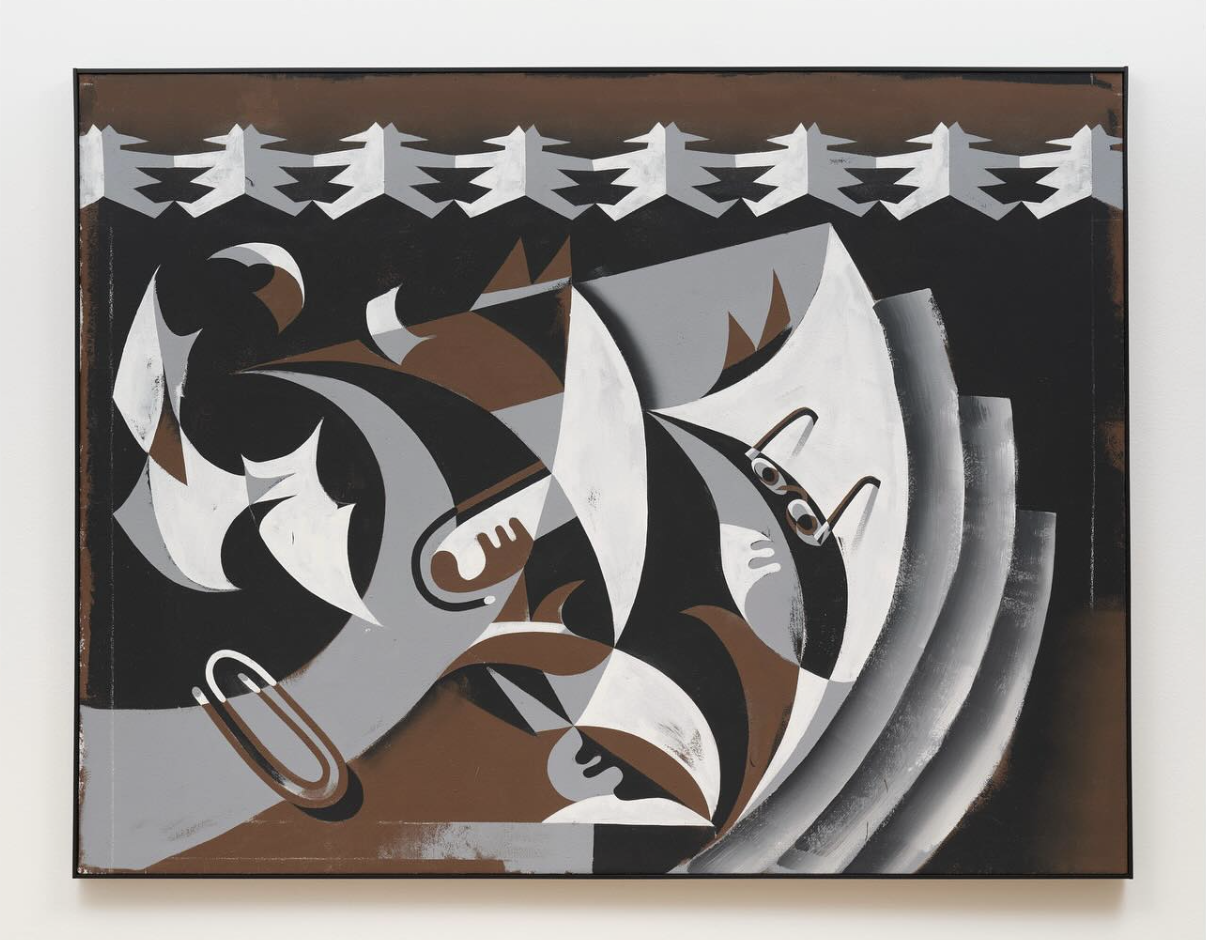
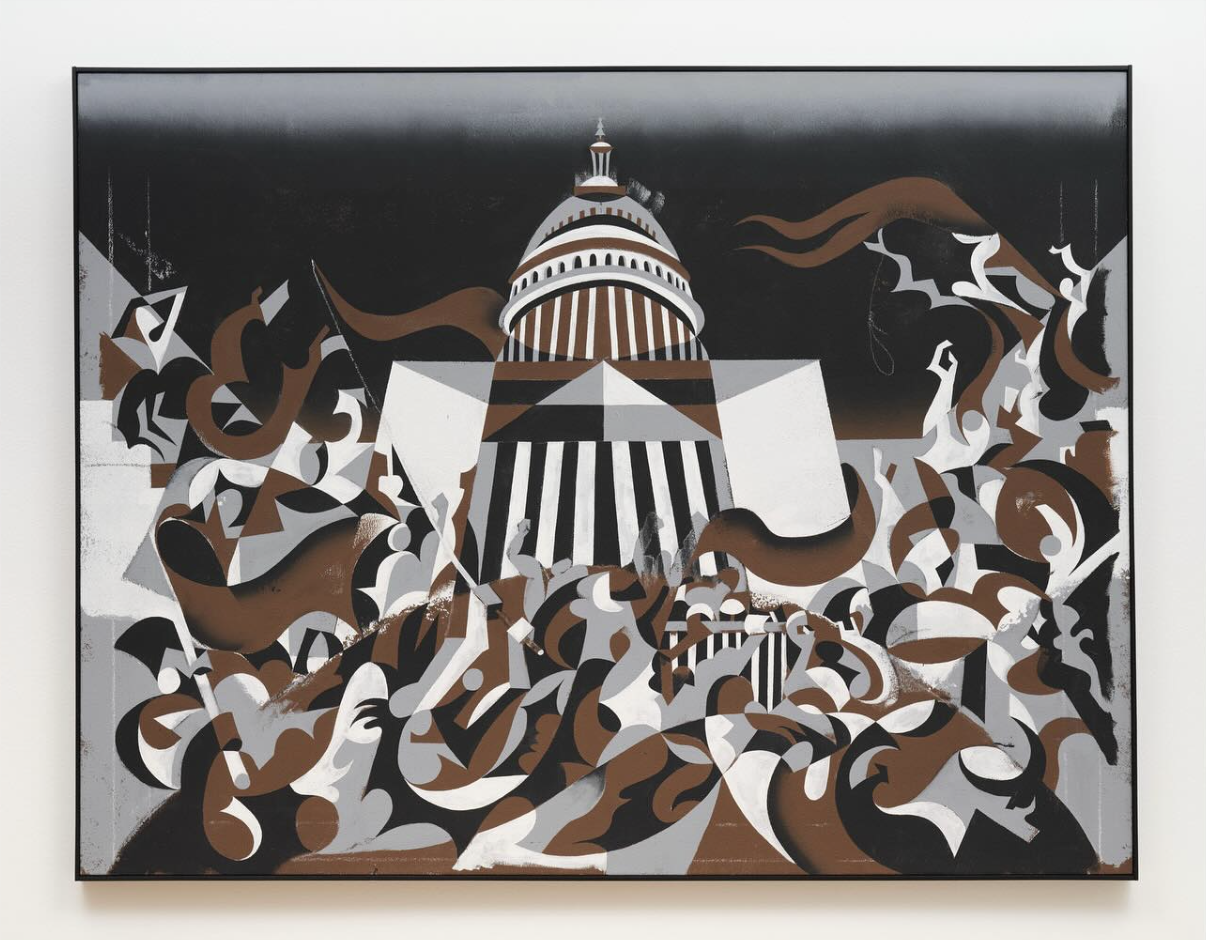
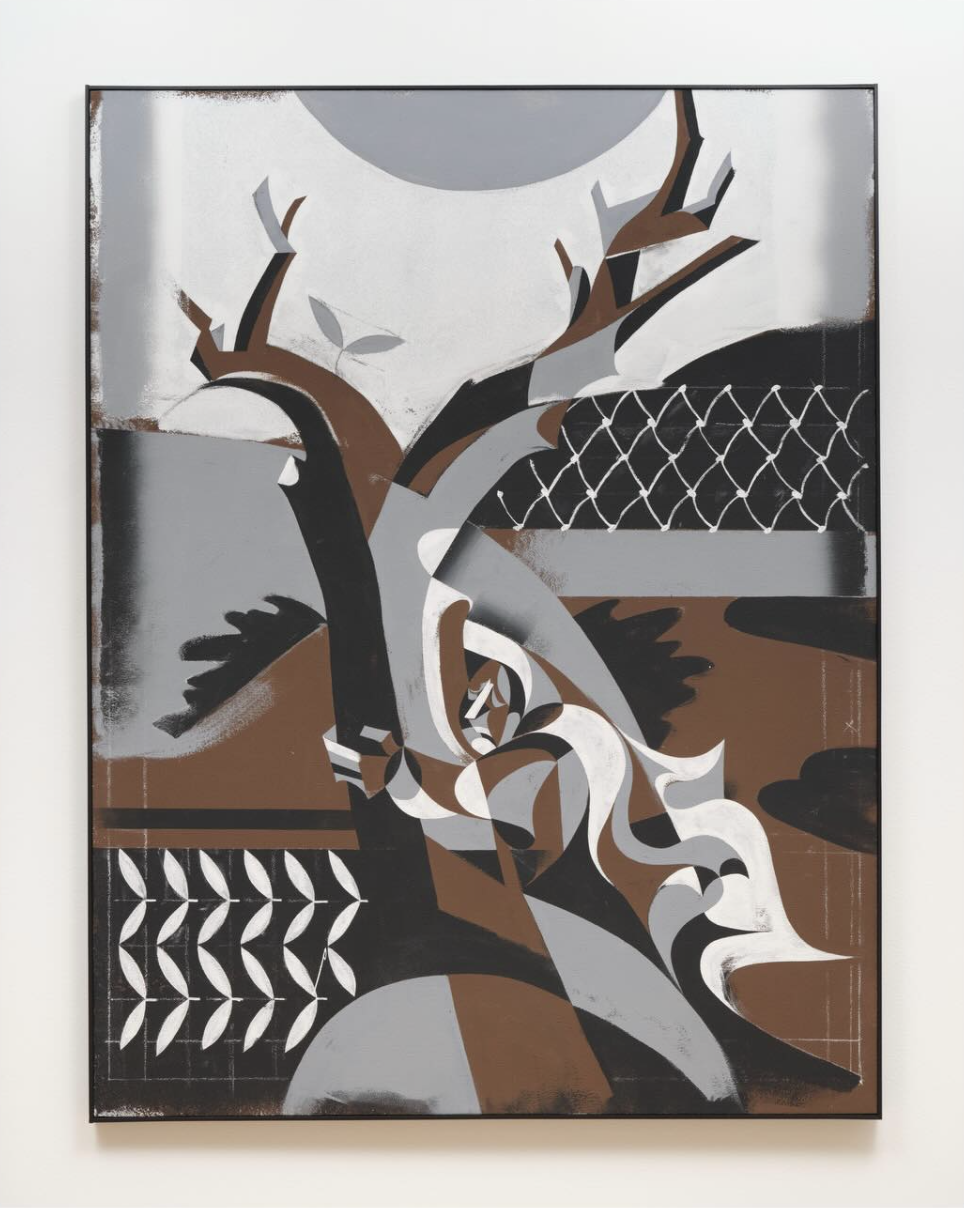
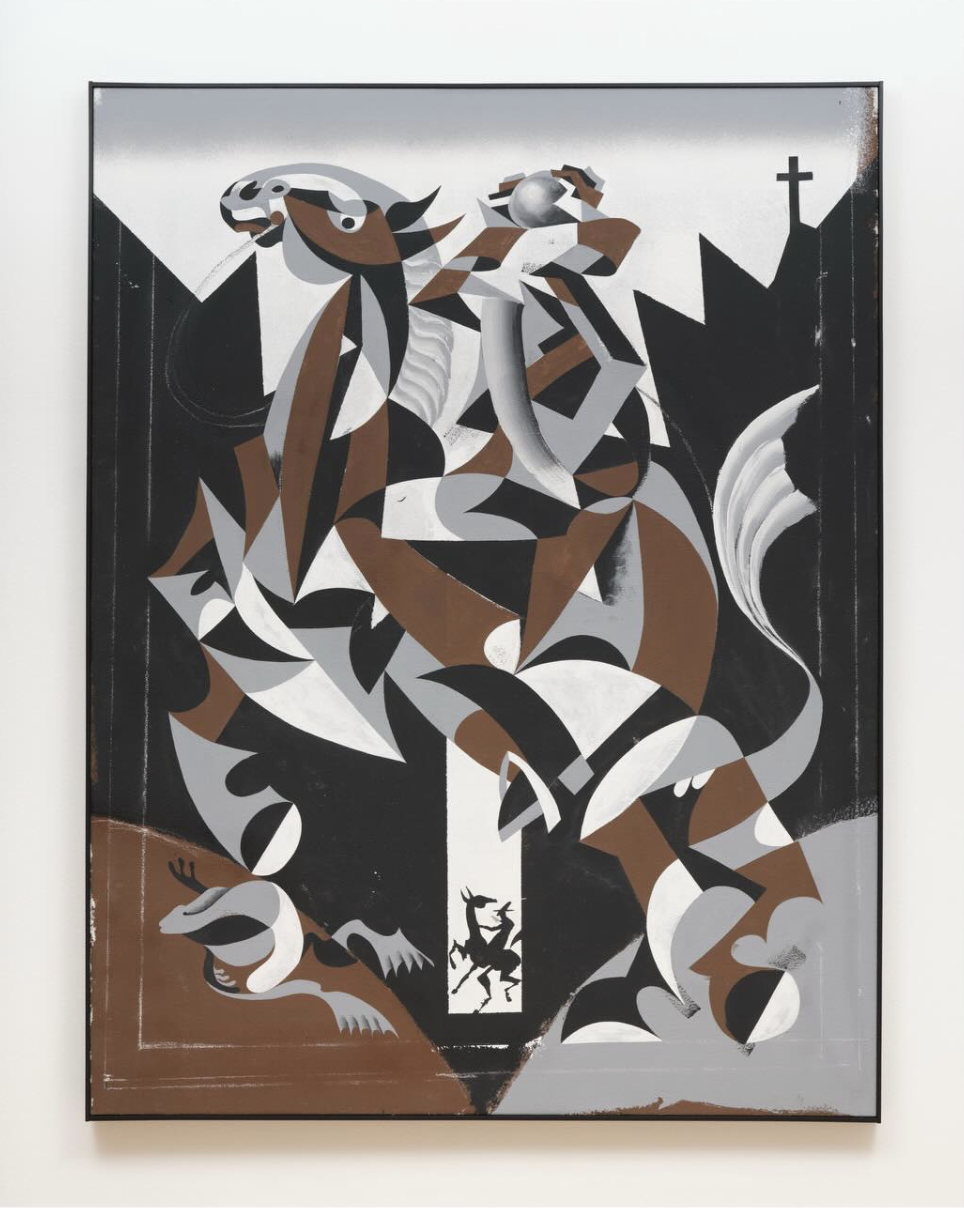
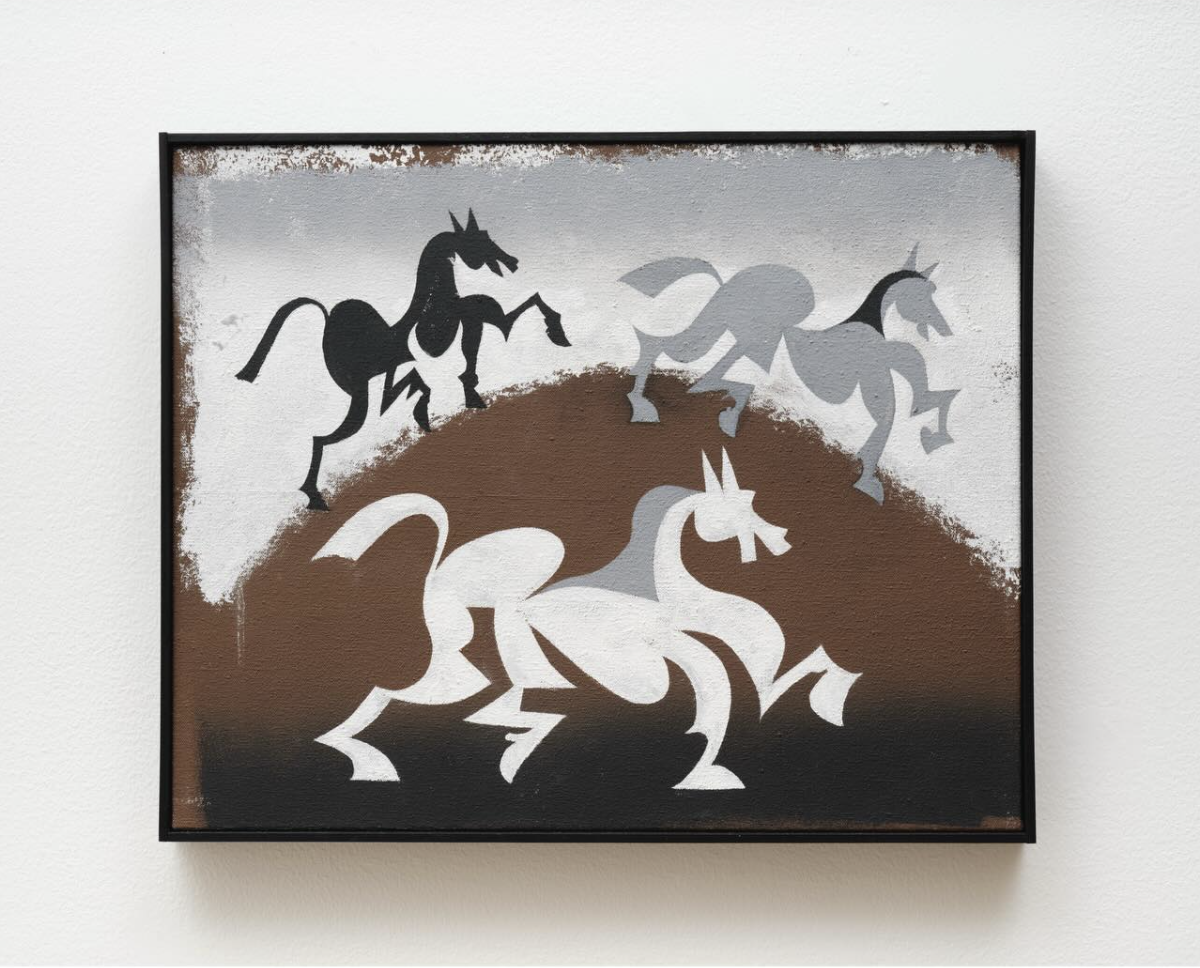
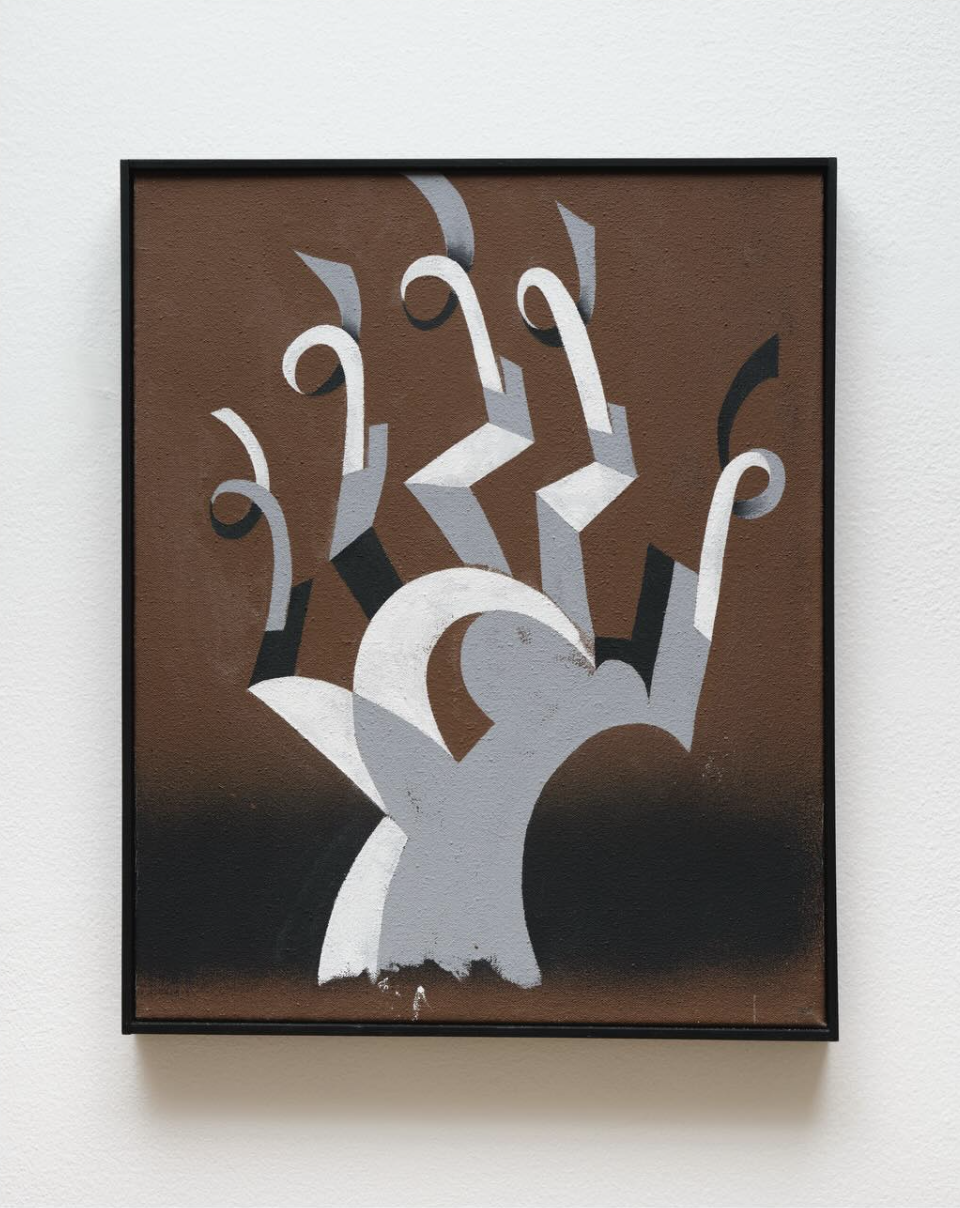
Harlem Frames has had the pleasure of working with artist Ryan Bock, also known as Bockhaus, twice. The first occasion was the presentation of paintings for his exhibit LICH, a 2025 solo exhibition at Ki Smith Gallery on the Lower East Side.
Developed over three months spent residing and painting in Lich, Germany—the town from which the exhibition takes its name—LICH draws from Bock’s German-Jewish ancestry, family history, folklore, and contemporary politics. Through fractured geometries, shadowed figures, and references ranging from the Brothers Grimm to historical and contemporary events, the paintings examine multifarious ways stories and collective memory can both shape and distort our comprehension as well as recollection of history.
The Exhibition
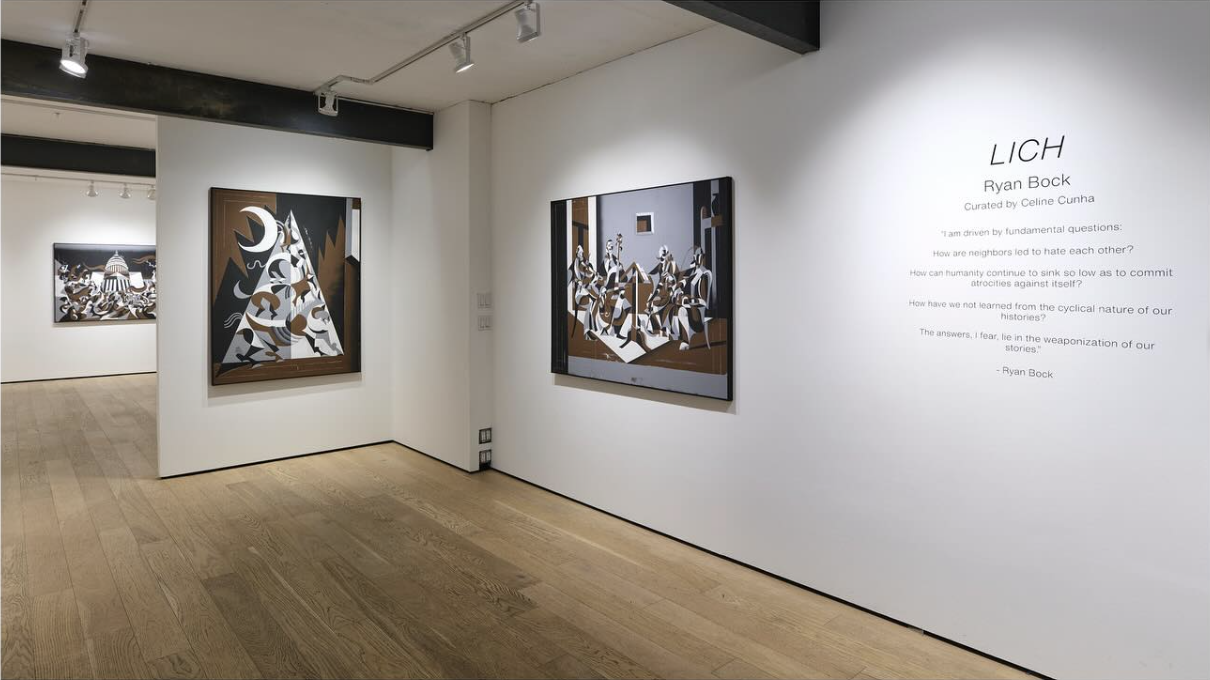
The Exhibition
Ki Smith Gallery
Lower East side, NYC.
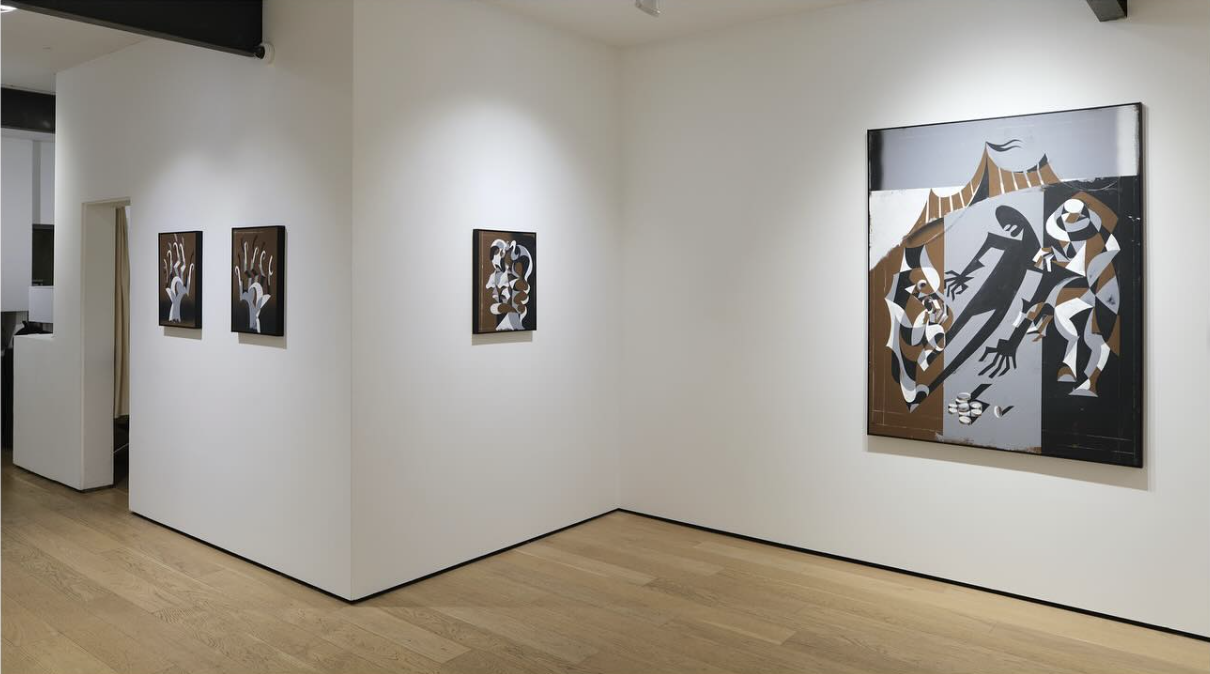
Bock’s practice is deeply rooted in narrative, symbolism, and a distinctive visual language influenced by German Expressionism and Czech Cubism. In LICH, that language takes on a rougher, heavily worked quality as figures, animals, myths, and historical references move through dark, angular compositions.
The exhibition considers how folklore and inherited narratives move between generations and cultures, connecting Bock’s own ancestry with larger questions surrounding memory, propaganda, censorship, and the cyclical nature of history.
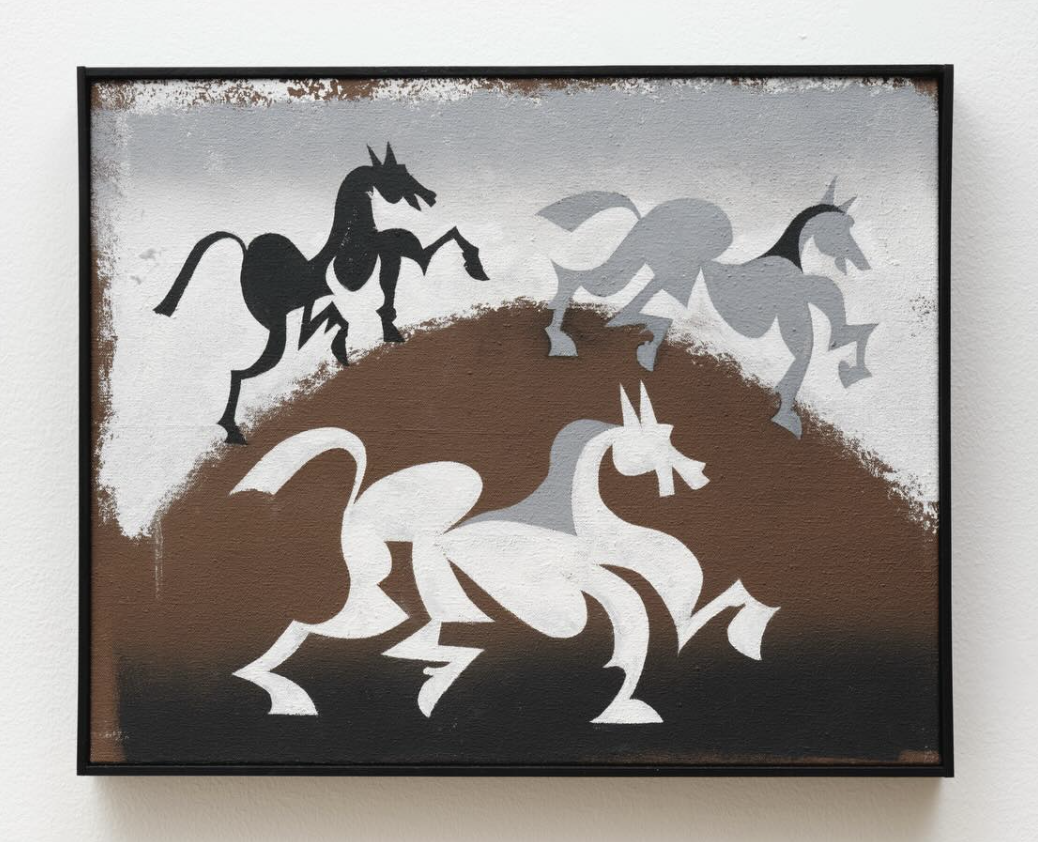
Stretched & Framed by Harlem Frames
For LICH, Harlem Frames provided professional canvas stretching and custom framing, continuing our collaboration with Bock across his painting practice.
The presentation was intentionally responsive to the physical character of the paintings. Bock’s canvases contain strong contrasts, fractured forms, textured surfaces, and an almost architectural use of shape and shadow. The framing provides structure around that visual intensity without competing with the imagery itself.
Our ongoing work with Bock reflects the relationship that can develop between artist and framer over multiple projects. From stretching newly completed canvases to preparing finished works for exhibition, Harlem Frames helps carry the work through the important transition from the artist’s studio to the gallery wall.
We’re proud to have contributed to the presentation of LICH and to continue working with Bockhaus as his practice and exhibitions evolve.
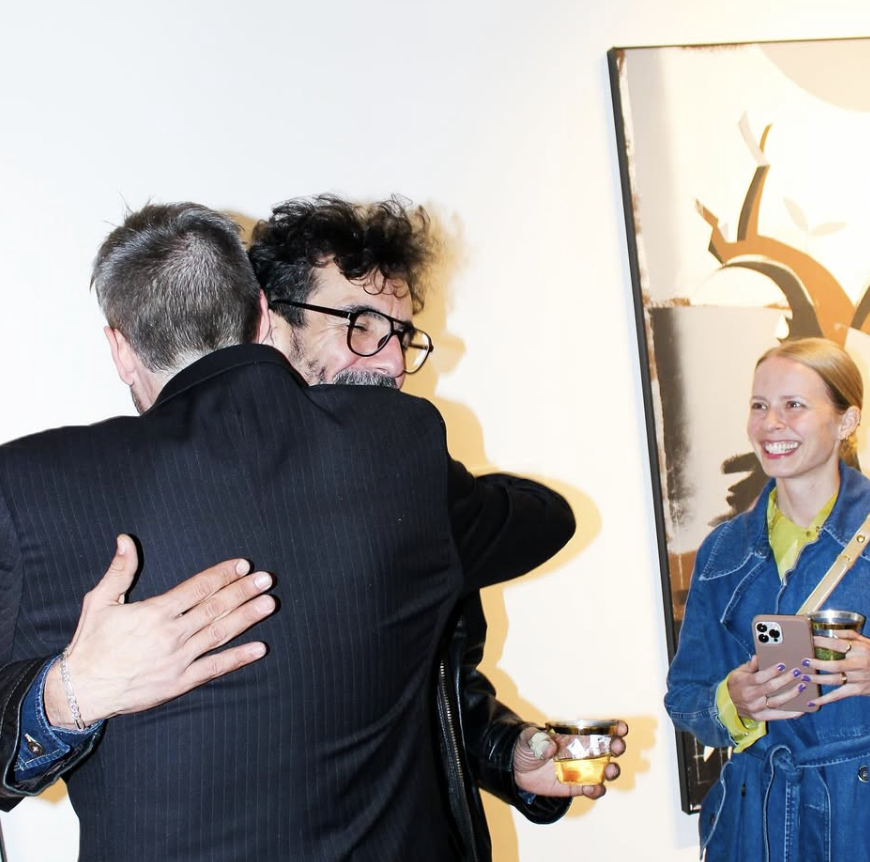
We’re proud to have contributed to the presentation of LICH and to continue working with Bockhaus as his practice and exhibitions evolve.
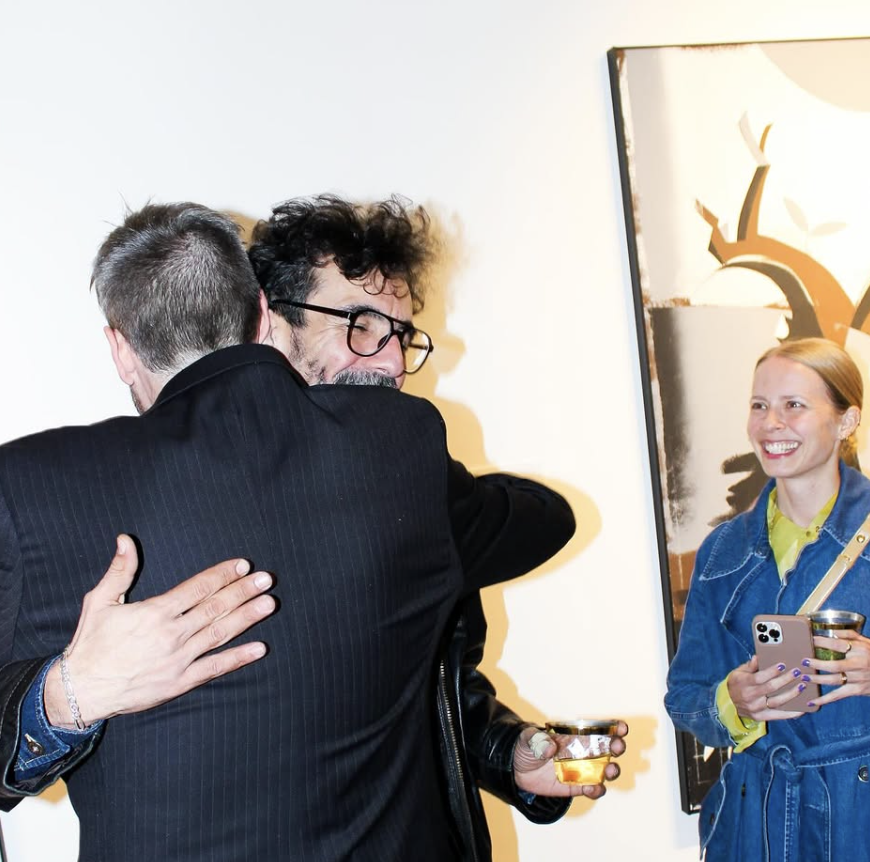
Harlem Frame’s Arezki greeting artist Ryan Bock at opening of LICH.
Artist: Ryan Bock / Bockhaus
Exhibition: LICH
Venue: Ki Smith Gallery, New York
Curator: Celine Cunha
Dates: October 18–November 23, 2025
Harlem Frames Services: Canvas Stretching · Custom Framing
Explore Bockhaus
Image Source: https://www.instagram.com/p/DQ7ZGgokYYx/?hl=en&img_index=14
Related Projects: Ryan Bock · Bockhaus: Young Americans
Morgan McMahon · Glassware Lounge
Morgan McMahon · Glassware Lounge
Artist Collaboration · Canvas Stretching & Custom Framing · New York
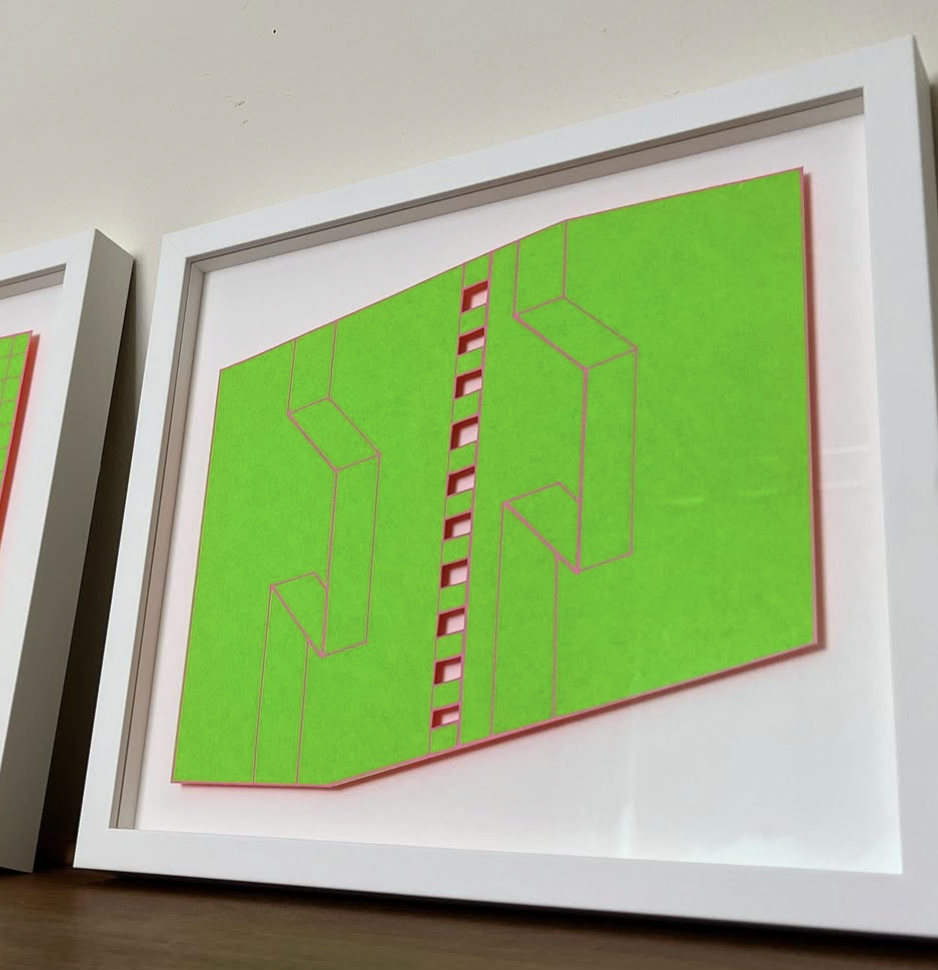
Harlem Frames has an ongoing collaboration with Manhattan-based visual artist Morgan McMahon, who works under the professional moniker Glassware Lounge.
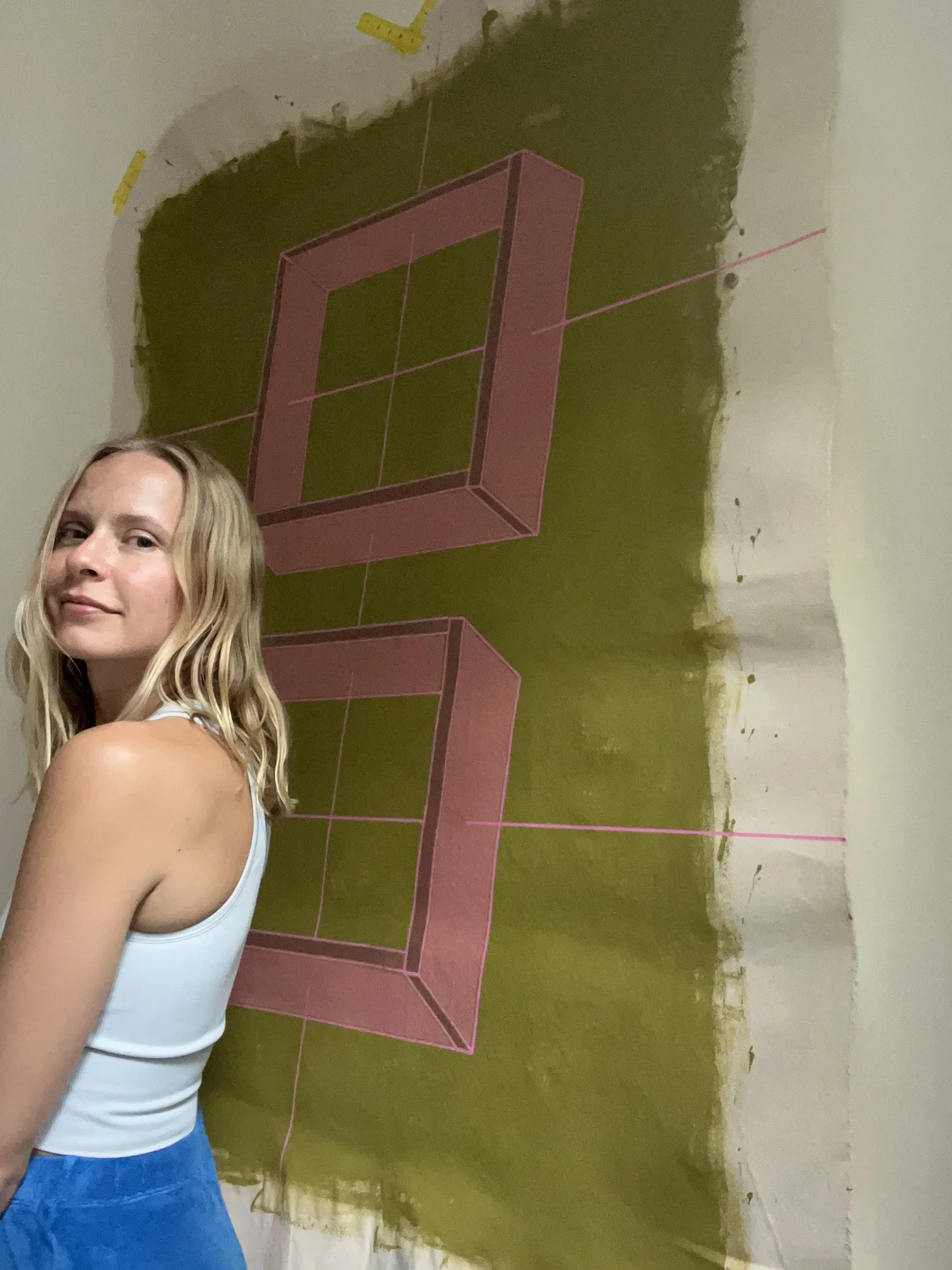
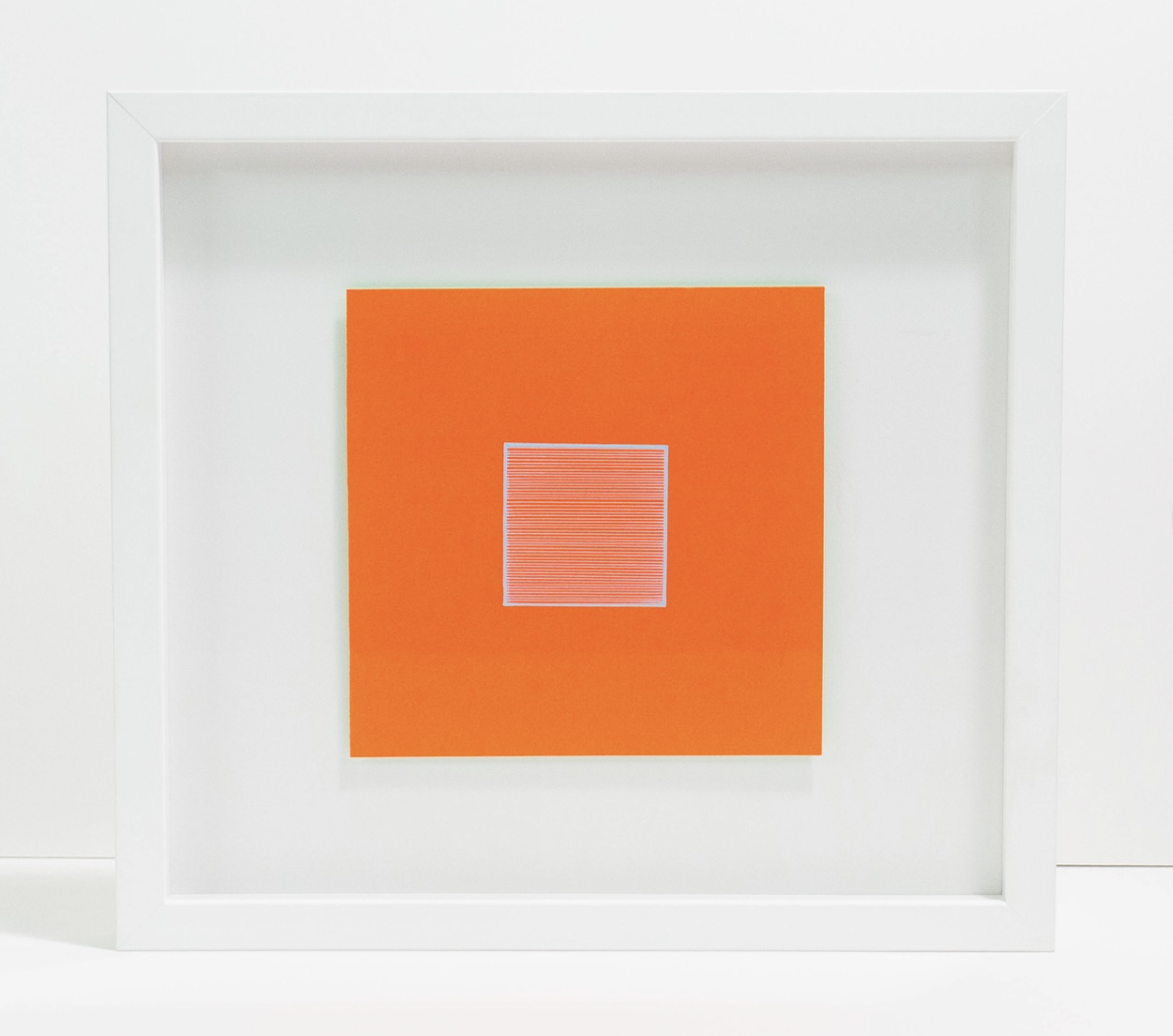
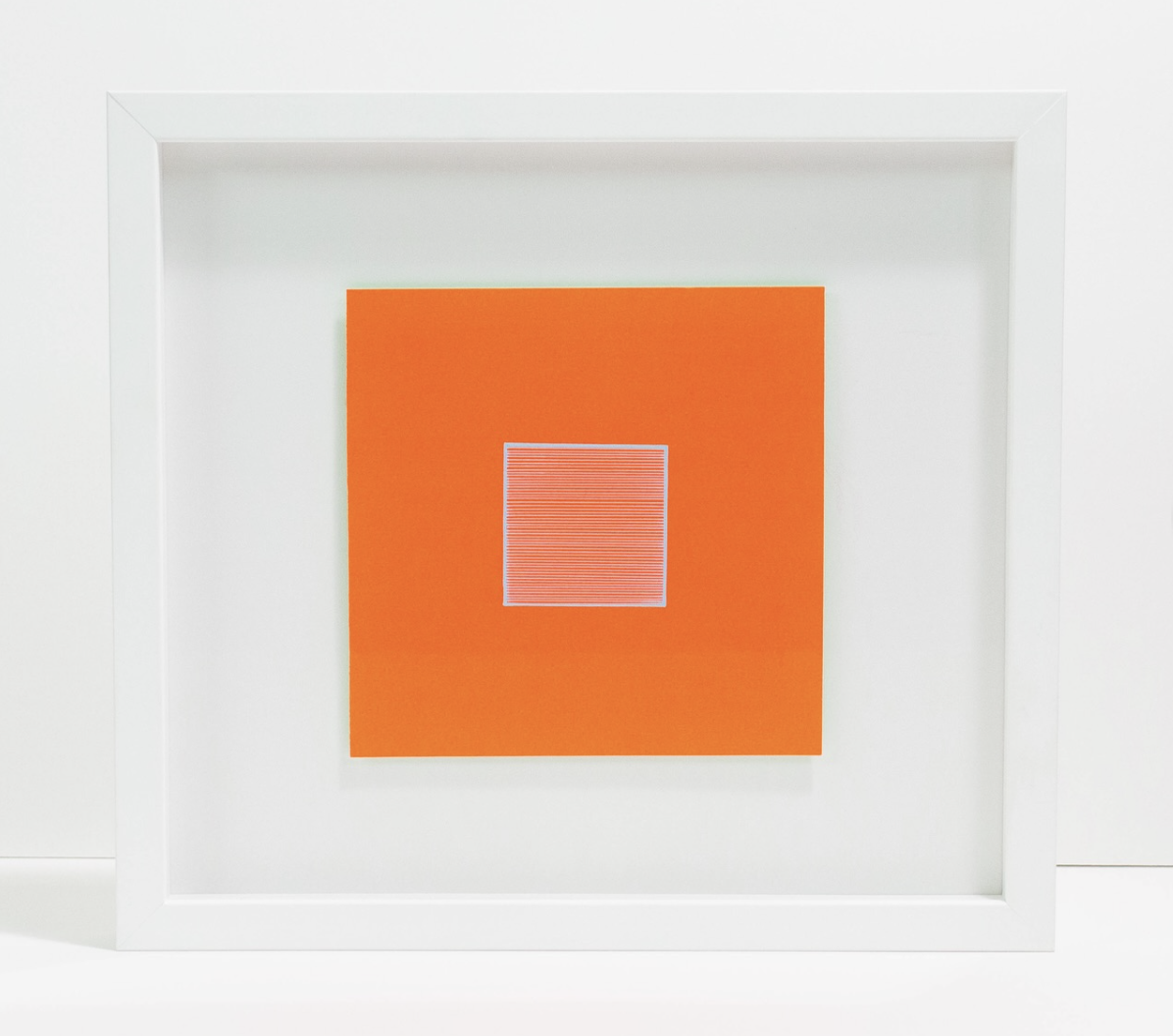
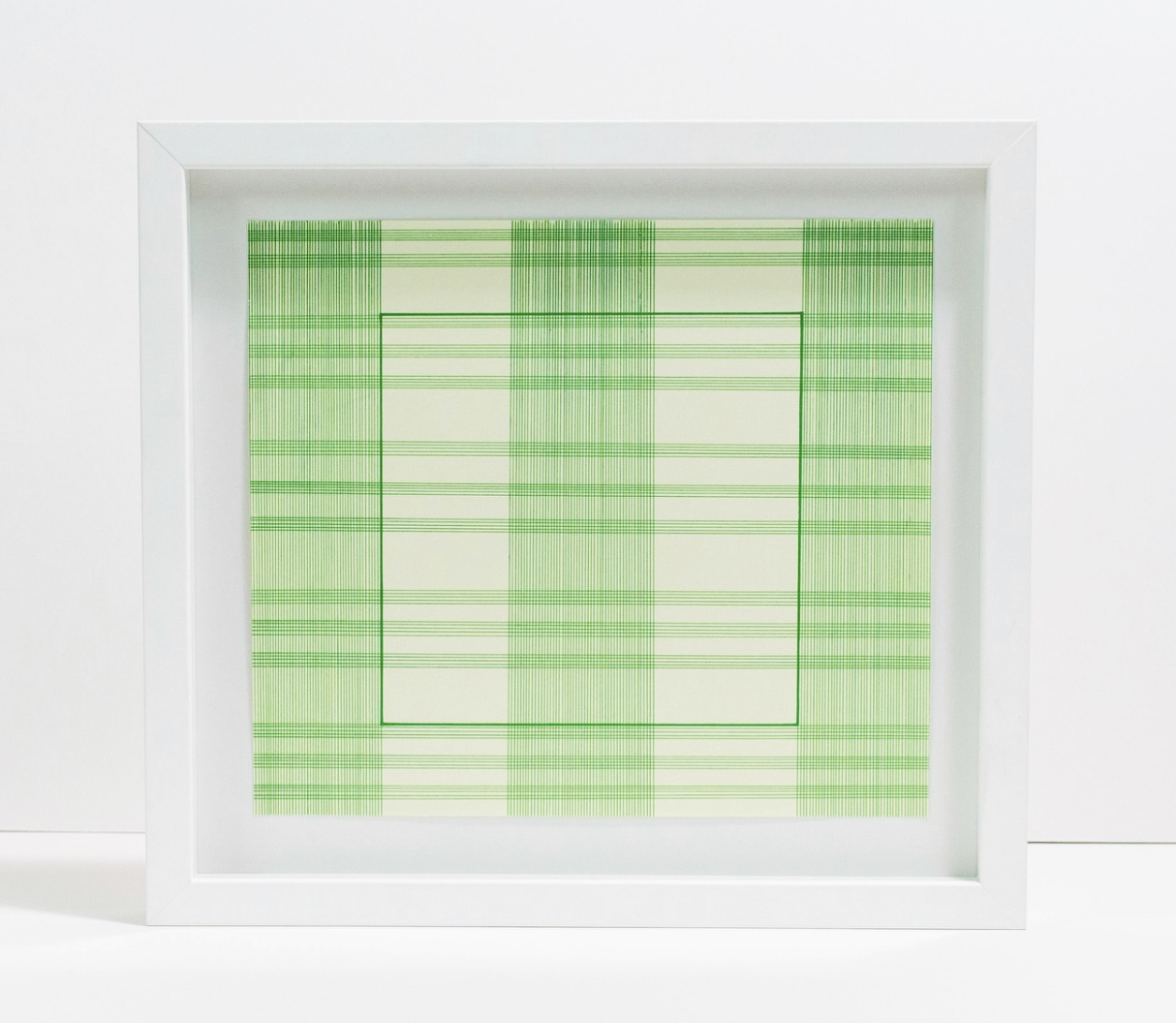
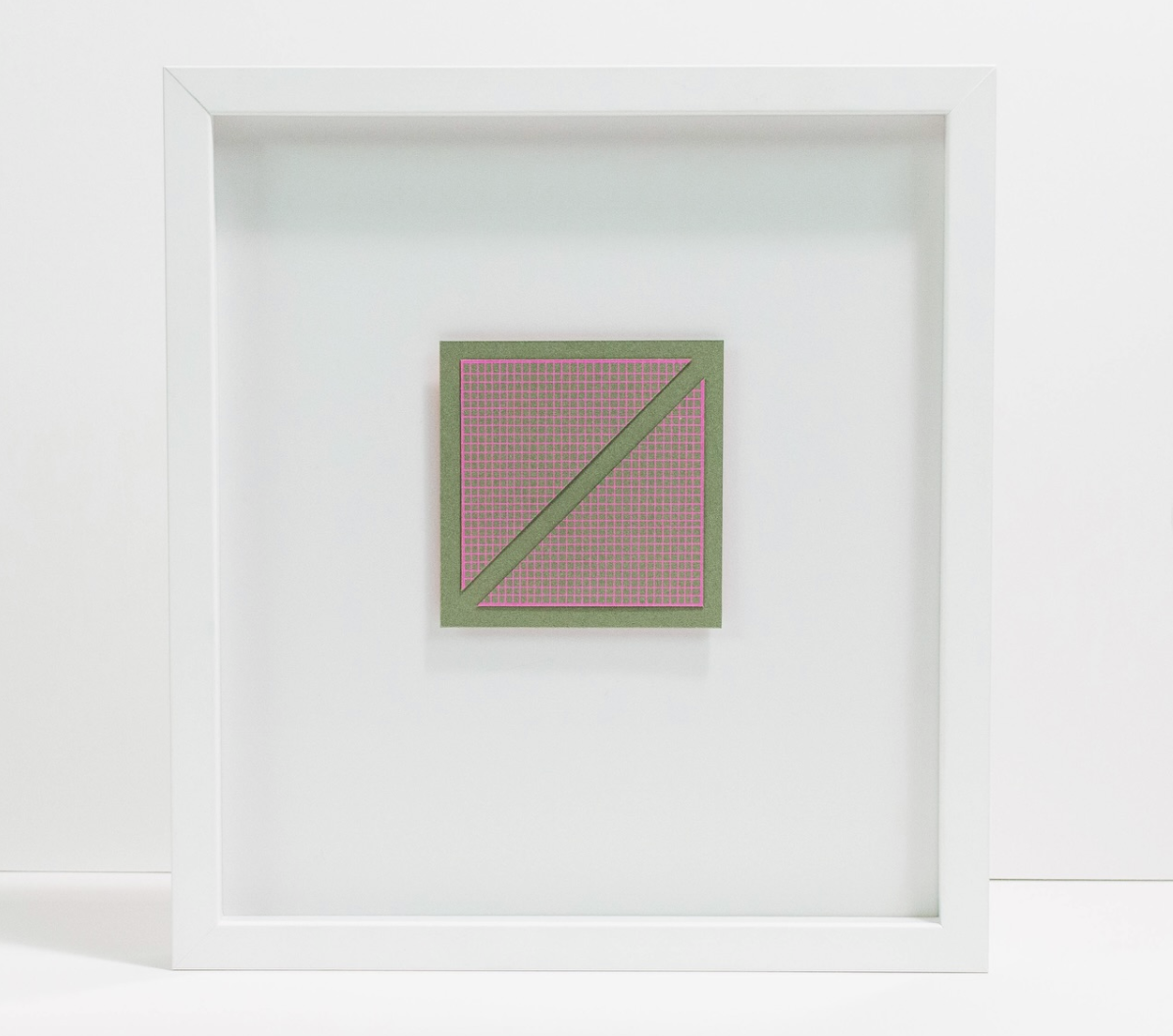
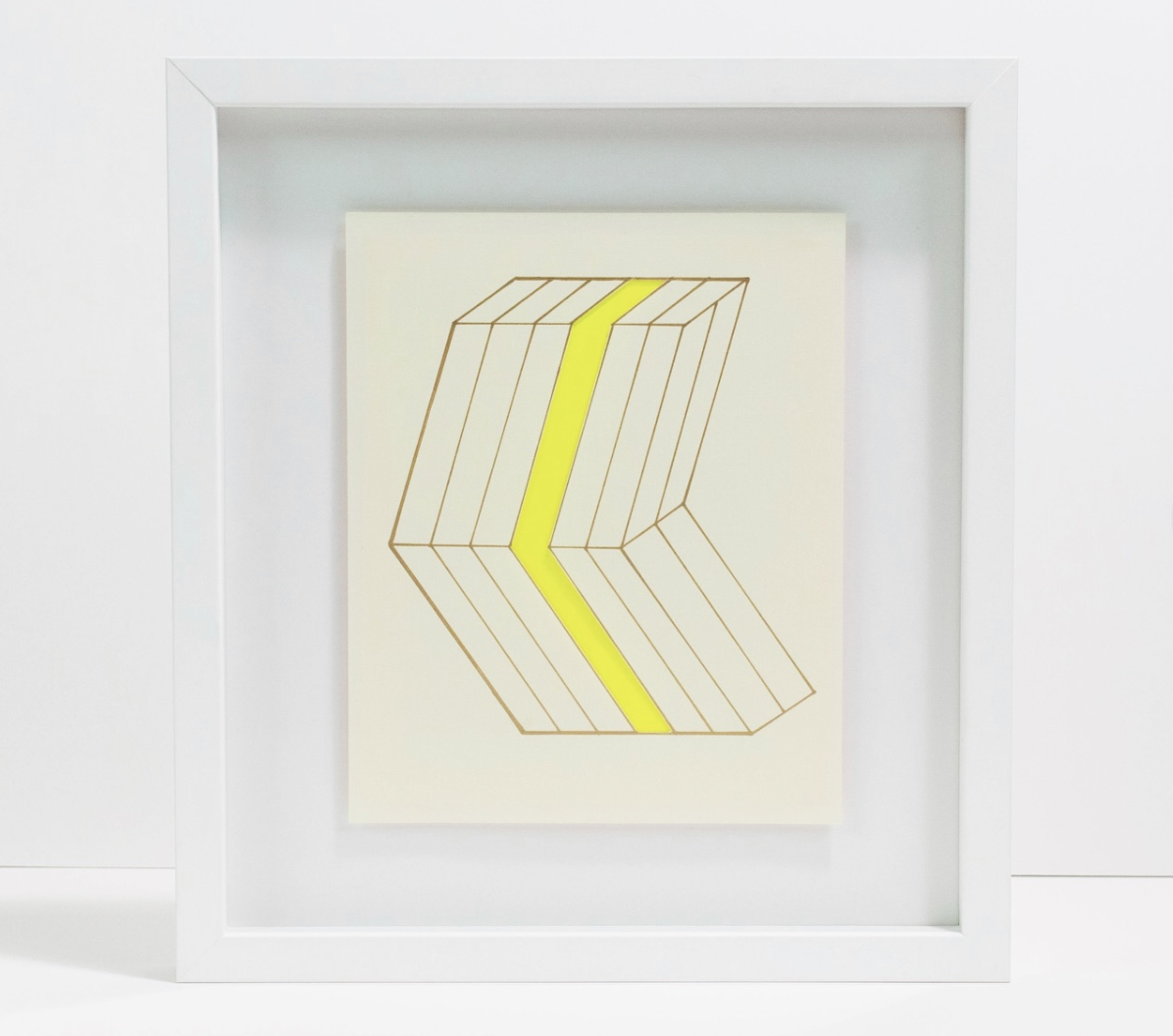
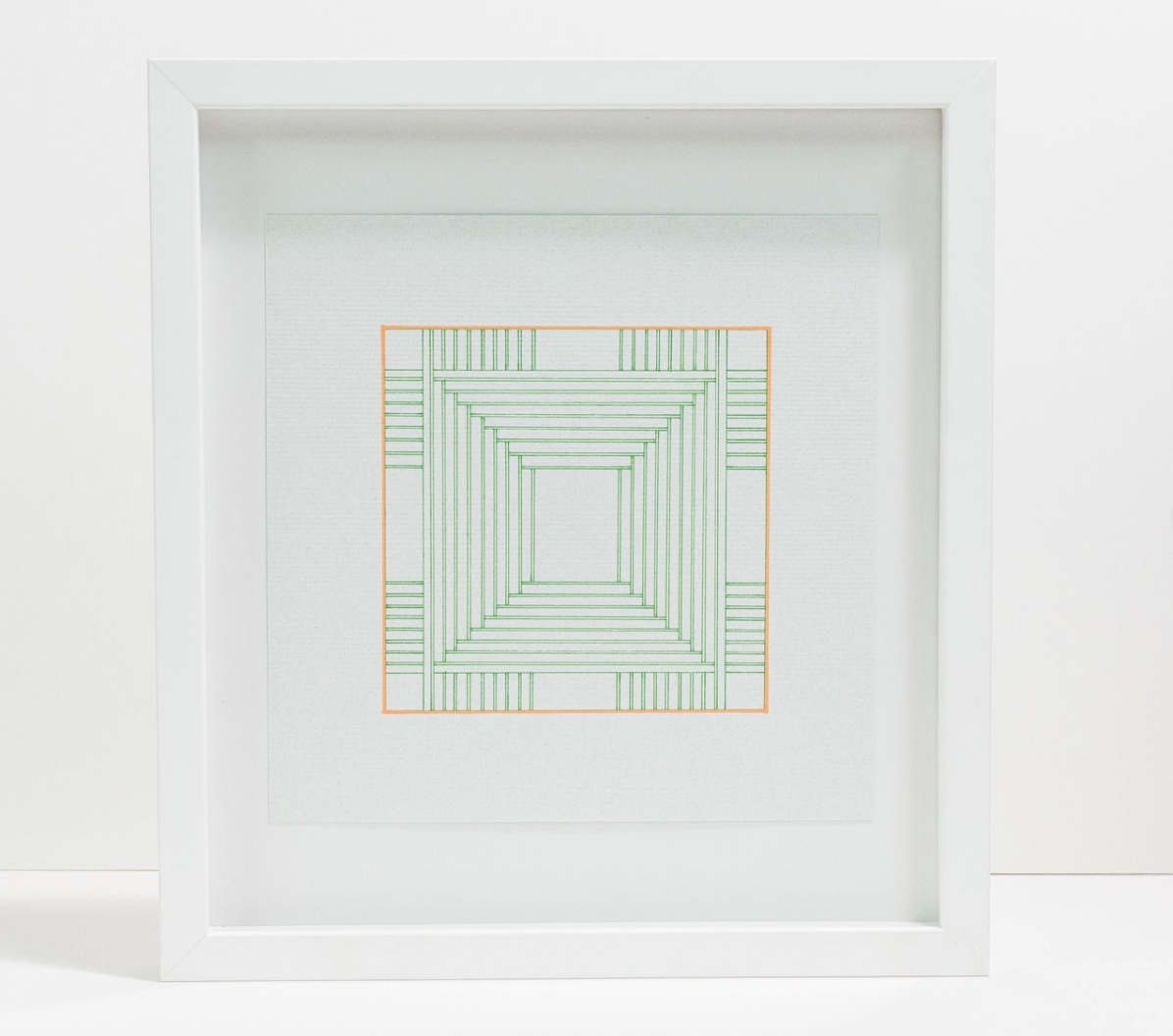
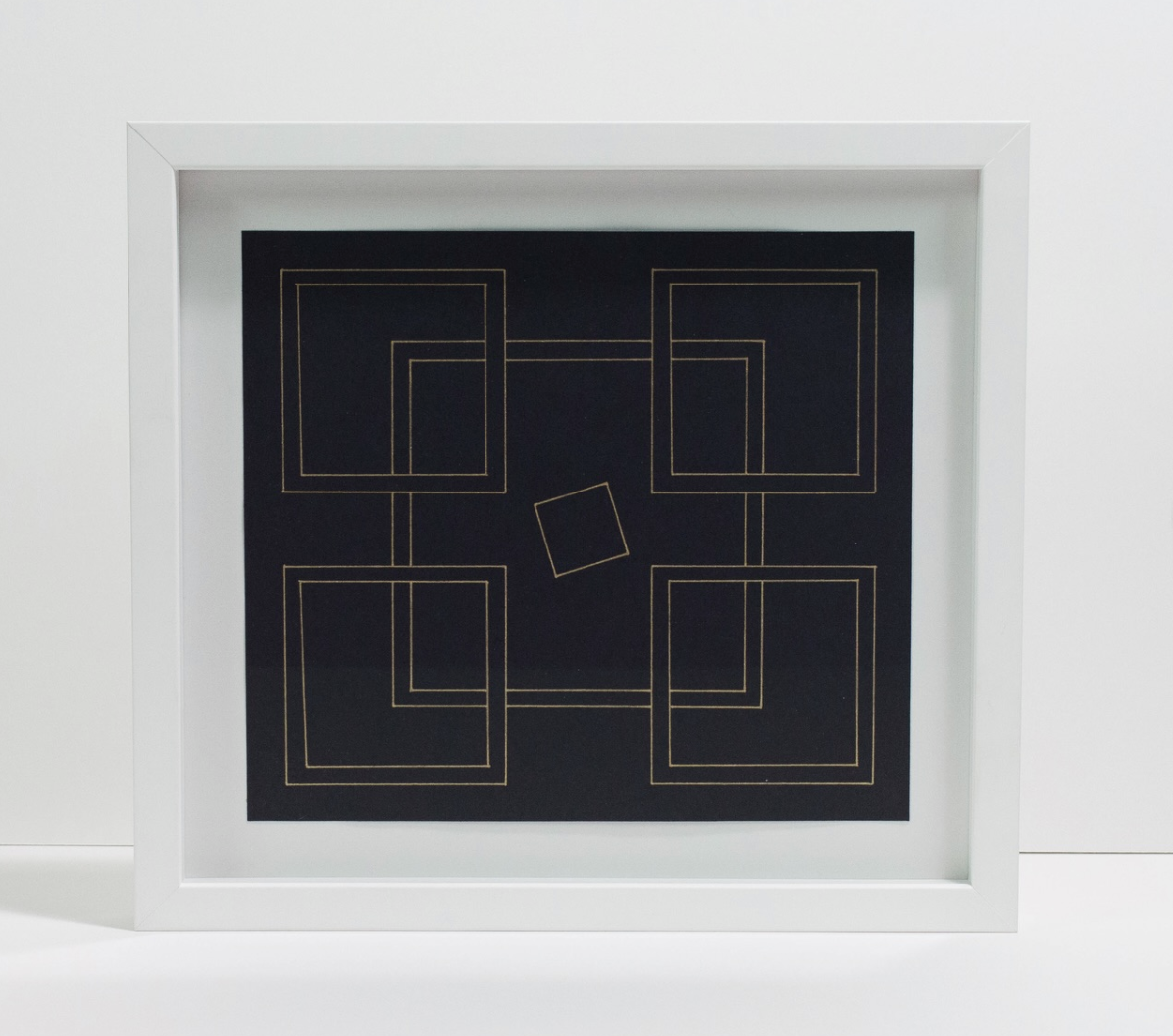
McMahon's practice explores mixed media, including works on paper, paintings on canvas, and experimentation with cotton fabrics. Her compositions are defined by their intricate line work, colorful grids, repetitive geometric patterns, and angular forms, creating illusions of both depth and space. Architecture, squares, and spatial relationships are recurring patterns of inspiration apparent in her body of work.
The Artist
McMahon approaches her paintings from an unusual physical perspective, often preferring to work on the floor to view the composition from above and move liberally around all sides of the surface. This process complements the highly structured visual language of her work, where repetition, geometry, color, and spatial illusion are manifested across the composition.
Stretched & Framed by Harlem Frames
Harlem Frames has worked with McMahon on multiple occasions, providing professional canvas stretching and custom framing for her paintings. For these works, the presentation remains intentionally restrained. Simple wood frames provide a clean architectural boundary around McMahon's detailed compositions while allowing the paintings' color, pattern, and geometry to remain at the forefront.
Our work with Glassware Lounge reflects the value of an ongoing relationship between artist and framer. As new works move from the studio toward exhibition, collection, or display, Harlem Frames provides consistent stretching and framing tailored to the physical requirements and visual character of each canvas. The result is a presentation that supports the work without overpowering it—allowing McMahon's intricate surfaces and distinctive geometric language to speak for themselves.
Artist: Morgan McMahon / Glassware Lounge
Practice: Painting · Works on Paper
Harlem Frames Services: Canvas Stretching · Custom Framing
Framing: Simple wood frames
Location: New York City
No Compromise When It’s Time to Die · Fred Riedel · Michael Anderson
Documentary Film · 2022
Harlem Frames on Film
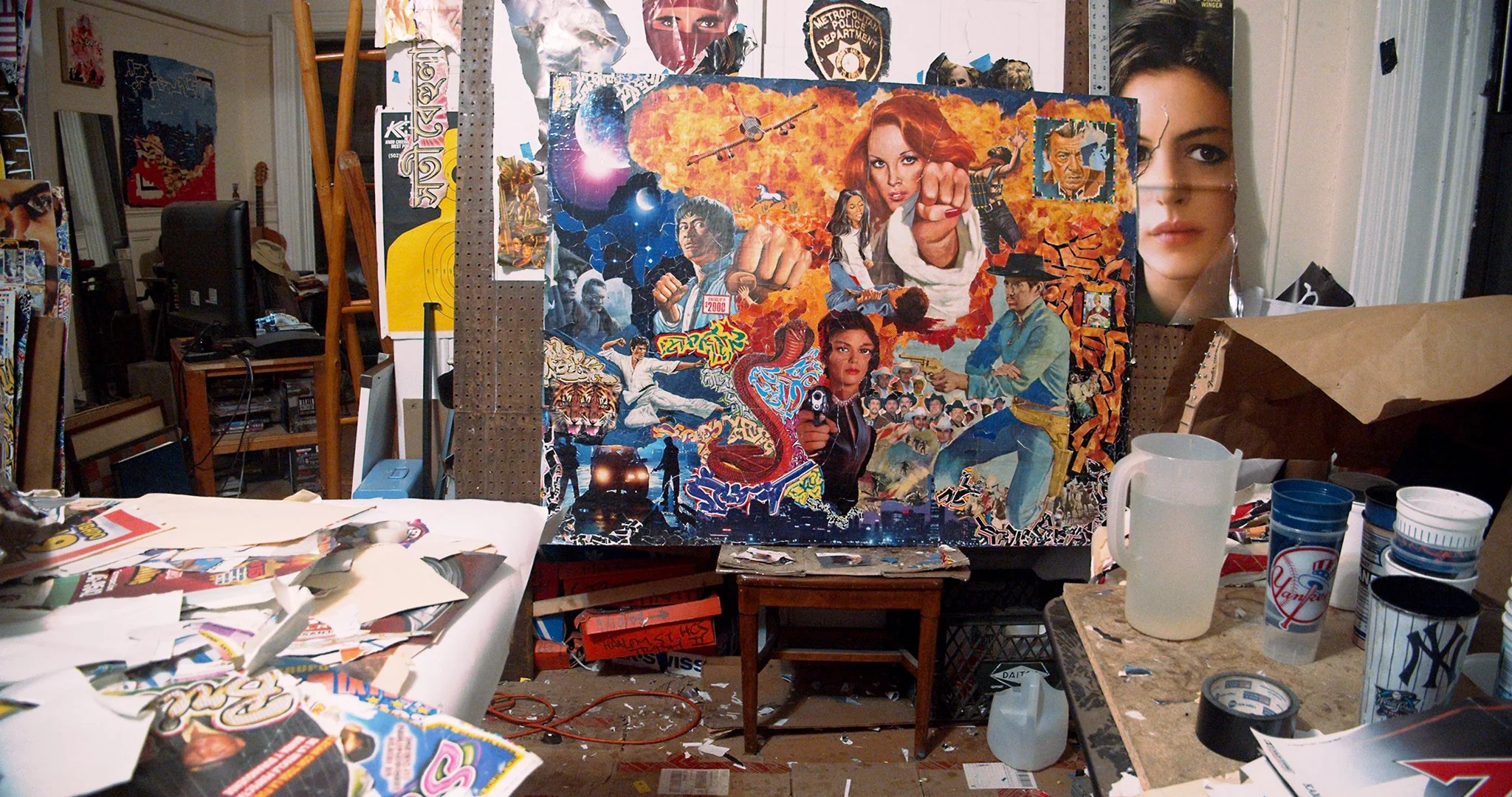
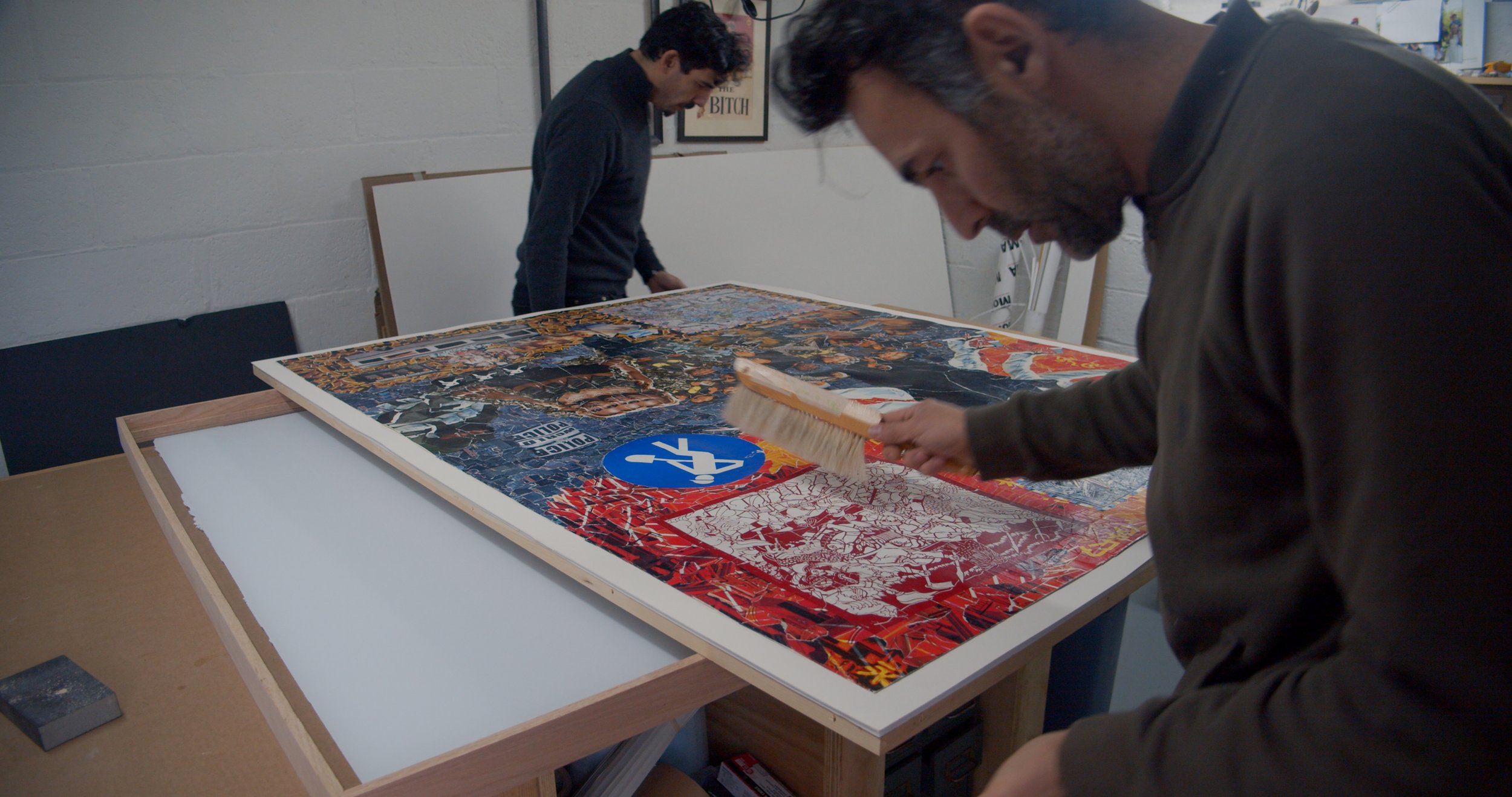
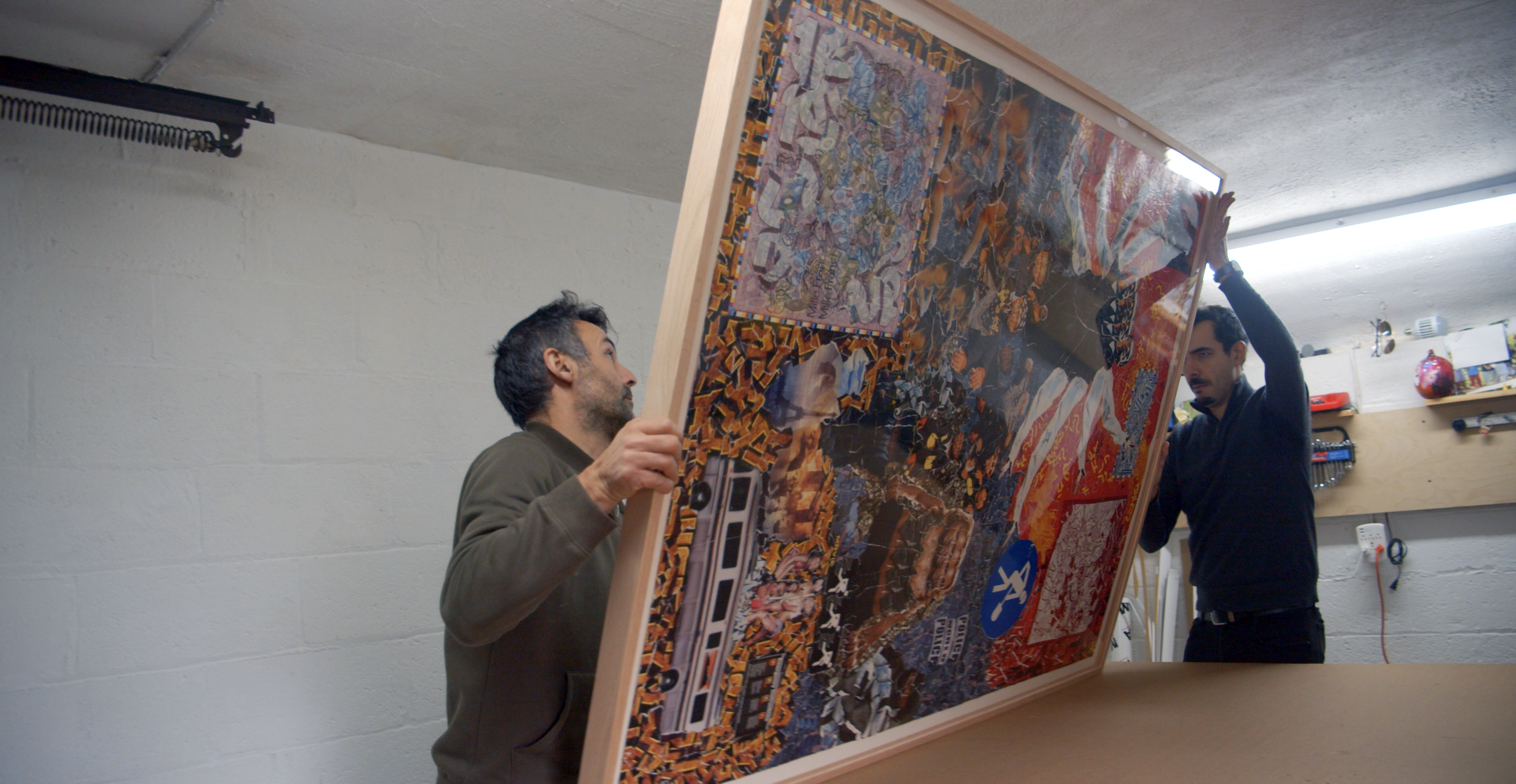
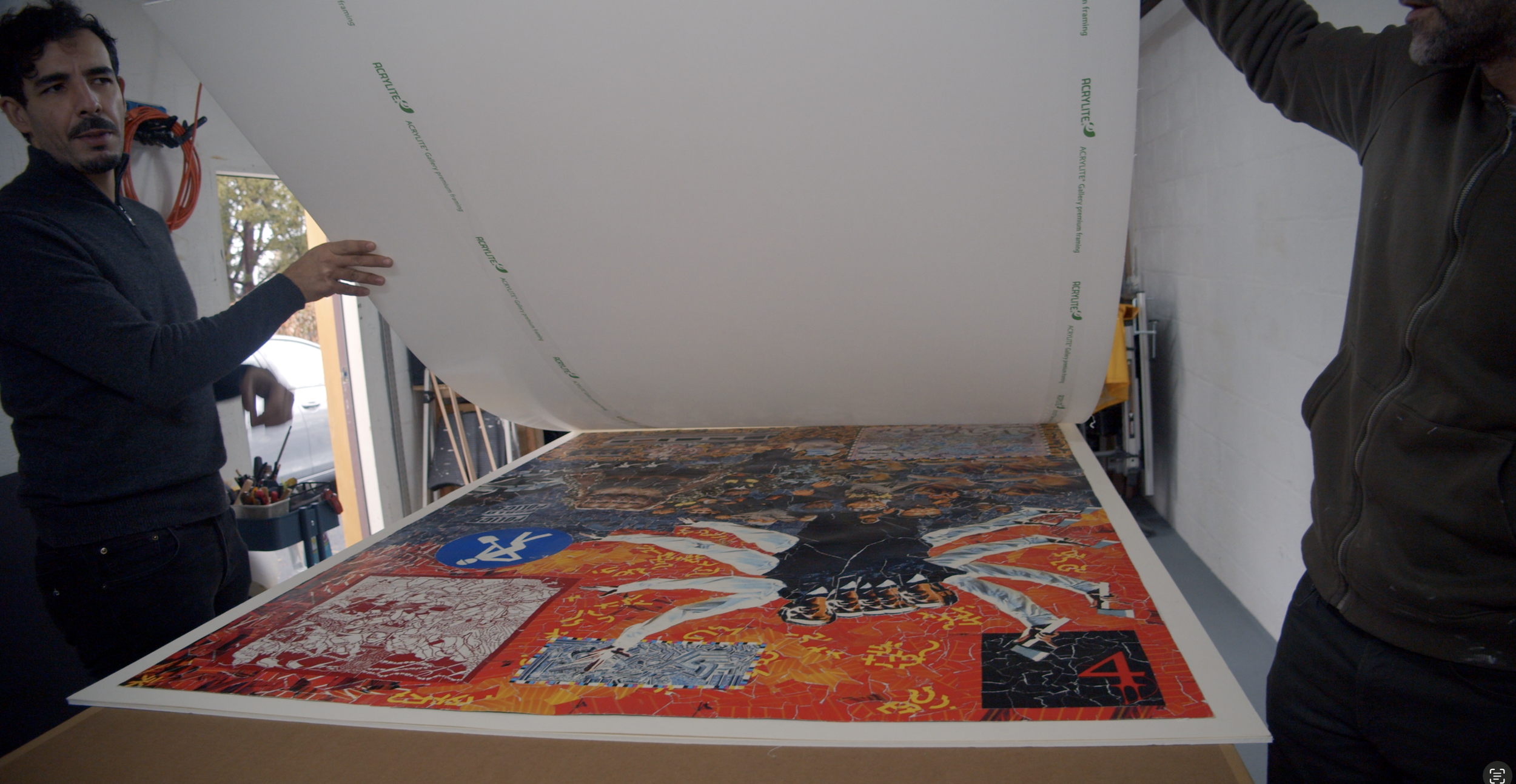
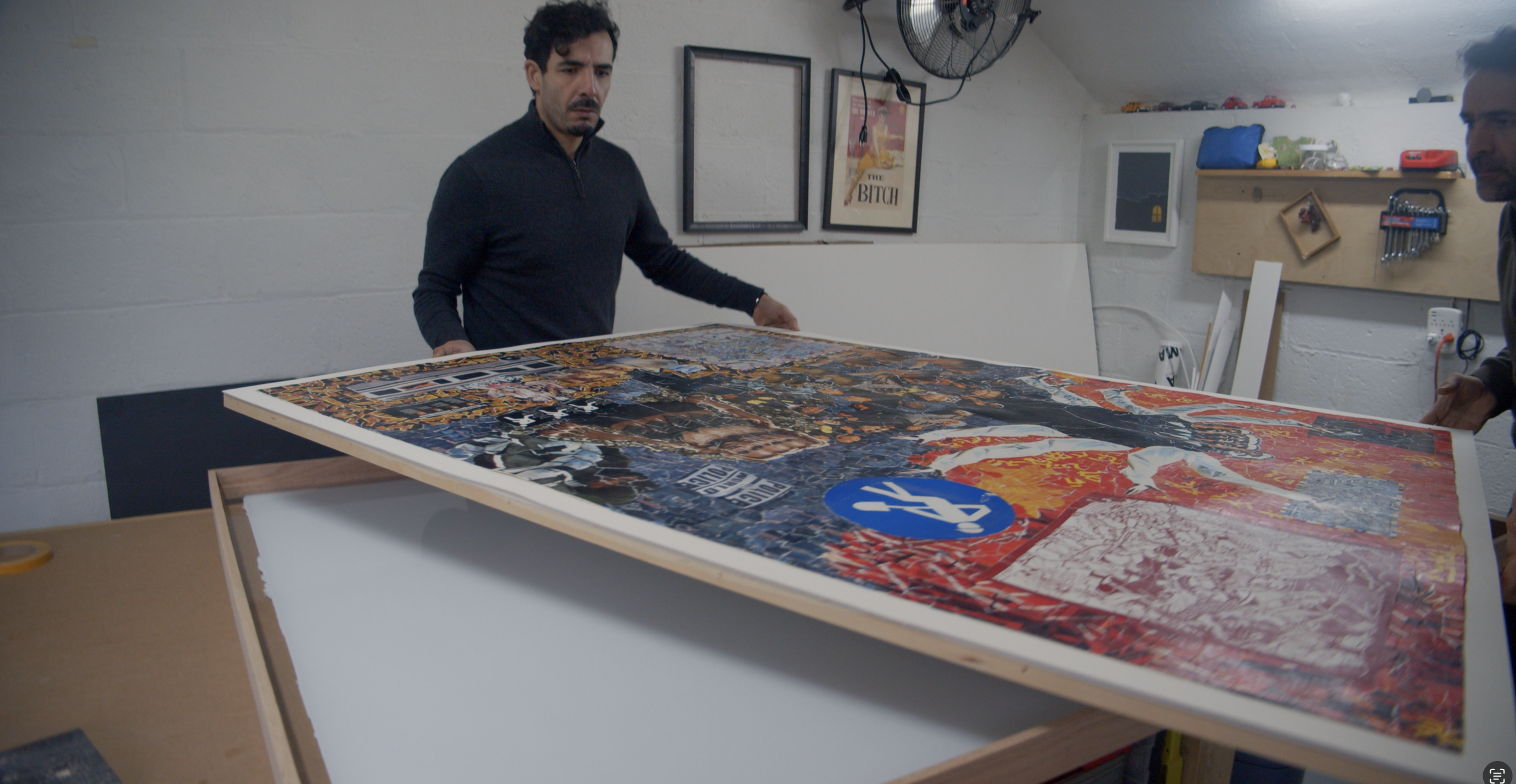
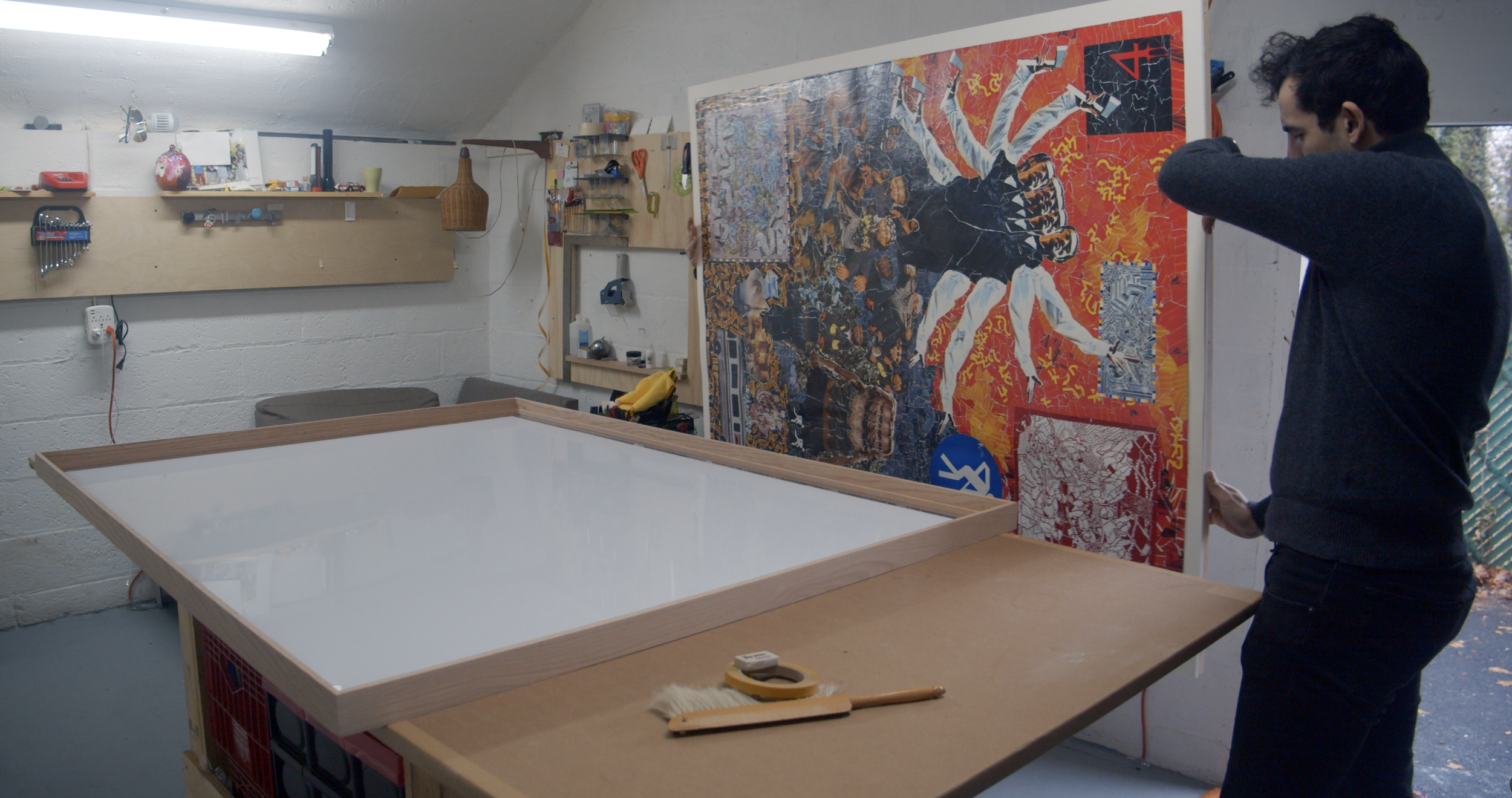
Harlem Frames appears in Fred Riedel's documentary No Compromise When It’s Time to Die, an intimate portrait of New York collage artist Michael Anderson (1968–2020) filmed during the final year of the artist's life.
The documentary follows Anderson through the physical process behind his work—from collecting posters throughout New York City to cutting, layering, assembling, and ultimately installing his monumental collages. Rather than relying on a traditional biographical narrative, Riedel focuses on the act of making itself, constructing the film in a fragmented, nonlinear form that mirrors Anderson's own collage practice.
The Artist & the Film
The Artist & the Film
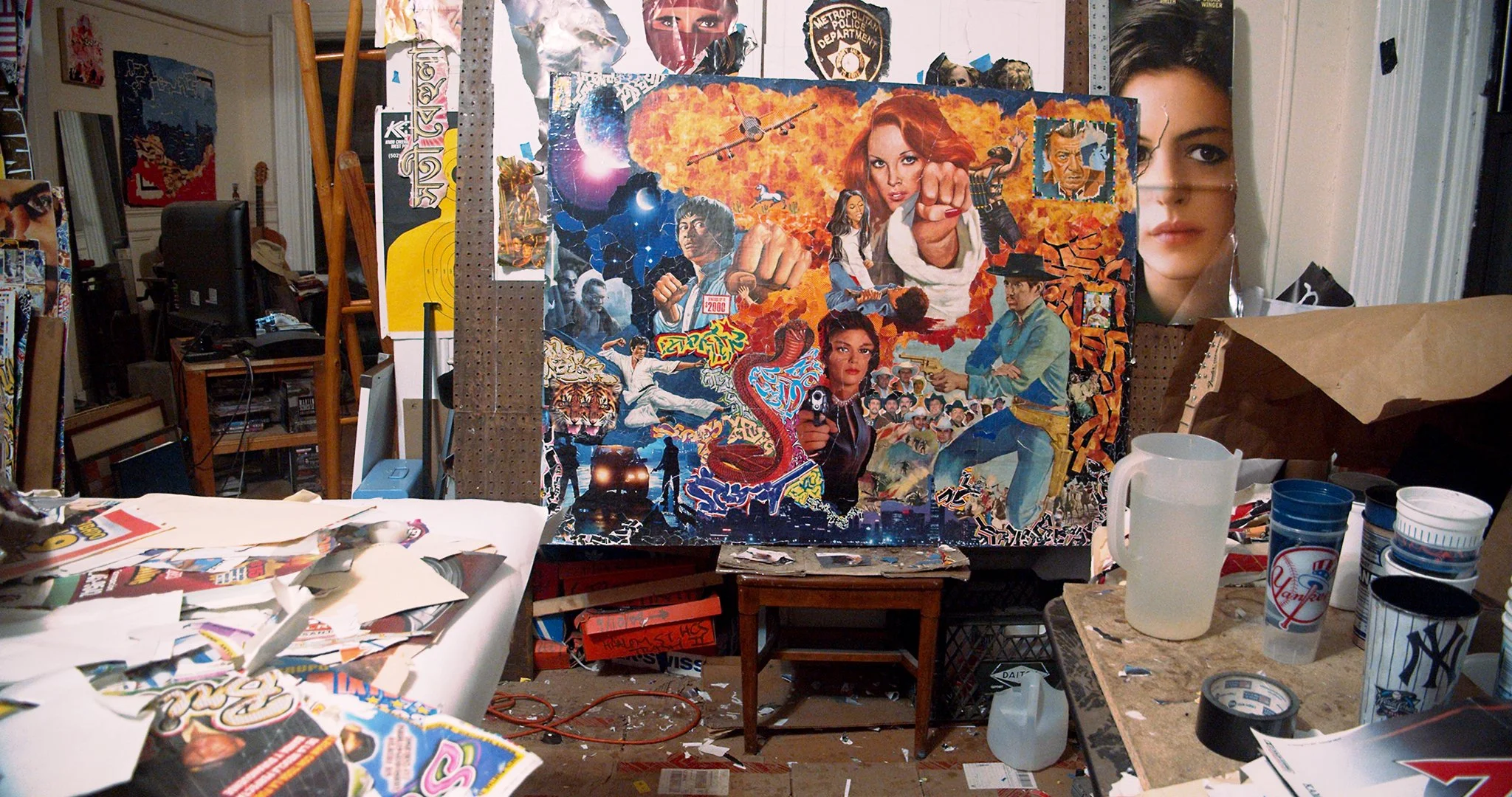
A scene from the film "No Compromise When It's Time To Die", directed by Fred Riedel.
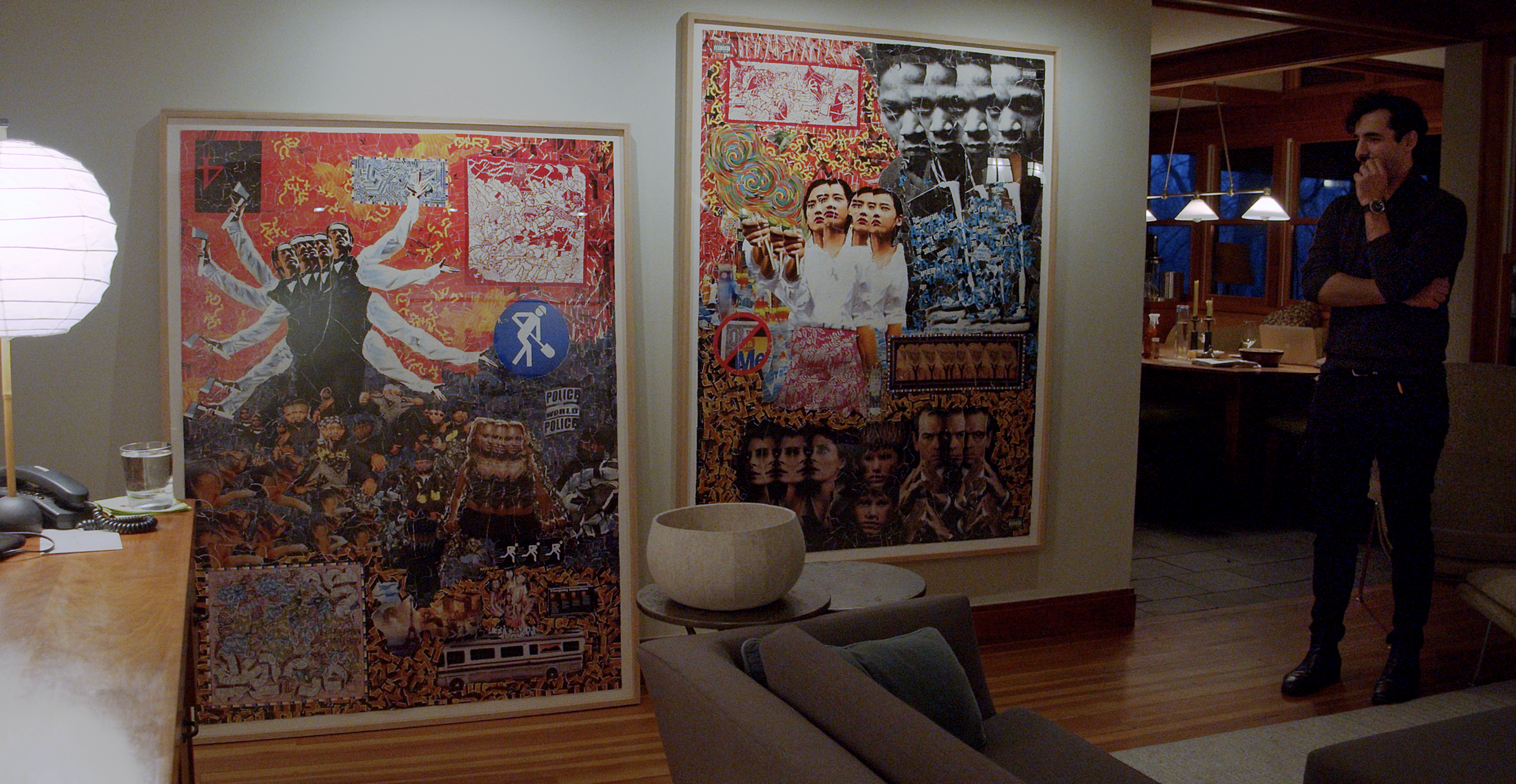
Anderson created dense, large-scale collages from fragments of posters collected from public spaces around the world. Images removed from their original contexts were cut apart and reconstructed into compositions filled with cultural references, abstraction, humor, violence, and the visual intensity of the city around him.
Riedel began the documentary while Anderson was still alive. Following the artist's death in July 2020, the film ultimately became both a portrait of his creative process and a tribute to the artist and friend he left behind. The finished 77-minute documentary was directed, produced, shot, and edited by Riedel, with a score by composer Joe Diebes.
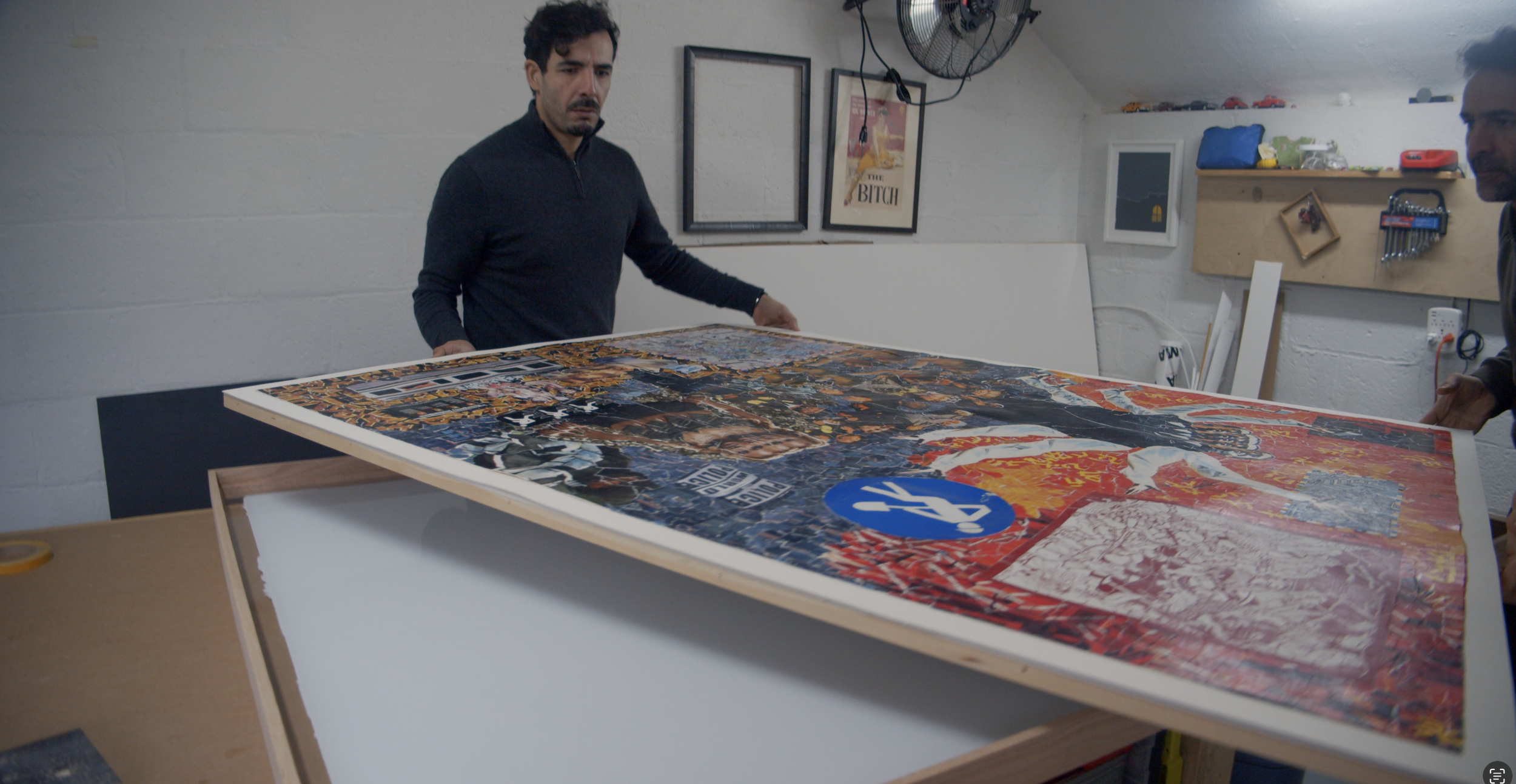
Framed by Harlem Frames
Harlem Frames becomes part of that story from the film's opening moments.
Harlem Frames becomes part of that story from the film's opening moments.
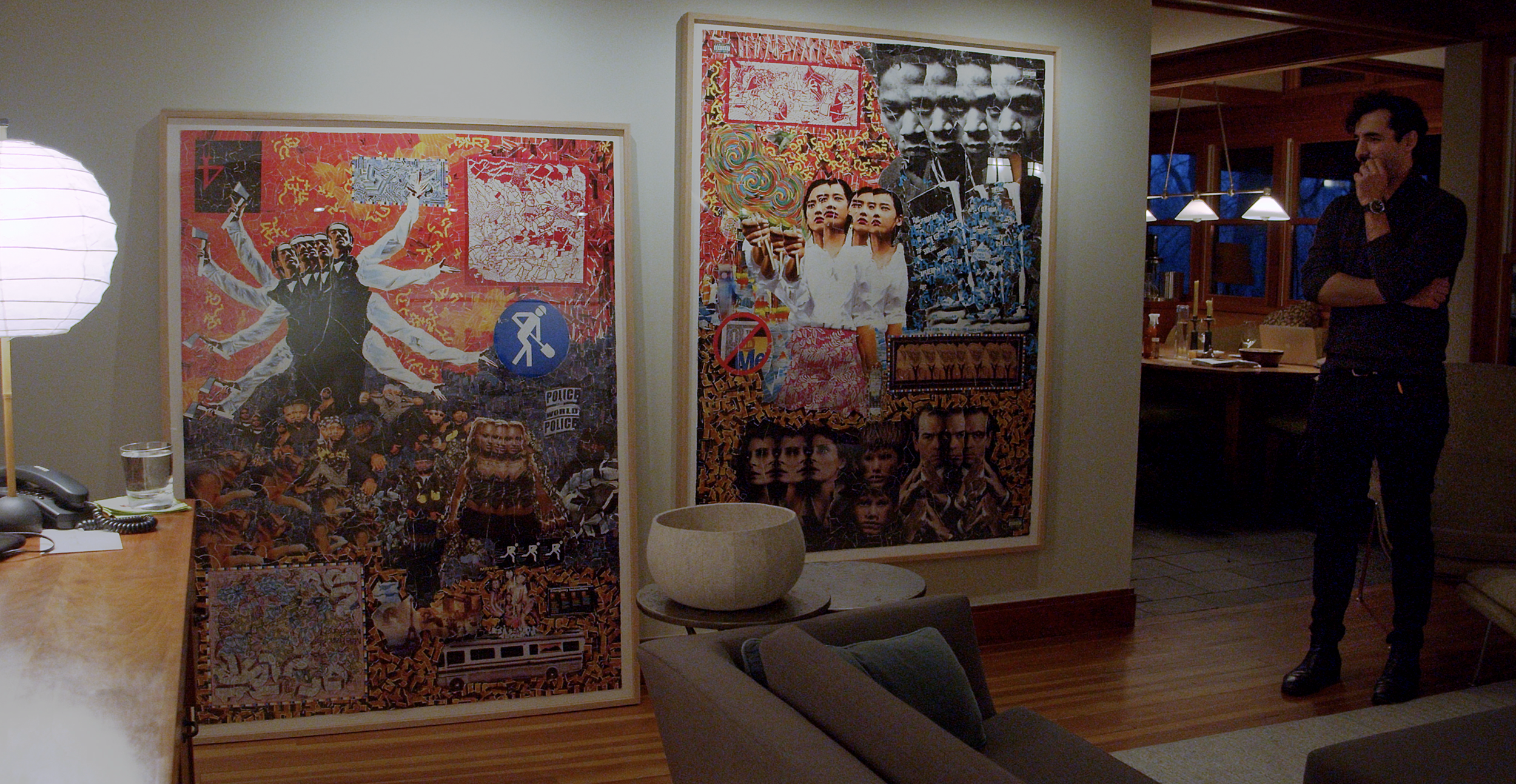
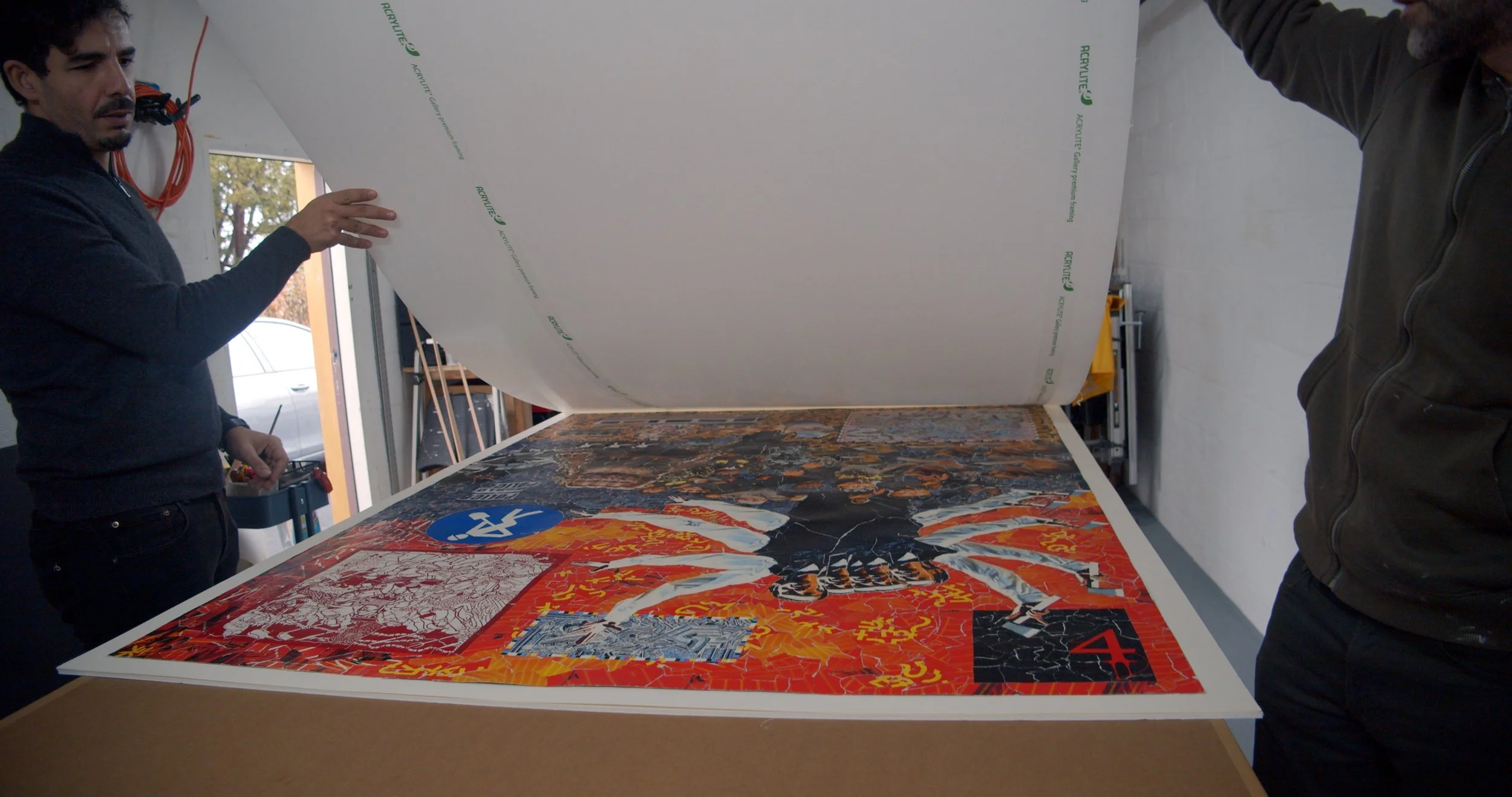
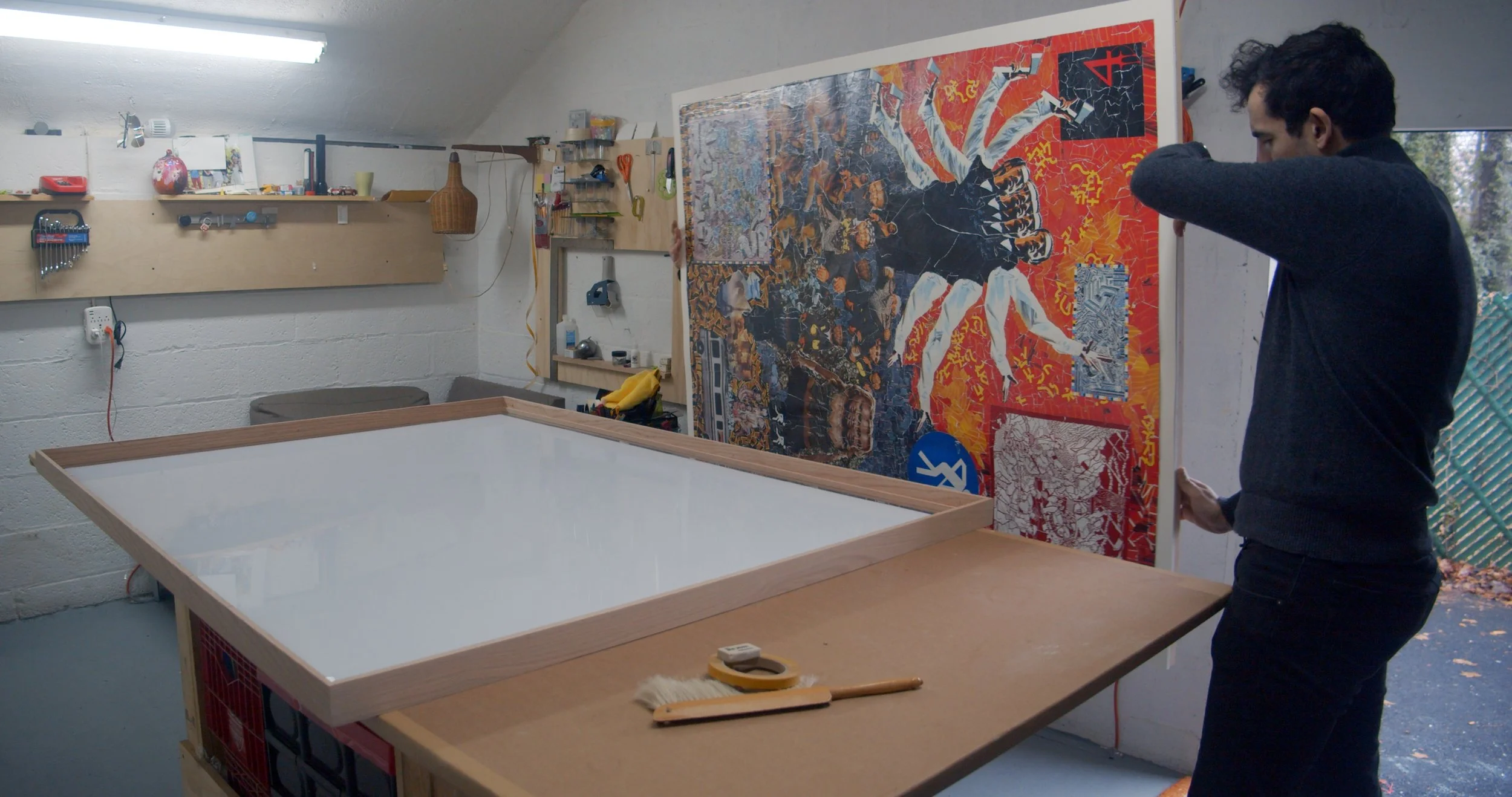
No Compromise When It’s Time to Die begins inside a workshop, where a monumental Anderson artwork is carefully prepared for its journey to a collector's home. The sequence magnifies the process of physically handling artwork, chronicling everything from its preparation, protection, wrapping, transportation, and eventual installation.
The film initially does little to explain who is performing the work or where the artwork is going. That ambiguity was intentional. Riedel later explained that the opening was designed to create a sense of anticipation around the artwork's arrival and to introduce viewers to Anderson's world before fully revealing the artist behind it.
For Harlem Frames, appearing in the film offers an unusual glimpse into a part of framing and art handling that often disappears once an artwork reaches the wall: the careful work required to prepare, protect, and present a large-scale piece before it enters a collection.
The finished installation provides the payoff. Anderson's visually explosive collage arrives in a quiet contemporary interior, demonstrating just how dramatically artwork—and its presentation—can transform a space.
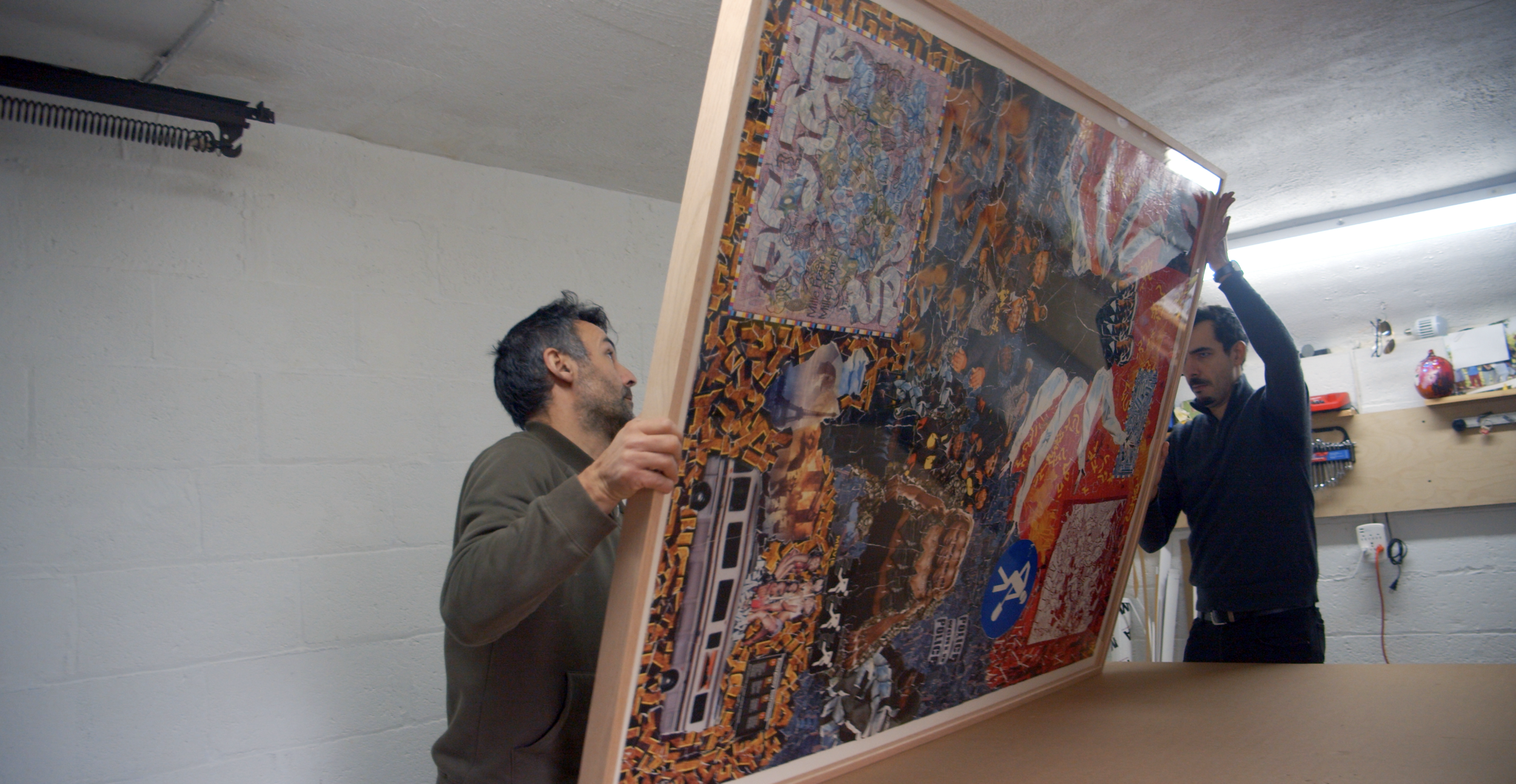
Art, Process & Presentation
Framing is only one stage in the larger life of an artwork.
The sequence reflects something central to Harlem Frames' work with artists and collectors: framing serves as but one stage in the greater life of an artwork. From an artist's studio to preparation and handling, transportation, installation, exhibition, and eventually a collector's wall, each stage demands consideration for both the physical object and the artist's intentions. It’s our duty to honor those intentions. In No Compromise When It’s Time to Die, that typically unseen process becomes part of the artwork's story, and part of the film itself.
Film: No Compromise When It’s Time to Die
Director: Fred Riedel
Artist: Michael Anderson (1968–2020)
Year: 2022
Runtime: 77 minutes
Harlem Frames: Artwork preparation, handling and presentation featured in the documentary
Explore the work: https://upmag.com/michael-anderson/
Image source: Stills from No Compromise When It’s Time to Die (2022), directed by Fred Riedel
& https://whitehotmagazine.com/articles/anderson-which-premiered-at-bafici/5427
Richard Corman: I Shot The Messenger! — A Portrait of Keith Haring
Frevo · New York City · 2022
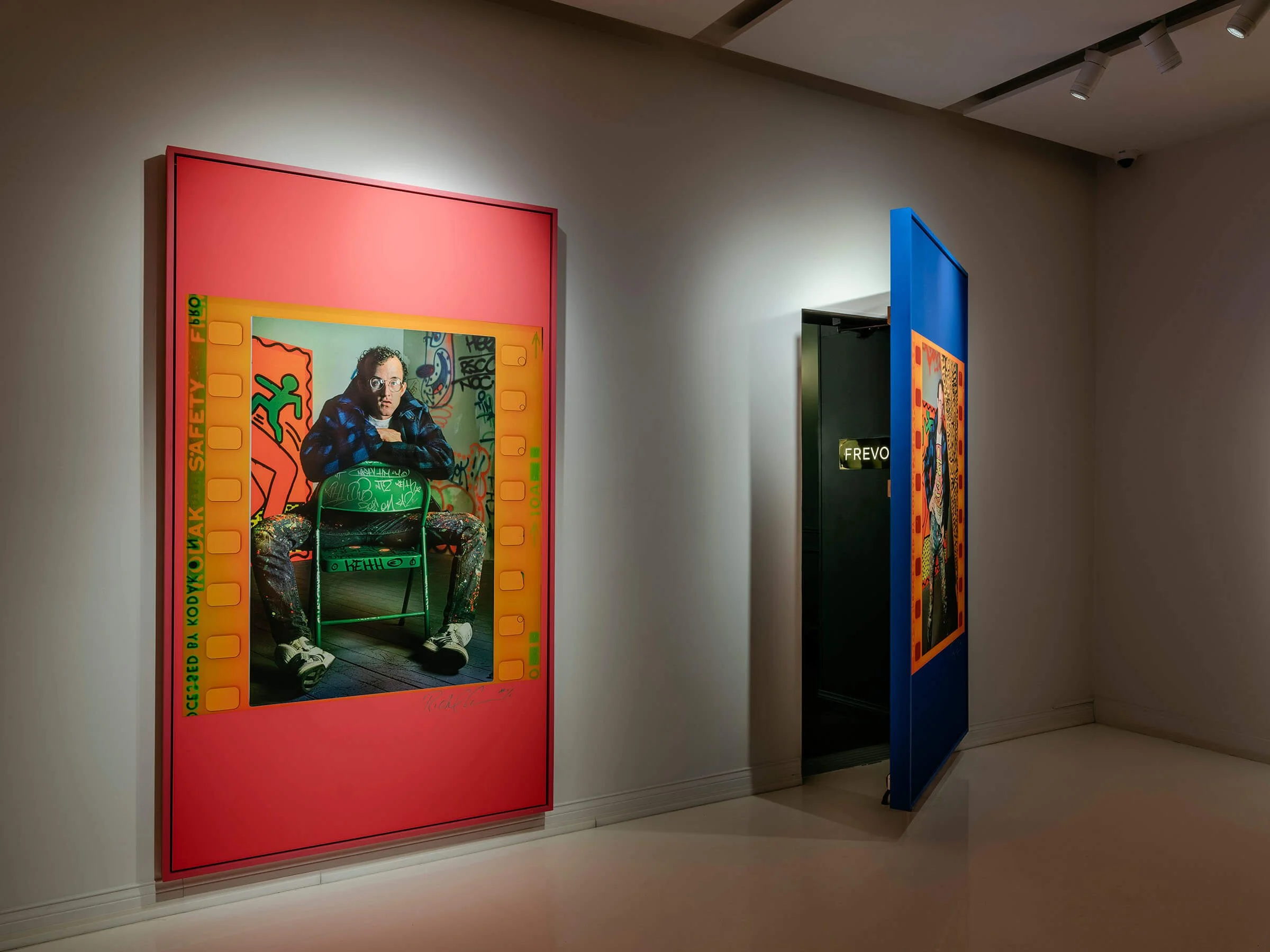
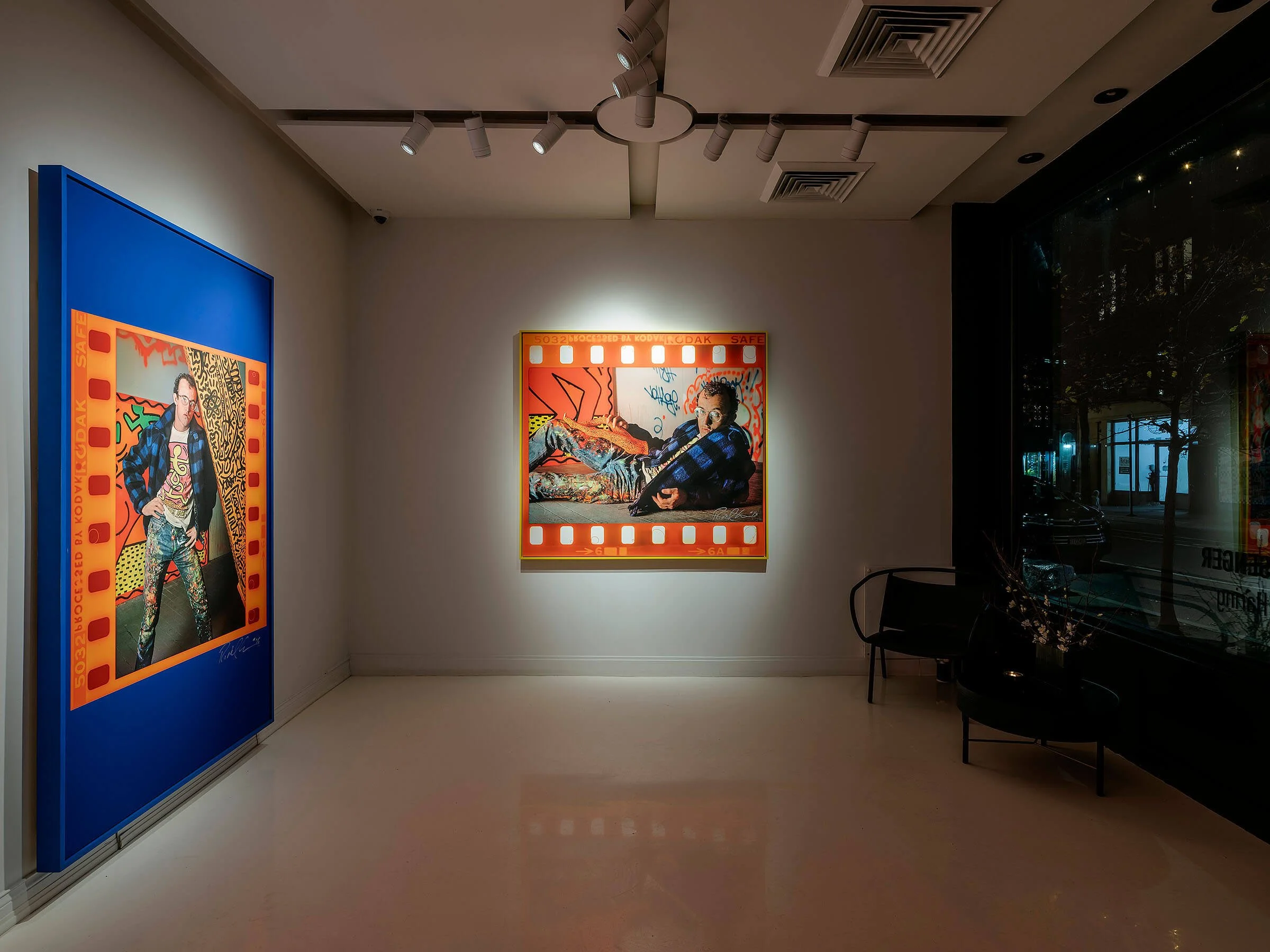
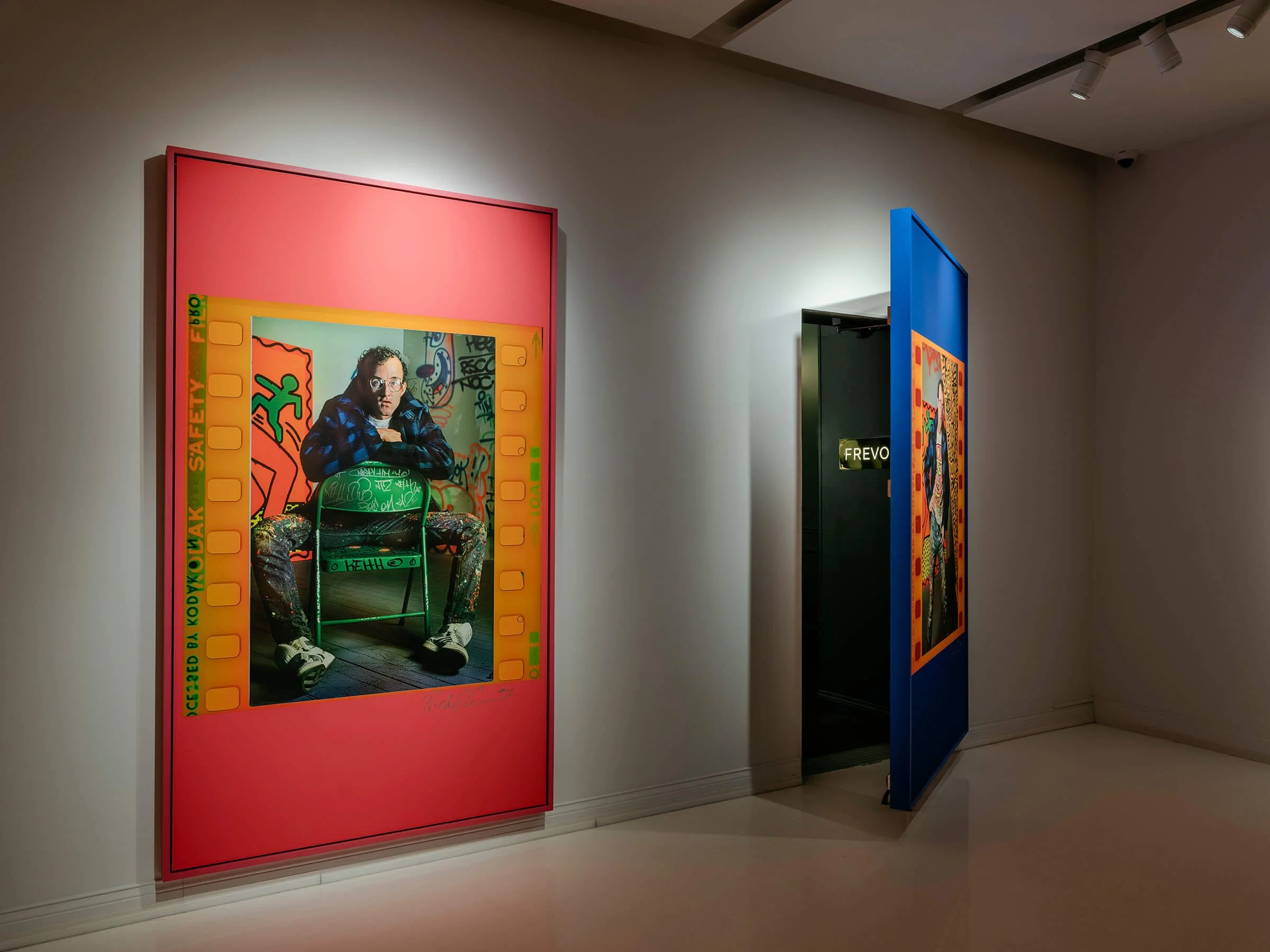
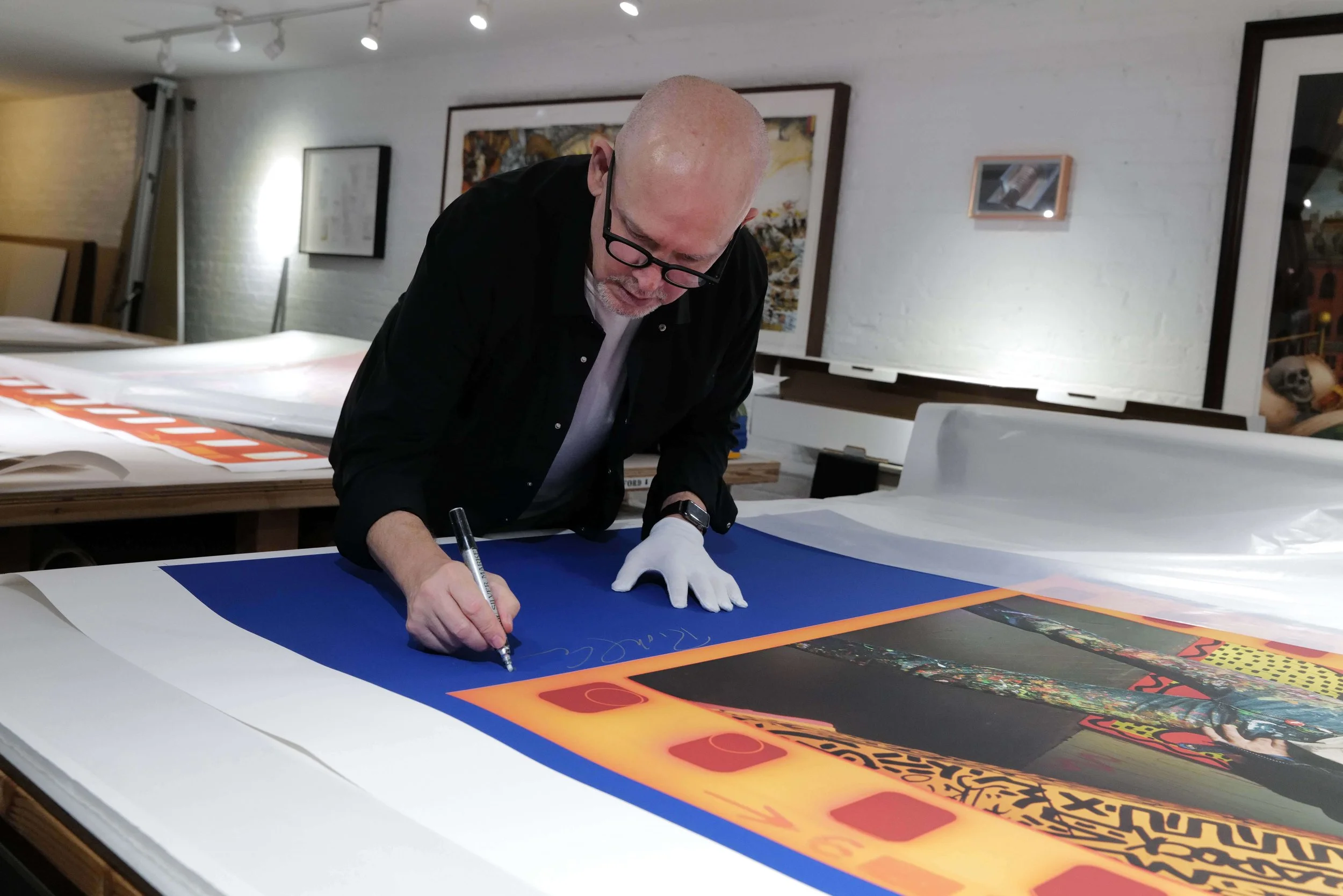
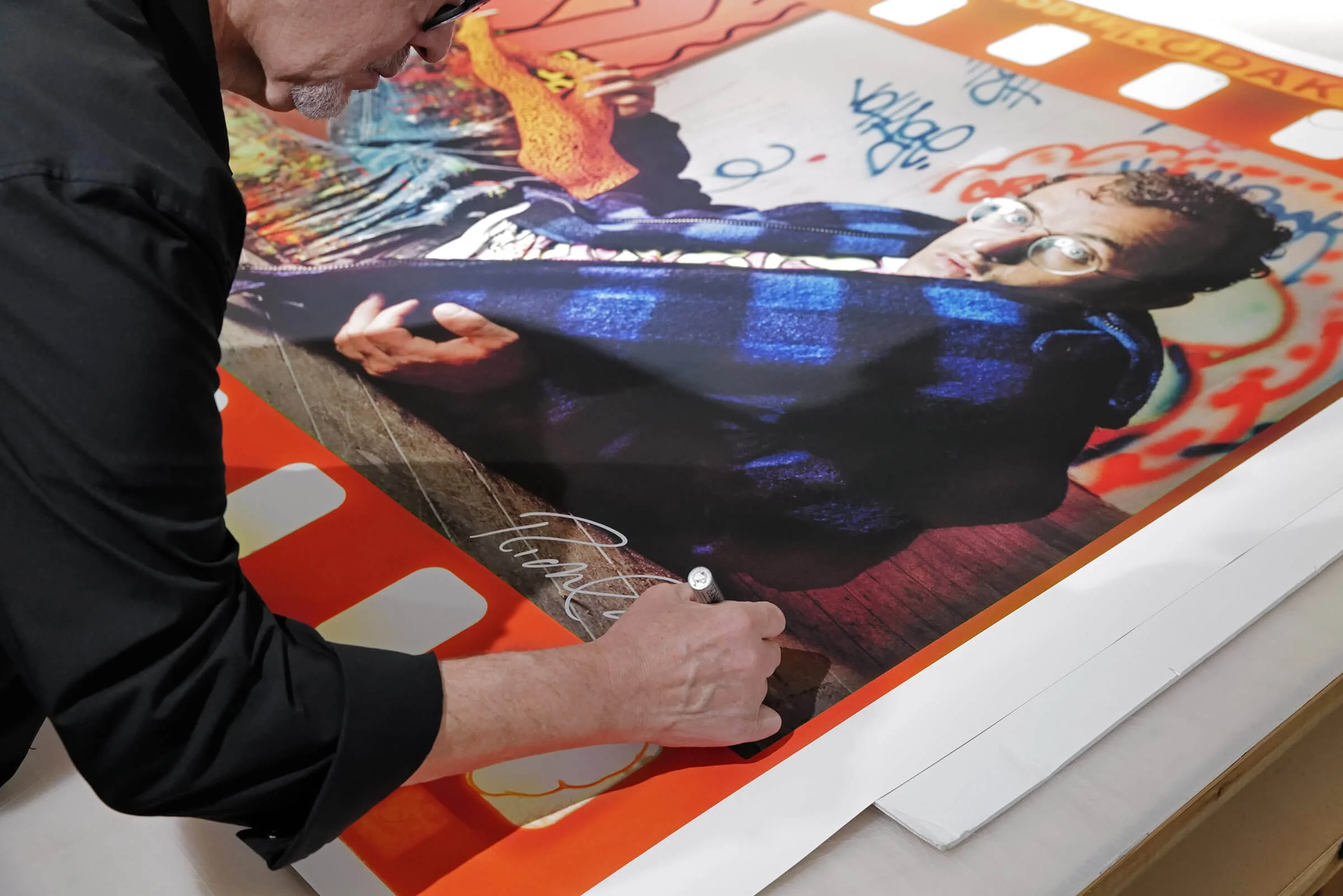
Harlem Frames worked with Frevo on the presentation of photographer Richard Corman's portraits of Keith Haring for I Shot The Messenger!, a solo exhibition presented at the restaurant's intimate gallery space in Greenwich Village.
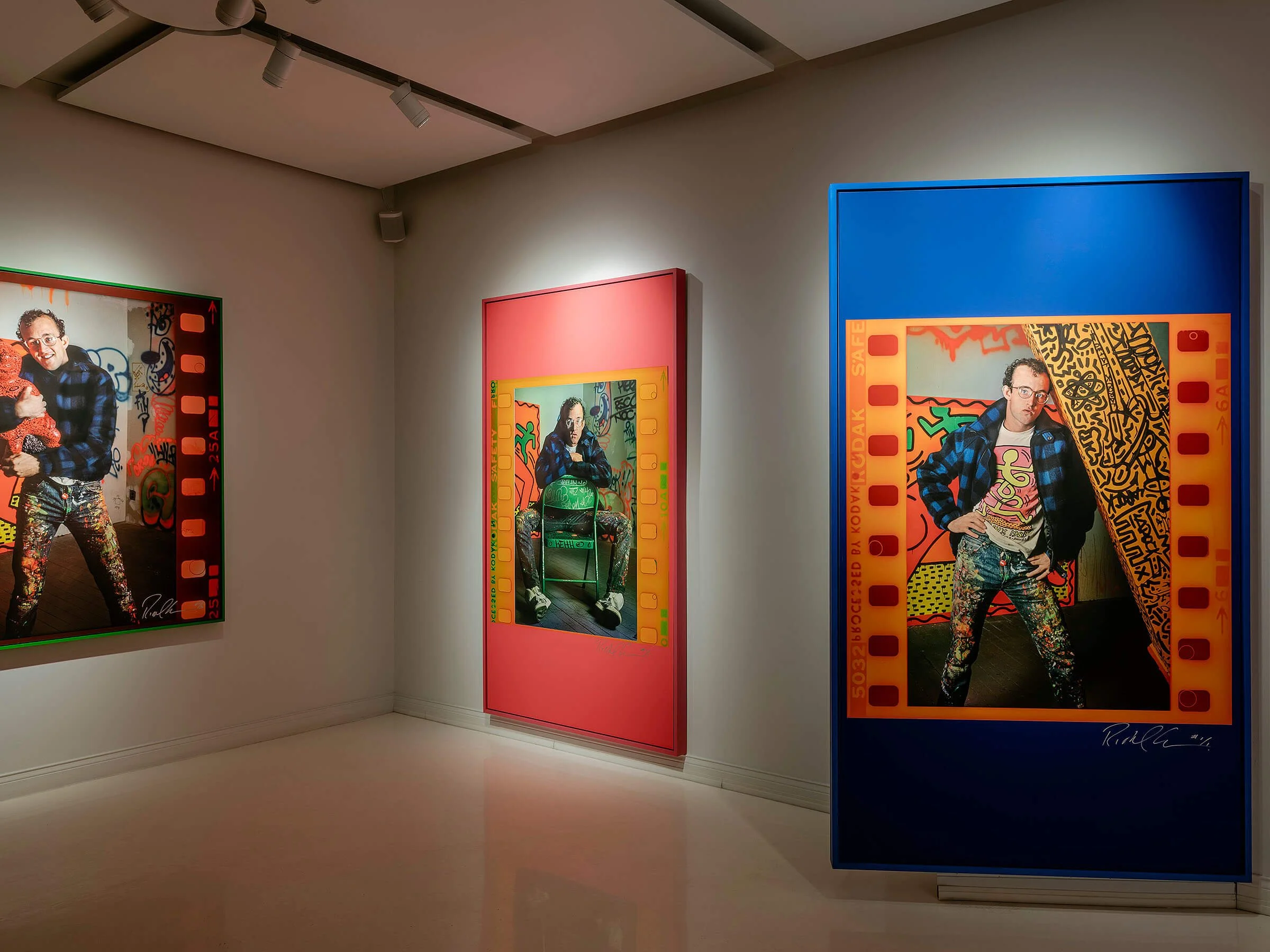
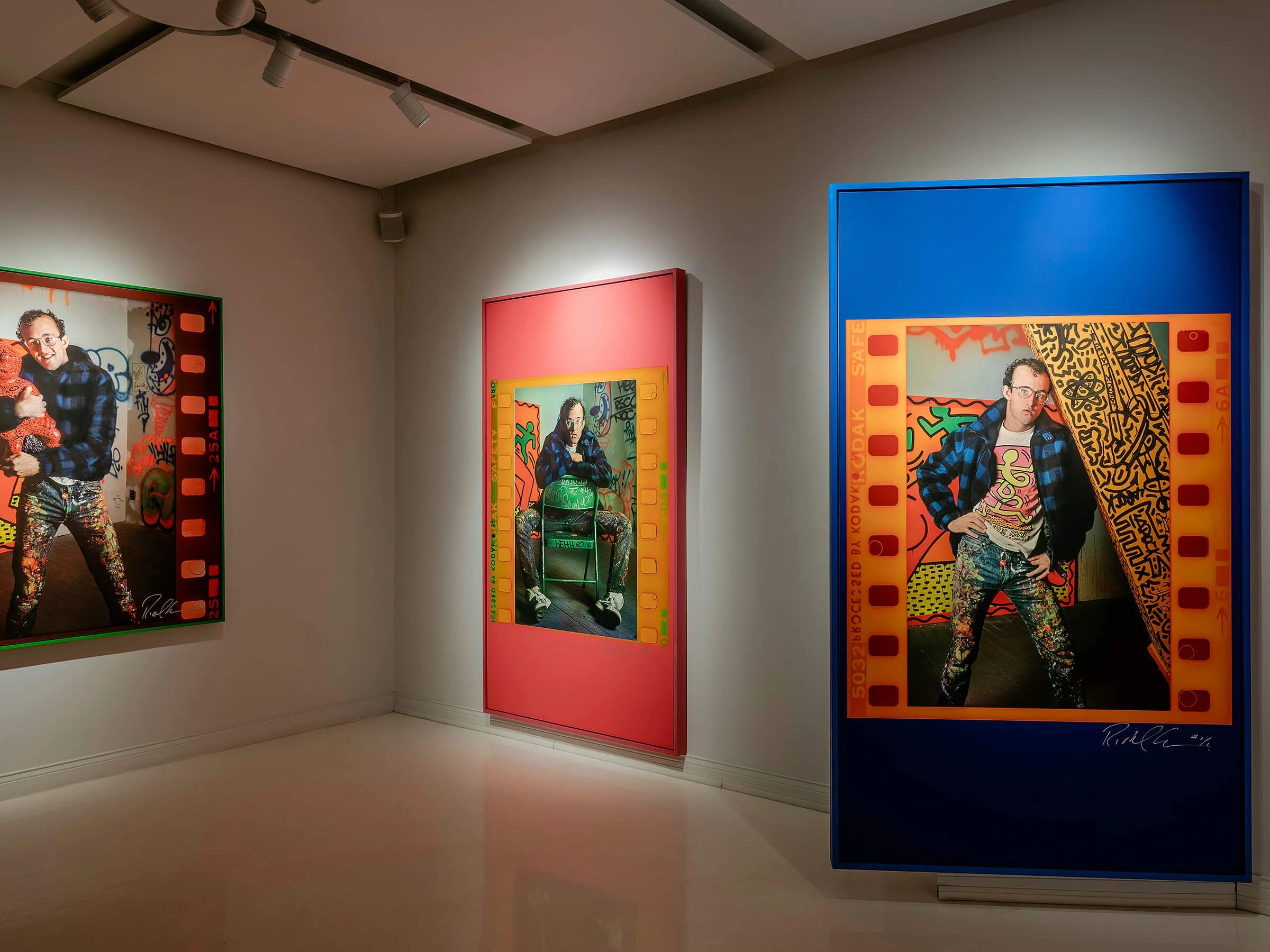
The Exhibition
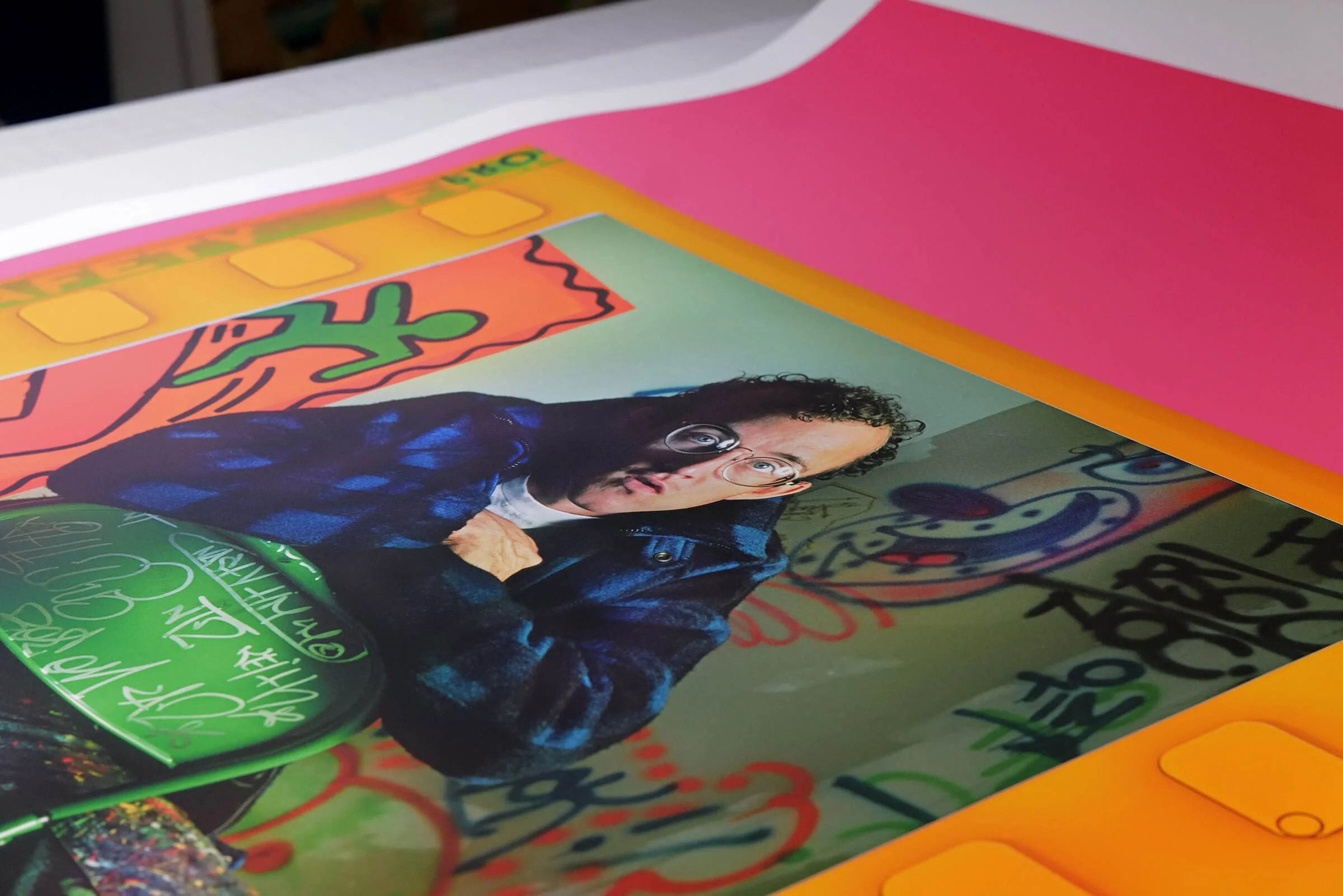
The exhibition was composed of five previously unearthed portraits from Corman's 1985 session with Haring at the artist's legendary 676 Broadway studio.
Originally photographed while Corman was on assignment for L'Uomo Vogue, the portraits capture Haring at a defining moment in his career, as he’s photographed immersed in the energy and visual language of his New York studio.
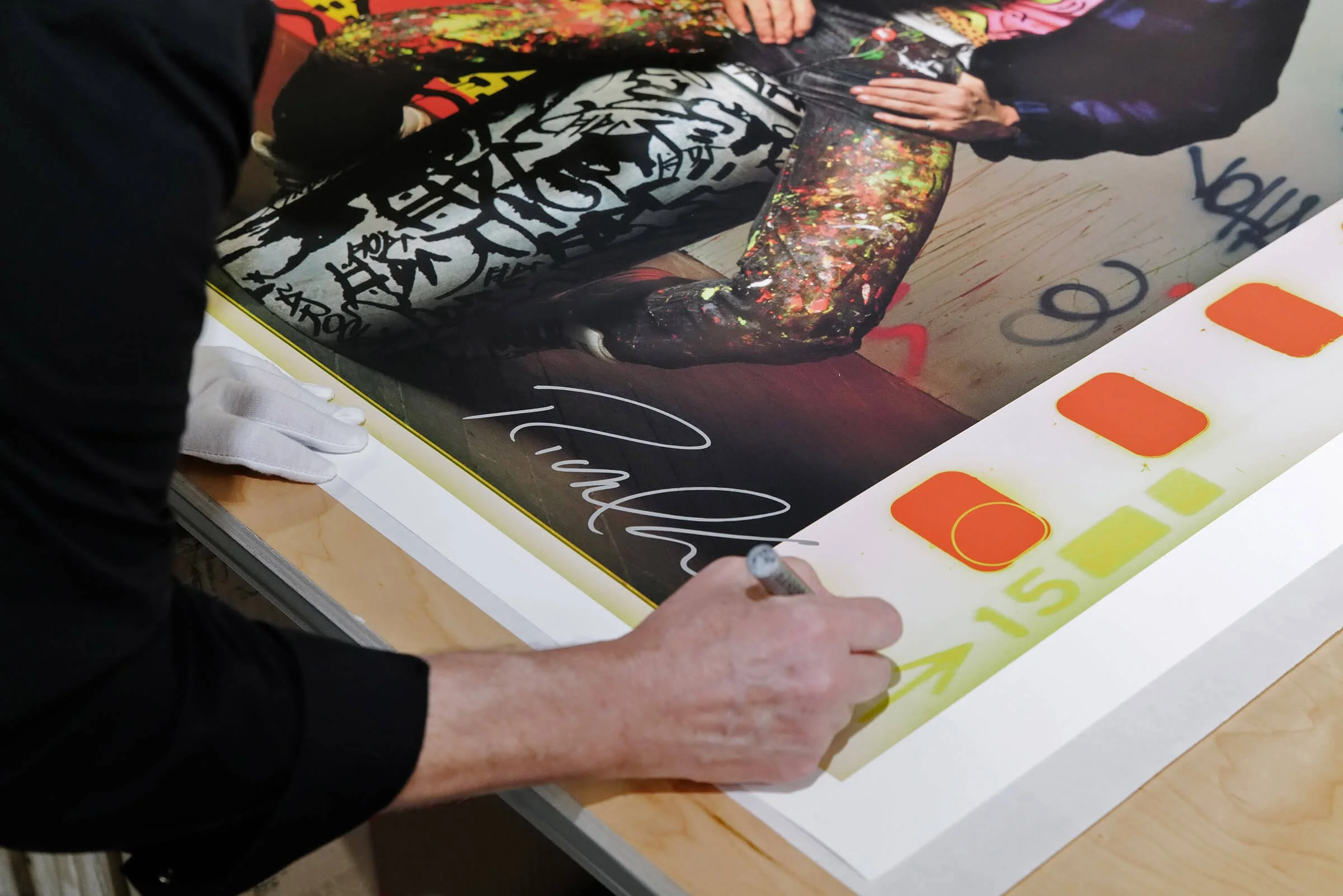
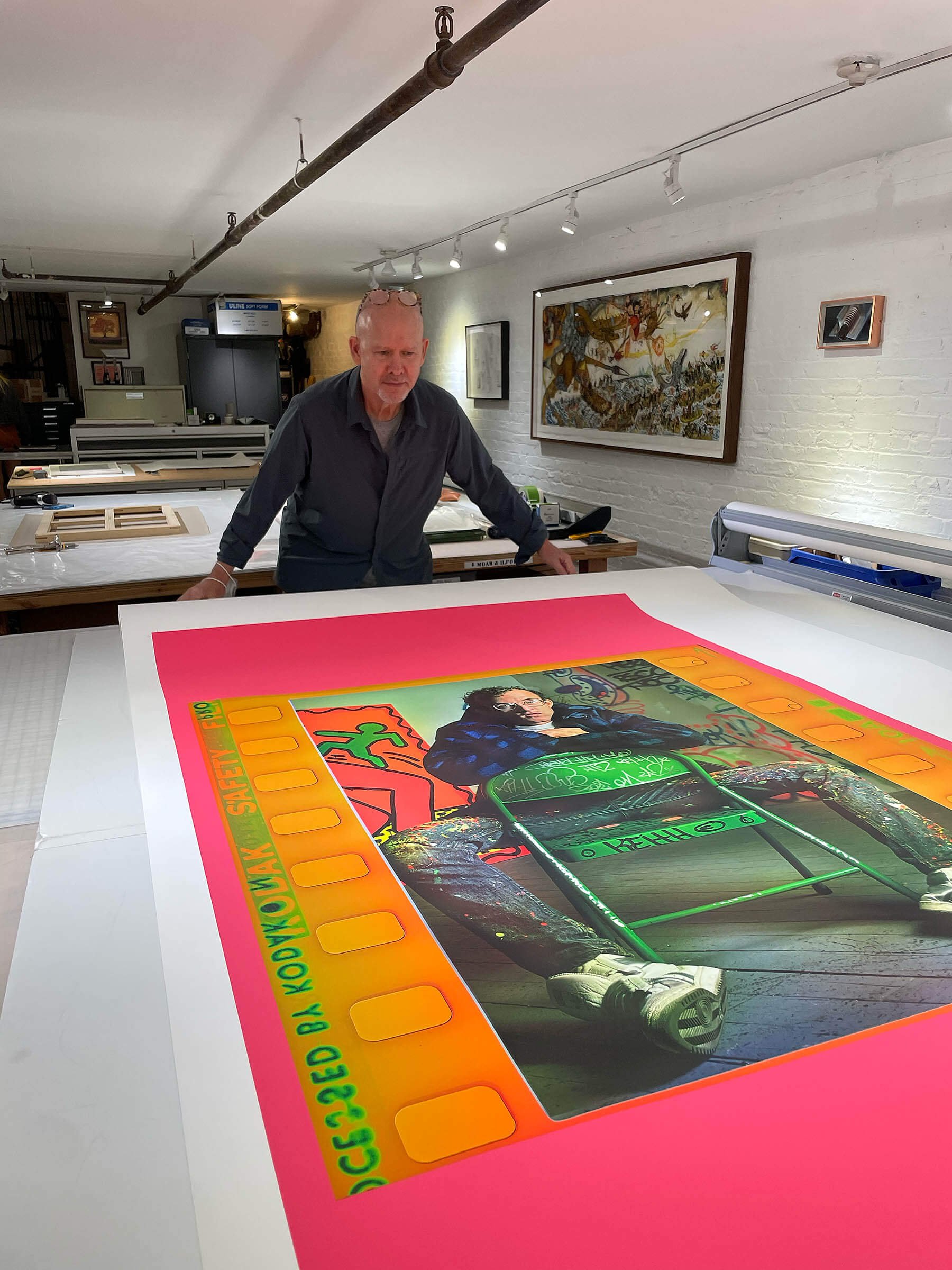
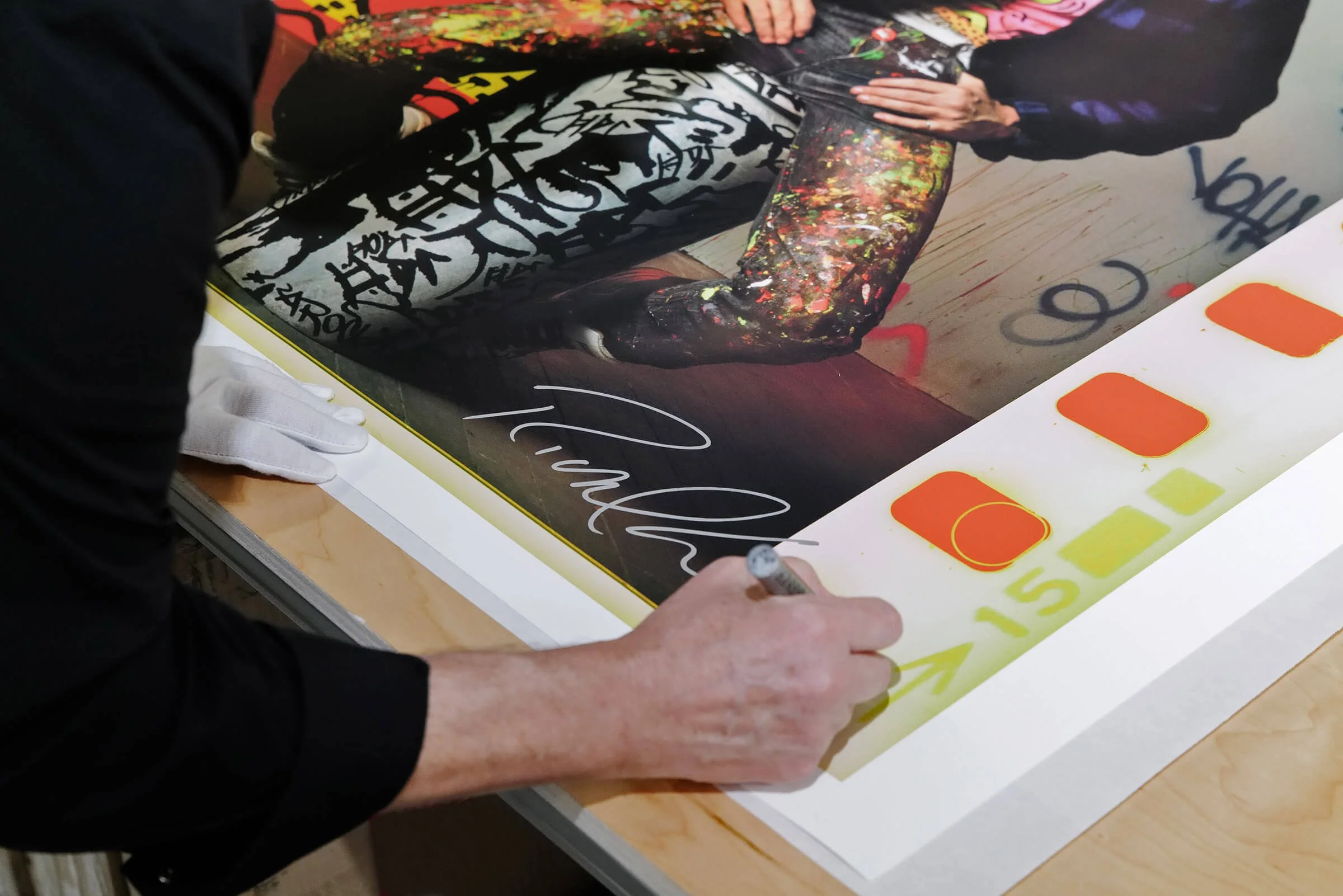
For I Shot The Messenger!, Corman's photographs were transformed into large-scale, generously, vibrant works. The portraits were positioned against carefully selected Pantone colors and printed on Hahnemühle Photo Rag Ultrasmooth, creating a presentation intended to echo the bold color Corman remembered encountering throughout Haring's studio.
Installed throughout Frevo, the series ultimately invited audiences to engage in a dialogue between photography, color, portraiture, and Haring's unmistakable creative legacy.
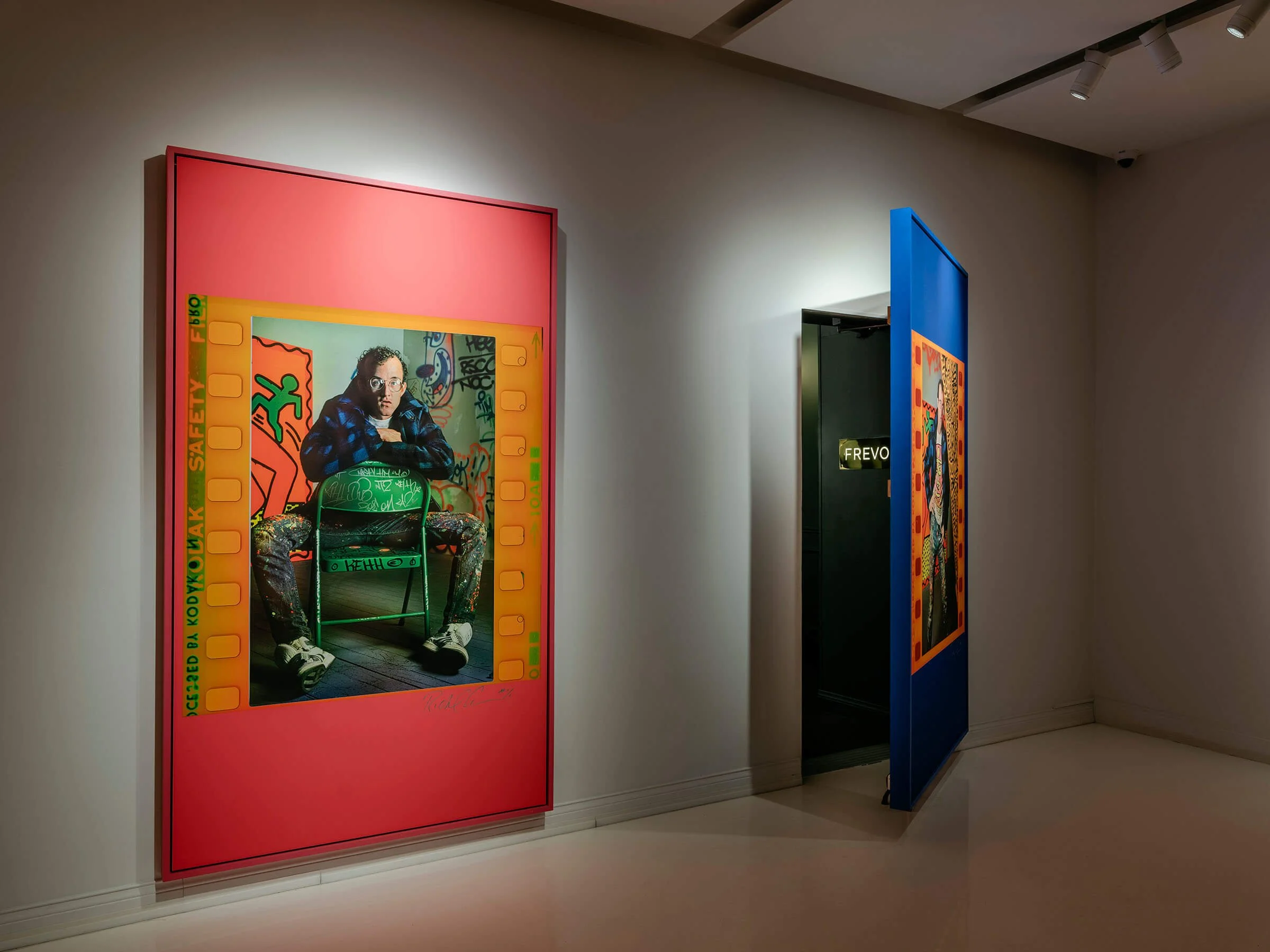
Framed by Harlem Frames
Harlem Frames created custom float frames for Richard Corman's Keith Haring portraits presented at Frevo.
Color was especially integral to the framing process. To retain continuity between Corman's vivid photographic works and their presentation, the artist provided Harlem Frames with the specific paints he desired for each frame. Each float frame was then custom-painted in our studio using those artist-selected colors, enabling the framing to become a deliberate extension of the work rather than a neutral boundary encompassing it.
The float construction creates a subtle separation between each work and its surrounding frame, giving the imagery room to breathe while emphasizing the scale and physical presence of the pieces. Combined with Corman's chosen colors, the frames reinforce the bold visual character of the series and its connection to the energy and color associated with Keith Haring's work.
For Harlem Frames, the project demonstrates how custom framing can become a genuinely collaborative process. Rather than selecting from predetermined finishes, the artist's own color palette became part of the fabrication itself, resulting in frames customized specifically to accomodate and bolster Corman's vision for the exhibition.
Installed throughout Frevo's gallery environment, the finished works bring together Corman's photography, Haring's unmistakable presence, and a framing treatment developed specifically for the series.
Artist: Richard Corman
Subject: Keith Haring
Exhibition: I Shot The Messenger! — A Portrait of Keith Haring
Venue: Frevo, New York City
Exhibition: September–November 2022
Framing: Custom framing by Harlem Frames
Richard Corman's Portrait of Keith Haring at Frevo
Images Source: Frevo NYC & Brooklyn Editon
Wayne Alexander: Color, Geometry & Custom Framing
Artist Collaboration · Harlem Frames · New York
Some artists leave more of a lasting impact on the way we interact and forge connections in the art world; Wayne Alexander is one of those indelible artists. Harlem Frames has maintained the distinct pleasure of having framed Alexander's work, with works chronicling a continually evolving series of paintings and graphic prints. His works present custom presentations designed around extraordinary color and geometry, while introducing an unforgettable visual energy that has come to define his intricate work.
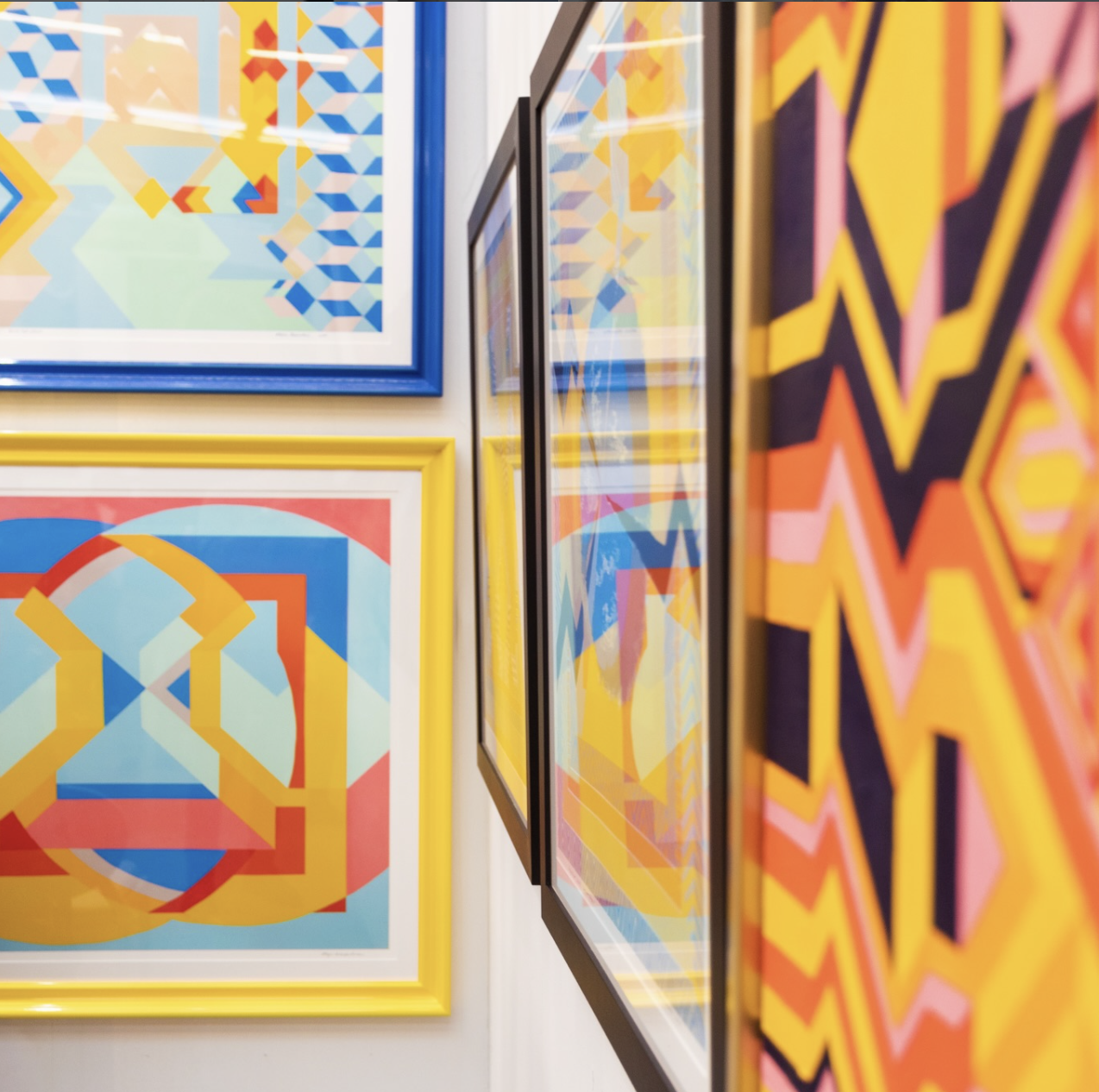
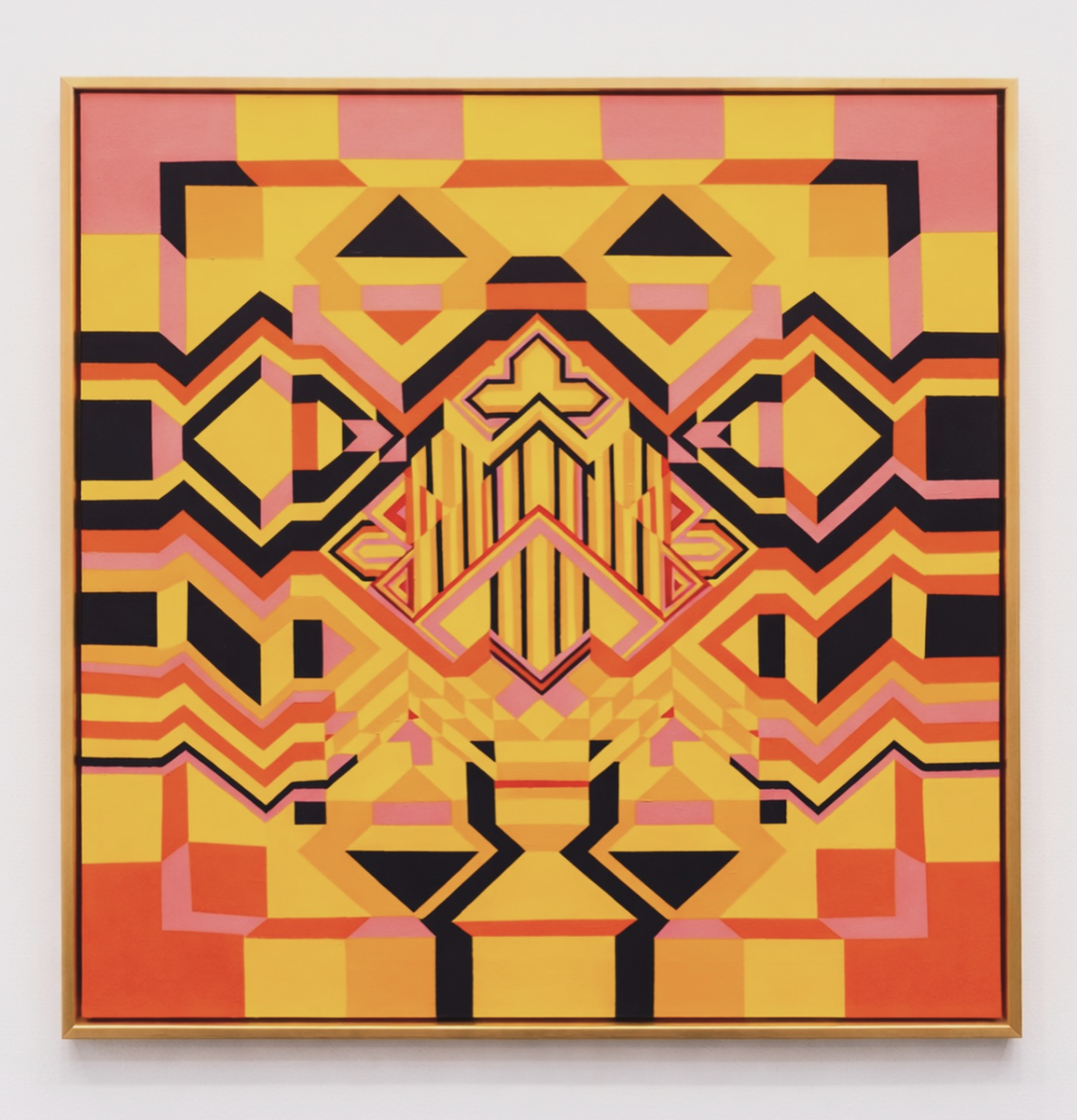
Alexander’s compositions are immediately recognizable for their saturated palettes and intricate arrangements of geometric forms. You’ll observe recurrent shapes of arcs, squares, intersecting lines, repeating patterns, and fields of complementary color, all cultivating a sense of movement and depth across his canvases. Alexander himself describes these forms as symbolic expressions of the artist’s poignancy, inner strength, and internal transformation, with his Buddhist practice informing much of his spiritual approach to the work ethos.
For Harlem Frames, framing for Alexander has presented an especially interesting challenge: how do you frame artwork that already possesses such a strong visual language?
Our answer has rarely been to retreat from the color, but to play.

The Artist
Wayne Alexander;
Photographed at Harlem Fine Arts Show 2026.
Wayne Alexander is deeply reverent; his practice is equally personal as it is a generational tradition. As the son of a professional painter who worked when circumstances permitted, Alexander recalls drawing from an early age. The artist later studied art in Philadelphia and achieved his BA in Education at the University of Massachusetts just before pursuing careers in communications and technology. Some of his primary artistic influences include Gordon Parks, Charles White, Henry Ossawa Tanner, Elizabeth Catlett, and Romare Bearden.
After a sustained period focused almost exclusively on photography, Alexander returned seriously to painting during the pandemic in 2020. The resulting body of work became closely connected to his experiences of love, loss, health, resilience, and spiritual transformation. Works including To the Victory Victorious, Will You Marry Me, Robotic Surgery, Diamond in the Rough, and Jubilant Happiness Five emerged from this turbulent period of emotional confluence.
While Alexander’s wider practice primarily includes photography, Harlem Frames’ collaboration with the artist has remained centered specifically on his royally vibrant paintings and graphic works.
Framed with Care,
In Harlem.
Alexander’s work incentivizes Harlem Frames to approach framing as an active and equally fun part of the presentation. Rather than surrounding every piece with a conventional neutral frame, we collectively have developed presentations that respond directly to the rhythm and palette of individual works.
For several pieces, that has meant vibrantly finished wood mouldings in colors such as red, yellow, and blue. Though these are visually astounding colors, the frames do little to compete with Alexander’s compositions. Instead, these saturated frames pick up colors already present within the artwork and extend their visual energy beyond the edge of the image.
A brilliant yellow moulding can become an appendage of a yellow geometric passage within the work. A saturated red frame can reinforce the intensity of reds and oranges within another composition. Blue can establish a contrasting boundary around warmer colors.
The frame becomes part of the conversation, not the conversation.
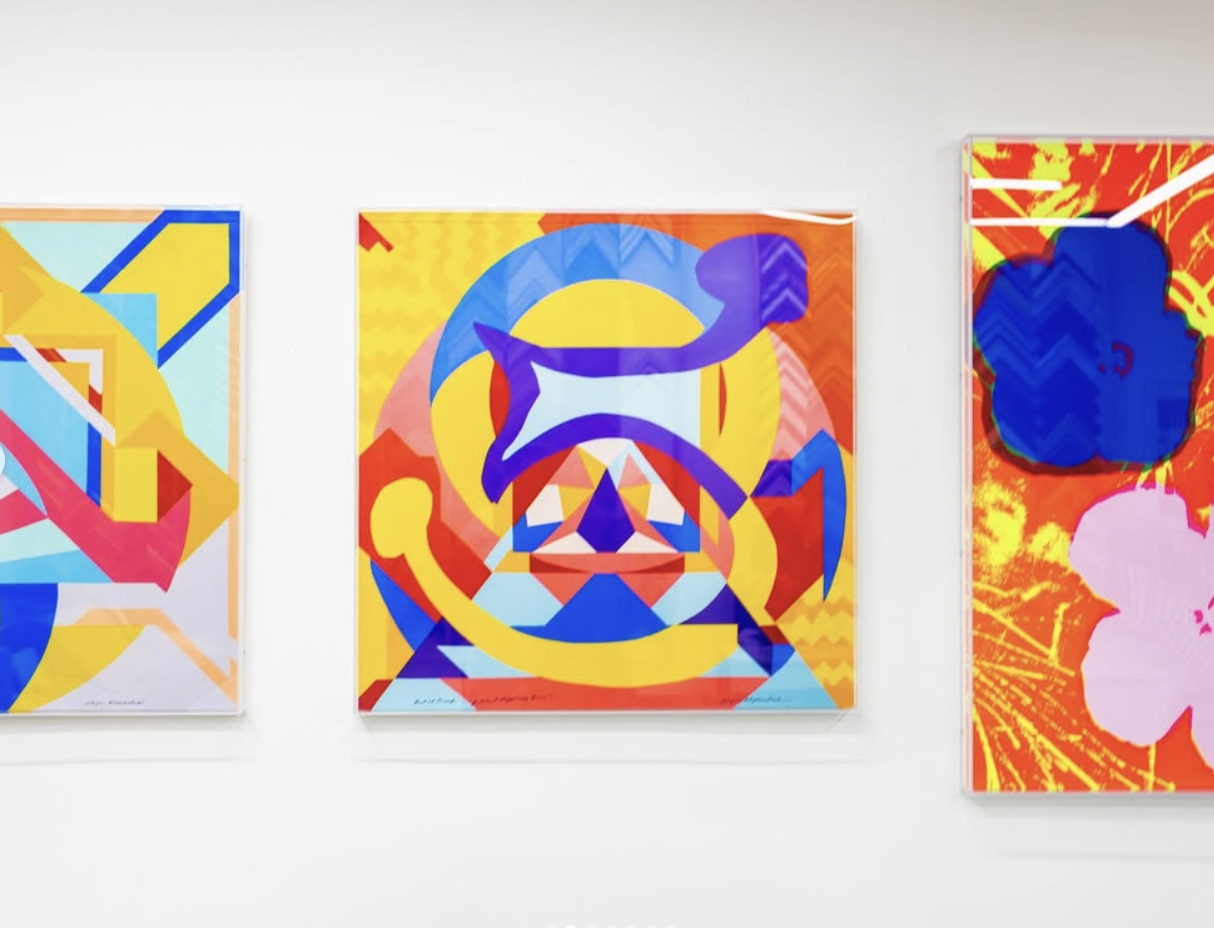
Plexi Box Presentations
Other works have called for a dramatic departure from wood frames.
Harlem Frames has fitted clear plexi box presentations for more than several of Alexander’s paintings and graphic works, enabling the color and geometry to remain visually dominant while eliciting the piece a clean, contemporary architectural edge. The transparency of the plexi is particularly effective with Alexander’s work. Averse to introducing another opaque visual boundary, the transparent enclosure enables the artwork to be audaciously present, almost suspended against the wall.
Viewed from the front, attention remains on the composition. From an angle, the depth and polished edges of the plexi become visible, introducing another dimensional element to a work that already plays with the perception of depth, layering, and geometric space. This relationship feels especially appropriate given Alexander’s own description of his compositions as sometimes moving beyond a two-dimensional visual experience.
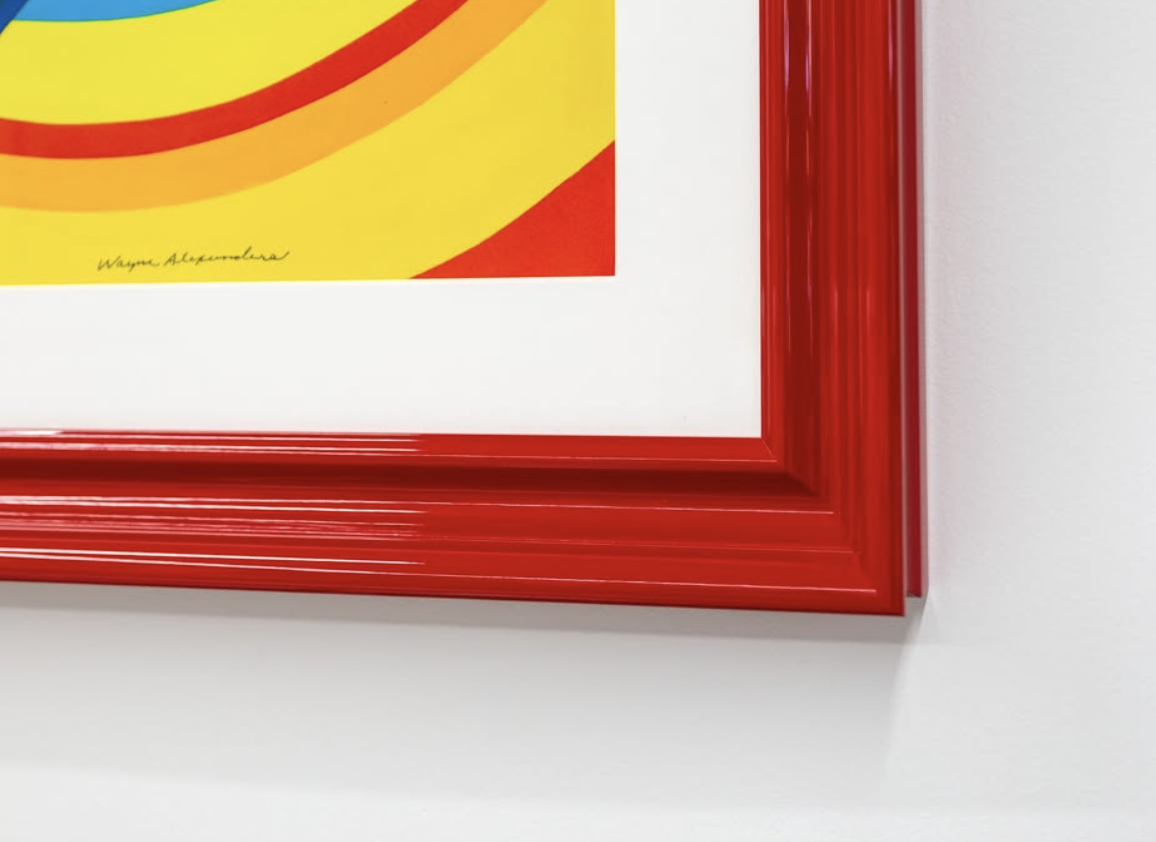
Framing Color With Color
One of the recurring ideas throughout our work with Alexander has been the willingness to embrace color rather than neutralize it. Colorful artwork does not automatically require a black, white, or natural-wood frame.
In Alexander’s work, color serves as a structural basis. Bright yellows, reds, blues, pinks, oranges, and purples establish movement and hierarchy just as much as the geometric forms themselves. Our framing choices respond accordingly.
Across the works Harlem Frames has presented, clear plexi boxes, vivid wood moulding, contrasting mats, and more restrained dark frames have each offered different ways of defining the boundary around the artwork. The result is not a single standardized “Wayne Alexander frame,” but an ongoing framing vocabulary developed in response to individual pieces.
Selected Works
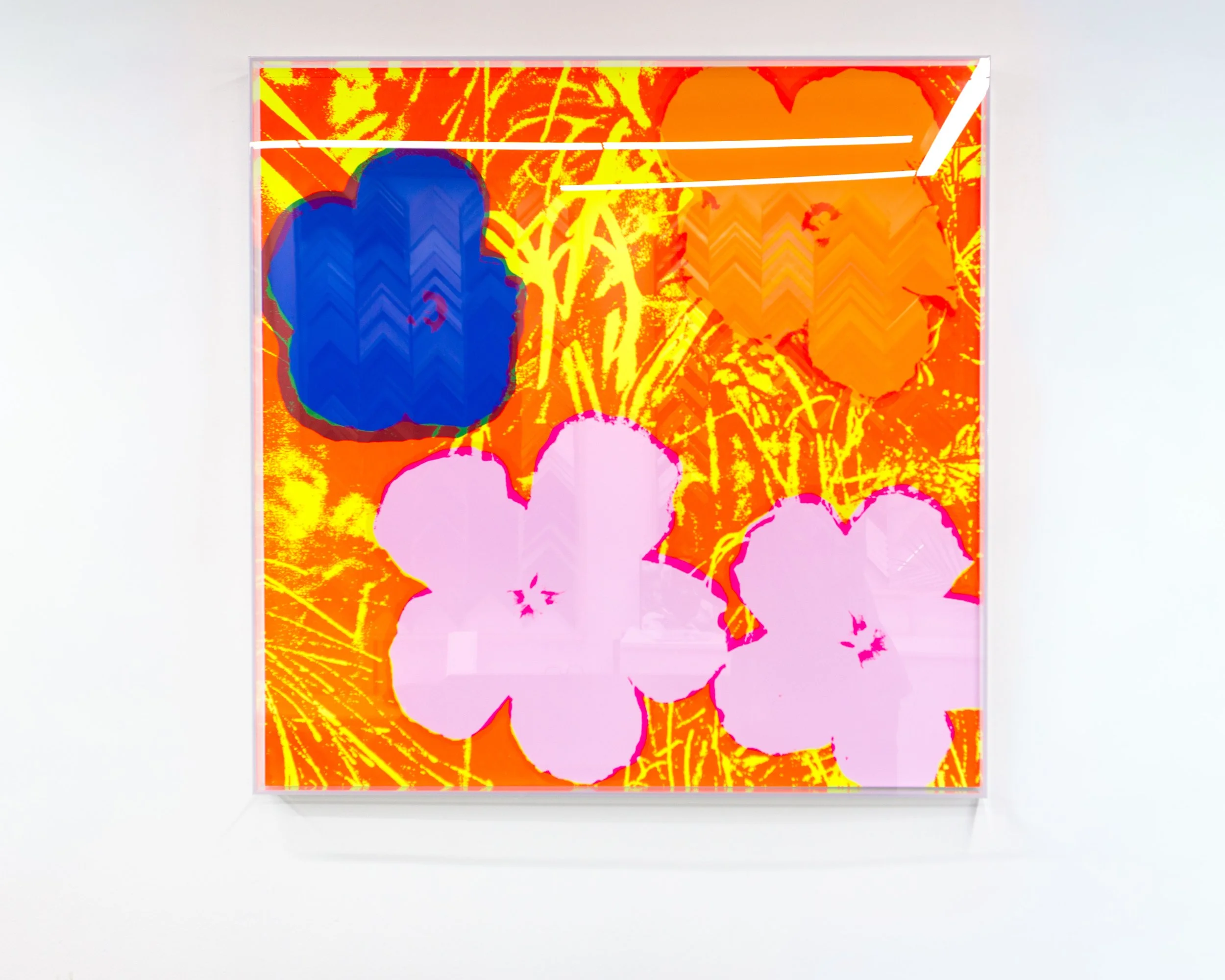
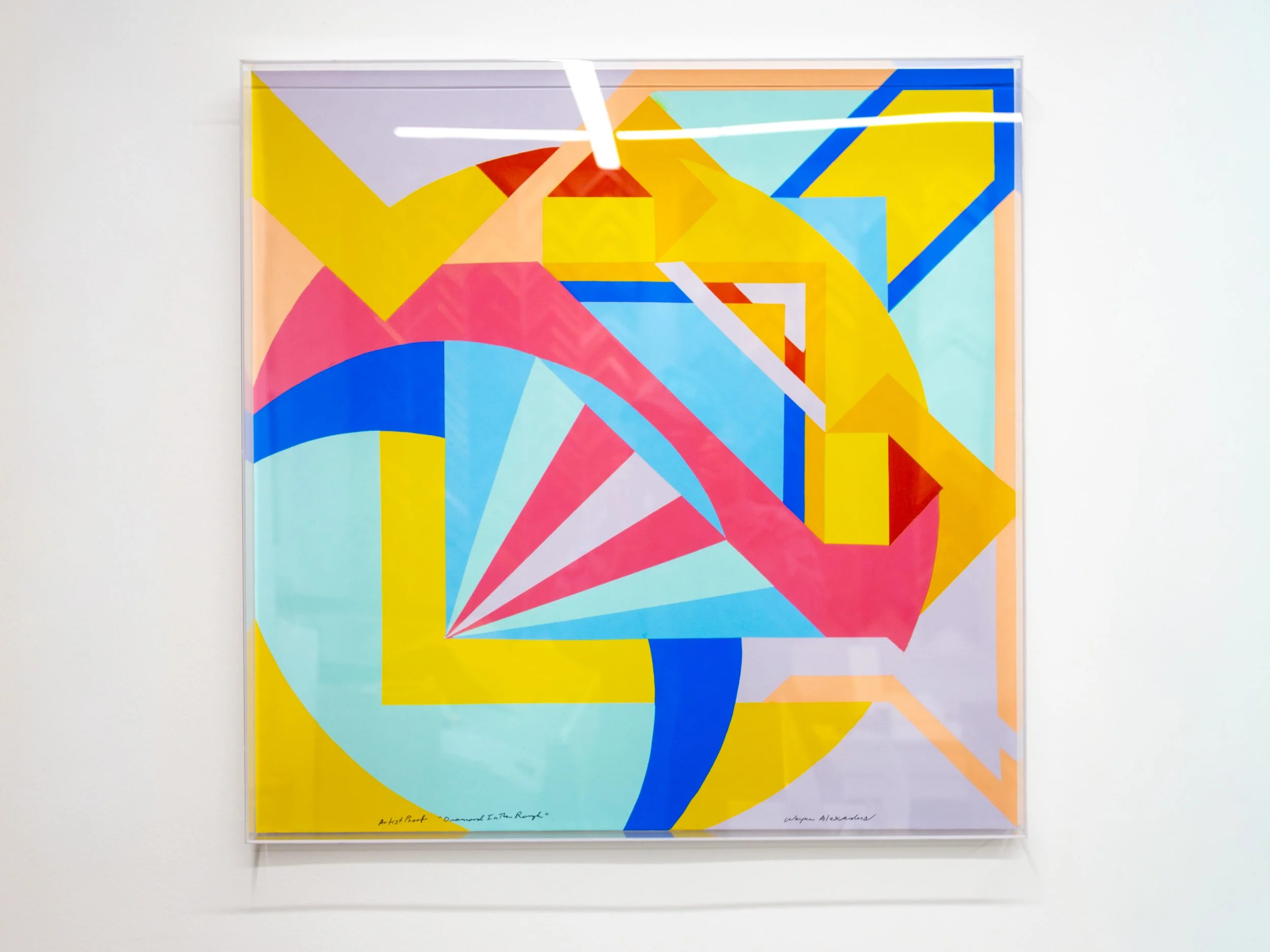
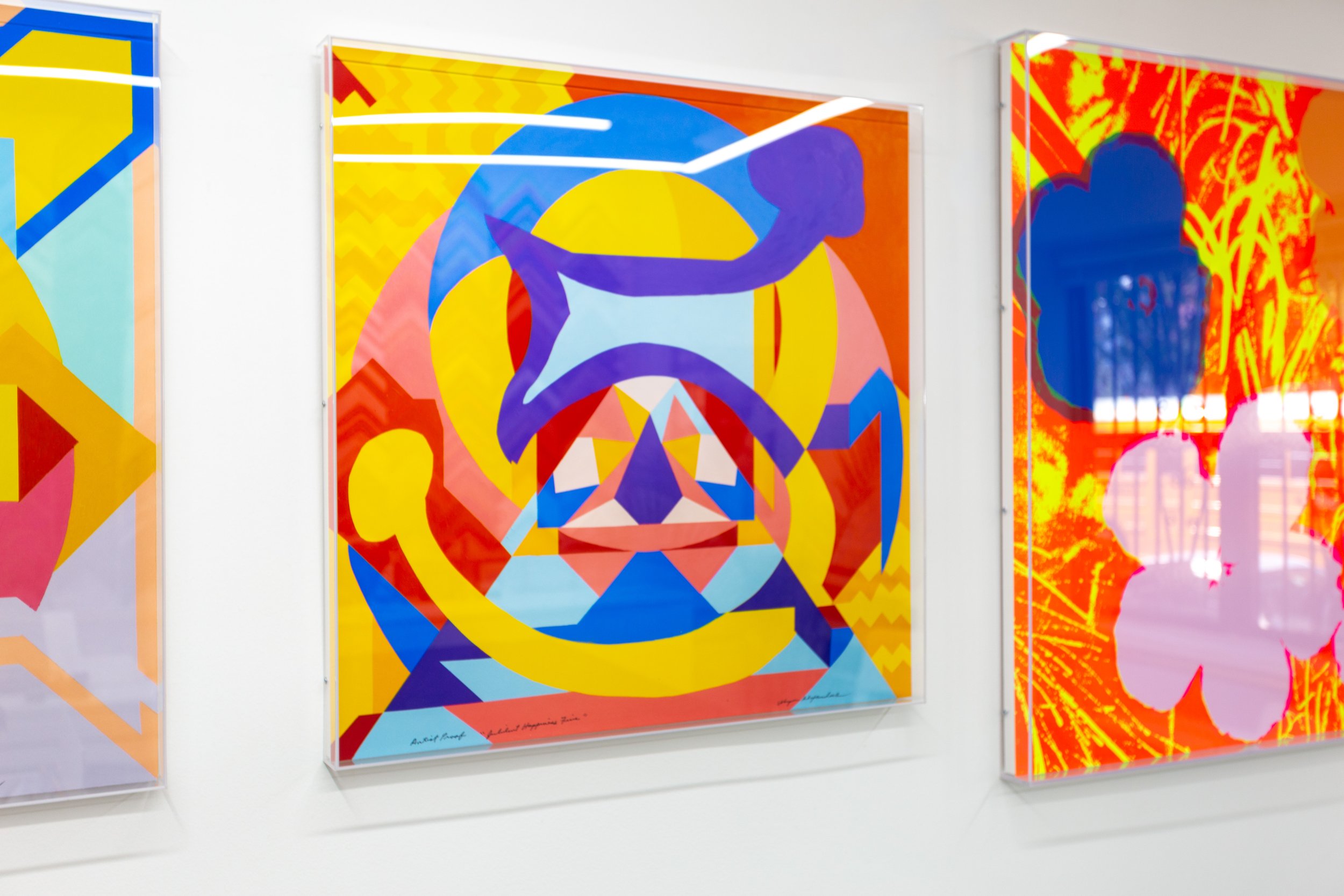
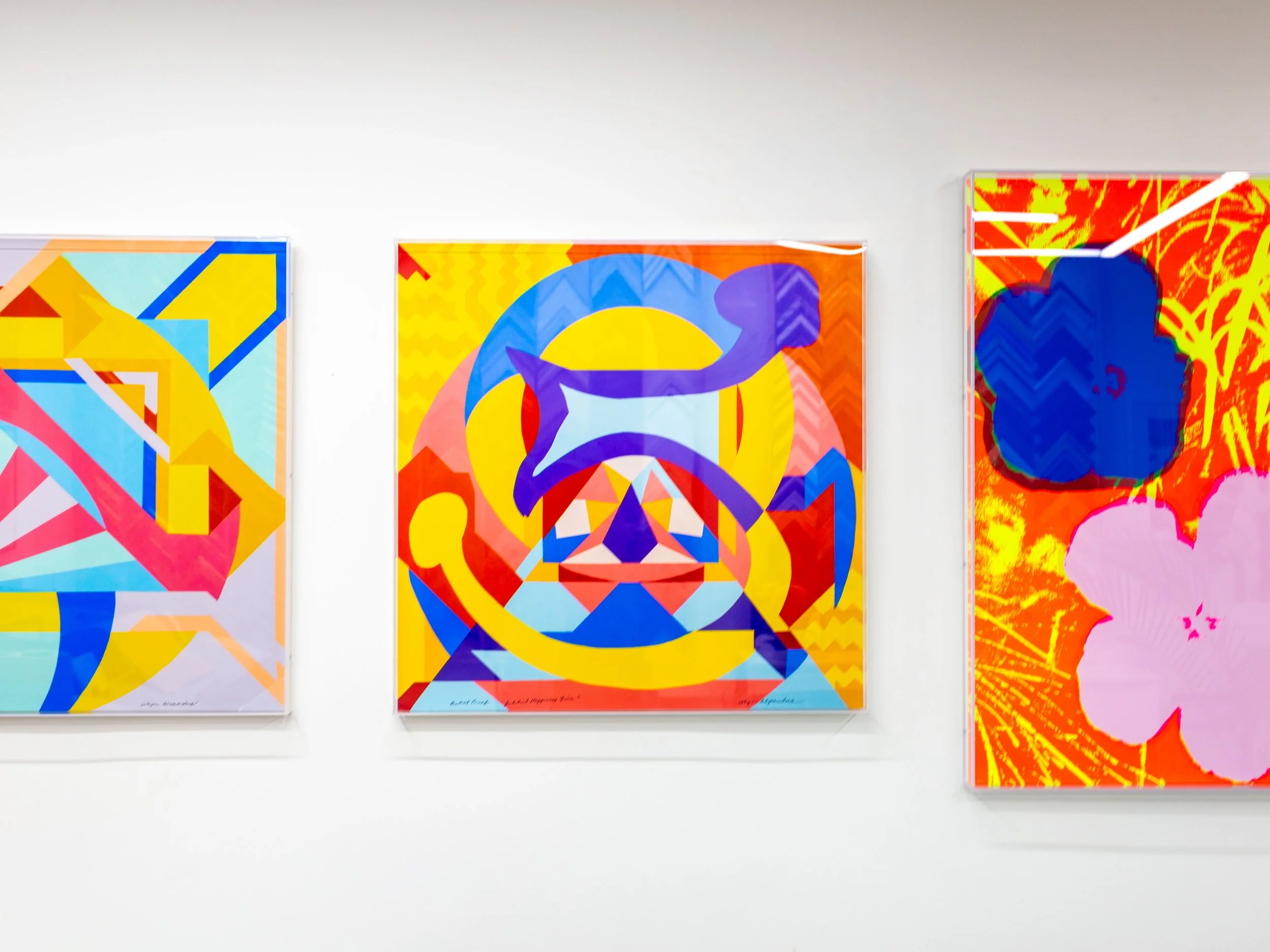
Among the Alexander works presented and framed through Harlem Frames are pieces from the artist’s colorful geometric painting and print practice, including Diamond in the Rough and related works characterized by his distinctive combinations of abstraction, geometry, symbolism, and saturated color. Diamond in the Rough, for example, belongs to a body of paintings Alexander created after returning to his studio practice. The artist describes the work through the metaphor of people as diamonds continually polishing their lives and pushing through adversity.
Alexander also translates this visual language into graphic editions. His website offers limited-edition graphic prints alongside painted works, extending the same geometric vocabulary across different formats. For Harlem Frames, moving between these formats means considering each object individually—its scale, surface, color relationships, and the way the artist intends the finished piece to occupy a wall.
From the Studio to the Harlem Fine Arts Show
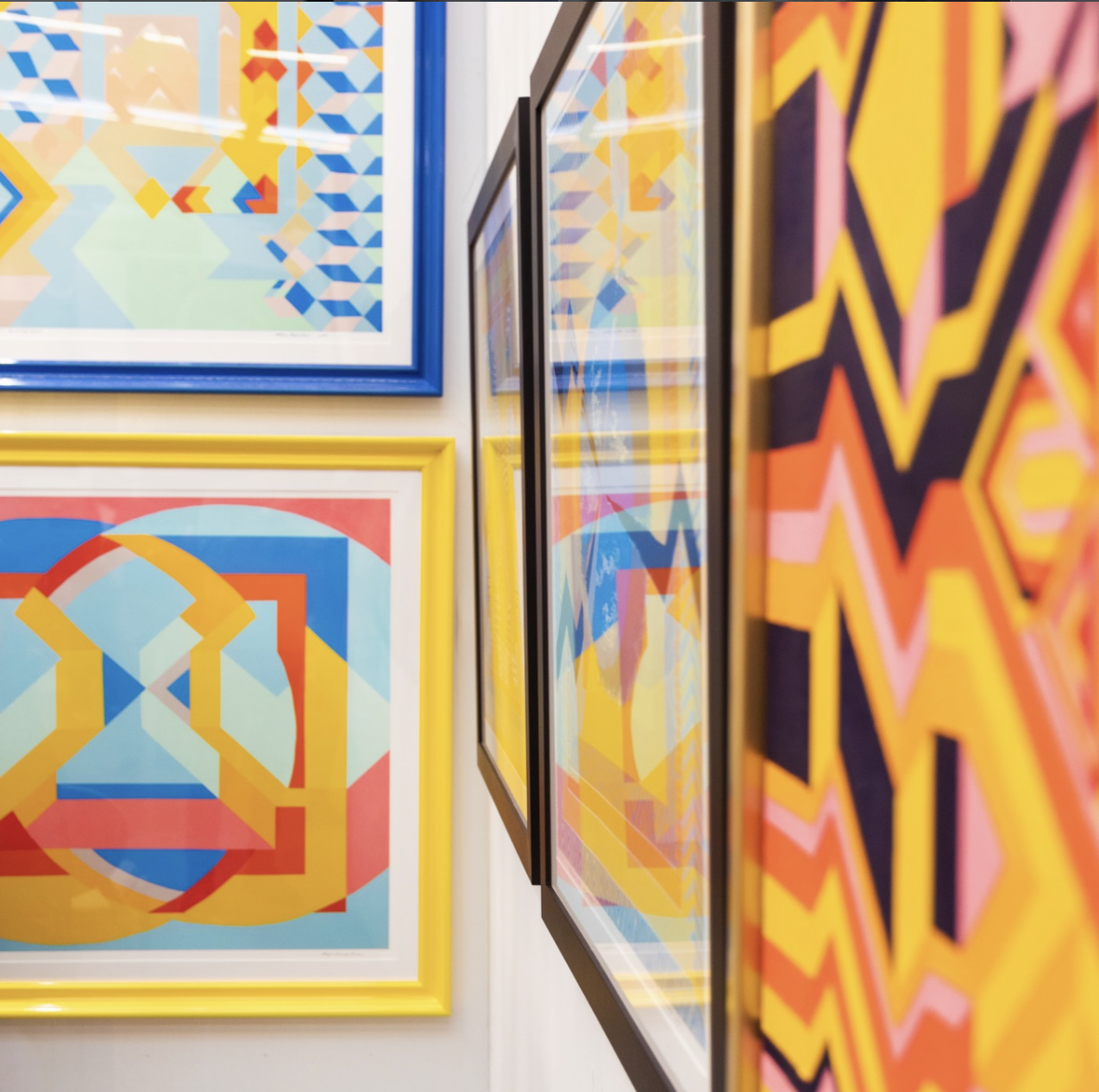
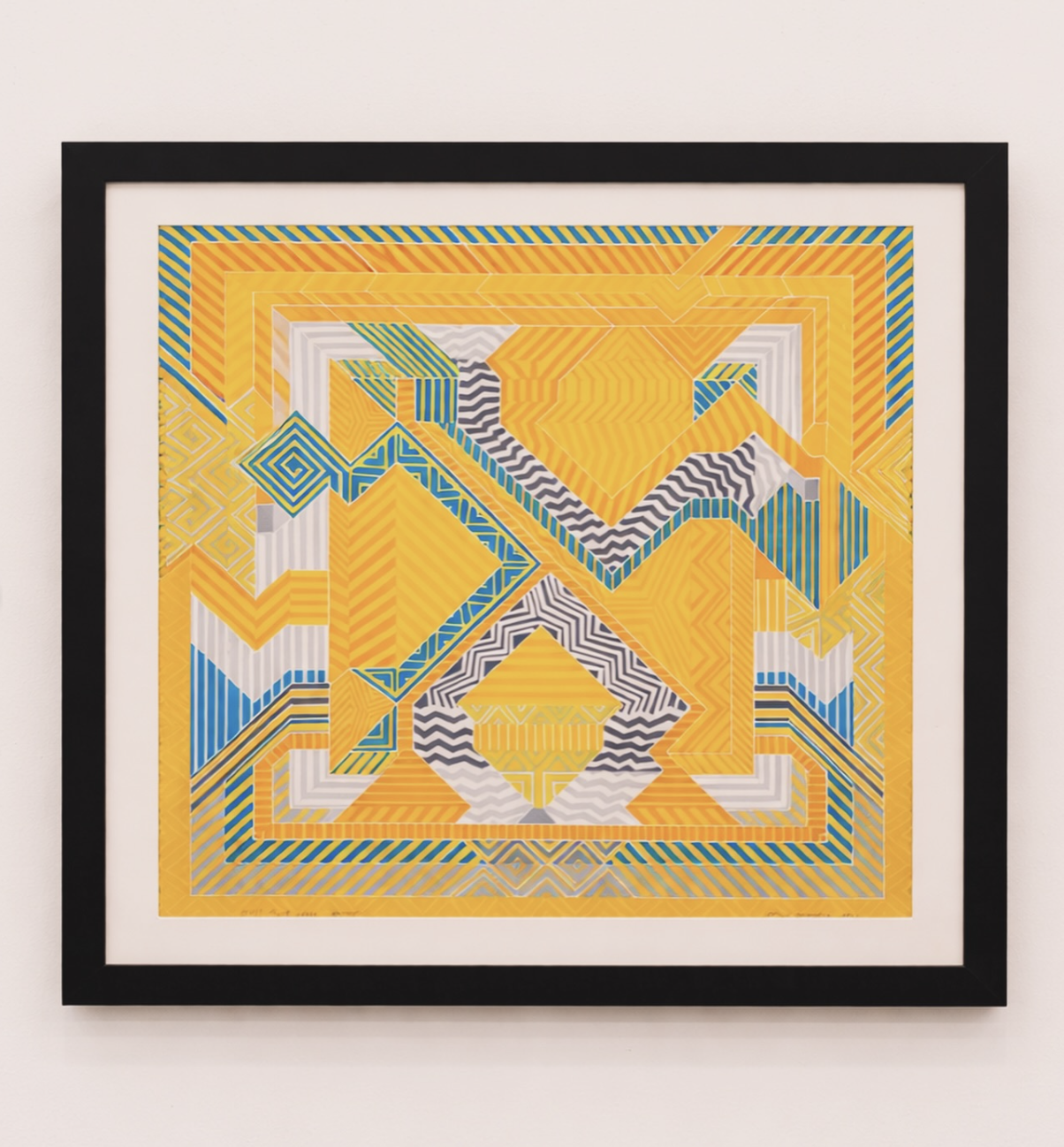

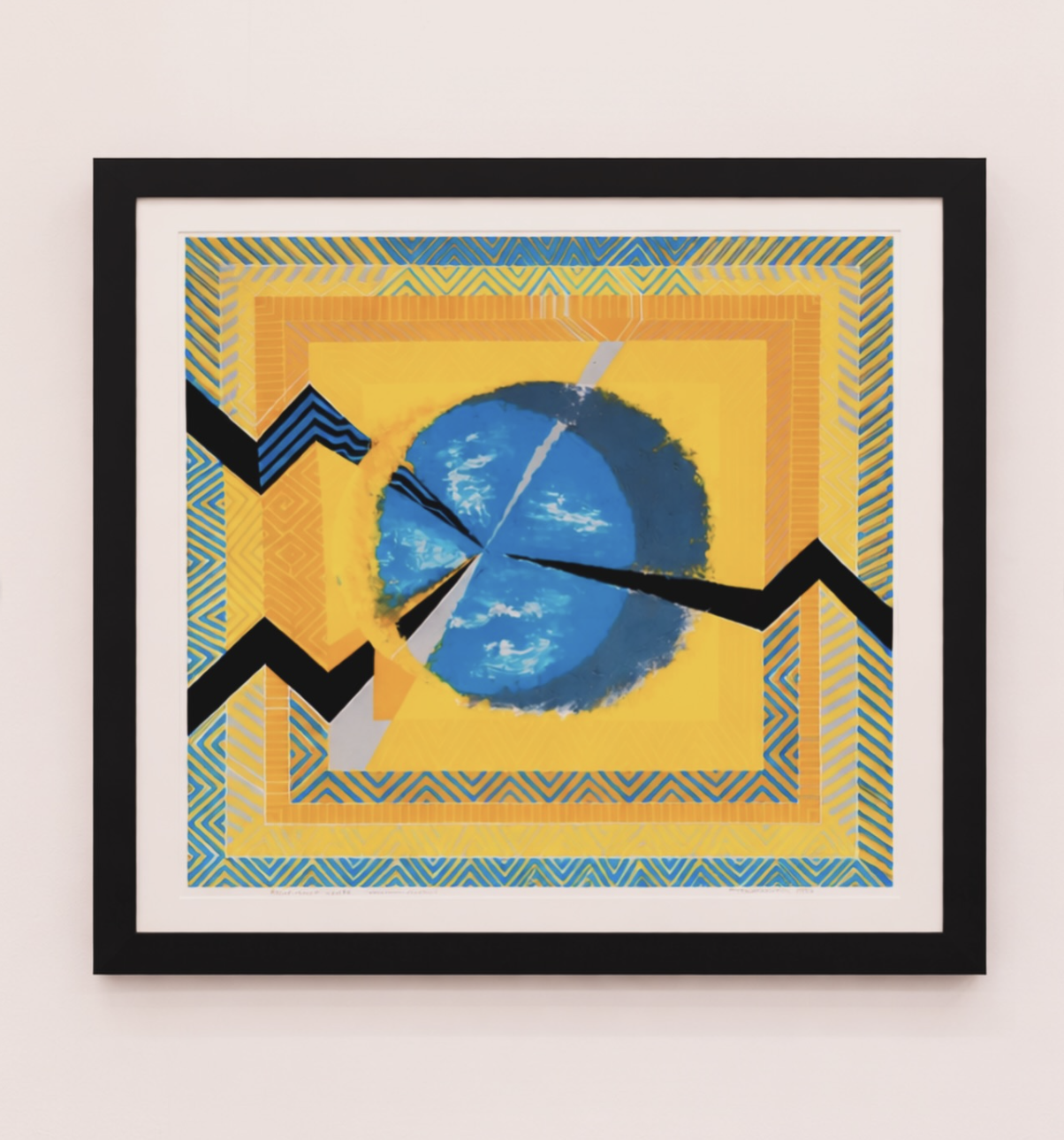
The collaboration between Wayne Alexander and Harlem Frames has also extended into the exhibition environment.
In February 2026, Alexander’s work appeared at the 18th Harlem Fine Arts Show at The Glasshouse in New York City, where Harlem Frames was also present. The setting brought the artist’s vividly colored compositions together with the wider community of artists, collectors, and cultural organizations surrounding HFAS. For Harlem Frames, seeing works we've handled and framed move from the studio into an exhibition setting completes an important part of the process.
A frame isn't designed only for the worktable. It ultimately has to support the artwork once it enters a gallery, exhibition, collection, or home.
An Ongoing Collaboration
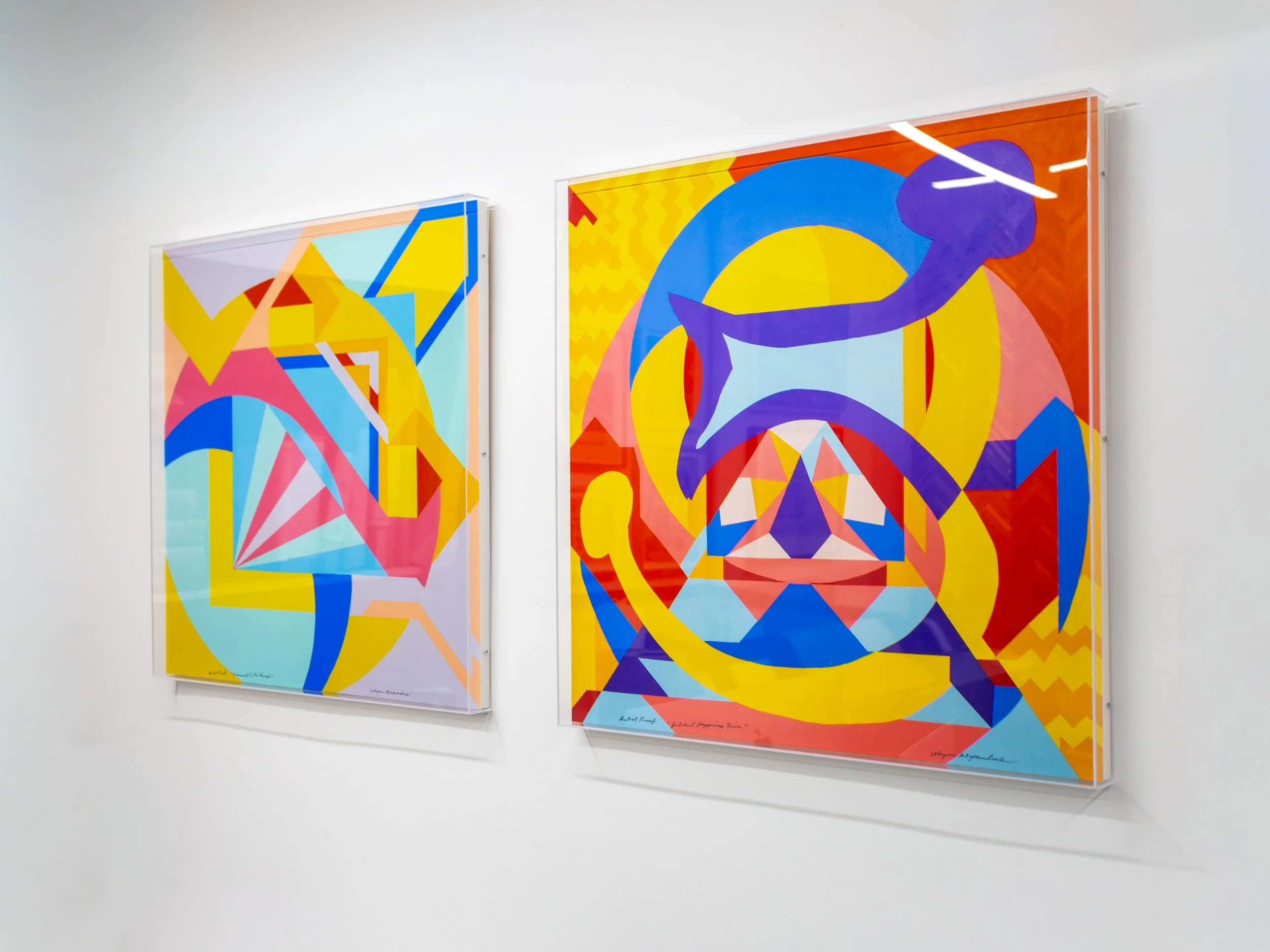
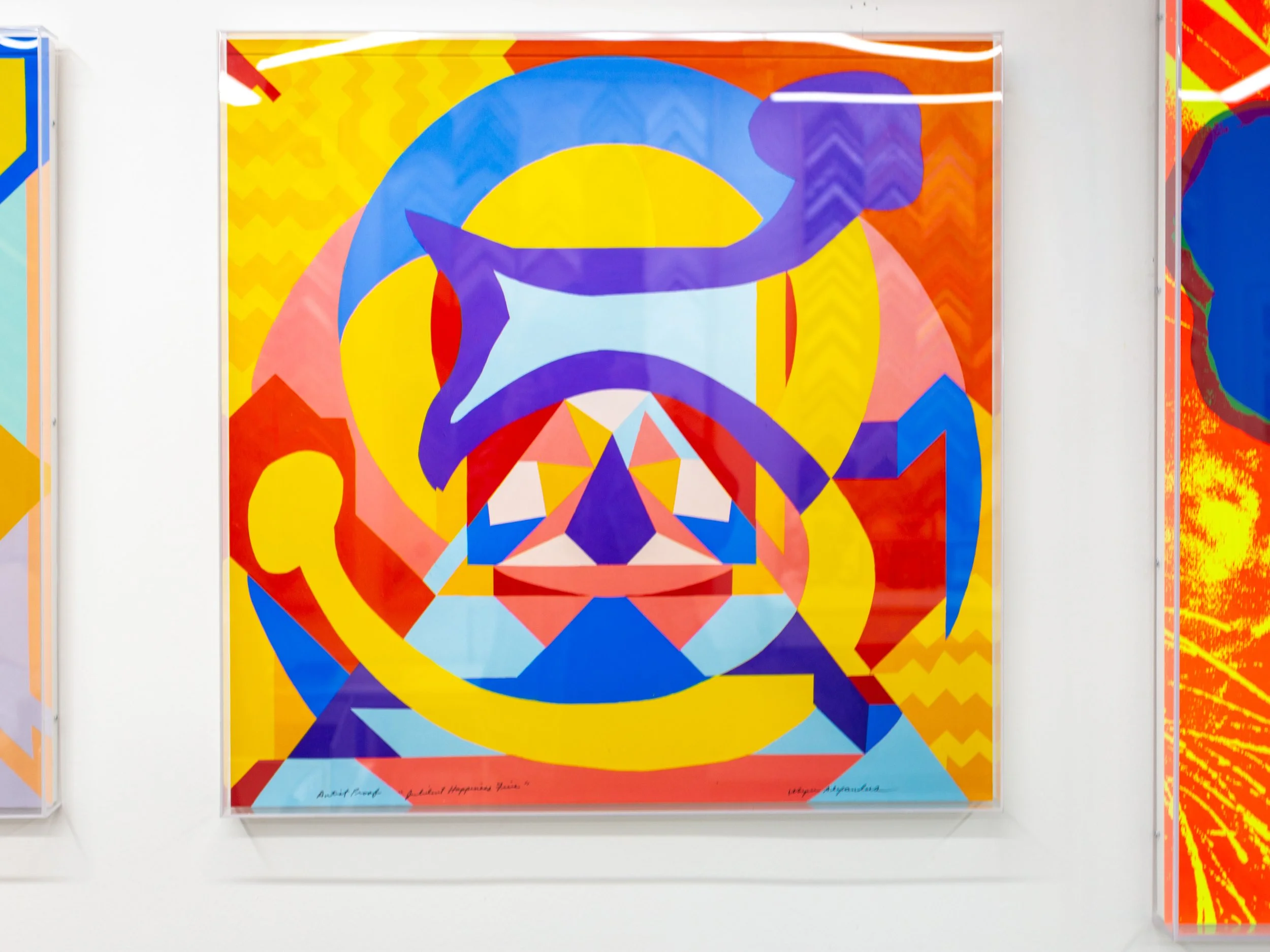
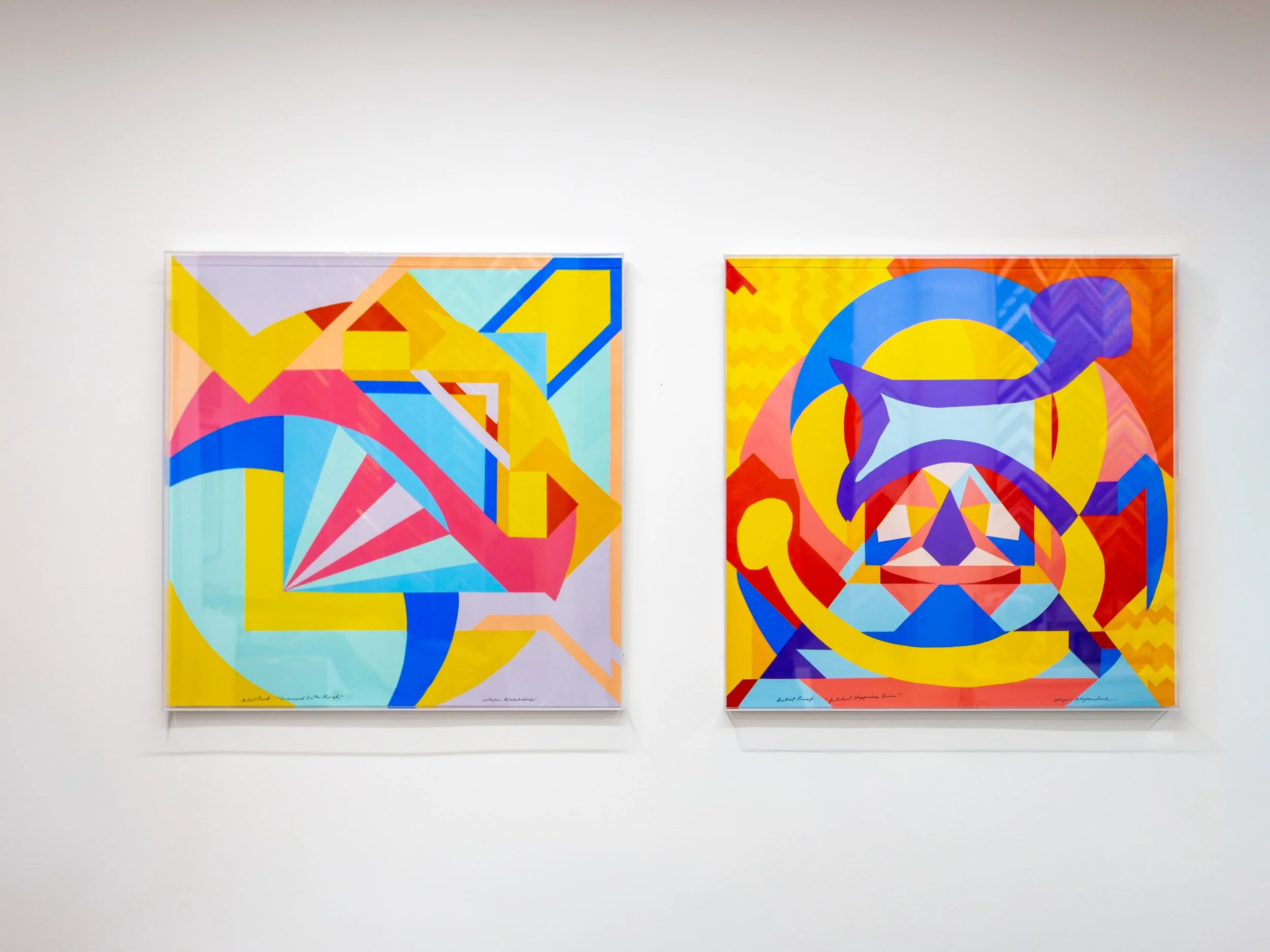
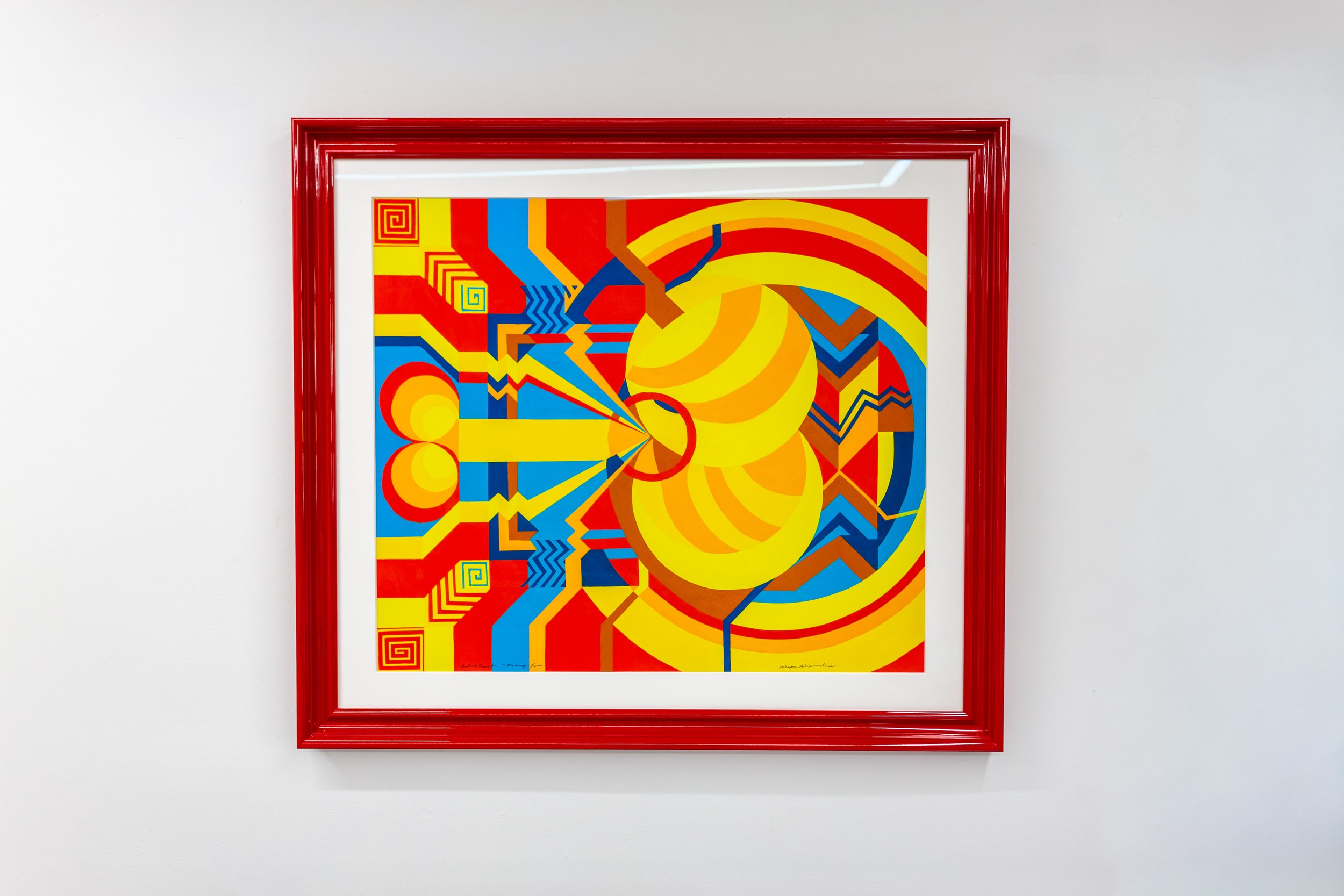
Our work with Wayne Alexander demonstrates something we value deeply at Harlem Frames: the relationship that can develop when an artist and framer work together repeatedly.
With time comes a better understanding of the artist’s materials, palette, preferences, scale, and visual language. Each new piece doesn't require repeating the same solution. Instead, that familiarity creates room to experiment. Sometimes the answer is a transparent plexi box that almost disappears. Sometimes it's a vivid red, yellow, or blue moulding that becomes impossible to ignore.
And sometimes the strongest choice is a restrained frame that simply gives the composition space to speak for itself. Across each approach, the objective remains the same: to create a presentation that feels inseparable from the character of the artwork it surrounds.
Artist: Wayne Alexander
Practice: Painting & Graphic Print Work
Framing: Custom framing by Harlem Frames
Selected Presentations: Clear plexi boxes · Vibrant finished wood mouldings · Custom matting · Contemporary frame presentations
Featured: Harlem Fine Arts Show 2026 · The Glasshouse · New York City
Explore Wayne Alexander's work
Images by Harlem Frames.
Related Events: Harlem Frames at the Harlem Fine Arts Show 2026