Museum Glass, Acrylic & Conservation Glazing: What’s the Difference?
Naturally, when choosing a custom frame, an ample amount of attention gravitates towards the frame itself. As audiences, we tend to look admiringly at the wood, finish, profile, matting, and ultimate presentation of the work. But what transparently contains the artwork, serving as that essential barrier between it and the audience, is even more crucial to it’s longevity.
Glazing is the glass material placed between an artwork and the environment around it. Depending on the type selected, glazing can effectively address concerns such as UV exposure, reflections, abrasion, static, and the long-term preservation of an artwork, protecting it from damages, extending its lifespan.
At Harlem Frames, glazing isn't treated as a one-size-fits-all decision. We work with a range of Tru Vue glass and acrylic glazing options, which allows us to select the material in accordance with both the artwork and the client’s needs. Equally important, we consider the size of the work, the rooms it will be displayed in, and what level of protection the work will require as a result of these various factors.
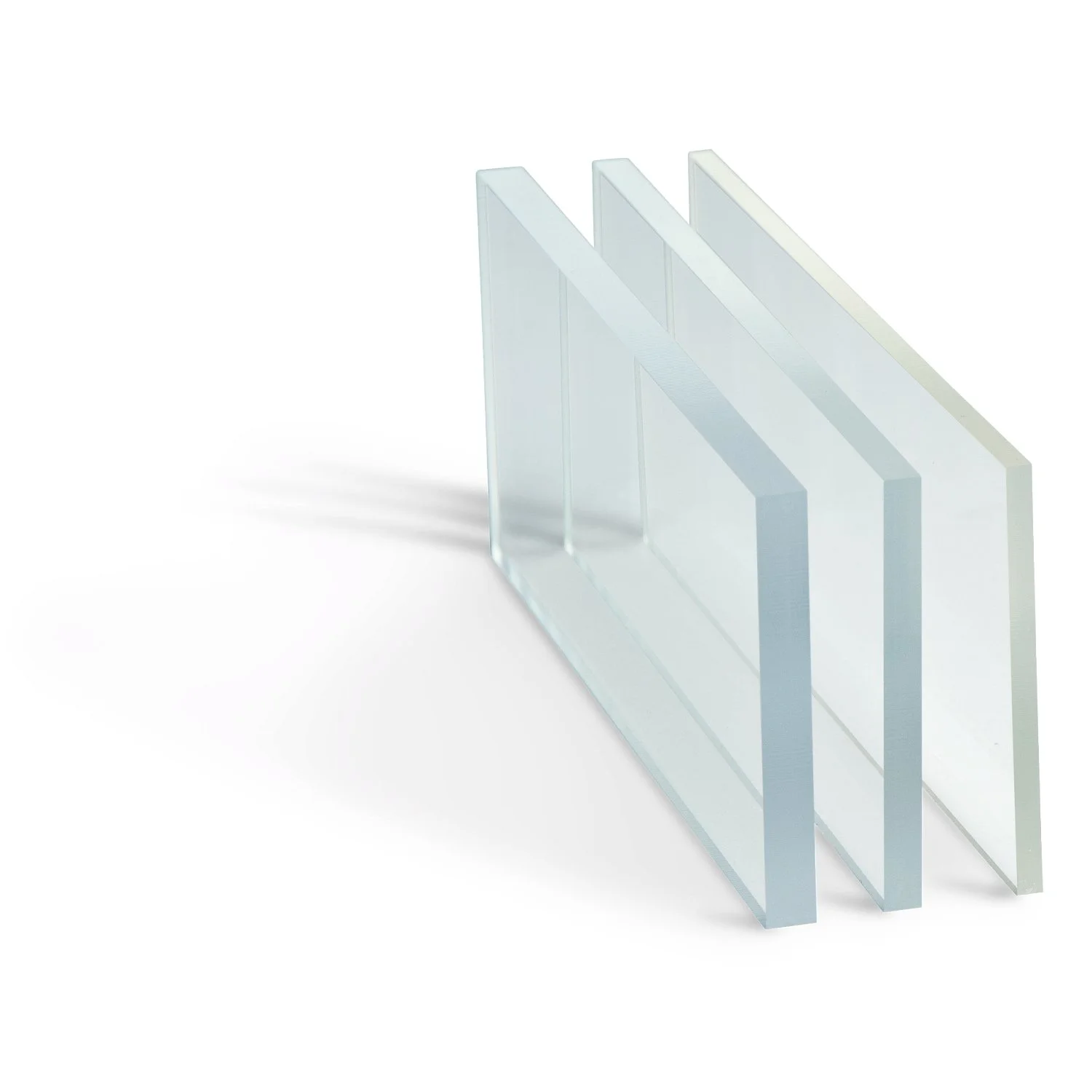
Glass or Acrylic?
One of the first decisions is whether a project is better suited to glass or acrylic.
Traditional glass offers the familiar rigidity and feel many people associate with framed artwork. Specialized glazing can serve considerably further, however, by incorporating anti-reflective and protective technologies built into the glass itself.
Acrylic, though very similar visually to glass, is made of a transparent plastic material, is significantly lighter than glass, and is also available in conservation- and museum-grade options. Acrylic can be particularly useful for large-scale framing, valuable works, works that will travel, or installations where weight and breakage are high-risk concerns.
The best choice, as always, depends on the individual project.
UltraVue Laminated Glass
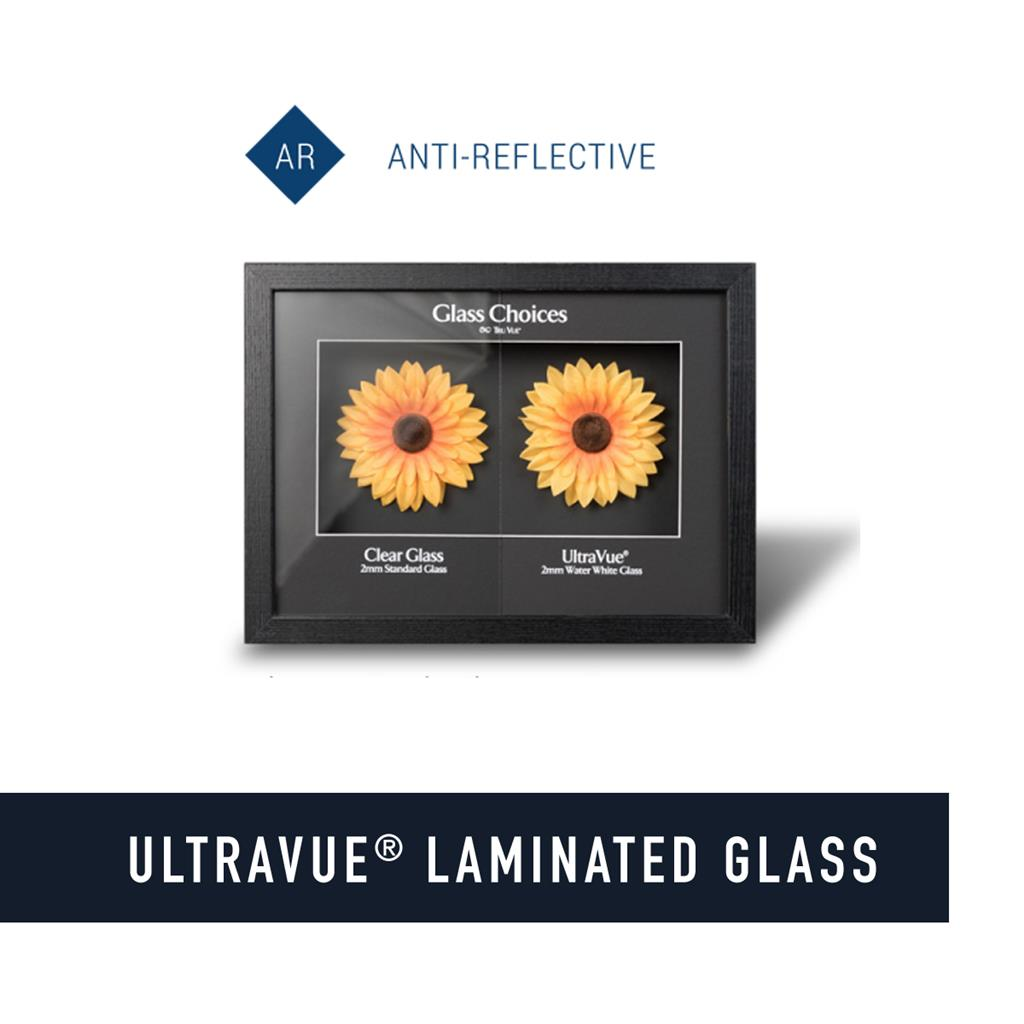
One of the glass options available through Harlem Frames is Tru Vue UltraVue Laminated Glass.
Designed for exceptional viewing clarity, this glazing combines anti-reflective performance with UV protection and the additional security of a laminated construction and finish.
It can be an excellent consideration for artwork where maintaining the visual qualities associated with glass is desirable while preservation and display quality remain important.
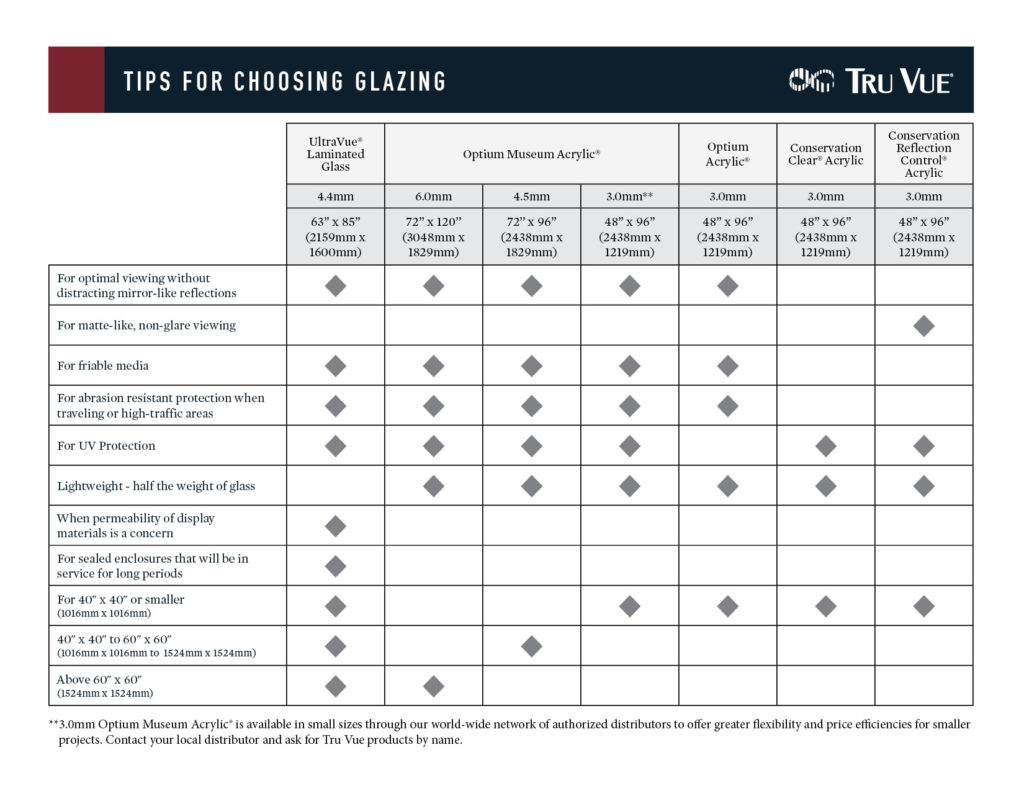
According to Tru Vue's selection guide, UltraVue Laminated Glass is particularly suited to applications where optimal viewing, UV protection, abrasion resistance, and protection for works displayed in high-traffic areas are notable considerations.
Optium Museum Acrylic
Optium Museum Acrylic
vs.
Optium Acrylic
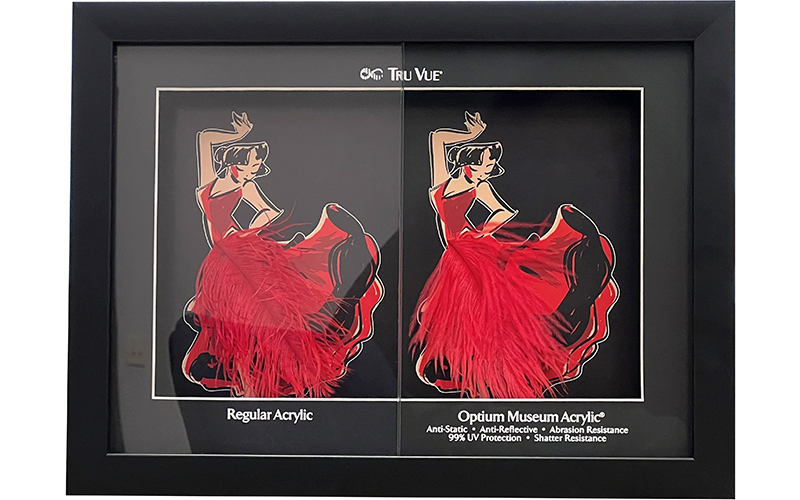
For projects requiring some of the highest levels of performance available in acrylic glazing, Harlem Frames also offers Tru Vue Optium Museum Acrylic.
Optium Museum Acrylic combines exceptional clarity with anti-reflective properties, UV protection, abrasion resistance, and anti-static performance.
The anti-static quality can be particularly important for certain delicate media where static electricity is a concern.
It is also considerably lighter than an equivalent piece of glass, making museum-grade acrylic especially useful when framing large works or pieces intended to travel or be installed in demanding environments.
Harlem Frames commonly uses Optium Museum Acrylic in multiple thicknesses, allowing the glazing specification to respond to the dimensions and requirements of the individual project the client brings forward.
Tru Vue Optium Acrylic provides another high-performance acrylic option.
Like Optium Museum Acrylic, it is designed to provide excellent clarity and reduced reflections while offering many of the practical advantages associated with acrylic glazing.
It can be considered for projects where anti-reflective viewing, abrasion resistance, lighter weight, and anti-static performance are important factors.
The appropriate choice between Optium Acrylic and Optium Museum Acrylic ultimately depends on the artwork and its conservation requirements.
Conservation Clear Acrylic
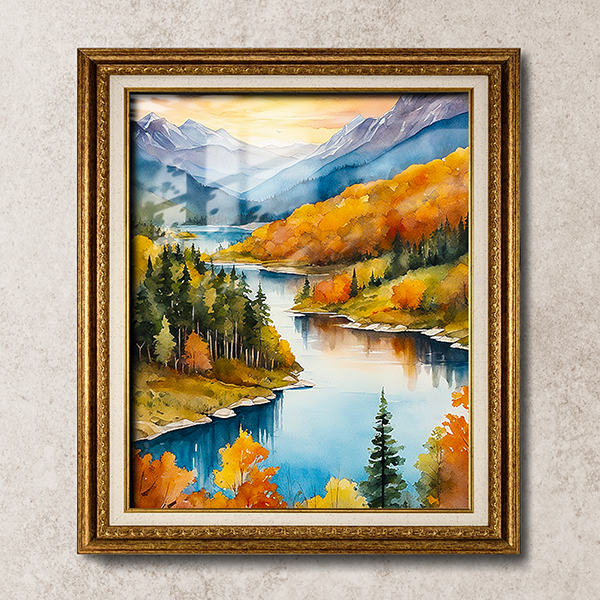
Not every artwork requires museum-grade anti-reflective glazing.
Conservation Clear Acrylic provides UV protection while retaining the practical benefits of acrylic, including its lighter weight compared with glass.
This can make it a useful option for works where preservation is important but museum-level anti-reflective performance isn't the primary concern.
For larger framed pieces in particular, choosing acrylic instead of glass can also make a meaningful difference in the finished weight of the frame.
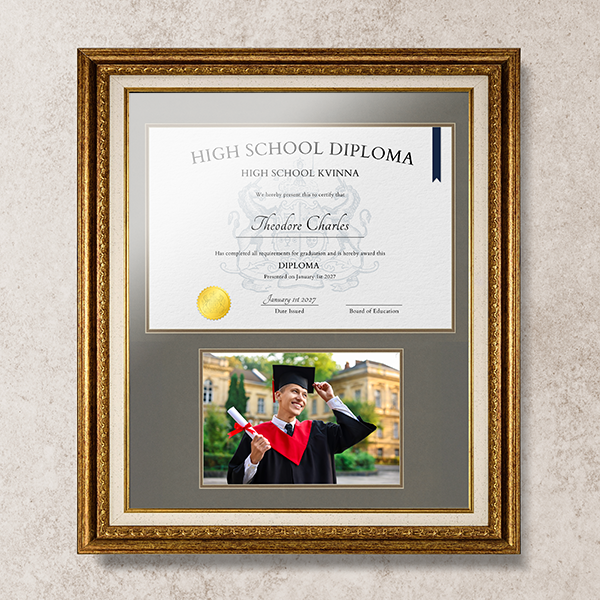
Conservation Reflection Control Acrylic
Harlem Frames can also offer Conservation Reflection Control Acrylic for projects where both UV protection and the reduction of distracting reflections are considerations.
Reflection-control glazing differs from premium anti-reflective glazing such as Optium. Rather than making reflections nearly disappear through optical coatings, reflection-control products are designed to diffuse them.
That distinction matters because different glazing materials can affect the viewing experience differently. Comparing samples in person can be extremely helpful when deciding which effect is appropriate for a particular artwork.
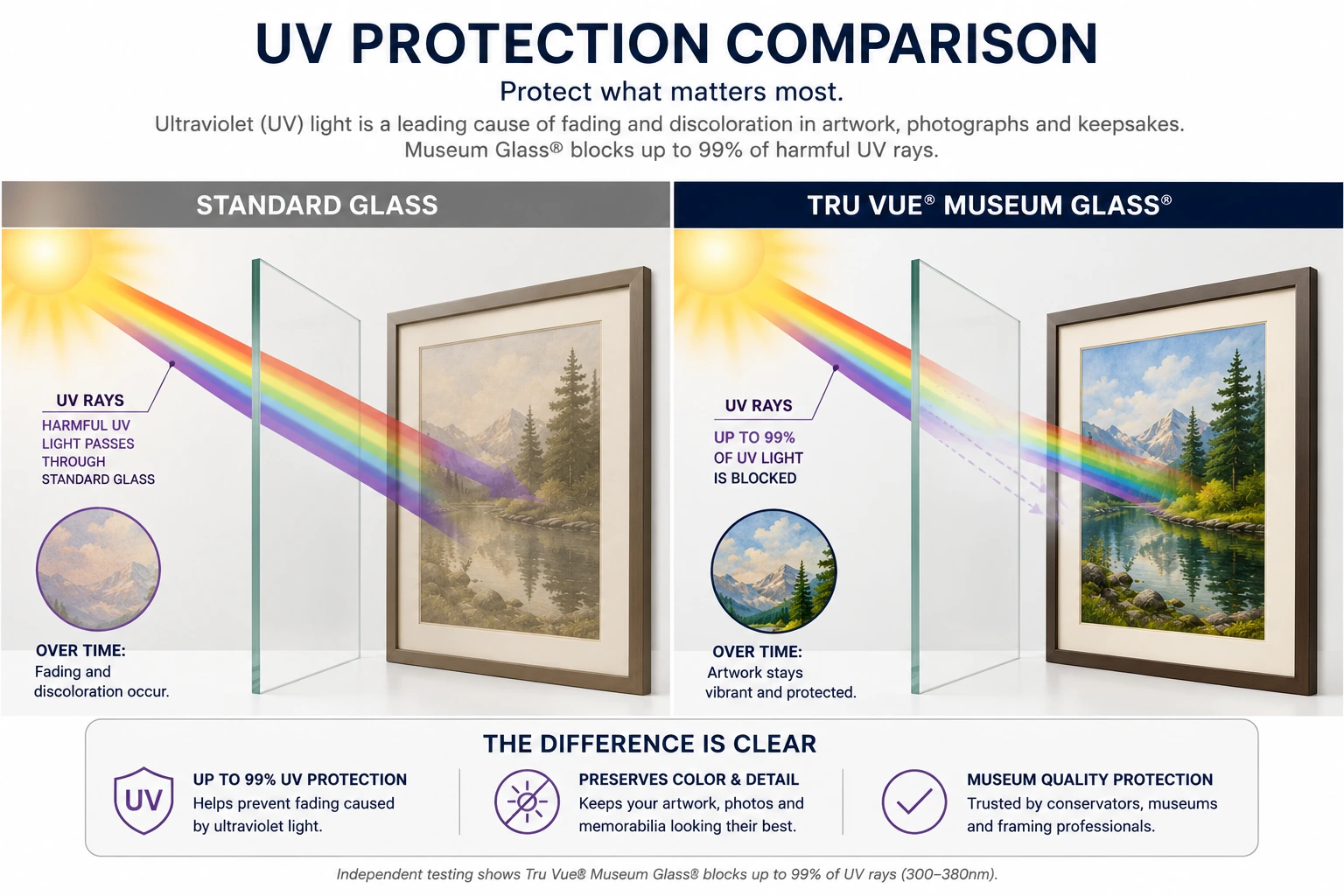
Why Does UV Protection Matter?
Many artworks are sensitive to prolonged exposure to ultraviolet radiation.
Over time, UV exposure can contribute to fading, discoloration, and deterioration in materials such as paper, photographs, textiles, inks, and certain pigments.
For valuable, sentimental, historic, or irreplaceable pieces, choosing glazing with appropriate UV protection can therefore become an important part of a conservation-minded framing approach.
However, UV-protective glazing should never be considered permission to hang artwork anywhere.
Even properly framed artwork should be kept away from prolonged direct sunlight and extreme environmental conditions whenever possible.
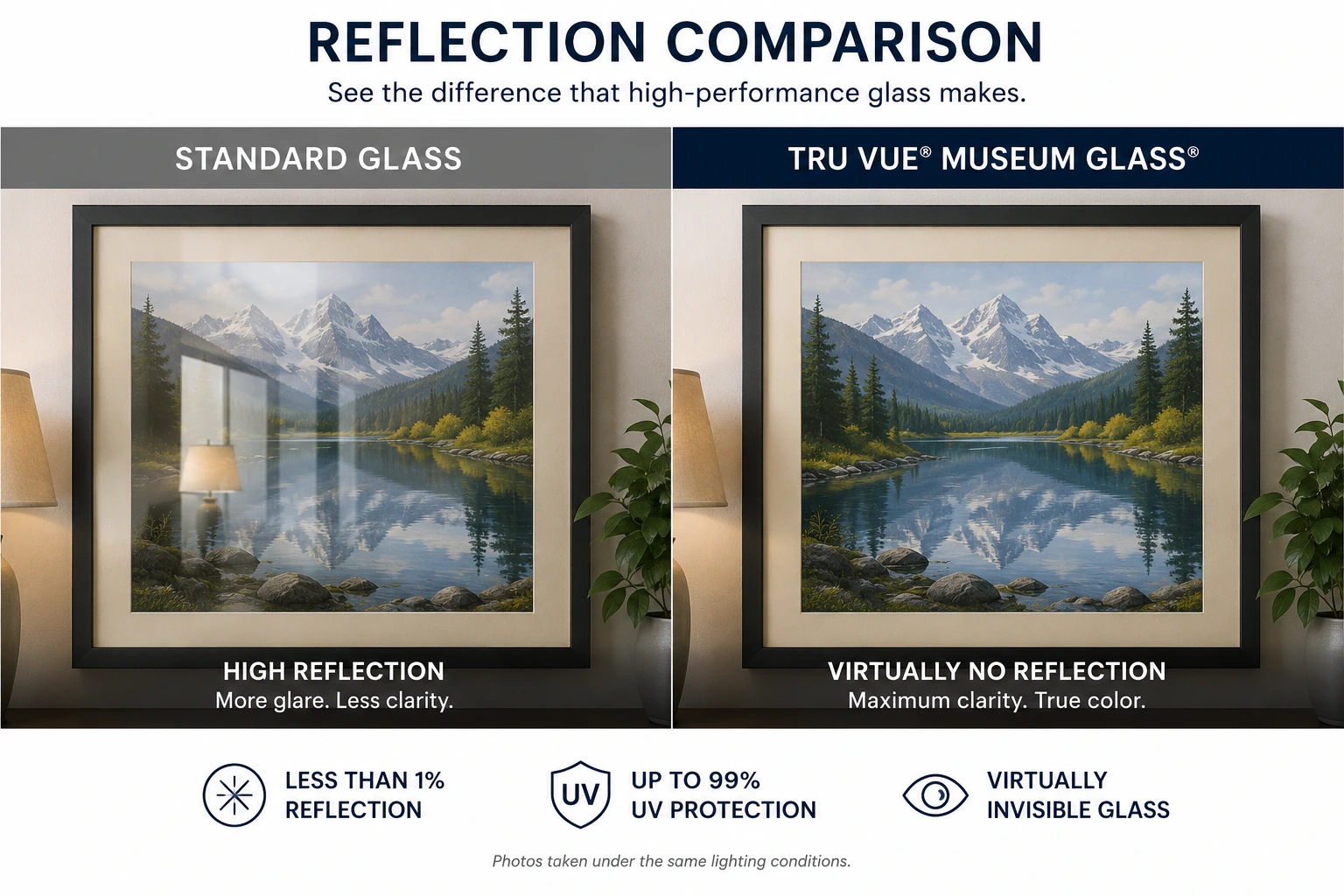
Reflections Matter, Too
Anyone who has tried to view a dark photograph or drawing behind reflective glazing knows how distracting glare can become.
Windows, lamps, overhead lighting, and even the viewer themselves can appear reflected across the surface.
Premium anti-reflective glazing such as Optium Museum Acrylic and UltraVue is designed to minimize these visual distractions so that attention remains on the artwork.
For highly detailed works, dark images, photographs, or artwork displayed in brightly lit environments, the difference can be striking.
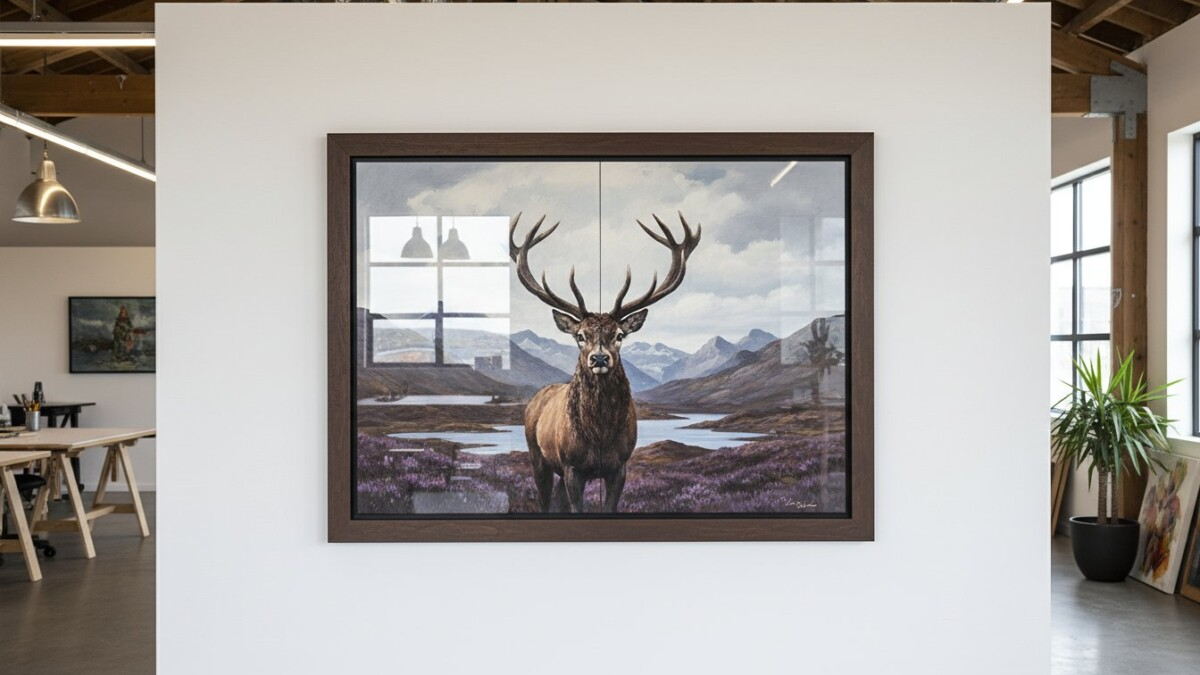
What About Large Artwork?
Size can significantly influence the glazing decision.
As a framed piece becomes larger, weight, rigidity, handling, installation, and safety become increasingly important considerations.
This is one reason acrylic glazing can be valuable for oversized work. Acrylic offers substantially less weight than comparable glass while specialized products can still provide high levels of clarity and protection.
The Tru Vue options available through Harlem Frames include different dimensions and thicknesses specifically suited to different framing requirements.
So, Which Glazing Should You Choose?
There isn't one “best” glazing material for every artwork.
The right choice depends on several factors:
The artwork's medium and condition
Its monetary or sentimental value
Sensitivity to UV exposure
Size and weight of the finished frame
Lighting and reflections in the display environment
Whether the artwork will travel
Concerns about abrasion or static
Desired level of clarity
Budget
A replaceable poster and an original work on paper don't necessarily require the same solution. Neither do a small family photograph and a six-foot artwork destined for an exhibition.
Choosing Glazing at Harlem Frames
At Harlem Frames, glazing is considered a quintessential component of the framing system.
Depending on the needs of the artwork, options include UltraVue Laminated Glass, Optium Museum Acrylic, Optium Acrylic, Conservation Clear Acrylic, and Conservation Reflection Control Acrylic, among other solutions.
Rather than simply asking whether you want “regular” or “museum” glass, we can help you compare the materials in person and consider clarity, reflection, UV protection, weight, safety, preservation, and cost together.
The goal is ultimately simple: choose the glazing that allows you to enjoy the artwork while giving it the level of protection its particular circumstances require.
Images Source:https://tru-vue.com/