Custom Framing vs. Ready-Made Frames
Not every piece of artwork needs a custom frame.
Sometimes a standard, ready-made frame is exactly what a project calls for: it's accessible, convenient, and can be a perfectly practical choice for artwork that already fits a common size.
Other pieces require more consideration. Unusual dimensions, delicate materials, original artwork, valuable photographs, canvases, textiles, or objects may benefit from a framing solution designed specifically around them.
So how do you decide between a ready-made frame and custom framing? The answer begins with the artwork.
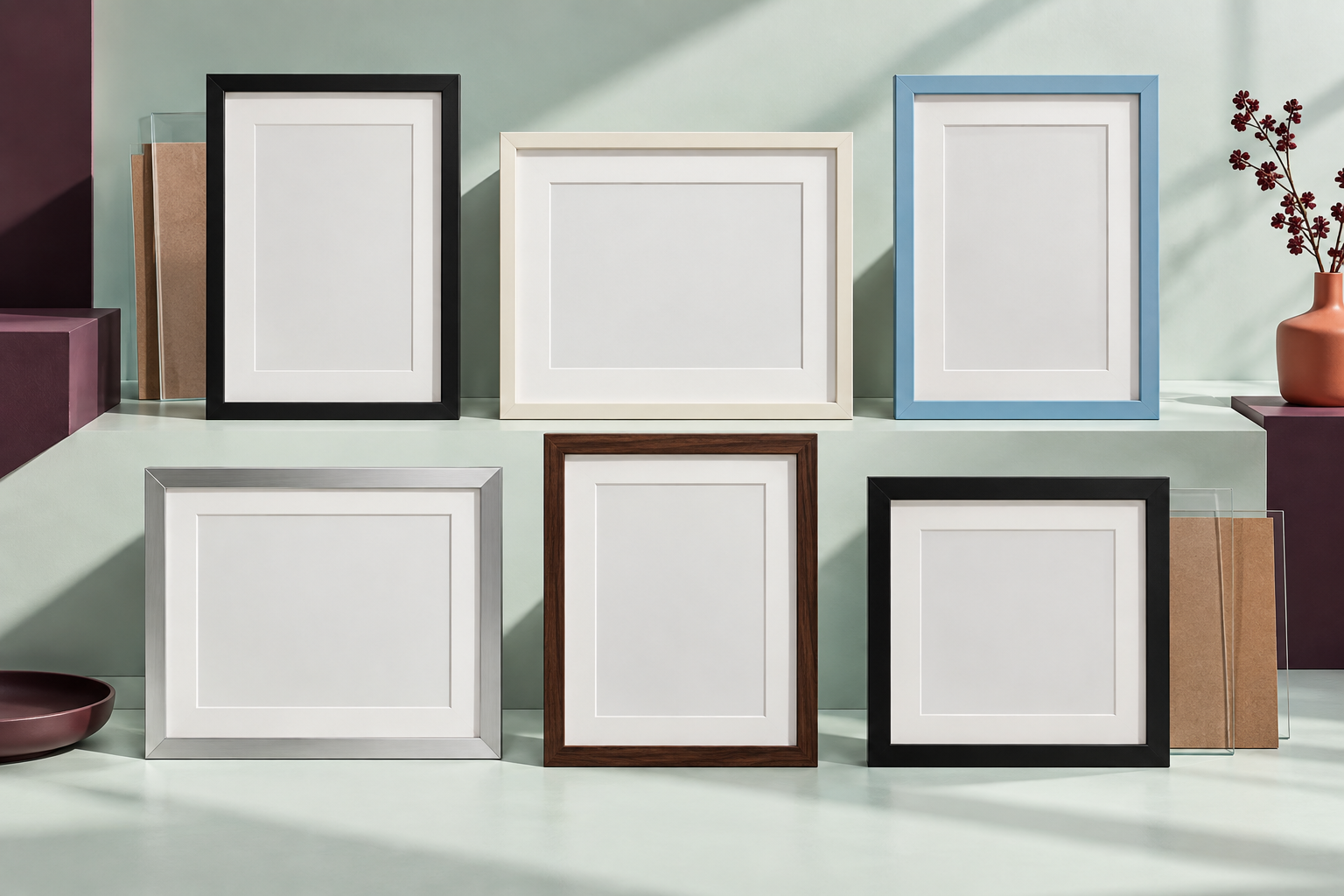
What Is a Ready-Made Frame?
Ready-made frames are manufactured in predetermined, standard sizes and sold already assembled.
Common dimensions make them particularly convenient for photographs, posters, prints, certificates, and other works produced at standard sizes. Because the moulding, glazing, backing, and dimensions have already been determined, they're generally less expensive and faster to use than a completely custom solution.
For the right piece, that simplicity can be an advantage. If you're framing an easily replaceable poster, family snapshot, temporary display, or standard-size print, a ready-made frame may provide everything you need.
The limitation is that the artwork has to adapt to the frame rather than the frame being designed around the artwork.
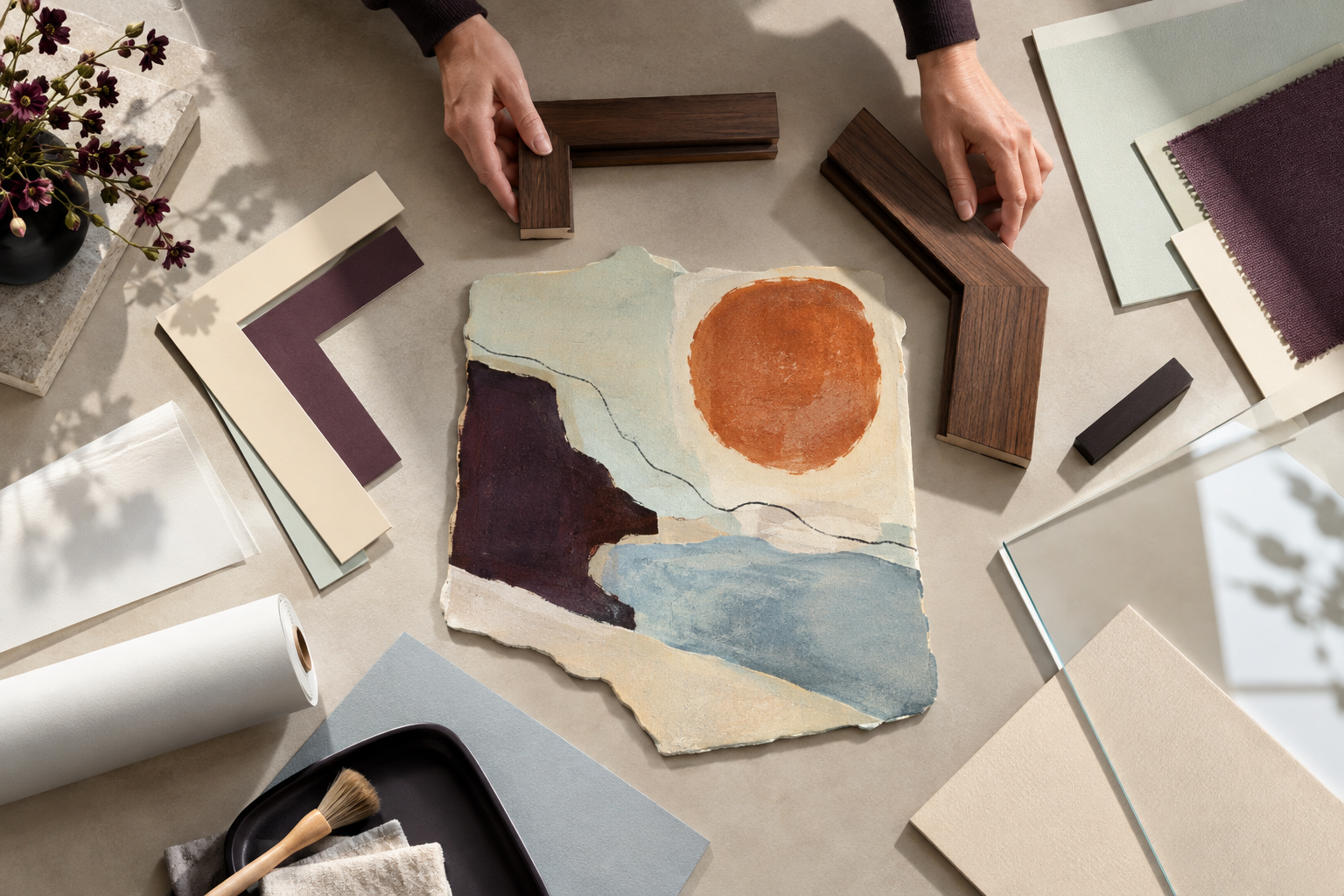
What Makes Custom Framing Different?
With custom framing, the process begins with the artwork.
The dimensions aren't predetermined. Neither are the frame profile, material, mat, mounting method, glazing, depth, or overall presentation. Instead, these elements can be selected according to the individual piece.
At Harlem Frames, that might mean designing a natural wood float frame around a painting, selecting conservation matting for a work on paper, creating a plexi box for a dimensional presentation, matching a particular moulding finish to an artist's work, or developing a completely different solution for an unusually sized object.
The question changes from:
“Which available frame will this fit into?”
to:
“What presentation is right for this artwork?”
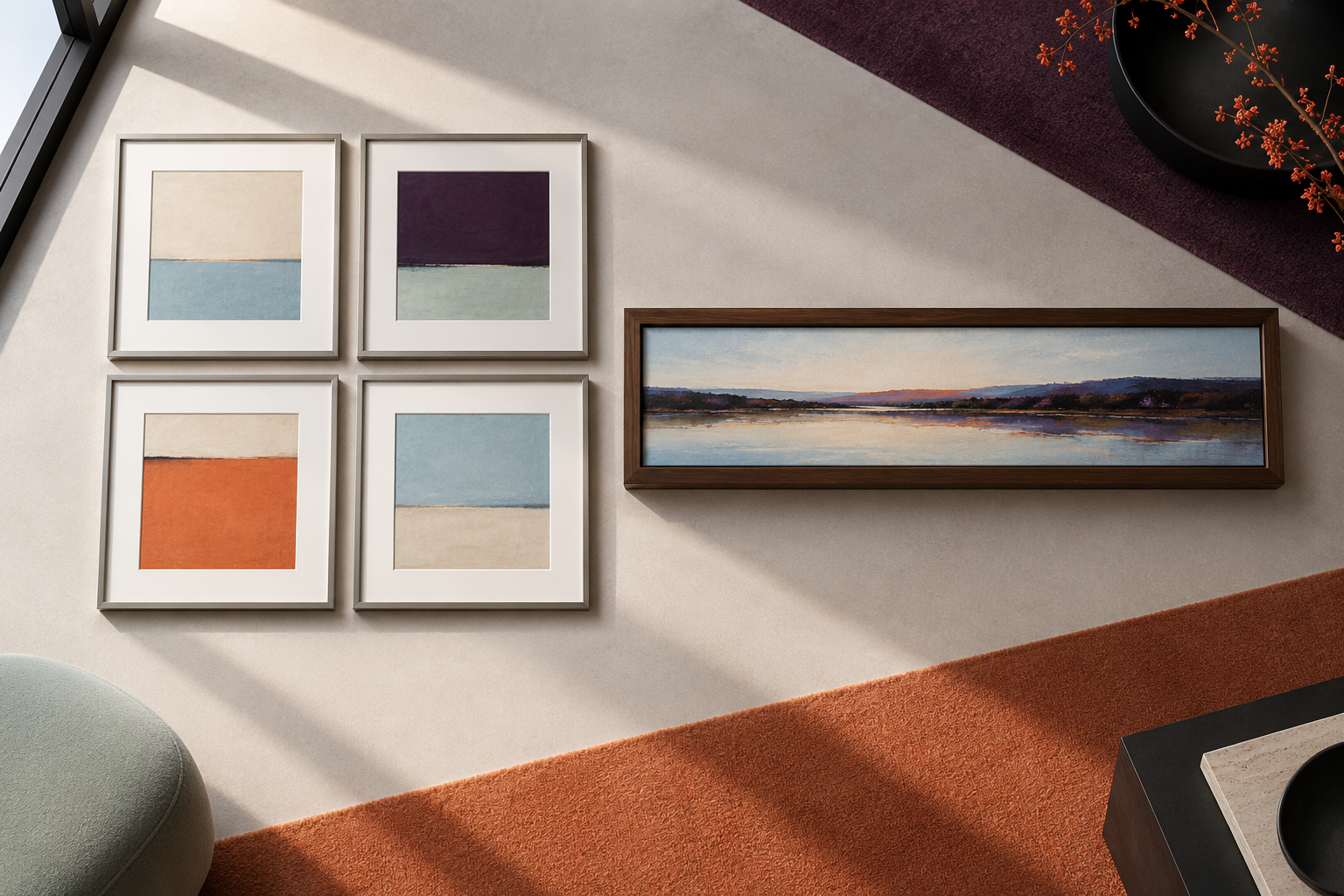
Size Makes a Difference
Standard artwork sizes are where ready-made frames are most convenient. But artists don't always work in standard dimensions.
Original paintings, handmade paper, vintage posters, textiles, photographs, unusual prints, and dimensional objects can fall outside conventional frame sizes. Trying to force an unusual piece into a standard frame may require awkward cropping, oversized matting, or other compromises.
Custom framing allows the frame to be built around the artwork's actual dimensions rather than requiring the artwork to conform to an existing product.

Custom Framing Offers More Design Control
A frame can dramatically change how an artwork is perceived.
With custom framing, you can consider:
Wood species and moulding material
Frame width and depth
Natural, stained, painted, or specialty finishes
Mat color and texture
Mat proportions
Float mounting
Float frames
Shadowboxes
Plexi boxes
Glazing
Spacers
Frame depth
Overall finished dimensions
These choices allow the framing to respond to the artwork's color, scale, texture, period, medium, and visual character. Sometimes that leads to a frame that almost disappears. Other times, the frame becomes an intentional part of the artwork's presentation.
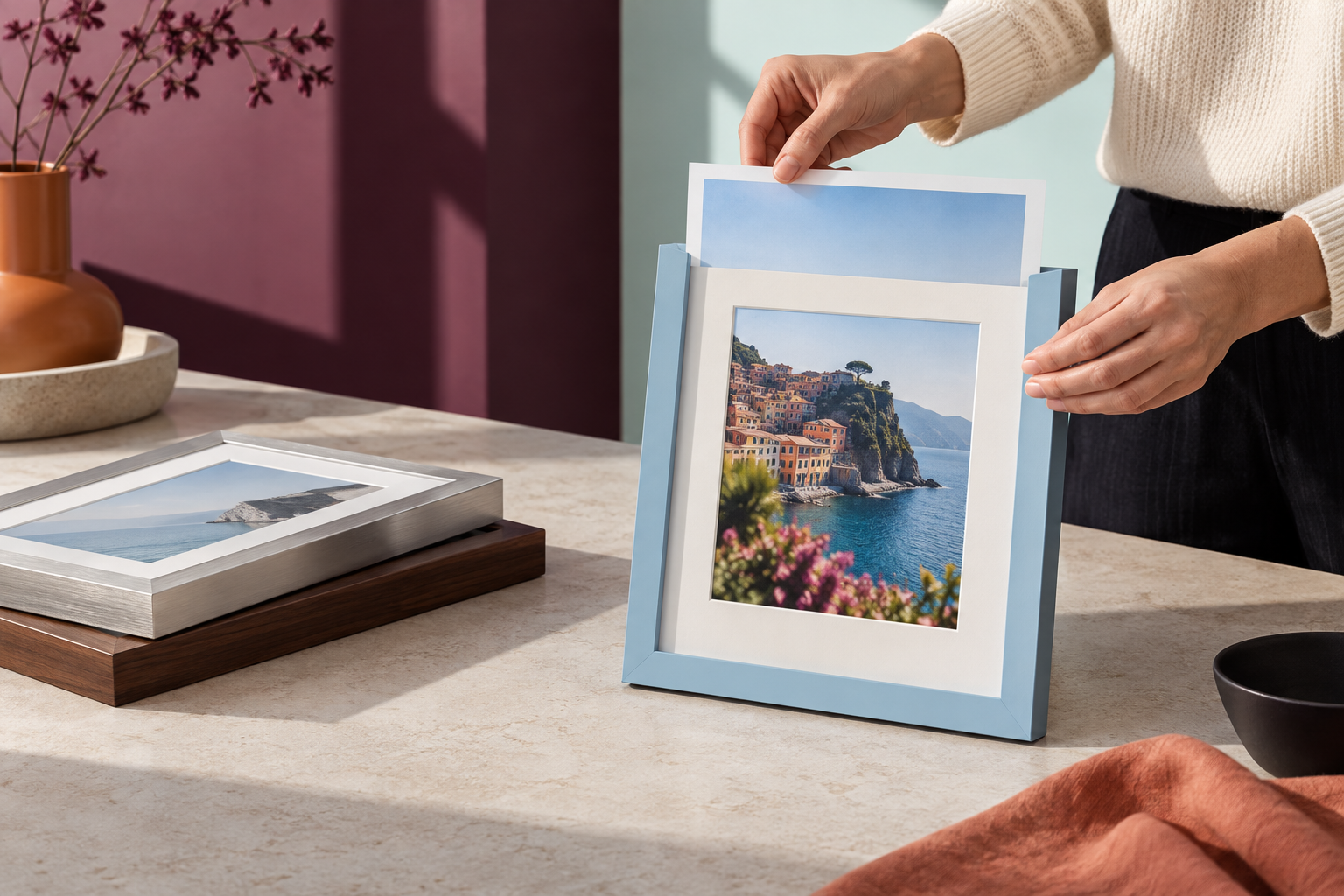
What About Preservation?
This is one of the most important differences to consider.
A ready-made frame may provide adequate physical protection for many everyday pieces, but its internal materials and construction aren't necessarily selected around the conservation requirements of a particular artwork.
When framing something original, valuable, sentimental, or irreplaceable, you may want greater control over the materials surrounding it. Custom framing can incorporate conservation-quality mat boards, appropriate mounting techniques, protective glazing, spacers, backing materials, and other preservation-minded choices according to the needs of the artwork.
That doesn't mean every custom frame automatically qualifies as conservation framing. It means custom framing gives you the opportunity to specify a framing system appropriate for the piece.
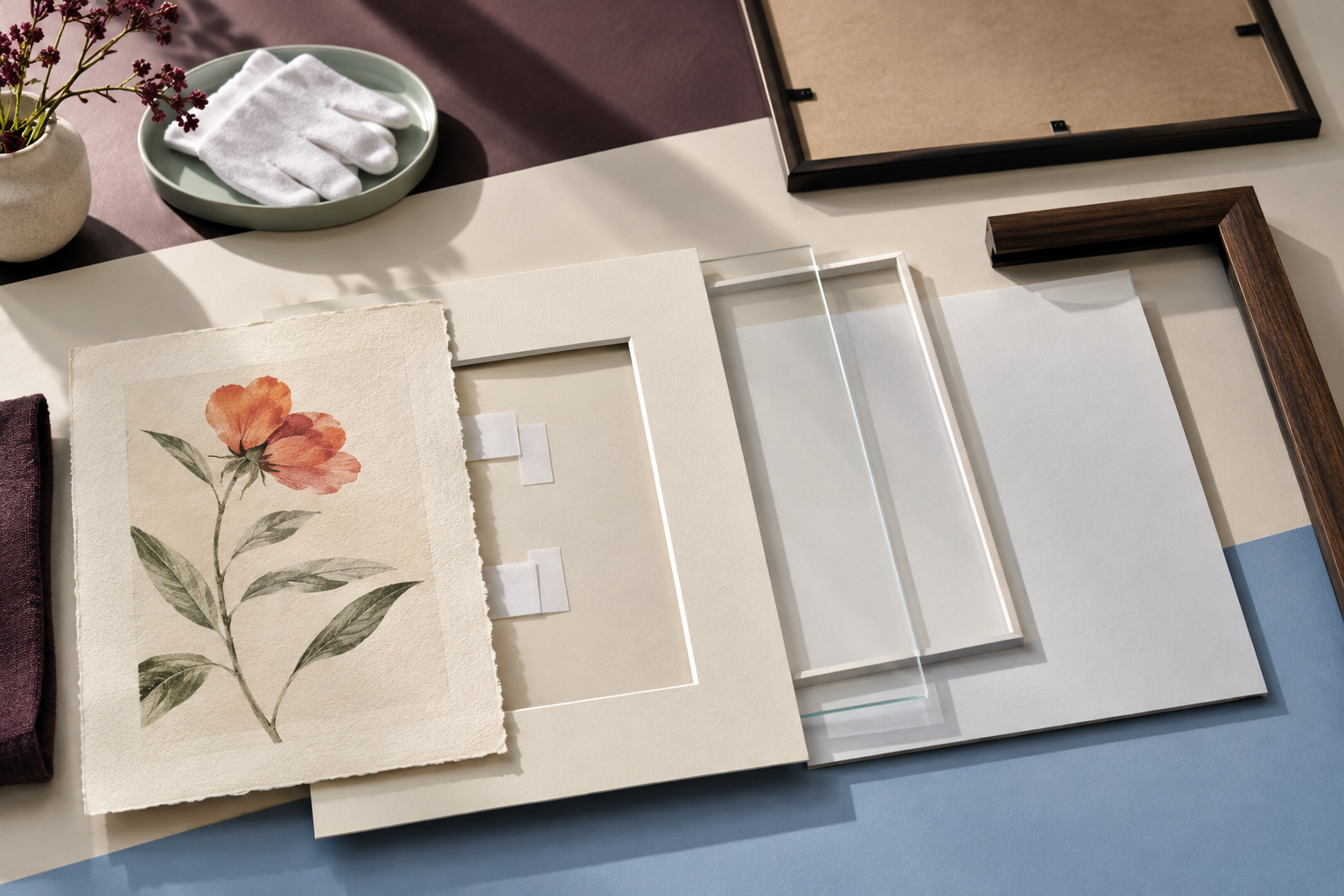
Original Artwork Often Requires a Different Approach
An original watercolor and a mass-produced poster may both be pieces of paper, but they don't necessarily have the same framing requirements.
The watercolor might require consideration of mounting, matting, glazing, light exposure, and long-term preservation. The poster may simply need an attractive frame at the correct dimensions. Similarly, an original canvas may benefit from stretching and a custom float frame, while a standard-size photographic print may fit beautifully into a ready-made option.
The value, material, construction, and importance of the artwork should help determine how much customization is appropriate.
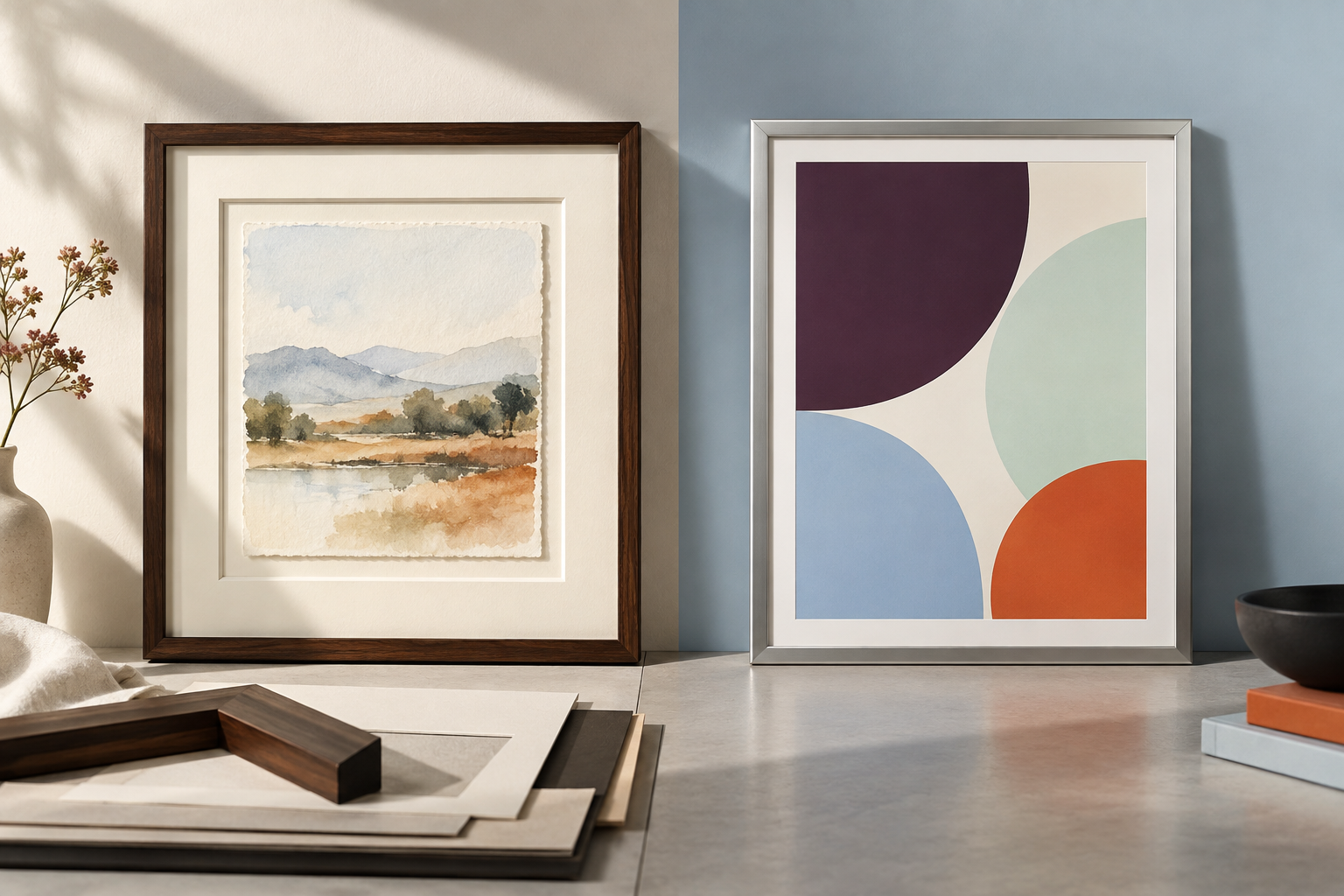
Custom Doesn't Have to Mean Complicated
The number of options available in custom framing can initially seem overwhelming.
There are hundreds of mouldings, mat colors, glazing options, proportions, finishes, and presentation styles to consider. But you don't need to arrive knowing exactly what you want.
A framing consultation is partly a process of editing. By looking at the artwork itself, different possibilities can be compared until the presentation begins to feel resolved. Often, the final solution is surprisingly simple.
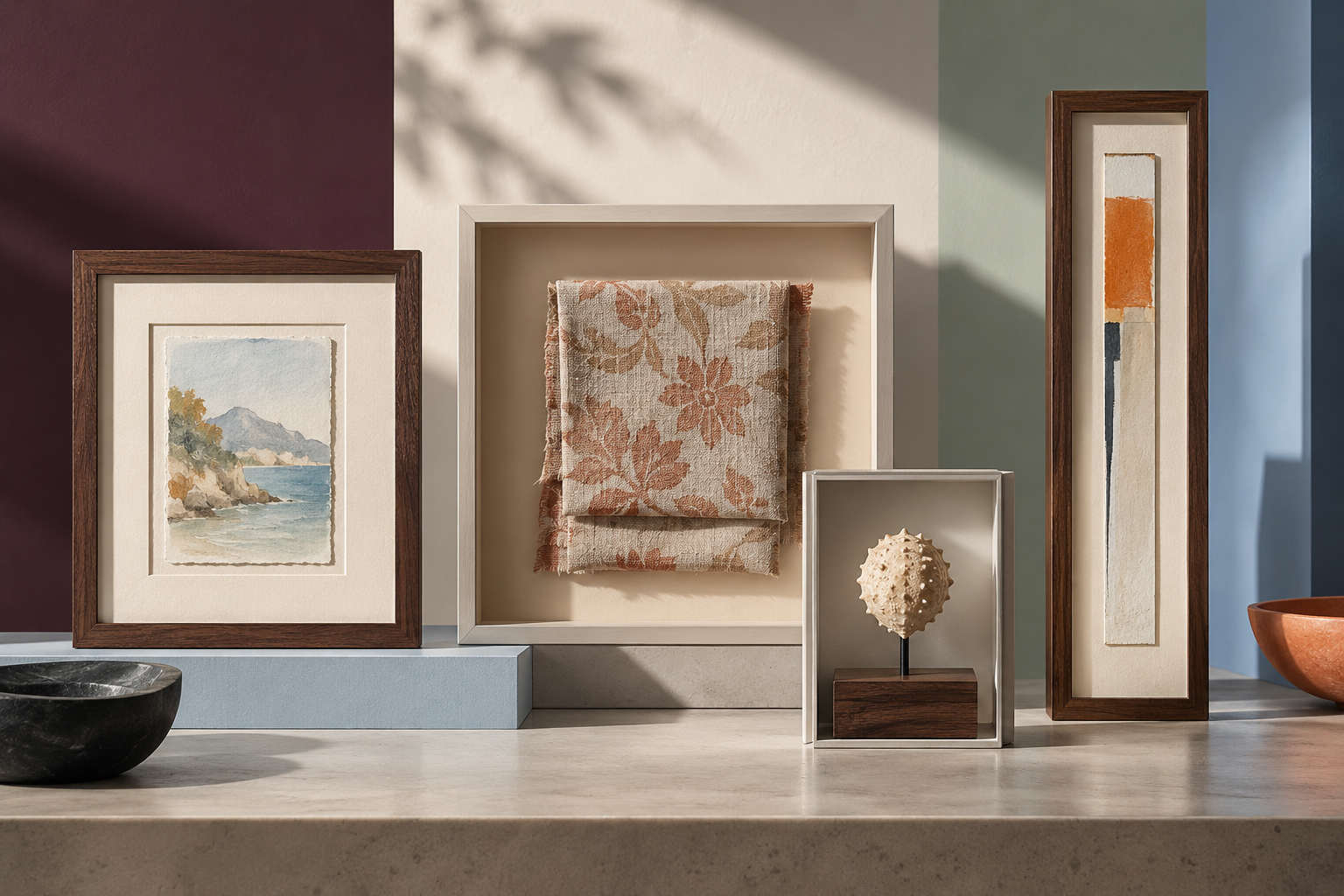
When Does a Ready-Made Frame Make Sense?
A ready-made frame may be a good choice when:
The artwork is a standard size
The piece is easily replaceable
You're framing an everyday photograph or poster
Preservation isn't a major concern
The display is temporary
Budget is the primary consideration
You need a simple presentation quickly
There's nothing inherently wrong with choosing a ready-made frame when it's appropriate for the project. Good framing isn't about choosing the most expensive option. It's about choosing the appropriate option for the artwork and your priorities.
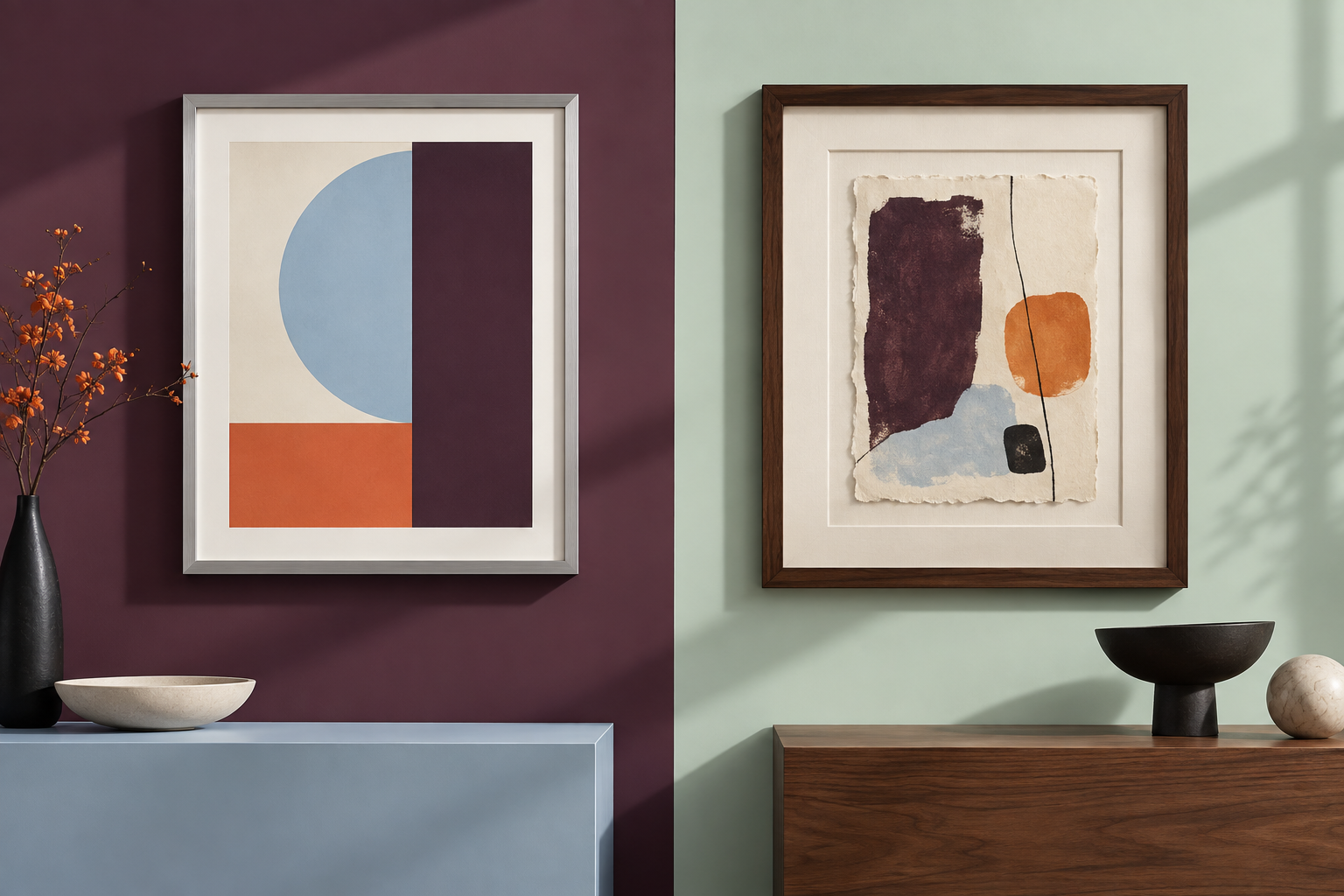
When Is Custom Framing Worth Considering?
Custom framing becomes particularly useful for:
Original artwork
Valuable or sentimental pieces
Works with unusual dimensions
Paintings on canvas
Works on paper
Limited-edition prints
Fine-art photography
Textiles
Dimensional objects and memorabilia
Oversized artwork
Exhibition work
Artwork requiring conservation materials
Pieces where the framing itself is an important part of the presentation
Custom framing can also be particularly valuable when several works need to be presented as a cohesive series, such as an exhibition, gallery installation, or collection.
Think About How Long You'll Live With the Piece
Cost matters, but so does context.
A ready-made frame for an inexpensive print you may replace in a few years is a very different decision from framing an original artwork you expect to keep for decades.
Before choosing, consider:
What is the piece?
Is it replaceable?
Does it have sentimental or monetary value?
Does it require preservation?
Are its dimensions unusual?
How important is the finished presentation?
How long do you expect to live with it?
Those questions can tell you much more than the price of the artwork alone.

The Right Frame Is the One That Makes Sense for the Artwork
Custom framing and ready-made framing serve different purposes. One isn't automatically the correct choice for every situation.
A ready-made frame offers simplicity, speed, and affordability.
Custom framing offers greater control over dimensions, materials, design, presentation, and preservation. At Harlem Frames, we believe the decision should begin with the piece itself. Sometimes the solution can be straightforward. Other artworks call for something designed specifically around them.
Not sure which approach makes sense for your piece? Bring your artwork to Harlem Frames and our team can help you explore the options.
Related Insights
How to Choose the Right Frame for Your Artwork →
What Is Conservation Framing? →
To Mat or Not to Mat? Choosing the Right Mat for Your Artwork →
Museum Glass, Acrylic & Conservation Glazing: What's the Difference? →