Why Your Artwork Shouldn’t Touch the Glass
When looking at a beautifully framed artwork, the small amount of space between the artwork and the glazing may seem insignificant. In reality, that space can be an important part of a thoughtfully designed framing system.
For many photographs, prints, drawings, watercolors, documents, and other works on paper, placing the surface directly against glass or acrylic can introduce unnecessary risks over time. Moisture, condensation, changes in humidity, and the characteristics of the artwork itself can all become concerns when there is no separation.
This is one reason professional framing often uses matting, spacers, float mounting, or deeper framing methods to create a controlled distance between the artwork and the glazing.
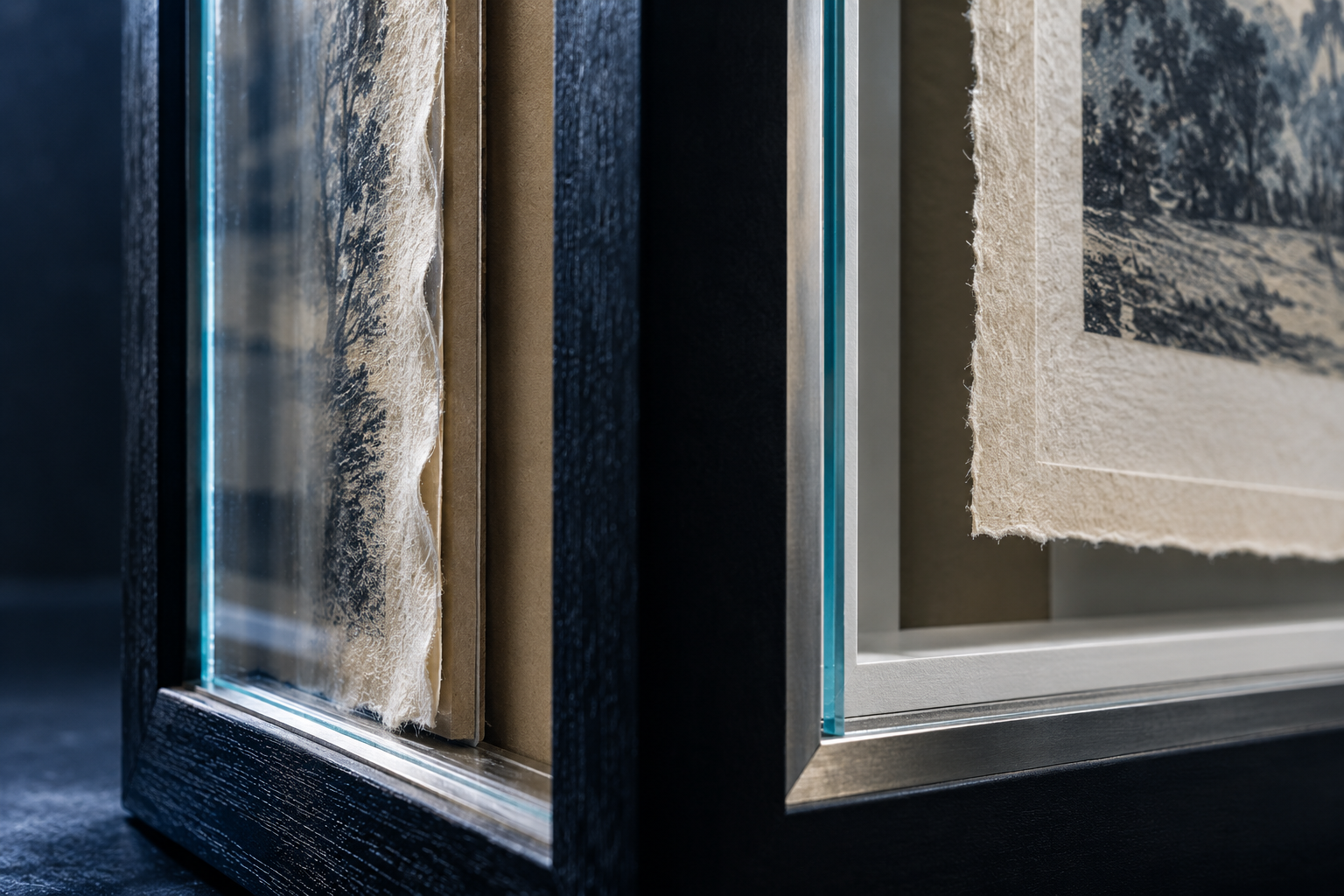
What Happens When Artwork Touches the Glass?
Glass and acrylic provide an important physical barrier between artwork and the surrounding environment, helping protect it from dust, handling, and accidental contact.
But the glazing generally isn't intended to function as the surface against which sensitive artwork rests. When artwork is pressed directly against glazing, changes within the environment can become more consequential.
Paper and other materials naturally respond to temperature and humidity. They may expand, contract, ripple, or otherwise change as environmental conditions fluctuate. Providing appropriate space within the frame gives the artwork a more considered environment in which to exist.
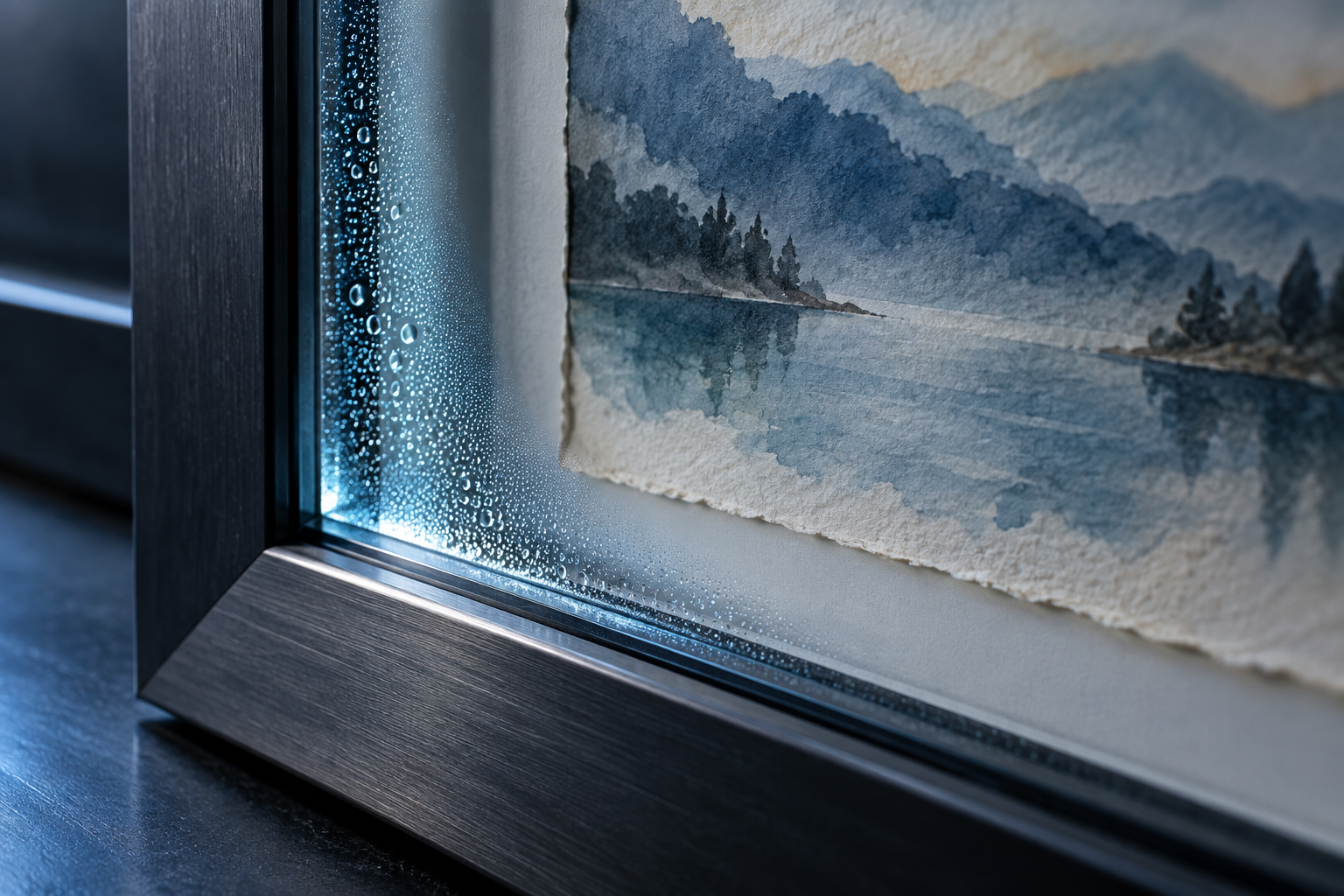
Moisture Is One of the Biggest Concerns
Temperature and humidity can vary throughout a home, gallery, or other interior.
Under certain conditions, moisture can develop inside a framing package. If an artwork is directly against the glazing, there is little or no separation between the artwork and that moisture. This can be particularly concerning for paper, photographs, watercolors, prints, and other moisture-sensitive materials.
Persistent moisture can contribute to staining, distortion, mold growth, and other forms of deterioration. The goal isn't to make a frame completely airtight. Instead, good framing considers how the materials inside the frame interact with one another and with the environment around them.
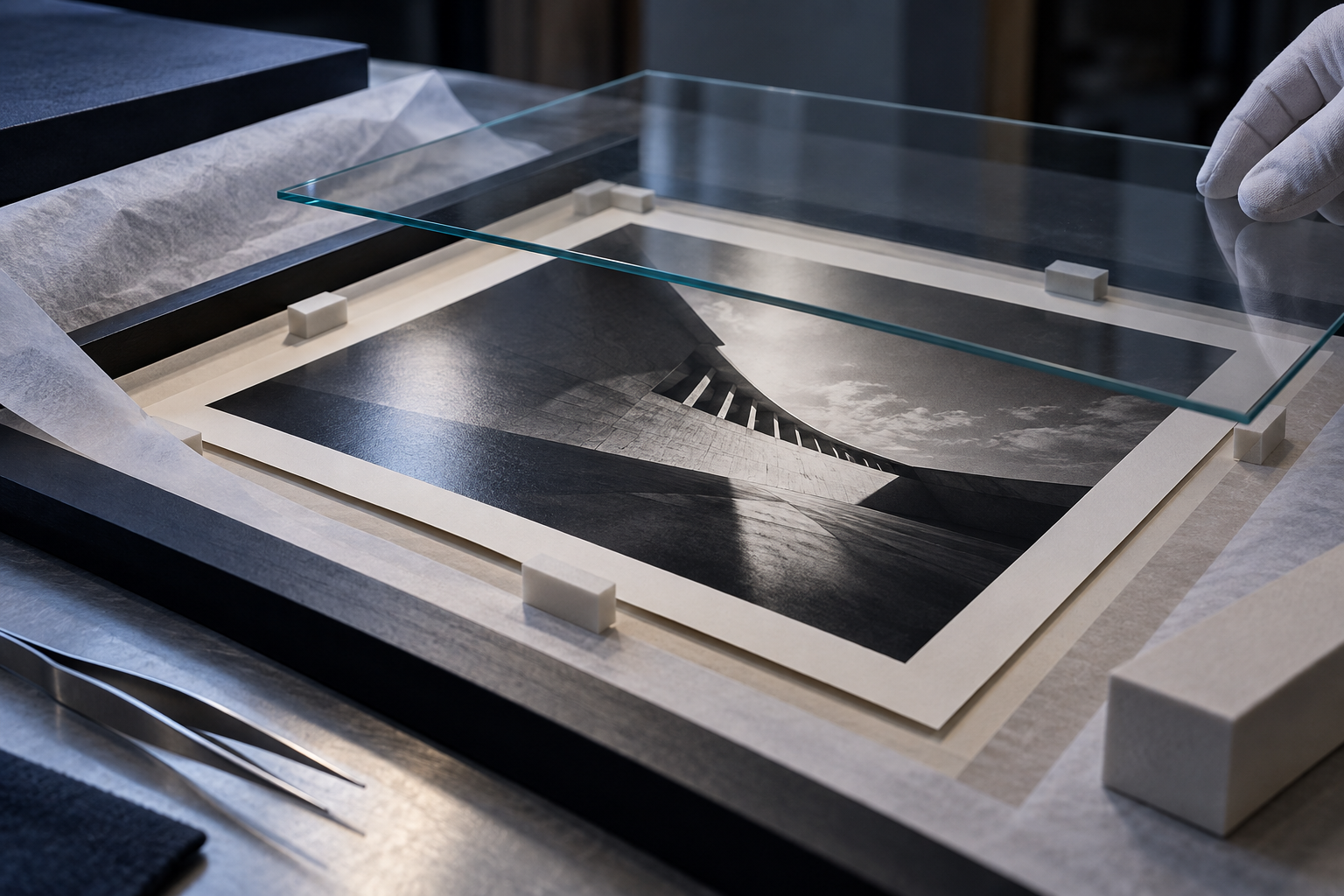
Photographs Require Particular Care
Photographic surfaces can be especially sensitive to direct contact.
If a photograph remains pressed against glazing under unfavorable environmental conditions, its surface can potentially adhere to the glass or acrylic. Once that happens, attempting to separate the two can risk damaging the image.
This is why simply placing an important photograph inside a frame and pressing the backing firmly against it isn't always an appropriate long-term framing method. For valuable, historical, or irreplaceable photographs, the complete framing system—including mounting, spacing, glazing, and environmental conditions—deserves consideration.
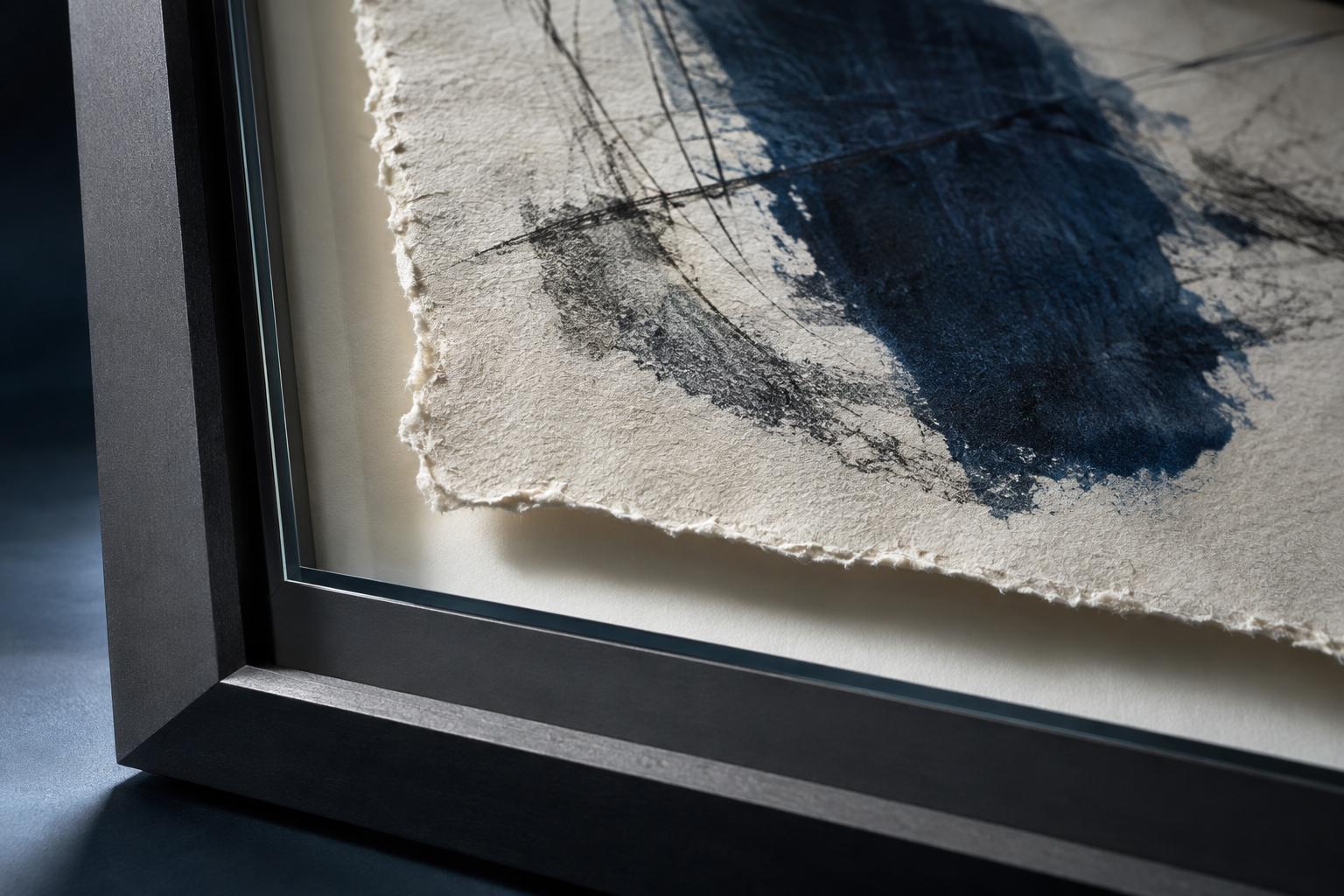
Works on Paper Need Room Too
Drawings, prints, watercolors, documents, and other works on paper can respond visibly to environmental changes.
Paper naturally absorbs and releases moisture as humidity changes. Restricting it tightly against glazing may make resulting distortions more noticeable and can create an undesirable relationship between the artwork and the glazing.
Appropriate mounting and spacing allow the work to be presented without unnecessarily pressing its surface against another material. This becomes especially important for handmade papers, deckled edges, textured works, and pieces whose physical qualities are part of the artwork itself.
Matting Creates More Than a Decorative Border
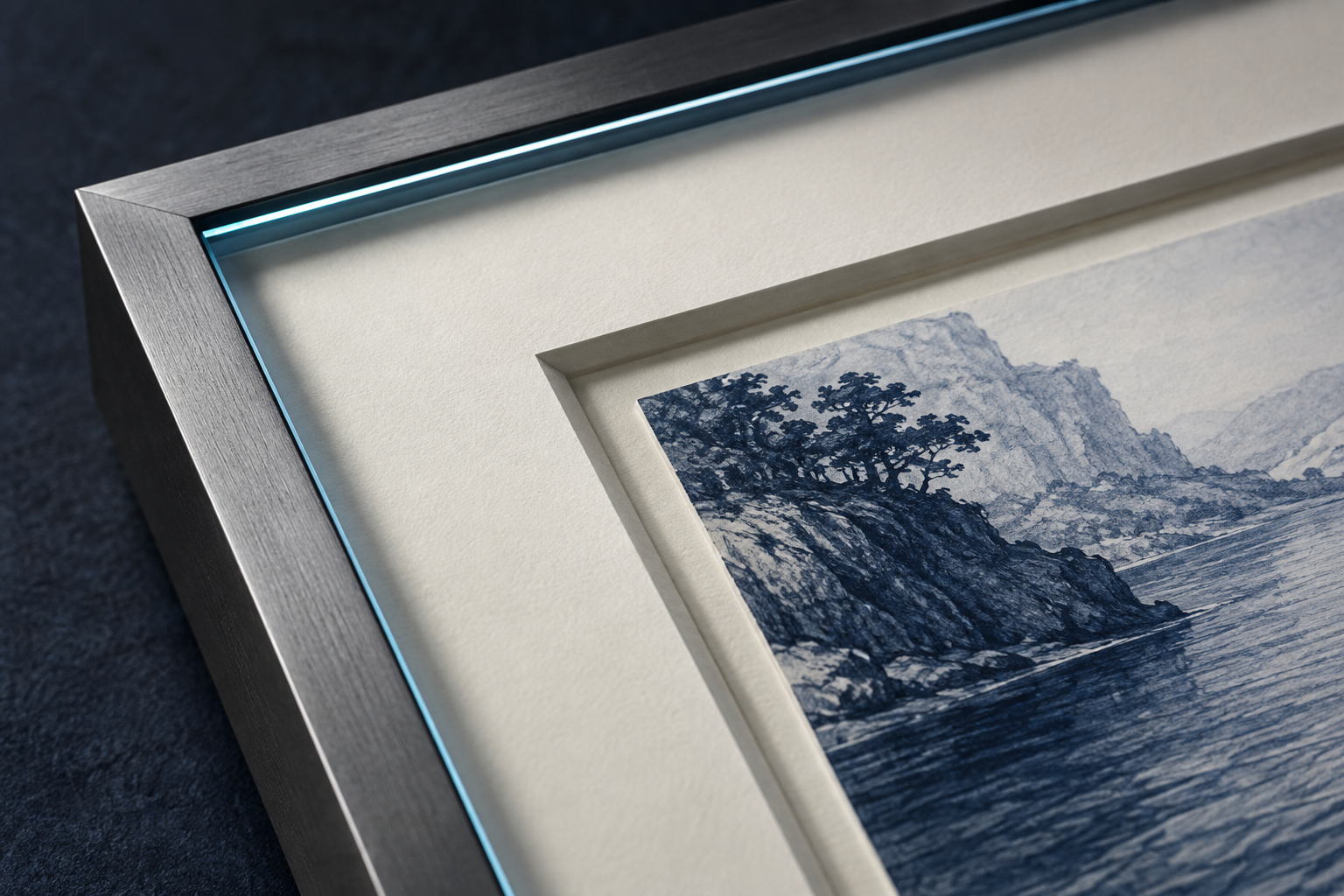
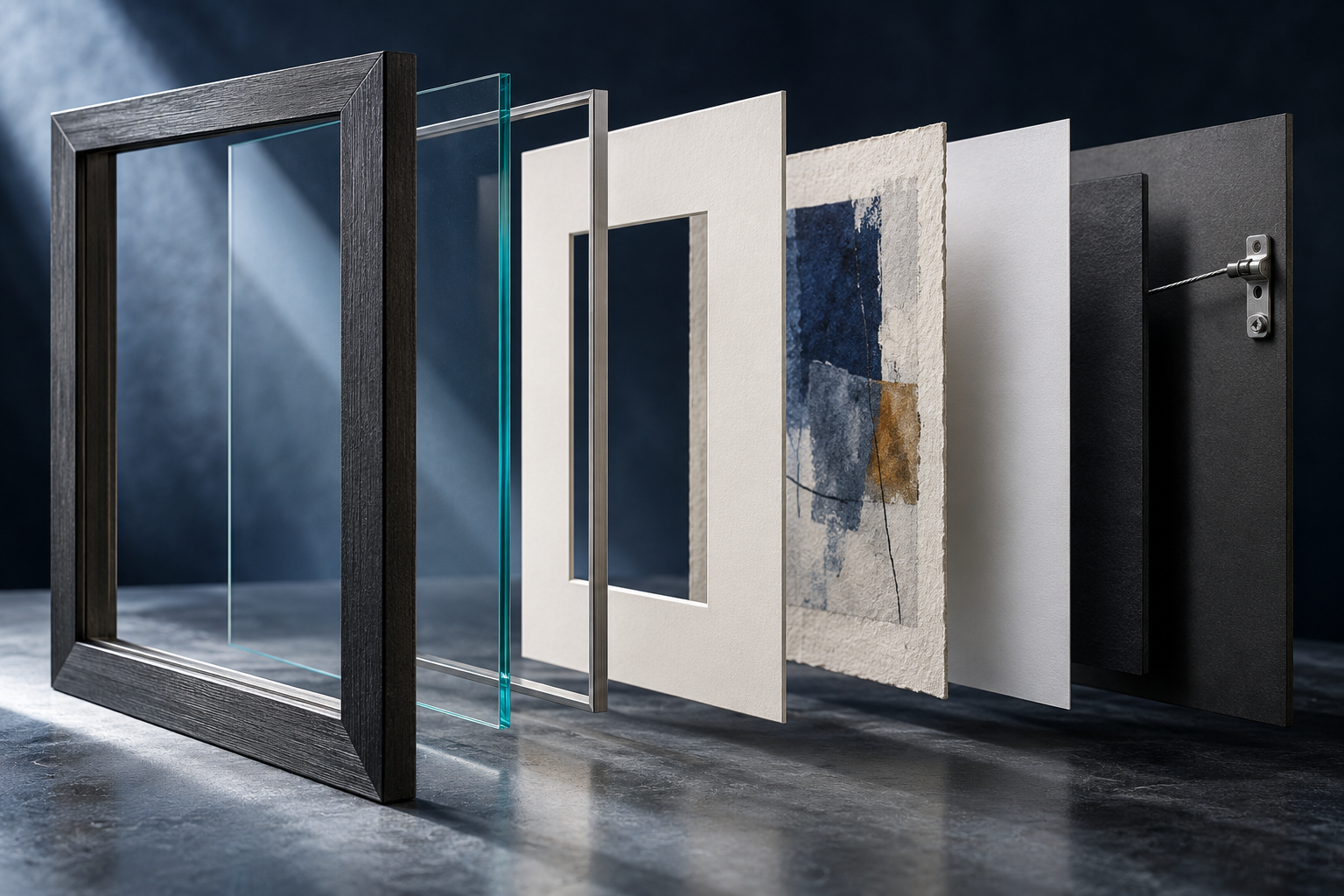
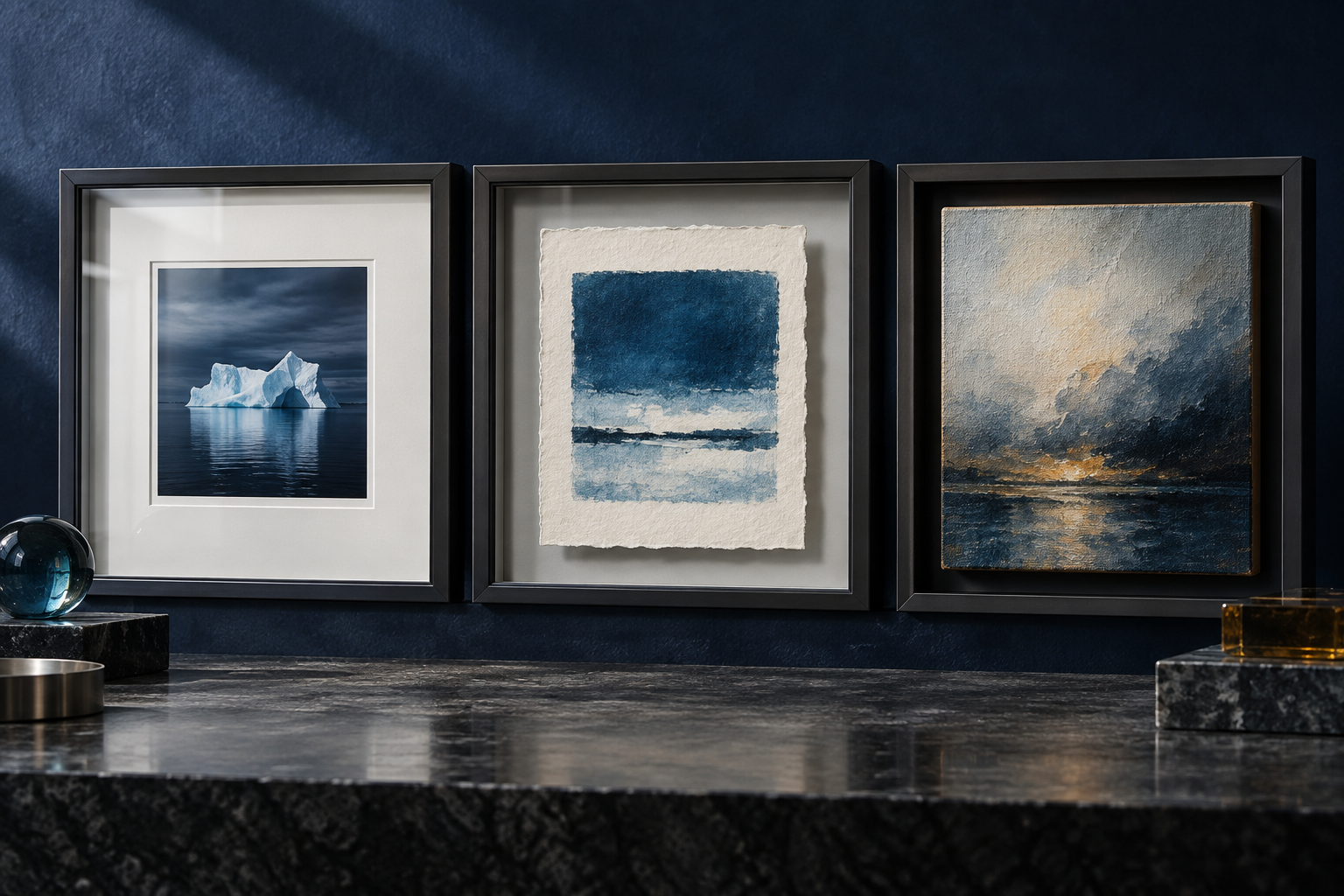
One of the most familiar ways to create separation is with a window mat.
The mat surrounds the artwork while its thickness helps maintain distance between the surface of the piece and the glazing.
Visually, matting also creates negative space around an image and can help establish proportion between the artwork and its frame. When preservation is important, the mat board itself should also be considered. Conservation and museum-quality boards can be selected according to the needs of the artwork. So while a mat may appear decorative, it can also serve an important structural role within the frame.
What If You Don't Want a Mat?
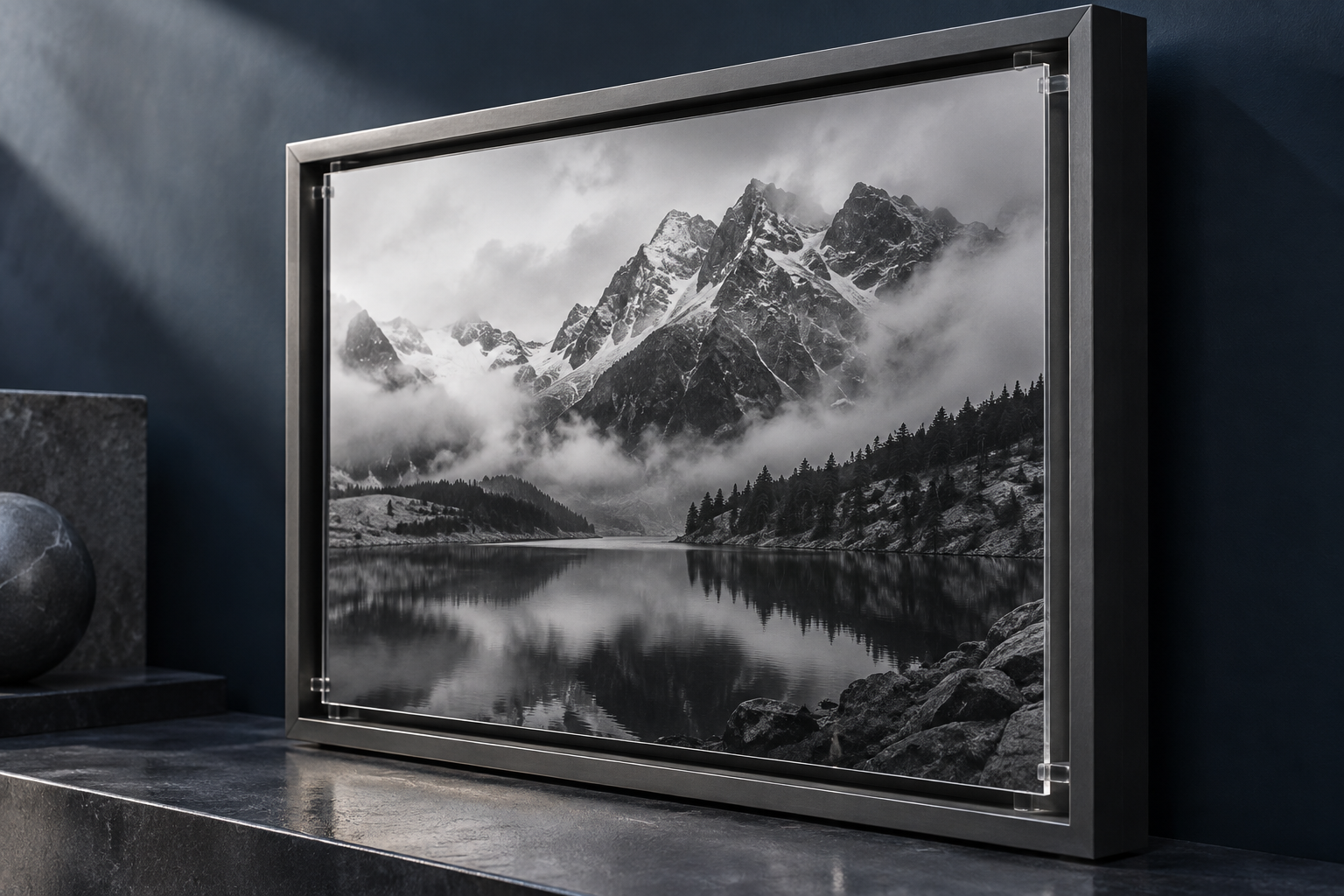
Not every artwork looks best surrounded by a traditional mat. Fortunately, a visible mat isn't the only way to create separation.
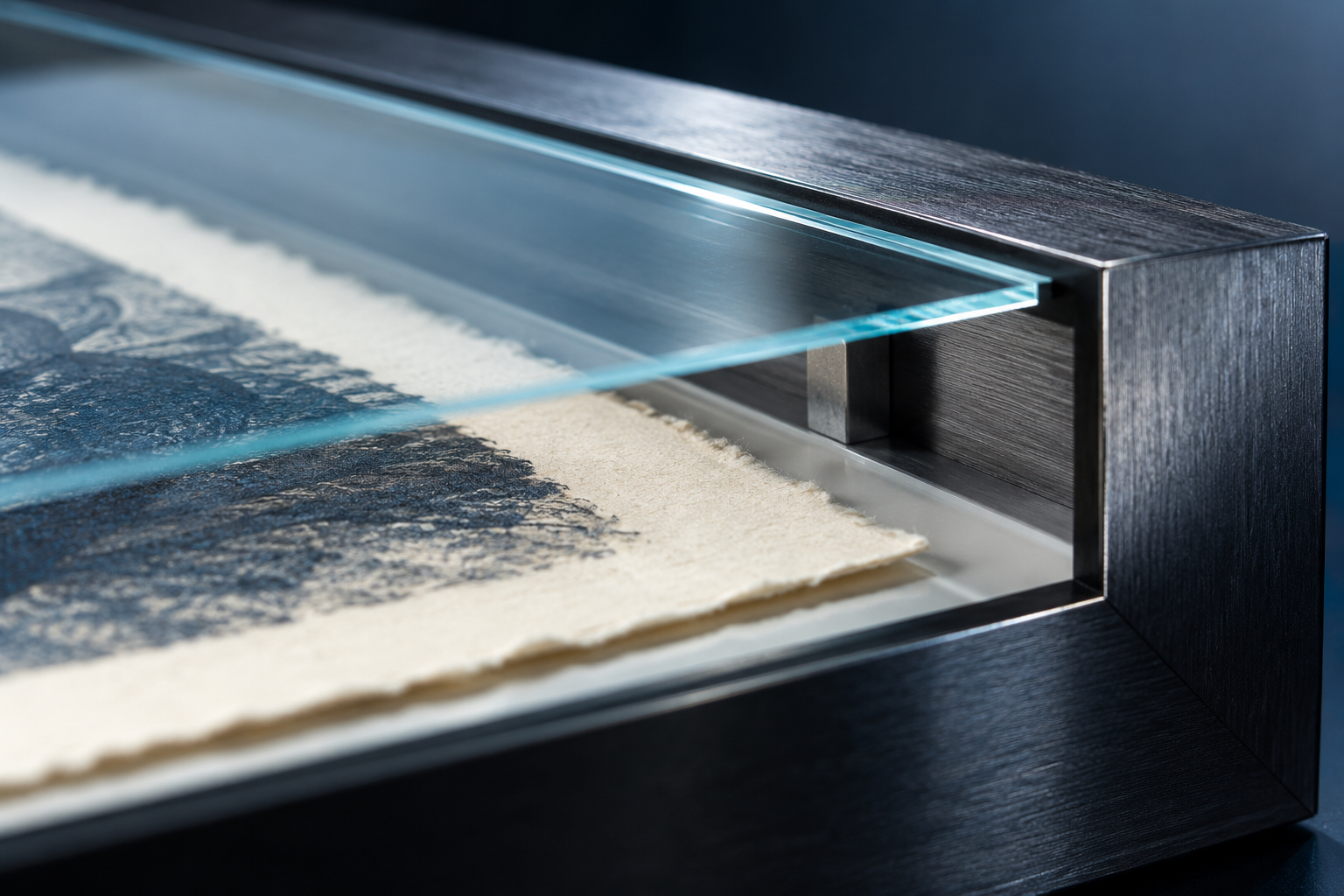
Spacers
Small spacers can be positioned within the frame to maintain distance between the artwork and glazing while remaining largely hidden from view. This can create a clean, contemporary presentation without the visual border of a mat.
Float Mounting
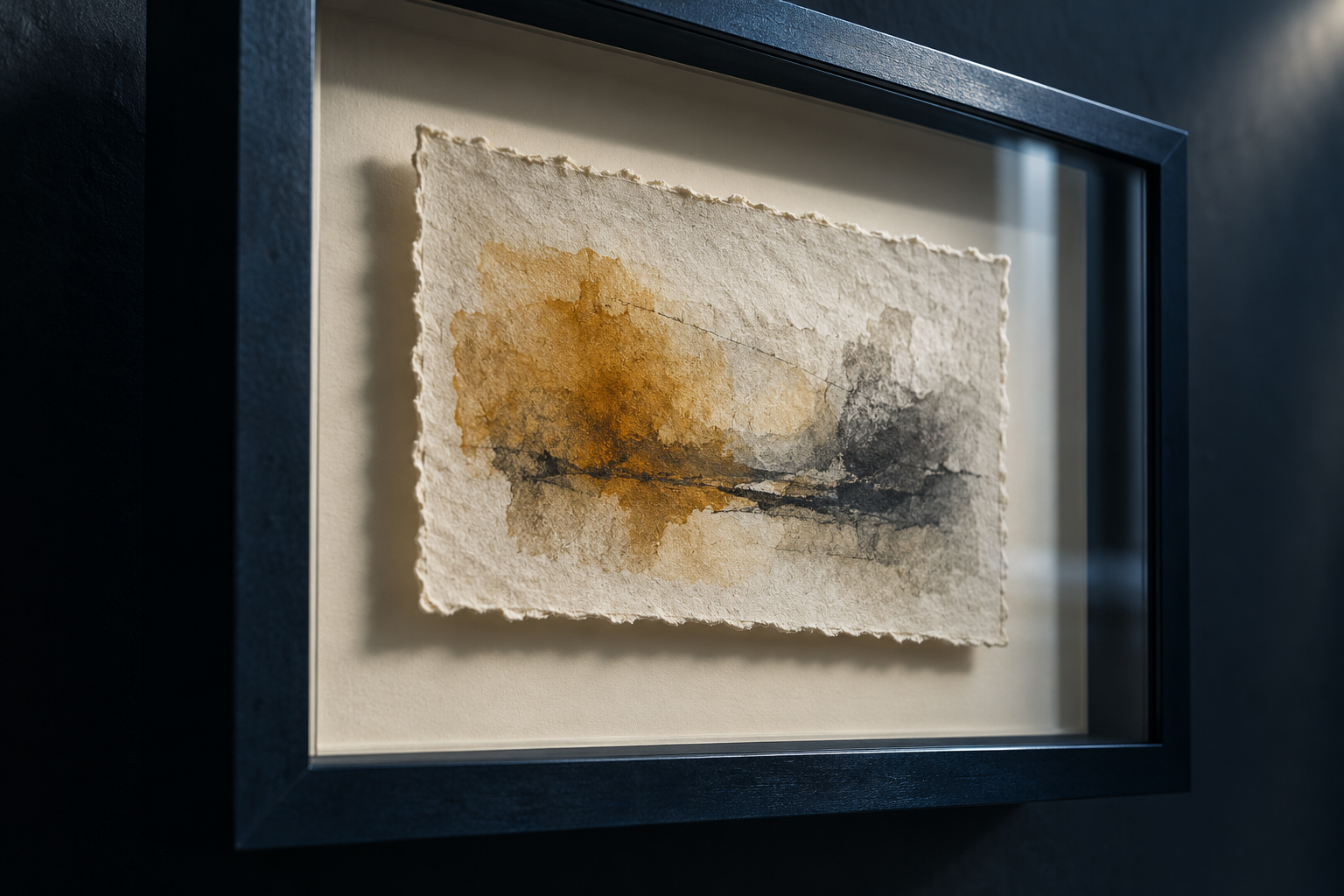
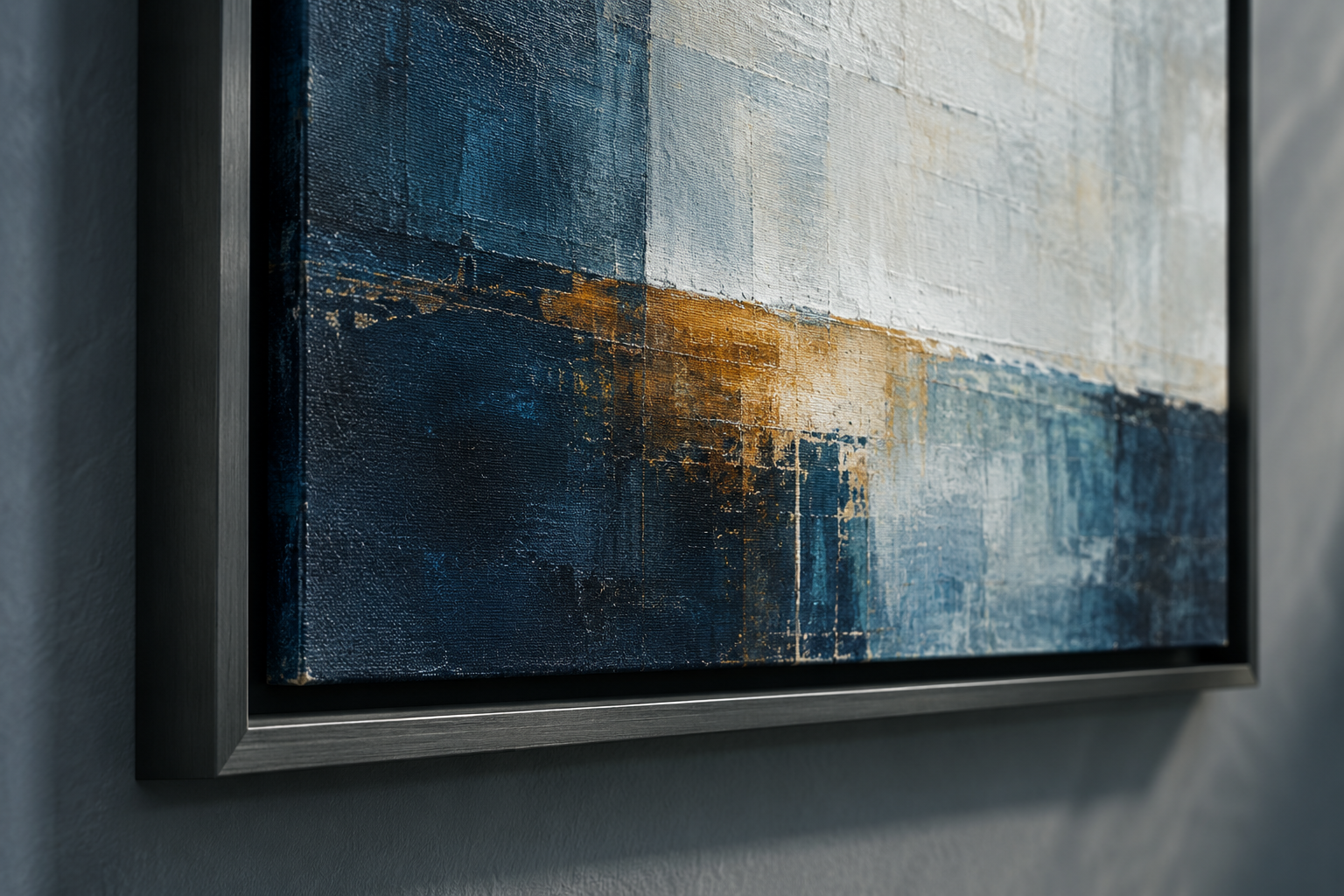
With a float-mounted presentation, the artwork is mounted so its edges remain visible, often against a larger backing or mat board.
This can be particularly effective for handmade paper, deckled edges, drawings, prints, and other works where the physical edges are part of the piece.
Appropriate depth can then be created between the floated artwork and the glazing.
Shadowboxes and Deep Frames
Dimensional works, textiles, objects, and certain specialty presentations may require substantially more space.
A shadowbox or deeper custom frame can create enough depth to accommodate the object while maintaining appropriate separation from the glazing.
The amount of space required depends entirely on what is being framed.
What About Float Frames?
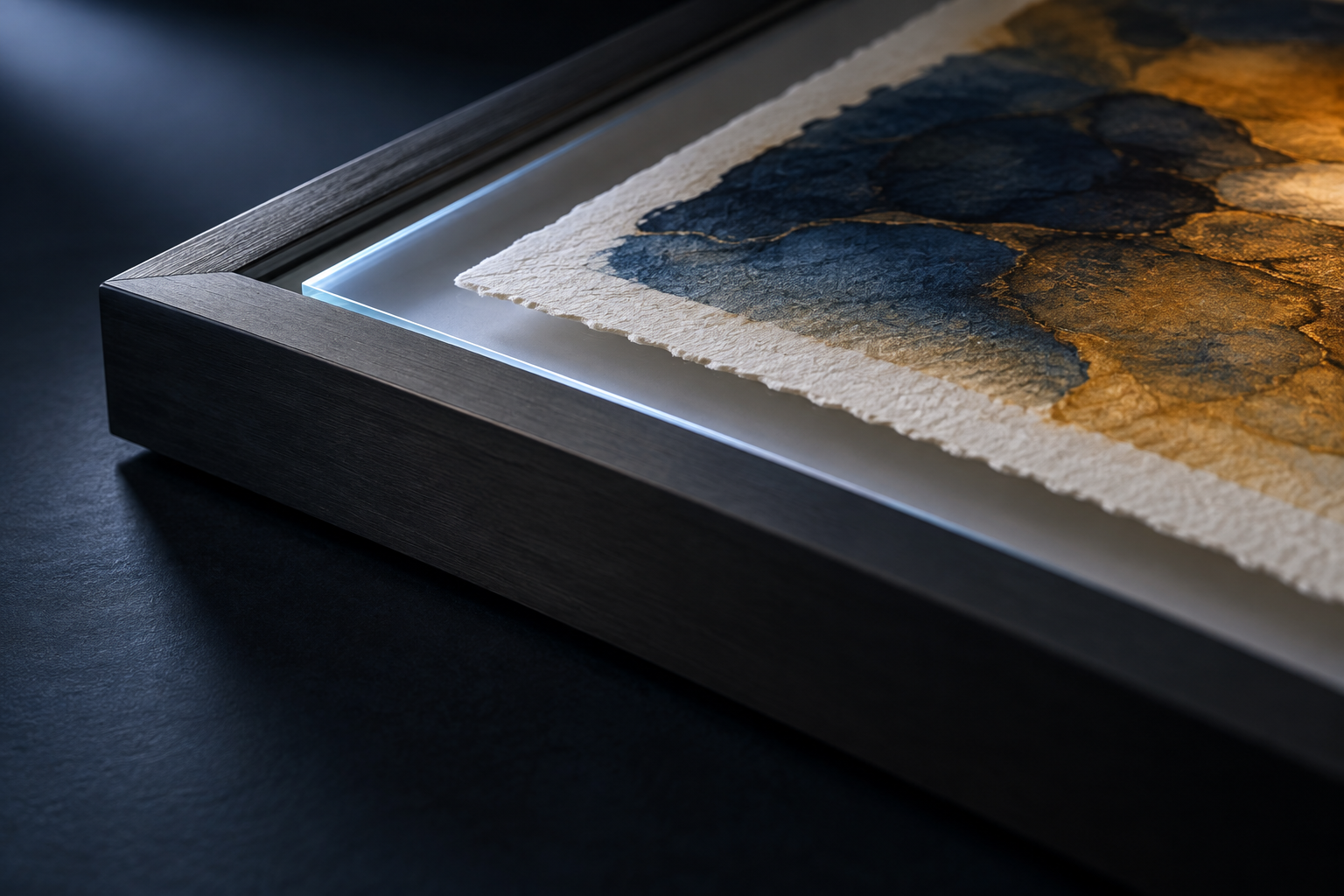
A float frame is different from float mounting.
Float frames are commonly used for paintings on canvas or panels. Instead of placing glazing in front of the artwork, the painting sits within an outer frame with a visible gap around its edges.
That gap creates the impression that the artwork is floating inside the frame. Because many canvas paintings are displayed without glazing, the issue of artwork touching glass may not apply at all.
This is a good example of why framing terminology—and the artwork's medium—matters when deciding on a presentation.
Does Every Framed Piece Need Separation?
Not every object follows exactly the same rules.
Framing methods vary according to the medium, surface, condition, dimensions, value, and intended display environment of the piece.
Certain replaceable or decorative materials may have different requirements from an original watercolor, historic photograph, or limited-edition print. The important point isn't that every artwork must be framed identically.
It's that direct contact with glazing should be a deliberate decision—not simply the result of squeezing an artwork into a frame.
The Frame Is a System
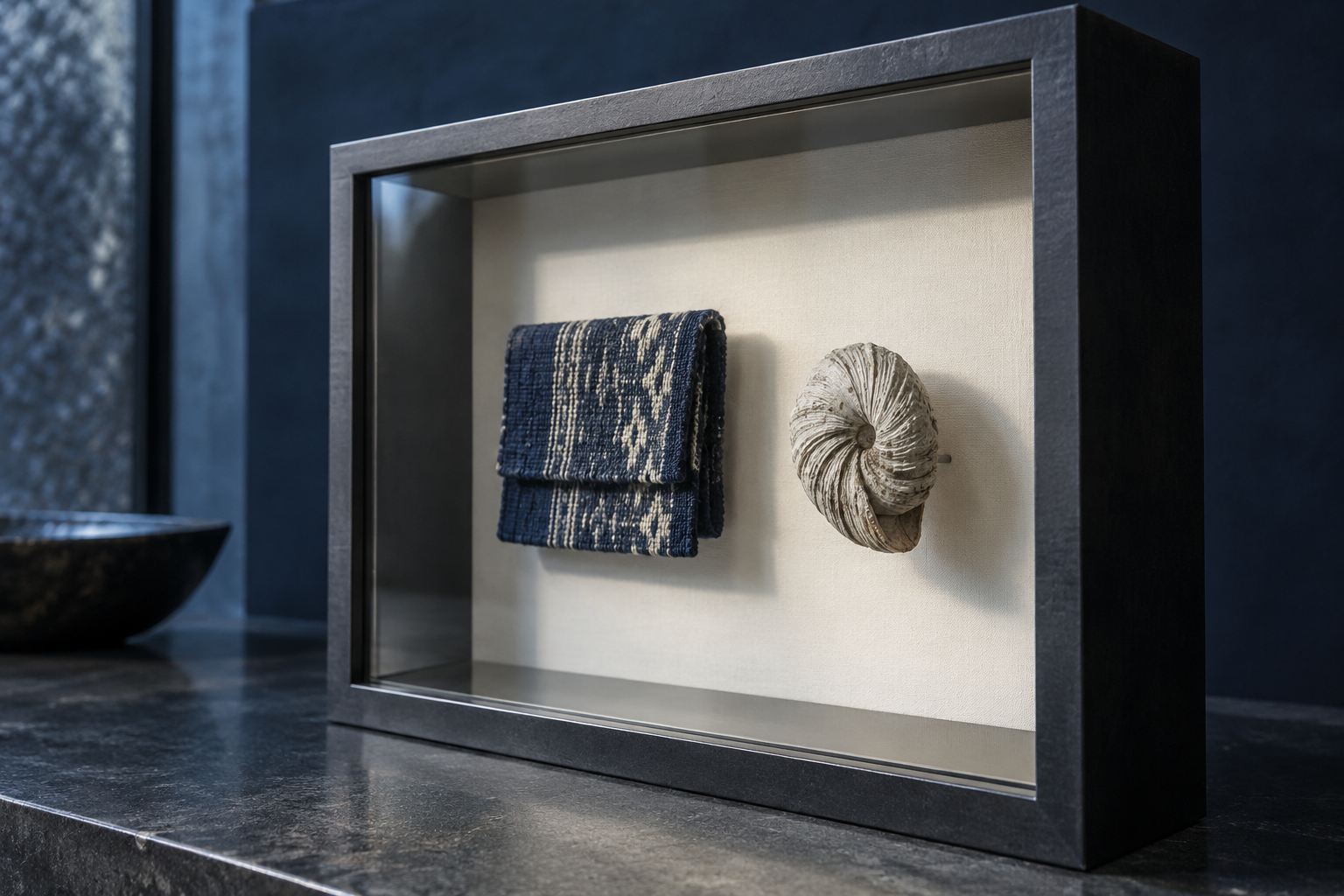
A finished frame is more than four pieces of moulding and a sheet of glass.
Depending on the artwork, it may include:
The frame or moulding
Glass or acrylic glazing
Mat board
Spacers
Mounting materials
Backing
Hanging hardware
Each component affects how the artwork is presented and, in conservation-minded framing, how it is protected. This is why decisions about matting, glazing, mounting, and frame depth should be made together rather than independently.
Give Your Artwork a Little Space
Sometimes a few millimeters can make an important difference.
Creating appropriate separation between sensitive artwork and glazing can help avoid direct surface contact while allowing the piece to be presented in a way that respects its material and construction.
At Harlem Frames, we consider the entire framing package when developing a presentation—from matting and mounting to glazing, spacers, frame depth, and conservation requirements.
Have a photograph, print, drawing, or work on paper you're considering framing? Bring it to Harlem Frames and our team can help determine a presentation appropriate for the piece.
Related Insights
To Mat or Not to Mat? Choosing the Right Mat for Your Artwork →
Museum Glass, Acrylic & Conservation Glazing: What's the Difference? →