Why Your Artwork Shouldn’t Touch the Glass
When looking at a beautifully framed artwork, the small amount of space between the artwork and the glazing may seem insignificant. In reality, that space can be an important part of a thoughtfully designed framing system.
For many photographs, prints, drawings, watercolors, documents, and other works on paper, placing the surface directly against glass or acrylic can introduce unnecessary risks over time. Moisture, condensation, changes in humidity, and the characteristics of the artwork itself can all become concerns when there is no separation.
This is one reason professional framing often uses matting, spacers, float mounting, or deeper framing methods to create a controlled distance between the artwork and the glazing.
What Happens When Artwork Touches the Glass?
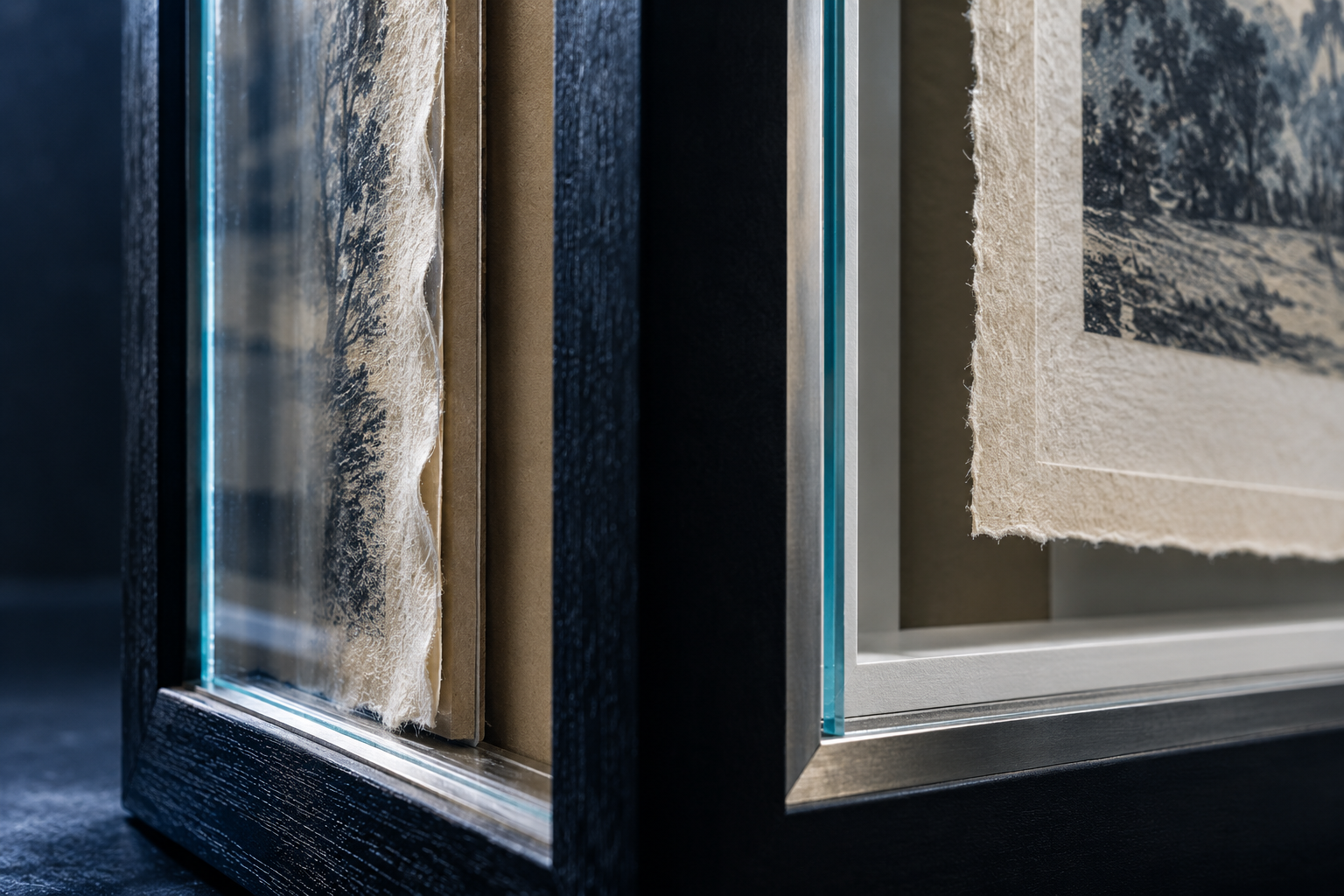
Glass and acrylic provide an important physical barrier between artwork and the surrounding environment, helping protect it from dust, handling, and accidental contact.
But the glazing generally isn't intended to function as the surface against which sensitive artwork rests. When artwork is pressed directly against glazing, changes within the environment can become more consequential.
Paper and other materials naturally respond to temperature and humidity. They may expand, contract, ripple, or otherwise change as environmental conditions fluctuate. Providing appropriate space within the frame gives the artwork a more considered environment in which to exist.
Moisture Is One of the Biggest Concerns
Temperature and humidity can vary throughout a home, gallery, or other interior.
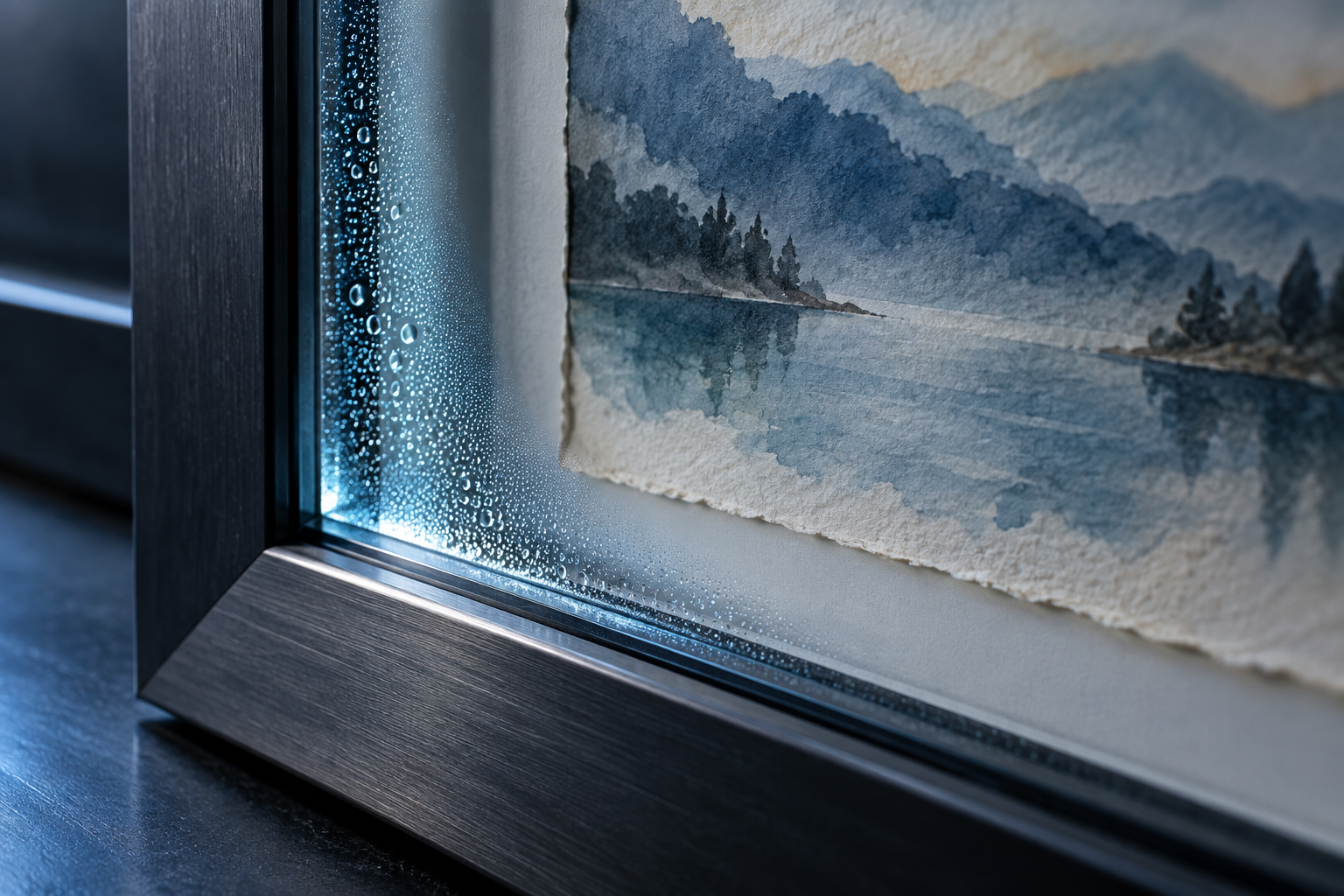
Under certain conditions, moisture can develop inside a framing package. If an artwork is directly against the glazing, there is little or no separation between the artwork and that moisture. This can be particularly concerning for paper, photographs, watercolors, prints, and other moisture-sensitive materials.
Persistent moisture can contribute to staining, distortion, mold growth, and other forms of deterioration. The goal isn't to make a frame completely airtight. Instead, good framing considers how the materials inside the frame interact with one another and with the environment around them.
Photographs Require Particular Care
Photographic surfaces can be especially sensitive to direct contact.
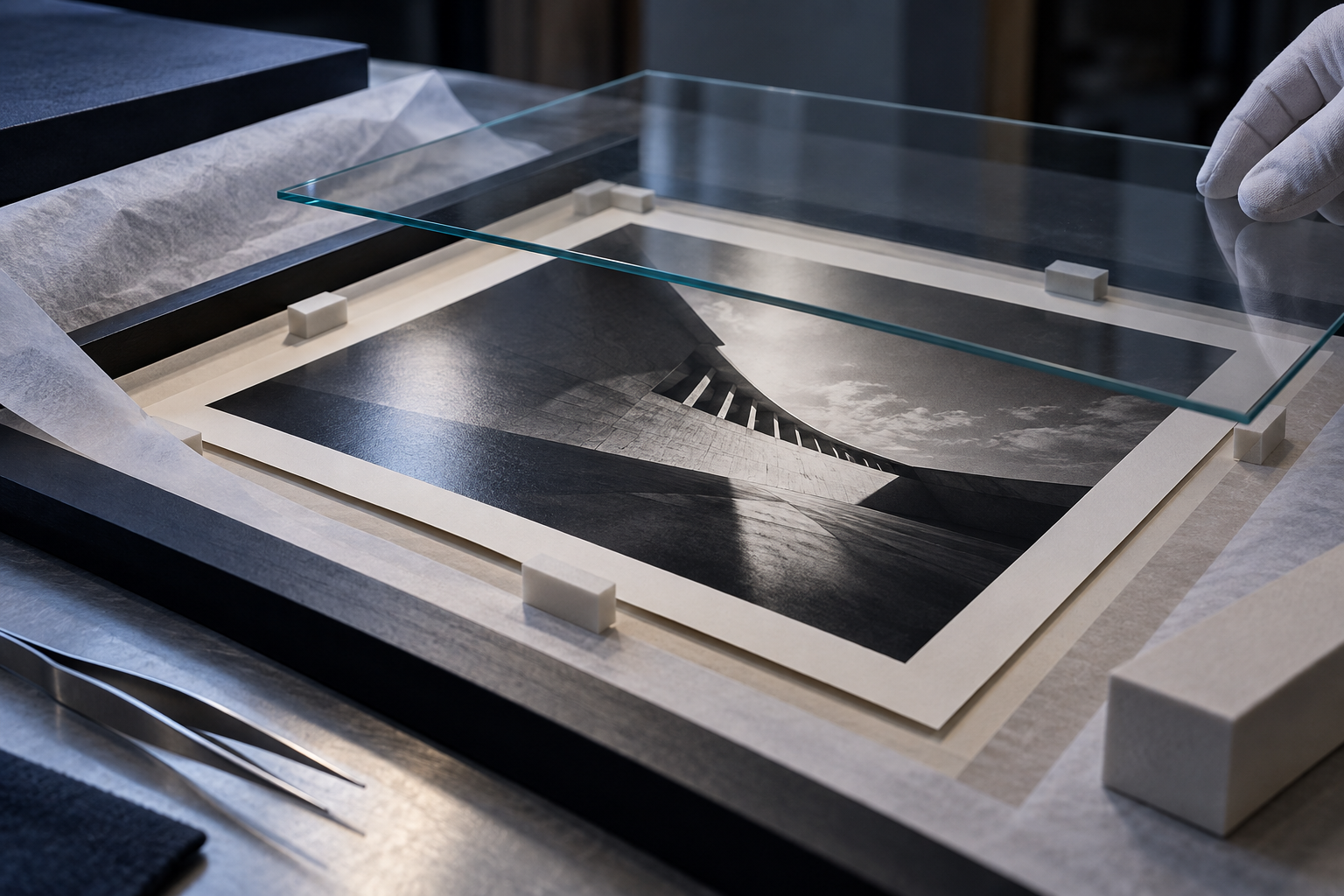
If a photograph remains pressed against glazing under unfavorable environmental conditions, its surface can potentially adhere to the glass or acrylic. Once that happens, attempting to separate the two can risk damaging the image.
This is why simply placing an important photograph inside a frame and pressing the backing firmly against it isn't always an appropriate long-term framing method. For valuable, historical, or irreplaceable photographs, the complete framing system—including mounting, spacing, glazing, and environmental conditions—deserves consideration.
Works on Paper Need Room Too
Drawings, prints, watercolors, documents, and other works on paper can respond visibly to environmental changes.
Paper naturally absorbs and releases moisture as humidity changes. Restricting it tightly against glazing may make resulting distortions more noticeable and can create an undesirable relationship between the artwork and the glazing.
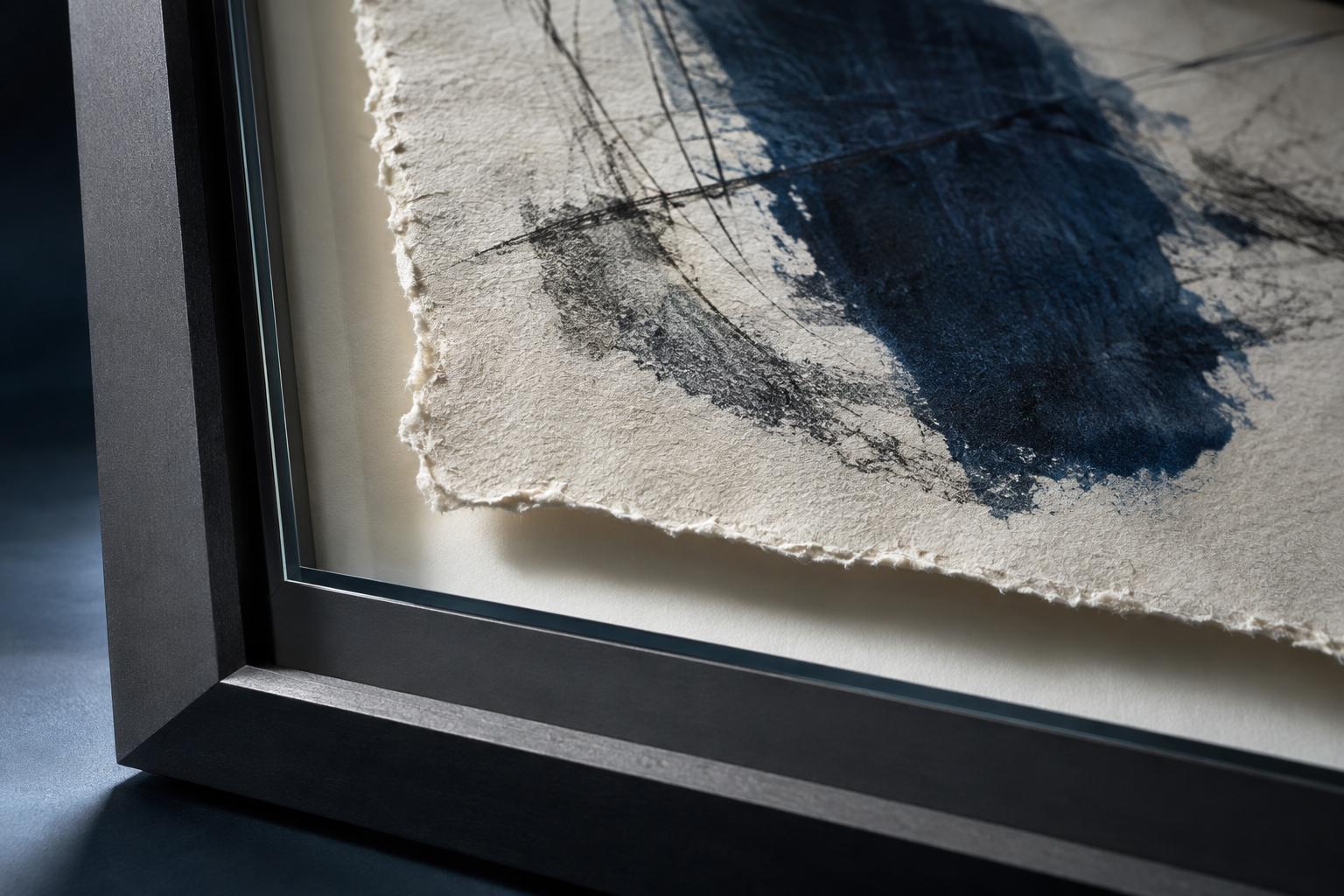
Appropriate mounting and spacing allow the work to be presented without unnecessarily pressing its surface against another material. This becomes especially important for handmade papers, deckled edges, textured works, and pieces whose physical qualities are part of the artwork itself.
Matting Creates More Than a Decorative Border
One of the most familiar ways to create separation is with a window mat.
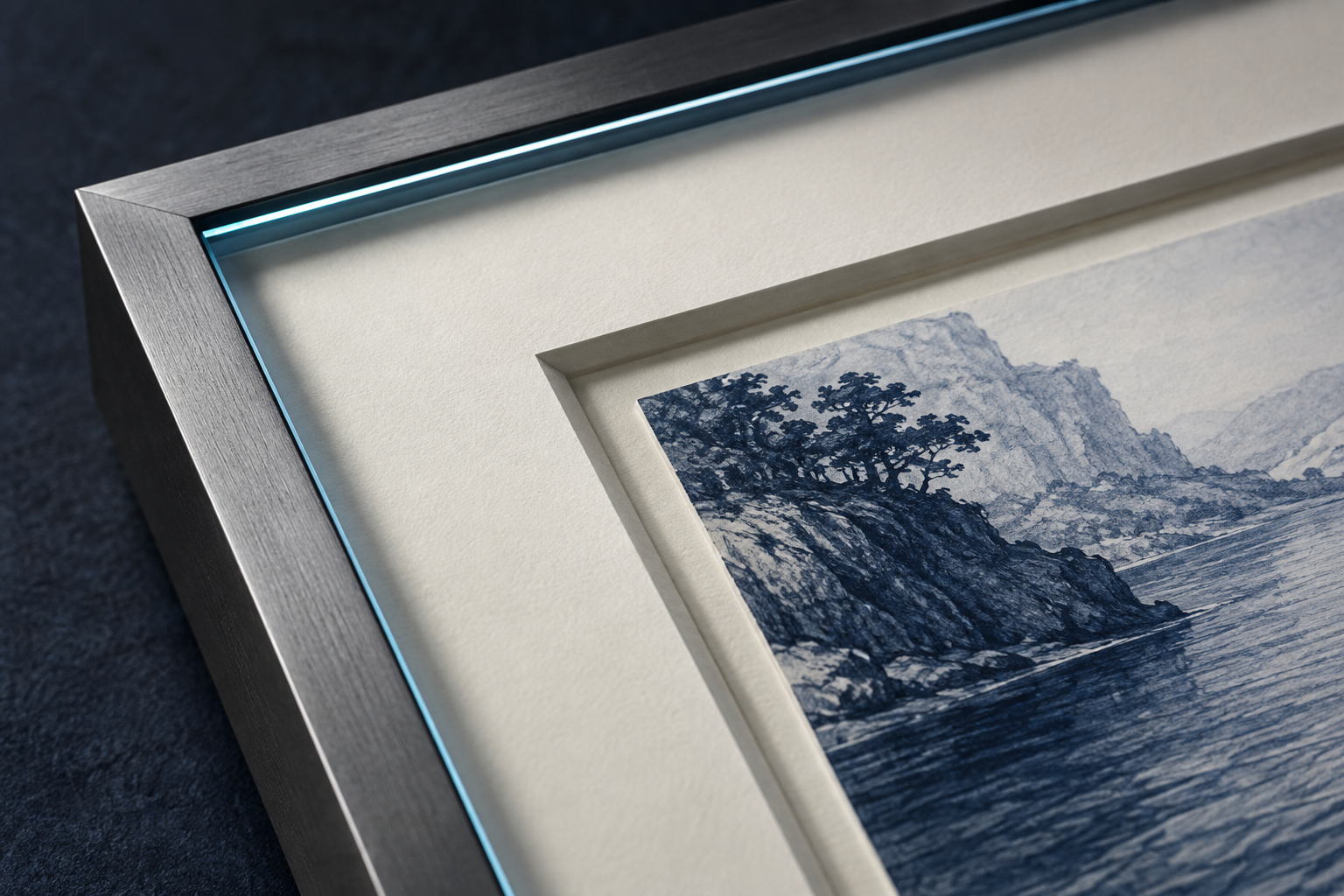
The mat surrounds the artwork while its thickness helps maintain distance between the surface of the piece and the glazing.
Visually, matting also creates negative space around an image and can help establish proportion between the artwork and its frame. When preservation is important, the mat board itself should also be considered. Conservation and museum-quality boards can be selected according to the needs of the artwork. So while a mat may appear decorative, it can also serve an important structural role within the frame.
What If You Don't Want a Mat?
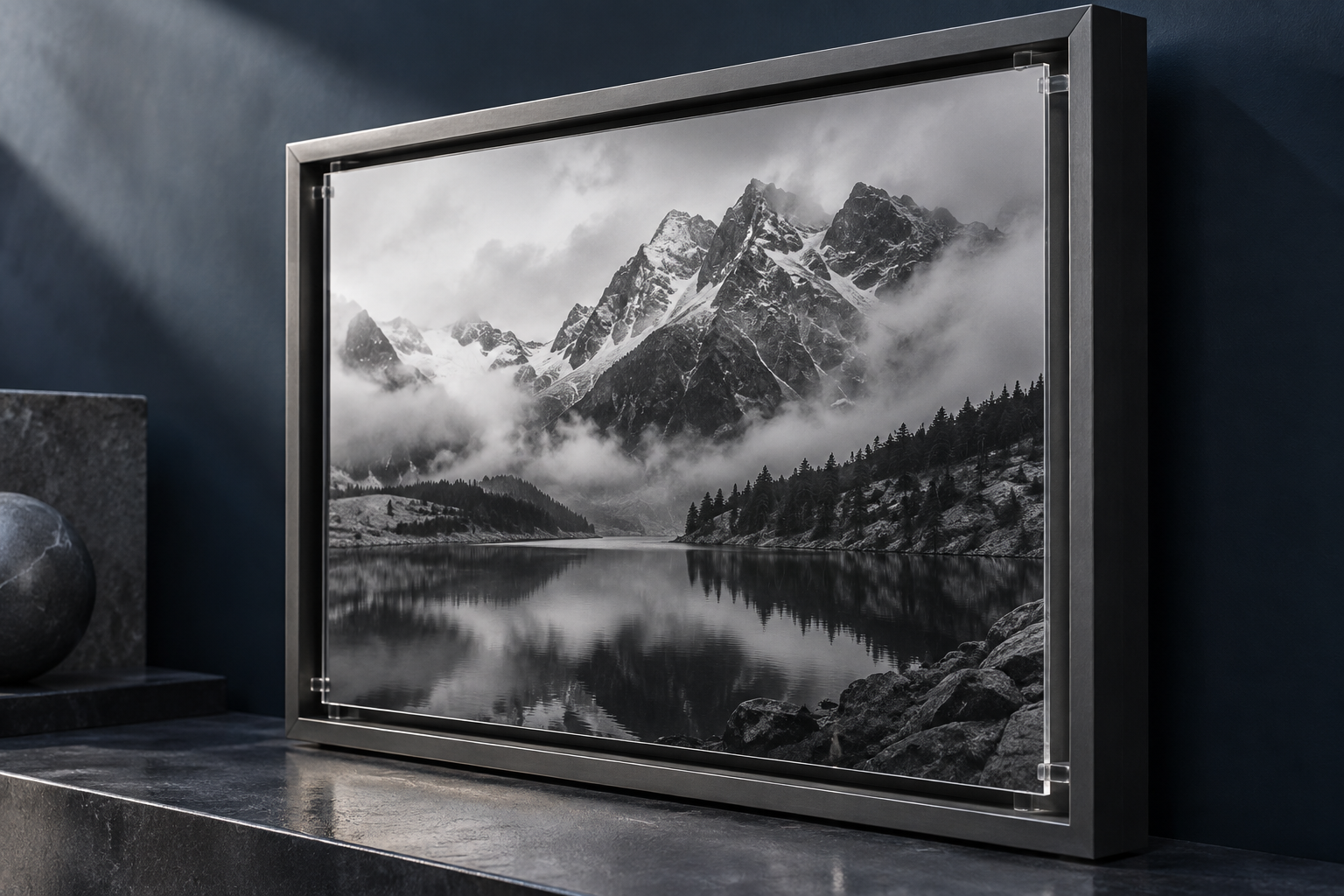
Not every artwork looks best surrounded by a traditional mat. Fortunately, a visible mat isn't the only way to create separation.
Spacers
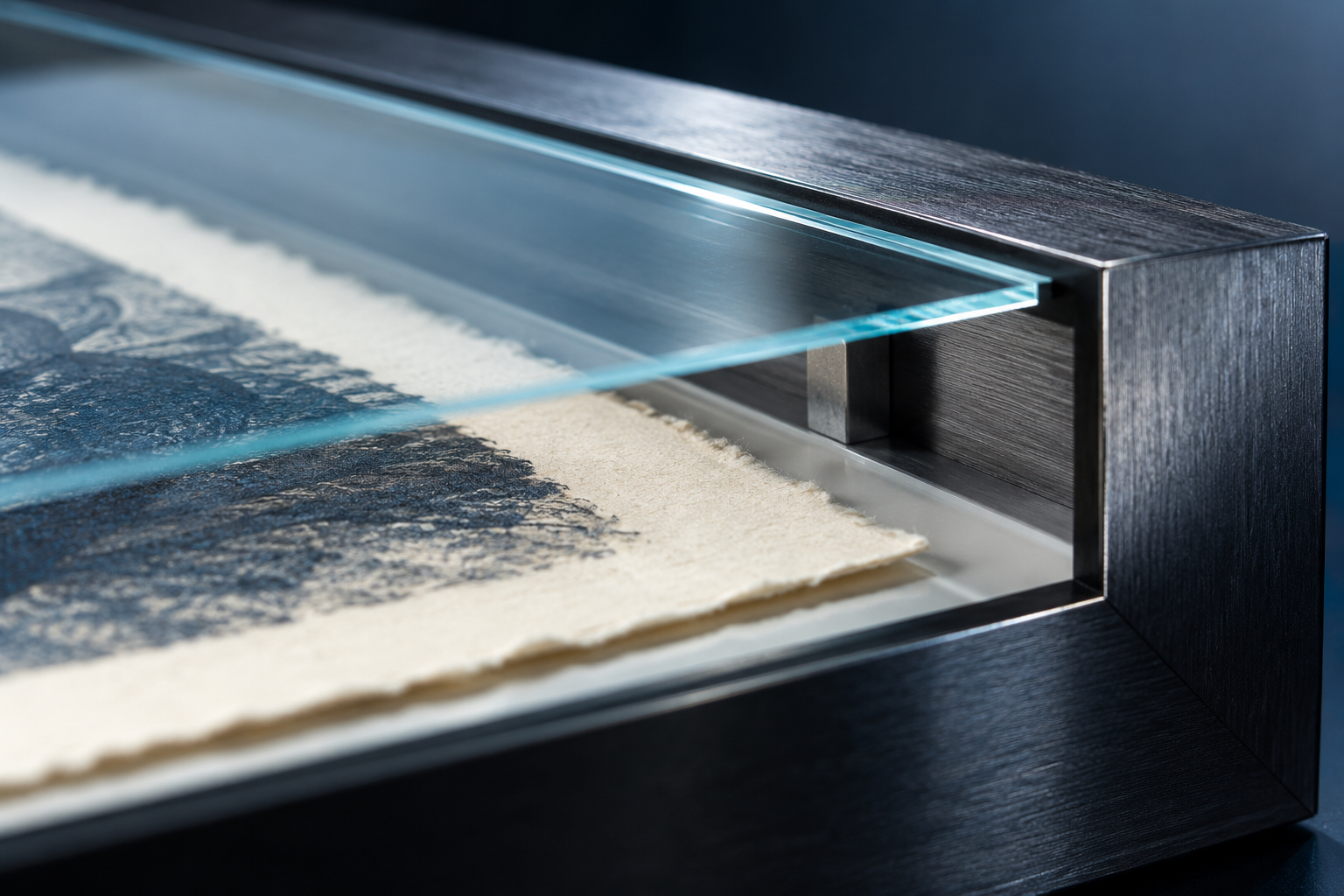
Small spacers can be positioned within the frame to maintain distance between the artwork and glazing while remaining largely hidden from view. This can create a clean, contemporary presentation without the visual border of a mat.
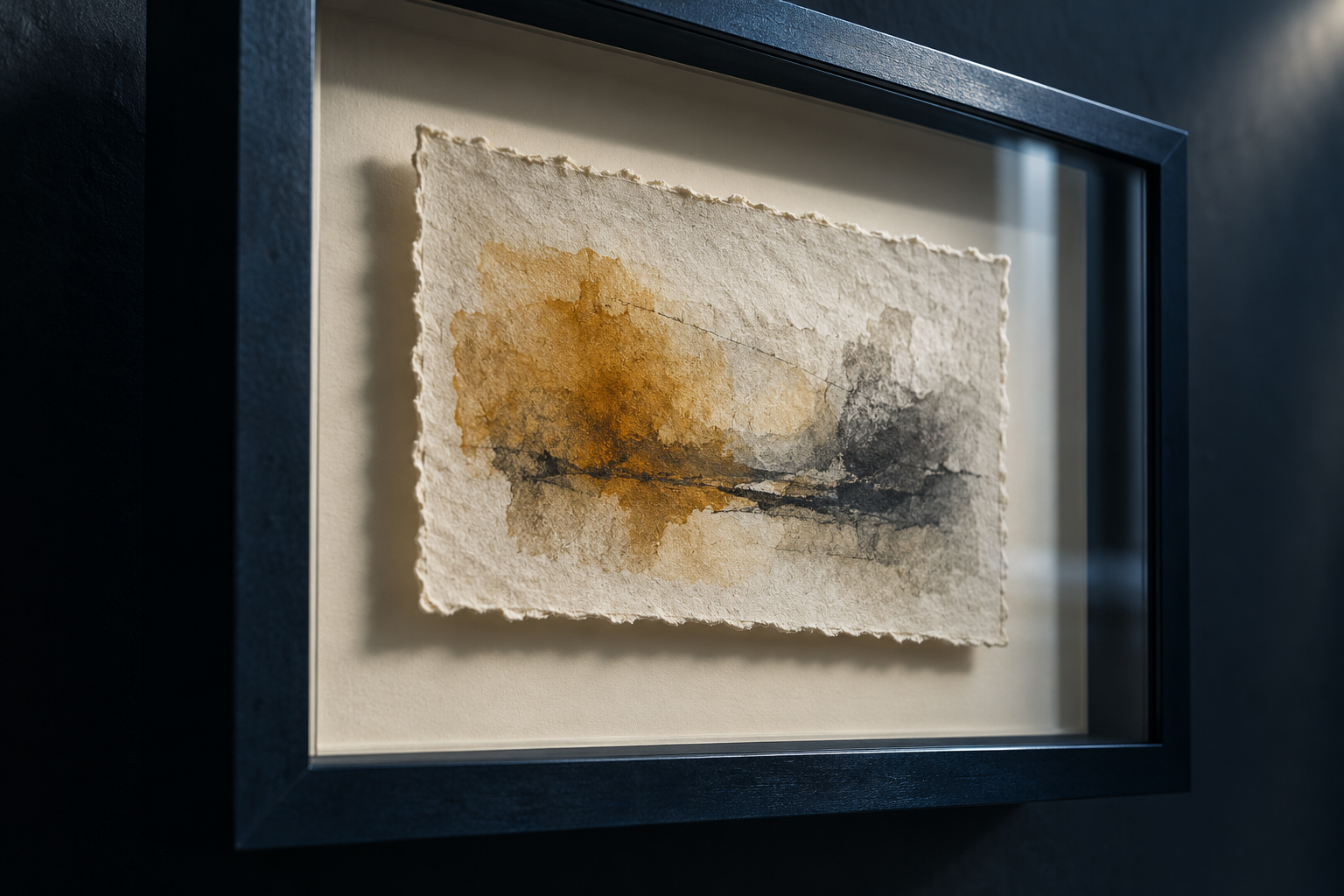
Float Mounting
With a float-mounted presentation, the artwork is mounted so its edges remain visible, often against a larger backing or mat board.
This can be particularly effective for handmade paper, deckled edges, drawings, prints, and other works where the physical edges are part of the piece.
Appropriate depth can then be created between the floated artwork and the glazing.
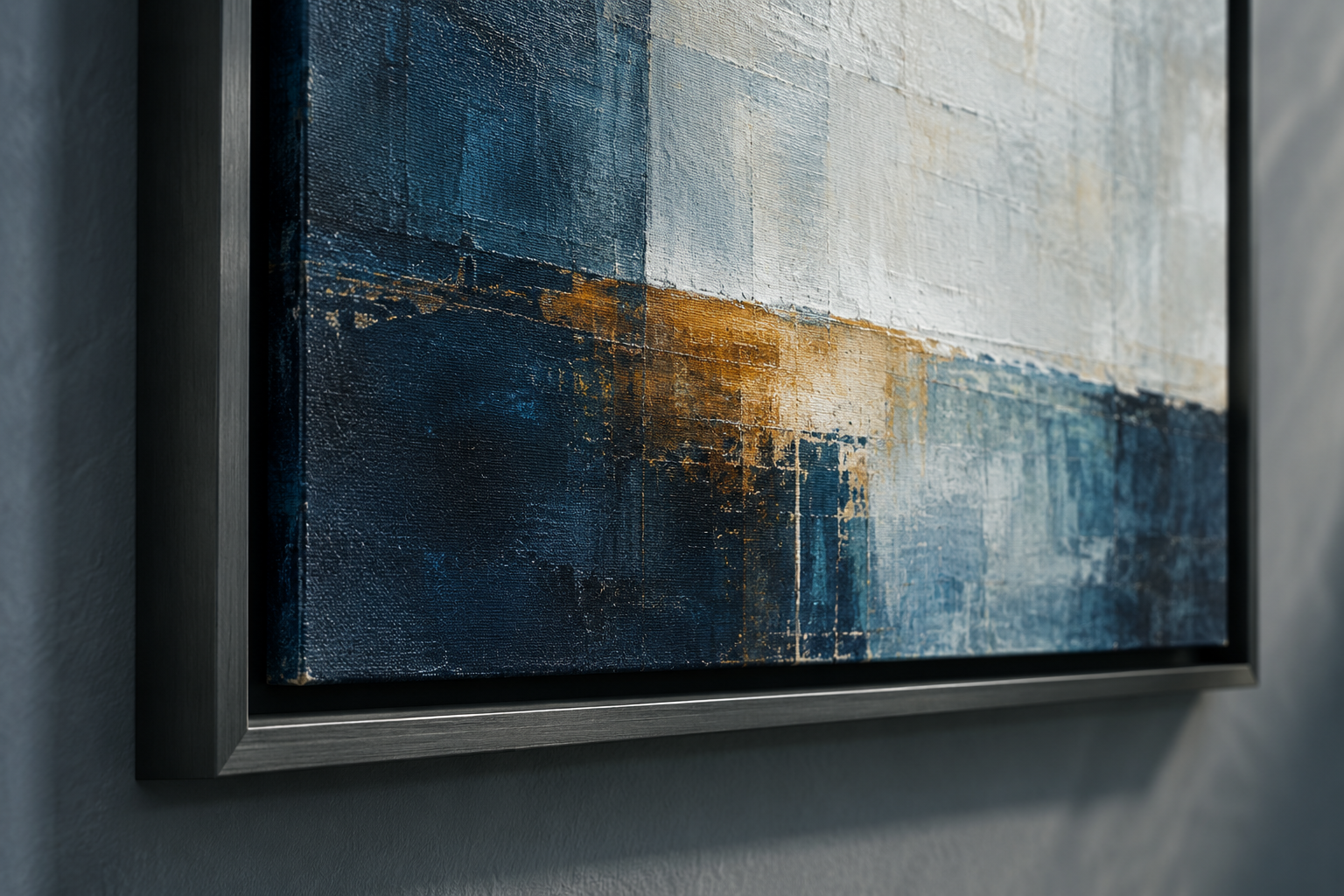
Shadowboxes and Deep Frames
Dimensional works, textiles, objects, and certain specialty presentations may require substantially more space.
A shadowbox or deeper custom frame can create enough depth to accommodate the object while maintaining appropriate separation from the glazing.
The amount of space required depends entirely on what is being framed.
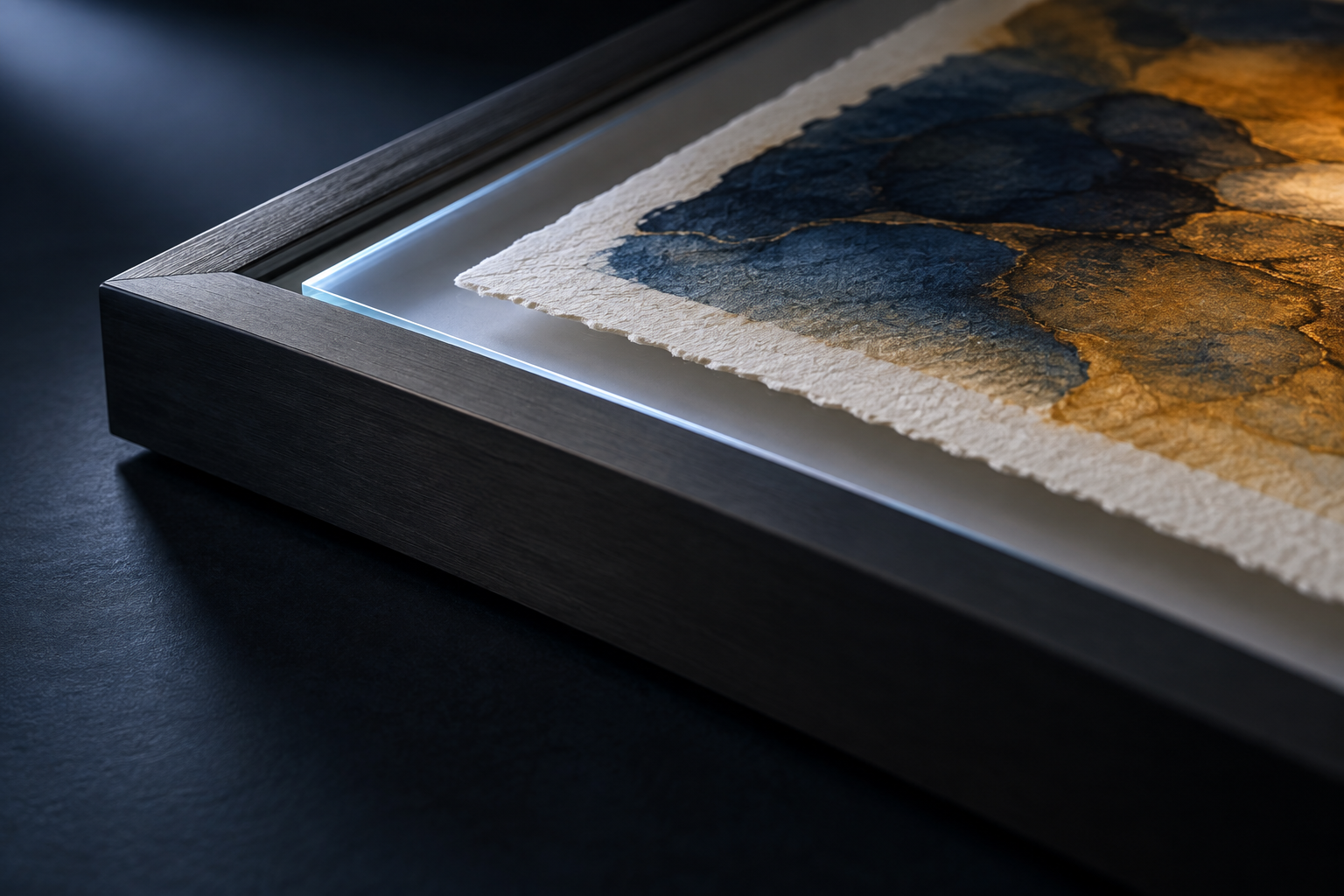
What About Float Frames?
A float frame is different from float mounting.
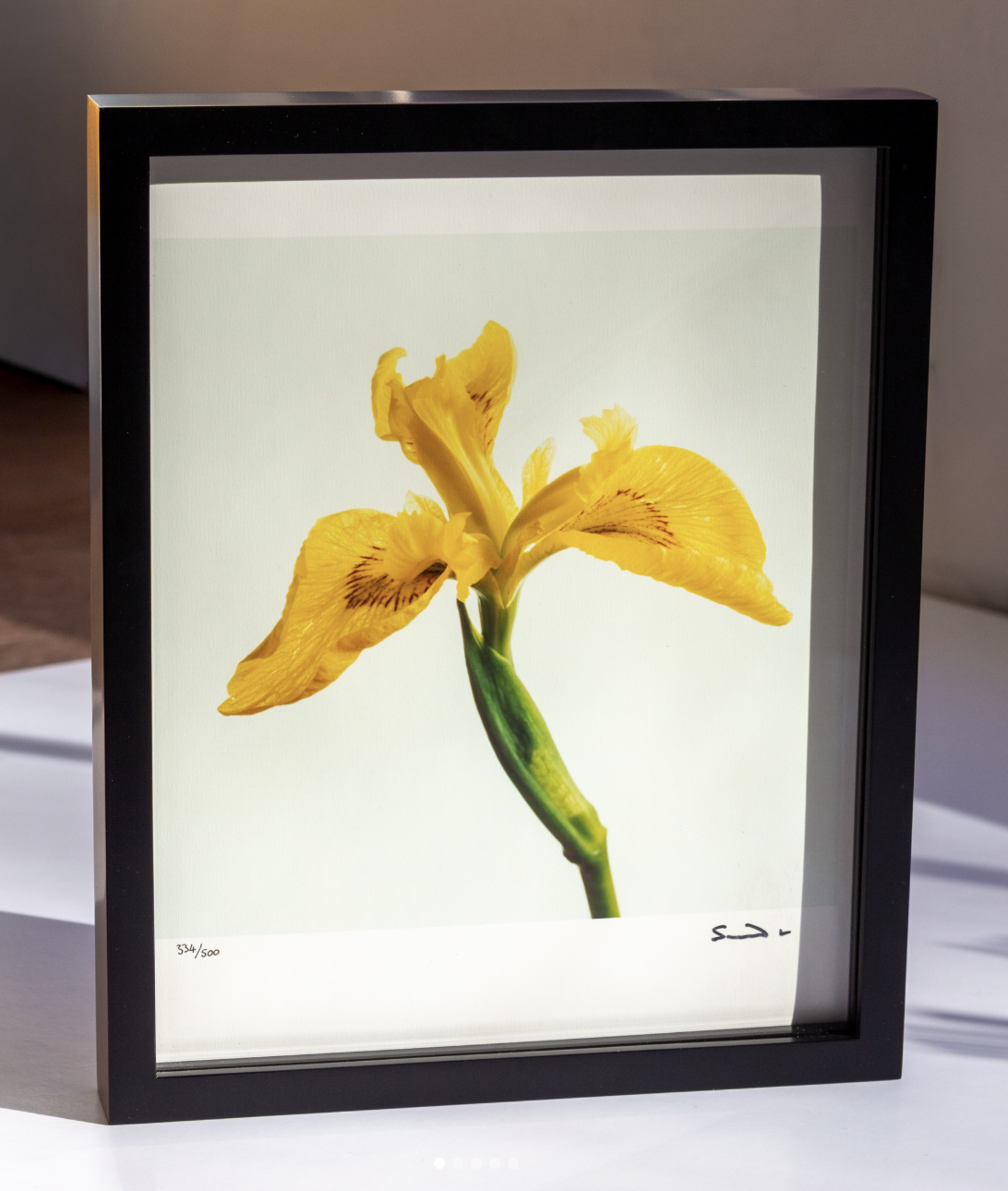
Float frames are commonly used for paintings on canvas or panels. Instead of placing glazing in front of the artwork, the painting sits within an outer frame with a visible gap around its edges.
That gap creates the impression that the artwork is floating inside the frame. Because many canvas paintings are displayed without glazing, the issue of artwork touching glass may not apply at all.
This is a good example of why framing terminology—and the artwork's medium—matters when deciding on a presentation.
Does Every Framed Piece Need Separation?
Not every object follows exactly the same rules.
Framing methods vary according to the medium, surface, condition, dimensions, value, and intended display environment of the piece.
Certain replaceable or decorative materials may have different requirements from an original watercolor, historic photograph, or limited-edition print. The important point isn't that every artwork must be framed identically.
It's that direct contact with glazing should be a deliberate decision—not simply the result of squeezing an artwork into a frame.
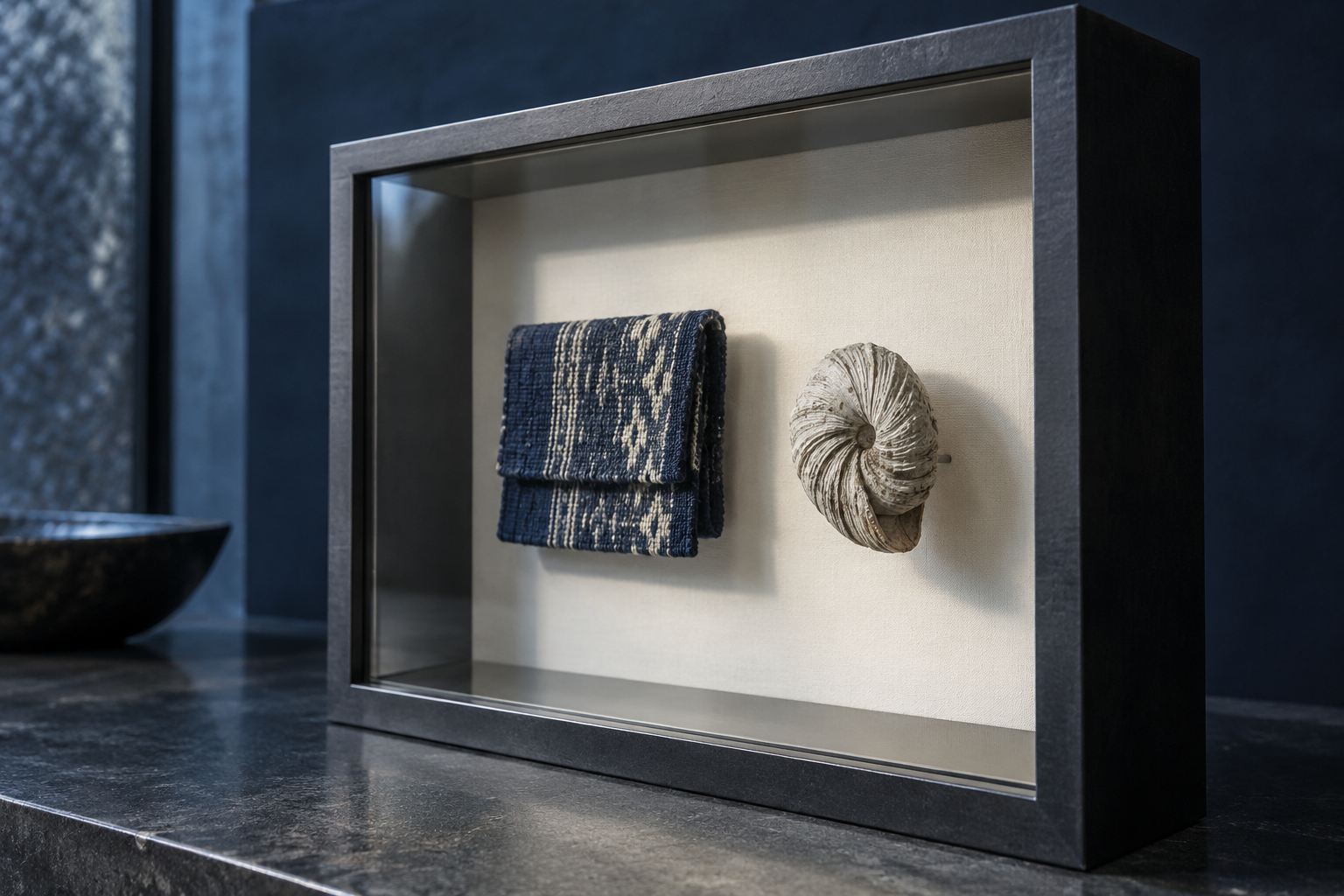
The Frame Is a System
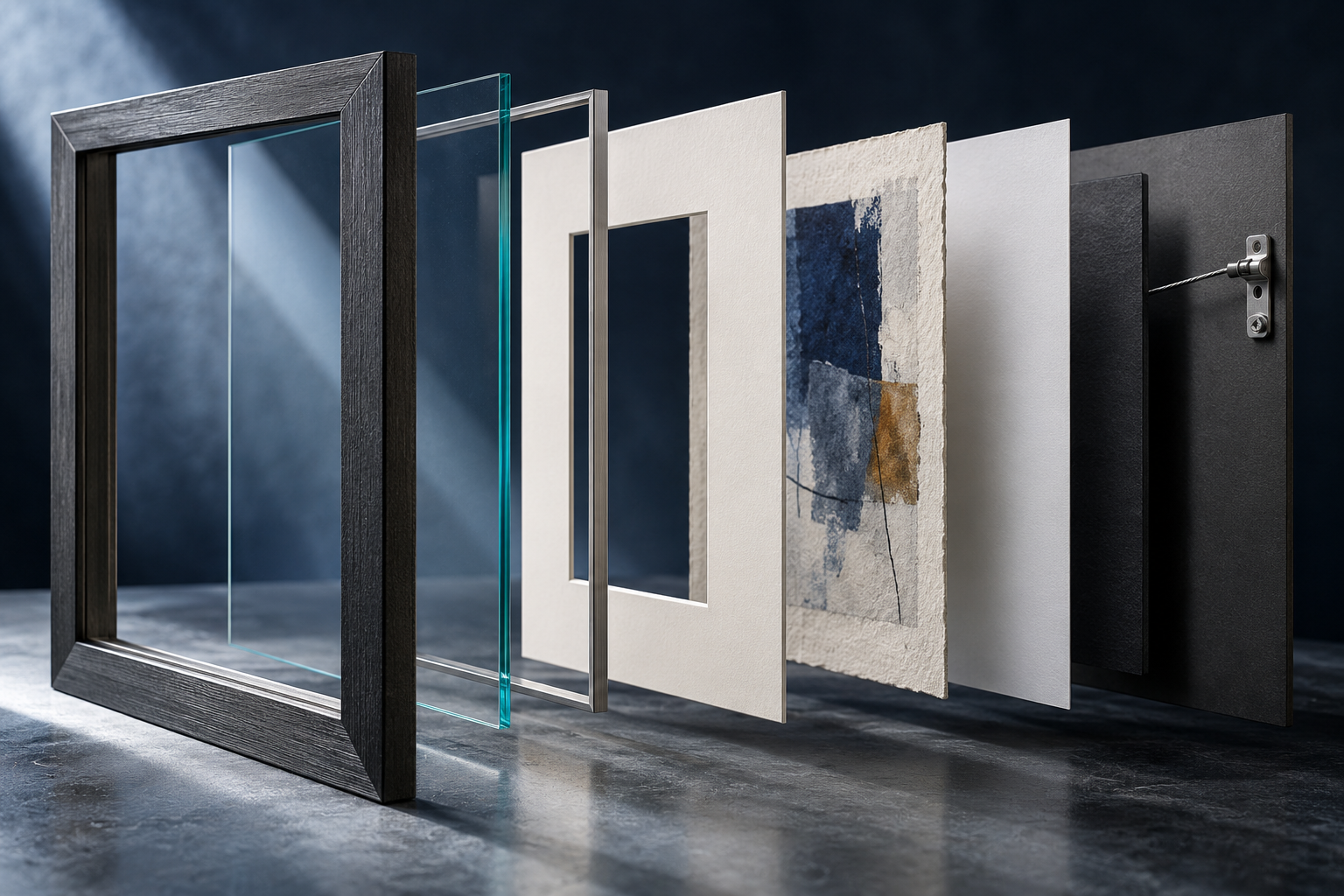
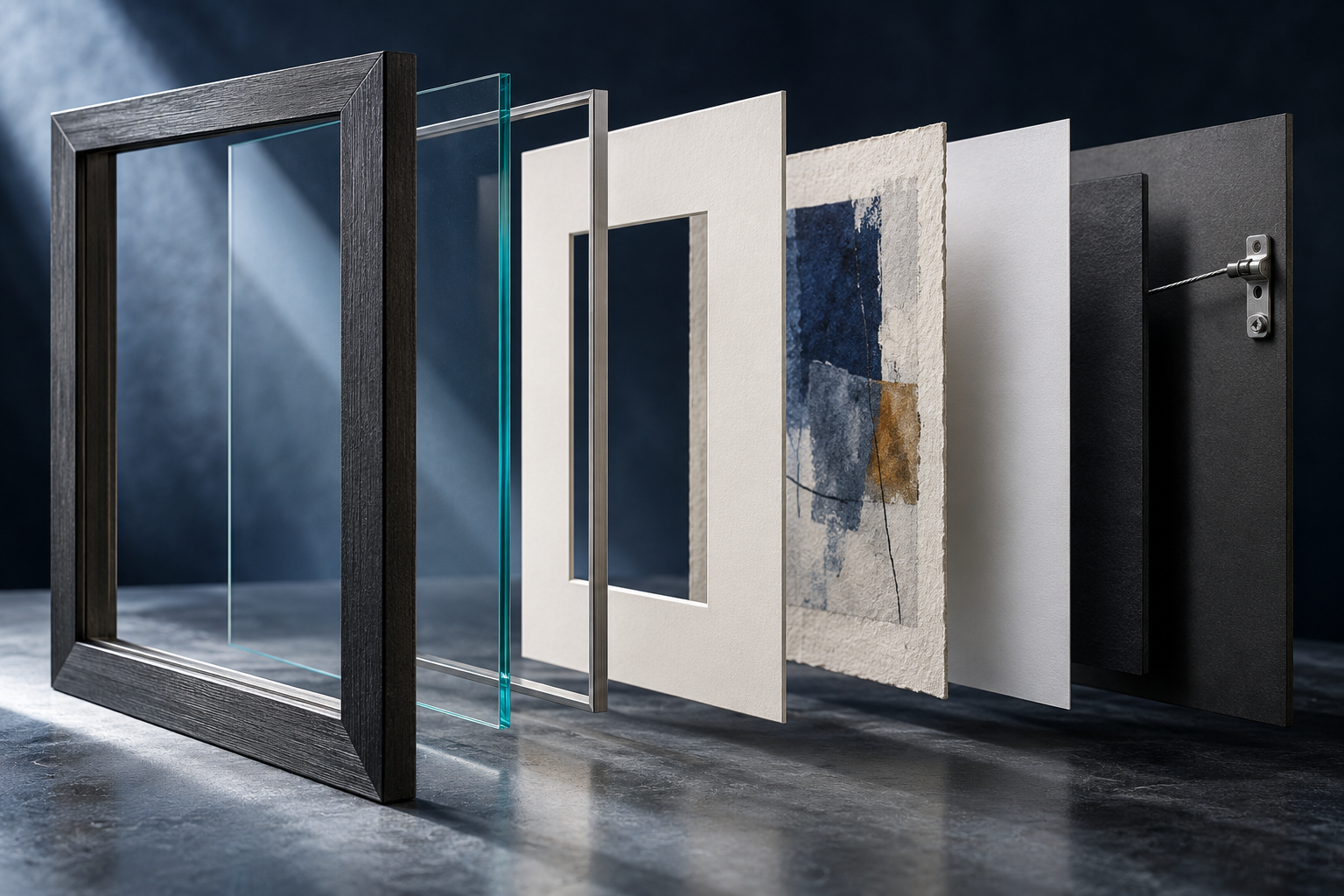
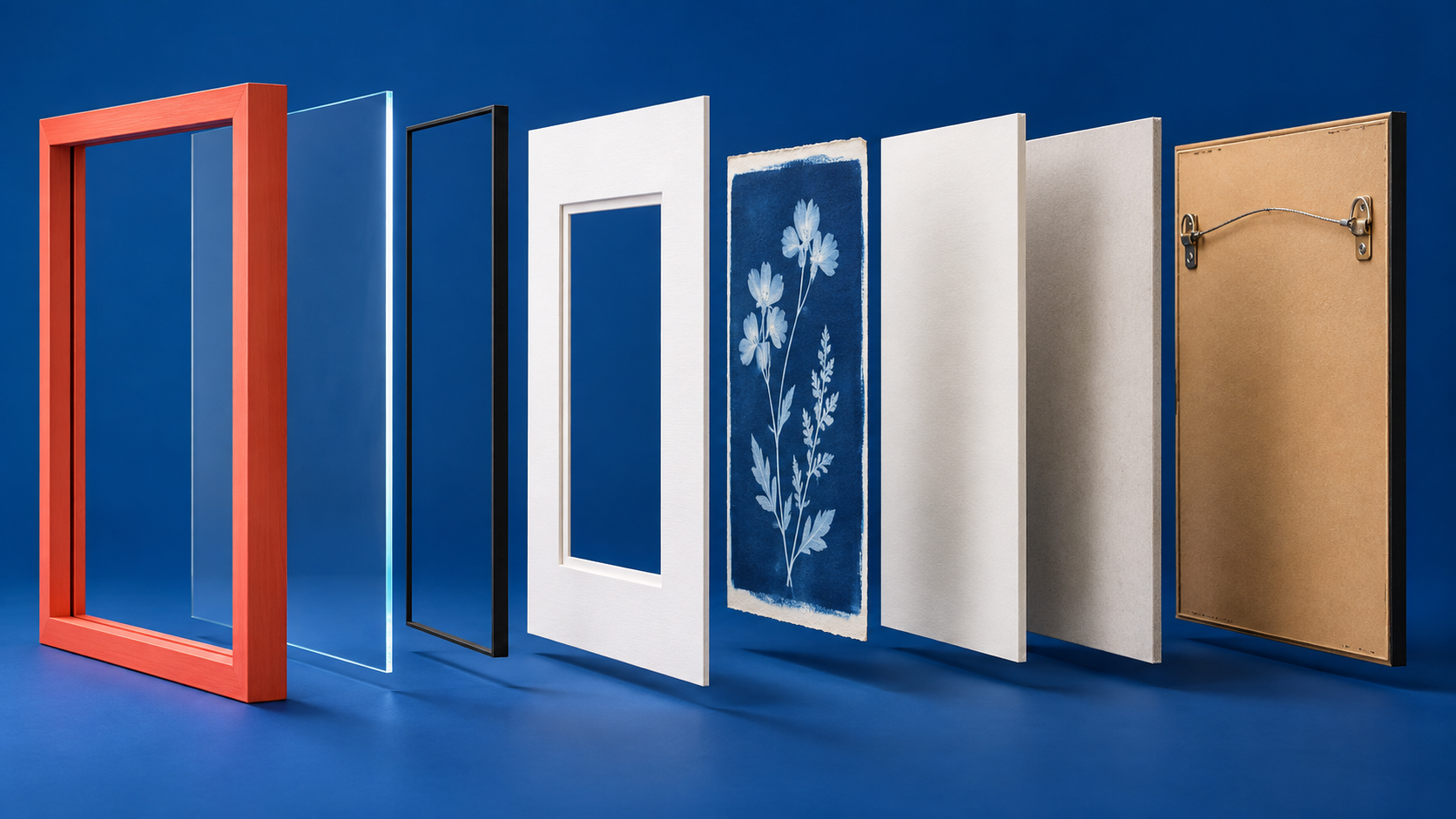
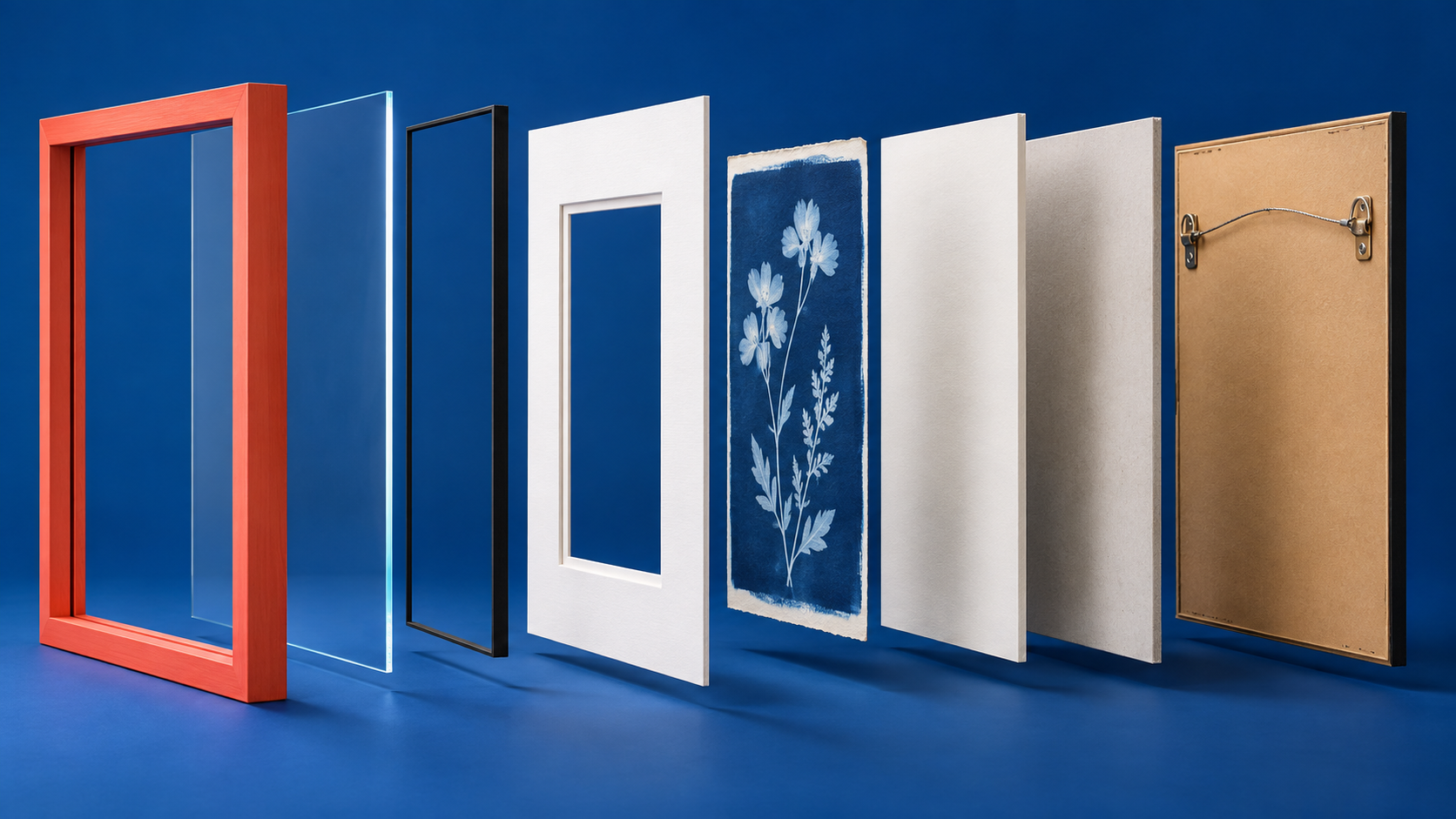
A finished frame is more than four pieces of moulding and a sheet of glass.
Depending on the artwork, it may include:
The frame or moulding
Glass or acrylic glazing
Mat board
Spacers
Mounting materials
Backing
Hanging hardware
Each component affects how the artwork is presented and, in conservation-minded framing, how it is protected. This is why decisions about matting, glazing, mounting, and frame depth should be made together rather than independently.
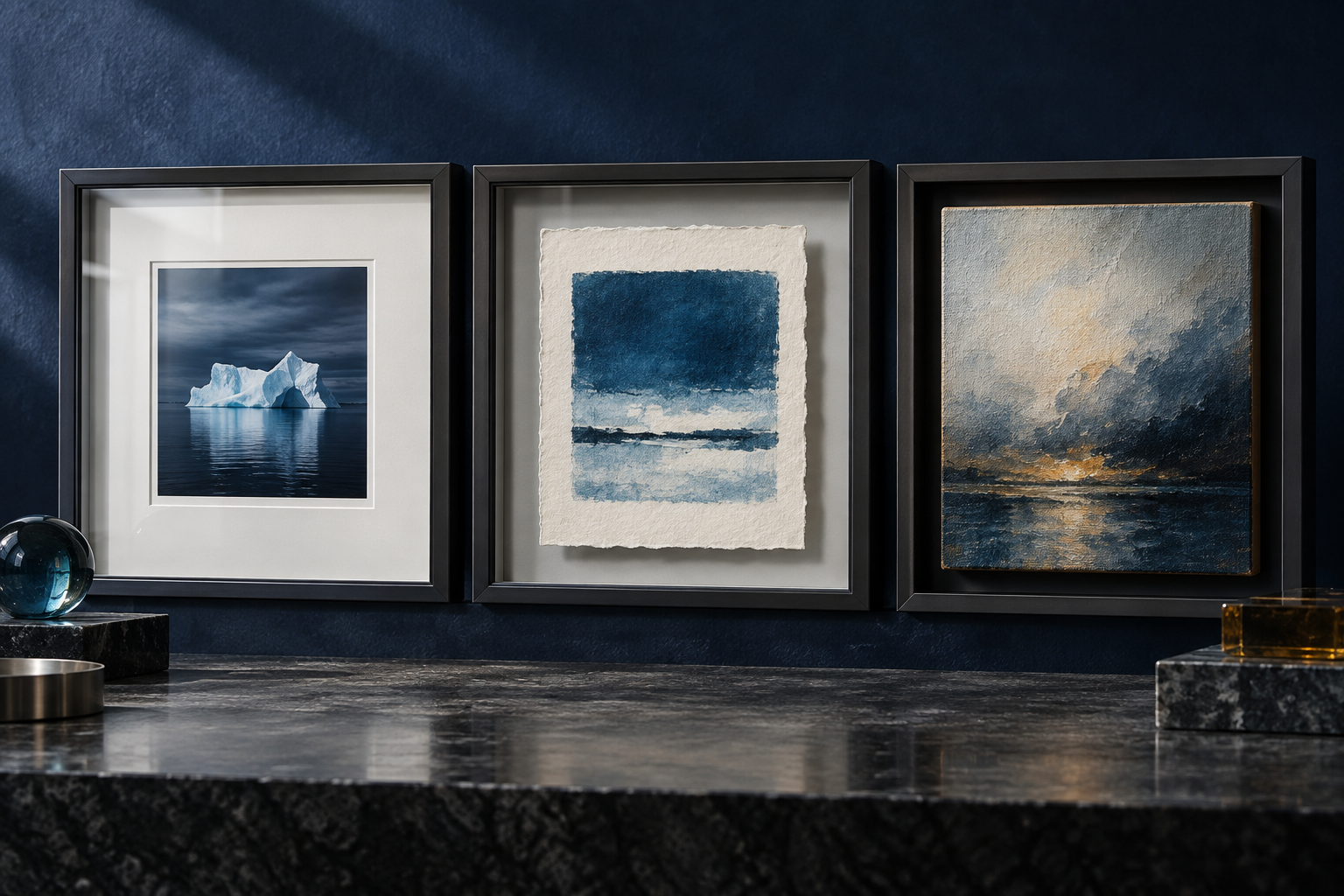
Give Your Artwork a Little Space
Sometimes a few millimeters can make an important difference.
Creating appropriate separation between sensitive artwork and glazing can help avoid direct surface contact while allowing the piece to be presented in a way that respects its material and construction.
At Harlem Frames, we consider the entire framing package when developing a presentation—from matting and mounting to glazing, spacers, frame depth, and conservation requirements.
Have a photograph, print, drawing, or work on paper you're considering framing? Bring it to Harlem Frames and our team can help determine a presentation appropriate for the piece.
Related Insights
To Mat or Not to Mat? Choosing the Right Mat for Your Artwork →
Museum Glass, Acrylic & Conservation Glazing: What's the Difference? →
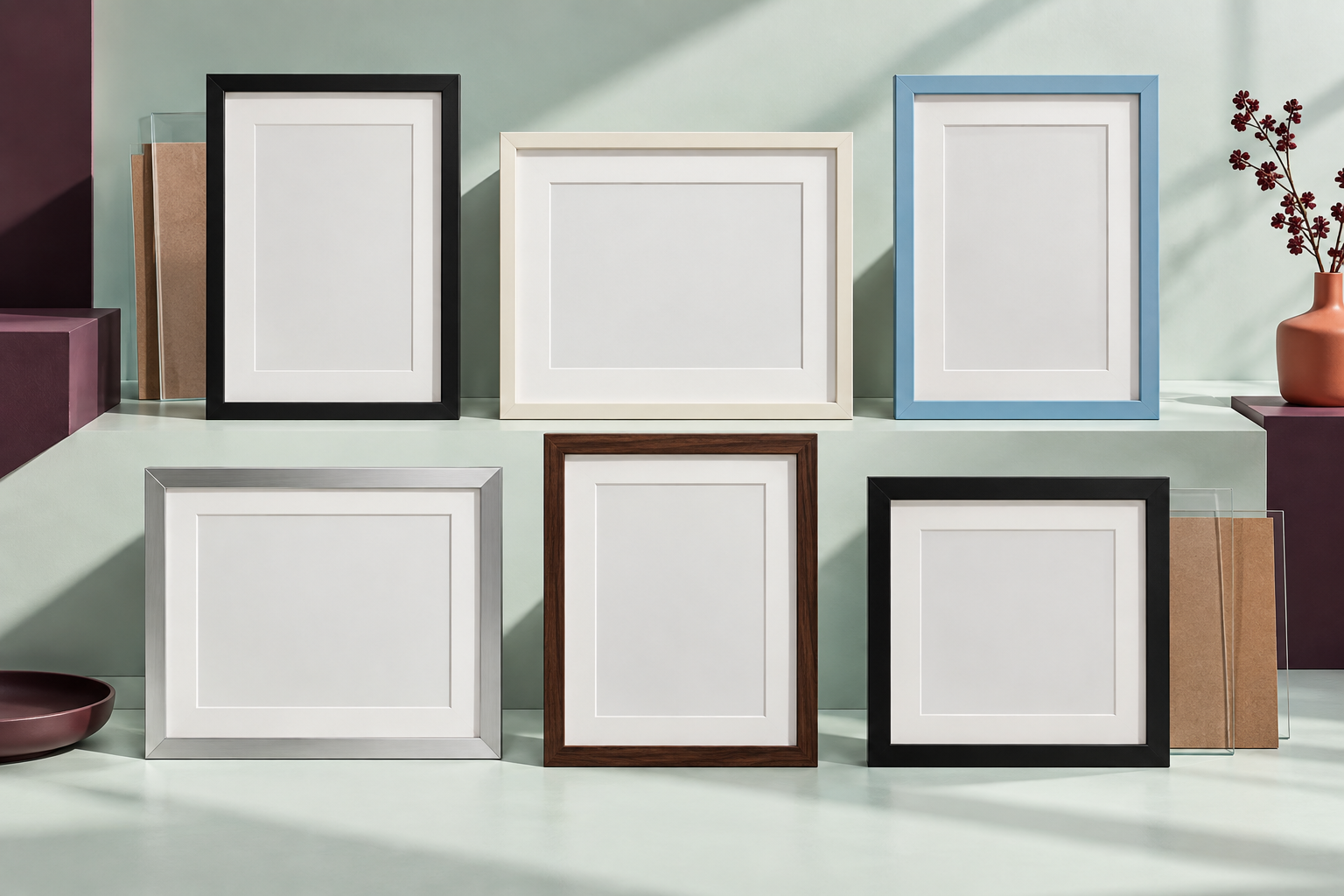
Custom Framing vs. Ready-Made Frames
Not every piece of artwork needs a custom frame.
Sometimes a standard, ready-made frame is exactly what a project calls for: it's accessible, convenient, and can be a perfectly practical choice for artwork that already fits a common size.
Other pieces require more consideration. Unusual dimensions, delicate materials, original artwork, valuable photographs, canvases, textiles, or objects may benefit from a framing solution designed specifically around them.
So how do you decide between a ready-made frame and custom framing? The answer begins with the artwork.
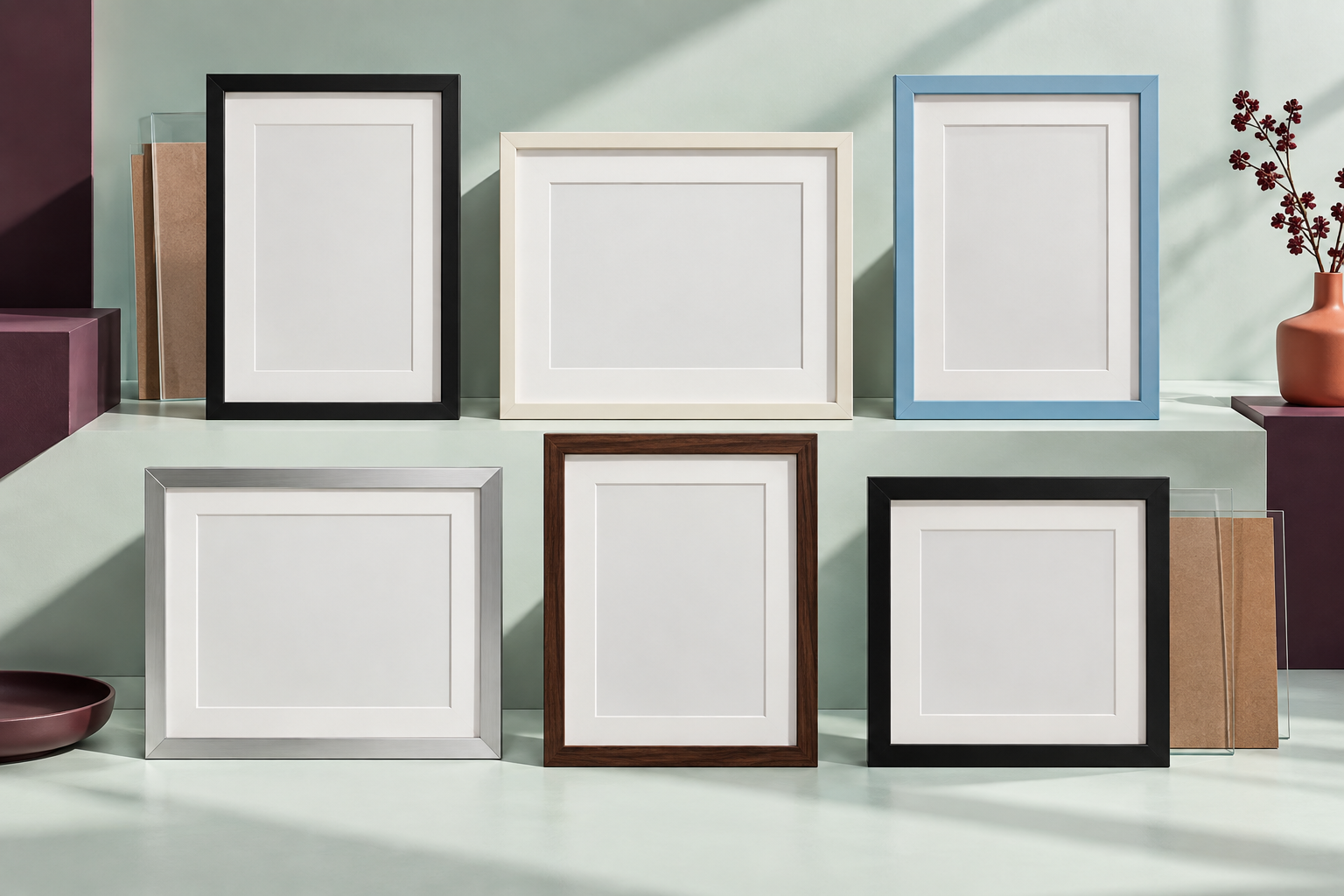
What Is a Ready-Made Frame?
Ready-made frames are manufactured in predetermined, standard sizes and sold already assembled.
Common dimensions make them particularly convenient for photographs, posters, prints, certificates, and other works produced at standard sizes. Because the moulding, glazing, backing, and dimensions have already been determined, they're generally less expensive and faster to use than a completely custom solution.
For the right piece, that simplicity can be an advantage. If you're framing an easily replaceable poster, family snapshot, temporary display, or standard-size print, a ready-made frame may provide everything you need.
The limitation is that the artwork has to adapt to the frame rather than the frame being designed around the artwork.
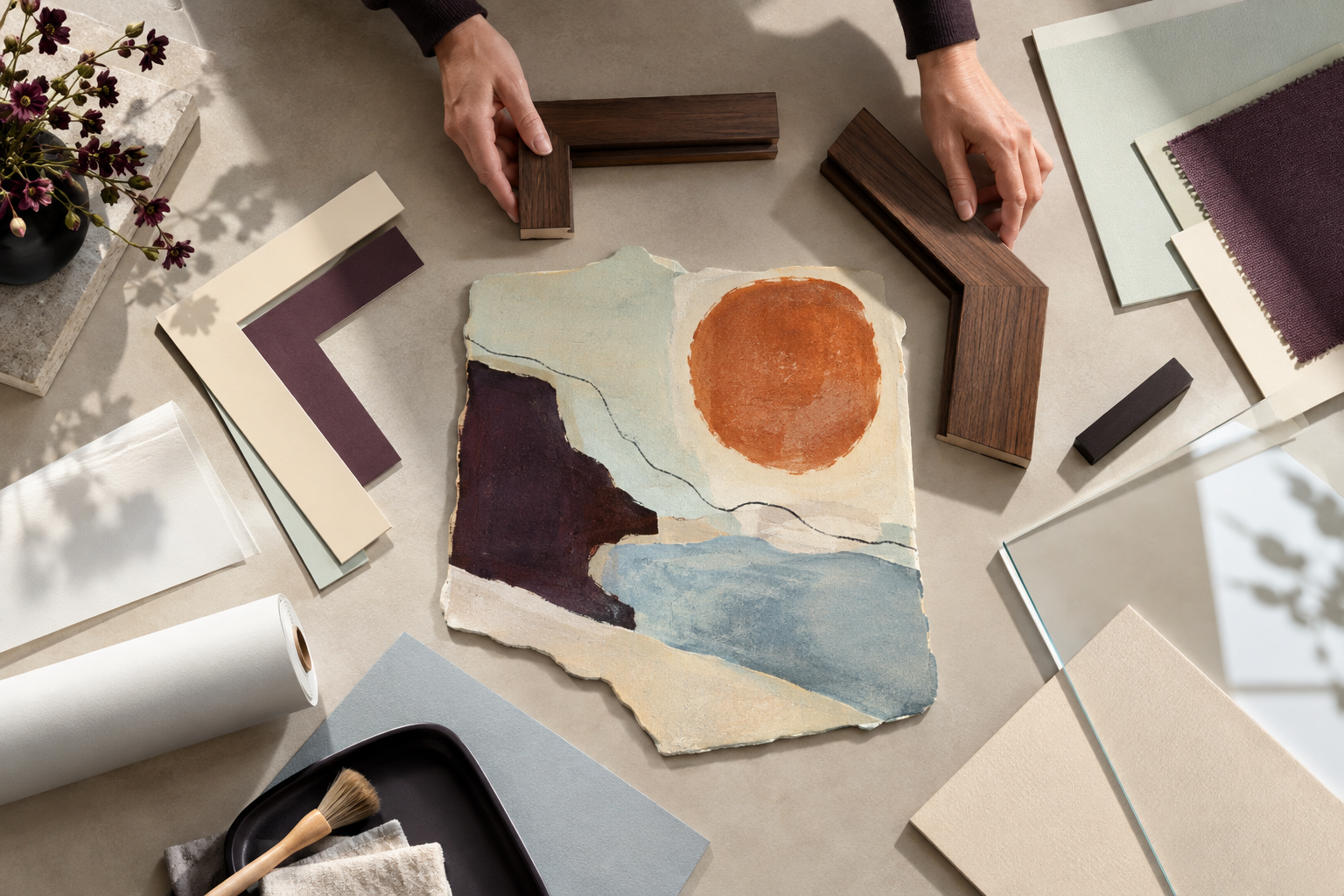
What Makes Custom Framing Different?
With custom framing, the process begins with the artwork.
The dimensions aren't predetermined. Neither are the frame profile, material, mat, mounting method, glazing, depth, or overall presentation. Instead, these elements can be selected according to the individual piece.
At Harlem Frames, that might mean designing a natural wood float frame around a painting, selecting conservation matting for a work on paper, creating a plexi box for a dimensional presentation, matching a particular moulding finish to an artist's work, or developing a completely different solution for an unusually sized object.
The question changes from:
“Which available frame will this fit into?”
to:
“What presentation is right for this artwork?”
Size Makes a Difference
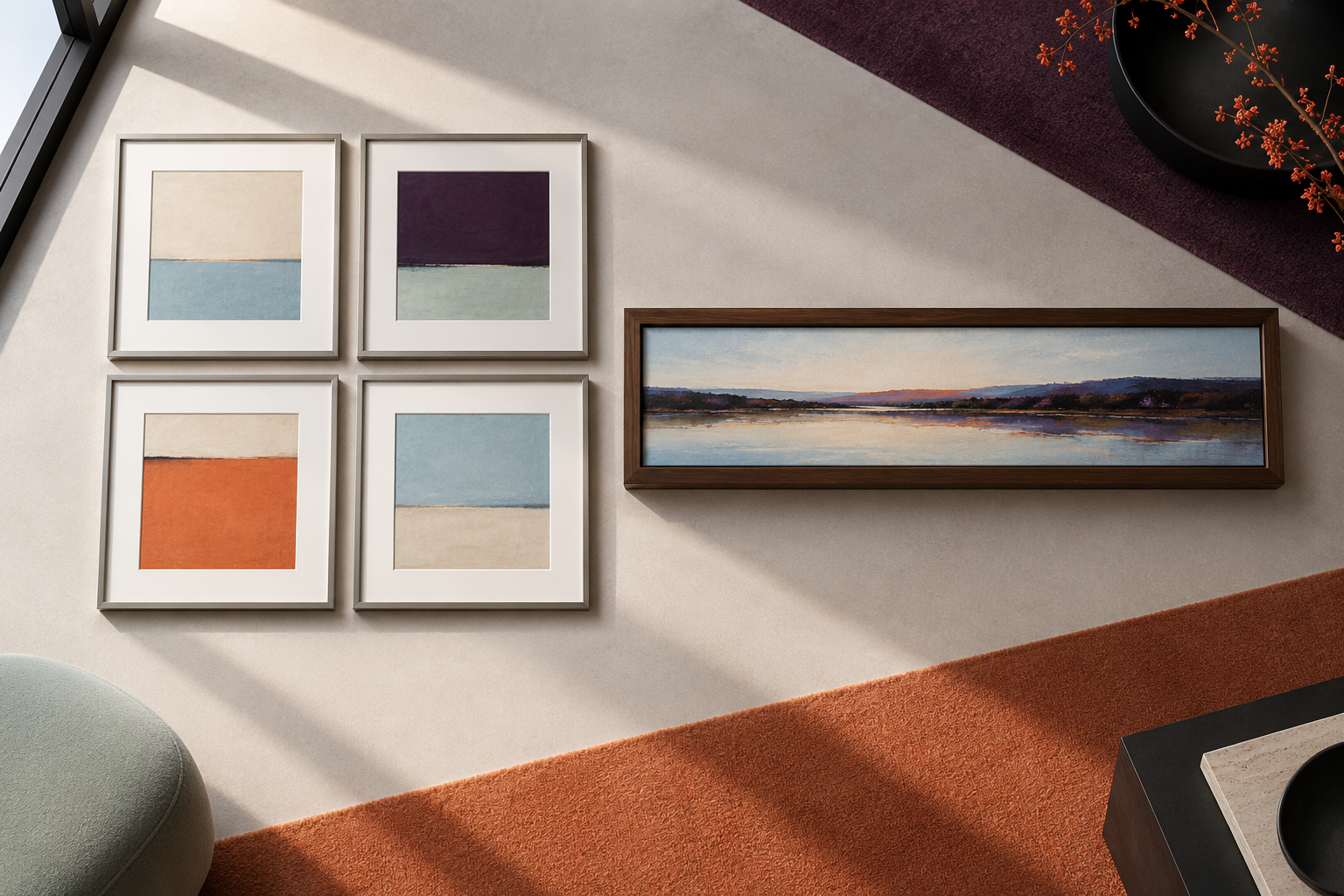
Standard artwork sizes are where ready-made frames are most convenient. But artists don't always work in standard dimensions.
Original paintings, handmade paper, vintage posters, textiles, photographs, unusual prints, and dimensional objects can fall outside conventional frame sizes. Trying to force an unusual piece into a standard frame may require awkward cropping, oversized matting, or other compromises.
Custom framing allows the frame to be built around the artwork's actual dimensions rather than requiring the artwork to conform to an existing product.
Custom Framing Offers More Design Control
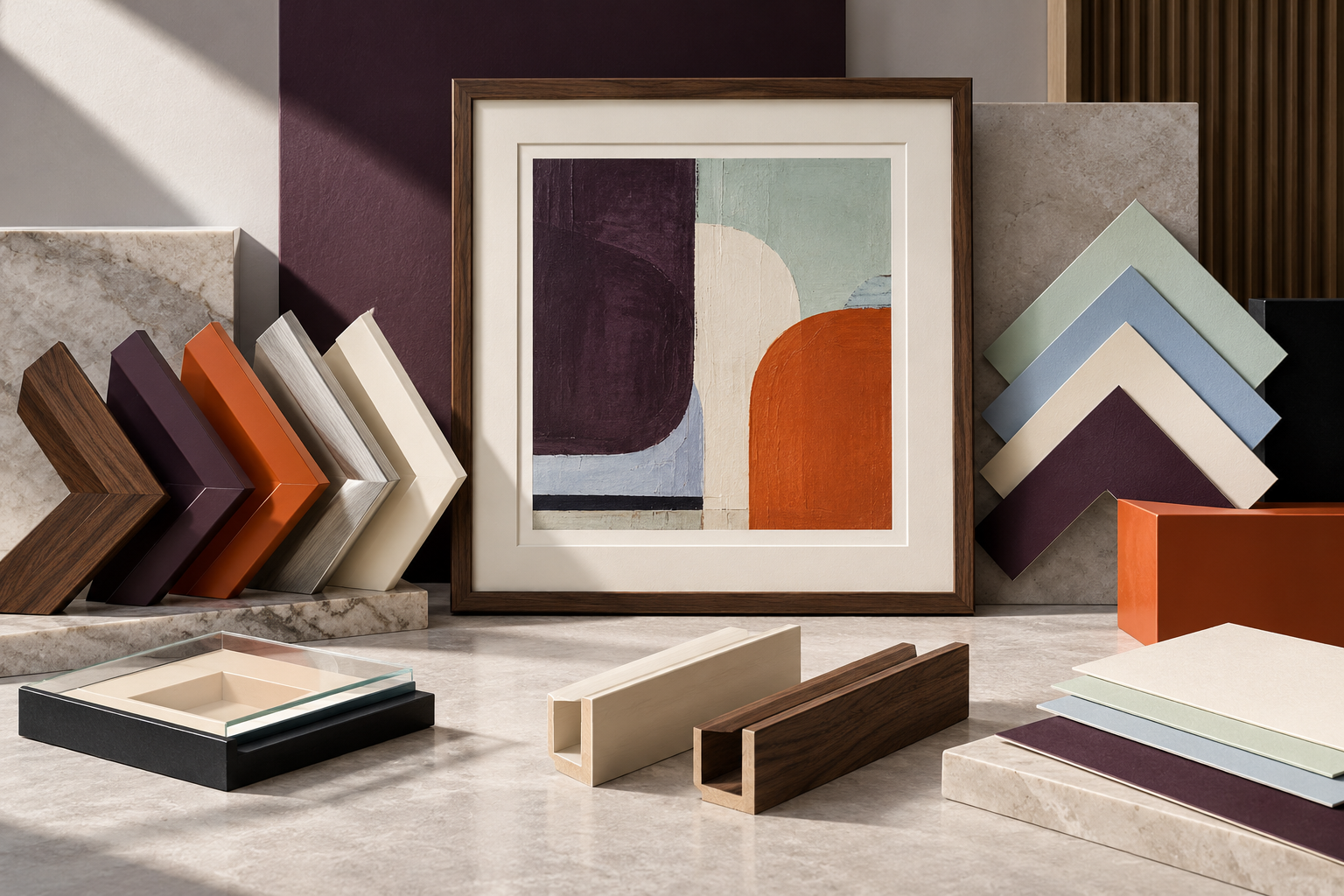
A frame can dramatically change how an artwork is perceived.
With custom framing, you can consider:
Wood species and moulding material
Frame width and depth
Natural, stained, painted, or specialty finishes
Mat color and texture
Mat proportions
Float mounting
Float frames
Shadowboxes
Plexi boxes
Glazing
Spacers
Frame depth
Overall finished dimensions
These choices allow the framing to respond to the artwork's color, scale, texture, period, medium, and visual character. Sometimes that leads to a frame that almost disappears. Other times, the frame becomes an intentional part of the artwork's presentation.
What About Preservation?
This is one of the most important differences to consider.
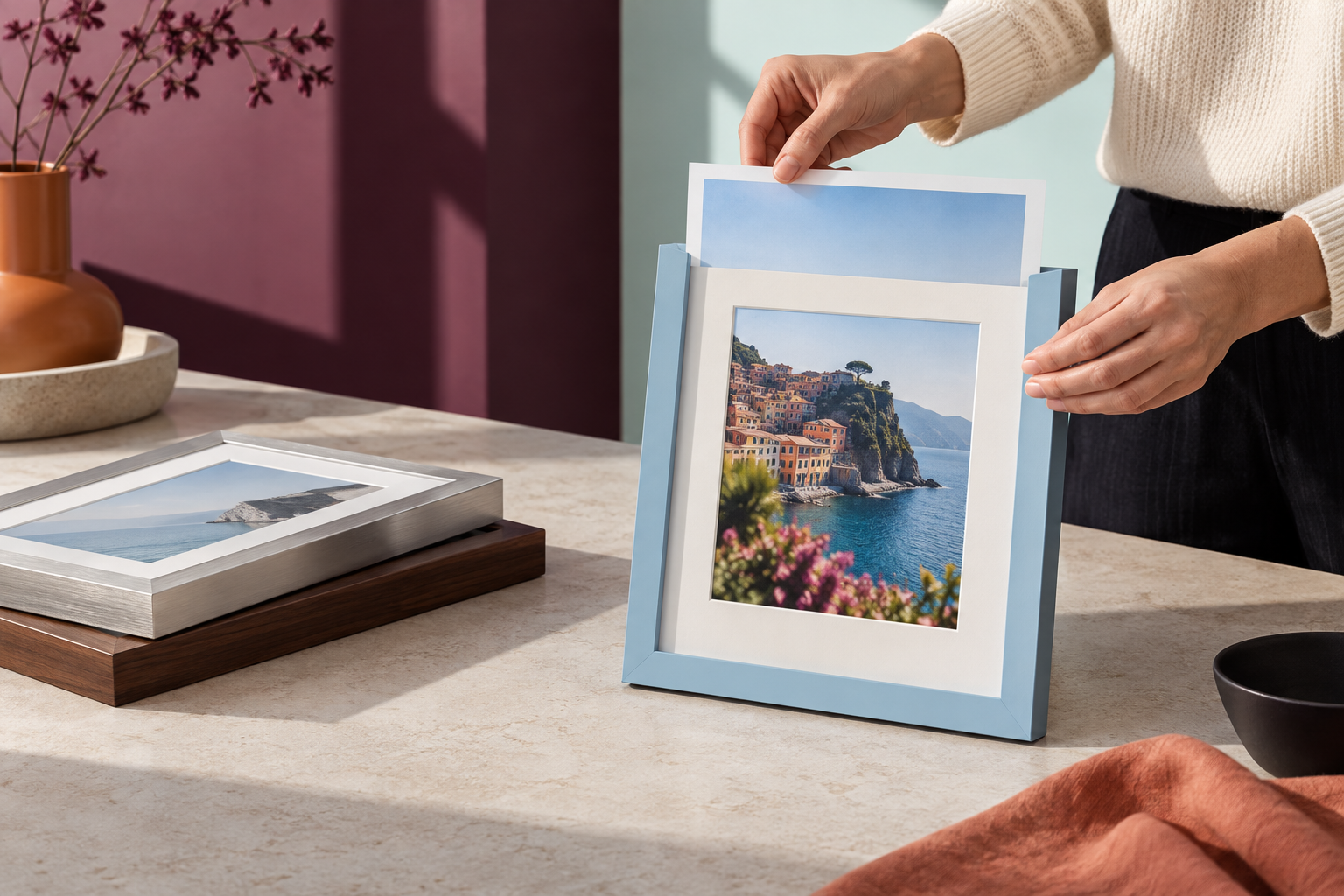
A ready-made frame may provide adequate physical protection for many everyday pieces, but its internal materials and construction aren't necessarily selected around the conservation requirements of a particular artwork.
When framing something original, valuable, sentimental, or irreplaceable, you may want greater control over the materials surrounding it. Custom framing can incorporate conservation-quality mat boards, appropriate mounting techniques, protective glazing, spacers, backing materials, and other preservation-minded choices according to the needs of the artwork.
That doesn't mean every custom frame automatically qualifies as conservation framing. It means custom framing gives you the opportunity to specify a framing system appropriate for the piece.
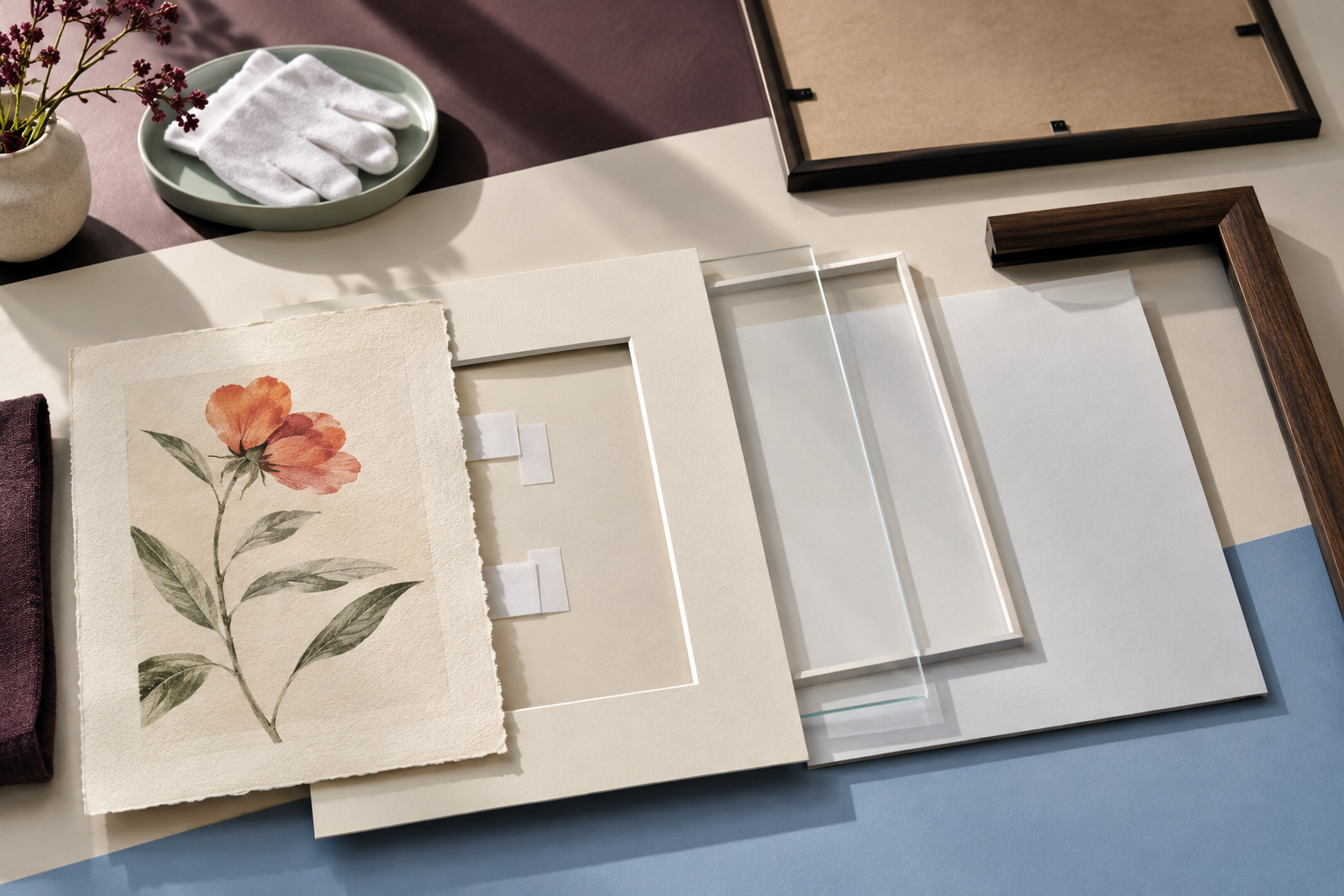
Original Artwork Often Requires a Different Approach
An original watercolor and a mass-produced poster may both be pieces of paper, but they don't necessarily have the same framing requirements.
The watercolor might require consideration of mounting, matting, glazing, light exposure, and long-term preservation. The poster may simply need an attractive frame at the correct dimensions. Similarly, an original canvas may benefit from stretching and a custom float frame, while a standard-size photographic print may fit beautifully into a ready-made option.
The value, material, construction, and importance of the artwork should help determine how much customization is appropriate.
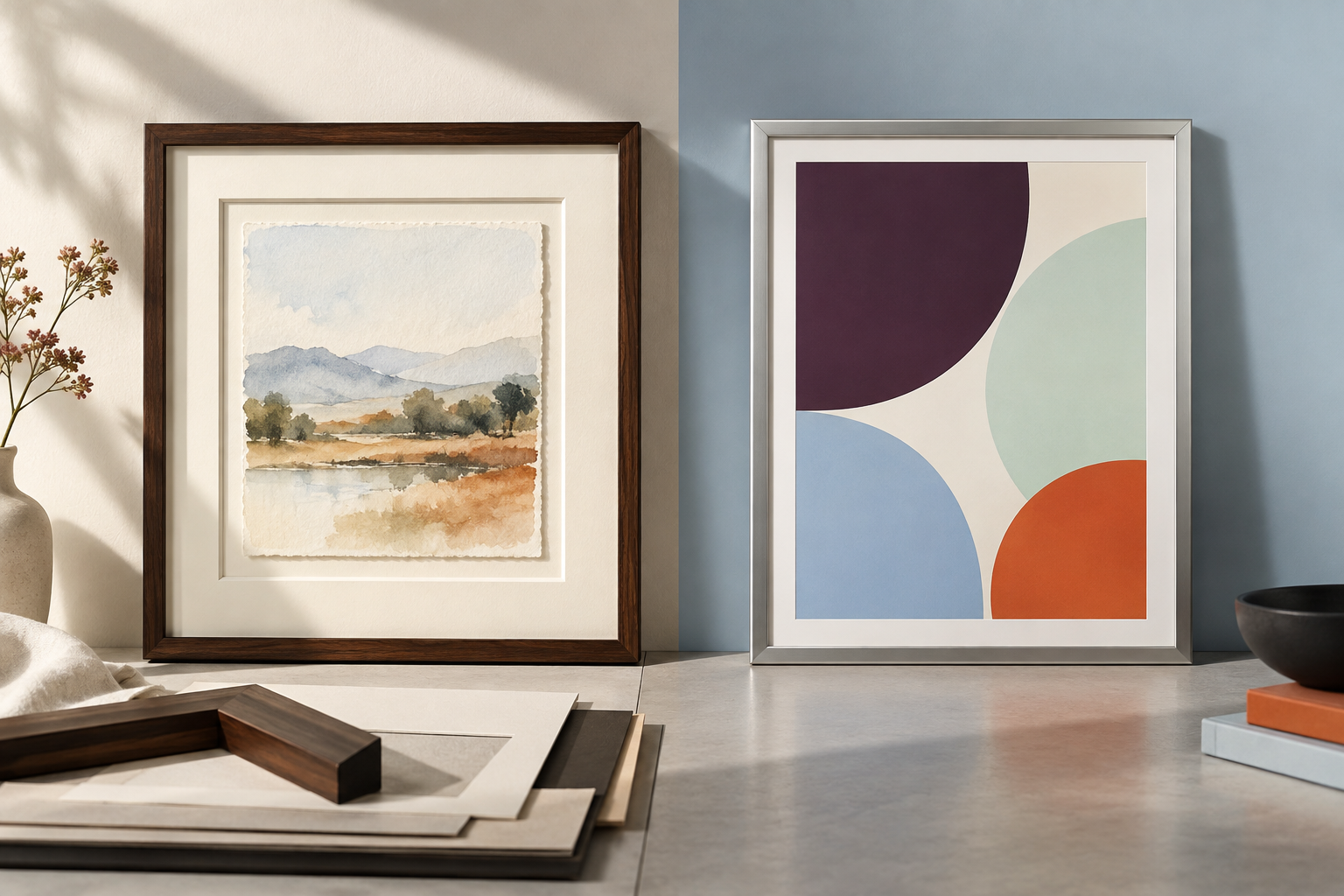
Custom Doesn't Have to Mean Complicated
The number of options available in custom framing can initially seem overwhelming.
There are hundreds of mouldings, mat colors, glazing options, proportions, finishes, and presentation styles to consider. But you don't need to arrive knowing exactly what you want.
A framing consultation is partly a process of editing. By looking at the artwork itself, different possibilities can be compared until the presentation begins to feel resolved. Often, the final solution is surprisingly simple.
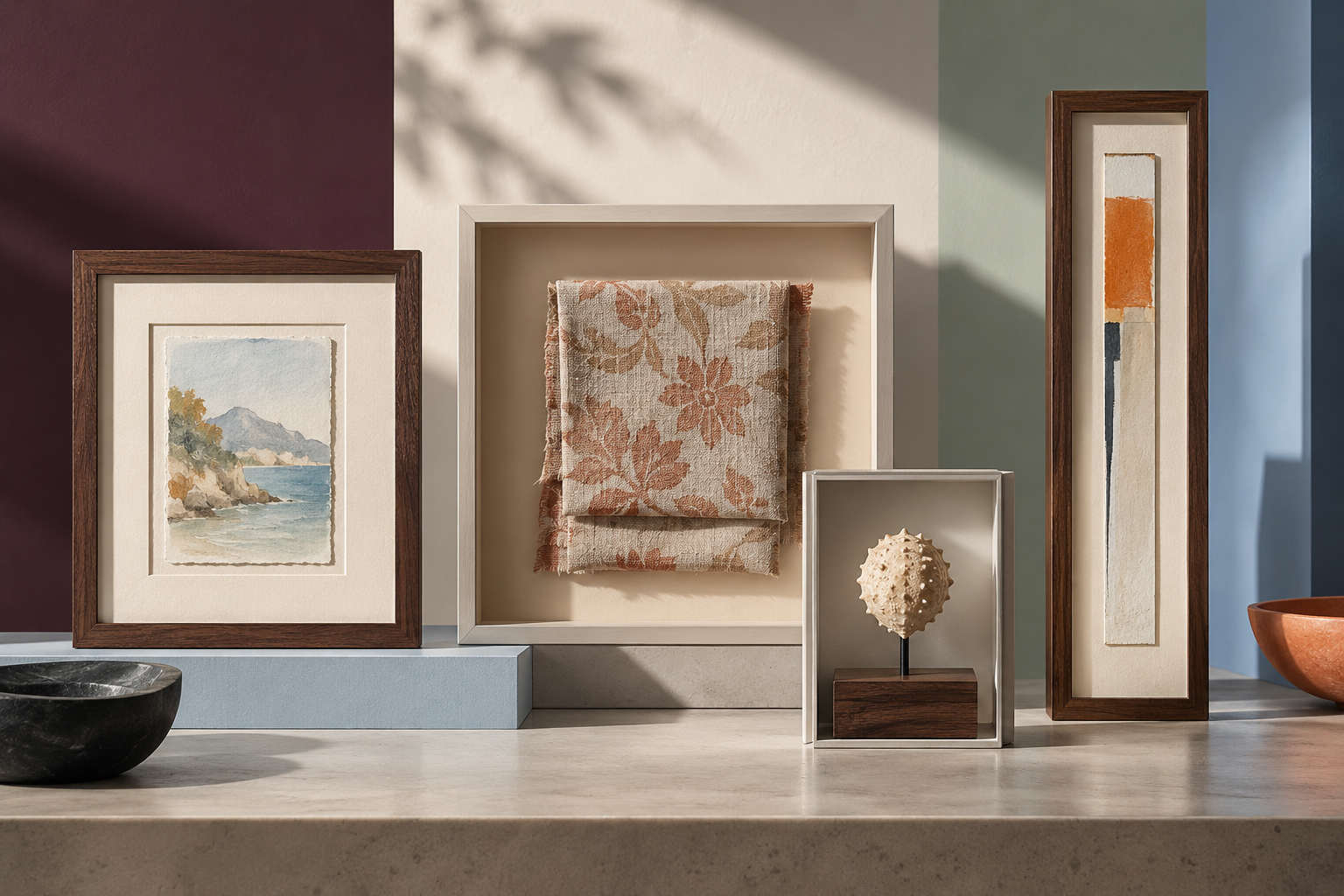
When Does a Ready-Made Frame Make Sense?
A ready-made frame may be a good choice when:
The artwork is a standard size
The piece is easily replaceable
You're framing an everyday photograph or poster
Preservation isn't a major concern
The display is temporary
Budget is the primary consideration
You need a simple presentation quickly
There's nothing inherently wrong with choosing a ready-made frame when it's appropriate for the project. Good framing isn't about choosing the most expensive option. It's about choosing the appropriate option for the artwork and your priorities.

When Is Custom Framing Worth Considering?
Custom framing becomes particularly useful for:
Original artwork
Valuable or sentimental pieces
Works with unusual dimensions
Paintings on canvas
Works on paper
Limited-edition prints
Fine-art photography
Textiles
Dimensional objects and memorabilia
Oversized artwork
Exhibition work
Artwork requiring conservation materials
Pieces where the framing itself is an important part of the presentation
Custom framing can also be particularly valuable when several works need to be presented as a cohesive series, such as an exhibition, gallery installation, or collection.
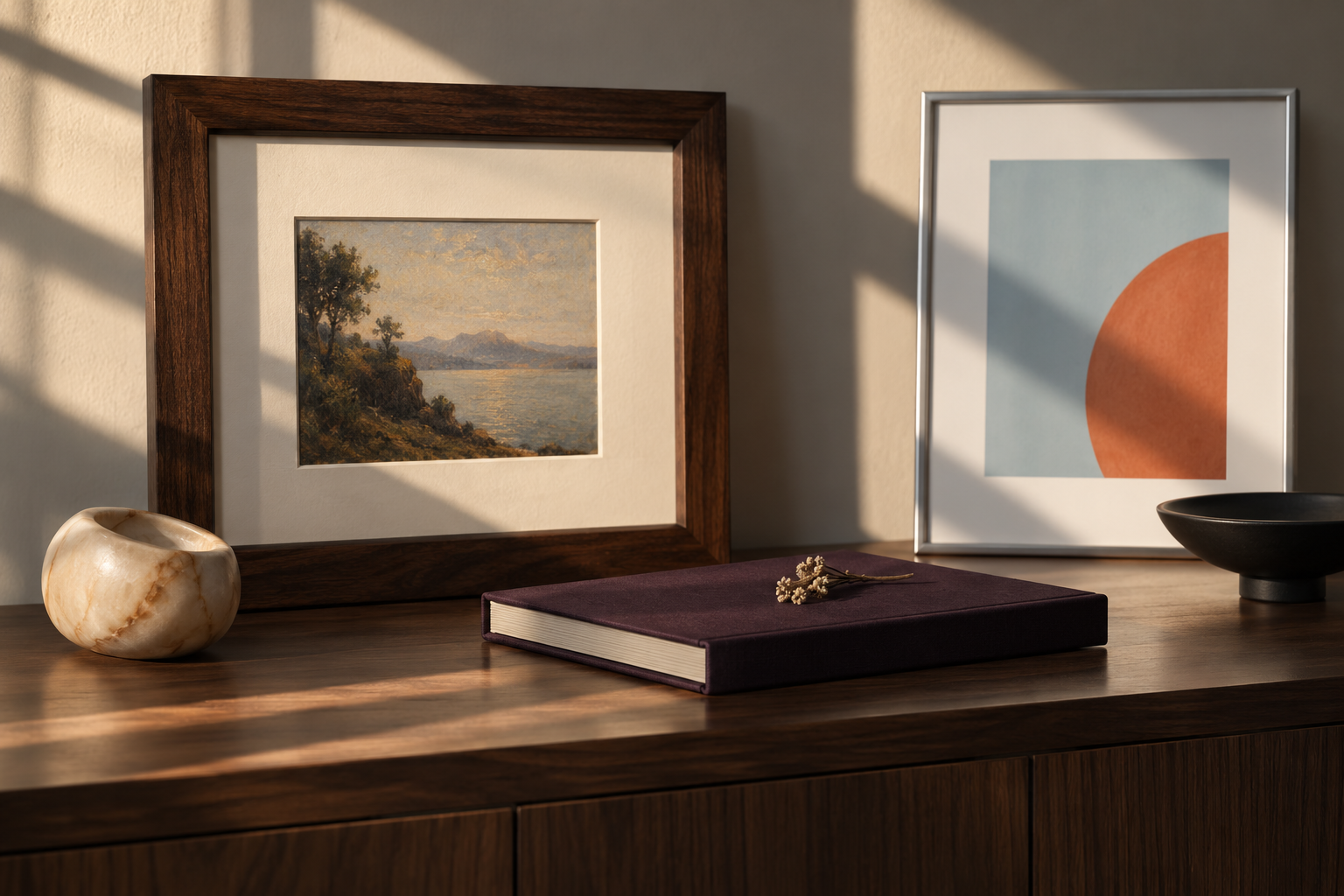
Think About How Long You'll Live With the Piece
Cost matters, but so does context.
A ready-made frame for an inexpensive print you may replace in a few years is a very different decision from framing an original artwork you expect to keep for decades.
Before choosing, consider:
What is the piece?
Is it replaceable?
Does it have sentimental or monetary value?
Does it require preservation?
Are its dimensions unusual?
How important is the finished presentation?
How long do you expect to live with it?
Those questions can tell you much more than the price of the artwork alone.
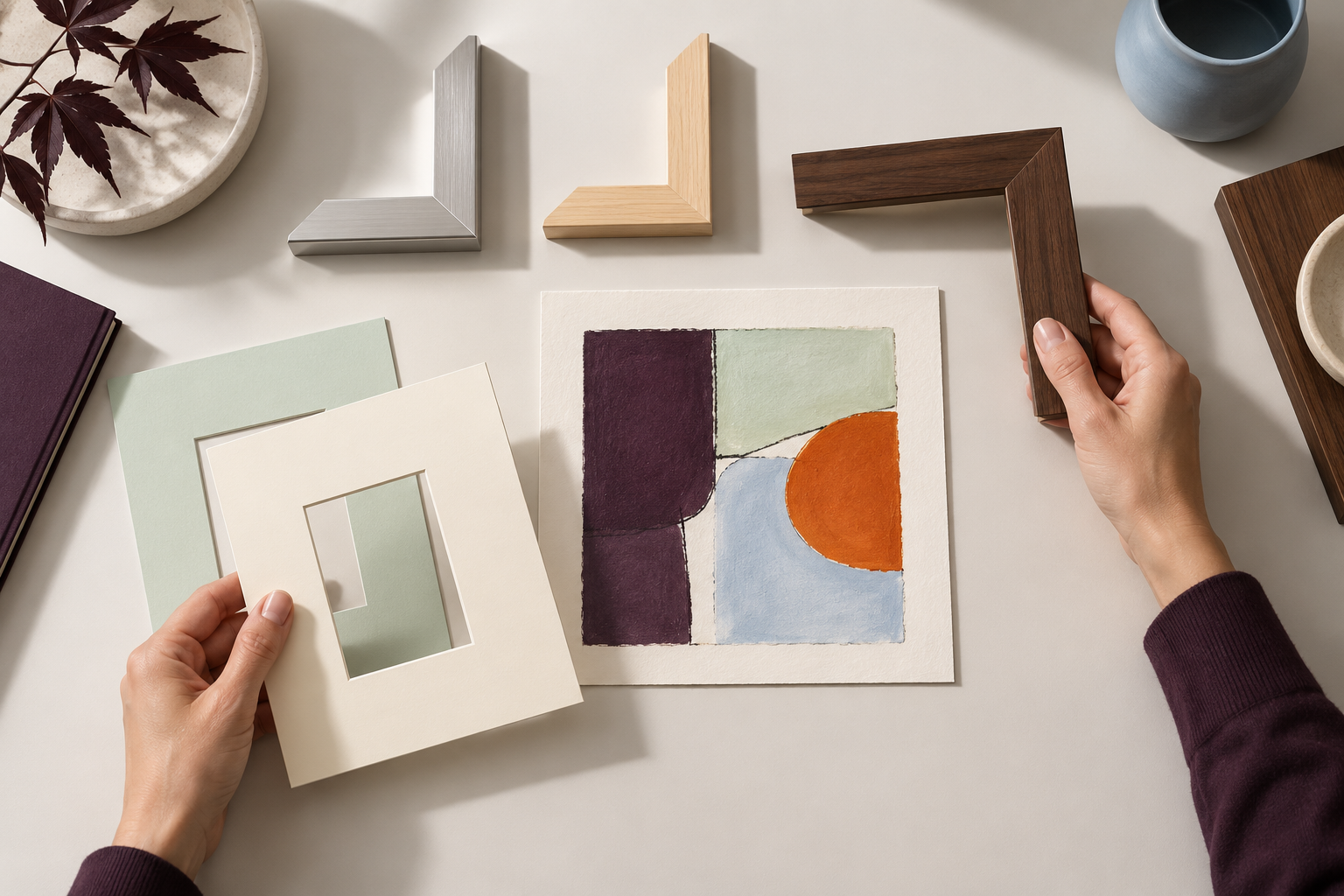
The Right Frame Is the One That Makes Sense for the Artwork
Custom framing and ready-made framing serve different purposes. One isn't automatically the correct choice for every situation.
A ready-made frame offers simplicity, speed, and affordability.
Custom framing offers greater control over dimensions, materials, design, presentation, and preservation. At Harlem Frames, we believe the decision should begin with the piece itself. Sometimes the solution can be straightforward. Other artworks call for something designed specifically around them.
Not sure which approach makes sense for your piece? Bring your artwork to Harlem Frames and our team can help you explore the options.
Related Insights
How to Choose the Right Frame for Your Artwork →
What Is Conservation Framing? →
To Mat or Not to Mat? Choosing the Right Mat for Your Artwork →
Museum Glass, Acrylic & Conservation Glazing: What's the Difference? →

How to Care for Your Artwork After Custom Framing
Professional framing helps protect and present an artwork, but proper care shouldn't end once the finished piece leaves the frame shop. Where you hang an artwork, how you clean it, the environmental conditions around it, and even how you handle the frame can influence its condition over time.
Whether you've framed an original painting, photograph, limited-edition print, family heirloom, textile, or something simply meaningful to you, a few thoughtful habits can help preserve both the artwork and its presentation for years to come.
Here are some of the most important things to consider after bringing a newly framed piece home.
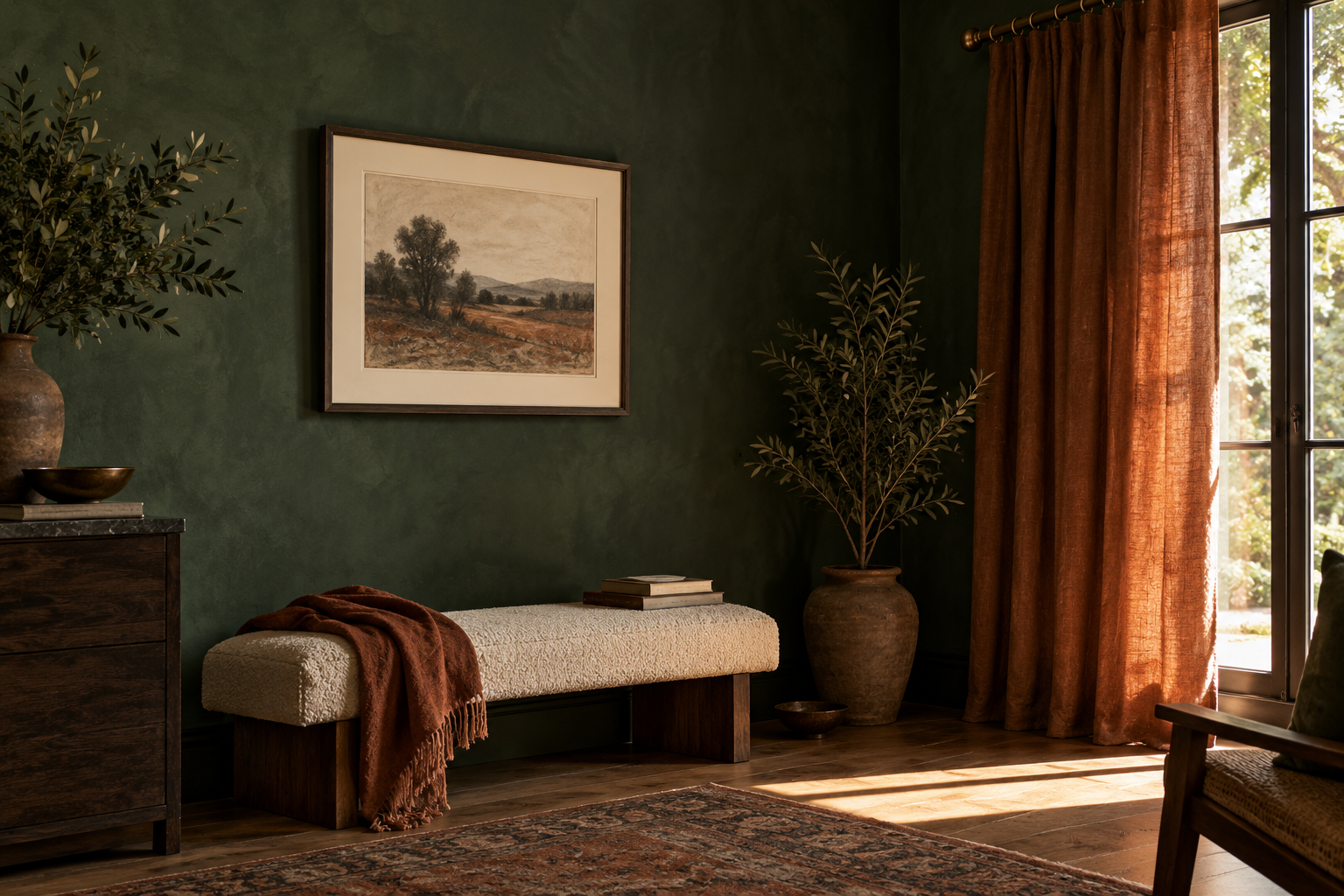
Keep Artwork Away From Direct Sunlight
Light is one of the most important environmental factors to consider when displaying artwork.
Prolonged exposure to direct sunlight can contribute to fading and changes in many materials, particularly works on paper, photographs, textiles, inks, and certain pigments. Even when a piece has been framed using UV-protective glazing, thoughtful placement still matters. Protective glazing can significantly reduce exposure to ultraviolet radiation, but it doesn't make artwork completely immune to the effects of light.
Whenever possible, avoid placing sensitive artwork directly opposite a bright window or in a location that receives strong sunlight for extended periods throughout the day. For particularly valuable or light-sensitive works, consider the lighting conditions of the room as part of the framing and installation process.

Be Mindful of Heat
That empty wall above a radiator may seem like the perfect place for a framed artwork—but it isn't always the safest environment.
Avoid hanging artwork directly above or beside:
Radiators
Heating vents
Fireplaces
Wood-burning stoves
Other concentrated heat sources
Repeated heating and cooling can create environmental fluctuations around an artwork and its frame. Wood frames, paper, canvas, mounting materials, and other components can respond differently to changes in temperature and moisture. A more stable environment is generally preferable for long-term display.
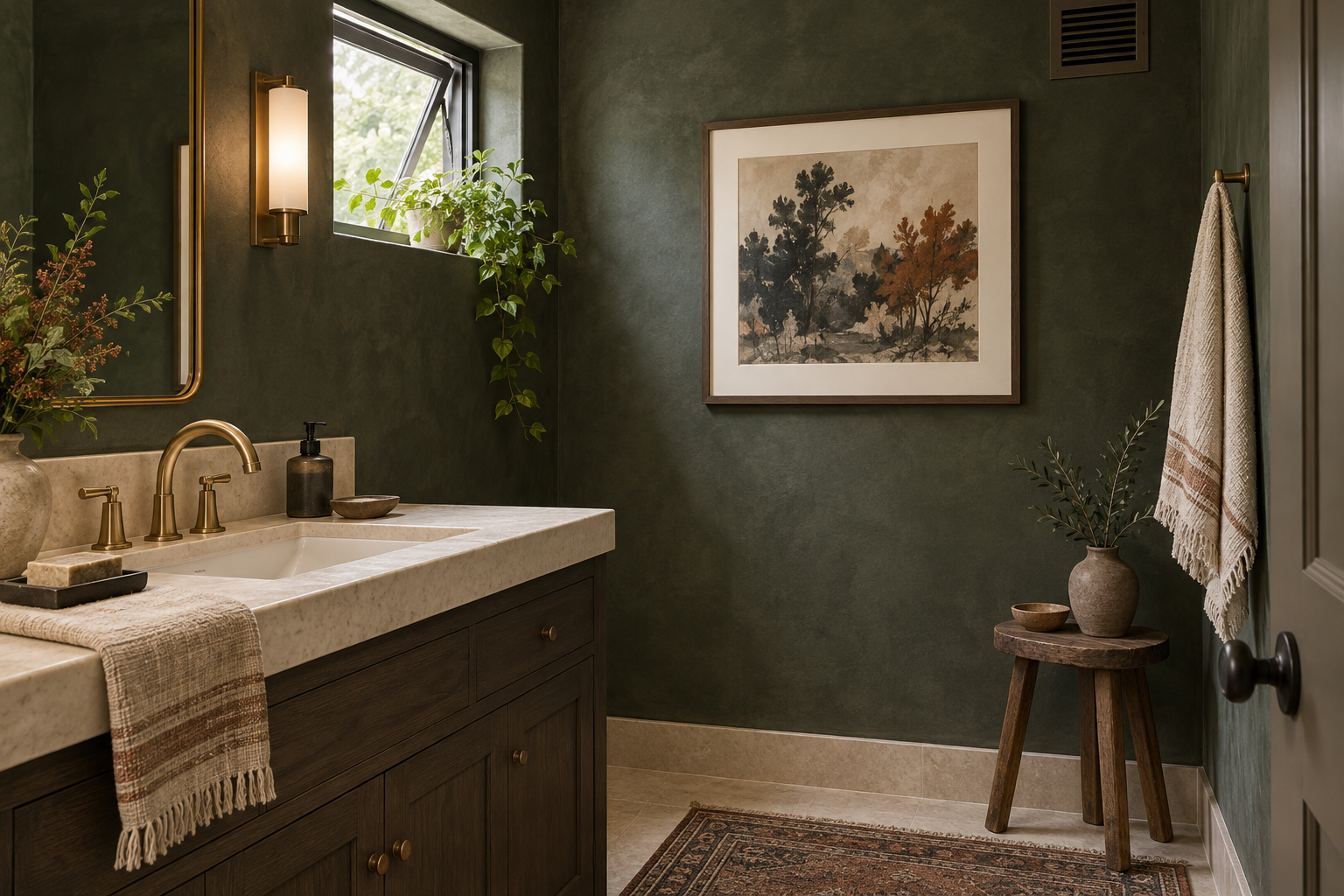
Humidity Matters
Bathrooms can look beautiful with framed artwork. So can kitchens and basements.
But humidity requires consideration. Excess moisture and repeated fluctuations in humidity can affect paper, canvas, wood, adhesives, backing materials, and other components within a framed piece. Bathrooms with frequent steam, damp basements, and areas close to sinks or cooking surfaces may therefore be unsuitable for certain artworks.
This doesn't mean artwork can never be displayed in these spaces. The appropriate location depends on the piece, its materials, its value, the framing system, and the conditions of the room. For something irreplaceable, however, a more environmentally stable location is generally the safer choice.
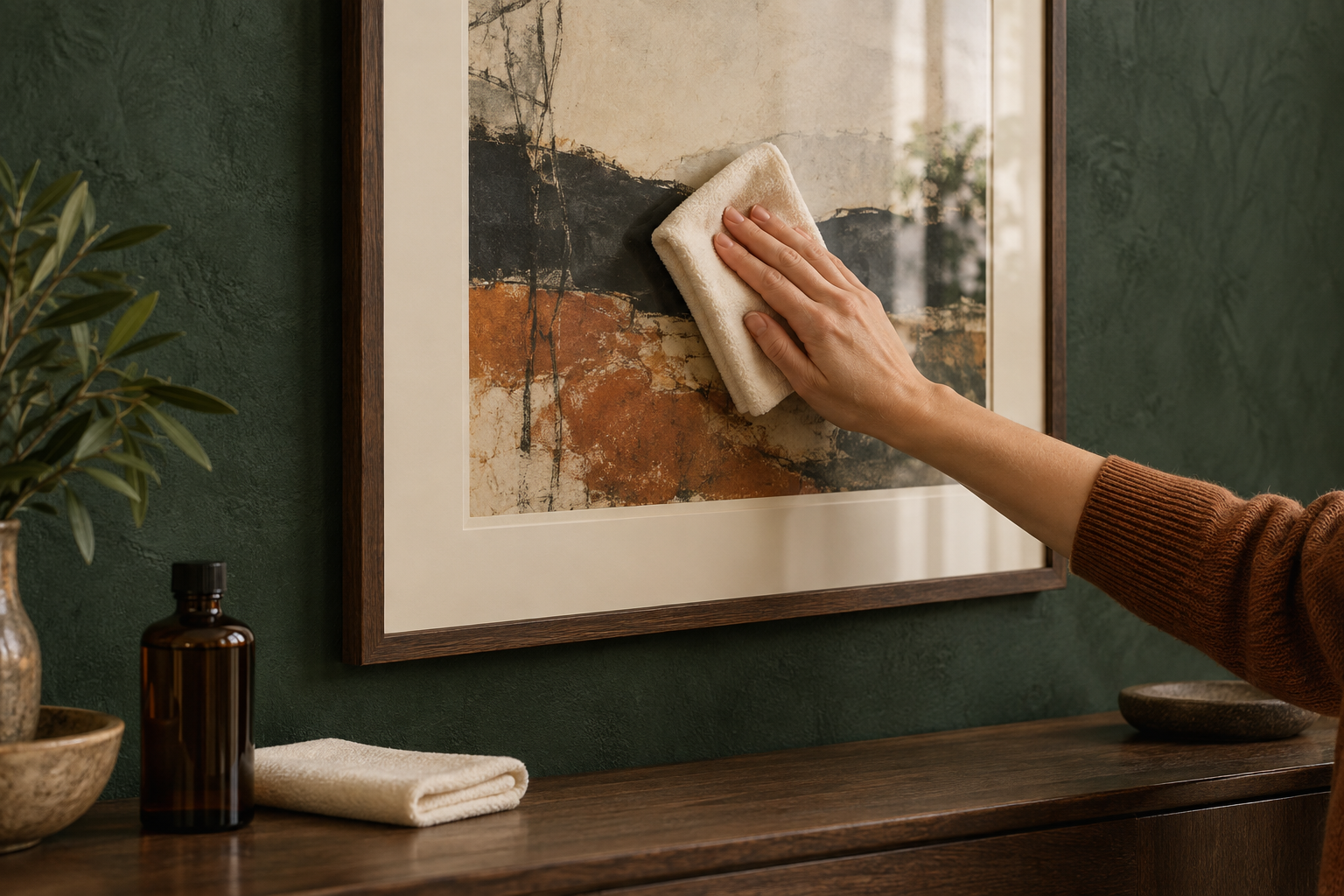
Clean the Glazing Carefully
Dust inevitably accumulates on framed artwork.
For routine cleaning, start gently. A clean, soft microfiber cloth can often be sufficient for removing surface dust from glazing. Before using any cleaning product, it's important to know what type of glazing is actually in the frame.
Glass and acrylic are different materials and shouldn't automatically be cleaned in the same way. Certain household cleaners can damage specialized coatings or acrylic surfaces. Avoid spraying cleaner directly onto a framed artwork. Liquid can travel toward the edges of the frame and potentially enter the framing package.
When you're unsure, ask your framer what cleaning method is appropriate for the glazing used on your particular piece.
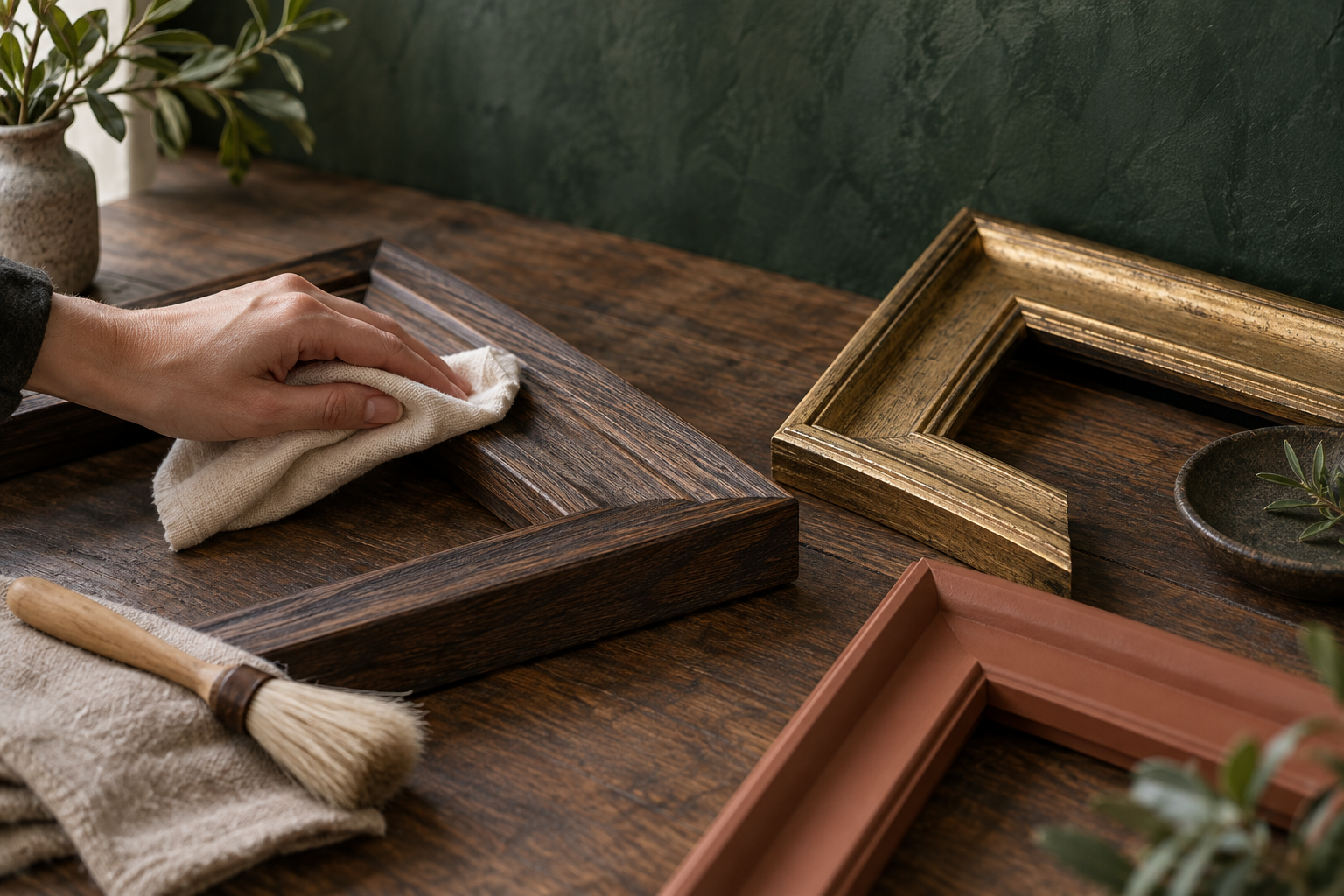
Don't Forget the Frame
Frames need care too.
Dust wood and finished mouldings gently with a clean, soft cloth. Avoid aggressive household cleaners, abrasive materials, excessive moisture, or products that haven't been recommended for the particular finish. Painted, gilded, stained, natural-wood, and specialty finishes can all respond differently to cleaning.
Older or highly decorative frames may require especially careful handling. If you notice cracking, flaking, loose ornamentation, or another change in the frame's surface, professional assessment may be preferable to attempting a repair yourself.
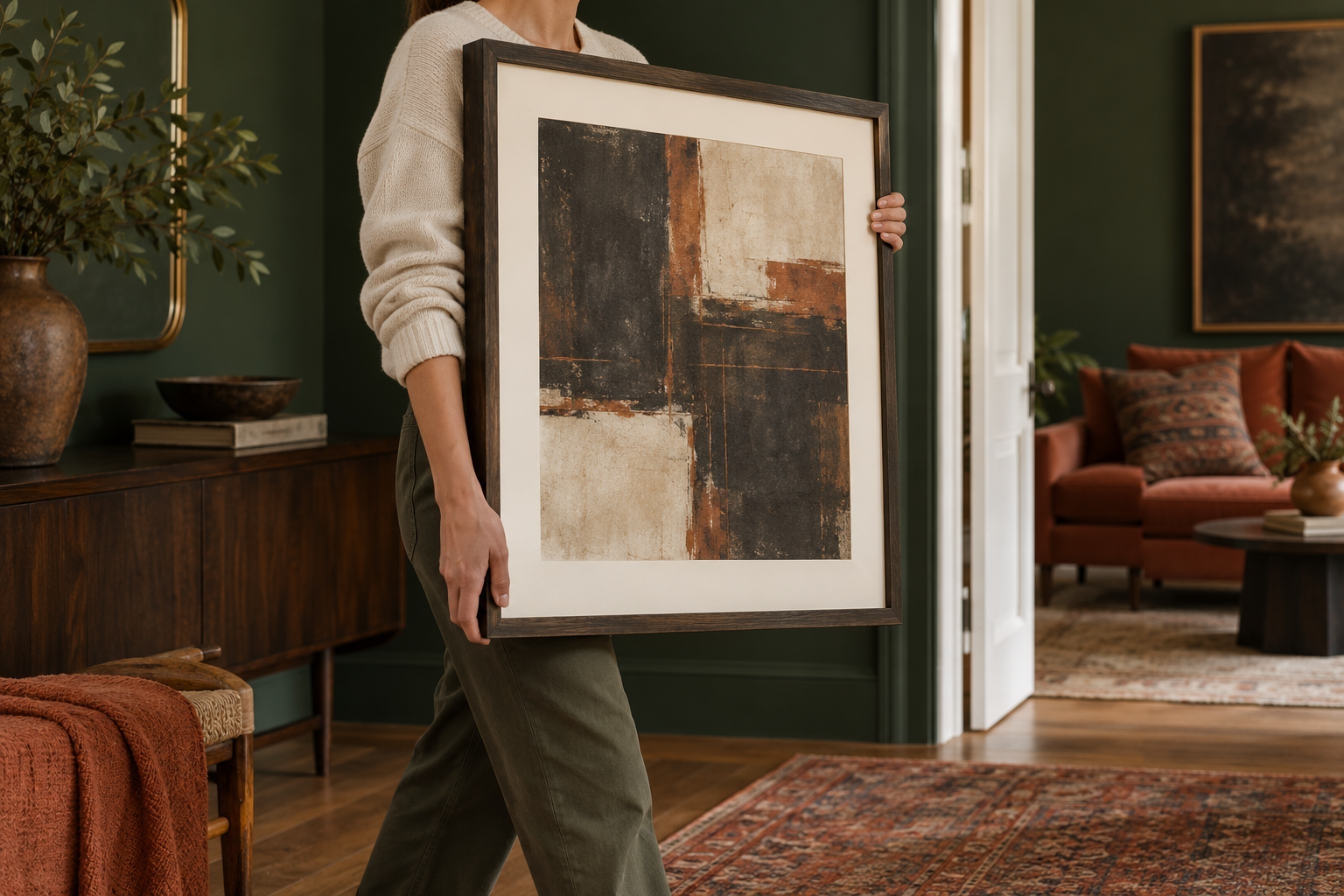
Handle Framed Artwork With Both Hands
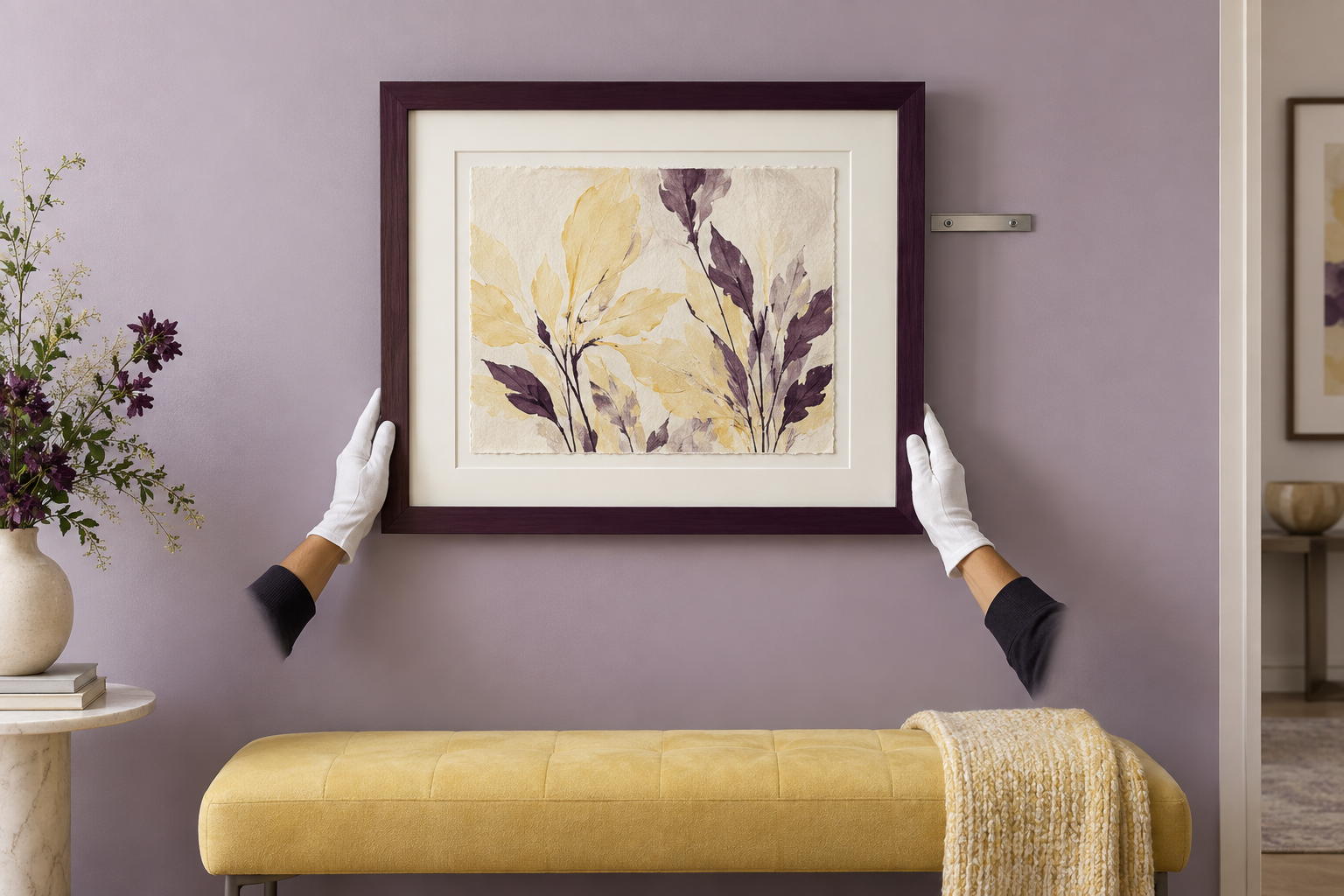
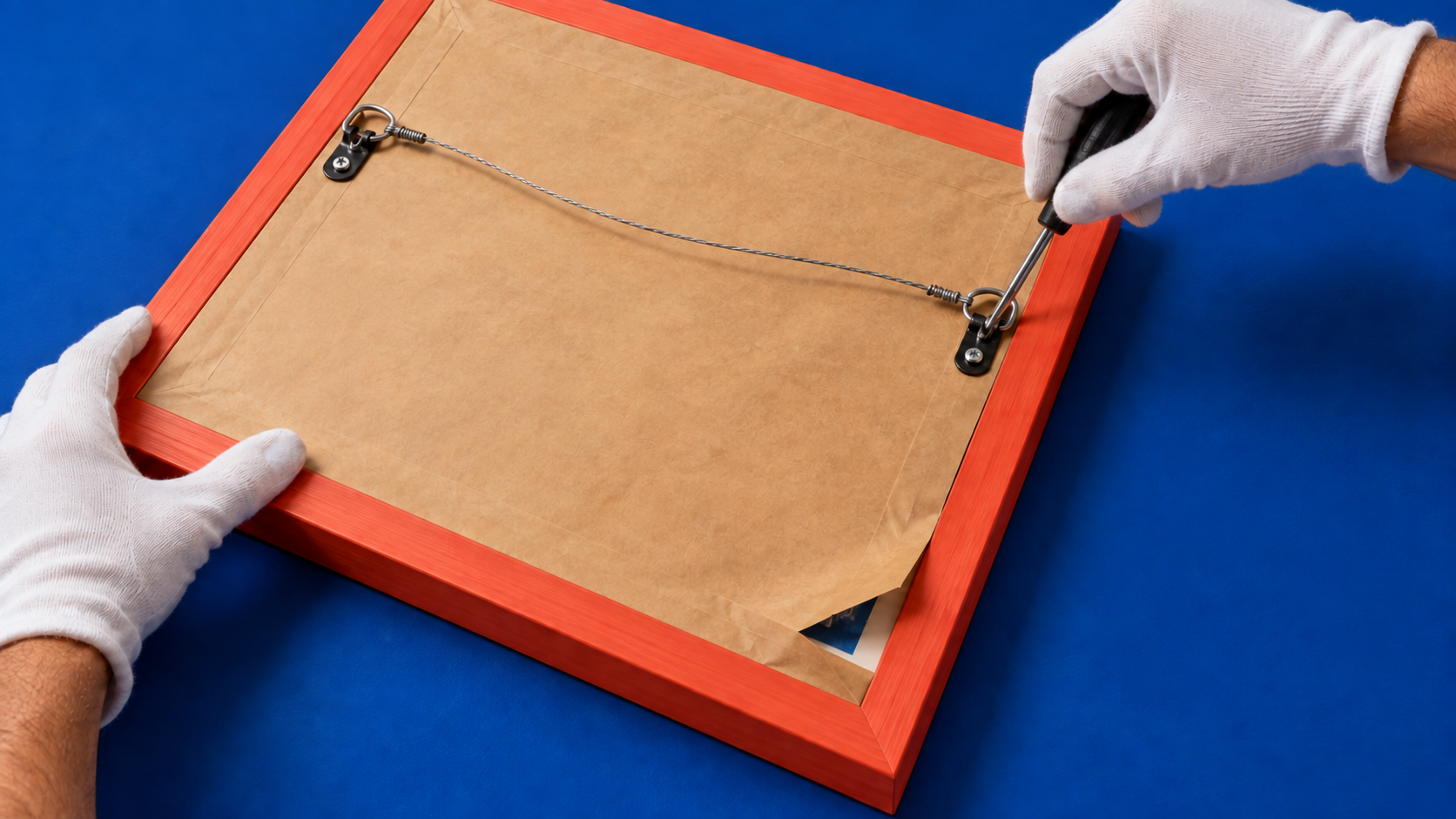
When moving framed artwork, support it securely from both sides or from underneath rather than carrying it by the hanging wire.
The wire and hanging hardware are designed primarily to support the piece once installed—not necessarily to function as handles.
For larger or heavier works, use two people whenever necessary. Before moving a substantial piece, it's also worth planning where it's going before lifting it. This reduces unnecessary handling and the risk of accidentally striking walls, furniture, or doorways.
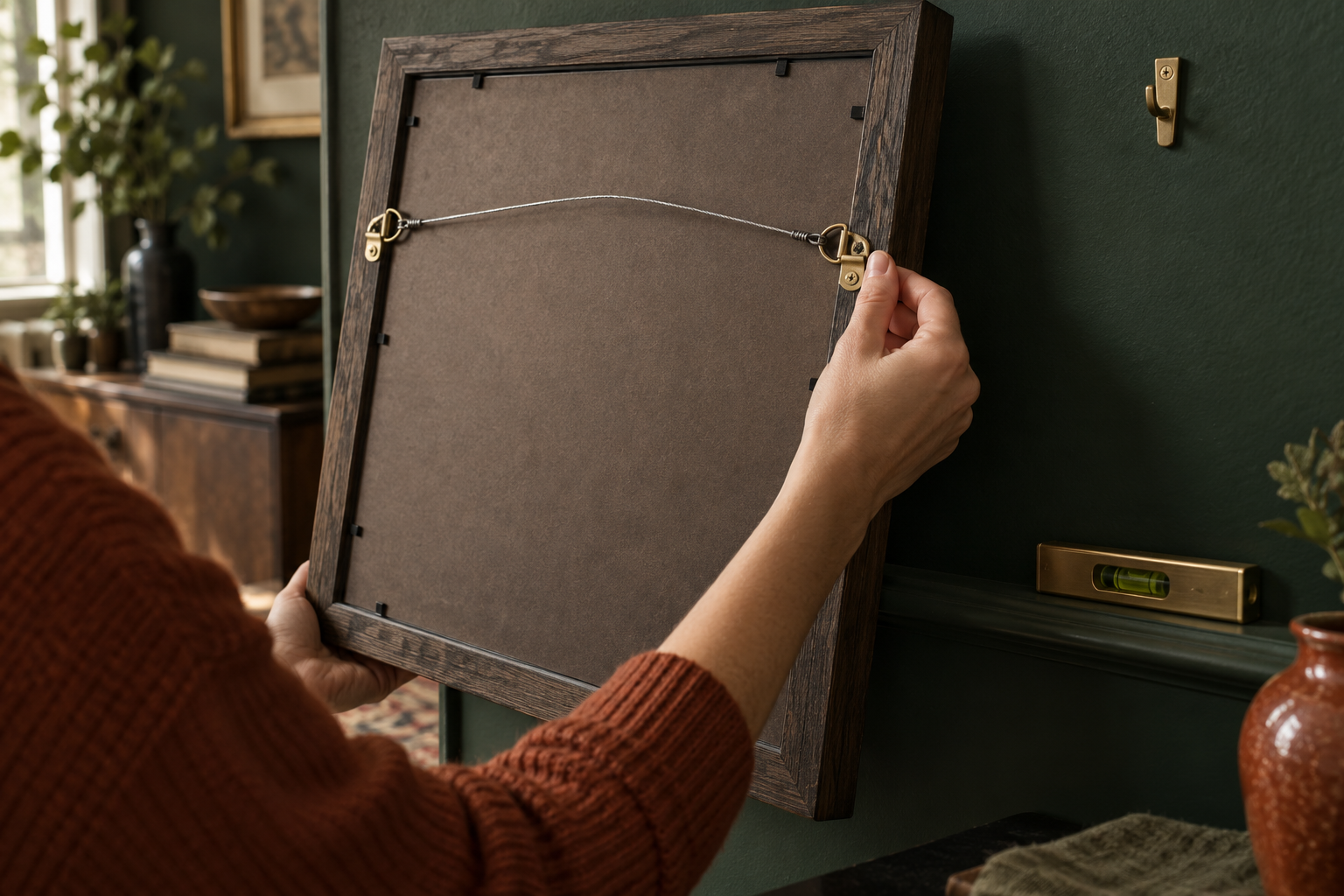
Check Your Hanging Hardware
Artwork should be installed using hardware appropriate for both the weight of the finished piece and the wall on which it will hang.
A small framed photograph and a large glazed artwork have very different installation requirements. Periodically check that the artwork remains secure and level, particularly after moving furniture, construction, or other activity around the wall.
If a frame begins leaning away from the wall, hardware becomes loose, or the piece seems unstable, address the issue rather than simply repositioning it. Large, heavy, valuable, or unusually shaped works may benefit from professional installation.
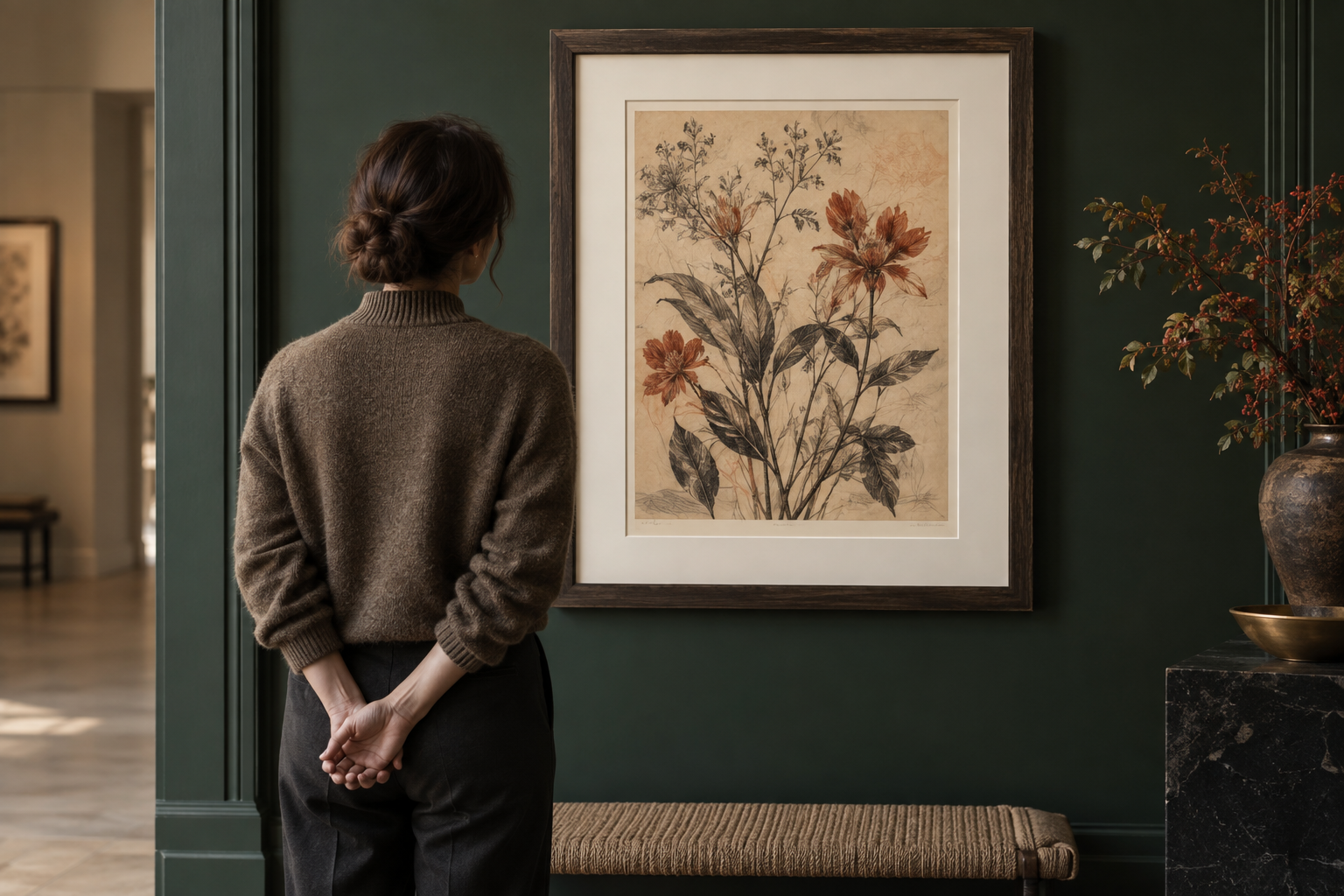
Avoid Touching the Artwork Itself
Once an artwork has been professionally framed, resist the temptation to open the frame unnecessarily.
Fingerprints, oils, dust, accidental creasing, and improper handling can introduce risks—particularly with photographs and works on paper. If something appears to have shifted inside the frame, the artwork has slipped, or debris has entered the framing package, bring the piece back to a professional framer rather than dismantling it yourself.
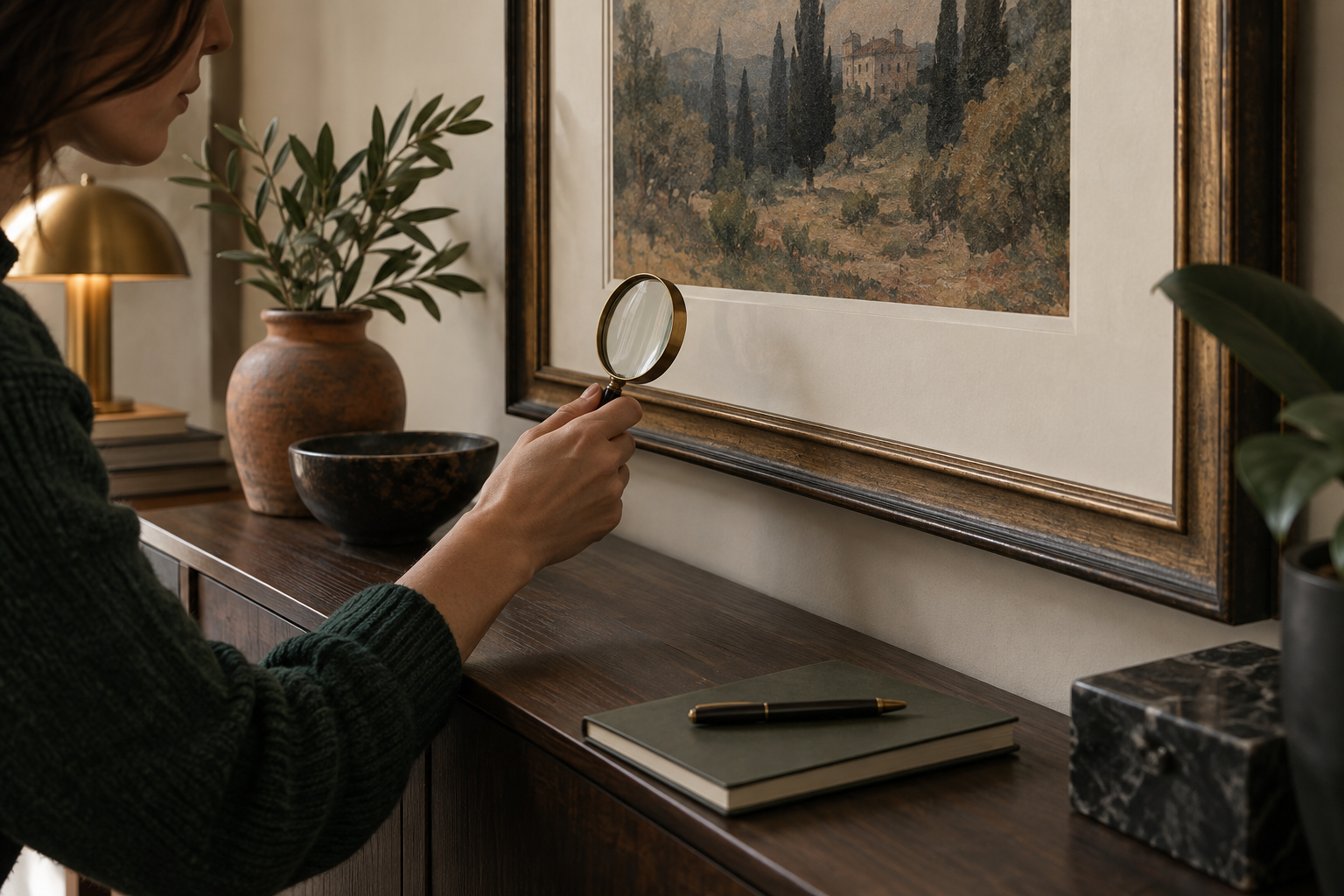
Watch for Changes Over Time
Take a closer look at your framed artwork every so often.
Potential warning signs include:
Condensation beneath the glazing
Artwork shifting or slipping
Rippling or buckling
Yellowing or discoloration
Insects or debris inside the frame
Mold or unusual spotting
Loose frame corners
Damaged backing
Cracked or chipped glazing
Changes in the mat board
Not every change indicates a serious problem, but noticing something early can make it easier to determine what is happening and whether the piece needs attention.
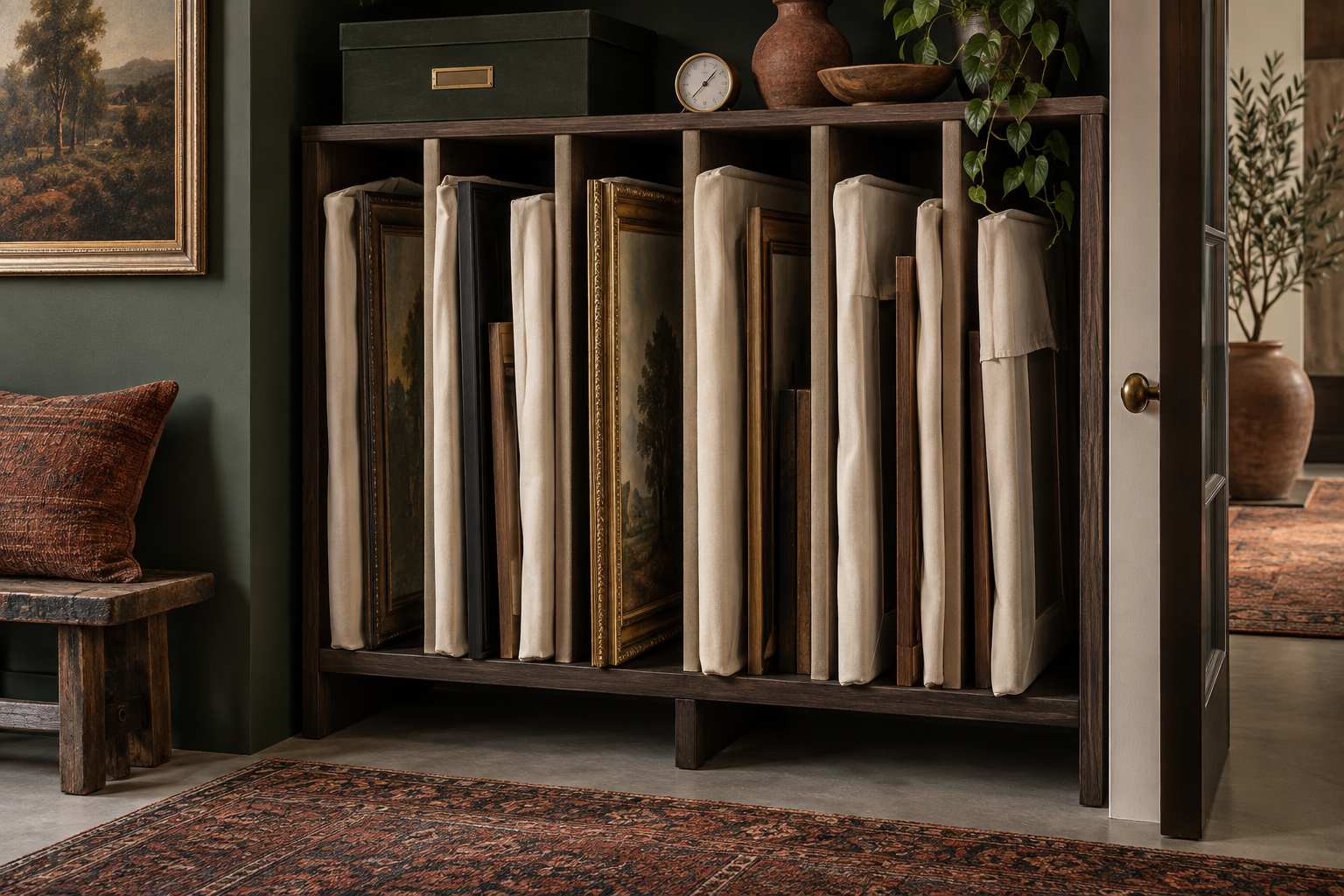
Store Framed Artwork Carefully
If a framed piece isn't currently being displayed, don't simply place it uncovered in an attic, basement, garage, or storage unit without considering the environment.
Whenever possible, choose a clean, dry, environmentally stable location. Protect the frame and glazing from scratches and impact, and avoid placing heavy objects against the artwork.
Framed works are generally better stored securely upright rather than lying beneath a stack of other objects. For valuable collections or long-term storage, more specialized art-storage solutions may be appropriate.

Remember: Conservation Framing Isn't Permanent Protection
High-quality framing can do a great deal to support the preservation of an artwork.
Conservation mat boards, appropriate mounting techniques, UV-protective glazing, backing materials, and thoughtful construction can all help create a safer environment for a piece.
But no frame can completely protect an artwork from poor environmental conditions, accidents, extreme light exposure, excessive moisture, or improper handling. The best approach combines appropriate framing with thoughtful care after the artwork leaves the studio.
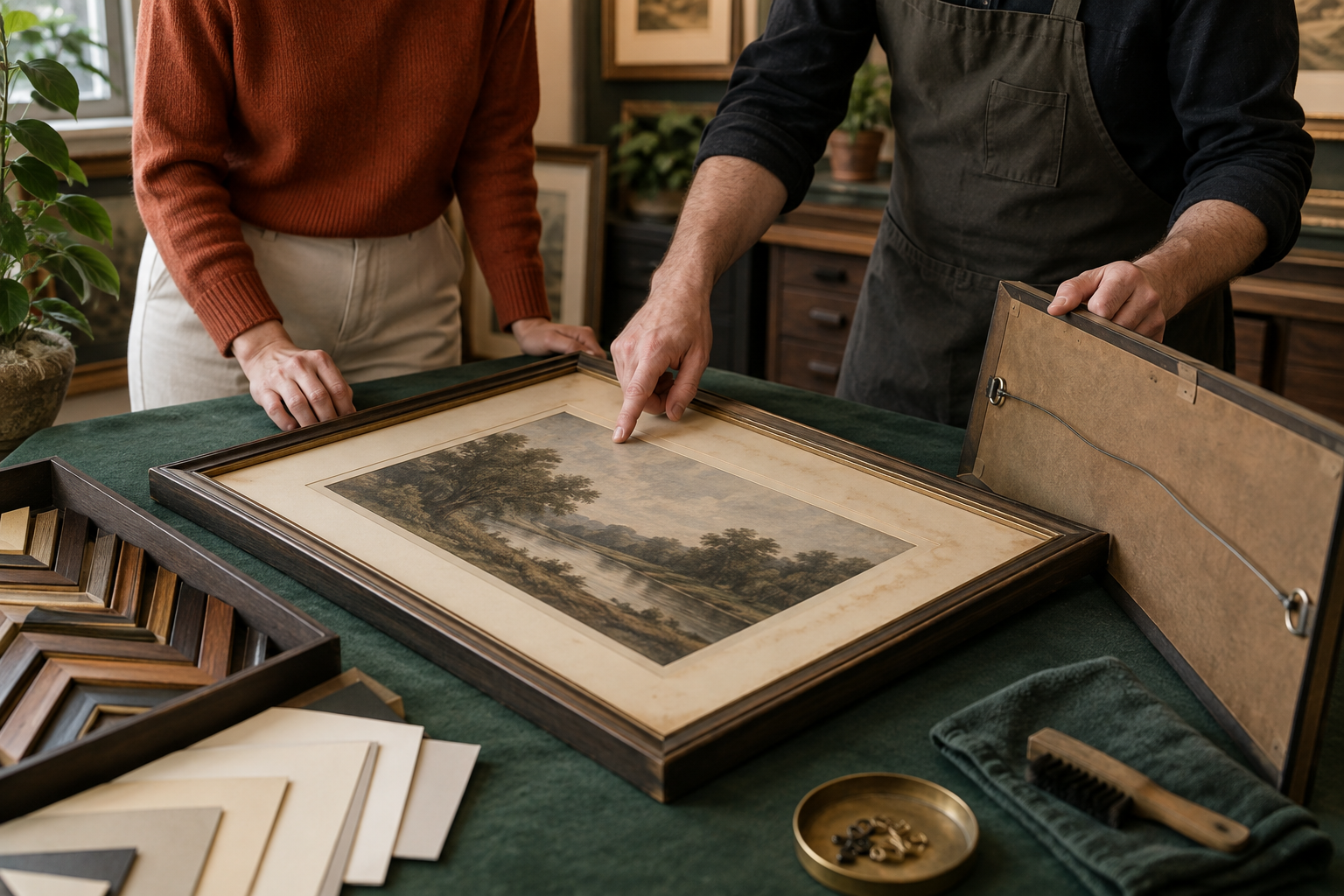
When Should You Bring a Piece Back to Your Framer?
You don't need to wait until something is visibly damaged.
Consider having a framed artwork assessed if:
It has been framed for many years
You don't know what materials were originally used
The mat has begun discoloring
The artwork appears to have shifted
The glazing has been damaged
The backing has opened or deteriorated
The frame itself requires repair
You're moving the artwork into a significantly different environment
The piece has become more valuable or important to you
Older framing can sometimes contain materials or mounting methods that would no longer be recommended for sensitive artwork. An assessment can help determine whether anything should be changed.

Care Is Part of the Framing Process
A thoughtfully framed artwork is meant to be lived with.
The goal isn't to make you afraid to display or handle your collection. It's simply to recognize that where an artwork lives and how it's cared for become part of its preservation.
At Harlem Frames, we consider framing, presentation, and long-term care together. From conservation materials and protective glazing to custom framing, installation, and frame repair, the appropriate solution begins with understanding the individual artwork.
Have questions about an existing framed piece? Bring it to Harlem Frames and our team can help assess its framing, presentation, and condition.
Related Insights
Museum Glass, Acrylic & Conservation Glazing: What's the Difference? →
To Mat or Not to Mat? Choosing the Right Mat for Your Artwork →
Where NOT to Hang Your Artwork
Finding the perfect place for an artwork isn't only a design decision. Light, heat, humidity, moisture, and environmental changes can all affect a framed piece over time. A wall may look ideal aesthetically while exposing an artwork to conditions that aren't ideal for its long-term care.
This is particularly important for original works on paper, photographs, prints, textiles, paintings, and sentimental or irreplaceable pieces. While thoughtful framing can provide meaningful protection, where the artwork lives after it leaves the frame shop matters too.
Here are some locations to think twice about before hanging your artwork.
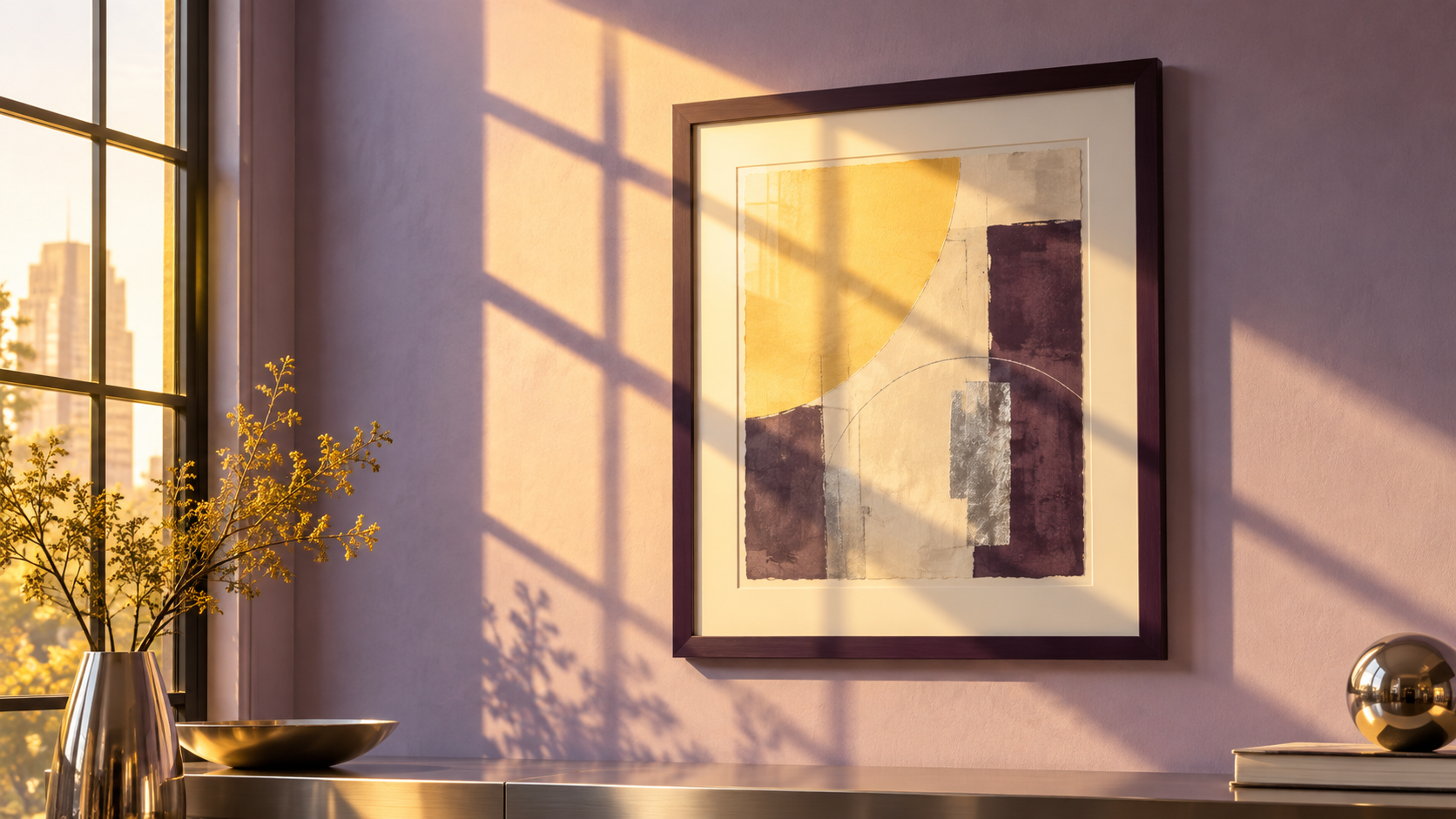
1. In Direct Sunlight
A bright, sun-filled wall may make artwork look beautiful during the day, but prolonged direct sunlight can be particularly challenging for light-sensitive materials.
UV exposure can contribute to fading and deterioration in photographs, works on paper, textiles, inks, and certain pigments. Visible light can contribute to change as well.
UV-protective glazing can significantly reduce ultraviolet exposure, but no glazing makes an artwork completely immune to the effects of light. Before hanging a sensitive piece, watch how sunlight moves through the room throughout the day. A wall that appears shaded in the morning may receive several hours of strong afternoon sun.
Better choice: A wall with indirect or controlled natural light.
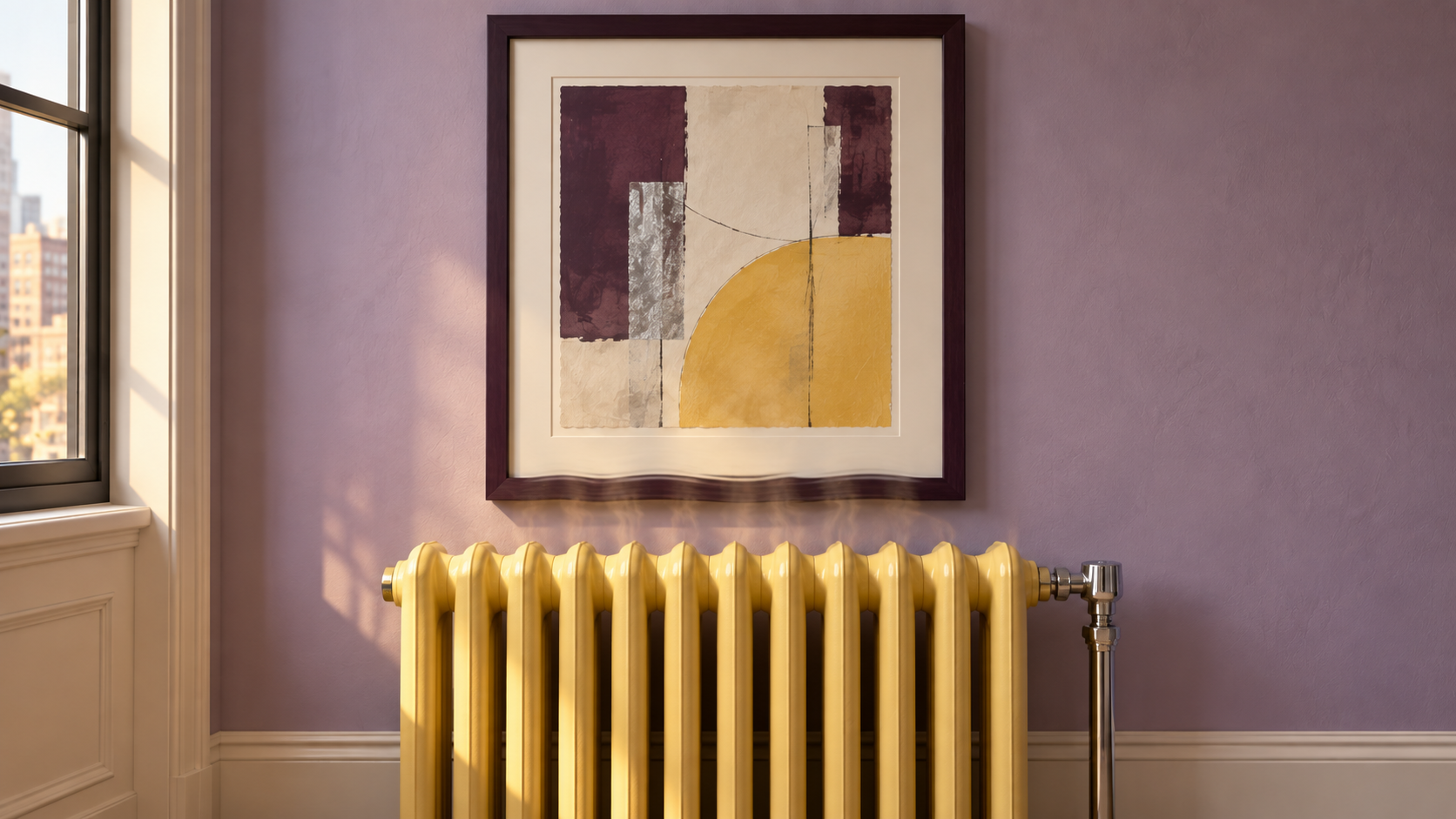
2. Directly Above a Radiator
The space above a radiator is tempting—especially in New York apartments where available wall space can be limited.
But concentrated heat and repeated temperature changes aren't ideal conditions for artwork. Paper, wood, canvas, adhesives, mounting materials, and frames can respond differently as environmental conditions fluctuate. Over time, repeated exposure to heat can place unnecessary stress on the artwork and its framing materials.
Better choice: Allow meaningful distance between framed artwork and concentrated heating sources.
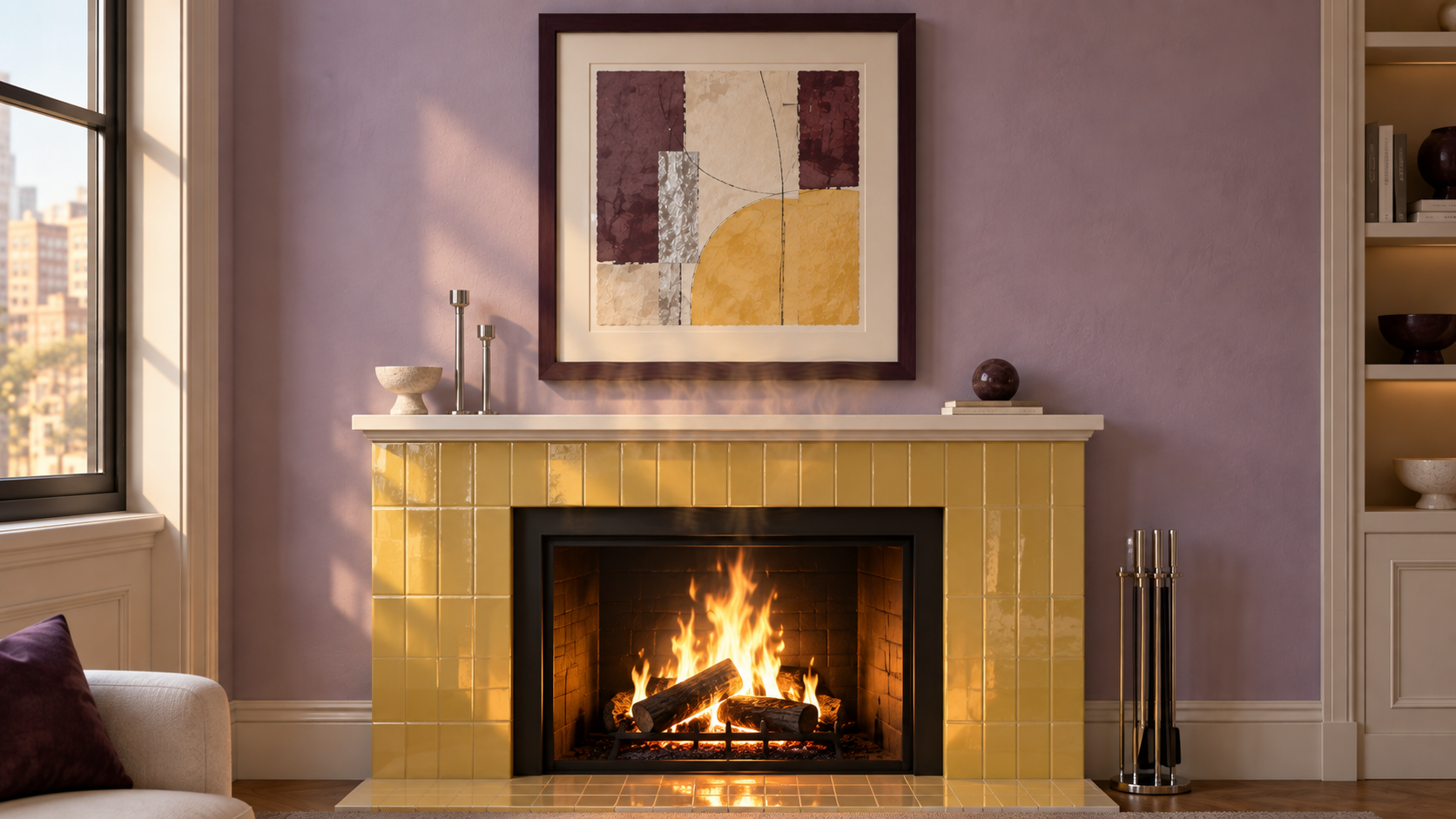
3. Above a Working Fireplace
A dramatic artwork above a fireplace can look wonderful, but the environment deserves careful consideration.
A functioning fireplace can introduce heat, temperature fluctuations, smoke, soot, and airborne particles around the artwork. Even if the piece doesn't appear visibly affected, repeated exposure can create conditions that aren't appropriate for valuable or sensitive works. If the fireplace is frequently used, consider placing important artwork elsewhere.
Better choice: Reserve the mantel area for pieces that are less sensitive or consult a professional about the particular artwork and environment.
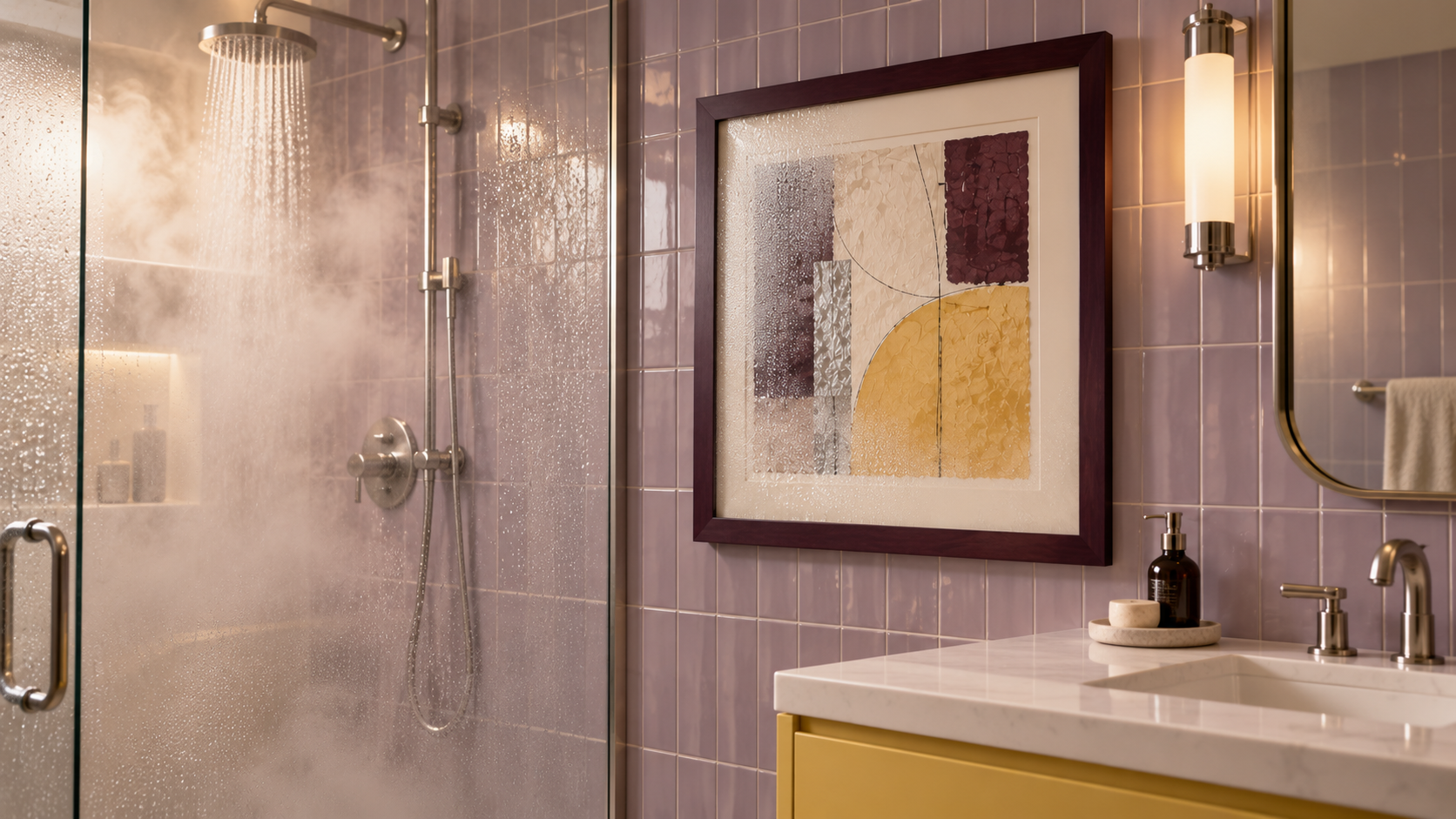
4. In a Steamy Bathroom
Whatever it is, the way you tell your story online can make all the difference.Artwork can add warmth and personality to a bathroom, but bathrooms frequently experience significant fluctuations in humidity.
Hot showers create moisture and condensation, followed by periods when the room dries again. These repeated environmental changes can affect paper, canvas, wood frames, backing materials, and other components. Moisture can also create conditions favorable to mold.
A well-ventilated powder room is very different from a small bathroom where several hot showers are taken every day, so the actual environment matters.
Better choice: Use less sensitive or replaceable artwork in high-humidity bathrooms and keep valuable or irreplaceable pieces in more stable rooms.
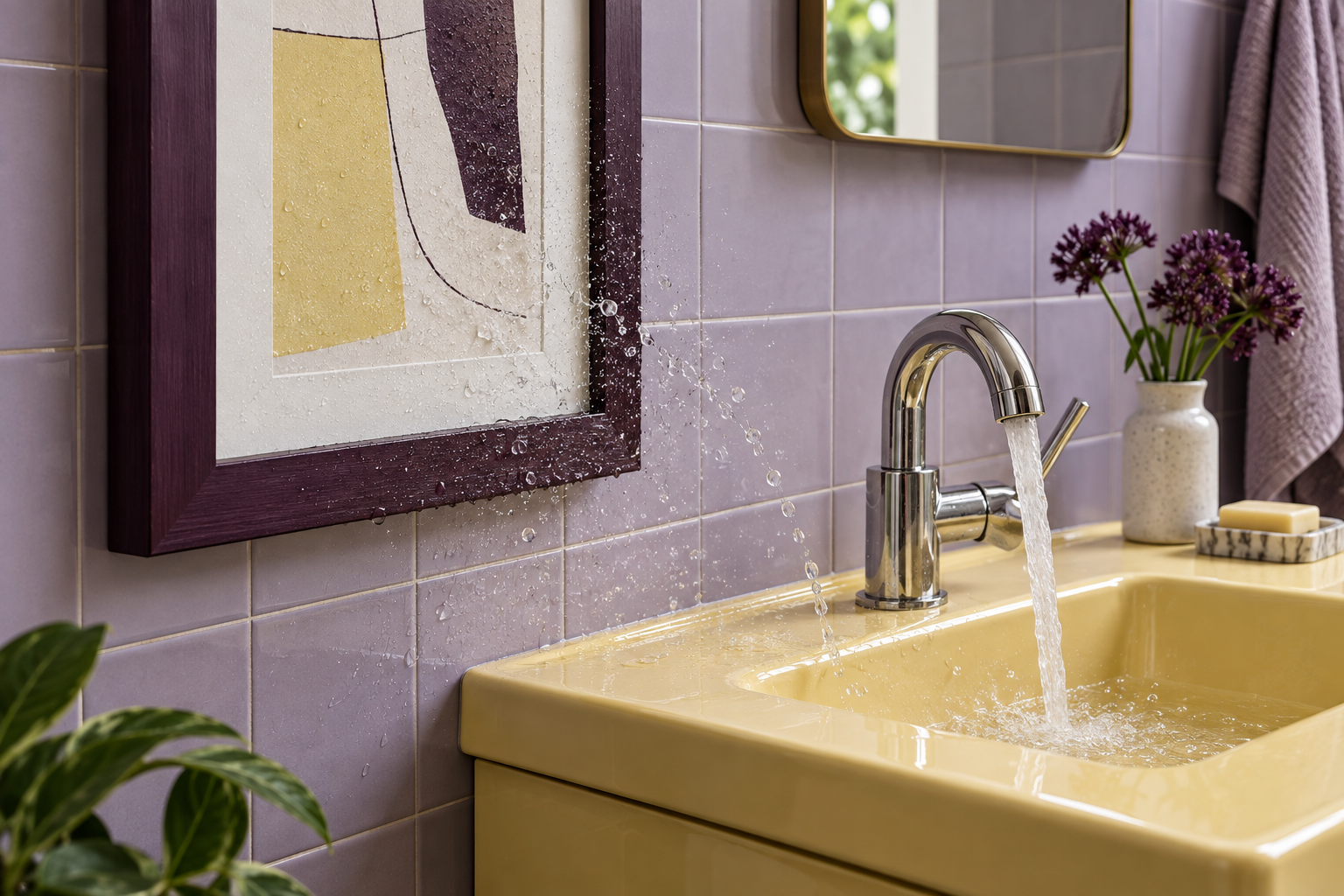
5. Immediately Beside a Shower, Sink, or Bathtub
Humidity isn't the only concern in bathrooms.
If an artwork is close enough to a water source to be splashed, it probably belongs somewhere else. Frames aren't waterproof enclosures. Moisture can potentially enter around the edges or through the back of a frame, where it may affect the artwork or framing materials.
Better choice: Keep framed artwork safely separated from direct sources of water.

6. Directly Over the Stove
The kitchen can be one of the harshest environments in a home for certain artworks.
Heat, steam, grease, smoke, food particles, and frequent changes in humidity can all accumulate around cooking areas. A framed print across the room from the stove may be perfectly reasonable. An original work directly above the cooktop is another matter.
Better choice: Hang artwork away from cooking surfaces, sinks, and areas where steam and grease regularly accumulate.
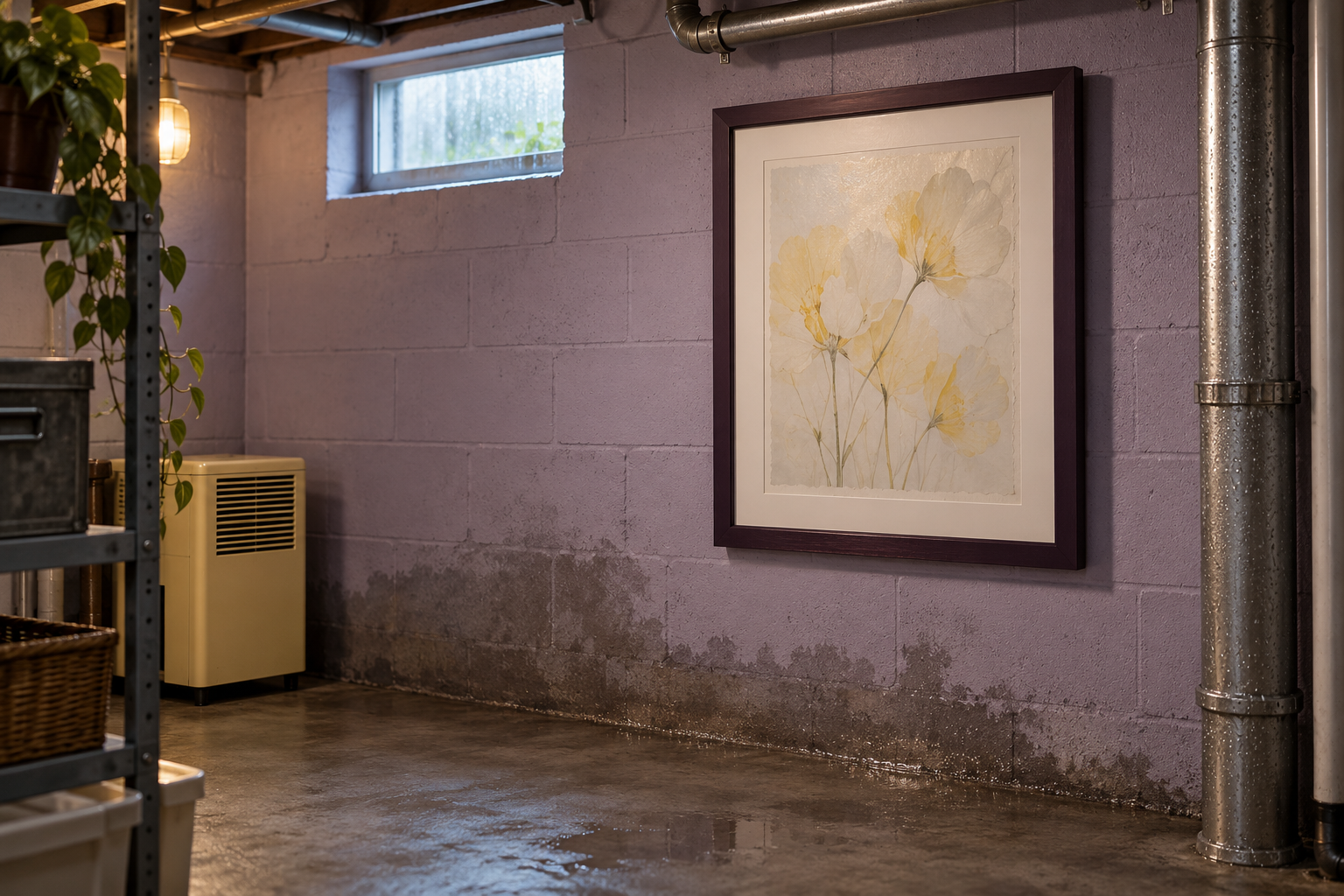
7. In a Damp Basement
Basements can provide plenty of wall and storage space, but environmental conditions vary enormously.
Some are climate-controlled and relatively stable. Others experience elevated humidity, temperature changes, condensation, or occasional water intrusion. Before displaying or storing valuable artwork in a basement, understand the conditions of the space throughout the year—not just on the day you hang it.
Better choice: A dry, climate-controlled area with stable environmental conditions.
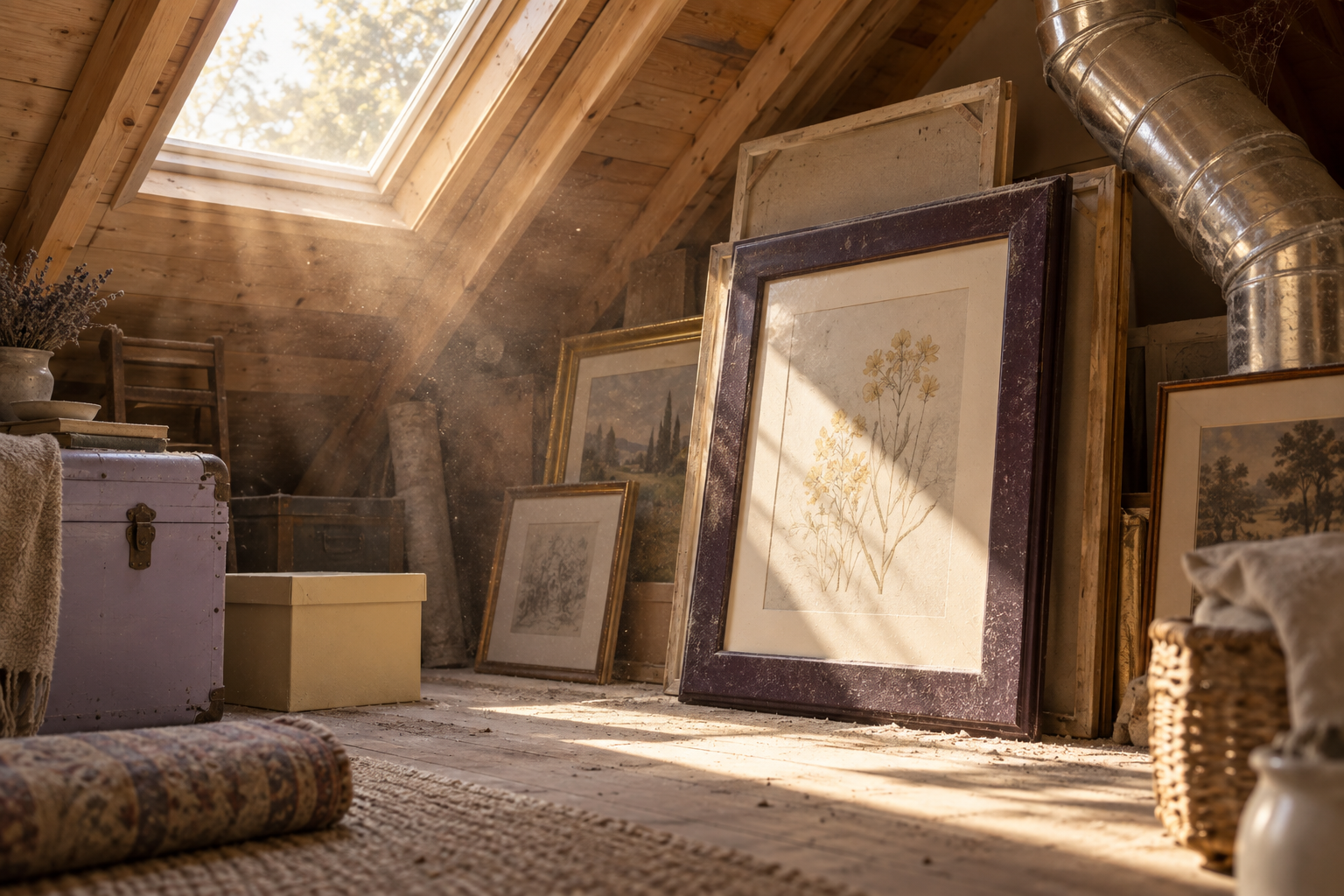
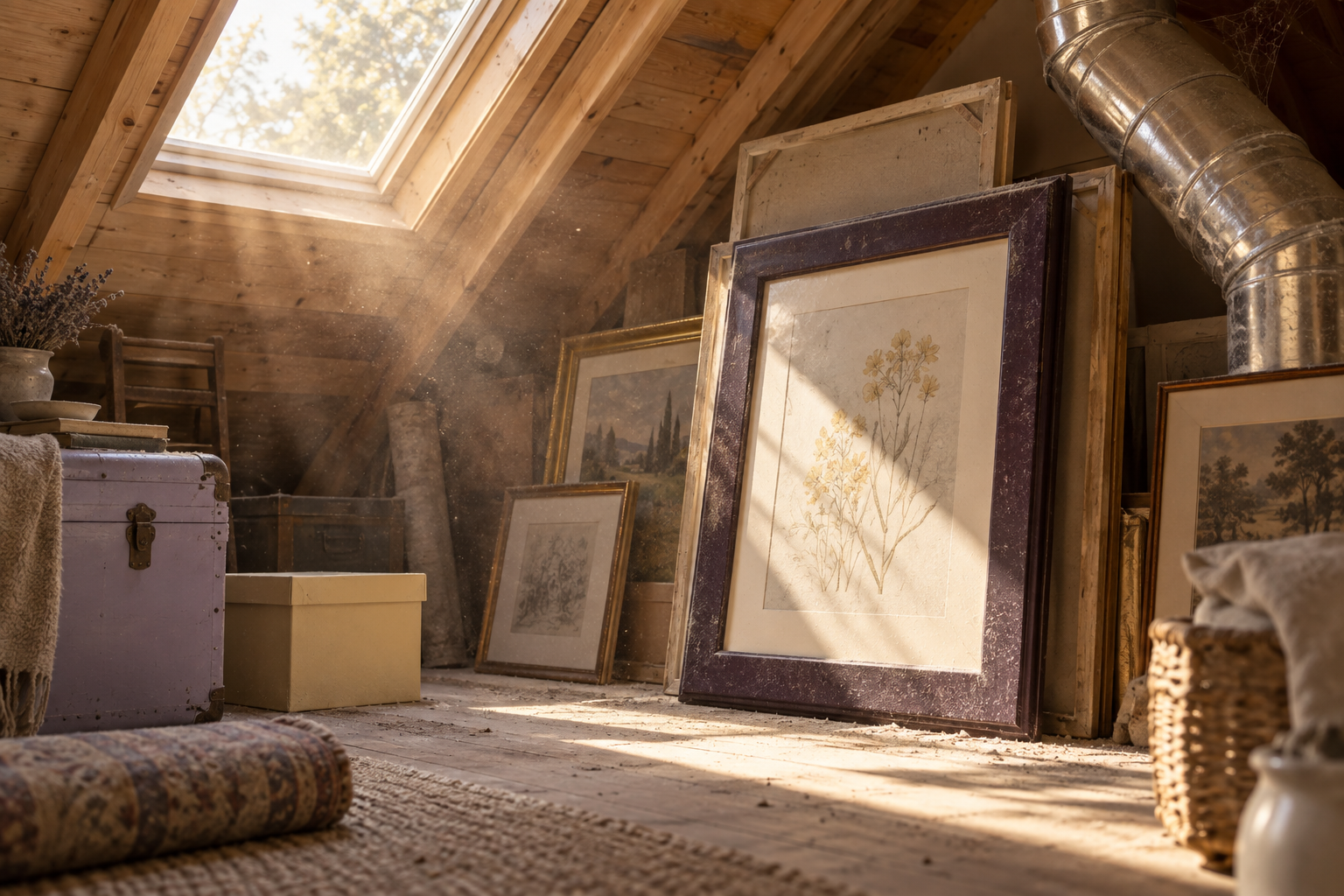
8. In an Unconditioned Attic or Garage
Attics and garages can experience dramatic seasonal changes in temperature and humidity.
They may also expose artwork to dust, insects, moisture, and other environmental risks. These spaces are generally poor choices for displaying or storing valuable framed artwork unless they have been specifically converted into controlled environments.
Better choice: Store artwork inside the conditioned living environment or use appropriate professional art storage for important collections.

9. Directly Beneath an Air Conditioner or Vent
Heating and cooling vents are easy to overlook.
Placing artwork directly in the path of forced hot or cold air can expose it to repeated environmental fluctuations. Window air conditioners can also present concerns if condensation or leaks develop.
Better choice: Position important artwork away from direct airflow and equipment that could potentially produce moisture.
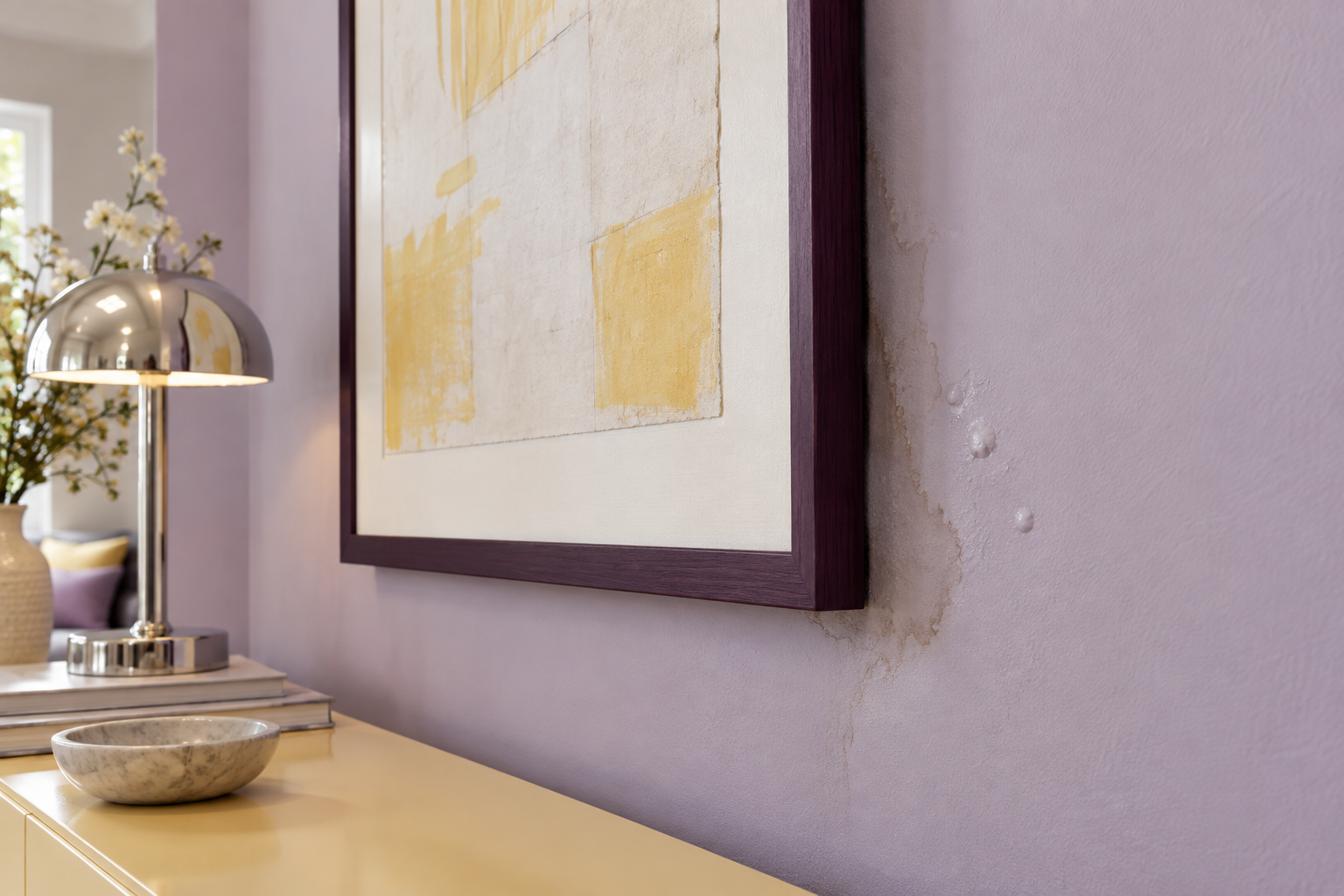
10. On a Wall With a History of Moisture Problems
A freshly painted wall may conceal an old leak.
If a wall has experienced plumbing problems, roof leaks, condensation, or recurring dampness, address the source before installing valuable artwork. Water damage can affect far more than the frame itself. Moisture entering a framing package can potentially affect mats, backing, mounting materials, paper, canvas, and the artwork.
Better choice: Confirm that the wall is completely dry and the underlying problem has been resolved before installing the piece.
What About Valuable Artwork?
The more valuable, delicate, sentimental, or irreplaceable a piece is, the more carefully its environment should be considered.
An inexpensive, replaceable poster and an original watercolor don't necessarily need to be treated the same way.
For particularly important works, think about:
Natural and artificial light
Temperature stability
Humidity
Proximity to water
Heating and cooling sources
Installation hardware
Wall condition
The type of glazing and framing materials being used
Sometimes the best framing solution begins with understanding where the finished artwork will ultimately hang.
Good Framing and Good Placement Work Together
Conservation matting, appropriate mounting, protective glazing, quality backing materials, and professional installation can all contribute to the long-term care of an artwork.
But framing can't compensate for every environmental condition. The safest approach combines thoughtful framing with thoughtful placement.
At Harlem Frames, we consider both presentation and preservation when developing a framing solution. If you're unsure where or how to display an important piece, bring it to the studio and talk with our team about the artwork, its framing, and the environment where you plan to hang it.
Related Insights
Museum Glass, Acrylic & Conservation Glazing: What's the Difference? →
To Mat or Not to Mat? Choosing the Right Mat for Your Artwork →
What Is Conservation Framing—and When Do You Need It?
A frame does more than determine how an artwork looks on the wall. For original, valuable, sentimental, or delicate pieces, the materials and techniques used inside the frame can also play an important role in how the artwork is cared for over time.
That's the idea behind conservation framing.
Conservation framing is an approach that considers both presentation and preservation. Rather than focusing solely on the moulding surrounding the artwork, it looks at the complete framing system—from mat boards and mounting methods to glazing, backing, spacing, and the environment where the finished piece will be displayed.
But does every artwork require conservation framing? Not necessarily. Understanding when it matters can help you make a more informed decision about your piece.
What Makes a Frame “Conservation” Quality?
Conservation framing isn't a particular aesthetic.
A conservation-framed artwork can be contemporary, traditional, colorful, minimal, floated, deeply matted, or surrounded by an ornate moulding. What matters is largely what you don't see once the frame is finished.
A conservation-minded approach considers:
Works on paper
Limited-edition or signed prints
Fine-art photography
Historical documents
Textiles
Collectible material
Family photographs and heirlooms
Valuable artwork
Irreplaceable objects
Pieces intended to remain framed for many years
The decision isn't determined by financial value alone. A handwritten letter from a grandparent may be worth very little on the market but impossible for its owner to replace. Sentimental value can be just as important as monetary value when deciding how carefully something should be framed.
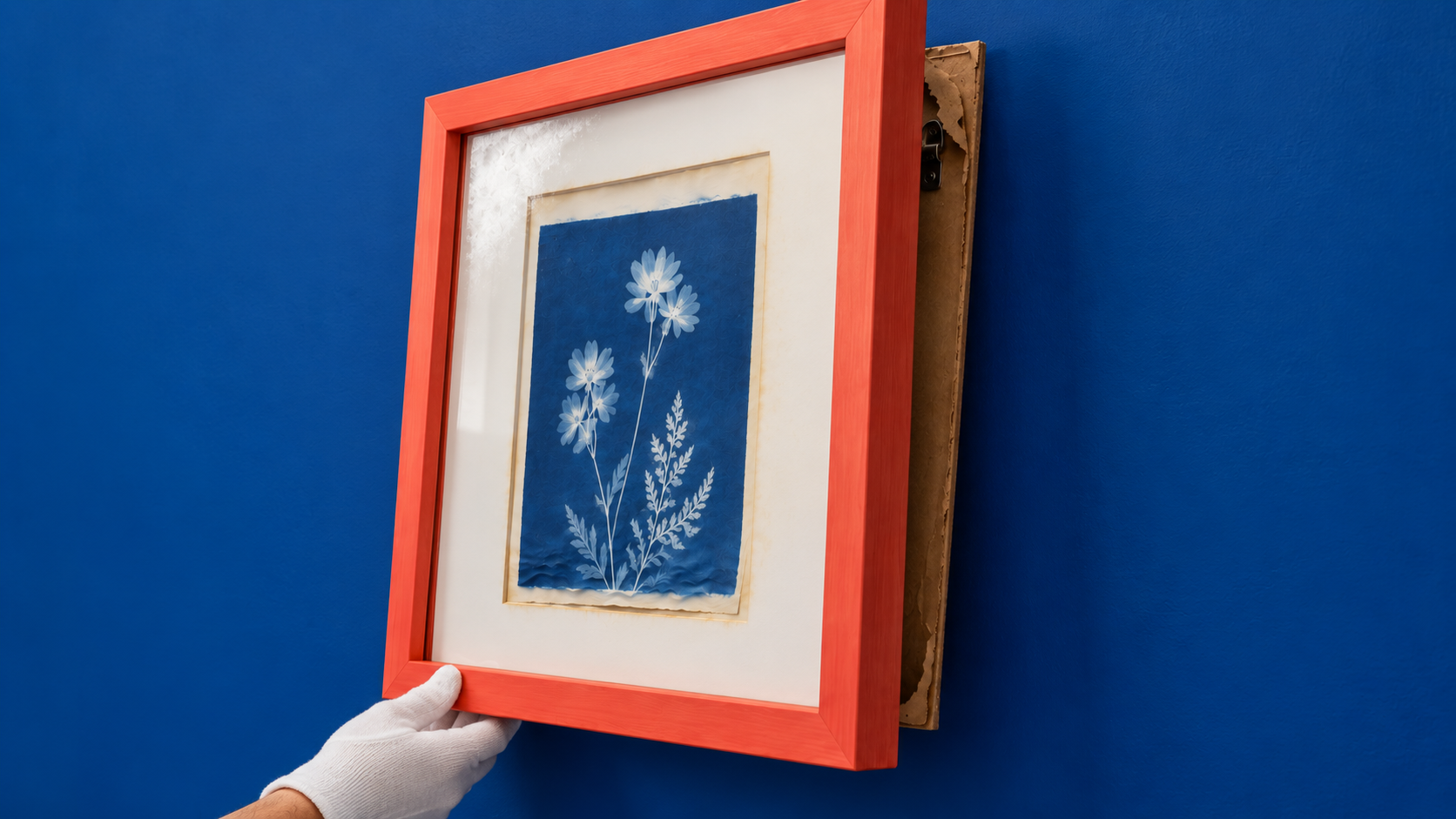
When Should Older Artwork Be Reframed?
You may also consider conservation framing for artwork that's already hanging on your wall.
Older pieces may have been framed using materials or techniques that were common at the time but wouldn't necessarily be selected for sensitive artwork today.
Consider having an older frame assessed if you notice:
Yellowing or browning mats
Artwork touching the glazing
Staining or discoloration
Rippling or buckling
Artwork slipping inside the frame
Damaged or deteriorating backing
Moisture or condensation
Loose mounting
Cracked glazing
Mold or unusual spotting
You may also want an assessment simply because you don't know how the piece was originally framed. Reframing doesn't necessarily mean changing its appearance. In some cases, the goal may be to preserve the existing aesthetic while improving the materials surrounding the artwork.
Does Conservation Framing Last Forever?
No framing system eliminates the effects of time or environment completely.
Even conservation-framed artwork should be protected from prolonged direct sunlight, excessive humidity, concentrated heat, water, and unstable environmental conditions.
Materials can age, hardware can loosen, and the needs of an artwork can change over decades. Conservation framing should therefore be understood as one part of responsible long-term artwork care, rather than permanent protection.
Preservation Doesn't Have to Compromise Design
Perhaps the most important thing to understand about conservation framing is that preservation and aesthetics don't have to compete.
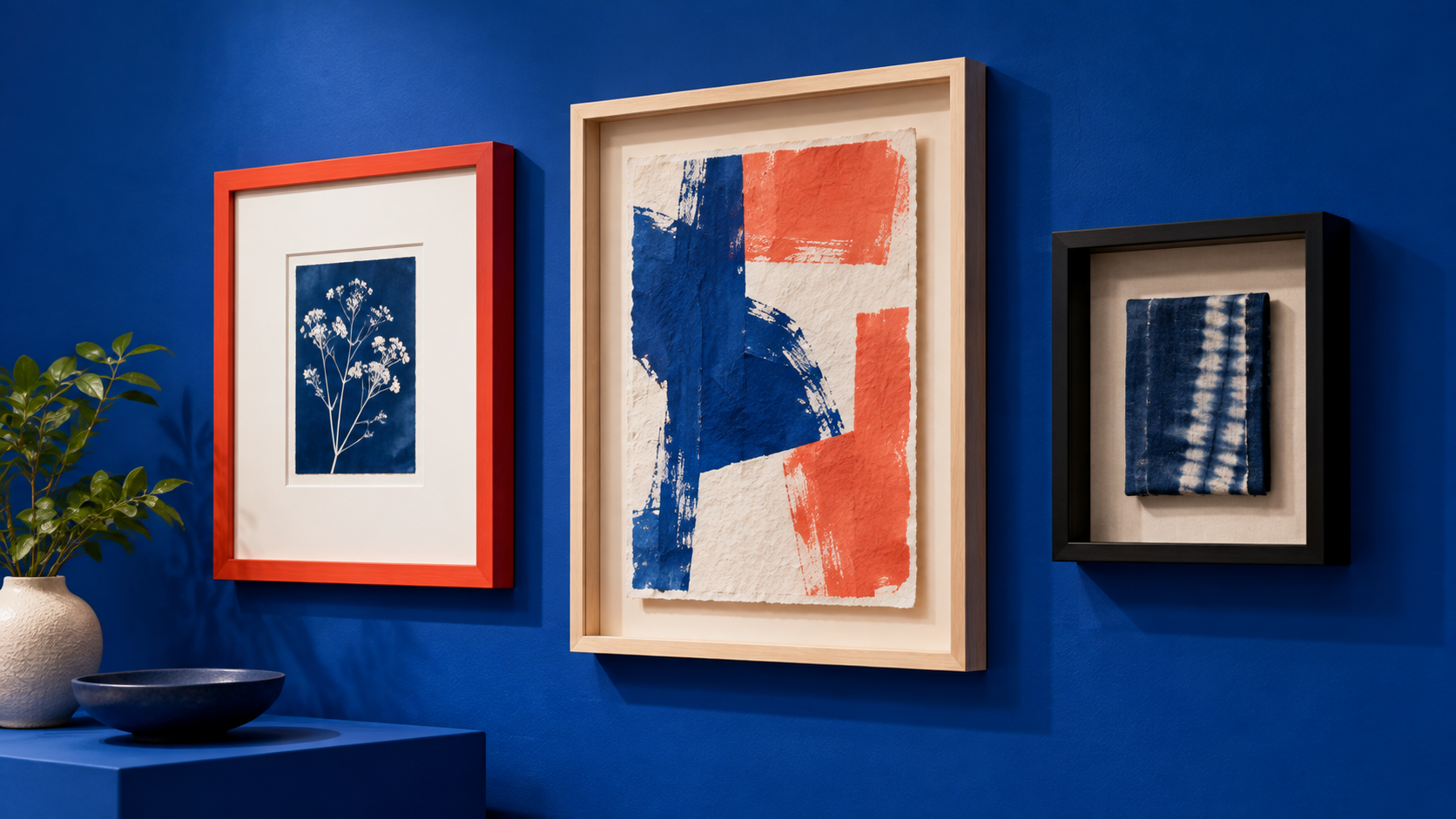
A conservation-minded presentation can still use beautiful natural woods, colorful mouldings, generous mats, float mounting, shadowboxes, specialty glazing, or a completely custom design.
The objective is to create a presentation that feels appropriate for the artwork while making thoughtful decisions about the materials closest to it. At Harlem Frames, we approach conservation framing piece by piece—considering the artwork's medium, condition, value, construction, presentation, and intended environment before determining the appropriate solution.
Have an original, valuable, historical, or sentimental piece you're considering framing or reframing? Bring it to Harlem Frames and our team can help you determine the level of protection and presentation appropriate for the work.
Related Insights
Museum Glass, Acrylic & Conservation Glazing: What's the Difference? →
To Mat or Not to Mat? Choosing the Right Mat for Your Artwork →
To Mat or Not Mat?
When choosing a custom frame, one of the first design questions is often surprisingly simple: Should the artwork have a mat?
A mat can create breathing room around an artwork, give a smaller piece greater presence, introduce color or texture, and help separate certain works from the glazing. But not every piece benefits from one—and when a mat is appropriate, there are many more possibilities than the familiar white border surrounding a photograph.
At Harlem Frames, we work with conservation mat boards, museum boards, and specialty mat boards, allowing the matting to respond to both the visual character of the artwork and its preservation needs.
So, when should you mat an artwork, when should you skip it, and what kind of mat should you choose?
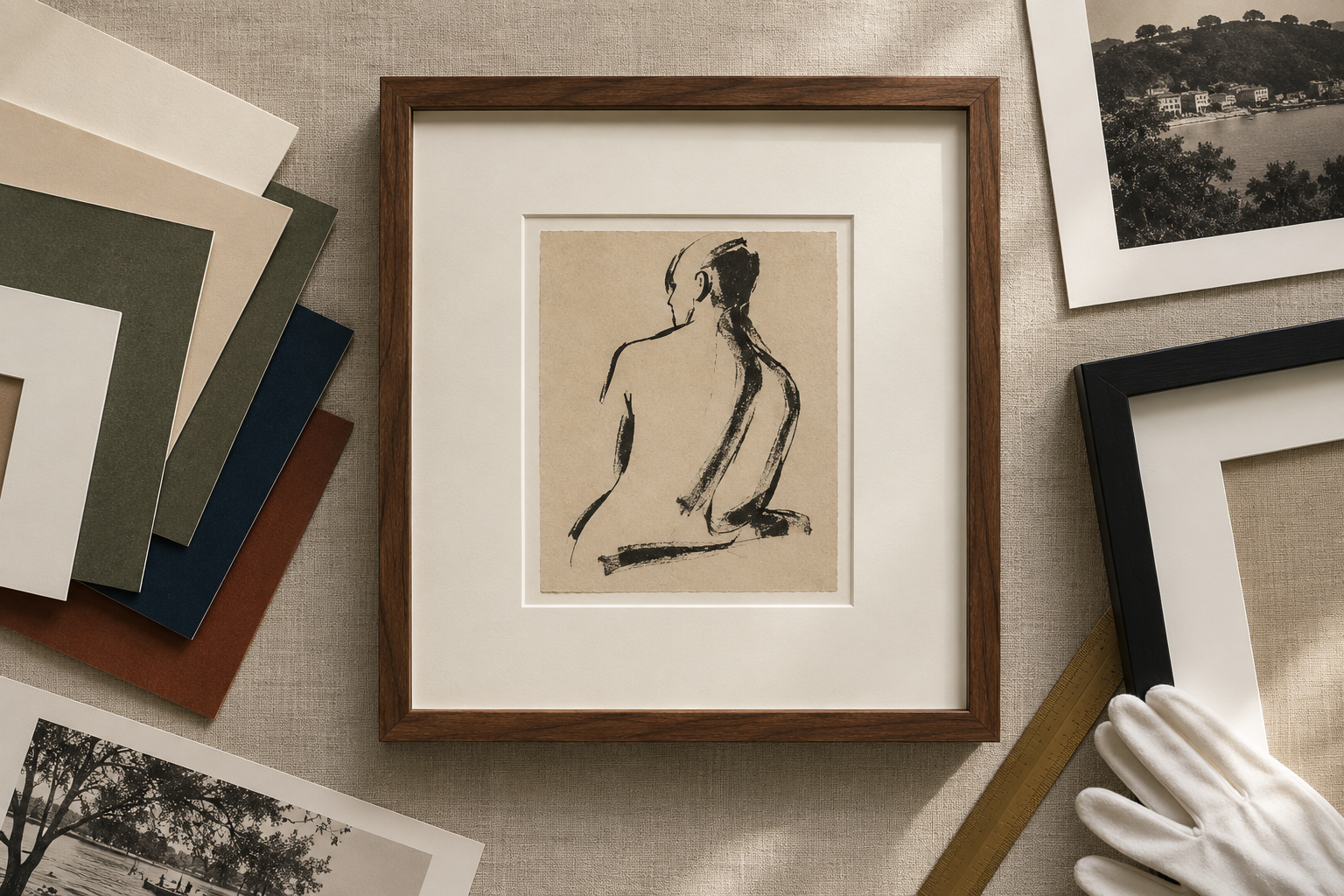
What Does a Mat Actually Do?
A mat is the border placed between an artwork and its surrounding frame.
Its most obvious role is visual. Matting creates negative space around an image, establishing a transition between the artwork and the frame. Depending on its proportion, color, and material, that space can make a presentation feel quiet and restrained—or become an expressive part of the framing design itself.
For many works on paper, matting can also serve a practical purpose by helping create separation between the artwork and the glazing. The mat therefore shouldn't be considered an afterthought. Its material, proportions, color, surface, and relationship to the artwork all contribute to the finished frame.
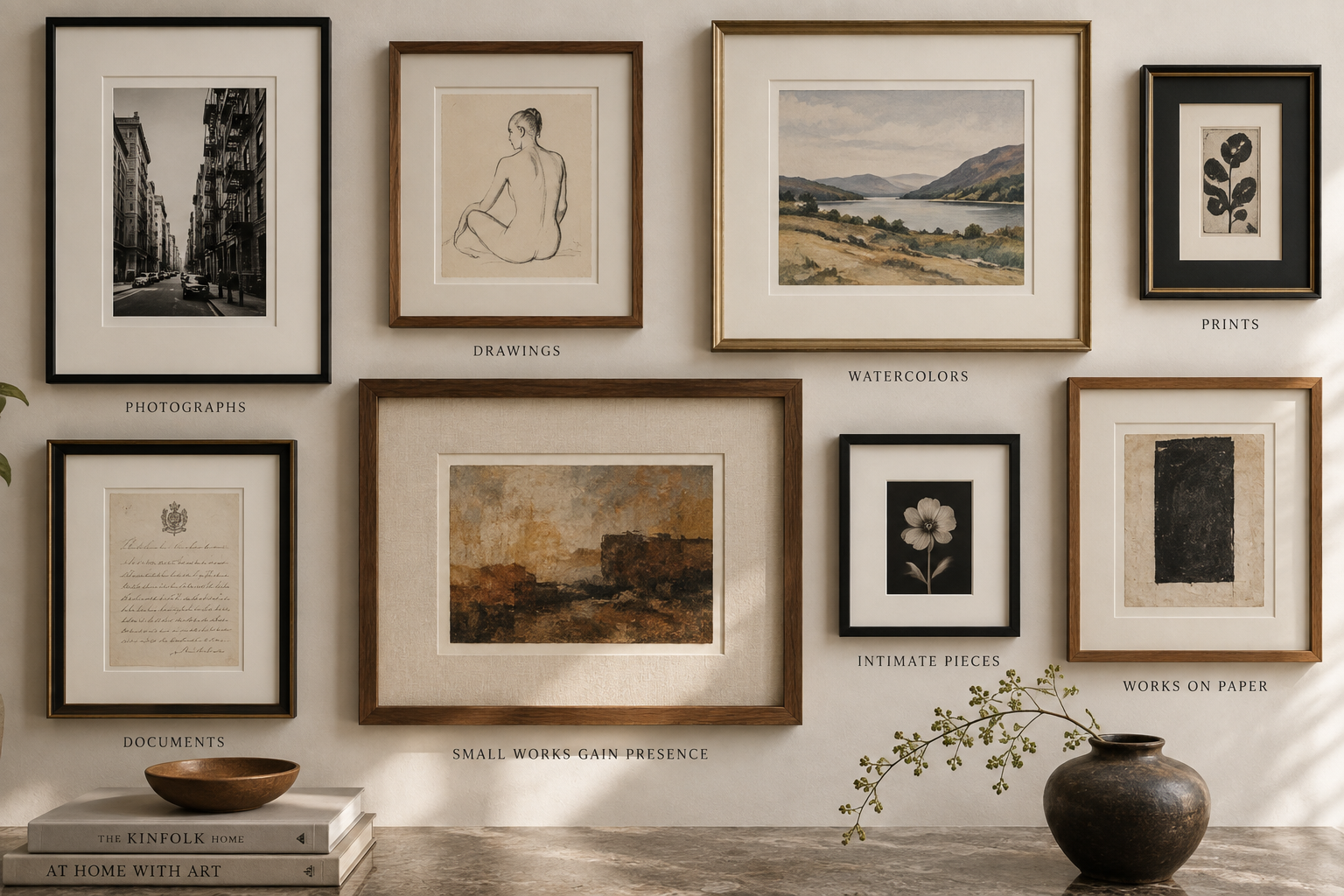
When Does an Artwork Benefit From a Mat?
Matting is particularly common for photographs, prints, drawings, watercolors, works on paper, documents, and other relatively flat pieces.
It can be especially effective when the artwork needs visual breathing room. A small drawing placed immediately against a substantial frame, for example, may feel overwhelmed. Surrounding it with a carefully proportioned mat gives the eye space to transition from the frame to the artwork and can give an intimate piece considerably more presence.
Larger works can benefit from matting as well. The important consideration isn't simply size, but balance.
Conservation Mat Boards
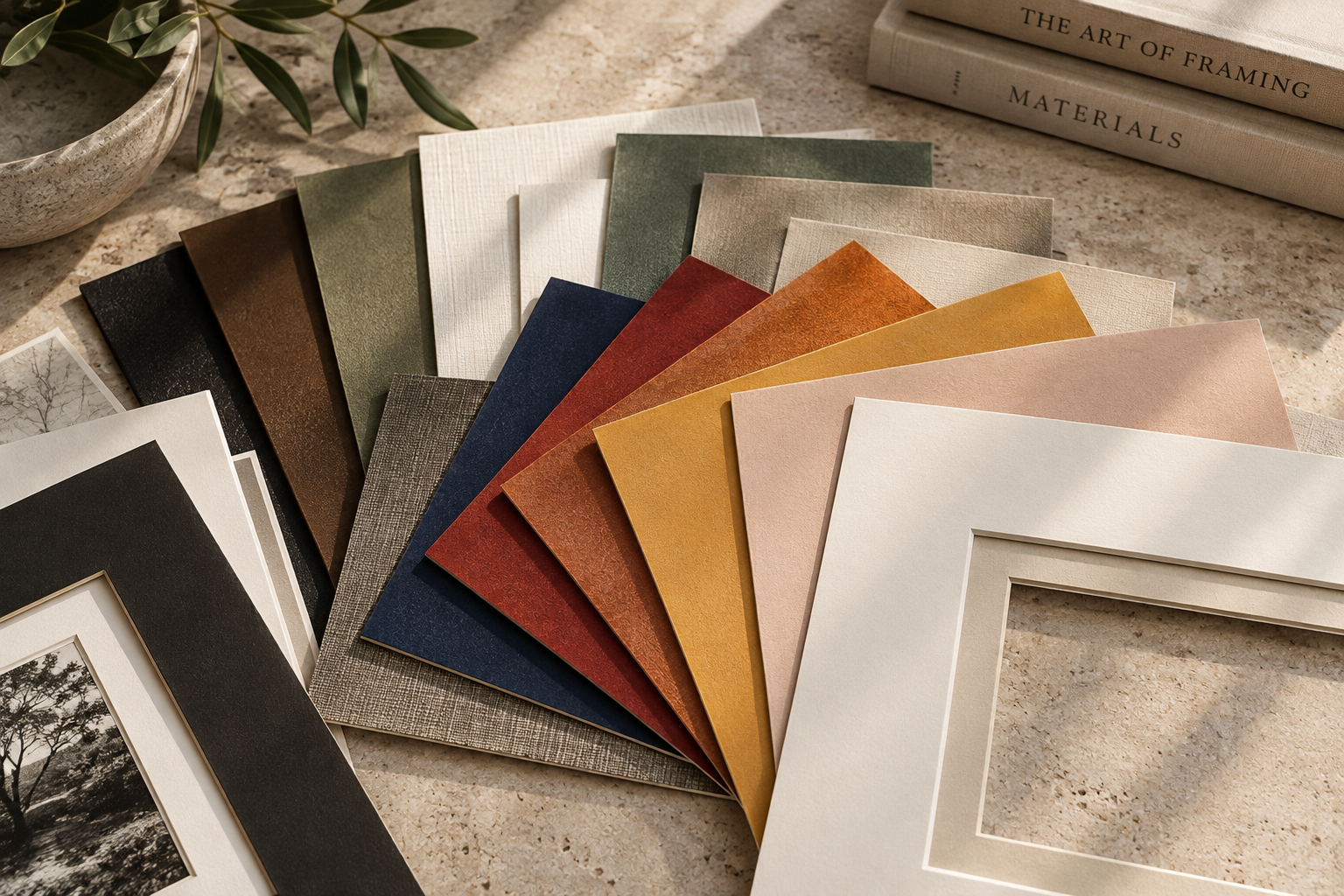
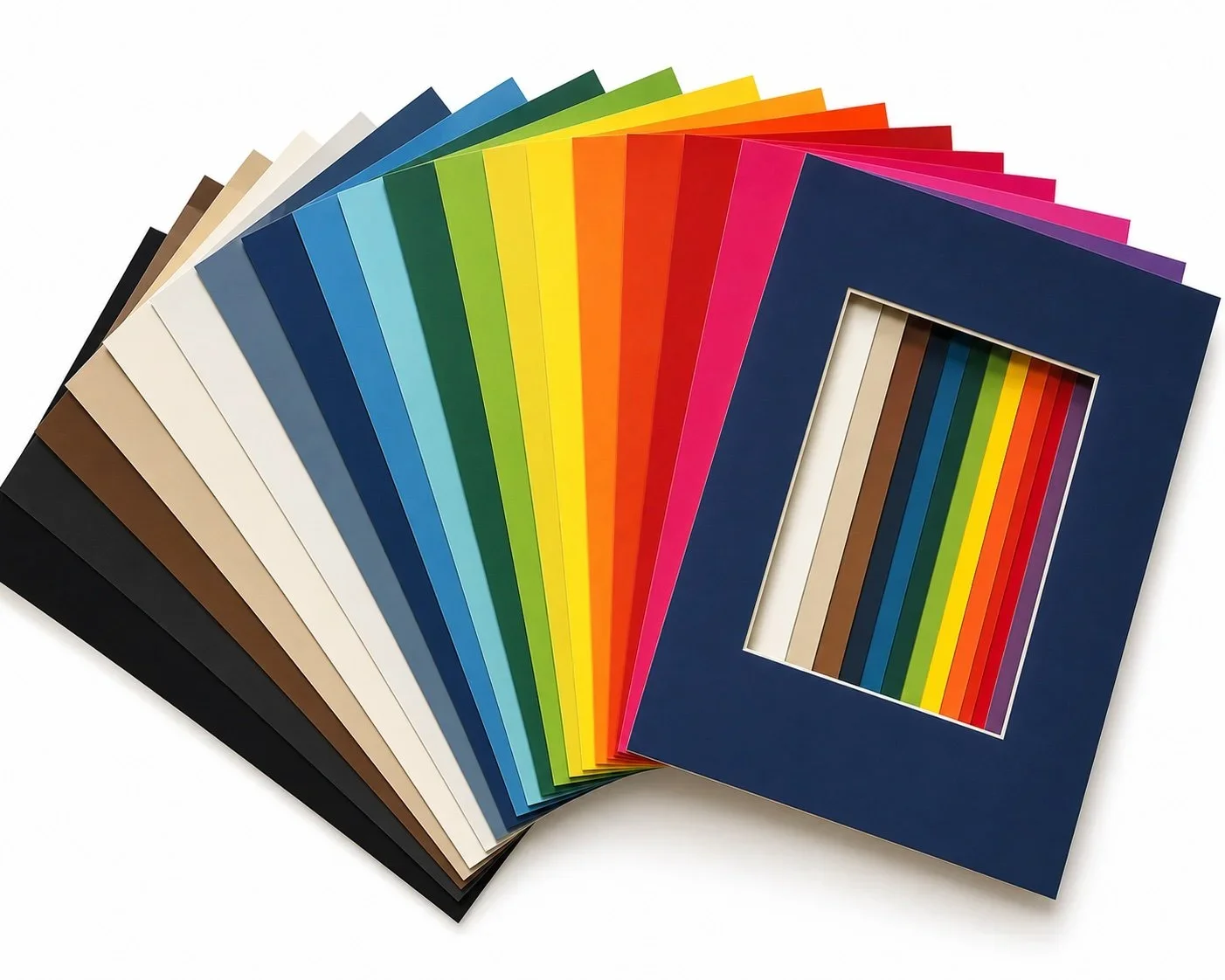
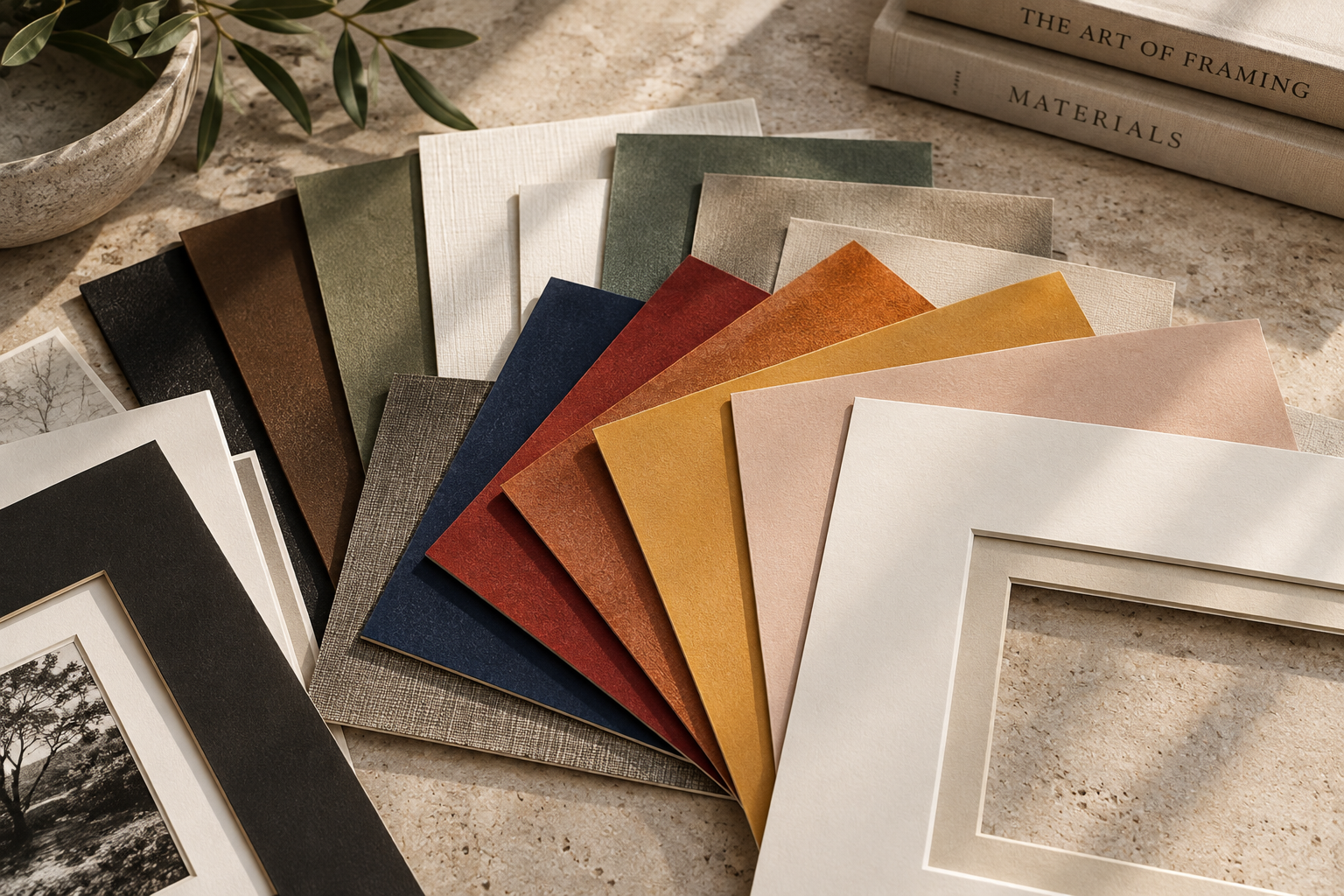
For many framing projects, Harlem Frames offers conservation-quality alpha-cellulose mat boards in an extensive range of contemporary colors, cores, and thicknesses. This means conservation-minded framing doesn't have to limit the design to white or cream.
A neutral mat can create a subtle transition around an artwork, while blues, greens, reds, yellows, and other colors can establish an entirely different relationship between the image and frame. The range of colors also allows the framer to respond to subtle elements within the artwork without simply matching its most obvious color.
And because different cores and thicknesses are available, even the beveled edge visible around the mat opening can become part of the finished presentation.
Museum Boards
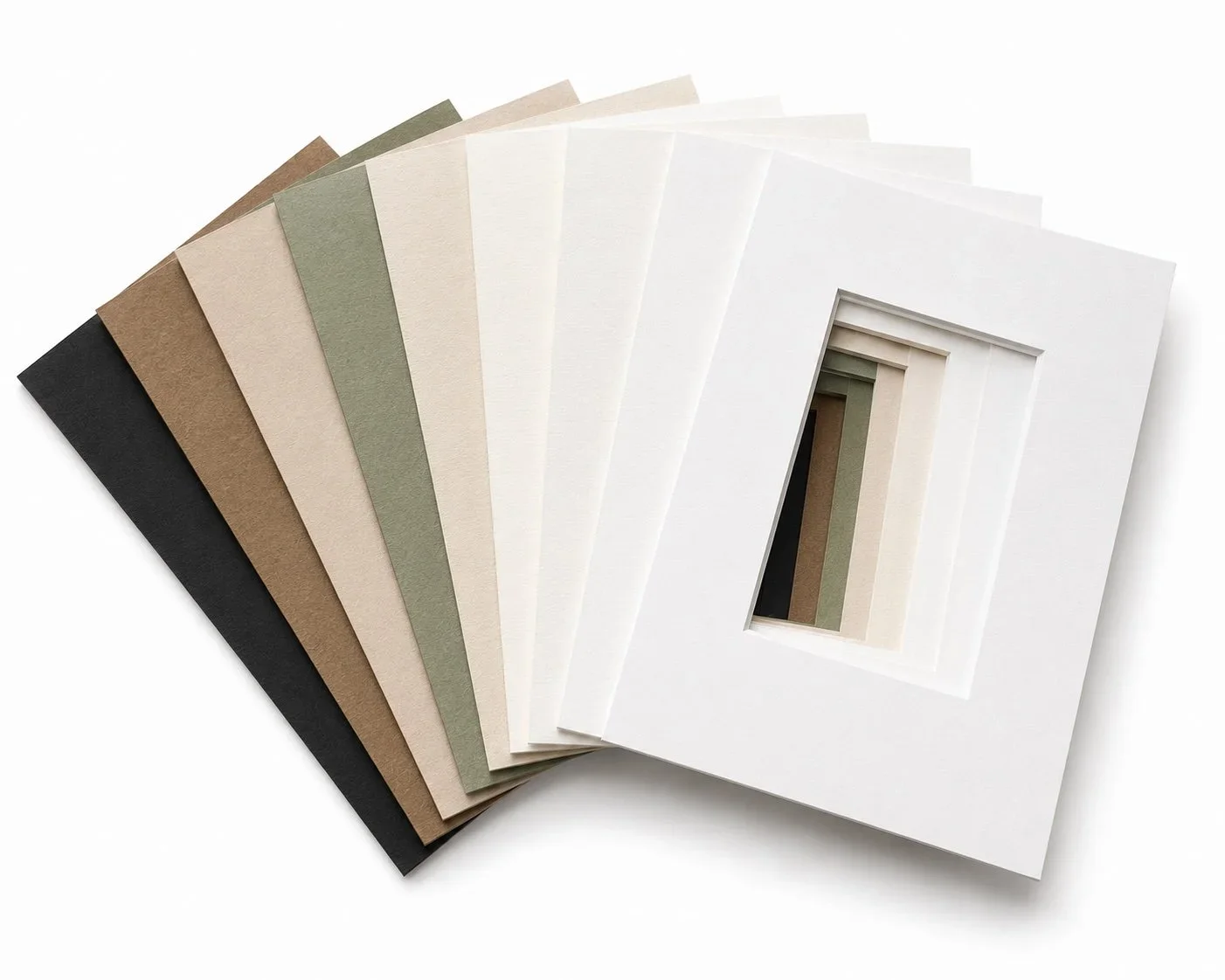
For projects where preservation is a particularly important consideration, museum-quality mat board provides another option. The museum boards available through Harlem Frames are made from 100% virgin cotton with a solid core throughout and are available in buffered as well as selected unbuffered options.
These boards tend to have a quieter, more restrained palette than the extensive range available in conservation mat boards—and that's often appropriate. For original works on paper, historic material, photographs, valuable prints, or other sensitive pieces, the material surrounding the artwork can be just as important as the visible design.
Whether buffered or unbuffered material is appropriate depends on the artwork itself. This is one reason conservation framing should be considered according to the individual object rather than approached with a single formula.
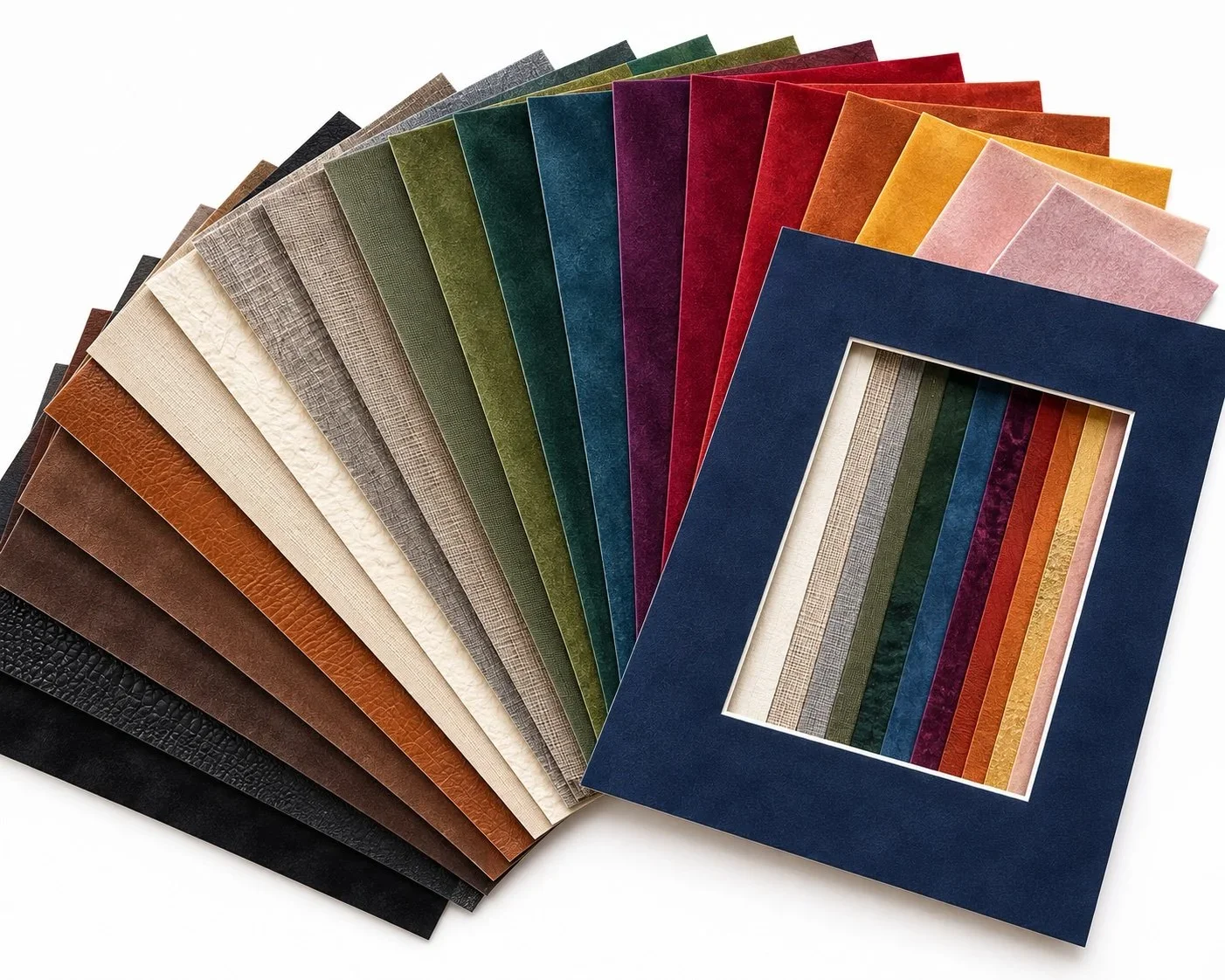
Specialty Mat Boards
Matting can also become a much more expressive design element. Harlem Frames offers specialty conservation-quality mat boards distinguished by rich colors, refined textures, and premium surfaces. These can introduce a tactile quality that a traditional smooth mat doesn't provide.
Textured neutrals can create warmth around an artwork, while deep greens, blues, burgundies, ochres, and other saturated surfaces can make the mat a deliberate part of the composition. Depending on the artwork, specialty finishes can also establish an interesting dialogue with textiles, photography, decorative works, or pieces with strong material qualities of their own.
The goal isn't to make the mat compete with the artwork. It's to find a surface that adds something meaningful to its presentation.
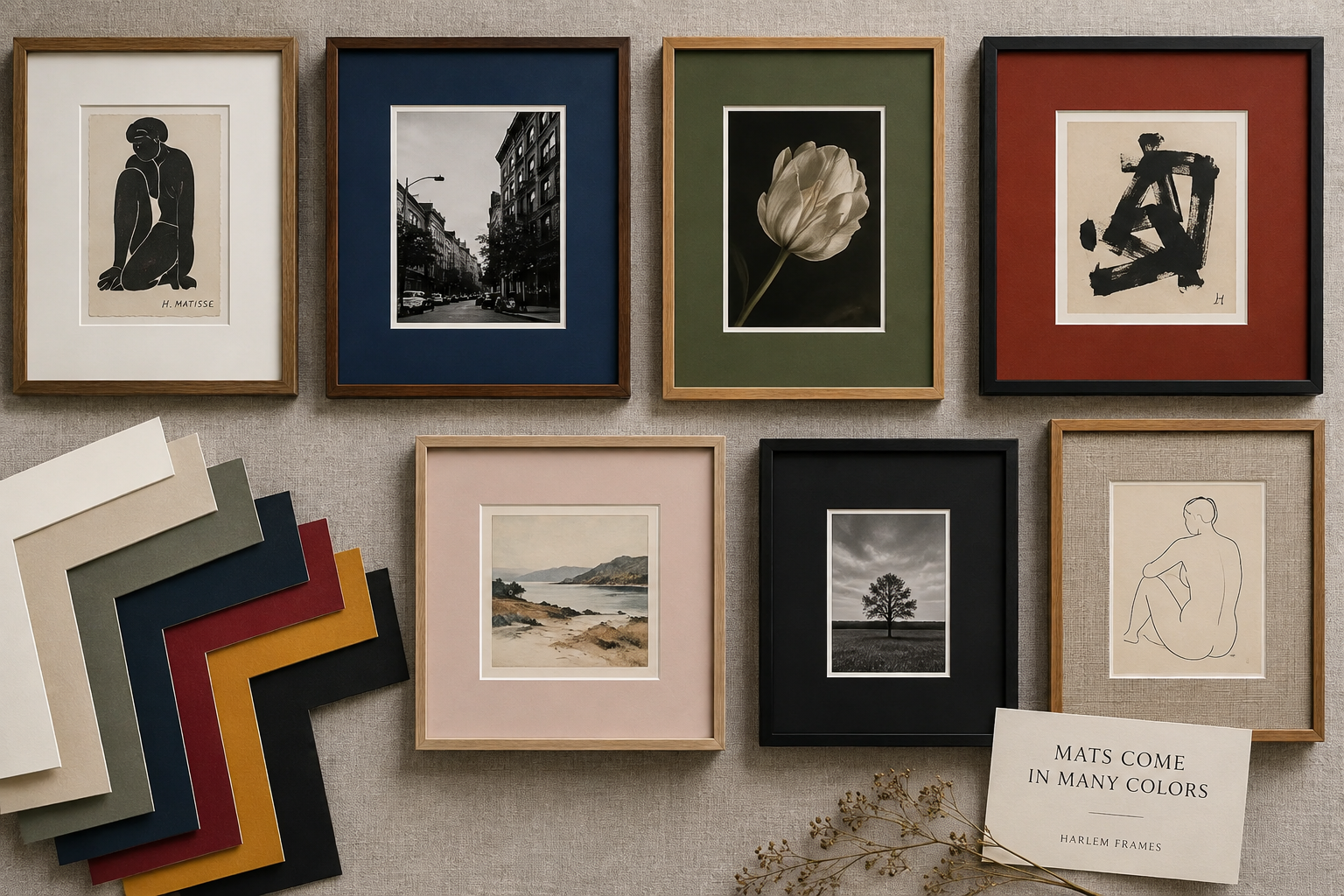
Does a Mat Have to Be White?
Not at all.
White and off-white remain popular because they're versatile and allow the artwork to command attention, but they're only a small part of what is possible. Even among neutrals, subtle differences matter. A bright white can feel crisp and contemporary, while warmer whites, creams, taupes, and natural tones can soften the transition between artwork and frame.
Color can be equally sophisticated when used thoughtfully. Instead of asking, “Which color matches the artwork?” consider:
Which color changes the way I experience the artwork?
Sometimes the right answer is white. Sometimes it's charcoal, deep blue, warm linen, or an unexpected color pulled from a minor detail within the piece.
How Wide Should the Mat Be?
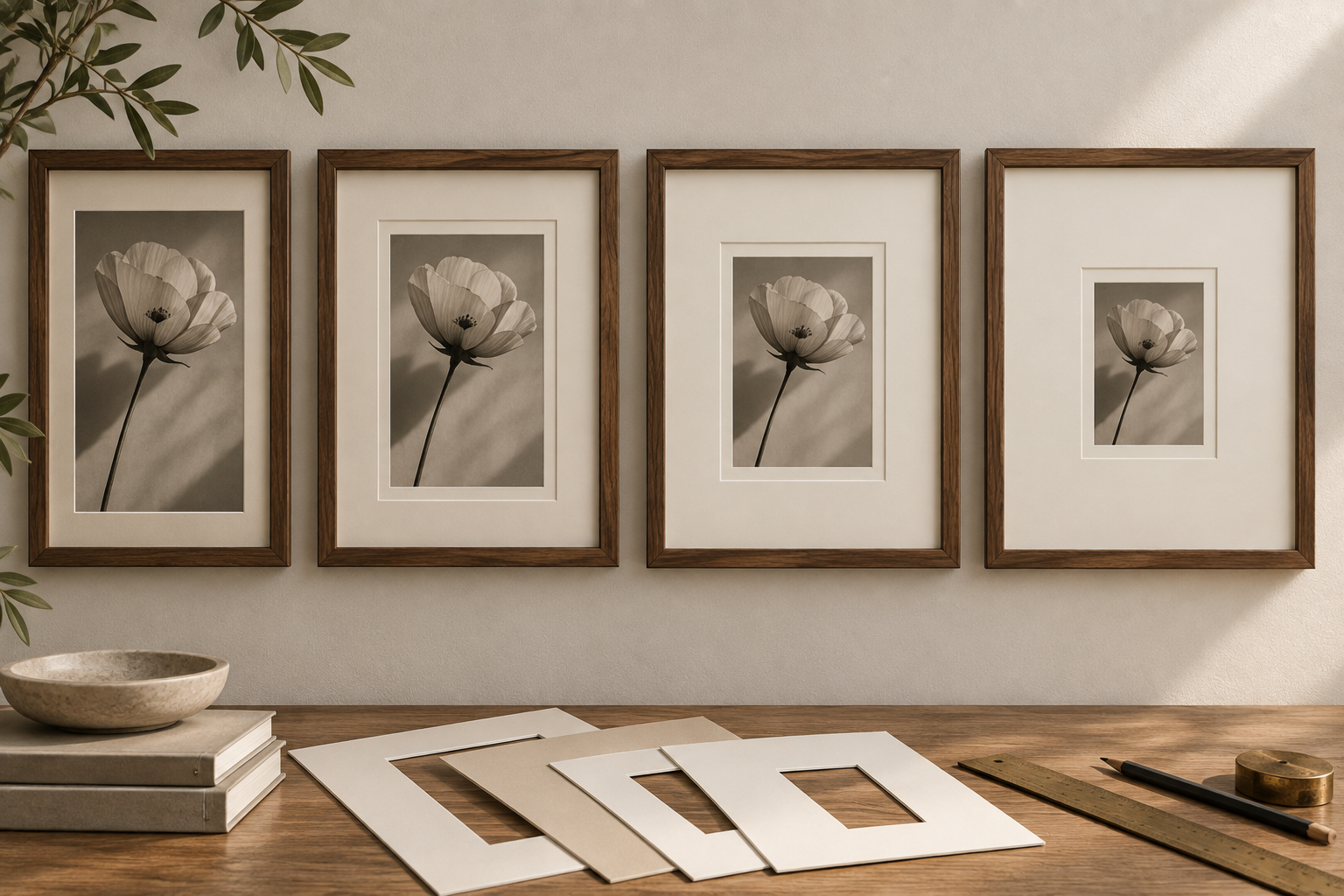
There isn't a standard width that's correct for every artwork. The size of the piece, dimensions of the frame, scale of the finished presentation, and visual weight of both the artwork and moulding should all be considered.
A narrow mat creates a tighter relationship between artwork and frame. A generous mat can make the presentation feel more spacious and gallery-like. Small artworks can sometimes look particularly beautiful with unexpectedly generous matting, giving an intimate piece considerably more presence on a wall.
The goal is proportion—not following an arbitrary measurement.
What About Float Mounting?
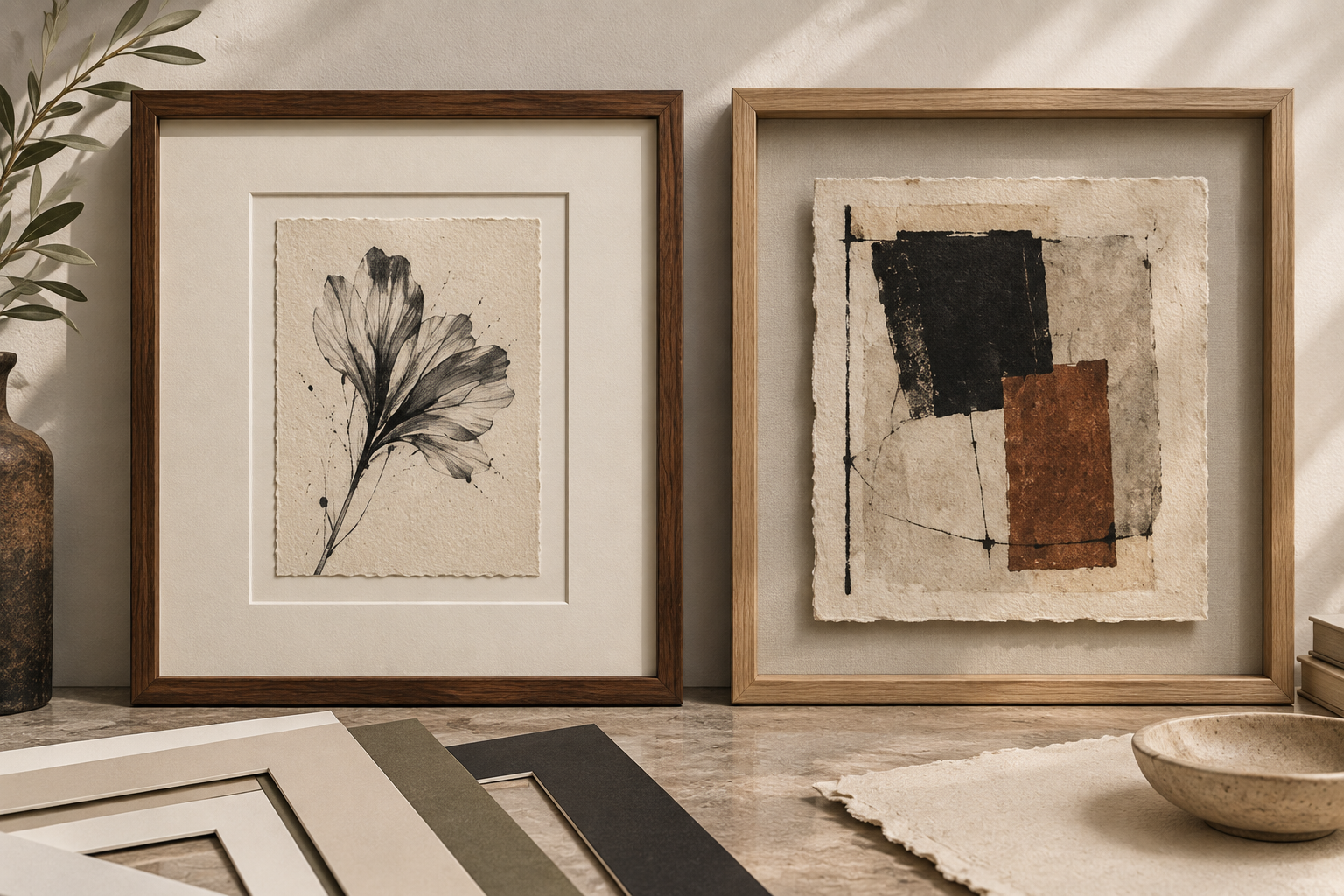
Matting doesn't necessarily mean cutting a window that overlaps the edges of an artwork.
With a float-mounted presentation, the artwork can be positioned so its edges remain visible against the surrounding mat board. This can be especially effective for handmade paper, deckled edges, prints, drawings, and other works where the physical characteristics of the paper are part of the artwork itself.
Instead of concealing those details beneath the mat opening, floating makes them visible. The surrounding mat still provides visual space, but the result can feel distinctly more contemporary.

When Should You Skip the Mat?
Some artwork simply looks stronger without one.
Canvases, large posters, certain photographs, contemporary prints, and dimensional works may call for entirely different framing approaches. Canvas paintings, for example, can be presented in float frames, where a narrow space between the canvas and frame creates separation without using a traditional mat.
Other glazed works can use spacers to maintain physical separation between the artwork and glazing while keeping the mat visually absent. Choosing not to use a mat doesn't mean preservation or design has been ignored. It simply means another framing solution is better suited to the artwork.
Matting Is Also a Conservation Decision
When framing an original, valuable, sentimental, or irreplaceable artwork, what you can't see can be just as important as what you can. Materials immediately surrounding an artwork can influence its long-term condition. This is why conservation-quality and museum-quality boards are available alongside purely aesthetic considerations such as color and texture. The artwork's medium, age, condition, and sensitivity should help determine which materials are appropriate.
Good framing should consider both questions:
How should this artwork look today?
and
How should it be protected for the future?
So, To Mat or Not to Mat?
There isn't one answer.
A mat can give an artwork room to breathe, establish proportion, introduce color or texture, create separation from glazing, and become an important element of the overall framing design. Another piece may look strongest with no visible mat whatsoever. And if matting is appropriate, the next question becomes what kind.
At Harlem Frames, customers can explore conservation mat boards in an extensive range of colors, cores, and thicknesses; 100% virgin cotton museum boards; and conservation-quality specialty boards with richer colors, textures, and premium surfaces.
The decision ultimately begins with the artwork.
Bring your piece to Harlem Frames and compare mat colors, materials, textures, proportions, and framing combinations in person. Together, we can find the presentation that feels right for the work—and appropriate for its long-term care.
Museum Glass, Acrylic & Conservation Glazing: What’s the Difference?
Naturally, when choosing a custom frame, an ample amount of attention gravitates towards the frame itself. As audiences, we tend to look admiringly at the wood, finish, profile, matting, and ultimate presentation of the work. But what transparently contains the artwork, serving as that essential barrier between it and the audience, is even more crucial to it’s longevity.
Glazing is the glass material placed between an artwork and the environment around it. Depending on the type selected, glazing can effectively address concerns such as UV exposure, reflections, abrasion, static, and the long-term preservation of an artwork, protecting it from damages, extending its lifespan.
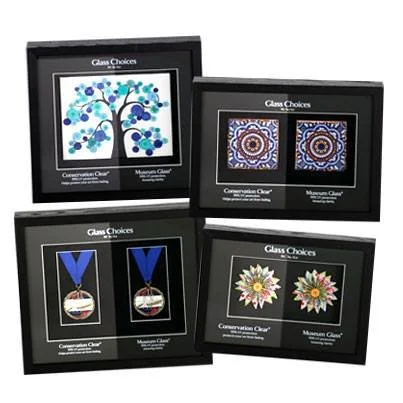
At Harlem Frames, glazing isn't treated as a one-size-fits-all decision. We work with a range of Tru Vue glass and acrylic glazing options, which allows us to select the material in accordance with both the artwork and the client’s needs. Equally important, we consider the size of the work, the rooms it will be displayed in, and what level of protection the work will require as a result of these various factors.
Glass or Acrylic?
One of the first decisions is whether a project is better suited to glass or acrylic.
Traditional glass offers the familiar rigidity and feel many people associate with framed artwork. Specialized glazing can serve considerably further, however, by incorporating anti-reflective and protective technologies built into the glass itself.
Acrylic, though very similar visually to glass, is made of a transparent plastic material, is significantly lighter than glass, and is also available in conservation- and museum-grade options. Acrylic can be particularly useful for large-scale framing, valuable works, works that will travel, or installations where weight and breakage are high-risk concerns.
The best choice, as always, depends on the individual project.
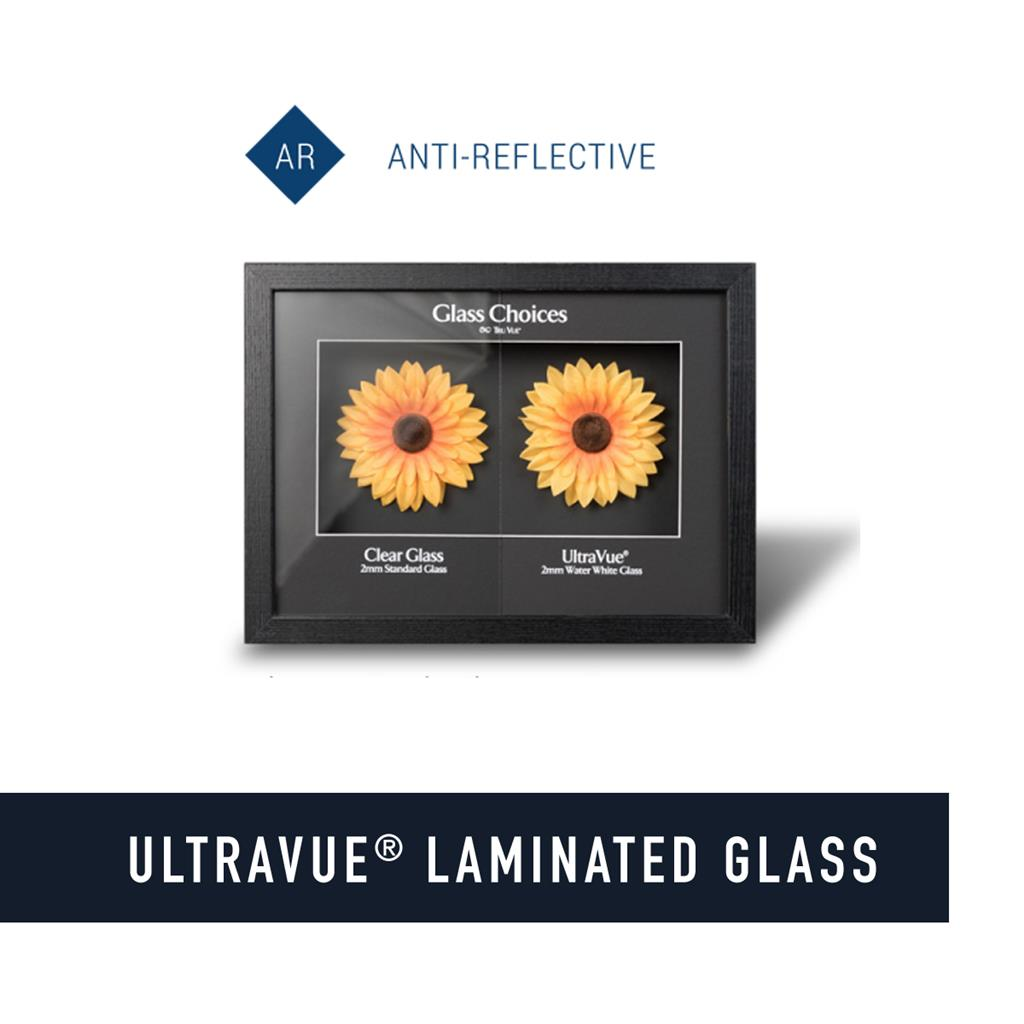
UltraVue Laminated Glass
One of the glass options available through Harlem Frames is Tru Vue UltraVue Laminated Glass.
Designed for exceptional viewing clarity, this glazing combines anti-reflective performance with UV protection and the additional security of a laminated construction and finish.
It can be an excellent consideration for artwork where maintaining the visual qualities associated with glass is desirable while preservation and display quality remain important.
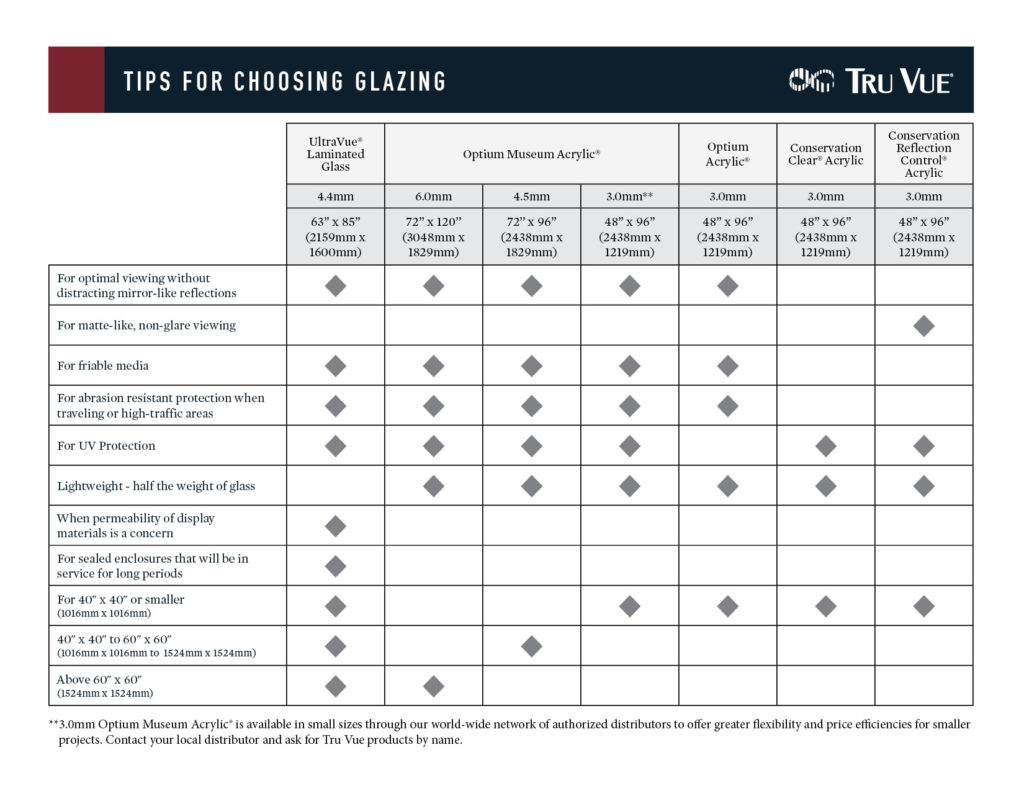
According to Tru Vue's selection guide, UltraVue Laminated Glass is particularly suited to applications where optimal viewing, UV protection, abrasion resistance, and protection for works displayed in high-traffic areas are notable considerations.
Optium Museum Acrylic
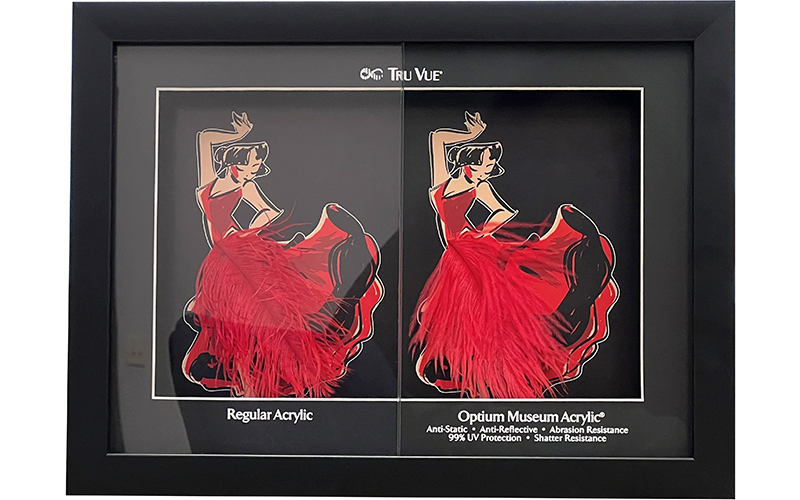
Optium Museum Acrylic
vs.
Optium Acrylic
For projects requiring some of the highest levels of performance available in acrylic glazing, Harlem Frames also offers Tru Vue Optium Museum Acrylic.
Optium Museum Acrylic combines exceptional clarity with anti-reflective properties, UV protection, abrasion resistance, and anti-static performance.
The anti-static quality can be particularly important for certain delicate media where static electricity is a concern.
It is also considerably lighter than an equivalent piece of glass, making museum-grade acrylic especially useful when framing large works or pieces intended to travel or be installed in demanding environments.
Harlem Frames commonly uses Optium Museum Acrylic in multiple thicknesses, allowing the glazing specification to respond to the dimensions and requirements of the individual project the client brings forward.
Tru Vue Optium Acrylic provides another high-performance acrylic option.
Like Optium Museum Acrylic, it is designed to provide excellent clarity and reduced reflections while offering many of the practical advantages associated with acrylic glazing.
It can be considered for projects where anti-reflective viewing, abrasion resistance, lighter weight, and anti-static performance are important factors.
The appropriate choice between Optium Acrylic and Optium Museum Acrylic ultimately depends on the artwork and its conservation requirements.

Conservation Clear Acrylic
Not every artwork requires museum-grade anti-reflective glazing.
Conservation Clear Acrylic provides UV protection while retaining the practical benefits of acrylic, including its lighter weight compared with glass.
This can make it a useful option for works where preservation is important but museum-level anti-reflective performance isn't the primary concern.
For larger framed pieces in particular, choosing acrylic instead of glass can also make a meaningful difference in the finished weight of the frame.
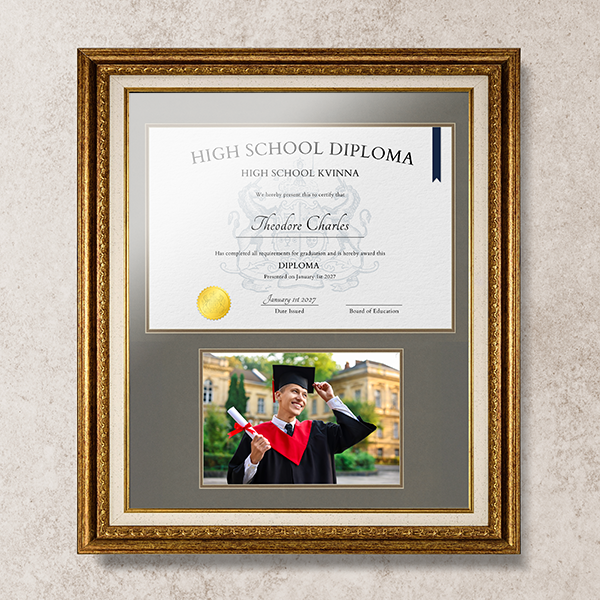
Conservation Reflection Control Acrylic
Harlem Frames can also offer Conservation Reflection Control Acrylic for projects where both UV protection and the reduction of distracting reflections are considerations.
Reflection-control glazing differs from premium anti-reflective glazing such as Optium. Rather than making reflections nearly disappear through optical coatings, reflection-control products are designed to diffuse them.
That distinction matters because different glazing materials can affect the viewing experience differently. Comparing samples in person can be extremely helpful when deciding which effect is appropriate for a particular artwork.
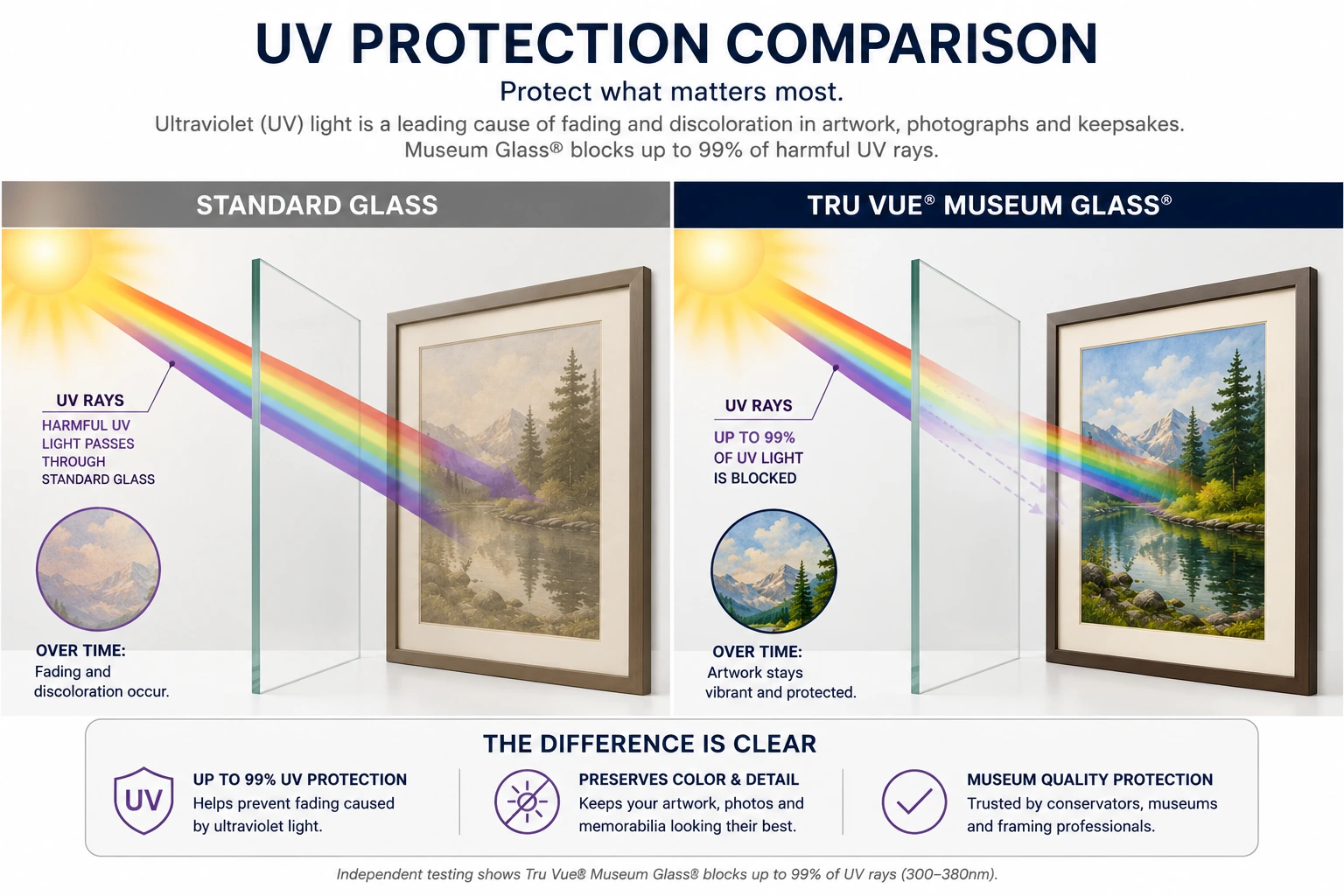
Why Does UV Protection Matter?
Many artworks are sensitive to prolonged exposure to ultraviolet radiation.
Over time, UV exposure can contribute to fading, discoloration, and deterioration in materials such as paper, photographs, textiles, inks, and certain pigments.
For valuable, sentimental, historic, or irreplaceable pieces, choosing glazing with appropriate UV protection can therefore become an important part of a conservation-minded framing approach.
However, UV-protective glazing should never be considered permission to hang artwork anywhere.
Even properly framed artwork should be kept away from prolonged direct sunlight and extreme environmental conditions whenever possible.

Reflections Matter, Too
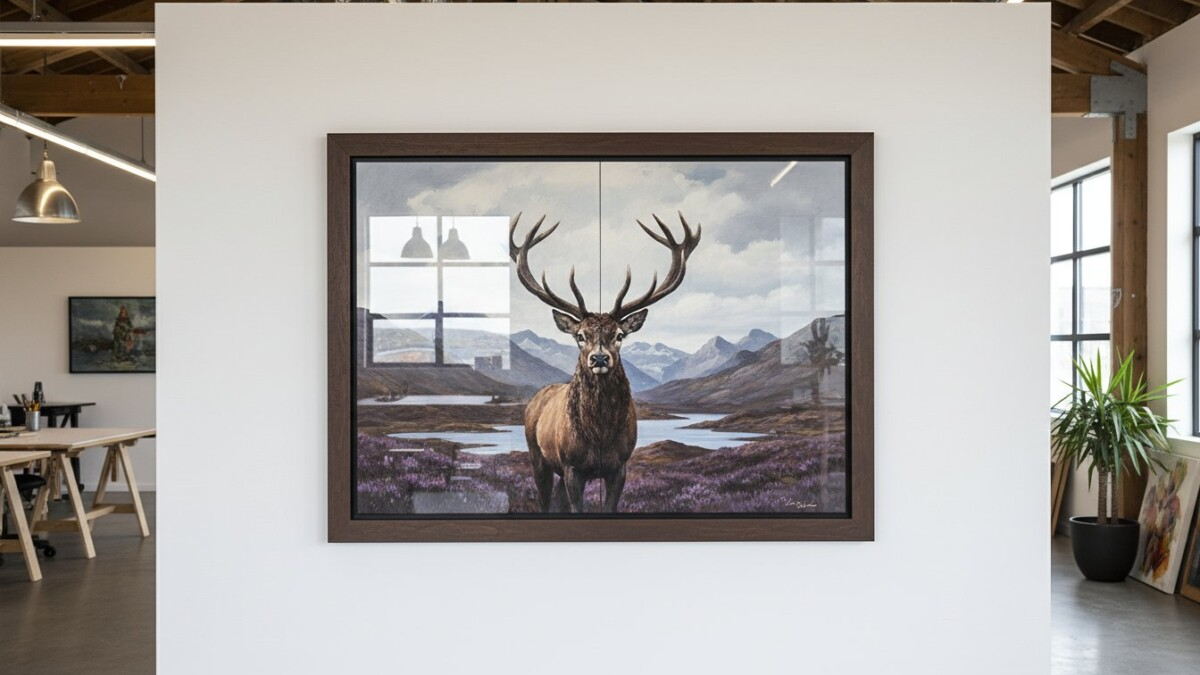
Anyone who has tried to view a dark photograph or drawing behind reflective glazing knows how distracting glare can become.
Windows, lamps, overhead lighting, and even the viewer themselves can appear reflected across the surface.
Premium anti-reflective glazing such as Optium Museum Acrylic and UltraVue is designed to minimize these visual distractions so that attention remains on the artwork.
For highly detailed works, dark images, photographs, or artwork displayed in brightly lit environments, the difference can be striking.
What About Large Artwork?
Size can significantly influence the glazing decision.
As a framed piece becomes larger, weight, rigidity, handling, installation, and safety become increasingly important considerations.
This is one reason acrylic glazing can be valuable for oversized work. Acrylic offers substantially less weight than comparable glass while specialized products can still provide high levels of clarity and protection.
The Tru Vue options available through Harlem Frames include different dimensions and thicknesses specifically suited to different framing requirements.
So, Which Glazing Should You Choose?
There isn't one “best” glazing material for every artwork.
The right choice depends on several factors:
The artwork's medium and condition
Its monetary or sentimental value
Sensitivity to UV exposure
Size and weight of the finished frame
Lighting and reflections in the display environment
Whether the artwork will travel
Concerns about abrasion or static
Desired level of clarity
Budget
A replaceable poster and an original work on paper don't necessarily require the same solution. Neither do a small family photograph and a six-foot artwork destined for an exhibition.
Choosing Glazing at Harlem Frames
At Harlem Frames, glazing is considered a quintessential component of the framing system.
Depending on the needs of the artwork, options include UltraVue Laminated Glass, Optium Museum Acrylic, Optium Acrylic, Conservation Clear Acrylic, and Conservation Reflection Control Acrylic, among other solutions.
Rather than simply asking whether you want “regular” or “museum” glass, we can help you compare the materials in person and consider clarity, reflection, UV protection, weight, safety, preservation, and cost together.
The goal is ultimately simple: choose the glazing that allows you to enjoy the artwork while giving it the level of protection its particular circumstances require.
Images Source:https://tru-vue.com/
How to Choose the Right Frame for Your Artwork
When selecting a frame, there are multiple factors to take into consideration. It’s more than just a matter of a frame that matches your artwork. The right frame can either strengthen the relationship between the work, the space around it, and the environment in which it will live, or visually imbalance the enjoyment of both the work and the space itself.
A thoughtfully chosen frame is intended to elevate the artwork’s presence without competing for attention with the frame itself. Moreover, when it’s necessary, the frame, matting, and glazing can considerably protect the work for years to come.
At Harlem Frames, we have a methodical approach to framing as an extension of the artwork itself. Everything from Material, color, and proportion to depth, glazing, and mounting is an essential contributor to a finished piece.
Here are a few things to consider when choosing a frame:
Start With The Artwork
The artwork should lead the conversation.
Closely examining the piece’s colors, materials, texture, scale, and overall character is crucial before even concluding what room the piece will be hung in. A delicate work on paper may need an entirely different presentation than a conventional, large contemporary canvas, photograph, textile, or vintage poster.
As opposed to simply matching a frame to a prominent color in the piece, you must consider how the frame can complement the overall character of the artwork. Sometimes that means creating contrast. Other times, this may entail choosing a quiet frame that nearly disappears.
The mission is to give the artwork a setting in which it feels complete.
Consider Material and Finish
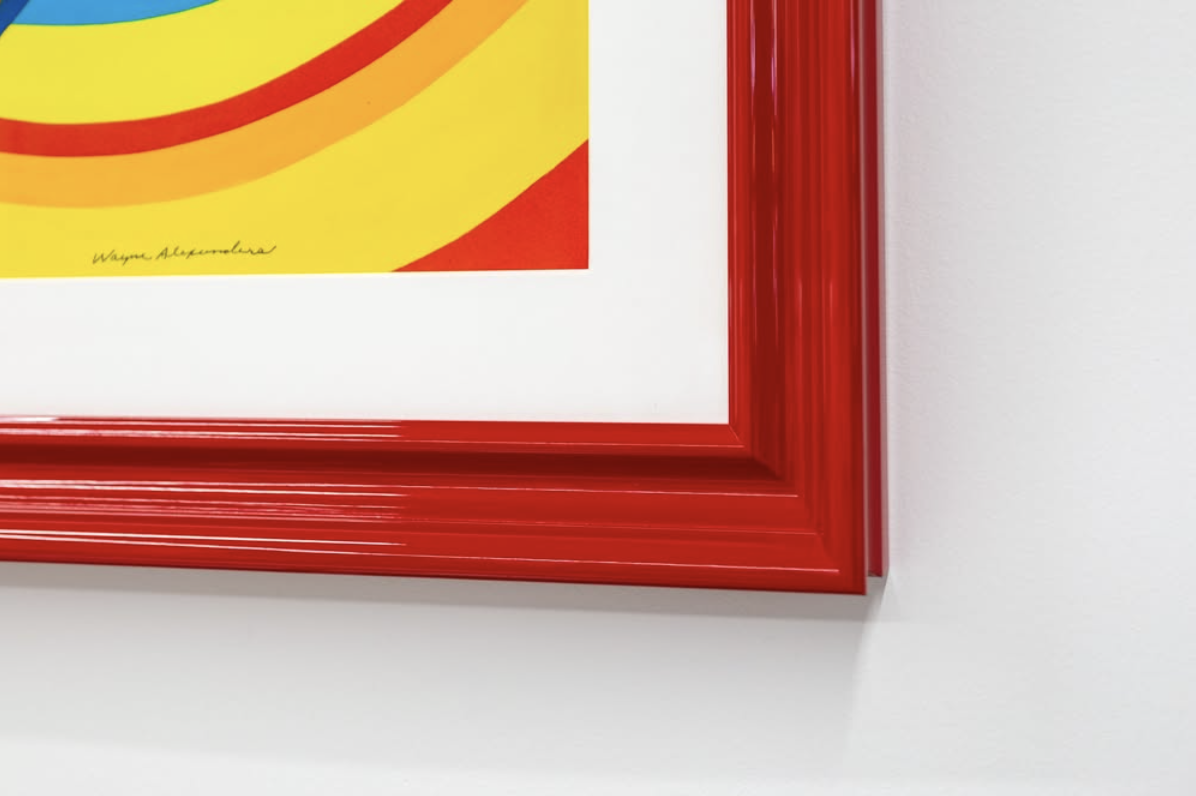
Wood, metal, painted finishes, stains, and natural materials all create a variable relationship with an artwork.
Natural woods such as walnut, maple, and oak can introduce warmth and texture while allowing the grain of the material to remain visible. Black and white frames, however, provide a more restrained or graphic presentation. Meanwhile, metallic, painted, or decorative moulding complement works that call for a stronger visual presence. All of which is subjective.
There isn't one material that works for every piece. To reiterate, an optimal frame choice is dependent on how it responds to the individual artwork.

Pay Attention to Proportion
Frame width and depth matter are just as essential as moulding color.
An overly heavy frame risks overwhelming a small or delicate work, while a frame that’s extra thin can be visually inadequate to surround a large or more dimensional piece.
The proportions are meant to create balance. Larger artwork doesn't unconditionally require an oversized frame, just like a small artwork can benefit from a generous mat or deeper presentation that gives it a greater “wow factor” when mounted on the wall.
Decide Whether the Artwork Needs a Mat
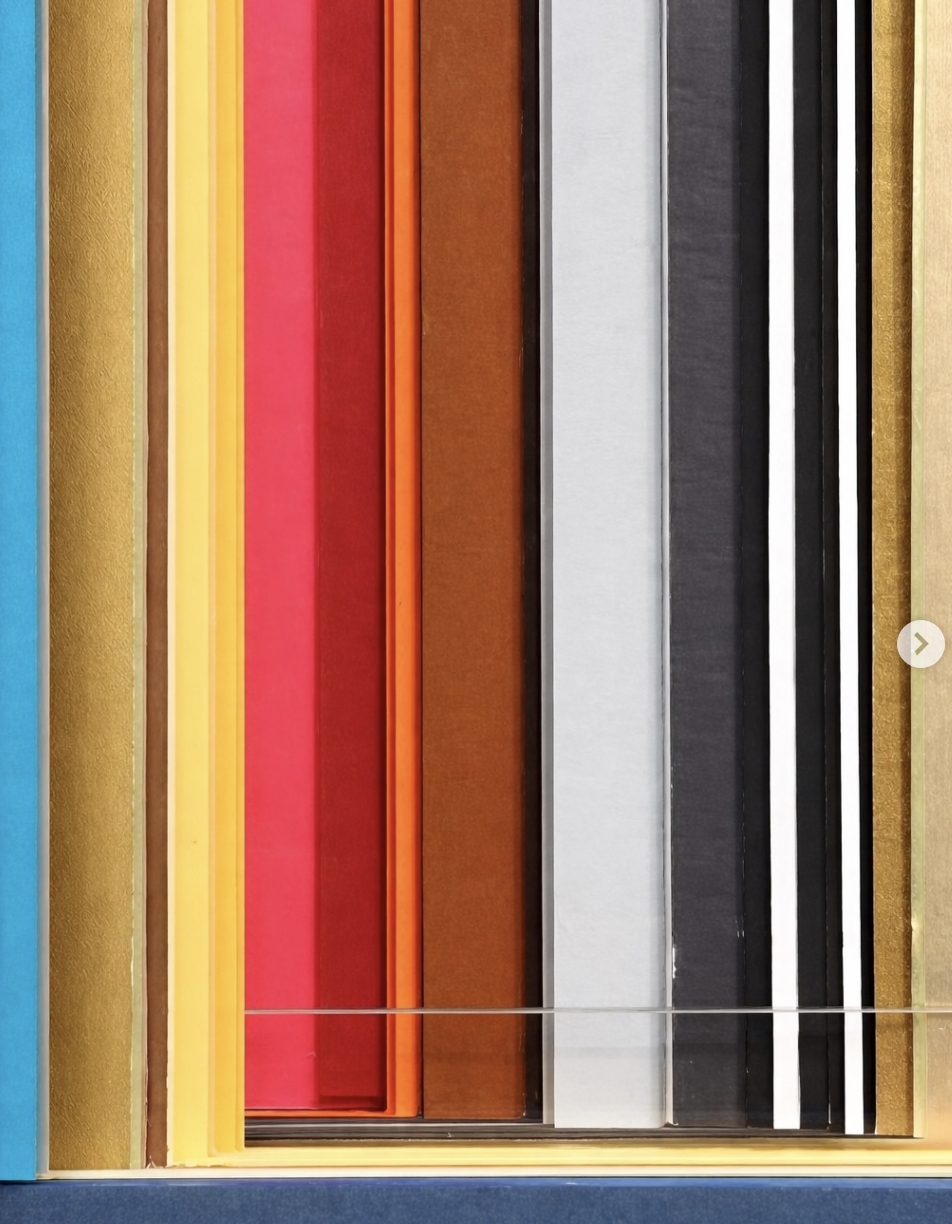
Matting creates visual space between an artwork and its frame. It’s no understatement to assert how dramatically the mat can change the perception of a piece.
Works on paper, photographs, drawings, prints, and other flat works are frequently presented with mats. Beyond their aesthetic role, properly selected archival matting can also assist in separating the artwork from glazing and contribute to its long-term preservation.
In the same vein, not every piece requires a traditional mat. Floating, spacers, shadowbox presentations, and other framing techniques can create separation while inspiring a very unique visual effect.
Think About Depth
There’s also the matter of artwork that elevates from having visible space around its edges.
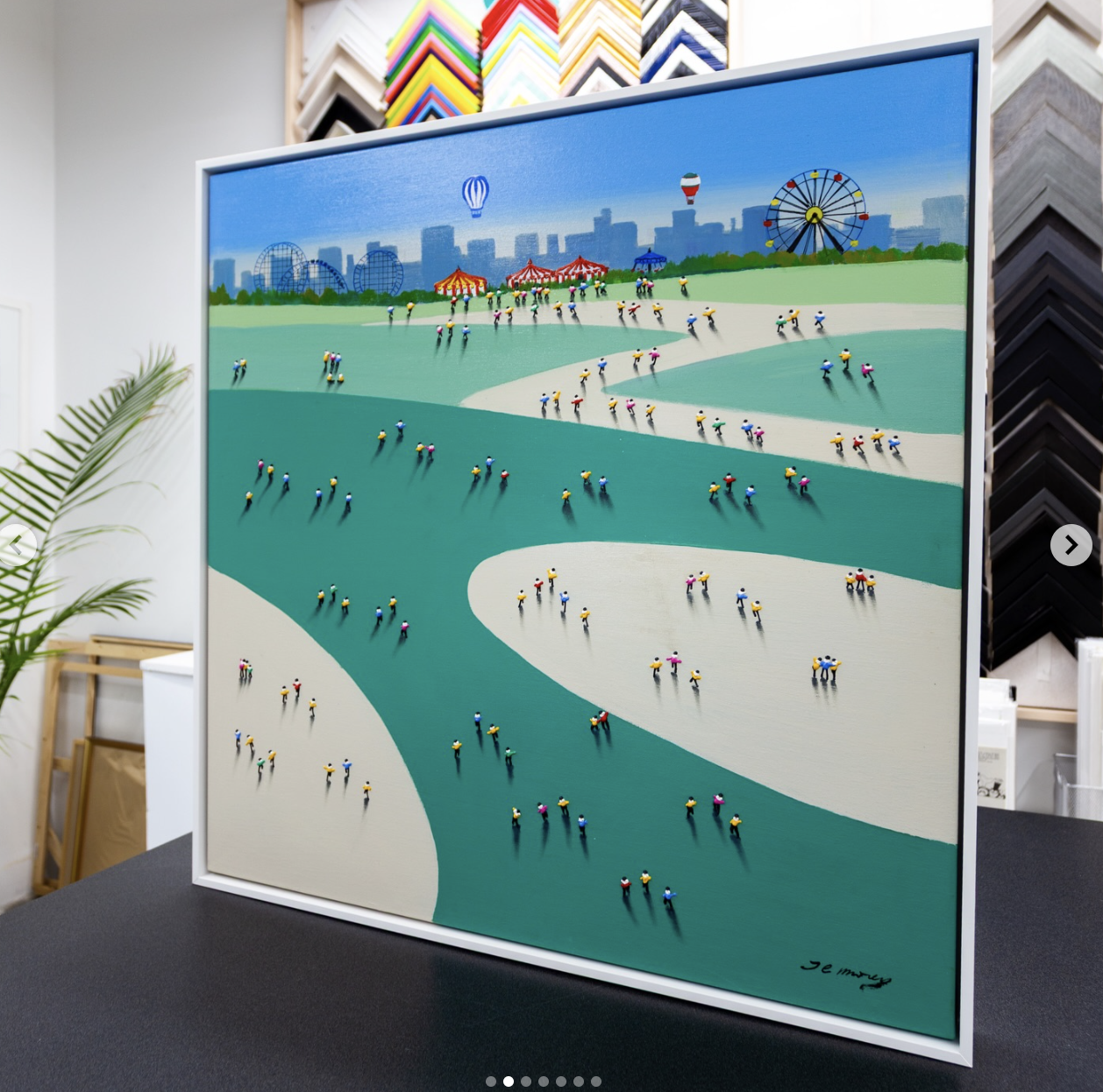
A float frame, for example, produces a narrow gap between a canvas and its surrounding frame. This space from the edges of the artwork is necessary to remain visible because it gives the piece the appearance of floating within the frame.
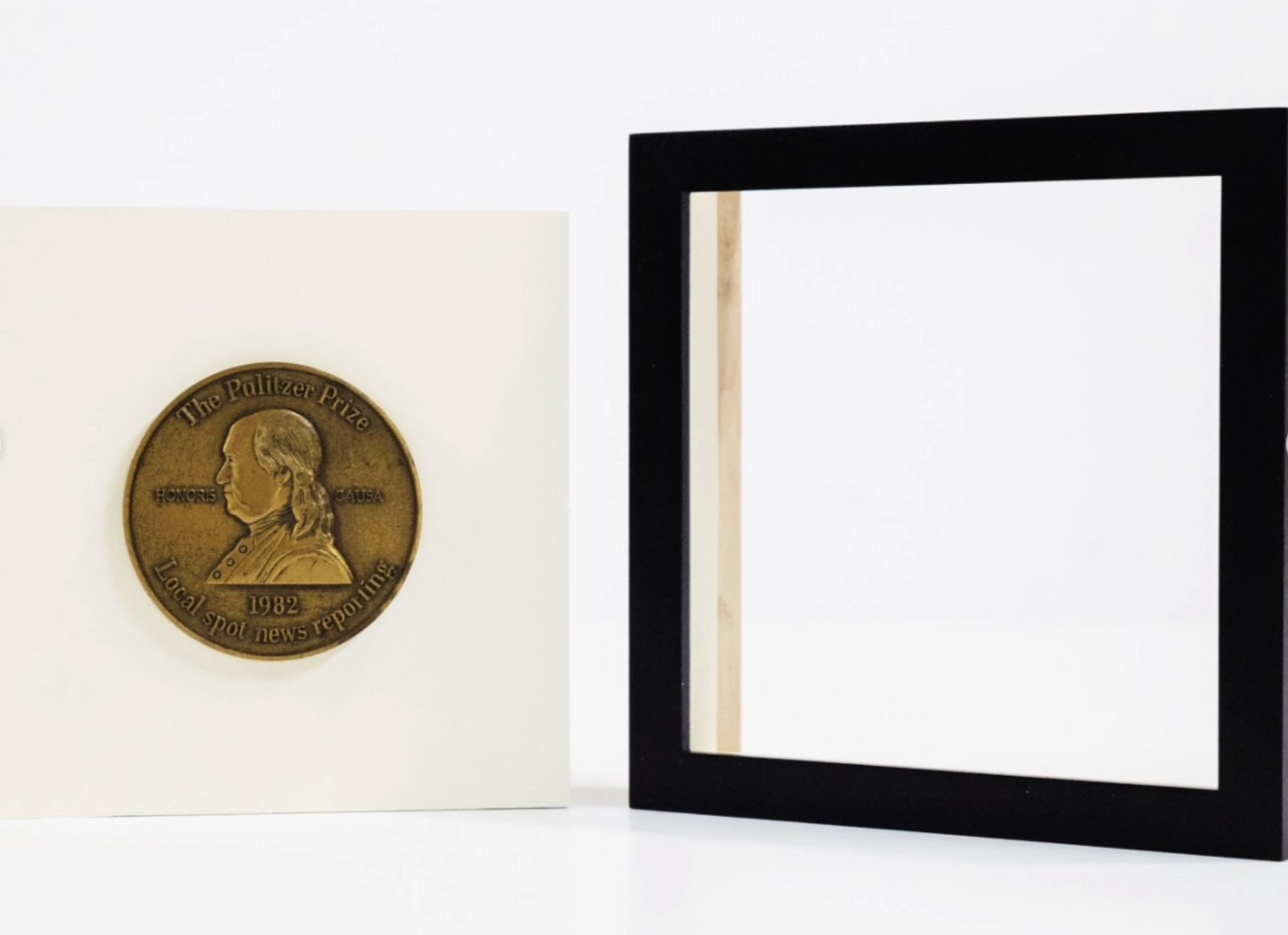
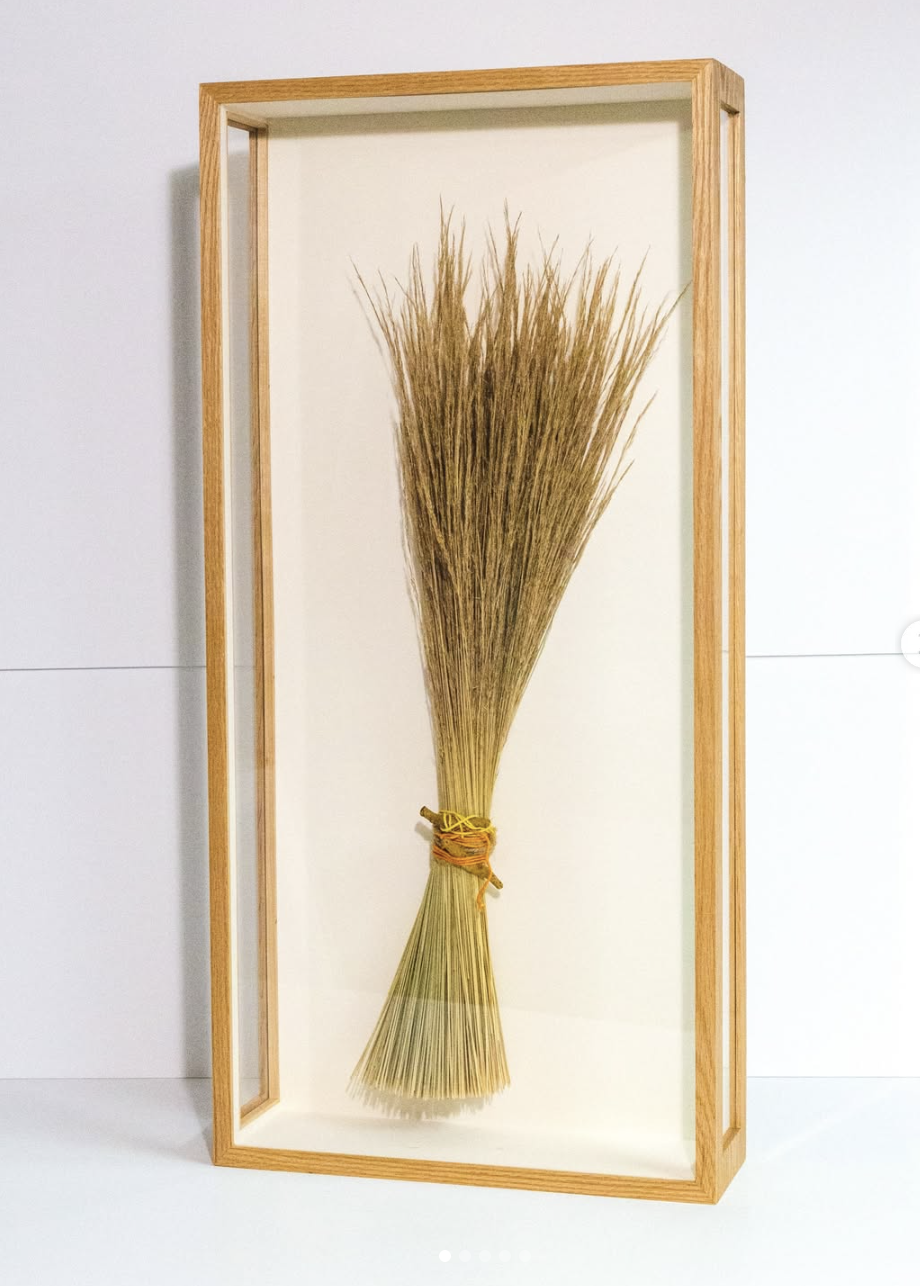
Objects, textiles, memorabilia, and dimensional artwork may require even greater depth through shadowboxes or custom-built framing solutions.
These decisions aren't purely decorative—they influence how the physical object is experienced.
Don't Forget the Glass
For artwork that requires glazing, the type of glass or acrylic can dictate the longevity of the piece itself.
Different glazing options offer varying levels of clarity, reflection control, and UV protection. For photographs, works on paper, limited-edition prints, and other light-sensitive materials, conservation considerations may be especially important.
The most appropriate option depends on the artwork, its value, where it will be displayed, and the level of protection required.
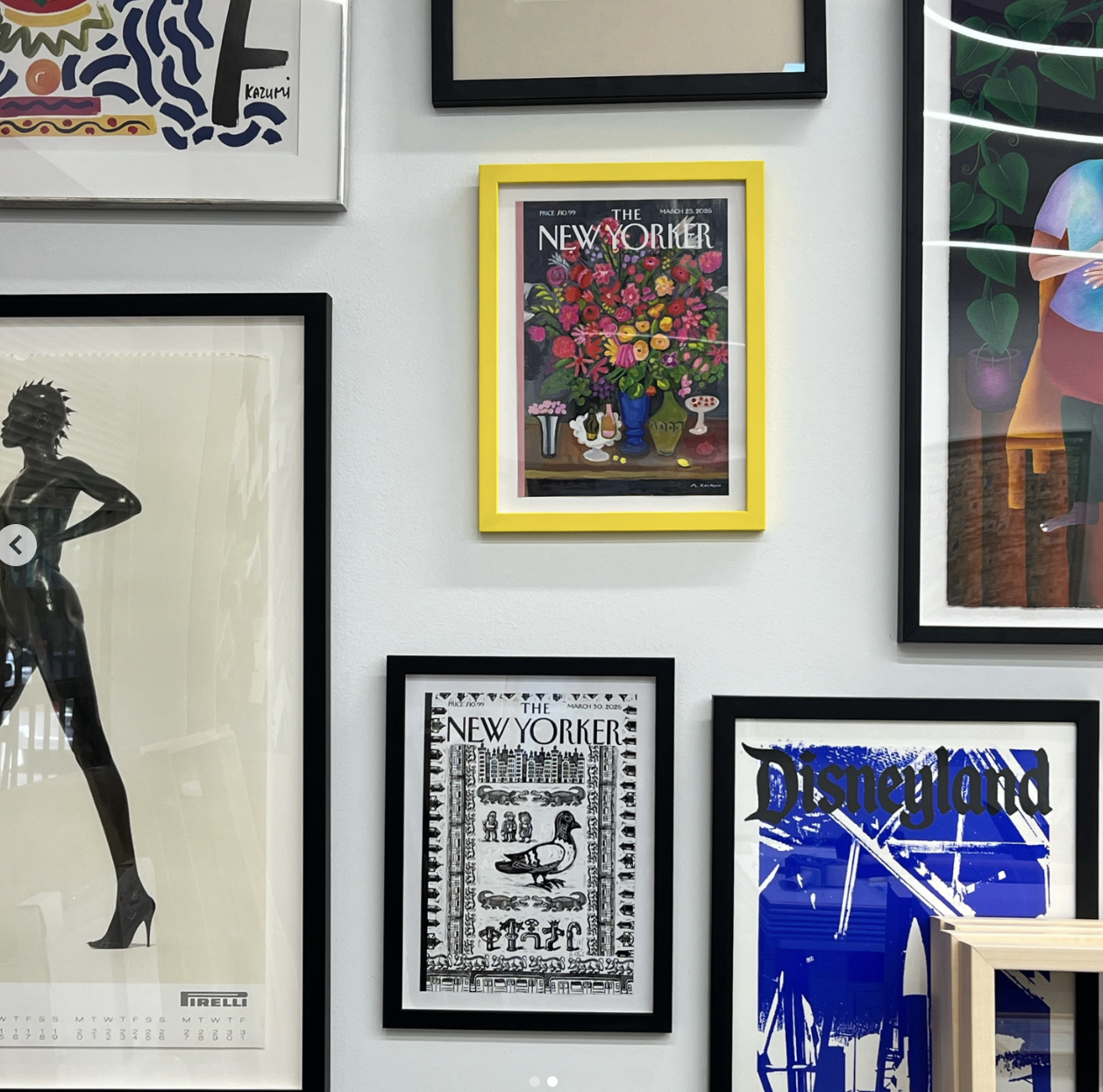
Consider the Room—But Don't Let It Dictate Everything
Your surroundings matter, but framing solely to match current furniture or wall colors can be limiting.
Interiors change. Artwork often stays with us much longer.
Instead of asking only, “Does this frame match my room?” consider whether the frame feels right for the artwork itself. A thoughtfully framed piece should be able to move from one environment to another and still feel resolved.
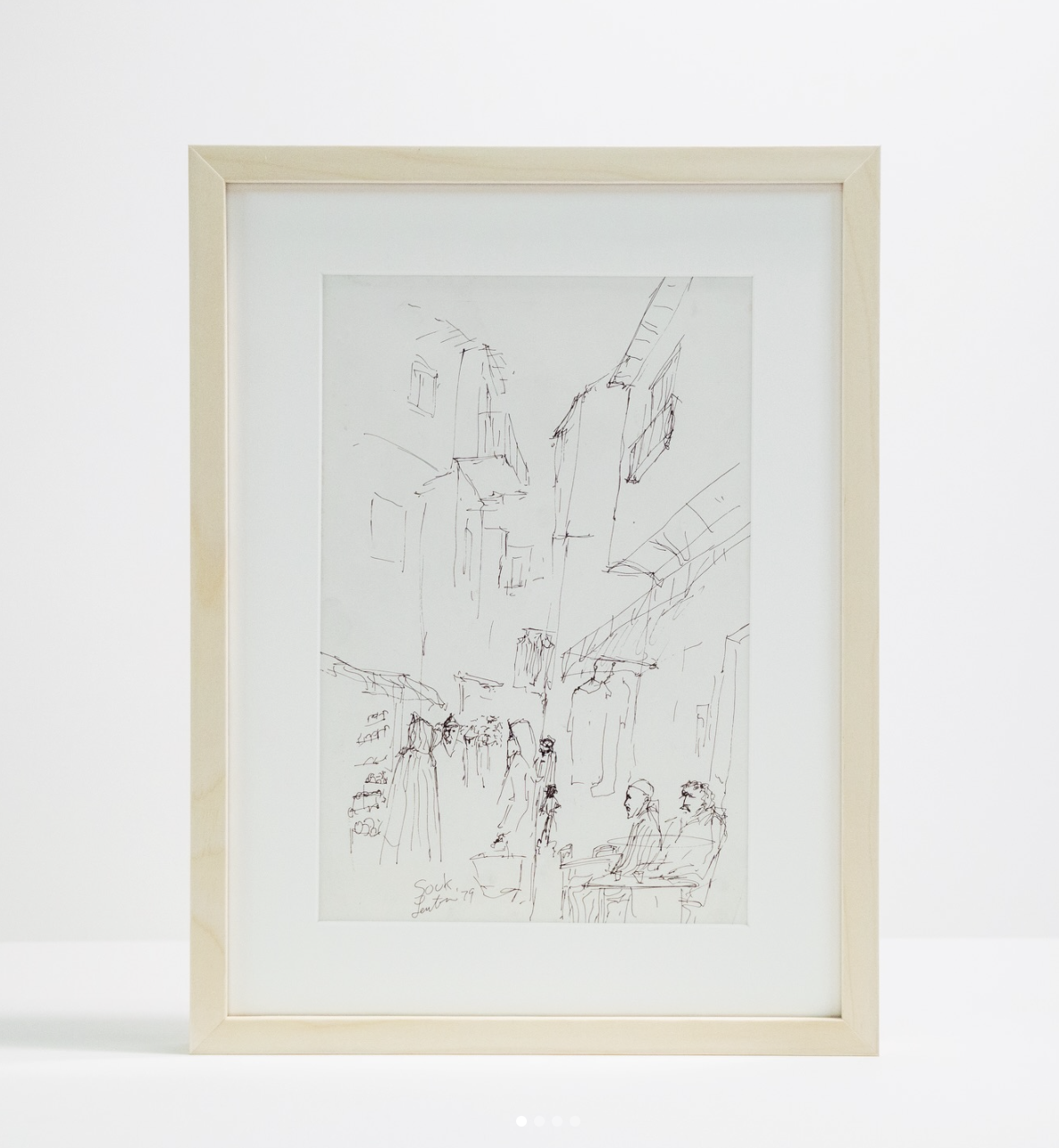
When in Doubt, Keep It Simple
Sometimes the most successful frame is the one you notice last.
If an artwork already contains a great deal of color, texture, or visual complexity, a restrained frame can provide structure without introducing another competing element.
Simple does not mean generic. Small differences in wood species, profile, finish, depth, matting, and spacing can dramatically change the finished presentation.
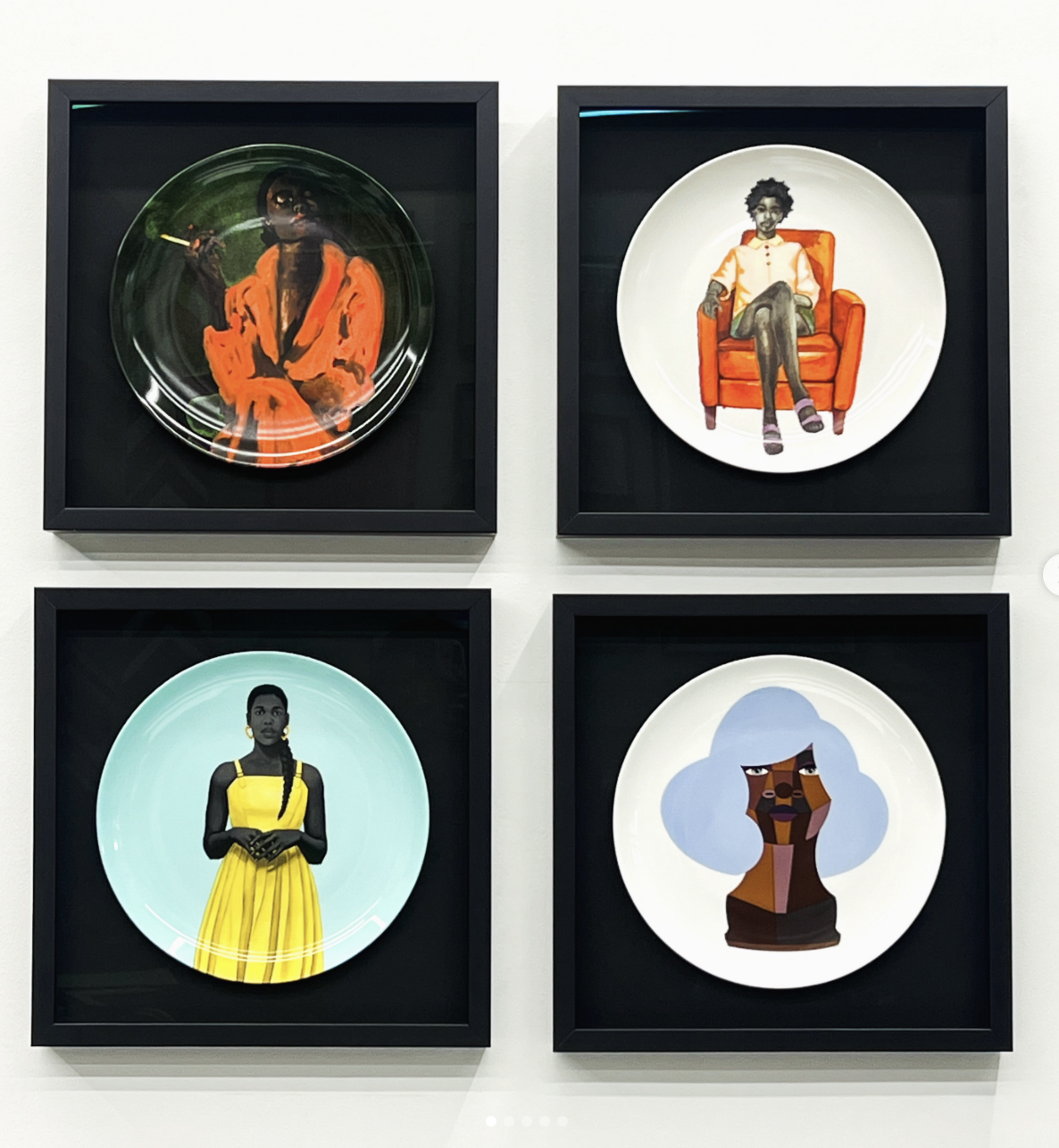
Every Artwork Is Different
There is no universal formula for choosing the perfect frame.
An original painting, family photograph, limited-edition print, textile, poster, or treasured object each presents its own questions. The role of custom framing is to find a solution that considers the artwork as an individual object—how it looks, how it is constructed, how it should be displayed, and how it should be protected.
At Harlem Frames, we work with artists, collectors, galleries, designers, institutions, and individuals to develop framing solutions tailored to the work itself.
Have a piece you're considering framing? Bring it to Harlem Frames and explore the possibilities with us.
As Always, Framed With Care.
In Harlem.